PART 2: She Was Terrified of Freedom—Then I Learned Why She Slept on a Broken Yellow Duck Every Night
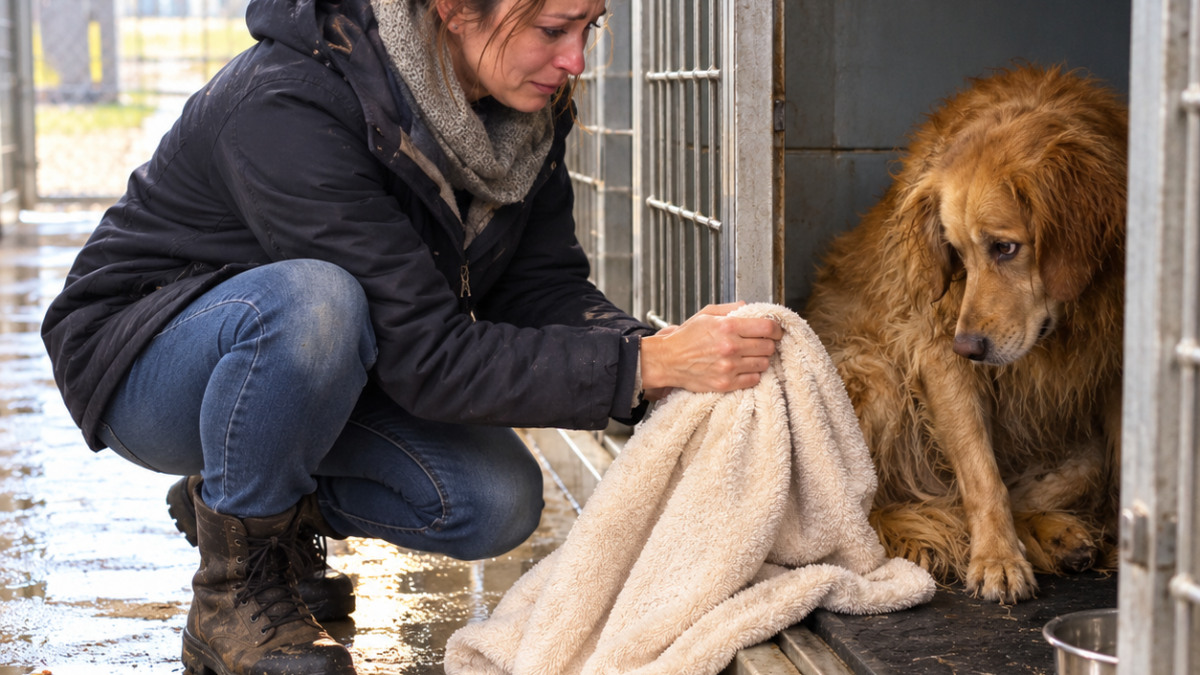
PART 2
The first morning after I admitted that to myself, Mai was lying exactly where she always slept.
Curled against the rear wall of kennel seven.
Yellow duck tucked beneath her ribs.
Her chin resting over it.
Sunlight had reached halfway across the floor.
She was watching it.
That was progress.
It sounds absurd until you’ve worked with an animal whose entire understanding of safety is measured in square feet.
During Mai’s first week with us, we had made every mistake people make when they love too quickly.
We brought her a soft orthopedic bed.
She wouldn’t step onto it.
We gave her a larger kennel.
She pressed herself into the smallest corner.
We opened the door so she could explore the hallway.
She shook until her teeth clicked.
One volunteer sat three feet away and gently tossed pieces of chicken toward her.
Mai ate the pieces that landed in shadow.
She left the ones that landed in sunlight.
Dr. Étienne Marchand, our veterinarian, studied her X-rays for nearly half an hour before saying anything.
I stood beside the light board with Sophie.
Mai was sedated on the table behind us.
Étienne pointed at her spine.
“These changes didn’t happen in weeks.”
“How long?” I asked.
He exhaled.
“Years.”
The word dropped into the room.
He showed us where her vertebrae had adapted to a hunched posture, where muscles had shortened, where her front shoulder had weakened because she had spent too much time folding herself into the same cramped position.
There were old fractures in two toes.
One rib had healed badly.
Her nails had grown and broken repeatedly.
Her teeth showed wear consistent with chewing metal.
“She may improve a lot,” he said. “But she may never move like a normal dog.”
Sophie folded her arms.
“And psychologically?”
Étienne looked at Mai.
“That depends on what normal ever meant to her.”
We knew almost nothing about where she had come from.
The property where we found her belonged to a man named Laurent Vasseur.
Fifty-two years old.
Former dog breeder.
Or, more accurately, a man who described himself as a breeder whenever someone asked why he had thirty-seven dogs scattered across three buildings, two shipping containers, several outdoor runs, and cages that should have been illegal even for transporting livestock.
The investigation had begun because a delivery driver reported hearing dogs barking inside a sealed outbuilding during a heat wave.
The local authorities had visited once.
Vasseur showed them six healthy-looking dogs in outdoor runs.
He claimed the barking came from those animals.
A week later, the driver returned.
The barking was still coming from the locked shed.
This time he recorded it.
Animal protection obtained authorization to inspect the property.
That was when we found the rest.
Twenty-one dogs were removed that day.
Four required immediate hospitalization.
Two were too ill to survive.
Mai was one of the last dogs carried out.
Vasseur stood in the yard while we worked.
I remember him because he never once asked which dogs were hurt.
He asked how long we intended to keep them.
“They’re mine,” he said.
Sophie stared at him.
“They are evidence.”
“They’re breeding stock.”
I had Mai in my arms when he said it.
Her body went rigid at the sound of his voice.
That was the first time I felt real hatred toward him.
Not professional anger.
Not disgust.
Hatred.
Because I felt Mai trying to disappear against me.
And he looked at her the way a carpenter might look at a damaged tool.
“Probably not worth saving that one,” he said.
I still remember Sophie turning her head toward me.
She knew me well enough to recognize when I was about to say something that would create paperwork.
“Claire,” she said quietly.
I kept walking.
That decision probably saved me from being removed from the case.
At the center, we gave the seized dogs identification numbers until their ownership and medical records could be sorted out.
But I refused to call Mai by a number.
The broken tag said MAI.
So Mai she became.
For the first month, physical therapy happened mostly on the floor.
I would sit beside her with my back against the wall, legs stretched out, pretending not to watch.
She hated being watched.
Direct attention made her retreat.
So I read.
Newspapers.
Old novels.
Veterinary journals.
Once, in desperation, the instructions from the back of a bag of dog food.
I read aloud until my voice became part of the room.
Mai listened.
Sometimes one ear moved.
Sometimes nothing did.
Every day I placed the yellow duck slightly farther from the wall.
One inch at first.
Then two.
She would stare at it.
Look at me.
Stare again.
And finally stretch one paw toward it.
The first time she moved her entire body to retrieve it, she advanced perhaps six inches.
I cried in the supply closet afterward.
Not because six inches was much.
Because for Mai, it was a continent.
By the sixth week, she could stand for eleven seconds.
By the eighth, she could take four steps before her front leg buckled.
Étienne fitted her with a light support brace.
She hated it.
She also hated the harness.
And the rubber flooring.
And ceiling fans.
And doors that closed behind her.
And the sound of keys.
Especially keys.
The first time one of our volunteers jingled a key ring near her kennel, Mai urinated where she stood.
That reaction gave Sophie another piece of evidence.
So did the duck.
Not legally.
Not yet.
But emotionally, the duck bothered both of us.
“Could it just be a comfort object?” Sophie asked one afternoon.
“Of course.”
“You don’t believe that.”
“No.”
“Why?”
I looked through the kennel window.
Mai was sleeping with her body curled around the toy.
“Because comfort objects calm animals. That thing sometimes makes her anxious.”
Sophie watched her.
“What do you mean?”
“If it rolls away, she panics. If someone moves it, she searches. When she finds it, she doesn’t play with it. She checks it.”
“Checks it how?”
I had noticed the behavior three nights earlier.
Mai would press her nose to the duck’s side.
Then underneath it.
Then around the head.
She licked the same worn spot near one wing.
Afterward she pulled it beneath her stomach.
The sequence was almost identical each time.
Sophie frowned.
“Maternal behavior?”
“That’s what I’m wondering.”
We had no evidence Mai had ever had puppies.
But we had strong reasons to suspect it.
Her mammary tissue indicated multiple pregnancies.
Her body had been used for breeding.
Her teeth suggested she was at least eight years old.
Maybe nine.
Possibly older.
If Vasseur had kept her since she was young, she could have produced litter after litter.
That thought sat inside me like a stone.
I started digging.
Not officially.
At first.
I searched breeder advertisements archived online.
Old social media pages.
Cached listings.
Dog forums.
Anything connected to Vasseur’s name, address, phone number, kennel prefix, or the breeds found on his property.
Most recent pages had vanished.
Older ones had not.
Vasseur had once operated under the name Domaine du Soleil Canin.
The photographs showed clean puppies sitting in baskets.
Red bows.
Blue blankets.
Artificial flowers.
Happy captions.
“Family raised.”
“Raised with love.”
“Excellent temperament.”
“Parents health tested.”
I stared at those words until I felt sick.
There were Golden Retriever litters advertised almost every year.
Sometimes twice a year.
Different mothers were listed.
Belle.
Nina.
Rosalie.
Honey.
Maya.
I stopped.
Maya.
The photo loaded slowly.
It had been posted seven years earlier.
A young Golden Retriever stood in a patch of grass beside a wooden fence.
Her coat was thick and bright.
Her ears lifted slightly in the wind.
She was looking toward the camera.
I enlarged the image.
Honey-colored eyes.
A pale spot on the left side of her muzzle.
The shape of the ears.
My hands started shaking.
“Sophie.”
She was across the office.
“Sophie, come here.”
She leaned over my shoulder.
I pointed.
The caption read:
MAYA DU DOMAINE D’OR — future mother of our beautiful English-line puppies.
Sophie whispered one word.
“Mai.”
We compared the photograph to intake images.
Age changed dogs.
Neglect changed them more.
But Étienne later confirmed what we already believed.
It was almost certainly her.
The faded cage tag had not said MAI.
It had once said MAYA.
The last two letters had broken away.
For the first time, Mai had a past.
And the past had a name.
That night, I sat beside her kennel.
“Maya,” I said softly.
Her ear moved.
I tried again.
“Maya.”
She lifted her head.
I stopped breathing.
For weeks she had responded to Mai only because she recognized tone and routine.
But Maya was different.
Her eyes came directly to mine.
I felt something break open in my chest.
“That was your name, wasn’t it?”
She pushed herself upright.
Then she looked toward the door.
Waiting.
For whom, I couldn’t know.
I reached through the bars and rested my fingertips on the floor.
“You were Maya before anyone put you in that cage.”
Her nose touched my knuckles.
It was the first time she initiated contact.
After that, we used Maya at the clinic and Mai as a nickname.
Some identities deserve to be returned.
The breeder archive gave us more.
Dates.
Litter announcements.
Photos.
Names of puppy buyers.
Sophie obtained permission to add the material to the investigation.
We began mapping the litters.
The numbers were staggering.
At least eleven Golden Retriever litters could be connected to Maya over six years.
Possibly twelve.
Some were less than nine months apart.
Étienne looked at the dates and shook his head.
“That’s brutal.”
“How many puppies?” I asked.
“Average? Six to eight.”
Sophie wrote slowly.
“So potentially seventy.”
Nobody spoke after that.
Seventy puppies.
Seventy times a newborn body may have been placed against Maya’s belly.
Seventy little faces she cleaned.
Seventy smells she learned.
Then seventy disappearances.
Not at once, perhaps.
But over years.
One litter after another.
Puppies born.
Nursed.
Removed.
Maya returned to a cage.
Again.
Again.
Again.
The yellow duck suddenly felt less mysterious.
But we still didn’t know where it came from.
The break came from a woman named Élodie Perrin.
She had purchased a Golden Retriever puppy from Vasseur six years earlier.
Sophie called her as part of the investigation.
Élodie remembered Maya.
Not by name.
By the cage.
“I asked to see the mother,” she told us.
We were sitting in Sophie’s office with the call on speaker.
“What happened?” Sophie asked.
There was a pause.
“The breeder didn’t want me to.”
“Did he say why?”
“He said the mother was nervous after giving birth.”
“And did you see her?”
“Yes.”
“How?”
“I insisted.”
Élodie’s voice changed.
“I wish I had done more.”
Sophie and I looked at each other.
“Tell us.”
“He took me behind the house. There was a shed. He opened the door only a little. I saw a Golden Retriever in a metal cage with puppies.”
“How many puppies?”
“I think seven.”
“Anything else?”
Another pause.
“A yellow toy.”
My hand tightened around my pen.
“What kind of toy?”
“A duck.”
The room went completely silent.
Élodie continued before we could speak.
“My daughter had brought it.”
I leaned closer to the phone.
“Your daughter?”
“Yes. Camille was six. We were buying the puppy for my parents, but she came with us. She carried this little rubber duck everywhere because she thought puppies needed toys. Mr. Vasseur told her dogs didn’t care about toys, but she pushed it through the bars.”
I closed my eyes.
“Did the mother react?”
“Yes.”
“How?”
“She picked it up and carried it to the puppies.”
Sophie wrote something quickly.
“Do you know which puppy you purchased?”
“A male. We named him Oscar.”
“Do you still have him?”
“Yes.”
My eyes opened.
Élodie laughed softly through tears.
“He’s asleep under my kitchen table right now.”
I looked through the office glass toward Maya’s kennel.
Her son was alive.
Not a memory.
Not a photograph.
Alive.
Sophie kept the conversation professional.
She asked for documents.
Purchase receipts.
Photographs.
Veterinary records.
Anything showing Vasseur’s breeding operation.
Élodie agreed.
Then she said something that changed the case.
“I have a video.”
Sophie stopped writing.
“What kind?”
“My daughter filmed the puppies.”
“When?”
“The day we picked Oscar.”
“Do you still have it?”
“I think so. Old phone backup.”
“Please don’t edit it. Don’t post it. Send the original file if you can.”
Two hours later, it arrived.
The video was forty-three seconds long.
I watched it once.
Then I had to leave the room.
Maya was younger.
Much younger.
Her coat was dirty but still thick.
She was inside the same cage where we had found her.
Seven puppies climbed over her legs.
A child’s hand appeared through the wire holding a bright yellow rubber duck.
One puppy grabbed the duck.
Another chased him.
For three seconds, the cage looked almost joyful.
Then Vasseur’s voice came from behind the camera.
“Don’t give them that junk.”
A man’s hand reached in.
Maya lowered her head.
The puppies scattered.
The duck fell.
Maya immediately picked it up.
The video ended.
I stared at the final frozen frame.
The toy looked new.
Bright.
Perfect.
Nothing like the flattened object Maya now slept on.
Six years.
She had kept it six years.
Élodie sent another photograph.
Oscar as a puppy, being carried toward her car.
Behind him, through the open shed door, Maya stood pressed against the cage.
The yellow duck was visible beneath her paw.
I cried that night.
Not quietly.
Not the controlled tears you wipe away before returning to work.
I went home, sat on my kitchen floor, and sobbed with my face in my hands.
I had spent weeks wondering why Maya protected that toy.
Now I understood.
The duck had been inside the cage when one of her litters was taken away.
Maybe she associated it with Oscar.
Maybe with all of them.
Maybe it still carried puppy scent for a time.
Maybe it became the one object that remained whenever everything living disappeared.
We would never know exactly what a dog remembered.
But we knew what she did.
She kept the duck.
Through heat.
Cold.
Pregnancies.
Loss.
Years of confinement.
It was hers.
And no one had managed to take it.
The next morning, I knelt beside Maya.
The duck was beneath her.
I didn’t touch it.
“I know where it came from,” I whispered.
She blinked.
“And one of your babies is alive.”
Of course, she couldn’t understand the sentence.
But saying it mattered to me.
Maybe because I had made her a promise without realizing it the day we removed her.
Nothing is being taken from you.
I wanted to give something back.
We arranged a meeting with Élodie and Oscar after consulting Étienne and a behavior specialist.
No one promised recognition.
Six years is a long time.
Dogs process family relationships differently from humans.
We would not turn it into a spectacle.
No cameras.
No strangers.
No expectations.
We used the fenced rehabilitation garden.
Maya had only recently learned to walk onto grass.
The first time she tried, she lifted each paw absurdly high, startled by the feeling beneath her feet.
Now she could cross perhaps fifteen yards before tiring.
That morning, she wore her brace and a soft harness.
The yellow duck stayed inside.
I didn’t want her overwhelmed.
Élodie arrived with Oscar.
He was enormous.
Nearly seventy pounds, dark gold, broad-headed, healthy.
Everything Maya should have been.
He came through the gate wagging his entire body.
Then he saw her.
He stopped.
Maya stopped too.
For a few seconds they simply stared.
Oscar lowered his head.
Maya’s ears moved forward.
He approached slowly.
No barking.
No jumping.
When they came within a foot of each other, Maya leaned forward.
Their noses touched.
Oscar sniffed her face.
Her neck.
Her shoulders.
Then Maya did something I had never seen her do.
She licked his muzzle.
Once.
Twice.
Oscar’s tail began moving.
Maya’s did not.
Not at first.
Then the tip shifted.
A tiny movement.
Left.
Right.
Élodie covered her mouth.
I felt Sophie grip my arm.
Oscar walked around Maya, then returned and pressed his shoulder lightly against hers.
She remained standing.
Her tail moved again.
It was the first time I had seen Maya wag.
Élodie cried.
So did I.
But the moment that destroyed all of us came later.
Oscar found a tennis ball near the fence.
He picked it up and carried it to Maya.
He dropped it in front of her.
Maya stared at the ball.
Then at him.
She didn’t know how to play.
Oscar picked it up.
Dropped it again.
Waited.
Maya lowered her nose.
Touched the ball.
Oscar bounced backward as if she had just performed a miracle.
Maya startled.
Then, slowly, she stepped toward him.
For ten minutes, an old dog whose body had been shaped by a cage followed her adult son around a patch of grass.
She didn’t run.
She couldn’t.
But she followed.
That afternoon, she slept for nearly five hours.
The duck remained beneath her chin.
I thought that reunion might be the emotional center of Maya’s story.
I was wrong.
Because Vasseur wanted his dogs back.
The seizure had been temporary pending court proceedings.
His attorney argued that the animals were valuable property.
That several had commercial breeding value.
That poor conditions did not prove intentional cruelty.
That the outbuilding had suffered storm damage.
That the cages were temporary.
That inspectors had exaggerated.
That photographs taken after entry didn’t accurately represent normal operations.
I learned quickly that cruelty cases can turn on details ordinary people never think about.
Dates.
Ownership records.
Veterinary opinions.
Exact wording in reports.
Whether suffering can be documented.
Whether neglect was prolonged.
Whether an owner had been warned.
Whether conditions violated a specific statute rather than merely offending anyone with a conscience.
Vasseur arrived at the preliminary hearing in a gray suit.
He looked respectable.
That angered me more than I expected.
I wanted the room to smell what that shed smelled like.
I wanted everyone to hear nails scraping wire.
I wanted them to feel Maya trying to climb back into darkness because sunlight terrified her.
Instead, there were polished benches.
Paper files.
Quiet voices.
His attorney referred to the dogs by value.
Potential income.
Replacement cost.
Breeding history.
When he mentioned Maya, he used her registration name.
“Maya du Domaine d’Or remains a registered breeding female owned by my client.”
I felt Sophie stiffen beside me.
The attorney continued.
“Her current condition does not establish that all deficits resulted from the owner’s actions.”
Étienne would testify later.
So would the investigators.
My role was limited.
I had documented behavior and rehabilitation.
I told myself to stay calm.
Then Vasseur looked back.
Our eyes met.
He smiled.
Barely.
But I saw it.
That tiny lift at one corner of his mouth.
As if Maya was still his.
I realized then that revenge, if that was the word for what I felt, could not be me screaming at him.
It couldn’t be hurting him.
It couldn’t be humiliation for its own sake.
It had to be something permanent.
Something he could not talk his way around.
He had treated living creatures like inventory.
So the only revenge that mattered was making sure he never owned them again.
The case expanded.
Élodie’s video established that Maya had been housed in the same cage years earlier.
That destroyed the “temporary conditions” argument.
Her purchase paperwork tied Vasseur directly to Maya’s breeding history.
Archived advertisements documented repeated litters.
Veterinary examination showed chronic skeletal damage consistent with prolonged confinement.
Then another former customer came forward.
Then another.
A man named Thierry Lacroix had bought a Labrador puppy from Vasseur four years earlier.
He remembered seeing dogs in stacked cages.
A woman named Amélie Bernard had returned a puppy after discovering a congenital heart defect.
Vasseur refused a refund.
She saved their messages.
In one, he wrote:
Replace pup next litter. Old females still producing.
Sophie read that sentence three times.
“Old females,” she said.
The investigation shifted from a bad property to a long-term commercial operation.
Records led to a second location rented under the name of Vasseur’s cousin.
There were no dogs there anymore.
But there were cages.
Medication.
Breeding charts.
Microchip stickers.
And a notebook.
That notebook nearly ended him.
Each female had a code.
Breed.
Birth year.
Heat cycle.
Mating dates.
Expected litter.
Number born.
Number sold.
Next breeding target.
Maya’s code was G-04.
Beside six of her litters was a single repeated notation.
REST? NO.
No rest.
Again.
No rest.
Again.
On one page, after a difficult litter, someone had written:
G-04 weak. Keep confined. Still useful.
I had to put the photocopy down.
Sophie didn’t.
She photographed it.
Logged it.
Sent it to the prosecutor.
We traced nine litters with certainty.
Two more were probable.
One litter had only three surviving puppies.
Another had nine.
One entry noted “2 dead.”
Another: “female rejected after sale.”
No names.
Just numbers.
Inventory.
Money.
The yellow duck had survived among those numbers.
Maya’s recovery continued while the case grew.
She crossed the sunlight strip.
That happened on a Tuesday.
I remember because everyone else was eating lunch.
I was cleaning a water bowl when I saw Maya standing at the edge of the bright patch on the floor.
Usually she stopped there.
That day she lowered her nose.
Sniffed.
One front paw entered the light.
She froze.
Nothing happened.
She placed the second paw forward.
Then the rear legs.
And suddenly she was standing entirely in sunlight.
I didn’t move.
I didn’t praise her.
Praise could startle her.
I just sat down.
Maya looked at me.
Then continued walking.
She crossed the strip.
Four feet.
Maybe five.
On the other side was her yellow duck.
I had placed it there fifteen minutes earlier.
When she reached it, she picked it up.
Then turned.
For one terrifying second, I thought she would retreat.
Instead, she came back through the light.
Toward me.
She stopped between my knees and dropped the duck.
I stared at it.
Then at her.
“Are you sure?”
She nudged it with her nose.
I touched the toy.
Maya did not growl.
I lifted it.
She watched my hand carefully.
Then I handed it back.
She took it gently.
Something had changed.
Trust is an overused word.
People imagine trust as affection.
A dog licking your face.
Sleeping on your bed.
Running when called.
But with Maya, trust was permission.
Permission to touch the thing no one else had been allowed to take.
I kept my promise.
I gave it back.
After that, her progress accelerated.
She learned doors could open without trapping her.
She learned keys did not always mean cages.
She learned a car could take her somewhere and bring her back.
She learned food came every day.
That lesson took months.
Dogs who have experienced deprivation sometimes eat as if each meal is their last.
Maya did the opposite.
She hid food.
Pieces of kibble disappeared beneath bedding.
Biscuits were tucked behind water bowls.
Once I found half a piece of chicken beneath the yellow duck.
I started feeding smaller meals more often.
Gradually, the hoarding decreased.
Her coat returned.
Not completely.
Some areas remained thin.
But the gold came back.
Soft at first around her ears.
Then along her shoulders.
When sunlight touched it, she looked almost like the young dog in the archived photograph.
Almost.
Her body would always tell the rest.
The bent paw improved.
Her back never fully straightened.
She tired easily.
Cold weather made her stiff.
But she walked.
Then one day she trotted.
Three awkward steps toward Oscar during another visit.
Everyone cheered before remembering cheering frightened her.
Maya stopped.
We froze.
Oscar barked.
Maya looked at us.
Then she trotted again.
That became one of my favorite memories.
The court case did not move as fast as her recovery.
Months passed.
Vasseur’s attorney challenged the seizure.
Challenged record authenticity.
Challenged witness recollections.
Suggested archived advertisements could have been created by employees.
Suggested someone else had maintained the notebook.
Suggested Maya’s age made it impossible to determine when spinal changes occurred.
Étienne answered carefully.
He never exaggerated.
That made him devastating.
“Could her condition have developed elsewhere?” the attorney asked.
“In theory, yes.”
“So you cannot tell this court that Mr. Vasseur caused it.”
“I can tell the court the changes are consistent with prolonged restriction of movement.”
“But not where.”
Étienne paused.
“Not from bone alone.”
The attorney nodded as if he had won something.
Then the prosecutor placed Élodie’s six-year-old video on the screen.
Maya appeared inside the same cage.
The room went quiet.
Étienne looked at the image.
The prosecutor asked, “Doctor, if the dog shown in this video is the same dog you examined, does that affect your opinion?”
“Yes.”
“How?”
“It establishes that she was confined in a severely restrictive cage at least six years before seizure.”
The attorney objected.
The judge allowed the answer.
The prosecutor continued.
“And if breeding records indicate repeated pregnancies during that same period?”
“It increases my concern considerably.”
“Why?”
“Pregnancy, nursing, nutritional demand, lack of exercise, chronic stress, and confinement can compound orthopedic and systemic injury.”
Vasseur stopped smiling.
Élodie testified next.
She brought the original phone backup records.
Purchase contract.
Photographs.
Oscar’s microchip documents.
Her daughter Camille was now twelve.
She did not testify.
She didn’t need to.
Her small hand pushing a yellow duck through cage wire was already on the screen.
The prosecutor paused the video.
“What happened to that toy?” he asked Élodie.
“I don’t know.”
Sophie glanced at me.
The prosecutor did too.
Then he introduced the intake photograph.
Maya in the cage six years later.
The same duck beneath her paw.
Even flattened and discolored, the shape matched.
Élodie began crying on the witness stand.
“I didn’t know she was still there.”
Vasseur looked down.
That was the first time I saw him avoid looking at evidence.
My testimony came two weeks later.
I hated every second of it.
Not because I was afraid of public speaking.
Because I knew his attorney would try to separate Maya’s behavior from what had happened to her.
And scientifically, he had that right.
Behavior can have multiple causes.
Trauma cannot be reconstructed with perfect certainty.
I swore to tell the truth.
The prosecutor asked about Maya’s first day.
I described the cage.
The lifting.
The panic outdoors.
The refusal to cross light.
The sound sensitivity.
The keys.
The duck.
“Did you form an opinion about her behavior?”
“I formed observations. Diagnosis belongs to qualified behavior specialists.”
The defense attorney looked irritated.
Good.
I had learned from Étienne.
Don’t overreach.
Facts are harder to attack.
The prosecutor asked, “What happened when you attempted to remove the yellow toy during intake?”
“She growled.”
“Was she generally aggressive?”
“No.”
“Did she guard food?”
“No.”
“Did she guard bedding?”
“No.”
“Other toys?”
“She did not play with other toys at that stage.”
“What did she do with the duck?”
“She slept on it. Carried it beneath her. Searched for it if moved.”
“Did that continue?”
“Yes.”
Then came the question I knew was coming.
“Why do you believe the toy mattered?”
I looked at the judge.
“Because it was the only object she consistently protected.”
“That is interpretation,” the defense attorney said.
“Sustained,” the judge replied.
I nodded.
The prosecutor changed direction.
“Did you later learn the toy had been present during an earlier litter?”
“Yes.”
“Did your handling of the toy change afterward?”
“No.”
“Why?”
“Because Maya had already told us what mattered.”
The courtroom became very still.
The defense attorney stood.
“Dogs don’t tell people things, Ms. Moreau.”
I looked at him.
“No. They show us.”
He stared at me for a moment.
Then began his questions.
He suggested I had become emotionally attached.
True.
He suggested that attachment could bias interpretation.
Also true.
He asked if I wanted Vasseur convicted.
“I want the court to consider the evidence.”
“That wasn’t my question.”
The judge looked at me.
I answered.
“Yes.”
A murmur moved through the room.
“Because you hate my client?”
“No.”
That was not entirely true.
But I understood what the question required.
“Why, then?”
“Because twenty-one dogs were removed from conditions that harmed them.”
“You’ve described Maya as special.”
“She is special to me.”
“So you may be projecting.”
“I may be emotionally invested.”
He looked satisfied.
I continued before he could stop me.
“That’s why I documented dates, behavior, food intake, mobility, veterinary findings, video, and measurable progress instead of asking anyone to rely on my feelings.”
His smile disappeared.
The judge wrote something down.
After testimony, I went directly to the center.
Maya was outside.
She had discovered something new.
Digging.
Not serious digging.
She couldn’t put much force through her front leg.
But she had found a patch of soft earth beneath a hedge and was scraping at it with deep concentration.
When she saw me, she stopped.
Her muzzle was dirty.
I laughed.
It was the first time I realized she looked mischievous.
Not frightened.
Not broken.
Mischievous.
“You are ruining the garden.”
Her tail moved.
I sat beside her.
She walked over.
Then, without hesitation, leaned against my shoulder.
I thought about Vasseur’s lawyer saying I was projecting.
Maybe I was.
Humans project constantly.
We tell ourselves animals forgive us.
Miss us.
Understand justice.
Remember particular moments exactly as we do.
I tried not to do that with Maya.
I didn’t know what she thought about Vasseur.
I didn’t know whether she wanted revenge.
Probably not.
Dogs are better than people at living inside the moment they are given.
The revenge was mine.
And I wanted it delivered through evidence.
The prosecution found its strongest witness almost by accident.
His name was Julien Caron.
He had worked for Vasseur for eleven months.
Twenty-four years old at the time.
Needed money.
Cleaned cages.
Fed dogs.
Helped move puppies.
Then quit.
He had never reported what he saw.
That haunted him.
“I told myself they weren’t my dogs,” he said when Sophie interviewed him.
She showed me part of the recorded statement later.
“I told myself someone else would say something. I told myself breeders knew things I didn’t. Every week I found another excuse.”
“Why are you talking now?” Sophie asked.
Julien looked down.
“Because I saw her picture.”
“Whose?”
“Maya’s.”
He had recognized her in a newspaper report about the seizure.
According to Julien, Maya had once lived in an outdoor run.
After a litter in which two puppies died, she became difficult to breed.
She paced.
Scratched doors.
Refused a male.
Vasseur moved her into the small cage to “settle her.”
She remained there.
“How long?” Sophie asked.
Julien’s voice dropped.
“When I left? Almost a year.”
“And after?”
“I don’t know.”
We did.
Five more years.
Julien described breeding schedules.
Dogs transferred between locations.
False names on sales.
Veterinary care avoided because “treatment ate profit.”
Then Sophie asked about the duck.
Julien went silent.
“You remember it?”
“Yes.”
“What do you remember?”
He rubbed his palms together.
“She always had it.”
“Why?”
“I don’t know.”
“Did anyone try to remove it?”
“Once.”
“Who?”
“Vasseur.”
My stomach tightened.
“What happened?”
“He threw it away.”
Sophie leaned forward.
“Where?”
“Trash barrel.”
“And?”
Julien swallowed.
“Maya screamed.”
That word hit me.
“Screamed how?”
“Not barking. Screaming. She threw herself against the cage.”
“What did Vasseur do?”
“Nothing.”
“And the duck?”
“I put it back after he left.”
I had to stop the recording.
I walked outside.
Sophie followed.
Neither of us spoke.
For weeks, I had imagined the duck simply surviving by accident.
It hadn’t.
At least once, someone had shown mercy.
Julien.
A frightened young employee who failed those dogs in many ways had still reached into a trash barrel and returned the only possession Maya cared about.
That mattered.
Human beings are rarely divided neatly into heroes and villains.
Julien had stayed silent.
Dogs suffered.
That was true.
Julien had also preserved one small thing that gave Maya comfort.
That was true too.
He testified.
The defense attacked him relentlessly.
Called him disgruntled.
Irresponsible.
Complicit.
Asked why he had waited years.
Julien answered.
“Because I was a coward.”
The courtroom went quiet.
The attorney blinked.
It was difficult to impeach a man who admitted the worst thing about himself before anyone else could.
“Mr. Vasseur never ordered you to mistreat a dog, correct?”
“He told me to breed females that were too weak.”
“According to your judgment.”
“Yes.”
“You are not a veterinarian.”
“No.”
“He never told you to starve Maya.”
“No.”
“He never told you to break her bones.”
“No.”
The lawyer turned toward the judge.
Julien added, “He just told me not to let her out.”
The attorney turned back.
“How often?”
“Except breeding.”
“For how long?”
“Every day I worked there.”
“And you obeyed?”
Julien looked toward the floor.
“Yes.”
“Then perhaps you are responsible.”
Julien raised his eyes.
“I was.”
The answer landed harder than denial would have.
He continued.
“That’s why I’m here.”
The defense attorney sat down shortly afterward.
The case had consequences beyond Maya.
Once the operation became public, buyers contacted investigators from across the country.
Some dogs were healthy.
Others had genetic problems.
Several owners said Vasseur had discouraged them from visiting.
One remembered meeting him in a supermarket parking lot to collect a puppy.
Another was told the mother had died.
One family learned their dog’s paperwork contained a false birth date.
The prosecutor added fraud-related counts separate from the animal-welfare charges.
Vasseur’s cousin began cooperating.
Bank records showed significant income never reflected in declared breeding activity.
The respectable gray suit started looking less protective.
Still, nothing felt guaranteed.
Then something happened at the center that reminded me the case wasn’t Maya’s whole life anymore.
A box arrived.
Inside was a new yellow rubber duck.
And a letter from Camille Perrin.
The child whose hand appeared in the six-year-old video was twelve now.
She wrote:
Dear Maya,
My mother told me you still have the duck I gave your puppies when I was little.
I’m sorry I didn’t know you needed help.
I know I was only six, but sometimes I still feel bad.
Mom says the old duck belongs to you and should stay with you forever.
I found one that looks almost the same.
This one is for playing, if you ever want to.
Love,
Camille
I read the letter twice.
Then I sat inside Maya’s rehabilitation room.
The old duck lay beside her.
I placed the new one six feet away.
Bright yellow.
Perfect.
Maya noticed immediately.
She stared.
Walked toward it.
Sniffed it.
Picked it up.
My breath caught.
She carried it back to her bed.
Then dropped it.
She looked at the old duck.
Looked at the new one.
And for the first time in all the months I had known her, Maya did something completely ordinary.
She bit the new duck until it squeaked.
The sound startled her.
She jumped backward.
The duck squeaked again under her paw.
Maya froze.
Then pounced.
I laughed so hard I scared myself.
She bit it.
Squeak.
Pounced.
Squeak.
Shook it once.
Squeak.
She played for three straight minutes.
The old duck remained untouched beside the bed.
One toy belonged to the past.
The other belonged to now.
That afternoon, I sent Camille’s mother a short video.
Nothing from the case.
Nothing dramatic.
Just Maya awkwardly chewing a new yellow duck in a sunlit room.
Élodie replied:
Camille is crying.
So am I.
The old duck slowly changed meaning after that.
Maya still slept near it.
But not always on it.
Sometimes she left it on the bed and slept by the door.
Then she began leaving it inside while going into the garden.
That was enormous.
Before, she had wanted it carried with her.
One morning, I forgot to bring it to a veterinary appointment.
We were halfway there when I realized.
I nearly turned around.
Then I looked in the rearview mirror.
Maya was lying across the back seat.
Head against the door.
Watching trees pass.
She was calm.
I kept driving.
At the clinic, she walked through the entrance without it.
Fear was losing territory.
The final trial began nearly eleven months after the seizure.
By then Maya looked like another dog.
Not healed.
Not erased.
Recovered enough to have choices.
She had gained thirteen pounds.
Her coat shone.
She could walk twenty minutes on soft ground.
She climbed one low step by herself.
She tolerated doors.
Loved roasted chicken.
Hated rain.
Adored Oscar.
Distrusted men wearing heavy work boots.
And had learned that the kitchen at the center was where cheese appeared.
She had also begun doing something none of us expected.
Mothering frightened dogs.
The first was a young spaniel named Léo.
He had been removed from a hoarding case and refused to eat when people were nearby.
We housed him temporarily across from Maya.
The second night, he cried.
Maya stood.
Walked to the kennel divider.
Lay beside it.
Léo stopped crying.
The next day we introduced them carefully.
He crawled beneath her neck.
Maya stayed perfectly still.
After that, whenever a frightened young dog arrived, Maya seemed drawn to it.
Not every dog.
Not constantly.
But puppies especially.
She cleaned their ears.
Allowed them to sleep against her.
Corrected rude behavior with gentle firmness.
And if one cried, she appeared.
Étienne watched her with a pair of abandoned mixed-breed puppies one morning.
“Well,” he said, “apparently retirement suits her.”
I smiled.
“She never got to retire before.”
The center changed because of Maya.
We created a quiet-room program for severely traumatized dogs.
We stopped assuming bigger space was automatically less frightening.
We let dogs keep safe objects through intake whenever medically possible.
We trained volunteers to recognize shutdown behavior rather than labeling animals “calm.”
And we started documenting not only injuries but fear triggers.
Keys.
Boots.
Doorways.
Shadows.
Food bowls.
Brooms.
Small details that told stories bodies alone could not.
Maya’s case taught us that rescue was not opening a cage.
Opening the cage took seconds.
Teaching an animal that she did not have to go back could take years.
The trial lasted nine days.
I attended most of it.
Vasseur finally testified.
His attorney clearly believed it was necessary.
I suspect Vasseur insisted.
He liked explaining himself.
People like him often do.
He said he loved dogs.
He said breeding had been his life.
He described financial pressure.
Illness.
Staff shortages.
Storm damage.
A divorce.
Changing regulations.
Unfair inspections.
He said some dogs were temporarily confined for safety.
He said older cages remained on the property but were not intended as permanent housing.
The prosecutor waited.
Then displayed the six-year-old video of Maya.
“Temporary?”
Vasseur shifted.
“That dog was difficult.”
“How?”
“She was nervous.”
“Why?”
“I don’t know.”
“Was she confined to control her?”
“For periods.”
“How long?”
“I don’t remember.”
The notebook appeared.
G-04.
REST? NO.
Still useful.
“Your handwriting?”
“No.”
“Who wrote it?”
“Employees.”
“Which employee?”
“I can’t say.”
“You kept breeding records but don’t know who recorded breeding schedules?”
“I had staff.”
“How many full-time staff?”
Vasseur hesitated.
“Different numbers.”
“During the year Mr. Caron worked for you?”
“One.”
“So when you say ‘staff,’ you sometimes mean one twenty-four-year-old employee?”
The judge looked over his glasses.
Vasseur’s jaw tightened.
The prosecutor continued.
He showed advertisements for Maya’s puppies.
Sales records.
Bank transfers.
Veterinary estimates.
Photographs.
Then he placed two images side by side.
Maya at perhaps two years old.
Maya on seizure day.
I looked away.
I had seen both photographs many times.
Together, they were unbearable.
The prosecutor asked, “What happened to this dog?”
Vasseur’s attorney objected.
The judge allowed a narrower question.
The prosecutor tried again.
“Was Maya continuously in your ownership between these photographs?”
“Yes.”
“Was she used for breeding?”
“Yes.”
“How many litters?”
“I don’t recall.”
“Records establish at least nine.”
“If records say so.”
“Where did she live?”
“Various areas.”
“Was this cage one of them?”
He showed the metal cage.
Vasseur looked at it.
“Yes.”
“For six years?”
“No.”
“How long?”
“I don’t know.”
Julien’s testimony was read back.
Vasseur called him a liar.
Élodie’s video played.
Vasseur said it showed only one day.
The seizure photograph appeared.
Same cage.
Same dog.
Same duck.
Six years apart.
The prosecutor did not speak for several seconds.
He didn’t need to.
Everyone understood.
Finally he said, “That is a very long day, Mr. Vasseur.”
Even the judge’s expression changed.
Vasseur’s attorney objected.
Sustained.
But the sentence had already done its work.
The verdict came three weeks later.
I almost didn’t go.
I had told myself I didn’t need to hear it in person.
That Maya’s life would continue regardless.
That court was about law, not emotional closure.
Sophie called me a liar.
“You’re coming.”
So I went.
The judge spoke for a long time.
Some charges were dismissed.
Others were upheld.
That is how real cases work.
Not every accusation survives.
Not every ugly fact matches a criminal statute.
Vasseur was convicted on multiple animal-welfare offenses connected to prolonged neglect and inadequate confinement, along with separate violations arising from record and commercial practices.
The most important part came near the end.
Permanent forfeiture of the seized animals.
Restriction from commercial breeding and animal ownership for a court-defined period subject to statutory limits and future review.
Fines.
Financial penalties.
Probationary conditions.
Additional consequences tied to the business records.
His operation was finished.
Maybe not forever in every imaginable legal sense.
But the system that had kept Maya producing puppies in a cage was finished.
When the judge ordered forfeiture, Sophie grabbed my hand beneath the table.
I squeezed hers.
Vasseur stared straight ahead.
No smile.
No smirk.
Nothing.
For nearly a year, the dogs had existed in legal uncertainty.
Now they belonged to nobody who had hurt them.
That was the revenge.
Not applause.
Not humiliation.
Not violence.
A locked door he could no longer open.
After court, reporters waited outside.
I avoided them.
Sophie gave a brief factual statement.
I drove to the center.
Maya was in the garden.
A young volunteer named Jules sat nearby while she sniffed around the hedge.
The moment she saw my car, she lifted her head.
Then she began walking toward me.
Walking became trotting.
Trotting became something dangerously close to running.
Her rear legs bounced unevenly.
The brace shifted.
Her ears flew back.
I dropped my bag.
“Maya!”
She collided with my knees.
I knelt.
She pressed her head under my chin exactly as she had the day I carried her from the cage.
But this time she wasn’t trembling.
I held her face.
“You’re free.”
The words came out broken.
“You’re actually free.”
She licked my nose.
Then walked past me toward the car because she had discovered a much more urgent matter.
There was half a sandwich on the passenger seat.
Freedom, apparently, made her practical.
The seized dogs became eligible for adoption.
Applications poured in.
For Maya too.
People had heard about her.
Some wrote beautiful letters.
Retired couples.
Families with large fenced yards.
A veterinary technician.
A woman who had rehabilitated senior Goldens for twenty years.
Every one of them might have given Maya a good home.
I reviewed the applications professionally.
At least I tried.
Then Sophie walked into my office holding a form.
“You forgot one.”
“What?”
She placed it in front of me.
Adoption Application.
Applicant: Claire Moreau.
I looked up.
“I didn’t submit this.”
“No.”
“You filled it out?”
“The easy parts.”
“That’s not ethical.”
“Then fill it out yourself.”
“Sophie.”
“What?”
“I work here.”
“Yes.”
“I foster.”
“Yes.”
“My house is small.”
“Maya likes small.”
I glared at her.
She smiled.
“That may be the first time in rescue history that sentence was useful.”
I looked through the office window.
Maya was asleep beside two orphaned puppies.
The old yellow duck rested near her back leg.
I had avoided thinking about adopting her.
Not because I didn’t love her.
Because I did.
Too much.
I told myself she might benefit from someone home more often.
A bigger yard.
Less exposure to the constant turnover of rescue animals.
A quieter life.
All reasonable arguments.
Then I imagined packing her bedding.
Putting the duck in a box.
Watching someone else drive her away.
My chest tightened.
Sophie tapped the form.
“Professional question.”
I looked at her.
“Where is she most comfortable?”
I didn’t answer.
“Who does she look for when she’s scared?”
Still nothing.
“Whose car does she willingly get into?”
“Sophie.”
“Who knows her triggers?”
I sighed.
“You are manipulating me.”
“Yes.”
“That is unethical.”
“Probably.”
I took the form.
Maya came home with me twelve days later.
I had prepared carefully.
No celebration.
No visitors.
No balloons.
No dramatic “welcome home.”
My house sat on a quiet lane outside Limoges.
One floor.
Small fenced garden.
Kitchen with old tile.
Living room facing west.
Before bringing her home, I placed her bed inside a sheltered corner near the wall.
I opened every interior door.
Removed clutter.
Covered the slick hallway floor with rugs.
The old duck went on her bed.
The new squeaky duck beside it.
Maya entered behind me.
Then stopped.
My heart sank.
Her breathing changed.
Too much.
Too unfamiliar.
I sat on the floor.
Didn’t call her.
Didn’t reach.
Maya stared into the living room.
At the windows.
The open doorway.
The ceiling.
Then she turned toward the front door.
For a second I thought she wanted to leave.
Instead she walked outside.
I followed at a distance.
She stood in the garden.
Wind moved through the grass.
A neighbor’s tractor hummed far away.
Birds hopped along the fence.
Maya lowered herself onto the lawn.
Not against a wall.
Not beneath a table.
Not inside anything.
In the middle of the yard.
She lay there for almost twenty minutes.
That was how Maya chose her home.
Not by entering it.
By realizing she could leave it.
The first night, I expected her to sleep on the bed I had prepared.
She did not.
At eleven thirty, I found her in the hallway outside my bedroom.
Curled on a rug.
Duck beneath her chin.
“Do you want to come in?”
She looked at me.
I stepped aside.
Maya walked into the bedroom.
There was plenty of space.
Too much, maybe.
She circled once.
Then lay beside the bed.
I turned off the light.
At two in the morning, I woke because something touched my hand.
Maya was standing beside the mattress.
I lowered my fingers.
She rested her forehead against them.
We stayed like that until I fell asleep again.
Weeks became months.
Maya learned domestic life.
Vacuum cleaners were unacceptable.
The refrigerator was magical.
The washing machine was suspicious.
The mail carrier was tolerated only because he carried dog biscuits.
She discovered the couch on day seventeen.
I came home and found her standing with her front paws on it, unsure what to do next.
I pretended not to notice.
Twenty minutes later she was asleep across two cushions.
House rules ended there.
Oscar visited often.
He belonged to Élodie, of course, but our families became connected through Maya.
Camille came too.
The first time she saw Maya in person after the rescue, she stood at the garden gate crying.
She was tall now.
Dark hair.
Twelve years old.
Nothing like the tiny hand in the old video.
Maya approached slowly.
Camille crouched.
“I gave you that duck,” she whispered.
Maya sniffed her fingers.
Then walked back toward me.
Camille laughed through her tears.
“She doesn’t remember me.”
“Maybe not,” I said.
And that was okay.
Recovery does not owe us recognition.
Camille sat in the grass.
After ten minutes, Maya returned.
After twenty, she lay beside her.
Camille never reached for her until Maya placed her head across the girl’s shoe.
Later, Camille asked if she could see the old duck.
I brought it outside.
Its yellow had faded almost to beige.
One side was cracked.
The squeaker had died years ago.
Camille held it carefully.
“I thought it was brighter.”
“It was.”
“She kept this the whole time?”
“Yes.”
“Why?”
I looked at Maya.
“I think it was the one thing nobody could permanently take from her.”
Camille wiped her eyes.
“Can I give it back?”
“You should.”
She placed the duck on the grass.
Maya stood.
Walked over.
Picked it up.
Then carried it inside.
Camille smiled.
“She still likes yours better,” I said.
That made her laugh.
I needed to hear that laughter.
For a long time, I had looked at the duck as evidence of suffering.
Camille reminded me it had begun as an act of kindness.
A six-year-old child had pushed a toy through a cage because she believed puppies deserved something fun.
Vasseur had created the cage.
Camille had put love through the wire.
Maya had kept that instead.
There was something important in that.
Two years passed.
The rehabilitation center expanded its trauma program.
We named one of the quiet rooms the Maya Room.
I argued against the name.
Everyone ignored me.
The room had low lighting.
Non-slip floors.
Movable barriers so frightened dogs could choose smaller spaces.
Multiple beds.
Covered crates with doors permanently secured open.
And a shelf labeled COMFORT ITEMS — DO NOT REMOVE WITHOUT BEHAVIOR PLAN.
On that shelf sat rubber toys, blankets, old shirts, ropes, stuffed animals, even a battered plastic bowl one dog refused to sleep without.
New volunteers were told Maya’s story during training.
Not the dramatic version.
The useful version.
Don’t drag a terrified dog into open space because you think open space equals freedom.
Don’t remove an object simply because it looks dirty or worthless.
Don’t assume silence means calm.
Don’t assume a dog that doesn’t resist isn’t afraid.
And never confuse rescue with recovery.
Maya came to work with me several days a week.
She became unofficial staff.
Terrible at paperwork.
Excellent with nervous puppies.
Her favorite place was beneath my desk.
Unless cheese was present.
Then she became surprisingly athletic.
Her body aged faster than it should have.
Years of breeding and confinement leave bills that sometimes arrive late.
Arthritis worsened.
Her kidneys required monitoring.
She developed chronic pain in her lower spine.
We adjusted medication.
Added hydrotherapy.
Shortened walks.
Built a ramp.
The first time I installed it beside the back steps, Maya ignored it and tried to climb the step herself.
She failed.
Looked offended.
Then used the ramp as if the idea had been hers.
At eleven—or maybe twelve; we could never be certain—she began sleeping more deeply.
The old duck remained nearby.
But something had changed.
She no longer slept on it.
Sometimes she went days without touching it.
I kept it beside her bed because I was the one who couldn’t let go now.
That realization embarrassed me.
One evening, I came home late from the center.
Rain tapped against the windows.
Maya was asleep near the fireplace.
The old duck lay several feet away.
I picked it up.
She opened one eye.
“Can I?”
No reaction.
I placed it on the shelf beside a framed photograph of Maya and Oscar.
She watched.
Then lowered her head.
The duck stayed there overnight.
Then another night.
A week.
Maya never searched for it.
I cried again.
But this time the tears were different.
For years I had wanted her to stop needing the thing that connected her to the cage.
When she finally did, part of me mourned.
Maybe because healing means a chapter truly ends.
Even painful chapters become familiar.
The old duck remained on the shelf.
The new one did not survive.
Maya destroyed it spectacularly during her third year with me.
I came home to find yellow rubber pieces across the living room.
She sat in the center of the disaster looking extremely satisfied.
“You kept the first one six years and murdered the replacement in ten minutes.”
Her tail thumped.
“Unbelievable.”
Thump.
“You have no respect for sentimental symbolism.”
Thump.
I laughed until I had to sit down.
That was the Maya I wanted to remember.
Not the dog in the cage.
The criminal proceedings against Vasseur eventually ended.
Appeals narrowed certain penalties but did not return the dogs.
His breeding business disappeared.
The property was sold.
The old shed was demolished.
I know because Sophie sent me a photograph.
An excavator stood where the cage room had once been.
For several minutes I stared at the image.
I expected satisfaction.
Triumph.
Something dramatic.
Instead I felt tired.
“Good,” I said aloud.
That was all.
The revenge had never been watching him suffer.
The real victory was boring.
Paperwork.
Inspections.
Veterinary reports.
Witnesses.
Court dates.
Licensing restrictions.
Dogs sleeping in homes.
Cages rusting empty.
Business gone.
Maya eating cheese beneath my kitchen table.
That was enough.
Four years after the rescue, Oscar developed cancer.
Élodie called me one evening.
Her voice told me before the words did.
“He doesn’t have long.”
I sat down.
Maya was sleeping beside me.
“When?”
“The vet thinks days. Maybe a week.”
“Do you want us to come?”
“Yes.”
The next morning I drove Maya to their house.
Oscar lay on a thick mattress in the living room.
He had lost weight.
His face was gray around the muzzle.
But when Maya entered, his tail moved.
Once.
Twice.
Maya walked to him.
Sniffed his face.
Then lay down against his side.
We stayed almost three hours.
Nobody tried to make the moment mean more than it did.
They were two old Golden Retrievers resting together.
Mother and son by biology.
Something familiar by scent.
Friends by repetition.
Whatever dogs understand of such things, they chose proximity.
Before we left, Oscar lifted his head and licked Maya’s ear.
Two days later, he died.
Élodie buried him beneath an apple tree.
Camille placed a tennis ball beside him.
I told Maya the next morning.
Again, she could not understand my words.
But I needed to say them.
“Your boy is gone.”
She looked toward the door.
For weeks afterward, whenever Élodie’s car arrived at the center, Maya looked behind her.
Was she searching for Oscar?
Maybe.
Maybe she simply expected the dog who usually came with that car.
I refused to invent certainty.
But I noticed.
Camille visited more often after Oscar died.
She was sixteen then.
She had begun volunteering with animal protection.
Her mother blamed Maya.
I accepted responsibility.
One Saturday, Camille was helping me clean the Maya Room when she saw the old rubber duck on the shelf in my office.
“You still have it.”
“Of course.”
“Does Maya still use it?”
“No.”
Camille smiled.
“That’s good.”
“I think so.”
She picked it up.
The rubber had hardened.
A crack ran through the side.
“You know,” she said, “when I was little, I thought I saved the puppies because I gave them a toy.”
I leaned against the desk.
“You were six.”
“I know. But after Mom told me what happened, I used to think… if I had told someone…”
“You didn’t understand what you were seeing.”
“I knew the cage was small.”
“You were six.”
She turned the duck in her hands.
“Julien was an adult.”
“Yes.”
“He says he should have done something.”
“Yes.”
“And he should have.”
“Yes.”
Camille looked at me.
“So why do you always tell me I couldn’t?”
I understood the question.
Not really about blame.
About responsibility.
I chose my words carefully.
“Because responsibility grows with power. You had almost none. Julien had some. Vasseur had all of it.”
She looked down.
“Did Julien ever see Maya again?”
“No.”
“Why?”
“He asked once.”
“And?”
“I said I would think about it.”
I had never decided.
Julien had testified.
He had helped the case.
He had also participated in the system that hurt Maya.
I didn’t know what he wanted from seeing her.
Forgiveness?
Relief?
Proof she survived?
None of those were things Maya owed him.
Camille put the duck back.
“Maybe he doesn’t need to see her.”
“Why?”
“Maybe he needs to remember the last way he saw her.”
That stayed with me.
Consequences do not always require confrontation.
Sometimes living with memory is enough.
I never arranged the meeting.
Julien later began volunteering with a different rescue several towns away.
Sophie heard about it.
He specialized in kennel cleaning and avoided publicity.
That seemed appropriate.
Maya turned thirteen by our best estimate.
Her face whitened.
Her hearing faded.
She slept later.
She no longer came to the center every day.
Home suited her.
Morning routine became sacred.
I made coffee.
Maya walked into the garden.
She sniffed the same hedge.
Checked the same corner.
Returned to the kitchen.
Sat beside the refrigerator.
Waited for medication hidden in cheese.
Then we sat near the window.
For a dog once terrified of sunlight, she became obsessed with warm patches on the floor.
She followed them through the house.
Ten in the morning near the kitchen.
Noon by the living-room window.
Late afternoon beside the bookcase.
Sometimes I stepped over her and remembered the first weeks at the center.
The strip of light she would not cross.
Now she slept in it.
Completely exposed.
Belly turned upward.
Paws loose.
Eyes closed.
That image mattered more to me than every courtroom photograph combined.
The end came quietly.
Not suddenly.
I wish I could tell you Maya lived another decade.
She didn’t.
Bodies remember what happened to them even when minds learn safety.
One autumn, her kidneys worsened.
Medication helped for a while.
Then eating became difficult.
She lost weight.
Not like before.
Not from neglect.
From age and disease.
There is a terrible difference between losing an animal because no one cared and losing one after caring with everything you have.
The pain is not smaller.
But it is cleaner.
Étienne had treated Maya from the beginning.
He came to my house on a cold October afternoon.
I had spread blankets near the west-facing window.
Sunlight filled the room.
Maya lay inside it.
Camille and Élodie came.
Sophie came.
No crowd.
No drama.
Just people whose lives had become connected because a frightened dog once guarded a toy inside a cage.
I brought the old yellow duck down from the shelf.
For a long time, I held it.
Then I placed it beside Maya.
She sniffed once.
That was all.
No panic.
No searching.
No need to pull it beneath her.
She rested her head on my leg.
I understood then that the duck had done its job.
It had carried something for her when she had nothing else.
Memory.
Scent.
Security.
Choice.
Whatever word belonged to a dog’s inner world, the toy had survived long enough to bridge one life to another.
But she didn’t need the bridge anymore.
She had us.
Étienne gave the first injection.
Maya relaxed.
Her breathing slowed.
I stroked her face.
“You don’t have to be afraid of any door again.”
My voice broke.
Sophie turned away.
Camille was crying openly.
I placed my forehead against Maya’s.
The same place she had buried her face beneath my chin the day I carried her from the cage.
“You kept going,” I whispered. “You kept going long enough for us to find you.”
Her final breath was so soft I almost missed it.
Sunlight remained across her back.
No panic.
No cage.
No metal.
No keys.
Only warmth.
For a long time, nobody moved.
Then Camille picked up the yellow duck.
“Should this go with her?” she asked.
I looked at it.
My first instinct was yes.
It belonged to Maya.
Then I thought of six-year-old Camille pushing it through the wire.
Of puppies climbing over one another.
Of Julien taking it from a trash barrel.
Of Maya guarding it through years of confinement.
Of the day she finally let me touch it.
Of the day she no longer needed it.
“No,” I said.
Camille looked surprised.
I wiped my face.
“I think it stays.”
The duck returned to the rehabilitation center.
Today it sits inside a clear box in the Maya Room.
Not as a museum piece.
Not as decoration.
Beside it is a small card.
No photograph of Vasseur.
No description of the case.
No list of horrors.
Just a sentence I wrote after Maya died:
**What looks worthless to us may be the one thing that helped someone survive.**
New staff ask about it.
Then they hear Maya’s story.
The real story.
Not that a cruel man put a Golden Retriever in a cage.
That is only the beginning.
The real story is that opening the cage did not make her free.
At first, freedom terrified her.
Grass terrified her.
Sunlight terrified her.
Rooms terrified her.
Doors terrified her.
Kindness frightened her because kindness was unfamiliar.
Recovery began one inch at a time.
One paw into sunlight.
One step onto grass.
One meal she didn’t need to hide.
One door she learned would reopen.
One toy she trusted me to return.
One adult son she was allowed to meet.
One home she chose because she discovered she could walk out of it.
And one day, years later, a dog who once tried desperately to crawl back into a cage fell asleep in the middle of my living-room floor with sunlight across her belly.
People sometimes ask whether I think Maya forgave the man who hurt her.
I don’t know.
I don’t think it matters.
Forgiveness is a human word.
Maya did something better.
She stopped living inside what he had done to her.
Vasseur had taken years.
He had taken litters.
Health.
Movement.
Safety.
But he did not get the ending.
Maya did.
She got grass beneath her paws.
Cheese every morning.
Oscar beside her.
Camille’s hands resting gently on her back.
A garden.
A couch she was never supposed to use.
A new yellow duck she joyfully destroyed.
A house with doors that stayed open.
And more love than that metal cage had ever been built to hold.
That was the revenge I had wanted without understanding it.
Not making him feel what she felt.
Making everything he had done fail to become the final definition of her life.
The cage was demolished.
His breeding operation disappeared.
His dogs went to families.
And the animal he once called “not worth saving” became the reason our entire rehabilitation program changed.
Years after Maya died, I was training a new volunteer when a transport van arrived with a frightened terrier from another seizure.
The dog refused to leave his travel crate.
The volunteer reached toward him.
I stopped her.
“Don’t pull him.”
“But the crate is tiny.”
“I know.”
“He needs more space.”
“Eventually.”
She looked confused.
I sat on the floor several feet away.
“What do we do?”
“We make sure the door stays open.”
The terrier watched us from the darkness.
I thought of Maya.
Honey-colored eyes.
Bent paw.
Yellow duck.
Sunlight waiting outside.
“We let him decide when freedom feels safe.”
And so we waited.


