PART 2: She Was Starving in the Snow With Her Paws Restrained—But She Wouldn’t Leave Her Puppies
PART 2
I stepped away from the porch and looked down at what the snow had almost covered.
An empty metal food bowl.
It was upside down.
Beside it sat a plastic water container frozen nearly solid.
A thin layer of ice covered what little water remained.
I crouched and touched the side.
It was hard as stone.
The man remained in the doorway.
“She has water.”
I looked at him.
“That is ice.”
“She can lick it.”
For several seconds I couldn’t speak.
I had worked in animal rescue long enough to know that anger can become a liability.
If I started yelling, he might slam the door.
He might move the animals before authorities arrived.
He might refuse access.
So I swallowed everything I wanted to say.
“What’s her name?”
“Sadie.”
“How old?”
“Three.”
“When did she have the puppies?”
“Few days ago.”
“How many?”
He shrugged.
“You don’t know?”
“They’re dogs.”
I felt my jaw tighten.
“How many puppies did she deliver?”
“Six, I think.”
I looked back.
I could only see four.
Maybe the others were underneath her.
Maybe they were buried in the blankets I couldn’t see.
Except there were no blankets.
A sick feeling moved through me.
I called county animal control.
The dispatcher asked for the address and situation.
“Mother dog, severely underweight, outdoors in active snowfall with newborn puppies. Water frozen. No accessible shelter. Mother appears physically restrained or tangled and is unable to relocate the litter.”
“Owner present?”
“Yes.”
“Is the animal conscious?”
“Yes.”
“Puppies?”
“At least four visibly alive.”
“Officer is being dispatched.”
“How long?”
“Fifteen to twenty minutes.”
I looked at Sadie.
Her body shivered.
“Please make it faster.”
I hung up.
The man folded his arms.
“You people make everything into drama.”
I looked at him.
“What exactly do you think I’m exaggerating?”
“She’s alive.”
That answer chilled me more than the wind.
I turned away before my expression betrayed me.
Sadie’s head lifted when I approached.
“Hey, Mama.”
I stayed outside the radius of the restraint.
I didn’t want her to think I was reaching for her puppies.
I removed a thick emergency blanket from my bag.
The problem was getting it near her without frightening her.
So I placed it on the snow several feet away.
Sadie watched.
“I know.”
I moved it a little closer.
“You don’t know me.”
Her eyes followed my hands.
“I’m going slow.”
One puppy squeaked.
Sadie immediately lowered her nose and licked the little body beneath her.
That movement broke something inside me.
Her own body was failing.
But every time a puppy made a sound, she responded.
She shifted to block the wind.
She used her chin to push one closer.
She curled herself around them despite the obvious discomfort in her front legs.
Emily called back.
“What’s happening?”
“Animal control is coming.”
“Do you know how long the puppies have been outside?”
“Owner says several days.”
Silence.
“Several?”
“Yes.”
“Rachel, newborn puppies can’t regulate their temperature properly. If they’ve been exposed like this, hypothermia is a serious concern.”
“I know.”
“The mother too.”
“I know.”
“Do not separate them unless absolutely necessary. If you get legal clearance, bring the entire litter directly here.”
“We will.”
“And Rachel?”
“Yes?”
“Prepare yourself.”
I closed my eyes.
“I know.”
That phrase was veterinary shorthand for something rescuers never want to hear.
Prepare yourself meant some of them might not make it.
I looked at Sadie again.
“No,” I whispered.
She looked toward me.
“We’re not doing that.”
Of course, determination doesn’t control biology.
But sometimes you need to say it anyway.
Headlights appeared through the snowfall.
A county vehicle pulled onto the shoulder.
Officer Daniel Morales stepped out.
I had worked with him before.
He carried a camera, notebook, and microchip scanner.
He looked toward the yard.
“Is that her?”
“Yes.”
He stared for two seconds.
Then his entire demeanor changed.
“Owner?”
“On the porch.”
Daniel approached the house first.
He identified himself.
The man immediately became defensive.
“I already told her she’s fine.”
Daniel didn’t respond to the judgment.
“I need permission to enter the yard and inspect the dog.”
“For what?”
“We received an animal-welfare complaint.”
“From her?”
Daniel glanced toward me.
“The source of the complaint is irrelevant to my assessment.”
The owner scoffed.
“You people got nothing better to do?”
Daniel looked at Sadie.
“Right now? No.”
The man muttered something.
Then he opened the gate.
Daniel photographed everything before touching anything.
Sadie.
Puppies.
Frozen water.
Food bowl.
Snow accumulation.
The tether system.
Distance to the house.
Distance to the plastic doghouse.
He measured the restraint.
Then he crouched near Sadie.
She growled softly.
Good.
Strangely, the sound relieved me.
It meant she still had something left.
Daniel didn’t push.
“Easy, Mama.”
He waited.
Sadie sniffed his glove.
Then relaxed slightly.
He examined the restraint.
One front paw had become entangled in a cable that originated from a ground stake.
Her other leg was trapped beneath the loop.
Every movement tightened it.
Daniel’s face went hard.
“How long has she been like this?”
The owner shrugged.
“She gets tangled.”
“That wasn’t my question.”
“I don’t know.”
“You check her every day?”
“Mostly.”
“Then when did you last see her walking normally?”
No answer.
Daniel inspected the doghouse.
It contained no bedding.
Snow had blown through the opening.
The floor was wet.
Even if Sadie had been able to reach it, it would not have provided a safe place for six newborn puppies.
“How often do you feed her?”
“Every day.”
“How much?”
“Enough.”
“What kind of food?”
“Dog food.”
“What brand?”
The man looked irritated.
“I don’t memorize bags.”
“When did you last feed her?”
“This morning.”
“Where?”
“In that bowl.”
Daniel pointed.
“The empty bowl that is upside down under two inches of snow?”
The owner didn’t answer.
Daniel wrote something.
“When did you last provide unfrozen water?”
“She gets water.”
“When?”
“This morning.”
Daniel walked to the container and tipped it.
Nothing moved.
He struck the side gently with his knuckles.
Solid.
Then Sadie tried to stand.
She made it halfway up before the cable tightened.
She fell onto her chest.
One puppy cried beneath her.
I took an involuntary step forward.
Daniel raised one hand.
“Stay there.”
He examined the puppies without removing them.
One was barely moving.
Daniel immediately called his supervisor.
“I have an emaciated lactating female, six reported neonates, active severe weather, frozen water, inadequate shelter, hazardous tether entanglement, and probable hypothermia.”
He listened.
“Yes.”
Pause.
“Yes, owner is refusing voluntary surrender.”
The man interrupted.
“I never said that.”
Daniel lowered the phone.
“Are you voluntarily surrendering Sadie and the puppies for emergency veterinary care?”
The man looked at him.
Then at me.
Then toward Sadie.
“What happens if I do?”
“They receive medical treatment.”
“Do I get them back?”
“That depends on the legal disposition and welfare investigation.”
“No.”
Daniel raised the phone again.
“Owner refuses surrender.”
The man cursed.
Daniel walked several yards away while continuing the conversation.
I stayed near Sadie.
Her breathing seemed faster.
“Stay with me.”
One puppy had crawled from under her side.
Its fur was wet.
I could see the little body trembling.
I wanted to pick it up.
Every instinct told me to.
But Sadie didn’t know me yet, and I wasn’t going to start a fight with a starving mother unless I had authority to move them.
Daniel returned.
“I have emergency removal authorization.”
The owner stepped down from the porch.
“No, you don’t.”
Daniel faced him.
“Yes, I do.”
“You need a warrant.”
“Under the emergency animal-welfare provisions applicable to immediate risk, I’ve been authorized to remove the animals for veterinary assessment. You’ll receive written notice and information about contesting the seizure.”
“You’re stealing my dogs.”
“No. I’m documenting an emergency seizure.”
“They’re worth money.”
I looked at him.
Daniel stopped writing.
“What did you say?”
The owner realized too late that he had said it out loud.
“The puppies. People want them.”
Daniel looked directly at him.
“Have you arranged to sell them?”
“No.”
“You just said they’re worth money.”
“I mean puppies in general.”
Daniel wrote again.
The man’s face reddened.
“You’re twisting everything.”
“I’m writing down exactly what you said.”
That was the moment I began to understand this was going to become more than a weather-related neglect case.
But we had a more urgent problem.
Sadie and her puppies needed to survive the next hour.
Daniel cut the tangled cable.
The instant tension disappeared from Sadie’s leg, she tried to pull her paw back.
She couldn’t.
It was stiff.
Possibly injured.
Daniel reached for the puppies.
Sadie growled.
“Rachel.”
“I’m here.”
“Can you distract her?”
I knelt near her head.
“Sadie.”
She stared at me.
“Look at me, Mama.”
I offered a piece of high-value food from my emergency kit.
She sniffed it.
For a second, I thought she wouldn’t eat.
Then she took it.
Slowly.
Daniel lifted the first puppy and placed it into a warm carrier lined with blankets.
Sadie immediately turned.
I touched her shoulder.
“Your baby’s right there.”
Her muscles tightened.
I gave her another piece.
Second puppy.
Third.
Fourth.
Fifth.
Sixth.
All six were there.
But the last one frightened us.
A tiny black female.
She was limp.
“Daniel.”
“I know.”
He put her inside his coat.
I grabbed the carrier.
Sadie tried to stand again.
Her legs folded.
“We’re carrying her.”
Daniel spread the emergency blanket.
Together we slid it beneath Sadie.
The owner stood several yards away.
“She walks fine.”
I looked up.
“She just collapsed.”
“She’s being dramatic because strangers are here.”
Daniel didn’t respond.
Neither did I.
There are moments when arguing becomes insulting to reality itself.
We lifted Sadie.
She was shockingly light.
A nursing mother should have had reserves.
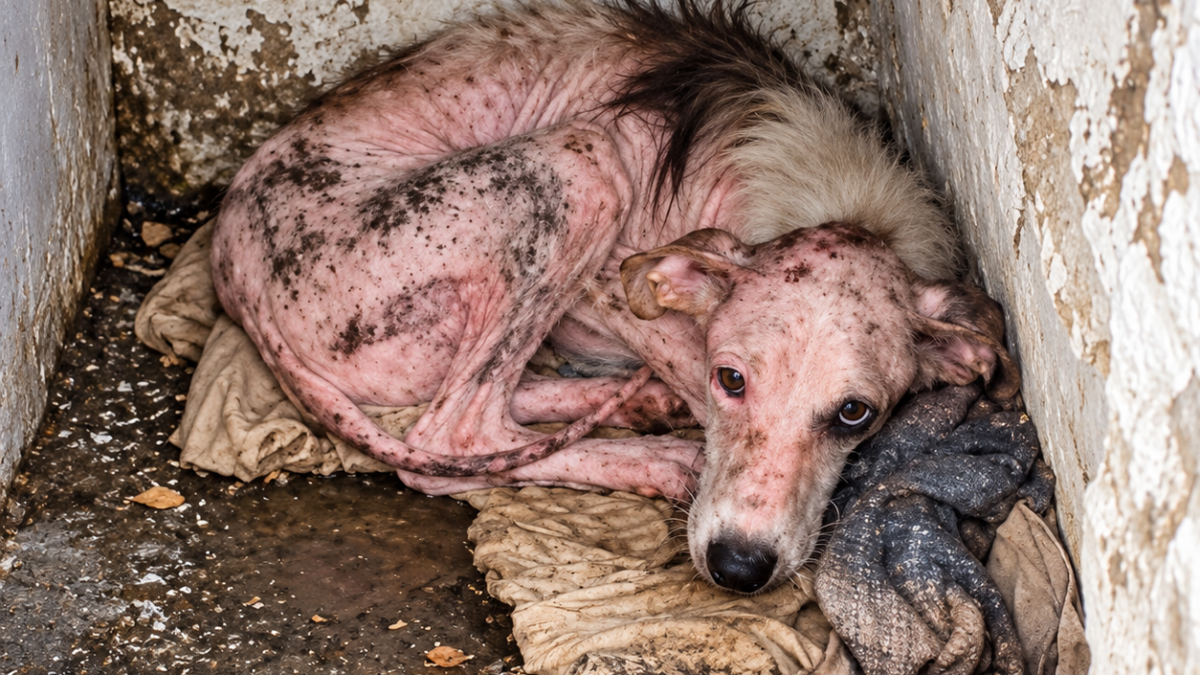
Sadie felt like bones wrapped in wet fur.
Her head rested against my forearm.
She didn’t fight.
She looked toward the puppy carrier.
“I’ve got them,” I whispered.
Her eyes stayed on it.
“They’re coming with you.”
We placed her in my rescue SUV beside the carrier.
Daniel brought the smallest puppy.
“She’s breathing.”
“Barely.”
I wrapped her in a warm towel.
Sadie stretched her neck toward us.
The moment the puppy squeaked, Sadie’s ears lifted.
Even then.
Even in that condition.
She was still watching for her baby.
We drove to Emily’s clinic with Daniel following.
I called ahead.
“We’re ten minutes out.”
“How many?”
“Six.”
“All alive?”
“Yes.”
“Mother?”
“Conscious. Severe body condition. Front leg possibly injured.”
“Bring them through side entrance.”
“Emily?”
“Yes?”
“One puppy is barely responsive.”
“We’re ready.”
I drove faster than I should have.
At every red light, I looked back.
Sadie lay on the blankets.
Her puppies were in a warmed carrier beside her.
Her nose remained pressed against the wire door.
She didn’t close her eyes once.
At the clinic, the staff came outside with two gurneys.
Emily took one look at Sadie.
“Oh, sweetheart.”
That was all she said before the room became controlled chaos.
Temperature.
Heart rate.
Blood pressure.
Blood glucose.
Weight.
Body-condition score.
Skin examination.
Paw examination.
Warm IV fluids.
Heat support.
The puppies were moved into an incubator one by one.
Emily checked the smallest female.
“How cold?”
A technician read the thermometer.
“Too low to register accurately on the first attempt.”
Emily’s face changed.
“Slow warming. No feeding yet.”
I knew why.
Feeding a dangerously cold neonatal puppy can cause additional problems.
The body has to warm first.
Sadie began whining.
She could hear them.
I sat beside her.
“They’re right there.”
Her eyes fixed on the incubator.
Emily examined Sadie’s mammary glands.
“She’s producing some milk, but not enough for six pups in this condition.”
“How bad is she?”
Emily looked at the scale.
“Very.”
“Can you give me specifics?”
“Significant emaciation. Dehydration. Hypothermia. Possible anemia. Nutritional depletion. Pressure irritation around the tether area. Her front paw is swollen, but I don’t feel an obvious fracture. We’ll image it.”
“Can she recover?”
“Yes.”
The answer came quickly.
I exhaled.
“If there isn’t severe underlying disease, yes. She can recover.”
“And the puppies?”
Emily looked toward the incubator.
“They’re more fragile.”
My throat tightened.
“But they’re alive.”
“Yes.”
“Then we fight.”
Emily nodded.
“Then we fight.”
The first bloodwork results came back an hour later.
Sadie was anemic.
Her protein levels were low.
She was dehydrated.
She had intestinal parasites.
Her body had been feeding six puppies while barely receiving enough nutrition for herself.
Emily stood at the counter reviewing the results.
“She’s been pulling from her own body.”
“What does that mean?”
“Every resource she had went toward maintaining pregnancy, producing milk, staying warm, staying alive.”
I looked at Sadie.
“And when the resources ran out?”
“They were almost there.”
I sat down.
Sadie’s head was resting on folded blankets.
For the first time since we found her, she had closed her eyes.
The puppies were warm.
She knew where they were.
Maybe that had finally allowed her to sleep.
Daniel entered the room.
“Can I photograph her condition before treatment changes things too much?”
“Yes.”
Emily documented everything with him.
Visible ribs.
Hip bones.
Tether marks.
Swollen paw.
Dirty coat.
Frost exposure.
The frozen water and property photographs were already timestamped.
Then Daniel asked Emily the question that mattered legally.
“In your professional opinion, was this dog in immediate danger if she had remained outside?”
Emily didn’t hesitate.
“Yes.”
“Potentially life-threatening?”
“Yes.”
“And the puppies?”
“Absolutely.”
Daniel wrote it down.
“What would likely have happened if nobody intervened tonight?”
Emily looked through the glass at the litter.
“I can’t say exactly. But prolonged cold exposure in neonates can become fatal quickly. The mother’s condition was already compromised. Continued exposure, inadequate nutrition, frozen water, and restricted movement significantly increased the risk.”
Daniel nodded.
“Thank you.”
He looked at me.
“I need your full statement tonight if possible.”
“You’ll get it.”
“It may be long.”
“So will mine.”
For the next twelve hours, none of us went home.
The smallest puppy became our focus.
We called her Ember.
Not because she was strong.
Because she barely had a spark left.
One technician, Maya, sat beside the incubator checking her every few minutes.
At 3:17 a.m., Ember’s temperature finally entered a safer range.
At 3:42, Emily allowed tiny amounts of warmed formula.
Ember swallowed.
Maya looked at me.
“That’s good.”
“How good?”
“Good enough that I’m smiling.”
I started crying.
Maya laughed softly.
“Don’t make me cry too.”
Across the room, Sadie woke.
She lifted her head.
I brought Ember close enough for Sadie to smell but not yet nurse.
Sadie’s entire body changed.
Her ears came forward.
She licked Ember’s head.
Then she looked at me.
I don’t pretend animals speak in sentences.
But there are moments when a look carries enough meaning that language would only cheapen it.
Sadie knew her baby was alive.
She lowered her head again.
At sunrise, snow still covered the world outside.
But inside the clinic, all six puppies were breathing.
Sadie had eaten her first controlled recovery meal.
Not much.
But enough.
Emily warned us not to overload her system.
Small meals.
Frequent meals.
Careful refeeding.
Hydration.
Parasite treatment.
Pain control.
Warmth.
Rest.
And constant monitoring of the puppies.
The first two days were touch-and-go.
Sadie wanted to nurse constantly.
We had to supplement because her body simply could not produce enough.
She tolerated bottle feeding as long as she could see the puppies.
If we moved one too far away, she tried to follow despite her weak legs.
“Okay, okay,” Maya said one afternoon. “Nobody is stealing your children.”
Sadie watched her.
Maya held up the puppy.
“See?”
Sadie relaxed.
“She doesn’t trust us yet,” I said.
“She doesn’t have to.”
Exactly.
Trust is not a debt rescued animals owe their rescuers.
We had to earn it.
On the third day, Daniel called.
“I found previous complaints.”
I sat down.
“How many?”
“Two.”
“About Sadie?”
“Same property. Female dog tethered outdoors.”
“When?”
“One last winter. One six months before that.”
“What happened?”
“First inspection found minimum shelter after owner made corrections. Second officer couldn’t make contact and follow-up was marked incomplete.”
I closed my eyes.
“So people knew.”
“People had concerns.”
“Daniel.”
“I know.”
“She had puppies out there.”
“We’re investigating.”
“What else?”
“The owner has online advertisements.”
“For these puppies?”
“Not these specifically. Previous litters.”
“How many?”
“At least three posts in the last two years.”
My stomach sank.
Sadie was only around three.
“How old was she for the first litter?”
“We don’t know yet.”
I looked toward her kennel.
She was asleep while six puppies piled across her belly.
“Prices?”
“Four hundred to seven hundred dollars per puppy.”
I rubbed my forehead.
“And he said she was just a dog.”
Daniel was quiet.
“Yes.”
“So she mattered when she made money.”
“Rachel.”
“I know. Evidence first.”
“Exactly.”
“Do you think this was deliberate breeding?”
“I think we should let the records answer that.”
That was why Daniel was good at his job.
He never let anger outrun proof.
I tried to do the same.
The next week became a routine.
Every morning, I weighed the puppies.
Bear, the biggest male.
Luna, a gray female.
Milo, the smallest male.
Ruby, who screamed every time the scale touched her feet.
Scout, who somehow crawled away from every blanket we put him on.
And Ember.
Ember remained tiny.
But every day, the number on the scale rose.
Three grams.
Five grams.
Eight.
We celebrated every one.
Sadie watched.
By day seven, she was standing more steadily.
By day nine, she walked across the room without stumbling.
By day twelve, her tail moved when I entered.
Just once.
But I saw it.
“Was that for me?”
Sadie looked away.
“Oh, don’t pretend.”
Maya laughed.
“She likes you.”
“She tolerates me.”
“Same thing in rescue.”
“No, it isn’t.”
But I smiled anyway.
The legal side moved forward.
Daniel interviewed neighbors.
One neighbor, Mr. Thomas Greene, had lived across the road for eight years.
“I saw the dog outside all the time,” he said.
“All seasons?”
“Pretty much.”
“Did you see her pregnant before?”
“Yes.”
“How many times?”
“At least twice before this.”
Daniel asked whether Mr. Greene had ever seen puppies.
“Yeah. Couple litters.”
“What happened to them?”
“Cars came by. People picked them up.”
“Did you see money exchanged?”
“No.”
“Did the owner ever advertise puppies?”
“I saw signs once.”
“What kind?”
“Puppies for sale.”
Another neighbor had photographs from the previous summer.
Sadie tethered beside the same post.
Visible ribs.
No shade except a small patch that disappeared by midday.
Another photograph showed a litter of older puppies inside a wire pen.
No roof.
No bedding.
When Daniel showed me those images, I felt rage so clean and cold that it frightened me.
“This wasn’t one storm.”
“No.”
“This was normal for her.”
“Looks that way.”
“Can you stop him from owning dogs?”
“That’s ultimately up to the court and terms of the case.”
“He’ll do it again.”
“We build the strongest case we can.”
I hated that answer because it was correct.
Rescue teaches you that justice is rarely one dramatic moment.
It is paperwork.
Photographs.
Veterinary records.
Statements.
Dates.
Weights.
Receipts.
Weather reports.
Microchip scans.
Screenshots.
Small pieces that become impossible to ignore when assembled correctly.
So we assembled them.
Meanwhile, Sadie slowly began becoming a dog instead of merely a mother surviving a crisis.
The first time she played, nobody expected it.
Maya was replacing bedding when a tennis ball rolled from a supply basket.
It stopped near Sadie.
She stared at it.
Maya kept working.
Sadie sniffed the ball.
Then touched it with one paw.
It rolled.
Her ears lifted.
She followed it.
Maya froze.
“Rachel.”
“What?”
“Come here.”
I stepped into the room.
Sadie nosed the ball.
It rolled again.
She followed.
I smiled.
“Get it, Mama.”
Sadie looked at me.
I rolled the ball gently.
She took two quick steps after it.
Then stopped as if she had surprised herself.
Maya covered her mouth.
“She knows how to play.”
“Of course she does.”
Sadie picked up the ball.
Her tail moved.
Not one wag.
Several.
I sat on the floor.
“Bring it here.”
She didn’t.
She carried it to the opposite corner and lay down.
Maya laughed.
“That’s rude.”
“No. That’s ownership.”
Sadie chewed the ball while her puppies slept.
For five minutes, she wasn’t starving.
She wasn’t freezing.
She wasn’t somebody’s breeding dog.
She wasn’t evidence.
She was just Sadie.
That moment mattered more than I expected.
Two weeks later, the owner requested the animals back.
Daniel warned me before the hearing.
“He’s contesting custody.”
“All of them?”
“Yes.”
“Even after the vet report?”
“Yes.”
“Why?”
“He claims the weather changed unexpectedly, Sadie became tangled shortly before you arrived, and she was thin because of nursing.”
“And the puppies?”
“He says he had intended to bring them inside that night.”
I stared at him.
“The puppies were several days old.”
“That’s what he says.”
“He told me dogs were built for outside.”
“I documented your statement.”
“He said they were worth money.”
“Also documented.”
I exhaled.
“What happens if the judge believes him?”
“We present evidence. The judge decides temporary custody based on the applicable standard.”
Temporary.
That word terrified me.
Sadie was gaining weight.
Her puppies were stabilizing.
She had started sleeping on her back with her feet in the air.
And there was still a legal possibility—however small—that someone could order them returned while the broader case continued.
I barely slept the night before the hearing.
The courtroom was smaller than I expected.
The former owner sat beside an attorney.
He looked clean.
Pressed shirt.
Fresh haircut.
Nothing about him resembled the man standing on the porch while Sadie froze.
That bothered me more than it should have.
We expect cruelty to look like cruelty.
Most of the time, it looks ordinary.
Daniel testified first.
He described the scene without exaggeration.
Active snowfall.
Subfreezing temperature.
Mother dog severely underweight.
Six neonatal puppies.
Frozen water.
No accessible dry bedding.
Hazardous tether entanglement.
Owner refusal to voluntarily surrender.
Emergency veterinary removal.
The attorney asked:
“Officer Morales, is it illegal for a dog to be outdoors in winter?”
“No.”
“So winter itself is not neglect.”
“Correct.”
“Is tethering always illegal?”
“No.”
“Is owning a thin nursing dog illegal?”
“Not automatically.”
The attorney looked satisfied.
Then Daniel continued.
“My assessment was based on the totality of the conditions, not one isolated factor.”
“What totality?”
“Severe weather exposure, compromised body condition, inadequate access to liquid water, six neonates without appropriate protection, hazardous restraint, limited mobility, inadequate shelter for the litter, and veterinary findings showing hypothermia, dehydration, anemia, parasitism, and nutritional depletion.”
The attorney’s expression changed.
“Some of those findings occurred after the dog left the property.”
“They were documented immediately upon arrival at the veterinary hospital.”
“Could transportation have caused stress?”
“Not the degree of emaciation.”
Daniel stayed calm.
That was his strength.
Emily testified next.
Her testimony was even harder to challenge.
She explained body-condition scoring.
She explained why nursing causes increased calorie demands but does not make severe emaciation acceptable.
She explained neonatal temperature regulation.
She explained why frozen water does not meet hydration needs.
She explained Sadie’s bloodwork.
The attorney asked:
“Could Sadie’s anemia have been caused by parasites rather than neglect?”
Emily answered:
“Parasites contributed. Appropriate veterinary treatment and nutrition were still the owner’s responsibility.”
“Could the puppies have survived outside?”
“Survival is not the same as appropriate care.”
“Doctor, that wasn’t my question.”
“Then the answer is that some might have survived. One was already critically hypothermic. Continued exposure increased the risk of death.”
I watched the owner look down.
For the first time, he seemed uncomfortable.
Then it was my turn.
The attorney asked whether I hated his client.
“No.”
“Were you angry?”
“Yes.”
“So you were emotionally compromised.”
“I was emotionally affected by what I observed.”
“Same thing.”
“No.”
“Did you decide the dog was neglected before speaking to my client?”
“I decided she required immediate assessment.”
“You described her as starving.”
“She was severely underweight.”
“You’re not a veterinarian.”
“No. Dr. Carter documented the medical findings.”
“Did my client tell you he fed the dog?”
“Yes.”
“So you knew she was being fed.”
“I knew he claimed she was being fed.”
He frowned.
“Are you calling him a liar?”
“I’m saying I did not personally witness his feeding routine. I witnessed Sadie’s physical condition, an overturned empty bowl, and frozen water.”
The judge looked at his notes.
The attorney changed direction.
“Did you see my client intentionally harm Sadie?”
“No.”
“Did you see him intentionally tangle her?”
“No.”
“Then you cannot say he caused her paw restraint.”
“I can say she was restrained and unable to move safely when I arrived.”
He held up one finger.
“But you don’t know how long.”
“Correct.”
“Could have been ten minutes.”
“Possible.”
“Could have been five.”
“Possible.”
The attorney smiled.
Then I added:
“The snow accumulation on portions of the cable suggested it had been in place longer than a few minutes, but I’m not qualified to determine the exact duration.”
His smile disappeared.
The judge asked to see the photographs.
Daniel provided them.
Then came the statement about money.
The prosecutor asked:
“When Officer Morales told the respondent the animals were being removed, did the respondent make any statement regarding the puppies?”
“Yes.”
“What did he say?”
“That they were worth money.”
The attorney objected.
The judge allowed the testimony subject to context.
Daniel confirmed the statement from his contemporaneous notes.
The owner shook his head.
“I didn’t mean it like that.”
The judge looked at him.
“You’ll have your opportunity.”
The temporary custody order remained with animal control and our rescue.
I nearly cried in the courthouse bathroom.
Daniel found me washing my hands.
“You okay?”
“Yes.”
“You look like you’re about to collapse.”
“That’s because I’ve been holding my breath for two hours.”
“They’re staying.”
“For now.”
“For now.”
I looked at him.
“I hate those words.”
“So do I.”
Back at the rescue, Sadie greeted me with the tennis ball in her mouth.
I laughed.
“You have no idea what happened today.”
She dropped the ball at my feet.
“Fine.”
I threw it.
She ran after it.
Her puppies were three weeks old now.
Their eyes had opened.
Their personalities were emerging.
Bear was enormous.
Ruby complained constantly.
Scout escaped everything.
Milo slept through chaos.
Luna liked climbing on Sadie’s head.
Ember was still smaller than the rest but no longer fragile.
She had become fierce.
If one puppy blocked her from nursing, she pushed underneath.
If someone picked her up, she squeaked until returned.
Maya adored her.
“You’re keeping her,” I teased.
“No.”
“You say that while carrying her inside your sweatshirt.”
“It’s therapeutic temperature control.”
“She’s four weeks old.”
“She gets chilly.”
“She’s asleep.”
“Exactly.”
I smiled.
As the puppies grew, Sadie’s body recovered faster.
Her coat became soft.
The bald areas around the tether marks filled in.
Her paw swelling resolved.
Her anemia improved.
The first time she weighed twenty pounds more than intake, Emily showed me the chart.
“Look at that.”
I stared.
“Twenty.”
“Almost.”
“She was feeding six puppies while missing twenty pounds from her own body.”
“Approximately.”
I shook my head.
“How was she alive?”
Emily leaned against the counter.
“Animals can tolerate terrible things until they can’t.”
“That doesn’t make me feel better.”
“It shouldn’t.”
The criminal investigation uncovered more.
Bank-transfer records weren’t available without additional legal process, but investigators found archived online advertisements.
Pictures showed Sadie with puppies from two previous litters.
One advertisement described her as a “proven mama.”
I hated those words.
Daniel showed me the screenshot.
“She was barely more than a puppy herself.”
“I know.”
Another advertisement promised that puppies would be “ready by Christmas.”
Another boasted that the parents were “raised outdoors, tough and healthy.”
I looked at Daniel.
“Tough.”
“Rachel.”
“Sorry.”
He scrolled.
“This post is eleven months before the rescue.”
Sadie was pregnant in the photo.
Thin already.
Another litter.
“How many litters can you prove?”
“Three including the current one. Possibly four.”
“At three years old.”
“Yes.”
I looked at the image of Sadie lying beside older puppies.
She looked tired even then.
“What happened to those puppies?”
“Likely sold.”
“Can you trace buyers?”
“We’ve located two.”
“Healthy?”
“One says yes. The other dog died young from an unrelated accident.”
At least they were out.
That was something.
The most important discovery came from veterinary records.
Sadie had been seen once at a low-cost vaccine clinic almost eighteen months earlier.
The technician had noted that she was underweight and recommended nutritional improvement and a full veterinary examination.
No follow-up appeared anywhere.
Later, one of the previous puppy buyers provided messages in which the owner wrote:
“She gets skinny when she nurses. Always bounces back.”
Always.
That word mattered.
This had happened before.
Sadie had repeatedly become thin during nursing.
He knew.
He considered it normal.
The prosecutor added the records to the case file.
The puppies reached seven weeks.
They were chaos.
Beautiful chaos.
Six little bodies tearing through the playroom.
Sadie had begun correcting them.
When Scout bit her ear too hard, she growled.
When Bear tried to steal food from her bowl, she stepped between him and it.
Motherhood was no longer a desperate act of keeping them alive.
Now she was teaching them boundaries.
That felt like progress too.
One afternoon, I sat in the playroom while snow began falling outside again.
Sadie noticed.
Her entire body froze.
I saw it instantly.
The puppies kept playing.
Sadie stared at the window.
“Sadie.”
Nothing.
I stood.
Her tail dropped.
I remembered the yard.
The snow on her back.
The frozen water.
The tether.
I walked toward the window and closed the blinds.
Sadie looked at me.
Then she walked to the door.
I opened it.
She went into the hallway.
I followed.
She entered her kennel and curled onto the blanket.
I sat beside her.
“It’s just snow now.”
Her eyes stayed on the doorway.
“You’re inside.”
I didn’t touch her.
“You’re warm.”
Slowly, her breathing settled.
The puppies tumbled into the room after us.
Ember climbed across Sadie’s front legs.
Sadie licked her.
Then she rested her head.
Recovery is not a straight line.
A dog can gain thirty pounds and still remember weather.
A dog can play with a tennis ball and still panic when a door slams.
A dog can be safe and still need time to believe safety will last.
We gave Sadie time.
The next custody hearing became the turning point.
The owner’s attorney proposed voluntary relinquishment of Sadie and the puppies if certain charges were resolved separately.
I didn’t care about negotiations.
I cared about one question.
“Will he ever get Sadie back?”
Daniel answered:
“No, if the agreement is accepted.”
“The puppies?”
“No.”
“Can he breed her again?”
“He won’t own her.”
“That wasn’t my question.”
Daniel understood.
“The criminal case is seeking restrictions on future animal ownership and breeding. Exact terms will be decided.”
I nodded.
“When does ownership transfer?”
“If documents are signed, immediately after approval.”
The hearing lasted less than an hour.
At 11:36 a.m., Sadie legally stopped belonging to the man who had left her in the snow.
Daniel texted me from the courthouse hallway.
OWNERSHIP TRANSFERRED.
I read it three times.
Then I walked into the puppy room.
Sadie was chewing her tennis ball.
“Hey.”
She looked at me.
“You’re free.”
Tail wag.
“Officially.”
She dropped the ball.
“You have absolutely no idea what I’m saying, do you?”
Sadie walked toward me.
Then pressed her head into my stomach.
I put both arms around her.
For the first time, I hugged her without worrying that someone might legally take her away.
“No one’s putting you back there.”
She leaned harder.
I started crying into her fur.
Maya walked in.
“Oh no.”
“I’m fine.”
“Did something happen?”
“They signed.”
Maya froze.
“All of them?”
“All.”
She looked at the puppies.
Then Sadie.
Then she started crying too.
Within ten minutes, half the clinic knew.
We didn’t throw a party.
Sadie hated loud noise.
Instead, we gave her a new tennis ball and chicken with dinner.
That was our celebration.
Now came adoption.
The puppies attracted applications immediately.
Everyone wanted snow-rescue puppies.
I hated that phrase.
They were not trophies.
They were not content.
They were dogs who needed lifelong homes.
So we screened aggressively.
No backyard-only homes.
No breeders.
No impulse Christmas gifts.
No applicants unwilling to provide veterinary care.
No one who said, “It’s just a dog.”
Bear went to a retired couple with a fenced yard.
Ruby went to a veterinary assistant.
Scout went to a hiking family.
Milo joined a quiet home with another dog.
Luna went to a teacher.
Ember stayed longest.
Not because she had medical problems anymore.
Because Maya had fallen in love with her.
“You know what you have to do,” I said.
Maya sighed.
“I know.”
“Application.”
“I work here.”
“Application.”
“You know where I live.”
“Application.”
“You’ve met my husband.”
“Application.”
“You’re enjoying this.”
“Deeply.”
Maya submitted the paperwork.
Home inspection.
References.
Everything.
A week later, Ember went home with her.
Technically adopted.
Practically still at the clinic every other day because Maya brought her to work.
Sadie watched each puppy leave.
The first one upset her.
She searched the room.
The second time, less.
By Ember’s adoption, she sniffed the carrier and then returned to her tennis ball.
“She’s done parenting,” Emily said.
“She earned it.”
Sadie now needed a home.
That proved harder than expected.
People loved her story.
I didn’t want anyone who loved only the story.
One woman applied because Sadie was “famous.”
Rejected.
A man said he wanted a guard dog.
Rejected.
A family with three young children seemed kind, but Sadie became visibly overwhelmed during their visit.
Not rejected because they were bad.
Simply not the right match.
Then a woman named Claire Donovan applied.
Fifty-four.
Emergency-room nurse.
Widowed.
No children at home.
One elderly indoor cat.
Fenced yard.
Previous experience with anxious dogs.
I called her.
“Why Sadie?”
Claire paused.
“I saw the photo of her sleeping on a blanket.”
“Not the original snow photo?”
“No.”
“Why not?”
“I don’t want to adopt suffering. I want to adopt the dog she is now.”
I sat straighter.
“What if she never likes snow?”
“Then we stay inside.”
“What if she does?”
“Then she gets to choose.”
That word.
Choose.
“What if she takes months to trust you?”
“Then it takes months.”
“What if she doesn’t want affection?”
“I have books.”
I laughed.
Claire visited.
She didn’t bring treats the first time.
She didn’t reach for Sadie.
She sat in the playroom and talked to me.
Sadie watched from across the room.
Ten minutes later, she approached.
Claire kept her hands still.
Sadie sniffed her shoe.
Then her knee.
Then walked away.
Claire smiled.
“That went well.”
“Most people would call that nothing.”
“It wasn’t nothing.”
Exactly.
Second visit.
Claire brought approved chicken.
Sadie accepted one piece.
Third visit.
Claire sat on the floor.
Sadie lay six feet away.
After twenty minutes, Sadie moved closer.
Then closer.
Eventually she rested with her back against Claire’s leg.
Claire didn’t touch her.
She simply looked at me.
Her eyes were wet.
“I think she picked.”
“So do I.”
We inspected Claire’s house.
Warm.
Quiet.
Two dog beds already placed, although Claire insisted one could be removed if Sadie hated it.
The fenced yard was secure.
There was a covered porch.
Inside, a fireplace.
I looked at the porch.
“Does she have to stay outside when you’re gone?”
Claire looked horrified.
“No.”
“Good answer.”
“She’ll be inside.”
“Always?”
“Unless she chooses the yard while I’m home.”
I nodded.
Adoption day came in early spring.
The snow was melting.
I liked the timing.
Sadie wore a new harness.
Claire held the leash.
Before leaving, Sadie walked back toward the kennel room.
She sniffed the floor.
The empty puppy pen.
Her old blanket.
Then she picked up the tennis ball.
I laughed.
“You’re taking that?”
She carried it toward the door.
Claire smiled.
“I guess so.”
Outside, Sadie hesitated at the car.
Claire waited.
No pulling.
No coaxing.
Just waiting.
Sadie looked at me.
I crouched.
“You can go.”
Her tail moved.
“You’re not being abandoned.”
Claire opened the back door wider.
Sadie climbed in.
Before the door closed, she dropped the tennis ball.
It rolled onto the pavement.
I picked it up.
Sadie stared.
“Oh, no.”
I handed it back.
“You chose this.”
She took it.
Claire laughed.
They drove away.
I stood in the parking lot until the car disappeared.
Emily came out.
“You okay?”
“No.”
“Good adoption?”
“The best.”
“Then why are you crying?”
“You ask that like you haven’t known me for twelve years.”
She smiled.
“Fair.”
Claire sent an update that night.
Sadie ate dinner.
Walked the yard.
Refused the expensive dog bed.
Slept on the rug.
Perfect.
Next morning:
Sadie discovered the couch.
Third day:
Sadie stole one of my socks.
Fifth day:
She slept through the night.
One week:
She brought me the tennis ball.
Two weeks:
She barked at the mailman and then hid behind me.
Three weeks:
She put her head in my lap.
I saved every message.
Then came another snowstorm.
My phone rang at 6:12 a.m.
Claire.
My stomach dropped.
“Is Sadie okay?”
“Yes.”
I exhaled.
“You cannot call a rescuer at six in the morning and start with silence.”
“I’m sorry.”
“What happened?”
“It’s snowing.”
I sat up.
“How is she?”
“That’s why I’m calling.”
Claire sounded emotional.
“She stood at the back door.”
“Frozen?”
“No.”
“Shaking?”
“No.”
“What?”
“She wanted to go outside.”
I went silent.
“Are you sure?”
“She scratched the door.”
“So you let her out?”
“I opened it. I stayed right there.”
“And?”
“She stepped onto the porch.”
My eyes filled.
“She looked at the snow for maybe a minute.”
“Then what?”
“She walked into it.”
I covered my mouth.
Claire started laughing through tears.
“She sniffed it, Rachel.”
“Did she panic?”
“No.”
“She stayed?”
“About thirty seconds.”
“What happened?”
“She turned around and came back inside.”
I started crying.
“She chose.”
“Yes.”
That was all.
Thirty seconds.
To anyone else, nothing.
To us, everything.
Sadie had gone into snow because she wanted to.
And when she had enough, she came home.
No cable stopped her.
No frozen bowl waited beside her.
No babies depended on the heat of her starving body.
Just an open door.
Months later, the criminal case reached resolution.
I attended the hearing.
Not because Sadie needed me there.
She was already safe.
I went because accountability mattered for the next dog.
The prosecutor presented the evidence.
Previous complaints.
Veterinary records.
Archived puppy advertisements.
Neighbor photographs.
The condition during seizure.
The repeated litters.
The prior message acknowledging she became skinny while nursing.
The owner ultimately entered a plea on neglect-related charges rather than continue through trial.
The sentence included fines, reimbursement obligations for part of the emergency care, probationary terms, and restrictions on possessing or breeding dogs for a period set by the court.
It wasn’t the dramatic punishment people imagine.
No shouting.
No revenge speech.
No cheering courtroom.
Real cases rarely end that way.
But he lost Sadie.
He lost the litter.
He lost the ability to immediately replace her with another breeding dog under the same conditions.
And the neglect became part of an official record.
Outside the courthouse, I saw him.
He saw me too.
For a moment, I thought we would simply pass.
Then he stopped.
“You happy?”
I looked at him.
“With what?”
“You got what you wanted.”
I thought about Sadie.
Healthy now.
Warm.
Living with Claire.
“What do you think I wanted?”
“You wanted to punish me.”
“No.”
He laughed.
“Sure.”
“I wanted your dog out of the snow.”
“She was fine.”
There it was again.
Months of evidence.
Veterinary findings.
A critically hypothermic puppy.
A mother twenty pounds under healthy condition.
And still:
Fine.
I realized then that I had been hoping, somewhere deep down, that consequences would produce understanding.
They didn’t.
Maybe they never would.
And suddenly, I didn’t need them to.
“You know what happened during the last snowstorm?” I asked.
He frowned.
“What?”
“Sadie asked to go outside.”
He looked confused.
“She walked into the snow because she chose to. Then she walked back into a warm house.”
He said nothing.
“She can do that now.”
He rolled his eyes.
“That supposed to make me feel bad?”
“No.”
I meant it.
“It isn’t about you anymore.”
Then I walked away.
That was the most satisfying part.
Not defeating him.
Making him irrelevant.
Sadie’s future no longer depended on whether he understood what he had done.
She didn’t need an apology.
She needed a life.
And she had one.
Six months after adoption, Claire invited me over.
Her house stood on a quiet street lined with maples.
I parked.
Before I reached the door, barking erupted inside.
Claire opened it.
Sadie stood in the hallway.
Healthy.
Muscular.
Shiny coat.
For one second she stared.
Then she ran.
“Sadie!”
She hit me hard enough to nearly knock me backward.
I dropped to my knees.
She licked my face.
“You remember me?”
Tail everywhere.
Claire laughed.
“I’d say yes.”
Sadie ran away.
Returned with the tennis ball.
The same one.
It was disgusting now.
Chewed nearly flat.
“You kept that?”
Claire looked offended.
“She keeps that.”
Sadie dropped it in my lap.
I threw it across the living room.
She sprinted after it.
The difference was almost impossible to process.
The dog I had carried because she couldn’t stand was now skidding across hardwood after a ball.
Claire showed me the house.
Sadie had ignored both expensive beds.
She slept on the couch during the day and beside Claire’s bed at night.
The elderly cat, Walter, tolerated her.
“Define tolerate.”
“They coexist under a treaty.”
“Terms?”
“Sadie doesn’t chase Walter. Walter doesn’t attack Sadie unless she violates Article One.”
“Reasonable.”
The backyard was fenced.
A covered porch stretched across the back.
Sadie ran outside.
No leash.
No tether.
She sniffed a tree.
Rolled in the grass.
Then came back to check that the door was still open.
Claire noticed me noticing.
“She does that.”
“Checks the door?”
“Yes.”
“Every time?”
“Not anymore. At first, constantly.”
My chest tightened.
“What did you do?”
“Left it open when weather allowed.”
“So she knew?”
“That she could come in? I think so.”
We sat on the porch.
Sadie lay between us.
“I want to show you something,” Claire said.
She pulled out her phone.
The video began during a winter storm several weeks earlier.
Snow covered the yard.
Sadie stood at the open back door.
Claire’s voice came from behind the camera.
“You don’t have to.”
Sadie stepped outside.
She walked five feet.
Stopped.
Looked back.
The door remained open.
Then she ran.
Not away.
In circles.
Through the snow.
She shoved her nose into it.
Jumped.
Spun.
Ran toward the porch.
Then back into the yard.
I stared at the screen.
Claire whispered beside me:
“She played.”
In the video, Sadie dropped onto her front legs and pushed snow with her nose.
Then she bounded toward the camera.
I stopped the video.
“I need a second.”
Claire nodded.
Sadie lifted her head from the porch.
I looked at her.
“You really did that?”
She yawned.
I laughed through tears.
The snow had become something else.
Not completely.
Memory doesn’t disappear because circumstances improve.
But trauma had lost some territory.
That mattered.
One year after rescue, we held a litter reunion.
All six puppies came.
Ember arrived with Maya.
She was no longer tiny.
She was compact, muscular, and absolutely convinced that everyone belonged to her.
Maya released her inside the fenced yard.
“Ember!”
The dog ignored her.
She ran toward Sadie.
Sadie stiffened.
Sniffed.
Then wagged.
One by one, the others arrived.
Bear.
Ruby.
Scout.
Milo.
Luna.
Six adult dogs who had once fit beneath their mother’s starving body in the snow.
Now they filled the yard.
People laughed.
Dogs barked.
Someone threw tennis balls.
Sadie stayed close to Claire.
At one point, Ember climbed halfway over her back.
Sadie gave one warning growl.
Ember immediately backed off.
Maya laughed.
“Still Mom.”
“Always.”
We took a photograph.
Sadie in front.
Six grown puppies around her.
I looked at the picture afterward.
There was nothing dramatic about it.
No snow.
No chain.
No suffering.
That was exactly why I loved it.
People often think the most powerful rescue photographs are the before pictures.
Bones.
Wounds.
Mud.
Fear.
I disagree.
The most powerful ones are the photographs where you can no longer tell what happened.
A healthy dog in a yard.
A puppy asleep on a couch.
A mother beside someone who loves her.
Normality can be a victory.
That winter, Claire called again.
“Guess what your dog did.”
“My dog?”
“She was your dog first.”
“No, she wasn’t.”
“Fine. Our emotionally shared dog.”
“What happened?”
“She woke me at five.”
“Why?”
“She wanted outside.”
“Snow?”
“Eight inches.”
I laughed.
“What did she do?”
“Zoomies.”
“No.”
“Full speed.”
“You have video?”
“Of course.”
She sent it.
Sadie ran through fresh snow.
Her legs kicked up powder.
Her mouth was open.
Tail high.
At one point, she rolled onto her back and wriggled.
I watched the clip four times.
The first winter, snow had nearly killed her.
The second, she tested it.
The third, she played in it.
That progression became one of the most meaningful things I had ever witnessed in rescue.
Not because she forgot.
Because she reclaimed.
Years passed.
Sadie aged.
Her muzzle grayed.
She slowed.
Claire sent fewer running videos and more sleeping pictures.
Sadie under blankets.
Sadie beside the fireplace.
Sadie with Walter the cat, both pretending not to touch.
Sadie watching snow through the window.
One photograph became my favorite.
Sadie lay on a thick bed beneath a window.
Outside, heavy snow covered the yard.
Inside, her water bowl was full.
Dinner bowl empty because she had eaten.
A blanket covered her hind legs.
The tennis ball rested under her chin.
Claire had written:
“She watched the snow for an hour, then decided the couch was more interesting.”
I printed it.
Beside it, I kept Daniel’s first intake photograph.
Sometimes new volunteers noticed both.
“Same dog?”
“Yes.”
“No way.”
“Same dog.”
They would stare.
I never enjoyed the shock.
But I understood its value.
Sadie’s story taught new volunteers something important.
Rescue is not about making suffering look dramatic.
It is about making suffering end.
A few years after Sadie’s adoption, Daniel retired from animal control.
At his small farewell gathering, we talked about old cases.
“Remember Ridgeway Road?” I asked.
He groaned.
“The snow dog.”
“Sadie.”
“I know her name.”
“You called her snow dog for two months.”
“I had thirty active cases.”
I showed him a recent photo.
Sadie asleep under a blanket.
He smiled.
“That’s good.”
“Claire still has her.”
“Good.”
“Puppies all good too.”
“Good.”
I looked at him.
“You say that a lot.”
“In this job, ‘good’ is enough.”
He was right.
We don’t need every rescue ending to become extraordinary.
Safe is enough.
Fed is enough.
Warm is enough.
Loved is enough.
Getting old in somebody’s house is enough.
Then came the phone call I had always known would come someday.
Claire called early one autumn morning.
Sadie was almost twelve by then.
I saw the name.
This time, before I spoke, I knew.
“Rachel.”
Claire’s voice broke.
I sat down.
“What happened?”
“Sadie’s not doing well.”
I closed my eyes.
“What did the vet say?”
“Cancer.”
My throat tightened.
“Treatment?”
“Not realistically. It’s spread.”
For a while, neither of us spoke.
“How much time?”
“Maybe weeks.”
I stared at the old tennis ball displayed on a shelf in my office.
Claire continued.
“She’s comfortable right now.”
“Eating?”
“Chicken. Refusing regular food.”
“That sounds like her.”
Claire laughed softly through tears.
“She still hates bananas.”
“She always did.”
“I don’t know how to do this.”
“Yes, you do.”
“No.”
“You gave her years she wasn’t supposed to have.”
“That doesn’t make this easier.”
“No.”
I swallowed.
“It isn’t supposed to.”
I visited Sadie two days later.
She was slower.
Much slower.
But when she saw me, her tail moved.
I sat beside her bed.
“Hey, Mama.”
Her head lifted.
I rubbed her ears.
“You got old.”
Claire sat across from us.
Sadie’s tennis ball—some newer replacement because the original had finally disintegrated—was beside her.
Outside the window, leaves moved in the wind.
No snow yet.
I looked at Sadie.
“Remember me carrying you?”
She sighed.
“No? Good.”
I hoped she didn’t.
I hoped that night had become small compared with everything after it.
Claire brought chicken.
Sadie ate several pieces.
Then she put her head in my lap.
We sat like that for an hour.
Before I left, Claire walked me to the door.
“I need to ask you something.”
“Anything.”
“When it’s time…”
Her voice broke.
“Do you think I’m betraying her?”
“No.”
“You don’t even know what I’m asking.”
“Yes, I do.”
She covered her mouth.
I continued.
“When comfort is gone and the veterinarian tells you suffering is taking over, helping her leave peacefully is not sending her back into the snow.”
Claire cried.
“So much of her life was about somebody else deciding for her.”
“I know.”
“I don’t want to take something from her.”
“You’re protecting her from pain.”
Claire looked back toward Sadie.
“I just want one more winter.”
I understood.
But bodies don’t negotiate with calendars.
Sadie declined quickly.
Two weeks later, Claire called.
“It’s today.”
I drove to her house.
Emily came too.
Sadie would not spend her final hour in a clinic if we could prevent it.
She lay on her favorite bed near the fireplace.
Claire sat beside her.
I sat on the other side.
Emily explained everything.
No rush.
No sudden movements.
Sadie ate small pieces of chicken.
Claire laughed through tears.
“You milked this chicken situation for years.”
Sadie swallowed another piece.
I rubbed her neck.
Outside, the first snowflakes of the season began falling.
Claire saw them.
“Oh.”
I looked toward the window.
Tiny flakes.
Barely sticking.
For one painful second, the beginning and ending of Sadie’s story seemed to collide.
Then Sadie lifted her head.
She looked outside.
I held my breath.
Her tail moved once.
Claire whispered:
“She likes snow now.”
That broke all of us.
Emily waited.
When Claire was ready, Sadie received medication to make her sleepy.
She relaxed.
Her breathing slowed.
Her head remained in Claire’s lap.
I kept one hand against her shoulder.
Claire whispered into her ear.
“You’re inside.”
Sadie’s eyes were nearly closed.
“You’re warm.”
Snow drifted past the window.
“You don’t have to protect anyone.”
Claire’s voice cracked.
“No babies to keep warm.”
Sadie exhaled.
“You can rest.”
A few minutes later, she was gone.
Peacefully.
Warm.
Fed.
Loved.
No chain.
No snow on her back.
No frozen water.
No puppies crying beneath her.
Just two women crying beside a fireplace because a dog had finally reached the end of a long life she almost never got to have.
I stayed until evening.
Before I left, Claire handed me something.
A tennis ball.
“Take it.”
I shook my head.
“No.”
“Please.”
“That belongs here.”
“She had six others.”
I laughed.
“Of course she did.”
Claire pressed the ball into my hand.
“For the rescue.”
I took it.
“Okay.”
Months later, I placed that ball beside Sadie’s first photograph.
Not as a memorial to suffering.
As proof of everything that came after.
Sometimes people ask why I remember Sadie when we have rescued hundreds of dogs.
I think it’s because the night I found her contained nearly every contradiction of rescue work.
She was starving but feeding others.
Freezing but warming puppies.
Restrained but still trying to reach every cry.
Failed by people yet willing to trust another person.
Nearly invisible beside a house full of light.
And then, years later, she became a dog who ran through snow simply because she could.
The man who neglected her once occupied a huge part of the story.
For a while, I wanted consequences so badly that I thought they would be the ending.
They weren’t.
His punishment became a few pages in a file.
Sadie’s life filled years.
She had birthdays.
Veterinary checkups.
Christmas mornings.
Spring walks.
Thunderstorms.
Snow days.
Chicken stolen from counters.
Arguments with a cat.
Naps by a fireplace.
Six puppies who grew up safe.
A woman who loved her until her final breath.
That was the real revenge.
Not suffering returned for suffering.
A life reclaimed so completely that the person who failed her became almost irrelevant.
Sometimes, during the first snow of winter, I still think about Ridgeway Road.
I see the shape beside the house.
The body I almost mistook for an abandoned blanket.
Then the puppy moving beneath her.
The ribs.
The frozen bowl.
The tangled restraint.
I remember kneeling several feet away because Sadie didn’t know whether I was safe.
I remember telling her:
“You did good, Mama.”
At the time, I meant that she had kept her puppies alive.
Years later, I understood the sentence differently.
She did more than survive that night.
She kept enough of herself alive to eventually become the dog who chased tennis balls.
The dog who stole socks.
The dog who learned an open door stayed open.
The dog who walked into snow and then walked back inside because she wanted to.
The dog who eventually ran through it.
People like clean endings.
They want the cruel person punished.
The rescuer rewarded.
The dog instantly healed.
Life isn’t that neat.
Sadie carried fear for years.
She sometimes froze during storms.
She checked doors.
She guarded food in the beginning.
She had nightmares.
Recovery did not erase what happened.
It gave her more memories than the bad ones.
That may be the most realistic definition of healing I know.
Not forgetting.
Outnumbering.
One terrible snowstorm.
Then hundreds of warm nights.
One frozen bowl.
Then thousands of full ones.
One chain.
Then years of open doors.
One person who looked at her suffering and shrugged.
Then an entire network of people who refused to.
A veterinarian.
Technicians.
An animal-control officer.
Neighbors who testified.
Adopters who opened their homes.
Claire.
And finally Sadie herself.
The mother who once had nothing except her puppies ended her life with something she had never possessed that first night.
Choice.
Choice to go outside.
Choice to come in.
Choice to play.
Choice to rest.
Choice to leave a room when something frightened her.
Choice to sleep near a window instead of being trapped on the other side of warmth.
That is the part I remember most.
Not the chain being cut.
Not the courtroom.
Not even the first time she ran.
I remember standing in Claire’s house one winter afternoon years after the rescue.
Snow was falling hard.
Sadie was lying near the fireplace.
Claire opened the back door.
Cold air rushed inside.
Sadie lifted her head.
She looked at the snow.
Then at the couch.
Then at Claire.
Claire smiled.
“You want out?”
Sadie stood.
Walked toward the door.
Stopped.
Thought about it.
Then turned around and climbed onto the couch.
Claire laughed.
“Changed your mind?”
Sadie curled into the cushions.
The door remained open another few seconds.
Then Claire closed it.
Nothing forced Sadie either way.
That was it.
That ordinary little moment.
A dog choosing warmth because warmth belonged to her now.
The first time I found her, she had been starving, freezing, exhausted, and unable to leave her babies.
By the time her story ended, she had learned something she should have known from the beginning:
She never needed to earn shelter.
She never needed to nearly die before someone noticed.
She never needed to prove how loyal she was by suffering in silence.
She deserved food because she was hungry.
Water because she was thirsty.
Warmth because she was cold.
Medical care because she hurt.
And a home because a living creature should not have to survive every day as if love were something reserved for somebody else.
Sadie spent one winter keeping six tiny bodies alive with the last warmth she had.
Then, for the rest of her life, people finally returned the favor.
They kept her warm.
And they never made her beg for it again.



