PART 2: She Was Only 29 Days Old When Her Skull Was Fractured—Seven Days Later, We Found Her Walking in Circles
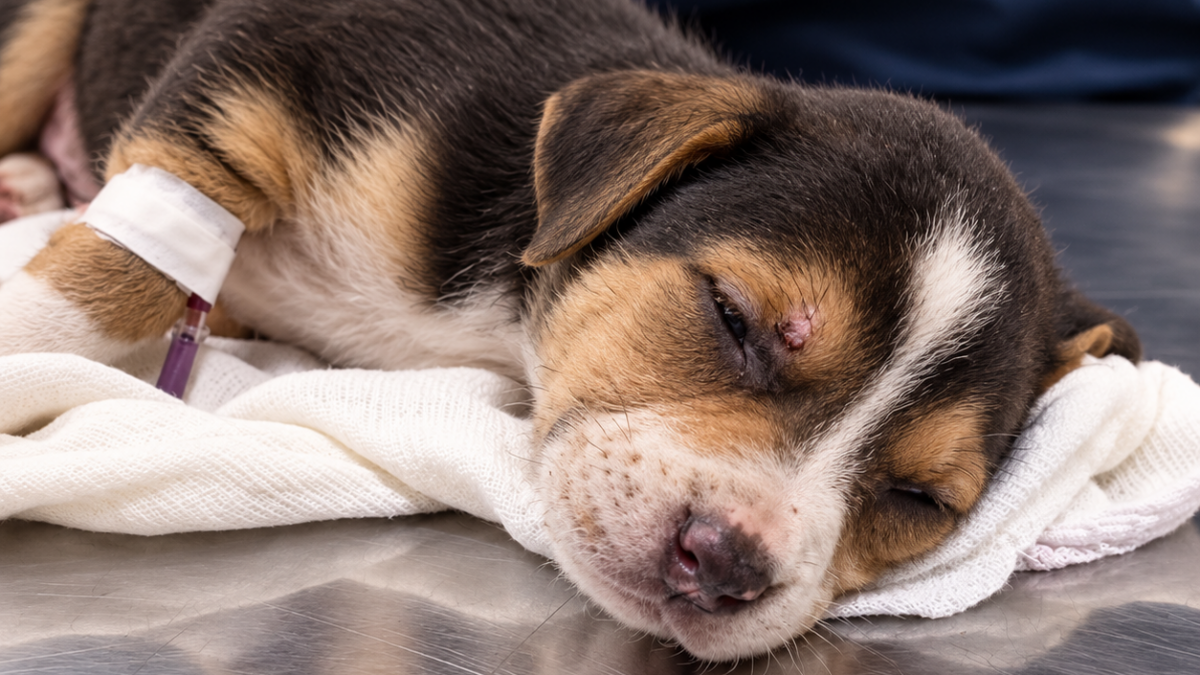
That first night, I stayed at the clinic longer than I needed to.
Technically, once Valentina had been admitted, there was nothing useful I could do.
The veterinary team knew their job.
They had her on medication.
Pain control.
Antibiotics.
Fluids.
Monitoring.
Warmth.
I was just another person standing in a hallway.
But leaving felt wrong.
For seven days, this puppy had gone without the one thing she desperately needed—medical care—and now that she finally had it, some irrational part of me wanted to make sure it didn’t disappear if I walked through the door.
So I stayed.
The veterinarian came out after checking her again.
“You should go home.”
“I know.”
“She’ll be monitored.”
“I know.”
“She needs rest.”
“I know.”
She smiled slightly.
“You’re going to say ‘I know’ and stay another hour.”
“Probably.”
She didn’t argue.
Through the glass, I could see Valentina lying on a folded blanket.
The swelling still distorted her head.
A small catheter was secured to one leg.
She looked impossibly fragile.
Then she shifted.
Lifted her nose.
Smelled something.
A technician brought food.
Soft.
Easy to swallow.
Valentina tried.
One lick.
Then another.
The technician looked toward me.
“She wants it.”
That tiny detail gave me more hope than it probably should have.
Wanting food meant there was still something in her body asking for tomorrow.
“Can she eat normally?”
“Carefully.”
Her mouth was sore.
Her head hurt.
But she ate a little.
Then stopped.
Enough for the first night.
When I finally left, I drove home thinking about the seven days before us.
That part of the story was the hardest because there was no dramatic villain standing in front of me to argue with.
The family had said they couldn’t afford treatment.
Poverty is real.
Veterinary care can be expensive.
I knew that.
I also knew a puppy had been bleeding from her mouth and walking in circles for days.
Both truths can exist.
Understanding why help was delayed didn’t make the delay harmless.
Valentina’s body didn’t care why treatment had not come.
A fracture remained a fracture.
Infection still spread.
Pressure still built.
Pain still hurt.
The next morning, I called before breakfast.
“How is she?”
“Stable.”
Not good.
Not bad.
Stable.
I was learning rescue vocabulary.
Words people use when hope needs to remain careful.
“She ate a little.”
“Any circling?”
“Yes.”
My heart sank.
“But she’s more alert.”
A little hope returned.
I drove back.
Valentina was awake.
The swelling seemed almost the same.
Maybe slightly softer.
The veterinarian explained that the drained fluid would continue to change as treatment worked.
At first, it had been thick.
Bloody.
Purulent.
Ugly.
Over the next several days, it began becoming clearer.
That mattered.
It suggested infection was responding.
We celebrated fluid becoming less disgusting.
Rescue gives you strange milestones.
The first clear drainage.
The first normal stool.
The first real meal.
Things nobody photographs for inspirational posters.
Those are the things that keep animals alive.
Valentina began eating more.
Her steps became slightly steadier.
Not normal.
But better.
The circling decreased.
She showed interest in the world.
A technician rolled a soft cloth ball toward her.
Valentina looked.
The ball stopped beside her paw.
For a moment, nothing.
Then she touched it.
Barely.
One small paw.
The technician looked at me.
“Did you see that?”
“Yes.”
Valentina touched the ball again.
Play.
Not much.
But play.
That should have been reassuring.
And it was.
But the veterinarian kept reminding us:
“We haven’t seen everything yet.”
The X-rays had shown the fracture.
They couldn’t show the complete internal picture with enough detail.
Valentina needed advanced imaging.
A CT scan.
We scheduled it.
I hated waiting.
Waiting turns your brain into a machine for producing worst-case scenarios.
Maybe the swelling would return.
Maybe infection had reached somewhere dangerous.
Maybe the fracture was larger than we thought.
Maybe surgery would be impossible because she was too small.
Maybe.
Maybe.
Maybe.
Valentina seemed less interested in our fear than we were.
By then, she’d started eating enthusiastically.
She’d wobble toward the bowl.
Lose balance.
Correct herself.
Continue.
One day she tried to bite the edge of a blanket.
I laughed.
“There you are.”
The puppy inside the patient was beginning to appear.
That made the CT results harder.
The day of the scan, I expected bad news.
Still, expectation doesn’t make bad news easier.
The neurosurgeon reviewed the images.
Multiple skull fractures.
Not one.
Multiple.
Fragments.
Inflammation.
Abscess formation.
Loose pieces of bone.
The damage inside her head was much worse than her improving appetite suggested.
The specialist looked at the scan again.
Then at Valentina.
“How is she walking?”
“Better.”
“Eating?”
“Yes.”
“Playing a little.”
He shook his head.
“What?”
I asked.
“I’m surprised.”
“Surprised how?”
He pointed at the images.
“That she’s alive.”
The room went quiet.
I stared at him.
“Don’t say things like that unless you mean them.”
“I mean it.”
My stomach tightened.
Valentina was on a blanket nearby chewing at the corner.
The surgeon continued.
“These fractures are extensive for a puppy this young.”
“Can medication handle it?”
“No.”
That answer came clearly.
No maybe.
No wait.
“She needs surgery.”
I looked down.
Valentina released the blanket and stared at us.
Of course she didn’t know.
Maybe that’s mercy.
Animals don’t understand upcoming operations.
They only understand what happens now.
“What’s the risk?”
The surgeon gave me the honest version.
Anesthesia in a tiny puppy.
Neurological injury.
Infection.
Bleeding.
Complications.
All possible.
“And without surgery?”
The abscesses could worsen.
Loose bone fragments could continue irritating tissue.
Infection could spread.
Pain could remain.
The answer was obvious.
“Do it.”
The surgery was scheduled.
That morning, Valentina wasn’t allowed food.
She was furious.
Good.
A puppy angry about missing breakfast is a puppy with opinions.
A technician carried her toward the surgical area.
Valentina looked back.
I wanted to tell her everything.
That they were going to open the place that hurt.
Remove what didn’t belong.
Clean infection.
Take away sharp fragments.
That she needed to be brave one more time.
But the truth was, I was getting tired of asking her to be brave.
She was barely a month old.
She shouldn’t need bravery.
She needed people who knew what they were doing.
So I said:
“We’ll be here when you wake up.”
That was more useful.
The waiting room clock became my enemy.
Surgery lasted longer than I wanted.
Of course every minute felt longer because I had no control.
I walked.
Sat.
Stood.
Checked my phone for no reason.
Walked again.
Another rescuer finally said:
“You’re making me nervous.”
“I am nervous.”
“Sit.”
“I can’t.”
“Then walk somewhere I can’t see you.”
Fair.
Eventually the surgeon came out.
Mask lowered.
My heart stopped for half a second.
“How is she?”
“She did well.”
The room returned.
I realized I had been holding my breath.
“What did you find?”
“Several loose fragments.”
“Removed?”
“Yes.”
The surgeon explained.
Some pieces of skull had become unstable.
Sharp edges.
Inflammation.
Infected pockets.
Abscesses.
He removed the loose pieces that were creating problems and cleaned the affected area carefully.
Then he said something unexpected.
“Her body had already started trying to heal.”
“What do you mean?”
“New healing tissue.”
Even after seven untreated days.
Even with infection.
Even with broken bone.
Valentina’s body had begun building.
That image stayed with me.
While everything looked like destruction from the outside, something inside her was quietly trying to repair.
Cells doing what cells do.
Bridge.
Seal.
Rebuild.
Life had not been waiting for permission.
It had already started fighting.
The surgeon added:
“That helped us.”
I looked toward recovery.
“Can I see her?”
“Not yet.”
“When?”
“When she’s awake enough.”
I waited.
Of course.
When they finally let me in, Valentina looked awful.
No inspirational filter can make post-operative recovery pretty.
Shaved area.
Sutures.
Swelling.
Groggy eyes.
Medication.
Tiny body surrounded by equipment.
I sat beside her.
“Hey.”
One eye moved toward me.
“Still here?”
Her paw shifted.
Good enough.
The surgeon had fixed what he could.
Now healing had to do the rest.
Again.
Recovery after brain and skull surgery in such a young puppy required patience.
We monitored appetite.
Balance.
Neurological signs.
Temperature.
Pain.
Wound.
Infection.
Every day without a new problem mattered.
Valentina began eating again.
Small amounts.
Then more.
She could stand.
Walk.
The circling continued to decrease.
She started trying to play more aggressively.
One morning, a technician found her tugging at a towel.
“That seems dangerous.”
The technician laughed.
“For the towel.”
Valentina shook her head once.
We all panicked.
“Don’t do that!”
She looked confused.
Imagine being a puppy surrounded by adults who celebrate when you move and then shout when you move the wrong way.
We became overprotective.
Understandably.
Maybe excessively.
The surgeon reminded us:
“She needs to be a puppy too.”
That was difficult.
How do you let a puppy be a puppy after watching her survive multiple skull fractures?
You want bubble wrap.
No running.
No jumping.
No bumping.
No furniture edges.
No life.
But healing isn’t meant to become another cage.
So we created safe play.
Soft toys.
Short sessions.
Controlled space.
Valentina began showing us who she might have been all along.
Curious.
Persistent.
Affectionate.
Stubborn.
Hungry.
Very hungry.
The starvation wasn’t her issue.
She’d been injured, not chronically deprived of food.
Once pain decreased, her puppy appetite returned with enthusiasm.
She’d finish her measured portion and stare at us as though we’d committed fraud.
“That’s all.”
Stare.
“You ate.”
Stare.
“You’re five weeks old.”
Stare.
“I don’t control the portions.”
She did not accept bureaucracy as an excuse.
We laughed more around her.
That mattered.
The first days had been almost entirely fear.
Now laughter entered.
Laughter is one of those signs that an emergency is becoming a life.
She gained energy.
She started greeting people.
Her steps straightened.
I remember the first time she crossed a room without circling.
Nobody announced it immediately.
She walked from one blanket to another.
Straight.
Three feet.
Maybe four.
Then sat.
One caregiver froze.
“Did she just—”
“Yes.”
“She went straight.”
“Yes.”
We watched again.
Valentina stood.
Walked toward a bowl.
Straight.
Someone cried.
Over four feet.
Rescue does strange things to your emotional standards.
You can watch a hundred healthy puppies run and feel nothing unusual.
Then watch one injured puppy walk four feet in a line and suddenly you’re crying.
Because you know what came before.
Blood.
Circles.
Swelling.
Fractures.
Surgery.
Straight becomes extraordinary.
A few days later, Valentina was discharged to recover in a home environment.
The instructions were long.
Medication.
Wound care.
Activity restrictions.
Signs to watch.
Emergency numbers.
I read everything twice.
Then a third time.
The veterinarian said:
“You know you can call.”
“I will.”
“I know.”
We brought Valentina home.
Not permanent home.
Not yet.
A recovery home.
Quiet room.
Soft bedding.
No stairs.
No rough play.
No larger dogs crashing into her.
She explored slowly.
Sniffed corners.
Found the bed.
Ignored it.
Slept on a towel beside it.
Of course.
Dogs and expensive beds have complicated relationships.
The first night, I woke repeatedly.
Checked breathing.
Checked incision.
Checked temperature by touch even though I knew my hand was not a thermometer.
Valentina slept.
At three in the morning, she opened one eye.
Probably wondering why the human kept staring.
“Sorry.”
She went back to sleep.
Day by day, her personality expanded.
She discovered shoelaces.
Terrible.
She discovered paper.
Worse.
She discovered that if she sat near the kitchen, food might appear.
Dangerous knowledge.
She followed us.
Not perfectly.
Her balance still wasn’t flawless.
But improving.
Every medication dose completed felt like one more brick between her and the past.
Then one morning I noticed the wound.
Something looked wrong.
Small opening.
At first, I told myself maybe it was superficial.
Then I looked again.
No.
Part of the surgical incision had reopened.
My stomach dropped.
After everything.
The first surgery.
The improvement.
The play.
The straight walking.
Now this.
I called immediately.
“Bring her in.”
We drove back.
Valentina didn’t understand why.
She thought car rides had become part of life.
I sat beside her.
“You’re okay.”
I wasn’t sure.
At the clinic, the surgeon examined the wound.
The reopening wasn’t something we could ignore.
Risk of contamination.
Poor closure.
Healing complications.
She would need another procedure.
I felt anger.
Not at anyone.
At the universe, maybe.
At biology.
At the unfairness of asking a tiny animal to go through anesthesia again after she had already endured more than most dogs experience in years.
I said:
“She just had surgery.”
“I know.”
“She was getting better.”
“I know.”
“She doesn’t deserve this.”
The surgeon looked at me.
“No.”
That was all.
Sometimes there isn’t a useful comforting sentence.
She didn’t deserve it.
Still needed it.
We signed the consent.
Again.
Valentina was carried away.
Again.
The waiting began.
Again.
That second surgery felt harder emotionally even though the medical problem was more contained.
The first time, we knew survival required intervention.
There was urgency.
Adrenaline.
The second felt like being pulled backward after we’d finally allowed ourselves to believe forward was safe.
Recovery is cruel that way.
It is rarely a straight line.
Humans want progress graphs.
Up.
Up.
Up.
Reality:
Up.
Down.
Pause.
Complication.
Try again.
Valentina didn’t care about our graph.
She woke from the second procedure.
Groggy.
Alive.
The wound was repaired.
We started over.
Pain control.
Monitoring.
No licking.
No scratching.
No puppy chaos.
Valentina disagreed with all restrictions.
As her brain healed, her desire to behave like a normal puppy became the biggest threat to the incision.
That was a beautiful problem.
“She’s too active.”
Months earlier, the sentence would have been impossible.
Now we were complaining because she had too much energy.
I loved it.
We used barriers.
Soft spaces.
Constant supervision.
One caregiver joked:
“We saved her so she could destroy our sleep.”
Exactly.
That is rescue success.
The second incision held.
Day one.
Day two.
Day three.
Every morning:
Check wound.
Closed.
Good.
Day four.
Closed.
Day five.
Closed.
A week.
Still good.
The fear slowly loosened.
Valentina kept eating.
Gaining.
Growing.
Her puppy body changed quickly.
That is another reason the seven-day delay had bothered me.
At that age, a week is enormous.
But now rapid growth worked in her favor.
Every few days, she seemed taller.
Legs longer.
Face changing.
The swollen, fragile puppy from rescue began disappearing beneath new muscle and fur.
Her skull continued healing.
Follow-up examinations showed improvement.
Neurological signs continued resolving.
The circling disappeared.
She learned toys.
Then running.
Carefully at first.
The first time she tried a real puppy sprint, I nearly had a heart attack.
She launched across the room.
Four legs.
No hesitation.
Then slid into a blanket pile.
“Valentina!”
She popped her head up.
Happy.
Completely unapologetic.
I sat down because my knees had gone weak.
A caregiver laughed.
“You’re worse than a parent.”
“I watched her skull on a CT scan.”
“She doesn’t remember that.”
“I do.”
Exactly.
Trauma sometimes remains longest in the people who witnessed recovery.
Valentina was moving forward faster than we were.
She had no interest in being treated like glass forever.
Eventually, the veterinary team cleared more activity.
Walks.
Play.
Normal puppy development.
That word:
Normal.
I had been waiting for it.
Normal.
Not “for her condition.”
Not “given the fractures.”
Normal puppy activity.
The first outdoor run happened in a fenced yard.
Valentina stepped onto the grass.
Sniffed.
Then moved.
Walk.
Trot.
Run.
She made a sloppy circle.
For half a second, my heart stopped because the old circling flashed in my mind.
Then I realized:
This was different.
Not neurological confusion.
Joy.
She was chasing nothing.
Just speed.
She looped around.
Turned.
Ran back.
Tongue out.
Tail moving.
I laughed.
“Okay.”
Valentina ran past.
“Okay!”
She didn’t need my permission anymore.
That was the point.
Her head had once forced her into circles she couldn’t control.
Now she chose them.
Maybe that’s too poetic.
Still true.
One kind of circle had been illness.
The other was play.
Same shape.
Completely different meaning.
I watched her run until she tired.
Then she collapsed onto the grass.
Not the terrifying collapse from weakness.
A puppy collapse.
Legs spread.
Panting.
Happy.
There are actions that look identical until you understand context.
That became one of Valentina’s strongest images for me.
Then:
Collapsed because dying.
Later:
Collapsed because played too hard.
That’s transformation.
No need for exaggeration.
Adoption conversations began once the veterinary team felt confident.
I hated and loved that stage.
The goal of rescue is not to keep every animal because saying goodbye hurts.
The goal is stable, permanent family.
Still, Valentina had become woven into our days.
Medication times.
Clinic visits.
Night checks.
Worry.
Celebrations.
First straight walk.
First run.
You don’t go through that without attachment.
Applications came.
People loved the story.
That worried me.
Trauma stories attract people emotionally.
Sometimes they want to adopt the symbol, not the dog.
Valentina didn’t need someone who wanted to tell friends:
“I rescued the puppy with the fractured skull.”
She needed someone who would still care when the story became boring.
Vaccinations.
Training.
Muddy paws.
Chewed shoes.
Vet visits.
Years.
We looked carefully.
One applicant seemed perfect on paper but talked constantly about how “grateful” Valentina would be.
That bothered me.
Dogs aren’t gratitude machines.
She shouldn’t owe anyone obedience because she survived.
Another wanted a very calm lap dog.
Valentina had become anything but calm.
No.
Then a man came to meet her.
Kind.
Quiet.
He didn’t begin with the injury.
He asked:
“What does she like?”
Good.
I answered:
“Food.”
He laughed.
“What else?”
“Running now.”
“Toys?”
“Soft ones. Also things that are not toys.”
“Typical.”
“Exactly.”
He sat on the floor.
Didn’t call her.
Didn’t reach immediately.
Valentina noticed.
She approached.
Sniffed his shoe.
Walked away.
He smiled.
“Rejected.”
“Temporary.”
Five minutes later, she returned.
Sniffed his hand.
He offered fingers low.
Valentina licked one.
Then tried chewing his shoelace.
“There we go.”
He laughed.
“That feels more honest.”
Second meeting.
He walked her.
Third.
He brought a toy.
Valentina remembered him.
Tail wag.
That mattered.
He asked detailed questions about the surgeries.
Medication history.
Possible long-term effects.
Neurological monitoring.
Follow-up needs.
Not dramatic questions.
Responsible ones.
“What should make me call a vet immediately?”
Good.
“What activity is safe?”
Good.
“Could complications come back?”
Good.
“What if she has another neurological symptom?”
Very good.
He was preparing for reality, not a fairy tale.
I started believing.
On adoption day, Valentina was healthy enough to leave rescue care.
Healthy.
I almost didn’t trust the word.
I had first met her when blood and pus were being drained from her swollen head.
Now she was trying to steal a pen while we signed adoption paperwork.
The man caught her.
“Excuse me.”
Valentina wagged.
He looked at me.
“Is stealing office supplies part of her medical history?”
“Recent development.”
“Treatable?”
“No.”
Perfect.
We packed her records.
A thick stack for a puppy.
Imaging.
Surgery.
Second surgery.
Medications.
Follow-up.
Vaccinations.
Everything.
Her adopter held the folder.
Then looked at Valentina.
“That’s a lot of paperwork for someone this small.”
Valentina tried eating the corner.
He moved it away.
“Not eating your own medical record.”
I smiled.
She was going to be okay there.
Still, saying goodbye hurt.
I knelt.
Valentina came close.
No understanding of significance.
Dogs rarely honor our emotional timing.
“Hey, girl.”
She licked my chin.
“I need you to do something.”
She tried biting my sleeve.
“Very serious conversation.”
No interest.
I put both hands around her gently.
The head that once hurt too much to touch now fit between my palms.
“Go be a dog.”
That was all I wanted.
Not a survivor.
Not a miracle.
Not a case.
Dog.
Run.
Eat.
Sleep.
Make trouble.
Be loved.
Her adopter clipped the leash.
Valentina walked toward the door.
Straight.
That detail nearly destroyed me.
Straight.
No circles.
No collapsing.
Straight through the door.
He sent the first update that evening.
Photo:
Valentina asleep on her side.
New bed.
Toy beside her.
Message:
**She ate, explored everything, and passed out.**
I laughed.
Next morning:
**She woke me up early. Apparently we’re on her schedule.**
Good.
Then:
**She discovered the yard.**
Video.
Valentina running.
Full speed.
Not careful.
Not medically supervised.
Just puppy.
I watched twice.
The adopter threw a toy.
Valentina chased.
Missed.
Turned.
Ran back without it.
Excellent retrieving skills.
Another update showed her playing with another dog.
Bowing.
Chasing.
Rolling.
Normal social behavior.
The little puppy who once couldn’t control where her own legs carried her now chose every direction.
That became the heart of the story for me.
Direction.
At rescue, her brain had taken it away.
Walking meant circling.
After recovery, direction belonged to her.
Run left.
Run right.
Back.
Forward.
Toward a person.
Away from a toy.
Freedom sometimes hides in basic neurological function.
We take it for granted.
Valentina didn’t know to be grateful.
Good.
She shouldn’t.
Health should eventually feel ordinary.
Months passed.
Her adopter continued sending updates.
Less often.
That’s a good sign.
Emergency relationships are intense.
Permanent homes should become routine.
A rescue animal does not need to remain a public project forever.
Valentina grew.
Puppy face lengthened.
Legs became strong.
Coat bright.
The scar from surgery became harder to see beneath fur.
The head swelling disappeared entirely.
If you met her without knowing, you might never guess.
That made me happy.
Scars aren’t required for a story to be valid.
Sometimes healing hides the evidence.
Fine.
We remembered.
She didn’t need to wear it.
Her adopter once sent:
**She ran for nearly an hour today and still wanted more.**
I replied:
**Don’t tell me that. My blood pressure can’t handle it.**
He sent a laughing emoji.
Then:
**Vet says she’s doing great.**
There.
That mattered.
The veterinarian followed her progress.
Neurological check.
Movement normal.
Appetite excellent.
Growth appropriate.
No return of infection.
No wound complications.
The words changed over time.
At first:
Critical.
Fracture.
Abscess.
Surgery.
Then:
Healing.
Stable.
Improving.
Then:
Normal.
Healthy.
Happy.
Language followed the body.
I kept one of the early photographs.
I rarely looked.
Valentina lying on a clinic blanket.
Head swollen.
Eyes exhausted.
For a long time, that was the image that appeared when I heard her name.
Eventually another image replaced it.
A video frame.
Valentina mid-run.
All four feet off the ground.
Mouth open.
Ears back.
That’s who she became in my memory.
Good.
Rescue shouldn’t freeze animals in suffering.
People share before-and-after pictures because contrast is powerful.
I understand.
But sometimes the “before” becomes too dominant.
The animal becomes permanently “the abused dog.”
“The burned cat.”
“The puppy with the fractured skull.”
Valentina was more than the worst thing that happened to her.
She liked running.
She liked chewing things she wasn’t supposed to chew.
She liked her adopter.
She liked food.
She played.
She slept in ridiculous positions.
Those details became more important.
That’s recovery.
Trauma moves from present tense to history.
Still real.
Not everything.
People sometimes asked:
“Why did the mother bite her?”
I didn’t know.
No one gave us a definitive answer.
And I refuse to invent one.
Maternal dogs can behave unpredictably for many reasons.
Stress.
Pain.
Illness.
Resource issues.
Accidental injury during handling.
Aggression.
We didn’t know exactly.
What mattered was what happened afterward.
Valentina was injured.
Then treatment delayed because the family could not afford care.
Those facts were enough.
I didn’t need to turn the mother dog into a villain.
Animals don’t operate under human moral law.
The greater tragedy was seven days without medical care.
Even then, I resisted making the family cartoon monsters.
Poverty can corner people.
But when an animal is bleeding and neurologically impaired, help must be sought.
Surrender if necessary.
Call rescues.
Call clinics.
Ask.
Do something.
Because a puppy’s skull doesn’t wait for finances to improve.
That is the hard truth.
Valentina survived.
Another puppy might not.
Her story should not teach people:
Wait seven days; miracles happen.
It should teach the opposite.
Neurological symptoms are emergencies.
Blood from the mouth after head trauma is an emergency.
Severe swelling is an emergency.
Circling is an emergency.
Get help.
Valentina was lucky in the specific way that survivors are lucky after something that never should have happened.
The neurosurgeon said he was amazed she was alive.
I believe him.
Her body had already begun building healing tissue inside a fractured skull before the first surgery.
Think about that.
A body not much larger than two hands.
Damaged.
Infected.
Still building.
No inspirational intention.
Just biology doing what life does.
Repair until it cannot.
This time, it could.
Medicine met that effort halfway.
That’s what saved her.
Not willpower alone.
Not prayer alone.
Not surgery alone.
A chain.
Rescuers arrived.
Clinic drained infection.
Antibiotics reduced it.
Imaging revealed damage.
Neurosurgeon removed dangerous bone.
Caregivers managed recovery.
Second surgery repaired the reopened wound.
Adopter gave permanence.
Every link mattered.
Remove one?
Maybe different outcome.
That’s why I never say one person saved Valentina.
We all held a piece.
She did the hardest part.
She stayed alive long enough for the chain to reach her.
The second surgery remained one of the moments I thought about most.
People prefer recovery stories where improvement never reverses.
But the reopened wound taught us something.
A complication does not erase previous progress.
It changes what must happen next.
Valentina had already improved.
Then something went wrong.
We didn’t say:
Everything failed.
We said:
Back to surgery.
Repair.
Continue.
That’s resilience in its least glamorous form.
Not refusing to fall.
Getting appropriate help after the fall.
Valentina didn’t become weaker because she needed a second operation.
Her body needed more assistance.
So she got it.
Then continued.
I think people need that idea too.
Recovery can reopen.
Wounds can reopen literally and metaphorically.
That doesn’t mean you’re back at day one.
The first surgery still mattered.
The antibiotics still mattered.
The tissue already healed still mattered.
You address the new problem.
Then keep going.
Valentina did.
A few months after adoption, her owner brought her back to visit.
I heard her before I saw her.
Paws racing down the hallway.
Then:
Valentina.
Bigger.
So much bigger.
She came straight at me.
I barely had time to crouch.
She jumped.
Front paws against my chest.
I laughed.
“Easy!”
She licked my face.
Her adopter apologized.
“I’ve been working on greetings.”
“Don’t you dare ruin this one.”
He laughed.
Valentina bounced around.
I touched her head.
No swelling.
No pain.
Just dog.
I ran my fingers over the area where surgery had been.
She barely noticed.
“Look at you.”
Tail.
Whole body.
She couldn’t stand still.
Her owner said:
“She never stops.”
I looked at him.
“You’re complaining?”
“Absolutely not.”
Good answer.
We took her outside.
Valentina ran.
Of course.
She chased a ball.
This time she brought it back.
Progress in all areas.
One of the clinic technicians came out.
She had been there the first night.
She covered her mouth.
“That’s her?”
“Yes.”
Valentina ran toward her too.
The technician crouched.
Valentina nearly knocked her over.
Everyone laughed.
The technician cried.
Then laughed about crying.
“I remember holding her head during drainage.”
I nodded.
Valentina had found a stick.
She ran past.
The technician whispered:
“She was so small.”
“She still thinks she is.”
Valentina tried climbing onto the adopter’s lap despite being much larger.
Some things survive growth.
That visit gave the clinic staff closure.
Veterinary teams don’t always get that.
They treat emergencies.
Animals leave.
Sometimes updates come.
Sometimes not.
They carry uncertainty.
Seeing Valentina in person mattered.
The neurosurgeon received a video.
He replied with a short message:
**Amazing.**
Coming from a specialist who had once stared at her CT and wondered how she was alive, that word carried weight.
Amazing.
Not because she became supernatural.
Because medicine worked.
Care worked.
Her body worked.
Time worked.
A year after rescue, Valentina was almost unrecognizable.
Adult size approaching.
Strong neck.
Bright eyes.
No neurological circling.
Her owner sent another video.
Running through a yard with a toy.
She stopped.
Shook it.
Ran again.
I watched the head movement.
No pain.
No imbalance.
No fear.
The very skull that had held multiple fractures now housed a brain coordinating joy.
That’s a sentence I never expected to think.
But there it was.
One of the most satisfying things about long-term rescue is watching the original crisis lose relevance to the animal’s daily life.
We remembered the skull.
Valentina remembered breakfast.
We remembered the abscess.
She remembered where toys were kept.
We remembered the reopened incision.
She remembered which neighbor gave treats.
That’s the proper direction of recovery.
Human memory holds the danger so the animal doesn’t have to live inside the story forever.
I sometimes wondered whether she remembered any of the injury at all.
At twenty-nine days?
Probably not in narrative form.
Maybe body memory.
Maybe nothing.
Dogs don’t tell us.
Good.
If those seven days faded completely for her, I wanted that.
We didn’t need her to remember the suffering to validate what we did.
No survivor owes memory to rescuers.
She got to move on.
Her owner became deeply attached.
Not because of the story.
Because of Valentina.
He sent complaints.
Funny complaints.
“She stole my sock.”
“She dug a hole.”
“She won’t let me sleep past six.”
“She thinks the sofa belongs to her.”
Wonderful.
The man who adopted a medically fragile rescue puppy eventually found himself dealing with an ordinary young dog committing household crimes.
That’s the outcome we wanted.
I told him:
“No refunds.”
He replied:
“Never.”
That word meant everything.
Never.
The first family couldn’t afford treatment and eventually gave her up to rescue.
Her new owner knew her medical history and still said never.
Not because the first family necessarily lacked love.
But because permanence matters.
Valentina needed a place where treatment wasn’t a question of whether she was worth the trouble.
If trouble came, they would handle trouble.
That’s what home means.
One day, her owner sent a picture of a veterinary receipt after a routine checkup.
He wrote:
**Healthy. Expensive. Worth it.**
I laughed.
That’s adulthood.
Health care continues after the inspirational ending.
Vaccines.
Preventive medicine.
Dental care.
Unexpected things.
Adoption isn’t a finish line.
It’s transfer of responsibility.
Valentina got someone who understood.
She continued to mature.
Puppy chaos became young-dog energy.
She developed favorite walking routes.
Preferred certain toys.
Learned commands.
Sit.
Stay.
Come.
The idea of “come” touched me.
At rescue, she couldn’t walk straight.
Later, a human could stand across a field, call her name, and Valentina could choose the direct path.
Straight toward someone who loved her.
Again:
Direction.
Her owner sent one training video.
“Valentina, come!”
She looked.
Ran.
Straight.
No circle.
No wobble.
Straight.
I replayed it.
Maybe excessive.
I don’t care.
Some words change meaning after rescue.
Come.
Straight.
Run.
Home.
Her name became one too.
Valentina.
At first, clinic record.
A label for a medical emergency.
Later:
The sound that made her tail move.
Her adopter called:
“Valentina!”
She came.
The name had migrated from paperwork to belonging.
That’s beautiful.
We never added a dramatic revenge scene against anyone because there wasn’t one in the real story.
And honestly, Valentina didn’t need it.
What would revenge look like?
Making someone suffer because she suffered?
That doesn’t restore seven days.
Doesn’t rebuild skull.
Doesn’t close wounds.
Doesn’t give puppyhood back.
The most satisfying answer was already happening.
The injury said:
You may never walk normally.
She ran.
The infection said:
You may not survive.
She grew.
The CT scan said:
This damage is severe.
Her body healed.
The reopened wound said:
Not finished yet.
She recovered again.
The seven untreated days threatened to become her entire story.
They didn’t.
That’s the revenge.
Not against a person.
Against the ending that seemed inevitable.
Valentina refused—through medicine, care, and biology—to become a tragedy.
She became a dog.
That sounds simple.
It isn’t.
She became a dog with mornings.
Meals.
Walks.
A person.
A home.
A favorite place to sleep.
A yard to run across.
Ordinary life is the greatest revenge against premature tragedy.
I believe that now.
When people hear about catastrophic injuries in very young animals, they often imagine two endings.
Death.
Or miraculous perfect recovery.
Reality usually sits between.
Valentina’s recovery involved surgery.
Then another surgery.
Fear.
Monitoring.
Uncertainty.
We didn’t know the outcome while living it.
That’s important.
Stories compress time.
They make it seem obvious she would survive because you’re reading about her later.
It wasn’t obvious then.
The first night, we didn’t know.
Before the CT, we didn’t know.
Waiting outside surgery, we didn’t know.
When the wound reopened, we didn’t know.
Hope was a decision repeated without guarantee.
Keep treating.
Keep watching.
Keep feeding.
Keep caring.
That’s what made the ending meaningful.
Not certainty.
Persistence despite uncertainty.
Her adopter never saw the worst days in person.
We showed him pictures eventually.
He stared at the swollen head.
Then looked at the dog beside him.
“This is her?”
“Yes.”
He looked again.
“I know you told me. But…”
Hard to connect.
Valentina was lying on his foot.
He touched her head.
“She went through that?”
“Yes.”
He was quiet.
Then put the phone down.
Didn’t keep staring.
I liked that.
He didn’t need to study her suffering.
Present Valentina was sitting beside him.
That’s what mattered.
He scratched behind her ears.
She leaned.
The photograph stayed on the table.
History.
Not the room.
Maybe that’s how trauma should eventually live when possible.
On a table.
Available.
Real.
But not occupying the whole space.
Valentina occupied the space instead.
Warm.
Moving.
Alive.
There was one moment during her recovery I didn’t understand until much later.
After the first surgery, she had been lying on a blanket.
I placed a hand near her.
Didn’t touch.
She moved her head toward it.
Rested her chin on one finger.
At the time I thought:
Trust.
Maybe.
Or exhaustion.
Who knows?
Years later, after adoption, her owner sent a photo.
Valentina sleeping with her head across his hand.
Same posture.
Different life.
That image made me think maybe comfort had been there all along.
Even during pain, her body could recognize warmth.
We just needed to give her enough of it.
The most difficult part of animal rescue is knowing that love alone is not medicine.
We loved Valentina the first night.
Her skull remained fractured.
Compassion doesn’t drain abscesses.
Good intentions don’t remove bone fragments.
Affection doesn’t repair reopened surgical wounds.
She needed trained veterinary professionals.
That’s another reason the family’s inability to afford treatment mattered.
Access to veterinary care can decide life.
Rescue organizations often become bridges where private finances fail.
Valentina’s case was expensive.
Imaging.
CT.
Neurosurgeon.
Surgery.
Second surgery.
Medication.
Hospitalization.
Follow-ups.
No single inexpensive act.
But the result was a lifetime.
How do you price that?
You have to price procedures.
Clinics have staff.
Equipment.
Drugs.
Specialists.
Reality.
Still, when I watched her run months later, every invoice became invisible.
Not unimportant.
Just transformed.
Money had purchased opportunity.
People donated.
Rescue covered.
Veterinary teams worked.
Valentina spent the opportunity well.
She lived.
I remember one donor asking:
“Is she really going to make it?”
We couldn’t promise.
I said:
“We’re giving her the chance.”
That’s all rescue can honestly sell.
Chance.
Sometimes animals die anyway.
That hurts.
Valentina didn’t.
She took the chance and ran with it.
Literally.
One of the later videos showed her running beside her adopter through a field.
No leash.
Safe enclosed area.
The man jogged.
Valentina outran him easily.
He shouted:
“Wait!”
She didn’t.
I laughed.
A puppy once unable to stand now refusing to slow down for a healthy adult.
That’s the kind of revenge I can support.
Against weakness.
Against prognosis.
Against memory.
Run faster.
Make the humans catch up.
Another update showed her playing tug.
Strong jaw.
Strong neck.
I thought of the original injury.
Head trauma.
Mouth bleeding.
Blood clots.
Now tugging a rope.
Life loves irony when given enough time.
Her adopter wrote:
**She wins every time.**
Of course.
Let her.
She had lost enough before learning the rules.
Valentina became affectionate.
Very.
She liked physical contact.
Would lean against legs.
Climb near people.
Ask for petting.
That surprised some of us because early handling had mostly been associated with pain.
Needles.
Examinations.
Drainage.
Surgery.
Yet she didn’t become permanently afraid of hands.
Again, that’s her individual outcome.
Not every traumatized animal responds this way.
But Valentina did.
Her owner said:
“She puts her whole head in my lap.”
The healed head.
That mattered.
The part of her body that had been the center of pain became something she entrusted completely.
You can read symbolism into that if you want.
I mostly saw a dog who felt safe.
Enough.
She grew into a beautiful adult.
Not beautiful because scars disappeared.
Beautiful because health returned.
Coat.
Muscle.
Expression.
Movement.
Her head proportion normalized as she grew.
The tiny patient vanished.
Sometimes I missed the puppy face.
Not the suffering.
The size.
Then I reminded myself:
Growing is the point.
Animals in rescue are supposed to leave the version we first met.
That’s success.
Valentina did.
A year became two.
Updates less frequent.
Every few months.
Birthday.
Holiday.
Run.
Nap.
Vet check.
Nothing dramatic.
Perfect.
One message said:
**She has no idea she was ever fragile.**
I loved that sentence.
Maybe the best possible outcome.
We knew.
She didn’t act like it.
No self-concept built around fragility.
Just dog.
That is freedom from narrative.
Humans love identity labels.
Survivor.
Victim.
Miracle.
Animal doesn’t need them.
Valentina needed space to run.
Dinner.
Someone reliable.
Done.
Her adopter once asked whether he should limit her because of the old skull injuries.
The specialist evaluated and said no extraordinary lifelong restriction was needed beyond normal care and any individualized advice.
I remember the relief.
We had spent months saying:
Careful.
Slow.
Don’t jump.
Don’t shake.
Now:
Live.
Run.
Normal.
That transition matters.
Overprotection can become another cage if fear never updates.
We had to trust the healing too.
Hard.
But necessary.
Valentina deserved a life larger than our anxiety.
Her owner gave it.
I think about the mother dog sometimes.
The one who bit her.
People often want me to hate her.
I don’t.
I can’t assign human intention to an animal based on one event I didn’t witness.
The bite caused terrible harm.
Fact.
But moral blame?
Different question.
Maybe the mother was stressed.
Maybe something went wrong.
We don’t know.
So I leave that part alone.
The story isn’t about condemning an animal.
It’s about what humans did after injury.
Seven days without treatment.
Then rescue.
Clinic.
Surgery.
Recovery.
Home.
That’s where agency exists for us.
Animals cannot call veterinarians.
People must.
That’s the lesson.
At twenty-nine days, Valentina depended entirely on humans for access to care.
She didn’t get it immediately.
Then others stepped in.
Once they did, everything changed.
People sometimes argue:
“But the family couldn’t afford it.”
I understand.
I genuinely do.
Financial hardship is not cruelty by itself.
But when you cannot provide emergency treatment, the humane decision may be surrender.
Ask for rescue.
Ask for payment options.
Ask for help.
Do not let a puppy deteriorate because keeping ownership matters more than getting care.
Valentina’s family eventually allowed rescue to intervene.
That decision likely saved her.
I can recognize that too.
Stories don’t need perfectly evil people and perfectly good rescuers.
Reality is messier.
What matters is whether the animal gets what it needs before time runs out.
Valentina barely did.
Her adopter once visited the clinic with her for a normal vaccination appointment.
The receptionist recognized the name.
“Valentina?”
He nodded.
“The skull-fracture puppy?”
He smiled.
“Not anymore.”
I loved that.
Not anymore.
History true.
Identity updated.
The receptionist came around to see her.
Valentina wagged.
Received treats.
No emergency.
No drainage.
No X-rays.
Just vaccination.
She complained dramatically.
Normal.
Her owner told me afterward:
“She acted like the shot was the worst thing that’s ever happened to her.”
I laughed.
Good.
Let her forget perspective.
A safe dog is allowed to consider a vaccine outrageous.
That is privilege.
That is healing.
The clinic had seen her at pain level we don’t like imagining.
Now she could protest one needle.
Wonderful.
Another year passed.
Valentina still ran.
Maybe slightly less puppy chaos.
More mature.
But joyful.
Her owner added another dog to the household eventually.
Introductions went well.
Valentina became the experienced one.
Seeing her beside a younger dog affected me.
She had once been the baby who needed everything.
Now she had enough stability to share space.
They played.
Slept near each other.
Sometimes Valentina corrected the younger dog’s behavior.
Normal canine boundaries.
I joked:
“Don’t bite his head.”
Her owner laughed, then went quiet for half a second.
Dark joke.
Maybe too dark.
Valentina didn’t care.
She grabbed a toy.
Life continued.
That is another way trauma loses power.
You can eventually mention it without the whole room collapsing.
Not always.
But sometimes.
The CT image still exists in her medical records.
Multiple fractures.
If you place it beside a current photograph, the contrast seems impossible.
Bone grows.
Puppies grow.
Healing tissue remodels.
Bodies are astonishing.
But I resist turning biology into magic.
Survival required intervention.
Without surgery, those loose fragments and abscesses could have ended very differently.
Her body started healing, yes.
Medicine made healing safer and possible.
Both.
That’s why the neurosurgeon mattered.
Expertise matters.
Compassion without skill can only go so far.
Skill without compassion can become cold.
Valentina got both.
I am grateful.
One day, I asked the surgeon what he remembered.
He thought.
“The scan.”
“Because it was bad?”
“Because she looked better than the scan.”
I smiled.
“She fooled us.”
“Not fooled.”
He corrected me.
“Animals compensate.”
He explained that outward behavior doesn’t always tell the full story.
A puppy can eat.
Play.
Seem improved.
And still have serious internal pathology.
That’s why the CT mattered.
The lesson:
Improvement doesn’t always mean investigation should stop.
Good.
Important.
If we’d said:
“She eats now, medication is working,”
and skipped imaging?
I don’t like thinking about it.
The scan found what appetite couldn’t reveal.
Rescue requires not being seduced by early improvement.
Finish diagnostics when warranted.
Treat the hidden damage too.
Valentina’s story reinforces that.
The wound reopening reinforced another lesson.
Follow-up matters.
Surgery isn’t:
Done.
Go home.
Healing can fail.
Monitor.
Call early.
We did.
Second operation.
Then success.
Care extends beyond the dramatic intervention.
Always.
Maybe that’s why this story affects me professionally too.
It isn’t one miracle moment.
It’s continuity.
Seven days of no care nearly killed her.
Then continuous care saved her.
The contrast couldn’t be clearer.
Neglect allowed injury to accumulate.
Follow-up caught complications.
Attention changed outcome.
That’s the real revenge against those seven days:
Every day afterward, someone noticed.
Medication time?
Noticed.
Wound different?
Noticed.
Appetite?
Noticed.
Walking?
Noticed.
Pain?
Noticed.
Valentina went from seven days of deterioration to a life where someone paid attention every day.
That is powerful.
Her adopter became good at reading her.
He knew when she was tired.
When she wanted to play.
When something felt off.
He didn’t hover.
Just knew.
Relationship is attention repeated long enough that patterns become familiar.
Valentina had that.
A person who knew her normal.
That is one of the greatest protections an animal can have.
You can’t notice abnormal until you know normal.
Her first family may have watched her worsen.
Her final family would notice before a crisis got that far.
That difference gave me peace.
Years later, I received a video taken at sunset.
Valentina and her owner walking along a path.
She wasn’t sprinting.
Just moving.
Tail relaxed.
Stopping to smell.
He called her.
She turned.
Looked directly at camera.
Then came back.
I watched the head.
Once swollen nearly beyond recognition.
Now held high.
She reached him.
He scratched her neck.
She leaned.
No dramatic climax.
But I felt satisfied in a way the earliest rescue days never allowed.
Because endings aren’t always fireworks.
Sometimes an ending is evidence that nothing terrible is happening anymore.
A walk.
A dog.
A man.
Evening.
That’s enough.
If I could show one image to the people who had seen her during that first week, I might choose that.
Not the running video.
Not the surgery.
Just the walk.
Because normal life is the deepest victory.
Valentina wasn’t spending every day proving survival.
She had moved beyond proof.
She lived.
That’s all.
The title people might give her story focuses naturally on shock.
Twenty-nine days old.
Mother bite.
Skull fractured.
Seven days.
Circling.
All true.
But if I were allowed a second title, it would be simpler:
**Valentina Grew Up.**
Because she almost didn’t.
Growing up was the miracle.
Her body gained weight.
Head healed.
Legs coordinated.
Teeth changed.
Puppy fur changed.
Behavior matured.
She became an adult.
Every developmental stage represented time she had been given.
We often take growth for granted.
With rescued babies, growth can feel sacred.
At six weeks:
Alive.
At two months:
Alive.
Six months:
Alive.
One year:
Alive.
Adult:
Alive.
The calendar becomes evidence.
One day, her owner sent a birthday photo.
Hat.
Valentina looked offended.
Cake made for dogs.
She stared at it.
Message:
**She has forgiven me for the hat because food was involved.**
I laughed.
Birthday.
A date celebrating continued existence.
That first clinic night, we hadn’t known whether she would see many.
Now candles.
Not literal ones she could reach, thankfully.
Another year.
That’s a satisfying ending.
No need for punishment.
Time itself delivered justice.
The injury tried to take her future.
It failed.
That is the core.
The fracture failed.
The infection failed.
The abscess failed.
The reopened wound failed.
Not because they were weak problems.
Because care kept answering.
Again.
Again.
Again.
That repetition is the revenge.
Every time something said:
Stop.
Care said:
Continue.
Valentina continued.
There are people who might call her a fighter.
I understand.
I use the word too sometimes.
But I also want to be careful.
Calling injured animals fighters can accidentally make survival sound like a moral achievement.
Some animals don’t survive.
They didn’t fight less.
Bodies have limits.
Valentina survived partly because treatment was possible and effective.
She was fortunate.
So when I say fighter, I don’t mean she earned life more than another puppy would have.
I mean her body kept responding.
That’s all.
She deserved care regardless of outcome.
The fact she survived became our gift, not proof of worth.
Every puppy is worth treating.
Even the ones whose stories don’t end as happily.
Valentina’s did.
I cherish that.
I once visited her owner years later.
Valentina greeted me at the door.
No hesitation.
Maybe remembered.
Maybe simply friendly.
She leaned against my legs.
I sat.
She rested her head on my knee.
I ran my hand over her skull.
Smooth.
Normal.
I knew where bone had been removed.
Where abscesses had been.
Where the incision reopened.
Couldn’t feel the story anymore.
Only fur.
Her owner brought coffee.
“She likes you.”
“I bribed her with survival.”
He laughed.
Valentina closed her eyes.
I said:
“You know what’s strange?”
“What?”
“She doesn’t know.”
“Know what?”
“How close it was.”
He looked down.
“Good.”
Exactly.
Good.
She didn’t need that burden.
Humans could carry the knowledge.
Valentina could carry a toy.
That’s fair.
We sat.
She slept.
No emergency.
I remembered holding her when her head was swollen.
Then looked down.
The past felt distant.
That was the moment I realized the rescue was truly complete for me too.
Not when she survived surgery.
Not when the second wound closed.
Not adoption day.
Years later, sitting in her home, realizing I wasn’t afraid for her anymore.
Fear had finally released me.
Valentina had been living safely for years.
My nervous system was late to the news.
Rescuers sometimes need recovery too.
We spend so long expecting bad calls.
Relapse.
Complication.
Emergency.
Then the animal moves on and we’re still emotionally standing outside surgery.
Eventually, we have to update.
She’s okay.
Say it.
Believe it.
Valentina was okay.
Better than okay.
She had become herself.
I finished coffee.
Her owner stood.
Valentina woke.
Immediately grabbed a toy.
“Again?”
He sighed.
“She never stops.”
I smiled.
“Good.”
She ran down the hallway.
Straight.
Always that word.
Straight.
I don’t think I’ll ever stop noticing.
When I left, Valentina followed us to the door.
Her owner held her collar.
“Stay.”
She wanted outside.
Normal.
I crouched one last time.
“You got everything you need?”
Tail.
“Good.”
I didn’t say goodbye dramatically.
No point.
Her story wasn’t ending.
Just my visit.
I drove away feeling light.
I thought about the first car ride.
Rescue rushing to clinic.
Blood.
Circles.
Fear.
Then the later car rides.
Vet visits.
Adoption.
Parks.
Home.
Same world.
Different direction.
Valentina’s life had changed because someone finally intervened.
That matters.
If there is one thing I want people to take from her story beyond emotion, it’s this:
Do not wait when a very young animal has head trauma.
Do not normalize neurological signs.
Do not assume swelling will resolve.
Do not assume eating means internal damage is minor.
Seek veterinary help immediately.
If money is impossible, ask rescues, shelters, clinics, community organizations.
Surrender if you must.
Ownership should never matter more than survival.
Valentina’s seven days could have been her last seven.
They weren’t.
We were lucky.
She was luckier.
The first drainage gave relief.
X-ray gave a warning.
CT gave the truth.
Surgery removed what medication couldn’t.
Second surgery fixed what healing couldn’t maintain alone.
Adoption gave permanence.
Every stage had a purpose.
No shortcut.
That’s why her eventual running is so satisfying.
Running compresses all that work into movement.
Every step says:
The brain coordinates.
The legs respond.
Pain is controlled.
Bone healed.
Infection gone.
Energy available.
Home exists.
You see a dog running.
We see a medical history turning into dust behind her paws.
Maybe that’s sentimental.
I don’t care.
Valentina earned sentiment.
Her owner once took her to a wide open field.
He filmed.
She ran far enough that she became small on screen.
Then turned.
Came back.
I paused the video when she was halfway.
Tiny figure.
So much space.
At twenty-nine days, her entire crisis existed inside a skull smaller than my hand.
Years later, the world around her was enormous.
That contrast hit me.
Pain makes worlds small.
Everything becomes injury.
Clinic.
Medication.
Recovery expands.
Yard.
Path.
Field.
Home.
People.
Valentina’s world grew with her.
That’s what I wanted.
The seven days once represented almost a quarter of her life.
Think about that mathematically.
At thirty-six days old, seven days is huge.
At one year, seven days becomes a much smaller fraction.
At five years, smaller again.
Every safe day literally reduced the proportion of her life occupied by untreated injury.
I love that.
Time did not erase what happened.
It diluted its share.
Seven terrible days.
Then hundreds.
Then thousands of better ones.
That is revenge through arithmetic.
Keep living.
Make the worst chapter statistically smaller.
Valentina did.
Her life eventually contained far more running than circling.
Far more eating than bleeding.
Far more affection than pain.
Far more sleep in safety than nights untreated.
That’s the math that satisfies me.
We cannot subtract the seven days.
We can add.
And add.
And add.
Her adopter kept adding.
That’s what family does.
Every morning:
Add.
Every meal:
Add.
Every walk:
Add.
Every birthday:
Add.
Eventually the scale tips so heavily toward love that the beginning remains important without being dominant.
That’s the ending.
I know people sometimes want rescue stories to punish somebody clearly.
Court.
Arrest.
Fine.
Confrontation.
We didn’t have that in Valentina’s source story.
I won’t invent it.
The emotional justice is enough.
A puppy once left seven days without treatment ended up with a man who cared for her every day.
Not seven.
Every.
That’s the contrast.
She went from delayed care to dependable care.
From uncertainty to routine.
From being unable to stand to running because she wanted to.
What punishment could be more relevant than proving the neglect didn’t define the result?
The old circumstances lost her.
The new family gained everything she became.
That’s justice in a form Valentina could actually feel.
Food.
Hands.
Space.
Play.
No courtroom could give her those.
Home did.
I think about the name sometimes.
Valentina.
Associated with strength.
Health.
Love in many people’s minds.
We chose it quickly because paperwork needed something.
It became right.
Not because names cause outcomes.
Because she grew into it.
At first:
Valentina, patient.
Then:
Valentina, puppy.
Then:
Valentina, adopted.
Then simply:
Valentina.
No qualifier.
That’s success too.
Remove the adjective.
Not “injured Valentina.”
Not “rescued Valentina.”
Just her.
Her owner didn’t introduce her by trauma.
He said:
“This is Valentina.”
Perfect.
If someone asked:
“What kind of dog?”
He answered whatever breed mix he thought.
Not:
“She almost died.”
Normal introduction.
History available if relevant.
Identity independent.
I respected that.
One of the last videos I received showed Valentina playing in her home.
She chased a toy through a room.
Slid on the floor.
Turned.
Barked.
Ran back.
The camera shook because her owner was laughing.
No dramatic music.
No text.
Just everyday chaos.
I watched until the end.
Then watched again.
At one point, Valentina disappeared from frame.
You could hear paws.
Then she returned carrying the toy.
I thought about the first time she’d tried walking and circled because her injured brain couldn’t direct her.
Now she could leave the frame and choose to come back.
Simple neurological freedom.
Simple emotional freedom.
I closed the video.
That is where I leave her story.
Not in surgery.
Not with stitches.
Not with the reopened wound.
Not even adoption day.
Running through her home.
Because a home is better than a clinic.
A toy is better than a CT scan.
Laughter is better than waiting-room silence.
And a dog choosing where to go is better than a puppy trapped in circles she cannot control.
If I could speak to the twenty-nine-day-old Valentina from before any of us met her, I would not tell her to fight.
She was too young to carry that instruction.
I would tell her:
Help is late.
But it’s coming.
You won’t understand the people lifting you.
You won’t understand the needles.
You won’t understand why we won’t feed you before surgery or why your head hurts more after doctors try to fix it.
You won’t understand the CT scan.
You won’t understand the second operation.
That’s okay.
Your job is not to understand.
Your job is simply to remain here while we do ours.
And one day, nobody will be asking you to survive.
They’ll be asking you to stop stealing socks.
That’s the future.
You will stand.
Then walk.
Straight.
You will run.
You will play.
A man will bring you home and call that home yours.
You will wake people early.
You will ruin perfectly good toys.
You will have veterinary appointments that are boring.
People will complain about your energy.
You will grow so much that photographs from this week will look impossible.
Your skull will heal enough for your life to become about everything except your skull.
And the seven days that once made up almost a quarter of your existence will become a tiny fraction of a long story filled with better days.
That’s the revenge.
That’s the ending.
Valentina didn’t get those seven days back.
No rescue can return time.
But she got years afterward.
Years in which food arrived.
Years in which pain meant someone called a veterinarian.
Years in which a hand touching her head meant affection instead of examination.
Years of running in the direction she chose.
Her first month taught her body how fragile life could be.
The rest of her life taught her something better.
When she hurt, someone noticed.
When she needed care, someone acted.
When she wanted to play, someone played.
When she ran, nobody stopped her.
And when she finally found the person who would become her family, she no longer had to spend another day waiting for someone to decide whether she was worth helping.
She already belonged.
That’s why I don’t remember Valentina as the puppy with the broken skull anymore.
I remember the dog racing across a yard.
Four strong legs.
Head high.
No circles.
No blood.
No swelling.
No one counting the days she went untreated.
Just Valentina running toward the man who chose her.
The injury had once decided every direction her little body could take.
In the end, the direction was hers.
She ran straight home.



