PART 2: She Spent Years Locked in a Cage Until She Collapsed the Moment We Freed Her—Months Later, She Ran Beside the Sea Like a Puppy
PART 2
The drive to the veterinary clinic felt much longer than it actually was, because every few seconds I found myself looking back at Koko and checking whether her chest was still moving.
She lay on a blanket in the back of the vehicle.
One rescuer sat beside her.
“She’s breathing.”
“I know.”
I checked anyway.
“She still breathing?”
“Yes.”
Thirty seconds later:
“Still?”
“Yes.”
The rescuer looked at me.
“I’ll tell you if anything changes.”
I nodded.
Then looked back again.
Koko’s eyes were partly open.
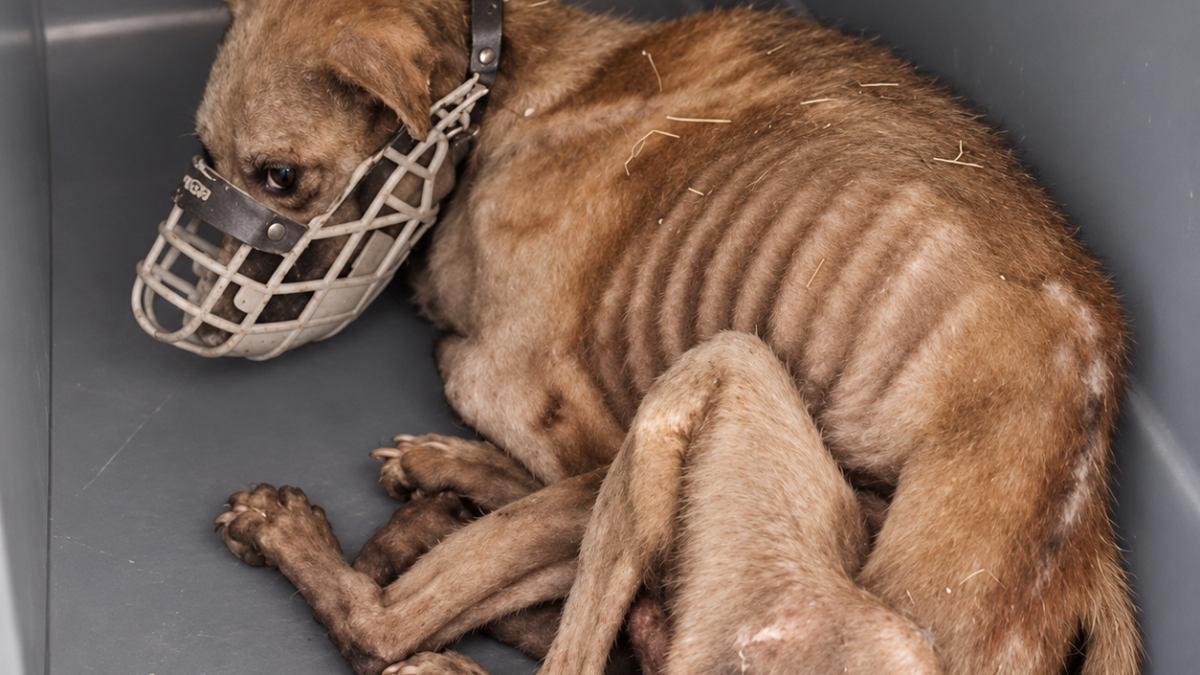
Her tongue looked dry.
Her breathing shallow.
The ticks were easier to see now that we were closer.
I could count clusters.
I stopped.
Counting wouldn’t help.
We had seen severely neglected dogs before.
Starvation does not look dramatic in the way television makes suffering dramatic.
There is no soundtrack.
No speech.
No clear moment when everything changed.
It happens through ordinary failures repeated long enough.
One missed meal.
Then another.
Water not refilled.
No walk.
No treatment.
No one checking.
No one asking whether the dog crying at night is hungry.
Neglect becomes dangerous partly because every individual act can look small.
Put enough small failures together, though, and eventually a seventy-pound dog becomes twenty-five pounds.
That was Koko.
A history of omissions written directly onto her body.
When we reached the clinic, the veterinary team was waiting.
They lifted Koko onto an exam table.
One technician reacted before she could hide it.
“Oh my God.”
The veterinarian gave her a look.
Not angry.
Just professional.
Focus.
They began.
Temperature.
Heart rate.
Hydration.
Blood.
Ticks.
Mucous membranes.
Weight.
Twenty-five pounds confirmed.
The veterinarian ran one hand gently along Koko’s side.
Her fingertips disappeared between ribs.
“How long has she been like this?”
“We don’t know exactly.”
“She hasn’t been eating enough for a long time.”
“Years in the cage.”
The veterinarian’s jaw tightened.
“She was a puppy when they put her in.”
I hated saying it.
“She was brought home for the kids.”
The vet looked at me.
“And then?”
“They lost interest.”
Koko didn’t react.
People were discussing her whole life while she lay too weak to lift her head.
The veterinarian checked skin elasticity.
“Severe dehydration.”
“How severe?”
“Enough that I’m concerned about kidney function and circulation.”
“She had water.”
“Not enough.”
That sentence stayed with me.
Not enough.
So much of Koko’s life had been defined by those two words.
Food.
Not enough.
Water.
Not enough.
Movement.
Not enough.
Warmth.
Not enough.
Human contact.
Not enough.
Everything necessary for a dog to live had been reduced to the smallest amount somebody could get away with providing.
Eventually even that wasn’t enough.
They started intravenous fluids.
Slowly.
The vet explained that severely malnourished animals couldn’t simply be given unlimited food and water as though we were filling an empty container.
A body starved for years learns a dangerous new balance.
Give too much too quickly and organs can struggle.
Electrolytes can shift.
Refeeding has to be controlled.
“Small meals.”
“How small?”
“Very.”
“How often?”
“Several times a day.”
“She’ll be hungry.”
“She already is.”
“That seems cruel.”
The veterinarian looked at me.
“Killing her with food would be crueler.”
Fair.
We followed the plan.
The ticks were another problem.
Dozens.
Maybe more.
Some had been feeding for so long that they were swollen.
The staff began removing them carefully.
Koko barely reacted.
That frightened me more than if she’d fought.
A dog with no energy to resist treatment is not a cooperative dog.
She’s an exhausted one.
Bloodwork showed what the vet expected.
Dehydration.
Anemia.
Signs her organs had been stressed by prolonged malnutrition.
We were warned not to assume anything.
“She could improve.”
Could.
“Or?”
“We watch.”
I hated that word too.
Watch.
Rescue often begins with action.
Cut chain.
Open cage.
Drive.
Lift.
Call.
Then suddenly you reach medicine and there is nothing to do except watch someone else’s body decide whether it still has enough reserve to come back.
Koko was admitted.
We didn’t take her away that night.
That was probably the right decision.
It still felt wrong.
I stood beside the kennel where the clinic placed her.
Not a cage like the one she’d come from.
Clean.
Warm.
Blanket.
IV line.
But bars are bars.
Koko looked at me through them.
My chest hurt.
“I’m sorry.”
A technician said:
“For what?”
“Leaving her behind bars again.”
“She needs medical care.”
“I know.”
I crouched.
“Koko.”
Her eyes moved toward me.
“This one is temporary.”
Obviously she didn’t understand the words.
Still, I needed to say them.
“This one opens.”
The technician rested a hand on my shoulder.
“We’ll keep it open whenever we safely can.”
That helped.
A little.
The next morning, I arrived before visiting hours.
They let me in anyway.
Koko was alive.
That sounds like the smallest victory possible.
It felt enormous.
She had eaten a little.
Not enough to satisfy the emotional part of me.
Enough medically.
The veterinary team had calculated calories carefully.
Protein.
Carbohydrates.
Electrolytes.
Everything measured.
Koko ate slowly.
Not the frantic devouring I expected.
The vet said that wasn’t unusual.
Extreme hunger doesn’t always look like appetite.
Sometimes the body is too exhausted even to ask.
I sat nearby.
Koko watched the bowl.
Then me.
Then the bowl.
She ate three more bites.
“Good girl.”
Her tail didn’t move.
Day two.
More fluids.
More food.
More tick removal.
Medication.
No standing.
Day three.
She lifted her head more often.
Day four.
She shifted positions without assistance.
Day five.
She ate while we were in the room.
That mattered.
At first, Koko seemed suspicious of attention.
Hands especially.
When we touched her, she froze.
Not aggression.
Not fear exactly.
Uncertainty.
As if affection had become a language she’d once known as a puppy and had forgotten.
One rescuer stroked her head.
Koko looked upward sharply.
The rescuer stopped.
Then offered an open hand.
Koko sniffed.
Nothing more.
Fine.
We learned quickly.
Don’t force tenderness on an animal simply because you want to give it.
Love can overwhelm when a creature has gone years without it.
Let them learn.
On the sixth day, the vet said:
“Tomorrow, let’s try getting her upright.”
I felt nervous.
“She collapsed last time.”
“Yes.”
“What if she does again?”
“Then we support her.”
The seventh day arrived.
A week after the cage.
One week after Koko had stepped into freedom and collapsed.
We brought her into a quiet area.
Harness around chest.
Support beneath abdomen.
Two people.
One on each side.
The veterinarian stood nearby.
“Slow.”
Koko’s front paws touched the floor.
Then rear paws.
Her legs trembled immediately.
“Easy.”
I kept one hand beneath her.
For several seconds, she leaned most of her weight against us.
Then something changed.
Her front legs straightened.
Not much.
Enough.
I loosened support slightly.
Koko stood.
By herself.
Only for a few seconds.
Then ten.
Her head lifted.
The room went quiet.
Nobody wanted to startle her.
One technician whispered:
“She did it.”
I felt tears in my eyes.
Ridiculous.
A dog standing.
That was all.
Except it wasn’t.
Koko had spent years physically capable of standing but denied somewhere to go.
Now she had somewhere to go and almost no strength to reach it.
Standing meant the two pieces were finally beginning to meet.
Freedom.
Body.
I crouched a few feet away.
“Koko.”
Her eyes found me.
“Come on.”
One step.
Front paw.
Rear.
Another.
Her body shook.
We moved with her.
Three steps.
Four.
Maybe five.
Then we supported her fully again.
Enough.
The vet smiled.
“That was enough.”
Koko panted.
I rubbed the side of her neck.
She didn’t freeze this time.
Progress.
That afternoon, we took her outside for less than a minute.
Not a walk.
Just grass.
She stood with support.
Wind touched her face.
She sniffed.
I watched her nose move.
Something simple awakened.
Smell.
Trees.
Dirt.
Air.
A world wider than metal bars.
Koko looked around.
Then down at the grass beneath her paws.
I wondered when she’d last felt it.
Maybe years.
Maybe never freely.
That thought nearly ruined me.
She took two steps.
Then wanted to lie down.
We let her.
She rested on the grass.
Not locked.
No cage.
I sat beside her.
For ten minutes, neither of us moved.
Freedom does not always look like running.
Sometimes freedom looks like a starving dog lying in grass because no one is ordering her back behind bars.
That day was enough.
Her recovery developed in measurements.
Twenty-five pounds.
Twenty-six.
Twenty-eight.
Thirty.
Every fraction mattered.
At two weeks:
Thirty-two and a half pounds.
I stared at the scale.
“Seven and a half pounds.”
The veterinarian nodded.
“Good gain.”
“Only seven?”
“Only?”
I realized how ridiculous that sounded.
Koko had gained thirty percent of her rescue weight in two weeks.
“Sorry.”
“Patience.”
There was that word again.
Patience.
The thing Koko should never have been forced to have and now needed from everyone around her.
We could not rush muscle back onto her bones.
Couldn’t rush organs to recover.
Couldn’t rush trust.
Couldn’t rush joy.
All we could do was create conditions where each might return.
Food.
Water.
Warmth.
Movement.
Routine.
Gentleness.
Repeat.
Her walks began with twenty feet.
Then fifty.
Then around the clinic yard.
Koko’s legs looked too long because she had so little muscle.
She moved awkwardly.
Head low.
Every new sound caught her attention.
Doors.
Cars.
Voices.
Once, a child ran nearby.
Koko froze.
I saw something shift in her expression.
Did she remember the children from her first home?
No idea.
Maybe.
Maybe she simply hadn’t seen fast-moving children in years.
People love assigning memories to animals because it makes stories easier.
We couldn’t know.
So we didn’t claim.
We observed.
Koko watched.
The child passed.
Then she continued walking.
Good enough.
Within the first month, something appeared that I hadn’t seen before.
Anticipation.
We’d enter the room carrying her leash.
Her eyes changed.
Not tail-wagging joy yet.
But alert.
Interested.
She knew.
Walk.
One day, I lifted the leash.
Koko stood before I asked.
The vet technician grinned.
“Look at her.”
Koko took three steps toward me.
Then stopped.
My throat tightened.
“Ready?”
Her tail moved.
One small swing.
Maybe accidental.
I don’t think it was.
The next day, two swings.
Then eventually:
Wag.
Nobody at the clinic made a big deal about the first tail wag because we were all trying not to become unbearable.
We failed.
Someone took a picture.
I kept it.
Koko’s physical improvement came faster than her emotional one.
That surprised me.
By week four, she could walk comfortably for several minutes.
She had gained more weight.
Her coat looked better after tick treatment and nutrition.
Hydration normal.
Blood values improving.
But touch remained complicated.
Some days she leaned into a hand.
Others she moved away.
If somebody reached over her head too quickly, she ducked.
If someone approached the area she was resting in, sometimes she looked around as though searching for somewhere she could retreat.
A cage changes more than muscle.
It teaches boundaries.
Mine.
Yours.
No escape.
No choice.
We wanted Koko to learn the opposite.
So choice became part of treatment.
Want petting?
Come closer.
Don’t?
Fine.
Want to lie there?
Stay.
Want to walk another ten feet?
Good.
Tired?
Turn around.
Food arrived predictably.
Water always available.
No begging.
No crying required.
That last part mattered.
A neighbor had said Koko used to cry from hunger.
Imagine learning that crying changes nothing.
Eventually, why cry?
That might have explained her silence.
At the rescue facility after discharge, Koko almost never barked.
Other dogs barked constantly.
Footsteps.
Food.
People.
Excitement.
Koko watched.
One volunteer said:
“She’s so quiet.”
I disliked the way it sounded.
Not because the volunteer meant harm.
Because silence can be mistaken for easy.
Easy dog.
Good dog.
Low maintenance.
No.
Koko had spent years learning not to expect response.
We wanted her to make noise.
Demand.
Ask.
Become inconvenient.
A month after rescue, she barked during meal preparation.
One bark.
Sharp.
Everyone froze.
Then laughed.
“Koko?”
She barked again.
Food.
I almost cheered.
A volunteer said:
“That’s rude.”
I replied:
“Best rude sound I’ve ever heard.”
Koko barked a third time.
Dinner came.
After that she discovered vocal complaints.
Apparently she had been saving opinions.
Meals late by two minutes?
Bark.
Leash visible but not moving fast enough?
Small whine.
Another dog getting attention?
Occasional protest.
Beautiful.
A dog who expects her needs to matter becomes louder.
That’s healthy.
Within six weeks, Koko looked different enough that visitors who hadn’t seen the rescue photographs struggled to believe it was the same animal.
Still thin.
But dog-shaped.
Muscle returning.
Eyes brighter.
Tail more active.
She had learned that when a person entered her space carrying a leash, something good usually followed.
Walk.
Grass.
Sun.
Smells.
She loved grass.
At first, she walked cautiously through it.
Later, she began lowering her shoulder and rubbing her side against it.
One day she rolled.
Completely.
Back to the ground.
Legs up.
For several seconds she looked surprised by her own behavior.
Then did it again.
We laughed.
Koko sneezed.
Rolled.
Got up.
Ran three steps.
Stopped.
Three running steps.
I looked at the volunteer beside me.
“Did you see that?”
“Yeah.”
“She ran.”
“Three feet.”
“She ran.”
Koko looked back.
Then tried again.
Four steps.
Not graceful.
Not fast.
Perfect.
Months earlier her entire world had been measured in cage dimensions.
Now we measured distance because she wanted more of it.
Her weight continued upward.
Forty pounds.
Forty-five.
Fifty.
The veterinarian slowed the feeding increase as she approached healthier body condition.
We stopped talking only about numbers.
That’s important.
At first, Koko was twenty-five pounds.
That number defined urgency.
Later, she became more than a weight.
She liked long grass more than short grass.
Preferred women at first, though eventually warmed to men too.
Hated vacuum cleaners.
Loved soft beds but often slept partly off them, as though she hadn’t mastered furniture geometry.
Liked chicken.
Disliked bananas.
Became fascinated by birds.
Refused to fetch.
Enjoyed carrying one particular rope toy but didn’t want anyone taking it.
Normal dog details.
Those details mattered more than the starvation story.
Rescue should eventually make trauma boring.
Not forgotten.
Just no longer the first thing you see.
Applications came.
Potential adopters.
That created anxiety.
Koko had become everybody’s dog during recovery.
But rescue can’t become permanent storage simply because letting go hurts.
The goal was a home.
One family visited.
Kind.
Children.
That stopped me emotionally.
Children.
Koko had once been brought home for kids.
Would that repeat?
I knew that was irrational.
Good families have children.
Children didn’t cause Koko’s neglect by simply growing up.
Adults had failed her.
Still, I watched closely.
Koko remained polite.
Not excited.
The family liked her.
But something didn’t fit.
They wanted a dog that would play constantly.
Koko enjoyed walks.
Rest.
Gentle companionship.
Not a high-energy family pet.
We said no.
Another applicant had a large yard but intended to keep dogs outdoors most of the time.
Absolutely not.
Koko had served enough time outside human life.
Another couple loved her story more than her.
That’s dangerous too.
They spoke about “saving” her.
“She’d be so grateful.”
No.
Dogs don’t owe gratitude.
Adoption is not a debt arrangement.
We kept looking.
Then came the British couple.
They were living locally at the time but planned eventually to return to the United Kingdom.
They had experience with animals.
Calm.
Patient.
No dramatic promises.
The first meeting was almost boring.
Perfect.
They sat.
Didn’t call Koko repeatedly.
Didn’t crowd.
The woman placed her hand near her knee.
Koko approached.
Sniffed.
Left.
The man smiled.
“That’s fair.”
Good answer.
Ten minutes later, Koko returned.
She stood between them.
The woman scratched gently under her chin.
Koko leaned.
Only a little.
The man looked at me.
“Does she usually do that?”
“When she feels like it.”
“Good.”
Second meeting.
They walked her.
Slow pace.
Let Koko stop to smell everything.
She looked back at them frequently.
Third meeting.
Koko saw them enter and wagged.
That was the decision.
Not legally.
Emotionally.
Her body had voted.
The adoption process moved forward.
I should have been happy.
I was.
And miserable.
Rescue is unfair that way.
You spend months teaching an animal you won’t leave.
Then if everything goes perfectly, one day you hand the leash to somebody else.
Koko’s adoption day arrived.
The couple had prepared.
Bed.
Bowls.
Food plan.
Veterinary records.
Leashes.
Everything.
I knelt beside Koko.
“You know them.”
She looked toward the couple.
Tail moving.
“Good.”
I scratched her neck.
“You’re going home.”
The phrase nearly stopped me.
Home.
Her first home had failed the word badly.
This one needed to repair it.
The woman hugged me.
“We’ll keep you updated.”
“Please.”
The man took Koko’s leash.
She walked toward their car.
Halfway there, she stopped.
Looked back.
My heart broke.
I crouched.
“Go.”
She stared.
“It’s okay.”
One volunteer behind me whispered:
“Don’t cry.”
“Too late.”
Koko took another step.
Then another.
The woman opened the car.
Koko climbed in with help.
The door closed.
I stood there.
The car drove away.
For a moment, I thought of the first vehicle ride.
Koko collapsed.
Twenty-five pounds.
Ticks.
Dehydrated.
Racing toward the vet because we weren’t sure she’d survive.
Now she was leaving in a car because someone wanted to take her home.
Same animal.
Different destination.
That’s the kind of symmetry rescue gives you when you’re lucky.
The first update came that evening.
Photo.
Koko asleep on a thick bed.
Half her body hanging off the side.
Of course.
Message:
**She ate dinner and has already claimed this spot.**
I laughed.
Next morning:
Koko in a yard.
Sun.
Tail up.
Then:
Koko beside another animal.
They were introducing carefully.
She made friends.
Slowly.
Another dog first.
Then others.
The British couple understood social introductions.
No forcing.
Koko discovered companionship that wasn’t dependent on survival.
Play.
Following.
Sleeping near another animal.
Weeks passed.
Her body kept strengthening.
The photos changed.
At first, standing.
Then walking.
Then trotting.
Then one image caught mid-run.
All four paws off the ground.
I stared for a long time.
Twenty-five pounds.
Collapsed outside cage.
Seven days to stand.
Now airborne.
There is your revenge.
Not punishment.
Not anyone suffering in return.
Gravity losing contact for one second because a dog once unable to stand had become strong enough to fly.
I printed that photograph.
Kept it.
The couple eventually prepared for their move.
United Kingdom.
That meant travel planning.
Veterinary requirements.
Paperwork.
Everything carefully managed.
I worried.
Long journey.
Stress.
Koko had spent enough of life confined.
The couple sent details.
Appropriate crate.
Training beforehand.
Positive associations.
No sudden imprisonment.
They let Koko investigate the travel crate weeks before.
Fed near it.
Then inside.
Door open.
Eventually short closures.
Choice.
Trust.
That mattered.
We did not want another cage to feel like punishment.
Koko adapted.
The day she traveled, I thought about her constantly.
Then message:
**Landed safely.**
Later:
**Home.**
Another home.
Another world.
Koko had gone from a cage to another country.
Try telling me life can’t change.
Her new environment brought things she’d never seen.
Different weather.
Fields.
Footpaths.
New smells.
Her family sent videos.
Koko moving through tall grass.
Not three steps.
Running.
Full speed.
Ears back.
Mouth open.
Legs working.
Grass brushing her sides.
She vanished partly beneath it, then burst out again.
Again.
Again.
Like a puppy.
That’s what everyone said.
“She looks like a puppy.”
She wasn’t.
Years had been taken.
We shouldn’t pretend she got them back.
She didn’t become young again.
But joy doesn’t check age before arriving.
That was important.
Koko had spent her puppy years trapped.
Adulthood did not forbid play.
She could still discover firsts.
First long run.
First real bed.
First safe animal friend.
First trip.
First field.
And eventually:
First sea.
That video is the one I can barely watch without crying.
The couple had driven Koko to the coast.
They didn’t know exactly how she’d react.
Wide open beach.
Wind.
Sand.
Water stretching farther than anything she’d ever seen.
At first, Koko stood still.
Her leash loose.
She looked.
Then sniffed.
One paw into sand.
Another.
The waves were distant.
No pressure.
Her family gave her time.
Then Koko began walking.
Faster.
Trotting.
The leash came off only in a safe area when they were confident in recall and surroundings.
Koko ran.
Not toward danger.
Across space.
That’s what mattered.
Space.
For years, her world had ended six inches beyond her nose at metal bars.
Now there was no visible wall.
She ran toward the shoreline.
Turned.
Ran back.
Then sideways.
Loops.
Huge, awkward circles.
Her whole body looked different while running.
Not the careful Koko from rehab.
Not the dog measuring every step.
This Koko wasted movement.
That’s freedom.
Survival animals conserve.
Play wastes energy because there is enough.
Koko ran simply because she could.
Sand sprayed behind her.
The couple laughed.
Koko ran farther.
Then back.
Tail high.
For a minute she looked like all the years hadn’t happened.
Not erased.
Just not controlling the moment.
I watched the video twice.
Then a third time.
My phone blurred because I was crying.
A volunteer who had been there on rescue day watched beside me.
She whispered:
“Remember when she collapsed?”
“Yes.”
“Look at her.”
Koko ran across the screen.
We both cried.
There was no embarrassment.
Some transformations deserve tears.
The sea became one of Koko’s favorite places.
That surprised me.
Not necessarily the water itself.
The openness.
The smells.
Wind.
Room.
Her family sent more videos.
Koko running tall grass near the coast.
Koko standing on a hill.
Koko resting beside another dog.
Koko asleep on a couch.
Every image contradicted the cage.
That’s what I loved.
The cage had told one story:
Your world is this size.
Her new life answered:
No.
The cage said:
Stay.
The beach said:
Run.
The cage said:
Wait for food.
Her family said:
Dinner is coming.
The cage said:
Nobody is listening.
Her leash appearing said:
Walk.
The cage said:
You are useful only as a guard.
Her family said:
You don’t have to guard anything.
Sleep.
The cage said:
You are alone.
Her animal friends piled beside her.
No.
That was revenge.
Not violence.
Not punishment.
Contradiction.
Every good day became evidence against the life she’d been given before.
Koko never needed to confront the people who neglected her.
Dogs do not need closure ceremonies.
They need safe routines.
But if I could have shown her former owner one thing, it would not have been the rescue photo.
Not the ribs.
Not the ticks.
Not the collapse.
I would have shown him Koko running beside the sea.
Because then he would have seen what had been inside that cage the whole time.
Not a guard dog.
Not an obligation.
Not something unwanted.
A dog who wanted to run.
A dog capable of joy.
A dog who could love strangers after humans had given her every reason not to.
A dog who could make friends.
A dog who could become somebody’s family.
They had reduced her life to metal bars because it was convenient.
They had been wrong.
That was the only verdict I needed.
People often ask why neglected dogs remain affectionate.
I don’t have a satisfying answer.
Some don’t.
Some carry fear for life.
Some distrust.
Some bite.
Some hide.
Koko’s response should not become a standard by which other survivors are judged.
She did not forgive humanity to prove moral superiority.
She adapted because these particular humans eventually became safe.
That’s different.
At first, she didn’t know affection.
Then she accepted it.
Later, she sought it.
That progression mattered.
One photo showed Koko asleep with her head across the woman’s lap.
Not tense.
Not alert.
Deep sleep.
Mouth slightly open.
I loved that photo more than the running ones sometimes.
Running shows strength.
Sleeping shows trust.
A dog inside a cage can sleep.
But not like that.
Not completely.
Not with the certainty that if you close your eyes, water will still be there when you wake.
Food will come.
Nobody will forget.
The woman told us Koko sometimes followed her from room to room.
Kitchen.
Living room.
Garden.
Bedroom.
Not anxious exactly.
Just interested.
For years, people had moved beyond her cage while she remained.
Now she could follow.
Doors opened.
She moved through them.
That must have been extraordinary in ways we can’t fully understand.
The first time Koko chose to leave one room simply because she wanted to see what was happening in another may have mattered as much as any beach run.
Choice is easy to overlook when you’ve always had it.
Dogs understand doors differently after confinement.
Open means possibility.
Eventually, Koko became secure enough not to follow constantly.
She could stay asleep when someone left.
That mattered too.
Freedom includes knowing you don’t have to chase every person because they are coming back.
Her family worked on that.
Short departures.
Returns.
Routine.
No drama.
Koko learned.
A photo months later:
Alone on couch.
Relaxed.
Owner in another room.
Normal.
Again, normal is the prize.
Her health continued improving.
Weight approached appropriate range.
Muscle along hips and shoulders.
Coat full.
No more ticks.
Hydration ordinary.
Food became something to enjoy rather than a medical calculation.
At first, every gram had mattered.
Later, treats.
That transition made me happy.
Medical feeding keeps you alive.
Treats imply life contains extras.
Koko had extras now.
Biscuits.
Toys.
Blankets.
Walks with no purpose.
Time spent lying in sunlight.
Things unnecessary for survival.
That’s what she had been denied most.
Not only necessities.
Luxury.
And by luxury, I mean the small luxuries animals deserve.
Softness.
Attention.
Play.
Choice.
She didn’t need expensive things.
Most dogs don’t.
An open field can be priceless.
Koko proved that.
The British couple sent an update around the anniversary of her rescue.
One year.
They placed two photographs side by side.
First:
Koko at twenty-five pounds.
Ribs.
Ticks.
Head down.
Second:
Koko standing in tall grass near the coast.
Healthy.
Muscular.
Eyes bright.
I hated comparison photos sometimes because they can turn suffering into spectacle.
This one felt different.
Not because she looked prettier.
Because posture told the story.
First photo:
Body folded inward.
Second:
Chest forward.
Head up.
Space around her.
Freedom visible.
The caption from her family was simple.
**She still runs every chance she gets.**
I cried.
Again.
Rescue makes you cry too much.
People think the most dramatic part is opening the cage.
It isn’t.
Opening is easy.
The hard part is everything afterward.
Keeping a starving dog alive through refeeding.
Treating dehydration.
Managing organ stress.
Building muscle.
Teaching trust.
Finding the correct adopter rather than the fastest adopter.
Supporting transition.
Letting go.
Then hoping.
Freedom isn’t a door.
It’s a system.
If you open a cage and provide nothing afterward, you’ve only changed the location of danger.
Koko survived because dozens of boring tasks happened correctly.
Food weighed.
Water monitored.
Blood drawn.
Ticks removed.
Walks timed.
Medication given.
Floors cleaned.
Beds washed.
Applications read.
Phone calls returned.
Paperwork completed.
Boring saved her life.
That’s another lesson.
People love the moment of rescue because it photographs well.
Care rarely does.
But care is where recovery happens.
A cage opens in one second.
Healing takes months.
Years in some ways.
Koko’s family once messaged:
“She still freezes if somebody drops a metal object behind her.”
Memory.
Maybe cage bars.
Maybe coincidence.
They didn’t know.
They adjusted.
Warned visitors.
Avoided startling.
No shame.
Recovery doesn’t require every old reaction disappearing.
She could be happy and still affected.
Both.
I liked that they understood.
Too many people adopt rescue animals expecting gratitude to erase trauma.
It doesn’t.
Koko was not a clean slate.
She was a living history.
Love did not delete history.
It created a better present.
Enough better presents eventually become a life.
That’s how the cage lost its power.
One day at a time.
Breakfast.
Walk.
Nap.
Dinner.
Bed.
Again.
A dog doesn’t need a philosophical understanding of healing.
Routine does the work.
Koko’s new family gave her consistency.
That was probably the greatest gift.
No guessing whether food comes.
No wondering if water exists.
No crying until someone notices.
No seasons spent behind bars.
Predictable care.
What sounds boring to us can feel revolutionary to an animal who lived without it.
I sometimes wondered about the neighbor who finally called for help.
Without that person, what happens?
I don’t like finishing the thought.
Koko’s condition was already critical.
Twenty-five pounds.
Dehydrated.
Organ strain.
Collapse.
The neighbor may have believed they were simply reporting neglect.
Actually, they interrupted a timeline.
Another week?
Another month?
No idea.
Sometimes rescue begins with someone deciding:
This is not normal.
That decision matters.
Neighbors often fear getting involved.
Not my dog.
Not my family.
Maybe owners will be angry.
Maybe I misunderstood.
But when an animal is visibly starving and crying from hunger, silence becomes participation.
Someone spoke.
Koko got out.
I wish I knew exactly who it was.
Maybe I did at the time.
Details fade.
Their action doesn’t.
They became the first person in years to treat Koko’s suffering as something requiring response.
Then we took over.
Responsibility passed forward.
That’s how rescue should work.
One person notices.
Another removes.
Veterinarian stabilizes.
Caregivers rebuild.
Adopter continues.
No hero alone.
Koko’s life became a relay.
She was the one carried.
Eventually she ran on her own.
There is something almost too perfect about that image.
A relay ending at the sea.
Not planned.
Just beautiful.
Months later, the couple sent us a short video during winter.
Koko standing in light snow.
At first she looked uncertain.
Then she lowered her nose.
Sniffed.
Took one step.
Then another.
Suddenly she began running.
Snow flew.
She stopped.
Looked back.
Ran again.
A volunteer said:
“She never had snow?”
Maybe she’d experienced cold before.
Certainly.
But cold inside a cage is not the same experience as cold during play.
That’s the point.
Conditions matter.
Rain can be misery if you cannot get dry.
Snow can be joy if a warm house waits afterward.
A dog can love weather once weather is optional.
Choice changes sensation.
Koko had choice now.
Want outside?
Go.
Cold?
Come in.
Tired?
Bed.
Hungry?
Food comes.
Simple.
Profound.
Her family eventually described her as “gentle, funny, and stubborn.”
Stubborn pleased me most.
At rescue, Koko had looked almost erased.
Stubborn means preference.
Personality.
Agency.
She didn’t want to walk in rain some mornings.
Good.
She refused one brand of treats.
Excellent.
She stole the best sleeping spot from another dog.
Perfect.
A recovered animal should become inconvenient enough to prove she knows life belongs to her too.
Koko did.
There was a day when she tore open a bag of food.
Her family sent a picture of the mess.
Caption:
**Apparently starvation history does not excuse burglary.**
We laughed.
But they handled it carefully.
Food insecurity can produce behaviors.
They adjusted storage.
No punishment.
Koko eventually stopped raiding.
Security replaced urgency.
Again, time.
You cannot lecture an animal out of survival behavior.
You show them that scarcity has ended.
Then the nervous system slowly believes you.
That may have been one of Koko’s deepest recoveries.
Not weight.
Expectation.
There will be more.
More food tomorrow.
More water.
More walks.
More mornings.
More people.
Scarcity says take everything now because later may not exist.
Safety says leave some.
Tomorrow is real.
Koko learned tomorrow.
That makes me emotional whenever I think about it.
The cage had taught her to survive one day at a time with no guarantee the next would be kinder.
Her new home taught her routine.
Calendar without words.
Morning means breakfast.
Leash means walk.
Car means somewhere interesting, not emergency.
Night means bed.
People leave.
People return.
Tomorrow repeats care.
That is what family is partly made of.
Repetition you can trust.
Her former home had repetition too.
But wrong kind.
Bars.
Hunger.
Cold.
Neglect.
The new repetition replaced it.
It didn’t erase memory.
It outweighed it.
Years later, Koko’s adopters still sent occasional updates.
Less frequent.
That’s good.
When updates slow, rescue has succeeded.
The animal is no longer an emergency requiring constant witness.
She is somebody’s dog.
Life gets boring.
They send holiday photos.
Koko wearing something ridiculous.
Koko near the sea.
Koko asleep beside another animal.
Koko older.
Gray beginning around muzzle.
I love those pictures.
Age is a privilege.
Koko had once been so starved that we weren’t certain she’d survive the week.
Every gray hair later became evidence that she had received years the cage nearly stole.
Older.
Slower.
Still walking.
Still loved.
That’s an ending rescue stories rarely linger on.
We celebrate adoption.
But the deeper victory is aging in safety.
A dog should get to become old.
Koko did.
One update showed her moving slowly through tall grass where she once sprinted.
The couple wrote:
**She doesn’t run as far now, but she still insists on going.**
Of course.
Koko had spent too much time unable to go anywhere to waste freedom later.
Her pace changed.
The principle didn’t.
Open space.
Move.
She went.
I watched the video.
No tears this time.
Just a smile.
Healing had become ordinary enough that I didn’t have to cry every time.
Maybe I healed too.
Rescuers carry animals with them.
Not all.
Impossible.
But some.
Koko was one.
Maybe because the collapse happened in my arms.
Maybe because of the cage.
Maybe because her first step and first run became such perfect bookends.
I still think about the moment her legs folded.
I remember wondering:
What if freedom came too late?
That’s one of rescue’s cruelest fears.
You finally get permission.
Finally get access.
Finally get the animal out.
Then discover that the damage has progressed beyond repair.
Sometimes it has.
Koko survived.
Not every animal does.
That knowledge is why I never romanticize delay.
People say:
“At least she got rescued.”
Yes.
But earlier would have been better.
One year earlier.
Three years earlier.
The first week food became inconsistent.
The first month the cage became permanent.
Someone could have interrupted sooner.
Nobody did.
Until the neighbor.
Koko’s happy ending doesn’t make the years acceptable.
It makes them more tragic in a way, because we learned what kind of dog had been trapped inside.
Playful.
Gentle.
Social.
Capable of running across beaches.
That life had been waiting.
We nearly never saw it.
That is what neglect steals.
Not only body weight.
Possibility.
Experiences.
Firsts.
Years.
You cannot return them.
All you can do is protect what’s left.
That’s what we did.
And Koko turned what remained into a full life.
That is where her strength lives for me.
Not in enduring the cage forever.
Endurance is sometimes imposed.
Her strength became visible when opportunity appeared.
Stand.
Walk.
Trust.
Run.
Those were choices.
Recovery is active.
The cage had made her passive because there was nothing to do.
Freedom asked something different.
Try.
Koko tried.
Seventh day:
Stand.
Later:
Step.
Then walk.
Then trot.
Then run.
Each stage built on the previous one.
I once wrote those words in a notebook.
STAND
WALK
RUN
Three lines.
Underneath:
SEA.
I don’t know why.
Maybe because that was her whole story compressed.
Not the abuse.
The recovery.
That’s what I wanted to remember.
The owner had agreed to surrender Koko.
People sometimes asked whether I was angry that there wasn’t more confrontation.
Of course I was angry.
But rescue priorities matter.
Get dog.
Treat dog.
Everything else secondary.
Would punishment have restored her weight?
No.
Would yelling have repaired organs?
No.
Would humiliation teach Koko trust?
No.
Accountability matters in neglect cases.
But emotionally, the strongest consequence was already visible.
The people who stopped caring had forfeited everything Koko became.
They never got to see the tail wag return.
Never got her excited greeting.
Never felt her fall asleep against them.
Never watched the beach run.
Never got to call her family once she finally understood what that meant.
They had the puppy.
They lost the dog.
Not because she disappeared.
Because they failed to value her while she was there.
Another family received the adult Koko and treated her as something precious.
That contrast is enough for me.
If you want revenge, that’s the revenge.
The cage owners got an empty cage.
Koko got the world.
They had reduced her universe to metal bars.
She ended up beside the sea.
Try improving that image.
You can’t.
One final video arrived years after adoption.
Sunset.
Beach.
Koko older now.
Not sprinting like the first visit.
Walking.
Slow.
Wind lifting fur.
The woman beside her.
Another dog ahead.
Koko stopped near the water.
Looked outward.
Then turned back toward her family.
No drama.
No music.
Just a dog on a beach.
I watched it three times.
First thought:
Twenty-five pounds.
Second:
She collapsed.
Third:
Look how far she walked.
Not physically.
Everything.
From cage.
To clinic.
To grass.
To home.
To sea.
A dog doesn’t understand narrative arcs.
Good.
Koko didn’t need to know she was an inspiration.
She needed to know where dinner was.
She did.
She needed soft places.
Had them.
Needed companionship.
Had it.
Needed space.
Had miles of it.
That’s enough.
I think people sometimes want rescued animals to become symbols because symbols make suffering feel meaningful.
Koko’s suffering wasn’t meaningful.
It was unnecessary.
Her recovery was meaningful because people chose care afterward.
Important distinction.
No dog should have to starve to teach us compassion.
We should already have it.
No dog should spend years in a cage so a beach run can make us cry.
The beach run would have been beautiful even if Koko had been loved from puppyhood.
I would have preferred that version.
But I didn’t get to choose the beginning.
Neither did she.
We helped change the middle.
Her family gave her the ending.
That’s rescue.
Not rewriting history.
Redirecting what comes next.
Koko eventually reached a healthy weight.
Numbers stopped appearing in updates.
That might be my favorite medical milestone.
When nobody needs to mention weight anymore.
Because normal.
Breakfast.
Dinner.
Treats.
Vet says good.
Done.
Twenty-five pounds became something we remembered, not something we monitored.
The same happened with water.
At first, dehydration.
Fluid rates.
Skin turgor.
Electrolytes.
Later:
Water bowl in kitchen.
Refilled.
Unremarkable.
Imagine that.
Something once life-threatening becoming boring.
That is success.
I hope Koko drank from thousands of bowls without anyone noticing.
I hope she left food unfinished sometimes.
I hope she got picky.
I hope she refused walks in rain.
I hope she slept late.
I hope she became difficult in every small way safe animals are allowed to become difficult.
Because every inconvenience would mean survival no longer consumed her entire existence.
There is one thing I remember from the rescue property that still angers me.
The cage.
Not because cages are inherently evil.
Crates can be safe.
Medical kennels can protect.
Travel crates matter.
Context.
The object wasn’t the crime.
Permanence was.
A temporary space became Koko’s entire life.
That’s what made it cruel.
Dogs need movement.
Social contact.
Mental stimulation.
Choice.
The cage removed all of it.
Her body literally outgrew the space as she aged.
Imagine growing while your world doesn’t.
That’s Koko.
Puppy to adult.
Same bars.
No wider horizon.
Then one day, latch.
Door.
Outside.
Collapse.
That collapse contains everything.
Freedom alone is not enough after prolonged deprivation.
The body must be rebuilt to use it.
That is why Koko’s story matters to me beyond emotion.
Open door:
Beginning.
Not ending.
Rehabilitation matters.
Nutrition.
Veterinary care.
Behavioral patience.
Adoption fit.
Those are what turned release into recovery.
Koko’s seventh day standing wasn’t cinematic.
Nobody played music.
She didn’t sprint.
She shook.
Took a few steps.
Needed help.
That moment was more honest than any instant transformation.
Healing usually looks like that.
Tiny gains.
Almost invisible.
Then months later, somebody sends a beach video and you realize all those tiny gains added up to miles.
A pound.
Another pound.
One extra minute walking.
One new person trusted.
One tail wag.
One bark for food.
One night sleeping deeply.
Stack enough small victories and suddenly the dog who collapsed is running.
That is why I tell people not to underestimate incremental recovery.
Day one Koko couldn’t stand.
Day seven she could.
Two weeks: thirty-two and a half pounds.
Weeks later: walks.
Months later: home.
Then sea.
No single step explains the transformation.
All of them do.
The same applies to neglect in reverse.
Koko didn’t become twenty-five pounds in one day.
Tiny failures accumulated.
Recovery required tiny acts accumulating in the opposite direction.
Neglect:
Skip.
Ignore.
Delay.
Forget.
Care:
Feed.
Refill.
Walk.
Touch.
Watch.
Repeat.
Both are repetitive.
Only one creates life.
I know which one I want to be part of.
Koko’s British family once wrote:
“She doesn’t like being shut in any room.”
That made sense.
If a door closes, she often waits near it.
They adjusted when possible.
No unnecessary confinement.
But they also helped her learn that closed doors open.
Briefly close.
Return.
Open.
Safe.
Not every barrier is permanent.
That may have been one of the deepest lessons her new life gave.
A door can close and still open again.
Imagine not knowing that.
Koko had known a cage whose door rarely meant freedom.
Now household doors became temporary.
Car doors led to walks.
Garden gates opened.
Travel crate opened at destination.
Everything closed eventually opened.
That repetition rewrote expectation.
I love that.
Not because trauma disappears.
Because nervous systems learn through repetition too.
New pattern.
Closed.
Then open.
Person leaves.
Then returns.
Food gone.
Then refilled.
Night.
Then morning.
Safety repeated.
That is how a dog relearns the future.
The couple also gave Koko new animal companions.
That mattered because social life had been missing too.
At first, she watched other dogs play.
Didn’t join.
Then followed.
Then short interactions.
Eventually play bows.
The first time I saw a video of Koko play-bowing, I laughed out loud.
Front legs down.
Rear up.
Tail moving.
Classic invitation.
Come on.
Play.
The dog who once lacked energy to stand now asking another animal to waste energy with her.
That might be the purest sign of recovery.
Play has no survival purpose in that moment.
It’s extra.
Joy lives in extra.
Koko deserved extra.
Her companions helped teach what humans couldn’t.
Dog language.
Chasing.
Sniffing.
Resting together.
Mutual boundaries.
She became part of a group.
No longer alone guarding anything.
I hope she never guarded another property in her life.
Her only job should have been dog.
Eat.
Sleep.
Walk.
Play.
Love if she wants.
That’s enough work.
We burden animals with purposes.
Guard.
Breed.
Entertain children.
Perform.
Koko’s first home had assigned roles until affection ran out.
Her second home gave her something better than a role.
Membership.
Family doesn’t require constant usefulness.
That is the difference.
You don’t lose your place because children grow bored.
You remain.
That is what Koko finally received.
Remaining.
Her adopters didn’t care if she became less playful with age.
Didn’t care if veterinary bills increased.
Didn’t care if she sometimes needed more time.
She belonged.
Membership without performance.
That is home.
Years after the rescue, I found an old photo of Koko inside the cage.
I almost deleted it.
Her eyes.
Ribs.
Ticks.
I hated seeing it.
Then I found the beach photo.
I placed them side by side.
Not for public posting.
For myself.
I noticed something beyond weight.
Space.
In the cage photo, every line in the image points inward.
Bars.
Corners.
Body compressed.
In the beach photo, every line points outward.
Horizon.
Shore.
Grass.
Sky.
That visual difference told the whole story better than words.
Contracted world.
Expanded world.
Koko didn’t need revenge because expansion itself defeated confinement.
Every mile she walked afterward made the cage smaller in the total story of her life.
Every safe year reduced its proportion.
The cage still happened.
Cannot erase.
But imagine life as pages.
Maybe several terrible chapters.
Then many more pages.
Eventually the book becomes more than the worst part.
That’s what I wanted for her.
Enough pages.
She got them.
Koko’s final years—at least from the updates we received—were quiet and happy.
No sensational events.
Good.
Sensational had done enough.
She aged with her family.
Continued walks.
Less running eventually.
More resting.
Still liked the sea.
Still liked grass.
Still loved company.
That’s a successful rescue story.
Not an endless series of dramatic moments.
A dramatic beginning leading to ordinary years.
If someone asks what the most beautiful photo of Koko is, others choose the beach.
I choose one where she’s asleep.
The British woman is sitting on a couch.
Koko beside her.
Head on the woman’s thigh.
One paw curled.
Eyes closed.
Nothing happening.
Because for years Koko couldn’t assume nothing would happen.
Hunger happened.
Cold.
Thirst.
Loneliness.
A person approaching may or may not have meant food.
A cry may or may not have produced response.
Then eventually:
Nothing.
No emergency.
No need.
Just sleep.
That is peace.
Freedom isn’t constant running.
It’s being able to rest because running is available whenever you choose.
Koko finally understood that.
She didn’t need to prove freedom every day.
The beach existed.
The door would open again.
That certainty allowed rest.
Sometimes I think about the moment the owner agreed to surrender.
One signature.
One yes.
What if he’d said no?
We would have pursued whatever options existed.
But delay.
More time.
Koko didn’t have much.
I’m grateful we got her out.
I wish it had happened before the number twenty-five.
Before collapse.
Before organ strain.
Before years.
But rescue operates in the present tense.
You cannot pull a dog out yesterday.
You pull her out now.
Then make tomorrow better.
We did.
Her family kept doing it.
That’s enough.
If Koko’s story has a final emotional revenge, it isn’t directed at one person.
It’s directed at every assumption neglect makes.
Neglect says:
She won’t matter.
She did.
Neglect says:
Nobody will notice.
A neighbor did.
Neglect says:
She can survive on less.
She nearly didn’t.
Neglect says:
She’s only a guard dog now.
She became a beloved companion.
Neglect says:
The cage is enough.
The sea answered.
Neglect says:
Her best years are gone.
Koko ran like a puppy anyway.
That’s the answer.
The cage lost.
Not because someone destroyed it dramatically.
Because Koko lived somewhere else long enough that metal bars stopped being home.
Freedom became home.
That is the victory.
I imagine the first time she reached the sea often.
Not because I was there.
I wasn’t.
The video gave me enough.
I imagine what her senses did.
Salt air.
Wind.
Sand shifting beneath paws.
Waves.
Open horizon.
No ceiling.
No walls.
No bars.
Maybe dogs don’t conceptualize space the way humans do.
Still, Koko’s body knew.
Run.
And she did.
The woman in the video called her name.
Koko turned.
Came back.
That’s important too.
Freedom didn’t mean escape.
She had somewhere worth returning to.
That may be the biggest difference between running away and running free.
A dog with no home runs because there is nowhere safe.
Koko ran because home was waiting.
She could go far.
Then come back.
Leash clipped.
Car.
Dinner.
Bed.
Tomorrow.
The circle of freedom ends in security.
That was Koko’s life.
When she was inside the cage, leaving would have meant survival uncertainty.
At the beach, distance was play because family remained behind her.
That is what trust looks like across space.
Go.
I will still be here.
Koko finally learned.
Whenever I hear someone say a dog “doesn’t need much,” I think of her.
Dogs need more than food and water.
And even those she barely had.
They need movement.
Social contact.
Health care.
Stimulation.
Safety.
Choice.
Predictability.
Companionship.
Respect.
The basics are not extravagant.
A cage and occasional food is not care.
Existence isn’t welfare.
Koko survived for years.
That doesn’t mean she was living.
Her life began expanding only after survival stopped consuming all of it.
I want that distinction remembered.
We shouldn’t judge neglect by whether an animal is technically still alive.
Look at quality.
Body.
Behavior.
Environment.
Opportunity.
Koko’s cage kept a heartbeat contained.
Rescue gave the heartbeat a life.
There is a difference.
One of the last updates I remember reading said:
**Koko has slowed down, but every time we turn toward the coast, she still knows where we’re going.**
I smiled.
Dogs memorize routes.
Of course.
The woman continued:
**She stands before we park.**
Older dog.
Arthritic maybe.
Still stands.
That word again.
Stand.
Day seven.
Harness.
Shaking legs.
Stand.
Years later.
Car nearing sea.
Stand.
One word connected everything.
I wrote back:
**Please give her a hug from all of us.**
Maybe they did.
Maybe Koko tolerated it.
She had always preferred affection on her own terms.
Good.
I don’t know exactly how her story eventually ended beyond the updates we received.
And I won’t invent a dramatic death or final scene that wasn’t given to me.
What I do know is enough.
She survived.
She recovered.
She reached a healthy life.
She was adopted.
She found animal friends.
She ran in tall grass.
She saw the sea.
She ran beside it like the puppy she’d never been allowed to be when she actually was one.
That is the ending supported by her story.
And honestly, I don’t need more.
Some rescue endings don’t need death to feel complete.
Sometimes the correct place to stop is while the animal is still running.
That’s where I leave Koko in my mind.
Not inside the cage.
Not on the clinic floor.
Not even standing on day seven.
Running.
I want the final image to belong to her, not to the people who failed her.
Koko racing through open space.
Legs strong.
Body healthy.
Eyes bright.
Family nearby.
Sea stretching ahead.
No metal.
No hunger.
No thirst.
No one forgetting her.
That image is her revenge.
Everything she’d been denied became visible at once.
Movement.
Space.
Companionship.
Joy.
A future.
For years, someone had decided that the dimensions of a cage were enough world for her.
They were wrong.
The world was enormous.
Koko just needed someone to open the door long enough for her body to learn that.
The first time we opened it, she collapsed.
That used to be the part of the story that hurt me most.
Now I think differently.
Yes, she collapsed.
But she collapsed outside.
Her last moment as a prisoner happened behind her.
Every difficult moment afterward belonged to recovery.
Even weakness outside the cage was moving in the right direction.
She didn’t stand that first day.
Fine.
She stood on the seventh.
She didn’t run that week.
Fine.
She ran later.
She wasn’t ready for affection immediately.
Fine.
She learned.
She wasn’t healthy after two weeks.
Fine.
She gained seven and a half pounds.
Then more.
Healing did not arrive fast.
It arrived reliably.
That is enough.
The people caring for her didn’t say:
Why aren’t you better yet?
They said:
Tomorrow.
Try again.
Another meal.
Another walk.
Another pound.
Another day.
Eventually, tomorrow became years.
That’s how Koko won.
Not in one dramatic moment.
Through accumulation.
Food after food.
Step after step.
Kind hand after kind hand.
Mile after mile.
Until the life behind her looked smaller than the horizon ahead.
If I could speak to Koko as if she understood every word, I wouldn’t tell her she was brave.
She had been forced to be brave too long.
I wouldn’t tell her she was strong.
Strength had been demanded from her when she should have been protected.
I would tell her something simpler.
“You don’t have to survive anymore.”
Eat.
Sleep.
Run.
Play.
Let someone else worry.
Let somebody refill the water.
Let someone bring dinner.
Let hands mean comfort.
Let doors open.
Let the cage become something that happened, not where you still live inside your mind.
And if you want to run until your legs are tired beside the sea, run.
No one is going to call you back to guard anything.
No one needs you to earn your place.
You already have one.
That’s the ending Koko deserved.
A dog once brought home to entertain children, then forgotten when they grew older, finally lived with people who didn’t love her because she was new, young, useful, or exciting.
They loved her because she was Koko.
That is family.
Not novelty.
Not obligation.
Staying.
For years Koko had stayed in one place because she had no choice.
In the end, people stayed beside her because they chose to.
There is a beautiful justice in that.
I still remember the cage door opening.
The hesitant paw.
The first step outside.
Then the collapse.
At the time, all I saw was how damaged she was.
Now, knowing what came later, I see something else.
That first step counted.
Even though she fell.
Maybe especially because she fell.
Freedom didn’t require her to be strong enough immediately.
The door opened first.
Strength came later.
People sometimes wait to change their lives until they feel ready.
Koko had no such luxury.
The opportunity arrived before her body was prepared.
She crossed anyway.
Then others carried her the rest of the way until she could carry herself.
Maybe that’s one reason her story reaches people so deeply.
Sometimes you don’t need enough strength for the whole journey.
You need enough for one step.
Then somebody helps.
Koko’s first step outside the cage was almost all she had.
Years later, she took thousands across fields and beaches.
One became thousands.
That is recovery.
Twenty-five pounds became a healthy dog.
Silence became barking for dinner.
Fear of hands became a head resting on someone’s lap.
A cage became a home.
A few weak steps became running beside the sea.
Not because suffering made her stronger.
Because care finally gave her the chance to use the strength she’d always been forced to waste on surviving.
That is the difference.
And if there is one final scene I return to, it is the beach.
Koko running.
The woman laughing behind the camera.
Wind loud enough to distort the recording.
Koko moving farther away, then turning.
For one second she stands against the horizon.
Then she runs back toward the people who love her.
She could go anywhere.
That’s why coming back means everything.
Freedom didn’t take Koko away from family.
It finally gave her a family worth returning to.
For so long, her entire world had been a cage.
In the end, her world became bigger than anything she could have imagined from behind those bars.
Tall grass.
New friends.
A warm bed.
Full bowls.
Open doors.
A coastline.
And people who never lost interest.
The cage had spent years teaching Koko that life was small.
She spent the rest of her life proving it wrong.



