PART 2: MY HOA REPORTED MY WORKSHOP AS A DRUG LAB—THEN THE DEA DIRECTOR WALKED INTO THEIR FORECLOSURE MEETING
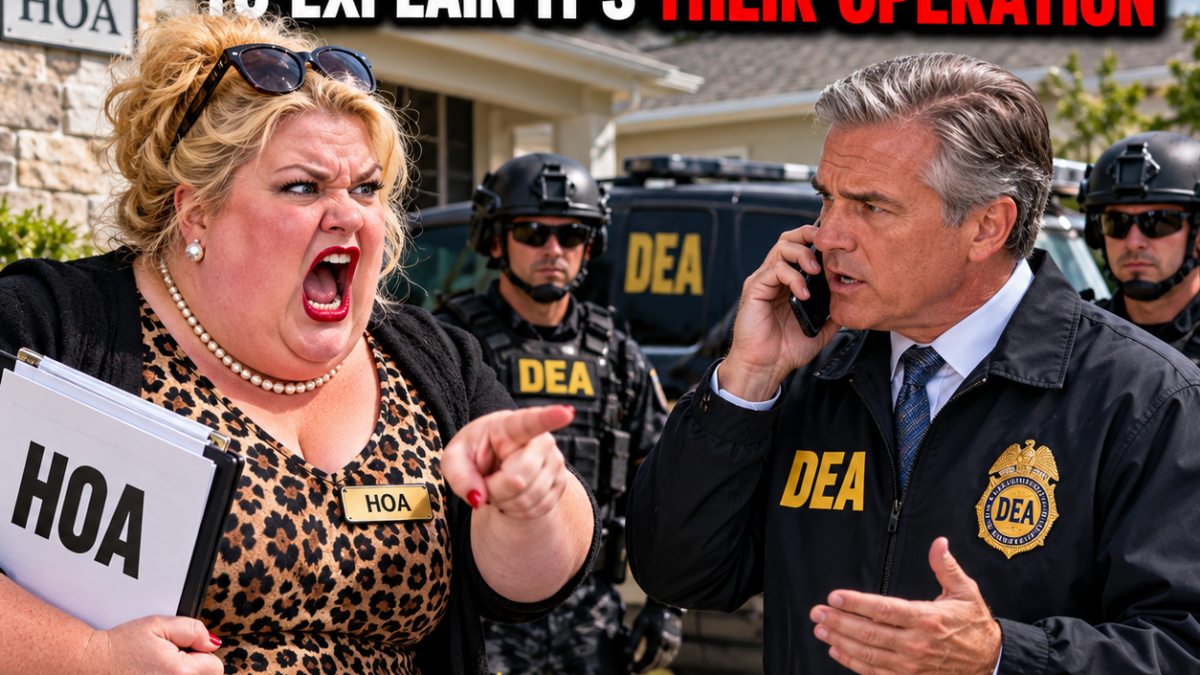
PART 2
I did not make the call that night.
That decision would bother me later.
At the time, though, I still believed I could contain Karen Miller without dragging anyone else into what seemed, on the surface, like a ridiculous neighborhood dispute.
I had spent most of my adult life solving problems quietly.
In the Army, panic could get people killed.
In a laboratory, shortcuts could destroy evidence.
At the DEA, careless assumptions could send investigators chasing the wrong man while the right one disappeared.
So I did what training had taught me.
I documented everything.
By eight the next morning, I had created a new folder on my computer.
I named it simply:
MILLER.
Inside went the emergency order, the sheriff incident number, the suspended auction contract, photographs of my workshop, photographs of the properly labeled chemical cabinets, copies of every permit I had ever received, and an audio recording from my exterior security system capturing Karen telling the deputies that I was “cooking drugs.”
Then the certified letter arrived.
Oak Creek Estates Homeowners Association.
The envelope was thick enough to feel like a small book.
I opened it at my kitchen table.
Karen had charged me $500 per day for operating an “unauthorized commercial enterprise.”
Another $1,000 per day for “improper hazardous material storage.”
Two hundred fifty dollars for nuisance odors.
One hundred dollars for what she called “visible grounds neglect.”
I actually walked outside after reading that one.
My lawn was trimmed.
The gravel driveway had been graded three days earlier.
The only thing I could find was a yellow dandelion near the fence.
Thirty-eight thousand dollars.
That was the total at the bottom of the page.
Thirty-eight thousand dollars for violations on property the HOA did not legally control.
I stared at the number for a long time.
My first instinct was surprisingly primitive.
Walk to Karen’s house.
Knock on her door.
Put the letter in front of her.
Tell her exactly what I thought of her.
Thirty years earlier, I might have done it.
Instead, I scanned every page.
Then I added another entry to my timeline.
Karen had been testing boundaries almost since the day I moved there.
My ten acres predated Oak Creek Estates.
The subdivision had been developed beside the original parcel, not around it, and my lawyer had confirmed before I purchased the property that I was not an HOA member.
The only complication was an old survey error involving a narrow strip beside the access road.
Fifty feet long.
Ten feet wide.
Practically useless.
But on one plat map from the 1970s, part of that strip appeared inside what later became HOA territory.
Karen treated that clerical mistake like the Louisiana Purchase.
The first time she came to my door, she had brought a welcome basket.
Inside it was one muffin.
One.
Wrapped in plastic.
Underneath the muffin was a binder nearly three inches thick.
“Our covenants,” she said proudly.
I looked at the binder.
Then at her.
“I’m not in the association.”
Her smile barely moved.
“We consider all adjacent properties part of the Oak Creek community.”
“That isn’t the same thing.”
“It is to us.”
That should have warned me.
Two weeks later, I received a violation notice because my mailbox was black.
According to Karen, black was not one of the neighborhood’s approved “heritage colors.”
I mailed back a copy of my property survey.
The next month she cited me because a FedEx truck had delivered a package.
“Commercial vehicle traffic.”
Then came a landscaping violation because I had allowed native wildflowers to grow near the tree line.
Each time I responded calmly.
Each time she ignored my response.
Then I built the workshop.
That was when annoyance turned into obsession.
My shop was three thousand square feet, but it was not some corrugated-metal industrial shed.
It matched the house.
Same siding.
Same roofline.
Same stone trim.
The ventilation equipment was screened behind cedar fencing.
From the road, it looked cleaner than half the oversized garages inside Oak Creek.
But Karen hated it.
Maybe because she couldn’t control it.
Maybe because the existence of something substantial just beyond her authority offended her.
Whatever the reason, she started watching.
I would catch sunlight flashing from binocular lenses on her upper deck.
She photographed delivery trucks.
She recorded the times my lights turned on and off.
Once I came outside at eleven at night and found her car parked on the public road with its headlights off.
When I walked toward it, she drove away.
That was before the federal work began.
After that, her curiosity became dangerous.
My restoration business was legitimate and public.
Thorn Restoration Solvents specialized in small-batch cleaners, corrosion inhibitors, and conservation compounds used on high-end classic vehicles.
I had spent a career around chemicals that destroyed lives.
In retirement, I liked creating chemicals that preserved things.
There was a certain balance in that.
The Shelby in my workshop belonged to a collector in Kentucky.
A museum in Virginia used one of my rust inhibitors.
A restoration shop in California had been testing a non-toxic degreaser I had formulated.
It was niche work.
Quiet work.
I loved it.
Then one afternoon, months before Karen’s accusation, my secure phone rang.
Only four people had ever had that number.
Three were retired.
The fourth was Director James Peterson.
He had been my superior during the final years of my federal career.
Peterson was the kind of man who could make an entire conference room sit straighter simply by walking through the door.
His voice had not changed.
“Marcus.”
“Sir.”
“You still have the mass spectrometer?”
That question erased retirement in five words.
“Yes.”
“Still calibrated?”
“Yes.”
“Secure facility?”
I looked through the glass wall of my office into the workshop.
“Very.”
He was silent for a moment.
“I need help.”
I never asked Peterson for details over an unsecured line.
He never offered them.
We met two days later in a private room at a government facility almost ninety miles away.
What he told me was simple in concept and terrifying in implication.
A federal investigation had placed an undercover operative close to a synthetic-opioid distribution network linked to a major international trafficking organization.
Someone had reason to believe information was leaking from conventional analytical channels.
The operation needed a place where limited preliminary samples could be examined without creating a predictable institutional trail.
The arrangement had legal oversight, compartmentalized authorization, and more conditions than I could keep in my head without a binder.
But the practical question Peterson asked me was very simple.
“Will you help?”
I thought about the men and women I had worked beside for three decades.
I thought about the evidence photographs I had seen.
The families.
The overdoses.
The children who had walked into kitchens and found parents who would never wake up.
“When?”
That was my answer.
After that, roughly twice each month, a plain vehicle arrived after dark.
The person bringing samples used a code name.
I did the same.
We did not socialize.
We did not discuss the larger investigation.
I tested what I was given.
I documented the chemical profile.
I transmitted the data.
Nothing more.
Those late-night visits were exactly what Karen had been photographing.
And now she had brought local law enforcement to the front door.
The morning after her $38,000 demand, I sent a coded message cancelling the next scheduled transfer.
Site compromised by local interest.
The response came thirteen minutes later.
ACKNOWLEDGED.
No questions.
No complaints.
That somehow made the situation feel worse.
I shut off the secure terminal and sat alone in the workshop.
For the first time since I built it, the silence felt hostile.
The Shelby remained covered.
My mixers were still.
The extraction fan was off.
Even the small refrigerator where I stored test panels seemed loud when its compressor kicked on.
This was supposed to be my retirement.
I had imagined slow mornings.
Coffee on the porch.
Engines.
Metal.
Work I chose because I wanted to do it.
Instead, I was sitting in a dark laboratory while a woman in a gated subdivision tried to convince half the county that I was Walter White.
By the end of the week, she had escalated again.
The county zoning office sent me a notice.
Then environmental compliance.
Then the fire marshal.
Three separate complaints.
All anonymous on paper.
All containing language suspiciously similar to Karen’s HOA letters.
I prepared a binder for the zoning inspector.
His name was Frank Delaney.
He arrived looking exhausted.
“Mr. Thorn?”
“That’s me.”
He glanced at the workshop.
“I’m here because we received concerns about industrial activity inconsistent with zoning.”
“I expected you.”
That surprised him.
I handed him the binder.
“Survey. Parcel history. Grandfathered-use confirmation. Building permit. Occupancy certificate. Business license. Environmental review.”
Frank stared at it.
“You already made this?”
“I like paperwork.”
He laughed once.
“You may be the first person I’ve ever heard say that.”
He spent nearly two hours inspecting.
He measured setbacks.
Checked records.
Walked the perimeter.
Photographed my ventilation unit.
By the end, his shoulders had relaxed.
“Mr. Thorn, you’re fine.”
“How fine?”
He flipped through his notes.
“Your parcel permits the use. Building is approved. Setbacks are good. Noise levels appear below the limit. Unless you’ve hidden an oil refinery underground, I don’t have anything.”
“No refinery.”
“Good. I didn’t bring the right shoes.”
At the driveway, he paused.
“Can I ask something?”
“Sure.”
“Is this about Karen Miller?”
I said nothing for a second.
Frank smiled tiredly.
“That answers it.”
“You know her?”
“I know the address.”
Apparently Karen had called county departments so often that her house itself had become recognizable.
The environmental inspector arrived four days later.
Same result.
The fire marshal came the week after that.
He stepped into my workshop, looked at the clearly marked extinguishers, rated cabinets, sprinkler system, eyewash station, ventilation controls, and automatic shutoff valves.
Then he whistled.
“I wish restaurants storing fryer oil looked half this good.”
He signed his inspection sheet.
Before leaving, he grinned.
“Let me guess. Oak Creek?”
I smiled for the first time in days.
“Something like that.”
Karen had tried to surround me with bureaucrats.
Instead, she was giving me independent government reports confirming that I had done everything correctly.
So I started collecting those too.
The folder grew.
MILLER became MILLER-LEGAL.
Then MILLER-COMPLAINT HISTORY.
Then MILLER-HOA FINANCES.
The last one began because of an anonymous text.
I was sitting on my porch around dusk when my phone buzzed.
Unknown number.
THEY’RE DISCUSSING A LIEN ON YOUR PROPERTY. NEXT BOARD MEETING. BE CAREFUL.
I read it twice.
A lien.
That changed everything.
Fines were harassment.
A lien was an attempt to build a pathway toward my home.
I walked into the workshop and stood in the middle of the silent floor.
My anger felt different that night.
Not hot.
Focused.
That was when I stopped thinking like a man defending himself from one difficult neighbor.
I started asking what kind of system had allowed her to become this powerful.
My first call was to Arthur Vance.
Arthur lived three houses from Karen.
He was seventy-one, retired from corporate law, and maintained roses so beautiful they almost looked illegal in Oak Creek’s world of approved landscaping.
I had always liked him.
During one of our earliest conversations, he had pointed toward the rows of nearly identical beige houses and called Karen’s administration “the glorious golden age of architectural surrender.”
I found him pruning roses the next morning.
“Arthur.”
He looked at my face.
“Oh, good. You finally look angry.”
“I need legal advice.”
His smile disappeared.
“Come inside.”
We sat on his screened porch with iced tea.
I showed him everything.
The fines.
Inspection reports.
Sheriff incident report.
Auction contract suspension.
Photographs Karen had taken.
The threatened lien.
I did not tell him about Peterson.
That information still belonged to another world.
Arthur read for nearly forty minutes without speaking.
Finally, he removed his glasses.
“This is worse than I thought.”
“You knew she did this?”
“Not to this degree.”
He leaned back.
Then he told me about the Peterson family.
Not my Director Peterson.
A young Army couple named Kevin and Melissa Peterson.
Karen had targeted them over a basketball hoop.
The hoop had been portable.
It sat near the garage.
Their son played after school.
The HOA began with a warning.
Then fines.
Then legal fees.
Then retroactive penalties.
Kevin deployed overseas while the dispute was escalating.
Melissa tried to fight alone.
Eventually, buried under debt and attorney expenses, they sold.
The buyer?
A real-estate company connected to Karen’s cousin.
Arthur told me about Richard and Evelyn Watson.
Retired.
Fixed income.
Their roof had been replaced after storm damage using shingles previously approved by the board.
Karen later claimed the color violated updated standards.
Fines followed.
Then collections.
They sold and moved in with their daughter.
“Why didn’t anyone stop her?” I asked.
Arthur gave me a sad look.
“Because bullies rarely start with people who can stop them.”
That sentence stayed with me.
Over the next three weeks, Arthur and I began talking to neighbors.
Quietly.
Maria and Luis Garcia showed us a violation notice issued because their eight-year-old son had left his tricycle on the driveway.
The notice claimed it remained outside for twenty minutes.
“How did she even know it was twenty minutes?” I asked.
Maria pointed toward Karen’s house.
“She times people.”
Another homeowner had been fined because Christmas lights remained attached to the roof until January 3.
An elderly widower received a warning because his garbage can was visible from the road while he recovered from hip surgery.
A woman named Denise had been cited because her front-door wreath contained a shade of blue not included in the approved seasonal palette.
None of these disputes alone looked catastrophic.
That was Karen’s genius.
She weaponized small things.
The violation was never big enough to justify hiring a lawyer at first.
Then came the second letter.
Then the administrative fee.
Then the late charge.
Then legal costs.
By the time people realized what was happening, they owed thousands.
Fear did the rest.
Arthur filed a formal records request with the HOA management company.
Karen resisted.
Arthur quoted state law.
They resisted again.
Arthur sent a second letter on his old law-firm letterhead.
The records arrived forty-eight hours later.
That was when we found the money.
The landscaping company receiving unusually generous HOA contracts belonged to Karen’s brother-in-law.
A maintenance vendor shared an address with a business registered to her cousin.
Thousands of dollars had been spent under vague entries like “special compliance review,” “emergency administrative services,” and “community protection consulting.”
A retired accountant named Henry Shaw joined us.
He spread five years of financial statements across my kitchen table.
“This isn’t sloppy bookkeeping,” he finally said.
“What is it?”
He tapped one payment.
“It’s either breathtaking incompetence or someone thinks nobody is looking.”
We started looking.
The deeper we went, the uglier it became.
Meanwhile, Karen’s campaign against me intensified.
At the grocery store, conversations stopped when I entered an aisle.
A woman I barely knew pulled her daughter closer when I passed.
Someone had apparently told people that federal agents had already been watching me.
That part was almost funny.
Almost.
But then the auction company formally cancelled the $250,000 contract.
The email arrived at 6:17 on a Tuesday morning.
Marcus,
Given the unresolved allegations regarding your facility, we cannot expose our company or clients to potential reputational or regulatory risk.
We are terminating the agreement pursuant to the compliance clause.
I read it twice.
Then I closed the laptop.
I had spent months developing the product for them.
Bought equipment.
Ordered ingredients.
Turned away smaller jobs because the auction contract would occupy most of my production schedule.
The money was not just profit.
It was security.
The last piece of mortgage debt.
A new roof planned for the following year.
Savings I wanted to leave behind instead of becoming a burden to anyone.
I went outside and sat on the steps.
There are moments when anger is easy.
Someone insults you.
You shout back.
Someone pushes you.
You push harder.
This was different.
There was nobody in front of me.
Just an email.
And suddenly years of careful planning had been erased because one woman had repeated a lie loudly enough.
That afternoon Karen drove slowly past my gate.
She saw me standing beside the mailbox.
She lowered her window.
“Heard business isn’t so good.”
I stared at her.
“How would you know?”
She smiled.
“People talk.”
Then she drove away.
I photographed the car.
Logged the time.
Added the comment to the file.
But that night, sitting alone in the darkened shop, I admitted something I had avoided admitting.
I was losing control of the situation.
Not legally.
Not even financially.
The dangerous part was the federal operation.
I had already cancelled two sample transfers.
Each delay reduced intelligence value.
More importantly, I had no idea what information the undercover operative depended upon.
I had deliberately been kept compartmentalized.
That was how these operations stayed safe.
I knew only enough to do my job.
But I knew one universal rule.
People undercover survived because everyone else kept their part of the machine functioning.
Mine was no longer functioning.
My pride had become a liability.
At 6:30 the next morning, I took an old secure phone from the locked drawer beneath my office desk.
I dialed a number from memory.
One ring.
“Yes?”
No greeting.
No name.
“Call sign Chemist. I need General.”
A pause.
“Stand by.”
Forty seconds later, I heard Peterson’s voice.
“Marcus.”
“Sir.”
“I wondered how long you were going to try handling this yourself.”
I frowned.
“You know?”
“I know enough to know two scheduled transfers were cancelled.”
I explained everything.
Karen.
The deputies.
The inspections.
The allegations.
The photographs.
The threatened lien.
The contract.
Most importantly, the surveillance around my property.
When I finished, Peterson said nothing for several seconds.
Then:
“Is the site secure?”
“Physically, yes.”
“Operationally?”
“No.”
That word hurt.
“No, sir. Not anymore.”
“Explain.”
“She’s watching the property. She has involved local agencies. She photographs vehicles. She has been documenting activity at night. Even if she doesn’t understand what she’s seeing, she has created enough attention that I can’t guarantee discretion.”
Peterson’s voice changed.
The old warmth disappeared.
“What’s her full name?”
“Karen Elaine Miller.”
“Position?”
“President, Oak Creek Estates Homeowners Association.”
“Did she knowingly file criminal allegations?”
“She told deputies she believed I was manufacturing drugs.”
“Did she photograph federal personnel?”
“I can’t confirm who appears in her photographs.”
“Did she distribute those photographs?”
“Unknown.”
He exhaled slowly.
“Marcus.”
“Yes?”
“This is no longer your HOA dispute.”
I looked through the office window at the covered Shelby.
“I understand.”
“No. I want you to really understand. Your job from this moment forward is to do nothing.”
“Nothing?”
“Nothing directed at her.”
I almost laughed.
“That may be harder than the Army.”
“I’m serious. No confrontations. No angry letters. No clever responses. If she fines you, document it. If she photographs you, document it. If she contacts you, record the lawful details and walk away.”
“What are you going to do?”
“Determine whether her actions have interfered with a federal investigation, exposed protected personnel, generated false statements, or created other legal problems.”
I rubbed my forehead.
“She’s an HOA president, sir.”
“And?”
“I’m just imagining explaining this operation being disrupted by a woman arguing about mailbox colors.”
Peterson actually chuckled.
“History is full of serious events caused by ridiculous people.”
Then he became quiet again.
“Send me your documentation.”
“All of it?”
“All of it.”
“The HOA material too?”
“Especially that.”
I hesitated.
“Why?”
“Because people who abuse power in one area sometimes get careless in others.”
I knew that tone.
He already had lawyers thinking.
“Sir, I don’t want federal resources used to settle a personal score.”
“They won’t be.”
His answer came instantly.
“If she merely annoyed you, I wouldn’t care. If she damaged your private business, that’s for your attorney. If she violated HOA law, that’s for the residents and state courts.”
He paused.
“But if she interfered with my operation, endangered my people, or knowingly created false investigative leads, that belongs to me.”
I sat straighter.
“What do you want me to do?”
“Stay quiet.”
“That’s all?”
“And tell me if she creates a public event concerning you.”
“Why?”
“Because people like Mrs. Miller usually cannot resist an audience.”
I thought about her.
The dramatic letters.
The neighborhood gossip.
The deputies.
Her need to be seen winning.
“She’s discussing foreclosure.”
“When?”
“I don’t know yet.”
“Find out without provoking her.”
“Understood.”
“And Marcus?”
“Yes?”
“You’ve spent your whole life cleaning up other people’s messes.”
His voice softened.
“Let someone else carry a bucket for once.”
The line disconnected.
For a long time, I sat without moving.
Then I encrypted the entire MILLER folder and uploaded it through the secure channel.
Every letter.
Every photograph.
Every complaint.
Every inspection result.
Arthur’s summaries of previous homeowners.
The preliminary financial concerns.
The cancellation of my business contract.
When the upload finished, I felt something I had not experienced in months.
Relief.
Not victory.
I had no idea what Peterson would find.
But I was no longer carrying two wars alone.
Karen noticed my silence within forty-eight hours.
She hated it.
Before, even when I answered her with dry legal letters, she had received something from me.
Recognition.
Resistance.
Proof that she mattered.
Now she got nothing.
A violation notice appeared taped to my gate.
I photographed it.
Removed it.
Filed it.
Another notice arrived accusing me of “refusal to cooperate with official community safety directives.”
Filed.
Then “hostile visual surveillance equipment.”
My security cameras had been there since before she noticed the workshop.
Filed.
Then “commercial lighting.”
The light was a standard motion-activated fixture beside my garage.
Filed.
Then she fined me because my pickup remained parked outdoors overnight.
My pickup.
On my ten acres.
Outside her jurisdiction.
Filed.
Arthur laughed when I showed him that one.
“She’s coming apart.”
“Peterson predicted it.”
Arthur looked at me.
“You keep mentioning a Peterson who isn’t the Peterson family.”
I took a sip of coffee.
“I do?”
“Marcus, I practiced law for forty-two years.”
He leaned forward.
“I know what selective silence looks like.”
I met his eyes.
“Then you know not to ask.”
Arthur held my gaze for a moment.
Then nodded.
“Fair enough.”
Karen began targeting the people she suspected were helping me.
Arthur received a warning about his birdbath.
The notice claimed standing water could contribute to mosquito-borne illness.
He framed it.
Maria Garcia was cited because sunlight reflecting from her son’s swing set constituted “unapproved glare.”
Henry Shaw received a complaint about receiving too many visitors.
That was the moment our quiet group stopped being scared.
Fear is powerful when people think they are alone.
Karen’s mistake was making enough people angry at the same time that they finally compared stories.
We began meeting every Thursday evening at Arthur’s house.
At first there were six of us.
Then nine.
Then fourteen.
By the fourth meeting, people were standing in his kitchen because every chair was occupied.
Someone brought cookies.
Someone else brought coffee.
It almost felt social.
Then Denise began telling us about her husband.
He had died two years earlier.
During the final months of his illness, their lawn deteriorated.
She spent most days driving him to chemotherapy.
Karen issued weekly landscaping penalties.
Denise had paid nearly $4,000 because she lacked the energy to fight.
“I buried him on Friday,” she said, her voice shaking, “and Monday morning there was another notice on the door.”
Nobody spoke.
She pulled the folded notice from her purse.
She had kept it.
The paper was worn soft at the creases.
“The grass was too high.”
Maria reached across the table and took her hand.
Something changed in that room.
Until then, this had been about bad management.
Petty rules.
Fines.
Control.
Now it had a face.
Denise’s.
The Petersons’.
The Watsons’.
Mine.
Arthur pushed his chair back.
“We’re removing her.”
No one disagreed.
The problem was procedure.
Karen controlled the board.
Bob and Carol, the other directors, approved almost anything she proposed.
The management company treated her like royalty.
Calling an ordinary recall meeting required signatures.
Calling a special meeting required notice.
Challenging fines required administrative steps Karen herself influenced.
So we did what Karen never expected frightened homeowners to do.
We followed every rule perfectly.
Signature by signature.
Notice by notice.
Record by record.
Arthur insisted on certified mail.
Henry created spreadsheets.
Maria organized copies.
I scanned everything.
We were building a case so clean that Karen would have nowhere to hide behind procedural excuses.
Meanwhile, I filed public-record requests with county agencies.
Every complaint associated with Karen Miller’s name or address where disclosure was permitted.
Five years of records.
The results arrived slowly.
Then all at once.
Two hundred and fourteen code complaints.
Eighty-seven sheriff calls classified as non-emergency or unfounded.
Complaints against teenagers walking after dark.
Complaints about delivery drivers.
Complaints about landscaping crews starting too early.
A report of a “suspicious man” who turned out to be a utility technician wearing a reflective vest and standing beside a marked company truck.
One complaint concerned a neighbor washing his own car.
Karen claimed runoff might contain “industrial chemicals.”
When Henry estimated the public resources consumed by her repeated complaints, he put down his calculator.
“Do you want the conservative number?”
“Yes.”
“More than thirty thousand dollars in personnel time, likely much more once vehicle costs and follow-up administration are included.”
Arthur whistled.
“She has turned taxpayers into her private compliance department.”
We added it to the file.
Then Peterson’s office asked me for one specific item.
Any evidence Karen had photographed nighttime vehicles.
I sent twelve images from my security cameras showing her car parked along the road.
Three showed her standing near my fence.
One showed something in her hands.
Binoculars or a camera.
Another captured her taking a photograph of a dark sedan entering my driveway.
That one worried me.
Two days later Peterson called.
“Marcus.”
“Sir.”
“From now on, no federal traffic goes to your property.”
“Understood.”
“We’ve relocated your function.”
“Understood.”
“We are assessing exposure.”
My stomach tightened.
“Agent compromised?”
“Not as far as we know.”
Not as far as we know.
That phrase stayed with me all night.
I barely slept.
For the first time, my anger at Karen became something heavier.
Fear.
Real fear.
Not that I would lose the house.
Not that she would humiliate me.
That somewhere far away, a person who had risked everything could be discovered because a suburban HOA president wanted photographic proof that the strange man near her neighborhood deserved punishment.
The next morning, I found Karen standing at my gate.
I almost violated Peterson’s instruction.
Almost.
She waved another envelope.
“Marcus!”
I continued toward the mailbox.
“Marcus, I’m speaking to you.”
I stopped twenty feet away.
She smiled.
“You’ve become awfully quiet.”
I said nothing.
“I suppose your lawyer told you there’s nothing you can do.”
Nothing.
Her smile hardened.
“We’re approaching seventy thousand dollars.”
Still nothing.
“I can put a lien on this property.”
I looked at her then.
Maybe something in my face unsettled her.
She shifted slightly.
“You think I won’t?”
I spoke for the first time.
“Do whatever you believe you’re legally entitled to do.”
The sentence was calm.
That made her angrier than shouting would have.
“Oh, I will.”
She shoved the envelope through the gate.
“And when the board takes this property, maybe someone respectable will buy it.”
She walked back toward her car.
I picked up the envelope.
The notice inside announced an emergency HOA board meeting.
Agenda:
FORECLOSURE AUTHORIZATION—PARCEL 7B.
My property.
Total alleged delinquency:
$74,250.
At the bottom, Karen had added a handwritten note.
Local media invited.
I stared at those three words.
Then I laughed.
Not because anything was funny.
Because Peterson had been right.
Karen could not resist an audience.
I scanned the notice.
Uploaded it.
Subject line:
PUBLIC EVENT.
Peterson replied four minutes later.
SEND DATE, TIME, LOCATION.
I did.
His second response was even shorter.
UNDERSTOOD.
The meeting was scheduled for Thursday at 7:00 p.m. in the Oak Creek clubhouse.
By Monday, flyers appeared around the neighborhood.
COMMUNITY SAFETY MEETING.
Karen had turned my foreclosure into a campaign rally.
The notice accused an unnamed resident of “persistent hazardous conduct.”
Everyone knew who she meant.
A local television reporter called my home asking whether I wanted to respond to allegations that I operated an illegal chemical business.
“No comment,” I said.
Karen gave them plenty.
She appeared briefly on the station’s website standing outside the clubhouse.
“We’re simply protecting families,” she told the reporter.
Her tone was soft and concerned.
“We have children here. Residents deserve to know what is happening around them.”
I watched the clip once.
Then shut it off.
Arthur watched it three times.
“She’s trying to convict you before the meeting.”
“Let her.”
“You’re taking this mysterious-Peterson advice very seriously.”
“I am.”
Arthur studied me.
“Is Thursday going to be interesting?”
“I genuinely don’t know.”
That was true.
Peterson had told me nothing about his plans.
The night before the meeting, a plain sedan entered my driveway at 12:14 a.m.
My cameras alerted me.
I went to the window.
A man wearing a dark suit stepped out.
He did not come to the door.
He looked at the workshop.
Then at the road.
Then back toward the wooded property line.
After less than two minutes, he returned to the car and left.
I recognized him vaguely from my federal years.
Not his name.
Just the posture.
Security.
I went back to bed.
Thursday evening arrived clear and cold.
I dressed simply.
Gray slacks.
Blue shirt.
No tie.
I left my phone at home.
Arthur had advised everyone in our group to bring copies of their documents, but he carried mine.
When I reached the clubhouse, the parking lot was overflowing.
A television van sat beside the entrance.
Neighbors stood in small groups.
Several stopped talking when they saw me.
Old reflex.
But this time some nodded.
Maria hugged me.
“You okay?”
“I’m fine.”
“You don’t look nervous.”
“I’ve been nervous for six weeks. I’m tired of it.”
She smiled.
“That I understand.”
Karen stood near the entrance wearing a bright red suit.
Power color.
She must have thought she looked presidential.
When she saw me, she stepped directly into my path.
“Mr. Thorn.”
“Karen.”
“I’m surprised you came.”
“You sent certified mail.”
“I thought maybe you’d hide.”
A few neighbors nearby turned toward us.
I could see how badly she wanted a scene.
So I smiled politely.
“Excuse me.”
Her face tightened.
I walked past her.
Arthur sat near the back.
“Nice entrance,” he whispered.
“She tried.”
“I saw.”
The clubhouse filled beyond capacity.
Bob and Carol sat at the front beside Karen.
Bob looked as though he had aged ten years in a month.
Carol kept rearranging papers.
At exactly seven, Karen struck a small wooden gavel against the table.
“Order.”
The room slowly quieted.
“This emergency meeting of the Oak Creek Estates Homeowners Association is called to order.”
Her voice had changed.
The angry woman who stood at my workshop was gone.
Tonight she was performing.
Measured.
Official.
Concerned.
“For months, this board has attempted to address an escalating threat to the peace, safety, and property values of Oak Creek Estates.”
Projector on.
First slide.
A photograph of my workshop taken through trees.
Second slide.
A chemical drum being unloaded.
Third slide.
My security cameras.
Fourth.
A dark sedan entering the property after midnight.
My stomach tightened when I saw that photograph.
Karen pointed at it.
“Unidentified vehicles arriving at suspicious hours.”
Nobody around me knew what they were actually looking at.
I felt Arthur glance over.
I did not move.
Karen continued.
She had created charts.
Timelines.
A map.
She described “noxious chemical odors.”
I had county measurements proving no such thing.
She described “hazardous storage.”
Fire marshal cleared.
She described “industrial traffic.”
Three or four deliveries a month.
She described my silence as “consciousness of guilt.”
Then came the words I had been waiting for.
“We have strong reason to believe that Mr. Thorn’s facility may be connected to illegal narcotics activity.”
Whispers filled the room.
The reporter’s camera shifted toward me.
Karen saw it.
She loved it.
“We contacted law enforcement because we could not, in good conscience, ignore the signs.”
She clicked to a photograph of the sheriff’s vehicles at my property.
“What happened after the deputies inspected?” Arthur called.
Karen stopped.
“I’m sorry?”
Arthur stood.
“What contraband did they recover?”
“This is not a cross-examination.”
“Did they recover narcotics?”
Karen’s jaw tightened.
“No.”
“Illegal chemical precursors?”
“No.”
“Unlicensed laboratory equipment?”
“They were unable to—”
“Yes or no?”
“Arthur, sit down.”
A few people laughed.
That enraged her.
She struck the gavel.
“Order!”
Arthur sat.
“Thank you,” Karen said sarcastically. “As I was explaining, law enforcement’s initial visit did not resolve the serious concerns.”
She conveniently omitted the county inspections.
The environmental inspection.
The fire marshal.
The zoning clearance.
Instead she moved directly to money.
“Mr. Thorn has accumulated $74,250 in unpaid fines, assessments, penalties, and enforcement expenses.”
There were gasps.
Karen looked at me.
“This board has shown extraordinary patience.”
Maria muttered something in Spanish under her breath.
Luis squeezed her hand.
Karen continued.
“Mr. Thorn has refused every opportunity to correct his conduct.”
Wrong.
“He has refused to cooperate with this community.”
Wrong.
“He has demonstrated contempt for lawful authority.”
That one almost made me smile.
“Therefore, the board will tonight vote to authorize foreclosure proceedings against Parcel 7B.”
She let silence build.
Then she looked directly into the news camera.
“We do not take this action lightly. But no individual is above the rules.”
That sentence was so perfect I wondered whether the universe had written it for her.
She turned toward me.
“Mr. Thorn, before the board votes, you may make a final statement.”
Every face turned.
Arthur whispered, “Now?”
I had no idea.
I stood anyway.
My knees were steady.
I looked around the room.
At Denise.
At the Garcias.
At Henry.
At people Karen had intimidated for years.
Then I looked at her.
“I do have something to say.”
Karen leaned back in her chair.
Triumph.
But before I could continue, the clubhouse doors opened.
Not dramatically at first.
Just one door.
Then the other.
A man in a dark suit entered.
Another followed.
Then two more.
The room became quiet in stages.
Whisper by whisper.
Chair by chair.
At the center of the group walked James Peterson.
Silver hair.
Dark charcoal suit.
No visible badge.
He did not need one.
Anyone who had ever worked around command-level people would have recognized the effect immediately.
Peterson did not ask the room for attention.
Attention moved toward him.
Karen stared.
“Excuse me,” she said. “This is a private association meeting.”
Peterson stopped near the center aisle.
“Mrs. Miller?”
She hesitated.
“Yes?”
He removed identification from his jacket and held it where she could see.
“My name is James Peterson. I’m with the Drug Enforcement Administration.”
The room erupted in whispers.
Karen’s face changed.
Not fear yet.
Confusion.
She recovered quickly.
“Wonderful.”
She pointed toward me.
“Then perhaps you can finally explain to Mr. Thorn that—”
“No.”
One word.
Peterson’s voice was not loud.
It did not need to be.
Karen stopped.
Peterson continued toward the front.
Two federal officials remained near the doors.
Another quietly spoke to the television crew.
The camera lowered.
That was when Karen first looked afraid.
Peterson stood beside the board table.
He looked at the projector.
The screen still showed a long-lens photograph of a dark sedan entering my property.
He stared at it longer than anything else.
Then he turned toward Karen.
“Did you take that photograph?”
She swallowed.
“I—I documented activity relevant to community safety.”
“Did you take it?”
“Yes.”
“From where?”
“My property.”
“Using what type of camera?”
“I don’t see how—”
“Did you distribute this photograph?”
Karen looked at Bob.
Then Carol.
Neither helped her.
“It was included in our board documentation.”
“Did you provide it to anyone outside this association?”
“The sheriff. Possibly county officials. The media may have received—”
Peterson closed his eyes for half a second.
When he opened them, his expression had become colder.
Karen sensed it.
“What exactly is this about?”
Peterson turned toward the room.
“I need everyone here to understand something.”
Not one person moved.
“Mr. Marcus Thorn is a retired United States Army Chemical Corps specialist and a former forensic chemist who spent many years supporting federal narcotics investigations.”
A few heads turned toward me.
Karen’s mouth opened.
Peterson continued.
“In retirement, Mr. Thorn was asked to provide limited technical assistance connected to an active federal investigation.”
The silence became absolute.
“His workshop was selected because of his expertise, his security practices, and his history of service.”
Karen shook her head.
“No.”
Peterson looked at her.
She said it again.
“No. That’s impossible.”
“Why?”
“Because he—”
She gestured helplessly toward the projector.
“Because look at it!”
Peterson looked at the photograph.
“We have.”
The room remained still.
“The nighttime activity Mrs. Miller photographed and characterized as evidence of criminal conduct was related, in part, to authorized federal investigative work.”
Someone gasped.
Arthur slowly turned toward me.
I gave him a small nod.
He mouthed:
You have got to be kidding me.
Peterson continued.
“Details of that investigation remain protected. I will not discuss operational methods, personnel, targets, or evidence in this room.”
His gaze returned to Karen.
“What I can say is that repeated surveillance of Mr. Thorn’s property, publication of photographs involving operational traffic, and the creation of unnecessary law-enforcement activity around that location forced the government to alter procedures.”
Karen’s face went white.
“I didn’t know.”
“No,” Peterson said. “You didn’t.”
Her shoulders relaxed slightly, as though she thought ignorance saved her.
Then Peterson added:
“That is precisely why responsible citizens do not fabricate certainty from suspicion.”
The sentence landed harder than shouting could have.
Karen looked around.
People were staring at her.
“You don’t understand,” she said. “He had chemicals.”
“Yes.”
“He worked late.”
“Yes.”
“Cars came at night.”
“Yes.”
“I was protecting people.”
Peterson nodded slowly.
“Did the sheriff’s inspection find illegal drugs?”
Karen said nothing.
“Did the zoning inspector find violations?”
Silence.
“Did environmental compliance?”
Nothing.
“The fire marshal?”
Her eyes dropped.
Peterson turned toward the homeowners.
“We have reviewed the relevant local reports. Mr. Thorn’s legitimate commercial operation was repeatedly found compliant.”
Then he faced Karen again.
“Yet the accusations continued.”
“I had concerns.”
“You announced publicly that he was operating a drug laboratory.”
“I believed—”
“You told people he was a criminal.”
“I said there were signs.”
“You attempted to impose tens of thousands of dollars in penalties.”
“That’s HOA business.”
“You pursued foreclosure.”
“He owed fines.”
“On property your association may not even control.”
Karen looked at Arthur.
Arthur smiled without warmth.
“We’ll get to that.”
Peterson nodded to one of the officials beside him.
The man placed a folder on the table.
Peterson did not touch it.
“Mrs. Miller, federal investigators are reviewing whether your conduct created actionable interference with an investigation or exposed protected information. You will receive formal communication through appropriate legal channels.”
Karen gripped the edge of the table.
“Am I under arrest?”
“No.”
Relief flashed across her face.
“Tonight,” Peterson added.
Gone.
The room exploded.
People stood.
Voices overlapped.
“What does that mean?”
“She endangered federal agents?”
“You told us he was a drug dealer!”
“What about our fines?”
Karen banged the gavel.
“Order!”
Nobody listened.
She struck it again.
“ORDER!”
Arthur stood.
His voice carried over the crowd.
“Everybody sit down.”
Something remarkable happened.
They did.
Not because Arthur had authority.
Because, finally, Karen didn’t.
Arthur walked to the front carrying his briefcase.
He placed it beside Peterson’s folder.
“I’d like the record to reflect that the residents have additional business.”
Karen stared at him.
“You are out of order.”
“No.”
Arthur opened the case.
“For the first time in years, I think we’re exactly in order.”
He removed a thick binder.
“This contains statements and documentary evidence from thirty-one current and former Oak Creek homeowners concerning selective enforcement, improper fines, procedural irregularities, conflicts of interest, and alleged financial self-dealing.”
Bob looked at Karen.
“What?”
She snapped at him.
“Don’t.”
Henry stood.
“I reviewed five years of financial statements.”
Carol’s face drained.
Henry continued.
“Payments exceeding one hundred and forty thousand dollars went to vendors with familial or business relationships to President Miller.”
“That is a lie!” Karen shouted.
Henry raised a document.
“Then perhaps you can explain why Green Ridge Community Services uses the same mailing address as your cousin’s real-estate company.”
The room erupted again.
Karen looked at the exit.
One of the federal officials happened to be standing nearby.
He did not block her.
He didn’t need to.
Arthur removed another folder.
“And there is the matter of the Peterson property.”
Karen froze.
I had never seen fear arrive so visibly on another person’s face.
Arthur saw it too.
“Ah,” he said quietly. “So you remember.”
“You have no idea what you’re talking about.”
“A young military family. Husband deployed. Escalating fines. Forced sale under financial pressure.”
“That was lawful enforcement.”
“Property purchased weeks later by a company tied to your cousin.”
“Coincidence.”
“Maybe.”
Arthur pulled out another document.
“We’re going to find out.”
Then Denise stood.
Her hands were shaking.
She held the old grass violation notice.
“My husband was dying.”
Karen looked at her.
Denise’s voice cracked.
“You fined us while he was having chemotherapy.”
“Denise, landscaping standards apply equally—”
“He died on Friday.”
Karen stopped.
“You put another notice on my door Monday.”
The room became silent again.
Denise stepped forward.
“For two years, I thought I was weak because I paid you. I thought I should have fought harder.”
Maria stood beside her.
“You weren’t weak.”
Another neighbor stood.
Then another.
One by one, people began telling their stories.
A garbage can.
A wheelchair ramp.
A basketball hoop.
Christmas lights.
A sick parent.
A child’s bicycle.
Wrong-colored shutters.
A work truck.
A garden.
A flag bracket.
Things so small that Karen had once been able to make each person feel ridiculous for complaining.
Together, they sounded like an indictment.
Karen sat behind the table.
Her shoulders slowly collapsed.
Arthur waited until everyone finished.
Then he opened the HOA bylaws.
“Section nine permits removal of an officer whose actions materially damage the interests of the association.”
Karen shot to her feet.
“You cannot do this.”
Arthur looked toward the residents.
“I move for an immediate vote of no confidence in Karen Miller and her removal as president, subject to the procedures available to this membership.”
“Second,” Maria shouted.
“Second!”
“Second!”
The room erupted with voices.
Bob raised both hands.
“Wait. We need to determine whether—”
Arthur pointed at him.
“You should decide very carefully which side of this table you want history to remember you sitting on.”
Bob looked at Karen.
Then at Peterson.
Then at the crowd.
“I second the motion.”
Karen stared at him.
“You coward.”
Carol whispered, “Karen…”
“You too?”
Carol started crying.
“I told you the fines were going too far.”
“You signed them!”
“You told me we had to!”
The board was disintegrating in real time.
Arthur supervised the vote.
Hands rose across the clubhouse.
Almost every homeowner.
Against?
None.
Karen’s hand went up alone.
Arthur looked around.
“The motion carries.”
For the first time since I had known her, Karen Miller had no title.
She sat down slowly.
Someone took the gavel from the table.
She did not stop them.
I thought I would feel victorious.
Instead, watching her, I felt strangely tired.
This was what I had wanted, wasn’t it?
For her to lose.
For everyone to see.
For the lies to collapse.
But revenge looks different from across a room.
It isn’t always satisfying.
Sometimes it is simply watching a person discover that every bridge she burned has left her standing alone.
Peterson approached me while residents surrounded Arthur.
“You all right?”
“Yes.”
“You don’t look pleased.”
“I thought I would be.”
He nodded.
“That means you still have perspective.”
“What happens to her?”
“Not my decision.”
“Was the agent exposed?”
Peterson hesitated.
My stomach tightened.
“Not directly.”
I exhaled.
“But?”
“We had to restructure part of the operation because identifying patterns around your site created unnecessary risk.”
“Did that hurt the case?”
“We adapted.”
“That wasn’t my question.”
Peterson studied me.
“Yes. It cost us time.”
I looked at Karen.
She sat alone.
“Anyone hurt?”
“Not because of this.”
That mattered more than anything else he had said.
Peterson put a hand briefly on my shoulder.
“You did your job.”
“I should have called earlier.”
“Yes.”
The answer surprised me.
No comfort.
No excuse.
Just truth.
“I thought I could handle it.”
“I know.”
“That was pride.”
“Yes.”
I looked at him.
“Are you enjoying this?”
“A little.”
I laughed.
It was the first genuine laugh I had managed in weeks.
Then he became serious.
“Marcus, experience does not make us immune to pride. Sometimes it gives pride better arguments.”
I filed that sentence beside everything else I had learned.
Karen left the clubhouse through a side door.
No one stopped her.
No one spoke to her.
Her red suit disappeared into the dark parking lot.
But the consequences were just beginning.
Arthur became interim HOA president before midnight.
His first action was not dramatic.
He suspended all active fines for ninety days pending review.
His second was to freeze discretionary spending.
His third was to secure the HOA records.
That turned out to be important.
At 8:12 the following morning, the management company called Arthur.
Someone using Karen’s credentials had attempted to access the association’s online record portal after her removal.
The account had been disabled.
Arthur called an attorney.
Then the accountant.
Then state investigators.
By lunchtime, multiple residents had contributed enough money to retain outside counsel for the association.
Karen’s personal attorney sent a letter demanding her reinstatement.
Arthur responded with seventeen pages.
She was not reinstated.
My attorney filed suit the next week.
Not because Peterson told me to.
He didn’t.
In fact, he stayed completely out of the private dispute.
My lawsuit addressed the damage Karen had done as Karen.
Defamation.
Tortious interference with a valid business relationship.
Abuse of process.
Claims related to the unlawful fines and attempted foreclosure.
The cancelled $250,000 contract sat at the center of the damages file.
When Karen’s lawyer received the complaint, his tone changed.
He requested mediation.
Arthur recommended we wait.
“Why?”
“Because right now she still thinks this is one lawsuit.”
It wasn’t.
The Peterson family had been contacted.
Kevin Peterson was no longer deployed.
When Arthur explained what we had found, there was silence on the phone.
Then Kevin said:
“Tell me where to sign.”
The Watson children obtained their parents’ old records.
Denise hired her own lawyer.
Two more homeowners filed claims.
Then the HOA’s insurance carrier became involved.
Once the insurer reviewed the allegations concerning intentional misconduct and undisclosed conflicts of interest, it reserved its rights and began distancing itself from Karen’s actions.
The protection she assumed the association would provide suddenly looked very uncertain.
Three weeks after the clubhouse meeting, I received a call from the auction company.
The same executive who cancelled my contract was on the line.
“Marcus.”
“David.”
There was an awkward pause.
“We owe you an apology.”
I waited.
“We reacted to the investigation without giving you a fair opportunity to respond.”
“You reacted to risk.”
“That isn’t an excuse.”
“No. But I understand it.”
“We’d like to reinstate the agreement.”
I looked through the office window at the Shelby.
“Same terms?”
“Better.”
“How much better?”
“Original value plus fifteen percent for schedule disruption.”
I leaned back.
“Send it to my lawyer.”
“You’re not saying yes?”
“I’m saying send it to my lawyer.”
He laughed nervously.
“Fair.”
Two days later, the signed contract arrived.
My workshop came back to life.
The first morning I turned on the ventilation system, I stood beneath the vents and listened.
A sound that had once been ordinary felt almost sacred.
Machines started.
Pumps hummed.
Sunlight crossed the steel counters.
I removed the cover from the Shelby.
There it was.
Deep blue paint.
Chrome.
A piece of history waiting patiently while human beings fought over power.
I ran my hand along the fender.
“Sorry,” I whispered.
Then I laughed at myself for apologizing to a car.
The federal investigation connected to my work continued elsewhere.
Peterson never told me everything.
He couldn’t.
Months later, I read a public announcement about coordinated arrests connected to a synthetic-opioid trafficking network.
No mention of my workshop.
No mention of Karen.
No mention of the people who had worked anonymously in the background.
That was exactly how it should be.
But one afternoon, Peterson called.
“We’re finished.”
“With what?”
“Your piece.”
I understood.
“Successful?”
“Enough.”
“Agent safe?”
A pause.
“Yes.”
I closed my eyes.
The tension I had carried for months left my shoulders all at once.
“Thank you.”
“No,” he said. “Thank you.”
After the call, I went outside.
It was spring.
Wildflowers were beginning to return along my fence.
The same wildflowers Karen once tried to fine me for.
A month earlier I might have seen symbolism in that.
That day they were simply flowers.
Oak Creek changed too.
Not instantly.
Communities do not heal because one difficult person leaves office.
For years, people had learned to distrust one another.
Karen had encouraged anonymous complaints.
Neighbors watched neighbors.
Small disagreements turned into enforcement requests.
Nobody wanted to be the next target.
Arthur understood that changing rules was easier than changing habits.
So the new board began with transparency.
Meeting agendas were published in advance.
Fines above fifty dollars required board review.
No director could vote on a contract involving a relative.
Residents received a real appeal process.
Complaints could no longer be used anonymously except for legitimate safety concerns.
Foreclosure required multiple procedural safeguards and outside legal review.
And perhaps most importantly, Arthur created something called the Common Sense Rule.
It was not legally sophisticated.
It fit on one paragraph.
Before sending a formal violation notice, the HOA was required to ask whether a normal conversation between neighbors could reasonably solve the issue.
Maria cried when it passed.
“Imagine that,” she said. “Talking to people.”
Kids returned to driveways.
Bicycles appeared.
Basketball hoops returned.
Someone painted a front door dark blue.
Nobody died.
The Garcias left their son’s tricycle outside for an entire afternoon.
Arthur photographed it.
Then printed the picture and hung it in the clubhouse.
Underneath he wrote:
COMMUNITY SURVIVES ANOTHER CRISIS.
Even I laughed at that.
Karen did not disappear quietly.
For several months, her lawyer fought everything.
She claimed the board removal had been procedurally defective.
She accused residents of conspiring against her.
She alleged that Peterson’s appearance constituted government intimidation.
She claimed I had manipulated federal authorities as part of a private revenge campaign.
Peterson’s office responded through formal legal channels with exactly what was necessary and nothing more.
That approach was devastating.
There was no emotional argument for Karen to fight.
No dramatic accusations.
Just dates.
Records.
Agency contacts.
Reports.
Statements.
The same kind of paperwork she had weaponized against everyone else.
Only now it was accurate.
The state investigation into HOA finances produced its own problems.
Not every suspicious payment turned out to be criminal.
That mattered.
I had learned enough in government to know that not everything unethical is illegal, and not everything ugly belongs in a courtroom.
But several contracts had been approved without required disclosures.
Records were incomplete.
Related-party relationships had not been properly reported.
The HOA pursued recovery of funds.
Karen eventually settled portions of those claims without admitting wrongdoing.
My case moved toward mediation.
The first time I saw her after the clubhouse meeting was across a conference table.
No red suit.
No rhinestones.
No binder.
She wore gray.
Her attorney sat beside her.
Mine sat beside me.
Arthur was there as consulting counsel.
The mediator began by explaining confidentiality and the process.
Karen barely looked at me.
Then my attorney presented our damages.
Lost contract.
Legal expenses.
Business interruption.
Reputational harm.
Documentation of defamatory statements.
Karen’s attorney whispered to her.
Her jaw tightened.
After three hours of separate-room negotiation, the mediator entered our room.
“They’re willing to make a substantial offer.”
My lawyer slid the number toward me.
I looked at it.
Enough to compensate the documented financial damage.
Enough that accepting would avoid years of litigation.
Arthur waited.
“Well?”
I stared at the figure.
Months earlier, I would have wanted to reject it.
I would have wanted a trial.
A public verdict.
I would have wanted Karen sitting in a courtroom while every fact was read aloud.
But revenge had already taken more of my time than I wanted to admit.
Every hour spent thinking about her was another hour she still controlled.
“Does the settlement include a written retraction?”
“Yes.”
“Correction sent to everyone who received her allegations?”
“Yes.”
“No confidentiality preventing me from correcting the public record?”
My lawyer checked.
“Correct. The financial amount remains private, but factual correction of the allegations is allowed.”
I nodded.
“Then I’ll accept.”
Arthur looked surprised.
“You sure?”
“Yes.”
I looked toward the wall separating our room from Karen’s.
“I want my life back more than I want hers ruined.”
That was the moment I understood the difference between consequences and revenge.
Consequences were necessary.
Revenge wanted an audience.
I had spent months watching what the need for an audience did to Karen.
I did not want to inherit that from her.
The settlement required her to retract statements accusing me of illegal drug manufacturing.
It reimbursed major losses.
She agreed not to claim authority over my parcel.
Her remaining claims against the HOA were withdrawn.
Other residents handled their own cases independently.
Some settled.
Some continued.
Karen’s legal bills mounted.
Combined with the private lawsuits, HOA reimbursement issues, and her own expenses, she eventually placed her house on the market.
I heard the news from Maria.
“She’s selling.”
I kept working.
“You don’t want to see the listing?”
“No.”
“Arthur already sent it to everybody.”
“That sounds like Arthur.”
Three weeks later, a moving truck arrived.
I noticed because I was drinking coffee on the porch.
Karen and her husband carried boxes from the garage.
For years, her house had seemed like a command post.
Binoculars from the deck.
Cars coming and going.
Neighbors summoned for meetings.
Letters mailed from the kitchen table.
Now it was simply a house.
Her husband loaded a lamp.
Karen emerged carrying a cardboard box.
For one second, she looked toward my property.
Our eyes met across the distance.
I expected hatred.
Maybe embarrassment.
Maybe one final gesture.
Instead, she looked tired.
I raised my coffee mug slightly.
Not mockery.
Not forgiveness.
Just acknowledgment.
She looked away.
The truck left around noon.
I watched it reach the end of the road and disappear.
Then I finished my coffee.
That should have been the end.
But there was one final matter.
A week later, a letter arrived at my workshop.
No HOA logo.
No attorney letterhead.
Ordinary envelope.
Inside was a single sheet of paper.
Marcus,
I do not expect you to believe that I was trying to protect people. I understand now that saying that does not undo what I did.
I became convinced that if I did not control everything around me, something bad would happen. Every time someone resisted me, I treated resistance as proof that I needed more control.
You were simply the first person I could not frighten.
I hated you for that.
I am not asking for forgiveness.
Karen
I read the letter twice.
Then put it in the file.
Arthur wanted to know whether I planned to answer.
“No.”
“Still following Peterson’s silence strategy?”
“No.”
“Then why not?”
“Because sometimes silence isn’t strategy.”
I closed the folder.
“Sometimes the conversation is simply over.”
Arthur nodded.
A year after the original accusation, Oak Creek held its annual spring picnic.
I had never attended before.
Maria came to my workshop three days earlier.
“You’re coming.”
“That sounded less like an invitation.”
“It is not an invitation.”
“I have work.”
“Saturday?”
“Yes.”
“Liar.”
She pointed toward me.
“No excuses. People want to see you.”
“That is exactly why I don’t want to go.”
“You spent thirty years working for the government and you’re afraid of potato salad?”
“I’ve seen things.”
She laughed.
I went.
Kids ran across the grass.
Someone played music.
Arthur stood beside a grill wearing an apron that said TRUST ME, I’M A LAWYER.
“No one should trust a man wearing that apron,” I told him.
“It was a gift.”
“From who?”
“Myself.”
“Even worse.”
Denise sat beneath a tree talking with friends.
She looked happier than I remembered.
The Garcias’ son had brought his bicycle.
He left it lying directly beside the clubhouse entrance.
Arthur photographed that too.
At one point I stepped away from the crowd.
From the edge of the common area, I could see part of my workshop roof beyond the trees.
For months I had thought the story was about winning.
Karen accused me.
I proved her wrong.
She tried to take my property.
We removed her.
She cost me money.
I recovered it.
Simple.
But standing there, I realized the part that mattered most had happened quietly.
People had stopped being afraid of one another.
Denise no longer hid from the HOA.
Maria no longer checked the driveway every fifteen minutes for toys.
Arthur’s roses grew in colors Karen never would have approved.
The community had not become lawless.
It had become human.
Rules still existed.
Dues were still collected.
Lawns still had standards.
Nobody had turned the subdivision into a junkyard.
They had simply remembered that rules were supposed to serve people.
People were not supposed to serve rules.
Peterson retired not long afterward.
For real this time.
He visited me once.
No black sedan.
No security detail.
He drove a battered SUV with mud on the tires.
When he entered the workshop, the Shelby was gone.
In its place sat a 1959 Corvette undergoing preservation work.
Peterson walked around it slowly.
“Nice.”
“You know anything about cars?”
“No.”
“Then your opinion has limited value.”
He smiled.
“You always were insubordinate.”
“Only after retirement.”
I poured coffee.
We sat near the open bay door.
For several minutes neither of us spoke.
Then he said:
“I heard Miller moved.”
“She did.”
“Sorry I missed the parade.”
“There wasn’t one.”
“Good.”
I looked at him.
“You were right about something.”
“Only one?”
“My silence did make her reckless.”
Peterson nodded.
“People addicted to control usually interpret silence as defiance.”
“I almost enjoyed watching her destroy herself.”
“Almost?”
I thought about Karen’s letter.
“By the end, not really.”
Peterson stared into his coffee.
“That’s probably healthy.”
“Do you ever wonder whether we were too hard on her?”
“No.”
His answer was immediate.
I raised an eyebrow.
He continued.
“Accountability and cruelty are different things, Marcus. We did not invent evidence. We did not manufacture accusations. We did not retaliate because she annoyed you. We responded to conduct.”
He looked toward the trees.
“You don’t have to enjoy consequences for them to be necessary.”
That was another sentence worth keeping.
Before leaving, Peterson stopped beside the workbench.
“Still making that citrus degreaser?”
“Yes.”
“The stuff Miller said smelled like a meth lab?”
“The very same.”
“Give me a bottle.”
“Why?”
“My wife says I ruined her baking sheets.”
“How?”
“I grilled on them.”
I stared at him.
“You ran federal narcotics operations for thirty years and thought a baking sheet belonged on a grill?”
“There were circumstances.”
“That sentence probably explains half your career.”
He took the bottle and left.
I watched his SUV disappear down the drive.
Then I returned to the Corvette.
These days, when a delivery truck turns onto my property, nobody photographs it.
When the lights are on after midnight, nobody calls the sheriff.
Sometimes I work late because insomnia still visits.
Sometimes I simply enjoy the quiet.
The mortgage is paid.
The auction company became one of my best clients.
My restoration products are now shipped to collectors, museums, and specialty shops in several states.
I never advertised the federal connection.
There was nothing to advertise.
My role had been small.
Technical.
Temporary.
The people who deserved recognition were the ones who risked far more than I did.
Karen had been wrong about me.
But she had accidentally taught me something.
For most of my life, I believed strength meant maintaining control.
Control the environment.
Control the evidence.
Control your emotions.
Control the variables.
That mindset kept me alive and made me good at my work.
But retirement taught me another kind of strength.
Sometimes strength means allowing other people to stand beside you.
Arthur.
Maria.
Luis.
Henry.
Denise.
The Peterson family.
Even a federal director who had to remind an old chemist that he did not have to solve every problem alone.
Karen nearly destroyed my business because I remained silent too long.
But in trying to isolate me, she created the exact opposite result.
She connected every person she had hurt.
She gave frightened neighbors a common reason to speak.
She brought inspectors to my property who documented my compliance.
She invited reporters who eventually reported her downfall.
She called a public meeting designed to humiliate me and filled the room with witnesses to her own conduct.
She built the stage.
She invited the audience.
She turned on the lights.
All we had to do was let the truth walk through the door.
The old MILLER folders still exist on an encrypted backup drive.
I rarely open them.
The original $38,000 demand.
The $74,250 foreclosure notice.
Inspection reports.
Photographs.
Karen’s handwritten accusations.
Her final letter.
Sometimes I think about deleting everything.
Then I remember Denise holding that lawn notice after her husband’s funeral.
I remember Kevin Peterson describing how powerless his wife felt while he was deployed.
I remember Maria asking why a child’s tricycle had become a threat to property values.
So I keep the records.
Not as trophies.
As reminders.
Power becomes dangerous when nobody asks it to prove itself.
A uniform doesn’t make someone right.
A title doesn’t make someone right.
A binder does not make someone right.
A frightened crowd does not make an accusation true.
Evidence matters.
Process matters.
And the people enforcing rules must be accountable to those same rules.
One Saturday morning, almost two years after Karen first brought deputies into my workshop, I was polishing another classic car near the open bay door.
The weather was warm.
Birds were making more noise than my ventilation system.
A pickup stopped near the gate.
A young couple stepped out.
They had recently bought Karen’s old house.
I had met them once.
The husband held something in his hand.
For one irrational second, I thought:
Not another HOA letter.
He walked up the driveway.
“Mr. Thorn?”
“That’s me.”
“My wife and I are having people over tonight. Maybe fifteen or twenty. Music, kids, probably too much food.”
I waited.
He looked embarrassed.
“We just wanted to make sure it wouldn’t bother you.”
I stared at him.
Then I started laughing.
He looked alarmed.
“Did I say something?”
“No.”
I put down the cloth.
“You’re fine.”
“You sure?”
“Absolutely.”
“We’ll keep the music down after ten.”
“Play it until eleven.”
He grinned.
“Thanks.”
As he turned away, I called after him.
“One condition.”
He stopped.
“What?”
“If there’s barbecue, I expect a plate.”
He laughed.
“Deal.”
That night, music drifted faintly through the trees.
Children shouted.
Someone laughed loudly.
A dog barked.
For years, Karen had treated every sound she could not control as an intrusion.
I stood beside my workshop and listened.
Nothing about it felt threatening.
It sounded like people living.
I looked around the property I once thought I might lose.
Ten acres.
House.
Workshop.
Trees.
Wildflowers.
No surveillance car on the road.
No violation notice on the gate.
No fear that opening the mailbox would reveal another manufactured emergency.
Just home.
The next morning, a paper plate covered in aluminum foil sat outside my door.
Brisket.
Cornbread.
Potato salad.
On top was a handwritten note.
NEIGHBORHOOD HAZARDOUS MATERIAL DELIVERY.
I laughed so hard I had to sit down.
Arthur denied involvement.
I never believed him.
I carried the plate into the workshop and set it beside the old photograph of my Army unit.
Then I noticed the Shelby picture hanging above my desk.
The photograph had been taken the week I finally finished that car.
Sunlight across the hood.
Chrome shining.
No Karen.
No deputies.
No government officials.
No drama.
Just work completed after interruption.
Maybe that was the real ending.
Not Karen losing her house.
Not the lawsuits.
Not the board vote.
Not Peterson walking into the clubhouse.
The real ending was ordinary life returning.
That afternoon I opened every bay door.
Warm air moved through the shop.
I turned on the old radio.
A baseball game played quietly in the background.
Then I picked up my polishing cloth and went back to work.
For thirty years, I had helped investigate dangerous people who thought they were smarter than the law.
In retirement, the most exhausting battle of my life began with an HOA president who thought a few chemical drums, late-night lights, and her own suspicions entitled her to destroy a neighbor.
She wanted to prove I was running a drug lab.
Instead, she exposed the federal operation she should never have approached, the neighbors she had spent years intimidating, the financial questions inside her own administration, and eventually herself.
I never needed to threaten her.
I never needed to trespass.
I never needed to sabotage anything she owned.
I simply kept records.
Followed the law.
Found the people she had hurt.
And waited for her to make the one mistake people obsessed with power eventually make.
She assumed nobody could tell her no.
Then one evening, in the clubhouse where she planned to take my property in front of cameras and neighbors, the doors opened.
James Peterson walked inside.
And for the first time since I met Karen Miller, somebody with more authority than she could imagine looked her directly in the eyes and made something perfectly clear.
The rules applied to her too.
That was the only revenge I ultimately needed.
And when the noise finally faded, the lawsuits ended, the moving truck disappeared, and the workshop lights came back on, I discovered something far better than revenge.
Peace.
Real peace.
The kind no HOA president, rumor, fine, or frightened crowd gets to give you.
The kind you earn when you defend what is yours without becoming the person who tried to take it from you.
And that, more than anything, was how I knew I had won.


