PART 2: My Brothers Laughed When Dad Left Me 40 Acres of Worthless Rock—Then I Crawled Beneath Bone Ridge and Found What He Had Hidden for Me
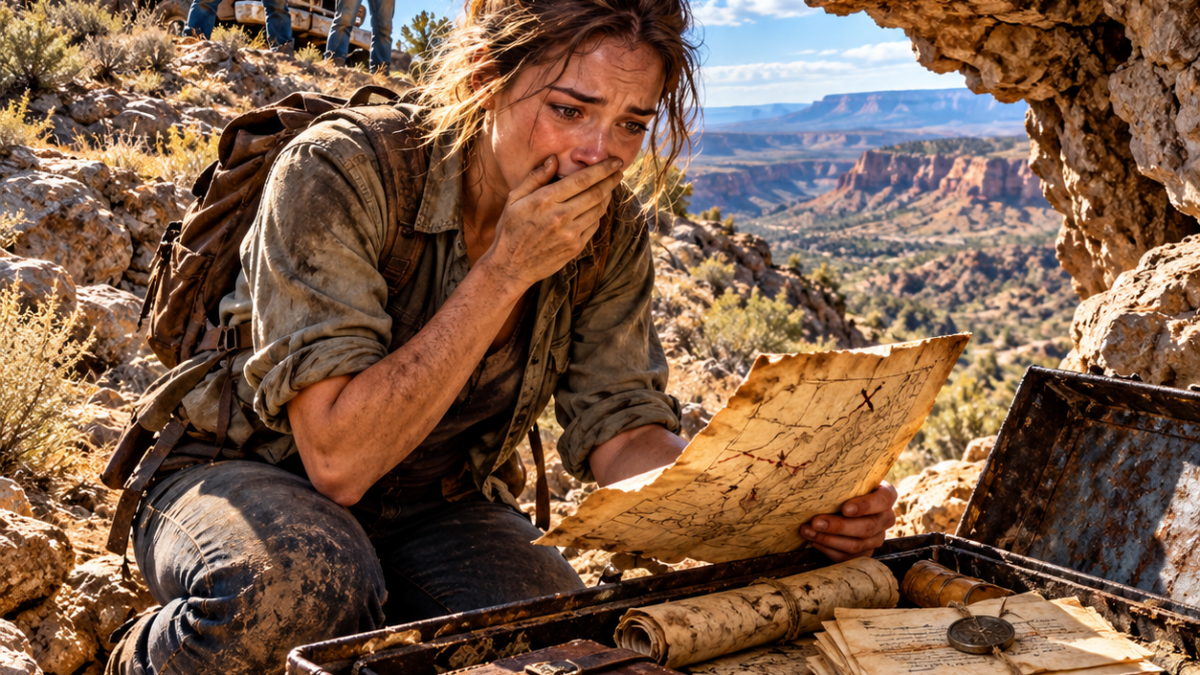
My brothers laughed when our father’s will left me forty acres of barren limestone while they divided the farmhouse, the sawmill, the cattle, and every acre that could actually grow something.
Six days after we buried Pa, I walked away from the only home I had ever known with eleven dollars, three books, an old lantern, and a deed to Bone Ridge that Franklin said proved exactly how little our father thought I was worth.
But when I noticed one strange sentence buried in that deed and found cold air breathing out of a crack no wider than my shoulders, I began to suspect Pa had not left me the poorest inheritance at all.
“You got the bones, Caleb. That’s all Pa thought you were worth.”
Franklin Yancey slapped the folded deed against my chest and laughed hard enough that Horace joined him.
William didn’t laugh as loudly, but he smiled.
That hurt more.
We were standing in the front room of the farmhouse where our father had died less than a week earlier, and the attorney had just finished reading his will.
Franklin got the house, the orchard, and the best bottomland.
Horace got the sawmill and nearly two hundred acres of timber.
William got the pasture, livestock, and the horse barn.
I got Bone Ridge.
Forty acres of gray limestone, scrub oak, sinkholes, and steep ground where even weeds seemed to grow reluctantly.
“Can’t plant corn on it,” Horace said.
Franklin grinned. “Maybe our scholar can teach the rocks to read.”
I had heard versions of that joke most of my life.
I was thirty-seven years old, and because I preferred books to card games and knew the names of stones nobody else cared about, my brothers had decided long ago that I was the useless son.
It didn’t matter that I repaired the fencing after storms, hauled logs in winter, kept the accounts when Pa’s eyesight worsened, or worked beside them from sunrise until dark.
Franklin could plow straighter.
Horace could judge timber at a glance.
William could calm a frightened horse.
Those were skills they understood.
Mine were easier to mock.
I unfolded the deed after they left the room.
Eleven dollars sat in my pocket.
That was all the cash I had.
Pa had been strict about keeping the farm together, and none of us had ever drawn real wages from him.
I owned three books, a bedroll, a lantern, two shirts, work boots, and now forty acres everyone considered worthless.
I should have been furious.
Instead I kept staring at one line in the legal description.
Together with all timber, water, mineral interests, passages, openings, and whatever may be found thereon or thereunder.
Thereunder.
That word bothered me.
Pa had never wasted words.
He had barely used them when he was alive.
So why would a farmer who knew Bone Ridge had almost no timber bother writing “passages” into a deed?
That evening, I packed.
Nobody asked me to stay.
William watched from the barn as I shouldered my bedroll.
“You really going up there?”
“It’s mine.”
“It’s rocks.”
“So you’ve said.”
He rubbed the back of his neck. “You could work here.”
“For Franklin?”
He looked away.
That answered me.
By sunset I was standing on Bone Ridge.
The land looked even worse when it belonged to me.
Broken limestone pushed through thin soil everywhere. Shallow depressions dotted the slope. A dry creek bed vanished beneath one outcrop and reappeared farther downhill.
I spread my bedroll beside a cedar and read the deed again until the light faded.
The next morning, I started walking the eastern slope.
I had no plan beyond learning what Pa had given me.
Around noon I found three shallow sinkholes aligned almost perfectly north to south.
Farther down, the limestone changed.
It was fractured, pale, and streaked with darker mineral stains.
Then I felt it.
Cold air against my wrist.
I stepped back.
At the base of a ledge was a crack perhaps eighteen inches wide.
The air coming from it was steady and damp.
Breathing.
I dropped a pebble into the darkness.
It clicked against stone.
Once.
Twice.
Then kept falling.
My brothers would have walked past.
I knew that because I almost did.
Instead, I lit the lantern, took off my coat, tied a rope around my waist, and squeezed inside.
Ten feet in, the rock scraped both shoulders.
At twenty, I had to turn sideways.
At thirty, limestone pressed against my chest so tightly I could take only shallow breaths.
Fear told me to back out.
Then the passage widened.
I crawled forward, lifted the lantern, and stopped.
The light reached something that should not have been there.
PART 2
The first thing I saw was timber.
Not roots.
Not fallen branches washed through a sinkhole.
Squared timbers.
Someone had carried them into the mountain and fitted them between the limestone walls.
I crawled another few feet until I could stand.
The chamber beyond the narrow crack was perhaps thirty feet across, with a ceiling high enough that my lantern light could not immediately find it. Water dripped somewhere in the darkness, slow and regular, and the air smelled of wet stone and iron.
Then I raised the lantern toward the wall.
Something flashed.
At first I thought I had seen water.
I stepped closer.
Gray metallic cubes protruded from a band of pale rock. Between them were darker honey-colored crystals and streaks that caught the flame like dull silver.
I knew enough geology to recognize the first mineral.
Galena.
Lead ore.
The yellow-brown mineral beside it looked like sphalerite.
Zinc.
Neither meant fortune merely because it appeared in a cave wall. Pa had taught me not to count corn until it was in the crib, and mineral books warned the same thing in different language. A beautiful specimen could be surrounded by a thousand tons of worthless stone.
Still, this wasn’t one specimen.
The mineralized band ran from the floor upward and continued across the wall farther than my lantern showed.
My mouth went dry.
I stepped closer.
That was when I found the pick.
It lay behind one of the old timbers, rusted but recognizable.
Beside it sat a small wooden stool.
Someone had worked here.
I lifted my lantern higher.
Three initials had been scratched into the limestone.
E.Y.
Elijah Yancey.
My father.
For a long time, I simply stared at them.
Pa had known.
The man who barely tolerated my mineral books, who complained that reading after supper wasted lamp oil, who always told me there was more sense in one good acre of corn than a shelf full of geology—
Pa had crawled through this crack.
I found a tin box wedged between two stones.
The lid had been wrapped in oilcloth.
My hands were shaking by the time I pulled it free.
Inside lay a folded map, three small cloth sacks, an assay certificate, and a letter.
My name was written across the front.
CALEB
I sat on the stone floor.
The mountain had gone silent around me.
For several seconds I could not open the letter.
I don’t know what I was afraid of.
Maybe that Franklin had been right after all.
Maybe Pa’s letter would say he had left me Bone Ridge because the good land belonged to sons he respected more.
I broke the wax.
The first sentence made me stop breathing.
Caleb, if you are reading this, then you looked where your brothers would have walked past.
I read it again.
Then continued.
I found the first opening nineteen years ago while looking for a calf. I came back with a lantern, the same way I expect you have. If I am right about you, curiosity brought you farther than greed ever would.
I laughed once.
A strange sound in that cavern.
Then my eyes burned.
Pa wrote that he had collected ore samples over several years and sent them under another name to an assay office in St. Louis.
The certificate was fifteen years old.
I held it close to the lantern.
The numbers meant more to me than they would have meant to Franklin.
Lead.
Zinc.
Silver.
Enough silver associated with the galena that the sample had value beyond ordinary lead ore.
But Pa’s next line was underlined.
ONE SAMPLE IS NOT A MINE.
That sounded exactly like him.
He had explored only what he could reach safely.
The map showed three chambers, an underground stream, and a mineralized zone he labeled NORTH VEIN.
At the western side, he had written:
DO NOT BLAST HERE. WATER BELOW.
Then the letter became personal.
I know your brothers believe I think little of books because I have said so often enough. That was my failure, not yours. A man who does not understand something sometimes makes himself feel taller by laughing at the man who does.
My hands lowered.
I had to look away.
All my life I had wanted Pa to say something like that.
He had waited until I could no longer answer him.
I hated him for that almost as much as I loved the words.
The letter continued.
Franklin knows soil. Horace knows trees. William knows animals. You notice what is hidden. A family needs all four kinds of sense, though I did a poor job teaching you boys that.
I am leaving Franklin the ground he knows, Horace the timber he knows, William the stock he knows, and you the ridge I believe only you will take time to understand.
Do not assume the ore will make you rich. Do not let anyone tell you it is worthless either. Find out for yourself.
At the bottom, beneath his signature, Pa had added one final line.
Whatever you find, make sure it does not cost you your brothers unless they choose that price themselves.
I folded the letter.
That last sentence irritated me.
Even dead, Pa had managed to give me work.
I spent another hour examining only the first chamber.
No digging.
No breaking stone.
I took three small loose samples from material already fallen at the base of the vein, wrapped them separately, and followed my rope back toward daylight.
The narrow crack was worse going out.
Knowing a large chamber existed behind me made the squeeze feel tighter.
Halfway through, my belt caught on a sharp edge.
For several seconds I couldn’t move forward or backward.
The lantern was ahead of me, throwing strange shadows across the stone.
My chest pressed against limestone.
I forced myself to breathe slowly.
“Don’t die because you were too foolish to take off a belt,” I muttered.
I backed up half an inch, twisted, freed the leather, and crawled out.
Sunlight had never looked so good.
I lay on my back among the rocks until my breathing slowed.
Then I laughed.
Franklin had called it bones.
Maybe he wasn’t entirely wrong.
Bone Ridge had something inside it.
The question was whether those bones were worth anything.
I had eleven dollars.
By the time I reached town the next morning, I had nine.
I spent one on breakfast because excitement doesn’t make a man less hungry.
The assay office was above a hardware store.
The sign read:
ELIAS GRANT — MINING ENGINEER & ASSAYER
Grant was a narrow old man with spectacles thick enough to start a fire if the sun hit them properly.
He looked at my three samples without enthusiasm.
“Where?”
“Private land.”
“That usually means somebody’s uncle’s creek bank.”
“My uncle didn’t have a creek bank.”
Grant looked over his glasses.
“You want an assay or conversation?”
“Assay.”
“Five dollars.”
I winced.
He saw it.
“How much you got?”
“Nine.”
“Then five.”
I handed it over.
He turned one sample beneath a magnifying lens.
“Galena.”
“I know.”
That made him look at me again.
“Sphalerite too.”
“I thought so.”
“You mine?”
“No.”
“Read?”
“Yes.”
“That can be worse.”
I almost smiled.
“How long?”
“Two days.”
“I don’t have a place in town.”
“Not my department.”
I slept on Bone Ridge again.
The second night rain came.
I stretched my bedroll beneath an overhang and spent half the night thinking about Pa.
The next morning, William appeared on horseback.
He carried a sack.
“Food.”
“I didn’t ask.”
“Didn’t say you did.”
He handed it down.
Biscuits.
Salt pork.
Two apples.
“You tell Franklin?”
“Tell him what?”
“That I’m starving?”
William looked around.
“You found something?”
My face must have changed.
He noticed.
“What?”
“Nothing.”
“Caleb.”
“Why are you here?”
He looked offended.
“To see if you were alive.”
“Franklin send you?”
“No.”
“Horace?”
“No.”
I believed him.
William dismounted.
“We were hard on you.”
“We?”
He kicked at a stone.
“All right. They were worse.”
“You laughed.”
“I smiled.”
“That is a laugh without courage.”
He looked at me, then unexpectedly nodded.
“Fair.”
For a moment, neither of us spoke.
Then he pointed toward the eastern slope.
“What were you doing down there yesterday?”
My stomach tightened.
“You watching me?”
“Saw you from the pasture.”
The family pasture bordered the southern edge of Bone Ridge.
I had forgotten how visible parts of the ridge were.
“Exploring.”
“For what?”
“Whatever may be found thereunder.”
William frowned.
“You read deeds for entertainment now?”
“Only the good ones.”
He almost laughed.
Then he said, “Franklin’s already talking about buying this place from you.”
“Why?”
“Says you won’t last winter.”
“That concern touching.”
“He’s offering twenty-five dollars.”
I stared at William.
“Yesterday it was worthless.”
“Franklin likes bargains.”
“Tell him no.”
“Tell him yourself.”
“I just did.”
William studied my face.
“You really found something.”
“Go home, Will.”
He didn’t push.
That was one difference between him and Franklin.
He climbed back into the saddle.
Before leaving, he said, “Whatever it is, be careful.”
I thought he meant the cave.
I learned later he meant our brothers.
Grant’s office smelled like acid and coal smoke when I returned two days later.
He held my paper between two fingers.
“Where did you say this came from?”
“I didn’t.”
“Right.”
He pushed the report across the desk.
I read the numbers.
Then again.
“Is that good?”
“You read geology books and you’re asking me?”
“I want to know what you think.”
“I think your first sample is rich lead-zinc ore with enough silver to get people’s attention.”
My heart began pounding.
“Second?”
“Lower grade.”
“Third?”
“Similar to first.”
“How much is it worth?”
Grant leaned back.
“A handful? Almost nothing.”
“The deposit.”
“You don’t know you have a deposit.”
“I’ve seen a vein.”
“How wide?”
“Four feet in one place. Maybe more.”
“Continuous?”
“I don’t know.”
“Length?”
“Don’t know.”
“Depth?”
“Don’t know.”
He tapped the paper.
“Then neither do I.”
I felt my excitement deflate.
Grant smiled slightly.
“That’s good.”
“What?”
“Disappointment.”
“Why?”
“First useful thing a prospector learns is that a shiny rock isn’t a retirement plan.”
“I’m not a prospector.”
“You crawled into a hole with a lantern and brought me ore. You’re at least stupid in the correct direction.”
I laughed.
Then he became serious.
“If your description is accurate, you may have something worth examining.”
“How much to examine it?”
“More than four dollars.”
That was what remained in my pocket.
“How much more?”
He named a figure.
I nearly left.
Grant saw it.
“You own the land?”
“Yes.”
“Minerals too?”
I handed him the deed.
He read the line twice.
“Good language.”
“My father wrote instructions.”
“Lawyer wrote the deed.”
“Pa told him what to put.”
Grant nodded.
“Any existing claims?”
“None I know of.”
“Then get the title checked before you let a single man swing a pick.”
“With four dollars?”
“Find a lawyer willing to listen before billing.”
“You know one?”
Grant smiled.
“Unfortunately.”
That was how I met Samuel Hart.
Hart’s law office occupied one room behind the county bank.
He was perhaps forty-five, with hair going gray at the temples and a habit of reading documents so slowly it made me want to reach across the desk and turn the page for him.
When he finished my deed, he asked, “Your father died recently?”
“Six days before the will was read.”
“Any challenge?”
“No.”
“Your brothers accepted their inheritances?”
“Yes.”
“Signed receipts?”
“I think so.”
“Good.”
He read Pa’s letter.
I hadn’t planned to show it.
Grant told me to.
Hart folded it carefully.
“This does not transfer property.”
“I know.”
“But it explains intent.”
“Yes.”
“More importantly, the will and deed already transfer the property.”
“So nobody can take it?”
He looked at me.
“Any lawyer who promises nobody can sue you is selling confidence, not law.”
“I have four dollars.”
“Then I cannot even sell you expensive confidence.”
I almost smiled.
“What do I do?”
“Record the deed if it hasn’t been recorded.”
“It has.”
“Confirm title.”
“How much?”
“I’ll check the index.”
“For four dollars?”
“For nothing today.”
“Why?”
He looked toward the wall separating his office from the bank.
“Your father helped my family when our barn burned twenty years ago.”
I had never heard that.
“Pa?”
“He brought lumber. Wouldn’t take payment.”
That sounded like Pa.
Kindness he never discussed afterward.
Hart continued.
“If the title is clean, then Mr. Grant can examine the geology. If he finds nothing, you’ve lost little.”
“And if he finds something?”
“Then everybody becomes your cousin.”
He was right faster than I expected.
Grant agreed to visit Bone Ridge for twenty dollars plus expenses.
I didn’t have twenty.
Hart introduced me to a widow named Mrs. Ruth Bell, who owned the dry-goods store and occasionally lent money against crops.
She listened to my proposal without interrupting.
When I finished, she asked, “What happens if there’s nothing?”
“I owe you twenty dollars.”
“With what?”
“My labor.”
“For how long?”
“Until it’s paid.”
“What if there is something?”
“I pay twenty-five.”
She smiled.
“You negotiate badly.”
“I’m trying to be fair.”
“That’s why you negotiate badly.”
She lent me the twenty.
Grant arrived the next morning with rope, a compass, sample sacks, measuring tape, and more caution than I had brought on my first trip.
When he saw the entrance, he stared at me.
“You went through that alone?”
“Yes.”
“You really are stupid in the correct direction.”
We squeezed inside.
Grant spent almost six hours examining the chamber.
He chipped small samples from measured points.
Mapped fractures.
Scratched numbers beside each sample location.
When we reached the far side, he found a low opening I had missed.
It led into another chamber.
The mineralized vein continued.
Not as wide.
Then wider again.
Grant became quieter.
That frightened me more than excitement would have.
“What?”
“Nothing yet.”
“You keep saying that.”
“Because ‘yet’ saves men from bankruptcy.”
The second chamber sloped downward toward water.
An underground stream moved through a narrow trench in the limestone.
Grant crouched beside it.
“Your father’s map?”
I unfolded it.
He compared the lines.
“This is his western warning.”
DO NOT BLAST HERE. WATER BELOW.
Grant examined the ceiling.
“Smart man.”
“Why?”
“This rock is heavily fractured. Aggressive blasting could open a drain path.”
“For the cave?”
“For the aquifer.”
“What aquifer?”
He pointed downstream.
“Where’s your family’s spring?”
I thought.
“Franklin’s bottomland has one below the ridge.”
“Horace’s mill pond?”
“Fed by another spring north.”
Grant looked at me.
“May be same system.”
“So mining could ruin their water?”
“Could.”
I almost laughed from the absurdity.
My brothers had inherited the fertile property.
I had inherited the rock that might be holding its water.
Pa had known that too.
We found proof near the underground stream.
Another tin box.
This one contained only a notebook.
Pa’s handwriting.
Flow measurements.
Rainfall.
Spring levels.
Dates.
He had poured dye into one sinkhole years earlier and noted where color appeared downhill.
Franklin Spring: eleven hours.
Mill Spring: seventeen.
Pasture seep: twenty-two.
Grant read the pages twice.
“Your father did a crude tracer test.”
“He was a farmer.”
“Farmers know water.”
I sat on a rock.
“Why didn’t he tell us?”
Grant shrugged.
“Maybe he tried.”
I thought of Pa saying not to dig new wells near Bone Ridge.
Franklin had mocked him.
Horace once wanted to blast a shortcut for timber wagons and Pa had forbidden it.
We all assumed he was being difficult.
Maybe he had been protecting us.
The third chamber was larger.
At its far wall, the vein widened to nearly six feet.
Grant took eight samples.
When we returned to daylight, he stood silently looking across the valley.
Finally he said, “Don’t tell anyone yet.”
“That good?”
“That uncertain.”
“You say everything like a riddle.”
“No. I say it like a man who’s watched mineral fever turn sensible farmers into idiots.”
“When will we know?”
“Assays first. Then drilling or underground development. Mapping. Sampling. Money.”
“I have two dollars.”
“Then you’ll need somebody else’s money.”
That was exactly what frightened me.
News reached Franklin before the assay results did.
I never learned how.
Maybe someone saw Grant in town.
Maybe William said more than he intended.
Franklin arrived on Bone Ridge with Horace.
No food.
No concern.
Business.
Franklin held up my deed.
Not the original.
A copy.
“You been having this checked?”
“Yes.”
“Why?”
“Because I own land.”
Horace looked toward the eastern slope.
“What’s Grant doing up here?”
“Walking.”
“Mining engineer walks expensive.”
I folded my arms.
“What do you want?”
Franklin smiled.
“Buy the ridge.”
“Twenty-five?”
“Fifty.”
I stared.
Horace shifted.
Franklin continued, “Cash.”
“You told me Pa gave me bones.”
“He did.”
“Expensive bones.”
“I’m helping you.”
“No.”
“One hundred.”
I laughed.
Franklin’s face hardened.
“What’d you find?”
“Why do you think I found anything?”
“Because you look different.”
“What does that mean?”
“You’re not miserable.”
Horace snorted.
I looked at him.
He stopped.
Franklin stepped closer.
“We’re family.”
“That changed fast.”
“Don’t be childish.”
“Six days ago you laughed while giving me this deed.”
“That was joking.”
“No. That was honesty.”
His jaw tightened.
“What did Pa hide up here?”
I said nothing.
Franklin’s eyes changed.
“Hide.”
He had guessed.
Maybe I helped him by staying quiet.
He looked toward the crack.
“You found a cave.”
Horace followed his gaze.
“Is that it?”
I stepped between them and the slope.
“Leave.”
Franklin laughed.
“You can’t throw us off family land.”
“This isn’t family land.”
His expression changed.
“It is now.”
“No. It’s mine.”
“We’ll see.”
That was the first threat.
The next arrived on paper.
Three days later, Samuel Hart sent a boy to find me.
Franklin and Horace had filed a petition in probate court.
They claimed Pa’s estate had been improperly divided because mineral value at Bone Ridge had not been disclosed when they accepted their inheritances.
I read the petition twice.
“They want the ridge?”
“They want the court to reopen distribution.”
“Can it?”
“They can ask.”
“Will it?”
“Different question.”
“What’s their argument?”
Hart leaned back.
“That your father knowingly concealed a valuable estate asset and unfairly assigned it.”
I felt my face grow hot.
“He owned the ridge. He could give it to me.”
“Generally, yes.”
“Then what is this?”
“Pressure.”
“They mocked it.”
“I know.”
“They signed papers.”
“I know.”
“They accepted everything.”
“I know.”
“Then why am I worried?”
“Because court papers are designed to make a man worry.”
I paced.
Hart watched.
Finally he said, “Did you tell them about your father’s letter?”
“No.”
“Good.”
“Why good?”
“Because Franklin’s petition claims your father had no idea there were valuable minerals.”
I stopped.
Pa’s letter proved the opposite.
“So we show them.”
“Not yet.”
I stared at him.
“Why does every smart man I meet enjoy waiting?”
“Because impatient men provide evidence.”
Franklin did.
Two days later he sent me a written offer.
Five hundred dollars for Bone Ridge.
Hart read it and smiled.
“What?”
“Keep this.”
“Why?”
“Because your brother just offered to purchase property he simultaneously claims already belongs partly to him.”
I began to understand.
The new assays returned.
Grant spread them across Hart’s desk.
The samples varied.
Some mediocre.
Several excellent.
Two better than Pa’s original assay.
Grant refused to call it a mine.
I threatened to throw him out the window.
Hart said that would complicate my legal position.
Eventually Grant admitted:
“You have enough mineralization to justify serious exploration.”
“How serious?”
“Company serious.”
He contacted a mining firm from St. Louis called Midwestern Metals.
Their engineer arrived with two assistants.
For three weeks they mapped the cave, surveyed the ridge, and drilled six small core holes from the surface.
I hated those weeks.
Men walked over my property discussing it in numbers.
Feet.
Tons.
Percentages.
Recovery costs.
Freight.
Smelter charges.
I understood enough to know the deposit wasn’t a fairy-tale mountain made of silver.
It was better in a way.
Real.
A substantial lead-zinc body with silver credits.
Potentially profitable if developed carefully.
The company representative, Mr. Charles Avery, met me at Hart’s office.
“We’ll offer twenty thousand dollars for complete mineral ownership.”
I almost stopped breathing.
Twenty thousand.
I had once worked three months for Pa for a pair of boots and meals.
Franklin’s farmhouse might not have sold for twenty thousand.
Hart spoke before I did.
“No.”
I turned toward him.
Avery smiled.
“You haven’t consulted your client.”
Hart looked at me.
“Do you want to sell all mineral ownership for twenty thousand?”
I looked at Grant.
He shook his head almost imperceptibly.
“No.”
Avery leaned back.
“Twenty-five.”
Hart said nothing.
“Thirty.”
My palms were sweating.
Thirty thousand dollars.
Then I remembered Grant beside the underground stream.
“What’s your mining plan?”
Avery looked surprised.
“Conventional room-and-pillar development where practical.”
“Blasting?”
“Of course.”
“Western chamber?”
“We haven’t finalized engineering.”
“There’s water behind fractured limestone.”
“We know.”
“That water feeds three springs.”
Avery glanced at Grant.
Grant said, “Likely.”
Avery folded his hands.
“Mr. Yancey, mining always involves engineering challenges.”
“That isn’t an answer.”
“No, it’s reality.”
I pushed the offer back.
“Then no.”
Avery stared at me.
“You are turning down thirty thousand dollars?”
“For now.”
Franklin heard about that too.
He arrived the following Sunday while I was building a rough shelter near the cedar where I’d first slept.
Thirty thousand dollars had apparently transformed me from useless to insane.
“You turned it down?”
“Yes.”
“Are you out of your mind?”
“Possibly.”
Horace was with him.
William came separately.
Franklin pointed toward the ridge.
“Thirty thousand dollars for stone Pa gave you by accident.”
“Pa knew.”
Silence.
I had not planned to say it.
Franklin stared.
“What?”
“He knew.”
Horace stepped closer.
“How?”
I looked at William.
He wasn’t smiling.
Franklin said, “You’re lying.”
“Why would I?”
“To keep it.”
“It is mine.”
“Show me proof Pa knew.”
“No.”
Franklin’s face reddened.
“There isn’t any.”
I thought about Pa’s letter.
“Believe what you want.”
Horace said, “If Pa knew, then he cheated us.”
That angered me more than Franklin’s insults ever had.
“He gave you a sawmill and two hundred acres.”
“And gave you a mine.”
“A ridge.”
“A mine!”
“You called it rocks.”
“We didn’t know.”
“Neither did I.”
Franklin stepped between us.
“That’s the point. We accepted the will without knowing.”
I laughed.
“You accepted because you thought you got better than me.”
No one answered.
That was exactly it.
William finally spoke.
“He’s right.”
All three of us looked at him.
Franklin said, “Stay out of this.”
“You dragged me into the petition.”
“I asked you to sign.”
“And I said no.”
That was news to me.
Horace frowned.
“You said you’d think.”
“I did.”
William looked at me.
“I thought about how we’d sound telling a judge the will was fair when we thought Caleb got nothing and unfair the second his rocks might be worth money.”
Franklin’s jaw tightened.
“Pa wanted equality.”
William shook his head.
“No. Pa wanted us to stop acting like children.”
Franklin pointed at me.
“He’s sitting on enough money to buy all three of us.”
“And that’s eating you alive.”
Franklin turned on his heel.
Before leaving, he said to me, “This isn’t finished.”
He was right.
The probate hearing came first.
Franklin wore his church suit.
Horace looked uncomfortable.
William sat behind me.
Hart presented the will.
The deeds.
The signed receipts showing each brother had accepted his distribution.
Then Franklin’s attorney argued that Pa had failed to disclose a valuable mineral property and that equitable redistribution was necessary.
The judge, Mr. Theodore Nash, was an older man with a face like dry leather.
He asked one question.
“Was Bone Ridge listed in the estate inventory?”
“Yes.”
“Was it specifically devised to Caleb Yancey?”
“Yes.”
“Did the other beneficiaries know he was receiving it?”
“Yes.”
“Then what was concealed?”
The attorney answered, “Its value.”
Judge Nash looked at him.
“By the decedent?”
“We believe Mr. Elijah Yancey may not have understood the extent.”
Hart stood.
“We can resolve that.”
He handed Pa’s letter to the clerk.
My stomach tightened.
Hearing Pa’s words read in a courtroom felt more intimate than I expected.
If you are reading this, then you looked where your brothers would have walked past.
Franklin stared at me.
Then Hart produced Pa’s old assay certificate.
His cave map.
Flow notebook.
Years of dates.
No accident.
No ignorance.
Pa had known there might be ore for fifteen years.
Franklin looked as though someone had struck him.
Then Hart called the attorney who drafted Pa’s will.
Mr. Jacob Turner was nearly eighty.
He walked with a cane.
“Did Elijah Yancey discuss Bone Ridge when you prepared these documents?”
“He did.”
“What did he say?”
Turner thought for a moment.
“He said, ‘Give Franklin the soil, Horace the trees, William the stock, and Caleb the stone.’”
A few people in the courtroom smiled.
Franklin didn’t.
Hart asked, “Did he understand the stone might have mineral value?”
“Yes.”
“What did he tell you?”
Turner looked toward me.
“He said, ‘Caleb’s the only boy who will ask the stone what it is before trying to sell it.’”
My throat tightened.
I looked down.
That sounded like Pa.
Cruel compliment and affection packed into the same sentence.
Franklin’s lawyer tried another angle.
“Did Elijah intend to make Caleb wealthier than his brothers?”
Turner shook his head.
“Elijah told me he did not know what the ridge was worth.”
“So he did not know it contained a commercial ore deposit.”
“He knew it might.”
“Then he knowingly gave one son speculative mineral wealth.”
“He knowingly gave one son forty acres everybody else considered worthless.”
That ended most of the room’s sympathy for Franklin.
The judge dismissed the petition.
Not dramatically.
Not with a speech.
He simply said the will was clear, the property had been specifically devised, and disappointed expectations after discovering unexpected value were not grounds to rewrite a dead man’s testament.
Franklin stood immediately.
Outside the courthouse, he grabbed my arm.
Not hard.
Enough.
“Enjoyed that?”
I pulled away.
“No.”
“Liar.”
“I enjoyed Pa being right.”
His face changed.
“About what?”
“That you would look at the ridge only after somebody put a price on it.”
Franklin stared at me.
Then walked away.
Horace followed.
William stayed.
“You all right?”
“No.”
He nodded.
“Me neither.”
I looked at him.
“You didn’t sue me.”
“I almost did.”
“Why didn’t you?”
William watched Franklin cross the road.
“Because Ma would have been ashamed.”
That answer was enough.
Midwestern Metals returned with a better offer.
Not purchase.
Lease.
Five thousand dollars upfront.
Annual minimum payments.
A royalty based on ore sold.
I would keep ownership of the land and mineral estate.
Hart liked that structure more.
Grant did too.
I didn’t.
“Blasting.”
Avery sighed.
“We cannot mine with teaspoons.”
“Not western chamber.”
“We can reinforce.”
“No.”
“This may reduce recoverable ore.”
“Then reduce it.”
“You’re willing to leave money underground?”
“If taking it dries three springs, yes.”
Avery studied me.
“You really are Elijah’s son.”
I wasn’t sure whether that was praise.
We negotiated for two months.
The final lease prohibited blasting within a protected buffer around the underground water channel.
Required monitoring of spring flows.
Required support pillars.
Required restoration of surface disturbance.
Required the company to repair damage to the access road.
And required them to stop operations if spring flow dropped beyond an agreed threshold until engineers determined why.
Avery complained about every clause.
I kept every important one.
When I signed, I had five thousand dollars coming.
More money than I had ever held.
The first thing I did was repay Ruth Bell twenty-five dollars.
She looked at the coins.
“You could’ve made me wait.”
“You didn’t make me.”
She pushed five back.
“What is that?”
“Interest refund.”
“That isn’t how interest works.”
“It does in my store.”
I kept arguing.
She threatened to charge me thirty instead.
I left.
The second thing I did was build a small cabin on Bone Ridge.
One room.
Stone foundation.
Wood stove.
Roof that didn’t leak.
Nothing grand.
Franklin heard I had five thousand and assumed I’d buy a large house in town.
When he saw my little cabin, he laughed again.
This time it didn’t hurt.
I had learned something.
People laugh for two reasons.
Sometimes because something is funny.
Sometimes because understanding it would require them to admit they were wrong.
The mine development began slowly.
Midwestern Metals widened the cave entrance carefully rather than blasting the original crack.
They built a timbered portal farther north.
Grant supervised early sampling.
I worked with him every day.
Not because I needed wages anymore.
Because I wanted to understand what was happening beneath my land.
The first ore shipment left in October.
A wagon passed within sight of Franklin’s lower field.
He stood beside his fence watching it.
I raised a hand.
He didn’t.
Horace’s sawmill benefited first.
Midwestern needed mine timbers.
They bought from him.
That amused me.
He had sued for part of my ridge and then made money selling wood to develop it.
Horace avoided mentioning the irony.
William got a contract supplying draft horses.
He came to my cabin one evening carrying coffee.
“Feels wrong.”
“What?”
“Making money off your mine.”
“You’re providing horses.”
“After what happened.”
“You didn’t sue me.”
“I thought about it.”
“You already confessed that.”
He stared at the stove.
“Franklin won’t let it go.”
“I know.”
“He borrowed money.”
My attention sharpened.
“For what?”
“Legal bills. New machinery. Says the mine is going to make land prices rise and he wants to expand.”
“That’s his decision.”
“There’s more.”
William hesitated.
“What?”
“He took money from a company out of Kansas City.”
“What company?”
“Continental Lead & Smelting.”
I had heard the name.
Large.
Aggressive.
“What for?”
“He says they have rights if the court reopens the will.”
My stomach tightened.
“The court dismissed him.”
“He’s appealing.”
Hart confirmed it the next morning.
Franklin had filed notice of appeal.
That wasn’t the worst part.
Continental Lead had paid him a two-thousand-dollar advance for an option on “any mineral interest recovered by Franklin Yancey through probate or inheritance proceedings.”
Legal.
Foolish.
But legal.
The company wasn’t betting that Franklin already owned my minerals.
They were betting he might win some.
And Franklin had spent the advance.
“Can they bother my lease?” I asked Hart.
“They can try.”
“They always can try.”
“Yes.”
“I’m beginning to dislike law.”
“You’re learning.”
Continental sent a letter to Midwestern Metals claiming notice of a competing interest.
Midwestern suspended additional capital investment until the title dispute cleared.
The mine did not close completely, but expansion stopped.
My royalty payments slowed.
Franklin had found a way to put pressure on me without owning anything.
I went to the farmhouse.
First time I’d been inside since leaving.
It looked the same.
That made me angrier.
Pa’s chair remained beside the fireplace.
Franklin sat at the kitchen table.
“What do you want?”
“You know.”
He poured coffee.
“Want some?”
“No.”
“Suit yourself.”
“Drop the appeal.”
“No.”
“You lost.”
“One judge.”
“Pa’s will is clear.”
“Pa favored you.”
I laughed from disbelief.
“You spent thirty-seven years telling me he thought I was useless.”
“I was wrong.”
It was the first time Franklin had ever admitted it.
Not sincerely.
Strategically.
“You’re admitting that because you want part of the mine.”
“I want what is fair.”
“Fair would have interested you before the assay.”
His face hardened.
“You think because you’ve got money now you can lecture me?”
“No.”
“You think you’re better than us?”
“No.”
“Then share it.”
I stared at him.
“What?”
“One quarter each.”
“You want me to give you three quarters of Bone Ridge.”
“Minerals. Keep the rock.”
I actually laughed.
Franklin slammed his cup down.
“That’s what I’m talking about. You enjoy this.”
“I’m laughing because you still think the ridge is worthless except for the part you can sell.”
“It is.”
“The ridge holds your spring.”
Silence.
He looked at me.
“What?”
“Pa tested the water. Franklin Spring comes through Bone Ridge.”
“That doesn’t make it yours.”
“I didn’t say it did.”
“Then why mention it?”
“Because the mining company you signed with uses heavy blasting in wet limestone.”
His face changed.
“Continental knows mining.”
“So does Midwestern.”
“You chose them because they let you play engineer.”
“I chose them because they agreed not to risk the water.”
Franklin stood.
“You’re threatening my spring?”
“No.”
“Sounds like it.”
“I am telling you Pa protected this ridge partly because it protects all of us.”
He laughed bitterly.
“Now you’re Pa’s chosen guardian?”
“No.”
“I remember you hiding behind books while we worked.”
My anger rose.
“I kept the farm accounts you never learned to read properly.”
“I can read.”
“Then read Pa’s notebooks.”
“I don’t care about notebooks.”
“There.”
He frowned.
“What?”
“That is why he left me the ridge.”
For a moment, I thought Franklin might strike me.
He didn’t.
He looked away first.
“Get out.”
I left.
The appeal failed.
Continental’s lawyers still refused to disappear.
They argued that an old family road crossing Franklin’s farm was the only practical access to Bone Ridge and that any mining lease required rights across land not controlled by me.
That part mattered.
My deed mentioned an access route.
But the road on the ground had shifted over the decades.
Franklin fenced the modern track.
The next morning, our ore wagon reached the lower boundary and found newly set posts across it.
I rode down.
Franklin stood beside them.
“Road’s closed.”
“This has been our road for sixty years.”
“Mine now.”
“I have access rights.”
“Show me where.”
I had the deed in my coat.
I read the line.
Together with a twenty-foot right-of-way from County Road 6 following the original Miller Creek wagon trace to the southern boundary of Bone Ridge.
Franklin smiled.
“This isn’t the original wagon trace.”
My stomach dropped.
He was right.
At least possibly.
The current road curved west of the creek.
The original might have gone elsewhere.
Hart called a surveyor.
We spent two days searching old maps.
Then we found the original trace.
It ran east.
Straight through Franklin’s orchard.
He had blocked the wrong road.
Hart looked at me.
“Legally, you may have the right to reopen this.”
I pictured wagons cutting through rows of apple trees.
Pa had planted half of them.
Franklin’s children picked fruit there.
“Is there another option?”
“We can negotiate use of the modern road.”
“With Franklin?”
“Yes.”
“He’ll demand money.”
“Probably.”
“How much would reopening the old trace cost?”
“Less.”
I looked at the map.
“Then offer him fair road rent.”
Hart raised an eyebrow.
“He just fenced you out.”
“I know.”
“You’re becoming inconveniently reasonable.”
“I learned from Grant.”
“That man insults you constantly.”
“He’s consistent.”
Franklin refused road rent.
He expected me to beg.
Instead, I filed notice that I intended to exercise the recorded easement along the old wagon trace.
The county surveyor marked it.
Twenty feet wide.
Through Franklin’s orchard.
When Franklin saw the stakes, he came to my cabin furious.
“You wouldn’t.”
“I don’t want to.”
“Then don’t.”
“Lease me the current road.”
“No.”
“Then I use the one Pa recorded.”
“You’ll tear through forty trees.”
“Twenty-three.”
“You counted?”
“Yes.”
He stared at me.
I continued.
“I’ll pay for the trees.”
“I don’t want your money.”
“Then rent the current road.”
Franklin paced across my porch.
“You planned this.”
“No.”
“You waited until the stakes were in.”
“Because you wouldn’t listen before.”
He looked toward the valley.
For the first time, I had real leverage over something he valued.
I could have enjoyed it more than I did.
Part of me wanted to.
I remembered him laughing at the will.
The courthouse.
The appeals.
The fence.
I wanted to say, You got the apples, Franklin. That’s all Pa thought you were worth.
The words rose all the way to my mouth.
I didn’t say them.
Pa’s letter stopped me.
Make sure it does not cost you your brothers unless they choose that price themselves.
I said, “I’m offering one more time. Current road. Fair annual payment. I maintain it. Your orchard stays.”
Franklin stared at me.
Then he said, “Double the payment.”
“No.”
“Then cut the trees.”
He walked away.
Three days later, county workers arrived to open the recorded easement.
Franklin’s wife, Mary, came running down the orchard.
“Caleb!”
I stopped them.
Mary was crying.
Not dramatically.
Quietly.
“Those trees were planted when our oldest was born.”
I knew.
I had helped plant some.
“Franklin refused the other road.”
“I know.”
“Then talk to him.”
“I have.”
She wiped her face.
“He doesn’t listen when he thinks listening means losing.”
That was the most accurate description of my brother I’d ever heard.
I sent the workers home.
Franklin appeared that evening.
He stood on my porch.
“Mary says you stopped them.”
“Yes.”
“Why?”
“You know why.”
He looked ashamed.
Not enough to apologize.
Enough to say, “Your original road payment.”
“Same terms.”
“Fine.”
We signed the next morning.
Hart made sure.
In writing.
The mine expansion resumed.
By the second year, the royalties were more money than I could easily comprehend.
Not endless.
Mining costs were high.
Ore grades varied.
Some months were disappointing.
Others were extraordinary.
I kept my cabin.
Bought better clothes only after Ruth Bell threatened to refuse me service if I wore the same coat another winter.
I purchased books.
Many books.
That was my extravagance.
Then came the discovery beneath Chamber Four.
Midwestern miners following the main vein encountered a broad cavity beyond a clay seam.
Work stopped.
Grant sent for me.
We entered together.
The chamber was larger than any I’d seen.
Our lamps reflected from a clear underground pool.
Grant crouched.
“Don’t touch anything.”
“I wasn’t.”
“You always look like you’re about to.”
Engineers later confirmed the pool fed the same groundwater system Pa had mapped.
More importantly, the richest extension of the ore body curved beneath it.
Avery saw money.
Grant saw danger.
I saw my brothers’ springs.
Midwestern proposed directional development around the water.
Slower.
More expensive.
Continental heard about the new ore.
Their interest in Franklin’s claim intensified.
They offered him more money to continue litigation through a different theory.
This time they argued Pa’s old partnership records showed all four sons had contributed unpaid labor to acquiring and improving family assets, creating an equitable interest.
Hart called it creative nonsense.
Franklin called it justice.
Horace joined him again.
That hurt more the second time.
William did not.
The new lawsuit dragged through winter.
Depositions.
Records.
Questions about who worked where and when.
Franklin claimed I spent most of my time reading while the others built the estate.
I brought the farm ledgers.
My handwriting filled twelve years.
Repairs.
Timber accounts.
Livestock purchases.
Debt schedules.
Bank payments.
Horace looked surprised when he saw them.
“You did all that?”
“Yes.”
“Pa said he did.”
“He checked them.”
“I thought—”
“I know what you thought.”
The case should have remained boring.
Franklin made it dramatic.
During his testimony, Continental’s attorney asked whether Pa had ever expressed regret about giving me Bone Ridge.
Franklin said yes.
My head lifted.
“When?” Hart asked on cross-examination.
“Week before he died.”
“What exactly did he say?”
“He said he’d made a mistake.”
“Who was present?”
“No one.”
“What mistake?”
“Giving Caleb the ridge.”
My stomach twisted.
I knew it was probably a lie.
Probably.
But grief makes room for doubt.
What if Pa had changed his mind?
Hart asked, “Did your father ask to amend his will?”
“He was too weak.”
“Did he ask you to contact Mr. Turner?”
“No.”
“Write anything?”
“No.”
“Tell any other brother?”
“No.”
Franklin looked toward me.
“He told me because I was the eldest.”
Hart opened a folder.
“Mr. Franklin Yancey, four days before your father died, did you send this note to Samuel Pike at County Bank?”
Franklin stiffened.
Hart read:
Pa’s will leaves Bone Ridge to Caleb. Land isn’t worth taxes, but I may offer him twenty dollars after probate and join it back to the farm.
People in the courtroom shifted.
Hart looked at Franklin.
“When your father allegedly told you he regretted giving Caleb Bone Ridge, you already knew the will gave it to him?”
“Yes.”
“Yet you described the ridge four days later as not worth its taxes?”
“I didn’t know about the mine.”
“Exactly.”
Franklin’s face changed.
Hart continued.
“When did your memory of your father’s regret first become relevant?”
Continental’s attorney objected.
The judge sustained.
Hart didn’t need the answer.
Then William testified.
Franklin stared at him with open betrayal.
Hart asked, “Did Franklin discuss the lawsuit with you before filing?”
“Yes.”
“What did he say?”
“He said if we all claimed Pa intended equal shares, Caleb would settle.”
“What did you answer?”
“I said I didn’t remember Pa saying that.”
“Did Franklin?”
William looked at his hands.
“He said it didn’t matter what Pa said if Caleb got scared enough.”
The courtroom went silent.
Franklin stood halfway.
“Will—”
The judge ordered him to sit.
William continued.
“He told me Continental would pay us an advance if we stayed together.”
“Did you accept?”
“No.”
“Why not?”
William looked at me.
“Because when we thought Bone Ridge was worthless, none of us offered Caleb a fourth of our land.”
That sentence ended the case before the judge did.
The claim was dismissed.
Continental withdrew.
Franklin owed part of his advance back.
He had already spent most of it.
On lawyers.
Machinery.
Expansion.
The bank held a note against part of the bottomland.
I learned because Hart told me Franklin had approached the bank asking for time.
I should have felt victorious.
Instead I felt tired.
“Will he lose the farm?”
“Not all of it.”
“How much?”
“Possibly sixty acres if he can’t refinance.”
“Which sixty?”
Hart showed me.
The north bottom.
Including the cottonwood hill where Pa and Ma were buried.
My chest tightened.
“Can I pay the note?”
“You can.”
“Without buying the land?”
“Yes.”
Hart studied me.
“Do you want to?”
“No.”
He waited.
“But?”
“I don’t want strangers owning Ma’s grave because Franklin was too proud to stop suing me.”
“That is not your responsibility.”
“I know.”
“Your father specifically gave Franklin that land.”
“I know.”
“He chose this.”
“I know.”
“Then why?”
I thought about Pa’s last line.
Maybe I was angry at him too.
For leaving me the responsibility along with the ridge.
“Because I need to know I could win without becoming Franklin.”
Hart smiled faintly.
“Annoyingly reasonable again.”
I paid enough of the note to remove immediate foreclosure risk.
Not as a gift.
A secured loan.
At a modest rate.
Hart insisted.
Franklin learned three days later.
He rode to Bone Ridge in the rain.
No coat.
He walked into my cabin without knocking.
“You bought my debt.”
“Part.”
“Why?”
“Sit down.”
“I don’t want to sit.”
“Then drip on the floor.”
He stared.
“Are you going to take my land?”
“No.”
“Then what do you want?”
“Repayment over ten years.”
“That all?”
“Yes.”
“You expect me to believe that?”
I laughed.
“Franklin, you have spent two years believing I want things because that’s how you want them.”
His jaw tightened.
“Why help me?”
“I didn’t.”
He frowned.
“I helped Ma and Pa stay where they are.”
“That land is mine.”
“Then keep it.”
“You’re enjoying this.”
“A little.”
There.
I gave myself that much.
Franklin almost smiled.
Almost.
Then anger returned.
“I don’t need your charity.”
“Good. It’s a loan.”
“I won’t owe you.”
“You already owe the bank.”
“I’ll sell cattle.”
“Your cattle belong to William’s pasture.”
“I’ll sell equipment.”
“You need it.”
“Then I’ll sell the north sixty.”
I looked at him.
“Fine.”
That stopped him.
He expected me to argue.
“You’d let me?”
“It’s yours.”
He paced.
“Then why pay the note?”
“So you have a choice that isn’t panic.”
The room became quiet.
That sentence surprised both of us.
Maybe because it was something Pa should have taught us.
Franklin sat.
Finally.
He stared at the stove.
After a long time, he said, “I hated you.”
“I know.”
“No.”
He looked at me.
“You don’t.”
I waited.
“After Pa got sick, he started asking for you whenever he needed accounts, papers, letters. He asked you about the ridge. He asked you about water. He’d look at me and talk about planting.”
“You’re the farmer.”
“I thought being eldest meant I was supposed to know everything.”
“You never liked being told you didn’t.”
“Neither do you.”
“True.”
Franklin rubbed his hands together.
“When that will was read and you got Bone Ridge, I was relieved.”
That hurt.
He saw it.
“I thought Pa had proved I was the important one.”
There it was.
The truth beneath all the lawsuits.
Not money.
Not entirely.
A dead father’s approval.
Franklin continued.
“Then you found something under those rocks worth more than everything he gave the rest of us.”
“He didn’t know how much.”
“Doesn’t matter.”
“It does.”
“Not to me.”
I sat opposite him.
“Pa’s letter says he gave each of us what he thought we understood.”
“That supposed to make me feel better?”
“No.”
“Means he thought I could understand dirt and nothing else.”
“Maybe.”
Franklin glared.
I smiled slightly.
“He also wrote that he did a poor job teaching us not to make ourselves taller by laughing at what we didn’t understand.”
Franklin looked away.
“That sounds like him.”
“Yes.”
He sat there another ten minutes.
Then left without saying thank you.
I didn’t need it.
Horace took longer.
His sawmill contract with Midwestern ended temporarily when the mine switched to steel supports in deeper sections.
Business slowed.
He blamed me.
Then a storm knocked down timber across his mill road.
He asked William for help.
William sent him to me because I now owned a steam winch used near the mine.
Horace arrived embarrassed.
“Need your machine.”
“For what?”
He explained.
“Take it.”
He blinked.
“How much?”
“Bring it back full of fuel.”
“That all?”
“That all.”
He looked suspicious.
“What?”
“Nothing.”
“You look like Franklin.”
He frowned.
“Don’t insult me.”
I laughed.
Two days later, he returned the winch.
Clean.
Fueled.
Then he handed me a small wooden box.
“What is this?”
“Open it.”
Inside was a set of mineral specimens.
Quartz.
Calcite.
Galena.
Sphalerite.
Each labeled in careful handwriting.
“You made this?”
“My daughter did.”
Horace’s oldest, Nell, was twelve.
“She likes rocks.”
I looked at him.
He sighed.
“Don’t.”
“You going to tell her to teach them to read?”
He winced.
“I deserved that.”
“Yes.”
He nodded.
Then he said, “I’m sorry.”
It was the first apology from any of them.
Not everything.
Enough.
William never needed a courtroom to understand what happened.
He became the brother I saw most.
He supplied horses to the mine for years, then started breeding stronger draft stock.
He did well.
Better than any of us expected.
One evening we sat outside my cabin watching sunset strike the ridge.
“You know Franklin still says you got lucky.”
“I did.”
William laughed.
“You hate when he says it.”
“Because he means I did nothing.”
“You crawled into a hole.”
“Luck put ore there.”
“Pa put the deed there.”
“That too.”
“You read the line.”
I looked at him.
“What are you getting at?”
“Maybe luck isn’t one thing.”
He had become annoyingly thoughtful.
I blamed age.
The mine reached full production in its fourth year.
By then, Bone Ridge had changed.
Not ruined.
Changed.
That distinction mattered to me.
There was a proper portal.
A narrow-gauge track.
A sorting shed.
Worker housing on the lower flat.
I kept the upper ridge untouched.
No blasting near the protected water chamber.
The spring monitoring logs hung in the mine office.
Every morning, before production figures, I checked water.
Avery mocked me at first.
Then one dry summer, Franklin Spring dropped sharply.
Mining stopped in the western section immediately.
Engineers inspected.
The cause wasn’t the mine.
Drought.
Still, the shutdown proved the agreement worked.
Franklin rode up while operations were stopped.
“You closed for my spring?”
“All springs.”
“You’re losing money.”
“Yes.”
He looked genuinely confused.
“Why?”
I laughed.
“Four years and you still ask.”
He removed his hat.
Then he said something I never expected.
“Pa picked right.”
I looked at him.
“What?”
“The ridge.”
He immediately became uncomfortable.
“Don’t make me repeat it.”
I didn’t.
That sentence was worth more than another royalty check.
Money did change my life.
I won’t pretend otherwise.
I bought better land adjacent to Bone Ridge.
Built a larger house eventually.
Paid Ruth Bell back many times by investing in a new store building when hers burned.
Funded a library room in town.
That caused Franklin endless amusement.
“Of course you built a room for books.”
“What would you build?”
“Barn.”
“Town has barns.”
“Town also had books.”
“Not enough.”
I married late.
Her name was Lydia Moore.
She taught at the school and had once borrowed one of my geology books from Ruth’s store because she said she was curious why a grown man carried a book titled Economic Geology of the Mississippi Valley into church.
I told her I hadn’t carried it into church.
She said, “You left it beside your hat.”
I said that was entirely different.
Apparently it wasn’t.
Lydia never cared about the mine the way other people did.
She cared about the cave.
The untouched chambers.
The underground stream.
Pa’s notebooks.
She helped me organize them.
Years later, when our daughter was old enough, Lydia took her into the first chamber by the widened safe entrance.
Not the crawl.
I had sealed that original crack after nearly getting stuck twice more.
Our daughter held up a lamp.
“Which part made you rich?”
I pointed at the mineral vein.
“That.”
Then I pointed at Pa’s initials.
“Which part mattered?”
She looked confused.
I touched the stone beneath E.Y.
“That.”
She understood only later.
Pa’s farm survived.
Franklin nearly lost it twice more through his own stubbornness.
Eventually he learned something resembling caution.
Our loan was repaid in eight years.
On the day he made the final payment, he came to my office with the note.
Hart had died by then.
A younger lawyer handled the release.
Franklin watched me sign.
“So that’s it?”
“That’s it.”
“We’re even?”
“No.”
His face hardened.
Then I smiled.
“Brothers are never even.”
He laughed.
A real laugh this time.
We walked to Ma and Pa’s graves afterward.
Franklin had kept the cottonwood hill exactly as it was.
No plowing.
No cattle.
Pa’s stone had weathered.
Franklin touched it with his boot.
“You ever angry at him?”
“All the time.”
That surprised him.
“You?”
“Yes.”
“You got rich off what he left.”
“He could’ve told me.”
Franklin nodded slowly.
“He could’ve told all of us a lot.”
We stood quietly.
Then Franklin said, “Maybe he didn’t know how.”
That was probably the closest either of us ever came to understanding our father.
Years passed.
The ore eventually thinned.
Every mine does.
Production dropped.
Avery retired.
Grant died at eighty-two after spending his final decade telling everyone he’d discovered Bone Ridge even though I had been the one who dragged him there.
I let him.
He had earned the lie.
Midwestern Metals proposed deeper development.
The engineers believed ore continued beneath the water-bearing zone.
The money could have been enormous.
More than everything already earned.
I refused.
The company offered new technology.
New supports.
New pumping plans.
I still refused.
Franklin heard the number.
He came to my house.
I expected an argument.
Instead he said, “Good.”
I stared.
“What?”
“Don’t dig it.”
“You’re telling me to leave money underground?”
“My spring.”
I laughed.
“Now whose ridge is it?”
“Yours.”
He looked toward the hills.
“But Pa was right. Some things hold up other things.”
That was exactly the lesson.
Bone Ridge had never been only ore.
Its fractured limestone stored and moved water through the entire family valley.
Had Franklin inherited it, he admitted later, he would probably have sold the mineral rights the first time somebody offered five thousand dollars.
Horace said he would have blasted an entrance wide enough for three wagons.
William said he would have traded it for horses.
I told them I had crawled into a crack with a lantern and nearly trapped myself.
“So maybe Pa had no good choices.”
Franklin laughed harder than anyone.
When the main mine closed, I did something Midwestern thought strange.
I bought back their remaining improvements.
The portal.
Track.
Office.
Worker cottages.
Then I reopened only the first chambers for controlled tours and geological study.
Not as a circus.
As a school.
Students came from colleges.
Mining engineers.
Geologists.
Local children.
Nell Horace’s daughter became one of the first women from our county to study geology formally.
The girl whose father once laughed that I should sell rocks spent her career studying them.
I reminded Horace of this whenever possible.
He said he regretted apologizing.
He didn’t.
Our family changed slowly.
Never cleanly.
Franklin and I still argued.
Horace still resented criticism.
William still avoided conflict until avoiding it became impossible.
I still disappeared into books when conversations hurt.
Money didn’t cure any of that.
But after Bone Ridge, none of us could pretend one kind of usefulness was the only kind that mattered.
That became important when Franklin’s youngest son wanted to study medicine instead of farming.
Franklin said no.
The boy came to me.
I listened.
Then I sent Franklin a copy of Pa’s letter.
Only one paragraph.
A family needs all four kinds of sense, though I did a poor job teaching you boys that.
Franklin came to my house furious.
“You stay out of how I raise my son.”
“I will.”
“Then why send this?”
“Because somebody should have sent it to Pa.”
He stared at me.
Then left.
His son went to medical school.
Franklin paid half.
I paid the other half secretly until Franklin found out and paid me back with interest.
Pride remained hereditary.
One autumn, decades after the will was read, all four of us gathered at the farmhouse for Franklin’s birthday.
We were old men.
Older than Pa had been when I first found his letter.
The orchard was smaller.
The sawmill had passed to Horace’s son.
William’s pasture had become one of the best horse farms in the county.
Bone Ridge was known across the state.
Not because of wealth anymore.
Because of geology.
Students mapped the caverns.
The protected underground stream still flowed.
The mine museum displayed Pa’s lantern, though it was actually mine.
People prefer simple stories.
Franklin raised a glass at supper.
“To Caleb.”
I immediately became suspicious.
Horace said, “This should be good.”
Franklin continued.
“The only man I know who bought nothing, inherited rocks, and somehow made all of us feel poor.”
Everyone laughed.
Even me.
Then Franklin became serious.
“I was wrong about you.”
The room quieted.
He wasn’t a man who said those words publicly.
He looked at his children.
Grandchildren.
Then at me.
“I thought knowing land meant knowing what could grow on top of it.”
He paused.
“Caleb taught me some land keeps its value where you can’t see it.”
Horace lifted his glass.
“Now he’s making speeches.”
William said, “Let him finish. Might be his last.”
Franklin threw a napkin at him.
Then he looked at me again.
“I’m glad Pa gave you Bone Ridge.”
My throat tightened.
It had taken almost forty years.
I raised my glass.
“So am I.”
The final secret Pa left surfaced after Franklin died.
He was the first of us to go.
Among his papers, Mary found an envelope addressed to me.
Not Franklin’s handwriting.
Pa’s.
I recognized it immediately.
Franklin had kept it all those years.
I opened it alone at Bone Ridge.
The letter was dated two months before Pa died.
Franklin,
You will think I favor Caleb when you learn what I have given him. That is because you will count value in dollars before you count responsibility.
I sat down.
Pa had written each of us letters.
Franklin had never told me.
The letter continued.
The ridge may contain ore. I do not know enough to call it a mine. What I know is that its water supports the farm, the mill, and the pasture. Caleb will notice that before the money. You may not.
That is not because he is better. It is because each son has blindness where another has sight.
I had to stop reading.
That line explained our entire family.
Pa wrote:
If Bone Ridge becomes valuable, do not ask why I did not divide it among you. A mountain cannot be managed by four men who spend more time proving one another wrong than listening.
I laughed through tears.
Even dead forty years, he was insulting us accurately.
Then the final paragraph:
You are the eldest. That does not make you ruler of your brothers. It makes you the first man who should remember they are brothers.
Franklin had kept that letter.
Had he read it before suing me?
Almost certainly.
Had it stopped him?
No.
People do not transform merely because someone tells them the truth once.
Sometimes truth has to wait until pride grows tired.
On the back, Franklin had written something years later.
Pa was right about me. I hated him for it.
Then:
Caleb was right too. I hated him longer.
And finally:
If he reads this, tell him I knew before the end.
I sat in the old first chamber that evening.
The original ore vein still showed along the wall where regulations had required us to leave a section untouched.
Pa’s initials remained.
E.Y.
Mine were never carved beside them.
I had thought about doing it.
Never did.
The mountain didn’t need my name.
I took out the three books I’d carried when I left the farm.
They were old by then.
One on geology.
One on natural philosophy.
One novel Pa always claimed was foolish but secretly read when he thought I wasn’t watching.
I had kept them all.
Eleven dollars was long gone.
The bedroll too.
The lantern survived.
I lit it once more, though electric lamps had been installed along the safe tour path.
The old flame changed the cave immediately.
Shadows moved across the limestone.
For a moment I was thirty-seven again.
Scared.
Angry.
Poor.
Still hearing my brothers laugh.
You got the bones, Caleb.
I walked to the narrow place where I had first entered.
The original crack had been sealed behind a protective grate.
I could still feel cold air moving through it.
Breathing.
My daughter found me there.
“You all right?”
“Yes.”
“You’ve been down here a long time.”
“I know.”
She sat beside me.
“What are you thinking about?”
“Your grandfather.”
“Which part?”
I looked at the old wall.
“He gave me the only inheritance that forced me to learn what it was before I could use it.”
She smiled.
“That sounds like him.”
“You never met him.”
“You’ve spent forty years talking about him.”
Fair.
She looked toward the mineral vein.
“Do you think he knew how rich it was?”
“No.”
“How can you be sure?”
“Because if Pa knew exactly how much money was under here, he would’ve written seventeen warnings and hidden the deed under his mattress.”
She laughed.
Then I told her something I hadn’t told many people.
“The best thing he left me wasn’t the ore.”
“I know.”
“What?”
“The letter.”
I shook my head.
“The question.”
She frowned.
“What question?”
I pointed toward the mountain.
“What is this really worth?”
At thirty-seven, I thought that question meant money.
Franklin did too.
So did Horace.
The mining companies certainly did.
But value changed every time we learned more.
The ore had value.
The water had value.
The right-of-way had value.
The cave had scientific value.
The preserved chambers had value to students.
The ridge had value because it held our family’s springs.
Pa’s letter had value because it gave me words I had spent a lifetime needing.
Even Franklin’s cruelty had a strange value in the end because surviving it taught me not to measure myself through another man’s laughter.
My daughter leaned against the limestone wall.
“So what is Bone Ridge worth?”
I smiled.
“Still figuring it out.”
She groaned.
“That’s a terrible answer.”
“It’s the accurate one.”
“Grant taught you that?”
“Unfortunately.”
Before I died, I rewrote my own will.
That took longer than earning the fortune.
I understood Pa’s problem then.
Land is simple.
People are not.
I could divide money equally.
Easy.
But Bone Ridge?
I had two children.
Four grandchildren.
Some loved geology.
Some didn’t.
One wanted nothing to do with the mountain.
I refused to repeat Pa’s mistake of turning inheritance into a test nobody understood until after I was gone.
So I called them all to the house.
Alive.
Healthy.
Able to argue back.
That was my improvement over Pa.
I told them what I planned.
Bone Ridge would go into a family trust.
No commercial mining beneath the protected water chambers.
Scientific access preserved.
Royalties from any remaining permitted mineral activity divided fairly.
The cave protected.
The springs monitored.
The land never sold without a supermajority of the family and independent appraisal.
My grandson asked, “Why not just leave it to one person like Great-Grandpa did?”
I looked around the table.
“Because I watched what that did.”
My daughter smiled.
“Worked out eventually.”
“Eventually is expensive.”
That became another family saying.
When I finished explaining, I placed Pa’s letter on the table.
The original.
The paper was fragile.
His handwriting faded.
My youngest granddaughter read the first line aloud.
Caleb, if you are reading this, then you looked where your brothers would have walked past.
She looked at me.
“Were they really that mean?”
“Yes.”
My daughter said, “Grandpa.”
“What?”
“They were.”
She couldn’t argue.
The girl continued reading.
When she reached the final line, the room quieted.
Whatever you find, make sure it does not cost you your brothers unless they choose that price themselves.
My grandson asked, “Did it?”
I thought of Franklin.
The lawsuits.
The orchard.
Horace.
William.
The years of anger.
Then the birthday supper.
Franklin’s final letter.
“No.”
I smiled.
“Almost.”
That night, after everyone left, I went outside.
Bone Ridge rose dark against the stars.
From the valley below came faint lights.
Franklin’s farmhouse.
Horace’s old mill property.
William’s pasture.
My own house.
Four inheritances.
Pa had not divided wealth equally.
He had done something riskier.
He had divided responsibility according to what he believed each son could carry.
He got parts wrong.
Parents do.
He also saw things in us we had not yet seen in ourselves.
Franklin became a better farmer than Pa.
Horace built the sawmill into a business that employed half the valley.
William bred horses people traveled from three states to buy.
I crawled into a hole.
That was my beginning.
Not a grand discovery.
Not a fortune falling into my hands.
A narrow opening everyone else had ignored.
I sometimes think about what would have happened if I had turned back at thirty feet.
I nearly did.
The stone pressed against my ribs.
My lantern smoked.
Every sensible part of me said forty acres of rock wasn’t worth getting trapped underground.
Had I backed out, maybe I eventually would have sold Bone Ridge to Franklin for twenty-five dollars.
Maybe Continental would have bought it later.
Maybe they would have blasted Chamber Four.
Maybe the springs would have changed.
Maybe not.
Lives often turn on decisions too small to look important when we make them.
One more step.
One more page.
One question.
One refusal to laugh when everyone else does.
I am an old man now.
Older than Pa ever became.
Bone Ridge still stands.
The ore wagons are gone.
Trees have grown over parts of the old mining road.
The first portal is a stone arch with a locked gate.
Every summer, students enter with helmets and electric lamps.
They study the exposed minerals.
They measure the underground stream.
They read Pa’s flow records.
Near the entrance is a small museum.
People always stop at one display longer than the others.
Behind glass lies my first deed.
Beneath it are the words that made me curious:
Together with all timber, water, mineral interests, passages, openings, and whatever may be found thereon or thereunder.
Beside the deed sits my old lantern.
And next to that is a photograph of four brothers.
Franklin.
Horace.
William.
Me.
We were young in the photograph.
None of us smiling properly because Pa believed photographs were serious business.
Visitors sometimes ask why my brothers appear in a museum about a mine.
They expect me to say because they laughed.
Because they lost.
Because I proved them wrong.
That would make a cleaner story.
It would also be a smaller one.
They are there because Bone Ridge was never only about what I found beneath the mountain.
It was about what the mountain exposed above it.
Franklin’s pride.
Horace’s envy.
William’s conscience.
My own anger.
Pa’s failures.
Pa’s faith.
And eventually, the fact that brothers can spend years hurting one another while still finding a road back if somebody stops keeping score long enough to leave the gate open.
Near the museum exit is one sentence from Pa’s letter.
I chose it myself.
Not the line about Franklin.
Not the line about me noticing what others missed.
The other one.
A family needs all four kinds of sense.
Underneath, in smaller letters, I added my own sentence.
And enough humility to know when another man sees what you do not.
People assume that’s the lesson of Bone Ridge.
Maybe.
But when the museum closes and the visitors leave, I sometimes walk into the first chamber alone.
I turn off the electric lights.
Then I light the old lantern.
For a few minutes, nothing has changed.
Water drips.
Cold air moves through limestone.
Galena catches the flame.
Pa’s initials wait on the wall.
And I can almost hear Franklin laughing from forty years earlier.
You got the bones, Caleb. That’s all Pa thought you were worth.
I used to imagine going back to that room and answering him.
I had dozens of answers over the years.
Sharp ones.
Proud ones.
The sort of sentence a man thinks will heal every humiliation if he ever gets the chance to say it.
Now, if I could return to that day, I don’t think I’d argue.
I would take the deed.
Pack my three books.
Pick up the lantern.
And walk away exactly as I did.
Because Franklin needed years to understand what Pa had given me.
So did I.
My brothers inherited everything they could see.
Pa gave me forty acres of rock and one reason to look deeper.
In the end, that was enough.
[END OF STORY]

