PART 2: I Waited Two Days Where My Mom Left Me—Then a Stranger Took Me Away Before I Understood the Truth
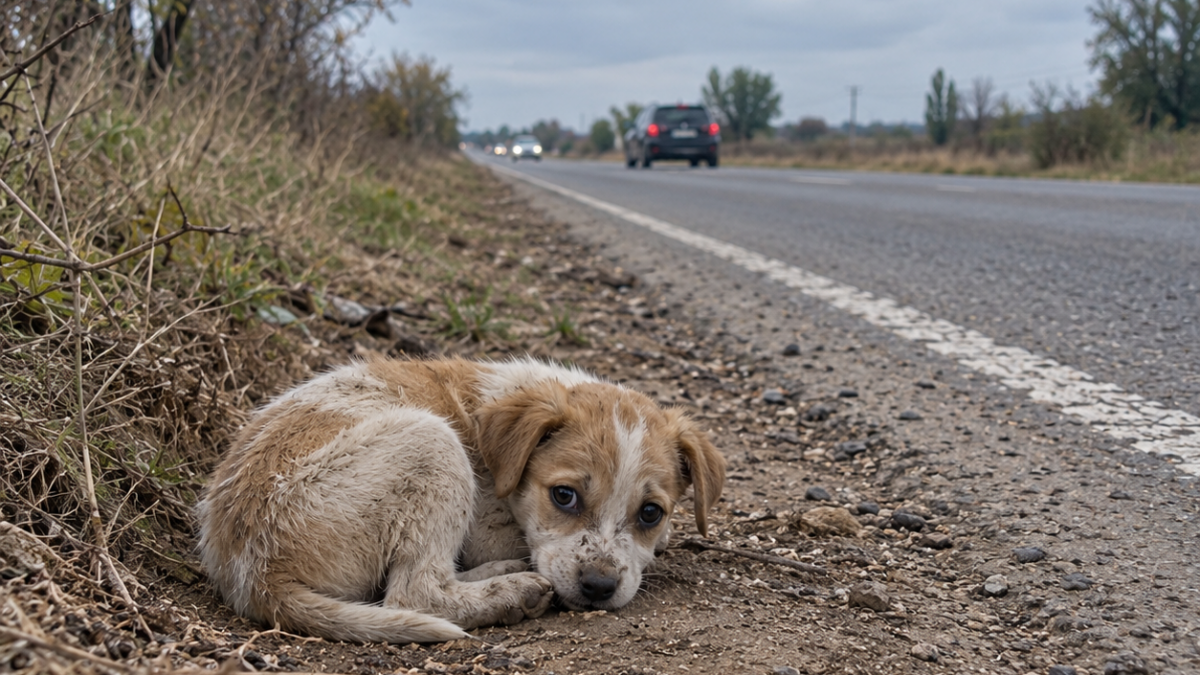
PART 2
The woman’s name was Rachel.
I learned that because people kept saying it when they came through the house.
“Rachel, did she eat?”
“Rachel, did she sleep?”
“Rachel, has the shelter called?”
For the first several days, I didn’t understand most of those sounds. Human language had always been something I recognized more by rhythm than meaning. There were words I knew from before—outside, dinner, no, good girl, come, car—but Rachel’s voice was new, and I had no reason to trust new things.
So I waited.
Every morning, I went to the front window.
Every time a vehicle slowed, I stood.
Whenever Rachel picked up her keys, I followed her to the door.
She began noticing.
“I’m coming back,” she would say.
I didn’t believe her.
The first time she left without me, I threw myself against the window after her car.
I barked until my throat hurt.
Then I ran from the front door to the back door, searching for another way to follow.
Nothing.
The house became too quiet.
I paced.
I whined.
I found the gray sweatshirt Rachel had worn the night she took me from the roadside. It was hanging over a chair. I pulled it onto the floor and lay on it because it smelled like the last human who had not disappeared yet.
I hated myself for that too.
Mom had a smell.
Perfume.
Coffee.
The lotion she rubbed onto her hands before bed.
I remembered the detergent she used on the blanket that had been mine.
I remembered the warm space beside her legs on the couch.
I remembered riding in the car with the window cracked enough for the air to hit my face.
I remembered believing all of that meant something permanent.
Rachel came home forty minutes later.
The lock turned.
I shot toward the door so fast I slipped on the floor.
She stepped inside.
And before I could stop myself, I jumped against her.
My front paws hit her stomach.
My tail went wild.
Rachel laughed.
“There you are!”
Then I remembered.
Wrong person.
I backed away.
Rachel’s smile disappeared.
“It’s okay.”
She put her keys down.
“I know.”
I didn’t understand how she could possibly know.
But she didn’t come toward me.
That mattered.
Over the next week, Rachel developed a routine.
Breakfast.
Walk.
Quiet time.
Another walk.
Dinner.
She never yanked my collar.
Never shouted when I froze.
If I stopped walking and turned my head toward a distant engine, she stopped too.
At first, we stood that way for minutes.
Me staring.
Rachel holding the leash loosely.
The vehicle would pass.
I would watch until it disappeared.
Then Rachel would say, “Ready?”
I eventually learned that word.
Ready.
Sometimes I was.
Sometimes I wasn’t.
She accepted both.
On the eighth morning, she took me to a veterinary clinic.
The smell terrified me.
Metal.
Disinfectant.
Animals.
Fear.
I planted all four feet outside the entrance.
“Nope?” Rachel asked.
Correct.
Absolutely not.
A woman in blue scrubs came outside and crouched sideways rather than facing me.
“Is this Savannah?”
Rachel looked at me.
“For now.”
For now.
Those words made me hopeful.
Maybe Rachel was finally admitting I belonged somewhere else.
The veterinarian scanned my body with a small device.
Nothing happened.
She moved it again.
“No chip.”
Rachel sighed.
“She wasn’t wearing a collar when I found her.”
“Any missing-dog matches?”
“None.”
They talked about photographs, shelters, local groups, and reports.
I listened for one sound.
Mom.
Nobody said it.
The veterinarian examined me.
I hated my paws being touched.
My ears were dirty.
I had lost weight.
There was a raw patch around my neck where I had been scratching.
Otherwise, they said I was healthy.
Healthy.
That should have been good news.
But if I was healthy, why had Mom left me?
Maybe that meant she really was coming back.
Surely people didn’t leave healthy dogs beside roads.
Rachel posted my picture everywhere.
I know because she spent evenings looking at her phone, sometimes showing me the screen.
“That you?”
I recognized myself.
Dirty fur.
Wide eyes.
Standing beside the place where she had found me.
The first photographs were terrible.
I looked like I had been waiting for something.
Because I had.
Hundreds of people saw the posts.
Some wrote messages.
A few said they thought they knew me.
Rachel made calls.
Each time, I stood near her.
Each time she hung up, nothing changed.
One woman thought I belonged to her neighbor.
Wrong dog.
A man said his cousin had lost a female hound.
Wrong markings.
Someone else insisted I had been stolen from another county.
Wrong age.
Every possibility opened Rachel’s face for a few minutes.
Then closed it again.
Mine too.
On the tenth day, a family came to the house.
A mother, father, and teenage son.
The boy sat on the floor.
I liked him immediately because he didn’t reach.
Rachel talked with them in the kitchen.
I heard my new name many times.
Savannah.
The boy eventually rolled a tennis ball.
It stopped halfway between us.
I looked at him.
Then at the ball.
I used to have a ball.
Red.
Mom threw it down the hallway when it rained.
I would bring it back and drop it against her feet until she got tired.
That memory hurt.
I picked up the tennis ball anyway.
The boy smiled.
I carried it halfway toward him.
Then stopped.
Something inside me panicked.
If I played with them, would I be betraying Mom?
I dropped the ball.
Walked away.
That evening, Rachel sat beside me on the porch.
“You don’t owe anybody anything,” she said.
I rested my head on my paws.
“I know people keep looking at you like you’re supposed to decide something.”
She looked toward the road.
“But you don’t.”
Her hand rested on the porch board near mine.
Not touching.
Just there.
I moved one paw until it barely touched her finger.
Rachel didn’t move.
Neither did I.
That was our first real agreement.
Two weeks after my rescue, Rachel drove me back to the road.
I knew where we were long before I saw the exact place.
The smell changed.
The curve.
The weeds.
The gravel.
My entire body became electric.
I stood on the back seat.
Rachel glanced in the mirror.
“I know.”
The moment she parked, I started whining.
She opened the door.
I jumped out.
The leash tightened because I ran.
There.
The spot.
The weeds were flattened where I had slept.
The food someone had left was gone.
Tire marks crisscrossed the shoulder.
I sniffed everything.
Every stone.
Every patch of grass.
Nothing.
No fresh scent.
No Mom.
I sat.
Rachel sat twenty feet away.
Cars passed.
One.
Two.
Five.
Ten.
Every engine still lifted my head.
Nothing.
We stayed more than an hour.
Finally Rachel whispered, “Sweetheart, she’s not here.”
I refused to move.
The sun lowered.
Rachel did not drag me.
She waited.
Eventually, I stood.
But instead of walking to the car, I lay down beside the road.
Rachel’s face broke.
“Oh, Savannah.”
I pressed myself against the dirt.
She came closer.
“If I leave you here, you’ll stay, won’t you?”
Yes.
That was the idea.
Rachel sat beside me.
Another car passed.
“You waited two days.”
I watched the road.
“She knew where you were.”
My ears moved.
Rachel’s voice had changed.
There was something inside it I did not understand yet.
Anger.
“If she was looking, she would have come.”
I stood suddenly.
No.
Rachel immediately softened.
“I’m sorry.”
I stared at her.
“Sorry.”
She looked away.
“You’re not ready to hear that.”
Neither was she.
We stayed until dark.
Then Rachel stood.
“Come home with me.”
Home.
I knew that word.
It belonged to Mom’s house.
Not Rachel’s.
I looked at the road.
Then at Rachel’s car.
Then back.
Rachel opened the rear door.
No leash pressure.
No blanket.
No force.
“Your choice.”
I remained beside the weeds.
Rachel waited.
Five minutes.
Ten.
The road became dark.
Nothing came.
Finally, I walked toward her.
Slowly.
I stopped beside the car.
Rachel did not smile.
That helped.
I climbed inside.
As we drove away, I watched the roadside until darkness swallowed it.
I did not cry this time.
That scared me more than crying had.
Three days later, Rachel received a message.
She was standing in the kitchen when her phone made the sound.
She read.
Stopped.
Read again.
Then looked at me.
I was lying on the rug.
“What?”
I lifted my head.
She sat down.
“Savannah, I think somebody knows you.”
My heart exploded.
I stood.
Rachel made a call.
Her voice was careful.
“Yes, this is Rachel.”
Pause.
“Yes.”
Pause.
“Where?”
Another pause.
My tail started moving.
I didn’t know why.
Rachel turned away from me.
“When?”
Longer pause.
“Are you sure?”
Her shoulders tightened.
“What kind of car?”
Silence.
Then:
“Do you have the footage?”
My tail stopped.
Rachel sat very still after ending the call.
I approached.
She put one hand over her mouth.
“God.”
I touched her knee with my nose.
She looked down.
“Oh, baby.”
Her eyes were wet.
That word again.
Baby.
Mom used to say that.
Come here, baby.
Good girl, baby.
Move over, baby.
It hurt from Rachel.
I backed away.
She did not follow.
The next morning, a man came to the house.
Older.
Gray beard.
He smelled like motor oil and horses.
I recognized him.
Not his name.
His smell.
His truck.
He had lived somewhere near Mom.
I had seen him once fixing a fence.
The moment he entered, I barked.
Not fear.
Recognition.
He froze.
“That’s her.”
Rachel turned.
“You’re certain?”
“Hundred percent.”
He crouched.
“Hey, Daisy.”
The room disappeared.
Daisy.
I knew that word.
My name.
My real name.
I ran toward him.
Rachel covered her mouth.
The man scratched my neck.
“Yeah. It’s you.”
Daisy.
Daisy.
Daisy.
I spun once.
Then ran to Rachel.
Then back.
Something inside me had been restored.
Not Mom.
But proof.
I had existed before the road.
I had a name.
The man’s name was Tom Whitaker.
He had lived two houses from Mom’s old rental.
Mom’s name was Jennifer Cole.
Rachel learned that while I lay between them trying to understand why the sound Daisy suddenly made my heart beat so hard.
Tom knew me.
He knew Mom.
And he knew what happened the day I was left.
Not everything.
But enough.
Tom owned a small repair shop with security cameras pointing toward the county road.
Two days before Rachel found me, one camera recorded Jennifer’s silver SUV driving past.
Fifteen minutes later, it returned.
Slower.
The passenger door opened near the edge of the camera frame.
A dark shape appeared.
Me.
The vehicle drove away.
I ran after it.
Only for a short distance.
Then stopped.
Tom had not seen the footage until Rachel’s missing-dog post reached one of his employees.
He checked old recordings.
Found the SUV.
Recognized Jennifer.
Recognized me.
Rachel’s face went cold while watching the video.
I could not see the screen clearly.
But I heard Mom’s car.
Even recorded, even through a phone speaker, I knew that engine.
I ran to the window.
Rachel stopped the video.
Tom looked at her.
“She dumped that dog.”
Rachel said nothing.
“She didn’t lose her.”
“No.”
“She didn’t run off.”
“No.”
“She opened the door.”
“Yes.”
I didn’t know the meaning of dumped.
But I knew Mom’s name.
Jennifer.
Every time they said it, I moved closer.
Rachel noticed.
“She still wants her.”
Tom shook his head.
“That woman doesn’t deserve her.”
I growled.
Both humans looked at me.
Tom softened.
“Sorry, girl.”
I stood beside the door.
If he knew where Mom lived, we needed to leave.
Now.
Rachel understood eventually.
“You want to go.”
Yes.
“Not today.”
I barked.
“Daisy.”
My name stopped me.
Rachel almost never used it.
The sound from her mouth felt strange.
Real.
Painful.
“You are Daisy.”
My ears lifted.
She crouched.
“But we’re not going anywhere yet.”
I paced.
Tom gave Rachel an address.
Jennifer had moved.
Not far.
Maybe twenty-five miles.
Tom also told them something else.
Jennifer had recently remarried.
Her new husband did not like dogs.
I didn’t understand that sentence.
But Rachel did.
Her jaw tightened.
“Did she ever try to rehome Daisy?”
“Not that I heard.”
“Shelter?”
“No.”
“Rescue?”
“No.”
“Post online?”
“No.”
Tom shook his head.
“She told one neighbor the dog had ‘gone to live on a farm.’”
Rachel laughed once.
Not happily.
“I hate that sentence.”
Tom nodded.
“Yeah.”
After he left, Rachel sat on the kitchen floor.
I stood by the door.
“Daisy.”
I looked at her.
“Your name is Daisy.”
Tail wag.
“You were right.”
I moved closer.
“You had a family.”
Closer.
“You had a home.”
I touched her knee.
“And she left you there.”
I backed away.
Rachel started crying.
“I’m sorry.”
I barked once.
Stop.
“I know.”
She wiped her face.
“I’m sorry.”
For the rest of the day, I refused food.
The next morning, Rachel called animal control.
Then a shelter.
Then someone else.
She printed photographs.
Saved footage.
Wrote dates.
I hated every moment because none of it involved driving me to Mom.
Finally, I made the decision myself.
When Rachel opened the front door to carry a bag outside, I ran.
Not toward the yard.
Past the car.
Down the road.
“DAISY!”
I ran faster.
My body remembered direction better than Rachel understood.
Mom was somewhere.
I had waited.
I had been taken.
Now I would find her.
Rachel chased me until I turned at the end of the street.
Then she stopped.
“Daisy!”
I kept going.
A truck honked.
I startled.
Swerved.
Rachel screamed.
Brakes squealed.
The truck stopped only feet away.
Everything froze.
I stood in the road.
The driver opened his door.
“What the hell?”
Rachel reached me.
She did not grab my collar.
She wrapped both arms around my body.
Her hands shook.
“You cannot do that.”
I struggled.
She held tighter.
“You cannot.”
I whined.
“She left you!”
I froze.
Rachel’s face was against my neck.
“She left you there on purpose.”
No.
“She knew.”
No.
“She drove away.”
No.
“She did not come back.”
I snapped toward her sleeve.
Not her skin.
The fabric.
Rachel released me enough to breathe.
I growled.
She cried.
“Okay.”
Her voice broke.
“Be mad at me.”
I stood trembling.
The truck driver had gotten out.
“You need help?”
Rachel shook her head.
“I’ve got her.”
I looked toward the road.
The direction I believed Mom might be.
Rachel sat directly on the pavement beside me.
“You can hate me.”
I stared ahead.
“But I am not letting you get killed looking for somebody who chose not to come back.”
I did not understand all the words.
I understood her body.
Her shaking.
Her tears.
Her refusal to release the leash.
Something in me collapsed.
I lay down.
Rachel lay beside me on the side of the road.
Cars slowed.
People stared.
Neither of us cared.
After a while, she whispered, “Come home.”
This time, the word hurt differently.
I stood.
Followed her.
For three days, I barely interacted with Rachel.
I ate.
Drank.
Went outside.
Then returned to the bed.
No ball.
No tail wag.
No window watching.
Rachel gave me space.
She put my real name on the food bowl.
DAISY
I sniffed the letters.
They meant nothing visually.
But whenever she said the sound, I looked.
Slowly, Savannah disappeared.
Rachel never used it again.
On the fourth day, there was a knock.
Mom.
I knew before Rachel opened the door.
Perfume.
Coffee.
That lotion.
I screamed.
Not barked.
A sound I had never made before.
I ran to the entrance.
Rachel blocked me with her body.
“Daisy, wait.”
Mom’s voice came through the door.
“I know she’s here.”
My entire body shook.
Rachel did not move.
“Jennifer?”
“Yes.”
Mom.
Mom.
Mom.
I clawed at the floor.
Rachel looked down at me.
Then opened the door only a few inches.
I saw her.
Mom.
My person.
My whole missing world.
“Daisy!”
I launched myself toward her.
Rachel caught the leash.
Mom knelt.
“Oh my God.”
I pulled.
Whined.
Cried.
Mom reached through the opening.
I licked her fingers.
Every old smell hit me at once.
Home.
Couch.
Blanket.
Car.
Everything.
Mom started crying.
“My baby.”
I pulled harder.
Rachel’s face changed.
Not anger now.
Something worse.
Pain.
She wanted to let me go.
I could feel it.
Then a man stepped from behind Mom.
Stranger.
Tall.
Arms folded.
“Can we get this over with?”
I stopped.
His smell was faintly familiar.
Not from before.
Maybe the car.
Maybe fabric.
Mom looked back.
“Mark.”
“What? It’s a dog.”
Rachel’s eyes hardened.
“You’re her husband?”
“Yes.”
Mom stood.
“I want Daisy back.”
My tail moved.
Rachel looked at me.
Then Mom.
“You abandoned her.”
Mom’s mouth opened.
“No, I didn’t.”
Rachel’s expression went completely still.
“We have video.”
Mom’s face changed.
Only for a second.
“I had no choice.”
“There were shelters.”
“They were full.”
“Rescues.”
“I didn’t know any.”
“You had a phone.”
Mark stepped forward.
“She became a problem.”
I growled.
Rachel looked at him.
“A problem?”
“She was destructive.”
I stared.
I had chewed one shoe once.
I had scratched a door during a thunderstorm.
Was that it?
Mom touched his arm.
“Please.”
He ignored her.
“We were moving. New place doesn’t allow her breed.”
Rachel laughed in disbelief.
“Then surrender her.”
“Again, we didn’t have time.”
“You had enough time to drive twenty-five miles and dump her beside a road.”
Mom cried harder.
“I thought somebody would find her.”
Rachel’s voice dropped.
“You thought wrong.”
I pulled toward Mom again.
Because none of that mattered to me.
She was here.
That was the only thing my body understood.
Mom crouched.
“Daisy, come here.”
I whined.
Rachel looked at me.
The leash loosened.
For one second, I thought she would release it.
Then Mark said, “Jennifer, if you bring that dog back to my house, we’re going to have a problem.”
Mom froze.
My tail stopped.
She looked at him.
Then at me.
I waited.
This was the moment.
Surely.
She would choose me now.
I had waited two days.
I had slept beside a road.
I had fought Rachel.
I had tried to run away.
I had never stopped believing.
Mom stared at me.
Then stood.
“Can she stay here temporarily?”
Something inside me went quiet.
Rachel’s mouth opened slightly.
“Temporarily?”
“Until I figure something out.”
Mark scoffed.
“We already figured it out.”
Mom looked at him.
“Stop.”
Then at Rachel.
“Just a few weeks.”
Rachel stepped backward.
“You came here saying you wanted her back.”
“I do.”
“Do you?”
Mom cried.
“That’s not fair.”
Rachel pointed toward me.
“She waited for you for two days.”
Mom covered her face.
“I know.”
“No, you don’t.”
“I made a mistake.”
“A mistake is forgetting her medication.”
Rachel’s voice shook.
“You opened a car door and drove away.”
Mark stepped closer.
“That’s enough.”
“No.”
Rachel turned on him.
“It is not enough.”
I had never seen her like that.
The quiet woman from the roadside was gone.
“You left a domestic dog beside moving traffic with no food, no water, no shelter, and no way to understand why her person disappeared.”
Mark rolled his eyes.
“She survived.”
Rachel stared at him.
“That does not make what you did acceptable.”
Mom sank onto the porch step.
I moved toward her.
Rachel let me.
I put my nose against Mom’s hands.
She cried into my fur.
“I’m sorry.”
I licked her face.
Of course I did.
She was Mom.
Then Mark said from behind us, “Jennifer. Now.”
Mom’s body tensed.
She stood.
I stood too.
She walked toward the car.
I followed.
Rachel’s hand tightened on the leash.
Mom opened the passenger door.
I wagged.
She looked at me.
Really looked.
Then she closed the door.
Without me.
“Daisy…”
I pulled.
She shook her head.
“I’m sorry.”
No.
“Be good.”
No.
Rachel wrapped both hands around the leash.
Mom got into the vehicle.
No.
Engine.
No.
I screamed.
The car moved.
I fought harder than I had the night Rachel rescued me.
My claws scraped the porch.
The leash cut into the harness.
I barked.
Whined.
Howled.
Mom looked back through the window.
For one second, our eyes met.
Then the car turned.
Gone.
I collapsed.
Rachel sat beside me.
She did not touch me.
Not until I moved first.
I crawled into her lap.
All fifty-eight pounds of me.
Rachel wrapped her arms around my body.
“I’m so sorry.”
I buried my face against her chest.
For the first time, I stopped waiting.
That night, I vomited again.
The next morning, I refused food.
Rachel called the veterinarian.
Stress, they said.
Watch hydration.
Keep routine.
Do not force affection.
Give her time.
Time.
Humans love saying that when they don’t know how to repair something.
But time did do something.
Not alone.
Rachel helped.
So did routine.
Morning walks.
Dinner.
The same bed.
The same hand filling my water bowl.
The same car returning to the driveway.
Every day Rachel left.
Every day Rachel returned.
At first, I waited at the window.
Then by the door.
Then on the couch.
Eventually, I stopped waiting.
That difference took months.
The legal case started without me understanding it.
Animal control reviewed Tom’s video.
Rachel gave them her photographs from the roadside.
The veterinarian documented my stress, weight loss, dehydration, and condition after rescue.
The county issued citations related to abandonment.
Jennifer and Mark contested them.
Rachel had to attend a hearing.
She did not bring me.
“I’m not using you as evidence if I don’t have to,” she told me.
I stayed with Rachel’s sister, Amanda.
I hated it.
But Rachel came back.
She always came back.
At the hearing, Tom testified.
So did Rachel.
Jennifer admitted placing me beside the road but argued she believed the location was safe and that someone would take me.
The hearing officer asked a simple question.
“Did you arrange for a specific person to take possession of the dog?”
No.
“Did you contact a shelter before abandoning her?”
No.
“A rescue?”
No.
“Animal control?”
No.
“A veterinarian?”
No.
“Did you leave identification with her?”
No.
“Food?”
No.
“Water?”
No.
“Did you return to check on her?”
Mom cried.
“No.”
The ruling came quickly after that.
Fines.
Restitution toward my veterinary and care costs.
A formal neglect and abandonment finding.
Mandatory animal-care education.
And a temporary prohibition on acquiring another dog without approval during the compliance period.
It was not dramatic.
No handcuffs.
No courtroom shouting.
Rachel later told Amanda she had expected to feel better.
She didn’t.
“How could I?” she asked. “Daisy already paid the part that mattered.”
That was true.
But something changed because of the case.
Mom could no longer tell people I had “run away.”
That had been the story she used after I disappeared.
Tom learned that from another neighbor.
She said Daisy escaped.
She said she searched.
She said maybe someone stole me.
The video ended that lie.
That mattered more to Rachel than the fine.
It mattered to me in another way.
Not because I understood reputation.
Because the truth meant I had not failed to find my way home.
I had not wandered.
I had not left.
Mom had.
That knowledge hurt.
Then, slowly, it freed me.
I stopped blaming every closed door on myself.
The first time Rachel packed a suitcase, I panicked.
She was going to visit her father for two nights.
I saw clothes entering a bag and my body remembered everything.
Moving.
Boxes.
Car.
Road.
Leaving.
I grabbed one of Rachel’s socks and ran into the bedroom.
She found me under the desk.
“Oh.”
I curled tighter.
Rachel sat down.
“Okay.”
She unpacked the suitcase.
Every piece.
Right there on the floor.
Then repacked it slowly while talking.
“You’re staying with Amanda.”
My body shook.
“I’m coming back Sunday.”
No.
Rachel called Amanda.
Changed plans.
Amanda came to our house instead.
Rachel left.
I paced for three hours.
At midnight, I lay by the door.
Amanda slept on the couch.
The next morning, I ate.
Sunday afternoon, an engine entered the driveway.
Rachel.
I ran so hard I crashed into the door.
She opened it.
I jumped.
Whined.
Spun.
Rachel fell to her knees.
“Told you.”
I licked her whole face.
“Told you I’d come back.”
That phrase became ours.
Every departure:
“I’ll come back.”
Every return:
“Told you.”
At first, I needed both.
Eventually, only the return mattered.
One year after Rachel found me, she drove back to the roadside.
I came too.
This time I wore a red harness.
My name tag said:
DAISY
On the back:
RACHEL — 402-555-0186
I jumped from the car.
Sniffed the weeds.
Same place.
Different dog.
Rachel sat where she had sat the first evening.
I stood beside her.
A car passed.
I watched.
Another.
Watched.
Then a third.
I looked at Rachel.
She looked at me.
“Want to go home?”
I wagged.
We left after eleven minutes.
That was all.
No waiting until dark.
No lying beside the road.
No listening for one particular engine.
I chose the car that had brought me there.
Rachel’s.
I jumped in before she opened the door all the way.
She laughed.
“Okay.”
Home.
I understood the word now.
Not a building.
Not the first couch.
Not a smell.
Home was the person who returned.
Two months later, Jennifer wrote Rachel a letter.
Rachel read it at the kitchen table while I slept nearby.
Jennifer said Mark had left.
Their marriage lasted less than two years.
She said abandoning me had become the thing she regretted most.
She had completed the required classes.
She was volunteering occasionally at a food pantry.
She had not gotten another animal.
She asked if I was happy.
She did not ask to see me.
Rachel appreciated that.
She answered once.
Only once.
Daisy is safe, healthy, and loved. She does not need another transition. Please let that be enough.
Jennifer replied:
Thank you.
That was the end.
Or almost.
Three years after my rescue, Rachel and I were at a park when I smelled her.
Jennifer.
I froze.
Rachel followed my gaze.
Mom stood near a bench.
Alone.
Older.
Hair shorter.
Same lotion.
My body remembered before my mind did.
I took one step.
Rachel did nothing.
Jennifer saw me.
Her face crumpled.
“Daisy.”
I moved closer.
Rachel let the leash remain loose.
Jennifer knelt.
I sniffed her.
Her hands.
Jacket.
Face.
Memory flooded back.
The couch.
Red ball.
Car rides.
The road.
The second goodbye on Rachel’s porch.
I stood there for a long time.
Jennifer did not reach.
Finally, she whispered, “Hi, baby.”
My tail moved once.
Not because everything was fixed.
Because once, I had loved her.
Maybe part of me still did.
Dogs are not careful enough to love only people who deserve it.
Jennifer cried.
“I’m sorry.”
I licked one tear from her cheek.
Then turned.
Walked back to Rachel.
Sat on Rachel’s foot.
Jennifer covered her mouth.
Rachel’s eyes filled.
Nobody spoke.
Then Jennifer nodded.
“That answers it.”
Rachel said softly, “She remembers you.”
“I know.”
Jennifer looked at me.
“But she went home.”
Yes.
That was different.
The first time Mom drove away, she decided where my home was.
The second time, she did too.
This time, I decided.
Jennifer stood.
“Take care of her.”
Rachel touched my head.
“I do.”
Jennifer walked away.
I watched.
My heart did not break.
That surprised me.
Rachel knelt.
“You okay?”
I licked her chin.
Then pulled toward the trail.
There were squirrels.
Life continued.
That became the revenge.
Not Jennifer suffering.
Not Mark leaving her.
Not the fine.
Not the hearing.
The revenge was that abandonment stopped controlling my life.
The roadside lost its power.
The sound of a car stopped meaning everything.
Suitcases became luggage instead of warnings.
Doors closed and opened again.
People left and returned.
Rachel became predictable.
Predictability became trust.
Trust became sleep.
Real sleep.
On my back.
Belly exposed.
Paws in the air.
The first photograph Rachel took of me sleeping that way made her cry.
I woke up.
Stared.
She wiped her face.
“Sorry.”
I rolled over.
Humans are strange.
Rachel eventually fostered another dog.
His name was Cooper.
I hated him.
At least for two days.
He was young.
Too energetic.
He drank from my water bowl.
Stole my bed.
Touched my red ball.
Unforgivable.
I growled.
Rachel moved Cooper away.
“Daisy gets her space.”
Good.
By day four, we walked together.
Day six, I let him sleep near me.
Day nine, we wrestled.
Rachel watched.
“Traitor.”
I ignored her.
Cooper was adopted by a family with two boys.
When he left, I searched the guest room once.
Then stopped.
That mattered too.
Goodbyes no longer meant disaster.
Sometimes people left because something good was happening.
Sometimes the door closed because another door had opened.
I had finally learned the difference.
Rachel kept fostering.
Never too many.
One at a time.
Scared dogs.
Old dogs.
A beagle who screamed whenever he was alone.
A shepherd who refused to enter cars.
A tiny pit bull mix who slept standing up the first night because she apparently didn’t trust beds.
I became part of the process.
Not on purpose.
I simply knew how to be quiet.
When new dogs arrived, I didn’t rush them.
I sniffed.
Walked away.
Let them watch me eat.
Watch me sleep.
Watch Rachel leave for the mailbox and return.
One dog, Nellie, paced the hallway for six hours.
I lay on my bed.
Eventually, she lay three feet away.
Rachel whispered, “You know, don’t you?”
I did.
Not the story.
The feeling.
The belief that a door could swallow someone forever.
Nellie learned.
Just like I had.
Years passed.
My muzzle turned gray.
The red harness was replaced twice.
Then three times.
My ball collection grew.
Rachel moved to a house with a larger fenced yard.
The first day, I stood in the doorway afraid to enter.
New house.
Boxes.
Moving.
Old panic rose.
Rachel saw.
She put down the box in her hands.
“Daisy.”
I looked at her.
“This time you’re coming too.”
I followed her inside.
That sentence healed something I hadn’t known still hurt.
This time you’re coming too.
I explored every room.
Found Rachel’s bed.
Found my bed.
Food bowls.
Red ball.
Same smells.
Different walls.
Home survived relocation.
Another lesson.
At eight years after rescue, my hips began to ache.
The veterinarian called it arthritis.
Rachel called it “my excuse to become even more spoiled.”
Rugs appeared.
Steps beside the couch.
A ramp for the car.
Pain medication hidden in cheese.
I discovered this almost immediately.
I still ate the cheese.
At nine years, I stopped chasing squirrels all the way to the fence.
At ten, I preferred watching them from the porch.
At eleven, Rachel started lifting me into the car on bad mornings.
The woman I had once snapped at for carrying me now put her arms beneath my body and I relaxed completely.
Sometimes she remembered too.
“You hated me the first time I did this.”
I licked her ear.
“Yeah, yeah.”
I had not hated her.
I had been afraid she was stealing me from Mom.
There is a difference.
By then, Rachel understood.
At twelve, Tom Whitaker visited.
The man who had given me my name back.
He was grayer.
I was grayer too.
“Daisy girl.”
I wagged.
He sat on the porch.
“You know, your mom—your first mom—moved out of state.”
Rachel glanced at him.
I slept between them.
“She asked about Daisy once before she moved.”
Rachel was quiet.
“What did you say?”
“That she was fine.”
“Good.”
Tom scratched my ear.
“That enough?”
Rachel looked at me.
“Yeah.”
It was.
Jennifer became part of an old chapter.
Not erased.
Not hated.
Just far away.
At thirteen, my kidneys began to change.
Not terrible.
Early.
Rachel panicked anyway.
The veterinarian told her to breathe.
Humans always tell each other that when frightened.
We changed food.
Added medication later.
Monitored weight.
I had good years still.
At fourteen, I could no longer jump onto Rachel’s bed even with the small steps.
She moved a mattress to the floor.
I stared at it.
Rachel shrugged.
“Don’t flatter yourself. I always wanted to sleep like a college student again.”
Lie.
I slept beside her.
At fifteen, my world became smaller.
House.
Yard.
Porch.
Car only for short rides.
Rachel.
That was enough.
My hearing faded.
Engines became quieter.
For the first time in my life, that did not frighten me.
I no longer needed to identify every car.
Only one mattered.
And if I couldn’t hear Rachel return, I could smell her.
Feel the floor vibrate.
See the door open.
“Told you.”
Every time.
One autumn morning, I didn’t want breakfast.
Rachel knew.
She sat beside my bowl.
“Come on.”
I looked away.
She offered chicken.
I ate a little.
The next day, none.
The veterinarian examined me.
Kidneys worse.
Arthritis worse.
Something in my abdomen.
Cancer, maybe.
At fifteen, nobody recommended aggressive surgery.
Rachel asked all the questions anyway.
Pain?
Comfort?
Time?
Could treatment give me good days?
The veterinarian answered carefully.
Maybe some.
Not many.
Rachel drove home with one hand on the wheel and one hand resting on my back.
I slept.
We got nine more weeks.
They were good enough.
Chicken.
Sun.
Short walks.
One afternoon at the porch steps, my legs gave way.
Rachel caught me.
Same as that first road.
Different feeling.
She sat beside me.
“I know.”
I was tired.
Rachel knew.
The veterinarian came to the house two days later.
Amanda came too.
Tom sent a message.
Rachel placed my old red ball beside my bed.
I hadn’t played with it in years.
Still, I knew the smell.
I rested my nose against it.
Rachel lay beside me.
“Do you know what I used to think?”
I opened my eyes.
“That if Jennifer came back, you’d leave me.”
Her hand rested against my chest.
“For years.”
She laughed softly through tears.
“Even after you chose me.”
I breathed.
“I guess you weren’t the only one with abandonment issues.”
My tail moved once.
Rachel cried harder.
“Rude.”
The veterinarian gave me medication that made everything softer.
Pain faded.
Room blurred.
Rachel’s smell remained.
She put her forehead against mine.
“You waited two days for someone who didn’t come back.”
Her voice broke.
“I got fifteen years because you finally let me take you away.”
I breathed slowly.
“I am so grateful you hated me that night.”
I didn’t hate her.
I wished I could tell her.
Maybe she knew.
“I’m not leaving,” she whispered.
There.
The promise.
The final one.
Not I’ll come back.
She didn’t need to leave at all.
“I’m right here.”
My body relaxed.
For the first time since I was a young dog beside a road, there was nothing I needed to wait for.
No engine.
No footsteps.
No apology.
No Mom.
No explanation.
Everything important was already beside me.
Rachel.
Home.
The veterinarian looked at her.
Rachel nodded.
The final medication entered my body.
I felt Rachel’s hand over my heart.
Her tears on my fur.
“Good girl, Daisy.”
My name.
My real name.
The name I had almost lost.
“Good girl.”
My heart slowed.
I was warm.
I was full.
I was old.
I was loved.
And this time, when somebody held me and the world began to disappear, I knew exactly one thing.
I had not been left.
Rachel stayed.
After I was gone, she kept my red ball.
My tag.
The first photograph from the roadside.
And another photograph taken fourteen years later.
In the second one, I was asleep on her porch in sunlight, gray-faced, one paw over my nose.
Rachel framed them together.
Under the first, she wrote:
THE DAY SHE WAS WAITING.
Under the second:
THE YEARS SHE STOPPED.
People sometimes asked Rachel why she kept the roadside picture.
“Doesn’t it make you sad?”
“Yes,” she said.
“But it reminds me that fear can look like loyalty.”
They didn’t always understand.
Rachel explained.
“For a long time, Daisy believed waiting was proof of love. She thought if she stayed long enough, the person who left would return.”
Then she pointed to the second picture.
“Eventually she learned love wasn’t who made you wait. It was who came back.”
Rachel continued fostering dogs.
One winter, an older hound arrived after being abandoned outside a closed store.
He paced every time Rachel touched her keys.
Wouldn’t eat unless she was in the room.
Slept against the front door.
Rachel named him Walter.
The first evening, she sat beside him.
“I knew a girl like you.”
Walter watched.
“She taught me something.”
Rachel placed her keys on the floor.
Then moved away.
Walter sniffed them.
“She thought doors were promises people broke.”
Rachel sat quietly.
“But she figured it out.”
Walter lay down.
Rachel smiled.
“You will too.”
That became my legacy.
Not sadness.
Not abandonment.
Not even survival.
Return.
The simple act of coming back.
Rachel built foster routines around it.
Short departures.
Predictable returns.
No dramatic goodbyes.
No forcing affection after absence.
New dogs learned that disappearing for ten minutes did not mean disappearing forever.
Then an hour.
Then a workday.
Slowly, they learned.
Doors could open twice.
Cars could come back.
Humans could leave without abandoning you.
Years after I died, Rachel was invited to speak to a group of foster volunteers.
She brought my two photographs.
The roadside.
The porch.
Someone asked, “What changed her?”
Rachel thought.
“Consistency.”
“That’s it?”
“No.”
She smiled.
“Time. Safety. Choice. Veterinary care when needed. Good food. Predictable routines. And letting her grieve a person who didn’t deserve that much loyalty without punishing her for still loving them.”
That answer made the room quiet.
Another volunteer asked, “Did Daisy forgive her original owner?”
Rachel shook her head.
“I have no idea.”
“Did you?”
“No.”
Then she paused.
“Maybe partly. Not because she deserved it. Because staying furious was taking up space Daisy had already filled with better things.”
Someone asked about the court case.
Rachel told them.
Facts.
No exaggeration.
The owner had been held accountable.
The record mattered.
The truth mattered.
But Rachel always ended that section the same way.
“The best revenge was boring.”
People usually laughed.
She continued.
“Breakfast every morning. Walks. Vet bills. Gray hair. Arthritis medication. Moving houses together. Fifteen years of ordinary life. That was the answer to somebody treating her like she was disposable.”
That was true.
The revenge was not that Jennifer suffered.
It was that I stopped needing her suffering to mean anything.
She left me beside a road believing I would become someone else’s problem.
Instead, I became someone’s family.
She told people I had disappeared.
Instead, the truth became documented.
She decided I no longer belonged in her future.
Instead, I got another future entirely.
One longer than anyone could have predicted that evening Rachel pulled over.
And maybe the most satisfying part was this:
For years, Jennifer had been the person I would have followed anywhere.
Then one afternoon in a park, she knelt and called my name.
I remembered.
I approached.
I let her cry.
Then I turned around and chose Rachel.
Not because I was angry.
Not because I understood justice.
Not because I wanted revenge.
Because I knew where home was.
That is different.
I sometimes imagine what I would say if I could rewrite the letter I carried in my heart during those first days.
The first version would have said:
Please forgive me, Mom.
A woman took me away.
I tried to wait.
I hope you come back.
I hope you don’t think I left you.
But if I could write it now, after the whole life that came afterward, it would be different.
I would say:
Mom, I waited for you.
Longer than I should have.
I believed every engine was yours because I didn’t yet know that somebody could love me and still choose convenience over responsibility.
When Rachel took me away, I thought she was stealing me from you.
She wasn’t.
She was taking me toward a life I did not yet know I was allowed to have.
I’m not angry anymore.
I don’t need you to come back.
I don’t need another explanation.
I know my real name.
I know what home feels like.
I know doors can close and still open again.
I know cars can leave and return.
I know a suitcase does not always mean goodbye.
I know a person can say “I’ll come back” and spend fifteen years proving it.
And Mom, there is one thing I no longer need forgiveness for.
My tail wagged for her.
Then it wagged again.
And again.
Eventually, it wagged every time she came through the door.
I stopped feeling guilty for that.
Loving Rachel was not betraying you.
Choosing her was not leaving you.
You had already left me.
I simply survived long enough to understand the difference.
And if Jennifer ever read those words, I hope she would understand something too.
I had forgiven myself.
For eating Rachel’s food.
For sleeping in Rachel’s bed.
For running toward Rachel’s car.
For being happy after believing happiness belonged only to my first life.
For stopping my vigil.
For leaving the roadside.
For choosing home.
The place where Rachel found me still exists.
Cars still pass.
Weeds still bend in the wind.
Some driver probably goes by every day without knowing that a dog once lay there for forty-eight hours waiting for one particular car.
That is good.
The road does not need to become a monument.
My life became the monument.
The red ball.
The gray muzzle.
The mattress Rachel moved onto the floor.
The ramp into her car.
The dogs I helped teach how to trust.
The fifteen years.
The ordinary days.
Those mattered more.
If you had seen me on that first evening, you might have thought I was loyal.
Maybe I was.
But loyalty without safety can become a cage you carry inside yourself.
I waited because I thought love meant refusing to move.
Rachel taught me something better.
Love could move.
Love could leave for groceries and return.
Love could go to work and return.
Love could pack a suitcase and return.
Love could move houses and take you too.
Love could grow old beside you.
And at the very end, when there was nowhere left for either of us to go, love could remain on the floor with one hand over your heart and say:
“I’m right here.”
That was the last promise Rachel ever made me.
And unlike the promise I had invented beside that roadside all those years ago, this one was true.
She stayed.
Rachel stayed.
But that was not quite the end of my story.
It was only the last thing I remembered clearly.
The rest belonged to Rachel.
For months after I was gone, she still reached for my leash every morning.
It happened before she was fully awake.
Her feet would touch the bedroom floor, she would stand, and her hand would move automatically toward the hook beside the door.
The red leash was still there.
So was my harness.
My collar hung beneath it with the little silver tag that said:
DAISY
On the back:
RACHEL — 402-555-0186
For fifteen years, those things had meant the beginning of the day.
Outside.
Mailboxes.
Grass.
Slow circles through the yard when I got old.
Rachel told me later—at least, this is how I imagine she would have told me—that the first morning after I died was the worst.
She reached for the leash.
Her fingers touched the metal clip.
And then she remembered there was no dog waiting behind her.
No nails tapping against the floor.
No impatient huff.
No gray face looking up as if breakfast had somehow become ten minutes late.
She stood there holding my leash for a long time.
Then she sat down on the floor.
The house was too quiet.
That was the thing she had never prepared for.
Not my bed being empty.
Not the medication she no longer had to measure.
Not the bowl she could finally wash and put away.
The silence.
Dogs occupy houses with sounds humans stop noticing.
A collar touching a bowl.
A body turning on a blanket.
A sigh from under the table.
Paws on the hallway floor.
The shake of ears after waking.
Breathing.
So much breathing.
When those sounds disappear, the whole house seems to change shape.
For the first week, Rachel kept expecting me.
She opened the refrigerator and waited for me to appear.
Nothing.
She dropped a piece of chicken while making dinner and instinctively said, “Daisy.”
The chicken stayed on the floor.
She cried so hard she had to turn off the stove.
At night she slept on the mattress we had shared downstairs.
She had moved it there years earlier when stairs became too difficult for me.
Friends told her she could finally move back upstairs.
She didn’t.
Not yet.
My side of the mattress remained untouched.
Sometimes Rachel woke in the middle of the night and stretched one hand toward the place where my body used to be.
Cold sheet.
That was all.
The veterinarian had warned her grief could arrive in strange ways.
She had nodded politely.
Rachel knew grief.
She had fostered animals.
She had lost dogs before.
She thought she understood.
But I had been different.
I wasn’t the first dog Rachel had loved.
I was the dog who had made her life reorganize itself around one promise.
I’ll come back.
For fifteen years, that promise had been our rhythm.
Then one day she had stayed, and I had been the one who left.
That was difficult for her.
Even though she knew it wasn’t abandonment.
Even though she had held me.
Even though she had chosen the gentlest ending she could give me.
Grief is not reasonable.
It kept whispering:
Maybe another day.
Maybe another treatment.
Maybe another meal.
Maybe you decided too soon.
Rachel called Dr. Hart two weeks after I died.
“I need you to tell me again.”
The veterinarian understood without asking what she meant.
“You made the right decision.”
“How do you know?”
“Because I examined her.”
“What if she could have had another week?”
“She might have.”
Rachel went silent.
That was not the answer she expected.
Dr. Hart continued.
“But the question wasn’t whether Daisy could remain alive another week. The question was what that week would have asked her to endure.”
Rachel cried.
“She still looked at me.”
“Of course.”
“She wagged.”
“Once.”
“She ate chicken.”
“Three pieces.”
“What if that meant she wanted to stay?”
Dr. Hart paused.
“Daisy had spent fifteen years wanting to stay with you.”
That sentence broke Rachel open.
The veterinarian let her cry.
Then said quietly:
“You didn’t end her life because she stopped loving it. You helped her because her body could no longer carry the life she loved without increasing pain.”
Rachel wrote those words down.
She kept them in her phone.
For months.
Whenever guilt came, she read them.
My body could no longer carry the life I loved.
That was true.
And I had loved it.
Every ordinary piece.
Sun on the porch.
Chicken hidden around pills.
Slow walks.
My red ball.
Rachel’s hand beneath my chest helping me into the car.
Amanda visiting.
Sleeping against the couch.
Watching squirrels I no longer had the energy to chase.
Love had become quieter as I aged.
But it had never become smaller.
After a month, Rachel finally washed my bowl.
She cried before she started.
Cried while washing it.
Cried afterward.
Then she put it back on the floor.
Not because she expected me to use it.
Because the empty space bothered her more.
My red ball stayed beside my bed.
My bed stayed in the corner.
She told herself she would put everything away eventually.
She didn’t.
Instead, the house slowly turned my belongings into history.
Then, one rainy Tuesday in March, someone knocked.
Rachel almost ignored it.
She had just returned from work and had no interest in company.
The knock came again.
When she opened the door, Amanda stood there holding a leash.
At the other end was a dog.
Not a puppy.
Not pretty in the obvious way.
A lanky brown-and-white hound with one torn ear, nervous eyes, and legs that seemed too long for his body.
The dog wouldn’t cross the threshold.
Rachel looked at Amanda.
“No.”
Amanda sighed.
“You don’t even know why I’m here.”
“Yes, I do.”
“The shelter is full.”
“No.”
“He only needs forty-eight hours.”
“No.”
“Rachel.”
“No.”
The hound looked into the house.
Then backed away.
Amanda lowered her voice.
“They found him behind a closed gas station.”
Rachel closed her eyes.
“That is manipulative.”
“I know.”
“You did that on purpose.”
“Yes.”
“I hate you.”
“Also know.”
The hound sat.
He looked toward the road.
Rachel saw it.
That old posture.
Not mine exactly.
But close enough.
Head lifted.
Body ready.
Listening for an engine that mattered.
Her anger disappeared.
“What’s his name?”
“Shelter calls him Walter.”
Rachel looked at him.
Walter looked at the road.
“Forty-eight hours.”
Amanda smiled.
“Of course.”
It was a lie.
Everyone knew.
Walter entered the house twenty-three minutes later.
Not because Rachel called him.
She didn’t.
Not because Amanda pulled.
She didn’t.
They opened the door.
Sat on the floor.
Waited.
Eventually, Walter stepped across the threshold.
He sniffed my old bowl.
Rachel froze.
Walter moved to my bed.
Sniffed.
Circled.
Then lay beside it.
Not on it.
Beside.
Rachel had to leave the room.
She stood in the kitchen and cried silently into a dish towel.
Amanda found her.
“You okay?”
“No.”
“I can take him back.”
Rachel looked toward the living room.
Walter’s head was visible around the doorway.
His eyes followed them.
“No.”
“You sure?”
“No.”
Amanda smiled.
“That sounds more accurate.”
That night, Walter slept on the floor.
Rachel slept on the mattress.
At 2:13 a.m., she woke to a sound.
Nails.
Soft.
Slow.
Walter approached.
Stopped several feet away.
Rachel remained still.
He sniffed the air.
Then lay down.
Not beside her.
Not close.
Near enough.
Rachel stared at the ceiling.
“Daisy would hate you.”
Walter’s tail tapped once.
Rachel laughed.
Then cried.
Both were allowed.
Forty-eight hours became a week.
Walter’s story was different from mine.
Nobody discovered dramatic security footage.
There was no former owner who appeared at the door.
No familiar name waiting to be returned.
The shelter eventually found records showing he had belonged to an elderly man who entered long-term care.
A relative had promised to take Walter.
Somewhere between promise and responsibility, Walter became homeless.
Nobody could prove exactly how.
Rachel did not need a villain this time.
She had learned something from me.
Understanding why an animal was abandoned could matter.
But healing did not always require solving the mystery.
Sometimes you built the next routine anyway.
Walter panicked when Rachel picked up her keys.
The first time, he blocked the front door.
Rachel stopped.
The old instinct came back immediately.
She put the keys down.
Sat on the couch.
Waited.
Walter paced.
Rachel said:
“I knew a girl like you.”
His ears moved.
“She waited beside a road for two days.”
Walter stopped.
“She thought every car was coming back for her.”
Rachel swallowed.
“She was wrong for a while.”
Walter approached.
“Then she was right for fifteen years.”
Rachel left for three minutes.
Returned.
Walter was standing by the door.
“Told you.”
She said it automatically.
Then froze.
Those had been our words.
Walter didn’t know that.
His tail moved.
The next day Rachel left for five minutes.
Returned.
“Told you.”
Ten.
“Told you.”
Half an hour.
“Told you.”
Something unexpected happened.
The phrase stopped belonging only to grief.
It became useful again.
Rachel felt guilty the first time Walter slept on my bed.
He had avoided it for three weeks.
Then one afternoon she walked into the living room and found him curled directly in the center.
His long legs hanging over one side.
Rachel stared.
Walter lifted his head.
For one ugly second, anger flashed through her.
That was Daisy’s bed.
Then shame followed immediately.
Walter had done nothing wrong.
He simply found a soft place.
Rachel sat down.
“Okay.”
Walter watched carefully.
Rachel touched the edge of the bed.
“She would have stolen yours too.”
Walter put his head down.
That night, Rachel moved my red ball from beside the bed to the shelf with my collar.
Not throwing it away.
Not replacing me.
Making space.
That was another thing grief taught her.
Making room for what comes next does not erase what came before.
Walter stayed.
Months passed.
He never became me.
Thank God.
He hated cars.
I loved them after I learned Rachel always brought me home.
Walter adored rain.
I had considered rain a personal insult.
He refused chicken unless it was warm.
I would have accepted frozen chicken, stolen chicken, questionable chicken, chicken found beneath a couch.
Walter loved squeaky toys.
I preferred my red ball.
He barked at squirrels.
I eventually considered squirrels beneath me.
Rachel noticed every difference.
At first, she compared constantly.
Then less.
Eventually she could say, “Daisy would never have done that,” and smile rather than cry.
A year after I died, Rachel took Walter to the roadside where she had found me.
Not intentionally.
They were driving nearby.
Rachel realized where they were and almost continued past.
Then she pulled over.
Walter jumped out.
He sniffed everything.
Grass.
Fence.
Gravel.
He had no idea.
Rachel walked to the exact place.
The weeds were taller now.
A new utility marker stood near the shoulder.
Traffic had changed.
The world had continued.
Rachel stood there.
Walter peed on the marker.
Rachel burst out laughing.
“That’s one way to handle history.”
Walter looked pleased.
She sat in the grass.
For a few minutes, she imagined me there.
Young.
Terrified.
Still believing.
Then she imagined the older version.
Gray muzzle.
Arthritic hips.
Red harness.
The last time we returned together.
The dog who had chosen Rachel’s car without hesitation.
That was the image she kept.
Walter pulled toward the vehicle.
Ready to leave.
Rachel stood.
“Yeah.”
She looked at the road one last time.
“She left a long time ago.”
She wasn’t talking about Jennifer.
She meant me.
Not in the cruel sense.
In the true one.
I had left the roadside.
Then years later, I had left life.
Neither departure erased what happened in between.
Rachel and Walter drove home.
Later that year, she finally moved her bedroom upstairs.
The downstairs mattress remained for visiting foster dogs.
My old bed stayed in the living room until the fabric gave out.
Rachel removed the cover before throwing the rest away.
She washed it.
Folded it.
Placed it in a box with my collar, leash, tag, red ball, and photographs.
On the top she wrote:
DAISY
Not:
Please Forgive Me, Mom.
Not:
Abandoned Dog.
Not:
Roadside Rescue.
Just:
DAISY.
Because that was who I became.
The abandonment had started the story Rachel knew.
It was not the whole of me.
Years later, when Rachel spoke to foster volunteers, she stopped showing my roadside photograph first.
Instead, she showed an old picture taken when I was maybe twelve.
I was asleep in a patch of sun.
Gray around the face.
Mouth slightly open.
One ear folded.
Completely undignified.
Then she showed the roadside photo.
“This came first,” she said.
“But I want you to see the other one first.”
Someone asked why.
“Because suffering gets too much attention in rescue.”
The room became quiet.
Rachel continued.
“We meet animals at the worst moment of their lives, and if we’re not careful, we turn that moment into their identity forever.”
She pointed to the sleeping photograph.
“This is Daisy.”
Then the roadside one.
“This is something that happened to Daisy.”
That became part of her training.
She taught foster families to document fear without turning fear into personality.
A dog wasn’t “an anxious dog.”
A dog was experiencing anxiety.
A dog wasn’t “broken.”
A dog had learned certain survival strategies.
Words mattered.
Because labels can become invisible cages.
I had spent enough time in one of those.
Rachel also changed how the rescue handled found dogs.
They began documenting exact locations more carefully.
Checking nearby cameras when abandonment was suspected.
Creating predictable decompression plans.
Offering owners surrender counseling before crisis.
Not every abandonment could be prevented.
Some could.
The shelter created a quiet surrender program.
No shaming.
No public humiliation.
If someone could no longer keep an animal, they could call.
Ask for help.
Arrange transfer.
Rachel hated excuses for abandonment.
But she learned that punishment alone did not prevent desperate people from making terrible decisions.
Options did.
One winter, a woman called crying.
She had lost her apartment.
No family would take her dog.
She had slept in her car for three nights because the emergency shelter didn’t accept animals.
“I’m thinking about leaving him somewhere safe,” she whispered.
Rachel’s whole body went cold.
“Don’t.”
“I don’t know what else to do.”
“Bring him here.”
“You’ll hate me.”
“No.”
“You don’t understand.”
Rachel looked at my photograph on the wall.
“I understand more than you think.”
The woman arrived with a black Labrador named Henry.
She cried while signing temporary surrender paperwork.
Rachel never called her cruel.
Never told her real love would somehow solve homelessness.
They found a foster family for Henry.
Six weeks later, his owner found pet-friendly housing and got him back.
The reunion happened in the shelter parking lot.
Henry saw her.
Ran.
The woman dropped to her knees.
Rachel watched from a distance.
Someone beside her said, “That’s why you started the program, isn’t it?”
Rachel looked at my photograph through the office window.
“Partly.”
Because of me, one dog did not have to wait beside a road wondering why.
That mattered.
Then another.
A shepherd whose owner entered the hospital.
A senior beagle whose family faced eviction.
Two cats after a house fire.
Not every family got their animal back.
Sometimes surrender became permanent.
But animals were handed to people.
Named.
Documented.
Transferred.
Not left somewhere with hope as their only plan.
That became part of my ending too.
Years passed.
Walter grew gray.
Rachel’s hair did too.
She laughed when someone pointed it out.
“Daisy started that.”
Probably true.
Walter reached thirteen.
Then fourteen.
The day came when Rachel recognized the same signs.
Meals unfinished.
Walks shortened.
Eyes tired.
This time, she did not panic in the same way.
She still grieved.
Still questioned.
But she knew something now.
Love was not proven by making death wait.
She sat beside Walter and said the words she once learned with me.
“You don’t have to keep trying just because I’m not ready.”
Walter died at home too.
Rachel stayed.
Afterward, the house became quiet again.
Not the same quiet.
Grief never repeats exactly.
This time, Rachel knew silence eventually changes.
Not disappears.
Changes.
She opened the box with my name on it.
Placed Walter’s collar beside mine.
Two different dogs.
Two different histories.
Two lives.
She smiled.
“You would’ve hated each other.”
Probably.
Years later, after Rachel stopped fostering full-time, younger volunteers came to her house to hear stories.
They always wanted dramatic ones.
The dog rescued from a highway.
The litter found in a storm drain.
The animal neglect case that reached court.
Rachel sometimes told those.
But eventually she would tell mine.
Not the short version.
The whole one.
Two days waiting.
The stranger.
The leash.
The snapping.
Vomiting.
The wrong name.
The real name.
Jennifer returning.
Leaving again.
The hearing.
The years.
The park reunion.
My old age.
My last morning.
Then what came after.
Walter.
The surrender program.
The other dogs.
One volunteer once said:
“So Daisy changed everything.”
Rachel shook her head.
“No.”
The girl frowned.
“No?”
“Daisy changed me.”
Rachel looked at the photograph.
“Then I changed some things.”
That distinction mattered.
Animals do not need to carry responsibility for human goodness.
I did not rescue the other dogs.
Rachel did.
The shelter did.
Volunteers did.
Owners who asked for help before making a terrible decision did.
My life influenced them.
But people still had to choose.
The same way Jennifer once chose.
The same way Rachel once chose to stop her car.
That is what I would want people to understand.
Lives turn on ordinary decisions.
A door opened.
A car drove away.
One person kept going.
Another stopped.
Years later, another woman almost left a dog somewhere but made a phone call instead.
Different decisions.
Different endings.
Near the end of Rachel’s life, many years after mine, she moved into a smaller home.
Amanda’s daughter helped pack.
They found my box.
“Do you want this?”
Rachel looked offended.
“Yes.”
“All of it?”
“Yes.”
The woman lifted the red ball.
“This too?”
“Especially that.”
The ball had faded.
Teeth marks still covered it.
My collar had stiffened with age.
The tag was scratched.
Rachel ran her thumb over my name.
Daisy.
She smiled.
“You were so sure she would come back.”
Amanda’s daughter had heard the story many times.
Rachel nodded.
“She was.”
“Do you think she ever understood?”
“That Jennifer wasn’t coming?”
“Yes.”
Rachel thought.
“Eventually.”
“When?”
Rachel smiled.
“I think the day she stopped watching my car leave and started sleeping until I came home.”
Trust was not the moment I chose Rachel in the park.
That was visible.
Trust had begun much earlier.
In boredom.
The day departure became too ordinary to monitor.
The day I stopped treating every absence as an emergency.
That was healing.
Rachel kept the box beside her chair in the new house.
Sometimes she opened it.
Usually she didn’t.
She didn’t need objects to remember me.
By then, I lived in habits.
The way she never said “just a dog.”
The way she stopped for loose animals.
The way she always told frightened fosters before leaving:
“I’ll come back.”
The way she gave owners surrender options.
The way she sat sideways rather than reaching directly for terrified dogs.
The way she knew a growl could mean fear rather than aggression.
The way she understood that loyalty could keep an animal trapped inside grief.
That was where I remained.
Not in ashes.
Not in a collar.
In practice.
In choices.
In the way someone treated the next frightened dog.
Maybe that is the longest kind of life any of us get.
One day, a little girl visiting Rachel saw my photograph.
She pointed.
“Who’s that?”
Rachel looked toward the frame.
“That’s Daisy.”
“Was she your dog?”
“Yes.”
“Is she dead?”
Children ask clean questions.
Rachel smiled.
“Yes.”
The girl thought about that.
“Were you sad?”
“Very.”
“Then why do you smile?”
Rachel looked surprised.
She turned toward my photograph again.
Because she was smiling.
“I guess because sad isn’t the only thing left.”
The girl accepted that immediately.
Adults take longer.
Sad wasn’t the only thing left.
That became the final truth.
At first, my story sounded sad.
A dog abandoned beside a road.
Waiting.
Believing.
Taken away crying.
Owner returned only to leave again.
Yes.
Sad.
But sadness was the smallest part when measured against fifteen years.
There were approximately 5,475 mornings if you count fifteen years simply.
Thousands of breakfasts.
Thousands of doors opening.
Thousands of nights asleep somewhere safe.
How many car rides?
How many walks?
How many times Rachel returned?
Too many to count.
Why should two days beside a road outweigh all of that?
They shouldn’t.
And they didn’t.
That was my victory.
Those first forty-eight hours felt endless when I lived them.
In the full shape of my life, they became tiny.
Pain can feel like the whole world while you are inside it.
Sometimes, if you are lucky, life grows large enough around it that eventually the pain becomes one small place on a much bigger map.
The roadside never disappeared.
It just became small.
Jennifer never disappeared from my memory.
She became small too.
Not meaningless.
Just no longer central.
Rachel became the center.
Then the house.
The routines.
The years.
And finally something even larger than Rachel:
The knowledge that I belonged.
Once I learned that, I carried it everywhere.
New house.
Veterinary clinic.
Amanda’s home.
Road trips.
Park.
Old age.
Even my final bed.
Home was no longer a location someone could take away by driving.
It had become something inside me.
That is why, at the end, I did not look toward the door.
I didn’t wait for another engine.
I didn’t wonder who might come back.
Rachel was there.
And I knew.
If I could speak to the young dog beside the roadside now, I would not tell her to stop waiting immediately.
She wouldn’t understand.
I would lie down beside her.
The way Rachel did.
I would let the cars pass.
Let her lift her head.
Let hope hurt until she was ready.
Then I would tell her:
“You didn’t do anything wrong.”
That would be first.
Because abandoned animals cannot understand human excuses.
They often turn absence into a question about themselves.
Was I too loud?
Too old?
Too expensive?
Did I chew something?
Did I make someone angry?
Should I have been quieter?
Better?
Easier?
No.
I would tell her:
“You didn’t make the car leave.”
Then:
“You are allowed to love the person who left you and still walk away from the place they left you.”
That would have saved me months of guilt.
Then:
“The woman sitting over there is going to put a leash on you.”
Young me would growl.
I would smile.
“Yes. You’re going to hate that.”
I would tell her:
“You’re going to pee because you’re scared.”
She would look embarrassed.
“It’s fine.”
“You’re going to vomit in her house.”
“Also fine.”
“You’re going to refuse food.”
“She’ll wait.”
“You’re going to hear your real name again.”
Her ears would lift.
“Daisy.”
I would say it.
“You are Daisy.”
Then I would tell her the thing she could never believe:
“Your mom will come back once.”
Young me would stand.
Tail wagging.
And that is where I would have to be careful.
“She’ll leave again.”
The young dog would not understand.
Neither did I.
“But listen to me.”
I would move closer.
“That is not the end.”
“It will feel like it.”
“It isn’t.”
“You will crawl into Rachel’s lap.”
“You will eat the next morning.”
“You will learn her car.”
“You will learn her footsteps.”
“You will learn that grocery stores give people back.”
“You will learn that workdays end.”
“You will learn that suitcases can return.”
“You will learn that moving houses doesn’t mean losing home.”
“You will get gray.”
“You will get slow.”
“You will become difficult to lift.”
“You will become expensive.”
“You will require medicine.”
“You will steal chicken until very late in life.”
And if dogs could laugh, maybe young me would.
Then I would tell her:
“One day, you will see your first mom again.”
Young me would stand once more.
“But this time, you won’t need her to choose you.”
“You will choose.”
I would tell her about the park.
The smell.
The memories.
The apology.
The one tail wag.
And then:
“You’ll walk back to Rachel.”
That was the ending of the abandonment.
Not my death.
Not the court ruling.
That moment.
Choice.
The ability to leave the person who once left me without feeling abandoned all over again.
After that, the rest was simply living.
And living was enough.
So if there is one last thing I would say, it would not be:
Please forgive me, Mom.
I spent too long asking forgiveness for surviving.
For eating.
For wagging.
For loving again.
No.
My final words would be different.
Mom, I waited.
Then I stopped.
I loved you.
Then I learned I could love someone else without betraying what came before.
I wanted you to return.
Then one day I realized the person who mattered already had.
Again.
And again.
And again.
Rachel stayed.
Until the last breath.
Then afterward, in all the ways people can remain faithful to a life that has ended, she kept staying.
She kept my name.
Kept the lessons.
Kept helping frightened dogs.
Kept telling people there is a difference between being left and being unworthy.
Kept building the kind of world where fewer animals would need to learn that difference the painful way.
That became the part of my story I could never have imagined while lying beside that road.
I thought I was waiting for one woman to come back.
Instead, I was waiting for my life to begin moving forward.
It did.
And once it did, it carried me so far that eventually the road where I had been abandoned was no longer the place I thought of as the beginning of everything.
Rachel was.
The car that stopped was.
The leash I fought was.
The house where I vomited was.
The bed I felt guilty for liking was.
The first accidental tail wag was.
Every return was.
And the last morning, when Rachel kept one hand over my heart and told me she would not leave, was too.
Because a life is not defined by the person who drove away.
Sometimes it is defined by the person who stopped.
And stayed.

