PART 2: I Spent My Last Three Silver Dollars on a Ruined Mountain Cabin—Then I Found What the Dead Trapper Had Hidden Inside the Walls
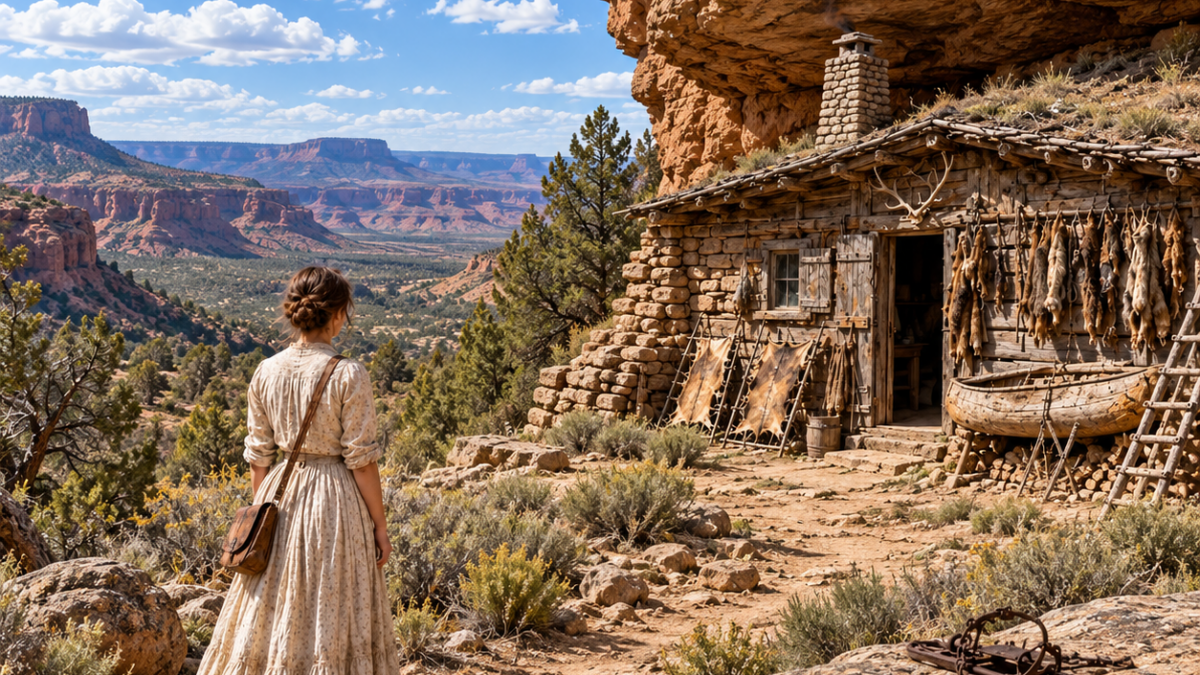
PART 2
For several seconds, I didn’t touch it.
The cabin was quiet except for the fire.
My first thought was that Silas Croft had owned Blackwood Lodge before the county.
That made no sense.
The auction papers named Silas Blackwood as the last private owner.
My second thought was worse.
Maybe Croft had some claim against the property.
Maybe the three dollars I had spent bought me nothing more than an argument with the richest man in the county.
I took the packet from the wall.
The oilcloth crackled beneath my fingers.
Inside were four folded documents and a small notebook with a dark leather cover.
The first page carried one sentence.
**If Croft comes for this land, read everything before you answer him.**
My stomach tightened.
The handwriting belonged to Silas Blackwood.
At least I assumed it did.
His name appeared beneath the sentence.
**Silas Blackwood, October 1892**
I looked toward the door as if Croft might be standing outside.
He wasn’t.
Still, I slid the wooden bar into place before I continued.
The notebook began with ordinary things.
Weather.
Traps.
Snow depth.
Mule feed.
Then the entries changed.
Blackwood wrote about Croft Ranch.
Not Silas Croft at first.
His father.
August Croft.
Thirty years earlier, August and Blackwood had apparently worked together cutting timber and trapping along the western ridge.
Blackwood owned the mountain land.
Croft owned cattle below.
Their trouble began with water.
A spring rose near the northern edge of Blackwood’s forty acres.
It fed a narrow creek that ran downhill through Croft’s summer pasture.
August Croft wanted to divert more of it.
Blackwood refused.
According to the notebook, Croft offered money.
Then cattle.
Then threats.
The final entry about August ended abruptly.
**He says a poor man cannot own what a rich man needs. I told him the mountain has never asked how much money a man has.**
I almost smiled.
I liked Silas Blackwood already.
Then I opened the first document.
It was a federal land patent.
Not a copy.
The original.
Forty acres.
Issued to Silas Blackwood.
Included in the legal description was something I did not understand:
**together with appurtenant spring and ditch rights as established by prior beneficial use.**
The second document was a county water filing.
The same spring.
Blackwood Spring.
Priority date: 1868.
I stared at the number.
I knew almost nothing about western water law, but Papa had taught me one thing.
Old water mattered.
Older rights usually mattered more.
The third document was a survey map.
A line from Blackwood Spring crossed Croft pasture, then continued farther south.
Beside it Blackwood had written:
**Croft’s cattle live because this runs.**
The fourth document was not official.
It was a letter.
Silas Croft’s father had written it.
**Blackwood,**
**Take the $400 and sign over the spring filing. You have no herd and no need of that much water. We both know no judge in this county will let one mountain hermit hold up a productive ranch.**
Below that:
**If you refuse again, understand that after your death nobody will even know the paper exists.**
My hands went cold.
Now I knew why the documents had been hidden.
But I still didn’t understand why Silas Croft had tried buying the cabin from me.
His father was gone.
Blackwood was apparently gone.
The county had sold me the property.
Why would a water filing hidden inside a wall matter now?
I kept reading.
Near the back of the notebook, Blackwood explained.
August Croft had never obtained the spring legally.
Instead, the ranch gradually increased its diversion over the years.
Blackwood complained twice.
Then stopped.
Not because he had changed his mind.
Because he had begun to believe somebody had altered the county record.
His original filing still existed.
But a later index listed the spring under Croft Ranch.
Blackwood wrote:
**They copied my priority date but changed the owner. If that stands, Croft gets the benefit of my sixty-eight filing without buying it.**
I read the sentence three times.
Then another.
**I showed Clerk Haney the patent. He told me to leave before I embarrassed myself. Two weeks later, Croft doubled the ditch.**
The final pages described Blackwood preparing evidence.
He made copies.
He hid some.
He placed the original patent and water papers inside the cabin wall.
Then one line:
**If I am not here when somebody honest finally owns this place, the three marks will lead them.**
Three marks.
Cupboard.
Chimney.
Bed.
There were more hiding places.
I stood so fast my knee struck the table.
By noon, I had opened the compartment near the chimney.
Inside was a cloth pouch containing survey pins, two old receipts, and a letter from a state engineer dated 1887 confirming Blackwood’s spring right.
The compartment beside the cupboard contained tax receipts.
Blackwood had paid county taxes continuously for twenty-four years.
Then I opened the third compartment.
The one beside the bed.
That one changed everything.
Inside was a tin box.
The lock had rusted.
I forced it open with a screwdriver.
There were photographs.
Ledger pages.
And an envelope addressed:
**To whoever owns Blackwood Lodge after me.**
I opened it.
The letter was short.
**If you found this, I am either dead or too far gone to fight. Croft will tell you the cabin is worthless. Ask him why his ranch cannot water its western herd without Blackwood Spring.**
I sat slowly.
So that was it.
Not timber.
Not the cabin.
Not my three dollars.
Water.
Silas Croft needed what flowed from my land.
I looked out the window.
Beyond the pines, I could hear the creek.
Weak in late autumn.
Steady.
For the first time since the auction, I understood the expression on Croft’s face when I raised my hand.
He hadn’t seen a foolish orphan buying a ruined cabin.
He had seen a stranger buying control of something his family had used for decades.
I barely slept that night.
The next morning, hoofbeats came from the road.
Croft.
He rode alone.
This time he did not laugh.
He tied his horse to the porch post and looked at the repaired roof.
“You’ve been busy.”
“So have you.”
His eyes narrowed.
“What does that mean?”
“Nothing.”
He glanced toward the creek.
Then back at me.
“Twenty dollars.”
“For what?”
“You know what.”
“The grave?”
His jaw tightened.
“Don’t be childish.”
“You called it worthless.”
“I called the house worthless.”
“Then why do you want forty acres with a worthless house?”
He stepped onto the porch.
“Because your property cuts awkwardly between two sections I already own.”
That was a lie.
The county map showed Croft’s nearest deeded acreage more than half a mile away.
I didn’t tell him I knew.
Instead I asked, “How much water do your cattle use?”
His face changed.
Barely.
Enough.
“What’s that got to do with anything?”
“I was curious.”
“You’ve been digging through Blackwood’s trash.”
“Maybe.”
Croft came closer.
He was in his forties, broad, well-fed, clean-shaven, wearing a coat worth more than everything inside my cabin.
“Rose, listen to me.”
He used my name for the first time.
“That land is difficult. Winter will be worse than you think. You have no livestock, no money, no family nearby.”
“You’ve been asking around.”
“Everybody knows your situation.”
“That doesn’t answer me.”
“I am offering you a clean way out.”
“Twenty dollars?”
“Fifty.”
A week earlier, fifty dollars would have sounded enormous.
Now it sounded like an admission.
“Not interested.”
His mouth flattened.
“One hundred.”
I stared at him.
He stared back.
“Why?”
“Because I don’t enjoy watching young fools freeze.”
“Then bring me firewood.”
Silas Croft almost smiled.
“Your father teach you to talk like that?”
“My mother.”
Something passed across his face.
Then he stepped closer.
“You think finding some old papers changes what this place is?”
There it was.
Not a question of whether I had found papers.
He already knew.
I said nothing.
Croft continued.
“Blackwood spent half his life angry at my family. He wrote things down. That doesn’t make them true.”
“What things?”
His eyes held mine.
“Whatever you’ve been reading.”
I smiled slightly.
“You seem to know a lot about trash.”
The anger appeared then.
Real anger.
“Be careful.”
“With what?”
“With convincing yourself every scrap hidden by a mad old trapper is valuable.”
“If it’s worthless, why are you standing here?”
He looked toward the creek again.
“Last chance. One hundred.”
“No.”
He walked down the steps.
Before mounting, he said, “Winter road closes after the first real snow.”
“I know.”
“You get hurt up here, nobody hears you.”
I folded my arms.
“Is that a warning?”
“Advice.”
“I’ve been getting a lot of advice from men who want my property.”
He rode away.
I waited until I couldn’t hear his horse.
Then I locked the cabin, wrapped Blackwood’s documents in my mother’s shawl, and started walking toward town.
I needed somebody who understood what I had.
I found him at the county recorder’s office.
His name was Nathaniel Webb.
He was sixty-something, thin as a fence rail, and unlike the clerk Blackwood described, Webb listened.
He spread the patent across a table.
“Where did you get this?”
“In the cabin.”
“Original?”
“I think.”
He examined the seal.
“It appears so.”
Then the water filing.
His eyebrows lifted.
“1868.”
“Is that old?”
“In Wyoming? For a private diversion? Yes.”
“Does it matter?”
“It can.”
“Croft Ranch uses the spring.”
“I know.”
My head snapped up.
“You know?”
“Everybody does.”
“Does everybody know the spring is on my land?”
He paused.
“People know it starts in Blackwood country.”
“Blackwood country is mine now.”
Webb looked at me.
“That may become important.”
I showed him the old engineer’s letter.
Then Croft’s father’s threat.
Webb became quieter with each page.
Finally he said, “You need an attorney.”
“With what money?”
“That part is more difficult.”
“I spent all of it on the cabin.”
“All?”
“Three dollars.”
He looked at me for several seconds.
Then, unexpectedly, he smiled.
“Best three dollars I’ve seen spent in a while.”
“Can Croft take the spring?”
“He can challenge your documents.”
“Can he use the water without paying?”
“That depends on established rights, beneficial use, later filings, and whether these records were superseded.”
“So you don’t know.”
“Not yet.”
He pulled a large index book from the shelf.
We searched.
Blackwood’s filing appeared.
1868.
Owner: Silas Blackwood.
Then someone had crossed through the name in pencil.
Beside it:
**Croft Ranch successor use—1889.**
Webb frowned.
“This isn’t a transfer.”
“What is it?”
“A notation.”
“By who?”
“No initials.”
“Can a notation change ownership?”
“No.”
“Then why is it there?”
He looked at me.
“That is an excellent question.”
We searched deed transfers.
Nothing from Blackwood to Croft.
Water assignments.
Nothing.
Court orders.
Nothing.
“That means it’s mine?”
Webb held up a finger.
“It means I haven’t found a transfer.”
“Same thing?”
“No.”
I hated careful people.
They never gave simple answers.
Then Webb found something else.
A petition filed by August Croft in 1890 asking the county to recognize Croft Ranch as successor to Blackwood’s water use.
Status:
**Dismissed for lack of proof.**
I leaned over the page.
“So they lost?”
“On that petition.”
“And still used the water?”
“Apparently.”
“Can they do that?”
Webb sighed.
“People do many things until somebody objects successfully.”
“Blackwood objected.”
“Yes.”
“And nobody listened.”
Webb looked uncomfortable.
“Seems that way.”
I thought of Papa.
Of the bank.
Of men in clean offices explaining how debt worked while Mama’s hands shook in her lap.
I knew what happened when poor people had rights nobody with power felt like respecting.
“What do I do?”
Webb folded his hands.
“There is an attorney in town named Clara Whitmore.”
“Expensive?”
“Usually.”
“Then that’s useless.”
“Tell her I sent you.”
I walked three blocks to Clara Whitmore’s office.
She was younger than I expected, maybe thirty-five, with dark hair pinned high and the expression of someone accustomed to being underestimated.
She read Blackwood’s documents.
Then she asked me the first question everyone else had skipped.
“What do you want?”
“To keep my home.”
“Anything else?”
I thought of Croft offering a hundred dollars.
“I want him to stop acting like it already belongs to him.”
“Better answer.”
“Can you help?”
“Probably.”
“I can’t pay you.”
“I gathered that.”
She tapped the patent.
“If these documents hold up, there may be enough value here to arrange payment later.”
I stiffened.
“You want the land?”
“No.”
“The water?”
“No.”
“Then what?”
“A legal fee.”
“How much?”
She told me.
I almost laughed.
“I don’t have that much.”
“I know.”
“Then why—”
“Because Silas Croft has spent twelve years making my professional life unpleasant.”
I stared at her.
She almost smiled.
“That is not a legal strategy, Miss Harding. Merely a personal detail.”
“What did he do?”
“Bought influence. Threatened clients. Lied when convenient. Nothing illegal enough to matter until someone proves it.”
I handed her Blackwood’s notebook.
“Maybe he inherited the habit.”
Clara spent two days reviewing the records.
Then she rode to the cabin herself.
She inspected the spring.
The ditch.
The old marker stones.
On the third day, she said, “Don’t touch the water.”
“I wasn’t planning to.”
“Good.”
“Why?”
“Because if you shut Croft off, he will portray you as reckless and vindictive. We want him using exactly what he is using now.”
“So I let him keep taking it?”
“For the moment.”
“I hate that.”
“Law is full of moments you hate.”
That sounded like something Papa would have said about farming.
Clara sent Croft a letter.
It demanded that he identify the legal basis for his diversion and produce any document transferring Blackwood’s right.
His response arrived two days later.
Croft claimed his family had acquired the right through continuous use.
Clara laughed.
“That’s not how a senior recorded right simply disappears.”
“He says it does.”
“He can say he’s governor too.”
Then his attorney produced a document.
An assignment.
Dated 1877.
Signed by Silas Blackwood.
Transferring half of Blackwood Spring to August Croft for two hundred dollars.
My stomach sank.
“Is that real?”
Clara examined it.
“Maybe.”
“Blackwood never mentioned selling half.”
“He might not have.”
“Then Croft owns half?”
“If this is valid.”
Again.
If.
I went back to the cabin angry.
Not at Croft.
At Blackwood.
I had begun imagining him as some righteous old trapper who had carefully left me truth inside his walls.
What if he had left me only his version?
People lie in diaries too.
That night, I read the notebook from beginning to end.
Nothing about an 1877 sale.
Then I found a gap.
Pages had been removed.
Three of them.
Near entries from that year.
My confidence collapsed.
Maybe Croft was right.
Maybe Blackwood had grown bitter and hidden documents while omitting the ones that hurt his claim.
The next morning, I almost rode into town to accept Croft’s last offer.
Then I noticed something.
Three missing pages.
Three marks.
Blackwood’s pattern.
I walked through the cabin again.
Cupboard.
Chimney.
Bed.
All found.
But there were three marks scratched beneath the kitchen table too.
So faint I had assumed they were damage.
I overturned the table.
A wooden brace had been hollowed.
Inside was a rolled strip of paper.
Not three pages.
A receipt.
**Received from August Croft: $200 as consideration for proposed one-half spring interest, contingent upon county approval and completion of assignment.**
Below:
**County approval denied. Funds returned.**
Signed:
**Silas Blackwood**
Attached was another note.
**Croft keeps the unsigned copy and says someday nobody will know the difference. I kept the canceled original.**
I ran all the way to Clara’s office.
She read it.
Then asked, “Where is the canceled original?”
“I don’t know.”
“Rose.”
“I found this twenty minutes ago.”
She stood.
“We go back.”
We searched until dark.
Nothing.
The next day, nothing.
Then I remembered the wax-sealed food tins.
One felt heavier than the others.
Inside was flour gone hard as stone.
At the bottom was a folded document wrapped in cloth.
The original 1877 assignment.
Across the signature line, Blackwood had written:
**VOID—CONDITION NOT APPROVED**
A county clerk had initialed beside it.
Clara held the paper up toward the window.
Then smiled.
“What?”
“Croft’s copy is missing the void notation.”
“He forged it?”
“Not necessarily. He may possess a preliminary copy.”
“But he presented it like it was completed.”
“Yes.”
“Can we prove he knew?”
“That’s the fun part.”
I had never heard an attorney call anything fun before.
Clara requested the original from Croft’s counsel.
They produced only a copy.
Then she requested correspondence between August Croft and Blackwood.
Silas refused.
Clara filed suit to quiet title and determine the spring rights.
That brought Croft to my cabin again.
This time he arrived furious.
“You sued me.”
“You sent me a false paper.”
“It isn’t false.”
“It’s incomplete.”
His face changed.
I knew.
“You found the voided assignment.”
It wasn’t a question.
I leaned against the porch railing.
“Interesting.”
“What?”
“You knew it existed.”
Croft stepped closer.
“Blackwood told my father that deal was done.”
“The county didn’t.”
“You think some clerk’s pencil cancels fifty years of use?”
“I think Clara can answer that better than me.”
His voice dropped.
“You are playing with something you don’t understand.”
“Then explain it.”
“I am trying to.”
“No. You’re trying to scare me.”
He looked toward the cabin.
“You think this is about forty acres and a trickle of water?”
I said nothing.
“It isn’t.”
My stomach tightened.
“What is it about?”
Croft stopped.
Too late.
He had said too much.
I stepped forward.
“What else is there?”
He turned away.
“Sell me the property.”
“No.”
“Five hundred dollars.”
That was more money than I had seen in one place since Mama died.
I almost reacted.
Croft saw it.
“Five hundred. Cash. Today.”
I thought of the hidden compartments.
The careful tools.
The notebook.
Blackwood expecting someone.
“Why?”
“I told you.”
“No. You didn’t.”
His jaw tightened.
“Last offer.”
“No.”
He mounted his horse.
Then looked down at me.
“Blackwood died alone because he didn’t know when to stop fighting.”
The words were cruel.
But something inside them mattered.
“How do you know he died?”
Croft froze.
The county clerk had said nobody knew what happened to Blackwood.
Some thought he froze.
Some thought he left.
Croft looked away.
“I assume.”
“No. You said died.”
“Don’t be foolish.”
“Did you find him?”
He rode away.
That night, I read Blackwood’s notebook again.
The last dated entry was December 3, 1892.
**Croft came again. Not about water this time. He knows about the north wall.**
North wall.
I looked up.
The cabin’s north wall was the one I had not examined carefully.
It was partly covered by shelves.
I moved them.
Nothing.
No three marks.
I knocked along the logs.
Solid.
Then one sounded different.
I pressed it.
Nothing moved.
I took my crowbar and pried gently.
The log didn’t open.
The interior plank beside it did.
Behind it was a cavity larger than the others.
Inside sat a wooden box.
Heavy.
Too heavy for paper.
I dragged it onto the floor.
The lid was screwed shut.
I opened it.
Inside were canvas bags.
Seven.
The first contained silver coins.
Not three.
Not thirty.
Hundreds.
I dropped it.
Coins spilled across the floor.
For a moment, I simply stared.
Then I opened another bag.
More coins.
The third contained small gold pieces.
My heart hammered so loudly I could hear it.
There was money inside the walls.
A fortune by my standards.
Possibly more money than Mama and Papa had ever seen together.
But Blackwood’s note sat on top.
**This is not what Croft wants.**
I almost laughed from disbelief.
I had seven bags of coin on the floor, and the dead man was telling me they were not important.
Beneath them was a metal tube.
Inside the tube was another survey.
Not of the spring.
Of the northern ridge.
Blackwood had marked a narrow strip in red.
Beside it:
**Rail survey—possible western grade**
I didn’t understand.
Then I found a letter from a railroad company dated 1891.
They had approached Blackwood about purchasing a right-of-way across the northern edge of his property.
No railroad existed there yet.
But another letter explained that engineers were considering a new freight route through the mountains.
Payment offered:
$2,500.
Blackwood refused.
Not because the amount was low.
Because the proposed line crossed directly above the spring source and would require blasting.
A later letter said engineers had shifted the route slightly.
Croft had apparently offered an alternate corridor across his ranch.
But his route could only work if the railroad gained access across the corner of Blackwood’s forty acres.
Suddenly the cabin wasn’t worth three dollars.
The water wasn’t the only thing.
Croft needed the land because future railroad access could transform his ranch.
I opened the last envelope.
Inside was a contract between Croft Cattle Company and the railroad.
If the line crossed Croft land, Croft would receive a livestock loading station.
A station would mean faster shipping.
Lower costs.
More cattle.
More money.
But one condition remained:
**right-of-way across Blackwood parcel required.**
The contract was unsigned by Blackwood.
He had refused.
Now I understood Croft’s desperation.
And the railroad still mattered.
The project had been delayed.
Not canceled.
Clara confirmed it the next morning.
“The Western Prairie & Mountain line is seeking state authorization again.”
“When?”
“Next spring.”
“Does Croft know?”
“Almost certainly.”
“How much would my land be worth if they need it?”
She studied the map.
“More than five hundred.”
“How much more?”
“Enough that you don’t discuss price without me.”
I sat back.
The room seemed too small.
Water.
Rail access.
Hidden money.
A disputed spring right.
A rich rancher who knew Blackwood was dead before anyone else did.
“Clara.”
“Yes?”
“I think Croft knows what happened to Blackwood.”
She stopped writing.
“Why?”
I told her.
Her expression changed.
“Do not accuse him.”
“I didn’t say I would.”
“Rose.”
“I won’t.”
“You’re nineteen and angry.”
“I’m nineteen and not stupid.”
“Those conditions sometimes overlap.”
Despite everything, I smiled.
She contacted the sheriff.
Not because we had evidence of a crime.
Because Blackwood’s disappearance might have information connected to property claims.
Sheriff Matthew Cole was skeptical.
“Man’s been missing years.”
“I know,” Clara said.
“Could’ve gone north.”
“Could have.”
“Could’ve died in a ravine.”
“Could have.”
“So what do you want me to do?”
“Ask Croft when he last saw him.”
The sheriff did.
Croft said winter of 1892.
He claimed Blackwood talked about leaving for Montana.
That was possible.
Then an old ranch hand named Amos Pike heard about the lawsuit.
He came to Clara’s office.
“I worked for Croft’s father.”
“How long ago?” she asked.
“Long enough to regret it.”
He looked at me.
“You Harding’s girl?”
“Yes.”
“Your father helped me mend a wagon once.”
That was Papa.
Always repairing things he had no time to repair.
Amos continued.
“I saw Blackwood after Christmas ’92.”
My skin prickled.
“Where?”
“Croft Ranch.”
Clara leaned forward.
“What was he doing there?”
“Arguing.”
“With Silas?”
“With August. Silas was young then. Maybe seventeen.”
That meant the man fighting me now had been present during his father’s dispute.
“What were they arguing about?”
“Railroad.”
Amos looked uncomfortable.
“Blackwood wanted his papers back.”
“What papers?”
“Don’t know.”
“Then what happened?”
“Blackwood left.”
“Alive?”
Amos stared at me.
“Yes, miss.”
Relief surprised me.
I hadn’t realized how strongly I feared another answer.
“Where did he go?”
“Toward the north ridge.”
“Did anyone follow?”
Amos hesitated.
“August sent two men.”
Clara asked, “Why?”
“Said Blackwood had stolen company papers.”
“Who were the men?”
“One’s dead.”
“And the other?”
Amos swallowed.
“Silas Croft.”
The room went silent.
Croft had been seventeen.
My age.
He had followed Blackwood into the mountains.
Sheriff Cole questioned him again.
This time Croft admitted it.
He and another ranch hand followed Blackwood to the ridge.
They caught up near a ravine.
According to Croft, Blackwood warned them away with a rifle.
The men returned.
Blackwood kept going.
“Did you ever see him again?” the sheriff asked.
“No.”
“Why did you tell Rose Harding he died alone?”
Croft answered, “Because that’s what I assumed happened.”
No crime.
No confession.
No proof.
But another piece of the mystery.
Then spring thaw came early.
A shepherd found human remains in a shallow rock shelter north of Blackwood Lodge.
I knew before the sheriff told me.
Silas Blackwood.
His rifle lay beside him.
So did a metal cup.
No evidence of violence.
The doctor believed he had suffered an injury—possibly a fall—and died from exposure.
In his coat pocket was a small notebook.
The final entry was barely legible.
**Leg bad. Snow coming. If found, cabin papers remain. Croft boys turned back. Not their doing.**
I read that line twice.
Not their doing.
Blackwood had protected the truth even while dying.
Silas Croft had not killed him.
Part of me felt ashamed for suspecting it.
Another part felt relieved.
Croft had done enough without adding something he had not done.
The notebook also contained one final instruction.
**Money in wall came from trapping and silver claim sale. Use it to keep the place standing. If someone poor finds this place after me, maybe it was meant for them.**
I cried when I read that.
Not because of the money.
Because of that last sentence.
Maybe it was meant for them.
For me.
The county estimated the hidden coins at a little over nine hundred dollars.
Enough to rebuild the cabin.
Enough to buy food.
A horse.
Tools.
Enough to breathe.
But not enough to make me careless.
Clara made sure the money was properly entered into Blackwood’s estate records and transferred through the county sale process.
That delayed things.
I complained.
She told me legal ownership was worth more than quick possession.
By early summer, Blackwood Lodge had a straight roof.
A repaired porch.
A new stove pipe.
A small barn.
I bought two hens.
Then three goats.
I had never planned to own goats.
They appeared to have planned otherwise.
The water case moved toward court.
Croft fought hard.
His lawyers argued that decades of Croft use created rights independent of Blackwood’s filing.
Clara agreed Croft might possess a later secondary right.
But not Blackwood’s senior one.
That distinction mattered.
If drought came, the senior right had priority.
Croft Ranch could lose water while my forty acres remained entitled.
Croft’s entire western grazing operation depended on avoiding that possibility.
Then the railroad returned.
An engineer named Samuel Beck came to my cabin.
He removed his hat on the porch.
“Miss Harding?”
“Yes.”
“Western Prairie & Mountain Railway.”
“I figured.”
He looked surprised.
“You knew?”
“Silas Blackwood left good records.”
That interested him.
He unfolded a map.
The proposed line had changed.
But one route still needed to cross eleven hundred feet of my northern boundary.
“What are you offering?”
He named a number.
Eight hundred dollars.
A year earlier, I might have fainted.
Now I said, “Talk to Clara Whitmore.”
The engineer smiled.
“I was told you might say that.”
Croft heard.
The next morning he was on my porch.
“Don’t sign.”
“Why do you care?”
“The line through your land hurts my ranch.”
“How?”
“The loading station agreement changes if they choose your route.”
“So?”
“My father negotiated that contract.”
“Blackwood refused it.”
“Because he was spiteful.”
“Or because blasting above the spring worried him.”
Croft clenched his jaw.
“You think you understand this mountain after one winter?”
“No.”
“Then stop acting like it.”
“I understand you want something.”
His voice softened.
“Rose, we can settle this.”
“Water?”
“Everything.”
He offered me two thousand dollars.
Then three.
Then five.
Five thousand.
The courthouse crowd had laughed when I paid three.
Now Croft was offering five thousand for the same “grave.”
I looked at him.
“No.”
His face reddened.
“You haven’t even heard the terms.”
“I heard enough at the auction.”
“This isn’t pride. It’s business.”
“You made it pride when you told me I was too stupid to survive here.”
“I told you the truth.”
“No. You told me what you wanted me to believe.”
Croft stepped back.
For the first time, he looked tired.
“You think beating me makes you your father?”
That hurt.
He saw it.
“Don’t.”
“Your father lost his farm because he refused every chance to change.”
“You knew Papa?”
“Everybody did.”
“He worked until he couldn’t stand.”
“Yes.”
“And the bank took it anyway.”
“Exactly.”
He pointed at the cabin.
“Land doesn’t love you back.”
I looked at the repaired roof.
The creek.
The garden I’d started.
The porch boards my own hands had nailed.
“No.”
I said it quietly.
“People do.”
Croft scoffed.
“Who?”
The question hit harder than he intended.
My parents were gone.
No siblings.
No husband.
No moneyed family.
For a moment, I felt nineteen again in the worst possible way.
Then a wagon came up the road.
Clara.
Behind her, Nathaniel Webb.
Then Harold Barnes, the blacksmith who had helped me fix my stove.
Then Mrs. Avery from town, carrying the quilt she had promised to mend.
People.
Not family by blood.
Still people.
Croft looked toward them.
I looked back at him.
“Enough.”
He left.
The water hearing began in August.
The courtroom overflowed.
Not because people cared about me.
Because every rancher in the county cared about water.
Croft’s attorney spoke first.
He described more than thirty years of continuous diversion.
Investment.
Cattle ponds.
Ditches.
Reliance.
Then Clara stood.
She did not call Croft a thief.
She did something worse.
She used dates.
1868.
Blackwood filing.
1877.
Failed conditional assignment.
1890.
Croft petition dismissed.
1892.
Blackwood’s protests.
Then the modern county index alteration.
No authorization.
No transfer.
No court order.
Just a handwritten notation.
Nathaniel Webb testified.
“Can an anonymous pencil notation transfer a recorded senior water right?”
“No.”
“Can you identify who wrote it?”
“No.”
“Does your office have any legal instrument supporting it?”
“No.”
Croft’s lawyer tried to argue that the notation reflected accepted use.
Webb agreed it might reflect use.
Not ownership.
Then Clara introduced the voided 1877 assignment.
Croft’s counsel objected.
Overruled.
Then the conditional receipt.
Then the dismissed 1890 petition.
Silas Croft sat rigid at his table.
His father’s history was being reconstructed one paper at a time.
Then Clara called him.
“Mr. Croft, did you know before the county auction that Blackwood Lodge contained the headwaters of the spring used by your western herd?”
“Yes.”
“Did you tell Miss Harding?”
“No.”
“You described the property as worthless?”
“I described the cabin as dangerous.”
“You told her she had bought herself a grave?”
A few people shifted in the gallery.
Croft looked annoyed.
“Yes.”
“Then offered to purchase that grave immediately?”
His attorney objected to tone.
Sustained.
Clara nodded.
“How much did you offer?”
“Five dollars initially.”
“Then ten?”
“Yes.”
“Then twenty?”
“Yes.”
“Fifty?”
“Yes.”
“One hundred?”
“Yes.”
“Five hundred?”
“Yes.”
“Eventually five thousand?”
Croft looked at me.
“Yes.”
Clara let the silence sit.
“Why did the value increase one thousandfold?”
Croft said, “Settlement value.”
“For what?”
“Multiple disputed rights.”
“Water?”
“Yes.”
“Rail access?”
He hesitated.
“Yes.”
“Did you know about the railroad’s renewed interest before Miss Harding bought the property?”
“Yes.”
“Did she?”
“Not that I know.”
“Did you tell her?”
“No.”
“Why?”
“I wasn’t obligated to educate a buyer.”
That sentence changed the room.
Not legally.
Emotionally.
People understood.
He had watched a nineteen-year-old orphan spend her last three dollars on land he knew might be worth thousands.
Then laughed.
Then tried to buy it before she learned why.
Clara did not smile.
“Did you know Blackwood’s original patent and spring documents might still exist?”
“I suspected.”
“Is that why you repeatedly asked Miss Harding what she found in the cabin?”
“I don’t recall asking that.”
I stood before I could stop myself.
“You did.”
Clara turned sharply.
“Rose.”
I sat.
The judge frowned.
Croft continued.
“I knew Blackwood hid records.”
“How?”
“My father told me.”
“Did your father ever acquire Blackwood’s senior water right?”
“Not that I can prove.”
There it was.
Not that I can prove.
Clara’s next question was quiet.
“Then what exactly have you been trying to buy from Miss Harding?”
Croft said nothing for several seconds.
“The uncertainty.”
Clara nodded.
“Thank you.”
The decision came eleven days later.
Blackwood’s 1868 spring right remained valid.
The county’s later notation had no legal effect.
Croft Ranch held a later beneficial-use right to excess flows based on decades of use, but it did not own or supersede Blackwood’s senior right.
More importantly, the headworks and primary control remained on my property.
Croft needed an agreement with me for continued infrastructure access.
I won.
Not everything.
But enough.
Then Clara told me something surprising.
“You shouldn’t shut him off.”
“I know.”
“No. I mean long-term.”
I looked at her.
“His herd depends on that water.”
“He tried to steal the right.”
“He tried to acquire it cheaply and benefited from bad records.”
“That’s a lawyer way of saying steal.”
“Maybe.”
She leaned back.
“But hundreds of cattle didn’t alter county records.”
I knew what she meant.
“So what?”
“Negotiate.”
“With Croft?”
“Yes.”
“I’d rather drink from the ditch.”
“You can hate him and still make a sensible agreement.”
I hated her for being right.
Croft came to the cabin two days later.
No lawyers.
No expensive coat.
Just him.
He stood on the repaired porch.
“Well?”
“Well what?”
“You won.”
“Mostly.”
“What do you want?”
I had prepared for that question.
“Annual payment for access and use.”
He laughed.
“How much?”
I named a number.
His laughter stopped.
“You’re insane.”
“Then don’t use the spring.”
“You said you wouldn’t shut me off.”
“I didn’t say free.”
His eyes narrowed.
“You’ve learned from Whitmore.”
“I learned from you.”
That landed.
I continued.
“The agreement protects your existing herd. No expansion without renegotiation. You maintain the ditch below my boundary. You pay for erosion repairs. You don’t enter my land without notice.”
“And railroad?”
“Separate.”
“You’ll destroy my loading contract.”
“No.”
That surprised him.
“The railroad offered to shift the station east. I told them I’d support keeping a livestock stop near Croft Ranch.”
He stared.
“Why?”
“Because other ranchers use it too.”
His expression changed.
“You could’ve cut me out.”
“Yes.”
“Why didn’t you?”
I thought about Blackwood dying in that rock shelter.
His final words.
**Not their doing.**
He had refused to turn suspicion into accusation.
I wanted to be that careful.
“Because I don’t want your ranch.”
Croft looked at me.
“I want mine.”
He took off his hat.
For once, he looked less like the richest man in the county and more like a tired rancher.
“My father would’ve hated you.”
“I think Blackwood would’ve liked me.”
Croft almost smiled.
“Probably.”
He agreed to most of the terms.
Not immediately.
We argued for three weeks.
Clara called both of us impossible.
Eventually we signed.
The annual water payment wasn’t a fortune.
But it was enough to maintain the cabin, buy winter supplies, and begin rebuilding the barn.
The railroad agreement was larger.
I sold them a narrow right-of-way with strict protections around the spring.
Clara negotiated the payment.
Two thousand eight hundred dollars.
I stared at the check.
Three dollars had bought the land.
The railroad paid nearly a thousand times more for a strip across the edge.
But the money wasn’t the part that made me cry.
The railroad also agreed to build a small access road to the cabin.
For the first time, Blackwood Lodge would not become unreachable every winter.
I used part of the hidden coin money to mark Silas Blackwood’s resting place properly.
A stone.
Simple.
**SILAS BLACKWOOD**
**HE KEPT HIS WORD**
No dates.
We never knew his exact birth year.
Croft came to the small burial ceremony.
I hadn’t invited him.
He stood far behind the others.
After everyone left, I saw him place something beside the stone.
A silver dollar.
I waited until he walked away.
I picked it up.
For one second, I thought about keeping it.
Then I put it back.
Some things belong where they’re left.
The first full winter after the court case was brutal.
Snow buried the road twice.
The wind tore two shingles loose.
One goat managed to get into my kitchen and eat half a flour sack.
But I wasn’t sleeping beside a boulder anymore.
I had wood.
Food.
A repaired roof.
And neighbors.
On Christmas Eve, Clara arrived with Nathaniel Webb.
Harold Barnes came with his wife.
Mrs. Avery brought pie.
Even Sheriff Cole stopped for coffee.
My cabin was too small.
People sat on crates.
The old table.
The floor.
At one point I stood near the doorway and simply watched them.
A year earlier, I had whispered into the dark that I’d failed to save my home.
I hadn’t understood then.
I was trying to save the wrong one.
The farm belonged to my parents.
I loved it because they were there.
But when they were gone, the land could not keep them.
The bank taking it hurt because I thought losing the farm meant losing the last place where I still belonged to them.
Blackwood Lodge taught me something different.
A home did not have to be inherited from childhood.
Sometimes you built belonging after everything else had been taken.
The next spring, I planted apple trees.
Croft rode past while I worked.
He stopped at the fence.
“Trees won’t like that slope.”
“You know everything?”
“About that slope, yes.”
“Where should they go?”
He pointed farther south.
“Better sun. Less frost pocket.”
I hated that he was right.
I moved them.
That became the strange shape of our relationship.
We were not friends.
He still irritated me.
I still reminded him of the auction whenever he became too proud.
But we stopped being enemies.
Then one afternoon, he arrived carrying a ledger.
“My father’s.”
I wiped dirt from my hands.
“What about it?”
“You should see something.”
Inside was a record from 1877.
**Paid S. Blackwood $200 pending spring assignment. Refunded in full upon county rejection.**
I stared.
“So your father knew the transfer failed.”
“Yes.”
“And still told everyone it was his.”
“Looks that way.”
“Why give me this?”
Croft looked toward the mountains.
“Because I spent years believing Blackwood cheated him.”
I waited.
“He didn’t.”
“No.”
“My father lied.”
I said nothing.
Croft closed the ledger.
“I built my certainty on his.”
There was something familiar in that.
I had spent months building my view of Blackwood from his notebook.
Then discovered missing pages.
People inherit stories.
Sometimes they inherit lies.
“What are you going to do?” I asked.
“About what?”
“The county record.”
“I already told Webb to add the ledger to the file.”
That surprised me.
Croft handed me the book.
“Keep it until Clara copies the page.”
I took it.
Then he said, “I owe you an apology.”
I nearly dropped the ledger.
“For which part?”
He actually laughed.
“The auction.”
“That narrows it.”
“I knew the land was worth more than three dollars.”
“I know.”
“I knew about the railroad.”
“I know.”
“I knew about the spring.”
“I know.”
“And I thought because you were young, broke, and alone, you’d take whatever number sounded big.”
I looked at him.
“You were almost right.”
His expression changed.
“What stopped you?”
I thought of Mama’s three silver dollars.
The marks inside the cabin.
Blackwood’s note.
The way Croft had stared at the bedroom window.
“You kept raising the offer.”
He frowned.
“That made you suspicious?”
“You started at five.”
“Then ten.”
“Then twenty.”
He nodded.
“I figured if a rich man keeps insisting something is worthless while offering more money every time I say no, maybe the poor person isn’t the foolish one.”
Croft smiled.
“Fair.”
Then he became serious.
“I am sorry.”
I let the words sit.
I didn’t tell him everything was forgiven.
It wasn’t.
I didn’t tell him apology erased fear.
It didn’t.
I said, “Thank you.”
That was enough.
Years passed.
Blackwood Lodge stopped looking like the property people laughed at.
The railroad brought commerce into the valley.
The Croft loading station survived.
My water payments increased modestly when his herd expanded.
We renegotiated.
In writing.
Clara insisted.
I eventually bought the neighboring twenty acres when its owner moved east.
Not because I needed more land.
Because for the first time in my life, I could buy something without fearing someone would immediately take it.
I married at twenty-six.
His name was Daniel Mercer.
A carpenter.
The first thing he said when he saw the cabin was:
“Who repaired that roof?”
I said, “Me.”
He looked at the crooked line of shingles.
“That explains it.”
I almost refused to marry him for that.
Almost.
We had two children.
I kept Mama’s shawl in a cedar chest.
Papa’s Bible sat on the mantel.
The three silver dollars were gone, of course.
They belonged to the county auction long before any of this happened.
But years later, Nathaniel Webb retired.
At his retirement supper, he handed me a small envelope.
Inside were three silver dollars.
I looked at him.
“What is this?”
“Not yours.”
“I know.”
“Same year and type.”
“Why?”
He shrugged.
“Seemed wrong that the most important three dollars in this county ended up in the general treasury.”
I laughed.
Then cried.
I kept those coins.
Not because they were the originals.
Because they reminded me of the decision.
Three dollars.
Every penny I had.
People later called it luck.
They said I bought a fortune for three dollars.
That wasn’t true.
I bought a broken cabin.
The fortune came with problems.
Paperwork.
Court hearings.
Cold nights.
Years of negotiation.
Blackwood’s hidden money helped.
The railroad helped more.
The spring mattered most financially over time.
But none of those things were guaranteed the day I raised my hand at the auction.
All I knew was that forty acres and a damaged roof were more home than I had after the bank took the farm.
That was enough.
Silas Croft lived another twenty-three years.
Near the end, his son managed the ranch.
His son was easier than his father.
Maybe because he hadn’t inherited August Croft’s resentment as directly.
Or maybe because every generation gets one chance to stop carrying forward the worst thing handed to it.
When Silas became ill, I visited him.
Daniel thought that strange.
So did Clara.
Clara was still my attorney, though by then she complained I created far fewer interesting problems.
Croft sat beside a window overlooking his western pasture.
Blackwood Spring still ran through it.
He looked thin.
Nothing like the man on the courthouse steps.
“You still have that cabin?” he asked.
“Yes.”
“Should’ve taken my five thousand.”
I smiled.
“You should’ve offered six.”
He laughed until he coughed.
Then he looked at me.
“You know what I thought when you bid?”
“What?”
“That you’d be gone before snow.”
“I almost was.”
“I know.”
“How?”
“First storm, one of my riders saw you sleeping outside.”
I stared.
“You knew?”
“Yes.”
“And you didn’t help?”
His face tightened.
“I told myself if it got bad enough, you’d sell.”
The honesty hurt even decades later.
Croft looked away.
“That was the ugliest thing I ever did to you.”
I didn’t answer.
“I was waiting for your hardship to become my opportunity.”
“Yes.”
He nodded.
“I’m sorry.”
This time, the apology felt different.
Not because it was better.
Because so much life had happened between the injury and the words.
“I forgive you,” I said.
I meant it.
Not because he deserved comfort.
Because I no longer needed anger to protect what was mine.
Croft’s eyes filled.
He turned toward the pasture before I could pretend not to notice.
After he died, his son came to Blackwood Lodge.
He carried one item.
The old photograph of August Croft and Silas Blackwood standing beside a trapper’s wagon.
I had never seen it.
They were young.
Laughing.
Friends.
Before water.
Before land.
Before money taught them to measure each other differently.
On the back August had written:
**Blackwood says mountains make men honest. I say mountains only make lies harder to carry.**
I framed it.
It hangs in the cabin today.
So does Blackwood’s first note.
**If Croft comes for this land, read everything before you answer him.**
And beside that hangs the replacement set of three silver dollars Nathaniel gave me.
My grandchildren always ask which treasure mattered most.
The coins?
The hidden bags?
The railroad papers?
The spring filing?
I tell them none of those answers are quite right.
Then I take them to the north wall.
The original false log still exists.
Daniel wanted to replace it years ago.
I refused.
I show them how the bottom presses inward.
How the seam opens.
How a poor man who believed powerful people might erase him built truth directly into his house.
Then I tell them about my first night.
The boulder.
Mama’s shawl.
The cold.
Me whispering to Papa that I had failed.
That part matters.
Because if I begin with the hidden money, the story becomes about luck.
If I begin with the railroad, it becomes about land.
If I begin with Croft, it becomes about revenge.
But the real story began before any of that.
It began with a nineteen-year-old girl standing inside a county auction with three silver dollars and nowhere left to belong.
People laughed because they saw a ruined cabin.
Silas Croft worried because he saw water and railroad access.
Silas Blackwood, years earlier, had seen something else.
He saw a place worth protecting long enough for somebody honest to find it.
I don’t know whether he imagined me.
Probably not.
I don’t believe mountains arrange destinies.
I believe people make choices.
Blackwood chose to hide the truth instead of destroying it.
My mother chose to save three dollars when she had almost nothing.
I chose to raise my hand.
Clara chose to help somebody who couldn’t pay.
Nathaniel chose to take old records seriously.
Even Croft, eventually, chose to stop defending his father’s lie.
Those choices built the life that followed.
The cabin still stands.
The porch no longer sags.
Apple trees grow on the southern slope where Croft told me they would.
He was right about that.
Every spring, Blackwood Creek runs cold past the house and down toward Croft pasture.
The railroad whistles twice a day from beyond the ridge.
Sometimes, when snow comes early, I still wake at night thinking I’m nineteen.
For half a second, I expect to feel Mama’s shawl around my shoulders and hard ground beneath me.
Then I hear the stove.
The house settling.
Daniel breathing beside me.
Sometimes a grandchild sleeping in the next room.
And I remember.
I didn’t buy a grave for three silver dollars.
I bought a door.
I just didn’t know yet how much of my life was waiting on the other side.
[END OF STORY]

