PART 2: I Inherited a “Worthless” House Buried in a Mountain—Then the County Tried to Take It Before I Discovered Why My Family Had Protected It for 100 Years
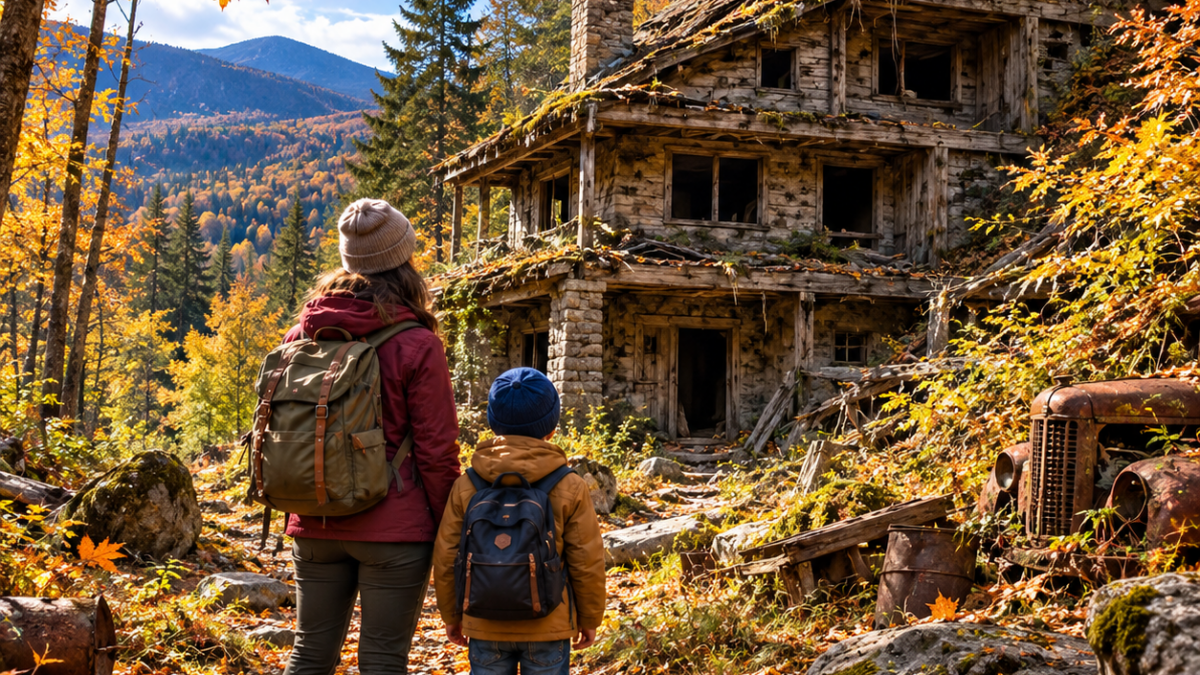
The first night my eight-year-old son and I slept inside the abandoned mountain house I had inherited, snow covered the Pennsylvania woods and the temperature outside dropped below freezing—but the room beneath the stairs was warm enough that Daniel took off his coat even though the electricity had been disconnected for nearly fifty years.
Two weeks later, the county posted a bright orange notice on my front door declaring the property unsafe and giving me thirty days to leave, while a commissioner I had never met suggested I sign the land over before repairs buried me in debt.
What none of us understood yet was that the strange warmth moving through those stone walls was connected to something my family had protected for four generations—and somebody at the county office seemed far more interested in making me leave than in discovering what was keeping the house warm.
My name is Sarah Whitmore.
I was thirty-six when the inheritance letter arrived, and I almost threw it away with the grocery coupons.
At the time, Daniel and I lived in a one-bedroom apartment outside Scranton. I worked overnight shifts as a nursing assistant, came home around seven in the morning, made his breakfast, and slept until it was time to pick him up from school.
Some mornings there was enough food for only one proper breakfast.
I always told him I’d eaten at work.
He believed me until he was old enough to notice I said the same thing too often.
The inheritance came from Eleanor Whitmore, my grandfather’s older sister.
I had never met her.
My mother had.
When I called her, she went silent.
“You’re not going up there, are you?”
“Why?”
“That house has been empty since before you were born.”
“Apparently it’s mine now.”
“Sarah, people have tried selling that place for decades.”
“Then why didn’t they?”
Another silence.
Finally Mom said, “Because your family was stubborn.”
That was not an answer.
The estate included seventeen wooded acres and a stone-and-timber house built directly into a mountainside.
The tax assessment was almost embarrassingly low.
There was no mortgage.
No electricity.
No modern furnace.
The attorney called it “a property with substantial deferred maintenance.”
I called it somewhere Daniel and I might eventually live without paying fourteen hundred dollars a month.
Eleanor had left a letter.
**Sarah,**
**Before you let anyone convince you to sell this place, find out why your great-grandfather built it the way he did.**
Below that she had added:
**The warmest room is not the one closest to the fire.**
Daniel thought it sounded like a treasure hunt.
I thought it sounded like something an elderly relative wrote after spending too many winters alone.
Then we arrived.
The house looked as if the mountain had grown around it.
Two stories of stone and dark timber projected from the hillside, but the rear half disappeared directly into earth and rock. Moss covered one retaining wall. Narrow windows sat beneath thick beams. An old stone chimney rose through the roof, though no soot had stained it in decades.
Inside, Daniel found a wooden horse with one broken ear.
“Can I keep him?”
“He’s already ours.”
That sentence made him smile.
I spent the afternoon checking floors, windows, and the old well pump.
Then I realized I wasn’t cold.
Outside, snow had started.
Inside, my breath barely showed.
There was no furnace.
No electricity.
No fire.
Yet the hallway near the stairs felt noticeably warmer than the front rooms.
I found tiny openings cut into the stone walls near the floor.
Higher up were narrow grooves hidden behind wooden trim.
“Mom?”
Daniel stood barefoot in the hallway.
“Why are your shoes off?”
“The floor’s warm.”
I touched the stone.
He was right.
That night, snow tapped against the narrow windows while we slept in sleeping bags.
Sometime after midnight, a low humming sound woke me.
Not mechanical.
More like wind moving through a bottle.
It came from behind the stonework.
I followed it downstairs.
The sound grew stronger near the staircase.
When I pressed my palm against the wall, warm air touched my fingers through a hairline crack.
I found an old panel beneath the bottom step.
Someone had sealed its edges with hardened black pitch.
I pushed.
Nothing.
Then I noticed three words scratched into the wood.
**DO NOT BLOCK AIR.**
I stared at them.
Because somebody already had.
PART 2
I knelt beneath the staircase with my flashlight between my teeth and ran my fingers along the hardened seal.
The black material wasn’t modern caulk.
It looked like roofing tar.
Thick.
Messy.
Deliberate.
Daniel had followed me downstairs wrapped in a blanket.
“Is there a secret room?”
“You’re supposed to be asleep.”
“You’re supposed to be asleep too.”
“I’m the adult.”
“Then why are you crawling under stairs at one in the morning?”
I looked back at him.
“Excellent question.”
He smiled.
I pointed toward the living room.
“Blanket. Couch. Stay where I can see you.”
He obeyed, which usually meant he was too interested to argue.
I found an old screwdriver in Eleanor’s kitchen drawer and worked it beneath the edge of the panel.
The first attempt did nothing.
The second cracked some of the pitch.
On the third, the wood moved half an inch.
Warm air rushed through the opening.
Not hot.
Not furnace-hot.
But noticeably warmer than the house.
It smelled of stone, wet earth, and something faintly metallic.
Daniel sat upright.
“Whoa.”
I widened the gap.
The humming grew louder.
Behind the panel was darkness.
I aimed my flashlight through.
A narrow shaft descended behind the stair wall.
Stone on both sides.
At the bottom, maybe six feet down, I could see what looked like old clay pipe.
“Is that a tunnel?” Daniel asked.
“I don’t know.”
“Can we go in?”
“No.”
“Why?”
“Because that’s how every bad idea starts.”
He sighed dramatically.
I replaced the panel loosely.
Within twenty minutes, the hallway became warmer.
Not dramatically.
Maybe three or four degrees.
But enough to notice.
I stood there in my socks wondering what kind of house I had inherited.
The next morning, I searched for Eleanor’s papers.
There were hundreds.
Old tax bills.
Receipts.
Christmas cards.
A recipe for apple butter.
Three decades of electric-company advertisements addressed to a house that had never been connected to the grid.
Then I found a wooden box labeled:
**JONAS WHITMORE — HOUSE**
Jonas was my great-grandfather.
Inside were notebooks.
Not diaries.
Engineering notes.
Hand-drawn cross-sections of the hillside.
The house appeared in black ink.
Behind it, inside the mountain, were tunnels.
Not large ones.
Air channels.
One drawing showed outside air entering through stone openings downhill, traveling through buried passages, then rising beneath the house.
Another line carried air out through the chimney.
Written beside it:
**EARTH TEMP. 52–55°F. PASSIVE DRAW. SOUTH WALL GAINS AFTERNOON SUN.**
I read that twice.
It was a heating system.
Not exactly heating.
The mountain itself tempered the air.
Cold winter air entered underground passages where the surrounding earth warmed it before it reached the house.
In summer, the reverse effect cooled the rooms.
A primitive ground-air system.
The stone floors and walls stored heat.
The chimney created draft.
Jonas had built the entire house around airflow.
Daniel looked over my shoulder.
“So Great-Great-Grandpa invented air conditioning?”
“In 1922, apparently.”
“Was he famous?”
“I’ve never heard of him.”
“Then not very famous.”
I kept reading.
One note had been underlined twice.
**If lower intake is sealed, interior humidity rises. Western wall will fail.**
Another:
**Never allow quarry blasting above chamber three. Fracture could close spring channel.**
Spring channel.
That was new.
I flipped through more drawings.
Behind the deepest part of the house was a natural limestone cavity.
Water moved through it.
Not much.
A spring.
Jonas had incorporated the spring chamber into his ventilation design because flowing groundwater kept the surrounding rock temperature unusually stable.
So the house wasn’t warm because of some mysterious furnace.
It was warm because my great-grandfather understood the mountain better than I did.
I called my mother.
“You knew about this?”
“About what?”
“The tunnels.”
Silence.
“Mom.”
“I knew your grandfather talked about them.”
“Why didn’t you tell me?”
“Because I hadn’t thought about that house in thirty years.”
“Eleanor’s letter says Great-Grandpa built it that way.”
“I know.”
“So why did everybody call it worthless?”
Mom sighed.
“Because you can’t easily mortgage it. You can’t easily insure it. It’s too far from town. Half the rooms are underground. Your grandfather spent his whole life fighting with inspectors over it.”
“Fighting about what?”
“He said people wanted the mountain.”
That sentence stayed with me.
“What does that mean?”
“I don’t know.”
“You do know.”
“I know pieces.”
“Then give me the pieces.”
Mom was quiet for several seconds.
“When I was a girl, a quarry company wanted the ridge.”
I looked toward the stone wall.
“What quarry?”
“North Valley Aggregate. Or whatever they were called then.”
“There’s a quarry near here?”
“On the opposite side of the mountain.”
I hadn’t noticed.
“They wanted to expand. Your grandfather refused to sell.”
“Why?”
“He said blasting would ruin the water.”
“Whose water?”
Another pause.
“Half the valley’s, according to him.”
That afternoon, I walked the property.
Behind the house, the mountain climbed steeply through hardwoods.
Downhill, the land dropped toward a narrow creek.
I followed Jonas’s map until I found the lower air intake.
It looked like a stone culvert partially buried in leaves.
Someone had blocked it with concrete.
Not old concrete.
Modern.
Maybe ten years.
I scraped moss away.
A date had been scratched into the surface.
2018.
Eleanor had still been alive then.
Why would she seal a system she supposedly protected?
Unless she hadn’t.
I photographed it.
Then I found tire tracks near the old service path.
Fresh.
Someone had been on the property before we arrived.
That bothered me.
The next day, the county did.
A white SUV pulled into the drive.
Two men got out.
One wore a county jacket.
The other wore a suit.
The county man introduced himself as Bruce Talley from Code Enforcement.
The suited man said his name was Commissioner Dale Mercer.
I immediately disliked the fact that a county commissioner had come personally to inspect an abandoned house inherited by a woman he’d never met.
Talley held a clipboard.
“We received notice the property is occupied.”
“From who?”
“Doesn’t matter.”
“It matters to me.”
Mercer smiled.
“Ms. Whitmore, nobody’s trying to cause trouble.”
Whenever someone begins with that sentence, trouble has usually already arrived.
Talley inspected the porch.
The roof.
The electrical panel.
The well.
Then the interior.
When he reached the hallway, he stopped.
“This place is warmer than I expected.”
I watched Mercer.
He didn’t seem surprised.
That was the first thing I noticed.
The second was where he looked.
Not at the ceiling.
Not at the floors.
At the wall beneath the stairs.
Exactly where I had opened the panel.
My stomach tightened.
Talley continued his inspection.
“There’s no approved heating system.”
“There is a heating system.”
He looked at me.
“Where?”
I pointed toward the walls.
“The house uses underground air channels.”
His eyebrows rose.
Mercer interrupted.
“That’s not a heating system recognized under current residential code.”
“It kept this house above forty degrees during a snowstorm with no power.”
“That doesn’t make it compliant.”
I looked at him.
“Why do you know so much about it?”
He smiled again.
“I’ve lived in this county all my life.”
Talley finally said what I expected.
The house needed repairs before full-time occupancy.
Roof reinforcement.
Handrails.
Smoke detectors.
Water testing.
Electrical inspection if I wanted power.
None of that surprised me.
Then Mercer pulled a separate paper from his folder.
“This property also has outstanding compliance issues related to hillside stability.”
“What issues?”
“Potential subsurface voids.”
I almost laughed.
“You mean the tunnels?”
Talley looked at Mercer.
Mercer’s smile disappeared.
“You’ve found them?”
“Found drawings.”
He recovered quickly.
“Those cavities are exactly why the county is concerned.”
“Concerned enough to come personally?”
“Your son’s living here.”
“Then help me make it safe.”
“We’re offering an alternative.”
There it was.
Mercer slid a card onto the table.
**Mountain Heritage Redevelopment Authority.**
I frowned.
“What is this?”
“County-affiliated land program. They acquire distressed parcels, clear unsafe structures, and preserve open land.”
“How much?”
“Based on the current assessment, likely twelve to fifteen thousand.”
I stared at him.
“You want me to sell seventeen acres and a house for fifteen thousand dollars?”
“It’s effectively unmarketable.”
The sentence sounded rehearsed.
I thought of Eleanor’s letter.
**Before you let anyone convince you to sell it…**
My hand tightened around the card.
“No.”
Mercer sighed.
“Ms. Whitmore, you’re raising a child alone.”
My face changed.
He saw it.
“I don’t mean that disrespectfully.”
“Then don’t use my son in a property negotiation.”
“This isn’t a negotiation.”
“Good. Then we’re done.”
They left.
The next morning, an orange notice appeared on my front door.
**UNSAFE FOR OCCUPANCY.**
Thirty days.
I stood on the porch staring at it while Daniel read from behind me.
“Do we have to leave?”
“No.”
“You don’t know.”
I hated that he had learned to hear uncertainty in my voice.
“We’re going to fix what they listed.”
“With what money?”
That one hurt.
Eight-year-olds aren’t supposed to know which problems money solves.
I crouched.
“I’ll figure it out.”
He looked at the orange notice.
“Can they take the house?”
“I don’t think so.”
“You said think.”
“I know.”
He looked at me.
“No, you don’t.”
I hugged him.
He let me.
That afternoon, I called Eleanor’s estate attorney.
Martha Klein.
I sent her the notice.
Then Jonas’s drawings.
Then photographs of the concrete-blocked intake.
She called me back within an hour.
“Sarah, do not sign anything from the redevelopment authority.”
“I wasn’t planning to.”
“Good.”
“Why?”
“Because Eleanor contacted me about them three years ago.”
I went still.
“What happened?”
“They wanted an easement.”
“For what?”
“She wouldn’t tell me over the phone. She said she didn’t trust county lines.”
“That sounds paranoid.”
“Maybe.”
“Did you believe her?”
“I believed she was frightened.”
Martha found an old file.
Inside was a proposed subsurface access agreement from the Mountain Heritage Redevelopment Authority.
The county wanted permission for geological testing beneath Eleanor’s ridge.
Eleanor refused.
Then came a second offer.
Thirty thousand dollars.
Then fifty.
Then seventy-five.
All rejected.
“Why would they offer seventy-five thousand for property Mercer just told me is worth fifteen?”
Martha answered carefully.
“I think you need to find out what they were testing for.”
I called my mother again.
This time she stopped avoiding the subject.
“My grandfather thought there was an underground reservoir.”
“A spring?”
“Bigger than that.”
“How big?”
“He called it the Whitmore basin.”
“Why have I never heard this?”
“Because every time he talked about it, people said he was exaggerating.”
“What did Eleanor believe?”
“That he was right.”
I opened Jonas’s notebooks.
Now I knew what to look for.
Water tables.
Flow measurements.
Spring levels.
Handwritten calculations.
One page had been folded over.
When I opened it, I found a map of the mountain.
Blue lines spread through the limestone like veins.
At the bottom Jonas had written:
**NOT A SPRING. SYSTEM.**
Then:
**Feeds Whitmore Creek, Mason wells, old municipal intake.**
The water beneath our house wasn’t just warming the air channels.
It was part of a larger aquifer.
And someone wanted access to the mountain.
I needed someone who understood geology.
Martha knew a hydrogeologist named Dr. Elena Park at a university in Pittsburgh.
Elena agreed to look at Jonas’s records.
She came three days later.
She was in her early forties, practical, direct, and apparently incapable of pretending an idea was interesting if she thought it wasn’t.
She spent twenty minutes reading.
Then another twenty looking at the house.
Then she said:
“Your great-grandfather was not crazy.”
“That’s encouraging.”
“He was also not using modern terminology.”
“Less encouraging.”
“But these observations are sophisticated.”
She pointed to flow tables.
“He measured seasonal variation for forty years.”
“What does that tell you?”
“That water is moving through a substantial limestone system beneath this ridge.”
“Is that unusual?”
“No. The level of documentation is.”
She examined the blocked air intake.
“This concrete is recent.”
“I know.”
“Did Eleanor authorize it?”
“No idea.”
Then Elena found something that made her expression change.
On Jonas’s cross-section, behind “chamber three,” was a handwritten coordinate reference.
Elena converted it using modern survey maps.
The point landed twenty-eight feet behind my basement wall.
“Can we reach it?”
“Maybe.”
“How?”
She pointed at the sealed seam beneath the stairs.
“Your warm air.”
We opened the panel fully.
Behind it, the shaft descended to a narrow service passage.
Not safe enough to enter without equipment.
Elena returned the next day with a confined-space contractor, protective gear, gas monitor, and camera.
Daniel was furious that adults could go into the tunnel but he couldn’t.
“Unfair.”
“Correct.”
“Why?”
“Because I am trying very hard not to become the mother who lets an eight-year-old crawl into a century-old mountain tunnel.”
He crossed his arms.
“You let Dr. Park.”
“Dr. Park has a doctorate.”
“I have a flashlight.”
Elena laughed.
The passage was only about four feet high in places.
It ran behind the stone foundation.
The clay air pipes fed into it.
Farther back, the tunnel widened.
Then Elena called through the radio.
“Sarah.”
“Yes?”
“Come to the basement.”
I hurried down.
She emerged twenty minutes later carrying an old metal box covered in mineral deposits.
“Found this mounted above the water channel.”
Inside were Jonas’s later notebooks.
And county records.
Not copies from our family.
Original carbon sheets.
Water-testing reports from 1954.
1961.
1970.
The county had studied the aquifer.
They knew it existed.
One report estimated that the underground limestone basin supplied or stabilized multiple public and private water sources across the valley.
Another warned:
**Large-scale blasting or removal of ridge overburden may alter fracture flow and reduce spring discharge.**
Elena looked at me.
“This is why your family protected the mountain.”
My hands shook.
“So Mercer knows?”
“I can’t say that.”
I pointed to the county seal.
“Somebody knew.”
The box contained something else.
A deed restriction recorded in 1936.
Jonas had granted the county limited rights to draw emergency municipal water from a lower spring.
In exchange, the county agreed:
**No quarrying, blasting, excavation, or subsurface disturbance shall be authorized within the Whitmore recharge ridge without consent of the landowner or a finding by independent engineers that public water sources will not be impaired.**
I stared at it.
“That’s still valid?”
Martha examined the recording information.
“It was recorded.”
“What happened to it?”
“That is a very good question.”
The next morning, I searched the county’s online deed records.
The restriction didn’t appear in the current property summary.
Neither did the emergency-water agreement.
Martha went in person.
The original book contained them.
The computerized index didn’t.
“Clerical omission?” I asked.
“Possibly.”
“Convenient.”
“Don’t decide motive before evidence.”
I was getting tired of careful people.
Then Elena searched state environmental databases.
A company named Keystone Ridge Materials had filed preliminary inquiries about expanding a quarry on the opposite side of the mountain.
The proposed study area stopped just short of my property.
Their consultant?
Mountain Heritage Redevelopment Authority.
I felt my stomach drop.
The county-affiliated authority trying to buy my “worthless” land was consulting on a quarry expansion that could not proceed safely without understanding the aquifer beneath my ridge.
I called Martha.
“Now can I decide motive?”
“No.”
“Martha.”
“You can become extremely suspicious.”
“Thank you.”
That evening, Daniel and I ate macaroni at the kitchen table.
He had been listening more than I realized.
“Are they taking the mountain because of water?”
“They’re trying to figure out what they can do with it.”
“Why don’t they just ask?”
That simple question made me angry all over again.
Because he was right.
They could have asked.
They could have said:
This mountain may matter to public water.
We need to study it.
Let’s work together.
Instead, they told a struggling mother her inherited house was worthless.
They used code enforcement.
They offered a fraction of what Eleanor had been offered.
They assumed I wouldn’t know enough to question them.
“They thought it would be easier if we left,” I said.
Daniel twirled noodles.
“That’s rude.”
“Very.”
“Can we say no?”
“Yes.”
That time I didn’t say think.
The county hearing on the unsafe-occupancy notice happened twelve days later.
Commissioner Mercer sat at the end of a long table.
Bruce Talley from Code Enforcement sat beside him.
Three other officials were present.
Martha came with me.
Daniel stayed with my mother.
Talley listed the safety deficiencies.
I didn’t argue.
The roof needed work.
The stairs needed railings.
The well needed testing.
I had already scheduled repairs.
Then Mercer spoke.
“The underlying concern is that this structure was built over undocumented voids and may be inherently unsafe.”
Martha slid Jonas’s engineering plans across the table.
“They are documented.”
Mercer barely looked.
“These are family sketches.”
Elena stood from the audience.
“I’m Dr. Elena Park. I’ve inspected portions of the system.”
Mercer looked surprised.
Good.
She explained the earth-air channels.
The limestone cavity.
The water flow.
The structural configuration.
Then she said:
“I found no basis for describing the house as inherently unstable without further investigation.”
Talley shifted in his chair.
Mercer asked, “Are you a structural engineer?”
“No.”
“Then you cannot certify the building safe.”
“I didn’t.”
He smiled.
“For once we agree.”
Martha interrupted.
“Which is why Ms. Whitmore has hired a structural engineer.”
That smile faded.
Then Martha placed the 1936 deed restriction on the table.
Mercer’s face changed.
Only for a second.
But I saw it.
“Are you familiar with this agreement?”
He recovered.
“No.”
“You’ve never seen it?”
“Not that I recall.”
“Interesting.”
Martha turned to the board.
“Because the redevelopment authority sent Ms. Whitmore’s predecessor three separate purchase offers after requesting subsurface access to the same ridge protected by this instrument.”
Mercer leaned forward.
“This hearing concerns occupancy.”
“Then let’s keep it there,” Martha said. “Withdraw any suggestion that Ms. Whitmore must convey her property to resolve a code matter.”
“I never made such a suggestion.”
I spoke before Martha could stop me.
“You handed me the redevelopment authority’s card inside my kitchen.”
The room went quiet.
Mercer looked at me.
“I explained an available program.”
“You told me the property was unmarketable.”
“Based on condition.”
“You knew the authority had offered my aunt seventy-five thousand.”
His face tightened.
“I did not personally handle those negotiations.”
“Then why did you come to my house?”
Martha touched my arm.
Enough.
The board granted me sixty days to complete safety repairs.
The condemnation notice was suspended.
Not gone.
But suspended.
Outside, a reporter waited.
I refused to talk.
I didn’t want a newspaper story yet.
Martha approved.
“We need facts before headlines.”
The facts got worse.
Keystone Ridge Materials had not merely explored an expansion.
They had entered a conditional purchase agreement with the redevelopment authority for nearly 400 acres of assembled land around the mountain.
My seventeen acres sat in the middle of the groundwater recharge zone.
Without them, Keystone could still expand elsewhere.
But environmental permitting became harder.
Much harder.
Then Elena found the detail that explained everything.
The quarry’s draft hydrology model treated the Whitmore ridge as **inactive residential land with no documented subsurface water infrastructure**.
“That’s false,” I said.
“It is incomplete.”
“They have county reports from the fifties.”
“We don’t know whether Keystone has them.”
“Mercer does?”
“We don’t know.”
Again.
We don’t know.
I wanted something undeniable.
Eleanor had left me one final envelope.
Martha found it in a safe-deposit box I hadn’t known existed.
The instructions said:
**Give to Sarah only if the county challenges ownership or occupancy.**
Inside was a letter.
And a flash drive.
The letter began:
**Sarah, if they are trying to remove you, then I was right to be suspicious and wrong to hope they would stop.**
I read faster.
Eleanor described a meeting in 2018.
Commissioner Mercer.
A redevelopment authority director named Frank Dobbins.
A Keystone consultant.
They had asked to inspect the old air tunnels.
Eleanor allowed one visit.
Two weeks later, she discovered the lower intake sealed with concrete.
She confronted Dobbins.
He claimed it was a safety measure.
She demanded they reopen it.
They never did.
Then she installed a trail camera.
The flash drive held video.
We watched it in Martha’s office.
Date: October 14, 2018.
A county-marked utility truck drove onto Eleanor’s property.
Two men unloaded bags and tools.
One was Frank Dobbins.
The other wore a Keystone Ridge jacket.
They worked near the lower intake.
The next clip showed concrete.
Elena froze the frame.
“That’s your seal.”
My pulse hammered.
A later recording showed Commissioner Mercer arriving.
Not working.
Just looking.
Talking to Dobbins.
No audio.
Not proof he ordered anything.
But proof he had been there.
Martha said, “Now we preserve this properly.”
Eleanor’s letter continued.
**I believe they sealed the intake because the airflow made their pressure tests unreliable. I cannot prove that.**
Elena frowned.
“What pressure tests?”
She reviewed the old county reports.
Then the answer appeared.
The underground air channels communicated with portions of the water-bearing fracture system.
If engineers wanted to test subsurface pressure or tracer movement, the open ventilation passages could complicate readings.
Closing the intake might make data cleaner.
It could also damage the house.
Whether anyone intended that second effect was another question.
Then I read Eleanor’s final paragraph.
**They think this house is a nuisance because it sits where a family can observe the mountain. Jonas thought that was exactly why somebody should always live here.**
That sentence stayed with me.
The house was not protected because it hid gold.
There was no fortune in the walls.
The fortune was information.
A hundred years of water levels.
Flow rates.
Air temperatures.
Spring discharge.
Storm records.
The house was a monitoring station before anyone used that term.
My family had protected it because if the house disappeared, so would the evidence that the mountain was hydrologically connected.
Suddenly the strange little openings in the walls mattered.
The humming mattered.
The warmth mattered.
The wooden horse Daniel found mattered too, though I didn’t know why yet.
We completed the safety repairs.
Not beautifully.
Affordably.
My coworkers donated two Saturdays.
One nurse’s husband replaced railings.
Mom paid for part of the well test even though she complained the whole time.
Daniel painted his room pale blue and got more paint on himself than the walls.
The structural engineer found the main house surprisingly sound.
The mountain-side retaining walls needed drainage work.
The roof needed reinforcement.
But the old stone core was stable.
His report said:
**No evidence supports immediate demolition or structural condemnation.**
Martha delivered it personally.
The unsafe-occupancy case should have ended there.
It didn’t.
The redevelopment authority filed a petition to acquire a permanent environmental-monitoring easement across my property.
Not the whole property.
Not yet.
They argued the easement was necessary for regional water protection.
I almost laughed from anger.
“They tried to buy me out because the water didn’t matter,” I told Martha. “Now they want an easement because it matters too much?”
“That’s one interpretation.”
“What’s theirs?”
“That circumstances evolved.”
“Of course they did.”
Then came the real threat.
The county began discussing eminent domain over a narrow corridor through my property for “public water monitoring and access.”
If approved, they could legally take part of the land while compensating me.
“Can they take the house?”
“Not under the current proposal.”
“Can they put a road beside it?”
“Potentially.”
“And Keystone gets to use the studies?”
“Public environmental data could affect their permit.”
I understood then.
If the county controlled monitoring, my family’s private records became less important.
They could define the system using new data.
Maybe accurately.
Maybe not.
Either way, I lost control of the one place that let independent scientists observe the mountain.
I told Martha I wanted to fight.
She nodded.
“Then we need a better argument than ‘I don’t trust them.’”
Elena gave us one.
The historic records showed something modern monitoring hadn’t captured.
During major snowmelt years, water levels in the Whitmore chamber rose before multiple wells downstream increased flow.
The response timing suggested direct hydraulic connection.
Keystone’s model treated those areas as largely separate.
“If Jonas’s data is accurate,” Elena said, “their model underestimates connectivity.”
“Meaning blasting could affect wells?”
“Potentially.”
“How many?”
“We don’t know without testing.”
“Can we test?”
“Yes.”
“Independently?”
“Yes.”
“Do it.”
It cost more money than I had.
Martha found a university grant.
A local watershed association contributed.
The state environmental department took interest once Elena sent them Jonas’s records.
For the first time, the fight moved outside the county.
Mercer hated that.
I knew because he called me.
Directly.
“Sarah, this is getting unnecessarily adversarial.”
“You tried condemning my house.”
“Code Enforcement did its job.”
“You stood in my kitchen and suggested I sell.”
“I offered an option.”
“You knew about the aquifer.”
Silence.
“I knew there were historical claims.”
“You were on my property when they sealed the intake.”
Another silence.
“Eleanor showed you footage?”
“She left it for me.”
Mercer’s voice changed.
“This is exactly why people couldn’t work with her.”
I laughed.
“What?”
“She took every practical step as proof of conspiracy.”
“Was sealing her ventilation practical?”
“It was a safety measure.”
“Who authorized it?”
“I don’t remember.”
“You were there.”
“To observe.”
“Why?”
“Because the authority was conducting a site visit.”
“On private property?”
“With permission.”
“Eleanor gave permission to concrete the intake?”
“I don’t know.”
“Then maybe you should stop telling me what she believed.”
He exhaled sharply.
“Ms. Whitmore, you’re risking a valuable regional project because you’re emotionally attached to a deteriorated house.”
There it was again.
Worthless.
Deteriorated.
Emotional.
Words used to make ownership sound childish.
“I’ll let the state decide whether the aquifer matters.”
“This is not your expertise.”
“No.”
I looked at Elena’s reports spread across my table.
“That’s why I hired people whose expertise it is.”
Mercer hung up.
Two days later, an anonymous complaint alleged I was illegally operating a short-term rental.
I wasn’t.
Then another alleged I had disturbed protected wetlands.
I hadn’t.
Then the township questioned the legality of my driveway.
That one was almost funny.
Martha stopped laughing first.
“Someone is applying pressure.”
“Can we prove Mercer?”
“No.”
“Then what do we do?”
“Answer every complaint. Cleanly. Calmly. On paper.”
That became my revenge before I even realized it.
Paper.
Every time someone tried to scare me with a letter, we answered with three.
Every inspection, I requested the report.
Every phone call, I wrote down the date.
Every county visit, I photographed the vehicle.
Every document Eleanor saved, we scanned.
Jonas had spent fifty years measuring water because memory could be dismissed.
Data could not.
So I did the same.
The independent tracer study began in March.
Researchers introduced a harmless fluorescent dye into a permitted test location uphill from the old chamber.
Monitoring stations sampled springs and wells.
Keystone’s consultant said the dye would likely remain confined to the northern fracture zone.
Jonas’s records suggested otherwise.
Forty-one hours later, trace levels appeared in the old municipal spring.
Sixty-three hours later, another monitoring point nearly two miles away detected it.
Elena called me from the lab.
“Your great-grandfather was right.”
I sat down.
“How right?”
“Connected system.”
“Enough to stop the quarry?”
“Not by itself.”
I had learned that phrase.
Not by itself.
But the evidence forced Keystone to revise its groundwater model.
Then the state ordered additional review.
The county redevelopment authority’s land deal stalled.
Mercer publicly called the delay “unfortunate but responsible.”
Privately, he sent Martha a settlement proposal.
The county would withdraw its easement petition.
In return, I would agree not to oppose environmental monitoring and would grant controlled access twice a year.
That sounded reasonable.
Then I reached the confidentiality clause.
I laughed.
“No.”
Martha looked at me.
“Everything else?”
“Fine.”
“Confidentiality?”
“No.”
“Why?”
“Because they don’t need my silence to test water.”
She nodded.
The county removed it.
I signed limited scientific access under conditions.
University or state personnel only.
No quarry contractors without written consent.
No heavy equipment.
No sealing airways.
No permanent road.
Data copied to me.
For the first time, we had an agreement that treated me like an owner instead of an obstacle.
I thought the worst was over.
Then Daniel found the horse.
Again.
He had carried the little wooden horse everywhere for months.
One evening, one of its legs loosened.
He brought it to me.
“You broke him.”
“I did not.”
“The leg is falling off.”
“He’s old.”
I took it.
The broken ear had always made the toy look handmade.
Now I noticed a seam along its belly.
Tiny brass pins held it together.
I removed one carefully.
The horse opened.
Inside was a rolled piece of paper.
Daniel’s mouth dropped open.
“I told you it was treasure.”
It wasn’t treasure.
It was a note from Eleanor.
**Daniel—if your mother brought you here, then she was braver than I expected and more foolish than I hoped. Both traits run in the family.**
I laughed so hard I cried.
Daniel looked offended.
“She knew my name?”
“Yes.”
“How?”
“She knew about us.”
The note continued.
**This horse belonged to your grandmother Margaret when she was little. Before that, her father made it from walnut scraps.**
My mother.
The horse had been hers.
That explained why she’d gone so quiet when I first mentioned the house.
The second page was for me.
**Sarah, your mother knows more than she will tell you because she once found what Jonas hid in the warm room. Ask her why she left.**
I stopped laughing.
I called Mom.
“Come here.”
“What happened?”
“Eleanor left something.”
Silence.
“Mom.”
“I’ll come tomorrow.”
“No. Tonight.”
She arrived after dark.
The moment she saw the wooden horse, she sat down.
“I wondered where that went.”
“Eleanor says you found something.”
Mom closed her eyes.
“I was sixteen.”
“What?”
“The warm room.”
“What warm room?”
She looked toward the staircase.
“There’s another chamber.”
Elena had explored only the service tunnel.
Mom knew about a room.
She led me downstairs.
Behind an old pantry cabinet was a stone panel.
Three grooves had been carved into the floor.
Mom pushed one side.
Nothing.
We removed the cabinet.
Behind it was a narrow iron lever.
It still moved.
A section of stone wall opened inward.
Warm air touched my face.
The room beyond was small.
Maybe ten feet square.
Stone walls.
Stone benches.
Copper pipes.
An old wooden desk.
And shelves filled with notebooks.
Hundreds.
Jonas’s.
My grandfather’s.
Eleanor’s.
Continuous records.
Nearly a century.
Mom stood in the doorway crying.
“Why did you leave?”
She ran one hand over the desk.
“My father wanted me to stay here.”
“My grandfather?”
“Yes.”
“He wanted me to become the next keeper of all this.”
“Keeper?”
“That’s what he called it.”
I almost laughed, but she wasn’t smiling.
“He thought our family had a duty to watch the mountain. Measure water. Fight quarry companies. Fight the county. Fight everyone.”
“And you didn’t want that.”
“I wanted college.”
Her voice cracked.
“I wanted Philadelphia. I wanted an apartment where the walls weren’t full of my ancestors’ notebooks.”
I understood.
For the first time, I understood why she warned me not to come.
“You thought inheriting the house would trap me.”
“Yes.”
“Why didn’t you just tell me?”
“Because I was ashamed.”
“For leaving?”
“For letting Eleanor do it alone.”
Mom sat on the stone bench.
“When my father died, Eleanor took over. She never married. Never had children. She stayed here like the mountain was a person who would die if she left.”
“That wasn’t fair.”
“No.”
“Did she resent you?”
“Yes.”
“For how long?”
“Probably until she died.”
I looked at the shelves.
“Then why leave it to me?”
Mom smiled through tears.
“Because Eleanor was angry, not stupid.”
We spent three days cataloging the warm room.
The records were astonishing.
Spring flow.
Temperature.
Rainfall.
Snow depth.
Well reports from neighbors.
Letters from state geologists.
Quarry proposals.
County engineering reports.
Photographs.
Maps.
Then we found the document that changed the county fight completely.
A 1978 agreement.
Not with the county.
With the state.
The Whitmore property had been accepted into an early watershed-protection program.
The agreement did not prevent development forever.
But it required state review before any government-supported project could authorize significant disturbance within the mapped recharge area.
The agreement remained in effect because Eleanor had renewed it in 2003.
The county’s redevelopment authority should have disclosed it during its planning.
They hadn’t.
More importantly, one signature appeared on the 2003 renewal witness page.
Dale Mercer’s father.
County solicitor at the time.
Mercer could still claim he personally hadn’t known.
Then we found his own signature.
2018 site access acknowledgment.
He had signed a document referring directly to the state watershed agreement.
My mother stared at it.
“He knew.”
“Yes.”
This time we knew.
Not suspected.
Knew.
Martha read it.
Then again.
“This matters.”
“Can we finally say he lied?”
“We can say his public statements that he was unaware of the agreement are contradicted by a document bearing his signature.”
I smiled.
“I’ll take it.”
The state opened an administrative review.
The county board scheduled a public meeting.
This time, the room was packed.
Not because of my house.
Because people had learned the aquifer might feed their wells.
Farmers came.
Homeowners.
A school superintendent.
Two township supervisors.
A bottled-water company representative.
Keystone Ridge sent lawyers.
Mercer sat at the front.
He still looked confident.
That angered me.
Part of me wanted a scene.
I wanted him embarrassed.
I wanted people to point.
I wanted him to feel small.
Then I remembered the first orange notice on my door.
The fear in Daniel’s voice.
**Can they take the house?**
I didn’t want spectacle.
I wanted the answer to become no.
The state hydrogeologist presented first.
The independent testing showed direct connectivity across portions of the ridge.
More study required.
Keystone’s expansion could not proceed under the old model.
Then Elena presented Jonas’s records.
A hundred years of data.
People leaned forward.
Old-fashioned measurements suddenly looked less like family obsession and more like an extraordinary baseline record.
One state scientist called it:
“One of the most useful privately maintained hydrological histories I’ve encountered in this region.”
My mother squeezed my hand.
Jonas had been dead for decades.
Somewhere, I hoped he enjoyed that.
Then Martha stood.
She presented the 1936 county agreement.
The 1978 state watershed protection.
The 2003 renewal.
The 2018 access acknowledgment.
Finally Mercer’s signature.
Mercer’s attorney leaned over.
Whispered.
Mercer looked at the document.
His face changed.
Martha asked during public comment:
“Commissioner Mercer, when you visited Ms. Whitmore’s property, you stated you were unfamiliar with the historic protection agreement. Is that correct?”
He cleared his throat.
“I did not recall the details.”
“You signed an acknowledgment referencing it in 2018.”
“I sign many county documents.”
“Then perhaps the problem is not whether you knew. Perhaps it’s whether the county made decisions without reviewing documents it already possessed.”
That landed harder.
Mercer tried to recover.
“The redevelopment authority has always acted to protect public interests.”
A man behind me said loudly:
“By offering fifteen grand for land you knew controlled our water?”
The room erupted.
The chairman called for order.
I didn’t smile.
Not yet.
Martha continued.
“Why did the authority offer Eleanor Whitmore seventy-five thousand dollars?”
“Negotiated acquisition values vary.”
“Why was Sarah Whitmore offered fifteen?”
Mercer looked toward me.
“Different market conditions.”
A farmer laughed.
The chairman threatened to clear the room.
Then Elena presented one final map.
Keystone’s proposed blast zone.
The Whitmore recharge ridge.
Downstream wells.
School property.
Agricultural users.
The colors overlapped.
Nobody needed dramatic language.
The picture did it.
The board voted that night to suspend all county acquisition proceedings involving my property pending state review.
Three weeks later, the redevelopment authority withdrew its eminent-domain request entirely.
Mercer did not resign immediately.
Real life rarely gives you the clean ending on the same day.
But the county ethics office opened an investigation into whether he should have disclosed prior involvement when participating in my code and acquisition matters.
The finding came months later.
He had not personally profited from the proposed purchase.
There was no evidence of bribery.
But he had failed to disclose relevant knowledge and participated in decisions where his earlier involvement created an appearance of conflict.
The county censured him.
He lost his committee chairmanship.
The redevelopment authority adopted new disclosure rules.
At the next election, Mercer lost his seat.
People called that my revenge.
It wasn’t.
I didn’t campaign against him.
I didn’t need to.
His own signatures did the work.
Keystone Ridge eventually abandoned the expansion plan.
Not solely because of me.
The revised hydrological safeguards made the project significantly more expensive.
Another site farther south became more practical.
The company sold most of its optioned acreage to a conservation partnership and a timber-management group.
The mountain stayed mostly intact.
My house stayed mine.
That should have been the end.
Emotionally, it wasn’t.
For months after everything settled, I still woke when I heard tires on gravel.
I still expected another orange notice.
I still kept all important documents in a bag beside my bed.
Daniel noticed.
“Why do you keep the house papers in your room?”
“In case.”
“In case what?”
I didn’t have an answer that made sense to an eight-year-old.
Or to me.
One evening, my mother came over.
We sat in the warm room.
She had started helping organize the family notebooks.
That surprised both of us.
“You know,” she said, “you don’t have to become Eleanor.”
“I know.”
“You don’t have to spend your life guarding this mountain.”
“I know.”
“You could sell someday.”
“I know.”
She looked at me.
“Do you?”
I laughed.
“Yes.”
That was the important difference.
Eleanor inherited duty.
Mom experienced it as a trap.
I inherited a choice.
I decided to stay.
Not because Jonas expected it.
Not because Eleanor asked.
Because Daniel loved the woods.
Because I loved waking without a landlord’s notice under the door.
Because for the first time since my marriage ended, I wasn’t measuring every month by whether rent cleared.
I kept working at the nursing home for another year.
Then the university offered a small stipend to maintain the historical hydrology archive and allow supervised research access.
Not much.
Enough to reduce my night shifts.
Eventually, a state preservation grant helped restore the passive ventilation system.
We removed the 2018 concrete seal.
The moment contractors opened the lower intake, air moved through the house like a long breath.
Daniel stood beside me.
“It’s louder.”
“Humming.”
“Grandpa House is waking up.”
“Great-great-grandpa.”
“Too many greats.”
Fair.
Engineers studied Jonas’s design.
He hadn’t invented geothermal heating.
Earth tubes and passive ventilation had existed in different forms for centuries.
But his adaptation to that Pennsylvania hillside was unusually sophisticated for a self-taught builder in the 1920s.
The house became locally famous.
I hated that at first.
Then I learned fame came with grant money.
Grant money came with roof repairs.
I became less principled.
We installed discreet modern heating for the coldest nights.
Jonas would probably have complained.
I did not care.
Daniel grew up in the house.
At ten, he learned to measure the spring gauge.
At twelve, he stopped pretending that was interesting.
At fourteen, he rediscovered it when a girl from school joined an environmental club.
Family tradition apparently requires questionable motives.
The wooden horse stayed on his shelf.
At sixteen, he finally repaired the broken ear himself.
My mother cried when she saw it.
“What?”
“That horse was mine.”
“I know.”
“No. I mean your grandfather made the ear twice.”
Daniel looked confused.
She explained.
“When I was nine, I broke it. Dad repaired it. Then I broke it again.”
Daniel held up the horse.
“So this family has been bad at horses for generations.”
“Apparently.”
The warm room became an archive.
We installed humidity control.
Fire protection.
Proper shelving.
Jonas’s handwritten notebooks sat beside modern digital monitors.
Nearly a century separated them.
The water still moved through the same mountain.
When Daniel graduated high school, he told me he wanted to study civil engineering.
I stared at him.
“What?”
“You spent your whole childhood complaining about engineers crawling under our stairs.”
“I was gathering data.”
“You called Dr. Park a tunnel goblin.”
“She liked it.”
Elena absolutely did not like it.
Daniel left for college.
The house became too quiet.
For eighteen years, I had spent almost every decision thinking about what he needed.
Then suddenly he had a dorm room three hours away and opinions about laundry I no longer had to solve.
My mother moved closer.
Not into the mountain house.
She was very clear about that.
“I already escaped once.”
She bought a small place twenty minutes away.
But every Sunday she came for dinner.
Sometimes we sat in the warm room.
She told me stories about her father.
Not the keeper.
Not the stubborn man.
Just her dad.
He loved peppermint candy.
Hated jazz.
Could repair a clock but never arrived anywhere on time.
Once drove twenty miles because he heard a neighbor’s furnace had failed.
People become easier to forgive when they stop being symbols.
Eleanor took longer.
I had never known her.
For years, she existed to me as the mysterious old woman who left a house and a responsibility.
Then Martha gave me Eleanor’s personal diary after probate fully closed.
I almost didn’t read it.
I am glad I did.
Eleanor had not loved staying there every day.
She complained constantly.
Mice.
Snow.
Taxes.
County forms.
A leaking roof.
One entry read:
**If Jonas wanted this mountain protected so badly, he might have considered leaving enough money to protect it.**
I laughed until I cried.
Another:
**Margaret called. I did not answer. Pride is an expensive habit.**
My mother.
Another, written years later:
**I think I punished Margaret for leaving because I never had the courage to admit I wanted to leave too.**
That one hurt.
Then the final year:
**Sarah has a boy. Daniel. I found a photograph. He has Margaret’s eyes. I hope she comes someday, but I will not write as though the house is a command. We have done enough commanding in this family.**
I carried that page to Mom.
She read it.
Then sat down.
“She knew.”
“What?”
“That she hurt me.”
“Yes.”
“Why didn’t she call?”
I almost answered.
Then stopped.
Some questions don’t need excuses.
“I don’t know.”
Mom folded the page.
“Maybe she didn’t know how.”
We sat quietly.
After a while Mom laughed.
“What?”
“That’s our family disease.”
“What?”
“Building complicated systems instead of saying simple things.”
I looked at the warm room.
A century of tunnels, vents, springs, legal agreements, hidden records.
She had a point.
Years later, Commissioner Mercer came back.
I was fifty-one.
Daniel had finished school and worked for an engineering firm in Harrisburg.
Mercer was older.
Retired.
He called first.
That mattered.
I agreed to meet him on the porch.
He looked toward the ridge.
“Still warm in winter?”
“Most days.”
He nodded.
For several minutes, neither of us said anything.
Then he said:
“I owe you an apology.”
I had imagined this moment once.
Years earlier, I would have wanted him to suffer through it.
Now I mostly wanted him to get to the point.
“For what part?”
He smiled faintly.
“Fair.”
Then he became serious.
“I knew the Whitmore records existed.”
“I know.”
“I did not understand how complete they were.”
“You knew enough to know the land wasn’t worthless.”
“Yes.”
“You knew the redevelopment authority wanted it.”
“Yes.”
“You knew about the watershed agreement.”
He looked down.
“Yes.”
“Then why tell me otherwise?”
Mercer took a long breath.
“Because I believed acquisition was the best outcome.”
“For who?”
“The county.”
“Or Keystone?”
“Both.”
“And me?”
He didn’t answer.
That was enough.
“I told myself you’d be better off taking money than inheriting a problem.”
“Fifteen thousand.”
He winced.
“That recommendation wasn’t mine.”
“But you handed it to me.”
“Yes.”
“You saw a tired single mother and decided for her.”
“Yes.”
The honesty surprised me.
He looked at the house.
“I had spent thirty years watching projects die because one landowner refused to cooperate.”
“That doesn’t make the landowner wrong.”
“I know that now.”
“No. You know because I won.”
He accepted that.
“Maybe.”
I waited.
Mercer continued.
“The part I regret most wasn’t the acquisition.”
“What was?”
“Using code enforcement while knowing there was another agenda.”
That was exactly it.
The orange notice.
Daniel’s face.
The fear.
“You made my son think someone could take his home.”
Mercer closed his eyes briefly.
“I’m sorry.”
I believed him.
That did not erase anything.
But I believed him.
“Thank you.”
He looked surprised.
“That’s all?”
“What were you expecting?”
“I don’t know.”
“Forgiveness?”
“No.”
“Good.”
He laughed.
Then I did too.
Before leaving, Mercer handed me a folder.
Inside were copies of county meeting notes from the early 2000s.
Eleanor had attended six hearings opposing quarry expansion.
In one, she said:
**You call the Whitmore house obsolete because it does not fit your plans. The mountain doesn’t care about your plans either.**
I smiled.
“That sounds like her.”
Mercer nodded.
“She was unbearable.”
“I believe you.”
“She was also usually prepared.”
“I believe that more.”
He walked back to his car.
We never became friends.
We did not need to.
Daniel eventually married.
His wife, Natalie, loved the house more than he did.
That irritated him.
Their daughter, Eleanor—Ellie—was born five years later.
My mother cried when they told her the name.
I pretended not to.
When Ellie was six, she found the wooden horse.
“Why is his ear crooked?”
“Family tradition.”
She carried it into the warm room.
By then, the house had been listed on the state’s historic engineering inventory.
Researchers occasionally visited.
School groups came twice a year.
I limited them ruthlessly.
Home still came before museum.
One winter afternoon, Ellie sat on the stone floor while snow fell outside.
She took off her sweater.
“Grandma Sarah?”
“Yes?”
“Why is this room warm?”
I started explaining earth temperature.
Thermal mass.
Airflow.
Groundwater.
She interrupted me.
“No.”
“What?”
“Why did Great-Great-Great-Grandpa make it warm?”
I stopped.
That’s a different question.
I looked at Jonas’s first notebook behind glass.
Then at the wall his hands had built.
“Because heating a house cost money.”
“So?”
“He didn’t have much.”
“Like you?”
Children are brutal historians.
“Yes.”
“Like me when I was little.”
I thought about Daniel eating breakfast while I pretended I’d already eaten.
“Yes.”
“Jonas wanted a house his family could keep warm even if they didn’t have much money.”
Ellie nodded as if that made perfect sense.
Then she asked:
“Is that why everybody protected it?”
“Partly.”
“What was the other part?”
I pointed toward the stone floor.
“Water.”
She frowned.
“Water isn’t treasure.”
I smiled.
“Depends how thirsty you are.”
She rolled her eyes.
Six-year-olds do not appreciate metaphor.
That night, after everyone left, I stood alone in the warm room.
The humming still moved through the wall.
Soft.
Steady.
For years, people had told different stories about this house.
My mother called it a burden.
Eleanor called it a responsibility.
The county called it unsafe.
The redevelopment authority called it distressed land.
Keystone called it an obstacle.
Researchers called it an engineering artifact.
Environmental scientists called it a monitoring site.
Daniel called it home.
All of them were partly right.
That was what took me years to understand.
Value changes depending on what someone wants from a place.
The quarry company saw rock.
The county saw a project.
Jonas saw water.
Eleanor saw duty.
Mom saw the life she had been afraid of being forced to live.
I saw a house I could afford only because a dead woman gave it to me.
Daniel saw the first bedroom that was truly his.
The mountain didn’t choose among those meanings.
It simply remained.
The final piece of our family story surfaced when my mother was eighty-two.
We were organizing a box from her attic.
Inside was a photograph of Jonas standing in front of the unfinished house in 1922.
Beside him was a woman.
My great-grandmother, Ruth.
Pregnant.
On the back she had written:
**Jonas says the mountain will keep us warm. I told him the mountain had better learn to cook too.**
I laughed.
Then beneath that:
**We are building where the spring comes through because land that takes care of you deserves taking care of.**
Not Jonas.
Ruth.
The idea had not belonged to one stubborn man.
It belonged to both of them.
That mattered.
Family legends have a way of giving men the engineering and women the endurance.
Reality is usually messier.
Ruth helped measure the spring.
Her handwriting appeared in several notebooks once I knew what to look for.
She had recorded the earliest winter temperatures.
She had written letters to state engineers.
She had argued with quarry representatives before Jonas ever did.
Another forgotten person inside the walls.
I added her name to the archive.
**THE JONAS AND RUTH WHITMORE MOUNTAIN HOUSE RECORDS.**
My mother approved.
Eleanor probably would have complained that the title was too long.
Daniel said it sounded like a law firm.
I kept it anyway.
When Mom died three years later, we buried her in a small family cemetery downhill from the house.
Not because she had finally surrendered to the mountain.
Because she’d asked.
Her instructions were clear.
**Close enough to visit. Far enough that nobody thinks I moved back in.**
Even at the end, she made me laugh.
After the funeral, Daniel and I sat on the porch.
He was forty.
I still saw the eight-year-old with the wooden horse.
“You staying here forever?” he asked.
“Probably not forever.”
“You know what I mean.”
“I know.”
He looked toward the ridge.
“If you ever want to sell, sell.”
I smiled.
“That sounds familiar.”
“Grandma made me promise to tell you.”
“Of course she did.”
“She said this family keeps confusing love with obligation.”
I looked at him.
“She wasn’t wrong.”
“So?”
“So I stay because I still want to.”
“Good.”
“And when I don’t, we’ll decide something else.”
That was the freedom my mother had never felt.
The one Eleanor eventually understood too late.
Protection did not have to mean possession forever.
Years afterward, I placed most of the seventeen acres under a conservation easement that protected the recharge zone while keeping the house in family ownership.
Not because a court forced me.
Because I chose it.
The university maintained monitoring equipment.
Daniel handled engineering reviews when modifications were needed.
Natalie managed the archive website.
Ellie became obsessed with salamanders instead of water and spent summers cataloging them along the creek.
The county became a partner.
A real one.
New commissioners signed an updated watershed agreement that required independent public reporting.
No secret meetings.
No vague redevelopment authority.
No one person controlling data.
The kind of arrangement that should have existed from the beginning.
At the signing ceremony, someone asked me whether I felt vindicated.
I thought about Mercer.
Keystone.
Orange notices.
Hearings.
Lawyers.
The answer was strange.
“No.”
The reporter seemed disappointed.
“Why not?”
“Because I wasn’t trying to prove I was smarter than them.”
“What were you trying to prove?”
I looked at the mountain.
“That they needed to look before they decided what was worthless.”
That line made the paper.
I hated seeing myself quoted.
Daniel framed it.
I hid the frame in a closet.
Years later, when my granddaughter found it, she put it back on the wall.
Apparently families also inherit embarrassing newspaper clippings.
Today, the house is more than a hundred years old.
It still has no conventional furnace in the original section.
We added modern backup systems because I am not interested in becoming a martyr to historical authenticity.
But during ordinary winter weather, the mountain system still does most of the work.
Air enters downhill.
Moves through buried passages.
Passes stone warmed by the earth and groundwater.
Rises through the house.
Leaves through upper vents.
Quiet.
Simple.
No mystery anymore.
Except sometimes, late at night, I still hear that hum and remember the first storm.
Daniel asleep upstairs.
Me pressing my palm against stone.
Warm air moving through a seam someone had sealed.
At the time, I thought I had discovered a strange heating system.
I hadn’t.
Not really.
I had discovered the first clue in a family argument that had lasted almost a century.
How much do we owe the places that shelter us?
How much do we owe the people who came before?
When does protection become control?
When does leaving become betrayal?
When does staying become choice?
I don’t think Jonas knew.
Eleanor definitely didn’t.
My mother spent most of her life trying to answer.
Neither did I for a long time.
The closest answer I ever found came from Daniel.
He was eight when the county posted that orange notice.
That night, after I told him we might have to fight to stay, he asked me:
“If the house belongs to us, why does everybody else get to decide what it’s for?”
At the time, I didn’t have an answer.
Now I do.
They don’t.
Not by themselves.
Neither do we.
Ownership gives you rights.
It also gives you responsibilities when what lies beneath your land affects everyone around it.
The county had been wrong to treat me like an obstacle.
My family had sometimes been wrong to treat the mountain like a private inheritance nobody else could question.
The eventual solution worked because everybody stopped pretending only one side mattered.
But there is one thing I will never compromise on.
Fear is not consent.
A frightened person saying yes because someone with more power made every other option look impossible is not the same as a fair agreement.
That was what Mercer forgot.
It was what the redevelopment authority forgot.
It was what my family sometimes forgot with each other.
I remembered.
Maybe because I had spent too many mornings telling Daniel I’d already eaten.
When you live close to the edge, you learn how differently choices look when one person has ten options and the other has two.
The house gave me a third.
Then a fourth.
Then enough time to choose.
That was the inheritance.
Not seventeen acres.
Not the warm room.
Not the water.
Time.
Space.
A locked door.
A place where fear didn’t have to make every decision quickly.
On the wall beside the staircase, I eventually hung Eleanor’s original letter.
Not behind glass.
Just framed.
The paper has yellowed.
Her handwriting is fading.
**Before you let anyone convince you to sell it, find out why your great-grandfather built it the way he did.**
Below:
**The warmest room is not the one closest to the fire.**
She was talking about the hidden chamber.
I know that.
But I like the sentence for another reason now.
The warmest room in the house was never the kitchen.
Never the fireplace.
Never even the chamber where earth-warmed air passed over stone.
It was whichever room contained people who knew they were allowed to stay.
For Daniel, that was his bedroom.
For Mom, eventually, it was my kitchen on Sundays.
For Eleanor, maybe it had been the archive.
For me, it changed over the years.
These days, it is often the living room when Ellie visits.
She leaves boots in the hallway.
Books on the couch.
Half-finished drawings on my table.
Things that make a house look occupied.
Alive.
Not preserved.
Not protected.
Lived in.
Last winter, a storm came through heavier than the one from my first night.
Snow buried the lower road.
Power failed across the county.
Modern houses downhill went dark.
Our backup system shut off with everything else.
Then the old airflow continued.
Not enough to make the house hot.
Enough to keep it safe.
Daniel called.
“You okay?”
“Fine.”
“Temperature?”
“Fifty-six downstairs.”
He laughed.
“Jonas wins again.”
“Ruth too.”
“Right. Ruth too.”
I walked beneath the staircase.
The panel that had once been sealed with black pitch was now restored with a proper screened vent.
Warm air moved through it.
I put my palm against the seam.
Exactly as I had decades earlier.
Then I heard little footsteps.
Ellie’s daughter, Grace, came down wearing pajamas.
Four generations after Ruth.
“Why are you touching the wall?”
“Checking something.”
She put her hand beside mine.
Her eyes widened.
“It’s warm.”
“Yes.”
“How?”
I smiled.
“Long story.”
She looked toward the dark windows.
“Do we have to leave because the power’s off?”
The question caught me completely unprepared.
Maybe because it sounded so much like Daniel.
Maybe because some questions travel through families too.
I crouched beside her.
“No.”
“Are you sure?”
I looked around the mountain house everyone once called worthless.
The stone.
The beams.
The hidden rooms.
The old records.
The restored vents.
The roof I had once been afraid I couldn’t afford to repair.
Then I looked at her.
“Yes.”
This time there was no fear behind the answer.
“We’re staying.”
Outside, snow covered the mountain.
Inside, the old house kept breathing.
[END OF STORY]

