PART 2: I Inherited 2,500 Acres Beneath 1,847 HOA Homes—Then Their President Told Me I Owned Nothing
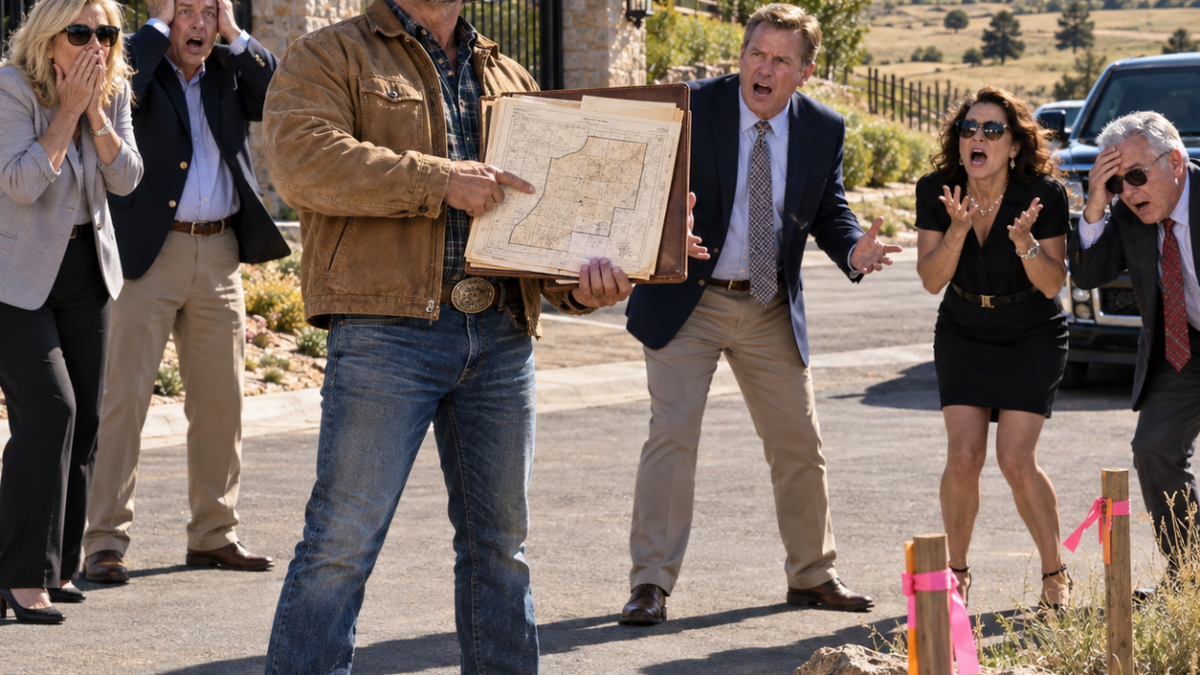
PART 2
I hired Katherine Reeves three days later.
Her office wasn’t impressive.
No marble lobby.
No floor-to-ceiling windows.
No receptionist bringing sparkling water.
She worked out of a second-floor suite in a strip mall between a dental practice and a tax preparation office, and her consultation fee was two hundred dollars, which mattered to me because at that point I still thought there was a decent chance someone would discover a missing deed, laugh about a filing error, and send me back to grading essays about Reconstruction.
Katherine read the deed.
Then she read the county printouts.
Then Margaret Preston’s email.
When she reached the sentence ordering me to refrain from further correspondence, one eyebrow rose.
“She’s confident.”
“Apparently.”
“That can mean two things.”
“What?”
“She knows something you don’t.”
I waited.
“Or she desperately hopes you don’t know something she does.”
That possibility sat differently.
I leaned forward.
“Can you find out which?”
“That’s what title searches are for.”
She spent the next week digging.
Not a quick internet search.
A full chain-of-title review.
Recorded deeds.
Mortgages.
Liens.
Subdivision plats.
Utility easements.
Development filings.
Probate documents.
Everything connecting Raymond Morgan’s 1962 purchase to Ridgemont Estates.
When she called me back, her first words were:
“Daniel, sit down.”
I was in the teachers’ lounge.
“I am sitting.”
“No. Somewhere private.”
That got my attention.
I stepped into an empty classroom and shut the door.
“What did you find?”
“The title chain is clean.”
“What does that mean?”
“Raymond purchased approximately 2,500 acres in 1962. Title remained in his name. No recorded sale to Crest View Development. No recorded ground lease. No deed conveying the land. No document transferring ownership of the underlying parcel.”
I stared through the classroom windows at a row of empty desks.
“So I own it.”
“According to the title record, yes.”
“All of Ridgemont Estates?”
“The underlying land, yes. But we need to distinguish land from individual homeowner interests and improvements. This is going to become extremely complicated.”
“How complicated?”
She exhaled.
“Eighteen-hundred-forty-seven houses complicated.”
I sat down on one of the student desks.
She continued.
“Crest View filed the subdivision plat in 2009.”
“I saw that.”
“A plat is not a deed. It divides land on paper. It doesn’t magically transfer ownership.”
“They got building permits.”
“They did.”
“How?”
“County permitting staff apparently relied on development filings and title representations made during the process. We’re going to need the historical application files.”
“So the county let them build an entire subdivision on land they didn’t own?”
“I’m saying nobody appears to have recorded the transaction that should have happened first.”
I closed my eyes.
“And the HOA?”
“The HOA exists. Its governing documents exist. Its assessment authority over members exists. But that does not answer the underlying title problem.”
I thought about Margaret’s email.
Refrain from further unfounded correspondence.
“What now?”
“Formal document requests.”
“To Margaret?”
“To the HOA, its attorneys, and Crest View Development.”
“Crest View is still operating?”
“No.”
That surprised me.
“What happened?”
“Bankruptcy. Dissolved in 2016.”
I stood.
“So the company that built all this is gone?”
“Yes.”
“Which means?”
“Which means the current HOA may have inherited a legal disaster without understanding how it started.”
“Margaret seems pretty sure.”
“She may know more than the rest of the board.”
Katherine’s letters went out that afternoon.
The response from Ridgemont Estates came from Benjamin Whitmore, an attorney whose letterhead looked much more expensive than Katherine’s.
He accused me of making baseless allegations.
Threatening community stability.
Attempting to extort settlement money.
Harassing HOA leadership.
Potentially defaming the association.
Then he gave me ten days to withdraw my ownership claim.
I brought the letter to Katherine.
She finished reading and set it down.
“I like this.”
I stared at her.
“You like them threatening me?”
“I like people who overreact before producing the document that would make you disappear.”
“What document?”
“The deed proving you’re wrong.”
She tapped the letter.
“If they had one, this would have been one page.”
She picked up an imaginary paper.
“Dear Mr. Morgan, attached is the recorded deed proving your claim is incorrect. Please stop contacting us.”
She dropped her hand.
“Instead we got threats.”
“So you think they don’t have it.”
“I think we keep digging.”
The next place we dug was Raymond’s personal papers.
Three banker’s boxes.
Old tax returns.
Utility bills.
Farm receipts.
Handwritten notes.
Letters.
Most of it looked meaningless until I found an envelope from Crest View Development dated January 2007.
Mr. Morgan,
Further to our discussions, Crest View Development Group is prepared to offer $8.5 million for the purchase of your 2,500-acre property in Cascade County.
I called Katherine before I finished reading.
“They tried to buy it.”
“When?”
“2007.”
“How much?”
“Eight and a half million.”
“Any acceptance?”
“I’m looking.”
Three months later came another letter.
Revised offer.
Then another.
Different number.
Different tone.
More pressure.
Planning expenses.
Financing deadlines.
Requests that Raymond reconsider.
The last letter was almost irritated.
Crest View complained that Raymond’s refusal to sell was delaying the project.
Then the letters stopped.
Two years later, subdivision construction started.
I sat on the floor beside the boxes.
“They knew.”
“Send me copies.”
“They absolutely knew Raymond owned it.”
“Yes.”
“And they built anyway.”
“We still need evidence of what happened between the last offer and construction.”
“What reasonable explanation is there?”
“A contract that was never recorded. A private option. Some agreement we haven’t located.”
“Would that fix this?”
“Depends on the agreement.”
I looked through the remaining papers.
Nothing.
No signed sale.
No lease.
No option.
Just taxes Raymond kept paying.
Correspondence complaining about development activity.
A few handwritten notes.
One line appeared repeatedly in the margins:
NO SALE.
Raymond had underlined it.
I remembered our diner conversation.
Thieves in suits.
For the first time, his bitterness made sense.
He hadn’t been ranting.
He had been living inside a fight nobody else understood.
I wished I had asked more questions.
That regret would stay with me longer than the lawsuit.
While Katherine investigated, Margaret chose a different strategy.
She went public.
The HOA sent a newsletter warning residents that an unnamed outsider was making fraudulent claims against the community.
Someone connected the dots.
My name appeared in a Facebook group.
Then my school page.
Then my email.
Messages arrived from strangers.
“You’re trying to steal our homes.”
“Leave us alone.”
“Greedy parasite.”
“One teacher thinks he owns our neighborhood.”
My principal called me into his office.
“Daniel, what is happening?”
“I inherited property.”
“That’s not what parents are saying.”
“What are they saying?”
“That you’re trying to evict almost two thousand families.”
“I’m not.”
“Are you suing them?”
“Not yet.”
He rubbed his forehead.
“Not yet?”
“I’m trying to establish whether the land under their development is legally mine.”
He looked uncomfortable.
“You understand how that sounds.”
“Yes.”
“Keep it away from school.”
“I haven’t brought it here.”
“Other people are.”
“That isn’t something I control.”
“I know, but parents are nervous.”
I left his office angry.
Not at him.
At how easily Margaret’s version had traveled.
The truth required title records, dates, legal distinctions.
Her version required one sentence:
Teacher tries to take 1,847 homes.
Two days later, someone keyed my car.
Both sides.
Deep scratches from front fender to rear quarter panel.
Across the driver’s door, someone had carved:
THIEF.
I stood in the parking lot after school staring at the word.
A history teacher.
Standing beside a cheap sedan.
Being called a thief because a developer had built on land my family never sold.
I called the police.
The officer photographed the damage.
He looked at the word.
“This related to Ridgemont?”
“Probably.”
“You know who did it?”
“No.”
“Any cameras?”
“School’s checking.”
He gave me a case number.
Then he said something that sounded simple but stayed with me.
“People get irrational when they think their home is threatened.”
I understood that.
What angered me was that Margaret knew it too.
She was using fear because fear was cheaper than evidence.
Katherine called that evening.
“I finished the expanded title analysis.”
“And?”
“No hidden deed.”
“No lease?”
“No.”
“No option?”
“No.”
“No transfer?”
“Nothing.”
I sat down.
“So what does that mean?”
“It means, legally, your title claim is extremely strong.”
“How strong?”
“Strong enough that if nothing contradictory appears, the HOA has a serious problem.”
“What kind of problem?”
“Potentially decades of unauthorized occupation.”
I laughed once.
Not humor.
Shock.
“What does that mean financially?”
“Do you want the theoretical answer or the realistic answer?”
“Both.”
“Theoretical? You could calculate land rent, unauthorized use, damages, compensation for commercial development, common infrastructure, and other claims. Numbers could become enormous.”
“Enormous how?”
“Fifty million. Eighty million. Maybe more depending on valuation methodology.”
I stopped breathing properly.
“And realistic?”
“A court is not going to throw eighteen hundred innocent families into the street because Crest View committed fraud fifteen years ago.”
“Good.”
“You say that now.”
“I mean it.”
“Daniel, if ownership is confirmed, your leverage could be extraordinary.”
“I don’t want their houses.”
“Then decide now what you do want.”
That was the first important decision.
I thought about it all night.
Money would matter.
I was not going to pretend otherwise.
Raymond’s land had been used without consent.
Businesses made profits.
The HOA collected dues.
A developer sold homes.
I wasn’t going to sign away everything for nothing just to prove I was morally superior.
But I also kept thinking about the woman jogging with the stroller.
The kids on bicycles.
The guard who laughed because the idea that one man could own the land sounded absurd.
Those people hadn’t sat in Crest View’s boardroom.
They hadn’t rejected Raymond’s ownership.
They had bought homes through banks, title companies, lawyers, inspectors, and recorded closing documents.
They were victims too.
The next morning, I called Katherine.
“I want acknowledgement.”
“What else?”
“A fair long-term agreement.”
“Purchase?”
“Maybe. Lease maybe.”
“Back compensation?”
“Yes.”
“Market rate?”
“Fair rate.”
“That word will become expensive.”
“Then we define it.”
“And eviction?”
“No.”
“Demolition?”
“No.”
“Individual homeowners losing houses?”
“No.”
She paused.
“Good.”
“Why?”
“Because Margaret Preston is about to tell everybody those are exactly the things you want.”
The HOA announced an emergency meeting.
The notice called me an individual asserting a fraudulent land claim.
I drove there anyway.
Security stopped me at the gates.
“I’d like to attend.”
“Residents only.”
“They’re discussing my lawsuit.”
“Residents only.”
“I haven’t filed a lawsuit.”
“Sir, you need to leave.”
Beyond the gate, cars streamed toward the clubhouse.
Hundreds of people were driving across land my deed said I owned to attend a meeting where the HOA president would tell them I was a threat.
And I wasn’t allowed through the gate.
That feeling was difficult to describe.
Not anger exactly.
Powerlessness.
The legal title said one thing.
The stone walls said another.
Margaret understood appearances.
That was her battlefield.
The next day local television aired a segment.
Margaret stood beneath the Ridgemont Estates sign wearing a navy blazer and an expression of calm concern.
“We have a responsibility to protect 1,847 families who purchased their homes in good faith.”
That sentence was true.
Then came the lie.
“This individual is exploiting a clerical discrepancy in an attempt to extort hardworking homeowners.”
The reporter asked about my title claim.
Margaret smiled.
“Our attorneys have thoroughly reviewed the matter. His claim has no legitimate basis.”
They never interviewed me.
By evening my phone was unusable.
Messages.
Calls.
Comments.
One man offered to “come explain property law personally.”
Katherine told me to save everything.
“Do not respond emotionally.”
“They’re calling my school.”
“Save it.”
“They vandalized my car.”
“Save the police report.”
“She’s lying on television.”
“Save the segment.”
“Why?”
“Because Margaret is building a record.”
“For us?”
“She thinks she’s building public pressure. Sometimes people forget public statements can become exhibits.”
Then the HOA approved a special assessment.
Five hundred dollars per household.
Almost a million dollars for legal defense.
Against me.
That changed something.
Not because I was afraid.
Because 1,847 families were now writing checks based on Margaret’s version of reality.
I called Katherine.
“File.”
“You’re sure?”
“Yes.”
“Once we file, this gets larger.”
“It’s already larger.”
“We ask for declaratory judgment confirming title.”
“Yes.”
“Compensation.”
“Yes.”
“Good-faith negotiation.”
“Yes.”
“And financial discovery.”
I hesitated.
“Why?”
“Because I found something.”
We met that evening.
Katherine laid one contract on the table.
Summit Community Advisers.
Annual management and planning services.
Approximately $85,000 per year.
“Who owns it?” I asked.
“Gregory Preston.”
I looked at her.
“Margaret’s husband.”
“Yes.”
“Board approval?”
“Yes.”
“Disclosure?”
“Not that I found.”
“Member vote?”
“No.”
“Competitive bids?”
“No.”
“How much total?”
“About $680,000 across the relevant period.”
I stared at the number.
“Six hundred eighty thousand.”
“Correct.”
“Paid by the HOA to her husband’s company.”
“Yes.”
“While she’s calling me an extortionist.”
“Yes.”
Katherine pulled another file.
“There’s more.”
A $12 million bond issuance.
Clubhouse expansion.
Pool.
Infrastructure.
Large debt tied to future dues revenue and HOA assets.
“No membership vote located.”
“Required?”
“Based on the governing documents and the applicable threshold, yes.”
I leaned back.
“What happens if the land under some of those assets belongs to me?”
“That question is exactly why their lawyers are nervous.”
I finally understood.
Margaret wasn’t simply defending homeowners.
She was defending a structure that made her powerful.
And if my deed forced anyone to examine that structure closely, other things might fall out.
We filed Monday.
Morgan v. Ridgemont Estates Homeowners Association.
Confirm title.
Declare unauthorized occupation.
Order negotiation.
Preserve resident protections.
Investigate relevant financial conflicts.
Margaret counterclaimed within days.
Adverse possession.
Prescriptive rights.
Equitable estoppel.
Harassment.
Interference.
The press statement was brutal.
I was accused of trying to steal a community.
My principal called me again.
“Daniel, this is becoming a distraction.”
“I know.”
“Parents are asking whether you’ll be placed on leave.”
“For inheriting land?”
“For the publicity.”
I stared at him.
“Do you think I’m doing something wrong?”
He looked away.
“That’s not my decision.”
“It’s a yes-or-no question.”
He sighed.
“No. Based on what you’ve shown me, no.”
“Then why should I settle because strangers are yelling?”
“Because sometimes being right costs more than people expect.”
That sentence followed me home.
He was right.
Being right cost money.
Sleep.
Privacy.
Friendships.
The easy version of my reputation.
It cost me the ability to walk into work without wondering whether another parent had complained.
It cost me a car door.
It cost me weekends spent reading legal documents instead of living.
But giving up would cost something else.
It would tell everyone who had ignored Raymond that eventually enough pressure could turn theft into ownership.
I couldn’t do that.
Discovery began.
Katherine requested everything.
Development records.
Financial statements.
Meeting minutes.
Crest View correspondence.
Title documents.
Bond files.
Contracts.
The HOA objected to nearly everything.
Katherine filed motions to compel.
At the first major hearing, Judge Patricia Donnelly looked over her glasses at Benjamin Whitmore.
“Counsel, your client says Mr. Morgan does not own the land.”
“Yes, Your Honor.”
“Mr. Morgan says he does.”
“Yes.”
“And you object to producing documents showing how your client obtained its interest.”
“Our position is that many requests are overly broad.”
The judge closed the file.
“The ownership history is the case.”
“Your Honor—”
“Produce the documents.”
The first production arrived heavily redacted.
Katherine laughed when she saw it.
“Bad?”
“Good.”
“How is black ink good?”
“Because judges hate games.”
She filed sanctions motions.
The HOA delayed.
Appealed.
Lost.
Four months after the first requests, we finally received complete enough files to matter.
But the strongest evidence didn’t come from the HOA.
It came from Crest View’s bankruptcy archive.
Katherine had subpoenaed the old trustee’s records.
Boxes arrived.
Thousands of pages.
Emails.
Internal memos.
Project financing.
Planning files.
Then one Thursday night, Katherine called me after ten.
“Daniel.”
Her voice sounded different.
“What happened?”
“I found it.”
“What?”
“The reason they built.”
I drove to her office.
She had two printed emails on the table.
The first came from Crest View CEO Richard Brennan to CFO Patricia Cole in 2008.
The message described Raymond as refusing to sell.
The company had already spent heavily on engineering.
Walking away would damage financing.
Then Brennan proposed something astonishing.
Move forward anyway.
Get the plat approved.
Build phase one.
Sell enough homes that Raymond would face a practical impossibility.
Courts wouldn’t order hundreds of families removed.
Crest View could force a settlement later.
Then came the line that made my hands shake.
Best case, he dies or gives up and we never pay.
I stopped reading.
“They wrote this.”
“Yes.”
“They knew.”
“Yes.”
“They knew Raymond owned the land.”
“Yes.”
“And deliberately built.”
“Yes.”
Patricia’s reply was shorter.
High risk.
Proceed quietly.
Get sales closed before Raymond acts.
I stared at those emails for a long time.
My great-uncle had been right.
Not paranoid.
Not confused.
Not a bitter old man.
They had gambled on his death.
And won.
At least temporarily.
I thought about the diner.
The coffee cooling between us.
His hands wrapped around the mug.
Thieves in suits.
I remembered nodding politely, waiting for him to change subjects.
I felt ashamed.
“He tried to tell me.”
Katherine looked at me.
“You were his great-nephew, not his lawyer.”
“I thought he was exaggerating.”
“He probably sounded unbelievable.”
“He was telling the truth.”
“Yes.”
“What do these emails do?”
She sat forward.
“They devastate the adverse-possession narrative.”
“Explain.”
“Crest View acknowledged Raymond’s superior ownership. They were negotiating to buy. They knew they lacked title.”
“So they can’t say they believed it was theirs.”
“Exactly.”
“And the HOA inherited Crest View’s problem.”
“Exactly.”
I looked at the email again.
Best case, he dies.
“They got their best case.”
“For a while.”
That night I went home and opened Raymond’s boxes again.
I found a photograph I had ignored before.
Raymond standing near a fence line.
Behind him, rolling open ground.
No houses.
No streets.
On the back he had written:
East ridge, 1998. Never sell cheap.
I put the photograph on my desk.
The next stage of the case became harder for Margaret.
Katherine questioned her under oath.
Margaret entered the deposition room looking exactly as she did on television.
Controlled.
Professional.
Confident.
Katherine started simple.
“Mrs. Preston, does the Ridgemont Estates HOA hold a recorded deed to the underlying 2,500 acres?”
“The HOA holds authority over common property and community infrastructure.”
“That wasn’t my question.”
“Our attorneys have—”
“Do you possess a deed?”
A pause.
“No deed that I personally maintain.”
“Have you ever seen one?”
“I rely on counsel.”
“Have you ever seen a recorded ground lease from Raymond Morgan?”
“No.”
“Any purchase agreement signed by Raymond Morgan?”
“No.”
“Any title transfer?”
“I’m not a title professional.”
Katherine slid the Crest View email across the table.
“Have you seen this before?”
Margaret read it.
Her expression changed.
Very slightly.
“No.”
“It was recovered from Crest View’s bankruptcy records.”
“I can’t speak to its authenticity.”
“Assume for purposes of this question it is authentic. Does this appear to show Crest View knew Raymond Morgan owned the land?”
Margaret’s attorney objected.
She answered anyway.
“It appears to contain a discussion.”
“About building before purchasing.”
“Potentially.”
“About forcing Raymond Morgan to settle.”
“I can’t interpret an old developer email.”
“About hoping he dies before they have to pay him.”
Margaret looked at Katherine.
“I didn’t write it.”
“No. You inherited the consequences.”
The financial deposition was worse.
A forensic accountant reviewed Summit Community Advisers.
Payments to Gregory Preston’s company.
No competitive bids.
No adequate conflict disclosure.
Estimated overpayments compared with similar firms.
Then reserve funding.
Required future repair obligations.
Actual reserves far below target.
Then bond debt.
The accountant spoke without drama.
Numbers rarely need drama.
“Approximately $680,000 was paid to an entity owned by the president’s spouse.”
Margaret’s lawyer objected to the characterization.
The accountant continued.
“The contracts lack evidence of an arm’s-length competitive procurement process.”
Katherine asked:
“Were association members told the company was owned by Mrs. Preston’s husband?”
“I found no adequate disclosure in the records reviewed.”
“Were members asked to approve the contracts?”
“No.”
“Were reserves properly funded?”
“No.”
“What percentage of estimated required reserves were available?”
“Approximately twenty-eight percent under the methodology we applied.”
The room became silent.
“And what contributed to the shortfall?”
“Debt service, questionable contracting decisions, and expenditures that otherwise would have remained in reserves.”
Margaret sat at the far end of the table.
For the first time since this began, she looked tired.
Homeowners got the transcripts.
I don’t know who leaked or lawfully distributed them first.
It barely mattered.
Within days, everything changed.
Tom Bradshaw, a contractor who lived inside Ridgemont, circulated excerpts.
Residents who had called me greedy began asking their own board questions.
Why did Margaret’s husband receive $680,000?
Why wasn’t there competitive bidding?
Why were reserves so low?
Who approved the bonds?
Why did Margaret say my title claim was fraudulent when Crest View’s own emails showed the developer knew Raymond owned the land?
A petition demanded Margaret resign.
She refused.
Then the state HOA oversight office opened an inquiry.
Then homeowners filed their own fiduciary-duty lawsuit.
Then three board members resigned.
The emergency meeting where Margaret finally lost control happened on a Tuesday.
I didn’t attend.
Tom told me later.
Margaret stood at the front of the clubhouse and blamed “outside agitators.”
She said hostile forces were trying to fracture community unity.
Tom waited until she finished.
Then he stood.
“Margaret, did your husband’s company receive six hundred eighty thousand dollars from this HOA?”
She said the services were legitimate.
“That’s not what I asked.”
People turned toward him.
“Did you disclose to the membership that you were voting on contracts benefiting your husband?”
Margaret accused him of misunderstanding governance procedure.
Tom asked about the bonds.
Then the reserves.
Then Crest View’s email.
Then me.
“Why did you tell us Daniel Morgan was trying to steal our homes?”
“He filed a lawsuit.”
“After you refused to meet with him.”
“He threatened community stability.”
“He asked who owned the land.”
“He—”
“Who owns the land, Margaret?”
The room went silent.
She looked at him.
Tom repeated:
“Does this HOA hold title to the 2,500 acres?”
She couldn’t answer.
That was the question from the beginning.
The one sentence all her threats had avoided.
A board member moved for a vote of no confidence.
Four to one.
Margaret was removed as president.
She left through the side door.
Two days later, Tom called me.
“Mr. Morgan?”
“Daniel is fine.”
“Daniel. This is Tom Bradshaw.”
“I know who you are.”
“I owe you an apology.”
“You don’t.”
“I believed her.”
“Most people did.”
“I told neighbors you were trying to destroy the development.”
“I heard.”
“I was wrong.”
I leaned against my kitchen counter.
He continued.
“I read everything. The emails. Title reports. Financial deposition.”
“And?”
“Crest View cheated Raymond.”
“Yes.”
“Margaret made the problem worse.”
“Yes.”
“And the HOA doesn’t own the ground.”
“That’s our position.”
“It’s more than a position.”
I waited.
“The new board wants to negotiate.”
For months, I had imagined someone from Ridgemont saying those words.
When they finally came, I didn’t feel victorious.
I felt exhausted.
“What do you want?”
“Peace.”
“So do I.”
“Can we meet?”
We met at a coffee shop halfway between my apartment and Ridgemont Estates.
Tom arrived wearing work boots and a contractor’s jacket.
No lawyers.
No board packet.
Just a tired man carrying a folder.
He sat down.
“I have three kids.”
I hadn’t expected that opening.
“Okay.”
“My oldest was six when we bought in Ridgemont.”
He looked toward the window.
“We did everything right. Title company. Inspection. Mortgage underwriting. Closing attorney. We never imagined the developer didn’t own the dirt.”
“I know.”
“Do you?”
“Yes.”
“Because people are scared.”
“I know.”
“They think if the judge rules for you, someone shows up and tells them their house belongs to you.”
“I have never asked for that.”
“I read your complaint.”
He nodded.
“That surprised me.”
“What did you expect?”
“Margaret said you wanted mass eviction.”
“I don’t.”
“Market-rate land rent?”
“Fair compensation.”
“She said sixty million.”
“I haven’t demanded sixty million.”
“Could you?”
“Maybe.”
He looked down.
“That’s terrifying.”
“It should terrify the people who created the problem.”
“They’re gone.”
“Exactly.”
Tom rubbed his face.
“So what do we do?”
“We acknowledge reality.”
“That you own it.”
“Yes.”
“And then?”
“We build a structure where residents stay.”
He looked up.
“No eviction?”
“No.”
“No demolition?”
“No.”
“No forcing immediate land purchase?”
“No.”
He exhaled for what felt like the first time since sitting down.
“Margaret told us you were a monster.”
“She didn’t know me.”
“I’m starting to understand that.”
Two weeks later, we were back in court.
The new board sat behind its attorney.
Margaret sat alone toward the back.
Judge Donnelly had read everything.
Crest View emails.
Title reports.
Financial findings.
She looked toward the HOA’s attorney.
“Is the association still pursuing adverse possession?”
The attorney hesitated.
Tom stood behind him.
“No, Your Honor.”
Judge Donnelly looked over her glasses.
“Mr. Bradshaw?”
“The new board has voted to withdraw that theory and pursue settlement.”
Margaret’s attorney objected from the gallery.
The judge looked at her.
“You no longer represent current board leadership?”
There was an awkward pause.
“No, Your Honor.”
“Then sit down.”
I almost felt sorry for Margaret.
Almost.
Judge Donnelly turned toward Katherine.
“Ms. Reeves, does Mr. Morgan agree to mediation?”
“Yes.”
The judge looked at me.
“Mr. Morgan?”
I stood.
“Yes, Your Honor.”
“You understand your title claim is strong.”
“Yes.”
“You understand mediation may require accepting less than theoretical maximum recovery.”
“Yes.”
“Why agree?”
I looked toward the residents seated behind Tom.
“Because Crest View victimized both sides.”
The courtroom became very quiet.
The judge nodded.
“Good answer.”
Mediation was ordered.
But before the formal negotiations began, one major hearing remained.
Title.
The courtroom was packed.
Homeowners stood along the walls.
Local news cameras waited outside.
I saw people who had emailed threats.
People who had apologized.
People who still hated me.
Margaret sat in the corner.
Judge Donnelly took the bench.
Tom’s new attorney stood first.
He surprised me.
“Your Honor, the HOA no longer contests that recorded title remains in Daniel Morgan.”
Whispers spread through the room.
The attorney continued.
“Our position concerns equitable protection for innocent homeowners.”
That changed everything.
No more pretending the deed didn’t exist.
No more baseless claim.
No more clerical error.
Katherine stood.
“The plaintiff agrees that innocent homeowners deserve protection. He has never sought mass displacement. But equitable protection begins with acknowledging legal reality.”
She held up the Crest View email.
“The developer knew it did not own the land.”
She read the key portion.
Build first.
Force settlement later.
Hope Raymond dies.
A woman behind me gasped.
Katherine continued.
“Crest View transformed calculated trespass into a residential community, then disappeared through bankruptcy. Fifteen years of complexity do not make the original fraud legitimate.”
Then I testified.
Katherine asked:
“What did you want when you first contacted the HOA?”
“An explanation.”
“Money?”
“No.”
“Evictions?”
“No.”
“Ownership acknowledgment?”
“Yes.”
“Why?”
“Because I needed to understand whether Raymond had sold this land and whether the records were wrong.”
“And when Margaret Preston told you your claim was baseless?”
“I hired someone to verify it.”
“Did you ever threaten to take individual homes?”
“No.”
“Did you ever demand families leave?”
“No.”
“Did you ever ask the HOA to destroy the community?”
“No.”
“What do you want now?”
I looked at Tom.
Then the gallery.
“A fair agreement.”
Katherine nodded.
“Why not maximize your legal leverage?”
“Because the homeowners didn’t defraud Raymond.”
The HOA attorney rose for cross-examination.
“Mr. Morgan, you inherited this property, correct?”
“Yes.”
“You paid nothing for it.”
“I inherited it from someone who did.”
“You personally invested zero dollars acquiring these 2,500 acres.”
“Correct.”
“And now you want millions.”
“I want compensation for use of property my family never sold.”
He walked closer.
“Isn’t that opportunism?”
“No.”
“You’re a schoolteacher who became wealthy overnight.”
“Potentially.”
“And suddenly eighteen hundred families owe you money.”
“No. Crest View created the liability.”
“But Crest View is bankrupt.”
“Yes.”
“So you’re collecting from people who didn’t wrong you.”
“I’m negotiating with people occupying land I legally own.”
He smiled slightly.
“That sounds cold.”
I looked at him.
“If someone built a house in your backyard because a third party falsely told them they owned your yard, would the answer be that you stop owning your yard?”
He didn’t respond immediately.
“These are not one house.”
“That makes Crest View’s conduct bigger, not smaller.”
A few people murmured.
He continued.
“You could bankrupt this HOA.”
“I could ask for more than they can afford.”
“You could demand purchase at market value.”
“Yes.”
“You could seek ejectment.”
“Theoretically.”
“You could make every family here financially miserable.”
I looked around the room.
“Yes.”
The word landed heavily.
Then I added:
“That’s why I haven’t.”
The attorney paused.
“No further questions.”
A title expert followed.
Then an appraiser.
Current land value under the development was estimated between roughly $95 million and $120 million depending on methodology and treatment of improvements.
People gasped.
I didn’t.
By then numbers had lost their ability to shock me.
On the fourth day, Judge Donnelly ruled.
I remember every word that mattered.
“Title evidence is unambiguous.”
My hands went cold.
“Daniel Morgan holds legal title to the approximately 2,500 acres at issue.”
I closed my eyes.
Raymond.
The diner.
No sale.
The letters.
The email hoping he would die.
Judge Donnelly continued.
“Crest View Development knowingly proceeded with construction despite acknowledging Raymond Morgan’s ownership and its own failure to complete a purchase.”
She looked toward the homeowners.
“The court also recognizes that 1,847 households purchased residences in good faith through ordinary real estate channels. They are not the authors of Crest View’s fraud.”
Tom lowered his head.
“This court will not order mass displacement.”
A collective breath moved through the room.
“But neither will equity erase Mr. Morgan’s property rights.”
Then came the remedy.
Title confirmed.
Unauthorized occupation acknowledged.
No mass eviction.
No demolition.
The parties were ordered to negotiate a ground lease or structured purchase arrangement under supervision of a special master.
Fair market value mattered.
Resident protection mattered.
My ownership could not simply be discounted because Crest View’s fraud had become complicated.
But I could not use legal leverage to impose unconscionable hardship without the court scrutinizing it.
Judge Donnelly looked directly at both sides.
“You will continue living with each other after lawyers leave this case.”
Then she said something that became the foundation of everything that followed.
“Make the solution more honest than the problem.”
Court adjourned.
Outside, cameras crowded the steps.
A reporter shouted:
“Mr. Morgan, you now legally own the land under nearly two thousand homes. What are you going to do?”
I could have said something dramatic.
I could have talked about justice.
Raymond.
Margaret.
Millions.
Instead I said:
“Negotiate.”
Tom found me afterward.
“You won.”
“I got the answer.”
“That’s winning.”
“The answer isn’t useful if we destroy everybody applying it.”
He extended his hand.
“Then let’s not.”
Mediation began at the county library.
Not the courthouse.
Not the HOA clubhouse.
Neutral ground.
Folding tables.
Bad coffee.
A retired judge named Richard Ko overseeing the process.
Tom represented the board.
Lisa Chen, the new treasurer, brought financial models.
David Martinez took minutes.
Three homeowner representatives attended.
Katherine sat beside me.
Judge Ko opened with a sentence nobody disputed.
“Mr. Morgan owns the land.”
Silence.
“The question is how everyone survives that fact fairly.”
We started with market rent.
The numbers were ugly.
A theoretical land lease across the entire developed acreage could support millions annually.
Spread across 1,847 households and commercial users, it might be economically possible.
But possible on a spreadsheet and survivable for actual families are different things.
I proposed a ninety-year master ground lease.
Tom almost fell out of his chair.
“Ninety?”
“Families need certainty.”
Lisa nodded.
“That part helps financing.”
I continued.
“Residents can choose.”
“Choose what?”
“Lease the land beneath their homes or purchase their individual underlying parcel.”
The room went quiet.
Katherine distributed the proposal.
Homeowners choosing lease status would begin at a reduced introductory rate.
The number worked out to roughly $67 per month for many households at the opening stage.
Lower than full theoretical market rent.
Gradual adjustment.
Caps.
Hardship provisions.
No surprise spikes.
Families wanting ownership could purchase the land beneath their homes under long-term financing.
Thirty years.
Reasonable fixed interest.
No prepayment penalty.
Tom stared at the spreadsheet.
“You’re financing land sales personally?”
“Through an entity holding the property, yes.”
“Why?”
“Because requiring cash would make the option meaningless.”
Lisa read the numbers twice.
“Some families will think even sixty-seven dollars is unfair.”
“They’re right.”
She looked at me.
I continued.
“They thought they already owned everything they needed to own.”
“So why charge?”
“Because pretending that makes my ownership disappear repeats Crest View’s logic.”
Judge Ko nodded.
“That’s the tension.”
I leaned forward.
“I am not charging them for fraud they committed. I’m creating a lawful relationship that should have existed from the beginning.”
“What about past use?” Tom asked.
“That’s the difficult part.”
Katherine slid another page.
Instead of demanding fifteen years of full back rent, we proposed a negotiated settlement fund partly funded by HOA reserves, insurance claims where applicable, recoveries from Crest View’s remaining bankruptcy-related sources if any existed, and proceeds from the homeowners’ fiduciary claims against former leadership.
It would compensate me without imposing a massive immediate special assessment.
Tom looked at me.
“You’re leaving millions on the table.”
“Yes.”
“Why?”
“Because the table is surrounded by victims.”
Nobody spoke for several seconds.
Negotiations lasted six weeks.
Hard weeks.
Residents pushed back.
Commercial tenants demanded separate treatment.
The school district needed a formal land arrangement.
Utility easements had to be corrected.
Banks wanted clarity about mortgages.
Title insurers became involved.
Every time we solved one problem, three more appeared.
One night, Katherine and I sat in the library after everyone left.
Stacks of documents covered the table.
“You regret this?”
“The inheritance?”
“The fight.”
I thought about my keyed car.
My principal’s calls.
The nights I couldn’t sleep.
Raymond’s email.
“No.”
“You’ve spent almost a year being called a thief by people you’re now giving favorable terms.”
“I noticed.”
“You could be less generous.”
“I could.”
“You’re going to be financially secure either way.”
“Yes.”
She closed a binder.
“Then what are you actually fighting for?”
It took me a while to answer.
“Raymond said no.”
“To Crest View.”
“Yes.”
“They treated his no like an opening bid.”
“Yes.”
“And?”
“If I force these families into a deal they have no realistic ability to refuse, how am I different?”
Katherine looked at me.
“You own the land.”
“So did Raymond.”
“That isn’t what I meant.”
“I know.”
I looked at the empty library around us.
“I want them to acknowledge ownership. I want compensation. I want the fraud corrected. But I don’t want to become another person who says, ‘I have leverage, so your consent doesn’t matter.’”
She smiled.
“You really are a history teacher.”
“Unfortunately.”
The final settlement ran hundreds of pages.
Ninety-year master framework.
Lease and purchase options.
Individual protections.
Commercial rates separately negotiated.
School district lease.
Infrastructure rights.
Utility access.
Clear land-use approval standards.
No surprise HOA authority over my ownership.
No arbitrary landlord interference from me.
Independent dispute resolution.
Homeowner hardship programs.
Most important to me: transparency.
The HOA rebuilt its bylaws.
Annual independent audits.
No undisclosed related-party contracts.
Board members required to recuse from transactions involving relatives or financial interests.
Contracts over defined thresholds required competitive bidding and member disclosure.
Large debt required membership approval.
Meetings recorded.
Minutes posted.
Budgets accessible.
Reserves monitored.
Tom called it the Never Margaret Again section.
Lisa corrected him.
“We are not putting that in the bylaws.”
“Footnote?”
“No.”
“Appendix?”
“Tom.”
I laughed harder than I had in months.
The membership vote took place on a Saturday.
1,642 voted for the settlement.
118 against.
The remainder abstained or failed to participate.
When Tom called me with the result, I was grading essays.
“We passed.”
I stared at the red pen in my hand.
“How many?”
He told me.
“Large margin.”
“People are tired.”
“So am I.”
“Daniel?”
“Yeah?”
“Thank you.”
“For what?”
“Not using the deed like a weapon.”
I looked at Raymond’s photograph on my desk.
“Someone already did that from the other direction.”
Margaret’s fall continued separately.
The state completed its investigation.
The findings were brutal.
Undisclosed contracts benefiting her husband’s firm.
Improper board conduct.
Reserve deficiencies.
Use of association resources connected with her personal defense.
She was barred from serving on HOA boards in the state.
Fined.
Ordered to repay substantial amounts associated with improper benefits.
Gregory Preston’s consulting business collapsed under the scrutiny.
The couple listed their home.
I saw Margaret once during the move.
I had come to Ridgemont for a meeting about the school parcel.
A moving truck sat outside her house.
Boxes lined the driveway.
She was carrying a lamp toward the truck when she saw me.
We stood maybe seventy feet apart.
I could have walked over.
Part of me wanted to.
For months she had called me greedy.
A liar.
An extortionist.
She had refused to let me attend meetings about my own land.
Her campaign helped turn residents against me.
My car had been vandalized.
My job had been dragged into the dispute.
I had imagined having one final conversation.
Something perfect.
A line that would make her understand.
But standing there, I didn’t want it anymore.
She looked smaller.
Not physically.
Humanly.
Her identity had been built around certainty.
President.
Authority.
Control.
The person who knew.
And when one question threatened that identity—
Do you hold title to this land?—
she chose aggression over curiosity.
She looked away first.
I walked back to my car.
That was our final interaction.
Three weeks after the settlement, Tom organized a town hall.
The clubhouse couldn’t hold everyone, so he rented the high school auditorium.
More than eight hundred people came.
Walking onto that stage felt worse than testifying.
Teenagers don’t scare me.
Parents do.
Tom introduced me.
Then he did something I wasn’t prepared for.
He apologized publicly.
“When this started, I believed Daniel Morgan wanted to take our homes.”
The room was quiet.
“I repeated things that were false. So did many of us.”
He looked toward me.
“We were scared.”
Then back to the audience.
“But fear doesn’t excuse refusing to look at evidence.”
That sentence mattered more than the apology.
He continued.
“Daniel had the law on his side. What saved this community was that he chose not to use every ounce of that power against people who didn’t create the problem.”
He stepped away.
Applause began.
Not everyone.
Not immediately.
But enough.
I walked to the microphone.
“I’m a teacher,” I said, “which means I’m professionally trained to keep talking when a room clearly wants me to stop.”
People laughed.
Good.
“I want to clear up one thing.”
Silence.
“I never wanted your homes.”
A woman shouted from the back:
“Then why charge us?”
Fair question.
“Because you were sold something the developer didn’t own.”
Murmurs.
“And pretending the land is free now doesn’t fix that theft. It just transfers the theft from Raymond to me.”
The room quieted.
“But you didn’t steal it either.”
I paused.
“You were lied to.”
I looked across hundreds of faces.
“Crest View lied to Raymond when they built after he refused to sell. Then it lied to buyers by presenting a development built on land it never acquired. Later, Margaret told you my claim was fraudulent instead of showing you the records.”
A man raised his hand.
“What would have happened if you demanded full market value?”
“Many families would probably have faced painful choices.”
“How painful?”
“Potential annual land charges several times higher than the introductory lease structure. Or a purchase demand the HOA couldn’t meet.”
Another resident shouted:
“You could’ve kicked us out?”
“Legally, we could have pursued far more aggressive remedies.”
The room became tense.
“I didn’t.”
“Why?”
“Because having power and deserving to use all of it are different questions.”
That answer produced silence.
Then a woman stood.
“Why should we trust you?”
I recognized the fear beneath the hostility.
So I answered carefully.
“You shouldn’t trust me because I won a lawsuit.”
She folded her arms.
“You should trust documents, procedures, transparency, and agreements that don’t depend on whether I’m a good person.”
That surprised people.
I continued.
“Raymond’s mistake wasn’t refusing to sell. Crest View’s crime wasn’t simply being greedy. The system failed because too much depended on assumptions and private decisions nobody checked.”
I pointed toward Tom.
“The new agreement limits me too.”
Tom nodded.
“I can’t arbitrarily raise rates. I can’t suddenly terminate families. I can’t interfere with normal home use because I’m irritated. The lease protects you from me.”
The woman lowered her arms.
“That’s why it’s ninety years?”
“Yes.”
Another person raised a hand.
“What happens when you die?”
“Successors inherit obligations along with ownership.”
“So your kids can’t throw us out?”
“No.”
“I don’t have kids.”
People laughed.
“But whoever inherits the land inherits the contract.”
That shifted something in the room.
Fear became questions.
Questions became details.
Details became understanding.
Not agreement with everything.
Understanding.
I could live with that.
The settlement implementation took six months.
1,247 households selected the ground-lease option.
Around six hundred moved toward purchasing their underlying parcels through financing arrangements.
Some paid cash.
Others chose thirty-year payment schedules.
The first monthly lease notices went out.
Sixty-seven dollars for many residents.
I expected outrage.
There was some.
One man mailed me sixty-seven dollars entirely in pennies.
Katherine made me photograph it.
“For the record.”
“He spent more mailing this than the payment.”
“Emotion is expensive.”
Another homeowner wrote:
I hate paying this, but at least now I know what I’m paying for.
That might have been the most honest review of the entire settlement.
Commercial parcels paid different rates.
The shopping center negotiated a substantial lease.
Medical offices.
Retail spaces.
The school district executed a formal agreement instead of relying on Crest View’s invalid arrangement.
For the first time since construction began, every major use had an actual legal foundation beneath it.
The money changed my life.
There is no honest way to pretend otherwise.
I paid off my student loans.
Replaced the dying sedan.
Bought a modest house.
Not in Ridgemont.
Close enough.
I kept teaching.
That surprised everyone.
My principal called me in after the settlement became public.
“You’re still coming back next semester?”
“Yes.”
“Daniel.”
“What?”
“You own land worth close to a hundred million dollars.”
“I own a complicated asset that pays income.”
“You don’t have to grade sophomore essays anymore.”
“That’s true.”
“So why?”
I thought about it.
“Because tomorrow they’re presenting on the Progressive Era.”
He stared.
“That is the most teacher answer possible.”
“I know.”
Money gave me choices.
It did not automatically give me a better identity.
Teaching still mattered.
Raymond’s land mattered too.
So I did both.
The first year of lease revenue was substantial.
I could have kept every dollar.
Instead, I returned $200,000 to community projects.
Playground improvements.
Tennis courts.
Clubhouse repairs.
Pool filtration.
I didn’t announce it dramatically.
Tom did.
He called.
“You didn’t have to do this.”
“I know.”
“People are going to think you’re trying to buy goodwill.”
“Then don’t publicize it.”
“You donated it through an HOA account. It’s in the budget.”
“Oh.”
“That transparency thing you insisted on?”
“Right.”
“You’re annoying.”
“Good governance often is.”
He laughed.
The story spread nationally.
“TOWN BUILT ON LAND DEVELOPER NEVER OWNED.”
“MASSIVE TITLE FAILURE EXPOSED BY TEACHER’S INHERITANCE.”
“2,500-ACRE PROPERTY CASE FORCES COMMUNITY SETTLEMENT.”
Reporters called.
Legal journals called.
Law schools called.
I accepted a few interviews.
Declined most.
One reporter asked:
“Do you consider yourself a property-rights activist?”
“No.”
“What are you?”
“A history teacher.”
“You changed state policy.”
That part happened later.
Legislators responded to the case by tightening development-title verification.
Developers had to provide stronger proof of ownership before subdivision approval.
Leasehold developments required clearer buyer disclosure.
Penalties increased for knowingly developing property without legal authority.
One lawmaker called me.
“Your case exposed a hole in the system.”
“Raymond exposed it.”
“You finished it.”
That distinction mattered to me.
Raymond held the line.
I only inherited the paperwork.
Six months after settlement, I sat on Tom’s back deck drinking beer.
Children played somewhere down the block.
Dogs barked.
A lawn sprinkler clicked.
Normal sounds.
Tom looked across the neighborhood.
“You could’ve destroyed this place.”
“I could’ve damaged it.”
“Same thing.”
“No.”
He looked at me.
“What’s the difference?”
“Destruction is what Crest View did legally.”
“That doesn’t make sense.”
“It built something valuable on something fraudulent.”
He nodded slowly.
“Okay.”
“I could have exercised every right as aggressively as possible. That might have broken families financially.”
“Why didn’t you?”
“Because rights and power aren’t the same.”
He waited.
“Rights tell you what you’re legally entitled to protect. Power is how far you choose to push people with those rights.”
Tom drank.
“You sound like one of your lectures.”
“Probably.”
“You had the right to demand more.”
“Yes.”
“But using maximum leverage would’ve made you like Margaret.”
I considered.
“Not legally.”
“Morally.”
“Closer.”
He nodded.
“Thank you.”
“We both got something.”
“You got a fortune.”
“I got acknowledgement.”
“And money.”
“And money.”
He laughed.
“Thank God. I was worried you’d become unbearable.”
Two years later, a law student named Rachel Kim emailed me.
Her professor had assigned Morgan v. Ridgemont Estates.
That was surreal enough.
She wanted coffee.
She arrived with a notebook.
“I have one question.”
“Only one?”
“The big one.”
“Okay.”
“Why didn’t you take more money?”
I smiled.
“Your professor sent you?”
“No.”
“What did your professor say?”
“That you showed unusual restraint.”
“I disagree.”
Her pen stopped.
“Why?”
“Restraint implies I wanted to hurt everyone and heroically stopped myself.”
“Didn’t you?”
“No.”
“You weren’t angry?”
“I was furious.”
“Margaret smeared you.”
“Yes.”
“Your car got vandalized.”
“Yes.”
“Your school job was pressured.”
“Yes.”
“Crest View intentionally stole from your uncle.”
“Yes.”
“And you didn’t want revenge?”
“I wanted acknowledgement.”
“What’s the difference?”
“Revenge needs the other person to suffer.”
“And acknowledgement?”
“Needs the truth to survive.”
She wrote that down.
“You realize that sounds prepared.”
“It isn’t.”
“You could have demanded a hundred-million-dollar buyout.”
“Yes.”
“You could have charged much higher rent.”
“Yes.”
“You could have fought for ejectment.”
“Yes.”
“You left tens of millions on the table.”
“Maybe.”
“That doesn’t bother you?”
“No.”
“Why?”
“Because I didn’t leave with nothing.”
I stirred my coffee.
“I went from fifty-four thousand dollars a year and student loans to financial security for the rest of my life. Lease payments and land purchases will generate tens of millions over time.”
“But less than maximum.”
“There is always a maximum.”
I looked at her notebook.
“Maximum rent. Maximum penalty. Maximum leverage. Maximum punishment.”
She looked up.
“If your life is organized around maximizing what you can extract from every person weaker than your legal position, you eventually become the person everyone needs protection from.”
She stopped writing.
“Margaret.”
“Among others.”
Rachel sat back.
“My professor called what you did equitable restraint.”
“I call it not being an ass.”
She laughed so loudly people looked over.
The community kept changing.
Tom remained president.
Lisa stayed treasurer.
Financial reports were posted online.
Reserves climbed.
Waste declined.
Dues stabilized.
Board meetings became boring.
I loved that.
One night Tom called me.
“We spent forty minutes discussing whether the pool closes at eight or nine.”
“Congratulations.”
“I wanted to die.”
“That means nobody is stealing six hundred eighty thousand dollars.”
“Fair.”
The HOA changed culturally too.
Rules still existed.
Real safety issues mattered.
Structural problems.
Illegal dumping.
Serious nuisance conditions.
But the obsession with petty control faded.
Tom said something at a meeting that became almost a motto.
“We’re service providers, not neighborhood police.”
That alone probably prevented more lawsuits than any statute.
Ridgemont established an annual Founders Day.
I hated the name at first.
“Raymond wasn’t the founder of the subdivision.”
“No,” Lisa said. “But the land has a history before Crest View.”
The event became less about me and more about correcting the story.
A plaque went near the main entrance.
RIDGEMONT ESTATES
Established on Morgan family land held since 1962.
Modern community agreement finalized after resolution of the Morgan title dispute.
Dedicated to transparency, fairness, and responsible stewardship.
The first time I saw it, I stood there longer than expected.
Tom appeared beside me.
“You hate it.”
“I hate plaques.”
“You’re emotional.”
“No.”
“You’re staring.”
“I’m reading.”
“You teach history. You can read faster than that.”
I ignored him.
A few months later, I was walking through the neighborhood when an eleven-year-old boy rode up on a bicycle.
He slowed beside me.
“You’re Mr. Morgan.”
“I am.”
“You own the whole town.”
“I own the land under parts of it.”
“My dad says you could have kicked everybody out.”
“Your dad exaggerates.”
“He says you didn’t.”
“That part is correct.”
“Why?”
“Because you live here.”
He looked confused.
“So?”
“So your family didn’t steal Raymond’s land.”
“Who did?”
“A company.”
“Did they go to jail?”
“Companies don’t usually go to jail.”
“That’s dumb.”
“I teach history. I can confirm many systems are dumb.”
He laughed.
“Do you own my basketball hoop?”
“No.”
“My driveway?”
“The underlying land arrangement is more complicated than that.”
“My dog?”
“Definitely not.”
He nodded seriously.
“Okay.”
Then:
“My dad says you’re why the HOA isn’t mean anymore.”
“I’m not.”
“He says you beat them.”
“No.”
“What happened?”
“People elected better leaders.”
He seemed disappointed.
“That’s boring.”
“Most good government is.”
He considered this for several seconds.
“Still kinda cool.”
Then he pedaled away.
I stood there watching him join three other kids.
That moment affected me more than the judge’s ruling.
Not because a child recognized me.
Because he didn’t understand the fear the adults had lived through.
To him, Ridgemont was simply home.
That meant we had succeeded.
One autumn evening, almost exactly three years after Eleanor read Raymond’s will, I walked toward the ridge overlooking the development.
The land changed dramatically from Raymond’s old photograph.
Where pasture once rolled toward tree lines, roofs now reflected the sunset.
Streetlights came on.
Cars turned into driveways.
Dinner lights glowed behind windows.
The grocery store parking lot filled.
The school field had soccer practice.
A community existed.
Built through fraud.
Saved through compromise.
There was something uncomfortable about that truth.
Good things can grow out of wrongdoing.
That doesn’t make the wrongdoing good.
It means justice becomes more complicated once innocent lives attach themselves to the consequences.
Raymond deserved better.
He deserved Crest View to accept his no.
He deserved payment if he chose to sell.
He deserved the dignity of controlling what happened to his land.
He didn’t get that.
The homeowners deserved better too.
They deserved title certainty.
Honest disclosure.
A developer that actually owned what it sold.
An HOA president who told the truth.
They didn’t get that either.
I had inherited both injuries.
The easiest story would have made one side villain and one side hero.
Reality wasn’t that kind.
Crest View was wrong.
Margaret chose to become wrong after she learned enough to know better.
Residents were mostly innocent.
I was legally right but still capable of becoming cruel.
The court could declare title.
It couldn’t tell me what kind of person to be afterward.
That decision belonged to me.
I reached the ridge and sat on a wooden bench.
Raymond’s photograph was in my jacket pocket.
I carried it sometimes.
Not because I was sentimental.
At least that’s what I told people.
I turned it over.
Never sell cheap.
I smiled.
“Didn’t,” I said quietly.
A breeze moved across the hill.
For years, I wondered why Raymond never stopped construction.
Maybe health.
Maybe money.
Maybe he believed leverage would grow.
Maybe he expected Crest View to return with an honest offer.
Maybe he simply underestimated how shameless they were willing to become.
I would never know.
But I knew one thing.
He never signed.
That mattered.
One signature could have ended everything.
He refused.
Crest View treated his silence as permission.
It wasn’t.
Margaret treated fifteen years of occupation as ownership.
It wasn’t.
Residents treated a stone gate as proof of title.
It wasn’t.
And for a while, I almost treated a court victory as permission to demand everything possible.
It wasn’t.
Power is full of things that look like permission.
That was the lesson.
I walked back toward the main road.
At the intersection near the clubhouse, Tom’s truck slowed.
Window down.
“You walking home?”
“Yes.”
“Get in.”
“I’m fine.”
“You own ninety-year lease rights and still refuse rides?”
“I need exercise.”
“You’re impossible.”
“So I’ve heard.”
He drove off.
I kept walking.
The clubhouse renovation was finished.
Partly funded by money I returned to the community.
Through the windows, I saw a budget committee meeting.
Lisa stood beside a projector.
Five residents sat around a table.
Receipts.
Spreadsheets.
Questions.
Boring.
Transparent.
Perfect.
Across the street, a real estate sign stood outside a house.
A young couple toured with an agent.
The disclosure packet now clearly explained the land structure.
Ground lease.
Purchase option.
Fees.
Rights.
Obligations.
No hidden reality waiting beneath closing documents.
That may have been the most important victory.
Not that everyone knew I owned the land.
That nobody had to discover the truth by accident again.
The following week, Eleanor Hartwick called.
The attorney who had started all of this with Raymond’s will.
“I found something.”
“What?”
“A sealed envelope in an estate storage file.”
“For me?”
“Your name is on it.”
I drove to her office.
Same leather smell.
Same heavy furniture.
Same room where I first heard “2,500 acres.”
She handed me an envelope.
Old.
Yellowed.
My name written in Raymond’s hand.
Daniel.
I opened it.
Inside was one page.
Not a legal document.
A letter.
Daniel,
If you are reading this, I suppose the land became your problem.
I laughed through my nose.
Eleanor smiled.
I continued.
I do not know what Crest View will leave behind. I know only what they tried to take.
Land is not valuable only because someone puts a price on it. It is valuable because ownership means the right to say yes and the right to say no.
They never respected my no.
If this reaches you, do not confuse holding onto something with using it wisely.
A man can protect his property so fiercely he becomes its prisoner.
Make them acknowledge what is yours.
Then decide what kind of man you want to be with it.
I stopped.
Read the last lines again.
Make them acknowledge what is yours.
Then decide what kind of man you want to be with it.
Eleanor asked softly:
“You okay?”
I folded the letter carefully.
“He knew.”
“Knew what?”
“That I’d have to finish it.”
“Apparently.”
I looked at the handwriting.
“He would’ve liked the settlement.”
“You think?”
“Yes.”
“Why?”
“He wanted acknowledgement.”
“So did you.”
I smiled.
“Turns out I’m less original than I thought.”
I framed Raymond’s letter.
It hangs in my office at home now.
Students who visit for recommendation letters sometimes see it.
Most don’t ask.
One did.
“What does that mean?”
“Which part?”
“The right to say no.”
I thought about Crest View.
Margaret.
The courtroom.
The town hall.
“It means consent still matters after somebody decides ignoring it would be more convenient.”
He nodded like he understood.
Maybe he did.
Years later, people still occasionally call my story revenge.
They like that version.
Teacher inherits land.
HOA president mocks him.
Teacher proves ownership.
President loses everything.
It fits nicely into a headline.
But revenge was never the ending.
Margaret’s collapse wasn’t the satisfying part.
The satisfying part was driving through Ridgemont and seeing children playing in a neighborhood whose legal foundation was finally honest.
Seeing audited budgets.
Seeing residents argue about pool hours instead of whether their homes sat on stolen land.
Seeing lease payments arrive according to agreements everyone could read before signing.
Seeing families purchase the ground under their homes and receive clear documentation.
Seeing Raymond’s name on the historical plaque.
Seeing title no longer treated as an inconvenience.
Margaret had asked the community to believe me or her.
That was the wrong choice.
They should never have needed to believe either of us.
They should have been able to look at the records.
That became my guiding rule in every negotiation.
Don’t build systems that require trust in the person.
Build systems that survive bad people.
Because eventually someone like Margaret arrives.
Or someone like Crest View.
Or maybe, someday, someone like me having a bad year and deciding I deserve more.
The contract should still protect everyone.
One evening, Tom and Lisa met me at the clubhouse café.
Two years to the day after settlement.
Lisa stirred sugar into her coffee.
“Reserve funding hit eighty-two percent.”
“Good.”
“Bond refinancing saved another two hundred thousand annually.”
“Better.”
“Dues stay flat next year.”
“People will love you.”
“They already complain.”
“That means you’re president correctly.”
Tom shook his head.
“We almost lost everything.”
“You didn’t lose anything that was actually yours.”
Lisa frowned.
“That sounds harsh.”
“I mean legally.”
“I know.”
“You lost certainty.”
Tom nodded.
“Sometimes certainty is more valuable.”
“Especially when you discover it was false.”
He looked through the clubhouse windows.
“Was the fight worth it?”
I knew exactly what he meant.
Legal bills.
Threats.
Car damage.
School complaints.
Months of strangers hating my name.
I thought about Raymond’s letter.
“Yes.”
“No hesitation?”
“No.”
“Even though you could’ve accepted a settlement early?”
“That would have paid me to disappear.”
“And?”
“That was Crest View’s original plan.”
Tom understood.
“Build first. Settle later.”
“Exactly.”
“If you’d taken a check before title was acknowledged…”
“They would have been proven right.”
Lisa leaned back.
“So the money never mattered most.”
“It mattered.”
Tom laughed.
“Thank you.”
“I’m not a saint.”
“We know.”
“The principle mattered more.”
“What principle?”
I looked out toward the Ridgemont gate.
“People don’t get to convert your no into a yes by making disobedience expensive.”
Nobody spoke for a moment.
Then Lisa raised her cup.
“To boring paperwork.”
Tom raised his.
“To title searches.”
I lifted mine.
“To old men who keep receipts.”
We drank.
Later, I walked home.
Streetlights reflected on damp pavement.
A dog barked behind a fence.
Someone was grilling.
Music drifted from an open garage.
The community felt settled.
Not mine in the way Margaret had feared.
Mine on paper.
Theirs in every way home can belong to people who live inside it.
That distinction no longer bothered me.
It felt right.
When the lawsuit began, I thought ownership meant proving something.
Later, I thought it meant control.
Raymond’s letter taught me something better.
Ownership is responsibility attached to choice.
You can say no.
You can say yes.
You can demand payment.
You can offer mercy.
You can hold a boundary.
You can share.
What you cannot do is pretend another person’s rights vanish because respecting them became inconvenient.
Crest View tried.
Margaret tried.
Both failed.
The deed still carries my name.
The community still stands.
1,847 families still wake up in their homes.
Children still ride bicycles past the gate where a guard once laughed when I said I owned the land.
Sometimes I think about going back to that guard and showing him the judge’s ruling.
I never did.
He wasn’t the problem.
He was only doing what everyone had been doing.
Trusting the structure in front of him.
Stone pillars.
Uniform.
HOA.
Subdivision map.
Fifteen years.
All convincing.
None stronger than a missing deed.
That was the strangest lesson of all.
A lie doesn’t become truth because it gets landscaping.
I reached my front steps and looked back toward Ridgemont.
Somewhere beneath those roads was pasture Raymond once walked.
Somewhere beneath a school playground was land Crest View offered millions to buy and then took without paying.
Somewhere beneath the clubhouse Margaret once controlled was a title record she spent months pretending didn’t matter.
Now everyone knew.
Not because I evicted anyone.
Not because I destroyed the HOA.
Not because I took everything I could.
Because eventually the community answered one question honestly.
Who owns the land?
I did.
And once they stopped fighting that truth, everything else became solvable.
Crest View had built an entire town believing time would erase the deed.
Margaret believed power would erase the question.
Neither understood something my great-uncle apparently knew all along.
You can build 1,847 houses.
You can pour miles of road.
You can issue millions in bonds.
You can collect dues for fifteen years.
You can put guards at the gate and stone signs beside the highway.
You can tell an entire community a story so many times that nobody remembers to ask whether it was ever true.
But sooner or later, someone opens the county records.
And when that happens, concrete does not outrank a deed.
Authority does not outrank evidence.
And fifteen years of confidence does not outweigh one missing signature.
Raymond held onto that truth until he died.
I inherited the land.
But the truth was the real inheritance.
And I finally finished the fight he never got to finish.
Not by destroying Ridgemont Estates.
By making sure it could never again be built on a lie.
[END OF FULL STORY]

