PART 2: I Found a Tiny Dog Collapsing on a Scorching Road—What I Discovered About Who Left Him There Made Me Refuse to Walk Away
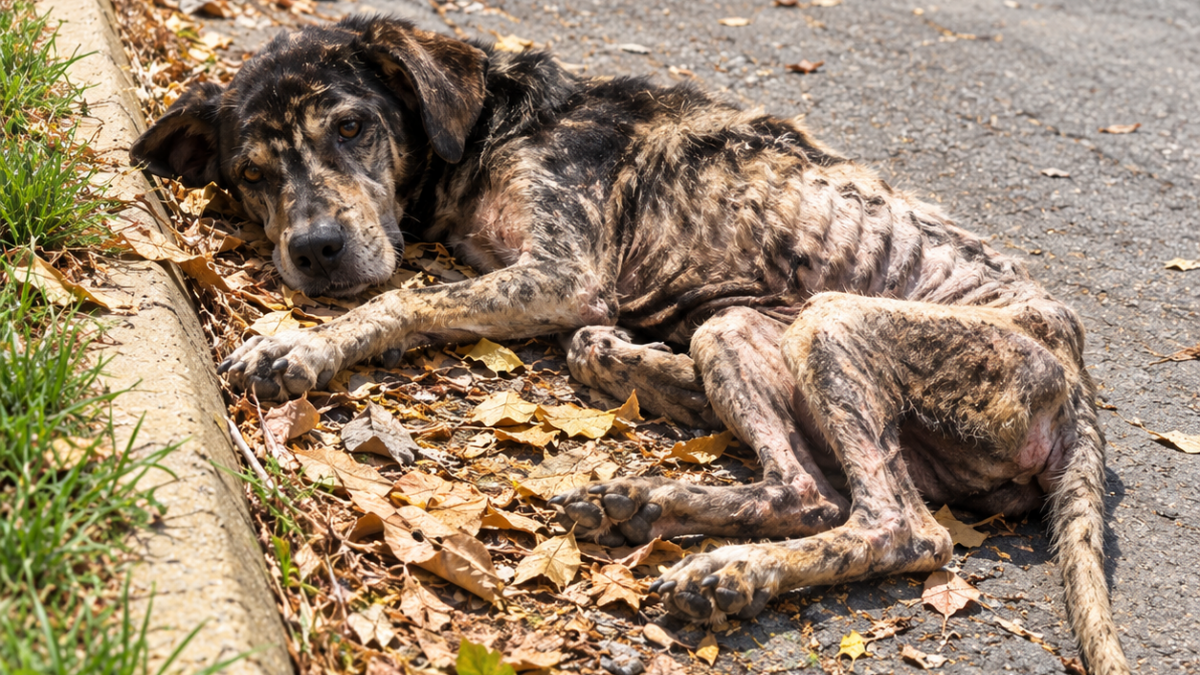
I was walking beneath a brutal summer sun when I saw a tiny dog staggering along the shoulder of the highway, his legs buckling every few steps.
I thought he needed water, maybe a ride to the nearest shelter—but when I got close enough to see his paws and the raw mark around his neck, I realized heat wasn’t the only thing he had survived.
Then I noticed what was tied beneath his faded collar, and suddenly I knew somebody out there was probably hoping this little dog would never be found.
My name is Daniel Harper, and until that afternoon, I had always believed there were certain things you could walk past because somebody else would eventually stop.
A stranded motorist.
A lost animal.
A problem that technically wasn’t yours.
That day cured me of that belief.
My truck had broken down less than two miles outside a small Arizona town called Red Mesa. The temperature on my dashboard had shown 108 degrees before the engine died, and my phone had one weak bar of service that disappeared whenever I tried calling a tow company.
So I started walking.
There wasn’t much along that road—just sun-bleached grass, scattered mesquite trees, utility poles, and asphalt shimmering so violently in the distance that it looked wet.
I’d been walking maybe twenty minutes when I saw movement.
At first, I thought it was a plastic grocery bag rolling along the shoulder.
Then it stopped.
Stood.
Took three uneven steps.
And collapsed.
I ran.
The animal lifted his head as I approached, but he didn’t have enough strength to move away.
He was a small mixed-breed dog, maybe fifteen pounds when healthy, though he couldn’t have weighed twelve that afternoon. His tan coat was dusty and patchy. His ribs showed through his sides. His tongue hung from his mouth as he panted.
“Hey, buddy,” I whispered.
His eyes followed me.
That was all.
I took the water bottle from my backpack and poured some into my palm.
He tried drinking too quickly.
“Easy. Slow down.”
I wet his gums, gave him a few small sips, then poured water over my bandanna and pressed it gently against his belly.
That was when I saw his feet.
The pads were cracked and blistered.
Some were bleeding.
This dog hadn’t wandered a hundred yards from somebody’s yard.
He had been walking for miles.
Then I noticed the ring around his neck.
Not from the collar he was wearing.
This mark was older and deeper—a strip where the fur had been rubbed away, the skin underneath thickened from what looked like months of pressure.
A chain.
My stomach turned.
“It’s okay,” I told him.
I don’t know whether I was reassuring him or myself.
When I reached toward his collar, he flinched so violently that his whole body flattened against the gravel.
I froze.
Nobody teaches a dog that reaction with kindness.
“Nobody’s hurting you.”
I waited.
Eventually he allowed me to touch the collar.
It was cheap red nylon, faded nearly pink.
No identification tag.
But something had been tucked beneath the strap.
A small folded piece of plastic.
I pulled it free.
Inside was half of a veterinary vaccination label with a handwritten number across the back.
And beneath that, barely visible, were three words.
PROPERTY OF R.B.
Before I could study it further, the dog suddenly raised his head.
A vehicle was approaching.
An old black pickup.
The little dog’s reaction was immediate.
He scrambled against me.
Not toward the truck.
Away from it.
His claws dug into my jeans as he tried to crawl behind my legs.
“Easy.”
The pickup slowed.
For one hopeful second, I thought somebody had finally stopped to help.
Then I saw the driver staring at the dog.
He was a broad man wearing sunglasses and a dusty baseball cap.
He rolled his window down.
“That dog yours?”
“No.”
His eyes dropped toward the red collar.
Something changed in his face.
“Stray,” he said. “Lots of them around here.”
“You recognize him?”
“Nope.”
The answer came too quickly.
The little dog was trembling so hard I could feel it through my leg.
The man looked at me again.
“You should leave him. Coyotes or heat will take care of it.”
I stared at him.
“What did you say?”
He shrugged.
“Not your problem.”
Then he drove away.
I watched the black pickup disappear toward Red Mesa.
Only after it was gone did the dog stop shaking.
I looked down at the faded collar.
At the initials.
At the road ahead.
And for the first time, I wondered whether that truck had stopped because the driver wanted to help—
or because he’d recognized exactly what I had found.
PART 2
I stood on the shoulder until the black pickup disappeared into the heat haze.
The little dog remained pressed against my calf.
His entire body trembled.
That bothered me more than anything the driver had said.
Dogs can fear engines, thunder, strangers, hats, even certain colors after a bad experience. But this wasn’t ordinary nervousness.
This was recognition.
I crouched beside him.
“Do you know that guy?”
His ears flattened.
“Yeah,” I murmured. “That’s what I thought.”
I couldn’t carry him all the way into town in that heat.
But leaving him wasn’t an option.
I took off my overshirt, made a crude sling, and eased him into it against my chest.
He weighed almost nothing.
That scared me too.
A dog his size should have felt solid.
Instead, I could feel every rib.
After another quarter mile, a white SUV pulled over.
The driver was a woman in blue medical scrubs.
“You okay?”
“My truck died. This dog was on the road.”
She leaned across the passenger seat.
Then she saw him.
“Oh my God.”
“I need a vet.”
“Get in.”
Her name was Rachel Moreno.
She worked at a dental clinic in Red Mesa and knew exactly where to take us.
“There is an animal hospital on Cottonwood,” she said. “Dr. Lewis. He’s good.”
The dog curled tighter against my chest when the SUV started moving.
Rachel glanced over.
“Yours?”
“Found him maybe thirty minutes ago.”
“Out there?”
“Yeah.”
“That’s twelve miles from anything.”
That made me look down.
Twelve miles.
With those paws.
“There’s a ranch road out that direction,” Rachel continued. “A few properties farther east too.”
“Guy in a black pickup stop?”
She looked at me.
“Black Ford? Older model?”
“Could’ve been.”
“Lots of old black trucks around here.”
But her tone had changed slightly.
“You know somebody?”
“No.”
She paused.
“Maybe.”
I waited.
Rachel shook her head.
“Get the dog treated first.”
Dr. Lewis’s clinic was small but spotless.
A veterinary technician rushed the dog into an examination room as soon as she saw his condition.
The next hour felt much longer.
Heat exhaustion.
Severe dehydration.
Malnutrition.
Burned paw pads.
Fleas.
Old pressure scarring around the neck.
A healing wound behind his left ear.
No broken bones.
No internal bleeding.
That was the good news.
The bad news was that his bloodwork showed he’d probably been dehydrated for more than a day.
“Could he have walked twelve miles?” I asked.
Dr. Lewis removed his glasses.
“In this heat?”
“Yes.”
“Possible. Barely.”
The dog lay beneath a light blanket with an IV catheter taped to one front leg.
His eyes were half-closed.
“What breed?”
“Hard to say. Chihuahua, terrier, maybe some miniature pinscher.”
“Age?”
“Two or three.”
He looked twelve.
“What happens now?”
Dr. Lewis studied me.
“Animal control gets notified because he’s a found animal.”
“And then?”
“They scan for a microchip. If there’s an owner, they make contact.”
I immediately thought about the pickup.
“What if the owner did this to him?”
The veterinarian’s expression hardened.
“Then we document everything.”
A technician entered carrying a scanner.
She passed it over the dog’s shoulder.
Nothing.
Again.
Nothing.
Down his back.
Still nothing.
Then the scanner beeped near the left side of his neck.
The technician looked at the display.
“He’s chipped.”
For some reason, my stomach dropped.
Dr. Lewis wrote down the number.
“Let’s see who he’s registered to.”
Ten minutes later, he returned with a puzzled expression.
“The chip’s registered to a rescue organization.”
“Which one?”
“Sun Valley Small Dog Rescue.”
“Where?”
“Phoenix.”
That was nearly two hundred miles away.
Dr. Lewis made the call.
Nobody answered.
He left a message.
Then he looked at the faded red collar I’d placed on the counter.
“What’s this?”
I showed him the plastic strip and the initials.
PROPERTY OF R.B.
He frowned.
“Mind if I photograph it?”
“Please.”
Animal control arrived forty minutes later.
Officer Elena Ruiz wasn’t what I expected.
She was short, calm, maybe forty, and had the kind of eyes that seemed to record everything.
She photographed the dog’s feet.
His neck.
His ribs.
The collar.
Then she asked me to repeat exactly what happened.
I told her about the black pickup.
“What did the driver look like?”
I described him.
“Truck?”
“Black. Older Ford, I think. Dusty. Maybe late 2000s.”
“License plate?”
I closed my eyes.
“I didn’t get it.”
“Any stickers?”
I thought.
Then remembered.
“Something white on the back window.”
“What?”
“Couldn’t read it.”
“Anything unusual about the truck?”
“A dent.”
“Where?”
“Passenger-side rear panel.”
She wrote that down.
Then I asked, “Does R.B. mean anything to you?”
Her pen stopped.
It was only for a second.
But I saw it.
“Officer?”
“I’m going to check something.”
“You know who that is?”
“I didn’t say that.”
“You didn’t have to.”
She closed her notebook.
“Mr. Harper, don’t go looking for whoever you think owns this dog.”
“I wasn’t planning to.”
That was technically true at the time.
Ruiz stared at me.
“I mean it.”
She left.
I sat beside the little dog.
“You’re causing a lot of trouble, buddy.”
His eyes opened.
His tail moved once under the blanket.
That tiny movement got me.
“What do they call you?”
No answer, obviously.
“Can’t keep calling you buddy.”
I looked around the room.
There was a poster advertising heartworm medication with a cartoon dog named Charlie.
“Charlie?”
No reaction.
“Max?”
Nothing.
“Taco?”
One ear moved.
“No. Absolutely not.”
He closed his eyes again.
“Milo?”
His eyes opened.
I laughed.
“Milo?”
The tail moved.
Maybe coincidence.
Maybe he liked my tone.
Either way, Milo became his name in my head.
At six that evening, Dr. Lewis told me Milo needed to stay overnight.
I should have gone home.
My truck had been towed.
Rachel had even left her number with the front desk in case I needed transportation.
But something kept bothering me.
Rachel’s reaction to the black truck.
Ruiz’s reaction to the initials.
I found Rachel’s number on the slip she’d given the receptionist and called her.
“It’s Daniel. The guy with the dog.”
“Is he okay?”
“He’ll probably make it.”
“Oh, thank God.”
“Can I ask you something?”
“Sure.”
“When I mentioned that black truck, you acted like you recognized it.”
Silence.
Then she said, “Where are you?”
“Outside the vet clinic.”
“Stay there.”
She arrived fifteen minutes later.
We sat on a bench beside the parking lot.
Rachel looked uncomfortable.
“There’s a man outside town named Roy Barlow.”
R.B.
My pulse quickened.
“What does he do?”
“Officially? Breeds small dogs.”
“Officially?”
“People call it a kennel.”
“And unofficially?”
Rachel looked toward the road.
“A puppy mill.”
I felt my jaw tighten.
“You know that for sure?”
“No. That’s the problem.”
She explained.
Barlow sold puppies online.
Chihuahuas.
Yorkies.
French bulldogs.
Pomeranian mixes.
Whatever people were buying.
Customers met him in parking lots or at gas stations.
Almost nobody visited the property.
Over the years, neighbors complained about barking.
Smell.
Dogs escaping.
But inspections never seemed to lead anywhere.
“Why?”
“He has permits.”
“So?”
“So every time somebody complains, the property looks just clean enough.”
“You think somebody warns him?”
“I think Red Mesa is a small town.”
That wasn’t an answer.
It was worse.
“Black truck?”
“Roy drives one.”
“Dent on the passenger rear quarter?”
Rachel looked at me.
“Yes.”
I stood.
“Then he dumped Milo.”
“You don’t know that.”
“He recognized the dog.”
“Probably.”
“He told me to leave him to die.”
Rachel looked sick.
“I believe you.”
“So we call Ruiz.”
“She’s already aware of Barlow.”
“Then why is he still operating?”
Rachel’s voice sharpened.
“Because believing something isn’t the same as proving it.”
That stopped me.
She continued.
“My cousin volunteered with county rescue years ago. They got two dogs from Barlow’s place after a storm damaged a fence. Both were underweight. One had a chain scar.”
Like Milo.
“But Barlow said they belonged to somebody else.”
“And people believed him?”
“His lawyer made enough noise that nobody could prove otherwise.”
I thought about Milo’s collar.
PROPERTY OF R.B.
“Maybe he finally made a mistake.”
Rachel looked at me.
“Maybe.”
The next morning, I returned to the clinic before eight.
Milo was standing.
Barely.
But standing.
When I entered the treatment area, his tail started moving.
That shouldn’t have meant as much as it did.
“Hey.”
He limped toward the kennel door.
Dr. Lewis laughed.
“Looks like you’ve been selected.”
“I’ve known him less than a day.”
“Dogs don’t use calendars.”
He checked Milo’s IV.
“Sun Valley Rescue called back.”
I turned.
“And?”
“They recognized the chip number.”
Milo had originally been named Benny.
He’d entered Sun Valley Rescue nearly two years earlier after being found abandoned behind an apartment complex.
A couple adopted him.
Six months later, according to rescue records, they reported him missing.
They had moved from Phoenix shortly afterward.
The chip was never updated.
“How does he end up with Barlow?” I asked.
“That’s the interesting part.”
The rescue had kept adoption paperwork.
The couple who adopted Benny were named Eric and Paula Denton.
Their last known forwarding address?
Red Mesa.
I called Officer Ruiz.
She arrived with another deputy.
By noon, they had located Paula Denton.
Her story changed everything.
She came to the animal hospital crying.
The moment Milo saw her, he wagged his tail.
But he didn’t run toward her.
Paula knelt outside his kennel.
“Benny.”
His tail moved faster.
“Oh, baby.”
She pressed both hands against the bars.
“I’m sorry.”
Her story came out slowly.
She and her husband had moved to Red Mesa after Eric lost his construction job.
Money became tight.
Then Eric started drinking heavily.
Their marriage fell apart.
One night Benny slipped through a broken backyard gate.
They searched for weeks.
Put up flyers.
Called animal control.
Paula eventually moved back to Phoenix after separating from Eric.
“I thought a coyote got him.”
Officer Ruiz asked, “Did you ever speak with Roy Barlow?”
Paula’s head snapped up.
“Why?”
“Just answer.”
“Once.”
“When?”
“After Benny disappeared.”
My stomach tightened.
“He called me.”
“How did he get your number?”
“It was on the missing-dog poster.”
“What did he say?”
Paula stared through the kennel bars.
“He said he’d seen a dog matching Benny near his property.”
“Did you go there?”
“Yes.”
“Did you see Benny?”
“No. Roy said the dog ran off.”
“Did he let you search the property?”
“No.”
Ruiz exchanged a look with the deputy.
“Mrs. Denton, are you certain?”
“Yes.”
“Did he ask what breed Benny was?”
“No. It was on the flyer.”
“Was Benny neutered?”
“Yes.”
That mattered.
A breeder wouldn’t want him for reproduction.
So why keep him?
Unless Milo wasn’t intentionally acquired.
Maybe Barlow found him.
Maybe he kept him chained.
Maybe he used him for something else.
Paula began crying again.
“Can I take him?”
That question hit me harder than I expected.
Legally, Benny was hers.
Emotionally, I had known him for one day.
I had no claim.
Paula noticed my expression.
“You found him?”
“Yeah.”
She looked at Milo.
Then at me.
“You stayed?”
“Yes.”
“All night?”
“Most of it.”
She smiled sadly.
“My apartment doesn’t allow dogs now.”
I didn’t know what to say.
She touched Milo’s nose through the bars.
“I came because I needed to know he was alive.”
Officer Ruiz asked quietly, “Are you surrendering your ownership rights?”
Paula nodded.
“I can’t give him what he needs.”
She looked at me.
“Can you?”
I glanced at Milo.
“I’ve never owned a dog.”
Paula gave a wet little laugh.
“Neither had I before him.”
“I travel for work sometimes.”
“He hates thunderstorms.”
“That’s not helping.”
“He likes scrambled eggs.”
I looked at the dog.
Milo wagged his tail.
Traitor.
Paula signed the surrender that afternoon.
I told myself I was only fostering him until something permanent could be arranged.
Nobody believed me.
Especially Dr. Lewis.
Milo stayed at the hospital another two nights.
Meanwhile, Ruiz started working the case.
The collar alone wasn’t enough for a warrant.
The initials could mean anything.
The chain scar proved prolonged restraint but not where.
Milo couldn’t testify.
The truck encounter was suspicious.
Not proof.
Then the veterinarian found something else.
During a closer examination behind Milo’s ear, Dr. Lewis discovered a second microchip.
That shouldn’t happen often.
But it does happen when somebody implants a dog without scanning carefully first.
The second chip was newer.
It was registered.
Owner:
Red Mesa Companion Kennels LLC.
Manager:
Roy Barlow.
That changed everything.
Ruiz called me that afternoon.
“We have him connected to the property.”
“Good.”
“Not enough.”
“What else do you need?”
“Evidence of neglect occurring while the dog was in his custody.”
“Look at him.”
“A defense attorney can argue he escaped weeks ago and deteriorated afterward.”
“He almost died twelve miles from Barlow’s property.”
“They’ll say dogs wander.”
“He recognized Milo.”
“They’ll say he recognized one of hundreds of dogs.”
“He told me to leave him to die.”
“That’s useful. It’s still not enough by itself.”
I hated hearing that.
“So what happens?”
“We build the case.”
Three days later, Milo came home with me.
Home was a two-bedroom rental on the edge of Tucson.
I’d lived there six years and had never noticed how empty it was until a twelve-pound dog occupied it.
For the first week, Milo barely left the rug beside my couch.
He ate carefully.
Slept deeply.
Flinched whenever I dropped anything metal.
He hated closed doors.
He hated chains.
The sound of a truck engine made him hide.
But every morning, something changed.
Day four, he followed me into the kitchen.
Day six, he took a treat directly from my fingers.
Day nine, he climbed onto the couch without permission and fell asleep against my thigh.
Day twelve, I stopped pretending he was temporary.
I bought him a proper bed.
He ignored it.
He slept beside my shoes.
Two weeks after finding him, I woke up at 3:17 in the morning to a sound I’d never heard from him.
Growling.
Milo stood near the front window.
Every hair along his back was raised.
I looked outside.
A black pickup was parked across the street.
No lights.
Engine running.
My blood went cold.
I grabbed my phone.
Before I could take a picture, the truck pulled away.
I called Ruiz.
“Did you see the driver?”
“No.”
“Plate?”
“Too dark.”
“Could it have been any black pickup?”
“Sure.”
“Daniel.”
“Yeah?”
“Do not confront Barlow.”
“I’m not.”
“Good.”
“I’d like to.”
“Don’t.”
The next morning, I found a paper bag on my front porch.
Inside was Milo’s original red collar.
I froze.
The collar should have been in evidence.
Then I looked closer.
It wasn’t the same collar.
It was another one.
Same cheap red nylon.
Same faded color.
Attached to it was a note.
Dogs get lost. People should learn the same lesson.
I called Ruiz.
This time, things moved quickly.
Threatening a witness in an active animal-cruelty investigation was different.
Officers collected the bag.
Fingerprints were smudged.
No useful DNA.
No camera footage.
But the message confirmed one thing.
Somebody was scared.
Ruiz urged me to stay with family for a few days.
I refused.
Instead, I installed cameras.
Motion lights.
Better locks.
And I started paying attention.
Not recklessly.
Carefully.
I began searching public records.
Red Mesa Companion Kennels had existed for nine years.
Barlow’s business license listed a maximum of twenty-five adult dogs.
His online listings suggested he was producing far more puppies than twenty-five adults reasonably could.
Customer reviews were strange.
Some glowing.
Some horrifying.
Several buyers complained about puppies arriving sick.
One mentioned parvovirus.
Another said her puppy had worms and severe anemia.
A third claimed Barlow demanded cash and refused to provide veterinary records.
I printed everything.
Ruiz already knew most of it.
Then I found a review from three years earlier.
One sentence jumped out.
When we arrived early, we saw dozens of cages behind the metal barn, but Roy made us leave immediately.
Dozens.
Not twenty-five.
I contacted the reviewer.
Her name was Janet Collier.
She remembered the property clearly.
“I’ve regretted buying that puppy every day.”
“Why?”
“Because buying her meant giving him money.”
“Was she sick?”
“She nearly died.”
“Did you report it?”
“Yes.”
“What happened?”
“Nothing.”
“Would you speak with investigators again?”
Silence.
Then:
“Yes.”
One became three.
Three became seven.
Former customers.
A delivery driver.
A veterinary assistant who said Barlow frequently bought vaccines directly and administered them himself.
Then Rachel called me.
“You need to hear this.”
Her cousin—the former county rescue volunteer—remembered something she’d never connected before.
Several years earlier, animal control had responded to a loose-dog complaint near Barlow’s land.
The officer who wrote the report?
No longer with the department.
The report referenced “approximately sixty canine enclosures visible from eastern fence line.”
But in the official inspection completed three days later, only nineteen adult dogs were documented.
“Where did forty dogs go?” I asked.
Rachel said nothing.
That question eventually became the center of the investigation.
Ruiz took everything to the county attorney.
A judge approved a limited inspection warrant related to the suspected unlicensed number of animals and possible neglect.
Barlow was given no advance warning.
That mattered.
I wasn’t allowed on the property.
Thank God.
What they found was worse than anything I had imagined.
Seventy-three dogs.
Twenty-one puppies.
Nine adult females housed in wire cages inside a metal barn with broken ventilation.
Water bowls covered with algae.
Feces stacked beneath elevated pens.
Dogs with untreated dental disease.
Skin infections.
Overgrown nails.
Two animals so thin they required immediate emergency care.
And behind the barn, anchored into hard desert soil, were six chains.
One had a red nylon fragment caught around the clasp.
Ruiz later told me it matched Milo’s collar material.
Barlow was arrested.
But that wasn’t the end.
Not even close.
Because people like Roy Barlow don’t usually build operations alone.
Someone had been warning him.
Someone had been making complaints disappear.
During the search, investigators found a notebook.
It contained puppy sales.
Cash payments.
Vet expenses.
And initials beside several entries.
One set appeared repeatedly:
T.M.
The county’s former animal-control supervisor was Thomas Mallory.
He had retired eight months earlier.
Ruiz recognized the initials instantly.
Subpoenaed bank records showed regular cash deposits that lined up suspiciously close to inspection dates.
Then a former employee of Barlow’s agreed to talk.
His name was Jesse Pike.
Twenty-six.
Thin.
Nervous.
He had worked at the kennel for eighteen months.
Jesse told investigators that whenever a complaint came in, Roy sometimes received a call the night before an inspection.
Dogs would be loaded into trailers.
Moved to a remote parcel.
Sick animals hidden in a shed.
Fresh bedding spread through the visible kennels.
Water replaced.
By morning, the place looked legal.
“Who called?” Ruiz asked.
Jesse swallowed.
“Tom.”
Thomas Mallory.
The case exploded.
Barlow’s attorney called it revenge by disgruntled employees.
Mallory denied everything.
Barlow insisted the dogs were healthy before officers arrived.
He claimed Milo had escaped months earlier.
He denied following me.
Denied the threatening collar.
Denied telling me to leave Milo beside the highway.
Then the investigators found video.
Not from my cameras.
From a gas station six miles outside Red Mesa.
The date matched the day I found Milo.
At 1:42 p.m., Barlow’s black truck entered the frame.
In the open bed was a small wire crate.
Inside it was a tan dog.
At 1:57, the truck passed another camera heading east.
The crate appeared empty.
At 2:18, I found Milo.
When Ruiz showed me the still images, I stared for a long time.
“That’s him?”
“We believe so.”
“Can you prove it?”
“The markings match.”
My hands started shaking.
All the uncertainty disappeared.
Milo hadn’t escaped.
He hadn’t wandered away.
Roy Barlow had driven him into the desert.
He had put a dehydrated, underweight dog on asphalt in 108-degree heat and driven away.
Then, by pure chance, he’d passed me carrying Milo less than an hour later.
Maybe he turned around.
Maybe he realized someone had seen the dog.
Maybe he wanted to check whether Milo had died.
Either way, he stopped.
And he’d told me exactly what he expected to happen.
Coyotes or heat will take care of it.
I went home that evening furious.
Milo was asleep on the couch.
His paws had healed enough that he could walk normally again.
His coat was filling in.
He’d gained almost four pounds.
I sat beside him.
He opened one eye.
“You know what I wanted to do today?”
His tail thumped.
“I wanted to hurt somebody.”
Another thump.
“But I think you’ve got a better idea.”
He climbed into my lap.
“Let him see you alive.”
The criminal case took eleven months.
During that time, every dog removed from Barlow’s property was placed with rescue groups or foster homes.
Some recovered quickly.
Others never fully did.
One elderly female Chihuahua named Rose had spent so long in a breeding cage that she didn’t understand grass.
The first time her foster mother placed her on a lawn, Rose stood frozen.
Then she took one step.
Then another.
Then started rolling.
That video circulated all over the county.
Donations poured in.
Barlow’s public image collapsed.
People who had once defended him suddenly remembered things.
A neighbor remembered trucks arriving after midnight.
A feed-store employee remembered Barlow buying far more dog food than a twenty-five-dog kennel required.
A former girlfriend turned over text messages.
One message became crucial.
She had asked why he kept “that useless tan mutt” chained behind the barn.
Barlow replied:
Keeps the females quiet and lets me know when coyotes are around.
Milo.
He had used him as an alarm system.
Chained outside.
Through summer heat.
Through cold desert nights.
When Milo became too sick to be useful, Barlow discarded him.
That knowledge hurt in a way I couldn’t explain.
Because by then Milo had become the gentlest dog I’d ever known.
He followed me from room to room.
He waited outside the bathroom.
He stole socks.
He hated carrots.
Loved chicken.
Snored like a grown man.
Whenever someone new entered the house, he’d hide behind my legs for thirty seconds.
Then curiosity would win.
He was learning that people could arrive without causing pain.
The black-truck fear took longer.
Any similar engine made him stiffen.
So we worked on it.
From a distance at first.
Treat.
Truck.
Treat.
Truck.
Months passed.
Eventually he could watch a black pickup drive past without hiding.
The first time that happened, I nearly cried.
Then came the trial.
I was subpoenaed.
The courthouse sat forty minutes from Red Mesa.
Barlow looked smaller inside it.
That’s the strange thing about people you’ve spent months imagining as monsters.
In your head, they grow.
Reality shrinks them.
He was just a man.
A man who made repeated choices.
That mattered more.
I testified about finding Milo.
The heat.
His condition.
The collar.
The truck.
Barlow stopping.
His exact words.
His attorney tried to make me sound dramatic.
“You were dehydrated yourself, correct?”
“I was hot.”
“Your truck had broken down?”
“Yes.”
“You were under stress?”
“Some.”
“So it is possible you misunderstood my client’s statement.”
“No.”
“You remember every word after nearly a year?”
“Those words, yes.”
“Convenient.”
I looked at Barlow.
Then back at the lawyer.
“If a man tells you to leave a dying dog beside a highway because coyotes or heat will take care of it, you tend to remember.”
The courtroom went silent.
The attorney changed direction.
He suggested I had become emotionally involved and therefore biased.
That was true.
I loved Milo.
But love didn’t create blistered paws.
It didn’t create malnutrition.
It didn’t forge microchip records.
It didn’t place Barlow’s truck on camera with Milo in the bed.
The prosecutor showed the gas-station footage.
Then veterinary photographs.
Then the kennel inspection images.
Barlow stared straight ahead.
Thomas Mallory took a plea agreement before his own trial.
He admitted providing advance notice of inspections in exchange for cash.
That testimony devastated Barlow’s defense.
Jesse Pike testified too.
So did former customers.
So did Dr. Lewis.
Paula came.
When she saw Milo’s intake photograph on the courtroom screen, she covered her mouth.
I reached across the bench and squeezed her hand.
The jury deliberated less than five hours.
They returned guilty verdicts on multiple counts of animal cruelty, abandonment, unlawful commercial breeding violations, witness intimidation connected to the threatening note, and conspiracy-related charges involving the inspection scheme.
Sentencing came six weeks later.
I brought Milo to town that day, though obviously not into the courtroom.
Rachel waited outside with him.
Barlow was sentenced to prison time, probation following release, substantial fines and restitution, and a court order prohibiting him from owning, breeding, housing, or profiting from companion animals for years after his release, subject to the jurisdiction’s enforcement.
Mallory lost his pension-related privileges that could legally be affected under the case, paid penalties, and received his own criminal sentence under his plea arrangement.
But the part that mattered to me happened afterward.
I walked out of the courthouse.
Rachel stood beneath a mesquite tree.
Milo saw me.
He started running.
Not limping.
Not crawling.
Running.
His ears flew backward.
His tail spun.
People standing near the courthouse steps began smiling.
Milo hit my legs so hard I nearly stumbled.
I picked him up.
“Easy, man.”
He licked my chin.
Then I noticed a black pickup parked across the street.
Same model.
Not Barlow’s.
Just somebody’s truck.
Milo noticed it too.
His body stiffened.
For half a second, the old fear returned.
I held him against me.
“You’re okay.”
He looked at the truck.
Then back at me.
And relaxed.
That felt like justice more than the sentence had.
Not because Milo understood courts.
He didn’t.
He understood safety.
He understood that the truck wasn’t coming for him anymore.
A month later, Red Mesa’s county board held a public meeting about animal-breeding regulations.
I expected a dozen people.
Nearly two hundred came.
Former Barlow dogs came with their new families.
Rose the Chihuahua wore a pink harness.
A scarred Yorkie named Winston sat in an elderly man’s lap.
Two terrier puppies wrestled beneath folding chairs.
Milo stayed beside my feet.
The county adopted stricter inspection procedures.
No more single-supervisor control over complaint scheduling.
Randomized inspections.
Mandatory digital documentation.
Better cross-checking of licensed animal counts.
A hotline for confidential employee reports.
It couldn’t undo what happened.
Nothing could.
But it made repeating it harder.
Rachel leaned toward me during the meeting.
“You realize none of this happens if your truck doesn’t break down.”
“I think about that too much.”
“What if you’d gotten cell service?”
“I would’ve waited for the tow.”
“What if you’d taken another road?”
“I know.”
“What if—”
“Rachel.”
She smiled.
“Sorry.”
I looked down at Milo.
He was asleep on my shoe.
“Maybe some questions aren’t useful.”
A year after I found him, I drove back to the exact stretch of highway.
Not because I wanted to remember the bad part.
Because I wanted to replace it.
The day was hot, but not brutal.
Milo rode in the passenger seat wearing a blue harness.
I parked safely off the road near the spot where I’d first seen him.
We walked a short distance.
When his paws touched the gravel shoulder, he hesitated.
My heart stopped.
Maybe dogs remember places through smell in ways we don’t fully understand.
Maybe he remembered nothing.
I wasn’t going to force him.
“We can go.”
I turned toward the truck.
Milo didn’t follow.
Instead, he sniffed the dirt.
Then walked forward.
Ten feet.
Twenty.
His tail rose.
He found a clump of desert grass and lifted his leg against it with great seriousness.
I laughed.
“That’s your revenge?”
He looked pleased with himself.
We kept walking.
Only for a few minutes.
Then I sat on a flat rock.
Milo climbed into my lap.
The road stretched into the distance.
A year earlier, he’d been collapsing there alone.
Now he had a harness.
A water bowl.
A veterinarian.
A microchip registered correctly.
Three different beds he refused to use.
And me.
I had him.
That was the part I hadn’t understood at first.
I thought I had rescued a dog.
But the year before finding Milo had been one of the worst periods of my life.
My father had died unexpectedly.
My marriage had ended eight months later.
I buried myself in work because empty hotel rooms were easier than an empty house.
Friends stopped inviting me places because I always declined.
I told everybody I preferred being alone.
Eventually, I believed myself.
Then my truck died on an Arizona highway.
A half-dead dog stumbled into my life.
Suddenly somebody needed breakfast at seven.
Somebody needed walks.
Somebody waited behind the door when I came home.
Somebody thought sitting beside me while I watched baseball was the greatest event imaginable.
Milo rebuilt routines I hadn’t realized I’d lost.
He made neighbors introduce themselves.
He made me take weekends off.
He made me laugh again.
One evening Rachel came over with takeout.
She had become part of our lives too.
She sat on my porch while Milo chased a moth.
“You ever wonder why he trusted you?”
“Water.”
“That’s romantic.”
“Chicken helped.”
“I’m serious.”
I watched Milo.
“I don’t think he trusted me.”
“What?”
“Not at first.”
“Then why’d he let you pick him up?”
“He couldn’t walk.”
Rachel considered that.
“Maybe trust came later.”
“Yeah.”
“When?”
I knew.
The first night after he came home.
A thunderstorm rolled across Tucson.
Milo panicked.
He wedged himself between the bathtub and toilet.
I sat on the bathroom floor for nearly three hours.
Didn’t touch him.
Didn’t pull him out.
I just stayed.
Near midnight, he crawled across the tile.
Placed one paw on my leg.
Then his head.
That was the moment.
“Probably during a storm,” I told Rachel.
She smiled.
“Staying counts.”
Two years passed.
Milo became almost unrecognizable from the dog I found.
His coat became thick and golden-tan.
The hair around his neck grew back, though a thin pale line remained where the chain had rubbed.
I never tried to hide it.
That scar belonged to the life he survived.
But it didn’t define the life he had now.
We visited schools occasionally with a local humane educator.
Milo was remarkably patient with children.
Kids would ask what happened to his neck.
I never gave them graphic details.
I simply said:
“Somebody forgot that animals depend on us to be kind.”
Then I’d show them how to offer a hand gently.
Milo would sniff.
Tail wag.
Another lesson completed.
Three years after the rescue, I received a letter.
No return address I recognized.
Inside was one sheet of lined paper.
It was from Jesse Pike.
The former kennel employee.
He had moved to New Mexico.
He wrote:
I’ve wanted to tell you something for a long time.
I sat down.
Jesse explained that Milo had been kept behind Barlow’s barn for at least fourteen months.
Jesse sometimes sneaked him extra food.
He had wanted to take Milo.
He was afraid.
The week before Milo was abandoned, Barlow became angry because Milo stopped barking at passing coyotes.
He was weak.
Barlow said the dog was “eating money.”
Jesse wrote that he left the property for two days to visit his mother.
When he returned, Milo was gone.
Barlow told him:
“I took care of it.”
Jesse had assumed Milo was dead.
Then he saw the news.
The final lines broke me.
I know everybody calls you the person who saved Milo. I need you to know he was trying to survive long before you found him. He was tougher than any of us. I’m sorry I wasn’t brave enough sooner.
I folded the letter.
Milo was lying beside the couch.
I sat on the floor.
“You had somebody there.”
He opened one eye.
“Jesse tried.”
Tail tap.
“I guess people are complicated, huh?”
Another tap.
I wrote Jesse back.
Only one sentence.
You spoke when it mattered. Milo is safe. Keep choosing courage.
Four years after I found Milo, Dr. Lewis retired.
At his farewell party, someone displayed before-and-after photographs of memorable patients.
Milo had an entire board.
Left side:
The roadside photograph.
Skinny.
Eyes sunken.
Paws wrapped.
Right side:
Milo standing on a hiking trail in Sedona wearing his blue harness, tongue out, chest forward like he owned Arizona.
People kept stopping.
“That’s the same dog?”
I heard it all afternoon.
Yes.
Same dog.
Different life.
Dr. Lewis found me near the food table.
“You know what I remember?”
“What?”
“That first afternoon, you asked what happened next.”
“I didn’t know anything about shelters.”
“You looked terrified when Paula asked if you could take him.”
“I was terrified.”
“Still?”
I looked across the room.
Milo was stealing turkey from Rachel.
“Constantly.”
Dr. Lewis laughed.
Then his expression softened.
“Most dogs don’t need extraordinary people, Daniel.”
“No?”
“They need ordinary people who don’t walk away.”
I carried that sentence with me.
Years passed.
Milo’s muzzle slowly turned white.
He developed arthritis.
The dog who once couldn’t walk because humans had failed him eventually slowed because he’d been given enough years to grow old.
There was something beautiful about that.
On his eighth birthday—or the date we chose as his birthday—I made him scrambled eggs.
Paula came down from Phoenix.
Rachel brought a ridiculous dog-friendly cake.
Officer Ruiz, now a supervisor, arrived in uniform.
Milo barked at the cake.
Ignored the candles.
Attempted to eat the paper plate.
Paula sat beside me afterward.
“He looks happy.”
“He is.”
She wiped at one eye.
“I still feel guilty.”
“For losing him?”
“For everything.”
“Paula.”
She looked at me.
“If you hadn’t put those flyers up years ago, there wouldn’t have been a phone number for Barlow to call. We wouldn’t have known he crossed paths with Milo. Your search became evidence.”
“I never thought about that.”
“You didn’t stop loving him just because you couldn’t find him.”
She watched Milo sleeping beneath the table.
“Thank you.”
“For what?”
“For not making me feel like the villain.”
“You weren’t.”
She nodded.
“Neither were you.”
The villain had been the man who chose cruelty.
That distinction mattered.
Eventually Milo became fully gray around the face.
He couldn’t hike far anymore.
So I bought a dog stroller.
I swore I never would.
Rachel took a photograph the first day.
“You look ridiculous.”
“I know.”
“Milo looks thrilled.”
He did.
We returned to that highway one final time when he was around eleven.
I parked in the same safe pull-off.
This time I lifted him from the truck.
His legs worked, but slowly.
We walked perhaps fifty yards.
Then Milo sat.
I sat beside him.
The desert was quiet.
No black truck.
No fear.
Just wind moving through dry grass.
I poured water into a bowl.
Milo drank.
Then he rested his chin on my knee.
“You remember this place?”
His ears moved.
“Probably not.”
I scratched behind them.
“I do.”
I thought about how furious I’d been for years.
At Barlow.
At Mallory.
At every person who had bought a puppy without asking questions.
At myself for almost believing that somebody else would stop.
Anger had helped at first.
It made me testify.
Research.
Push.
But Milo never seemed interested in anger.
Dogs don’t waste much time building monuments to people who hurt them.
Once they feel safe enough, they become occupied with better things.
Food.
Sunlight.
A familiar voice.
A couch.
The possibility that a dropped piece of chicken might belong to them.
Maybe that was his final revenge.
Roy Barlow had treated him like something disposable.
Milo answered by surviving long enough to become somebody’s entire world.
Barlow tried to erase him.
Instead, Milo’s case helped expose the kennel, protect other dogs, change county inspection procedures, and inspire hundreds of people to pay closer attention to where animals came from.
Barlow wanted him forgotten on a desert road.
Years later, people in Red Mesa still knew his name.
Milo.
The dog who lived.
That evening, we returned home.
He ate dinner.
Stole half of Rachel’s chicken.
Snored beside me.
Normal things.
Beautiful things.
Milo lived almost three more years.
His last months were gentle.
His kidneys began failing.
Medication bought us time.
Then appetite disappeared.
Walks became trips into the backyard.
One morning I cooked his favorite scrambled eggs.
He sniffed them.
Then looked at me.
I knew.
Knowing didn’t make it easier.
Dr. Lewis had retired, but he came to the house anyway when I called.
Rachel sat beside us on the living-room floor.
Milo rested on the same overshirt I had used to carry him from the highway years earlier.
I’d kept it.
I don’t know why.
Maybe I always knew we’d need to close the circle somehow.
His breathing was slow.
I put my hand beneath his chin.
“Hey, buddy.”
His eyes opened.
That old word.
Buddy.
The first thing I’d called him.
“You did good.”
His tail moved once.
Rachel began crying.
So did I.
“You don’t have to keep fighting.”
Milo looked at me.
I thought about his first afternoon.
The road.
The blistered paws.
The collar.
The black pickup.
How hard he’d worked just to remain alive long enough for somebody to notice him.
“You can rest now.”
Dr. Lewis gave the medication.
I kept talking.
I told Milo about our first storm.
About the first sock he stole.
About the time he peed on Ruiz’s boot at the county fair.
Ruiz still insisted it was political commentary.
I told him about the desert.
About the courthouse.
About Paula.
About Rose rolling in grass.
About every life his survival had touched.
Then I told him the only thing that truly mattered.
“You were never disposable.”
His breathing slowed.
“You were wanted.”
Another breath.
“You were loved.”
His eyes closed.
“And you made it home.”
Milo died with his head in my hands.
For months, I couldn’t drive that highway.
Then, on the anniversary of the day I found him, Rachel came with me.
We stopped near the same place.
I carried a metal water station we’d built with permission from the nearby property owner.
Nothing elaborate.
A shaded container and refillable bowls for travelers who found stray animals in the area.
Beside it was a small plaque.
Not a memorial to suffering.
I refused to make his life about suffering.
It read:
MILO’S STOP
For every animal still trying to make it home.
Below that:
Water. Shade. Kindness. Don’t Walk Away.
Officer Ruiz joined us.
So did Paula.
Jesse drove in from New Mexico.
Even Dr. Lewis came.
Nobody made speeches.
We didn’t need them.
Rachel filled the first water bowl.
Paula placed Milo’s blue harness beside the plaque for a photograph, then handed it back to me.
Jesse stood apart for a while.
Eventually he approached.
“I never got to meet him again.”
I showed him my favorite picture.
Milo asleep upside down on the couch, paws in the air.
Jesse laughed.
“That doesn’t look like the same dog.”
“It was.”
“No.”
He shook his head.
“I mean… he doesn’t look scared.”
I looked at the photograph.
“No.”
That was the point.
The best revenge wasn’t that Roy Barlow went to prison.
It wasn’t losing his kennel.
It wasn’t having his name printed beside charges in the newspaper.
Those things mattered.
Accountability mattered.
But Milo’s real victory happened quietly.
It happened every morning he woke up safe.
Every meal he finished without worrying whether another would come.
Every time a truck passed and he chose not to hide.
Every night he slept deeply enough to dream.
Every year his muzzle grew whiter.
Cruel people had taken part of his life.
They didn’t get all of it.
They didn’t get the ending.
Milo did.
And on the day I finally stood beside that desert road without him, I understood something I wished I’d known from the beginning.
Sometimes rescue isn’t one heroic moment.
Sometimes it’s the first bowl of water.
Then the veterinarian.
Then the safe room.
Then the court testimony.
Then the patience required during a thunderstorm.
Then a thousand ordinary mornings afterward.
Love doesn’t always arrive dramatically.
Sometimes it pulls over.
Sometimes it kneels beside a frightened animal on hot gravel.
Sometimes it says, “Easy. Slow down.”
And sometimes the smallest creature you almost passed becomes the reason you finally stop passing your own life by.
I went to that road believing Milo needed someone to save him.
I left years later knowing we’d saved each other.
And whenever I think of him now, I don’t picture the frail dog staggering beneath the scorching sun.
I picture an old gray-faced dog in a blue harness, standing in the desert with his tail held high, looking back at me impatiently because I was walking too slowly.
That is the Milo I keep.
Not abandoned.
Not chained.
Not afraid.
Free.
Loved.
Home.
I was walking beneath a brutal summer sun when I saw a tiny dog staggering along the shoulder of the highway, his legs buckling every few steps.
I thought he needed water, maybe a ride to the nearest shelter—but when I got close enough to see his paws and the raw mark around his neck, I realized heat wasn’t the only thing he had survived.
Then I noticed what was tied beneath his faded collar, and suddenly I knew somebody out there was probably hoping this little dog would never be found.
My name is Daniel Harper, and until that afternoon, I had always believed there were certain things you could walk past because somebody else would eventually stop.
A stranded motorist.
A lost animal.
A problem that technically wasn’t yours.
That day cured me of that belief.
My truck had broken down less than two miles outside a small Arizona town called Red Mesa. The temperature on my dashboard had shown 108 degrees before the engine died, and my phone had one weak bar of service that disappeared whenever I tried calling a tow company.
So I started walking.
There wasn’t much along that road—just sun-bleached grass, scattered mesquite trees, utility poles, and asphalt shimmering so violently in the distance that it looked wet.
I’d been walking maybe twenty minutes when I saw movement.
At first, I thought it was a plastic grocery bag rolling along the shoulder.
Then it stopped.
Stood.
Took three uneven steps.
And collapsed.
I ran.
The animal lifted his head as I approached, but he didn’t have enough strength to move away.
He was a small mixed-breed dog, maybe fifteen pounds when healthy, though he couldn’t have weighed twelve that afternoon. His tan coat was dusty and patchy. His ribs showed through his sides. His tongue hung from his mouth as he panted.
“Hey, buddy,” I whispered.
His eyes followed me.
That was all.
I took the water bottle from my backpack and poured some into my palm.
He tried drinking too quickly.
“Easy. Slow down.”
I wet his gums, gave him a few small sips, then poured water over my bandanna and pressed it gently against his belly.
That was when I saw his feet.
The pads were cracked and blistered.
Some were bleeding.
This dog hadn’t wandered a hundred yards from somebody’s yard.
He had been walking for miles.
Then I noticed the ring around his neck.
Not from the collar he was wearing.
This mark was older and deeper—a strip where the fur had been rubbed away, the skin underneath thickened from what looked like months of pressure.
A chain.
My stomach turned.
“It’s okay,” I told him.
I don’t know whether I was reassuring him or myself.
When I reached toward his collar, he flinched so violently that his whole body flattened against the gravel.
I froze.
Nobody teaches a dog that reaction with kindness.
“Nobody’s hurting you.”
I waited.
Eventually he allowed me to touch the collar.
It was cheap red nylon, faded nearly pink.
No identification tag.
But something had been tucked beneath the strap.
A small folded piece of plastic.
I pulled it free.
Inside was half of a veterinary vaccination label with a handwritten number across the back.
And beneath that, barely visible, were three words.
**PROPERTY OF R.B.**
Before I could study it further, the dog suddenly raised his head.
A vehicle was approaching.
An old black pickup.
The little dog’s reaction was immediate.
He scrambled against me.
Not toward the truck.
Away from it.
His claws dug into my jeans as he tried to crawl behind my legs.
“Easy.”
The pickup slowed.
For one hopeful second, I thought somebody had finally stopped to help.
Then I saw the driver staring at the dog.
He was a broad man wearing sunglasses and a dusty baseball cap.
He rolled his window down.
“That dog yours?”
“No.”
His eyes dropped toward the red collar.
Something changed in his face.
“Stray,” he said. “Lots of them around here.”
“You recognize him?”
“Nope.”
The answer came too quickly.
The little dog was trembling so hard I could feel it through my leg.
The man looked at me again.
“You should leave him. Coyotes or heat will take care of it.”
I stared at him.
“What did you say?”
He shrugged.
“Not your problem.”
Then he drove away.
I watched the black pickup disappear toward Red Mesa.
Only after it was gone did the dog stop shaking.
I looked down at the faded collar.
At the initials.
At the road ahead.
And for the first time, I wondered whether that truck had stopped because the driver wanted to help—
or because he’d recognized exactly what I had found.
[END OF FACEBOOK CAPTION]
[FIRST COMMENT / FULL STORY CONTINUATION]
I stood on the shoulder until the black pickup disappeared into the heat haze.
The little dog remained pressed against my calf.
His entire body trembled.
That bothered me more than anything the driver had said.
Dogs can fear engines, thunder, strangers, hats, even certain colors after a bad experience. But this wasn’t ordinary nervousness.
This was recognition.
I crouched beside him.
“Do you know that guy?”
His ears flattened.
“Yeah,” I murmured. “That’s what I thought.”
I couldn’t carry him all the way into town in that heat.
But leaving him wasn’t an option.
I took off my overshirt, made a crude sling, and eased him into it against my chest.
He weighed almost nothing.
That scared me too.
A dog his size should have felt solid.
Instead, I could feel every rib.
After another quarter mile, a white SUV pulled over.
The driver was a woman in blue medical scrubs.
“You okay?”
“My truck died. This dog was on the road.”
She leaned across the passenger seat.
Then she saw him.
“Oh my God.”
“I need a vet.”
“Get in.”
Her name was Rachel Moreno.
She worked at a dental clinic in Red Mesa and knew exactly where to take us.
“There is an animal hospital on Cottonwood,” she said. “Dr. Lewis. He’s good.”
The dog curled tighter against my chest when the SUV started moving.
Rachel glanced over.
“Yours?”
“Found him maybe thirty minutes ago.”
“Out there?”
“Yeah.”
“That’s twelve miles from anything.”
That made me look down.
Twelve miles.
With those paws.
“There’s a ranch road out that direction,” Rachel continued. “A few properties farther east too.”
“Guy in a black pickup stop?”
She looked at me.
“Black Ford? Older model?”
“Could’ve been.”
“Lots of old black trucks around here.”
But her tone had changed slightly.
“You know somebody?”
“No.”
She paused.
“Maybe.”
I waited.
Rachel shook her head.
“Get the dog treated first.”
Dr. Lewis’s clinic was small but spotless.
A veterinary technician rushed the dog into an examination room as soon as she saw his condition.
The next hour felt much longer.
Heat exhaustion.
Severe dehydration.
Malnutrition.
Burned paw pads.
Fleas.
Old pressure scarring around the neck.
A healing wound behind his left ear.
No broken bones.
No internal bleeding.
That was the good news.
The bad news was that his bloodwork showed he’d probably been dehydrated for more than a day.
“Could he have walked twelve miles?” I asked.
Dr. Lewis removed his glasses.
“In this heat?”
“Yes.”
“Possible. Barely.”
The dog lay beneath a light blanket with an IV catheter taped to one front leg.
His eyes were half-closed.
“What breed?”
“Hard to say. Chihuahua, terrier, maybe some miniature pinscher.”
“Age?”
“Two or three.”
He looked twelve.
“What happens now?”
Dr. Lewis studied me.
“Animal control gets notified because he’s a found animal.”
“And then?”
“They scan for a microchip. If there’s an owner, they make contact.”
I immediately thought about the pickup.
“What if the owner did this to him?”
The veterinarian’s expression hardened.
“Then we document everything.”
A technician entered carrying a scanner.
She passed it over the dog’s shoulder.
Nothing.
Again.
Nothing.
Down his back.
Still nothing.
Then the scanner beeped near the left side of his neck.
The technician looked at the display.
“He’s chipped.”
For some reason, my stomach dropped.
Dr. Lewis wrote down the number.
“Let’s see who he’s registered to.”
Ten minutes later, he returned with a puzzled expression.
“The chip’s registered to a rescue organization.”
“Which one?”
“Sun Valley Small Dog Rescue.”
“Where?”
“Phoenix.”
That was nearly two hundred miles away.
Dr. Lewis made the call.
Nobody answered.
He left a message.
Then he looked at the faded red collar I’d placed on the counter.
“What’s this?”
I showed him the plastic strip and the initials.
PROPERTY OF R.B.
He frowned.
“Mind if I photograph it?”
“Please.”
Animal control arrived forty minutes later.
Officer Elena Ruiz wasn’t what I expected.
She was short, calm, maybe forty, and had the kind of eyes that seemed to record everything.
She photographed the dog’s feet.
His neck.
His ribs.
The collar.
Then she asked me to repeat exactly what happened.
I told her about the black pickup.
“What did the driver look like?”
I described him.
“Truck?”
“Black. Older Ford, I think. Dusty. Maybe late 2000s.”
“License plate?”
I closed my eyes.
“I didn’t get it.”
“Any stickers?”
I thought.
Then remembered.
“Something white on the back window.”
“What?”
“Couldn’t read it.”
“Anything unusual about the truck?”
“A dent.”
“Where?”
“Passenger-side rear panel.”
She wrote that down.
Then I asked, “Does R.B. mean anything to you?”
Her pen stopped.
It was only for a second.
But I saw it.
“Officer?”
“I’m going to check something.”
“You know who that is?”
“I didn’t say that.”
“You didn’t have to.”
She closed her notebook.
“Mr. Harper, don’t go looking for whoever you think owns this dog.”
“I wasn’t planning to.”
That was technically true at the time.
Ruiz stared at me.
“I mean it.”
She left.
I sat beside the little dog.
“You’re causing a lot of trouble, buddy.”
His eyes opened.
His tail moved once under the blanket.
That tiny movement got me.
“What do they call you?”
No answer, obviously.
“Can’t keep calling you buddy.”
I looked around the room.
There was a poster advertising heartworm medication with a cartoon dog named Charlie.
“Charlie?”
No reaction.
“Max?”
Nothing.
“Taco?”
One ear moved.
“No. Absolutely not.”
He closed his eyes again.
“Milo?”
His eyes opened.
I laughed.
“Milo?”
The tail moved.
Maybe coincidence.
Maybe he liked my tone.
Either way, Milo became his name in my head.
At six that evening, Dr. Lewis told me Milo needed to stay overnight.
I should have gone home.
My truck had been towed.
Rachel had even left her number with the front desk in case I needed transportation.
But something kept bothering me.
Rachel’s reaction to the black truck.
Ruiz’s reaction to the initials.
I found Rachel’s number on the slip she’d given the receptionist and called her.
“It’s Daniel. The guy with the dog.”
“Is he okay?”
“He’ll probably make it.”
“Oh, thank God.”
“Can I ask you something?”
“Sure.”
“When I mentioned that black truck, you acted like you recognized it.”
Silence.
Then she said, “Where are you?”
“Outside the vet clinic.”
“Stay there.”
She arrived fifteen minutes later.
We sat on a bench beside the parking lot.
Rachel looked uncomfortable.
“There’s a man outside town named Roy Barlow.”
R.B.
My pulse quickened.
“What does he do?”
“Officially? Breeds small dogs.”
“Officially?”
“People call it a kennel.”
“And unofficially?”
Rachel looked toward the road.
“A puppy mill.”
I felt my jaw tighten.
“You know that for sure?”
“No. That’s the problem.”
She explained.
Barlow sold puppies online.
Chihuahuas.
Yorkies.
French bulldogs.
Pomeranian mixes.
Whatever people were buying.
Customers met him in parking lots or at gas stations.
Almost nobody visited the property.
Over the years, neighbors complained about barking.
Smell.
Dogs escaping.
But inspections never seemed to lead anywhere.
“Why?”
“He has permits.”
“So?”
“So every time somebody complains, the property looks just clean enough.”
“You think somebody warns him?”
“I think Red Mesa is a small town.”
That wasn’t an answer.
It was worse.
“Black truck?”
“Roy drives one.”
“Dent on the passenger rear quarter?”
Rachel looked at me.
“Yes.”
I stood.
“Then he dumped Milo.”
“You don’t know that.”
“He recognized the dog.”
“Probably.”
“He told me to leave him to die.”
Rachel looked sick.
“I believe you.”
“So we call Ruiz.”
“She’s already aware of Barlow.”
“Then why is he still operating?”
Rachel’s voice sharpened.
“Because believing something isn’t the same as proving it.”
That stopped me.
She continued.
“My cousin volunteered with county rescue years ago. They got two dogs from Barlow’s place after a storm damaged a fence. Both were underweight. One had a chain scar.”
Like Milo.
“But Barlow said they belonged to somebody else.”
“And people believed him?”
“His lawyer made enough noise that nobody could prove otherwise.”
I thought about Milo’s collar.
PROPERTY OF R.B.
“Maybe he finally made a mistake.”
Rachel looked at me.
“Maybe.”
The next morning, I returned to the clinic before eight.
Milo was standing.
Barely.
But standing.
When I entered the treatment area, his tail started moving.
That shouldn’t have meant as much as it did.
“Hey.”
He limped toward the kennel door.
Dr. Lewis laughed.
“Looks like you’ve been selected.”
“I’ve known him less than a day.”
“Dogs don’t use calendars.”
He checked Milo’s IV.
“Sun Valley Rescue called back.”
I turned.
“And?”
“They recognized the chip number.”
Milo had originally been named Benny.
He’d entered Sun Valley Rescue nearly two years earlier after being found abandoned behind an apartment complex.
A couple adopted him.
Six months later, according to rescue records, they reported him missing.
They had moved from Phoenix shortly afterward.
The chip was never updated.
“How does he end up with Barlow?” I asked.
“That’s the interesting part.”
The rescue had kept adoption paperwork.
The couple who adopted Benny were named Eric and Paula Denton.
Their last known forwarding address?
Red Mesa.
I called Officer Ruiz.
She arrived with another deputy.
By noon, they had located Paula Denton.
Her story changed everything.
She came to the animal hospital crying.
The moment Milo saw her, he wagged his tail.
But he didn’t run toward her.
Paula knelt outside his kennel.
“Benny.”
His tail moved faster.
“Oh, baby.”
She pressed both hands against the bars.
“I’m sorry.”
Her story came out slowly.
She and her husband had moved to Red Mesa after Eric lost his construction job.
Money became tight.
Then Eric started drinking heavily.
Their marriage fell apart.
One night Benny slipped through a broken backyard gate.
They searched for weeks.
Put up flyers.
Called animal control.
Paula eventually moved back to Phoenix after separating from Eric.
“I thought a coyote got him.”
Officer Ruiz asked, “Did you ever speak with Roy Barlow?”
Paula’s head snapped up.
“Why?”
“Just answer.”
“Once.”
“When?”
“After Benny disappeared.”
My stomach tightened.
“He called me.”
“How did he get your number?”
“It was on the missing-dog poster.”
“What did he say?”
Paula stared through the kennel bars.
“He said he’d seen a dog matching Benny near his property.”
“Did you go there?”
“Yes.”
“Did you see Benny?”
“No. Roy said the dog ran off.”
“Did he let you search the property?”
“No.”
Ruiz exchanged a look with the deputy.
“Mrs. Denton, are you certain?”
“Yes.”
“Did he ask what breed Benny was?”
“No. It was on the flyer.”
“Was Benny neutered?”
“Yes.”
That mattered.
A breeder wouldn’t want him for reproduction.
So why keep him?
Unless Milo wasn’t intentionally acquired.
Maybe Barlow found him.
Maybe he kept him chained.
Maybe he used him for something else.
Paula began crying again.
“Can I take him?”
That question hit me harder than I expected.
Legally, Benny was hers.
Emotionally, I had known him for one day.
I had no claim.
Paula noticed my expression.
“You found him?”
“Yeah.”
She looked at Milo.
Then at me.
“You stayed?”
“Yes.”
“All night?”
“Most of it.”
She smiled sadly.
“My apartment doesn’t allow dogs now.”
I didn’t know what to say.
She touched Milo’s nose through the bars.
“I came because I needed to know he was alive.”
Officer Ruiz asked quietly, “Are you surrendering your ownership rights?”
Paula nodded.
“I can’t give him what he needs.”
She looked at me.
“Can you?”
I glanced at Milo.
“I’ve never owned a dog.”
Paula gave a wet little laugh.
“Neither had I before him.”
“I travel for work sometimes.”
“He hates thunderstorms.”
“That’s not helping.”
“He likes scrambled eggs.”
I looked at the dog.
Milo wagged his tail.
Traitor.
Paula signed the surrender that afternoon.
I told myself I was only fostering him until something permanent could be arranged.
Nobody believed me.
Especially Dr. Lewis.
Milo stayed at the hospital another two nights.
Meanwhile, Ruiz started working the case.
The collar alone wasn’t enough for a warrant.
The initials could mean anything.
The chain scar proved prolonged restraint but not where.
Milo couldn’t testify.
The truck encounter was suspicious.
Not proof.
Then the veterinarian found something else.
During a closer examination behind Milo’s ear, Dr. Lewis discovered a second microchip.
That shouldn’t happen often.
But it does happen when somebody implants a dog without scanning carefully first.
The second chip was newer.
It was registered.
Owner:
**Red Mesa Companion Kennels LLC.**
Manager:
**Roy Barlow.**
That changed everything.
Ruiz called me that afternoon.
“We have him connected to the property.”
“Good.”
“Not enough.”
“What else do you need?”
“Evidence of neglect occurring while the dog was in his custody.”
“Look at him.”
“A defense attorney can argue he escaped weeks ago and deteriorated afterward.”
“He almost died twelve miles from Barlow’s property.”
“They’ll say dogs wander.”
“He recognized Milo.”
“They’ll say he recognized one of hundreds of dogs.”
“He told me to leave him to die.”
“That’s useful. It’s still not enough by itself.”
I hated hearing that.
“So what happens?”
“We build the case.”
Three days later, Milo came home with me.
Home was a two-bedroom rental on the edge of Tucson.
I’d lived there six years and had never noticed how empty it was until a twelve-pound dog occupied it.
For the first week, Milo barely left the rug beside my couch.
He ate carefully.
Slept deeply.
Flinched whenever I dropped anything metal.
He hated closed doors.
He hated chains.
The sound of a truck engine made him hide.
But every morning, something changed.
Day four, he followed me into the kitchen.
Day six, he took a treat directly from my fingers.
Day nine, he climbed onto the couch without permission and fell asleep against my thigh.
Day twelve, I stopped pretending he was temporary.
I bought him a proper bed.
He ignored it.
He slept beside my shoes.
Two weeks after finding him, I woke up at 3:17 in the morning to a sound I’d never heard from him.
Growling.
Milo stood near the front window.
Every hair along his back was raised.
I looked outside.
A black pickup was parked across the street.
No lights.
Engine running.
My blood went cold.
I grabbed my phone.
Before I could take a picture, the truck pulled away.
I called Ruiz.
“Did you see the driver?”
“No.”
“Plate?”
“Too dark.”
“Could it have been any black pickup?”
“Sure.”
“Daniel.”
“Yeah?”
“Do not confront Barlow.”
“I’m not.”
“Good.”
“I’d like to.”
“Don’t.”
The next morning, I found a paper bag on my front porch.
Inside was Milo’s original red collar.
I froze.
The collar should have been in evidence.
Then I looked closer.
It wasn’t the same collar.
It was another one.
Same cheap red nylon.
Same faded color.
Attached to it was a note.
**Dogs get lost. People should learn the same lesson.**
I called Ruiz.
This time, things moved quickly.
Threatening a witness in an active animal-cruelty investigation was different.
Officers collected the bag.
Fingerprints were smudged.
No useful DNA.
No camera footage.
But the message confirmed one thing.
Somebody was scared.
Ruiz urged me to stay with family for a few days.
I refused.
Instead, I installed cameras.
Motion lights.
Better locks.
And I started paying attention.
Not recklessly.
Carefully.
I began searching public records.
Red Mesa Companion Kennels had existed for nine years.
Barlow’s business license listed a maximum of twenty-five adult dogs.
His online listings suggested he was producing far more puppies than twenty-five adults reasonably could.
Customer reviews were strange.
Some glowing.
Some horrifying.
Several buyers complained about puppies arriving sick.
One mentioned parvovirus.
Another said her puppy had worms and severe anemia.
A third claimed Barlow demanded cash and refused to provide veterinary records.
I printed everything.
Ruiz already knew most of it.
Then I found a review from three years earlier.
One sentence jumped out.
**When we arrived early, we saw dozens of cages behind the metal barn, but Roy made us leave immediately.**
Dozens.
Not twenty-five.
I contacted the reviewer.
Her name was Janet Collier.
She remembered the property clearly.
“I’ve regretted buying that puppy every day.”
“Why?”
“Because buying her meant giving him money.”
“Was she sick?”
“She nearly died.”
“Did you report it?”
“Yes.”
“What happened?”
“Nothing.”
“Would you speak with investigators again?”
Silence.
Then:
“Yes.”
One became three.
Three became seven.
Former customers.
A delivery driver.
A veterinary assistant who said Barlow frequently bought vaccines directly and administered them himself.
Then Rachel called me.
“You need to hear this.”
Her cousin—the former county rescue volunteer—remembered something she’d never connected before.
Several years earlier, animal control had responded to a loose-dog complaint near Barlow’s land.
The officer who wrote the report?
No longer with the department.
The report referenced “approximately sixty canine enclosures visible from eastern fence line.”
But in the official inspection completed three days later, only nineteen adult dogs were documented.
“Where did forty dogs go?” I asked.
Rachel said nothing.
That question eventually became the center of the investigation.
Ruiz took everything to the county attorney.
A judge approved a limited inspection warrant related to the suspected unlicensed number of animals and possible neglect.
Barlow was given no advance warning.
That mattered.
I wasn’t allowed on the property.
Thank God.
What they found was worse than anything I had imagined.
Seventy-three dogs.
Twenty-one puppies.
Nine adult females housed in wire cages inside a metal barn with broken ventilation.
Water bowls covered with algae.
Feces stacked beneath elevated pens.
Dogs with untreated dental disease.
Skin infections.
Overgrown nails.
Two animals so thin they required immediate emergency care.
And behind the barn, anchored into hard desert soil, were six chains.
One had a red nylon fragment caught around the clasp.
Ruiz later told me it matched Milo’s collar material.
Barlow was arrested.
But that wasn’t the end.
Not even close.
Because people like Roy Barlow don’t usually build operations alone.
Someone had been warning him.
Someone had been making complaints disappear.
During the search, investigators found a notebook.
It contained puppy sales.
Cash payments.
Vet expenses.
And initials beside several entries.
One set appeared repeatedly:
**T.M.**
The county’s former animal-control supervisor was Thomas Mallory.
He had retired eight months earlier.
Ruiz recognized the initials instantly.
Subpoenaed bank records showed regular cash deposits that lined up suspiciously close to inspection dates.
Then a former employee of Barlow’s agreed to talk.
His name was Jesse Pike.
Twenty-six.
Thin.
Nervous.
He had worked at the kennel for eighteen months.
Jesse told investigators that whenever a complaint came in, Roy sometimes received a call the night before an inspection.
Dogs would be loaded into trailers.
Moved to a remote parcel.
Sick animals hidden in a shed.
Fresh bedding spread through the visible kennels.
Water replaced.
By morning, the place looked legal.
“Who called?” Ruiz asked.
Jesse swallowed.
“Tom.”
Thomas Mallory.
The case exploded.
Barlow’s attorney called it revenge by disgruntled employees.
Mallory denied everything.
Barlow insisted the dogs were healthy before officers arrived.
He claimed Milo had escaped months earlier.
He denied following me.
Denied the threatening collar.
Denied telling me to leave Milo beside the highway.
Then the investigators found video.
Not from my cameras.
From a gas station six miles outside Red Mesa.
The date matched the day I found Milo.
At 1:42 p.m., Barlow’s black truck entered the frame.
In the open bed was a small wire crate.
Inside it was a tan dog.
At 1:57, the truck passed another camera heading east.
The crate appeared empty.
At 2:18, I found Milo.
When Ruiz showed me the still images, I stared for a long time.
“That’s him?”
“We believe so.”
“Can you prove it?”
“The markings match.”
My hands started shaking.
All the uncertainty disappeared.
Milo hadn’t escaped.
He hadn’t wandered away.
Roy Barlow had driven him into the desert.
He had put a dehydrated, underweight dog on asphalt in 108-degree heat and driven away.
Then, by pure chance, he’d passed me carrying Milo less than an hour later.
Maybe he turned around.
Maybe he realized someone had seen the dog.
Maybe he wanted to check whether Milo had died.
Either way, he stopped.
And he’d told me exactly what he expected to happen.
Coyotes or heat will take care of it.
I went home that evening furious.
Milo was asleep on the couch.
His paws had healed enough that he could walk normally again.
His coat was filling in.
He’d gained almost four pounds.
I sat beside him.
He opened one eye.
“You know what I wanted to do today?”
His tail thumped.
“I wanted to hurt somebody.”
Another thump.
“But I think you’ve got a better idea.”
He climbed into my lap.
“Let him see you alive.”
The criminal case took eleven months.
During that time, every dog removed from Barlow’s property was placed with rescue groups or foster homes.
Some recovered quickly.
Others never fully did.
One elderly female Chihuahua named Rose had spent so long in a breeding cage that she didn’t understand grass.
The first time her foster mother placed her on a lawn, Rose stood frozen.
Then she took one step.
Then another.
Then started rolling.
That video circulated all over the county.
Donations poured in.
Barlow’s public image collapsed.
People who had once defended him suddenly remembered things.
A neighbor remembered trucks arriving after midnight.
A feed-store employee remembered Barlow buying far more dog food than a twenty-five-dog kennel required.
A former girlfriend turned over text messages.
One message became crucial.
She had asked why he kept “that useless tan mutt” chained behind the barn.
Barlow replied:
**Keeps the females quiet and lets me know when coyotes are around.**
Milo.
He had used him as an alarm system.
Chained outside.
Through summer heat.
Through cold desert nights.
When Milo became too sick to be useful, Barlow discarded him.
That knowledge hurt in a way I couldn’t explain.
Because by then Milo had become the gentlest dog I’d ever known.
He followed me from room to room.
He waited outside the bathroom.
He stole socks.
He hated carrots.
Loved chicken.
Snored like a grown man.
Whenever someone new entered the house, he’d hide behind my legs for thirty seconds.
Then curiosity would win.
He was learning that people could arrive without causing pain.
The black-truck fear took longer.
Any similar engine made him stiffen.
So we worked on it.
From a distance at first.
Treat.
Truck.
Treat.
Truck.
Months passed.
Eventually he could watch a black pickup drive past without hiding.
The first time that happened, I nearly cried.
Then came the trial.
I was subpoenaed.
The courthouse sat forty minutes from Red Mesa.
Barlow looked smaller inside it.
That’s the strange thing about people you’ve spent months imagining as monsters.
In your head, they grow.
Reality shrinks them.
He was just a man.
A man who made repeated choices.
That mattered more.
I testified about finding Milo.
The heat.
His condition.
The collar.
The truck.
Barlow stopping.
His exact words.
His attorney tried to make me sound dramatic.
“You were dehydrated yourself, correct?”
“I was hot.”
“Your truck had broken down?”
“Yes.”
“You were under stress?”
“Some.”
“So it is possible you misunderstood my client’s statement.”
“No.”
“You remember every word after nearly a year?”
“Those words, yes.”
“Convenient.”
I looked at Barlow.
Then back at the lawyer.
“If a man tells you to leave a dying dog beside a highway because coyotes or heat will take care of it, you tend to remember.”
The courtroom went silent.
The attorney changed direction.
He suggested I had become emotionally involved and therefore biased.
That was true.
I loved Milo.
But love didn’t create blistered paws.
It didn’t create malnutrition.
It didn’t forge microchip records.
It didn’t place Barlow’s truck on camera with Milo in the bed.
The prosecutor showed the gas-station footage.
Then veterinary photographs.
Then the kennel inspection images.
Barlow stared straight ahead.
Thomas Mallory took a plea agreement before his own trial.
He admitted providing advance notice of inspections in exchange for cash.
That testimony devastated Barlow’s defense.
Jesse Pike testified too.
So did former customers.
So did Dr. Lewis.
Paula came.
When she saw Milo’s intake photograph on the courtroom screen, she covered her mouth.
I reached across the bench and squeezed her hand.
The jury deliberated less than five hours.
They returned guilty verdicts on multiple counts of animal cruelty, abandonment, unlawful commercial breeding violations, witness intimidation connected to the threatening note, and conspiracy-related charges involving the inspection scheme.
Sentencing came six weeks later.
I brought Milo to town that day, though obviously not into the courtroom.
Rachel waited outside with him.
Barlow was sentenced to prison time, probation following release, substantial fines and restitution, and a court order prohibiting him from owning, breeding, housing, or profiting from companion animals for years after his release, subject to the jurisdiction’s enforcement.
Mallory lost his pension-related privileges that could legally be affected under the case, paid penalties, and received his own criminal sentence under his plea arrangement.
But the part that mattered to me happened afterward.
I walked out of the courthouse.
Rachel stood beneath a mesquite tree.
Milo saw me.
He started running.
Not limping.
Not crawling.
Running.
His ears flew backward.
His tail spun.
People standing near the courthouse steps began smiling.
Milo hit my legs so hard I nearly stumbled.
I picked him up.
“Easy, man.”
He licked my chin.
Then I noticed a black pickup parked across the street.
Same model.
Not Barlow’s.
Just somebody’s truck.
Milo noticed it too.
His body stiffened.
For half a second, the old fear returned.
I held him against me.
“You’re okay.”
He looked at the truck.
Then back at me.
And relaxed.
That felt like justice more than the sentence had.
Not because Milo understood courts.
He didn’t.
He understood safety.
He understood that the truck wasn’t coming for him anymore.
A month later, Red Mesa’s county board held a public meeting about animal-breeding regulations.
I expected a dozen people.
Nearly two hundred came.
Former Barlow dogs came with their new families.
Rose the Chihuahua wore a pink harness.
A scarred Yorkie named Winston sat in an elderly man’s lap.
Two terrier puppies wrestled beneath folding chairs.
Milo stayed beside my feet.
The county adopted stricter inspection procedures.
No more single-supervisor control over complaint scheduling.
Randomized inspections.
Mandatory digital documentation.
Better cross-checking of licensed animal counts.
A hotline for confidential employee reports.
It couldn’t undo what happened.
Nothing could.
But it made repeating it harder.
Rachel leaned toward me during the meeting.
“You realize none of this happens if your truck doesn’t break down.”
“I think about that too much.”
“What if you’d gotten cell service?”
“I would’ve waited for the tow.”
“What if you’d taken another road?”
“I know.”
“What if—”
“Rachel.”
She smiled.
“Sorry.”
I looked down at Milo.
He was asleep on my shoe.
“Maybe some questions aren’t useful.”
A year after I found him, I drove back to the exact stretch of highway.
Not because I wanted to remember the bad part.
Because I wanted to replace it.
The day was hot, but not brutal.
Milo rode in the passenger seat wearing a blue harness.
I parked safely off the road near the spot where I’d first seen him.
We walked a short distance.
When his paws touched the gravel shoulder, he hesitated.
My heart stopped.
Maybe dogs remember places through smell in ways we don’t fully understand.
Maybe he remembered nothing.
I wasn’t going to force him.
“We can go.”
I turned toward the truck.
Milo didn’t follow.
Instead, he sniffed the dirt.
Then walked forward.
Ten feet.
Twenty.
His tail rose.
He found a clump of desert grass and lifted his leg against it with great seriousness.
I laughed.
“That’s your revenge?”
He looked pleased with himself.
We kept walking.
Only for a few minutes.
Then I sat on a flat rock.
Milo climbed into my lap.
The road stretched into the distance.
A year earlier, he’d been collapsing there alone.
Now he had a harness.
A water bowl.
A veterinarian.
A microchip registered correctly.
Three different beds he refused to use.
And me.
I had him.
That was the part I hadn’t understood at first.
I thought I had rescued a dog.
But the year before finding Milo had been one of the worst periods of my life.
My father had died unexpectedly.
My marriage had ended eight months later.
I buried myself in work because empty hotel rooms were easier than an empty house.
Friends stopped inviting me places because I always declined.
I told everybody I preferred being alone.
Eventually, I believed myself.
Then my truck died on an Arizona highway.
A half-dead dog stumbled into my life.
Suddenly somebody needed breakfast at seven.
Somebody needed walks.
Somebody waited behind the door when I came home.
Somebody thought sitting beside me while I watched baseball was the greatest event imaginable.
Milo rebuilt routines I hadn’t realized I’d lost.
He made neighbors introduce themselves.
He made me take weekends off.
He made me laugh again.
One evening Rachel came over with takeout.
She had become part of our lives too.
She sat on my porch while Milo chased a moth.
“You ever wonder why he trusted you?”
“Water.”
“That’s romantic.”
“Chicken helped.”
“I’m serious.”
I watched Milo.
“I don’t think he trusted me.”
“What?”
“Not at first.”
“Then why’d he let you pick him up?”
“He couldn’t walk.”
Rachel considered that.
“Maybe trust came later.”
“Yeah.”
“When?”
I knew.
The first night after he came home.
A thunderstorm rolled across Tucson.
Milo panicked.
He wedged himself between the bathtub and toilet.
I sat on the bathroom floor for nearly three hours.
Didn’t touch him.
Didn’t pull him out.
I just stayed.
Near midnight, he crawled across the tile.
Placed one paw on my leg.
Then his head.
That was the moment.
“Probably during a storm,” I told Rachel.
She smiled.
“Staying counts.”
Two years passed.
Milo became almost unrecognizable from the dog I found.
His coat became thick and golden-tan.
The hair around his neck grew back, though a thin pale line remained where the chain had rubbed.
I never tried to hide it.
That scar belonged to the life he survived.
But it didn’t define the life he had now.
We visited schools occasionally with a local humane educator.
Milo was remarkably patient with children.
Kids would ask what happened to his neck.
I never gave them graphic details.
I simply said:
“Somebody forgot that animals depend on us to be kind.”
Then I’d show them how to offer a hand gently.
Milo would sniff.
Tail wag.
Another lesson completed.
Three years after the rescue, I received a letter.
No return address I recognized.
Inside was one sheet of lined paper.
It was from Jesse Pike.
The former kennel employee.
He had moved to New Mexico.
He wrote:
*I’ve wanted to tell you something for a long time.*
I sat down.
Jesse explained that Milo had been kept behind Barlow’s barn for at least fourteen months.
Jesse sometimes sneaked him extra food.
He had wanted to take Milo.
He was afraid.
The week before Milo was abandoned, Barlow became angry because Milo stopped barking at passing coyotes.
He was weak.
Barlow said the dog was “eating money.”
Jesse wrote that he left the property for two days to visit his mother.
When he returned, Milo was gone.
Barlow told him:
*”I took care of it.”*
Jesse had assumed Milo was dead.
Then he saw the news.
The final lines broke me.
*I know everybody calls you the person who saved Milo. I need you to know he was trying to survive long before you found him. He was tougher than any of us. I’m sorry I wasn’t brave enough sooner.*
I folded the letter.
Milo was lying beside the couch.
I sat on the floor.
“You had somebody there.”
He opened one eye.
“Jesse tried.”
Tail tap.
“I guess people are complicated, huh?”
Another tap.
I wrote Jesse back.
Only one sentence.
**You spoke when it mattered. Milo is safe. Keep choosing courage.**
Four years after I found Milo, Dr. Lewis retired.
At his farewell party, someone displayed before-and-after photographs of memorable patients.
Milo had an entire board.
Left side:
The roadside photograph.
Skinny.
Eyes sunken.
Paws wrapped.
Right side:
Milo standing on a hiking trail in Sedona wearing his blue harness, tongue out, chest forward like he owned Arizona.
People kept stopping.
“That’s the same dog?”
I heard it all afternoon.
Yes.
Same dog.
Different life.
Dr. Lewis found me near the food table.
“You know what I remember?”
“What?”
“That first afternoon, you asked what happened next.”
“I didn’t know anything about shelters.”
“You looked terrified when Paula asked if you could take him.”
“I was terrified.”
“Still?”
I looked across the room.
Milo was stealing turkey from Rachel.
“Constantly.”
Dr. Lewis laughed.
Then his expression softened.
“Most dogs don’t need extraordinary people, Daniel.”
“No?”
“They need ordinary people who don’t walk away.”
I carried that sentence with me.
Years passed.
Milo’s muzzle slowly turned white.
He developed arthritis.
The dog who once couldn’t walk because humans had failed him eventually slowed because he’d been given enough years to grow old.
There was something beautiful about that.
On his eighth birthday—or the date we chose as his birthday—I made him scrambled eggs.
Paula came down from Phoenix.
Rachel brought a ridiculous dog-friendly cake.
Officer Ruiz, now a supervisor, arrived in uniform.
Milo barked at the cake.
Ignored the candles.
Attempted to eat the paper plate.
Paula sat beside me afterward.
“He looks happy.”
“He is.”
She wiped at one eye.
“I still feel guilty.”
“For losing him?”
“For everything.”
“Paula.”
She looked at me.
“If you hadn’t put those flyers up years ago, there wouldn’t have been a phone number for Barlow to call. We wouldn’t have known he crossed paths with Milo. Your search became evidence.”
“I never thought about that.”
“You didn’t stop loving him just because you couldn’t find him.”
She watched Milo sleeping beneath the table.
“Thank you.”
“For what?”
“For not making me feel like the villain.”
“You weren’t.”
She nodded.
“Neither were you.”
The villain had been the man who chose cruelty.
That distinction mattered.
Eventually Milo became fully gray around the face.
He couldn’t hike far anymore.
So I bought a dog stroller.
I swore I never would.
Rachel took a photograph the first day.
“You look ridiculous.”
“I know.”
“Milo looks thrilled.”
He did.
We returned to that highway one final time when he was around eleven.
I parked in the same safe pull-off.
This time I lifted him from the truck.
His legs worked, but slowly.
We walked perhaps fifty yards.
Then Milo sat.
I sat beside him.
The desert was quiet.
No black truck.
No fear.
Just wind moving through dry grass.
I poured water into a bowl.
Milo drank.
Then he rested his chin on my knee.
“You remember this place?”
His ears moved.
“Probably not.”
I scratched behind them.
“I do.”
I thought about how furious I’d been for years.
At Barlow.
At Mallory.
At every person who had bought a puppy without asking questions.
At myself for almost believing that somebody else would stop.
Anger had helped at first.
It made me testify.
Research.
Push.
But Milo never seemed interested in anger.
Dogs don’t waste much time building monuments to people who hurt them.
Once they feel safe enough, they become occupied with better things.
Food.
Sunlight.
A familiar voice.
A couch.
The possibility that a dropped piece of chicken might belong to them.
Maybe that was his final revenge.
Roy Barlow had treated him like something disposable.
Milo answered by surviving long enough to become somebody’s entire world.
Barlow tried to erase him.
Instead, Milo’s case helped expose the kennel, protect other dogs, change county inspection procedures, and inspire hundreds of people to pay closer attention to where animals came from.
Barlow wanted him forgotten on a desert road.
Years later, people in Red Mesa still knew his name.
Milo.
The dog who lived.
That evening, we returned home.
He ate dinner.
Stole half of Rachel’s chicken.
Snored beside me.
Normal things.
Beautiful things.
Milo lived almost three more years.
His last months were gentle.
His kidneys began failing.
Medication bought us time.
Then appetite disappeared.
Walks became trips into the backyard.
One morning I cooked his favorite scrambled eggs.
He sniffed them.
Then looked at me.
I knew.
Knowing didn’t make it easier.
Dr. Lewis had retired, but he came to the house anyway when I called.
Rachel sat beside us on the living-room floor.
Milo rested on the same overshirt I had used to carry him from the highway years earlier.
I’d kept it.
I don’t know why.
Maybe I always knew we’d need to close the circle somehow.
His breathing was slow.
I put my hand beneath his chin.
“Hey, buddy.”
His eyes opened.
That old word.
Buddy.
The first thing I’d called him.
“You did good.”
His tail moved once.
Rachel began crying.
So did I.
“You don’t have to keep fighting.”
Milo looked at me.
I thought about his first afternoon.
The road.
The blistered paws.
The collar.
The black pickup.
How hard he’d worked just to remain alive long enough for somebody to notice him.
“You can rest now.”
Dr. Lewis gave the medication.
I kept talking.
I told Milo about our first storm.
About the first sock he stole.
About the time he peed on Ruiz’s boot at the county fair.
Ruiz still insisted it was political commentary.
I told him about the desert.
About the courthouse.
About Paula.
About Rose rolling in grass.
About every life his survival had touched.
Then I told him the only thing that truly mattered.
“You were never disposable.”
His breathing slowed.
“You were wanted.”
Another breath.
“You were loved.”
His eyes closed.
“And you made it home.”
Milo died with his head in my hands.
For months, I couldn’t drive that highway.
Then, on the anniversary of the day I found him, Rachel came with me.
We stopped near the same place.
I carried a metal water station we’d built with permission from the nearby property owner.
Nothing elaborate.
A shaded container and refillable bowls for travelers who found stray animals in the area.
Beside it was a small plaque.
Not a memorial to suffering.
I refused to make his life about suffering.
It read:
**MILO’S STOP**
**For every animal still trying to make it home.**
Below that:
**Water. Shade. Kindness. Don’t Walk Away.**
Officer Ruiz joined us.
So did Paula.
Jesse drove in from New Mexico.
Even Dr. Lewis came.
Nobody made speeches.
We didn’t need them.
Rachel filled the first water bowl.
Paula placed Milo’s blue harness beside the plaque for a photograph, then handed it back to me.
Jesse stood apart for a while.
Eventually he approached.
“I never got to meet him again.”
I showed him my favorite picture.
Milo asleep upside down on the couch, paws in the air.
Jesse laughed.
“That doesn’t look like the same dog.”
“It was.”
“No.”
He shook his head.
“I mean… he doesn’t look scared.”
I looked at the photograph.
“No.”
That was the point.
The best revenge wasn’t that Roy Barlow went to prison.
It wasn’t losing his kennel.
It wasn’t having his name printed beside charges in the newspaper.
Those things mattered.
Accountability mattered.
But Milo’s real victory happened quietly.
It happened every morning he woke up safe.
Every meal he finished without worrying whether another would come.
Every time a truck passed and he chose not to hide.
Every night he slept deeply enough to dream.
Every year his muzzle grew whiter.
Cruel people had taken part of his life.
They didn’t get all of it.
They didn’t get the ending.
Milo did.
And on the day I finally stood beside that desert road without him, I understood something I wished I’d known from the beginning.
Sometimes rescue isn’t one heroic moment.
Sometimes it’s the first bowl of water.
Then the veterinarian.
Then the safe room.
Then the court testimony.
Then the patience required during a thunderstorm.
Then a thousand ordinary mornings afterward.
Love doesn’t always arrive dramatically.
Sometimes it pulls over.
Sometimes it kneels beside a frightened animal on hot gravel.
Sometimes it says, “Easy. Slow down.”
And sometimes the smallest creature you almost passed becomes the reason you finally stop passing your own life by.
I went to that road believing Milo needed someone to save him.
I left years later knowing we’d saved each other.
And whenever I think of him now, I don’t picture the frail dog staggering beneath the scorching sun.
I picture an old gray-faced dog in a blue harness, standing in the desert with his tail held high, looking back at me impatiently because I was walking too slowly.
That is the Milo I keep.
Not abandoned.
Not chained.
Not afraid.
Free.
Loved.
Home.


