PART 2: I Found a Skeletal Puppy Forgotten Inside an Abandoned Warehouse—Then I Learned Someone Had Been Coming Back the Whole Time
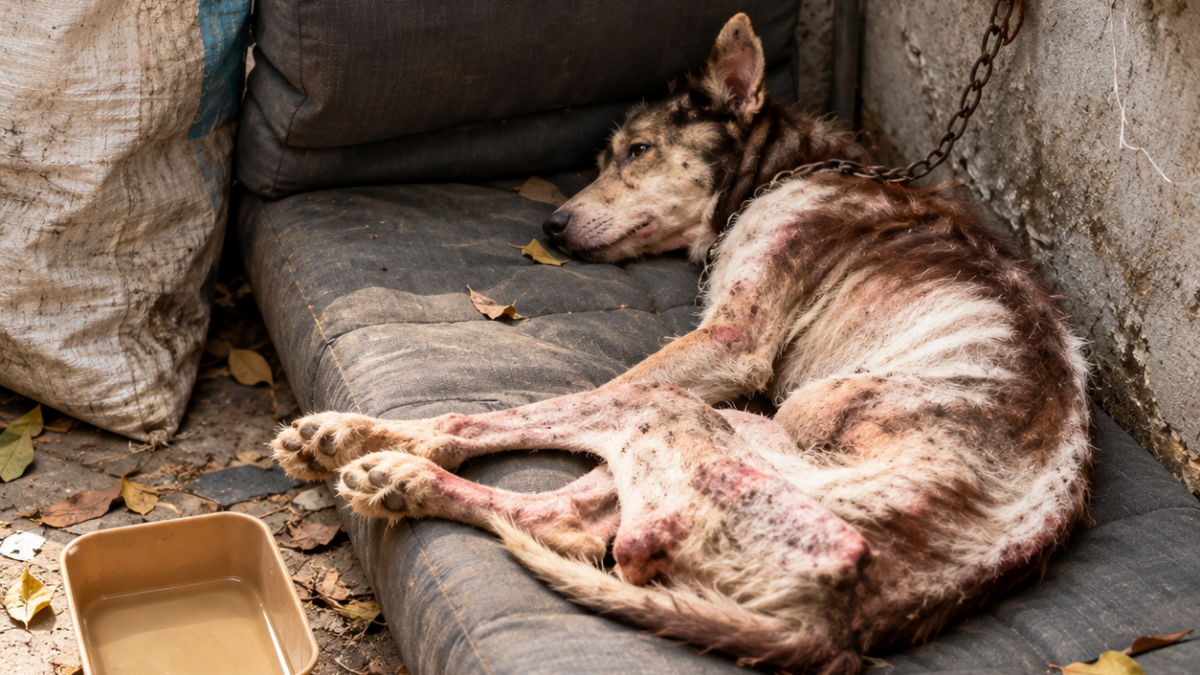
PART 2
For several seconds, I forgot that I was standing in the middle of an emergency veterinary clinic.
All I could hear was Daniel’s voice.
“They’re saying somebody was still responsible for feeding him.”
I walked toward the hallway so the clinic staff wouldn’t hear the anger rising in mine.
“Responsible?”
“That’s the word the property owner used.”
“The puppy can’t stand.”
“I know.”
“He looks like a skeleton.”
“I know.”
“And somebody was responsible?”
“Rachel—”
“Who?”
“We don’t have the full story yet.”
“Who, Daniel?”
He exhaled.
“A former warehouse employee named Tyler Grant.”
I stopped.
“Former?”
“The warehouse shut down most operations around two months ago. Tyler had been staying on temporarily doing inventory cleanup and security checks.”
“And the puppy?”
“The owner says Tyler brought him there.”
“When?”
“About six weeks ago.”
My stomach turned.
Six weeks.
That puppy had been inside that building for nearly half his life.
“Why?”
“Owner says Tyler claimed the dog was temporary. Said his landlord wouldn’t allow animals.”
“So he kept a puppy inside an empty warehouse.”
“That’s what we’re trying to verify.”
“And those dates?”
“We’re collecting everything.”
I looked through the glass.
A veterinary technician named Chloe was sitting beside the warming cage.
The puppy was licking a tiny amount of recovery food from a spoon.
Every few bites, Chloe pulled it away.
He followed it with his eyes.
Hungry.
Fully interested.
Fully aware.
The words *somebody was responsible* made me feel sick.
“What did Tyler say?”
“We haven’t reached him.”
“Find him.”
“Animal control is handling that.”
“Daniel.”
“I know.”
“No. I want him to see this dog.”
“Not today.”
“He needs to see what ‘responsible’ looks like.”
“Rachel.”
Daniel used the tone he reserved for moments when I was becoming more angry than useful.
“He will see the documentation. Right now, stay with the puppy.”
I looked again at the treatment room.
He was right.
I hated that.
“Call me the second you know anything.”
“I will.”
I hung up.
When I returned, the veterinarian, Dr. Hannah Cole, was reviewing the first blood results.
“How bad?”
She looked at me.
“Bad enough that I want him hospitalized.”
My chest tightened.
“Organs?”
“His liver values are stressed but not catastrophic. Kidneys are functioning. He’s dehydrated, anemic, parasite burden is likely significant, and his blood glucose was dangerously low when he came in.”
“But?”
“But he’s young.”
I waited.
“Young helps.”
I looked toward the puppy.
“What do we call him?”
Hannah glanced at the intake form.
“You brought him in without a name.”
“He didn’t have one that we know.”
Chloe smiled from beside the cage.
“He looks like a Milo.”
I looked at him.
One oversized ear had finally lifted.
“Milo?”
His eyes moved toward my voice.
Chloe nodded.
“That’s a yes.”
“Milo it is.”
Hannah wrote the name.
A line on paper.
Such a small thing.
But twenty minutes earlier he had been “warehouse puppy.”
Now he was Milo.
Names change the emotional geometry of rescue.
Once something has a name, it becomes harder to talk about it like inventory.
Milo stayed at the clinic.
I stayed too.
For the first several hours, his treatment was intentionally conservative.
Warmth.
Fluids.
Glucose support.
Tiny measured meals.
Medication for parasites and gastrointestinal issues planned according to what his body could safely tolerate.
Hannah warned all of us about refeeding syndrome.
“When an animal has been starved for a prolonged period, feeding too aggressively can create dangerous electrolyte shifts.”
“So even though he’s starving, we can’t just let him eat?”
“Correct.”
That felt cruel.
Milo thought so too.
Every time Chloe removed the spoon, his eyes followed it.
“More later,” she whispered.
He licked his lips.
“Promise.”
I sat beside the cage.
“He’s probably heard promises before.”
Chloe looked at me.
“Then this one should be kept.”
We kept it.
Every scheduled meal came.
Small.
Then another.
Then another.
By evening, Milo had enough strength to lift his head without immediately dropping it.
At 8:13 p.m., he drank clean water by himself.
Three laps.
Rest.
Four more.
I took a photograph.
Daniel texted.
**ANY CHANGE?**
I sent the picture.
**DRINKING.**
His response came immediately.
**GOOD.**
Then another.
**FOUND TYLER. INTERVIEW TOMORROW.**
I stared at the message.
Part of me wanted to go.
Hannah apparently read my face.
“No.”
“I didn’t say anything.”
“You are thinking something illegal.”
“Not illegal.”
“Unhelpful?”
“Possibly.”
She pointed at Milo.
“Your job is here.”
I hated everyone for being reasonable.
That night, Milo slept under blankets in a heated enclosure.
I left after midnight.
At 3:07 a.m., I woke and checked my phone.
No clinic call.
Good.
At 4:26.
Nothing.
At 5:51, Chloe sent a photo.
Milo was sitting up.
Not standing.
Sitting.
His front paws spread for balance.
His ears uneven.
His expression exhausted but alert.
Under the photograph:
**GOOD MORNING FROM THE BOSS.**
I drove back before seven.
Milo recognized the food cart before he recognized me.
I chose not to be offended.
When Chloe approached with breakfast, his nose lifted.
His tail moved once.
That nearly ruined me.
“Did he just wag?”
Chloe smiled.
“He did it earlier too.”
“Why didn’t you record it?”
“I was busy keeping him alive.”
“Unacceptable.”
Milo ate.
Then rested.
Later that morning, animal-control officer Marcus Reed arrived.
I knew Marcus from several cases.
He was calm to the point of irritation.
He carried a folder.
“Do I want to hear this?”
“No.”
“Tell me.”
He looked through the clinic window first.
“That’s the dog?”
“Milo.”
“How’s he doing?”
“Alive.”
Marcus nodded.
Then opened the folder.
“The warehouse belongs to a company called Granton Logistics.”
“Tyler works for them?”
“Worked. His temporary position ended last week.”
“And the dog?”
“Tyler says Milo belongs to his cousin.”
I stared.
“Of course he does.”
“Cousin gave him the puppy because she was moving.”
“When?”
“Six weeks ago.”
“And?”
“Tyler says his apartment prohibited pets. He planned to keep Milo at the warehouse for ‘a few days’ until he found a home.”
“Six weeks.”
“Yes.”
“Who wrote the feeding dates?”
“Tyler.”
I laughed once.
Not because anything was funny.
“He documented himself.”
“Possibly.”
“Those check marks are days he fed Milo?”
“He says days he checked on him.”
“How often?”
Marcus looked at the page.
“Originally daily, according to him.”
“According to him.”
“Then every other day.”
“Then?”
“He says transportation problems made it harder.”
I stared.
“So he left a puppy alone inside a warehouse and visited whenever convenient.”
“That is part of what we’re investigating.”
“What did he feed?”
“Dry food.”
“How much?”
“He couldn’t give a consistent answer.”
“Water?”
“Says he filled a large container.”
“The container was filthy.”
“I photographed it.”
“Did he see Milo getting thinner?”
Marcus paused.
“Yes.”
Something in me went cold.
“What did he say?”
“He thought the dog had worms.”
“And did what?”
“Bought an over-the-counter dewormer once.”
“Veterinarian?”
“No.”
“Rescue?”
“No.”
“Shelter?”
“No.”
“Animal control?”
“No.”
“Asked the warehouse owner for help?”
“No.”
I looked away.
Marcus continued.
“He claims he intended to take Milo somewhere this week.”
“This week.”
“That’s his statement.”
“He couldn’t stand yesterday.”
“I know.”
“He might not have had a week.”
“I know.”
I pressed both hands against my hips.
“What about the cousin?”
“Her story is that Tyler promised he had found a temporary place and would rehome Milo.”
“Did she check?”
“No.”
“Did she ask for pictures?”
“She says Tyler sent one early on.”
“Early.”
“Yes.”
“Before he looked like this.”
“Yes.”
There it was.
Not a dramatic criminal conspiracy.
Not someone laughing while a puppy suffered.
Something more common.
Responsibility passed from one person to another until the animal at the center became nobody’s immediate problem.
The cousin thought Tyler had him.
Tyler thought temporary care was enough.
The warehouse owner knew a dog was there but assumed Tyler was handling it.
Other employees saw bowls and assumed the puppy was fed.
Everybody assumed.
Milo starved inside the gap between assumptions.
“Can he be charged?”
Marcus’s expression remained neutral.
“There is enough to proceed with an animal-neglect investigation. Final charging decisions are not mine.”
“Will Milo go back to Tyler?”
“No.”
That answer came immediately.
I breathed.
“Say it again.”
“Milo will not be returned while the case and custody proceedings are active.”
“Good.”
That was the first consequence I cared about.
Milo remained hospitalized for six days.
Day one, he could sit.
Day two, he attempted to stand.
His legs trembled violently.
He made it two seconds.
Then folded.
I caught him with a sling.
“Not yet.”
Milo looked toward the food shelf.
“Your priorities are impressive.”
His first real personality trait was appetite.
The second was stubbornness.
By day three, he discovered that humans controlled food.
This led to an important strategic shift.
He began following us with his eyes.
Chloe entered?
Food possibility.
Hannah?
Needles, less promising.
Me?
Moderate probability.
Daniel?
Unknown.
Daniel visited for the first time that afternoon.
He crouched beside Milo.
“Hey, buddy.”
Milo sniffed his fingers.
Then looked away.
Daniel frowned.
“He doesn’t like me.”
“You didn’t bring chicken.”
Daniel pulled chicken from his jacket.
“You think I’m an amateur?”
Milo’s head returned instantly.
“Traitor,” I said.
Daniel fed him a medically approved piece.
Milo took it gently.
Then looked at Daniel’s pocket.
Daniel smiled.
“I like him.”
“Everybody likes him.”
“Not everybody.”
The room changed.
We both knew what he meant.
I looked at Milo.
“No. Somebody treated him badly. That doesn’t mean they didn’t like him.”
Daniel raised an eyebrow.
I continued.
“That distinction matters.”
“Why?”
“Because people think neglect always comes from monsters.”
“And?”
“Sometimes it comes from lazy people. Overwhelmed people. People who keep thinking tomorrow is soon enough.”
Daniel looked toward Milo.
“Does that make it better?”
“No.”
“It might make it worse.”
“Exactly.”
On day four, Milo took three steps.
Not pretty steps.
His front legs splayed.
His back legs barely followed.
But he moved toward Chloe because she had food.
One.
Two.
Three.
Collapse.
Chloe sat on the floor.
“Milo!”
He lifted his head.
“Three!”
I laughed.
“You’re celebrating basic walking.”
“You celebrated water.”
“Fair.”
We called physical rehabilitation staff.
His weakness was largely severe muscle wasting and prolonged malnutrition.
No major orthopedic injury appeared on imaging.
That was good.
Muscle could return.
Strength could be rebuilt.
But slowly.
Everything with Milo was slowly.
Food.
Weight.
Movement.
Trust.
On day five, his blood sugar stabilized without aggressive support.
His hydration improved.
Parasite treatment continued.
His stool looked better.
Never in my life had I been so excited about dog poop.
Chloe sent photographs.
I asked her to stop.
She did not.
On day six, Hannah said:
“He can leave the hospital.”
I looked at Milo.
“Home?”
“Foster.”
“Mine?”
She smiled.
“You already brought a bed.”
I looked down.
There was, in fact, a new orthopedic puppy bed in my car.
“Coincidence.”
“Of course.”
Milo came home with me that evening.
I had two adult dogs.
Ruby, a ten-year-old mutt with the patience of a grandmother.
And Scout, a six-year-old shepherd mix who believed every visitor was there specifically to admire him.
Milo stayed separated initially.
Quarantine.
Medical safety.
Slow introductions later.
His room was my spare bedroom.
Soft rugs for traction.
Low bed.
Blankets.
Water.
Food schedule taped to the wall.
Medication schedule beside it.
I sat on the floor after bringing him in.
Milo stood for four seconds.
Sat.
Looked around.
No warehouse echo.
No machinery.
No dust.
No open doorway letting cold air through broken metal.
Just a quiet room.
He sniffed the blanket.
Then lay down.
For the first time since finding him, I watched his body relax enough that his paws stretched out.
Not curled tight.
Not guarding his stomach.
He slept.
I stayed beside him for two hours.
At some point, Daniel texted.
**IS HE OKAY?**
I sent a photo.
Milo asleep.
Daniel replied:
**HE LOOKS DEAD.**
I nearly threw my phone.
**HE IS SLEEPING.**
**BAD ANGLE.**
I took another.
**BETTER.**
Rescue friendships are built on compassion and threats.
The first week at home was not dramatic.
That made it precious.
Milo ate.
Slept.
Took medication.
Stood.
Walked six steps.
Then nine.
Then twelve.
His weight increased carefully.
His belly began looking less hollow.
His coat remained dull, but his eyes changed first.
More alert.
More curious.
By the tenth day, he started reacting to sounds.
Washing machine.
Vacuum.
Doorbell.
Ruby barking from another room.
The first time Ruby barked, Milo flattened himself.
I sat.
Did not touch him.
Waited.
Ruby barked again.
Milo looked toward me.
“You’re safe.”
I did not know whether the word meant anything.
The tone did.
His body softened.
The next day, we exchanged blankets between Milo and my dogs.
Ruby sniffed his.
Walked away.
Scout sniffed Milo’s blanket for approximately seven years.
Then stole it.
“Scout.”
He ran.
Milo heard the commotion and lifted his head.
His first controlled meeting was with Ruby.
Outside.
Leashes loose.
Distance.
Ruby looked at him.
Milo looked at Ruby.
Ruby sniffed grass.
Milo took one step toward her.
Ruby ignored him.
Perfect.
Fearful or medically fragile dogs often benefit from animals that do not make everything a social event.
Ruby was excellent at this.
Milo approached.
Sniffed her shoulder.
She looked back.
Then walked toward me for a treat.
Milo followed.
That became the beginning.
Within a week, Milo and Ruby could rest in the same room.
Scout required more management because his enthusiasm was physically overwhelming.
When they finally met properly, Scout bowed.
Milo stared.
Scout bounced.
Milo hid behind Ruby.
Ruby looked deeply tired.
“Your children,” I told her.
She sighed.
By the end of the second week, Milo attempted play.
Scout dropped a rope toy.
Milo touched it.
Scout pulled.
Milo released immediately.
Scout dropped it again.
Milo touched it.
Pull.
Release.
Third time, Milo held on.
Two seconds.
Scout pulled gently.
Milo’s tail moved.
Then Milo growled.
Play growl.
I froze.
Daniel, visiting, whispered:
“That sounded aggressive.”
“No.”
“How do you know?”
“Loose body. Play bow. Tail.”
Milo pulled harder.
Scout let him win.
The rope fell backward with Milo.
He landed on his butt.
Looked confused.
Then grabbed it and ran.
Not ran exactly.
A ridiculous, uneven puppy trot.
Still.
He moved fast enough that I laughed.
“There he is.”
Daniel smiled.
“There he is.”
The legal case moved slower.
Much slower.
Marcus called every few days.
Tyler had retained an attorney.
His cousin, Ashley, had provided messages.
Those messages became important.
Six weeks earlier:
**ASHLEY: How’s Milo?**
**TYLER: Fine. Eats like crazy.**
One month earlier:
**ASHLEY: Can you send me a pic?**
No response.
Three weeks earlier:
**ASHLEY: Tyler???**
**TYLER: Busy. He’s fine.**
Two weeks earlier:
**ASHLEY: I need to know you found him somewhere.**
**TYLER: Working on it.**
One week earlier:
**ASHLEY: Is he still at the warehouse?**
Long pause.
Then:
**TYLER: Temporarily.**
Ashley had failed Milo too.
She admitted it.
That mattered.
She had given a puppy to someone without confirming the plan.
Then she accepted vague answers because pushing harder would have forced her to confront a problem she wanted solved.
When Marcus interviewed her again, she cried.
“I thought he was feeding him.”
Marcus asked:
“When did you last see Milo?”
“Six weeks ago.”
“So you did not know his condition?”
“No.”
“But you knew he was still at the warehouse?”
“Eventually.”
“Did you call anyone?”
“No.”
“Why?”
She reportedly said:
“I thought Tyler would handle it.”
There it was again.
Thought.
Assumed.
Expected.
Milo had nearly died because people kept outsourcing responsibility mentally before anyone actually assumed it physically.
The warehouse owner, Mr. Dalton, had his own explanation.
Tyler had permission to use one section temporarily during cleanup.
Mr. Dalton saw dog supplies once.
Asked whether the puppy was being cared for.
Tyler said yes.
Dalton never checked again.
“Was he legally required to?” I asked Marcus.
“That depends on facts and jurisdiction.”
“Morally?”
Marcus gave me the look.
“Not my department.”
“Coward.”
“Yes.”
A janitorial contractor had heard barking during the first weeks.
Then less.
Then almost none.
He assumed Tyler took the dog home.
The neighboring worker who finally called us had seen Milo through the doorway only because sunlight hit the warehouse differently that morning.
One angle.
One moment.
One person deciding:
That looks wrong.
A puppy’s entire future hinged on that.
It made me furious.
It also made me grateful.
At one month in foster care, Milo crossed the backyard at a real run.
Not full speed.
But a run.
Ruby was ahead of him.
Scout behind.
Milo in the middle.
I had my phone out because I was filming physical therapy exercises.
Instead I captured chaos.
Scout chased Ruby.
Ruby turned.
Milo changed direction too slowly.
He rolled once in the grass.
I gasped.
Milo jumped up.
Shook.
Then chased them again.
I laughed so hard the camera dropped toward the ground.
The video later became my favorite.
Not because the framing was good.
Because a month earlier he had been unable to stand.
Now he was falling because he was moving too fast.
That was progress no medical chart could communicate.
His body changed rapidly after that.
Ribs became less visible.
Hips softened beneath muscle.
Coat gained shine.
Ears stood more confidently.
He became, unmistakably, a puppy.
And puppy Milo was a criminal.
Shoes.
Dish towels.
Mail.
Cardboard.
One television remote.
Daniel’s wallet.
“How?”
Daniel demanded.
Milo ran through the hallway carrying it.
“You left it on the table.”
“That table is three feet high.”
“Milo has goals.”
“Get him.”
“You get him.”
“I’m sixty-two.”
“That sounds personal.”
Milo dropped the wallet when Scout stole a sock.
Priority shifted.
I watched two dogs race through the house while Ruby stared at me.
“I know.”
She sighed.
The puppy who once spent hours lying motionless now apparently considered rest a personal insult.
Hannah loved his follow-up exams.
At eight weeks post-rescue, she pressed along his abdomen.
Checked heart.
Lungs.
Gums.
Muscle.
Then stepped back.
“He looks good.”
I smiled.
“Good good?”
“Annoyingly good.”
Milo attempted to steal a cotton ball.
“Evidence.”
We repeated bloodwork.
Improving.
Parasite tests cleared.
Weight approaching healthy range.
No major long-term organ damage evident.
I let myself breathe.
Then Marcus called.
“Court date.”
My body tightened.
Milo was chewing Scout’s tail in the background.
“When?”
He told me.
“What are they asking for?”
“Custody has already been transferred away from Tyler. The hearing addresses neglect findings and penalties.”
“Will Milo need to be there?”
“No.”
“Good.”
I had no interest in turning him into courtroom theater.
I went.
Not because I enjoyed legal proceedings.
Because somebody needed to speak for the condition in which he was found.
Hannah submitted a veterinary statement.
I provided rescue photographs.
Marcus presented warehouse documentation.
The date card mattered.
Tyler’s own handwriting.
Check marks.
Evidence that he had been returning while Milo deteriorated.
His attorney argued that Tyler never intended harm.
I believed that.
It did not help him.
Intent does not feed a dog.
The attorney said Tyler was financially struggling.
Transportation unreliable.
Housing unstable.
He had attempted to keep food at the warehouse.
He thought Milo had parasites and treated him.
He intended to surrender him eventually.
All possibly true.
Then Hannah testified.
She remained calm.
“Was Milo starving when admitted?”
“Yes.”
“Could parasites contribute to weight loss?”
“Yes.”
“Could stress?”
“Yes.”
“Could inadequate nutrition?”
“Yes.”
“Can you state which factor alone caused his condition?”
“No.”
The defense attorney nodded.
Then Hannah continued.
“But his condition required urgent veterinary intervention regardless of cause.”
The attorney paused.
“He had food available at the warehouse.”
“I cannot testify to what amount was offered over time.”
“But food existed.”
“Yes.”
“Then starvation does not necessarily mean he was intentionally denied food.”
Hannah looked directly at him.
“Intentional deprivation and neglect are not identical questions.”
Silence.
She explained.
Milo’s body condition.
Dehydration.
Parasites.
Muscle wasting.
Weakness severe enough that he could not support himself.
The prolonged nature of the decline.
“Would a reasonable caretaker have noticed?”
“Yes.”
“How early?”
“Long before he became unable to stand.”
That mattered.
Tyler testified too.
I did not expect him to.
He looked younger than the villain I had constructed in my head.
Twenty-six, maybe.
Tired.
Nervous.
He admitted keeping Milo at the warehouse.
He admitted visits became less frequent.
He admitted seeing weight loss.
“I thought he had worms.”
The prosecutor asked:
“Why didn’t you take him to a veterinarian?”
“No money.”
“Why didn’t you surrender him?”
“I thought I could fix it.”
“How?”
“Feed him more.”
“Did you?”
“I tried.”
“Did he improve?”
“No.”
“What did you do when he got worse?”
Tyler looked down.
“Nothing.”
One word.
Nothing.
That was the case.
Not hatred.
Nothing.
The prosecutor showed Milo’s rescue photograph.
Tyler’s face changed.
He looked away.
“Is that how he looked the last time you saw him?”
Tyler hesitated.
“Close.”
I felt sick.
“How long before rescue had you seen him?”
“Two days.”
The most recent check mark.
Two days.
Milo had been lying nearly skeletal.
Too weak to stand.
Tyler saw him.
Then left.
The prosecutor asked:
“Why?”
Tyler’s voice cracked.
“I didn’t know what to do.”
There are sentences that explain behavior without excusing it.
That was one.
The final penalties were not cinematic.
Fines.
Probation-related conditions.
Mandatory animal-care education.
Restriction on animal ownership for a specified period.
Partial restitution toward veterinary expenses.
The court also made the neglect finding part of the official record.
Tyler was not dragged away in handcuffs.
Nobody applauded.
I expected to feel disappointed.
Instead I felt strangely calm.
Milo was safe.
Tyler could not legally take him back.
There was accountability.
There was a record.
That was enough.
Outside the courthouse, Tyler approached me.
Marcus moved closer immediately.
Tyler stopped several feet away.
“How is he?”
I stared.
“Milo?”
He nodded.
The fact he knew the name surprised me.
“Healthy.”
His eyes changed.
“Really?”
“Yes.”
“Can he walk?”
“He runs.”
Tyler looked down.
I could have walked away.
Part of me wanted him to hurt.
Then I remembered Milo carrying Daniel’s wallet.
Rolling in grass.
Sleeping against Ruby.
None of Tyler’s pain could improve any of that.
So I asked:
“Why didn’t you call someone?”
Tyler rubbed both hands together.
“I thought they’d judge me.”
“They would have taken the dog.”
“I know that now.”
“You knew shelters existed.”
“I didn’t want to lose him.”
I stared.
“You left him alone in a warehouse.”
“I know.”
“You were already losing him.”
His eyes filled.
“I know.”
That was the first moment I believed he understood.
Not enough to erase anything.
Enough to make the conversation worth finishing.
“When you saw he couldn’t stand, why did you leave?”
Tyler looked away.
“I was scared.”
“Of what?”
“That he was dying.”
That answer stunned me.
“So you left him alone because you were afraid he was dying?”
He nodded.
Shame can make human beings do terrible, irrational things.
Facing Milo would have forced Tyler to acknowledge what he had allowed.
Leaving delayed that confrontation.
For Milo, those delays almost cost everything.
I said:
“If you ever find yourself in that situation again—with any animal—you call before shame becomes neglect.”
Tyler wiped his face.
“I won’t own another dog.”
“That may be the right decision for now.”
“I’m sorry.”
I looked at him.
“I’m not the one who needed you to be sorry.”
He nodded.
I walked away.
That night, I expected to feel triumphant.
Instead I found Milo asleep upside down on my couch.
One back leg in the air.
Scout using his stomach as a pillow.
Ruby in the chair.
I stood in the doorway.
Milo opened one eye.
Tail thump.
That was my revenge.
Tyler had left him because facing the problem was too difficult.
Milo had become impossible to ignore.
He filled rooms.
Stole objects.
Demanded breakfast.
Ran across grass.
Barked at delivery trucks.
Occupied half my couch.
Neglect had tried to reduce him to bones in a corner.
Life made him inconveniently enormous in every way that mattered.
The question of adoption arrived soon after.
Everyone assumed I would keep him.
I said no.
Frequently.
“I foster.”
Daniel looked around my living room.
Milo slept on my foot.
“You bought him a personalized collar.”
“Foster supplies.”
“It says MILO MORGAN.”
“The engraver needed contact information.”
“It has your last name.”
“Administrative convenience.”
“You have failed fostering.”
“I have not.”
Scout walked in carrying one of Milo’s toys.
Milo woke and chased him.
Daniel smiled.
“Sure.”
I resisted for another three weeks.
Not because I didn’t love Milo.
Because good rescuers need to know when love and fit are different.
I already had two dogs.
Milo was young.
Energetic.
Potentially needed a more active home.
So we posted his adoption profile.
Applications flooded in.
His before-and-after transformation attracted attention.
That worried me.
People loved the idea of rescuing the skeletal warehouse puppy.
But they would not be adopting that puppy.
They would be adopting the healthy adolescent dog who had just eaten part of my baseboard.
Different animal.
We rejected applicants who focused only on his rescue story.
One wrote:
“I want him because he’ll know I saved him.”
No.
Milo owed nobody gratitude.
Another wanted an outdoor guard dog.
Absolutely not.
Another family seemed excellent.
Large fenced yard.
Experience with shepherd mixes.
Teenage children.
Good veterinary history.
They visited.
Milo liked them.
I liked them.
I went home afterward feeling sick.
Daniel noticed.
“They’re good.”
“I know.”
“That’s the problem?”
“Yes.”
“You’re ridiculous.”
“Yes.”
The family scheduled a second visit.
Then something unexpected happened.
Their older dog became ill.
They withdrew.
“We need to focus on her,” the mother told me.
I respected that.
A week later, another application arrived.
A firefighter named Ethan Brooks and his wife, Natalie.
No children.
One six-year-old female dog named June.
Ethan worked rotating shifts.
Natalie worked from home.
Fenced yard.
Training experience.
References excellent.
They had lost an elderly shepherd the previous year.
They did not mention Milo’s rescue photographs once in their application.
Instead Natalie wrote:
“We understand Milo is now a healthy young dog and will need structure, exercise, continued training, and routine veterinary care. We are interested in who he is now, not only what happened to him.”
That line hurt me.
Because it was exactly right.
They visited.
Milo met June in the yard.
June was confident.
Calm.
Milo approached too fast.
June corrected him with one bark.
Milo froze.
Then approached more politely.
Good.
Ethan laughed.
“She runs the house.”
“Every stable society needs leadership.”
Natalie sat on the grass.
She did not call Milo.
He approached anyway.
Sniffed her.
Found treats.
Stayed.
Within twenty minutes, he had placed his front paws across Ethan’s legs.
Traitor.
After the visit, Natalie asked:
“What does he still struggle with?”
Not:
Is he cuddly?
Not:
Does he remember the warehouse?
The hard question.
I told them.
Food insecurity.
He ate too quickly without slow feeders.
Some separation sensitivity.
Loud metal noises could startle him.
He needed continued muscle conditioning.
He had poor judgment around socks.
Ethan nodded seriously.
“Socks are manageable.”
“You say that now.”
They returned three times.
Then the home check.
Everything good.
Adoption day came.
I packed Milo’s food.
Medical records.
Favorite rope.
Blanket.
Slow feeder.
Medication history.
June sat in the back seat waiting.
Milo sensed something.
He followed me constantly that morning.
When Ethan clipped on his leash, Milo looked at me.
I almost broke.
I crouched.
“You’re going home.”
Milo licked my face.
“Rude.”
His tail wagged.
“You’re supposed to make this easier.”
He walked toward the car.
Stopped.
Looked back.
My chest tightened.
Then Scout barked from inside.
Milo turned toward the sound.
For one second, I wondered whether he would refuse.
Then Natalie opened the rear door.
June appeared.
Milo jumped in beside her.
That was it.
No cinematic farewell.
No desperate clinging.
Good.
Rescue should become unnecessary.
I stood in the driveway as they left.
Daniel came beside me.
“You okay?”
“No.”
“You did good.”
“I hate this job.”
“No, you don’t.”
“I hate the successful part.”
“That’s weird.”
“Yes.”
Milo’s first update arrived forty minutes later.
He was asleep beside June.
Second update:
He stole Ethan’s work glove.
Third:
He found the laundry basket.
I replied:
**YOUR PROBLEM NOW.**
Natalie sent:
**WE WERE WARNED.**
Weeks passed.
Milo settled.
He gained the last muscle he needed.
Training classes.
Long walks.
Games.
His food anxiety gradually decreased.
He learned that meals came at predictable times.
He stopped inhaling every crumb as if the bowl might vanish.
One morning Natalie sent a video.
Milo was lying near his food bowl.
Full bowl.
Not eating yet.
Waiting for his release cue.
I watched it three times.
The warehouse puppy who once lived beside an almost-empty food bag could now see food and believe it would still be there ten seconds later.
Trust appears in strange places.
Sometimes it is not cuddling.
Sometimes it is waiting beside a full bowl without panic.
Six months after adoption, Ethan brought Milo to a foundation event.
I heard him before I saw him.
Bark.
Then another.
A tan blur ran toward me.
“Milo!”
He hit my legs hard enough to make me stumble.
I crouched.
He climbed halfway into my lap despite no longer fitting.
“You remember me?”
Tail everywhere.
Ethan laughed.
“Oh, he remembers.”
Milo licked my chin.
Then ran back toward June.
That mattered.
He loved seeing me.
Then chose his family.
Perfect.
A year after rescue, the neighboring warehouse worker who originally called us attended the event.
His name was Carlos.
I had never properly thanked him.
He stood watching Milo run.
“That’s the dog?”
“Yes.”
“No way.”
Milo raced after June.
Carlos stared.
“He couldn’t even get up.”
“I know.”
He looked emotional.
“I almost didn’t call.”
That sentence stopped me.
“What?”
“I wasn’t sure.”
“Why?”
“Private property. I thought maybe somebody owned him.”
“They did.”
“I didn’t want trouble.”
I remembered the same phrase from too many rescue cases.
I don’t want trouble.
Carlos looked down.
“Then I saw him fall.”
“You called.”
“Yeah.”
“That’s the part that matters.”
“What if I waited another day?”
I did not answer.
We both knew.
Milo might have survived.
Maybe.
Maybe not.
Carlos looked toward him.
“I’m glad I called.”
“So am I.”
Later, Ethan introduced Milo to him.
Carlos crouched.
Milo approached.
Sniffed him.
Then leaned against his chest.
Carlos started crying.
“I didn’t save you.”
I stood nearby.
“Yes, you did.”
He looked at me.
“We all did something. But you started the chain.”
That became another piece of the story I refused to simplify.
No single hero.
Carlos noticed.
Daniel came.
I lifted.
Hannah treated.
Chloe fed.
Marcus investigated.
Ruby comforted.
Scout played.
Ethan and Natalie adopted.
Milo survived because a chain held.
Neglect had happened because another chain broke.
Responsibility matters at every link.
Two years later, Tyler wrote to the foundation.
Not me directly.
A letter.
He had completed the court requirements.
He said the animal-care education program had been harder emotionally than he expected.
He volunteered afterward—not directly handling animals at first, but cleaning kennels and unloading food donations.
I did not know whether he did it from guilt or growth.
Maybe both.
He asked for one thing.
A recent photograph of Milo.
No contact.
No visitation.
Just proof.
I struggled with that.
Part of me thought he did not deserve comfort.
Then I asked Ethan and Natalie.
Their decision.
Milo was their dog.
They sent one photograph.
Milo in the yard.
Healthy.
Tongue out.
June beside him.
No dramatic text.
Tyler wrote back only:
**Thank you. I’m glad he got what I didn’t know how to give him.**
I kept that sentence.
Not to absolve him.
To remember something.
Ignorance does not erase responsibility.
But responsibility can begin after failure if a person chooses to change.
That is better than shame turning into denial.
Milo turned three.
Then four.
His warehouse history became increasingly irrelevant to his daily life.
That was the greatest success.
He became Ethan and Natalie’s dog.
Not “the warehouse dog.”
Milo.
He loved hiking.
He hated rain.
He adored June.
He developed an irrational fear of balloons.
He slept on his back.
He stole gloves but eventually stopped eating socks.
Progress.
When June developed arthritis, Milo slowed his play around her.
He would bring toys to her bed.
She ignored most.
One afternoon Natalie sent me a video of Milo lying beside June.
His head resting across her front legs.
I thought of Ruby.
The old dog who first taught him calm.
Dogs carry relationships forward.
Not as moral lessons.
As learned safety.
Milo turned six.
Then seven.
June died at eleven.
Cancer.
Ethan called.
Milo searched the house for her.
The grief was real.
He waited beside the back door.
Sniffed her bed.
Ate less for two days.
Ethan and Natalie did what responsible people do.
They watched closely.
Called their veterinarian.
Stayed.
No forcing another dog into the house immediately.
No pretending grief needed fixing.
Milo adjusted.
Months later, they adopted a shy young dog named Poppy.
This time Milo was the stable one.
Poppy hid beneath a table.
Milo lay nearby.
No pressure.
When Poppy came out, she followed him.
Natalie called me.
“You’re going to cry.”
“I’m not.”
“Milo is being Ruby.”
I cried.
Of course.
The skeletal puppy who once had no one inside a warehouse had become the dog another frightened animal used to understand a house was safe.
That arc needed no embellishment.
Years passed.
The warehouse was eventually sold.
The new owner converted part of it into small business units.
Before renovation, Marcus called.
“They’re clearing the old section.”
I went once.
I wasn’t sure why.
The broken side door was gone.
Sunlight entered through new windows.
The pallet where Milo had lain had been removed.
The wooden crate was still there.
Not the date card.
That remained in evidence until the case closed and was later returned for our records.
I stood in the spot.
The concrete looked ordinary.
That bothered me.
Places where terrible things happen often look completely ordinary afterward.
No stain.
No memorial.
Nothing saying:
A puppy almost died here.
I walked toward the wall.
Then stopped.
I did not need to mark it.
Milo was alive.
That was the marker.
I left.
At eight, Milo began showing arthritis in one hip.
Nothing severe.
Ethan noticed a hesitation after long walks.
Veterinarian.
Imaging.
Treatment plan.
Weight management.
Joint support.
Shorter high-impact exercise.
I loved how quickly they responded.
One hesitation.
One appointment.
Milo once became skeletal while people watched him decline for weeks.
Now one slightly stiff morning produced veterinary care.
That contrast was the revenge.
Not Tyler suffering.
Milo living with people who paid attention.
At nine, Ethan sent a photograph.
Milo asleep on an orthopedic bed.
Poppy beside him.
Caption:
**HE FINALLY APPRECIATES EXPENSIVE BEDS.**
I sent it to Daniel.
Daniel replied:
**TRAITOR.**
Ruby had died years earlier.
Scout too.
The rescue dogs from Milo’s first safe home were gone.
That hurt.
But their influence remained in him.
Sometimes I think rescue is less about saving individual lives than creating bridges.
Ruby gave Milo calm.
Scout gave play.
Milo gave Poppy confidence.
One safe animal teaching another what safety feels like.
At ten, Milo’s muzzle began turning gray.
I hated it.
Ethan loved calling him “Grandpa.”
Milo did not care as long as Grandpa received chicken.
His checkups remained good.
Kidneys.
Heart.
Weight.
Arthritis managed.
Hannah, older too, still saw him occasionally.
At one appointment, she opened his ancient records.
“Do you remember this?”
She showed me his first weight.
I stared.
“No.”
“Yes, you do.”
“I hate that number.”
She closed the chart.
“Then look at this one.”
Current weight.
Healthy.
Stable.
Muscular enough for age.
“That’s better.”
Milo barked from the exam room.
Hannah smiled.
“He still has opinions.”
Always.
When Milo turned eleven, Carlos—the man who made the first call—came to see him again.
Older now.
Milo slower.
They met in Ethan’s yard.
Carlos sat.
Milo approached.
Sniffed him.
Then lowered himself beside his feet.
Carlos touched his gray muzzle.
“You got old.”
Tail wag.
Carlos looked at me.
“You remember that day?”
“Yes.”
“I still drive by the old building.”
“So do I sometimes.”
“I always think I should have called sooner.”
“Stop.”
He looked surprised.
“You called.”
“But—”
“You called when it mattered.”
I had learned enough by then to recognize survivor’s guilt in rescuers too.
The mind creates alternate timelines.
If only earlier.
If only I noticed.
If only.
Useful when it changes future action.
Destructive when it becomes endless self-punishment.
Carlos nodded.
“I call now.”
“What?”
“If I see something wrong.”
He smiled awkwardly.
“I’m probably annoying.”
“Good.”
One phone call saved Milo.
Maybe Carlos would make another someday.
That is how stories continue.
Not through inspiration.
Through behavior change.
Milo reached twelve.
Poppy had become middle-aged.
Ethan’s hair grayer.
Natalie’s too.
Mine definitely.
The old warehouse case felt like another lifetime.
Then one morning, Milo stopped finishing breakfast.
Ethan called immediately.
Not tomorrow.
Not next week.
That morning.
Bloodwork showed early kidney disease.
Manageable.
Diet change.
Monitoring.
Medication later.
Milo continued.
At thirteen, arthritis worsened.
Ramps.
More rugs.
Pain control.
At fourteen, walks became slow.
End of driveway.
Back.
He still inspected the kitchen.
Still barked when Ethan came home.
Still slept near Poppy.
Food remained important, though appetite fluctuated.
Every change received attention.
That is what care looks like over time.
Not dramatic rescue every day.
Maintenance.
Observation.
Showing up.
Milo had gone from being a puppy someone visited occasionally in a warehouse to an old dog whose family noticed if he drank slightly more water than usual.
The difference was almost incomprehensible.
His final decline came at fourteen and a half.
Kidneys.
Age.
Mobility.
The body gradually narrowing its options.
Ethan called me.
“He had a bad night.”
I heard it.
The sentence no adopter wants to say.
I drove to their house.
Milo was lying on the same kind of orthopedic bed I had bought during foster care years earlier.
Not the same bed.
The idea.
Soft.
Warm.
Poppy nearby.
Natalie on the floor.
Ethan sitting beside Milo.
When I entered, Milo lifted his head.
Slowly.
Tail tap.
I knelt.
“Hey, warehouse criminal.”
Ethan laughed through tears.
“He hasn’t stolen a glove in years.”
“Retirement.”
Milo sniffed my hand.
Then rested his chin against it.
His body was thin.
Old-dog thin.
Different from starvation.
There is an enormous difference between frailty under attentive care and neglect.
Medication bottles on the table.
Fresh water beside him.
Medical notes.
Clean blankets.
Family.
He had become thin because age was taking what medicine could no longer preserve.
Nobody was ignoring it.
Nobody was pretending.
Nobody was leaving him alone.
Hannah came to the house.
That mattered to me.
The veterinarian who had met Milo as a skeletal puppy was there at the end.
She listened to his chest.
Examined him.
Looked at Ethan and Natalie.
Her eyes answered first.
Milo had stopped eating enough.
Kidney disease had progressed.
Pain control was becoming difficult.
He could still have days.
Maybe a little longer.
But the likely direction was suffering.
Ethan asked every question.
Could fluids help?
Briefly.
Hospitalization?
Possibly stabilize numbers.
Would it restore meaningful comfort?
Unlikely for long.
Could he walk normally again?
No.
Was he in pain?
Manageable now, but increasingly difficult.
Natalie cried.
Ethan stared at Milo.
“We promised no warehouse.”
His voice broke.
I understood.
No abandonment.
No being left until dying became obvious.
No waiting because the decision hurt humans.
Hannah said gently:
“You’re not abandoning him.”
Ethan nodded.
“I know.”
But knowing and feeling are different.
Poppy approached Milo.
Sniffed his face.
Then lay down beside him.
I thought of Ruby.
Scout.
June.
Every dog who had been part of his life.
Milo’s world had become enormous compared with that warehouse.
Hannah gave us time.
We talked.
About everything.
The first stolen wallet.
The balloon fear.
The baseboard.
June correcting him.
Poppy hiding under the table.
Carlos.
Daniel.
Chloe’s feeding spoon.
The courtroom.
The almost-empty bag of food.
Nobody mentioned Tyler until Ethan did.
“Do you think he changed?”
I thought about the letter.
“I think he tried.”
“That enough?”
“No.”
Ethan looked at me.
I continued.
“It doesn’t erase what happened. But changing is better than defending it forever.”
Milo sighed.
His body relaxed against Poppy.
Natalie stroked his ear.
“Our whole life with him came after somebody’s worst mistake.”
I looked at her.
“And after somebody else made one phone call.”
That balance mattered.
Failure.
Intervention.
Care.
Years.
When it was time, Milo stayed in his bed.
No clinic table.
No warehouse floor.
Ethan’s hand under his chin.
Natalie touching his chest.
Poppy beside him.
Me near his shoulder.
Hannah administering medication carefully.
Milo’s breathing softened.
He opened his eyes once.
Looked toward Ethan.
Then closed them.
His last breath was quiet.
I cried hard.
More than I expected.
Fourteen years should have made it easier.
It didn’t.
But grief sat beside gratitude.
The puppy who could not stand got fourteen years.
Fourteen.
Years.
Thousands of meals.
Thousands of bowls of clean water.
Beds.
Runs.
Rain he hated.
Hikes.
Friends.
Chicken.
Vet visits.
Birthdays.
Gray hair.
Arthritis.
Aging.
He got enough life for the warehouse to become the smallest chapter.
Afterward, Ethan kept Milo’s collar.
Natalie donated his unopened kidney food to the rescue.
Poppy searched for him.
They stayed with her through that too.
Several months later, Ethan asked if I wanted Milo’s old slow feeder.
I almost said no.
Then I took it.
We placed it in the foster room.
Not as a shrine.
It was still usable.
A new underweight puppy eventually ate from it.
I watched.
Different dog.
Different story.
Same bowl.
That felt right.
Tyler heard Milo had died through someone connected to the foundation.
He sent one final letter.
Short.
No excuses.
**I am sorry for what I did to him when he was a puppy. I’m grateful he got a life big enough that I was only a small part of it.**
That sentence stayed with me.
A life big enough that the worst person in one chapter becomes small.
That was the ending I wanted for every rescued animal.
Not a life forever defined by what hurt them.
A life that grows beyond it.
Milo did.
When I think of him now, I almost never picture the warehouse first.
I picture him at two years old running beside June.
At six lying with Poppy.
At ten stealing chicken from Ethan’s plate.
At fourteen asleep in sunlight.
If somebody asks how we found him, I tell them.
Skinny.
Skeletal.
Too weak to stand.
Forgotten inside an almost-empty warehouse.
But I never stop there.
Because rescue stories become distorted when suffering receives more space than living.
So I tell them about Carlos calling.
Daniel finding the date card.
Hannah feeding safely.
Chloe celebrating water.
Ruby teaching calm.
Scout teaching play.
The Brooks family giving him ordinary life.
Poppy learning trust beside him.
Fourteen years.
That is the story.
And if there was revenge, it was not Tyler’s punishment.
It was Milo’s abundance.
They left him beside a nearly empty food bag.
He later became a dog who could wait beside a full bowl because he trusted breakfast would come again tomorrow.
They left him on hard concrete.
He died fourteen years later in a soft bed surrounded by people who noticed every change in his breathing.
They let his body become bones.
He rebuilt enough muscle to run, hike, wrestle, and eventually grow old enough for arthritis.
They treated him like a problem that could wait.
His family treated one missed meal as something worth paying attention to.
Neglect said:
Maybe tomorrow.
Love said:
Now.
That difference saved him.
Years after his death, I returned once more to the renovated warehouse site.
A small furniture company occupied the space.
The manager did not know the story.
I did not tell him.
Workers moved boxes through the door.
Music played inside.
Sunlight crossed the clean floor.
I stood outside.
The place no longer belonged to Milo.
Good.
Trauma does not deserve permanent ownership of geography.
I turned away.
On my phone was one video I had saved above all others.
Milo’s first real run in my backyard.
Ruby ahead.
Scout behind.
Milo trying to keep up.
He turns too quickly.
Rolls.
Gets up.
Runs again.
My laughter shakes the camera.
At the end of the clip, I say:
“There he is.”
Every time I watch it, I understand why that sentence mattered.
The puppy in the warehouse had been reduced to surviving.
Eat enough.
Drink enough.
Stay warm enough.
Keep breathing.
“There he is” meant the dog beneath survival had begun returning.
Curious.
Stubborn.
Greedy.
Playful.
Annoying.
Alive.
That was Milo.
Not bones.
Not evidence.
Not victim.
Milo.
And the most satisfying revenge against everything that had almost erased him was that he eventually lived long enough to become completely, wonderfully ordinary.
[EXPANDED ENDING — APPROX. 2,000 WORDS]
And the most satisfying revenge against everything that had almost erased him was that he eventually lived long enough to become completely, wonderfully ordinary.
But even that wasn’t quite the end.
A few months after Milo died, Natalie called me on a Sunday morning.
I was standing in the rescue laundry room folding towels when her name appeared on my phone.
For one irrational second, I expected Milo.
Old habits survive reality.
I answered.
“Hey.”
Natalie was quiet.
Then she said, “We’re ready.”
I stopped folding.
“For what?”
She laughed softly.
“You know what.”
I did.
Another dog.
Not a replacement.
There is no such thing.
Just another animal entering a house that had enough love left to give.
“How’s Poppy?”
“Lonely.”
“Eating?”
“Yes.”
“Sleeping?”
“Mostly in Milo’s old spot.”
My throat tightened.
“Do you have someone in mind?”
“That’s why I’m calling.”
Our shelter had recently taken in a four-month-old shepherd mix named Finn.
Healthy physically.
Emotionally shut down.
He had been found beneath an abandoned trailer with a frayed cord around his neck.
He wasn’t skeletal like Milo had been.
He wasn’t dying.
But he carried a different kind of emptiness.
He froze when people reached toward him.
Would not walk through doorways unless another dog went first.
Poppy had already met him during one of Natalie’s volunteer visits.
Apparently she had done something interesting.
“She lay down beside his kennel,” Natalie said.
I smiled.
“Of course she did.”
“And Finn came closer.”
“How close?”
“Close enough to sniff her through the bars.”
That mattered.
“Bring Ethan tomorrow.”
“We already planned to.”
I laughed.
“You weren’t asking.”
“No.”
Some things repeat in rescue, but never exactly.
The next afternoon, Ethan and Natalie arrived.
Poppy with them.
Older now.
Gray around the muzzle.
Still gentle.
Finn entered the quiet yard with one of our handlers.
He immediately stopped.
Poppy looked at him.
Then walked away.
Perfect.
No pressure.
Finn watched.
Poppy sniffed a patch of grass.
Finn took one step.
Then another.
Ethan whispered:
“I know this story.”
I looked at him.
“No, you know a version.”
He nodded.
Finn followed Poppy.
Not because she dragged him.
Because safety moved first.
For twenty minutes, Poppy did almost nothing.
Walked.
Sniffed.
Drank water.
Lay in the shade.
Finn mirrored her.
Eventually he lay five feet away.
Natalie began crying.
Ethan touched her shoulder.
“I’m okay.”
“You’re crying.”
“I can do both.”
Poppy lifted her head.
Finn looked toward her.
Then slowly closed his eyes.
That was the moment I knew.
Not that the adoption would definitely work.
Responsible placement takes more than one emotional afternoon.
But something had started.
Over three more meetings, Finn grew more comfortable.
Home visit.
Veterinary references.
Behavior plan.
Slow integration.
Everything done carefully.
Then adoption day came.
Ethan filled out paperwork while Natalie sat on the floor.
Finn stood behind Poppy.
I clipped his leash onto the harness.
He froze at the shelter exit.
My heart jumped.
Different dog.
Different story.
Still, memory came rushing back.
Milo unable to stand.
Milo crossing my doorway.
Milo eventually running through a life nobody had guaranteed him.
Poppy walked outside.
Finn watched.
Natalie did not pull.
She crouched.
“Come on, buddy.”
Finn took one step.
Then another.
Crossed the threshold.
I smiled.
Ethan looked at me.
“You’re thinking about him.”
“Yes.”
“So am I.”
Finn climbed into the car behind Poppy.
Before Ethan shut the door, he looked back.
“We still have Milo’s slow feeder.”
“Use it.”
“I was hoping you’d say that.”
That old bowl traveled again.
Milo had once learned from it that food would return.
Now another frightened puppy would learn the same thing.
That became Milo’s legacy in a way no memorial plaque could match.
Useful things continuing to be useful.
A bowl.
A bed.
A routine.
A family that had learned how much noticing matters.
Months later, Natalie sent me a video.
Finn stood in their kitchen.
A full bowl in front of him.
Poppy sat beside him.
Ethan said:
“Wait.”
Finn looked at the food.
Then at Ethan.
Tail moving.
“Okay.”
Both dogs ate.
I watched twice.
Then a third time.
I had no reason to cry.
So naturally I did.
The warehouse had once contained a puppy beside an almost-empty bag of food.
Years later, one of the objects from Milo’s safe life was teaching another dog abundance without panic.
That felt larger than revenge.
It felt like repair.
Tyler’s story continued too.
I learned about it accidentally.
Marcus retired from animal control several years after Milo’s case.
At his retirement dinner, he sat beside me and said:
“You remember Tyler Grant?”
I almost laughed.
“Unfortunately.”
“He volunteers with a low-cost vaccination clinic now.”
I turned.
“What?”
“Logistics. Setup. Cleaning. Doesn’t handle animals much.”
“How do you know?”
“Saw him there.”
I looked down at my drink.
“Still trying to make up for Milo?”
Marcus shrugged.
“Maybe.”
“Does it matter?”
“Yes and no.”
Typical Marcus answer.
He continued.
“He can’t undo what he did.”
“No.”
“But if shame taught him to notice the next animal sooner, that’s better than him spending his life saying he did nothing wrong.”
I knew.
Still, hearing Tyler had continued doing something useful complicated my anger.
People like simple categories.
Good rescuer.
Bad owner.
Hero.
Villain.
Real life resists that.
Tyler had neglected Milo.
That fact remained.
He had watched a puppy deteriorate and failed to seek help.
No later volunteer shift erased it.
But accountability is meaningless if we insist nobody can ever become more responsible afterward.
I did not forgive him on Milo’s behalf.
That wasn’t mine to grant.
I simply allowed the possibility that the person who failed one dog might prevent another failure someday.
Milo’s story did not become kinder because of that.
It became more complete.
Several years later, the rescue received a call from a warehouse in another industrial district.
For one awful second, the phrase alone made my stomach turn.
Dog in warehouse.
I drove with a new volunteer named Alexis.
She was twenty-one.
Smart.
Fast.
Still learning not to let adrenaline replace observation.
On the drive, she asked:
“Is this like Milo?”
“Don’t decide yet.”
“But abandoned warehouse—”
“Different case until facts say otherwise.”
When we arrived, the situation was nothing like Milo’s.
A medium-sized dog had wandered inside through an open loading dock during a storm.
Workers had found him that morning.
They had already provided clean water.
One employee was sitting fifteen feet away offering bits of turkey.
The dog looked frightened but healthy.
Collar.
Microchip.
Within two hours, we found his family.
He had escaped during thunder the night before.
His owner arrived crying.
The dog nearly pulled me over trying to reach her.
Alexis watched the reunion.
Back in the truck she said:
“I thought it was going to be neglect.”
“Because of Milo?”
“Yes.”
“That’s the danger of stories.”
“What?”
“They teach us patterns. Useful. But patterns can become assumptions.”
She thought about that.
“Milo taught you to look.”
“Yes.”
“Not to accuse.”
“Exactly.”
That distinction became increasingly important as I got older.
The best thing rescue gave me was urgency.
The worst thing it could have given me was certainty.
See suffering.
Act.
Document.
Ask.
But do not invent facts just because another case once looked similar.
Milo deserved truth.
So did every dog after him.
When Milo would have been sixteen, Ethan and Natalie visited the foundation.
Finn was older now.
Poppy had died the year before.
Again, cancer.
Again, a careful goodbye.
Ethan had become grayer.
Natalie too.
They brought Finn and a young foster dog.
Yes.
Foster.
I stared at them.
“You two are fostering now?”
Natalie smiled.
“Your fault.”
“No.”
“Milo’s.”
That I could accept.
The foster dog was a scruffy little female named Cricket.
She had no dramatic history.
Owner hospitalized.
No family able to keep her.
Healthy.
Social.
Needed temporary placement.
Beautifully ordinary rescue.
I scratched Cricket’s ears.
“How long?”
“Two weeks.”
Ethan laughed.
Natalie looked offended.
“What?”
“You said two weeks about Finn.”
“Finn was adoption.”
“You said temporary.”
“I did not.”
“You absolutely did.”
I looked at Cricket.
“Good luck.”
Three weeks later, they adopted her.
Of course.
I received the photograph with no text.
Finn asleep.
Cricket on top of him.
I replied:
FOSTER FAILURE.
Natalie answered:
ADMINISTRATIVE CONVENIENCE.
I laughed so hard I had to sit down.
That had been my excuse about Milo’s personalized collar years earlier.
Some phrases become family inheritance.
As the rescue foundation grew, Milo’s story became part of training, but I refused to let volunteers hear only the dramatic version.
I showed them his first photograph.
Then the healthy ones.
Then the senior ones.
I said:
“This is not one story about a starving puppy.”
I changed the slide.
Milo at four.
Running.
“This is the story.”
Another.
Milo at ten.
Gray muzzle.
“This too.”
Another.
Fourteen.
Sleeping.
“And this.”
New volunteers often focused on the first image.
They couldn’t help it.
Suffering grabs attention.
I told them:
“Our responsibility is to make sure suffering does not remain the most interesting thing about an animal’s life.”
That became almost a rule for me.
Take the intake photo.
Document honestly.
Use it if needed for medical, legal, educational purposes.
Then keep photographing.
First safe sleep.
First healthy weight.
First play.
Adoption.
Birthdays.
Gray muzzle.
Ordinary afternoons.
Do not freeze an animal forever at its worst.
Milo taught me that.
The warehouse was real.
But so was everything after.
One volunteer asked:
“Which picture of Milo is your favorite?”
I knew immediately.
Not the first run.
Not the adoption.
Not old Milo in sunlight.
A photograph Natalie sent when he was around five.
He was in the kitchen.
A bowl of food sat on the floor.
Milo was lying three feet away.
Sleeping.
Food uneaten.
Available.
I showed them.
“This.”
They looked confused.
“He’s sleeping.”
“Yes.”
“Why is that important?”
I pointed at the bowl.
“He knows it isn’t disappearing.”
Silence.
That photograph contained recovery better than every dramatic before-and-after image.
The puppy who once lived where meals were uncertain had become a dog who could sleep beside food.
Because tomorrow existed.
Because dinner was not the last chance.
Because somebody would still be there when he woke.
Years later, I visited Carlos after he became ill.
Nothing severe at first.
He had retired and moved to a small apartment with his wife.
On his wall was a photograph of Milo.
Not one I had given him.
Ethan had.
Milo at eleven, leaning against Carlos.
“You kept it.”
Carlos smiled.
“Of course.”
He pointed.
“That dog made me annoying.”
“You were already annoying.”
“More annoying.”
He told me about three calls he had made over the years.
One for a dog chained without water during extreme heat.
Animal control intervened.
One for kittens trapped inside an abandoned vehicle.
Rescued.
One for an old horse that looked underweight.
That case turned out to involve a well-managed medical condition, not neglect.
Carlos laughed.
“I felt stupid.”
“You shouldn’t.”
“I accused nobody.”
“Exactly.”
“I called and asked.”
“Exactly.”
He looked at Milo’s picture.
“I learned.”
Again.
There it was.
Milo’s life spreading into behavior.
Not inspirational quotes.
Actions.
Notice.
Ask.
Call.
One winter morning, I received a box at the foundation.
No return name I recognized.
Inside were twelve new slow feeders.
A note:
For dogs who need time to learn that another meal is coming. In memory of Milo.
No signature.
I suspected Natalie.
She denied it.
Ethan denied it badly.
Maybe them.
Maybe somebody who had heard the story.
I stopped investigating.
We used the bowls.
One went to a dog recovering from neglect.
Another to a puppy who simply ate too fast because puppies are ridiculous.
Same tool.
Different reasons.
That pleased me.
Objects should not become sacred when they can remain useful.
Eventually, I stopped visiting the old warehouse entirely.
The furniture business expanded.
New sign.
Fresh paint.
People arriving every morning.
Life had overwritten the place.
That was good.
I no longer needed concrete to remember Milo.
Memory lived elsewhere.
In Finn.
In the slow feeder.
In Carlos making calls.
In Tyler apparently cleaning tables at vaccination clinics.
In every volunteer I warned not to let a horrific intake photo become an animal’s entire identity.
In my own habit of checking one more time when something felt wrong.
Milo’s death hurt for years.
But the hurt changed.
At first, I missed him as the dog I had fostered.
Then as the dog I watched grow old from a distance.
Eventually, grief softened into something almost peaceful.
He had received the one thing we could never promise during that first clinic night.
Enough time.
That is all rescue can ask for sometimes.
Enough time for fear to become preference.
Enough time for ribs to disappear beneath healthy muscle.
Enough time for a puppy to become irritating.
Enough time for adolescence.
Enough time for mature calm.
Enough time for gray hair.
Enough time for medical problems that come from age rather than neglect.
Enough time to become boring.
Enough time to die because life finally reached its natural narrowing instead of because somebody failed to act.
When I explain Milo’s story now, I rarely call him lucky.
Luck was involved.
Of course.
Carlos happened to see him.
We happened to be available.
His organs happened to remain salvageable.
But “lucky” can hide the labor that followed.
Hannah calculated every meal.
Chloe stayed through nights.
Daniel documented the warehouse.
Marcus built the case.
Ruby tolerated him.
Scout taught him play.
Ethan and Natalie committed for fourteen years.
Luck opened the door.
People carried him through it.
And Milo did the rest simply by being alive.
No inspirational obligation.
No heroic choice.
His body responded.
His personality returned.
He lived.
That was enough.
Near the end of my career, a new volunteer asked me:
“Which rescue made you feel like the work was worth it?”
I could have named dozens.
Instead I told her:
“The one who taught me the ending matters more than the beginning.”
She waited.
“Milo?”
She had seen his training materials.
“Yes.”
“Because he survived?”
“No.”
I thought about it.
“Because eventually his survival stopped being interesting.”
She frowned.
I smiled.
“He became somebody’s dog.”
That was the whole point.
Not a symbol.
Not a case number.
Not a victim forever.
Somebody’s dog.
The dog who slept on Ethan’s feet.
The dog who hated rain.
The dog who missed June.
The dog who helped Poppy.
The dog who stole gloves.
The dog who learned to leave food in a bowl.
The dog who grew old.
His rescue did not succeed when we carried him out of the warehouse.
It succeeded gradually.
Every time his life became less about what happened there.
And if I could go back to that first afternoon, I think I would kneel beside the younger version of myself holding that nearly weightless puppy.
I would not tell her about Tyler.
Not court.
Not adoption.
Not fourteen years.
Too much.
I would look at the puppy in her arms and say:
“One day, this will not be the most important thing anyone knows about him.”
She would probably not believe me.
I barely would.
The puppy could not stand.
His bones looked sharp beneath his skin.
There was a filthy bowl behind us.
A date card proving somebody had been there two days earlier and still walked away.
How could any future become bigger than that?
But it did.
That is the ending.
Not that Milo escaped a warehouse.
That the warehouse eventually became too small to contain the meaning of his life.
Fourteen years were bigger.
Ethan and Natalie were bigger.
June.
Poppy.
Finn indirectly.
Carlos.
Ruby.
Scout.
Every meal.
Every walk.
Every ridiculous theft.
Every quiet afternoon.
All of it expanded until the worst six weeks of Milo’s life became a small dark room inside a much larger house of memory.
And that, more than any punishment, was the revenge.
Neglect had tried to make Milo disappear.
Instead, he became the reason other people learned to notice.
It tried to make food uncertain.
He became the dog who could sleep beside a full bowl.
It left him alone on concrete.
He spent his last breath surrounded by family.
It reduced him almost to bones.
Time gave him muscle, scars, gray fur, arthritis, wrinkles around his eyes, and an entire lifetime of ordinary wear.
Neglect gave Milo six terrible weeks.
Love answered with fourteen years.
Fourteen years was louder.
Fourteen years won.


