PART 2: I Found a Battered Suitcase in My Late Uncle’s Shed—Then Something Moved Inside
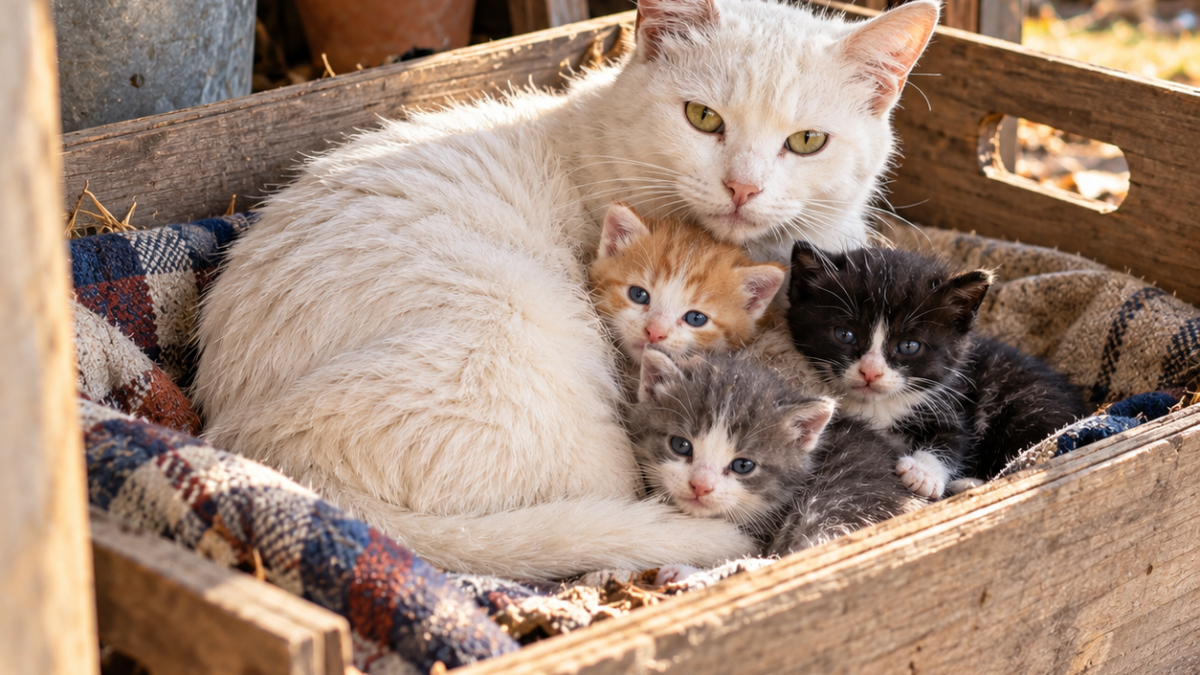
I was minutes away from throwing my late uncle’s battered green suitcase into a dumpster when something moved inside it.
When I pulled back the zipper, three tiny faces stared up at me from a nest of old newspapers—and suddenly the house I was preparing to sell no longer felt empty.
But it was what I discovered among my uncle’s photographs weeks later that made me wonder whether those kittens had ended up in that shed by accident at all.
I had inherited Uncle Henry’s house three months after he passed away.
Calling it an inheritance made it sound grander than it was.
The house was small and old, sitting at the end of a quiet street with a backyard that had slowly surrendered to weeds. The wooden fence leaned slightly toward the alley. Ivy had climbed halfway over the garden wall. The porch needed paint, the gutters needed cleaning, and almost every room contained something Uncle Henry had saved because he believed throwing away a useful object was practically a moral failure.
I loved him.
But the man had kept everything.
Coffee cans filled with screws.
Broken garden tools.
Stacks of magazines.
Three radios, only one of which worked.
Jars containing nails sorted by sizes only he understood.
My plan was simple.
Clear the property.
Repair the obvious problems.
Sell the house.
Move on.
I did not live nearby, and I had no emotional reason to keep another mortgage-sized responsibility tied around my life.
At least, that was what I kept telling myself.
The garden shed was the last place I tackled.
It smelled like damp wood, old soil, and the particular dusty scent of things that had not been touched in years.
I spent most of Saturday sorting.
Keep.
Donate.
Trash.
By late afternoon, I was tired enough that almost everything began looking like trash.
That was when I noticed the suitcase.
It was wedged beneath a stack of cracked flowerpots and an old wooden seed tray.
Green.
Scuffed.
One corner dented.
The handle was almost worn through.
“Seriously, Uncle Henry?”
I pulled it free.
Dust lifted into the sunlight coming through the shed window.
I assumed it was empty.
Then something shifted inside.
I froze.
At first, I thought maybe something had fallen against the interior.
Then I heard it.
A tiny sound.
Not quite a meow.
More like a breath trying to become one.
I lowered the suitcase immediately.
My heart was pounding for no sensible reason.
I pulled the zipper slowly.
An inch.
Then two.
The smell of old newspaper came first.
Then I saw fur.
Three kittens were curled tightly together inside.
One pale ginger.
One gray-brown.
One mostly white with a dark patch near her ear.
Their eyes were only partly open.
They were so small that all three could have fit comfortably in my two hands.
For several seconds, I simply stared.
“Oh my God.”
The ginger kitten lifted its head.
Barely.
The others pressed closer.
Beneath them were layers of old newspaper and one of my uncle’s worn gardening gloves.
Someone—or something—had arranged the space.
This was not where kittens had accidentally fallen.
A mother had chosen it.
I immediately backed away.
Everything I knew about kittens could have fit onto a sticky note, but even I understood one thing.
If these babies were this young, their mother might be nearby.
I searched the shed carefully.
Nothing.
Behind shelves.
Nothing.
Under a workbench.
Nothing.
I walked through the garden.
“Hello?”
I felt ridiculous calling for a cat whose existence I could not confirm.
I checked behind the compost bin.
Near the fence.
Under the porch.
Nothing.
Twenty minutes passed.
I was beginning to panic.
Then leaves moved beneath the hedge.
A thin brown-and-white cat appeared.
She stopped the moment she saw me.
Her body went rigid.
She was small.
Far too thin.
Her fur was dusty, and one back paw landed differently from the others, as though an old injury made her careful about where she placed it.
For one second, we watched each other.
Then a kitten cried from inside the shed.
The cat ran past me.
Not toward safety.
Toward the suitcase.
I followed slowly.
By the time I reached the doorway, she was inside.
She climbed directly into the suitcase and wrapped herself around all three kittens.
Her body curved protectively over them.
Her eyes never left me.
“All right,” I whispered. “I understand.”
She did not trust me.
She did not need to.
The message was clear.
Those were her babies.
And whatever I did next, I would have to convince her I was not going to take them away.
I sat on the shed floor several feet from the battered green suitcase.
My phone was in my hand.
The real-estate agent had left me a voicemail that morning asking when the property would be ready for listing photos.
A dumpster was scheduled for Monday.
Boxes waited throughout the house.
Everything about my plan said I was supposed to be emptying this place.
Instead, I was staring at four unexpected lives who had apparently decided Uncle Henry’s forgotten garden shed was home.
I called a local animal rescue.
A volunteer answered.
I explained what I had found.
“How old are the kittens?” she asked.
“I have absolutely no idea.”
“Eyes open?”
“Partly.”
“Mother with them?”
“She is now.”
“Good. Don’t separate them.”
“I wasn’t planning to.”
“Can you keep the area quiet and warm until I get there?”
I looked at the broken window latch, the dusty boards, and the cold evening coming.
“I can do better than that.”
I had no idea what “better” meant yet.
But looking at that frightened mother wrapped around her babies inside my uncle’s old suitcase, I knew one thing with absolute certainty.
The dumpster could wait.
PART 2
The rescue volunteer arrived forty minutes later.
Her name was Rachel.
She was in her early forties, wearing jeans, hiking shoes, and a sweatshirt with the name of a local rescue organization printed across the chest.
She carried two plastic carriers, a stack of clean towels, and the calm expression of someone who had walked into stranger situations than mine.
Before entering the shed, she stopped beside me.
“Tell me exactly what happened.”
I did.
The suitcase.
The kittens.
The mother returning.
Rachel nodded.
“You did the right thing waiting.”
“She looked ready to fight me.”
“Probably fear more than aggression.”
“She ran right past me.”
“To the kittens?”
“Yes.”
“Then we know what matters most to her.”
We entered quietly.
The mother cat had not moved.
Three small faces were buried against her belly.
Rachel crouched far enough away that the cat did not have to react.
“Oh, sweetheart.”
I glanced at her.
“You say that to all of them?”
“Pretty much.”
She watched the mother walk a few inches when one kitten shifted.
“That rear paw looks old.”
“I noticed.”
“She’ll need an exam eventually.”
“Eventually?”
Rachel looked at me.
“If I grab her now, I can probably get her into a carrier.”
The cat watched us.
“But?”
“But I don’t need to make today more frightening than necessary.”
That sentence would become important later.
At the time, it was just practical.
We discussed options.
Because the kittens were still nursing and the mother was actively caring for them, keeping the family together was essential.
The shed was not ideal.
It became cold at night.
There were gaps where another animal might enter.
The suitcase worked as a temporary nest but not as a long-term nursery.
Rachel asked whether I had a room inside the house where the family could be isolated.
I almost laughed.
“I have an entire empty house.”
“Even better.”
We chose the small downstairs laundry room.
It had a door.
Easy-to-clean floor.
No furniture for frightened cats to disappear inside.
I turned up the heat and brought down clean blankets.
Rachel helped arrange a low cardboard box as an alternative nest.
Food and water went several feet away.
Litter box farther still.
Then came the difficult part.
Moving them.
Rachel suggested transferring the entire suitcase with the kittens and mother still inside.
“She may tolerate that better than us handling everyone separately.”
I looked at the battered green case.
“Uncle Henry would find this hilarious.”
“Was it his?”
“Everything in that shed was his.”
Rachel smiled.
“Then I guess he’s loaning it to the rescue.”
We moved slowly.
I took one side.
Rachel the other.
The mother flattened herself over the kittens but did not leave.
Her eyes remained fixed on us as we carried the suitcase through the garden, up the back steps, through the kitchen, and into the laundry room.
Once it was safely on the floor, we backed away.
“Now what?”
“Mostly?”
Rachel stood.
“Feed Mom. Let Mom feed babies. Keep everything quiet.”
“That sounds suspiciously easy.”
“It isn’t.”
She was right.
Nothing about Juniper would be easy at first.
Rachel wanted names for the intake notes.
“You don’t have to decide permanently.”
I looked toward the suitcase.
The mother cat’s face was visible between the flap and the kittens.
There was something about her coloring that reminded me of leaves at the end of summer.
Brown.
Cream.
White.
Muted rather than flashy.
“Juniper.”
Rachel wrote it down.
“Nice.”
Then we looked at the kittens.
The ginger one had an absurdly round little face.
“Biscuit.”
Rachel laughed.
The darker one had mottled coloring.
“Pebble.”
The smallest was mostly pale with a dark dot near one ear.
“Dot.”
Rachel wrote all four names.
Just like that, the animals I had found in a suitcase became individuals.
Juniper.
Biscuit.
Pebble.
Dot.
Names do that.
They make distance harder.
Rachel gave me instructions.
High-calorie food for Juniper.
Fresh water.
Minimal disturbance.
Watch for changes.
Call immediately if any kitten became weak, stopped nursing, felt cold, or behaved unusually.
“And don’t try to pet Juniper.”
“I wasn’t planning to.”
“People say that.”
“I mean it.”
Rachel looked at my hands.
“You reached for her earlier?”
I felt guilty.
“Only once. In the shed. She backed away.”
“And you stopped?”
“Yes.”
“Good.”
She packed her supplies.
“I’ll check in tomorrow.”
I watched her leave.
Then the house became silent.
Except now it was not truly silent.
From the laundry room came the faintest squeaks.
Tiny movements.
Occasional rustling newspaper.
For the first time since Uncle Henry died, his house contained something living besides me.
That realization landed harder than expected.
I had grown up visiting this place.
Uncle Henry never married.
Never had children.
He was the uncle who always let kids dig through his garage for tools even when we had no idea what we were building.
He saved tomatoes for neighbors.
Fixed bicycles for free.
Left bowls of water in the garden during summer.
And yes, he fed stray cats.
I remembered that.
Not one specific cat.
Just cats appearing around his porch.
Orange ones.
Black ones.
Gray ones.
Sometimes one.
Sometimes several.
If I asked whether they were his, he always said the same thing.
“They don’t belong to me.”
Then he’d buy another twenty-pound bag of food.
At the time, I thought it was funny.
Standing outside the laundry room listening to Juniper feed her kittens, the memory felt different.
I slept in Uncle Henry’s bedroom that night because it was the only room where I had already cleared enough space for a bed.
Around two in the morning, I woke.
A small cry.
I sat up.
Another.
I went downstairs.
The laundry-room door was closed.
I opened it a few inches.
Juniper’s eyes immediately met mine.
“All good?”
She stared.
The kittens were pressed against her.
Everything looked normal.
I should have gone back upstairs.
Instead, I sat outside the doorway.
Not inside.
Just nearby.
“You know,” I whispered, “I wasn’t planning on any of this.”
Juniper’s ears moved.
“I was supposed to be selling this place.”
She lowered her head toward Dot.
“I had a real-estate agent and everything.”
No response.
“Very rude.”
Juniper closed her eyes halfway.
I sat there for another ten minutes.
Then returned to bed.
The next morning, I found Juniper’s food bowl empty.
That made me happier than it should have.
I refilled it.
She waited until I left before approaching.
That became our first routine.
I entered slowly.
Announced myself.
“Morning, Juniper.”
Food down.
Water changed.
Blanket checked.
Then I backed away.
Juniper watched every movement.
She never hissed.
Never charged.
Never tried to bite.
But her body tightened whenever I came too close.
There are many kinds of no.
Juniper’s no was silent.
I respected it.
Rachel came every day for the first week.
On day three, she examined the kittens while Juniper was distracted with food.
Healthy.
Small but active.
Juniper’s physical examination required more planning.
We eventually used a carrier placed in the room so she could become familiar with it.
Food nearby.
Then inside.
Several days.
No grabbing.
No chase.
When she was finally transported to the veterinarian, the exam confirmed what we suspected.
She was underweight.
Her back paw had evidence of an old injury that had healed imperfectly, but she was using it well enough that immediate intervention was not necessary.
No microchip.
No identification.
Age estimated somewhere around two or three years.
Young.
Much younger than her cautious eyes made her seem.
“She probably has been outside a long time,” the veterinarian said.
“Can you tell what happened to her leg?”
“Not with certainty.”
That phrase would repeat itself through Juniper’s story.
Not with certainty.
We could guess.
But guesses were not facts.
I had to learn to live with that.
Rachel and I brought her back to the house.
For the rest of the day, Juniper distrusted me more than before.
Understandable.
I sat outside the laundry room that evening.
“I know.”
She stared.
“I’d be mad too.”
Her ears flattened slightly.
“The vet was necessary.”
She turned her face away.
“I’m not expecting forgiveness.”
Nothing.
“We good?”
Definitely not.
The next morning, she ate while I was sitting in the hallway.
That was enough.
The kittens grew quickly.
Biscuit became the explorer.
As soon as his legs worked well enough to carry him farther than six inches, he treated the laundry room like an undiscovered continent.
Pebble was bolder around objects but more cautious with people.
Dot remained the smallest.
She followed Juniper constantly.
If Mom moved, Dot moved.
If Mom lay down, Dot somehow found the exact center of her body and collapsed there.
“That’s your favorite,” Rachel said one morning.
“I don’t have favorites.”
Dot climbed over Biscuit to get closer to Juniper.
Rachel raised an eyebrow.
“Sure.”
It was difficult not to become attached.
That was the problem.
Every practical task inside Uncle Henry’s house had once moved me closer to selling it.
Box dishes.
Remove old furniture.
Clean attic.
Repair porch.
Now every task became delayed by kittens.
I would enter a bedroom intending to sort clothes.
Ten minutes later, I was sitting on the laundry-room floor watching Biscuit attack a towel.
I would begin photographing furniture for donation.
Then hear a crash.
Pebble had discovered an empty cardboard tube.
Dot once spent fifteen minutes fighting her own reflection in the shiny side of a water bowl.
Nothing got done.
Or at least not efficiently.
The real-estate agent, Melissa, began calling more often.
“Any idea when you’re ready for photos?”
“Not yet.”
“Repairs?”
“Some.”
“Cleanout?”
“Working on it.”
“You said two weeks.”
“I know.”
Then one afternoon:
“Is everything okay?”
I looked toward the laundry room.
Juniper was visible through the open doorway.
She sat near her kittens.
Still thin.
But better.
“Yes.”
“That didn’t sound convincing.”
“I found cats.”
Silence.
“In the house?”
“In a suitcase.”
Another silence.
“I’m sorry. What?”
I explained.
Melissa laughed after I finished.
Not mockingly.
Just because the situation sounded absurd when spoken aloud.
“So the listing is delayed because your uncle left you a maternity ward?”
“He did not leave me cats.”
“You found them in his shed.”
“That is different.”
“How long?”
“Until the kittens are old enough.”
“How long is that?”
I told her.
Melissa sighed.
“All right.”
“You’re not mad?”
“It’s your house.”
That phrase caught me.
My house.
I looked around Uncle Henry’s kitchen.
I still thought of it as his.
“Technically.”
Melissa continued.
“Call when you’re ready.”
I hung up.
Juniper walked into the hall.
Stopped when she saw me.
Then backed into the laundry room.
For reasons I could not explain, the word technically stayed with me.
The house was technically mine.
Yet nothing about it felt mine.
Not yet.
During the second week, I began sitting inside the laundry room.
Far corner.
Back against the wall.
Laptop open.
I answered emails.
Sorted digital paperwork.
Sometimes read.
I ignored Juniper as much as possible.
At first, she would move the kittens farther into the suitcase when I entered.
Then she stopped.
Later, she nursed them while I sat there.
That was the first breakthrough.
Not touch.
Not approach.
Simply continuing her life in my presence.
One evening, Biscuit wandered toward me.
Juniper watched.
I stayed still.
Biscuit sniffed my shoe.
Then tried to climb it.
“Your child has poor judgment,” I told Juniper.
Her eyes remained fixed on us.
I placed my hands flat against my legs so she could see them.
Biscuit crawled over my foot.
Nothing happened.
Juniper did not retrieve him.
That felt enormous.
A few days later, all three kittens were comfortable approaching me.
Juniper was not.
She allowed them to choose differently.
There was something deeply moving about that.
She did not seem to transfer her fear automatically.
She watched.
Judged.
Adjusted.
Her babies learned human hands could bring food and toys.
Juniper remained cautious but did not interfere.
“She’s an incredible mom,” Rachel said.
I watched Juniper clean Dot’s head.
“She really is.”
“She got those babies through the hardest part.”
“What happens to mothers like her after kittens are adopted?”
Rachel did not answer immediately.
“Depends.”
“On what?”
“Temperament. Socialization. Placement options.”
“You mean whether she can become someone’s pet.”
“That’s one possibility.”
I looked at Juniper.
She saw me looking and shifted away.
“What if she can’t?”
“Then we find the best option we can.”
Something about that answer bothered me.
Not because Rachel was wrong.
Because I suddenly cared very much what happened to Juniper.
More than I wanted to admit.
The kittens were easy.
Cute.
Playful.
Adoptable.
Everyone wanted photographs.
Juniper was the one people might overlook.
The worn-out mother.
Thin.
Old leg injury.
Suspicious.
No cute kitten energy.
She had done all the difficult work.
Then her babies would grow up and leave.
What would she get?
I began sitting closer.
Not too close.
Juniper continued eating.
Progress.
One night, rain hammered the roof.
The sound brought back memories of childhood nights at Uncle Henry’s house.
Storms always sounded louder here.
He used to sit on the porch after rain and tell me how many worms would be on the sidewalk the next morning.
Completely useless information.
I would give anything to hear it again.
I sat in the laundry room while rain hit the windows.
Biscuit and Pebble were asleep.
Dot was nursing.
Juniper watched the storm.
“You picked a good week to come inside.”
She looked toward me.
“My uncle would’ve fed you.”
No reaction.
“He fed every animal with a face.”
I smiled.
“Probably several without faces too.”
Juniper blinked.
I continued.
“He would’ve driven me crazy about all of you.”
The sadness came suddenly.
Grief does that.
Months of handling paperwork, clearing rooms, signing documents.
Then one small thought cracks everything open.
I imagined Uncle Henry on the laundry-room floor beside me.
He would have named every kitten badly.
Probably something like Red, Gray, and Other One.
He would have insisted Juniper trusted him because she did not run immediately.
He would have bought the most expensive cat food while refusing to replace his twenty-year-old shoes.
I missed him.
I lowered my head.
For a few minutes, I cried quietly.
When I looked up, Juniper had moved.
She was not close.
But closer.
Maybe by a foot.
She sat watching me.
“Don’t worry.”
I wiped my face.
“Humans leak sometimes.”
She remained.
That was all.
A week later came the moment I had not expected.
It was evening.
The kittens were around four weeks old and turning the laundry room into chaos.
Biscuit had discovered climbing.
Pebble had discovered Biscuit’s tail.
Dot had discovered that both brothers made excellent pillows.
Juniper had discovered patience beyond anything I possessed.
I entered with food.
She did not retreat.
Good.
I placed the bowl down.
Then sat.
Usually, Juniper waited several seconds before approaching.
That night, she walked toward me instead.
Not the food.
Me.
I froze.
She moved carefully.
One step.
Then another.
I kept my hands still.
Her injured rear paw gave her gait a slight unevenness.
She stopped near my knee.
My heart was beating so loudly I was convinced she could hear it.
Juniper lowered her head.
For one second, I thought she was going to sniff my fingers.
Instead, she pressed the side of her cheek gently against the back of my hand.
Once.
A soft brush of fur.
Then she turned.
Walked back to her kittens.
Lay down beside Dot.
The entire interaction lasted perhaps three seconds.
I stared at my hand.
“Did that just happen?”
Biscuit attacked Pebble.
Juniper ignored me.
I started laughing.
Then, because apparently I had lost emotional control over my own life, I cried.
Again.
I texted Rachel.
**JUNIPER TOUCHED ME.**
Her response arrived almost immediately.
**Did you reach for her?**
I was offended.
**NO.**
**Good.**
Then:
**That’s huge.**
It was.
Not because Juniper had suddenly become affectionate.
She did not repeat the gesture the next day.
Or the next.
But she had made one choice.
She had crossed distance because she wanted to.
After weeks of watching my hands bring food, change blankets, pick up kittens, and never force themselves onto her, she had tested me.
That touch changed the way I approached everything afterward.
I stopped hoping for a dramatic transformation.
Trust was not a switch.
Juniper could brush my hand one evening and back away the next morning.
Both were honest.
Both deserved respect.
We continued.
Weeks passed.
The kittens were weaned.
Juniper gained weight.
Her coat improved.
The hollow appearance around her hips softened.
She still limped slightly, especially after sleeping, but the veterinarian remained satisfied that she was comfortable.
Biscuit became fearless.
Pebble became clever.
Dot became devoted to Juniper.
When adoption applications opened, interest arrived quickly.
Pictures of kittens do that.
Biscuit had six applications in three days.
Pebble had four.
Dot had several too.
I read them with Rachel.
I hated the process.
“These people seem good.”
“They are.”
“So Biscuit would leave?”
“That is generally how adoption works.”
“I understand the concept.”
Rachel smiled.
“You can keep all three kittens.”
“No.”
“And Juniper.”
“No.”
“You have five bedrooms.”
“Most filled with boxes.”
“Technicality.”
I glared at her.
The truth was that I had already started imagining Biscuit elsewhere.
A family with two teenagers applied.
They had an older friendly cat.
Indoor-only home.
Veterinary references.
They sent a photograph of a sunny window with a wide padded sill.
I hated them immediately because they seemed perfect.
Pebble’s strongest application came from a young couple who had recently lost an elderly cat.
They worked alternating schedules, meaning someone was almost always home.
They had toys ready before approval.
Also terrible people.
Perfect for Pebble.
Dot’s applications were good too.
But every time I imagined Dot leaving Juniper, something in me resisted.
Dot still slept against her mother’s side.
Juniper still groomed her first.
Maybe they would eventually separate naturally.
Maybe not.
I told Rachel.
“Can we wait?”
“For Dot?”
“Yes.”
“Absolutely.”
She studied me.
“You’re attached.”
“To all of them.”
“Especially?”
I looked toward the living room.
By then, I had expanded the cats’ space.
Juniper sat near a window.
Dot was asleep against her.
I sighed.
“Maybe two.”
Rachel smiled but mercifully said nothing.
Then came the photograph.
I had almost forgotten about the boxes in the attic.
The cats had taken over my schedule so thoroughly that Uncle Henry’s belongings sat untouched for weeks.
One Saturday, I decided I had to make progress.
I carried three boxes downstairs.
Old tax documents.
Birthday cards.
Receipts from stores that no longer existed.
Photographs.
Hundreds.
Uncle Henry was terrible at organizing them.
Pictures from the 1980s mixed with pictures taken ten years ago.
Family Christmases.
Fishing trips.
Garden vegetables.
Neighbors.
Cats.
A lot of cats.
I smiled.
Of course.
One photo showed Uncle Henry holding a black kitten.
Another showed an orange cat sitting on his lawnmower.
Another, two gray cats eating beside the back steps.
Then I found the one.
At first, I noticed Uncle Henry.
He looked younger.
Maybe five or six years before his death.
Standing in the garden near the old shed.
One hand holding a watering can.
His ridiculous straw hat on his head.
I laughed.
Then my eyes moved downward.
A cat sat beside his feet.
Brown and white.
Small.
White chest.
Brown markings across the face and back.
I stopped breathing for a second.
“No.”
I brought the photograph closer.
There was something about the shape of the face.
The coloring.
Even the way one rear leg seemed angled slightly.
My rational mind immediately interrupted.
Cats can look alike.
Photographs distort details.
I wanted a connection because I missed Uncle Henry.
That was all possible.
Still.
I took the photograph downstairs.
Juniper was sleeping in the living room.
Dot beside her.
I sat several feet away and held the photograph beside my line of sight.
Photo.
Juniper.
Photo.
Juniper.
“Oh, come on.”
The resemblance was unsettling.
I called Rachel.
She arrived later that afternoon.
I handed her the picture without explanation.
She looked.
“Your uncle?”
“Yes.”
“Cute cat.”
“Look at the cat.”
She did.
Then looked toward Juniper.
Then back.
“Huh.”
“That’s not a scientific answer.”
“What do you want me to say?”
“Tell me I’m imagining it.”
Rachel studied the photo.
“I can’t.”
“So it’s her?”
“I didn’t say that.”
“But—”
“Brown-and-white cats exist.”
“I know.”
“Markings can look similar.”
“I know.”
“How old is the picture?”
“Maybe five years.”
“Juniper could theoretically be old enough, depending on the estimate.”
“So—”
“But we cannot prove it.”
There it was.
Not with certainty.
Again.
I sat at the kitchen table.
“My uncle fed strays.”
“You told me.”
“What if she knew this place?”
“Possible.”
“What if she came back because she remembered him?”
“Possible.”
“What if—”
Rachel stopped me gently.
“Possible is not the same as true.”
I nodded.
“I know.”
She sat opposite me.
“But you know what?”
“What?”
“It doesn’t have to be true to mean something.”
I looked at her.
“Maybe that cat isn’t Juniper.”
She touched the edge of the photograph.
“But your uncle definitely made this garden safe enough that cats came near him.”
I swallowed.
“And years later, Juniper chose the same property to hide her babies.”
She handed the photograph back.
“Whatever the connection is, that’s real.”
That night I placed the photograph on the mantel.
Juniper did not care.
Of course she did not.
But I cared.
I began seeing Uncle Henry’s property differently.
The bowl-shaped depression beneath the porch where cats might have slept.
The sheltered corner beside the shed.
The old ceramic water dish I had found during cleanup.
A bag of expired cat food in the utility cabinet.
Evidence of a habit.
Not one animal.
Probably many.
Uncle Henry had quietly created safety.
No rescue organization.
No social media posts.
No grand gesture.
Food.
Water.
Space.
Regularity.
What if Juniper—or perhaps her mother, or another cat from the same neighborhood population—had known that?
I would never know.
The mystery hurt and comforted me at the same time.
A week later, Melissa, the real-estate agent, called again.
“I have buyers asking whether the property is coming up.”
“How?”
“Neighbor mentioned it to somebody.”
“Oh.”
“The market’s good.”
I looked out the kitchen window.
Juniper sat on the porch.
Yes.
The porch.
She had started choosing outdoor supervised time once the kittens were older, but she always came back inside.
“What could it sell for?”
Melissa gave me a number.
Higher than expected.
My practical mind woke immediately.
That money could solve things.
Pay debts.
Increase savings.
Give me flexibility.
The house still needed work.
Keeping it meant taxes, maintenance, repairs.
Selling had always been the sensible decision.
“Can you come by next week?” I asked.
“Absolutely.”
I hung up.
Juniper looked through the glass.
For some reason, I felt guilty.
“This was always the plan.”
She cleaned one paw.
“Don’t look at me like that.”
She was not looking at me.
“Fine.”
Biscuit’s adoption day arrived first.
His new family came with a carrier and a toy mouse.
The teenage daughter knelt on the floor.
Biscuit climbed straight into her lap as though he had been waiting for her.
Traitor.
I stood by smiling while my chest hurt.
Juniper watched from several feet away.
She did not panic when Biscuit was placed into the carrier.
She approached.
Sniffed.
Biscuit reached one paw through the door.
Juniper touched noses with him.
That nearly destroyed me.
I wanted to cancel everything.
Rachel stood beside me.
“You okay?”
“No.”
“That’s normal.”
“I hate this.”
“Also normal.”
The family left.
The house felt immediately quieter.
Pebble searched for Biscuit for an hour.
Dot did too.
Juniper seemed restless that evening.
I sat near her.
“He’s safe.”
She looked at me.
“I know you don’t understand.”
Maybe she did, in her own way.
“I checked them three times.”
Juniper blinked.
“They’re good people.”
No response.
“I hate them.”
That made me laugh.
Three days later, the family sent a photograph.
Biscuit asleep beside their older cat in the sunny window.
I cried.
Then saved it as my phone background.
Pebble’s adoption came a week later.
The young couple brought a soft blanket.
Pebble immediately attacked the carrier zipper.
Appropriate.
Before leaving, the woman hugged me.
“You saved him.”
I shook my head.
“Juniper did most of that.”
She looked toward the mother cat.
“We’ll send updates.”
“Please.”
After Pebble left, only Juniper and Dot remained.
The house changed again.
Quieter.
More deliberate.
Dot became even more attached to her mother.
Juniper became more relaxed with me.
Some evenings she sat on the same couch.
Not beside me.
Other end.
That was enough.
The first time she jumped up while I was already seated, I did not move for forty minutes.
Eventually, Dot joined her.
There we were.
One human.
Two cats.
Uncle Henry’s old living room.
The framed photograph on the mantel.
I began wondering whether this arrangement had already answered a question I was still pretending to ask.
Melissa visited on Tuesday.
She walked room to room with a notebook.
“Kitchen’s dated.”
“I know.”
“Roof?”
“Inspected last year.”
“Bathroom tile should probably be replaced.”
“Maybe.”
She opened the back door.
Juniper was sleeping on the porch.
Dot beside her.
Melissa smiled.
“Your cats?”
I gave the automatic response.
“Fosters.”
She raised an eyebrow.
“For how long?”
“That’s complicated.”
She stepped into the yard.
The garden had improved.
I had started clearing weeds, partly because Juniper liked sitting near the flower beds.
Uncle Henry’s old roses were recovering.
I had cut back the dead growth.
New leaves appeared.
Melissa looked toward the shed.
“That will need to be emptied.”
I went still.
The green suitcase was inside.
Empty now.
I had moved it back after replacing the nest with a proper bed.
For some reason, I had not thrown it away.
“Yeah.”
She continued.
“We could probably list in three weeks.”
Three weeks.
I looked toward Juniper.
She slept.
Dot’s head rested across her back.
Melissa said:
“The market might cool later.”
“I understand.”
“So?”
“I’ll let you know.”
She frowned slightly.
“You’re hesitating.”
“No.”
“You are.”
I leaned against the porch rail.
“This was my uncle’s place.”
“I know.”
“I didn’t want it.”
“That doesn’t make you a bad person.”
“I know.”
“But now?”
I laughed without humor.
“Now apparently I run a cat nursery.”
Melissa smiled.
“That isn’t a reason to own a house.”
“No.”
She was right.
Emotion does not pay property taxes.
A cat sleeping in sunlight does not repair plumbing.
Memories do not replace roof shingles.
I needed to be rational.
After she left, I walked into the shed.
The green suitcase sat where I had placed it.
Dust cleaned off.
Still ugly.
Still battered.
I opened it.
Inside were a few pieces of old newspaper I had kept for reasons I could not explain.
And Uncle Henry’s gardening glove.
The one the kittens had slept against.
I picked it up.
His initials were written inside in black marker.
H.W.
I sat on an overturned bucket.
For months, I had been sorting his life into categories.
Keep.
Donate.
Trash.
I had thought grief could be managed that way.
Objects could be processed.
House sold.
Money transferred.
Chapter closed.
The kittens had ruined that system.
They had arrived inside an object I would have labeled trash.
That irony was not lost on me.
I had nearly discarded the suitcase.
Instead, it had contained four lives.
Maybe that was why I could not throw it away.
It had taught me something before I was ready to understand it.
Do not assume you know what is inside something just because the outside looks useless.
That applied to the suitcase.
To the house.
To Juniper.
Probably to me.
The next morning, Rachel came for Dot’s checkup.
I told her Melissa had visited.
“So you’re selling?”
“That was always the plan.”
Rachel nodded.
“What about Juniper and Dot?”
“I’ll take them with me until we find placements.”
She stared.
“What?”
“Nothing.”
“Say it.”
“You already said ‘take them with me.’”
“As fosters.”
“Sure.”
“Stop.”
Rachel smiled.
“Where do you live?”
“Apartment.”
“Pet policy?”
I froze.
My apartment building allowed cats.
Two.
I knew that because I had checked.
Two weeks earlier.
Without admitting why.
Rachel’s smile widened.
“I hate you.”
“You checked, didn’t you?”
“That’s not evidence.”
“Strong evidence.”
I looked toward Juniper.
She was grooming Dot.
“What if the house sells to someone who doesn’t want outdoor cats around?”
“Then we manage that.”
“What about the garden?”
Rachel understood.
The neighborhood cats.
The water dishes.
The quiet ecosystem Uncle Henry had maintained.
Selling would not automatically destroy any of it.
Still, I worried.
“What if the next owner clears everything?”
“They can.”
“What if they lock the shed?”
“They probably will.”
I felt irrationally angry at imaginary future owners.
Rachel sat beside me.
“You don’t have to keep a house because cats once lived in the yard.”
“I know.”
“You also don’t have to sell it because you decided that before you understood what the place meant to you.”
That silenced me.
Maybe this was not about Juniper.
Maybe she had simply forced me to stop long enough to reconsider.
For months after Uncle Henry died, I approached the property as a problem.
He was gone.
The house remained.
Therefore, remove the house.
Simple.
But grief had made me afraid of staying.
Every room contained him.
The dent in the hallway wall from moving a refrigerator when I was seventeen.
The coffee ring on his workshop bench.
The marks where he had measured my height as a kid.
The terrible wallpaper he refused to replace.
Selling meant I would never have to keep encountering those things.
I had called that practicality.
Maybe some of it was escape.
Juniper had hidden in a suitcase.
I had hidden in efficiency.
That thought irritated me because it was probably true.
Dot officially became available for adoption two weeks later.
I told Rachel not to post her yet.
“Reason?”
“Juniper.”
“Meaning?”
“They’re attached.”
“Yes.”
“Maybe they should stay together.”
“Possible.”
“Stop using my words against me.”
Rachel laughed.
“Bonded placements can be considered if that’s best.”
“So we wait.”
“We wait.”
That same week, Juniper did something new.
She followed me into the kitchen.
Not close.
But deliberately.
I was making coffee.
I turned.
She was sitting near the doorway.
“Can I help you?”
Juniper looked toward the refrigerator.
“You’re becoming transparent.”
I prepared breakfast.
Dot raced in.
Juniper followed.
For the first time, they ate in the kitchen rather than in their original room.
That evening, Juniper walked into my bedroom while I was folding laundry.
She inspected the floor.
Sniffed the bed.
Left.
I laughed.
“Very thorough.”
Day by day, Uncle Henry’s house became their house.
And maybe mine.
I began repairing things without thinking about resale value.
A loose porch board.
Window screen.
Garden gate.
I repainted the laundry room because the old paint had yellowed.
I cleared the spare bedroom.
Not for buyers.
For myself.
That realization scared me.
One Saturday morning, I cleaned the green suitcase.
Really cleaned it.
Vacuumed the interior.
Wiped the outside.
Removed damaged paper.
The fabric remained scratched and faded.
No amount of cleaning could make it new.
I carried it to the spare room and placed a soft cushion inside.
Rachel happened to stop by that afternoon.
She saw it.
“You made the suitcase a bed?”
“It seemed appropriate.”
“For who?”
“Juniper.”
Rachel laughed.
“What?”
“You are extremely sentimental for someone who planned to throw the whole thing away.”
“I contain multitudes.”
“Sure.”
That evening, I showed Juniper.
As though she cared.
I put the suitcase on the floor.
“Look.”
She sniffed it.
Walked around once.
Stepped inside.
My heart lifted.
She immediately stepped back out.
Walked away.
I stared.
“You lived in this.”
Juniper continued down the hall.
“You raised three children in here.”
No reaction.
“This is historically significant.”
Dot climbed inside.
Turned around.
Jumped back out.
I felt deeply unappreciated.
That night, I went to bed.
Sometime around three, I woke because something was touching my head.
I opened my eyes.
Juniper.
On my pillow.
Not in the carefully restored sentimental suitcase.
On my pillow.
Dot curled beside her.
For several seconds, I did not move.
Juniper’s eyes were closed.
Her body relaxed.
Dot’s nose was buried against her side.
I stared at the ceiling.
Then I whispered:
“You have got to be kidding me.”
Juniper’s ear moved.
That was all.
I smiled in the dark.
The suitcase had once been the safest place she could find.
Hidden.
Enclosed.
Out of sight.
Now she had a warm house.
A bed.
A ridiculous human who had spent an afternoon turning old luggage into furniture.
She no longer needed the suitcase.
That realization was better than watching her use it.
The object had fulfilled its purpose.
Safety is supposed to become obsolete.
A shelter should not become a prison just because it once saved you.
Juniper had moved on.
The suitcase could remain as memory.
That morning, I made my decision.
Or maybe the decision had been making itself for weeks.
Rachel came by after lunch.
She found me in the garden replacing a broken piece of fence.
“You’re doing serious repairs.”
“Apparently.”
“Listing?”
“No.”
She stopped.
“No?”
I shook my head.
“I called Melissa.”
“And?”
“I told her I’m not selling.”
Rachel smiled.
Not triumphantly.
Quietly.
“What changed?”
I looked toward the porch.
Juniper lay in a patch of sunlight.
Dot was attacking a leaf.
“I think we’re staying.”
Rachel nodded as if she had known before I did.
That annoyed me.
“Don’t make that face.”
“What face?”
“The I-knew-it face.”
“I don’t know what you’re talking about.”
“Everybody knows what you’re talking about.”
She laughed.
Then her expression softened.
“And Juniper and Dot?”
I looked at her.
“Do I actually need to fill out adoption paperwork for cats already sleeping on my head?”
“Yes.”
“Bureaucracy.”
“Very strict.”
“I’ll do it.”
So I did.
Juniper and Dot officially became mine.
Even writing that feels strange.
Mine.
Not property.
Responsibility.
Family.
Biscuit and Pebble remained with their adoptive families.
They sent updates regularly.
Biscuit grew into a large orange cat who occupied the sunny window exactly as predicted.
Pebble became obsessed with carrying socks around his house.
Both were healthy.
Loved.
Safe.
Sometimes their adopters visited.
Once, Biscuit returned briefly for a supervised reunion when his family came by.
Juniper smelled him.
He smelled her.
There was no dramatic recognition scene.
No movie reunion.
They simply accepted each other’s presence.
That felt right.
Life moves forward.
Dot remained close to Juniper as she grew.
Not constantly.
She became more independent.
But most nights, she slept within a few feet of her mother.
Juniper changed too.
Slowly.
The cheek brush became occasional head rubs.
Then brief petting.
She never liked being picked up.
So I rarely did.
She enjoyed chin scratches.
Disliked sudden movement.
Loved morning sunlight.
Hated vacuum cleaners.
Adored a particular blanket I nearly donated before discovering it belonged to her.
Her old back paw sometimes bothered her in cold weather, so we monitored it.
Routine veterinary care became part of life.
She gained enough confidence to complain if breakfast was late.
That felt like justice.
Not the dramatic kind.
There was never anyone to punish.
I never learned where Juniper had lived before.
Never learned whether the cat in Uncle Henry’s photograph was truly her.
I had looked closely enough to know the similarities.
Not closely enough to turn uncertainty into fact.
Sometimes people wanted me to decide.
“Surely it’s her.”
“Maybe.”
“She came back to the house.”
“Maybe.”
“Your uncle fed her.”
“Maybe.”
That word no longer frustrated me.
Maybe had become enough.
Maybe Juniper had known Uncle Henry.
Maybe she had once eaten beside his garden.
Maybe she had remembered the shed.
Maybe the cat in the photograph was another brown-and-white stray entirely.
The factual answer remained unavailable.
But the emotional truth did not depend on it.
Uncle Henry had created a place where vulnerable animals found food and quiet.
After he was gone, Juniper found that same place.
Then I continued what he had started.
That was real.
One summer evening, I sat in the garden with the old photograph.
Juniper lay beneath the rosebush.
Dot chased insects nearby.
I looked from the image to the cat.
“Was that you?”
Juniper yawned.
“Very helpful.”
I held up the photo.
“You could blink twice.”
She closed both eyes.
I laughed.
“All right. Secret stays secret.”
In time, I learned more from neighbors.
Mrs. Alvarez next door remembered Uncle Henry feeding cats for years.
“Your uncle called every one of them George.”
“Even females?”
“Especially females.”
That sounded exactly like him.
“Do you remember a brown-and-white one?”
She frowned.
“There were several.”
My hope deflated slightly.
Then she added:
“One used to sleep near the shed.”
“When?”
“Oh, years ago.”
“Did she limp?”
“I don’t remember.”
Again.
Almost.
Never certainty.
Mr. Turner across the street remembered a mother cat with kittens once.
Different coloring.
Different year.
Another neighbor said Henry had helped trap community cats for veterinary care.
I found paperwork supporting that.
Receipts.
Vaccination certificates without clear photographs.
Records from a low-cost clinic.
Uncle Henry had quietly been doing more than putting food outside.
That moved me deeply.
He had never talked about it.
No speeches.
No labels.
Just action.
The garden became my way of continuing it responsibly.
I worked with Rachel’s rescue.
We placed appropriate shelters.
Managed feeding responsibly.
Helped identify cats who needed spay/neuter services.
Not every outdoor cat became a house pet.
That was okay.
Some needed medical care and return to familiar territory.
Some were social enough for adoption.
We treated them as individuals.
Uncle Henry would have pretended not to care.
Then bought extra food.
The house changed with me.
I repaired the porch.
Repainted rooms.
Kept the terrible hallway wallpaper for sentimental reasons even though every sane person advised against it.
Melissa stopped by months later.
She looked around.
“You fixed it.”
“Some.”
“I could still sell it.”
“No.”
“Just checking.”
Juniper walked through the room.
Melissa pointed.
“That’s why?”
“Partly.”
She smiled.
“So the suitcase cost me a commission.”
“Apparently.”
“I should hate cats.”
“You don’t?”
“My daughter adopted Biscuit’s brother’s friend from the rescue.”
I laughed.
“It’s spreading.”
The old green suitcase remained in the spare room.
Nobody used it.
For a while, Dot stored toys in it.
Juniper ignored it completely.
People asked why I kept it.
“It should be thrown away,” one cousin said.
“Probably.”
“You’re becoming Uncle Henry.”
“Take that back.”
He laughed.
But I knew what he meant.
I was beginning to keep things because stories lived inside them.
That can become unhealthy if you keep everything.
So I developed one rule.
An object could stay if its story still served a purpose.
The suitcase did.
Every time I saw it, I remembered how close I came to throwing it away unopened.
That unsettled me.
Not because I truly would have tossed moving kittens into a dumpster—I noticed movement first.
But because I had mentally labeled the suitcase worthless before understanding what it contained.
That became a metaphor whether I wanted one or not.
I had done the same to the house.
Old.
Inconvenient.
Sell.
I had done something similar to grief.
Painful.
Unproductive.
Move on.
And perhaps to myself.
Unsettled.
No reason to stay.
Keep moving.
Juniper’s family interrupted every category.
The house was more than property.
Grief was more than something to finish.
Staying could be a choice rather than failure to move forward.
One evening, Dot climbed onto my lap.
Juniper sat beside me.
Not touching.
Close.
I looked around the room.
Uncle Henry’s old lamp cast a yellow circle across the wall.
The photograph rested on the mantel.
Outside, the garden was dark.
I thought:
I’m home.
The realization was so simple I almost missed its importance.
Before inheriting the house, I had moved often.
College.
First job.
Another city.
Another apartment.
Relationships that almost became permanent and then did not.
I was good at leaving.
Good at packing.
Good at treating every place as temporary.
Uncle Henry’s house was supposed to be another temporary responsibility.
Then Juniper arrived inside a suitcase because she needed somewhere to stay.
Somewhere along the way, the same thing happened to me.
I stopped preparing to leave.
That was the part of the original discovery I could not have imagined.
I thought I had found kittens needing a home.
I had found a reason to recognize one.
Winter came again.
Juniper’s old paw became stiffer.
The veterinarian recommended simple supportive care and monitoring.
I built low steps near her favorite window.
She ignored them for a week.
Then used them when she thought I was not watching.
Dot had no such dignity.
She launched herself over everything.
One snowy morning, I found both cats watching flakes through the glass.
Juniper sat carefully.
Dot’s tail flicked wildly.
I sat beside them.
“Good thing you picked the shed.”
Juniper glanced at me.
“Terrible insulation.”
She looked outside.
“Suitcase was ugly.”
No response.
“Excellent location though.”
Dot attacked the window when a snowflake slid down.
I laughed.
Life became full of these small scenes.
The rescue stories people share usually focus on discovery.
The dramatic moment.
Open suitcase.
Find kittens.
Mother appears.
Safe ending.
But discovery occupied maybe one hour.
Living together filled years.
That was the real story.
Juniper learning my footsteps.
Dot learning the sound of a can opening from three rooms away.
Me learning that Juniper hated one brand of food for reasons known only to her.
Veterinary appointments.
Hair on furniture.
Scratched couch corners.
Bills.
Litter.
Warm mornings.
Worry.
Routine.
Love eventually becomes maintenance.
I mean that positively.
The grand gesture says:
I will save you.
Daily care says:
I am still here.
Again.
Again.
Again.
That repetition was what Juniper trusted.
Not the day I carried the suitcase indoors.
The hundred days after.
The thousand after those.
Trust was built after the emergency ended.
Rachel and I stayed friends.
She would sometimes bring new volunteers by to see the garden setup.
Juniper generally disappeared.
“Your inspirational rescue cat is terrible at public relations,” Rachel said once.
“She values privacy.”
“She hid under the bed.”
“Strong boundaries.”
Dot, meanwhile, greeted everyone.
“She inherited none of her mother’s caution.”
“Maybe that’s the point,” Rachel said.
I looked at her.
“What?”
“Juniper did all the worrying so Dot didn’t have to.”
That sentence sat with me for days.
Maybe.
Again, not something we could prove psychologically.
But emotionally, it fit.
Juniper had chosen the suitcase.
Moved kittens.
Guarded them.
Stayed thin while nursing.
Watched every human.
Dot’s early world had been different.
Warm room.
Full mother.
Food.
Hands that moved slowly.
No need to learn fear the same way.
That was another victory.
Sometimes healing does not mean the frightened individual becomes fearless.
Sometimes it means the next generation begins somewhere safer.
I saw that in Dot.
Confident.
Curious.
Entitled.
She slept in the middle of hallways as though nobody in history had ever stepped near a cat.
Juniper still chose edges of rooms.
Dot chose centers.
Both were loved.
Years later, Biscuit and Pebble’s families remained in touch.
Biscuit became famous among their relatives for stealing bread.
Appropriate name.
Pebble slept with a sock beside his head almost every night.
Their people sent birthday updates using estimated dates.
I printed photographs.
Uncle Henry’s mantel became a cat gallery.
One picture of the kittens in the suitcase.
One of Biscuit in his sunny window.
Pebble with a stolen sock.
Dot asleep upside down.
Juniper beneath the garden roses.
And the old picture of Uncle Henry beside the mysterious brown-and-white cat.
Visitors always asked about that one.
“Is that Juniper?”
I answered:
“I don’t know.”
At first, they found that unsatisfying.
Then I told the story.
By the end, most understood.
Not every mystery needs solving.
Some possibilities are meaningful because they remain possibilities.
If I had somehow proven the photograph was Juniper, the story would become cleaner.
A cat returns to the man who once fed her, finds him gone, raises kittens in his shed, and becomes family with his heir.
Beautiful.
Almost too perfect.
Life rarely provides documentation for perfect endings.
What I had was less neat and more honest.
A man had shown kindness to neighborhood cats.
Years later, a frightened mother chose his property.
His niece found her.
Kindness continued.
That was enough.
One afternoon, while reorganizing the shed, I discovered another item.
A notebook.
Mostly gardening notes.
Dates.
Tomato varieties.
Rainfall.
Pest problems.
Then, in several margins, brief entries.
**Orange cat ate 2 bowls.**
**Small white cat back again.**
**Brown mama near shed—leave food farther from porch.**
My hands stopped.
Brown mama.
No year listed on that page at first glance.
I flipped back.
The notebook dated roughly six years before I found Juniper.
My heart raced.
I called Rachel.
“You are going to hate me.”
“Why?”
“I found something.”
I read the entry.
Silence.
Then Rachel said:
“Interesting.”
“Interesting?”
“What do you want?”
“Certainty.”
“You know I can’t give that.”
“There was a brown mother near the shed.”
“Yes.”
“Six years ago.”
“Juniper was estimated younger than that.”
My excitement slowed.
Right.
If Juniper was two or three when found, the cat six years earlier probably was not her.
Unless the age estimate had been significantly wrong.
Possible, but less likely.
I sat down.
“So not her.”
“Maybe not.”
Disappointment surprised me.
Then Rachel continued.
“But maybe family.”
“What?”
“Community cat populations can remain around the same area for generations.”
“You think—”
“I think we still don’t know.”
I laughed.
“Of course.”
But the notebook changed something.
Perhaps the photograph did not show Juniper.
Perhaps it showed a mother, an aunt, a grandmother, or no relation whatsoever.
We could not know.
Yet Uncle Henry’s garden had clearly been part of a cat community for years.
Juniper had not chosen an entirely random space.
The property was embedded in a pattern of safety.
That was even more meaningful than one dramatic coincidence.
Kindness had become environmental.
Something animals could return to even after the person who started it was gone.
I loved that.
It made Uncle Henry feel present without requiring magic.
No supernatural return.
No destiny.
Just consequences.
Feed animals consistently.
Provide safe space.
Help community cats responsibly.
Years later, the place retains value.
Goodness leaves infrastructure.
That phrase came to me one day while repairing a shelter.
Goodness leaves infrastructure.
A bowl.
A shed.
A garden path.
A rescue contact.
A neighbor who knows what to do.
A niece who learns.
Kindness is not always a feeling.
Sometimes it is a system someone else can continue.
I decided to continue Uncle Henry’s.
Not exactly.
I improved it.
Working with rescue professionals meant feeding responsibly, supporting veterinary care, reducing uncontrolled breeding, and finding placements when appropriate.
Uncle Henry had done what he knew.
I could do more with better resources.
That felt like honoring him rather than merely preserving everything unchanged.
I finally threw away his broken lawnmower.
That felt revolutionary.
I kept the suitcase.
Balance.
Juniper became comfortable enough that guests occasionally saw her.
Never crowds.
She preferred one or two people.
My sister visited one weekend.
Juniper approached her cautiously.
My sister whispered:
“She’s tiny.”
“She was smaller.”
“Can I touch?”
“Let her decide.”
My sister held one hand low.
Juniper sniffed.
Then walked away.
My sister looked disappointed.
“She hates me.”
“No.”
“How do you know?”
“She walked instead of running.”
“That is a very low bar.”
“It used to be the ceiling.”
Later that evening, Juniper sat six feet from her.
My sister smiled.
“I get it.”
“That phrase again.”
“What?”
“Everybody eventually says they get it.”
“Because you sound insane until we see her.”
“Thank you.”
My sister slept in the spare room.
The green suitcase sat beside the wall.
She asked:
“Why is this still here?”
“Historical artifact.”
“You mean garbage.”
“Leave.”
She laughed.
The next morning, Dot was sleeping inside the suitcase.
I took a photo and sent it to my sister from the kitchen.
**RESPECT HISTORY.**
She replied:
**ONE CAT USED IT ONCE. THROW IT AWAY.**
I did not.
Juniper grew older.
The change was gradual.
More sleep.
Less time outside.
Greater willingness to use warm places.
Eventually, she began sleeping on my bed almost every night.
Usually near my feet.
Dot preferred my pillow.
Apparently the hierarchy had evolved.
One morning, I woke with Juniper tucked against my legs.
Dot across my shoulder.
I could not move.
I looked at the ceiling.
“This is how I die.”
Dot purred.
Juniper slept.
I stayed trapped for twenty more minutes.
Completely worth it.
As Juniper aged, the old back paw required more attention.
We adjusted furniture.
Low steps.
Non-slip mats.
Warm bedding.
Medication when recommended.
The rescue volunteer who had once helped me carry a suitcase now joked that Juniper had a better retirement plan than either of us.
“She earned it,” I said.
Rachel nodded.
“Yes, she did.”
That sentence mattered.
Juniper had worked hard simply to survive before I met her.
We could not know every detail.
But her physical condition told enough.
Thin body.
Old injury.
Extreme caution.
Three kittens hidden in luggage.
Whatever life had been, it had required effort.
Now effort was optional.
She did not have to search for food.
Did not have to carry babies.
Did not have to evaluate every human hand.
She could sleep.
Again, the simplest victory.
One evening, I found her in Uncle Henry’s old chair.
He had sat there every night watching terrible game shows.
I had considered donating it.
Now Juniper had claimed it.
I took a picture.
Then looked at the mantel photograph of Uncle Henry.
“You lost your chair.”
Juniper opened one eye.
“He would’ve complained.”
She closed it.
“He would’ve let you stay.”
That was true.
I sat on the couch.
For a moment, the room felt layered.
Past and present.
Uncle Henry in memory.
Juniper in the chair.
Dot chasing something under the table.
Me no longer packing boxes.
The house had not preserved him.
That was impossible.
But it preserved continuity.
People die.
The care they practiced can keep moving.
That became the most comforting thing I learned from inheritance.
I had assumed inheritance meant objects and property.
House.
Money.
Tools.
Furniture.
But Uncle Henry had left habits.
Feed what is hungry.
Notice what others ignore.
Leave room.
Fix what you can.
Do not make a speech about it.
Those were worth more than the furniture.
The old green suitcase became part of that inheritance too.
Not because Uncle Henry intentionally left it for kittens.
He did not.
Because an object he had forgotten became a bridge between his habits and mine.
Years after Juniper arrived, I finally repaired the shed completely.
New roof.
Secure door.
Better shelves.
Rachel’s rescue used part of it to store community-cat supplies.
Carriers.
Bowls.
Weatherproof shelter materials.
Someone joked we should name the shed after Uncle Henry.
I pretended to object.
A month later, there was a small wooden sign:
**HENRY’S GARDEN SHED**
Below, in smaller letters:
**Leave room for the unexpected.**
That line was mine.
I cried when they installed it.
Juniper did not attend the ceremony.
She was asleep inside.
Appropriate.
The rescue began occasionally using the property as a temporary recovery stop for certain community cats when suitable.
Carefully.
Professionally.
Never overcrowded.
The house did not become a shelter.
It remained home.
But Uncle Henry’s pattern continued in a more organized form.
Neighbors helped.
Mrs. Alvarez donated towels.
Mr. Turner built two outdoor shelters.
Melissa, my former real-estate agent, brought food around Christmas.
“You know,” I told her, “you’ve lost all professional objectivity.”
“I still think you should replace the bathroom tile.”
“Leave.”
She laughed.
The funny thing was that the house increased in value over the years anyway.
Not that it mattered.
I had stopped measuring it primarily in dollars.
That would have sounded dangerously sentimental to the person I had been when I first inherited it.
I still believed in financial reality.
Repairs cost money.
Taxes arrived on schedule.
Emotion did not excuse irresponsibility.
But value had multiple columns now.
Some things paid in stability.
Community.
Memory.
Belonging.
You could not sell all of those without noticing the loss.
The closest thing our story ever had to “revenge” came quietly.
Not against a person.
Against every first impression.
The suitcase looked like trash.
It held a family.
The shed looked abandoned.
It became safety.
The frightened mother looked impossible to approach.
She eventually slept on my pillow.
The house looked like a burden.
It became home.
I thought I was there to remove the past and sell what remained.
Instead, the past handed me a future.
That reversal satisfied me more than any villain being punished could have.
No one needed to suffer.
Something simply needed to be understood correctly.
Juniper had taught me that.
The world is full of things we label too quickly.
Stray.
Damaged.
Old.
Worthless.
Burden.
Trash.
Sometimes the label is practical.
Sometimes it is wrong.
Sometimes there are three kittens breathing beneath it.
One autumn, Biscuit and Pebble’s families came together for a small visit.
Not a reunion designed for the cats.
Mostly humans staying connected because of them.
Biscuit had become enormous.
Pebble remained smaller and suspicious of new rooms.
Dot watched both from across the living room.
Juniper slept through most of the event.
At one point, all four adult offspring/mother cats were visible in the same house.
I stood in the doorway.
Rachel beside me.
“Look at them.”
“I am.”
“You realize this started with you cleaning a shed.”
“I realize it started with me almost throwing away a suitcase.”
Rachel smiled.
“Better story.”
Biscuit knocked a cup off the table.
His owner apologized.
“See?” I said. “I regret everything.”
Nobody believed me.
After everyone left, Juniper walked slowly through the quiet room.
She sniffed where Biscuit had sat.
Then returned to Uncle Henry’s chair.
Dot jumped beside her.
I sat across from them.
The green suitcase remained visible through the spare-room doorway.
Empty.
Exactly as it should be.
That night, I understood why I would probably keep it for the rest of my life.
Not because Juniper needed it.
Because she did not.
The fact that it was empty was the entire point.
No mother needed to hide babies inside.
No kittens needed newspaper for warmth.
No frightened body needed old luggage as a fortress.
The suitcase had become obsolete.
That was its happy ending.
Years later, when Juniper became truly elderly, I worried about her constantly.
Age brought kidney changes.
Arthritis.
Longer naps.
Less appetite on some days.
Veterinary visits became more frequent.
Dot, still younger and energetic, adjusted surprisingly well.
She seemed to understand when her mother wanted quiet.
Or maybe I imagined that.
Again, humans love narratives.
Still, she slept nearby.
One winter afternoon, snow fell outside.
Juniper lay on a heated pad near the window.
Dot beside her.
I sat reading.
Juniper woke.
Looked at me.
Then slowly got up.
Walked across the room.
Her limp more noticeable now.
She reached my chair.
I lowered my hand.
Juniper pressed her cheek into it.
Same gesture.
Years later.
Slower.
Longer.
I remembered the first time in the laundry room.
Three seconds.
A frightened mother testing whether a human hand could be trusted.
Now she leaned her entire head into my palm.
I scratched behind her ear.
My eyes filled.
“Yeah.”
She purred softly.
“I remember too.”
Of course, I do not know whether she remembered that specific evening.
I did.
That was enough.
She climbed awkwardly into my lap.
Something she had rarely done.
I helped only when she clearly needed support.
She settled.
Dot watched from the window.
Outside, snow covered the old garden shed.
I thought about time.
Suitcase.
Kittens.
Photograph.
Decision.
Years compressed.
I had once been desperate to sell the house and move forward.
Now I understood that staying had also been movement.
We mistake departure for progress because it is visible.
Sometimes growth is remaining somewhere long enough to build roots.
Uncle Henry had roots here.
Juniper had made some.
So had I.
When Juniper’s health eventually required harder decisions, Rachel came by.
She had been part of the story from the first day.
We sat at the kitchen table.
Juniper slept nearby.
“I don’t want to do this badly,” I said.
“You won’t.”
“How do you know?”
“Because you’ve spent years listening to her.”
That broke me.
Listening.
That had been the whole relationship.
Her first no.
Distance.
Cheek touch.
Food preferences.
Cold mornings.
Pain.
Comfort.
I had learned to care without making my desire the loudest voice.
Now that mattered most.
We worked closely with the veterinarian.
Focused on comfort.
Good days.
Appetite.
Mobility.
Interest in familiar things.
No unnecessary heroics for my sake.
Love does not entitle us to endless time either.
That is harder to accept than not being allowed to pet a frightened cat.
But the principle was the same.
Juniper decided as much as possible.
I listened.
During that period, she used the green suitcase once.
Only once.
I walked into the spare room and stopped.
Juniper was inside.
Curled on the cushion.
I nearly cried from the symbolism before reminding myself she was a cat and had probably chosen it because the afternoon sun happened to land there.
Still.
I sat on the floor several feet away.
“Full circle?”
Juniper slept.
Dot entered.
Jumped into the suitcase beside her.
There they were.
Mother and daughter.
Same old battered case.
But everything around it had changed.
Warm house.
Veterinary care.
Food in the kitchen.
People who knew their names.
An open doorway.
They were not trapped by necessity.
They had options.
That distinction mattered.
Juniper could leave the suitcase whenever she wished.
An hour later, she did.
Climbed onto my bed instead.
I laughed.
“Sentimental moment ruined.”
Perfect.
Juniper’s final chapter was quiet and dignified.
I will not turn it into spectacle.
She had spent enough of her early life struggling.
Her last period was about comfort.
Warmth.
Familiar rooms.
Dot.
My voice.
Hands she no longer feared.
When her time eventually came, she was not hidden beneath flowerpots.
Not curled around kittens in a cold shed.
Not watching every movement from a distance.
She was home.
That is the fact I keep.
Afterward, Dot searched for her.
That hurt more than I can explain.
Rooms feel different when one familiar body is missing.
Dot became clingier.
So did I.
We adapted together.
The house was quieter.
But not empty.
On the first warm day after winter, I carried Juniper’s old photograph—the recent one, not Uncle Henry’s mystery picture—into the garden.
I placed it temporarily beside the old photo while organizing a shelf.
Two brown-and-white cats.
Possibly connected.
Possibly not.
Uncle Henry.
Juniper.
Two mysteries divided by years.
I no longer needed answers.
I had gotten something better.
A life with Juniper.
Facts are important.
But uncertainty does not invalidate lived experience.
She had been here.
I had known her.
She had trusted me.
That was documented in every room.
Hair still stuck to one blanket.
Scratches on an old chair.
Veterinary records.
Photographs.
Dot.
No mystery there.
A few months later, someone visiting the house noticed the green suitcase.
“Why do you still have that?”
I smiled.
It was the question I had heard dozens of times.
The suitcase looked worse with age.
The green fabric faded.
One latch useless.
Handle barely attached.
I could replace it with a beautiful cat bed for thirty dollars.
I already had.
Several.
“No one even uses it,” the visitor said.
“I know.”
“Then why?”
I told them.
Not every detail.
Just enough.
I had been clearing my late uncle’s shed.
Found an old suitcase.
Almost discarded it.
Something moved.
Three kittens inside.
Their mother returned.
Everything changed.
The visitor looked toward Dot, now sleeping on the windowsill.
“She’s one of them?”
“Yes.”
“And the mother?”
I looked toward Juniper’s photograph.
“That was Juniper.”
The visitor became quiet.
Then asked:
“Was she really the cat in your uncle’s old picture?”
I smiled.
“I don’t know.”
They seemed disappointed.
I continued:
“But my uncle fed neighborhood cats for years.”
“So maybe.”
“Maybe.”
They nodded slowly.
Then looked at the suitcase differently.
That happened often.
Same object.
New context.
Again, the lesson.
Look closer.
Stories change value.
Dot eventually became the undisputed owner of Uncle Henry’s house.
I paid the mortgage and taxes, apparently only because she lacked opposable thumbs.
She slept in the sun.
Demanded meals.
Inspected visitors.
Occasionally used the green suitcase for toy storage.
I continued rescue work in modest ways.
Nothing dramatic.
Transport sometimes.
Food.
Garden shelter.
Fundraising.
Helping neighbors understand what to do when they found kittens.
And every time someone called saying:
“I found babies. Should I take them?”
I heard myself repeating Rachel’s first advice.
“Is the mother nearby?”
“Don’t assume they’re abandoned.”
“Keep them warm.”
“Call professionals.”
“Give Mom a chance to return if it’s safe.”
Knowledge travels.
Rachel taught me.
I told others.
Uncle Henry’s habits had traveled too.
We are all carrying pieces of what someone taught us.
Sometimes intentionally.
Sometimes not.
One spring, a young mother cat appeared near the garden.
Gray.
No collar.
Cautious.
Not Juniper.
Not some symbolic replacement.
Her own animal.
We worked with the rescue.
She was evaluated.
No kittens.
Eventually, she was placed appropriately.
When I first saw her near the hedge, I felt an old impulse.
Juniper.
Then I stopped.
No.
This was not Juniper’s story continuing through another cat.
It was a new story.
That mattered.
Love does not require us to turn every future animal into the one we lost.
Juniper had taught me to see individuals.
I owed the next cat the same respect.
Years after I first inherited the house, Melissa visited again.
We sat in the kitchen.
Dot watched birds.
“You ever regret not selling?”
I considered it.
“Financially?”
“Any way.”
The house had required expensive repairs.
A furnace replacement.
Roof work.
Plumbing surprise.
There had been weeks I absolutely questioned my sanity.
“No,” I said.
Melissa smiled.
“Never?”
“I regret the plumbing bill.”
“That counts.”
“Okay. I regret plumbing.”
“What about staying?”
I looked around.
“No.”
“Because of the cats?”
“Not only.”
That was important.
Juniper had opened the question.
She had not single-handedly made the decision.
I stayed because, once forced to slow down, I discovered I wanted this life.
Garden.
Community.
Memory.
Responsibility.
Home.
The cats were part of it.
Not the entire explanation.
Melissa nodded.
“Good.”
“What?”
“I always wondered if you’d eventually feel trapped by the decision.”
“So did I.”
“Do you?”
I looked toward the backyard.
Henry’s Garden Shed.
Roses.
Outdoor shelter tucked discreetly near the fence.
Dot asleep.
“No.”
I smiled.
“I think staying was the first decision I made here that actually belonged to me.”
Inheriting the house had happened to me.
Finding the cats had happened to me.
Grief had happened to me.
Staying was a choice.
Choice transforms obligation.
That may have been the deepest reason the house finally felt like home.
Uncle Henry’s house became mine not when the deed changed.
When I chose it.
Juniper did something similar.
The suitcase was where necessity placed her.
My home became where she chose to stay.
Choice again.
Maybe that was the common thread.
Years later, I replaced the old mattress in the spare room.
I moved the suitcase temporarily into the hallway.
Dot inspected it.
Then climbed inside.
I laughed.
“Your mother would be offended.”
Dot curled up.
I sat beside her.
The worn gardening glove was still inside a protective bag in the suitcase pocket.
I occasionally thought about putting it in a box.
Museum behavior.
Then decided against it.
The suitcase did not need preservation like a sacred relic.
It could remain ordinary.
Dusty.
Touched.
Used.
That fit the story better.
Uncle Henry had never treated kindness as sacred.
He treated it as routine.
Put out food.
Fill water.
Fix gate.
Help neighbor.
Repeat.
Maybe that was why his impact lasted.
Anything we put on a pedestal becomes exceptional.
Exceptions are easy to admire and hard to imitate.
Routine kindness is more useful.
Juniper’s rescue looked dramatic in retelling.
But its success came from routine.
Meals.
Clean blankets.
Sitting quietly.
Veterinary care.
Waiting.
Routine.
If people took one thing from the story, I hoped it was not:
What an amazing coincidence.
I hoped it was:
Small consistent acts create places where frightened lives can recover.
That is replicable.
You do not need a magical suitcase.
You need attention.
Patience.
Help from people who know what they’re doing.
And respect for the animal in front of you.
On the anniversary of Uncle Henry’s death one year, I sat in the garden alone.
Dot nearby.
I brought the old photograph.
The one with the brown-and-white cat.
I propped it against a flowerpot.
“You caused a lot of trouble,” I told Henry.
A breeze moved the roses.
“I was supposed to sell this place.”
Dot chased a leaf.
“I had plans.”
I laughed.
Then I became quiet.
“I hope you’d like what I did.”
There was no answer.
Of course.
Grief does not give literal responses.
But sometimes your own life becomes one.
I looked at the repaired shed.
The water bowl.
The garden.
Dot.
Maybe approval was not something I needed from the dead.
Maybe carrying forward what mattered was enough.
I picked up the photograph.
Inside, Juniper’s picture sat beside his.
The old mystery remained between them.
I liked it that way.
The story people preferred was that Juniper remembered Uncle Henry and returned to the only place she had ever known kindness.
Maybe.
It is beautiful.
I would never claim it as fact.
The story I know is beautiful enough.
A mother cat needed somewhere hidden to give birth.
She found an old suitcase in a quiet shed.
The property belonged to a man who, while alive, had spent years making the garden safer for strays.
After he died, his niece found the family.
She almost sold the property.
Instead, she stayed.
That requires no miracle.
Only continuity.
Only choices.
Only kindness traveling farther than the person who began it.
That is enough wonder for me.
Dot is older now.
Not ancient.
But no longer a kitten.
She sleeps on my bed.
Often across the pillow, continuing a family tradition of ignoring the furniture I actually buy for cats.
The green suitcase still sits in the spare room.
Sometimes untouched for months.
Sometimes filled with a toy.
Occasionally occupied by Dot when she feels like making the story too obvious.
When visitors ask why I keep it, I tell them:
“Because I nearly threw it away.”
Then I wait.
They look confused.
I continue:
“And it contained the reason I stayed.”
That usually gets their attention.
The truth is slightly more complicated.
The suitcase did not make me stay.
Juniper did not force me.
Uncle Henry’s photograph did not prove destiny.
Life rarely works so neatly.
But all of it slowed me down long enough to notice what I had been rushing past.
The house was not only work.
The garden was not only weeds.
Grief was not only pain.
Responsibility was not only burden.
A frightened animal was not defined by fear.
And I was not someone who needed to keep moving merely because moving had become my habit.
Sometimes a second chance looks like leaving.
Sometimes it looks like staying.
Mine looked like staying.
So did Juniper’s.
The day I found the suitcase, she had every reason to expect that a human entering the shed meant danger.
She covered her babies.
Watched me.
Refused closeness.
Years later, that same cat slept beside my face.
Not because I convinced her with one gesture.
Because nothing bad followed a thousand ordinary ones.
That is trust.
That is home.
Not a building.
Not a deed.
Not even permanence.
Home is the place where the body eventually stops preparing to leave.
Juniper taught me that.
I think Uncle Henry knew it already.
Maybe that was why neighborhood animals came back to his garden.
They did not understand property ownership.
They understood consistency.
This bowl is here.
This person does not chase.
This shed is quiet.
This place is safe.
Animals simplify what humans complicate.
When I inherited the house, my name appeared on paperwork.
Still, I did not feel that I belonged.
Juniper had no paperwork.
But she found belonging before I did.
Then, somehow, she showed me.
Today, the old green suitcase is still battered.
The zipper catches in one corner.
Its fabric has faded from green toward something between olive and gray.
No collector would want it.
No antique shop would display it.
Financially, it is worthless.
I would not sell it.
Not because objects are sacred.
Because stories need anchors sometimes.
When I see it, I remember the sound.
Something moving inside.
I remember opening the zipper.
Three tiny faces.
Newspaper.
Gardening glove.
I remember Juniper running past me.
Her whole thin body aimed toward her babies.
I remember carrying the suitcase inside with Rachel.
I remember that first cheek against my hand.
Biscuit leaving.
Pebble leaving.
Dot staying.
The photograph.
Melissa asking when I would list.
Juniper sleeping on my pillow instead of the beautiful bed I had made from her old shelter.
And finally:
“I think we’re staying.”
Four words.
A whole future inside them.
I had started the cleanup believing the house was something my uncle left behind.
I understand it differently now.
Sometimes what someone leaves behind is not an object.
It is an opportunity to continue a kind of life.
Henry left a garden where animals had learned humans could sometimes be safe.
Juniper arrived carrying that possibility into another generation.
And I, reluctantly at first, became responsible for keeping it alive.
That responsibility changed me.
For the better.
Not perfectly.
I still complain about repairs.
Still threaten to sell whenever the plumbing makes a suspicious noise.
Still tell Dot she needs employment.
She remains unwilling.
But this house is no longer Uncle Henry’s house in the way it once was.
It is ours.
Mine.
Dot’s.
Juniper’s memory.
A place Biscuit and Pebble can return to for visits.
A place rescue volunteers know.
A place where a bowl of water appears in summer.
A place where the garden shed is secure and clean.
A place where the unexpected is allowed to matter.
There are worse inheritances.
Once, somebody asked whether keeping the property felt like repaying my uncle.
I thought about it.
“No.”
“Then what?”
“Continuing him, maybe.”
Not copying.
Not freezing his life in place.
Continuing the good parts.
There is a difference.
I replaced his unsafe wiring.
Got rid of half his junk.
Repainted rooms he would have protested.
Installed appliances he would have called unnecessary.
I made the house mine.
But I kept the habit that mattered.
Leave room.
For neighbors.
For animals.
For interruption.
For things that do not fit the plan.
Especially those.
Plans are useful.
Mine said:
Clear shed.
Sell house.
Move on.
Then the suitcase moved.
I sometimes wonder what would have happened if I had cleaned the shed a day earlier.
Or later.
If Juniper had chosen another hiding place.
If I had hired a cleanout crew instead.
Those questions go nowhere useful.
The life I have exists because reality interrupted my plan.
That is enough.
The most meaningful revenge in this story was never against a person.
It was against every difficult beginning.
Juniper began in hiding and ended in sunlight.
Biscuit began in newspaper and ended in a warm window.
Pebble began inside an old suitcase and ended carrying stolen socks through a loving home.
Dot began pressed against her mother’s side and grew up believing beds, food, hands, and safety were ordinary.
I inherited a house I intended to discard and ended up finding the first place in years I genuinely wanted to stay.
Every beginning got rewritten.
That is better than punishment.
Better than anger.
Nothing cruel had to happen to anyone for the ending to feel fair.
Fear simply lost.
Instability lost.
Hunger lost.
Temporary shelter became home.
And an old suitcase that once represented the best protection Juniper could find became something no one needed anymore.
That may be my favorite part.
Juniper outgrew the suitcase.
I outgrew the urge to run from the house.
Dot outgrew needing her mother beside her every second.
Biscuit and Pebble outgrew the room where they were born.
Good shelters should eventually become too small for the lives they protected.
That means they worked.
So I keep the suitcase empty most of the time.
Empty can mean loss.
It can also mean success.
Nobody has to hide there anymore.
Whenever someone tells me to throw it away, I smile.
Then I tell the truth.
“I can’t.”
“Why?”
“Because once, I thought it was empty too.”
That usually stops them.
And maybe that is the simplest lesson of all.
We look at places.
Objects.
Animals.
Even people.
We think we know what they contain.
A damaged suitcase.
An old house.
A frightened cat.
A life that needs to move on.
Then something shifts inside.
And if we’re paying attention, we stop.
We open it carefully.
And sometimes what we find changes everything.
I was clearing out my late uncle’s shed because I wanted to close a chapter.
Instead, I found three new lives and one exhausted mother beginning theirs.
I thought I was giving them somewhere safe to belong.
That was true.
But the part I could not see yet was that I was standing inside a place that might belong to me too.
It took Juniper to show me.
Not through some miraculous sign.
Not through the photograph.
Not even through that first tiny touch against my hand.
She showed me by staying.
Day after day.
Choosing the room.
The porch.
The garden.
My bed.
Me.
Eventually, I understood the invitation.
So I stayed too.
And now, whenever morning light crosses Uncle Henry’s old garden and Dot stretches beside the window, I look toward that weathered green suitcase in the spare room and think about how close I came to treating the most important thing I found here as something that needed to be thrown away.
I came to this house believing I was clearing out what was left behind.
Juniper taught me that sometimes what is left behind is exactly what helps us find our way forward.
She needed a home.
So did her kittens.
And, though it took me much longer to admit it, so did I.
In the end, none of us found home because everything went according to plan.
We found it because something moved inside an old suitcase—and I stopped long enough to listen.

