PART 2: I Bought 1,400 Acres Outside the HOA—Then Their President Learned I Owned the Only Bridge to 340 Homes
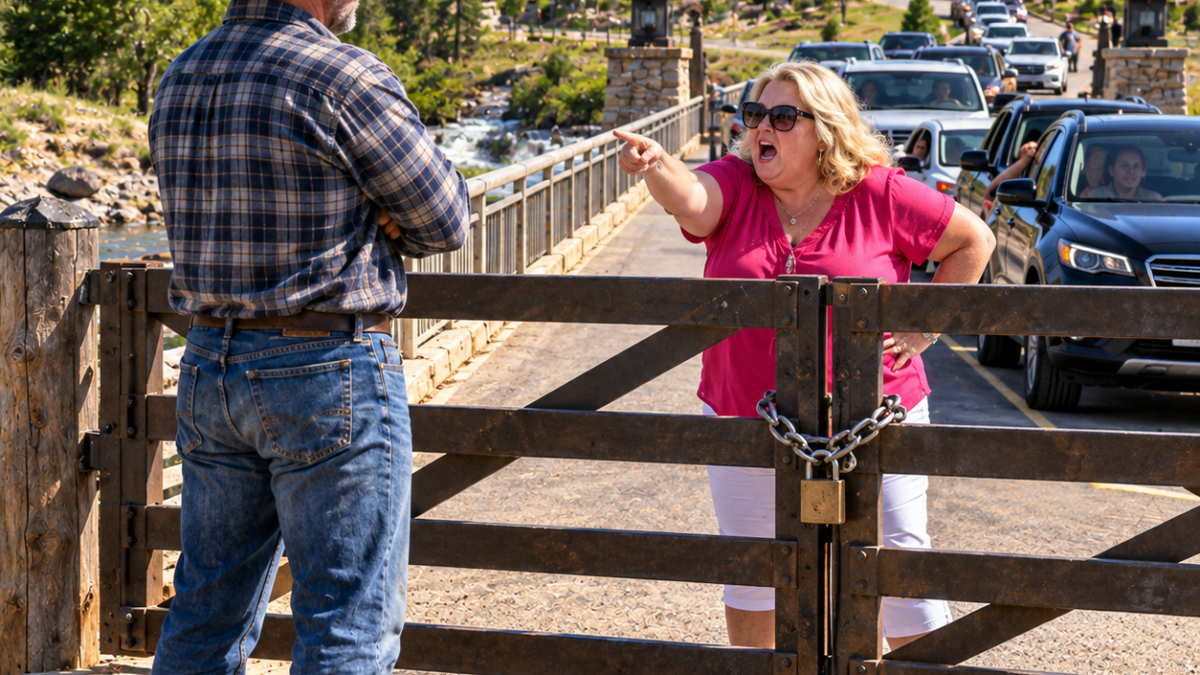
PART 2
I leaned back in my kitchen chair.
“Walk me through it.”
Francis didn’t need to.
I already knew what she was going to say.
But thirty-five years of surveying had trained me never to confuse knowing with documenting.
So I wanted to hear every step.
“The parcel was held by the regional conservation land trust from 2003 until you bought it in July 2024.”
“Correct.”
“And Crestline Ridge’s first residents began using the bridge in 2004.”
“Correct.”
“So nearly every year Sandra is relying on occurred while the trust owned the property.”
“All twenty.”
“Exactly.”
I heard papers moving on Francis’s end.
Then she said, “Section 84.”
The state’s Conservation Land Protection Act.
I knew the statute.
Not because I was an attorney.
Because surveyors who work on conserved land learn quickly that title law matters as much as geometry.
Section 84 existed for a simple reason.
Land placed into qualified conservation ownership was not supposed to slowly lose pieces of itself because neighboring owners cut across it, parked on it, grazed animals on it, or used roads over it long enough to claim permanent rights later.
So the legislature had made qualifying conservation property immune from prescriptive easement claims during the trust’s ownership.
The clock didn’t pause.
It didn’t accumulate quietly.
It didn’t wait to restart with twenty years already in the bank.
It simply did not run.
Francis said, “The HOA says they have twenty years.”
“They have zero.”
“They could theoretically start accumulating time after your purchase.”
“July 2024.”
“Yes.”
“And they need fifteen years.”
“Yes.”
“So if I did absolutely nothing…”
“The earliest possible date would be July 2039.”
I looked at Sandra’s letter on the table.
The paper looked very confident.
Twenty years of open, continuous use.
Five years beyond the statutory minimum.
Rights established by operation of law.
Acknowledge within thirty days.
Two pages of certainty.
Destroyed by one missing part of the title chain.
“That’s assuming I never object,” I said.
Francis laughed.
“You’re objecting Monday.”
“How?”
“I want a notice posted at the bridge.”
“Closure?”
“No.”
That mattered.
Three hundred forty households depended on the bridge.
Some people later told the story as though I had bought the land specifically so I could lock the gate and watch an HOA panic.
That wasn’t true.
There wasn’t even a gate.
I had no desire to make a mother drive twenty extra miles to get a child to school.
I didn’t want an ambulance wondering whether it could cross.
I wanted exactly what I had requested from the beginning:
A legal, recorded access agreement.
“The sign says private property,” Francis continued. “Access by permission. Contact my office regarding a permanent access arrangement.”
“So they can keep crossing.”
“Yes.”
“But the record is clear that they’re crossing because I permit it.”
“Exactly.”
I nodded.
That interrupted any theoretical prescriptive period against me before it had a chance to become interesting.
“Do it.”
“I’ll draft the response this weekend.”
“How long?”
“Six pages.”
I smiled.
“You already know it’s six pages?”
“I know you.”
“That doesn’t answer my question.”
“You’ll want every title transfer, every statutory citation, every public-record search, and every exhibit.”
“That sounds about right.”
She sighed.
“Six pages.”
Monday morning, I drove to Callow Creek before sunrise.
Mist sat low over the water.
The bridge looked almost black against the pale morning sky.
It wasn’t a grand structure.
People hear “only bridge to 340 homes” and imagine some enormous steel span.
Callow Creek Bridge was modest.
A single lane.
Timber deck.
Concrete abutments poured in 1961.
Fifteen-ton load rating.
Forty-two feet from end to end.
You could walk across it in seconds.
But geography can turn forty-two feet into the most important forty-two feet in a community.
The county road stopped at the south bank.
Crestline Ridge rose on the plateau beyond the north bank.
Between them was the creek.
And between them was my bridge.
I mounted the laminated notice on the east abutment at driver-eye level.
PRIVATE PROPERTY — ARTHUR KELL
ACCESS BY PERMISSION ONLY
CONTACT FRANCIS ODUM, ATTORNEY AT LAW, REGARDING ACCESS ARRANGEMENTS
Nothing threatening.
No chain.
No lock.
No CLOSED sign.
I stepped back.
Read it twice.
Then drove to the field camp I had reestablished nearby to finish the timber inventory.
At 7:45, the first vehicle arrived.
White pickup.
It slowed.
Stopped.
The driver read the notice.
Then crossed.
A sedan came behind it.
Same thing.
Stop.
Read.
Cross.
By 8:15, six vehicles had done it.
By nine, I stopped counting.
My phone stayed quiet.
Francis’s didn’t.
By lunchtime, residents were calling her office.
“Are we allowed to cross?”
“Yes.”
“Is Mr. Kell closing the bridge?”
“No.”
“Does the HOA own it?”
“No.”
“Do we have an easement?”
“Not currently.”
“Then why have we been using it for twenty years?”
That was the question nobody in Crestline Ridge had thought to ask before.
Because routine feels like ownership after enough repetition.
People crossed that bridge to go to work.
School buses used it.
Delivery vans.
Contractors.
Guests.
Emergency vehicles.
Nobody stopped in the middle of their commute to pull a title report.
Why would they?
Their HOA declaration called it community access infrastructure.
The site plan showed it.
The HOA maintained it.
The county had even accepted a maintenance filing and later placed the bridge on an infrastructure funding waiting list.
Everything looked official.
The problem was that none of those things transferred ownership.
By noon, the Crestline Ridge community forum had exploded.
WHO IS ARTHUR KELL?
IS THE BRIDGE CLOSING?
WHY DOES A PRIVATE OWNER CONTROL OUR ONLY EXIT?
DIDN’T WE PAY TO REPAIR THIS BRIDGE?
WHERE IS THE EASEMENT?
That last question mattered.
Francis mailed her response to Sandra that afternoon.
Copies went to the HOA’s registered agent.
And to Martin Hess, the HOA’s attorney.
That copy to Martin was deliberate.
Francis had called him that morning.
Professional courtesy.
“Martin, I’m responding to a prescriptive easement letter sent Friday under your client’s name.”
Silence.
“I didn’t draft a letter.”
“I assumed you didn’t.”
Another silence.
“What does it claim?”
Francis told him.
Twenty years.
Fifteen required.
Easement established.
Thirty-day demand.
She later described his response as the sound of a man discovering that his client had ignored the exact advice he had given.
Martin had told Sandra to negotiate.
He had also said he needed to research how the conservation trust ownership affected any prescriptive claim.
Sandra had not waited for that research.
She had done her own.
She found the general rule.
Fifteen years.
Then stopped reading.
Francis’s six-page response did something I had always admired in good legal writing.
It began by admitting what the other side had gotten right.
Yes.
Prescriptive easements existed.
Yes.
The state generally required fifteen years.
Yes.
Open, continuous, hostile use could, under the right circumstances, mature into a legal access right.
Then came the ownership history.
Timber company.
1961 to 2003.
Conservation land trust.
2003 to 2024.
Arthur Kell.
July 2024 forward.
Then Section 84.
No prescriptive easement shall run against qualifying conservation land during the conservation owner’s period of ownership.
Twenty years of Crestline Ridge crossings.
Twenty years overlapping the trust.
Prescriptive time accumulated:
Zero.
Francis attached the trust’s qualification documents.
The deed history.
County parcel records.
My sealed survey.
The right-of-way index search.
Then she addressed the 2019 deck replacement.
Sandra had cited that repair as proof the HOA treated the bridge openly as its own infrastructure.
Francis agreed it was proof of something.
Just not what Sandra thought.
It was proof that the HOA had hired a contractor to modify private property without the owner’s authorization.
And then filed that private structure with the county as though it were a community asset.
The original $4,200 reimbursement demand remained.
I read the final draft twice.
Then called Francis.
“One change.”
“I knew there would be.”
“Page five. Last paragraph.”
“The maintenance work?”
“Don’t call the 2019 repair malicious.”
“I didn’t.”
“You called it knowing unauthorized improvement.”
There was a pause.
“You think Sandra didn’t know?”
“I think we can prove she should have checked.”
“That isn’t what I asked.”
“No.”
I looked toward the bridge.
“I don’t know if she knew.”
Francis removed the word.
That mattered to me.
Precision means not claiming more than the evidence supports, even when the stronger language feels satisfying.
Sandra received the response Wednesday.
Thursday evening she called a town hall.
Two hundred twelve residents showed up.
I didn’t attend.
I wasn’t invited.
And even if I had been, I probably would have stayed home.
This was their meeting.
Their board.
Their problem to understand.
But one resident recorded the audio.
By Friday morning, the recording was circulating.
Francis sent me the transcript with one sentence.
ROOM DID THE WORK FOR US.
I poured coffee.
Sat at my field desk.
And read.
Sandra opened confidently.
She explained that I had recently purchased the bridge parcel.
She described my private-property notice.
Then she repeated the board’s prescriptive easement argument.
Twenty years of use.
Fifteen-year requirement.
Established rights.
The board, she said, would protect the community.
Then a man named Wendell Cross raised his hand.
Wendell was a retired tax attorney.
The kind of resident an HOA president probably doesn’t worry about until somebody starts citing statutes at a microphone.
“Did Martin Hess review the prescriptive easement letter before you sent it?”
Sandra answered, “The board has been in communication with counsel.”
Wendell tried again.
“Did he review that specific letter?”
“The board acted based on its best legal judgment.”
Wendell said, “That’s a no.”
According to the transcript, several people laughed nervously.
Then Wendell held up Francis’s response.
“I’ve read this.”
Sandra said the board was reviewing it.
Wendell replied, “Section 84 appears to eliminate our prescriptive claim completely.”
The room went quiet.
He summarized the issue.
The conservation trust had owned the bridge property for twenty-one years.
Every year Crestline Ridge claimed as adverse use occurred during that ownership.
No clock.
No accumulated years.
No easement.
Then Wendell asked the question that changed the meeting.
“Mr. Kell offered to negotiate permanent access three weeks ago. Why are we not negotiating?”
Sandra said the board was exhausting all available legal options.
“What options?”
“The county road authority.”
That was new.
Sandra had decided to petition the county to designate the bridge as public infrastructure based on twenty years of community dependency.
Wendell asked where the county’s authority came from.
Sandra said the road authority had jurisdiction over roads serving substantial community needs.
“That’s a policy reason,” Wendell said. “What’s the property-law basis?”
Sandra didn’t have one.
She said the petition would determine it.
Wendell asked whether the county could simply take a privately owned bridge without an easement, dedication, or condemnation proceeding.
Again, no answer.
Then somebody in the back called out, “Why are we paying lawyers to avoid talking to the man who offered us the easement?”
That produced the loudest reaction of the evening.
I stopped reading for a moment.
Not because I felt triumphant.
Because I knew exactly what Sandra was experiencing.
The loss of authority is usually not dramatic.
It happens when people stop accepting your framing of the problem.
For weeks, Sandra had framed the dispute as:
A new landowner is threatening twenty years of established community access.
The documents reframed it:
A new landowner discovered three hundred forty families had never been given legal access and offered to fix it.
Those were very different stories.
Francis called me that morning.
“What do you think?”
“Wendell Cross is thorough.”
She laughed.
“Anything else?”
“Sandra is going to file the county petition.”
“You think so?”
“She announced it publicly.”
“Even after that meeting?”
“Especially after that meeting.”
Francis knew what I meant.
When a leader tells a room there is another legal route, abandoning that route the next morning can feel like admitting everything.
“So we oppose it?”
“No.”
“No?”
“Let the county look.”
She was quiet.
Then she said, “I agree.”
An independent county finding would do more than another letter from my attorney ever could.
The road authority would pull the same records.
If there was something Francis and I had missed, I wanted to know.
If there wasn’t, Sandra would no longer be arguing with me.
She would be arguing with the county’s own title search.
Three weeks later, the petition was filed.
Eight pages.
Community use.
Dependency.
Public necessity.
Emergency access.
Twenty years of operation.
Sandra hired a former county planning employee to prepare it.
Procedurally, it was excellent.
Legally, it had the same problem every other argument had.
Ownership.
The county’s senior examiner was Patricia Wohl.
I didn’t know her personally.
That was good.
She had no reason to favor me.
She pulled the title chain.
1961 timber company deed.
2003 conservation trust donation.
2024 sale to Arthur Kell.
No gaps.
Then she searched for a public dedication.
Nothing.
County acceptance.
Nothing.
Recorded right-of-way.
Nothing.
State road registry.
The county road existed.
It ended at the south bank of Callow Creek.
The bridge was not listed.
Neither was the road beyond it.
The road authority had three possible foundations for public designation.
Public dedication.
Legal county control.
Or an established right-of-way allowing maintenance.
Crestline Ridge had none.
Community need alone could not convert my bridge into county property.
Thirty-one days after the petition was filed, the county issued its finding.
Four pages.
Petition denied.
No public dedication.
No county acceptance.
No recorded right-of-way.
Sixty-three years of uninterrupted private ownership.
The finding went further.
Patricia had discovered the HOA’s 2022 infrastructure improvement application.
That application identified Callow Creek Bridge as an HOA community asset.
The title record proved that description false.
Not necessarily fraudulent.
But factually false.
So the county rescinded the bridge’s waiting-list approval.
Then changed its own intake procedures.
Future infrastructure applications involving bridges and similar structures would require ownership verification before being accepted.
I read that section twice.
Then called Francis.
“The county fixed its process.”
“Yes.”
“That may be the most useful part of this whole mess.”
“You’re enjoying this.”
“The process correction?”
“No. Being right.”
“I’m a retired surveyor. We prefer ‘confirmed.’”
She laughed.
Then became serious.
“They have nothing left, Arthur.”
“I know.”
“I’m sending Sandra one paragraph.”
“What does it say?”
“County finding attached. Original meeting request renewed. We remain available to negotiate permanent access.”
“No threats.”
“None.”
“No deadline to close the bridge.”
“None.”
“Good.”
She hesitated.
“You could charge a lot for this easement.”
“I know.”
“They have no alternative.”
“I know.”
“Three hundred forty homes.”
“I know.”
“Property values depend on access.”
“Francis.”
“All right.”
She understood.
I could have turned the bridge into a financial weapon.
The economics were obvious.
Imagine owning the only functional bridge used daily by 340 households.
Even a thousand dollars per household would generate $340,000.
An annual fee could have produced substantial income for the rest of my life.
A developer in my position might have treated it as leverage.
But I hadn’t bought 1,400 acres because I wanted to collect tolls from families.
The timber alone supported the investment.
The bridge was a title problem.
I wanted it solved as a title problem.
Not converted into a hostage situation.
The county finding posted Monday.
By Tuesday morning, the community forum had 280 replies.
Wendell Cross started the thread.
His entire opening post was one sentence:
THE COUNTY ROAD AUTHORITY FINDING IS POSTED. READ PAGES TWO THROUGH FOUR.
The residents did.
Nine days later, Sandra resigned.
Four sentences.
Effective immediately.
She had served the community to the best of her ability.
She believed her infrastructure efforts had been undertaken in good faith.
She wished the board success resolving the bridge-access issue.
That was all.
No attack on me.
No accusation.
No last legal theory.
I respected that more than people expected me to.
Sandra had been wrong.
Repeatedly.
She had also inherited twenty years of assumptions created before she ever became president.
Her biggest mistake was not the original misunderstanding.
It was refusing to negotiate after her own lawyer told her the misunderstanding was real.
There is a point in every dispute when ignorance stops being an excuse because somebody has put the correct answer in your hands.
Sandra had reached that point.
Then walked past it.
Phil Garrett became interim president that afternoon.
He had been one of the two board members who voted against Sandra’s counter letter.
At 4:15, he called Francis.
She called me immediately afterward.
“They want to meet.”
“When?”
“Thursday.”
“Who?”
“Phil, Colette Marsh, Martin Hess.”
“Good.”
“You?”
“I’ll be there.”
For the first time since I bought the property, everyone entering the room wanted the same basic outcome.
That changed everything.
Thursday morning, I drove into the county seat wearing the same brown field jacket I wore during survey season.
Francis looked at me when I entered her office.
“You own other clothes.”
“Yes.”
“You know this is a legal negotiation.”
“I spent thirty-five years negotiating boundaries dressed like this.”
“You’re impossible.”
“That’s why you bill hourly.”
Phil and Colette arrived ten minutes later with Martin Hess.
Phil shook my hand.
“Mr. Kell.”
“Arthur.”
“I should have called sooner.”
“You voted to negotiate.”
“I still should have called.”
“No point rewriting the calendar.”
That relaxed him.
We sat.
Martin opened the meeting.
“I think everyone here understands the title position now.”
Francis said, “Yes.”
“No need to relitigate prescriptive easement?”
“No.”
“County designation?”
“No.”
“The HOA acknowledges Arthur’s ownership.”
Phil nodded.
“Completely.”
I looked at him.
“Then let’s fix the access.”
The first term was the most important.
Permanent recorded easement.
Not a temporary license.
Not annual permission.
Not a handshake.
A permanent right attached to the Crestline Ridge properties and recorded against my parcel.
Three hundred forty homes would receive legal residential access over Callow Creek Bridge.
Current owners.
Future owners.
Their guests.
Delivery vehicles.
Contractors.
Emergency services.
Utility crews serving the homes.
No resident would ever again need to wonder whether a change in land ownership could cut them off.
Phil read the draft.
“Permanent?”
“Yes,” I said.
“No renewal?”
“No.”
“You can’t cancel it?”
“Not if you comply with the terms.”
He looked surprised.
“You’re willing to give us that much security?”
“That’s why we’re here.”
He leaned back.
For months, the community had been told I was threatening its only bridge.
Now I was offering something they had never possessed in twenty years.
Guaranteed legal access.
The second term defined scope.
Residential use only.
I did not want a future board deciding the easement permitted commercial development on the plateau.
No resort.
No industrial traffic.
No unrelated subdivision using Crestline Ridge as a pass-through.
If someone wanted to fundamentally change the nature of the access, that would require a new agreement.
Martin called that reasonable.
Third:
Maintenance.
The bridge was mine.
The HOA was its primary user.
Someone needed to inspect it.
Repair it.
Replace deck boards.
Monitor load ratings.
Maintain drainage.
No more contractors appearing on my land because a board member decided the deck looked worn.
I would prepare an engineering maintenance plan.
The county would review it.
Once approved, the HOA would carry out maintenance according to that plan.
Phil asked, “Why county approval?”
“So neither of us controls the standard.”
Martin nodded immediately.
“A neutral benchmark.”
“Exactly.”
If the bridge needed deck replacement, the plan would define when.
If load restrictions changed, an engineer would decide.
If the abutments required structural work, permits would be obtained first.
No ambiguity.
Fourth:
Annual maintenance contribution.
Francis proposed $8,400.
Phil blinked.
“For 340 homes?”
“Yes.”
“That’s it?”
“Indexed to infrastructure costs.”
He did the math.
“Twenty-five dollars per household per year.”
“Approximately.”
He looked at Martin.
Then at me.
“I expected another zero.”
“I’m not charging rent.”
“What do you call it?”
“A maintenance contribution.”
Francis added, “Legally, that distinction matters.”
The fee wasn’t payment for my continued permission.
The easement would already provide the right.
The money supported a structure primarily used by the development.
That mattered to me.
A family should not worry that missing some arbitrary annual toll could somehow erase access to their house.
The right belonged to the property.
The fee belonged to the maintenance system.
Different things.
Fifth:
The $4,200 deck-board reimbursement.
Phil said, “We can write that check today.”
Colette spoke for the first time.
“Arthur, can I ask something?”
“Of course.”
“Why are you asking us to reimburse money we spent improving your bridge?”
Fair question.
“Because you spent it without permission.”
She frowned slightly.
“I understand legally.”
“It isn’t about getting richer by $4,200.”
“Then why?”
“Because if I simply treat the work as authorized after the fact, the record becomes unclear.”
I pointed to the agreement.
“The settlement needs to show that maintenance before the easement was unauthorized, and maintenance after the easement is authorized under a defined process.”
She nodded slowly.
“So the payment closes the old period.”
“Yes.”
“That makes sense.”
The sixth term was Francis’s favorite.
Separate recorded acknowledgment.
One page.
Callow Creek Bridge is privately owned by Arthur Kell.
Crestline Ridge HOA has no ownership interest.
It had no prior ownership interest.
Community access arises from the new recorded easement granted by Arthur Kell.
Not from prescription.
Not from prior right.
Not from the HOA declaration.
Not from twenty years of use.
By grant.
Those two words mattered.
Martin read the sentence.
Then smiled slightly.
“You really don’t want someone reopening this in thirty years.”
I answered, “I don’t want some surveyor in 2055 spending two weeks discovering the same thing I discovered in 2006.”
That got the first real laugh of the meeting.
We spent four hours refining language.
Not fighting.
Refining.
There is a difference.
At 3:40, Francis printed the final instruments.
At 4:15, we drove to the county recorder.
At 4:47, the easement was recorded.
I watched the clerk stamp the instrument.
That sound was quieter than I expected.
After twenty years of assumptions, months of argument, legal letters, town halls, petitions, and public-record searches, the solution entered the world with one mechanical stamp.
RECORDED.
Phil stood beside me.
“So that’s it?”
“That’s it.”
“Three hundred forty houses have legal access now.”
“Yes.”
He exhaled.
“I haven’t slept well in two months.”
“Sleep tonight.”
He extended his hand.
I shook it.
Then he said, “Sandra should have taken the first meeting.”
I looked at him.
“Yes.”
Nothing else needed saying.
The next morning, I drove to the bridge before seven.
In the bed of my truck was a brushed aluminum marker.
Four inches high.
Twelve inches wide.
Black engraved lettering.
I had ordered it after the county finding.
Not because I assumed the HOA would surrender.
Because every legal solution we had discussed would eventually require some visible statement at the bridge.
I removed the laminated PRIVATE PROPERTY notice.
It had been there seven weeks.
It had done its job.
Then I mounted the new plate beneath the load-rating sign.
CALLOW CREEK BRIDGE
PRIVATE PROPERTY OF ARTHUR KELL
COMMUNITY ACCESS BY RECORDED EASEMENT — 2025
I stepped back.
There it was.
Ownership.
Access.
Both true.
At 7:18, a gray SUV approached from Crestline Ridge.
The driver slowed.
Read the marker.
Then crossed.
No uncertainty.
No phone call to an attorney.
No debate.
Just a car driving home over a bridge it now had a legal right to use.
That was the outcome I had wanted from the beginning.
Meg was setting up the total station when I returned to our field camp.
“How’s the sign?”
“Marker.”
“Fine. How’s the marker?”
“Level.”
She nodded approvingly.
“Did you check twice?”
“Three times.”
“Retirement hasn’t changed you.”
“No.”
She pointed toward the bridge.
“So the HOA officially has access?”
“Recorded yesterday.”
“Permanent?”
“Yes.”
“What did you charge them?”
“Eight-four hundred annually for maintenance.”
She stopped adjusting the instrument.
“That’s surprisingly reasonable.”
“I’m beginning to regret telling people what I paid you.”
She laughed.
Then pointed to the rod.
“We working today?”
“That was the plan.”
We still had twelve timber sections left to inventory.
Fourteen hundred acres is a lot of land.
The bridge had consumed months of attention because human conflict tends to make itself feel larger than everything around it.
But it occupied only a tiny corner of the property.
Forty-two feet.
The western timber slope alone covered hundreds of acres.
Once the dispute ended, the land seemed to expand again.
That afternoon, Meg and I worked the northern meadow.
Douglas fir.
Ponderosa pine.
Lodgepole stands.
Riparian cottonwood near the creek.
I measured.
She called readings.
I wrote numbers.
Normal work.
The kind I had retired from and apparently failed to stop doing.
At four, a pickup crossed the bridge and stopped near camp.
Phil climbed out.
He carried an envelope.
“What’s that?”
“The reimbursement.”
“You could have mailed it.”
“I wanted to deliver it.”
He handed me a check for $4,200.
I looked at it.
Twenty years of unclear access had somehow come down to a check small enough to fit in my shirt pocket.
Phil looked toward the creek.
“Can I ask you something?”
“Sure.”
“Did you buy this property because of the bridge?”
I considered lying.
Then didn’t.
“The bridge influenced the decision.”
“How much?”
“A lot.”
His expression tightened slightly.
“You knew?”
“Since 2006.”
“That we had no easement?”
“I knew I couldn’t find one.”
“And in 2017?”
“I checked again.”
“Still nothing.”
“Correct.”
“So when the land trust announced the auction…”
“I knew exactly what was in the title.”
He stared at me.
“That sounds…”
“Predatory?”
He hesitated.
“I wasn’t going to say it.”
“You were thinking it.”
“A little.”
I nodded.
“Fair.”
He seemed surprised by that.
“So was it?”
“No.”
“Why not?”
“Because I never intended to cut you off.”
“But you knew you’d have leverage.”
“Yes.”
I looked across the meadow.
“Phil, I spent thirty-five years watching what happens when unresolved title problems survive ownership changes. Sometimes the next owner is cooperative. Sometimes they aren’t.”
“What if someone else had bought it?”
“That was part of my thinking.”
He understood immediately.
The timber investment company that bid against me might have demanded a commercial easement payment.
A private developer might have closed access during negotiations.
A speculative buyer might have treated the bridge as leverage against hundreds of homeowners.
“The land trust tolerated us,” Phil said.
“Yes.”
“And you could have too.”
“For another owner cycle.”
“But then eventually…”
“Same problem.”
He nodded.
“So you forced the issue.”
“I documented the issue.”
“That sounds like surveyor language.”
“It is.”
He smiled.
Then looked at the bridge.
“You know, most residents thought you were going to put up a gate.”
“I know.”
“Sandra told the board that if we admitted ownership, you would control whether people could reach their homes.”
“I always controlled ownership.”
“That wasn’t what she meant.”
“I know.”
He shoved his hands into his jacket pockets.
“She was scared.”
That softened something in me.
“I know.”
“She thought if she admitted the title problem, property values would collapse.”
“Fear makes people defend weak positions longer than they should.”
Phil looked at me.
“You sound almost sympathetic.”
“I’ve been wrong before.”
“You?”
“Frequently.”
He laughed.
“I just try not to put it on letterhead before checking.”
That laugh carried across the meadow.
For the first time, I thought Crestline Ridge might eventually become a good neighbor.
Not immediately.
Communities remember conflict longer than documents do.
Some residents were furious with Sandra.
Some defended her.
Some blamed the original developer.
Others blamed the county.
A few blamed me.
One anonymous forum post called me a “retired land shark who purchased a choke point.”
Wendell Cross replied:
HE PURCHASED 1,400 ACRES. THE CHOKE POINT CAME WITH IT.
I liked Wendell.
Another resident complained that the $8,400 annual maintenance contribution was extortion.
Someone else divided it by 340 and replied:
IT’S $24.71 PER HOUSE PER YEAR. MY STREAMING SERVICE COSTS MORE.
That ended that argument.
The new board did something smart.
They hired an independent title company to audit every other asset the HOA claimed to own or maintain.
Roads.
Trail segments.
Drainage ponds.
Utility strips.
Entrance monuments.
The results were mostly clean.
Mostly.
One walking trail crossed sixty feet onto a neighboring agricultural parcel.
A drainage pipe discharged through land the HOA didn’t own.
And a landscaping strip around the entrance sign belonged partly to the county.
Phil called me after receiving the audit.
“You cursed us.”
“No.”
“We have three more boundary issues.”
“That’s better than discovering them after twenty years.”
He groaned.
“Do surveyors enjoy this?”
“Immensely.”
“You’re terrible.”
The HOA negotiated a trail license.
Obtained drainage permission.
Corrected the entrance landscaping.
No lawsuits.
No town halls.
No dramatic letters.
That might have been the best legacy of the bridge dispute.
They started checking first.
Months passed.
Autumn settled over Callow Creek.
My timber-management plan was completed.
The western slopes would be selectively harvested on a long rotation.
The creek corridor would remain protected.
The meadows would stay open.
I repaired fencing.
Cleared invasive brush.
And once every few weeks, I stopped beside the bridge.
Not because I feared the HOA.
Because I owned a sixty-three-year-old bridge carrying hundreds of vehicles a day, and old infrastructure deserves attention.
One morning, I found a woman standing at the abutment photographing the new marker.
She looked about seventy.
Silver hair.
Red coat.
“Can I help you?”
She turned.
“You’re Arthur.”
“That depends.”
She smiled.
“I’m Helen Garvey. Crestline Ridge. House 118.”
I shook her hand.
“What can I do for you?”
“Nothing.”
She looked at the marker again.
“I just wanted to see your name.”
“That’s mildly concerning.”
She laughed.
“My husband and I moved here in 2005.”
“Early residents.”
“Second phase.”
She pointed toward the bridge.
“We crossed this thing before the community center existed.”
“I believe it.”
“We always assumed it was ours.”
“A lot of people did.”
“We paid assessments for it.”
“I know.”
“Sandra helped organize the deck repair.”
“I know.”
Helen looked down at the creek.
“She wasn’t a bad person.”
“I never said she was.”
“People talk like she tried to steal your bridge.”
I leaned against my truck.
“What do you think happened?”
She thought for a moment.
“She inherited a mistake.”
“That’s fair.”
“And then made it worse.”
“That’s also fair.”
Helen nodded.
“That’s what I think.”
We stood quietly.
Then she said, “I voted for her three times.”
“You don’t need to apologize to me.”
“I’m not.”
That made me smile.
“Good.”
“I’m telling you because people act like everyone should have known.”
“They shouldn’t have.”
Her eyes met mine.
“Thank you.”
“For what?”
“Saying that.”
I understood.
Residents had spent months asking how they had failed to discover that the only bridge to their homes was privately owned.
The answer was boring.
They trusted professionals.
The developer.
Attorneys.
Survey drawings.
County records.
HOA documents.
A sign.
A maintenance history.
Most ordinary people don’t run title searches before driving home.
Nor should they have to.
“The people who created the development should have checked,” I said.
Helen nodded.
“The original developer died seven years ago.”
“I know.”
“His company dissolved.”
“I know.”
“So nobody answers for that part.”
“Sometimes errors outlive the people who created them.”
She looked at the engraved plate.
“But not forever.”
“No.”
She thanked me and left.
I watched her car cross the bridge.
The easement had transformed the structure in an interesting way.
Legally, it remained mine.
Practically, it belonged to the life of Crestline Ridge.
That wasn’t a contradiction.
Property law is full of arrangements where ownership and use belong to different people.
The problem had never been that residents crossed my bridge.
The problem was that nobody had recorded why they could.
The following spring, I scheduled the bridge’s first formal inspection under the new maintenance plan.
A structural engineer named Vivian Cross came out from the county seat.
No relation to Wendell.
She spent six hours on the span.
Hammer sounding.
Moisture readings.
Deck fasteners.
Abutment cracks.
Bearing surfaces.
Load calculation.
Phil came down halfway through.
“Bad news?” he asked.
Vivian looked at him.
“I’ve been here three hours.”
“That sounds bad.”
“That sounds thorough.”
I liked her.
She eventually rated the bridge safe at its existing fifteen-ton posted limit.
Deck boards were good.
Primary members sound.
Abutments needed minor surface repair within three years.
Drainage at the north approach required improvement.
Estimated near-term cost:
$6,800.
Phil looked at me.
“Does that come from the $8,400?”
“It comes from the HOA maintenance responsibility.”
He sighed.
“I liked you better before contracts.”
“No, you didn’t.”
“True.”
The board approved the work.
Permits were filed.
Contractor insurance provided.
I signed land-entry authorization.
Everything was documented before anybody touched a board.
It was almost beautiful.
A year after the dispute, Sandra wrote me.
Handwritten envelope.
No certified mail.
No HOA letterhead.
I stared at it for several minutes before opening it.
Arthur,
I have thought many times about whether writing to you would be useful or selfish.
I still don’t know.
I am sorry I refused the meeting your attorney originally offered.
I believed I was protecting the community from losing access to its homes.
I now understand that by refusing to acknowledge the title record, I made the danger worse rather than better.
Martin advised me correctly.
Phil and Colette were right to vote no.
Your original proposal was reasonable.
I should have accepted the facts when they were presented.
I hope the current arrangement serves everyone well.
Sandra Pelch.
No excuse.
No accusation.
No request for forgiveness.
I read it twice.
Then put it in my desk drawer.
A week later, I wrote back.
Sandra,
The bridge is functioning well.
The easement is recorded.
The maintenance plan is active.
Residents have permanent access.
The matter is resolved.
I appreciate your letter.
Arthur Kell.
Francis said my response had “the emotional warmth of a zoning ordinance.”
I told her that was generous.
But the truth was I didn’t hate Sandra.
She had made a mistake I had seen professionals make hundreds of times.
She started with the outcome she believed had to be true.
Three hundred forty homes depend on this bridge.
Therefore the HOA must have a right to it.
Then she searched for the legal theory supporting that conclusion.
That sequence is dangerous.
The better sequence is slower.
What does the record show?
What rights actually exist?
Then:
What solution do we need?
If Sandra had followed that order, we would have spent four hours negotiating instead of three months fighting.
But human beings are rarely as orderly as title chains.
By my second year owning Callow Creek, Crestline Ridge had stopped feeling like “the HOA above my bridge.”
They were neighbors.
Not close neighbors.
I lived on 1,400 acres partly because I value distance.
But neighbors.
Phil called occasionally.
Wendell stopped by once with a bottle of bourbon and a copy of the county finding.
He wanted me to sign it.
“Why?”
“Souvenir.”
“I didn’t write it.”
“You caused it.”
“I bought land.”
He handed me a pen.
I signed the margin.
He framed it.
Tax attorneys are strange people.
Meg eventually went back to full-time survey work.
A smaller engineering firm hired her as lead field surveyor.
On her last day helping with the timber inventory, she stood beside the bridge and looked at my 2006 monument.
“Nineteen years.”
“What?”
“That monument sat here nineteen years before it mattered.”
“It mattered when I set it.”
“You know what I mean.”
I did.
She crouched and brushed dirt away from the cap.
My old license number was still readable.
“You ever think about how weird that is?”
“No.”
“You put this here in 2006.”
“Yes.”
“You wrote one note about a private bridge.”
“Yes.”
“Then eighteen years later you bought fourteen hundred acres because you remembered.”
“That is a simplified version.”
“It’s the accurate version.”
I looked at her.
“Do not become a storyteller.”
She laughed.
Then asked, “Why did you really buy it?”
I had answered versions of that question before.
Timber value.
Conservation potential.
Retirement investment.
Title issue.
All true.
But not complete.
“My wife liked this valley.”
Meg’s expression changed.
She knew my wife, Ellen, had died four years earlier.
I had rarely spoken about her in the field.
“Did you two come here?”
“Once.”
“When?”
“2008.”
I looked upstream.
“She sat right over there while I checked a monument.”
Meg smiled.
“Romantic.”
“She brought a book.”
“That sounds smarter.”
Ellen had spent thirty-two years married to a surveyor.
She learned early never to believe me when I said I needed to stop somewhere for five minutes.
We had driven through Callow Creek one autumn afternoon.
I pulled over.
She sat under a cottonwood reading while I walked the bridge.
When I came back forty minutes later, she said, “Beautiful place.”
I told her about the title oddity.
She listened.
Then said, “Someone will have to fix that someday.”
I had forgotten the sentence until the auction notice arrived.
Maybe that was part of why I bid.
After Ellen died, retirement had felt strangely empty.
I sold my practice.
Stopped waking at five for field crews.
Stopped carrying maps everywhere.
People congratulated me on having time.
Nobody tells you that time can become heavy when the person you expected to share it with is gone.
Callow Creek gave me work.
Not just the bridge.
The land.
Forestry.
Meadows.
Creek habitat.
Boundary restoration.
It required decisions.
Measurements.
Responsibility.
Things I understood.
Meg sat on the bridge rail.
“So the bridge dispute wasn’t really the reason.”
“It was a reason.”
“But not the whole one.”
“No.”
She nodded.
“I think Ellen would like what you did.”
“With the easement?”
“With all of it.”
I looked away.
There are compliments you can accept easily.
That wasn’t one of them.
We packed the equipment.
Meg drove away.
I stayed at the bridge until sunset.
Cars crossed every few minutes.
Headlights moved through the trees.
People going home.
For months, I had thought of those vehicles as evidence.
Open use.
Continuous use.
Traffic counts.
Potential easement claim.
Now they were just people going home.
That was healthier.
Three years after I bought the parcel, a wildfire changed everything again.
Lightning struck the western ridge in August.
Dry summer.
High wind.
The fire started small and moved fast through grass and understory.
I saw smoke from my farmhouse shortly after three.
By 3:20, county fire crews were responding.
By four, the sheriff’s office issued precautionary evacuation notices to the lower section of Crestline Ridge.
Suddenly, the bridge wasn’t a title problem.
It was infrastructure.
Real infrastructure.
Emergency vehicles moved across it.
Residents came out.
Traffic backed up.
Phil called.
“Arthur, fire command wants to stage an engine near your east meadow.”
“Approved.”
“Do you want paperwork?”
“Not while the ridge is burning.”
“That may be the nicest thing you’ve ever said.”
“Send it tomorrow.”
He laughed despite the stress.
The fire never reached the development.
Crews contained it at ninety acres.
But that evening, I stood near the bridge watching engines return.
Vivian’s maintenance plan had required reinforcement of two deck sections earlier that summer.
Without that work, the heavier engine might have exceeded our comfort margin.
That struck me.
The easement dispute had forced proper inspection.
Proper inspection had produced repairs.
Repairs had made emergency access safer.
Conflict had eventually produced resilience.
Phil walked over after midnight.
His face was blackened with soot though he hadn’t been near the fire line.
“You okay?”
“Yes.”
“You?”
“Ask me tomorrow.”
We watched the last engine cross.
Then he said, “I finally understand why you insisted on the maintenance plan.”
“I thought you understood three years ago.”
“I understood contractually.”
“And now?”
“Now I watched fifty thousand pounds of fire truck drive over it while my house was uphill.”
I nodded.
“Different kind of understanding.”
“Very.”
The next HOA meeting approved an emergency infrastructure reserve specifically for the bridge.
Nobody complained about the assessment.
Perspective is efficient.
A month later, Crestline Ridge sent me a framed photograph.
The fire engine crossing Callow Creek Bridge at dusk.
Underneath:
OWNERSHIP DOCUMENTED. ACCESS SECURED. MAINTENANCE SHARED.
I hung it in my field office.
Not my house.
I have standards.
By then, the aluminum marker at the east abutment had weathered slightly.
Still readable.
Still accurate.
That mattered more than whether anyone remembered the argument.
Because memory changes.
Documents don’t have to.
New residents moved in.
Old ones moved out.
Within ten years, some owners would have no idea there had ever been a dispute.
They would receive title documents showing a permanent easement.
They would drive across the bridge.
Pay a small annual maintenance contribution through the HOA.
Never wonder whether access was secure.
That is what successful property work looks like.
Not a dramatic victory remembered forever.
A future in which nobody has to fight the same fight again.
One autumn morning, I met a young couple at the bridge.
They were standing beside a real estate agent.
The woman held a folder.
The man pointed at the aluminum plate.
“Are you Arthur Kell?”
“I am.”
“We’re buying in Crestline Ridge.”
“Congratulations.”
“Our title report mentions an easement over your property.”
“It should.”
The agent looked nervous, as if she expected me to begin a speech.
Instead, I asked, “Any problem with it?”
The man shook his head.
“No. Actually our attorney said it’s unusually clear.”
That made me smile.
“Good attorney.”
The woman asked, “Was there really some big dispute?”
I looked at the bridge.
“Depends who tells it.”
“What happened?”
“The HOA thought it already had a right.”
“It didn’t?”
“No.”
“So you gave them one?”
“After we documented the terms.”
She smiled.
“That seems simple.”
I laughed.
“It is now.”
They drove away.
I stood there a moment longer.
That might have been the most satisfying conversation of the entire story.
Not the county denial.
Not Sandra’s resignation.
Not the moment Francis said, “The clock never started.”
A young buyer receiving a clean title and thinking the whole thing seemed simple.
That was the point.
Years earlier, when I first saw the bridge during the 2006 corridor survey, I had written:
VERIFY OWNERSHIP BEFORE ANY COUNTY INFRASTRUCTURE DESIGNATION.
Nobody did.
For eighteen years.
Then the land came up for auction.
I bought it.
Verified everything.
And forced a problem people didn’t know existed into the open.
Some people called that revenge.
It wasn’t.
Revenge would have been closing the bridge.
Watching property values fall.
Charging desperate families enormous access fees.
Making Sandra beg.
I did none of those things.
I left the bridge open.
I offered negotiation from the first letter.
When they rejected it, I documented why their legal position failed.
When they petitioned the county, I let the county review the facts.
When the county agreed with me, I renewed the same offer.
Then I gave them something stronger than what they thought they had before.
Permanent recorded access.
The revenge, if you insist on calling it that, was the record.
Sandra’s confident letter said twenty years of use had created rights.
The title chain said otherwise.
The statute said otherwise.
The county said otherwise.
And eventually, the deed index said exactly what everyone needed it to say.
My bridge.
Their easement.
No ambiguity.
One evening, several years later, I opened the waterproof field case where I kept retired survey notebooks.
I found the 2006 book.
Page forty-three.
There it was.
My original handwriting.
Bridge structure at Callow Creek crossing.
Parcel boundary through creek centerline.
Bridge and abutments private.
No right-of-way recorded.
Verify ownership before infrastructure designation.
Below it, written eleven years later:
Land trust conservation hold.
HOA on plateau.
Check access instrument.
Then:
No easement.
Access by tolerance.
Will become dispute when ownership changes.
I sat there staring at those lines.
Surveyors don’t usually get to see what happens twenty years after a field note.
Most of our work disappears into records.
People build houses from it.
Buy farms.
Set fences.
Construct roads.
Then years pass.
The monument remains.
The notebook goes into storage.
Someone else inherits the problem.
This time, I had been both surveyor and owner.
I had watched one little note travel through eighteen years and become the center of a dispute affecting 340 households.
Then I watched the dispute become a clean easement.
I closed the notebook.
Outside, headlights moved across Callow Creek Bridge.
One vehicle.
Then another.
Then another.
No one stopped.
No one needed to.
They had a recorded right.
That was enough.
The next morning, I walked down before sunrise.
The creek was high from autumn rain.
Water moved fast between the abutments.
The bridge stood exactly where it had since 1961.
Concrete.
Timber.
Steel fasteners.
Nothing spectacular.
I put my hand on the east abutment.
Below the new marker, my 2006 survey monument was still embedded in the concrete.
Nineteen years separating the two pieces of metal.
One marked a measurement.
The other marked a solution.
I thought about Sandra.
Phil.
Francis.
Martin.
Wendell.
Meg.
The conservation trust that had quietly protected the parcel for twenty-one years.
The original timber company that deliberately retained the bridge when other land was sold.
The unknown attorney who drafted the Crestline Ridge declaration from a site plan without pulling the underlying bridge title.
Nobody in the story controlled every piece.
That is how land problems happen.
Not always through conspiracy.
Often through assumptions repeated until nobody remembers they began as assumptions.
The developer assumed.
The attorney assumed.
The county intake office assumed.
The founding board assumed.
The next board inherited the assumption.
Residents paid maintenance assessments based on it.
Contractors replaced boards based on it.
Then one day somebody opened the deed.
Everything changed.
I heard tires behind me.
A school bus approached.
It slowed slightly at the narrow span.
Crossed.
Children visible through the windows.
On their way out of Crestline Ridge.
The bridge flexed exactly as Vivian’s structural model predicted.
The abutments held.
The creek ran beneath.
I smiled.
Some people think ownership means the power to keep others out.
Sometimes it does.
But ownership also means the power to create a clear, lawful way in.
That was what Crestline Ridge had been missing for twenty years.
Not a bridge.
They had the bridge.
Not access.
They had been crossing every day.
What they lacked was certainty.
I gave them that.
On terms that respected my property.
Terms that protected their homes.
Terms that would survive me.
When I eventually die, whoever inherits Callow Creek will inherit land already burdened by a permanent recorded easement.
They cannot wake up one morning and decide Crestline Ridge no longer gets to cross.
That possibility is gone.
Intentionally.
Likewise, no future HOA board can wake up and decide the bridge belongs to the community.
That possibility is gone too.
Also intentionally.
Rights on both sides.
Responsibilities on both sides.
That is what a good agreement does.
I stood beside the bridge until the school bus disappeared toward the county road.
Then returned to my truck.
Before leaving, I looked once more at the engraved marker.
PRIVATE PROPERTY OF ARTHUR KELL.
COMMUNITY ACCESS BY RECORDED EASEMENT.
Ownership first.
Access second.
Not because access mattered less.
Because clear ownership made secure access possible.
Sandra had believed acknowledging my ownership would weaken the HOA.
The opposite was true.
Once they stopped pretending they owned the bridge, they were finally able to obtain a real right to use it.
That may have been the strangest part of the entire fight.
They spent months defending an imaginary easement.
The real one took four hours.
I climbed into the truck.
My field notebook sat on the passenger seat.
Old habit.
I opened it.
Date.
Weather.
Creek condition.
Bridge visual inspection.
Then one final line:
Normal residential traffic.
No issues observed.
I closed the notebook.
Started the engine.
And drove across my bridge.
Not around the HOA.
Not against it.
Across the same forty-two feet of timber that had carried thousands of people for more than sixty years.
The difference was invisible from the driver’s seat.
But somewhere in the county recorder’s office, beneath instrument numbers and signatures and legal descriptions, it was permanent.
And for a retired surveyor who had spent his whole life believing that boundaries should be measured correctly, rights should be written clearly, and assumptions should never substitute for records…
that was a far more satisfying ending than locking a gate ever could have been.

