PART 2: HOA SUED TO TAKE MY 130-YEAR-OLD FARMHOUSE—THEN THEY LEARNED MY BANK HELD 167 OF THEIR MORTGAGES
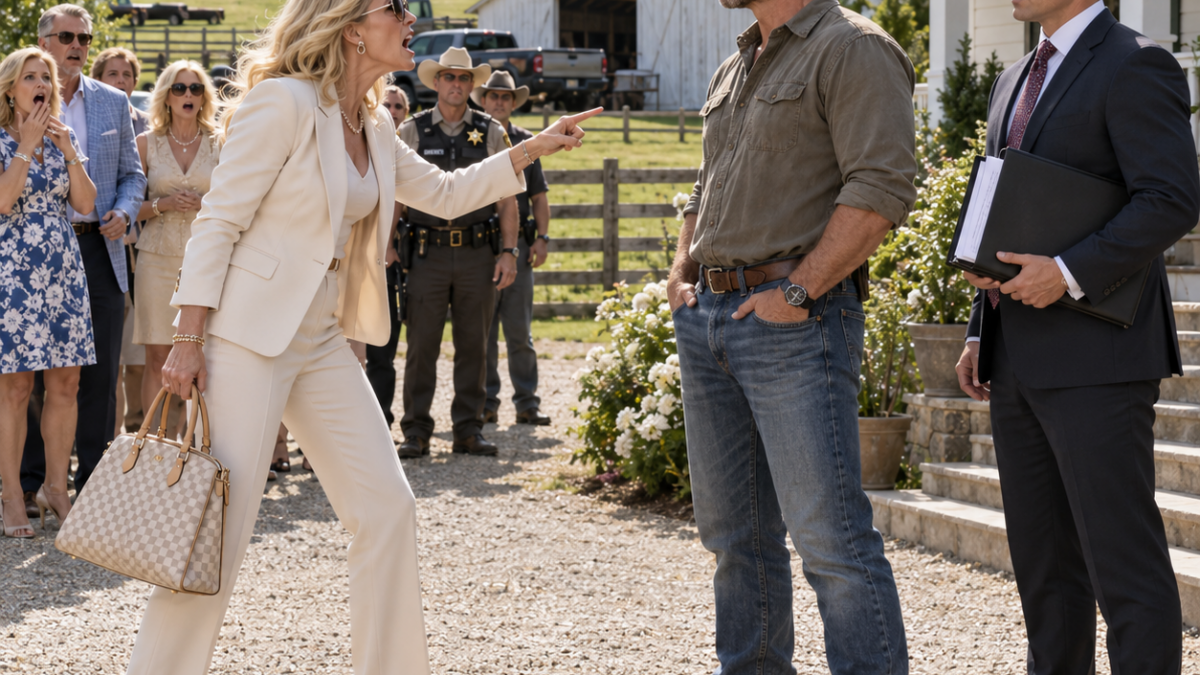
The HOA president sued to force me out of the farmhouse my family had owned since 1895 because she said peeling paint and an old barn were destroying her luxury neighborhood’s property values.
She walked into court convinced I was a stubborn farmer who would either renovate, sell, or finally surrender once a judge put enough pressure on me.
Then my attorney placed one banking document on the screen, and the woman trying to take my home suddenly realized I had been reading her mortgage statements from the other side of the table.
My name is Daniel Reeves.
I was fifty-eight when Magnolia Heights finally dragged me into Chesterfield County Circuit Court, but I had lived on those five acres for most of my life.
My great-grandfather William bought the land in 1895.
He built the farmhouse himself—two stories, white clapboard siding, four bedrooms, a wraparound porch.
My grandfather farmed soybeans there.
My father grew cucumbers and squash and sold them at roadside stands.
I grew up waking before sunrise, fixing fences, carrying feed, and learning that land meant more than whatever number somebody wrote on a check.
My father died when I was seventeen.
I nearly gave up my scholarship to stay home, but my mother refused.
“Your father wanted more for you,” she told me. “Go.”
So I went to the University of Virginia, studied finance, and started at a Richmond bank after graduation.
Years later, I founded Riverside Community Bank.
One branch became five.
Five became twelve.
Eventually, the bank held more than $400 million in assets.
I could have bought a mansion.
I never wanted one.
I wanted the farmhouse.
By the time my mother died in 2015, suburbia had reached our property line.
Then Crescent Homes bought roughly 150 surrounding acres.
Their representative offered me $2 million for my five acres.
“No.”
He came back with $2.2 million.
“No.”
Then $2.5 million.
Still no.
So Crescent built around me.
One hundred eighty luxury homes rose on land that had once been fields.
They called it Magnolia Heights.
Brick facades.
Perfect lawns.
Three-car garages.
Homes selling from roughly $700,000 to more than a million dollars.
And right in the middle sat my weathered farmhouse, old barn, chickens, garden, and grandfather’s rusty tractor.
Most residents left me alone.
Then Karen Whitmore arrived.
Karen was a real estate agent obsessed with resale values.
She became HOA president and decided my home was a problem she intended to solve.
The first time she visited, she brought muffins.
“Fresh paint would make this place shine,” she said. “Maybe replace the barn. Clean up the equipment.”
“I’m fine with it the way it is.”
Her smile tightened.
“Your property affects everyone.”
“My property isn’t in your HOA.”
That should have ended it.
Instead, the letters began.
Peeling paint.
Barn condition.
Farm equipment.
Chickens.
The HOA even cited livestock restrictions against land that had been a farm more than a century before Magnolia Heights existed.
I ignored them.
Then Karen organized a petition.
Contacted county officials.
Pushed for stricter neighborhood standards.
By 2025, the county had passed a vague new property-maintenance ordinance, and Karen saw her opening.
Magnolia Heights sued me.
Their demand was simple.
Upgrade the farmhouse to match the surrounding development—or sell.
On the morning of the hearing, Karen took the witness stand in pearls and a cream blazer.
She described my home as an eyesore.
Her attorney projected photographs of peeling paint, my leaning barn, and the old tractor.
Then Grace Chen, my attorney and an old college friend, stood.
“Your Honor,” she said, “before we discuss aesthetics, there is one financial fact the plaintiffs should understand.”
A document appeared on the courtroom screen.
RIVERSIDE COMMUNITY BANK — MAGNOLIA HEIGHTS MORTGAGE PORTFOLIO.
Grace turned toward Karen.
“My client is the founder, CEO, and majority shareholder of the bank that acquired 167 mortgages in this subdivision.”
The courtroom went silent.
Then Grace added:
“Including Ms. Whitmore’s.”
Karen’s face lost every bit of color.
The truth was that Riverside had purchased the Magnolia Heights portfolio in March 2024 as an ordinary business investment. Every borrower had received a servicing-transfer notice. Nothing about their interest rate or monthly payment changed, so most people barely noticed.
Karen had received one too.
She had apparently thrown it away without reading it.
Now she sat three tables away from the man she had spent eighteen months calling a blight, suddenly understanding that the “old farmer” in faded jeans was also the lender behind most of her neighborhood.
Then Grace looked down at another page in her file.
“Your Honor,” she said, “there is one additional issue involving Ms. Whitmore’s own loan.”
Karen’s attorney turned toward her.
And for the first time all morning, Karen looked genuinely afraid.
Grace wasn’t finished.
PART 2
Grace let the silence sit there.
She was good at that.
Most lawyers are afraid of silence in court. They feel compelled to fill it with argument.
Grace understood that sometimes silence is the argument.
Judge Patricia Hendricks leaned forward.
“What additional issue, Ms. Chen?”
Karen’s attorney, Mitchell Carver, was already on his feet.
“Your Honor, I object to any disclosure of private financial information that has no bearing on the aesthetic ordinance at issue.”
Grace did not look at him.
“It bears directly on the plaintiff’s claim that my client is using his financial position improperly, Your Honor.”
Mitchell frowned.
“That allegation hasn’t been made.”
“Not yet.”
The judge’s eyes narrowed.
“Counselor.”
Grace nodded.
“I’ll limit myself to what is necessary.”
She picked up a single page.
“Ms. Whitmore’s mortgage is among the loans serviced by Riverside Community Bank.”
Karen stared straight ahead.
Grace continued.
“The account is not current.”
Mitchell turned toward Karen so quickly his chair scraped the floor.
I saw her whisper something.
He leaned closer.
Whispered back.
Then his face changed.
That was the moment I knew Karen had never told her own attorney.
Judge Hendricks noticed too.
“How delinquent?” she asked.
Grace answered carefully.
“Approximately three months at present.”
A sound moved through the gallery.
Not quite a gasp.
More like seventy people inhaling at once.
Karen stood halfway.
“This is retaliation.”
Judge Hendricks looked at her.
“Sit down, Ms. Whitmore.”
“He’s threatening my house because I sued him.”
“I have not heard Mr. Reeves threaten anything.”
“He owns the bank.”
“That is not a threat.”
“He can foreclose on me.”
Mitchell put a hand on her arm.
“Karen.”
She jerked away.
“He bought our mortgages.”
Grace finally looked at her.
“The bank acquired the portfolio before this lawsuit was filed.”
Karen’s eyes flashed.
“You planned this.”
“No,” I said.
Every head turned toward me.
I had not spoken since court began.
I stood.
“Your Honor, may I?”
Judge Hendricks nodded.
“The portfolio was a business acquisition. First National wanted to divest regional mortgage assets. Riverside wanted stable residential loans. We purchased the portfolio. Ms. Whitmore’s loan happened to be included.”
Karen laughed sharply.
“You expect anyone to believe that?”
I looked at her.
“I don’t particularly care what you believe.”
Mitchell closed his eyes.
Grace almost smiled.
Judge Hendricks said, “Mr. Reeves, please direct your comments to the court.”
“Yes, Your Honor.”
She looked at Grace.
“What is your purpose in raising this?”
Grace returned to the larger document.
“Because the plaintiffs are asking this court to order my client either to materially alter his property or dispose of it based on their theory that his farmhouse threatens neighborhood collateral values.”
She paused.
“Yet Riverside Community Bank is itself the secured lender on 167 of those properties.”
Judge Hendricks looked at the document.
Grace continued.
“If the HOA’s own argument is that substantial changes to Mr. Reeves’s parcel can materially affect surrounding values, then his bank has an independent financial interest in monitoring any action that threatens the collateral securing approximately nine figures in outstanding loans.”
Mitchell rose again.
“Your Honor, this is intimidation dressed up as banking policy.”
Grace turned.
“No. It is why sophisticated parties conduct due diligence before suing the person who holds the debt on almost their entire neighborhood.”
Someone in the gallery whispered, “Oh, my God.”
The judge struck her gavel.
“Order.”
Grace wasn’t finished.
“The mortgages contain standard lender-protection provisions. My client has never used those provisions against a borrower who remains in compliance. He has no intention of randomly calling performing loans.”
She looked at Karen.
“But a borrower already in default is a different matter.”
Karen’s mouth opened.
Nothing came out.
For eighteen months, she had looked at my boots, my barn, my truck, my peeling paint.
She had seen a man she believed could be pushed.
She had never thought to ask what I did between feeding chickens and repairing fences.
That was her first real mistake.
Not the lawsuit.
Not the petition.
Not the county lobbying.
The assumption.
Judge Hendricks recessed court for one hour.
The hallway outside exploded.
People opened banking apps.
Called spouses.
Searched email.
Checked mortgage statements.
I watched Magnolia Heights residents discover a fact they had technically been notified about more than a year earlier.
RIVERSIDE COMMUNITY BANK.
It was printed on their statements.
On their online payment portals.
On the annual tax documents.
They had simply never connected the institution to the man whose old pickup they passed every morning.
Tom Hendricks, the HOA treasurer, was one of the first to understand.
He stood near the vending machines staring at his phone.
Then he turned toward Karen.
“My mortgage is with Riverside.”
Lisa Vaughn checked hers.
“So is mine.”
Brad Morrison.
Maria Santos.
Greg Palmer.
Keith Robbins.
One after another.
Same lender.
Same portfolio.
Then Tom asked the question Karen’s attorney had already asked privately.
“Why didn’t you know this?”
Karen snapped.
“How was I supposed to know he owned a bank?”
Tom stared at her.
“You sued him.”
“So?”
“You sued a man over property worth millions of dollars to this neighborhood and didn’t even find out who he was?”
“He lives in that farmhouse.”
Tom’s expression changed.
“What does that mean?”
Karen heard herself too late.
She tried to fix it.
“You’ve seen the place. He dresses like—”
“Like what?”
She stopped.
Like me.
That’s what she meant.
Like a farmer.
Like somebody ordinary.
Like someone who did not fit the image she associated with wealth.
Tom shook his head.
“This is unbelievable.”
Karen looked around.
Residents were listening now.
“We still have the ordinance.”
“No,” Tom said. “We have a problem.”
“We have rights.”
“We have mortgages.”
“He can’t touch anyone who’s current.”
“What about people who aren’t?”
Silence.
Several faces changed.
That told me something too.
Karen wasn’t the only borrower struggling.
The housing market had softened.
Some residents had adjustable expenses they had not anticipated.
Layoffs.
Lost commissions.
Credit-card balances.
The subdivision looked wealthy from the road.
That didn’t mean every family inside it had cash.
Luxury can be highly leveraged.
I knew that better than anyone.
I ran a bank.
Mitchell pulled Karen into a small conference room.
The door didn’t close completely.
Grace and I were twenty feet away when Karen’s voice rose.
“He can’t actually foreclose.”
Mitchell said something lower.
Then:
“Karen, are you current?”
Silence.
“Karen.”
“I’m catching up.”
“How far?”
“Three months.”
Mitchell’s voice sharpened.
“Three?”
“The market has been terrible.”
“You filed a lawsuit against your mortgage lender while ninety days delinquent?”
“I didn’t know he was my lender.”
“That is not helping.”
Grace glanced at me.
I said nothing.
Karen continued.
“I have a closing coming.”
“When?”
“Next week.”
“Guaranteed?”
“No.”
“Cash reserves?”
Silence.
“Karen.”
“No.”
Mitchell groaned.
I started walking away.
Grace followed.
“You heard enough?” she asked.
“More than enough.”
“She’s in default.”
“Yes.”
“You knew?”
“Riverside’s servicing department sent reports.”
“And?”
“I don’t personally review every late mortgage.”
“But hers?”
“I recognized the name recently.”
Grace stopped.
“You never told me that.”
“You didn’t ask.”
She gave me a look.
“You enjoy being impossible.”
“Sometimes.”
Then her face grew serious.
“Daniel, don’t do anything stupid.”
“Such as?”
“Turning a legitimate default into a revenge spectacle.”
“I run a regulated bank.”
“I know.”
“We follow procedure.”
“Good.”
“Grace.”
“Yes?”
“I don’t need to invent consequences for Karen.”
“What does that mean?”
“She already stopped paying.”
When court reconvened at noon, the gallery was standing-room only.
Word had spread through Magnolia Heights.
People drove to the courthouse.
Some still wore work clothes.
One woman carried a toddler.
Another man was on his phone whispering numbers into a calculator.
Judge Hendricks took the bench.
“Mr. Carver?”
Mitchell stood slowly.
“Your Honor, after consultation with my client and representatives of Magnolia Heights Homeowners Association, the plaintiffs move to voluntarily dismiss the action.”
A murmur rolled through the room.
Karen stared at the table.
Judge Hendricks looked at Grace.
“Any objection?”
Grace stood.
“My client does not object to dismissal, reserving all rights concerning future harassment or property interference.”
“So noted.”
The judge looked toward Karen.
“Ms. Whitmore, I strongly suggest that any future dispute concerning Mr. Reeves’s property begin with an examination of title before litigation.”
Karen’s cheeks flushed.
“Yes, Your Honor.”
“Motion granted.”
One strike of the gavel.
Eighteen months of pressure disappeared in less than ten minutes.
No order to repaint my farmhouse.
No forced sale.
No HOA authority over my chickens.
No court-imposed barn renovation.
Nothing.
I gathered my jacket.
Grace closed her briefcase.
Karen looked at me.
For a second, I thought she might speak.
She didn’t.
We walked out.
Three television crews waited outside.
That surprised me.
Apparently “HOA sues farmer, discovers he owns bank holding neighborhood mortgages” moved fast.
A reporter stepped in front of me.
“Mr. Reeves, did you purchase these mortgages to gain leverage over Magnolia Heights?”
“No.”
“When did the bank acquire them?”
“March 2024.”
“When did the HOA file suit?”
“October 2025.”
“So there was no connection?”
“None.”
“Will you accelerate the mortgages?”
“If borrowers comply with their contracts, they have nothing to worry about.”
“What about Ms. Whitmore?”
I stopped.
“Borrower matters are private.”
That was all.
Another reporter shouted:
“Do you plan to retaliate?”
“No.”
“Do you consider today’s dismissal a victory?”
“I consider going home a victory.”
Grace touched my elbow.
We walked away.
My truck was parked beside a line of expensive SUVs.
Faded blue 1998 Ford F-150.
Chipped paint.
One mirror held in place with gray duct tape.
A cameraman actually turned and filmed me getting into it.
I heard the reporter say to him:
“That’s the guy who owns the bank?”
I started the engine.
It coughed twice.
Then caught.
I smiled.
Karen had a worse walk to her car.
Magnolia Heights residents surrounded her.
Not reporters.
Neighbors.
Tom stepped forward.
“We’re holding an emergency meeting tomorrow.”
Karen tried to pass.
“Tom, not now.”
“Yes, now.”
“You can’t remove me.”
Lisa Vaughn said, “Watch us.”
Karen turned.
“You all supported the lawsuit.”
“We supported what you told us.”
“I told you the farmhouse was hurting values.”
“You told us we’d win.”
“We should have.”
Brad Morrison crossed his arms.
“You put every mortgage holder in this neighborhood into a panic because you never bothered to research the defendant.”
“He can’t call loans just because he’s angry.”
Tom said, “That’s not the point.”
“What is?”
“You don’t know what the point is anymore.”
Karen pushed through them.
Dropped her keys beside her car.
Picked them up.
Dropped them again.
By the time I turned onto the highway, she was still sitting behind the wheel.
I drove home.
Fed my six Rhode Island Reds.
Checked the barn latch.
Sat in my father’s old rocking chair.
The subdivision glowed beyond the tree line.
Grace called.
“You handled the reporters well.”
“I answered three questions.”
“Exactly.”
“You think they’ll leave me alone?”
“Most of them.”
“Karen?”
Grace went quiet.
“No.”
I knew that too.
Humiliation does one of two things to people.
It teaches.
Or it hardens.
Karen was not ready to learn.
The HOA removed her as president the following evening.
Six votes to one.
Her own vote was the only one against.
Tom Hendricks became president.
His first act was sending me a written apology.
No excuses.
The board acknowledged my property predated Magnolia Heights and was outside HOA jurisdiction.
No more violation letters.
No more attempts to regulate my barn.
No more livestock complaints.
No more pressure to sell.
I appreciated it.
For approximately three days, I thought the conflict was finished.
Then I found eggs smashed against the side of the farmhouse.
Two days later, somebody dumped garbage at my driveway.
Then my mailbox was destroyed.
Metal crushed inward.
Post bent.
Mail scattered across wet grass.
I stood there before sunrise holding cold coffee.
Third incident in a week.
I picked up each envelope.
Mud on the corners.
Property-tax notice.
Farm-supply catalog.
Bank correspondence.
Advertisement.
None of it important.
That somehow made it worse.
The vandalism wasn’t theft.
It was message.
You’re not safe in your own routines.
I replaced the mailbox.
Filed a report.
Kept quiet.
My neighbor Diane Chen came by that afternoon.
No relation to Grace.
Diane had been a high-school teacher before retiring.
She was one of the few Magnolia Heights residents who had always treated me like a neighbor rather than an aesthetic problem.
“You need to see something.”
She handed me her phone.
Karen had created a private Facebook group.
MAGNOLIA HEIGHTS PROPERTY VALUES DEFENSE.
Forty-seven members.
Post after post about me.
The farmhouse.
The barn.
The chickens.
The lawsuit.
The bank.
According to Karen, I had “weaponized financial power.”
She wrote that the HOA board had surrendered.
That residents needed to “stand together.”
That property values would fall if they allowed one man to ignore neighborhood standards.
Some comments were harmless.
Others weren’t.
MAKE HIM UNCOMFORTABLE.
KEEP PRESSURE ON.
HE THINKS HE CAN HIDE BEHIND HIS MONEY.
I handed Diane the phone.
“Let her talk.”
“Daniel, some people are discussing action.”
“She already lost.”
“That doesn’t mean they understand that.”
She was right.
The first protest came on a Saturday morning.
I woke to chanting.
Thirty people stood inside my driveway.
Not along the public road.
On my property.
Signs:
UPGRADE OR LEAVE.
RESPECT THE NEIGHBORHOOD.
STOP HOLDING US HOSTAGE.
At the front stood Karen with a megaphone.
“Daniel Reeves! Come out and speak to your neighbors!”
I called Grace.
“Don’t go outside.”
“Wasn’t planning to.”
“Sheriff.”
I called.
Deputy Martinez arrived fifteen minutes later.
He walked into the crowd.
“Private property. Everyone leaves.”
Karen lifted the megaphone.
“We have a right to protest.”
“On the public road.”
“We’re peaceful.”
“Still trespassing.”
“This man is abusing his financial power.”
Martinez pointed toward the subdivision entrance.
“Five minutes.”
Karen looked at my front window.
She saw me.
Mouthed:
THIS ISN’T OVER.
Then she left.
I declined charges.
Martinez wasn’t thrilled.
“If it happens again, call immediately.”
“I will.”
“You’re being more patient than most people.”
“I don’t want a war.”
He looked toward Magnolia Heights.
“I think someone forgot to tell them.”
The local news story aired Monday.
Diane brought me the recording.
I almost didn’t watch it.
Grace told me not to.
Curiosity won.
Karen sat outside her home.
Perfect hair.
Blazer.
Calm voice.
“He’s using wealth to bully an entire neighborhood.”
The reporter asked:
“But his property isn’t subject to HOA covenants.”
Karen smiled sadly.
“Technically, no. But morally, we all have obligations to our neighbors.”
Then came footage of my farmhouse.
They chose the worst angle.
Peeling paint.
Leaning barn.
Old tractor.
No garden.
No sunrise.
No history.
A visual argument.
The reporter said:
“An unusual battle between historic property rights and modern suburban standards.”
Karen said:
“We’re asking him to be a good neighbor.”
I turned it off.
My father had taught me something useful.
If someone misjudges you, correcting every sentence they say can consume your life.
I had a bank to run.
A farm to maintain.
Chickens to feed.
Let her talk.
That strategy worked until the threats started.
Anonymous notes.
SELL.
LEAVE.
YOU’RE NOT WELCOME.
Then one:
OLD FARMHOUSES BURN EASY.
I took that one to Deputy Martinez.
He read it twice.
“We’ll increase patrols.”
“Can you trace it?”
“No handwriting. Generic printer. Unless we get video or fingerprints…”
“I know.”
“Mr. Reeves, you should consider cameras.”
I nodded.
I wish I’d done it sooner.
Mid-November.
Red spray paint across my barn.
LEAVE.
Eight-foot letters.
Grandfather’s tractor tires slashed.
All four.
I stood in the cold looking at the word dripping down boards my family had repaired for generations.
Something in me shifted.
Not broke.
Shifted.
I called Martinez.
He photographed everything.
No witnesses.
No useful prints.
Then Diane sent me another screenshot from Karen’s group.
INTERESTING NEWS FROM THE FARMHOUSE. GUESS KARMA WORKS IN MYSTERIOUS WAYS.
I forwarded it to Grace.
“Not enough,” she said.
“I know.”
“Don’t retaliate.”
“I know.”
“Daniel.”
“What?”
“I know that tone.”
“I don’t have a tone.”
“You absolutely have a tone.”
“I am documenting.”
“Good.”
For another two weeks, that was enough.
Then they poisoned my chickens.
I found three dead.
Two more barely standing.
One was pressed against the coop wall breathing shallowly.
I had raised those birds for years.
People laugh when you get emotional about chickens.
They shouldn’t.
Animals develop habits.
Preferences.
One followed me to the barn every morning.
Another stole food from my hand.
One pecked my bootlaces until I picked her up.
I put the surviving two in a box and drove to the veterinarian.
Antifreeze.
The vet looked at me.
“This wasn’t accidental.”
“No.”
“Do you know who?”
“No.”
I knew who had created the climate.
That wasn’t the same as knowing who poured poison.
Deputy Martinez came again.
Another report.
Another set of photographs.
No forced entry.
No cameras yet.
No proof.
That evening, I sat on my porch until after dark.
Three chickens gone.
Barn vandalized.
Mailbox destroyed.
Threats.
Protesters.
Eighteen months of harassment.
I called Grace.
“Pull Karen’s loan.”
Silence.
“Daniel.”
“How far behind?”
“You know I can’t discuss servicing casually.”
“I’m the majority shareholder and CEO.”
“You are also emotionally involved.”
“Then treat this as a formal executive review.”
Long pause.
“I’ll call compliance.”
“Good.”
“Daniel.”
“Yes?”
“If she’s delinquent, the decision cannot be made because of the chickens.”
“It won’t be.”
“You need clean process.”
“I know.”
“Independent file review.”
“Yes.”
“Normal bank procedure.”
“Yes.”
“Same standards as every borrower.”
“Yes.”
She exhaled.
“I’ll call tomorrow.”
Karen was 120 days past due by then.
Four missed payments.
Approximately $18,400 including arrears and fees.
More important was the timeline.
She had stopped paying months before filing the HOA lawsuit.
Her default predated the court battle.
That mattered.
The bank had already sent routine delinquency notices.
Grace confirmed the servicing department’s chronology.
No special treatment.
No hidden intervention from me.
No acceleration needed.
She was already in default under ordinary mortgage terms.
“Legally, foreclosure can proceed,” Grace said.
“Compliance?”
“Reviewed.”
“Same policy?”
“Yes.”
“Any workout request?”
“Nothing meaningful.”
“Payment plan?”
“Servicing offered standard options.”
“And?”
“No cure.”
I looked toward the empty chicken coop.
“Proceed.”
Grace stayed silent.
“What?”
“You sure?”
“Yes.”
“The optics will be brutal.”
“She signed the mortgage.”
“Daniel.”
“She stopped paying before she sued me.”
“I know.”
“If a borrower isn’t paying and won’t cure, what does the bank normally do?”
“Eventually foreclose.”
“Then why should Karen receive special protection because she harassed the CEO?”
Grace sighed.
“She shouldn’t.”
“Good.”
“But promise me something.”
“What?”
“Don’t enjoy it.”
I looked out toward Magnolia Heights.
“I don’t.”
That was true.
I wanted peace.
Foreclosure is not peaceful.
But neither is pretending contracts don’t matter because enforcing one will look personal.
Karen received the notice on a freezing December morning.
I know what happened afterward because Mitchell later described parts of it to Grace.
Karen called him before seven.
“He’s foreclosing.”
Mitchell asked the obvious question.
“Did you pay?”
She admitted four months behind.
He told her the truth.
Daniel Reeves did not create the default.
The lawsuit did not create the default.
The bank did not create the default.
She stopped paying.
Karen posted immediately.
DANIEL REEVES IS USING HIS BANK TO DESTROY ME.
Her Facebook group rallied at first.
Then somebody asked:
“Are you behind?”
Another:
“How many payments?”
Another:
“If you’re four months late, how is this retaliation?”
The support wasn’t unanimous anymore.
The narrative had begun cracking.
Then six other Magnolia Heights borrowers received default and foreclosure notices.
Brad Morrison.
Lisa Vaughn.
Maria Santos.
Greg Palmer.
Keith Robbins.
Jennifer Hall.
All had supported the lawsuit.
That looked terrible.
It was also true that all were delinquent.
Some sixty days.
Some ninety.
Some one hundred twenty.
Tom called an emergency HOA meeting.
Nearly 140 residents attended.
He opened bluntly.
“If your mortgage is current, you’re not being foreclosed on.”
Karen stood in the back.
“This is targeted.”
Tom looked at her.
“You stopped paying.”
“So did others.”
“Yes.”
“And every person being foreclosed supported the lawsuit.”
Tom shook his head.
“Every person being foreclosed is delinquent.”
Brad shouted:
“Two months isn’t enough to lose a house.”
Tom replied:
“It can be.”
Lisa was crying.
“What are we supposed to do?”
Tom’s face softened.
“Call the bank. Cure the arrears. Use the workout options. But pretending you don’t owe money isn’t a strategy.”
The room erupted.
Some called me ruthless.
Some called Karen reckless.
Some demanded the HOA defend the borrowers.
Others asked why HOA dues should be spent protecting people from private mortgage defaults.
Tom ended the meeting early.
Magnolia Heights had spent almost two years arguing about my house.
Now it was arguing about its own.
Karen tried to find $18,400.
Sister.
Friends.
Personal loans.
Nothing.
Her credit had deteriorated.
Real-estate commissions were down.
Three lenders rejected her.
She attempted a short sale.
Riverside declined because her house had sufficient equity to cover the outstanding loan.
Then she came to my porch.
No blazer.
No pearls.
No HOA folder.
Just Karen.
She knocked once.
I opened the door.
“Please.”
That was her first word.
I said nothing.
“I need more time.”
“You’ve had notices.”
“I was going to catch up.”
“You didn’t.”
“I have commissions coming.”
“You said that before.”
Her eyes filled.
“Daniel, please.”
For the first time, she used my first name.
“I know I made mistakes.”
I looked at her.
“Mistakes?”
“I went too far.”
“You sued to force me out of the house my great-grandfather built.”
“I was trying to protect values.”
“You organized people on my property.”
“I didn’t tell anyone to vandalize.”
“You created a group that celebrated it.”
“I didn’t poison your chickens.”
“I didn’t say you did.”
She swallowed.
“I didn’t.”
“Then why are you here?”
Her face crumpled.
“Because I’m going to lose my house.”
There it was.
Not remorse first.
Fear.
“Please give me six months.”
“No.”
“Three.”
“No.”
“One.”
“Karen.”
She started crying.
Actual tears.
I felt something I didn’t want to feel.
Pity.
Then I remembered my barn.
The threatening note.
Three dead hens.
My mother asleep upstairs in the room where she later died.
My father’s hands rebuilding that porch.
Eighteen months of Karen telling me my family home was unworthy of existing beside hers.
“You had months before the lawsuit to fix your loan.”
“I know.”
“You spent them trying to force me out.”
“I know.”
“You’re not sorry you did it.”
She looked at me.
“You’re sorry it failed.”
She covered her face.
“Please.”
I hated what I said next because it sounded colder than I felt.
“You have thirty days under the notice.”
Then I closed the door.
I stood behind it for several minutes after she left.
Not triumphant.
Shaking.
Grace had been right.
Don’t enjoy it.
I didn’t.
The holidays passed.
None of the seven cured.
January 2026 brought foreclosure sales.
Riverside took title to all seven properties.
Sheriff’s deputies served possession notices.
Karen packed into a rented truck.
She moved to a one-bedroom apartment across town.
News cameras captured it.
That’s when I became the villain.
The story escaped Magnolia Heights.
BANK CEO EVICTS SEVEN FAMILIES AFTER HOA FEUD.
BILLIONAIRE BANKER TAKES NEIGHBORS’ HOMES.
I wasn’t a billionaire.
Didn’t matter.
Photographs mattered.
Karen crying beside boxes.
Children watching movers.
Seven dark houses.
Then me.
Old farmhouse.
Old truck.
Bank CEO.
The contradiction made good television.
Protesters appeared outside Riverside branches.
BANKS ARE PREDATORS.
HOMES ARE HUMAN RIGHTS.
Employees received angry calls.
One-star reviews flooded websites.
Three small businesses moved accounts.
For the first time, Karen’s campaign hurt something I had built beyond the farm.
Riverside Community Bank.
My employees.
My borrowers.
My board called me in.
Roger Lynn, one of our directors, didn’t soften it.
“This is hurting us.”
“I know.”
“Deposits are slipping.”
“I know.”
“Applications too.”
“I know.”
“You need to respond.”
“What do you want me to say?”
“The truth.”
Patricia Gomes, another director, leaned forward.
“Right now Karen owns the story.”
“She stopped paying.”
“Then prove it.”
“Mortgage information is private.”
“Release what you legally can about process and chronology. Don’t disclose private details without basis. Explain policy. Explain that defaults predated litigation.”
Roger nodded.
“And address the harassment.”
I hated the idea.
I had spent decades avoiding attention.
That strategy no longer worked.
“One interview,” I said.
“With whom?”
Grace recommended Marcus Webb at the Richmond Times-Dispatch.
Investigative.
Patient.
Not interested in a shouting match.
I agreed.
Marcus came to the farmhouse.
We sat on the porch.
No studio.
No makeup.
No executive office.
Just two chairs and winter fields.
He asked:
“Did you foreclose as retaliation?”
“No.”
“Why seven HOA opponents?”
“Because those seven loans were delinquent.”
“Coincidence?”
“Not entirely. Some of the loudest voices in the HOA were also financially strained. But their politics did not create their defaults.”
“When did Karen stop paying?”
“Before the HOA lawsuit.”
“Did the bank offer ordinary servicing options?”
“Yes.”
“Could you have given more time?”
“Yes.”
“Why didn’t you?”
I thought carefully.
“Because lending rules mean less if enforcement depends on whether the borrower likes or dislikes the CEO.”
“That’s convenient.”
“It is also true.”
“You were angry.”
“Very.”
“So how can the public know anger didn’t drive the process?”
“Records.”
I handed him a folder.
Not private mortgage files.
Timeline.
Court documents.
Police reports.
Public filings.
Photographs.
Vandalism reports.
The protest incident.
The threat.
The barn.
Veterinary documentation.
Social-media screenshots provided by residents.
Marcus turned pages slowly.
He looked at the photograph of the spray-painted barn.
Then the vet report.
“Antifreeze?”
“Yes.”
“You believe Karen poisoned them?”
“I can’t prove who did.”
“So you won’t accuse her.”
“No.”
“But you connect the harassment campaign to the environment around it.”
“Yes.”
“Fair.”
He stayed three hours.
Then spent another week checking me.
Good.
That’s what I wanted.
He called sheriff’s office.
Interviewed residents.
Reviewed the lawsuit chronology.
Verified when foreclosures began.
Verified the mortgage transfer predated the HOA case.
His article ran Sunday.
THE FULL STORY OF MAGNOLIA HEIGHTS.
For once, the headline wasn’t the story.
The timeline was.
Karen’s harassment campaign.
The protest.
The destroyed mailbox.
Barn graffiti.
Threatening note.
Chicken poisoning.
Mortgage defaults predating litigation.
Routine servicing notices.
The bank’s ownership.
The failed HOA lawsuit.
Residents spoke on record.
One said:
“Karen couldn’t let Daniel exist outside her control.”
Another:
“She made it personal.”
Another:
“She stopped paying her own mortgage while obsessing over his paint.”
Public opinion shifted.
Not universally.
Some still said foreclosure was too harsh.
I understood that.
Some criticized a system where one institution could own so much residential debt.
Fair conversation.
But the claim that I had invented defaults after losing my temper became much harder to sustain.
The records didn’t support it.
Karen’s problems continued.
The Virginia Real Estate Board opened an investigation.
Not simply because she fought with me.
Publicity drew attention to prior professional conduct.
Disclosure issues.
Property-value representations.
Her license was suspended pending review.
Then bankruptcy.
By spring, she was gone from Virginia.
Living with family in North Carolina.
I heard about it from Grace.
I felt nothing close to satisfaction.
“Thought you’d be happier,” she said.
“Why?”
“She tried to remove you from your home.”
“And now she doesn’t have hers.”
“That’s what consequences look like.”
“Sometimes.”
Grace studied me.
“Daniel, don’t confuse guilt with responsibility.”
“Seven houses are empty.”
“Seven mortgages defaulted.”
“I authorized enforcement.”
“Yes.”
“I could have waited.”
“Yes.”
“You think I did the right thing?”
She took a long time.
“I think you did something legally defensible that still carries moral weight.”
That answer was why I trusted Grace.
She never gave me comfort when truth was more useful.
The seven houses bothered me.
Dark windows.
Empty driveways.
Bank signs.
Magnolia Heights had wanted my farmhouse gone because it looked out of place.
Now seven perfect homes sat vacant.
Irony isn’t always funny.
I called Tom.
“Can we meet?”
The new HOA board met me at the community center.
Tom.
Janice Woo.
Robert Kim.
Diane.
Grace sat beside me.
I looked around the room where Karen had once organized petitions against me.
“I want to sell the seven houses.”
Tom nodded.
“We assumed.”
“Twenty percent below market.”
Janice stared.
“Why?”
“To get families in quickly.”
“What does the bank get?”
“Enough to cover principal, costs, and administration. Not maximum profit.”
Tom looked suspicious.
“And the condition?”
“There are two.”
There always is.
Grace slid documents across the table.
“First,” I said, “protective covenants concerning my five acres. No future HOA, association, neighborhood committee, purchaser group, or collective body may attempt to impose Magnolia Heights aesthetic restrictions on my property.”
Tom read.
“Reasonable.”
“Second.”
I looked around.
“Dissolve the HOA.”
Silence.
Janice blinked.
“You can’t just dissolve it.”
Grace answered.
“Membership can.”
“What threshold?”
“Seventy-five percent under the governing framework we’re working with.”
Tom leaned back.
“Why?”
“Because this organization spent eighteen months trying to regulate land outside its jurisdiction.”
“That was Karen.”
“The board funded litigation.”
Tom didn’t argue.
I continued.
“I don’t want another Karen five years from now.”
Diane nodded slowly.
“What happens without the HOA?”
“County zoning.”
“Road maintenance?”
“Existing arrangements transferred where necessary.”
“Common landscaping?”
“Can be handled contractually or voluntarily.”
Janice frowned.
“And if residents refuse?”
“Then I sell the seven houses at market price and nothing changes.”
One board member later called that extortion.
Tom didn’t.
He understood.
I owned the properties.
I could sell them for whatever lawful price I chose.
The discount was an offer.
Not confiscation.
Not threat.
Not debt acceleration.
An offer.
The emergency meeting drew 160 residents.
Almost the entire subdivision.
Tom presented my proposal.
Seven houses.
Twenty percent below market.
Protective covenant around my property.
HOA dissolution.
People shouted immediately.
Some loved it.
Others hated it.
A man named Jeff Torres stood.
“He’s buying our vote.”
Tom answered:
“He already owns the houses.”
“That doesn’t make this right.”
“He could list them at full market value tomorrow.”
“So?”
“So the discount is optional.”
Janice stood next.
“I have served on this board for two years.”
Everyone quieted.
“We spend most of our time arguing about paint shades, mailbox posts, landscaping complaints, and holiday decorations.”
A few people laughed.
She didn’t.
“We spent HOA money supporting litigation over property we did not control.”
Silence.
“We failed.”
Diane stood.
“Daniel’s farmhouse was here before any of us.”
She looked across the room.
“We moved next to him. He didn’t move into our HOA.”
That sentence mattered.
Several heads nodded.
Amanda Pierce—the teacher who had confronted Karen outside court—stood too.
“I supported the lawsuit at first.”
She looked toward me.
“I was wrong.”
No drama.
Just that.
“I don’t want another year like this.”
The debate lasted thirty minutes.
Then Tom called the vote.
One hundred forty-two in favor.
Thirty-eight opposed.
Seventy-nine percent.
The Magnolia Heights Homeowners Association voted itself out of existence.
I sat in the back.
No applause from me.
No smile.
No speech.
Tom announced the result.
Then looked toward me.
“You got what you wanted.”
I answered:
“I got what I needed.”
The seven homes went on sale two days later.
Twenty percent below comparable market prices.
Offers arrived immediately.
Karen’s former house went to a young couple who had been renting for years.
Late twenties.
First-time buyers.
The wife cried at closing.
“We never thought we’d live somewhere like this.”
I signed the bank papers.
“You own it now.”
She laughed through tears.
“Mostly the bank owns it.”
I smiled.
“Fair point.”
Brad Morrison’s former property went to a family relocating for work.
Two houses went to an investor planning long-term rentals.
Three more to local families.
Every buyer signed the protective covenant.
Nobody objected.
Why would they?
The covenant didn’t regulate their paint.
It said one thing in legal language:
Leave Daniel Reeves’s land alone.
The sales closed within weeks.
Riverside earned little beyond recovery.
My directors questioned leaving money on the table.
I told them peace had a balance-sheet value too.
Roger laughed.
“Show me where.”
“Under nonperforming headaches.”
He didn’t find that funny.
I did.
Spring arrived.
No HOA letters.
No violation notices.
No meetings.
No anonymous committees measuring lawns.
And Magnolia Heights did not collapse.
That fascinated me.
People still mowed.
Still painted.
Still maintained landscaping.
Still cared what their houses looked like.
Apparently civilization survived without Karen Whitmore’s clipboard.
I hired painters.
Grace almost fell out of her chair when I told her.
“You’re painting?”
“Yes.”
“The farmhouse?”
“Yes.”
“After all that?”
“Yes.”
“Why?”
“Needs paint.”
She stared at me.
“Daniel.”
“What?”
“You could have done that two years ago.”
“I could have.”
“Do you understand how ridiculous you are?”
“I wasn’t refusing paint.”
“What were you refusing?”
“Being ordered.”
That was the difference.
I painted the farmhouse because I chose to.
Not because an HOA president told me its age embarrassed her.
Not because a county ordinance forced conformity.
Not because neighbors signed a petition.
Because weathered wood eventually needs protection.
Fresh white paint went up.
The house looked brighter.
Still old.
Still mine.
I repaired the barn too.
Replaced rotten boards.
Reinforced framing.
Kept the slight lean.
My grandfather would have approved.
Then I bought six Rhode Island Reds.
Eleanor.
Harriet.
Rosa.
Amelia.
Marie.
Ada.
The first morning I scattered feed, they ran toward me in a noisy red blur.
I had not realized how empty the yard sounded without chickens until sound returned.
Karen’s bankruptcy eventually discharged.
Her real-estate career never fully recovered.
I heard she worked retail for a while near Charlotte.
She occasionally posted online about powerful people and rigged systems.
Nobody from Magnolia Heights seemed interested anymore.
I did not search for her.
That mattered.
There is a point in every conflict where continued attention becomes voluntary captivity.
Karen had occupied enough of my life.
I wanted my porch back.
Grace visited on a Saturday.
Jeans.
Sweater.
No briefcase.
She brought coffee even though mine was better.
We sat facing the fields.
“How’s life?”
“Quiet.”
“You still running the bank?”
“Yes.”
“So not retired.”
“No.”
“Any regrets?”
I knew what she meant.
“The foreclosures.”
“Yes.”
“Sometimes.”
She waited.
“Seven families lost houses.”
“Seven borrowers stopped paying.”
“I know.”
“You offered standard remedies.”
“I know.”
“Some couldn’t cure.”
“I know.”
“And you still feel it.”
“Yes.”
Grace nodded.
“Good.”
I looked at her.
“Good?”
“If you felt nothing, I’d worry.”
We sat quietly.
Then she said:
“You protected the house.”
“Yes.”
“Your great-grandfather’s.”
“Yes.”
“And in the end you voluntarily improved it.”
“Yes.”
She laughed.
“Karen would’ve exploded.”
“Probably.”
“And you dissolved an HOA.”
I smiled.
“Apparently.”
“Public service.”
“Don’t start.”
“Put it on your tombstone.”
DANIEL REEVES.
BANKER.
FARMER.
DESTROYER OF HOMEOWNERS ASSOCIATIONS.
I laughed harder than I had in months.
It felt good.
That summer, I was weeding the garden when a man crossed the lawn.
Early thirties.
One of the buyers.
Marcus Chen.
No relation to either Grace or Diane.
“Daniel?”
I stood.
“Marcus.”
“We’re grilling tonight.”
“Congratulations.”
He laughed.
“I’m inviting you.”
That surprised me.
Burgers.
Hot dogs.
Kids.
Neighbors.
Normal things.
“You want to come?”
I looked toward his house.
Karen’s former house was farther down.
The neighborhood no longer felt like enemy territory.
“Sure.”
“Six?”
“I’ll be there.”
Marcus started walking away.
Then turned.
“Hey.”
“Yes?”
“Thanks again for the house.”
“You paid for it.”
“You know what I mean.”
I did.
“We couldn’t have afforded Magnolia Heights otherwise.”
I nodded.
“Take care of it.”
“We will.”
He walked home.
I sat on the porch steps.
For nearly two years, Magnolia Heights had wanted me gone.
Now somebody inside it wanted me at dinner.
That felt more meaningful than any judgment.
At six, I walked over carrying tomatoes from my garden.
Marcus’s wife opened the door.
“You brought vegetables?”
“That’s what farmers do.”
Marcus laughed.
“I thought bankers brought wine.”
“Wrong banker.”
Children ran through the backyard.
Someone handed me a plate.
Nobody mentioned Karen.
Nobody mentioned foreclosure.
Nobody mentioned the lawsuit.
They asked about the farmhouse.
Not why I hadn’t sold.
How old it was.
What kind of wood.
Who built the porch.
I told them about William Reeves in 1895.
My grandfather.
My father.
My mother.
One little boy asked:
“Did your great-grandpa really build it?”
“Yes.”
“By himself?”
“Mostly.”
“That’s cool.”
That’s all I had ever wanted people to see.
Not a blight.
Not an obstacle.
History.
Home.
Late that night, I walked back across the road.
The farmhouse porch light glowed.
Fresh paint caught the moonlight.
Barn solid.
Chickens locked safely inside.
My father’s tractor still sat where Karen hated it.
I had replaced the tires.
I never restored the body.
Rust and all.
Some things don’t need to look new to matter.
I sat in the rocking chair.
Thought about the first day Karen brought muffins.
She had looked around and seen depreciation.
Peeling siding.
Outdated structure.
Farm equipment.
Nonconforming use.
I had looked around and seen people.
William.
Grandfather.
Dad.
Mom.
That was our entire conflict in miniature.
Karen measured value by resale.
I measured it by belonging.
Neither perspective is illegal.
The problem began when she decided her measurement entitled her to control mine.
People later told the story badly.
“Farmer secretly owns HOA’s bank.”
Not exactly.
“Millionaire destroys HOA.”
No.
“Banker forecloses on enemies.”
More complicated.
“HOA tries stealing farmhouse and gets dissolved.”
Closer, but still too simple.
The truth took longer.
It usually does.
A developer built around land it couldn’t buy.
A woman moved in and saw an old home as a defect.
An HOA gradually convinced itself community preference equaled authority.
A lawsuit exposed a financial relationship nobody had bothered to investigate.
Humiliation turned into harassment.
Harassment hardened me.
Mortgage defaults created consequences that looked like revenge even where contracts already existed.
Public narrative outran facts.
Facts eventually caught up.
Then I had a choice.
I could sell seven houses at full price and leave Magnolia Heights exactly as it was.
Instead, I used the moment to create something quieter.
No HOA.
No future attack on my property.
Seven homes sold below market.
New families.
Fresh start.
Was every choice perfect?
No.
I don’t believe people who tell stories where they become flawless the moment someone wrongs them.
I was angry.
I became less forgiving.
I enforced contracts at a moment when I knew enforcement would hurt people who had hurt me.
That weight is real.
Grace never let me hide from it.
But another truth is real too.
Those borrowers had stopped paying.
Karen’s lawsuit did not create their arrears.
I did not force anybody onto my property.
I did not ask to be protested.
I did not poison my own animals.
I did not make the HOA sue me.
Defending yourself can create consequences without making you the author of everything that follows.
I learned to live with that distinction.
Riverside recovered.
Deposits returned.
Reviews normalized.
The employees who had endured protesters outside branches stayed.
I held a staff meeting after the worst passed.
I expected questions about reputation.
Instead, a young teller raised her hand.
“Mr. Reeves?”
“Yes?”
“Is the truck really a ’98?”
Everyone laughed.
“Yes.”
“Why?”
“It runs.”
“Barely.”
“It starts.”
“After how many tries?”
“That is irrelevant.”
Even I laughed.
Then one of the loan officers asked:
“Did you really turn down two and a half million for the farmhouse?”
“Yes.”
“Why?”
“Because I didn’t want to sell.”
He waited like there had to be more.
There wasn’t.
Money is powerful.
That’s one reason I spent my career handling it carefully.
But money cannot purchase what the owner refuses to price.
Karen never understood that.
Crescent eventually did.
They built around me.
The world continued.
Years earlier, my father once told me something while repairing a fence.
I couldn’t have been more than twelve.
He drove a post into hard Virginia soil.
I complained that the old fence line made no sense.
It zigzagged around one tree and then cut back.
“Why not straighten it?”
Dad rested both hands on the post driver.
“Because this is where your grandfather put it.”
“That doesn’t mean it’s right.”
“No.”
“Then why keep it?”
“Because the neighbor knows what’s his, and we know what’s ours.”
At twelve, that sounded boring.
At fifty-eight, it sounded like law.
Boundaries don’t have to be elegant.
They have to be understood.
Magnolia Heights forgot where its authority ended.
The farmhouse reminded them.
One autumn morning, I found an envelope in my mailbox.
No return address.
For a second, old tension came back.
Threat.
Complaint.
Something from Karen.
Instead, inside was a photograph.
My farmhouse.
Taken from the street.
Fresh paint.
Morning sun.
Barn behind it.
On the back, handwritten:
GLAD YOU STAYED.
No name.
I put it on the refrigerator.
Grace saw it weeks later.
“Sentimental now?”
“No.”
“You put anonymous fan mail on your refrigerator.”
“It is one photograph.”
“Daniel.”
“Stop.”
She smiled.
Tom Hendricks came by once after the HOA dissolution documents were fully recorded.
He stood on the porch.
“We’re officially done.”
“With what?”
“Magnolia Heights Homeowners Association.”
“Congratulations.”
“Feels strange.”
“You miss it?”
“No.”
He looked toward the subdivision.
“People said property values would collapse without it.”
“Did they?”
“No.”
“Imagine that.”
He laughed.
Then turned serious.
“I owe you an apology.”
“You already sent one.”
“Board apology.”
“Counts.”
“I mean personal.”
I waited.
“I voted for the lawsuit.”
“I know.”
“I believed Karen.”
“I know.”
“I saw the farmhouse exactly the way she did.”
I looked toward the barn.
“Ugly?”
Tom smiled.
“A little.”
“Fair.”
“But that wasn’t the issue.”
“No.”
“I confused wanting you to improve it with having a right to make you improve it.”
That was as accurate a summary as I’d heard.
I extended my hand.
He shook it.
“Apology accepted.”
Before leaving, he looked at the new paint.
“Looks good.”
“I know.”
“You waited until after we dissolved.”
“Yes.”
“Just to make a point?”
“No.”
He looked skeptical.
“Mostly no.”
He laughed all the way to his car.
The county eventually amended the Neighborhood Standards Act.
Too vague.
Too much uncertainty about older properties and parcels outside planned communities.
I wasn’t involved.
Didn’t lobby.
Didn’t testify.
Grace sent me the notice.
“Your legacy.”
“Not mine.”
“Your case helped.”
“I didn’t ask for a legacy.”
“Few people do.”
I filed the notice and forgot about it.
The farmhouse had survived more consequential things than ordinances.
Depression.
Wars.
Highways.
Suburban expansion.
My mother’s cooking.
It would survive county paperwork.
Riverside kept the Magnolia Heights mortgage portfolio.
Most borrowers remained boring.
I mean that as praise.
Monthly payment.
On time.
Escrow.
Insurance.
Nothing else.
The best mortgage relationship is one where lender and borrower barely think about each other.
The irony wasn’t lost on me.
Karen once told residents I could take their homes with one phone call.
That was never how lending worked.
Contracts.
Not whims.
Processes.
Not grudges.
The seven defaults became a scar on the bank and neighborhood alike.
I changed one internal practice afterward.
Any foreclosure involving a senior executive’s personal acquaintance or direct conflict went to an independent committee.
Not because ours had been unlawful.
Because perception matters.
Grace approved.
“Look at you learning.”
“I always learn.”
“You learn slowly.”
“Careful.”
“You can’t foreclose on me.”
“Do you have a Riverside mortgage?”
“No.”
“Then you’re safe.”
On the fifth anniversary of my mother’s death, I sat on the porch at sunrise.
Her room upstairs remained mostly unchanged.
Not a shrine.
Just familiar.
I remembered her standing in the kitchen after Dad died.
Seventeen-year-old me saying I couldn’t leave.
Farm needs me.
You need me.
She said:
“Your father did not work his whole life so this place could become a cage.”
That sentence sent me to college.
For years I thought succeeding meant leaving agriculture behind.
Then success gave me the choice to return.
Not because I failed to escape.
Because I didn’t need to escape.
That was why Karen’s pressure cut so deep.
She saw staying as evidence I lacked options.
In reality, staying was what options had purchased.
I had money.
I had a bank.
I had choices.
I chose the porch.
That’s wealth.
Marcus’s children sometimes crossed over with permission to see the chickens.
The first time, they stood at the property line and called.
That pleased me more than it should have.
“Mr. Reeves?”
“Yes?”
“Can we come over?”
“Yes.”
They ran toward the coop.
One girl pointed at Eleanor.
“Why is she called Eleanor?”
“Eleanor Roosevelt.”
“Who’s that?”
I sighed.
“Ask your parents.”
She pointed at Rosa.
“Rosa Parks?”
“Yes.”
“I know her.”
“Good.”
Ada pecked her shoe.
She screamed.
Then laughed.
The sound carried across the yard.
For years, Karen claimed children driving into Magnolia Heights would see my farmhouse and think less of the neighborhood.
Now children came to the farmhouse because it was different.
Funny how value works.
Crescent Homes never returned with another offer.
One of their executives called once.
“We should’ve handled the original acquisition differently.”
“How?”
“Maybe preserved your property as a historic feature instead of treating it like a hole in the site plan.”
“That would’ve been smarter.”
“We couldn’t convince you to sell.”
“You didn’t need to.”
“We thought we did.”
There it was again.
Development mentality.
Every irregular parcel becomes a problem to solve.
Sometimes the better design is around it.
They eventually planted additional trees along the border and created a small pedestrian buffer on subdivision land.
Not mine.
The result looked good.
For the first time, the old farm and Magnolia Heights seemed intentionally adjacent rather than accidentally colliding.
That was progress I could live with.
Someone once asked whether I hated Karen.
No.
Hate is expensive.
It requires maintenance.
I had enough maintenance.
House.
Barn.
Bank.
Garden.
Chickens.
What I hated was what she tried to do.
Turn conformity into entitlement.
Turn embarrassment into jurisdiction.
Turn community preference into legal force.
When law stopped her, she turned to pressure.
When pressure failed, anger poisoned everything.
I wanted no part of carrying that forward.
Karen lost enough.
House.
Career.
Position.
Reputation.
Credit.
Community.
Maybe one day she understood why.
Maybe she didn’t.
Not my responsibility.
The most satisfying moment wasn’t the courtroom reveal.
People assume it was.
Grace showing the mortgage portfolio.
Karen’s face.
167 loans.
$400 million bank.
Reporters.
Drama.
It was cinematic.
But satisfaction?
No.
The real satisfaction came months later.
Morning.
Nothing happening.
I walked to my mailbox.
It was upright.
No eggs on the siding.
No garbage.
Barn untouched.
Chickens alive.
No protesters.
No letters.
No HOA violation.
I collected the newspaper.
Walked back.
Made coffee.
Sat down.
Peace is boring.
Until someone takes it from you.
Then boring becomes precious.
Years earlier, Karen had told me:
“You need to think about the community.”
She wasn’t entirely wrong.
We do.
Living near people creates responsibility.
Noise.
Safety.
Fire hazards.
Drainage.
Basic decency.
But community responsibility is reciprocal.
It doesn’t mean the loudest organization gets to erase the oldest deed.
It doesn’t mean a majority vote can turn a neighbor’s home into communal property.
It doesn’t mean aesthetics justify humiliation.
The community eventually learned that.
So did I.
I learned that privacy without communication can leave room for stories other people invent about you.
Maybe if I’d attended one HOA meeting early and explained the farmhouse, some residents would have understood.
Maybe not.
I’ll never know.
But after everything, I stopped treating Magnolia Heights as one giant hostile thing.
It wasn’t.
Karen was Karen.
The board made mistakes.
Some residents harassed me.
Some did not.
Diane helped.
Amanda changed her mind.
Tom apologized.
Marcus invited me to dinner.
People are not their HOA.
That may have been the most useful lesson.
One late-summer evening, I stood in my garden.
Tomatoes heavy on the vines.
Cucumbers spreading across rows like my father used to grow.
The subdivision lights came on beyond the trees.
Fresh white paint reflected the last light.
Barn roof secure.
Tractor rusting peacefully.
My six hens scratched near the fence.
I could hear children somewhere down Heritage Oak Drive.
No megaphone.
No chanting.
Just kids.
I sat on the porch.
Coffee in hand.
Grace had once told me good people are allowed to defend themselves.
I still wasn’t sure “good” belonged in any sentence about me.
I had made hard choices.
Some hurt people.
Some helped others.
I could live with complexity better than I could live with pretending the whole thing had been a triumphant revenge story.
Karen thought I was poor because my house looked old.
She thought I was powerless because my truck looked worse.
She thought I was ignorant because my hands were calloused.
She thought she understood my value because she sold houses for a living.
What she never understood was that the farmhouse was the one thing I owned that I refused to monetize.
That was why the lawsuit failed long before Grace ever displayed a bank document.
You cannot frighten someone with the loss of a thing he has already decided money cannot replace.
The mortgage portfolio merely made everyone see the imbalance Karen had ignored.
She thought I had nothing.
I had options.
She thought she had power.
She had debt.
She thought the HOA defined the neighborhood.
Eventually, the neighborhood voted the HOA away.
And I remained exactly where I’d started.
On five acres.
In a farmhouse built in 1895.
Marcus’s grill smoked across the road one evening.
He waved.
“You coming?”
“In a minute.”
I checked the coop.
Latched it.
Walked toward his house carrying a bowl of tomatoes.
Halfway there, I stopped and looked back.
Fresh paint.
Porch.
Old barn.
Garden.
The property Karen had called a blight.
The property Crescent had valued at millions only because they wanted it gone.
The property my father had died working.
The property my mother had protected while I went to college.
The place where I learned how to work.
The place I returned to after learning how money worked.
That’s what she had tried to make me trade for conformity.
She never understood.
I wasn’t staying because I couldn’t afford to leave.
I stayed because after building a bank, making money, sitting in boardrooms, negotiating portfolios worth hundreds of millions of dollars, I knew something Karen never seemed to understand.
A house is worth more than its resale price when you have no intention of selling it.
I crossed the road.
Marcus’s daughter ran toward me.
“Tomatoes!”
“Apparently I’m only invited for produce.”
Marcus laughed.
“You own a bank. You can buy your way in.”
“Not with these tomatoes.”
We ate outside.
Nobody measured lawn height.
Nobody discussed approved paint palettes.
Nobody mentioned covenants.
One neighbor played guitar badly.
Children chased each other across grass.
A dog stole a hot dog.
It was ordinary.
Perfectly ordinary.
And for a man who had spent nearly two years fighting for the right to live quietly in his own house, ordinary felt extravagant.
Later, walking home in the dark, I could see the farmhouse porch light ahead.
For the first time in a long while, it did not look isolated in the middle of Magnolia Heights.
It looked connected.
Not absorbed.
Not controlled.
Connected.
There is a difference.
I sat in the rocking chair one last time before bed.
The bank would open at eight the next morning.
I had loan committee at ten.
Farm-supply delivery in the afternoon.
Fence repair after work.
Normal life.
I thought about Karen standing in that courtroom.
Cream blazer.
Pearls.
Certain.
Her attorney showing the judge photographs of my peeling paint.
She believed those photographs proved I did not belong.
Then Grace put one document on the screen and forced everyone to look deeper.
But the real point was never that I owned the mortgages.
It wasn’t that I had money.
It wasn’t that Karen was secretly behind on hers.
It was simpler.
She never asked who I was because she’d already decided what I was worth.
Old house.
Old truck.
Old barn.
Farmer.
Problem.
She judged the cover so confidently that she sued the man whose bank held the debt on almost her entire subdivision.
And when that mistake finally became visible, every other mistake followed it into the light.
The harassment.
The unpaid mortgage.
The protests.
The vandalism.
The foreclosures.
The media storm.
The dissolved HOA.
All of it began because she believed appearance was authority.
It wasn’t.
The next morning, I woke at 5:30.
Same as always.
Coffee in my mother’s percolator.
Boots on.
Porch door open.
Dawn over Virginia.
The chickens heard me and started complaining.
I carried feed outside.
Eleanor reached me first.
Rosa pecked my boot.
Ada tried to steal from the scoop.
I laughed.
Across the road, one of the new homeowners backed out of his driveway.
He saw me.
Raised a hand.
I raised mine.
No HOA president between us.
No rule book.
No litigation.
Just neighbors.
I went back to the porch.
The farmhouse paint was new now.
But the house underneath it was still old.
Still imperfect.
Still full of creaking floors.
Still carrying 130 years of Reeves family history.
And still mine.
Karen Whitmore had spent eighteen months trying to make me believe that staying there made me weak.
In the end, she lost her position, her lawsuit, her home, and the community authority she had used against me.
I kept the farmhouse.
I kept the bank.
I kept the barn.
I rebuilt the coop.
I gave seven empty houses to seven new beginnings at prices families could actually reach.
And Magnolia Heights finally learned how to exist without an HOA telling everyone what their homes were supposed to look like.
People sometimes say I won because I held all the cards.
They’re wrong.
The cards weren’t the bank.
They weren’t the mortgages.
They weren’t the foreclosure clauses.
The strongest card I had was the one Karen never respected from the beginning.
The deed to five acres my family had owned since 1895.
Everything else was consequence.
I took another sip of coffee.
The sun cleared the tree line.
The old farmhouse warmed in the morning light.
And for the first time in years, nobody was trying to tell me what it was worth.

