PART 2: HOA SENT FOUR “OFFICERS” TO BREAK INTO MY PRIVATE ROAD—THEN THE SHERIFF LEARNED I WASN’T EVEN IN THEIR HOA
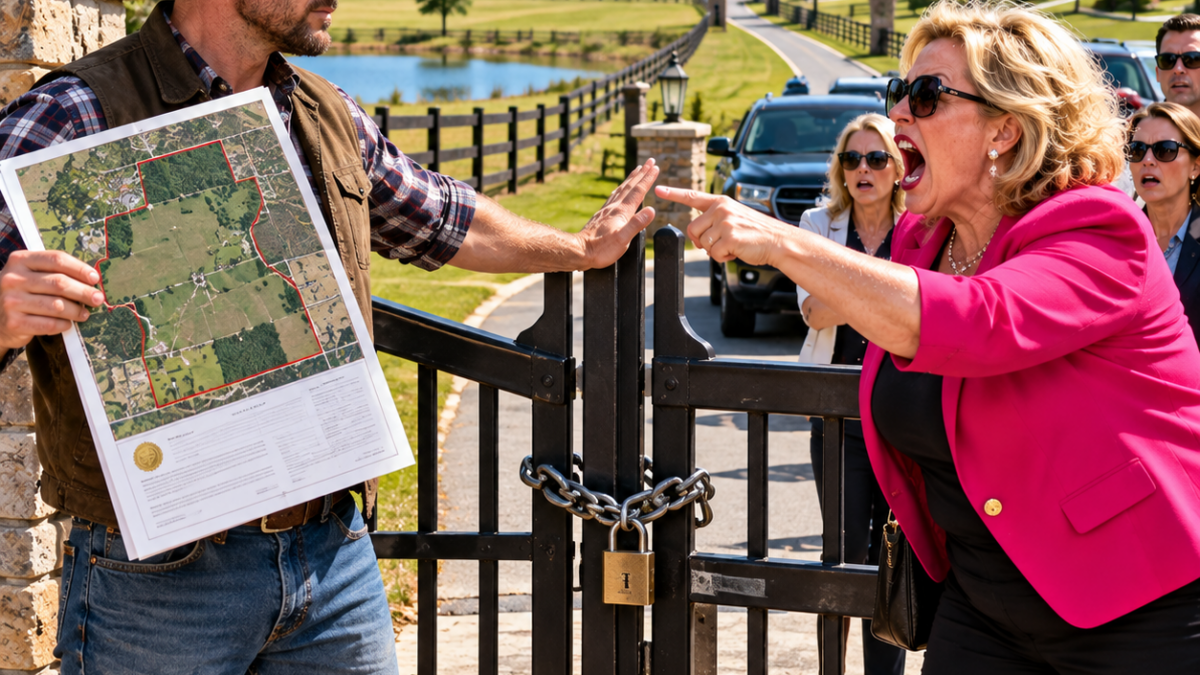
The HOA president sent four uniformed “officers” onto my land with bolt cutters because I refused to open the private road my grandfather built more than a century ago.
They kept telling me the HOA board had authorized them to enter, cut my lock, and “restore community access”—right up until the sheriff asked one question none of them wanted to answer.
What happened after that turned a dispute over a gravel road into the most expensive lesson that HOA had ever learned.
My name is Margaret Thornton.
I was sixty-seven years old when this happened, retired after thirty-eight years practicing civil-rights law, and living on the same eighty-acre Colorado property my grandparents had owned for generations.
Thornton Road belonged to us.
Every inch.
My grandfather built the 1.2-mile road in 1923 so our family could travel from the county highway to the manor house he had constructed farther back on the property.
My grandmother later planted the oak trees that still lined it.
For decades, Thornton Road was exactly what it had been built to be.
A quiet private family road.
Then Riverside Heights arrived.
In 2012, a developer began building a luxury subdivision that eventually grew to 340 homes around my property.
The developer asked me for permission to use Thornton Road as a shortcut to the highway.
I refused in writing.
I told him the road was private, that hundreds of daily vehicles would destroy its surface, eliminate our privacy, and force my family to pay maintenance costs for a subdivision we had nothing to do with.
He used it anyway.
At first, it was construction vehicles.
Then buyers.
Then homeowners.
For years I tolerated more than I should have because Riverside Heights still had full access through county roads.
Thornton Road simply saved them about twelve miles.
But by March 2024, “a few cars” had become something very different.
One Tuesday afternoon, I sat on my porch with a legal pad.
From 2:00 to 3:00 p.m., I counted forty-seven vehicles.
One hour.
Forty-seven.
Morning and evening traffic pushed the estimate above six hundred trips every day.
My gravel road was developing potholes.
Spring rains carved ruts.
Summer traffic threw dust against my trees.
And I was paying every maintenance bill.
So I called my property attorney, David Ross.
“Did you ever grant them an easement?” he asked.
“Never.”
“Anything recorded?”
“No.”
“Permission?”
“I denied it in writing in 2012.”
David went quiet.
Then he said, “Maggie, act now.”
Colorado required eighteen years for the prescriptive-easement claim the HOA was almost certain to make.
They had twelve.
I ordered six signs.
PRIVATE ROAD.
NO TRESPASSING.
THORNTON PROPERTY.
Then I sent Riverside Heights a formal cease-and-desist.
Three days later, their HOA president, Vanessa Whitmore, appeared on my porch.
She offered me $5,000.
Not per year.
Total.
Five thousand dollars for permanent access for 340 homes using my road roughly six hundred times every day.
When I refused, she leaned back and said, “We’ve been using that road for twelve years. You can’t stop us now.”
“You need eighteen years for prescription,” I said.
Her face tightened.
“Our residents depend on that road.”
“They have county-road access.”
“It adds twelve miles.”
“Inconvenience doesn’t transfer ownership.”
She stood.
“We will take you to court.”
“You’re welcome to.”
On April 3, I installed a steel gate.
The next morning, Riverside Heights residents discovered their shortcut was gone.
Two days later, I heard vehicles approaching.
Two white SUVs marked RIVERSIDE HEIGHTS SECURITY stopped at my gate.
Four men stepped out.
Black uniforms.
Radios.
Utility belts.
One carried bolt cutters.
I walked down and said, “This is private property. Leave.”
Their leader folded his arms.
“The HOA board ordered us to restore access.”
“You’re two hundred yards inside my property.”
“We have authority.”
“Not here.”
He lifted the bolt cutters.
“We’re opening the gate.”
I pulled out my phone.
“Then I’ll call the sheriff.”
He smirked.
“Go ahead.”
Eight minutes later, two sheriff’s vehicles rolled up behind them.
A sergeant stepped out.
She listened to their explanation, then turned toward me.
“Whose property is this?”
“Mine.”
She looked back at the four men.
“Is this property part of Riverside Heights HOA?”
Their leader hesitated.
“Well, the road serves—”
“Yes or no?”
“No.”
The sergeant’s expression changed.
Then she said:
“All four of you, put your hands behind your backs.”
PART 2
For one second, nobody moved.
The lead “courtesy officer” still had the bolt cutters hanging at his side.
His face changed first.
Not fear.
Disbelief.
The kind of disbelief people show when they have spent so long borrowing someone else’s authority that they forget to check whether it exists.
“Sergeant,” he said, “we are authorized security personnel.”
Sergeant Linda Hayes looked at his shirt.
Then his utility belt.
Then the gate.
Then me.
“Authorized by whom?”
“The Riverside Heights HOA board.”
“To do what?”
“Restore access.”
“To private property?”
He hesitated.
“The road is used by the community.”
“That wasn’t my question.”
I had spent thirty-eight years in courtrooms.
I had heard judges use that exact tone hundreds of times.
The officer straightened.
“The HOA considers this road an established community-access route.”
Sergeant Hayes looked at me.
“Mrs. Thornton, did you give them permission to be here?”
“No.”
“Did you tell them to leave?”
“Three times.”
“Did they leave?”
“No.”
“Were they attempting to cut your gate?”
“Yes.”
She looked down.
The bolt cutters lay near his boot.
Then she turned back.
“Hands behind your backs.”
The younger officer stepped forward.
“Wait. You can’t arrest us. We’re courtesy officers.”
“You’re private security.”
“We enforce HOA rules.”
“On HOA property.”
He opened his mouth.
She continued.
“This property is not in your HOA.”
Silence.
“According to the owner, you entered without permission, refused to leave when ordered, and attempted to damage a gate on land your organization does not own.”
The lead officer said, “We were following orders.”
Sergeant Hayes nodded.
“You can explain whose orders at the station.”
Then the handcuffs came out.
All four.
One by one.
The sound of steel closing around wrists is distinctive.
Click.
Click.
Click.
Click.
I didn’t celebrate.
Didn’t smile.
Didn’t say I told you so.
I stood beside the gate my grandfather’s road had reached for more than a hundred years and watched four grown men realize that a board vote in a clubhouse did not turn somebody else’s land into HOA jurisdiction.
The lead officer looked at me as a deputy guided him toward the cruiser.
“This isn’t over.”
I looked at Sergeant Hayes.
“I want to press charges.”
He stopped talking.
Sergeant Hayes nodded.
“We’ll need a full statement.”
“You’ll have one.”
The deputies loaded them into the vehicles.
One of their white security SUVs remained behind.
So did the bolt cutters.
Sergeant Hayes photographed everything.
The chain.
The lock.
Scratches where they had tried to position the cutters.
Tire tracks.
Security vehicles.
Private-property sign.
She photographed the sign twice.
I appreciated that.
No one could later claim the boundary wasn’t obvious.
Before leaving, she turned toward me.
“You said you have the deed and surveys?”
“Inside.”
“I’d like copies.”
“I have originals and certified copies.”
She smiled slightly.
“You sound prepared.”
“I practiced law for thirty-eight years.”
The smile became something else.
Understanding.
“What kind?”
“Civil rights.”
She looked toward the cruiser where the four men sat.
“Then I suppose this was not the ideal property for them to choose.”
“No,” I said. “It wasn’t.”
I called David before I even walked back to the house.
He answered quickly.
“How bad?”
“Four security guards.”
“What?”
“Vanessa sent four HOA security guards with bolt cutters.”
Silence.
Then:
“Say that again.”
“They came onto my property and attempted to cut the gate lock. Sheriff arrested all four.”
Another silence.
David’s version of silence usually meant his mind was moving faster than his mouth.
Finally:
“Did they identify who ordered them?”
“They said the HOA board.”
“Specifically Vanessa?”
“Not yet on record.”
“Who called sheriff?”
“I did.”
“Any threats?”
“They said they weren’t leaving until the gate was open.”
“Property damage?”
“Attempted. Lock scratched. No successful entry.”
“Witnesses?”
“Four deputies.”
“Video?”
“My driveway camera may have part of it. The gate camera definitely does.”
David exhaled.
“Maggie, they just made this much worse.”
“I know.”
“No, I mean much worse.”
“I know exactly what you mean.”
“We’re no longer discussing merely unauthorized road use.”
“I know.”
“You have coordinated entry by HOA employees or contractors, attempted property damage, refusal to leave, potential conspiracy depending on who authorized it, and harassment evidence.”
“I know.”
“Stop saying you know.”
“I was an attorney before you finished law school.”
“That is why you are my most irritating client.”
“And your best documented.”
He sighed.
“Fair.”
I walked toward the house.
“What should I do?”
“Preserve everything.”
“Already am.”
“Don’t talk to Vanessa.”
“If she calls?”
“Send her to me.”
“What about the gate?”
“Keep it locked.”
“Good.”
“And Maggie?”
“Yes?”
“They will sue now.”
“I hope so.”
He paused.
“You hope so?”
“Vanessa keeps claiming the law is on her side.”
“Yes.”
“I think she should have the opportunity to test that theory.”
David laughed once.
“That is the most retired-lawyer sentence I’ve heard all year.”
At the sheriff’s station that afternoon, Sergeant Hayes took my statement personally.
She asked when Riverside Heights first began using Thornton Road.
“2012.”
“Permission?”
“Denied.”
“Written?”
“Yes.”
“Do you still have the denial?”
“Yes.”
Her pen stopped.
“From twelve years ago?”
“Yes.”
She looked at me.
“You really were an attorney.”
“I told you.”
I explained the history.
Westbrook Development.
The 2012 request.
My letter.
Twelve years of increasing traffic.
No easement.
No maintenance contribution.
No compensation.
Signs in March.
Cease-and-desist.
Gate.
Vanessa’s threats.
Then the courtesy officers.
When I finished, Sergeant Hayes closed her notebook.
“We’ll be contacting the HOA.”
“Vanessa Whitmore is president.”
“We already have her name.”
“How?”
“One of the arrested men said she personally approved the assignment.”
That was useful.
“Did he put that in writing?”
“It’ll be in his interview.”
I nodded.
“If she directed them to cut the gate, could she face charges?”
“Potentially.”
She held up one hand before I could speak.
“That’s the prosecutor’s decision.”
“Of course.”
“You don’t sound disappointed.”
“I don’t need to control every outcome.”
She studied me for a moment.
“That may be the healthiest thing anyone involved in this dispute has said.”
“Give it time.”
The HOA’s lawyer mailed the next threat four days later.
Seventy-two hours to remove my gate.
Community-easement rights.
Public necessity.
Established access.
Criminal allegations related to the arrest of the four security guards.
I read it on my porch with tea.
Then I read it again.
Not because it deserved a second reading.
Because outrageous letters are easiest to dismantle when you know exactly how they’re constructed.
I called David.
“False imprisonment.”
He laughed.
I held the phone away.
“Finished?”
“Almost.”
Another laugh.
Then:
“They trespassed, refused to leave, and sheriff’s deputies arrested them. Your role was calling 911.”
“I know.”
“So false imprisonment is ridiculous.”
“I know.”
“Public necessity?”
“They have another road.”
“Prescriptive easement?”
“Twelve years.”
“Colorado?”
“Eighteen.”
“Good.”
“Developer asked permission before using it.”
“Even better.”
“I denied permission in writing.”
There was a pause.
“Maggie.”
“Yes?”
“Bring me that letter.”
“I have it.”
“I assumed you did.”
“Two boxes of property records.”
“Tomorrow.”
David’s office smelled like paper and coffee.
I arrived with deeds going back more than a century.
Original family records.
Surveys.
Construction invoices.
Tax histories.
Photographs.
Maps.
And the 2012 letter.
David read that one twice.
Then looked up.
“This may be the cleanest document in the entire case.”
“My grandfather’s deed is cleaner.”
“Legally, yes. Strategically, no.”
He tapped the 2012 letter.
“Westbrook Development asked you for permission.”
“Yes.”
“You expressly denied it.”
“Yes.”
“So the developer acknowledged ownership before they ever started using the road.”
“Correct.”
“Then ignored your denial.”
“Correct.”
“And Vanessa wants to call twelve years of that use adverse.”
“She thinks repetition transforms trespass into title.”
David leaned back.
“This destroys their argument.”
“I know.”
He pointed at me.
“If you say that one more time—”
“I’ll invoice you?”
“You’re retired.”
“So are a lot of judges. Doesn’t stop them from having opinions.”
For the next three hours, David drafted.
The response was surgical.
No easement.
No necessity.
No prescription.
No public-road status.
No false imprisonment.
No right to damage the gate.
Then he attached eighty-five pages.
Property records.
Construction documents.
Surveys.
Tax records.
My 2012 denial.
Sheriff incident number.
Photographs.
He ended with a sentence I liked:
Thornton Road remains private property, and the gate will remain closed.
Simple.
No adjectives.
No threat.
Just fact.
Patricia Vance called the next day.
David put her on speaker.
I sat across from him.
“Mr. Ross, I’ve reviewed the documents.”
David said nothing.
“Your client’s ownership of the road is well documented.”
“Not well documented,” he replied. “Absolute.”
I smiled.
Patricia sighed.
“I don’t intend to argue the deed.”
“Then we’re making progress.”
“My client nevertheless represents 340 households who have relied on Thornton Road.”
“Reliance created by their developer’s knowing trespass.”
“That’s your characterization.”
“It’s your developer’s letter requesting permission.”
Silence.
Patricia shifted.
“What would reopen the road?”
David looked at me.
This was not the first time we’d discussed numbers.
“Past damages,” he said. “Maintenance reimbursement. Annual access fee. Full maintenance going forward. Liability coverage.”
“How much?”
“Two hundred fifty thousand for past use. Fifteen thousand annually.”
She inhaled.
“That’s impossible.”
“The county road is free.”
“Residents are furious.”
“With your client?”
“With Mrs. Thornton.”
David looked at me.
I shrugged.
“Property owners tend to become unpopular when they stop providing free infrastructure.”
“Maggie,” Patricia said through speakerphone, “you’ve lived beside these people for years.”
“I’ve lived beside my road for sixty-seven.”
“Families are being affected.”
“Their homes remain accessible.”
“The detour adds thirty minutes.”
“Then Riverside Heights should have built proper access when it was developed.”
Patricia exhaled.
“I’ll take the offer to the board.”
“Please do.”
“Vanessa will not accept it.”
David said, “Then she can explain her position to a judge.”
Six days later, she did exactly that.
They sued me.
Riverside Heights Homeowners Association v. Margaret Thornton.
Declaratory judgment.
Emergency injunction.
Damages.
They wanted the court to force the gate open while the case proceeded.
Vanessa’s complaint painted me as an elderly landowner suddenly blocking a road that had become essential to hundreds of people.
It described Thornton Road as “established access.”
Not private access.
Not disputed access.
Established.
Words matter.
A lot.
They asked for forty million dollars in alleged community losses.
David called me.
“Forty million.”
“I saw.”
“Do you feel important?”
“Not particularly.”
“They’re claiming potential property-value losses.”
“That sounds like an argument against building a 340-home development dependent on an unrecorded shortcut.”
“Exactly.”
“Hearing?”
“May second.”
“I’ll be there.”
“You don’t have to testify at the preliminary stage unless needed.”
“I know.”
He stared through the phone.
I could feel it.
“Sorry,” I said.
“Thank you.”
Courthouses calm me.
That surprises people.
They associate court with conflict.
I associate it with rules.
Rules are useful when someone has spent months insisting rules don’t apply.
Judge Katherine Brennan took the bench at nine.
Vanessa sat beside Patricia.
Navy suit.
Perfect posture.
Three board members behind her.
David had two binders.
I had one legal pad.
Patricia went first.
Three hundred forty families.
Twelve years of reliance.
Thirty-minute detour.
Schools.
Work.
Emergency response.
She showed a map.
Judge Brennan studied it.
“Alternative access exists?”
“Technically.”
The judge looked up.
“Technically?”
“Yes, Your Honor.”
“Can residents reach every home using public roads?”
“Yes.”
“Are those roads closed?”
“No.”
“Are they impassable?”
“No.”
“So what makes Thornton Road necessary?”
“Distance and hardship.”
Judge Brennan nodded.
Not in agreement.
Just acknowledgment.
Then came prescription.
Twelve years of continuous use.
Open.
Known.
Community reliance.
Patricia spoke confidently.
Then David stood.
He began with the deed.
My grandfather.
Eighty acres.
Then 1923 construction records.
Private financing.
Private work.
Private road.
Then surveys.
Each showing Thornton Road inside our property.
Then tax records.
Then the alternative county route.
Judge Brennan looked at Patricia.
“Does your client dispute ownership?”
Patricia paused.
“We dispute the defendant’s right to exclude based on established use.”
“That wasn’t my question.”
There it was again.
Courtroom language I had loved for decades.
Patricia said, “No, Your Honor.”
“So Ms. Thornton owns the road.”
“Yes.”
Judge Brennan turned toward David.
“Continue.”
He moved to necessity.
Alternative route exists.
Longer does not mean landlocked.
Inconvenient does not mean inaccessible.
Then prescription.
“Colorado requires eighteen years.”
Judge Brennan looked at Patricia.
“Counsel?”
“We acknowledge the statutory period, but—”
“Twelve is not eighteen.”
“No.”
David continued.
“And even if the time period were satisfied, the facts defeat the claim.”
He handed the judge my 2012 letter.
“The developer requested permission.”
She read.
“Permission denied.”
“Yes.”
“So developer knew the road was private.”
“Yes.”
“And continued using it.”
“Yes.”
Judge Brennan looked at Patricia.
“How is that adverse use establishing a prescriptive right rather than knowing trespass?”
Patricia stood.
“The homeowners themselves believed access was available.”
“The developer’s knowledge is relevant.”
“Yes.”
“And the association succeeded the development’s access arrangement.”
“Yes.”
Judge Brennan read my letter again.
Then the room became quiet.
Vanessa stared straight ahead.
I watched her hands.
One thumb rubbed the edge of the other.
Tiny repetitive movement.
The only sign of nerves.
Judge Brennan looked up.
“Motion for preliminary injunction denied.”
Vanessa turned toward Patricia.
The judge continued.
“The plaintiff has failed to establish a likelihood of success.”
No easement by necessity.
Alternative access existed.
No prescriptive easement.
Too few years.
Prior explicit permission request.
Explicit denial.
Then the sentence that mattered:
“Ms. Thornton owns Thornton Road and may control access to her private property.”
Done.
Gate stays.
Trial in September.
David rose.
“Your Honor, defendant intends to file counterclaims.”
“Trespass?”
“Yes.”
“Maintenance damages?”
“Yes.”
“Harassment related to the April sixth incident?”
“Yes.”
“File within thirty days.”
We walked out.
Behind us, Vanessa’s voice rose.
“This is insane.”
Patricia said something lower.
Then louder:
“We lost the injunction.”
I kept walking.
Outside, David stopped.
“She should settle now.”
“She won’t.”
“How do you know?”
“Because today gave her the information she needed six weeks ago.”
“That should make settlement easier.”
“For rational people.”
“You think she isn’t rational?”
“I think she is emotionally invested in being right.”
David sighed.
“Worst kind of client.”
“Second worst.”
“What’s first?”
“Lawyers representing themselves.”
He smiled.
“You’re not representing yourself.”
“Growth.”
Discovery began.
Thousands of pages.
Traffic counts.
Maintenance receipts.
Board minutes.
Security instructions.
Developer correspondence.
HOA emails.
I learned more about Riverside Heights than I ever wanted to know.
One email stood out.
Vanessa to the security supervisor on April fifth:
Board directs courtesy unit to restore access to Thornton Road. Gate is unauthorized obstruction. Remove locking mechanism if necessary.
There it was.
“If necessary.”
Bolt cutters were not creative initiative.
They were implementation.
David looked at the email.
“That helps.”
“How much?”
“Quite a bit.”
“Criminally?”
“Separate process.”
“Civilly?”
“Strong evidence of authorization.”
Vanessa’s deposition happened in July.
David was polite.
That bothered her more than aggression would have.
“Ms. Whitmore, do you have a recorded easement?”
“No.”
“Written permission?”
“No.”
“Oral permission?”
“No.”
“Any document granting Riverside Heights access?”
“No.”
“Any county designation of Thornton Road as public?”
“No.”
“Any county maintenance agreement?”
“No.”
“Any evidence Ms. Thornton belongs to Riverside Heights HOA?”
“No.”
“Any HOA authority over her property?”
“No.”
“Then on what basis did you authorize security personnel to remove her gate lock?”
Vanessa’s attorney objected.
“Asked and answered.”
David waited.
Vanessa said, “The road had been used continuously for twelve years.”
“That wasn’t my question.”
She glared.
“I believed we had access rights.”
“Based on what document?”
“Community use.”
“Based on what legal instrument?”
“None.”
“And before authorizing removal, did you ask counsel whether your HOA had jurisdiction over Mrs. Thornton’s property?”
“We had legal advice.”
“From Patricia Vance?”
A pause.
“No.”
“From another attorney?”
“No.”
“Then what legal advice?”
“Our board understanding.”
David nodded.
“So no legal advice.”
“I wouldn’t say that.”
“I would.”
The transcript captured it.
Then we deposed Richard Westbrook.
The developer.
Older now.
Semi-retired.
He looked tired before the questions began.
David placed my 2012 letter in front of him.
“Recognize this?”
“Yes.”
“You received it?”
“Yes.”
“What did it say?”
“That she wouldn’t grant access.”
“Why did your development use Thornton Road anyway?”
Westbrook shifted.
“The county-route access was more expensive.”
“In what way?”
“Road improvements.”
“How much?”
“Several million.”
“So Thornton Road saved you development costs.”
“Yes.”
“Did Ms. Thornton ever change her mind?”
“Not formally.”
“Informally?”
“No.”
“Did she grant access?”
“No.”
“Then why keep using it?”
He stared at the table.
“We thought eventually we’d work something out.”
“You didn’t.”
“No.”
“Or establish rights through use?”
He looked at his attorney.
Then back.
“That was discussed.”
David leaned forward.
“You knowingly used a private road after permission was denied because you hoped continued unauthorized use might eventually strengthen your legal position.”
“I wouldn’t describe it that way.”
“How would you?”
“We used a convenient existing road.”
“That you knew you did not own.”
“Yes.”
“That the owner told you not to use.”
“Yes.”
“Thank you.”
I almost felt bad for him.
Almost.
Twelve years of inconvenience had started with one developer deciding millions in road construction could be avoided if one woman eventually “came around.”
I never did.
By September, Patricia wanted settlement.
One hundred fifty thousand.
Ten thousand annually.
HOA maintenance.
Permanent easement.
I declined.
David reminded her of our offer.
Two hundred fifty thousand.
Fifteen thousand annually.
Insurance.
Maintenance.
She said they couldn’t afford it.
I said that was unfortunate.
We went to trial.
Three days.
Their experts talked about hardship.
Ours talked about title.
They discussed community reliance.
We discussed ownership.
They discussed property values.
We discussed the alternative road.
Then Judge Brennan ruled.
I still remember the courtroom becoming so quiet I could hear somebody turn a page in the gallery.
“The court finds in favor of defendant Margaret Thornton on all counts.”
Vanessa stopped moving.
“No express easement exists.”
Patricia looked at her notes.
“No implied easement exists.”
One board member lowered his head.
“No prescriptive easement exists.”
Another shifted.
“No easement by necessity exists.”
Then:
“Plaintiff’s use of Thornton Road for twelve years constituted unauthorized trespass.”
I felt something release inside me.
Not joy.
Pressure.
The kind you stop noticing because you’ve been carrying it too long.
Judge Brennan continued.
Compensatory damages.
Past use.
Road repair.
Maintenance.
One hundred eighty thousand dollars.
Then harassment damages related to the security incident.
Forty-five thousand.
Then attorney fees and costs.
One hundred twenty-five thousand.
Three hundred fifty thousand total.
David wrote the number on my legal pad even though I had already calculated it.
$350,000.
Judge Brennan dismissed the HOA’s complaint with prejudice.
Then court adjourned.
Outside, Vanessa’s voice cracked.
“How are we supposed to pay that?”
Patricia sounded exhausted.
“Special assessment.”
“This will destroy me.”
“The board authorized the litigation.”
“I was acting for residents.”
Patricia said something I was never meant to hear.
“You were warned.”
David and I walked through the courthouse doors.
“You won,” he said.
“No.”
He looked at me.
“You absolutely won.”
“The deed won.”
“That is exactly why nobody enjoys celebrating with attorneys.”
“I’m buying lunch.”
“Victory lunch?”
“Document review lunch.”
“I take it back. You didn’t win anything.”
Riverside Heights homeowners received the special assessment in October.
A little over one thousand dollars per home.
That changed the politics quickly.
People who had once treated the dispute as “that road lady being difficult” began reading court records.
Then board emails.
Then my 2012 denial.
Then the security authorization.
Suddenly the story became different.
Vanessa had refused a negotiated solution.
Sent guards.
Lost the injunction.
Continued litigation.
Lost trial.
Now everyone paid.
Property listings started mentioning the detour.
Homes that once marketed “easy highway access” could no longer say it.
Prices softened.
Then dropped.
Fifteen percent in some cases.
Seven families listed.
A local reporter called me.
I declined.
David gave one sentence.
“Mrs. Thornton’s property rights were established by deed and confirmed by the court. The HOA remains free to negotiate lawful access.”
That’s all.
No victory lap.
No insult.
Nothing Vanessa could use to turn me into the villain again.
Then she appeared on my porch.
Alone.
October twenty-second.
I opened the door but stayed inside the threshold.
“Mrs. Thornton.”
“Vanessa.”
“Can we talk?”
“About?”
“The road.”
I waited.
“I think we got off on the wrong foot.”
I looked at her.
“You sent four men with bolt cutters.”
“I know.”
“You sued me.”
“I know.”
“You claimed forty million dollars.”
“I know.”
“You lost.”
Her jaw tightened.
“I said I know.”
“Then we’re past the wrong-foot stage.”
She inhaled.
“I made mistakes.”
“Yes.”
“I should have negotiated differently.”
“Yes.”
“Can you say something besides yes?”
“What would you prefer?”
She closed her eyes briefly.
Then:
“Fifty thousand.”
“For?”
“Permanent easement.”
I laughed.
I didn’t mean to.
It escaped.
She stiffened.
“I’m serious.”
“So am I.”
“We would also contribute two thousand annually.”
“Vanessa.”
“What?”
“Before your lawsuit, I offered terms at two hundred fifty thousand and fifteen thousand annually.”
“Those were unreasonable.”
“You spent three hundred fifty thousand proving they weren’t.”
She flushed.
“The HOA doesn’t have unlimited money.”
“Neither did my road.”
“What does that mean?”
“Twelve years of wear. Maintenance. Loss of privacy. Dust. Repairs. Six hundred vehicles a day.”
“We didn’t know you felt that strongly.”
“I denied permission in writing.”
“That was the developer.”
“You inherited his conduct.”
“Residents didn’t know.”
“Then your dispute is with the developer.”
She took a step closer.
“What will it take?”
“Five hundred thousand.”
She stared.
“Excuse me?”
“Permanent easement. Five hundred thousand. Twenty thousand annually. HOA maintains the road completely. Two million dollars liability coverage. Written apology acknowledging unauthorized use.”
“That is extortion.”
“No.”
“You doubled your price.”
“You doubled my legal costs.”
“We already paid those.”
“Court awarded those.”
“Same thing.”
“It isn’t.”
Her hands curled.
“You’re enjoying this.”
“No.”
“Yes, you are.”
I studied her.
“I would have preferred you accepted my first offer.”
“You expect me to believe that?”
“Yes.”
“Why?”
“Because then four men wouldn’t have arrest records. Your HOA wouldn’t owe three hundred fifty thousand. Homeowners wouldn’t have special assessments. Your property values wouldn’t be falling. And I wouldn’t have spent nine months talking to lawyers about a road my grandfather built in 1923.”
She looked away.
For the first time, she had nothing ready.
Then:
“The board will never pay five hundred thousand.”
“Then the gate stays closed.”
She turned.
At her car she stopped.
“The HOA will find another way.”
“You already tried court.”
She looked back.
“I mean it.”
“So do I.”
Then she left.
By November, residents were openly revolting.
A recorded HOA meeting reached local news.
I heard Vanessa’s voice through my television.
“Mrs. Thornton is being unreasonable.”
Then a resident shouted:
“You caused this!”
Another:
“My appraisal dropped a hundred thousand dollars!”
Another:
“Pay her!”
Another:
“You’re too proud to admit you were wrong!”
I turned the television off.
I had spent a career watching institutions fail because leaders decided admitting error was more expensive than continuing it.
They were almost always wrong.
Admitting error early is cheap.
Pride compounds.
Like interest.
November twentieth brought a new formal offer.
Three hundred thousand.
Fifteen thousand annually.
Two million liability coverage.
No apology.
I rejected it.
Not because the money was too low.
Because they still wanted to purchase access without acknowledging what had happened.
Patricia called David.
“The apology serves no legal purpose.”
David looked at me.
I said, “It serves mine.”
He relayed it.
“The apology is required.”
“Vanessa will never sign.”
“Then the road remains closed.”
December came.
Then the petition.
One hundred eighty-seven signatures.
Recall election scheduled.
I never signed anything.
Couldn’t.
Wasn’t a member.
That was part of the point.
I didn’t attend meetings.
Didn’t campaign.
Didn’t speak to their residents.
This was their association.
They had to decide whether Vanessa still represented them.
January fifteenth, they decided.
Three hundred three votes to remove her.
Thirty-seven to keep her.
Board removed too.
Eighty-nine percent.
David called.
“She’s out.”
“Who replaced her?”
“Thomas Brennan.”
“Know him?”
“Retired engineer.”
“That helps.”
“He wants to meet.”
“That helps more.”
Thomas called two days later.
“Mrs. Thornton?”
“Yes.”
“This is Thomas Brennan. Riverside Heights.”
“I heard.”
“I’d like to meet.”
“About the road?”
“Yes.”
“What are you offering?”
“Before numbers, an apology.”
That got my attention.
“What did you say?”
“An apology.”
“When?”
“Tomorrow morning if you’ll see me.”
Ten o’clock.
He arrived in jeans and flannel.
No suit.
No lawyer.
No security.
One folder.
One box.
We sat in the rocking chairs my grandmother bought in 1952.
He opened the folder.
“I’ve read everything.”
“How much is everything?”
“All court filings. All correspondence. Your 2012 letter. Westbrook deposition. Security emails.”
He looked at me.
“You were right.”
I said nothing.
“The HOA trespassed.”
Still nothing.
“The previous board had no right to send security onto your property.”
I waited.
“The lawsuit was a mistake.”
“Yes.”
He nodded.
“I expected that.”
“Go on.”
He handed me a paper.
Two hundred fifty thousand lump sum.
Twelve thousand annually.
Two million liability insurance.
Formal permanent easement.
Then the apology.
I read it once.
Then again.
It said what no previous document had said clearly enough.
Thornton Road was private.
I had denied permission.
The HOA used it anyway.
That was trespass.
Sending security was wrong.
The lawsuit claimed rights the HOA did not have.
The association apologized.
No evasive language.
No “misunderstanding.”
No “regrettable dispute.”
No “both sides.”
Wrong.
That mattered.
Thomas watched me.
“It’s a fair letter.”
“I think so.”
“My number was five hundred thousand.”
“I know.”
“And twenty thousand annually.”
“I know.”
“So why are you offering half?”
He leaned forward.
“Because we can pay this without another special assessment.”
“That’s not my problem.”
“No.”
Good answer.
He continued.
“Residents already paid more than a thousand dollars each because of Vanessa’s lawsuit.”
“They elected her.”
“Some did.”
“They elected the board.”
“Yes.”
“They benefited from the road.”
“Yes.”
He did not dodge.
That mattered.
Then he said:
“But most did not send security to your gate.”
“No.”
“They did not choose litigation strategy.”
“No.”
“They trusted leadership.”
“That was expensive.”
“Yes.”
He looked toward Thornton Road.
“Seven families already sold at losses.”
I said nothing.
“If we assess another seven hundred dollars per household, some will manage. Some won’t.”
Still nothing.
“I’m not telling you we deserve mercy.”
That surprised me.
“I am telling you we’ve changed leadership, acknowledged your ownership, accepted responsibility, and come with what I believe is a serious offer.”
I looked at the apology again.
“What happened to Vanessa?”
“Resigned.”
“I know.”
“House listed.”
“I heard.”
“Seventeen residents filed personal claims.”
That I hadn’t heard.
“Against her?”
“Mismanagement. Fiduciary breach. Bad-faith litigation decisions. Special-assessment losses. Property-value claims.”
“Insurance?”
“Likely won’t cover all of it.”
I leaned back.
“So she’s done.”
“She and her husband are moving.”
“Where?”
“Arizona.”
I thought about that.
Not triumph.
Not sympathy.
Just consequence.
Thomas said, “Mrs. Thornton, I don’t think residents should keep paying for one person’s refusal to back down.”
I looked toward the oaks.
My grandmother planted those trees.
Decades before Riverside Heights existed.
The road beneath them remained my family’s.
Still.
After lawsuits.
After arrests.
After headlines.
After everything.
“What about maintenance?” I asked.
“Twelve thousand annually.”
“No.”
He looked disappointed.
“Twenty?”
“No.”
“What then?”
“You maintain it.”
He blinked.
“All?”
“All.”
“Gravel?”
“Yes.”
“Drainage?”
“Yes.”
“Potholes?”
“Yes.”
“Snow?”
“Yes.”
“Tree clearing?”
“Yes.”
“Repaving if necessary?”
“Yes.”
He thought.
“That could exceed twelve thousand.”
“It will.”
He smiled slowly.
“You really were an attorney.”
“Civil rights.”
“But you negotiate like property counsel.”
“I’ve owned dirt longer than you’ve been president.”
He laughed.
Then nodded.
“Full maintenance.”
“Insurance remains.”
“Yes.”
“Apology remains.”
“Yes.”
“Two hundred fifty thousand.”
“Yes.”
“Twelve thousand annual access fee.”
“Yes.”
I looked at him.
“We have a deal.”
His shoulders dropped.
Relief.
Not victory.
Relief.
Then he remembered the box.
“I almost forgot.”
He handed it to me.
Inside was oak.
Hand-carved.
THORNTON ROAD
PRIVATE PROPERTY
EST. 1923
SHARED WITH RIVERSIDE HEIGHTS COMMUNITY BY AGREEMENT
I ran my fingers across the carving.
It was beautiful.
Thomas said:
“We thought the new sign should tell the truth.”
That sentence almost undid me.
Not the money.
Not the apology.
That.
The truth.
My grandfather built it.
My family owned it.
The community could use it now because we agreed.
Not because they took it.
Not because they waited long enough.
Not because an HOA board declared it.
Agreement.
“Yes,” I said quietly.
“Put it up.”
The final agreement was signed February third.
I read every page.
David sat across from me.
Thomas on the other side.
HOA counsel beside him.
Permanent nonexclusive easement.
Residential access.
No ownership interest.
No HOA jurisdiction over the underlying land.
Two hundred fifty thousand payment.
Twelve thousand annual access fee.
Full HOA maintenance.
Two million liability coverage.
Indemnity.
Snow removal.
Dust control.
Drainage.
Surface repair.
Tree trimming.
No widening without my written permission.
No commercial expansion.
No future gates or structures except by agreement.
Recorded with Douglas County.
The apology attached.
Then I signed.
Thomas signed.
HOA counsel notarized.
David closed the folder.
“This could have happened in 2012.”
“Yes.”
“Would you have accepted these terms then?”
“Probably less.”
Thomas looked pained.
“How much less?”
“Don’t ask.”
He laughed.
“Fair.”
The steel gate came down two days later.
Not because I lost.
Because I didn’t need it anymore.
The oak sign replaced it.
Thornton Road reopened February fifth.
I sat on my porch.
First car passed.
Then another.
School SUV.
Pickup.
Minivan.
Commuter sedan.
Some slowed.
Some waved.
One woman stopped.
Rolled down her window.
“Mrs. Thornton?”
“Yes.”
“Rachel Kim. Riverside Court.”
I walked toward the road.
“I wanted to thank you.”
“For?”
“Working with Thomas.”
“You’re welcome.”
“The detour was awful.”
“I know.”
“My kids were getting up forty minutes earlier.”
“I know.”
“We appreciate the compromise.”
I looked at her.
“It was never about hurting your family.”
She nodded.
“I understand now.”
“Good.”
“I didn’t at first.”
“I know.”
“I’m sorry.”
That surprised me.
“You don’t owe me Vanessa’s apology.”
“No. But I complained about you online.”
I smiled.
“Then maybe a little apology.”
She laughed.
“Fair.”
Before driving away, she said:
“You have a voice now, use it.”
I nodded.
Then she left.
Later, I realized I’d repeated to her something I’d spent my entire career telling clients.
Rights survive because people exercise them.
Not because someone else promises to respect them forever.
David called that afternoon.
“Vanessa’s house sold.”
“How much?”
“Five ninety.”
“What was list?”
“Six eighty.”
“Ninety-thousand loss.”
“Roughly.”
“And lawsuits?”
“Negotiating.”
“Estimate?”
“Another hundred to hundred fifty.”
I sat quietly.
“That enough revenge for you?” he asked.
“It was never about revenge.”
“Your opening demand after trial was five hundred thousand.”
“That was pricing.”
He laughed.
“Maggie.”
“What?”
“You enjoyed making her hear it.”
“Possibly.”
“Thank you.”
“But I accepted half from Thomas.”
“Which proves?”
“That respect has value.”
He went quiet.
Then:
“That may be the only sentimental thing I’ve heard you say in twelve years.”
“Send your final invoice.”
“There she is.”
Spring returned.
The HOA repaved two damaged sections.
Not because I asked.
Because the agreement required it.
Drainage ditches were cleaned.
Dust suppressant applied before summer.
A contractor filled potholes before they became craters.
For the first time since Riverside Heights began using Thornton Road, somebody besides me paid to maintain the wear their traffic caused.
That changed how I felt about the cars.
Before, every passing vehicle sounded like another small theft.
Another tire turning on something they had never paid for.
Another contribution to repairs I’d eventually fund.
After the agreement, traffic was still traffic.
But it was lawful.
Compensated.
Maintained.
Insured.
Respect changes sound.
Six hundred vehicle trips a day no longer felt like six hundred acts of trespass.
They became what Thomas had negotiated them into.
Use.
Authorized use.
That’s the difference contracts make.
I kept the old no-trespassing signs.
Didn’t throw them away.
One is in my barn.
The other five stacked behind it.
Daniel, my nephew, asked why.
“You like souvenirs?”
“No.”
“Then why keep them?”
“They’re good signs.”
“What are you going to do with six private-road signs now?”
“I own eighty acres.”
“Fair.”
He looked toward the new oak sign.
“That one’s better.”
“Yes.”
“Looks friendlier.”
“Accurate is better than friendly.”
He laughed.
“You were definitely a lawyer.”
The four security guards eventually resolved their criminal cases.
Three took diversion agreements.
The lead officer pleaded to criminal trespass.
Small fine.
Community service.
No jail.
I was asked whether I wanted harsher punishment.
No.
They were foolish.
Aggressive.
Wrong.
But they had been employees following a board directive that Vanessa had no right to issue.
The deeper problem was the institution telling them they had authority.
Sergeant Hayes called me after the last case closed.
“Thought you’d want to know.”
“I appreciate it.”
“You satisfied?”
“Yes.”
“Really?”
“They won’t come back with bolt cutters.”
“No.”
“Then yes.”
She laughed.
“You’re difficult to impress.”
“I spent thirty-eight years around federal judges.”
“That’ll do it.”
Before hanging up, she said:
“For what it’s worth, that was one of the strangest trespass calls I’ve handled.”
“Four security officers?”
“Four men standing two hundred yards inside private property explaining to sheriff’s deputies that an HOA meeting gave them jurisdiction.”
I laughed.
“That part was memorable.”
“What did your road sign say?”
“Private property.”
“And they walked past it?”
“Yes.”
“People should read signs.”
“People should read deeds.”
“That’s asking a lot.”
Vanessa disappeared from Riverside Heights quickly.
Her house sold.
She moved.
The personal lawsuits followed her.
I never contacted her.
Never asked for updates.
Never searched court records after David told me settlements were being negotiated.
She had become somebody else’s problem.
A few residents wanted me to testify against her.
I declined unless subpoenaed.
One asked:
“Don’t you want accountability?”
“I already have it.”
“She should pay for everything.”
“She paid.”
“Not enough.”
“That isn’t my decision.”
He looked frustrated.
I understood.
Anger likes expansion.
It looks for additional targets.
Additional hearings.
Additional punishment.
I had spent too many years in civil-rights litigation to confuse accountability with appetite.
My road was protected.
My deed confirmed.
My damages paid.
My fees paid.
The illegal conduct stopped.
The HOA apologized.
A lawful easement existed.
That was enough.
More than enough.
Thomas and I developed an odd friendship.
Not close.
But respectful.
He would call before major road work.
Not because the easement required my approval for routine maintenance.
Because engineers tend to prefer communication.
“Maggie, we’re grading Thursday.”
“Fine.”
“Dust control Friday.”
“Good.”
“Contractor wants to replace two culverts.”
“Same size?”
“Slightly larger.”
“Send plans.”
“You’re going to review them?”
“Of course.”
“You’re retired.”
“So are you.”
“Fair.”
He’d send drawings.
I’d mark them.
Nothing dramatic.
No lawyers.
No cease-and-desist letters.
No sheriff.
People forget how easy cooperation becomes when both sides recognize the same facts.
Thornton Road belonged to me.
Riverside Heights had a contractual right to use it.
The HOA had maintenance obligations.
I had an obligation not to unreasonably interfere with recorded access.
Simple.
Clear.
Boring.
Boring is underrated.
The first anniversary of the court ruling passed without me noticing until David emailed.
SUBJECT: ONE YEAR.
Body:
Still enjoying your road empire?
I replied:
Still private.
He answered:
I hate you.
I smiled.
Then walked down to the oak sign.
The letters had weathered slightly.
Thornton Road.
Private Property.
Established 1923.
Shared with Riverside Heights Community by Agreement.
Cars passed.
Nobody stopped.
Nobody argued.
Nobody demanded entry.
Nobody tried to cut anything.
One driver waved.
I waved back.
That was the ending I’d actually wanted.
Not an empty road.
A respected road.
There is a difference.
People who hear the story sometimes ask:
“Why didn’t you stop them in 2012?”
I did.
I wrote no.
They ignored it.
“What if you’d gated it immediately?”
Probably would have saved everyone money.
Including me.
But life doesn’t always present conflict at the size it eventually becomes.
Fifty cars a day.
Then a hundred.
Then two hundred.
Then six hundred.
Small trespasses normalize themselves when tolerated.
One unauthorized shortcut becomes “the route.”
Then “the main route.”
Then “community access.”
Then suddenly a private owner is accused of blocking something that never belonged to the community.
That was my mistake.
Not legal.
Practical.
I let inconvenience delay enforcement.
I told myself the subdivision wasn’t finished.
Then that traffic wasn’t too bad.
Then that suing would cost more than repairing gravel.
Then years passed.
Vanessa interpreted patience as surrender.
Westbrook interpreted non-litigation as uncertainty.
Residents interpreted repetition as right.
That was how we reached the gate.
Lesson learned.
Boundaries require maintenance too.
My grandfather would have hated the traffic.
I know that.
He built Thornton Road when automobiles were still unusual enough in our part of Colorado that most deliveries came by wagon.
He wanted a road from the highway to his house.
Nothing more.
My grandmother planted the oaks in the 1950s after dust storms kept coating the porch.
She believed trees made roads feel permanent.
She was right.
When I walk beneath them now, I think about how strange property is across generations.
My grandfather paid $4,800 to build that road in 1923.
A century later, a judge awarded me $350,000 because strangers treated it as theirs.
Then another community paid $250,000 for the privilege of using it legally.
Value changes.
Boundaries don’t.
The survey line my grandfather knew is the survey line I defended.
Paper survives people.
That’s comforting.
One afternoon, Thomas stopped at my porch.
No folder.
No problem.
Just coffee.
We watched traffic.
He said:
“I owe you something.”
“You already paid.”
“Not money.”
“What?”
“The truth.”
I looked at him.
“When this started, I thought Vanessa was right.”
“That doesn’t surprise me.”
“I was angry at you.”
“That also doesn’t.”
“I told my wife you were an unreasonable old woman.”
“That does.”
He laughed.
“Sorry.”
“Go on.”
“I believed twelve years of use had to mean something.”
“It meant twelve years of use.”
“I know now.”
“What changed?”
“The judge.”
“Courts have that effect.”
“No. Before trial.”
He looked toward the road.
“The 2012 letter.”
I waited.
“When I read that you told Westbrook no before the first resident ever used the road…”
He shook his head.
“That was it.”
“Why?”
“Because then I couldn’t pretend we had misunderstood.”
I appreciated that.
He continued.
“We knew.”
“The developer knew.”
“And the HOA inherited that knowledge whether residents personally had it or not.”
“Yes.”
“I spent years managing engineering projects. If a contractor said he had permission, I would ask for the authorization.”
“Yes.”
“We never did that here.”
“No.”
“We just used it.”
“Yes.”
He sighed.
“I deserved the lawyer answers.”
“You got the engineer discount.”
“What does that mean?”
“I didn’t charge you five hundred thousand.”
He laughed so hard coffee came through his nose.
I handed him a napkin.
“Worth it.”
Years later, road maintenance became routine.
Every spring:
Grade.
Drainage.
Potholes.
Every summer:
Dust control.
Every autumn:
Tree inspection.
Winter:
Snow plan.
The HOA handled contractors.
Sent reports.
Paid invoices.
The twelve-thousand annual access payment arrived every February.
Never late.
No threats.
No argument.
My property insurer reduced one category of premium after reviewing the HOA’s two-million-dollar liability policy.
A result I had not even anticipated.
The agreement worked.
That’s what people forget about lawsuits.
The best legal result isn’t always the judgment.
Sometimes the judgment merely clears away the fantasy preventing a functional contract.
Before trial, Riverside Heights believed it possessed a right.
After trial, it knew it needed permission.
Once that was settled, everything else became negotiable.
That’s why the recorded easement mattered.
It transformed conflict into structure.
Terms.
Duties.
Payments.
Rights.
Remedies.
Everyone knew where they stood.
No more guessing.
A reporter once asked me whether I considered myself anti-HOA.
“No.”
She seemed disappointed.
“But they trespassed.”
“Yes.”
“Sent officers.”
“Private security.”
“Fine. Sent security officers.”
“Yes.”
“Sued you for forty million dollars.”
“Yes.”
“And you’re not anti-HOA?”
“No.”
“Why?”
“An HOA is an organization.”
She stared.
“Organizations can act lawfully or unlawfully.”
“So Vanessa was the problem?”
“Vanessa was part of the problem.”
“What else?”
“Bad development planning.”
“Anything else?”
“Failure to secure an easement.”
“Anything else?”
“Twelve years of residents enjoying a shortcut without asking why a private family maintained it.”
She paused.
“So shared responsibility?”
“Shared causes.”
“Not the same thing?”
“No.”
She put down her pen.
“You’re difficult to quote.”
“Then quote the deed.”
She didn’t use that.
Too bad.
It was my best line.
By seventy, I had stopped practicing law entirely.
No consulting.
No old clients.
No reviewing friend’s contracts.
David teased me.
“Finally retired?”
“Yes.”
“What changed?”
“I ran out of people I wanted to argue with.”
“Impossible.”
He came to the estate for lunch.
We walked Thornton Road.
The oak sign had darkened beautifully.
He read it.
“Shared by agreement.”
“Yes.”
“Think your grandfather would approve?”
“No.”
“Really?”
“He didn’t like neighbors.”
David laughed.
“You’re probably right.”
Then he looked serious.
“Did you ever regret accepting Thomas’s lower offer?”
“No.”
“Not once?”
“No.”
“You left two hundred fifty thousand on the table.”
“I removed two hundred fifty thousand from the conflict.”
He stopped.
“That sounds suspiciously philosophical.”
“Don’t repeat it.”
“You know, Vanessa would’ve paid five eventually.”
“Maybe.”
“Or the residents would.”
“Exactly.”
He nodded.
“So you chose not to make them.”
“Yes.”
“Why?”
“I’d already won what mattered.”
“The road.”
“The boundary.”
He understood.
Lawyers often do.
Victory measured only in money tends to become endless.
There is always another dollar someone could owe.
My goal was never maximal extraction.
My goal was recognition.
Once Thomas came carrying that apology, the dispute was already mostly finished.
The money simply priced the easement.
One evening, Rachel Kim—the woman who’d stopped her car on reopening day—came by with her teenage daughter.
They were fundraising for school athletics.
Cookies.
Twenty dollars a box.
I bought four.
Rachel laughed.
“You don’t have to buy that many.”
“I like cookies.”
Her daughter looked at the road.
“Mom says you used to have a giant gate.”
“Not giant.”
“She says you locked the whole neighborhood out.”
Rachel looked mortified.
“Emily.”
I smiled.
“That’s not completely wrong.”
The girl looked fascinated.
“Why?”
“Because this road is private.”
She looked down.
“Like your driveway?”
“Longer driveway.”
“And everyone used it?”
“Yes.”
“Without paying?”
“Yes.”
“For how long?”
“Twelve years.”
She stared at her mother.
“You guys stole a road?”
Rachel covered her face.
I laughed.
“No. Nobody stole it.”
“Then what?”
“They treated permission like something they didn’t need.”
Emily nodded solemnly.
“That sounds like stealing.”
Rachel said, “Can we sell cookies?”
I handed over eighty dollars.
As they walked away, Emily pointed at the oak sign and read the last line aloud.
“Shared by agreement.”
Then she said to her mother:
“So now you asked.”
Children simplify beautifully.
The story became local folklore.
Every neighborhood has one.
The woman with the private road.
The HOA with the bolt cutters.
The four security guards arrested.
The $350,000 judgment.
People exaggerated.
Some said I owned five miles.
Some said I trapped the subdivision completely.
Some said Vanessa went to jail.
Some said I charged tolls.
None true.
My favorite rumor was that I sat at the gate in a rocking chair with a shotgun.
Never happened.
I corrected that one once.
The man telling it seemed disappointed.
“It’s a better story.”
“No.”
“Come on.”
“I sat on my porch with tea.”
He frowned.
“That isn’t cinematic.”
“Reality rarely cares.”
The road itself became better than it had been before.
The HOA resurfaced several sections.
Improved drainage.
Added reflective markers along curves.
No widening.
I rejected widening.
The agreement required my consent.
They asked properly.
I said no.
Thomas didn’t argue.
“We thought emergency access might benefit.”
“County route remains primary for large emergency apparatus.”
“Understood.”
Done.
That’s what respect looks like.
Not always agreement.
Recognition of the right to say no.
Vanessa believed negotiation meant eventually forcing yes.
Thomas understood no could remain no.
That is why he succeeded.
On the fifth anniversary of the easement, Thomas announced he was stepping down.
He called me first.
“Getting tired?”
“Very.”
“Replacement?”
“Rachel Kim.”
I smiled.
“Cookie woman.”
“What?”
“Nothing.”
“She’ll be good.”
“I think so.”
“She wants to come introduce herself.”
“She doesn’t need permission.”
“I told her.”
“She’ll come anyway.”
She did.
Same porch.
Different president.
No folder.
She brought cookies again.
“You’re bribing me.”
“Tradition.”
We sat.
“I’ve read the agreement.”
“Good.”
“All amendments.”
“Better.”
“Maintenance schedule.”
“Best.”
“I have one question.”
“Go ahead.”
“If the HOA ever wants to change something on Thornton Road, do we contact you directly or David?”
“Me first.”
“And if you say no?”
“Then it’s no.”
She smiled.
“Simple.”
“Yes.”
“I wish everything in the HOA documents were written that clearly.”
“Talk to counsel.”
“I did.”
“Good.”
Then she said:
“You know, Emily is studying political science now.”
“The road thief?”
Rachel groaned.
“She still tells that story.”
“Good.”
“She says property rights made sense to her because of you.”
I looked at the oaks.
“That may be the strangest legacy I’ve ever heard.”
“Could be worse.”
“Much.”
By then, Vanessa had become distant history.
Her lawsuits settled.
Her Arizona move permanent.
I never heard from her.
Sometimes residents mentioned her.
I changed the subject.
There are people who enter your life because they create conflict.
That doesn’t mean they deserve permanent residence afterward.
She had already occupied too much space.
My legal files.
My calendar.
My road.
My thoughts.
Enough.
The final kindness I gave myself was letting her become irrelevant.
One winter morning, snow covered Thornton Road.
The HOA contractor arrived before dawn.
Plow.
Salt.
Full maintenance.
I stood on my porch with coffee.
Watched headlights move beneath the oaks.
My grandfather had plowed that road with horses.
My father with an old truck.
I had paid contractors for years.
Now Riverside Heights handled it.
The irony made me smile.
Twelve years of unauthorized use had ended with the trespassers becoming contractually responsible for maintaining the road better than I ever had.
If you’d told Vanessa that in March 2024, she would have called it impossible.
If you’d told me, I might have laughed.
Good agreements can turn conflict into useful obligation.
That’s one reason law matters.
Not because courtrooms are dramatic.
Because precise words can turn a hundred-year dispute into next Tuesday’s snow-removal schedule.
I walked down after the plow passed.
Snow crunched beneath my boots.
At the entrance, the oak sign was edged white.
THORNTON ROAD.
PRIVATE PROPERTY.
EST. 1923.
SHARED WITH RIVERSIDE HEIGHTS COMMUNITY BY AGREEMENT.
I brushed snow from the carved letters.
That sign became more important to me than the judgment.
The judgment said who was wrong.
The sign said what came next.
There is a difference.
People often think revenge means taking everything you can after someone wrongs you.
Sometimes revenge is simpler.
Making someone follow the rule they insisted didn’t apply.
Vanessa wanted free access.
The result was an expensive recorded easement.
She wanted authority over my gate.
The result was a court order confirming she had none.
She wanted me to be intimidated by uniformed security.
The result was four arrests.
She wanted forty million dollars.
The result was her HOA owing me three hundred fifty thousand.
She wanted to preserve her presidency.
The result was an eighty-nine-percent recall.
She wanted me to accept fifty thousand after all of that.
The board that replaced her paid five times that amount plus annual fees, full maintenance, insurance, and an apology.
I didn’t have to destroy anyone.
I had to stop yielding.
That’s the part I remember.
The moment I stopped asking whether enforcing my rights would upset people.
Boundaries aren’t cruel because somebody preferred they weren’t there.
I was seventy-two when I replaced one of the old porch boards near the east steps.
A small job.
Daniel offered help.
I refused.
“Why?”
“Because I can.”
“That’s not a reason.”
“At seventy-two, it’s an excellent reason.”
I removed the board.
Measured.
Cut.
Primed.
Installed.
From the porch I could see cars moving down Thornton Road.
Legal now.
Insured.
Maintained.
Authorized.
I thought about March 2024.
Sitting in this same place with a legal pad.
Forty-seven cars in one hour.
Anger growing with every vehicle.
It seemed distant.
That version of the road was gone.
Same gravel.
Same oaks.
Different relationship.
People sometimes say nothing changes until the law changes.
They’re wrong.
The law had been clear all along.
Ownership never changed.
What changed was whether anyone respected it.
Late that afternoon, Rachel stopped.
She rolled down her window.
“Board approved the spring maintenance budget.”
“Good.”
“No assessment increase.”
“Better.”
“And we’re replacing the two drainage grates you flagged.”
“Excellent.”
She smiled.
“You know you could attend HOA meetings.”
“I could also have dental work.”
“Fair.”
She drove on.
I laughed.
The truth was, I liked Riverside Heights much more once I wasn’t being governed by it.
Their families weren’t enemies.
Their children weren’t trespassers in some moral sense.
Most residents inherited a bad infrastructure arrangement and accepted what they were told.
Once the facts came out, many behaved reasonably.
That mattered.
If I had treated all 340 households like Vanessa, the conflict would never have ended.
Institutions fail when they stop distinguishing responsibility.
I tried not to make the same mistake.
The manor house turned 102 under my family’s ownership.
We had a small dinner.
Daniel.
My sister.
Two nephews.
David and his wife.
Thomas.
Rachel.
Sergeant Hayes even came.
She had retired by then.
Over dessert, Daniel asked:
“Mom tells everyone the gate story wrong.”
My sister said, “I do not.”
“You say four fake police officers.”
“They looked like police.”
“They were private security.”
Sergeant Hayes laughed.
“Margaret was very clear about that.”
My sister pointed at me.
“Only because she enjoys correcting people.”
David said, “That is accurate.”
I raised my glass.
“To precise language.”
Everyone groaned.
Then Sergeant Hayes said:
“You know what I remember?”
“The bolt cutters?”
“No.”
“What?”
“When I asked if the property was in the HOA.”
I smiled.
“That was a good question.”
“Their faces.”
Everyone laughed.
Then she grew serious.
“They really believed saying ‘HOA authority’ changed jurisdiction.”
“Vanessa told them it did.”
“That’s the dangerous part.”
I nodded.
Authority is contagious when nobody checks the source.
A badge.
Uniform.
Title.
Board vote.
Official-looking letter.
People assume legitimacy.
Sometimes correctly.
Sometimes not.
The question always matters.
Authority from where?
Over what?
Against whom?
Under which document?
That night, sitting with people I trusted, I realized that was the thread connecting my whole career.
Civil rights.
Property rights.
HOA disputes.
Same question.
Who gets to exercise power, and what gives them the right?
Years from now, Thornton Road will still be there.
I won’t.
Neither will Thomas.
Neither will Rachel.
Probably none of the people who fought about it in 2024.
But the recorded easement will remain.
The survey.
The maintenance terms.
The annual payment covenant.
The insurance requirement.
The sign may need replacing.
The oaks may eventually die.
But the agreement will keep doing what good legal instruments do.
Carry understanding forward after memory disappears.
A future Riverside Heights president won’t need to know my name.
They only need to read.
A future Thornton owner won’t need to know Vanessa.
They only need to read.
That’s why I insisted on recording everything.
Memory creates legends.
Records create boundaries.
One morning, long after the dispute, I sat on the porch again.
Same hour.
Two to three.
I counted vehicles for nostalgia.
Forty-four.
Slightly fewer than the forty-seven that started everything.
But the experience was entirely different.
No anger.
No tally of damage.
No calculation of free use.
Each vehicle existed inside a legal relationship.
Annual payment current.
Maintenance current.
Insurance current.
Road in good condition.
One driver slowed and waved.
I waved back.
At 3:00, I stopped counting.
Folded the legal pad.
Went inside.
I didn’t need another traffic study.
Everything that mattered had already been measured.
Twelve years of trespass.
Four arrests.
One failed injunction.
One three-day trial.
Three hundred fifty thousand dollars in judgment.
One recall election.
One apology.
One recorded easement.
And one lesson Vanessa Whitmore could have learned for free if she’d listened the first time I told her:
My property was never inside her HOA.
Her board couldn’t vote itself onto my land.
Her officers couldn’t create jurisdiction with uniforms.
And six hundred cars a day could not turn somebody else’s private road into community property simply because using it was convenient.
Thornton Road was mine before Riverside Heights existed.
It remained mine after their lawsuit failed.
And when I finally chose to share it, I did so voluntarily, in writing, for fair compensation, on terms everyone understood.
That was all I’d wanted from the beginning.
Not revenge.
Not isolation.
Not to punish 340 families.
Just one simple thing.
Respect the line.
Once they finally did, I opened the road.

