PART 2: HOA Put 15 Commercial Buildings on My Land — I Let Them Finish Buildings, Then Pulled Out The Deed
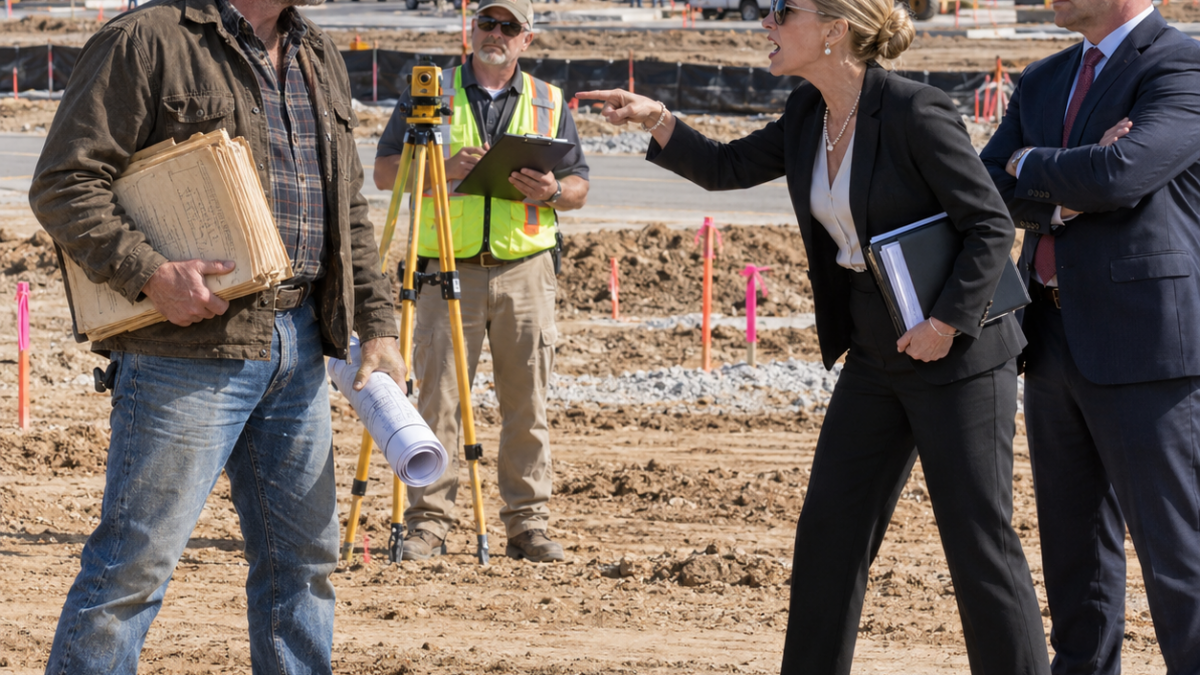
PART 2
Daniel stayed silent long enough that I could hear the air conditioner running through the phone.
Then he said, “Tell me you’re not seriously planning to let them finish.”
“I’m seriously planning to let them finish.”
“Marcus, they are trespassing on eight acres you own.”
“I know.”
“They’re putting millions of dollars into buildings you never authorized.”
“I know.”
“They’re signing construction contracts, probably taking loans, eventually signing tenant leases.”
“I know.”
His frustration sharpened.
“Then why aren’t you stopping them?”
I turned my laptop toward me and reopened the project file.
Fifteen commercial units.
Forty-two thousand square feet.
Projected completion in September.
The kind of development I might eventually have paid someone else to build.
“Because right now,” I said, “I own eight acres with half-finished foundations on them.”
“And?”
“If I shut the project down today, I spend the next two years in litigation while concrete shells sit behind a temporary fence losing value.”
“You’d still win the land.”
“I already own the land.”
“Exactly.”
“But I don’t own finished buildings yet.”
That time, the silence lasted even longer.
Daniel knew me too well.
We had practiced corporate law together for twelve years.
He knew I had never been impulsive.
He also knew I had made most of my money by waiting longer than other people could tolerate.
“Marcus,” he said carefully, “you understand what you’re proposing.”
“Yes.”
“You want to knowingly allow Karen Westfield to keep spending money because every dollar she spends increases the value of your property.”
“Correct.”
“And then you intend to assert title after completion.”
“Correct.”
“That is going to make you look ruthless.”
“I’m not running for office.”
“It may create equitable arguments.”
“Then document everything.”
He sighed.
“You already decided.”
“I called for legal analysis, not permission.”
That got a dry laugh.
“You haven’t changed.”
“I retired. That’s different.”
“All right. Then do this correctly. Photographs from public areas only. No interference with workers. No misrepresentations. Preserve every county record. Preserve your taxes. Preserve the deed chain. And Marcus?”
“Yes?”
“If they discover the problem before completion, you call me immediately.”
“I will.”
“And don’t underestimate Karen.”
“I don’t know her.”
“You know enough. Someone willing to claim abandoned land without checking the tax rolls is either dangerously careless or dangerously confident.”
I looked at her signature on the adverse-possession filing.
Karen Westfield.
President, Riverside Commons HOA.
“Maybe both.”
The next eight weeks became an exercise in patience.
Once a week, I drove past the site.
I parked across the street or walked on the public sidewalk.
I never entered the construction zone.
I never interfered.
I never told a worker who I was.
I simply watched.
Week one, framing rose from all fifteen foundations.
Week two, roof trusses appeared.
Week four, exterior walls were enclosed.
Week six, windows and doors went in.
By June, electrical contractors, HVAC crews, plumbers, and interior framers were moving through the buildings.
Karen was good at development.
I’ll give her that.
The project was professionally organized.
Materials arrived on time.
Crews moved efficiently.
The design was attractive without being extravagant.
The parking layout made sense.
The buildings faced the street in a way that gave each storefront visibility.
If someone had asked me what I wanted built there, I might have described something remarkably similar.
Then a leasing sign appeared.
OFFICE AND RETAIL SPACE AVAILABLE.
CONTACT WESTFIELD PROPERTIES.
I stood across the street looking at it for almost a minute.
They were no longer simply building on my land.
They were leasing buildings sitting on my land.
That night I called the number.
A woman named Amanda answered.
“Westfield Properties.”
“I’m looking for office space at Riverside Commons.”
“One moment. I’ll connect you with Karen.”
A few seconds later, I heard a confident voice.
“This is Karen Westfield.”
The woman who had claimed my property without knowing me was finally speaking directly to me.
“I’m looking for around two thousand square feet.”
“We have several options,” she said warmly. “The plaza opens in September. Would you like a tour?”
“Yes.”
“Thursday at two?”
“I’ll be there.”
Thursday afternoon, I drove onto my own land pretending to be a potential tenant.
That was the strange part.
I had to be invited onto property I owned because the woman occupying it believed she had successfully erased me from the record.
Karen stood beside the main building when I arrived.
Late forties.
Blonde hair cut to her shoulders.
Dark blue business suit.
Expensive shoes that weren’t designed for construction dust.
She walked toward me smiling.
“Marcus?”
“That’s me.”
“Karen Westfield.”
We shook hands.
Her grip was firm.
“Welcome to Riverside Commons.”
I looked over her shoulder.
My Riverside Commons, apparently.
“Impressive project.”
Her smile widened.
“We’re extremely proud of it.”
She led me through the plaza.
“We’ve already leased twelve of fifteen units.”
“That fast?”
“The location is exceptional. This corridor is exploding.”
“I know.”
She didn’t notice anything unusual about the way I said it.
We entered an unfinished office suite.
Glass walls had already been installed around a conference room.
The ceiling was high.
Natural light came through large front windows.
“What’s the rate?”
“Twenty-eight dollars per square foot annually on this unit.”
“Who owns the development?”
Karen smiled.
“Riverside Commons HOA.”
“An HOA owns a commercial plaza?”
“It’s an innovative model.”
“How did that happen?”
She folded her arms comfortably.
“The land had been unused for years. Technically abandoned.”
I let my expression stay neutral.
“Abandoned?”
“The previous owner died. No heirs. Nobody maintained the property. The HOA went through adverse possession.”
“You’re sure nobody owned it?”
A flicker.
Tiny.
But I saw it.
“I’m sure.”
“You did a title search?”
“We completed all required legal procedures.”
That wasn’t what I asked.
I didn’t press.
Karen continued.
“The county approved our claim after the public notice period.”
“And now residents own this?”
“Collectively through the HOA.”
“Interesting.”
“The lease revenue will reduce homeowner dues and fund amenities.”
She spoke with pride.
Not guilt.
That mattered.
I had wondered whether Karen knew she had lied.
Standing there, I became less certain.
Maybe she had convinced herself the old deed was good enough.
Maybe she believed empty land truly meant abandoned land.
Maybe someone had told her what she wanted to hear.
Or maybe she simply assumed no actual owner would ever come back.
We toured three spaces.
Before I left, she handed me her card.
“Call if you want me to draft a lease.”
“I’ll think about it.”
That evening, I opened the adverse-possession claim again.
I read every page.
Karen had stated under penalty of law that the property had been abandoned after Harold Martinez died.
She identified him as the last owner.
She stated no heirs could be located.
She stated no one had maintained the property.
She stated the HOA’s use of adjoining land established sufficient possession.
Yet my deed had been recorded in 2009.
My name appeared in the tax database every year afterward.
The county had mailed bills to me.
I had paid them.
Fifteen years.
There was nothing hidden about my ownership.
The only way Karen missed me was by not looking.
Or by looking and ignoring what she found.
I opened a spreadsheet.
Current land value before development: approximately $2.4 million.
Construction budget: $4.2 million.
Estimated project completion: seventy percent.
Completed plaza value: somewhere between $6.5 million and $7 million conservatively.
Projected annual rents: close to $900,000.
I called Daniel.
“She gave me a tour.”
“You did what?”
“I posed as a tenant.”
“Marcus.”
“I didn’t lie about anything important.”
“You knowingly walked through your own property with the trespasser.”
“She told me the HOA owns it.”
Daniel groaned.
“What else?”
“Twelve leases signed.”
“That complicates things.”
“It improves things.”
“It complicates things.”
“Good tenants increase value.”
“Marcus, these tenants think Karen has legal authority to lease.”
“They signed in good faith.”
“And when you assert title?”
“I honor their leases.”
Daniel went quiet.
I continued.
“If I evict them, I destroy the income stream. If I honor the contracts, I preserve value.”
“You’ve thought through everything except whether this makes you look like a villain.”
“Dan, Karen filed documents saying I did not exist.”
“Fair.”
“She took land worth $2.4 million and is spending another $4.2 million improving it.”
“Also fair.”
“I did not ask her to.”
“No.”
“I did not trick her.”
“No.”
“I did not sell it to her.”
“No.”
“Then I’m not the villain.”
Daniel sighed.
“You sound like closing argument Marcus.”
“Old habits.”
By late June, twelve leases became fourteen.
Only one unit remained vacant.
Then the HOA hosted a preview event.
I received an invitation at my consulting office.
That made me laugh.
Karen didn’t know my relationship to the land, but her marketing system had somehow found me as a local business owner.
August 20.
Five to seven.
Light refreshments.
Community preview.
I went.
Sixty or seventy people had already gathered under a white tent when I arrived.
HOA homeowners.
Prospective tenants.
Contractors.
Local business owners.
Karen stood at the front beside a projection screen.
I stayed near the back.
She clicked to the first slide.
“Eighteen months ago,” she began, “we identified an opportunity to turn unused land beside Riverside Commons into a long-term financial asset for our homeowners.”
Unused.
Not unowned.
Interesting choice.
She moved to the next slide.
Fifteen commercial units.
Forty-two thousand square feet.
Fourteen leased.
Projected rent: $890,000 annually.
The crowd applauded.
Then Karen delivered the promise that would later become one of the most damaging sentences she ever spoke publicly.
“With this revenue, Riverside Commons can reduce annual HOA dues by forty percent.”
The applause doubled.
People smiled at one another.
Forty percent less in HOA fees.
Parks improved.
Common areas landscaped.
New amenities.
All paid by rent from buildings constructed on property they did not own.
A man near the front raised his hand.
“How did we finance four million dollars?”
Karen smiled.
“Commercial development loan.”
“How much?”
“Approximately $3.8 million.”
My stomach tightened.
That was new.
“Secured how?”
She didn’t hesitate.
“By the development parcel and projected lease revenue.”
She had mortgaged my land.
I felt the first real wave of anger since discovering the construction.
Until that moment, I could almost describe what had happened as spectacular negligence.
Now the stakes had changed.
Karen had taken a $3.8 million loan using property she did not legally control as collateral.
A woman asked, “What happens after the loan is paid?”
“Pure community revenue.”
More applause.
A younger homeowner raised his hand.
“Who actually owns the buildings? The HOA directly?”
Karen smiled.
“The HOA owns the entire development. Every homeowner benefits.”
From the far side of the tent, I stared at her.
My phone was in my hand.
Recording.
Photographing.
Documenting.
After the presentation, I walked through the buildings with a tour group.
Unit Three had been leased to a law firm.
Unit Seven would become a coffee shop.
A dental office was installing specialized plumbing.
A physical therapy clinic had selected flooring.
A yoga studio had signed a long-term lease.
Real businesses.
Real people.
They weren’t part of Karen’s land grab.
They were innocent.
That mattered to me.
I decided that night I would protect their leases no matter what happened.
Near the end of the tour, I overheard Karen’s husband, Donald, talking with two contractors.
He wore a Westfield Development polo.
“We brought it in under budget,” Donald said proudly. “Four-point-two instead of four-point-five.”
One contractor congratulated him.
I searched Westfield Development when I got home.
Private company.
Owned by Karen and Donald Westfield.
Not the HOA.
That detail sat badly with me.
Karen was using her HOA presidency to present the project as community-owned while her private development company managed construction and leasing.
I kept digging.
Then I found the loan.
Mountain West Bank.
$3.8 million.
Borrower: Riverside Commons HOA.
Development manager: Westfield Development Group.
Collateral description: 4500 Riverside Drive.
My address.
I called Daniel.
“They borrowed against it.”
“What?”
“Three-point-eight million.”
A curse came through the phone.
“The bank thinks the HOA owns your property?”
“Apparently.”
“Now we have potential lender fraud.”
“I know.”
“You need to file now.”
“Not yet.”
“Marcus!”
“They’re ninety percent done.”
“You are impossible.”
“Four weeks.”
“What happens in four weeks?”
“Tenant occupancy.”
Daniel was silent.
“Once the tenants move in,” I said, “the buildings become operating assets, not construction projects.”
“Maximum leverage.”
“Exactly.”
“Do you ever hear yourself?”
“All the time.”
“You sound terrifying.”
“Only to people building on my property.”
September arrived.
The landscaping matured.
The parking lot was striped.
Monument signs were installed.
Tenants began moving furniture in.
The coffee shop received espresso machines.
The dental office installed equipment worth hundreds of thousands of dollars.
The law firm moved in conference tables.
By September 15, fourteen tenants were either operating or preparing to open.
The plaza was complete.
Karen announced a grand opening for September 21.
Mayor Jennifer Walsh would cut the ribbon.
Local media were coming.
That was when Daniel asked whether we should file before the ceremony.
“No.”
“Why?”
“Let her celebrate.”
“Marcus.”
“She wants everyone to see what she built.”
“That sounds vindictive.”
“No. I want a clean timeline.”
“She completes the project.”
“Yes.”
“Conducts the grand opening.”
“Yes.”
“Publicly claims ownership.”
“Yes.”
“And then you file.”
“Yes.”
Daniel breathed out slowly.
“I hope never to be on the other side of a real-estate dispute with you.”
“Check the deed before building.”
Grand opening morning was perfect.
Blue sky.
Seventy degrees.
No wind worth mentioning.
I parked across the street at 10:45.
The plaza looked magnificent.
Banners hung from the light poles.
White tents lined the parking lot.
The fifteen units were clean and modern.
One year earlier, the land had been weeds.
Now the parking lot held more than one hundred cars.
Karen walked beside Mayor Walsh, introducing tenants.
Cameras followed them.
At eleven sharp, Karen stepped to the podium.
I watched from my truck.
“Today is a historic day for Riverside Commons.”
Applause.
“Eighteen months ago, we saw neglected land and chose to see possibility.”
I tightened my hand around the manila envelope beside me.
Inside:
My deed.
Fifteen years of tax records.
Karen’s adverse-possession filing.
Daniel’s draft complaint.
Karen continued.
“We didn’t wait for somebody else to invest in our neighborhood. We did it ourselves.”
The crowd cheered.
Behind her stood $4.2 million in construction she had placed on my land.
“We created fifteen commercial spaces, fourteen already leased, bringing new jobs and services to this corridor.”
More applause.
“And because Riverside Commons homeowners believed in this vision, revenue from this plaza will lower HOA dues and improve our community for decades.”
Mayor Walsh spoke next.
She praised entrepreneurship.
Community initiative.
Smart development.
Then the ribbon appeared.
Karen and the mayor held oversized scissors.
Photographers moved forward.
Three.
Two.
One.
The ribbon fell.
The crowd cheered.
Karen smiled like someone standing at the peak of a mountain.
I watched her shake hands.
Pose for pictures.
Give interviews.
She had no idea the ground beneath her celebration had never belonged to her.
Two days later, at exactly nine in the morning, Daniel filed Marcus Webb v. Karen Westfield, Donald Westfield, Westfield Development Group, and Riverside Commons HOA.
Quiet title.
Trespass.
Fraud.
Unjust enrichment.
Wrongful construction.
Improper use of property as collateral.
Emergency temporary restraining order.
At 10:47, my phone rang.
Karen.
I answered.
“Marcus Webb.”
Her voice sounded nothing like the confident woman who had toured me through the office units.
“Mr. Webb, I just received legal papers.”
“I expected you would.”
“You’re claiming Riverside Commons Plaza is on property you own.”
“I’m not claiming it.”
I paused.
“I own it.”
“That’s impossible.”
“No.”
“We have title.”
“You have provisional title derived from an adverse-possession application containing false information.”
“We followed county procedure.”
“You stated Harold Martinez was the last owner.”
“He was.”
“No. Harold sold me the land in 2009.”
Silence.
“He died in 2012.”
Nothing.
“I have the recorded deed.”
Karen’s breathing became audible.
“You’re lying.”
That irritated me.
“Book and page are in the complaint. Pull the county record.”
“We did research.”
“No, Karen. You looked for enough information to support the answer you wanted.”
“We went through the required public notice.”
“I was overseas during the notice period.”
“That’s not our fault.”
“No. But my failure to see a notice does not transfer my deed to you.”
Her voice rose.
“We have fourteen tenants.”
“I know.”
“A $3.8 million loan.”
“I know.”
“Millions invested.”
“I know.”
“And you waited?”
There it was.
The question everyone would eventually ask.
“Yes.”
“You knew we were building?”
“Since April.”
Karen nearly shouted.
“You watched us spend millions?”
“Yes.”
“You let us finish?”
“Yes.”
“Why?”
I looked through my office window.
“Because you were building on my property.”
“That’s insane.”
“No, what’s insane is spending $4.2 million before checking who owns eight acres.”
“You’re trying to steal our buildings!”
“They’re attached to my land.”
“We built them!”
“Without my permission.”
“You’re going to destroy the HOA.”
“No. Your decisions might.”
She became silent.
Then her voice changed.
Lower.
Sharper.
“You planned this.”
“I reacted to what you did.”
“You could have warned us.”
“You could have searched the tax rolls.”
“People will hate you for this.”
“People are free to feel however they want.”
“I will fight you.”
“I expected that.”
“You’re not taking my plaza.”
I corrected her.
“My land.”
Then I hung up.
Twenty minutes later Donald called.
Unlike Karen, he skipped any attempt at professionalism.
“What the hell do you think you’re doing?”
“Enforcing my property rights.”
“You’re trying to steal four million dollars from my family.”
“No.”
“You sat there and watched us build.”
“Yes.”
“You knew!”
“Yes.”
Donald’s rage came through the phone like heat.
“You could have shut us down.”
“I could have.”
“Then why didn’t you?”
“Because I was not obligated to protect you from the consequences of trespassing.”
“You’re a psychopath.”
“Careful.”
“Karen was right. You planned this from the start.”
“I purchased the land fifteen years before I knew either of you existed.”
“You know what I mean.”
“Yes.”
“You want the buildings.”
“I want my land.”
“The buildings come with it.”
“That was your decision.”
“We’ll tear them down before you get them.”
The threat made my voice colder.
“There is now a pending court action and an emergency motion. Touch those buildings outside normal maintenance and Daniel will seek sanctions before sunset.”
Donald went silent.
I continued.
“Do not damage my property because you’re angry about your mistake.”
“Our property!”
“No.”
I hung up.
The temporary restraining-order hearing was scheduled the next afternoon.
Daniel met me outside the courthouse.
“They hired Richard Morrison.”
“Denver firm?”
“Yes.”
“Expensive.”
“Very.”
“Good.”
Daniel stared at me.
“Why is that good?”
“Means they’ll take the documents seriously.”
“They’re going to attack your delay.”
“Expected.”
“They’ll say you waived objection.”
“No.”
“They’ll say they relied on county approval.”
“They relied on provisional title.”
“Marcus, stop giving me the answers before I finish.”
“Sorry.”
“You’re not sorry.”
We entered the courtroom.
Karen sat beside Donald.
She looked exhausted.
Donald looked furious enough to chew through the table.
Richard Morrison stood when Judge Thomas Brennan entered.
Judge Brennan had spent years practicing real-estate law before taking the bench.
The moment he opened the file, I saw his attention go directly to the deed and tax records.
That was a good sign.
Daniel spoke first.
“Your Honor, my client has held recorded title continuously since 2009. He has paid taxes continuously. The defendants filed an adverse-possession claim alleging abandonment based upon a prior owner who had already conveyed the property to Mr. Webb.”
Morrison stood.
“My clients acted in good faith after county approval.”
Judge Brennan looked over his glasses.
“Final title?”
“Provisional title pending final determination.”
“And your clients began a $4.2 million development under provisional title?”
Morrison hesitated.
“They believed their ownership was secure.”
The judge looked toward Karen.
“Mrs. Westfield.”
Karen straightened.
“Yes, Your Honor.”
“Did you check the county tax roll?”
A pause.
“No.”
“Why not?”
“We reviewed ownership records.”
“That wasn’t my question.”
Karen swallowed.
“No, Your Honor.”
“Who paid property taxes in 2022?”
Silence.
Judge Brennan looked at Daniel.
“Counsel?”
“Marcus Webb.”
“2021?”
“Marcus Webb.”
“2020?”
“Marcus Webb.”
“How far back?”
“Every year to acquisition in 2009.”
The judge looked back at Karen.
“A five-minute tax search would have shown you an active owner paying annual taxes.”
Karen’s face reddened.
“We believed the property was abandoned.”
“Based on what?”
“It was vacant.”
Judge Brennan leaned back.
“Vacant and abandoned are not synonyms.”
Nobody spoke.
He looked at my deed.
Then Karen’s claim.
Then the permit.
“The temporary restraining order is granted.”
Karen’s face went white.
Judge Brennan continued.
“Effective immediately, defendants are prohibited from collecting rent, executing leases, transferring property interests, pledging the premises as collateral, or exercising management authority inconsistent with plaintiff’s ownership claim pending final adjudication.”
Donald whispered something to Morrison.
The judge wasn’t finished.
“All property-management documents, keys, access credentials, tenant records, and lease files will be delivered to plaintiff’s counsel within forty-eight hours.”
Karen stood halfway.
“Your Honor, fourteen businesses—”
“Sit down, Mrs. Westfield.”
She did.
“Existing tenants will remain in possession under current lease terms unless this court orders otherwise.”
Then Judge Brennan looked at me.
“Mr. Webb.”
I stood.
“Yes, Your Honor.”
“You will not use this transition to evict good-faith tenants or alter their agreements until the title issue is resolved.”
“I have no intention of doing so.”
“Good.”
The gavel came down.
For the first time since Joe called me five months earlier, Karen had lost control of the property she had spent millions developing.
But she wasn’t finished fighting.
Forty-eight hours passed.
No keys.
No passwords.
No files.
Daniel called Morrison.
No response.
At four p.m. on the deadline, he filed a motion for contempt.
Forty-seven minutes later, Morrison called.
“My clients need additional time.”
Daniel placed him on speaker.
I answered.
“They had forty-eight hours.”
“Transitioning a commercial property with fourteen tenants is complex.”
“It became complex when they built it on someone else’s land.”
“Mr. Webb—”
“Nine tomorrow morning.”
“That is unreasonable.”
“If complete transfer isn’t made by nine, Daniel requests daily contempt sanctions.”
Silence.
“How much?”
“Five thousand dollars per day.”
“You’re trying to crush them.”
“No. I’m trying to enforce a court order.”
At 8:30 the next morning, Karen and Donald walked into Daniel’s office carrying two document boxes.
Donald placed a huge ring of keys on the conference table.
Karen set down a laptop.
She looked like she hadn’t slept.
Daniel went through everything.
Tenant leases.
Deposits.
Utility contracts.
Maintenance agreements.
Insurance.
Security codes.
Rent accounts.
Vendor lists.
When he finished, he nodded.
“Complete.”
Karen sat across from me.
For several seconds, nobody said anything.
Finally she asked, “What happens to the bank loan?”
“That is between you, the HOA, Westfield Development, and Mountain West.”
“We owe $3.8 million.”
“I know.”
“We needed these rents to service it.”
“I know.”
“So you take the buildings and the rents, and we keep the debt?”
I looked at her.
“You borrowed against property you did not own.”
Donald slammed his palm on the table.
“Because we thought we owned it!”
“And whose responsibility was it to verify that?”
“You knew.”
“Yes.”
“You let us do this.”
“Yes.”
His face twisted.
“That makes you worse than us.”
I leaned forward.
“No, Donald. I paid $80,000 for this property fifteen years ago. I paid taxes every year. I never signed anything giving it to Karen. I never represented that you owned it. I never asked you to build anything. I never asked you to borrow money.”
I pointed toward the boxes.
“You two created this entire problem without speaking to me once.”
Karen’s eyes filled.
“The homeowners trusted us.”
“That is the first thing you’ve said today that I agree with.”
Her expression changed.
“What?”
“They trusted you.”
I looked directly at her.
“And you failed them.”
She flinched.
Donald stood.
“Come on.”
They left.
That afternoon, I drove to the plaza.
For the first time, I entered openly as the property owner.
Maria Chen, the coffee-shop owner, looked terrified when I introduced myself.
“Are we being evicted?”
“No.”
“Our lease was with Westfield.”
“You signed in good faith.”
“What happens now?”
“You keep operating.”
“Same rent?”
“Same rent.”
“Same term?”
“Yes.”
She stared at me.
“Then why is everyone saying the plaza was stolen?”
“Because the people who leased you this space built it on land they didn’t own.”
Maria slowly sat down.
“You’re the landowner.”
“Yes.”
“How long?”
“Since 2009.”
She laughed once from pure disbelief.
“Karen told me the HOA reclaimed abandoned land.”
“I know.”
“What a mess.”
“Not for you.”
She looked at me carefully.
“You mean that?”
“I want good tenants. You opened a business. You didn’t file the false claim.”
Maria’s shoulders finally relaxed.
“Thank you.”
I repeated that conversation fourteen times.
Dental office.
Law firm.
Physical therapy.
Accounting practice.
Yoga studio.
Coffee shop.
Every tenant stayed.
The managing partner of the law firm, James Donnelly, was less emotional.
He studied me like a lawyer studies another lawyer.
“You knew construction was happening.”
“Yes.”
“And you waited.”
“Yes.”
“That was deliberate.”
“Yes.”
A slight smile appeared.
“That is both brilliant and brutal.”
“Property ownership is not a charity program.”
“You’re going to raise rent.”
“No.”
His smile disappeared.
“Why?”
“Because you pay market rent, maintain your unit, and have a five-year agreement.”
“You’ll honor Karen’s contract?”
“Your contract.”
James nodded slowly.
“I think we’ll get along.”
By October, rent payments were coming directly to my management account.
First month:
$68,500.
Annualized, more than $820,000.
My original purchase price had been $80,000.
I looked at the deposit confirmation for a long time.
Then November arrived.
Karen and Donald fought every possible angle.
They argued that my five-month wait amounted to waiver.
Denied.
They argued the buildings were removable personal property.
Rejected.
They filed a counterclaim demanding $4.2 million for unjust enrichment.
That hearing became the ugliest confrontation of the entire case.
Richard Morrison stood before Judge Brennan.
“Your Honor, whatever mistakes were made regarding title, the undisputed fact remains that my clients spent $4.2 million improving Mr. Webb’s property. He has received a massive benefit without paying for it.”
Daniel rose.
“Because the defendants built without the owner’s consent.”
“They believed they held title.”
“Based on their own inadequate investigation.”
Morrison turned toward the judge.
“Equity cannot allow Mr. Webb to receive millions of dollars in improvements for free.”
Judge Brennan folded his hands.
“Counsel, if you build a house on my lot without asking me, should I be forced to buy the house from you?”
“That oversimplifies—”
“Does it?”
Morrison stopped.
“The defendants acted in good faith.”
The judge looked toward Karen.
“Mrs. Westfield.”
She stood.
“Yes.”
“Before borrowing $3.8 million, did you order a professional title examination?”
“No.”
“Before pouring fifteen foundations?”
“No.”
“Before claiming adverse possession?”
“No.”
“Did you search tax records?”
“No.”
“Did you contact the address receiving tax bills?”
“No.”
“Did you verify whether Harold Martinez had conveyed this property before his death?”
“No.”
Judge Brennan nodded.
“That is not good faith due diligence.”
Karen’s voice broke.
“We were trying to create something for the community.”
“And you created it on land you didn’t own.”
“We made a mistake.”
“A $4.2 million mistake.”
She began crying.
“Your Honor, if we lose these buildings, we lose everything.”
Judge Brennan’s expression softened.
His ruling did not.
“Mrs. Westfield, courts do not transfer another person’s property to rescue you from a poor business decision.”
Donald stood suddenly.
Morrison grabbed his arm.
Donald ignored him.
“This man watched us!”
Judge Brennan’s voice cracked through the room.
“Sit down.”
“He watched us spend millions!”
“Mr. Westfield.”
“He should have said something!”
“Sit down now.”
Donald lowered himself into his chair, breathing hard.
Judge Brennan looked at me.
Then back at Donald.
“The plaintiff’s silence did not grant you title.”
Donald stared down.
“The counterclaim is dismissed.”
Karen covered her face.
The trial on quiet title remained one week away.
By then, the conflict had escaped the courthouse.
Local reporters were running the story.
HOA BUILDS $4.2 MILLION PLAZA ON LAND IT DIDN’T OWN.
Residents were furious.
Some at me.
Most increasingly at Karen.
The November 15 courtroom was packed.
Homeowners filled the gallery.
I recognized faces from the preview event.
People who had applauded Karen when she promised forty-percent lower fees.
Now they whispered angrily while staring at her.
Judge Brennan entered.
Silence fell instantly.
Daniel’s case took twenty minutes.
My deed.
My tax records.
The 2009 transfer from Harold Martinez.
The 2022 adverse-possession filing.
Simple chronology.
Clean documents.
Then Morrison called Karen.
He tried to frame what happened as an honest community-development mistake.
Karen testified that the land looked abandoned.
That no structures existed.
That Riverside Commons had maintained nearby landscaping.
That public notice was posted.
Then Daniel cross-examined her.
“You testified that you believed Harold Martinez still owned the property when he died?”
“Yes.”
“Did you obtain a complete title chain?”
“No.”
“Did you verify whether he had sold the property between acquiring it and dying?”
“No.”
“Did you check county tax records?”
“No.”
“Did you notice Mr. Webb paid taxes in 2022?”
“No.”
“2021?”
“No.”
“2020?”
“No.”
“Any of the previous thirteen years?”
“No.”
Daniel paused.
“You told HOA members you performed due diligence.”
“We followed the adverse-possession process.”
“That wasn’t my question.”
Karen looked toward Morrison.
He could not help her.
“You told homeowners due diligence had been done.”
“Yes.”
“But you never checked who paid the taxes.”
“No.”
“You never hired a title company.”
“No.”
“You never contacted the person receiving tax bills.”
“No.”
“You never contacted Mr. Webb.”
“I didn’t know he existed.”
Daniel let that answer hang.
Then he lifted my recorded deed.
“This document existed.”
Karen stared at it.
“Yes.”
“For thirteen years before your adverse-possession filing.”
“Yes.”
“No further questions.”
Judge Brennan ruled from the bench.
He didn’t need hours.
He didn’t need days.
He looked around the room before speaking.
“The evidence establishes that Marcus Webb acquired the property at 4500 Riverside Drive by recorded warranty deed in 2009.”
Karen stared at the table.
“He maintained continuous ownership.”
Donald clenched his fists.
“He paid taxes annually.”
Several HOA residents began whispering.
Judge Brennan continued.
“The adverse-possession application filed by Karen Westfield relied upon materially incorrect claims that the parcel was abandoned and that no current owner existed.”
Karen shut her eyes.
“That application did not extinguish Mr. Webb’s title.”
Then came the sentence I had waited seven months to hear.
“Quiet title is granted to Marcus Webb.”
The gallery erupted.
Some gasped.
Some cursed.
Someone behind Karen said, “Oh my God.”
The judge struck his gavel.
“Order.”
Silence returned.
“All structures permanently affixed to the property are part of the real estate owned by Mr. Webb.”
Karen’s shoulders collapsed.
“The defendants possess no ownership interest in those improvements.”
Donald stared straight ahead.
“The plaintiff is confirmed as sole owner of the real property and improvements.”
The gavel fell.
Done.
Karen had spent $4.2 million building fifteen commercial units.
She had borrowed $3.8 million.
She had promised hundreds of families lower dues.
She had held a ribbon-cutting ceremony with the mayor.
She had placed her company’s name on every contractor document.
And now the entire completed plaza legally belonged to me.
Three days after trial, I made her one last offer.
Not because I owed her anything.
Because I wanted to see whether she still believed in the project enough to pay for it properly.
Daniel sent the terms.
Purchase price: $8 million.
Two million down.
Balance financed over fifteen years.
Karen could keep the plaza.
Keep the income.
Keep the businesses operating.
She simply had to buy what she had previously tried to take.
Morrison called two days later.
“She can’t.”
“Why?”
“No cash for the down payment.”
“What about financing?”
“No lender will touch Westfield Development.”
“Then she declines.”
“She wants a lower number.”
“No.”
“Marcus, eight million is punitive.”
“It includes land and completed improvements.”
“She built the improvements.”
“Then she should understand their value.”
“She’s already defaulting on Mountain West.”
“That’s unfortunate.”
“Can we find middle ground?”
I looked at Daniel.
He said nothing.
“There was middle ground,” I answered.
“When?”
“Before construction. She could have called me.”
Morrison had no response.
Karen allowed the fourteen-day offer to expire.
Then she made her most desperate move.
She called an emergency HOA meeting.
Joe Martinez attended.
The next morning, he called me laughing so hard he could barely speak.
“You’re going to love this.”
“What happened?”
“Karen tried to turn the neighborhood against you.”
“I expected that.”
“She said you’re stealing community property.”
“Expected that too.”
“She said you’re destroying promised fee reductions.”
“Also predictable.”
Joe’s laughter stopped.
“Then Tom Brennan stood up.”
“Who?”
“Accountant. Lives on Laurel Court.”
“What did he say?”
“He asked who owns Westfield Development Group.”
I sat straighter.
“And?”
“Karen said it was the HOA’s development partner.”
Joe paused.
“Tom had the corporate filing.”
I smiled.
“He told everybody Westfield Development is privately owned by Karen and Donald.”
There it was.
“What happened?”
“Chaos.”
Joe described the room.
Homeowners shouting.
Karen trying to explain.
Donald standing against the back wall.
People demanding financial statements.
A woman asked why a community-owned project was being managed by Karen’s private company.
Someone else asked where development fees went.
Then Tom asked whether Karen or Donald had personally earned money from the project.
Karen refused to answer.
That was enough.
A motion was made to remove her as HOA president.
Unanimous.
Not close.
Not contested.
Unanimous.
The woman who had used the HOA to seize my land was removed by the very homeowners she claimed to protect.
A second motion authorized an independent investigation.
Passed.
A third hired a forensic accountant.
Passed.
Sarah Mitchell, a retired CPA, became interim president.
Her first statement was simple.
“No board member will have undisclosed financial interests in association projects while I am president.”
One week later, Riverside Commons HOA sued Karen and Donald.
Fraud.
Breach of fiduciary duty.
Misappropriation.
Undisclosed conflicts.
The dispute had officially become a three-front war.
Me versus Westfield.
The HOA versus Westfield.
Mountain West Bank versus reality.
The bank was next.
Its attorneys discovered the $3.8 million loan was secured by collateral Karen never owned.
Foreclosure against my property was impossible.
A bank attorney called Daniel.
“We understand your client owns 4500 Riverside.”
“He does.”
“Our borrower pledged that parcel.”
“I know.”
“We have a significant problem.”
Daniel smiled when he told me.
“I assume the bank wants money.”
“Banks generally do.”
Mountain West pursued Karen and Donald personally.
Then they approached me.
January 8, we sat across a conference table.
Three bank representatives.
Daniel.
Me.
Their lead officer started.
“We’re interested in purchasing the plaza.”
“For how much?”
“Five-point-five million.”
“No.”
“It would resolve uncertainty.”
“There is no uncertainty.”
“Mr. Webb—”
“The title judgment is final.”
He shifted.
“What number?”
“Seven million.”
One banker almost laughed.
“The current leases limit upside.”
“The current leases produce more than eight hundred thousand dollars annually.”
“We inherit operating obligations.”
“You inherit fourteen stable tenants.”
“We’ll have management costs.”
“Then don’t buy it.”
They whispered among themselves.
“Six-point-two.”
“Six-point-five.”
Another whisper.
“Done.”
January 22.
Closing.
Sale price:
$6.5 million.
I sat in Daniel’s conference room watching the wire confirmation appear.
Fifteen years earlier, I had spent $80,000 on dirt.
Property taxes over those years had cost me roughly another $72,000.
Legal fees cost around $35,000.
Total capital invested:
Approximately $187,000.
Sale proceeds:
$6.5 million.
Net gain:
More than $6.3 million.
But the money wasn’t the moment I remember most.
Daniel closed the laptop.
Then he looked at me.
“Feel good?”
I thought about the question.
“Relieved.”
“Not victorious?”
“I was already the owner.”
He laughed.
“You waited five months while somebody spent millions improving your property.”
“They should have checked.”
“Marcus, normal people would have panicked.”
“Normal people sell land too early.”
Daniel shook his head.
“I’ll never understand you.”
“Yes, you will.”
“When?”
“Next time somebody walks into your office saying they found construction on land they own.”
He pointed at me.
“Do not turn this into a business model.”
Too late.
Karen’s collapse continued.
Without rental revenue, Westfield Development could not service the construction loan.
Mountain West sued for deficiency.
The forensic accounting investigation uncovered $140,000 in development fees paid to Karen’s private company.
HOA residents had never been clearly told.
Westfield Development filed bankruptcy.
Karen and Donald filed personally.
Their home entered foreclosure.
Vehicles were repossessed.
Their marriage eventually broke under the pressure.
I didn’t celebrate that.
People sometimes assume I did.
I didn’t.
Winning your property back is one thing.
Watching a family disintegrate is another.
But I also did not accept responsibility for it.
Karen had choices.
Hundreds of them.
She could have ordered a title report.
She could have checked taxes.
She could have contacted me.
She could have stopped construction.
She could have accepted my purchase offer after trial.
She could have disclosed her private financial interests to the HOA.
At every stage, she chose certainty over verification.
That pattern destroyed her.
Not me.
Months after the sale, a Riverside Commons homeowner named Linda Patterson called.
Her tone was bitter.
“Because of you, our dues went up.”
“No.”
“Yes. Karen promised a forty-percent reduction.”
“Karen promised you income from property she did not own.”
“We didn’t know that.”
“I understand.”
“So why punish us?”
“I didn’t.”
“You took the plaza.”
“I reclaimed my land.”
“You sold it for millions.”
“Yes.”
“We lost the revenue.”
“You never legally owned the revenue.”
Silence.
Then Linda said, “That sounds cruel.”
I leaned back.
“What did your HOA pay for the land?”
Nothing.
She didn’t answer.
“What did your board pay me for the right to develop it?”
Nothing.
More silence.
“Did Karen tell you Westfield Development was privately owned by her and Donald?”
“No.”
“Did she tell you she never ordered a professional title search?”
“No.”
“Did she tell you she had not checked who paid the taxes?”
“No.”
Linda’s anger softened.
“We trusted her.”
“I know.”
Then I said something I had learned watching the entire disaster unfold.
“That’s why leadership carries responsibility.”
Linda eventually said goodbye.
She didn’t apologize.
She didn’t need to.
Several months later, Sarah Mitchell sent me a formal letter as the new HOA president.
Marcus Webb,
On behalf of Riverside Commons Homeowners Association, I want to apologize for the actions of our former president and the board oversight failures that allowed the Riverside property dispute to occur.
The association recognizes your ownership rights were violated.
Our new board has implemented conflict-of-interest disclosures, independent review for major transactions, recorded meetings, and outside legal and accounting review for future development matters.
We hope to be responsible neighbors going forward.
I read the letter twice.
Then I filed it beside my original deed.
Not because I needed an apology.
Because good records matter.
The plaza continued thriving.
Mountain West hired professional management.
All fifteen units eventually became occupied.
The coffee shop became popular.
Maria Chen expanded her seating area.
The dental office renewed early.
The law firm stayed.
Annual rent eventually exceeded $900,000.
Karen had been right about one thing.
The location was excellent.
Her vision had been commercially sound.
Her execution had been catastrophic because the first question should never have been:
What can we build?
It should have been:
Who owns the ground?
Almost exactly one year after filing suit, I drove past the plaza.
The afternoon sun reflected off the windows.
Cars filled the parking lot.
People carried coffee out of Maria’s shop.
Patients entered the dental office.
Someone had planted seasonal flowers around the monument sign.
Nothing looked like a battlefield.
That’s the strange thing about property wars.
The scars are often invisible after the paperwork settles.
Joe pulled up beside me.
“You admiring your old empire?”
“It was mine for four months.”
“Four very profitable months.”
“True.”
He laughed.
“You know people still talk about Karen.”
“They should probably stop.”
“You serious?”
“Yes.”
“She tried to steal eight acres from you.”
“And she lost.”
“That’s it?”
“What else should happen?”
Joe shrugged.
“I don’t know. I thought you’d enjoy it more.”
I looked at the plaza.
“I enjoyed winning.”
“Same thing.”
“No.”
He frowned.
I pointed toward the coffee shop.
“Maria had nothing to do with Karen.”
Then the dental office.
“Neither did they.”
Then the law firm.
“Or them.”
“The project survived. Businesses survived. Employees kept jobs. The HOA got rid of bad leadership. Karen lost control of property she never owned.”
Joe nodded.
“That’s a pretty clean ending.”
“Cleaner than demolition.”
A year later, commercial real-estate magazines started calling.
One called my decision “the most patient property play in Colorado.”
Another wanted an interview.
I declined.
Then a conference organizer offered $25,000 for a forty-five-minute presentation.
I accepted.
Money can improve enthusiasm.
Three hundred investors and attorneys filled a Denver hotel ballroom.
My presentation was titled Strategic Patience.
I walked them through the timeline.
$80,000.
Hold.
Rezoning.
$2.4 million land value.
Unauthorized construction.
Wait.
Completion.
Litigation.
$6.5 million sale.
During questions, a young investor stood.
“Mr. Webb, weren’t you worried letting them finish might weaken your position?”
“Yes.”
“Then why wait?”
“Because risk and reward existed on both sides.”
“What if Karen discovered you halfway?”
“Then I would have acted halfway.”
“You would still own whatever had been built?”
“Subject to whatever the court ultimately determined, yes.”
Another investor asked, “What about the tenants?”
“I protected them.”
“Why?”
“Because tenants weren’t the trespassers.”
A woman near the back stood.
“I’m an attorney.”
“That sounds dangerous.”
The room laughed.
She smiled.
“Ethically, did you ever feel uncomfortable knowing they were spending millions?”
“Yes.”
The room went quiet.
That wasn’t the answer they expected.
I continued.
“There were mornings I wanted to call Karen.”
“Why didn’t you?”
“Because every time I felt responsible for warning her, I reminded myself she had already filed a legal document declaring my land abandoned without ever contacting me.”
I paused.
“She started the chain.”
The attorney nodded.
“Would you do the same thing again?”
“I hope I never get the opportunity.”
That answer received more applause than the return calculation.
Afterward, a man approached me.
“Mr. Webb, my father owned farmland outside Fort Collins.”
“All right.”
“Developer paved an access road across part of it without easement.”
“That’s different.”
“I know.”
“He died before resolving it.”
“I’m sorry.”
“My mother wants to ignore it.”
“Don’t.”
“Why?”
“Because informal arrangements have a habit of becoming somebody else’s ‘right’ after enough time.”
He nodded.
That, more than the applause, was why the story mattered.
The lesson was never really:
Let trespassers finish a building so you can take it.
That would be ridiculous.
Every case is different.
The lesson was simpler.
Know your property.
Keep records.
Pay attention.
Verify claims.
And never assume confidence equals ownership.
On New Year’s Eve, I sat in my office reviewing my investments.
The Riverside transaction had changed my portfolio.
I reinvested four million dollars into three parcels near developing corridors.
Long holds.
Ten years.
Maybe twenty.
People asked why I wanted to wait again after making so much.
Because patience hadn’t stopped working.
Outside my office window, fireworks began appearing over the town.
I opened the old Riverside folder.
Warranty deed.
$80,000.
Tax records.
Year after year.
Then the photograph Joe had taken the day we discovered construction.
Fifteen concrete foundations.
Bulldozers.
Workers.
And the giant development sign.
I remembered Joe saying:
“Aren’t you going to stop them?”
And my answer.
“Not yet.”
At the time, even I hadn’t known how far the dispute would go.
I hadn’t known Karen would mortgage the property.
I hadn’t known fourteen tenants would move in.
I hadn’t known the mayor would cut a ribbon.
I hadn’t known I would sit across from a bank negotiating millions for buildings I never ordered.
I hadn’t known the HOA would revolt against its own president.
But I had known one thing.
The deed.
Everything grew from that.
The following spring, I ran into Maria Chen at another coffee shop downtown.
She laughed when she saw me.
“Buying coffee from my competition?”
“This place is closer.”
“Excuses.”
“How’s Riverside?”
“Busy.”
“Good.”
She sat across from me.
“I wanted to ask something.”
“Go ahead.”
“When you first found out we were signing leases, did you ever consider throwing us all out?”
“No.”
“Immediately no?”
“Immediately.”
“Why?”
“You invested based on information Karen gave you.”
“So?”
“So I don’t punish people for someone else’s fraud when there’s no business reason to.”
Maria studied me.
“You know what Karen said about you?”
“I can imagine.”
“She said you were a predator.”
I laughed.
“That sounds like Karen.”
“She said you waited because you wanted to destroy her.”
“No.”
“Why did you wait?”
“The unfinished project wasn’t worth the fight.”
“That simple?”
“Mostly.”
Maria shook her head.
“You real-estate people are strange.”
“Coffee-shop owners wake up at four in the morning.”
“Fair.”
She grew serious.
“Thank you for not destroying us.”
“I never wanted to.”
“I know that now.”
That conversation gave me more satisfaction than watching the judge rule.
Because when the dispute began, every side viewed the others as enemies.
Karen saw me as an obstacle.
Some residents saw me as a thief.
Tenants saw me as a threat.
I saw Karen as someone trying to steal my land.
Time separated those roles.
Karen had caused the problem.
Residents had trusted the wrong leader.
Tenants were innocent.
The bank had failed in its own due diligence.
And I had made a calculated choice to wait.
Nobody had to remain a cartoon villain forever.
Karen eventually moved to Texas.
Donald went elsewhere.
I heard they divorced.
I never contacted either.
Years later, Daniel asked whether I ever thought of writing Karen a letter.
“What would I say?”
“I don’t know.”
“You brought this disaster on yourself?”
“That might lack warmth.”
“I have nothing useful to tell her.”
“What about forgiveness?”
“I’m not angry anymore.”
“That’s not the same thing.”
“No.”
“Then?”
I thought about it.
“I hope she starts over successfully.”
Daniel looked surprised.
“Really?”
“Yes.”
“She tried to take your property.”
“And lost.”
“She cost you legal fees.”
“And made me millions.”
Daniel laughed.
“When you say it that way…”
“I don’t need her life ruined forever to prove I won.”
That was true.
Justice and destruction are not the same thing.
The fight had been fiery because Karen refused every chance to stop.
But the conclusion didn’t need to burn forever.
The best victory was that my ownership was unquestionable.
My investment paid off.
The innocent businesses survived.
And the HOA learned to govern differently.
A few years later, Sarah Mitchell invited me to Riverside Commons’s annual meeting.
I almost declined.
Then she explained why.
“We’re adopting a new land-acquisition policy.”
“Why do you need me?”
“Because nobody will forget the policy if you’re standing there.”
“That sounds like using me as a threat.”
“A visual aid.”
I laughed.
“Fine.”
About one hundred homeowners attended.
Sarah stood at the front.
She was everything Karen had not been.
Quiet.
Precise.
No grand claims.
She presented the policy.
No acquisition without independent title search.
No adverse-possession claim without outside counsel.
No board member may participate in a transaction involving their private business.
Major development requires third-party financial review.
Loan collateral requires independent verification.
When she finished, Sarah looked at me.
“Mr. Webb, anything you’d add?”
I stood.
A few residents shifted uncomfortably.
Some remembered the lawsuit.
“I’ll keep it short.”
That got a laugh.
“Empty land is not abandoned land.”
The room went silent.
“Unused property is not ownerless property.”
I looked around.
“And enthusiasm is not due diligence.”
Several heads nodded.
“That’s all.”
I sat down.
After the meeting, an older homeowner approached.
“I hated you.”
“Good evening to you too.”
He laughed.
“I deserved that.”
“What changed?”
“The trial transcript.”
I nodded.
“My wife and I thought you waited because you wanted to hurt the neighborhood.”
“And now?”
“Now I think Karen hurt us when she decided certainty mattered more than checking.”
“That’s closer.”
He offered his hand.
“My name’s Frank.”
“Marcus.”
“I know.”
We shook hands.
The parking lot outside was quiet.
Across the road, the plaza lights glowed.
Businesses were closing.
Cars leaving.
I stood there for a while.
When I bought the land in 2009, there had been nothing worth looking at.
Now it supported jobs.
Businesses.
Tax revenue.
A bank investment.
Customers.
The final result was good.
The route there was insane.
And maybe that was the greatest irony.
Karen had been right that commercial development belonged on those eight acres.
She had simply been wrong about who got to decide.
I could have stopped construction that April morning.
Maybe that would have been cleaner.
Maybe kinder.
Daniel still occasionally argued it would have saved everyone pain.
But I always came back to the same fact.
Karen had already crossed the line before I arrived.
The adverse-possession claim was filed.
The loan was secured.
The permits were issued.
Millions had already been committed.
I didn’t create her gamble.
I simply declined to rescue her from it.
Years after the dispute, I drove past the plaza again.
A different bank owned it now.
Maria had sold her coffee shop.
The law firm expanded into a neighboring suite.
The dental office remained.
Businesses changed.
People changed.
Ownership changed.
The land remained where it had always been.
That permanence humbled me.
Humans argue.
Documents change.
Buildings rise.
Companies fail.
Presidents resign.
But eight acres do not care who is giving a speech.
They sit.
They wait.
They belong to whoever the law says owns them until that ownership is properly transferred.
Karen tried to replace that truth with momentum.
She believed that once enough concrete was poured, enough money borrowed, enough leases signed, enough residents promised benefits, reality would have to adapt to what she had built.
Reality did not.
That is the most dangerous lesson in business.
You cannot invest your way out of a defective foundation.
And ownership was the foundation.
On the fifteenth anniversary of my original purchase, Joe sent me a photograph.
It was an old image he had taken the morning he called me.
There I was beside his pickup.
Arms crossed.
Looking at the foundations.
He texted:
YOU LOOKED WAY TOO CALM.
I answered:
I WAS DOING MATH.
He replied immediately:
THAT’S WORSE.
I laughed.
Then I looked closely at the photograph.
In the background, workers moved across my land.
They didn’t know.
The foreman didn’t know.
The contractors didn’t know.
Probably the bank didn’t know.
Karen believed she knew.
I knew.
That difference became worth millions.
But money aside, the photograph reminded me how easily I could have panicked.
I could have stormed onto the site.
Threatened workers.
Called police.
Created a spectacle.
Instead, I went home.
Pulled the deed.
Read the documents.
Called counsel.
That was the move that mattered.
Not revenge.
Verification.
You cannot make a smart decision until you know what the paper says.
I still own the original warranty deed.
Of course.
It sits in a fireproof cabinet.
Sometimes people expect I framed it.
I didn’t.
The deed is not decoration.
It’s evidence.
The framed item in my office is something else.
A photograph from the day of the ribbon cutting.
Karen at the podium.
Mayor beside her.
Fifteen buildings behind them.
Crowd applauding.
Under the photograph, I placed one small engraved plate.
CHECK THE TITLE.
That is all.
Visitors occasionally ask.
I tell them the story.
Some laugh.
Some stare.
Some say what I did was brilliant.
Some say ruthless.
Both may be true.
But every time somebody tells me Karen didn’t deserve what happened, I ask one question.
Whose name was on the deed?
Mine.
Every time somebody says the HOA invested millions, I ask:
Who told them they had the right to?
Karen.
Every time someone says I should have warned her earlier, I ask:
When she filed an adverse-possession claim saying the property was abandoned, did she warn me?
No.
That usually ends the debate.
The last conversation I ever had about Riverside with Sarah Mitchell happened years later.
She called me out of nowhere.
“Marcus, I thought you’d appreciate something.”
“What?”
“We’re buying two acres for a community garden.”
“Congratulations.”
“We ordered three title reports.”
I laughed.
“Three?”
“One from our attorney, one from the title company, one independent.”
“That may be excessive.”
“Trauma.”
“Understandable.”
“And we mailed the owner.”
“Good.”
“And met him.”
“Good.”
“And confirmed taxes.”
“Very good.”
She paused.
“You sound proud.”
“I’m not your father, Sarah.”
“No. But you caused this.”
I smiled.
“That part I’ll accept.”
The HOA purchased the garden parcel properly.
Signed deed.
Recorded transfer.
No litigation.
No headlines.
No angry residents.
No $4.2 million mistake.
Boring.
Exactly how property transactions should be.
Sometimes the most expensive fights exist to teach people the value of boring.
Years after Karen disappeared from Riverside Commons, the neighborhood stabilized.
Dues eventually normalized.
Home values remained strong.
The promised forty-percent reduction never happened, but neither did the community collapse.
The plaza remained commercially successful.
Residents still walked to the coffee shop.
The businesses still served the neighborhood.
Life moved forward.
That mattered.
Because during the worst months of the fight, people spoke as if one side had to burn completely for the other to win.
It wasn’t true.
Karen lost control.
I won title.
The HOA changed leadership.
Tenants survived.
The plaza survived.
The community survived.
Only the false ownership claim had to die.
That was enough.
On another New Year’s Eve many years later, I opened the Riverside file one last time before moving older records into storage.
I found Karen’s business card from the day she showed me around.
Karen Westfield.
President, Riverside Commons HOA.
Westfield Development Group.
On the back, she had written:
Marcus — Unit 11 would be perfect for you. Call anytime.
I stared at it and laughed so hard I had to sit down.
She had tried to lease me office space in buildings she was constructing on my own property.
Life rarely writes irony that cleanly.
I kept the card.
Not out of cruelty.
As a reminder.
Confidence can be persuasive.
A title can sound official.
A county permit can look convincing.
A ribbon cutting can make something feel settled.
A mayor can stand beside a podium.
A hundred people can applaud.
Millions can be borrowed.
Fifteen buildings can rise.
Fourteen tenants can move in.
None of those things rewrite a deed.
Karen learned that in the most expensive way possible.
I learned something too.
Patience is powerful, but only when backed by certainty.
If I had not owned the land outright, waiting would have been reckless.
If my deed had been disputed, waiting would have been foolish.
If the tax records were inconsistent, waiting could have destroyed me.
My patience worked because the documents were clear.
That is the difference between strategy and gambling.
Karen gambled.
I verified.
Then I waited.
The morning Joe called me, my eight acres contained weeds and concrete foundations.
Five months later, it contained a finished commercial plaza.
A year later, it had turned an $80,000 land purchase into a $6.5 million sale.
But the number I remember most isn’t $6.5 million.
It isn’t $4.2 million.
It isn’t $3.8 million.
It isn’t even the $68,500 first month of rent.
The number I remember is 2009.
The year my name went onto the deed.
Because every dollar that came later existed only because of that one fact.
The HOA president had speeches.
I had a deed.
She had development plans.
I had tax receipts.
She had a provisional claim.
I had fifteen years of ownership.
She had a ribbon.
I had the ground beneath it.
And when the fight finally reached a courtroom, all the drama collapsed into something painfully simple.
Judge Brennan looked at the records.
Looked at Karen.
Looked at me.
Then confirmed what had been true every day since August 12, 2009.
The land was mine.
The buildings standing on it were mine.
And the woman who had tried to turn my absence into her ownership learned that you can build fifteen walls, borrow millions, convince an entire HOA, and celebrate beneath television cameras—
but if you build everything on the wrong foundation, eventually the truth owns the whole structure.

