PART 2: HOA President Sold Our Community Land to Her Son for $1—She Didn’t Know the Homeowner Who Found the Deed Was the County Sheriff
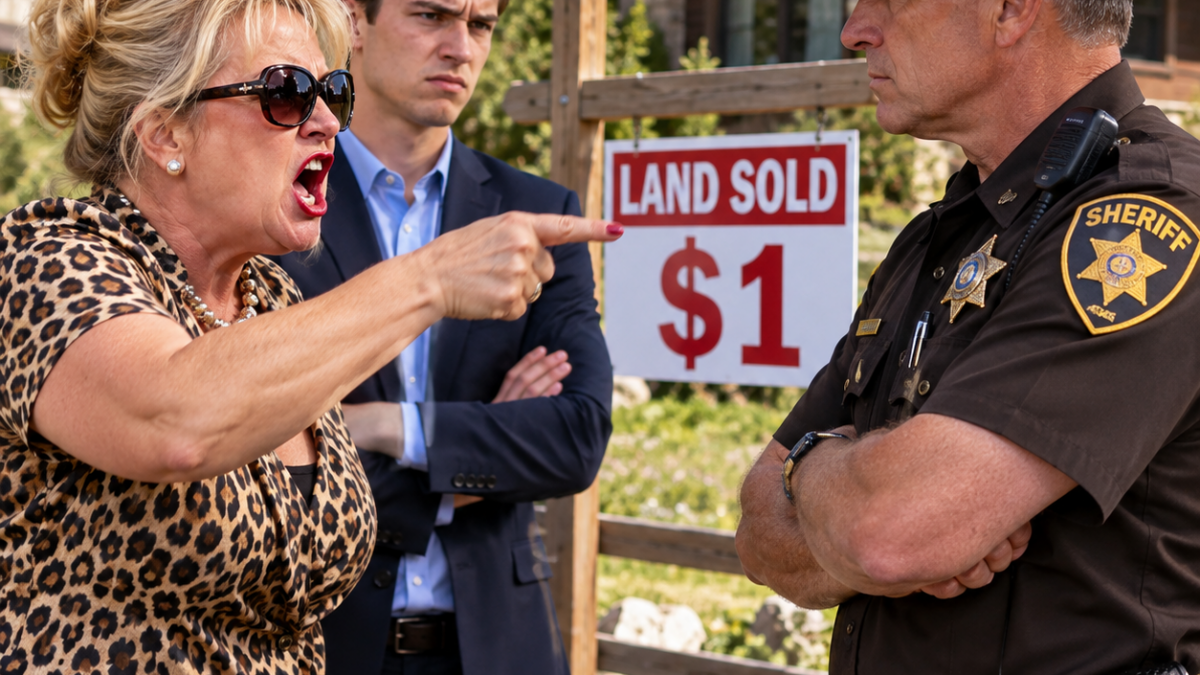
PART 2
That evening, my kitchen table disappeared underneath paperwork.
Julie came in carrying two grocery bags, stopped in the doorway, and looked at the documents spread from one end of the table to the other.
She knew me well enough not to ask whether I was working.
I wasn’t wearing my uniform.
That meant whatever had captured my attention was personal.
She set the bags on the counter.
“What happened?”
“I found something strange.”
“That sentence has never led to a relaxing evening.”
I almost smiled.
“Probably not tonight either.”
She walked over.
I slid the recorded deed toward her.
“Teresa transferred this parcel to Tyler.”
Julie looked at the consideration amount.
“One dollar?”
“Yeah.”
“Her son Tyler?”
“Same one.”
She studied the map.
“Isn’t that the parking area by the south entrance?”
“And the green strip beside it.”
“I thought that belonged to the HOA.”
“So did I.”
She looked at me.
“And?”
“And the original subdivision plat says we were right.”
I showed her the designation.
COMMON AREA — HOA MAINTAINED.
Julie’s expression changed.
“Can she do that?”
“That’s what I’m trying to answer.”
I opened my laptop.
For twelve years I had lived under our HOA’s covenants, conditions, and restrictions without once reading all fifty-three pages.
I had skimmed them when we bought the house.
Signed where the closing attorney told me to sign.
Filed the documents away.
Then I did exactly what most residents did.
I paid my dues.
Mowed my grass.
Kept the fence in decent shape.
And tried not to attract the attention of people who had opinions about shades of beige.
That night, I read every page.
Article 7 finally gave me what I needed.
I read it once.
Then again.
Then I turned the laptop toward Julie.
“Listen to this.”
She leaned against the counter.
I read the provision aloud.
Common areas were held by the association for the benefit of the membership.
No portion could be sold, leased, mortgaged, or otherwise transferred without prior written approval from at least seventy-five percent of the voting membership.
Julie stared at me.
“Seventy-five percent?”
“Yep.”
“Did we vote?”
“No.”
“Maybe we missed something.”
“That’s what I’m checking.”
I opened the meeting-minute archive.
Five years of minutes were available online.
It was tedious.
Painfully tedious.
Pool resurfacing.
Christmas lights.
Fence-height disputes.
Landscape bids.
Parking complaints.
Arguments about whether basketball hoops could remain beside driveways overnight.
One meeting spent almost twenty minutes discussing the acceptable dimensions of political signs.
I searched every document.
Land.
Parcel.
Property.
Transfer.
Sale.
Southwest.
Tyler.
Brooks.
Nothing.
I went backward meeting by meeting.
Still nothing.
Julie made dinner.
I barely touched it.
At around ten, she set a plate beside me and said, “Eat before you turn into one of your own case files.”
I ate without looking away from the screen.
By midnight, I had finished.
No vote.
No ballot.
No recorded discussion.
No authorization.
Nothing.
The official minutes showed that, as far as the membership was concerned, the sale had never happened.
Yet the county recorder’s office showed Tyler Brooks as the new owner.
I sat back.
Julie folded her arms.
“So what does that mean?”
“It means either there’s documentation somewhere else that explains this…”
“Or?”
I looked at the deed.
“Or Teresa signed away property she had no authority to give away.”
Julie’s face tightened.
I immediately held up a hand.
“Appears to have. I’m not accusing anybody yet.”
“You’re doing the cop voice.”
“I’m trying not to make assumptions.”
“That’s probably smart.”
“It’s necessary.”
I had learned something early in my career.
The fastest way to ruin a legitimate concern is to become emotionally attached to a theory before the evidence supports it.
I did not know Teresa had committed a crime.
I did not know Tyler knew anything was improper.
I did not know whether some obscure resolution existed that I simply hadn’t found.
What I knew was narrow.
A common-area parcel had been transferred.
The buyer was the president’s son.
The consideration listed was one dollar.
The governing documents appeared to require seventy-five percent membership approval.
I could find no evidence that approval had occurred.
That was enough to keep looking.
Not enough to convict anyone in my head.
The next question was the county tax history.
I opened the assessor’s database.
For years, the parcel’s tax documents had gone to the association management company.
Association funds had covered the obligations.
This year, the owner field had changed.
Tyler Brooks.
It was real.
Not a draft.
Not an unrecorded agreement.
Not a clerical note waiting for final approval.
The county recognized Tyler as the owner.
I stared at the screen.
Teresa had been president for eight years.
She had access to association letterhead.
Board records.
Corporate documents.
The association seal.
She understood the paperwork better than nearly every homeowner paying dues.
If somebody wanted to make an unauthorized transfer look routine, the system offered a dangerous advantage.
Most people never checked.
Why would they?
When you pay HOA dues, you assume somebody is maintaining the pool.
Paying the landscapers.
Insuring the clubhouse.
Keeping common property in the association’s name.
Nobody wakes up on a Saturday morning and thinks, Maybe I should search the county recorder database to make sure the playground still belongs to us.
Trust fills the space where oversight should be.
That night, I began to understand how expensive that trust could become.
I pulled a yellow legal pad toward me.
At the top I wrote:
**WHAT I KNOW**
Then:
**WHAT I SUSPECT**
Then:
**WHAT I CAN PROVE**
The first column was short.
Public deed.
Common-area designation.
No recorded member vote.
Tyler now listed as owner.
The second column could have filled the page.
I left it blank.
The third column mattered most.
That was where this would live or die.
Julie watched me write.
“What are you going to do?”
I stared at the three headings.
“The one thing Teresa won’t expect.”
“What?”
“I’m not going to confront her.”
Julie raised an eyebrow.
“That wasn’t what I expected either.”
“If I go after her as sheriff, she says I’m abusing my position.”
“Probably.”
“If I go after her as an angry neighbor, she says I’ve got a grudge because of the mailbox.”
Julie actually laughed.
“That would be very Teresa.”
“So I’m doing neither.”
“What does that leave?”
I tapped the deed.
“A homeowner asking questions.”
The next morning, I sat in my home office before sunrise.
Coffee.
Legal pad.
Public websites.
I made a list.
HOA financial statements.
Board resolutions relating to real estate.
Budgets.
Reserve accounts.
Property transfers.
Historical deeds.
Corporate filings.
Anything showing what authority Teresa had been granted.
I drafted an email to the management company.
It was deliberately boring.
No accusation.
No emotion.
No mention that I was sheriff.
I identified myself as a member of the association and requested records I was entitled to inspect.
Three years of financial statements.
Current operating budget.
Board resolutions concerning the acquisition, disposition, sale, lease, or transfer of association-owned property.
I cited the inspection provision referenced in our association materials.
Then I pressed send.
By midmorning, I had an answer.
They would provide the requested documents within ten business days.
Good.
I printed the email.
First rule of any serious dispute:
If it matters, document it.
While I waited, I started going through old HOA communications.
There were hundreds.
Meeting notices I had barely read.
Budget summaries.
Election ballots.
Architectural reminders.
Pool schedules.
Annual disclosures.
The deeper I went, the more embarrassed I became.
I had lived there twelve years and paid thousands upon thousands of dollars into that association.
Yet I could not have named most of the board.
I had rarely attended meetings.
When annual financial summaries arrived, I scanned the dues amount and threw the rest in a drawer.
I had trusted the system because it was easier than understanding it.
I realized something uncomfortable.
If Teresa had been exploiting that apathy, I had helped create the conditions that allowed it.
Not intentionally.
But passively.
That bothered me.
As sheriff, I spent half my career telling citizens to pay attention.
Lock your cars.
Review financial statements.
Watch for unusual transactions.
Document suspicious activity.
Yet at home, I had treated the HOA like an automatic bill.
Julie found me staring at an old budget.
“You okay?”
“I feel stupid.”
“Why?”
“Because this might have been sitting in front of all of us.”
“And?”
“And I never looked.”
She pulled out the chair across from me.
“Richard, people have jobs. Families. Problems. They don’t expect the person volunteering to run the landscaping committee to quietly move property around.”
“She wasn’t just on the landscaping committee.”
“You know what I mean.”
“I should’ve paid attention.”
Julie shook her head.
“Maybe. But paying attention now matters more than punishing yourself for not doing it earlier.”
That was why I married her.
She had a gift for reducing complicated things to the sentence I needed.
Eight days after my request, the management company sent the records.
I downloaded everything.
Balance sheets.
Income statements.
Reserve summaries.
Operating expenses.
Insurance.
Vendor contracts.
Nothing immediately jumped out.
Then I reached page fourteen of the most recent annual report.
One line.
Buried among other non-operating items.
**Land sale proceeds: $1.**
I stared.
Then leaned closer.
Transferred to reserve fund.
One dollar.
That was it.
The transaction hadn’t been hidden from the accounting.
It had been recorded.
Openly.
Casually.
As if selling association real estate for the price of a gas-station coffee were a normal line item.
I printed the page.
Highlighted it.
Placed it behind the deed.
For several minutes I sat there thinking.
Hiding something is one thing.
Recording it in a financial report as though nobody would question it is something else.
That required confidence.
Confidence that residents wouldn’t read closely.
Confidence that board members wouldn’t challenge it.
Confidence that one-dollar land-sale proceeds could sit on page fourteen and attract less attention than a landscaping increase.
I called Jim Brennan.
At that point Jim was only someone I recognized from around the neighborhood.
Retired accountant.
Former board member.
We had exchanged maybe four sentences in twelve years.
I didn’t actually call him that day.
Our real conversation began at the next quarterly meeting.
And that meeting was where Teresa made her first serious mistake.
I arrived fifteen minutes early.
No uniform.
No badge visible.
Jeans.
Button-down shirt.
Notebook.
The clubhouse smelled like industrial carpet cleaner and stale coffee.
Thirty or so homeowners showed up.
For Willow Creek, that was respectable.
Teresa sat at the front with Carol Flores, the board secretary, and Donald Pratt from architectural review.
Teresa wore a burgundy blazer.
Reading glasses.
Stacks of neatly organized papers.
She smiled at everyone entering.
Called residents by name.
Asked one older couple about their granddaughter.
Complimented someone’s new landscaping.
If you had walked into that room knowing nothing else, you would have thought Teresa Brooks represented exactly what residents want in an HOA president.
Organized.
Friendly.
Prepared.
Experienced.
That made what I had found more difficult to reconcile.
People imagine wrongdoing announces itself.
It usually doesn’t.
Sometimes it wears reading glasses and remembers your wife’s roses.
The meeting began.
Previous minutes approved.
Budget report.
Landscaping contract.
Entrance sign repainting.
Parking complaints near the pool.
Teresa moved efficiently.
She was good at controlling a room.
Then open forum arrived.
A woman complained about vehicles blocking a fire lane.
A man asked about pool furniture.
Teresa handled both easily.
Then silence.
I raised my hand.
Teresa looked at me.
For half a second, something changed in her face.
Then the professional smile returned.
“Yes, Mr. Ramos?”
Interesting.
She knew my name without looking at the sign-in sheet.
“I’m hoping you can clarify something.”
“Of course.”
“I was reviewing public property records recently and found a deed involving the southwest common area.”
Her hands stopped moving.
Only briefly.
I continued.
“County records show the parcel containing the overflow parking area and adjacent green space was transferred approximately a month ago.”
A few people looked up.
“To an individual named Tyler Brooks.”
The room became noticeably quieter.
“For one dollar.”
Now everybody was listening.
Teresa placed both hands on the table.
“That was an administrative matter handled appropriately by the board.”
Her answer came too quickly.
Not improvised.
Prepared.
“The legal details are somewhat complex, and I don’t think open forum is the appropriate place to conduct a technical discussion.”
I nodded.
“Okay. Then maybe there’s a simple answer.”
Her jaw tightened almost imperceptibly.
“Our CC&Rs say transfers of common property require seventy-five percent approval of the voting membership.”
Several people began whispering.
“I checked the posted meeting minutes for the last five years and couldn’t find any vote concerning that parcel.”
I kept my voice neutral.
“Was there a vote?”
Teresa leaned back.
“Mr. Ramos, the board has authority to conduct certain administrative transactions without bringing every operational decision before the entire membership.”
“Does that authority override Article 7?”
Carol Flores looked down.
Donald Pratt shifted in his chair.
Teresa smiled.
It wasn’t friendly anymore.
“I appreciate your interest. If you submit your concerns in writing, the management company can provide whatever clarification you’re entitled to receive.”
“I’m happy to do that.”
“Excellent.”
She looked at her agenda.
“Now, if there are no other—”
“I have the same question.”
A voice from the back.
I turned.
Jim Brennan stood.
White hair.
Wire-rimmed glasses.
Slow movements.
The confidence of a man who had spent forty years in rooms where numbers mattered more than volume.
Teresa looked genuinely unhappy to see him standing.
“Jim.”
“I served on this board.”
“I remember.”
“I know the bylaws.”
“Of course.”
Jim put his hands in his pockets.
“Common property transfers require a member vote.”
Teresa said nothing.
“That isn’t an administrative technicality.”
“Jim, there are details—”
“Then explain the details.”
Her eyes narrowed.
“This isn’t the appropriate setting.”
Jim looked around the clubhouse.
“This is an HOA meeting.”
A few residents nodded.
“We’re HOA members.”
More nods.
“They’re asking what happened to HOA property.”
He shrugged.
“Seems like a pretty appropriate setting.”
Teresa looked toward Carol.
Carol suddenly became fascinated by her paperwork.
Donald crossed his arms.
Nobody rescued her.
Jim continued.
“So let’s keep this simple. Either the membership voted and the vote was not properly recorded, or the vote occurred without proper notice, or there was no vote.”
Silence.
“Which was it?”
Three seconds.
Four.
Five.
Teresa straightened her papers.
“I think the responsible thing to do is table this matter until the board can provide a complete response.”
Jim’s expression didn’t change.
Teresa looked at the room.
“We’ll review the relevant records and follow up. Meeting adjourned.”
That was it.
No motion.
No opportunity for more questions.
She closed the meeting.
People immediately began talking.
Teresa gathered her things much faster than usual.
She spoke briefly to Carol.
Then left.
She never looked at me.
In the parking lot, four residents approached.
“What exactly did you find?”
“Did she really sell the parking lot?”
“Can they do that?”
“Who is Tyler?”
I refused to speculate.
“I found a recorded deed. That’s all I’m prepared to say until the documents are clearer.”
Jim came toward me.
“You’re Richard Ramos.”
“That’s right.”
He shook my hand.
“Jim Brennan.”
“I know.”
His eyebrows lifted.
“Good reputation or bad?”
“Retired CPA.”
“Could be worse.”
He smiled.
Then became serious.
“You have copies?”
“Of the deed?”
“And the financial entry.”
I studied him.
“How’d you know about the financial entry?”
“I heard you requested association records.”
“That traveled fast.”
“Everything travels fast around here.”
He handed me a business card.
“If you want another set of eyes on the numbers, call me.”
“Why?”
Jim looked toward the clubhouse door Teresa had disappeared through.
“Because I’ve been uneasy about the way she runs things for years.”
“What specifically?”
“That was the problem.”
He looked back at me.
“Nothing specific.”
Then he tapped the card.
“Until now.”
The following Saturday, I went to Jim’s house.
His brick ranch smelled faintly of coffee, sawdust, and machine oil.
His garage contained a workbench covered with tools arranged more neatly than most operating rooms.
We sat at his kitchen table.
Two laptops.
Printer.
Property records.
Coffee.
Jim started with the parcel I had found.
He reviewed the chain of title.
Checked the adjacent parcel numbers.
Then stopped.
“That’s strange.”
“What?”
He pointed to an older entry.
“Mortgage satisfaction on an adjacent parcel.”
“So?”
“Common areas generally aren’t where I’d expect to see this structure.”
He opened another record.
Then another.
His expression slowly changed.
“Richard.”
“What?”
“You need to see this.”
The adjacent strip along the southern boundary had been transferred in 2021.
Quitclaim deed.
Grantor: association.
Grantee: Brooks Property Holdings LLC.
Nominal consideration.
“Brooks Property Holdings?”
“Give me a minute.”
Jim opened the Secretary of State database.
Registered agent:
Tyler Brooks.
Business address:
Teresa Brooks’s house.
Neither of us spoke.
Jim kept searching.
Then he found another.
2019.
A small section of green space near the community entrance.
Same recipient.
Brooks Property Holdings.
Another nominal transfer.
Jim sat back.
“One parcel is a question.”
He looked at me.
“Three is a pattern.”
I nodded.
“Careful.”
“I know.”
He pointed at the screen.
“I’m talking accounting pattern, not criminal intent.”
“Agreed.”
We printed each record.
2019.
2021.
Recent transfer.
Three separate pieces of common property.
Three transfers.
Three nominal payments.
No corresponding membership votes we could find.
Jim pulled county valuations.
He calculated conservatively.
“Between one hundred eighty and two hundred twenty thousand dollars.”
I stared at him.
“For all three?”
“Combined market range, based on available assessments and adjacent values.”
“And recorded sale proceeds?”
Jim looked at the printouts.
“Three dollars.”
I laughed once.
A humorless sound.
Jim shook his head.
“Three dollars.”
He reached for his coffee.
“This is something we used to call salami tactics.”
“What?”
“You don’t take the whole thing.”
He sliced the air with two fingers.
“You take thin pieces.”
Another motion.
“Small enough that each individual piece seems unimportant.”
He tapped the maps.
“South strip.”
Tap.
“Entrance green.”
Tap.
“Overflow parcel.”
Then he looked at me.
“Nobody notices the neighborhood changing because no single cut looks catastrophic.”
I stared at the three maps lined up side by side.
Twenty years in law enforcement had taught me how quickly anger can become dangerous to judgment.
I felt it rising anyway.
Not because Teresa had once made me repaint a mailbox.
That seemed ridiculous now.
I was angry because I imagined the people paying dues.
Mrs. Ellis, who lived on Social Security and complained every year when assessments increased.
The Parkers, raising three children.
An older veteran who still mailed his dues by check because he didn’t trust online banking.
Two hundred thirty-seven households.
People who assumed common property meant common property.
Jim must have seen something in my expression.
“Don’t make this personal.”
“It already is.”
“Then don’t let it become personal in the paperwork.”
That sentence mattered.
He was right.
I took a breath.
“What do we have?”
Jim started listing.
“Recorded transfers.”
I wrote it down.
“Corporate registration linking the receiving LLC to Tyler.”
Next line.
“Association financial statements recording nominal sale proceeds.”
Next.
“No membership votes in available minutes.”
Next.
“Original plats identifying the parcels as common property.”
Next.
“Estimated value.”
I put down the pen.
“What we don’t have?”
Jim nodded approvingly.
“Intent.”
“Exactly.”
“Internal communications.”
“Right.”
“Board resolutions that may exist but aren’t posted.”
“Correct.”
“Any explanation from Tyler.”
“Correct.”
“Any explanation from Teresa beyond ‘administrative.’”
He smiled.
“Very correct.”
I closed the folder.
“This goes to the district attorney.”
Jim nodded.
“Good.”
“Not my office.”
“Better.”
“My connection to Teresa gives her an argument.”
“A loud one.”
“And she’ll use it.”
Jim leaned back.
“She’ll do more than use it.”
“What do you mean?”
“The moment Teresa realizes how much you’ve found, she won’t argue about the deeds.”
He took off his glasses.
“She’ll argue about you.”
I already knew he was right.
“She’ll make it about your badge.”
“Yes.”
“Your mailbox dispute.”
“Yes.”
“Your personality if necessary.”
Jim put his glasses back on.
“People defend the story they can win.”
I looked down at the deed.
“And she can’t win the documents.”
“Not easily.”
I submitted the referral.
No flourish.
No demand.
No declaration that Teresa was guilty.
I prepared a packet.
Cover memo explaining I was submitting information as a private homeowner and witness.
Public deed records.
Plat maps.
Corporate registration.
HOA financial statements.
CC&R provisions.
Meeting-minute searches.
Timeline.
I made one thing explicit.
I had intentionally avoided using law-enforcement databases or nonpublic information.
Everything in the packet could be obtained by an ordinary citizen.
I wanted independent prosecutors to decide whether the facts justified further inquiry.
Then I waited.
Three days later, Teresa struck back.
Monday morning.
My phone buzzed.
HOA distribution list.
Every household.
Subject:
**URGENT — PROTECTING OUR COMMUNITY FROM ABUSE OF POWER**
I stared at it.
Jim had predicted exactly what would happen.
I opened the email.
Teresa described the quarterly meeting as a public interrogation.
She accused me of using my professional status to intimidate a volunteer board member.
She said her family had been harassed.
She called the questions a personal vendetta disguised as community concern.
She warned residents against allowing government authority to interfere with HOA governance.
What she didn’t do was explain the deeds.
Not one sentence explaining why three pieces of common property had gone to her son or his LLC.
Nothing about the required vote.
Nothing about the three dollars.
Nothing about why no authorization appeared in meeting records.
Just me.
My job.
My alleged motives.
My supposed vendetta.
Julie read over my shoulder.
“Wow.”
“Yeah.”
“She really sent this to everyone?”
“All two hundred thirty-seven households.”
Julie shook her head.
“You going to answer?”
My finger was already near Reply All.
I could have destroyed her argument in three paragraphs.
Not emotionally.
Factually.
Three deeds.
Three transfers.
Three dollars.
No recorded votes.
I imagined attaching every document.
Let the neighborhood decide.
Then I remembered Jim’s warning.
People defend the story they can win.
If I replied, Teresa got exactly what she wanted.
A public fight between the HOA president and the sheriff.
No longer deeds.
No longer property.
No longer governance.
Just personalities.
I closed the draft.
“No.”
Julie looked surprised.
“No?”
“No.”
“What are you going to do?”
“Forward it.”
“To who?”
“The DA.”
I sent one sentence.
**This communication was distributed by Mrs. Brooks to the full HOA membership today and may be relevant to the referral previously submitted. Providing it for your review.**
Then I closed my email.
Julie smiled.
“What?”
“That probably annoyed her more than a reply.”
“Probably.”
By noon, the neighborhood email chain was chaos.
Some residents defended Teresa.
She has volunteered for years.
This feels unfair.
Why is the sheriff involved in HOA matters?
Others asked the obvious questions.
Why hasn’t Teresa explained the transactions?
Why was land sold for $1?
Where was the vote?
Jim responded.
His email was restrained.
No accusation.
He simply wrote that legitimate governance questions existed and that transparent documentation could resolve them.
Patricia Vaughn wrote next.
If everything was legitimate, she asked, why not release the approvals?
That question spread.
Teresa did not answer.
Carol Flores sent a generic board message.
The board was reviewing the matter internally.
Updates would be provided at the appropriate time.
That phrase—appropriate time—became almost funny.
Apparently the appropriate time to transfer property was immediately.
The appropriate time to explain it was always later.
By Wednesday, several neighbors contacted me privately.
One remembered unexplained landscaping changes near the eastern green.
Another recalled asking about reserve allocations years earlier and receiving vague answers.
A third said he had copies of old newsletters mentioning “future optimization” of unused land.
I thanked them.
I told them to preserve whatever they had.
I did not tell them my theories.
I did not recruit them.
I did not create a neighborhood campaign.
The referral was now outside my hands.
Thursday evening, the district attorney’s office called.
I stepped onto the back porch.
“Mr. Ramos?”
“Yes.”
“This is Assistant District Attorney Margaret Chen.”
I recognized the name.
“We’ve reviewed the materials you submitted.”
My grip tightened slightly around the phone.
“We are opening a formal investigation concerning the property transfers.”
I said nothing for a second.
Chen continued.
“We would like a statement from you strictly in your capacity as a witness and homeowner.”
“Understood.”
“Tomorrow afternoon?”
“I’ll be there.”
She gave me the details.
Then paused.
“One additional matter.”
“Yes?”
“We also received a complaint from Mrs. Brooks alleging harassment and abuse of authority.”
I almost smiled.
Not because it was funny.
Because it was predictable.
Chen’s tone remained professional.
“That complaint will be reviewed independently from the property matter.”
“That’s exactly how it should be handled.”
“Good.”
I looked across the backyard.
The sun was disappearing behind the roofs.
Chen said, “For the record, please continue avoiding any investigative action through your office.”
“I haven’t used any.”
“We’re aware of what you’ve represented. I’m simply making expectations clear.”
“You won’t have a problem from me.”
“Thank you.”
After the call, I stayed on the porch.
Julie eventually came outside.
“Well?”
“They’re opening a case.”
She sat beside me.
“And Teresa’s complaint?”
“They’re reviewing that too.”
Julie looked concerned.
“You okay with that?”
“I want them to.”
“Really?”
“If she says I abused my authority, I want somebody independent looking at it.”
She studied my face.
“You’re not worried?”
“I’m always worried when my career gets mentioned in a complaint.”
That was the truth.
Even nonsense allegations can create consequences.
Headlines don’t always wait for findings.
Rumors move faster than internal reviews.
I could already imagine it.
COUNTY SHERIFF ACCUSED OF TARGETING HOA PRESIDENT.
The facts might appear four paragraphs later.
Maybe never.
Julie took my hand.
“You didn’t use your office.”
“No.”
“You didn’t access private records.”
“No.”
“You didn’t threaten her.”
“No.”
“Then breathe.”
I laughed softly.
“You make that sound easy.”
“It isn’t.”
She squeezed my hand.
“But you’re still going to do it.”
The next six weeks tested every ounce of patience I had.
I gave my statement.
Assistant DA Chen sat across from me with an investigator named Torres.
Torres had the expression of somebody who had spent his career learning that silence makes people talk.
Chen started at the beginning.
“Why were you looking at property records?”
“Waiting for refinance paperwork.”
“Were you conducting law-enforcement activity?”
“No.”
“Did you use credentials?”
“No.”
“Did you request nonpublic information?”
“No.”
“Did anyone at the recorder’s office provide special access because of your position?”
“No.”
“Had you previously had conflicts with Mrs. Brooks?”
“Yes.”
“What kind?”
“HOA violation notices.”
“Anything serious?”
“She cited the color of my mailbox post.”
Torres looked up for the first time.
“The color?”
“Wrong beige.”
He wrote something.
Chen’s mouth almost moved.
She recovered.
“Did that dispute influence your decision to research her property dealings?”
“No. I didn’t know any dealings existed until her name appeared in the public database.”
“Why didn’t you investigate through the sheriff’s office after seeing the deed?”
“Conflict.”
“Explain.”
“I live in the association. I pay dues. Teresa had taken action against me before. Any official investigation led by me could be characterized as retaliation.”
“So what did you do?”
“Used public records and association inspection rights.”
“Why?”
“So whatever I found could stand without my badge.”
Torres stopped writing.
He looked at me.
“That was smart.”
Chen glanced at him.
He returned to his notes.
They already had documents I hadn’t found.
I could tell from the questions.
Vendor correspondence.
Internal record requests.
Additional title details.
They didn’t share the substance.
Nor should they have.
Before I left, I asked Chen one question.
“Is Teresa’s complaint against me part of this interview?”
“Separate review.”
“Understood.”
“We’ll contact you if we need anything further.”
I went home.
Then waited.
That might have been the hardest part.
When you’re used to being responsible for investigations, inactivity feels unnatural.
I had spent my career following leads.
Interviewing people.
Requesting evidence.
Making decisions.
Now I had to do nothing.
Every instinct wanted updates.
Every professional relationship I had could probably have produced information.
I used none of them.
That line mattered.
I went to work.
Came home.
Had dinner with Julie.
Mowed the yard.
Passed Teresa’s house without slowing down.
At HOA meetings, I asked no additional questions concerning the investigation.
Teresa attended fewer public events.
When she did appear, conversations stopped.
She still held the title of president, but the room no longer belonged entirely to her.
Questions had changed the atmosphere.
Residents began asking for invoices.
Reserve statements.
Contract details.
Nothing dramatic.
That was precisely why it mattered.
Power rarely collapses in one cinematic moment.
Sometimes it leaks away question by question.
Teresa tried to rebuild support.
She called longtime residents.
She described herself as the victim of a politically motivated attack.
A few believed her.
One neighbor stopped me near the mailbox.
“Richard.”
“Hey, Alan.”
“You really think all this is necessary?”
“What do you mean?”
“Teresa’s done a lot for this neighborhood.”
“I don’t dispute that.”
“Then why drag her family through this?”
I kept my voice calm.
“I didn’t charge anybody.”
“But you started it.”
“I found a deed.”
“You know what I mean.”
“Do you think community property should be transferred without the required vote?”
Alan shifted.
“I don’t know all the details.”
“Neither do I.”
He frowned.
“Then why accuse her?”
“I haven’t.”
“The DA is investigating.”
“That’s their decision.”
He looked frustrated.
“It just feels extreme.”
I nodded.
“I understand.”
“You do?”
“Yeah.”
I looked toward the southwest green space.
“If everything was authorized, the records will show that. Then she deserves to be cleared publicly.”
Alan didn’t answer.
“And if it wasn’t authorized?”
He looked away.
“That matters too.”
He left without another word.
I wasn’t angry with him.
People hate uncertainty.
Teresa had been familiar.
I was disrupting familiarity.
For years she had coordinated holiday decorations, arranged landscaping, handled complaints, and presided over meetings.
People didn’t want to believe that somebody who remembered their children’s names might have misused their trust.
Neither did I.
One night I admitted that to Julie.
We were in bed.
Lights off.
“I keep thinking maybe there’s an explanation.”
Julie rolled toward me.
“Do you believe there is?”
“I don’t know.”
“That isn’t what I asked.”
I stared at the ceiling.
“I want there to be.”
“Why?”
“Because the alternative means I lived three streets away from this for twelve years.”
Julie was silent.
“I waved to her.”
“So?”
“She complimented your roses.”
“That proves she has eyes.”
I laughed despite myself.
Julie continued.
“People are complicated, Richard. Doing good things doesn’t make someone incapable of doing a bad thing.”
“I know.”
“And finding questionable records doesn’t mean every good thing she did was fake.”
“I know that too.”
“Then stop trying to make her either a monster or a saint.”
I turned toward her.
“You ever consider changing careers?”
“No.”
“Good.”
“Why?”
“You’d be terrifying in an interrogation room.”
She smiled.
“Go to sleep, Sheriff.”
Early spring arrived.
Cold mornings.
Trees beginning to bud.
The investigation had been open long enough that some neighbors assumed nothing would happen.
Teresa started appearing more frequently.
She smiled again.
She spoke confidently at the mailbox.
A few supporters whispered that the whole thing was collapsing.
I said nothing.
Then Wednesday morning happened.
I was in my office when one of my deputies knocked.
“Sheriff.”
“Yeah?”
He hesitated.
“You seen the news?”
My stomach tightened.
“No.”
He held out his phone.
The headline was simple.
**HOA PRESIDENT CHARGED IN PROPERTY TRANSFER CASE**
For several seconds, I read without moving.
Teresa Brooks.
Five counts listed in the charging announcement.
Three related to the property transfers.
One alleging fraudulent filing.
One relating to her fiduciary role.
Tyler faced charges connected to receiving the property and alleged conspiracy.
Estimated total property value:
Approximately $195,000.
I handed the phone back.
My deputy watched me.
“You okay?”
“Yeah.”
“You knew this was coming?”
“No.”
That was technically true.
I knew an investigation existed.
I didn’t know what conclusion prosecutors would reach.
He nodded.
“Newsroom’s already calling.”
“Refer every question to the DA.”
“Nothing from you?”
“Nothing.”
He started to leave.
“Tom.”
He turned.
“This does not become sheriff’s office gossip.”
His expression hardened professionally.
“Understood.”
“And nobody contacts anybody in the case.”
“Yes, sir.”
After he left, I closed the office door.
Then I sat alone.
For months, people had told me Teresa was being targeted.
Teresa herself had accused me of abusing power.
Now an independent office had reviewed records and decided probable cause existed for charges.
I expected to feel vindicated.
Instead, I felt sad.
That surprised me.
I called Julie.
“You saw?”
“Just now.”
Neither of us spoke for a second.
Finally she said, “How do you feel?”
“Tired.”
“That’s becoming your answer.”
“It’s still accurate.”
Jim called twenty minutes later.
His voice was quieter than usual.
“They charged Tyler too.”
“I saw.”
“Three parcels.”
“Yeah.”
“So it was exactly—”
“Jim.”
He stopped.
“Don’t say exactly anything yet.”
There was silence.
Then he exhaled.
“Right.”
“Charges aren’t convictions.”
“I know.”
“We let the process finish.”
“I know.”
His voice softened.
“But Richard?”
“Yeah?”
“Thank you for looking.”
I stared at the folder still sitting in the corner of my office.
“I almost didn’t.”
“But you did.”
News spread through the subdivision before lunchtime.
By evening, television crews parked near the entrance.
Residents who had ignored HOA meetings for years suddenly had opinions.
Some were furious.
Some embarrassed.
Some defended Teresa.
Some acted as though they had suspected her all along.
That last group annoyed Jim more than anything.
At the next coffee we shared, he said, “Half these people are telling reporters they always knew.”
“You?”
“I didn’t know.”
“Neither did I.”
“I suspected governance was sloppy.”
“Different thing.”
“Exactly.”
He shook his head.
“If we’d known, we should’ve done something.”
“People rewrite memory when the truth becomes uncomfortable.”
Jim pointed at me.
“That’s why you’re annoying.”
“What?”
“You say things like that before breakfast.”
Two weeks later came the arraignment.
I attended as a citizen.
No uniform.
No reserved seat.
No official role.
Jim sat beside me.
Several homeowners filled the back rows.
The courtroom was smaller than people imagine.
Wood paneling.
Fluorescent lights.
American flag.
A judge working through a docket.
Then Teresa entered.
I barely recognized her at first.
Gray dress.
No burgundy blazer.
No jewelry.
Her attorney stayed close.
Tyler entered separately.
Young.
Tense.
Eyes down.
In HOA meetings, Teresa had always seemed to grow larger behind a microphone.
In court, everybody looks ordinary.
That’s one of the strange equalizers of the justice system.
Titles become names.
Arguments become evidence.
Confidence becomes procedure.
The judge read the charges.
Not guilty pleas were entered.
Bail conditions were set.
The hearing itself was almost disappointingly routine.
No dramatic confession.
No shouting.
No final confrontation.
Just lawyers.
Dates.
Conditions.
Paperwork.
Afterward, news cameras waited outside.
Teresa’s attorney guided her toward a car.
Reporters called questions.
“Mrs. Brooks, did homeowners approve the transfers?”
“Were the properties intended for your son?”
“Do you have a statement?”
She said nothing.
Tyler followed later.
He blocked his face from cameras and left in a separate vehicle.
Jim and I remained on the courthouse steps.
He put his hands in his pockets.
“How do you feel?”
There it was again.
That question.
I watched Teresa’s car disappear.
“I thought I’d feel better.”
“You don’t?”
“I feel like somebody broke something that belonged to all of us.”
“The land?”
“Trust.”
Jim nodded.
“Harder to deed that back.”
I looked at him.
“That was good.”
“I’ve been saving it.”
We walked toward the parking lot.
The legal case stretched for months.
Motions.
Discovery.
Requests.
Delays.
Defense challenges.
The neighborhood lived in strange suspension.
Teresa could no longer operate normally as president.
Carol Flores eventually resigned, citing health concerns.
Donald Pratt kept insisting he had known nothing about the transfers.
Maybe he hadn’t.
Investigators had to determine that.
I stayed out.
But emotionally, staying out became harder.
Teresa’s supporters kept insisting my role as sheriff had caused the prosecution.
One evening I opened an anonymous letter mailed to my house.
It read:
**YOU RUINED A WOMAN’S LIFE OVER HOA POLITICS. HOPE YOU’RE PROUD.**
Julie found me holding it.
“Throw it away.”
“No.”
“Why?”
“Documentation.”
She sighed.
“Of course.”
I placed it in a folder.
Then sat at the kitchen table.
Julie poured coffee.
“You know what bothers me?”
“What?”
“Part of me is angry.”
“At the letter?”
“At her.”
“Teresa?”
“Yes.”
I looked at her.
Julie rarely spoke harshly about anyone.
“She knew what your job meant to you.”
I said nothing.
“She knew accusing you of abusing it could hurt your career.”
“That’s why independent review mattered.”
“I understand.”
She folded her arms.
“But she wasn’t just defending herself. She was willing to turn your integrity into the distraction.”
I stared at the coffee.
“I wanted to answer that email.”
“I remember.”
“I wanted to send everything.”
“I know.”
“And sometimes I still wish I had.”
Julie shook her head.
“No.”
“No?”
“She wanted a fight.”
“She got one.”
“No.”
Julie leaned closer.
“She got an audit trail.”
I looked up.
“That was better.”
Eight months after the arraignment, we learned there would be no trial.
Teresa accepted a plea agreement shortly before jury selection.
I read the announcement twice.
Guilty plea to one felony theft count.
Guilty plea to breach of fiduciary duty.
Other counts dismissed under the agreement.
Restitution.
Probation.
Permanent restriction from serving on an HOA board in the state.
No jail sentence.
That last part immediately divided the neighborhood.
Some people were furious.
“Five years probation?” one neighbor said at the mailbox. “That’s it?”
“The judge considered the circumstances.”
“She took nearly two hundred thousand dollars in property.”
“The properties can be returned.”
“So?”
I understood his frustration.
Accountability rarely matches the punishment people imagine while angry.
But I had learned long ago that satisfaction and justice are not the same thing.
The criminal system is built around law, evidence, precedent, mitigation, agreements, and recoverability.
Not neighborhood outrage.
Teresa was ordered to pay $185,000 in restitution to the association.
Her conviction became public record.
Her ability to control another HOA ended.
Most importantly to residents, the land was recoverable.
Tyler’s case resolved separately.
He accepted a misdemeanor receiving-stolen-property plea in exchange for cooperation.
Two years probation.
Community service.
Brooks Property Holdings was dissolved.
Then came the moment that mattered to me more than sentencing.
The deeds were reversed.
All three parcels returned to the association.
I drove past the southwest green space after receiving the notice.
Nothing looked different.
Grass.
Trees.
Parking pavement.
A kid riding a bicycle.
A father throwing a football with his daughter.
There was no sign saying:
RECOVERED PROPERTY.
No ceremony.
No ribbon.
But I parked anyway.
I got out.
Walked to the edge of the grass.
For years, families had paid to maintain it.
Then, on paper, it had quietly stopped belonging to them.
Now it belonged to them again.
I heard somebody behind me.
Jim.
“You stalking me?”
He smiled.
“I was going to ask you the same thing.”
He walked beside me.
“Title recorded this morning.”
“I heard.”
“Association is officially back on all three.”
“Good.”
Jim looked around.
“Funny, isn’t it?”
“What?”
“Almost two hundred thousand dollars of controversy.”
He kicked lightly at the grass.
“Looks like grass.”
“It was never about the grass.”
“No.”
He watched the kids.
“It was about whether people elected to manage something understand that managing isn’t owning.”
That stayed with me.
The HOA scheduled a special meeting one month after sentencing.
I had attended plenty of meetings by then.
This one felt different before it began.
The clubhouse was packed.
Not thirty people.
Not forty.
Residents stood along the walls.
Extra chairs had to be brought in.
People who previously couldn’t identify the HOA president now carried copies of the bylaws.
That’s what a crisis does.
It converts apathy into attention.
Sometimes too late.
Sometimes exactly when needed.
Teresa wasn’t there.
Neither was Tyler.
Carol had resigned.
Donald and the remaining board members sat at the front.
Jim had prepared proposed governance reforms.
He had asked me for input.
I refused to write them.
“Why?” he’d asked.
“Because the sheriff shouldn’t design the neighborhood’s government.”
“You’re also a homeowner.”
“Then I’ll vote.”
He understood.
The first proposal strengthened the existing seventy-five-percent requirement.
Any future property transaction involving common assets would require advance written notice and a properly documented membership ballot.
Second:
Independent review before any transfer.
Third:
Quarterly financial statements reviewed by a rotating homeowner committee.
Fourth:
Additional disclosure requirements for transactions involving relatives or entities linked to board members.
Fifth:
A whistleblower protection rule preventing retaliation against members who reported suspected financial or governance problems.
Each proposal was discussed.
For once, the meeting took forever for the right reasons.
People asked questions.
Jim answered them.
Where he didn’t know the answer, he said so.
That alone was refreshing.
Patricia Vaughn stood.
“I have one.”
Jim nodded.
“Go ahead.”
“How do we stop this from happening again when five years from now everyone gets comfortable and stops attending meetings?”
The room quieted.
That was the best question of the night.
Jim looked around.
“You don’t.”
People frowned.
He continued.
“No rule prevents human beings from becoming complacent.”
He held up the proposed procedures.
“These make misconduct harder.”
He pointed toward the residents.
“You make it less likely by paying attention.”
An older woman raised her hand.
“So the answer is we all have homework?”
Laughter.
Jim smiled.
“Basically.”
The final amendments passed with overwhelming support.
Eighty-three percent approval.
After the votes, Donald called for nominations for interim president.
Somebody nominated Jim.
He immediately shook his head.
“No.”
Half the room laughed.
The nomination was seconded.
Jim turned toward me.
I raised both hands.
“Don’t look at me.”
“You did this.”
“I found a deed.”
“You ruined retirement.”
“I thought accountants liked meetings.”
“That’s a vicious stereotype.”
He was elected anyway.
Afterward, he caught me near the door.
“I blame you.”
“Put it in the minutes.”
“I might.”
“You’ll do fine.”
“I’d rather be fishing.”
“Then run efficient meetings.”
Jim laughed.
He became exactly the kind of president our association needed at that moment.
Not charismatic.
Not controlling.
Not interested in building personal loyalty.
He answered emails.
Published documents.
Explained budgets.
When somebody asked a question he couldn’t answer, he said, “I don’t know. I’ll find out.”
It was astonishing how revolutionary those words felt after eight years.
The neighborhood healed slowly.
There was no magical reset.
Some residents still defended Teresa.
One woman told me she believed Teresa had “made a paperwork mistake.”
I didn’t argue.
The guilty plea was public.
The deeds were public.
People were entitled to process those facts however they wanted.
Others swung too far in the opposite direction.
Suddenly every landscaping invoice became suspicious.
Every contractor was accused of being someone’s cousin.
Every expense triggered conspiracy theories.
At one meeting, a man spent fifteen minutes demanding an investigation into why pool chemicals had increased in price.
Jim finally said, “Because pool chemicals increased in price.”
The room laughed.
Trust had been damaged.
Distrust wasn’t automatically wisdom.
That became another lesson.
Oversight should be skeptical.
It should not be paranoid.
Patricia stopped me at the mailbox several weeks after the reforms passed.
She held a stack of letters.
“Richard.”
“Hey.”
“I’ve been meaning to thank you.”
“For what?”
“For not letting it go.”
“I almost did.”
“But you didn’t.”
I shrugged.
“I saw something that didn’t make sense.”
“People see things that don’t make sense every day.”
She tucked the mail under her arm.
“Most tell themselves someone else will handle it.”
I looked toward the clubhouse.
“Someone else eventually did handle it.”
“You brought it to them.”
“That’s different from handling it myself.”
Patricia smiled.
“You’re really committed to that distinction.”
“I have to be.”
“Because you’re sheriff?”
“Because power gets dangerous when people stop caring about distinctions.”
She considered that.
Then nodded.
“I wish Teresa had understood that.”
So did I.
That evening Julie was waiting on the porch.
Two glasses of iced tea.
One for her.
One sweating on the railing beside my chair.
I sat down.
She handed it to me.
“Patricia corner you?”
“She thanked me.”
“You hate being thanked.”
“I don’t hate it.”
“You make the same face you make when somebody sings happy birthday.”
“That song is too long.”
Julie laughed.
For a few minutes we watched people walk dogs.
A boy rode past on a scooter.
Somebody was grilling.
Normal life.
Then I said, “You know what’s bothering me?”
“That there hasn’t been a crisis in twelve minutes?”
“Funny.”
She waited.
“I keep thinking about how close this came to never being found.”
Julie didn’t answer.
“If the refinance paperwork had been faster…”
“You wouldn’t have checked.”
“If I had scrolled my phone instead…”
“You wouldn’t have checked.”
“If Teresa’s name had been five records lower…”
“You might not have checked.”
“If I had seen one dollar and assumed family transfer…”
Julie turned toward me.
“But you didn’t.”
“I know.”
“Richard.”
“What?”
“You’re doing that thing.”
“What thing?”
“Trying to become responsible for alternate universes.”
I smiled faintly.
“It’s a professional condition.”
“No.”
She took a drink.
“You saw it.”
“Yeah.”
“You checked it.”
“Yeah.”
“You didn’t use your badge.”
“No.”
“You gave it to an independent office.”
“Yes.”
“They investigated.”
“Yes.”
“The case went through court.”
“Yes.”
“The land came back.”
“Yes.”
She leaned back.
“Then maybe, for one evening, you’re allowed to let the story end.”
I stared down the street.
“I don’t think it ends.”
“Why not?”
“Because the real problem wasn’t Teresa.”
Julie frowned.
“That’s generous.”
“I don’t mean she wasn’t responsible.”
“Okay.”
“The problem was that one person had too much trust and too little oversight.”
Julie nodded slowly.
“And hundreds of us accepted that.”
“So what now?”
“We remember.”
Months passed.
The south parking area hosted another community garage sale.
I went down Saturday morning.
Not as sheriff.
Just Richard.
Julie had convinced me to sell several boxes of things that had apparently been “taking up space for years.”
I disputed the characterization.
She had receipts.
Jim wandered over carrying coffee.
He wore a baseball cap and looked much happier than he ever did behind the HOA table.
“How much for that drill?”
“Not for sale.”
“It’s on the sale table.”
“Julie put it there.”
“So it’s for sale.”
“It is not.”
Julie called from behind me.
“Twenty dollars!”
“Traitor.”
Jim handed her twenty.
I took the drill off the table.
“No.”
Jim laughed.
“You’re abusing your authority.”
I stared at him.
He immediately raised both hands.
“Too soon?”
Julie burst out laughing.
Even I had to smile.
There was something healing about being able to joke again.
Not about the damage.
Not about the charges.
About ourselves.
At noon, I looked across the grass.
Children running.
Folding tables.
Neighbors talking.
Cars filling the overflow spaces.
For years, that parcel had just been background.
Then it became evidence.
Then contested property.
Then a symbol of betrayal.
Now it was becoming background again.
Maybe that was the best possible outcome.
Common property should be ordinary.
It should be so reliably protected that nobody needs to think about whether it still belongs to them.
Jim walked beside me.
“You know what I found yesterday?”
“That sounds dangerous.”
“The association’s first property inventory.”
“First ever?”
“Apparently.”
“And?”
“We own exactly what we think we own.”
“That should be a boring sentence.”
“It was the happiest boring sentence of my week.”
I nodded.
“Good.”
He sipped his coffee.
“Your mailbox is still the wrong beige, by the way.”
I stared at him.
“You wouldn’t.”
“I have standards.”
“I’ll campaign against you.”
“I have eighty-three percent support.”
“You’ve become drunk with power.”
Julie laughed from the table.
For a moment, everything felt normal.
Then an older resident approached me.
His name was Frank.
I’d seen him at meetings but never spoken much.
“Sheriff?”
“Richard’s fine.”
“Can I ask you something?”
“Sure.”
He looked toward the green space.
“Was this revenge?”
The question surprised me.
“What do you mean?”
“Teresa cited you before.”
“Yes.”
“Then you found the deed.”
“Yes.”
“Some people still say you went after her because she embarrassed you.”
I thought carefully.
“I was angry.”
Frank waited.
“When I saw the first transfer, I was angry.”
“At Teresa?”
“At what the document appeared to show.”
“That’s not really an answer.”
“No.”
I looked at him.
“So here’s the real one.”
Frank listened.
“Revenge would have been using my office to make her life difficult because she annoyed me.”
He nodded.
“Revenge would have been threatening her.”
Another nod.
“Revenge would have been leaking information, embarrassing her publicly, or deciding she was guilty before anybody independent reviewed the evidence.”
“And you didn’t?”
“No.”
“I asked a question at a meeting. I gathered public records. Then I handed them to prosecutors and stepped aside.”
Frank looked toward Jim.
“So you don’t think of it as revenge.”
I shook my head.
“The best answer I can give you is this: I wanted accountability more than I wanted satisfaction.”
He was quiet.
Then held out his hand.
“Fair enough.”
We shook.
As he walked away, his question stayed with me.
Was there satisfaction?
Yes.
I’m not going to pretend I felt nothing when Teresa’s accusation against me failed to derail the case.
I’m not going to pretend there wasn’t a part of me that remembered the beige-mailbox violation when I saw nearly two hundred thousand dollars in community property returned.
Human beings are messy.
But satisfaction wasn’t what made the documents true.
Anger didn’t create the deeds.
My job title didn’t create the LLC.
My dislike of Teresa didn’t create the missing membership votes.
That distinction was everything.
Late that afternoon, the garage sale ended.
Julie and I folded tables.
Kids carried leftover toys home.
Someone swept the parking area.
I stood for a moment near the corner where the parcel boundary ran.
There was no visible line.
Property boundaries rarely announce themselves.
That’s part of why paperwork matters.
A signature can move ownership without moving a single blade of grass.
The scenery stays the same.
The legal reality underneath it changes.
That was how Teresa had nearly gotten away with it.
Nothing physical vanished.
No fence went up.
No bulldozer arrived.
No sign announced PRIVATE PROPERTY.
The grass still got cut.
Residents still parked there.
Kids still played there.
On the surface, nothing changed.
Only the ownership record.
And because nobody was looking at the record, nobody knew.
That was the elegance of the scheme alleged against her.
And ultimately, its weakness.
Paperwork leaves paper.
One year after I first saw the deed, I returned to the county recorder’s office.
This time, I actually finished the refinance business Julie and I had postponed.
The clerk recognized me.
“You’re the HOA guy.”
I winced.
“I was hoping for sheriff.”
She smiled.
“You’re both.”
“Fair.”
While waiting, I walked to the public terminal.
Same screen.
Same search system.
I entered the parcel number.
Southwest common area.
Owner:
Willow Creek Homeowners Association.
I checked the second parcel.
Association.
Third.
Association.
I leaned back.
The clerk called my name.
“Mr. Ramos?”
I almost closed the page.
Then I looked once more.
No Tyler.
No Brooks Property Holdings.
No one-dollar deed standing as the final entry.
The land was home.
I printed the page.
Not because I needed evidence anymore.
Because I wanted it.
At home, Julie found me putting the printout into the old folder.
“You’re keeping that?”
“Yes.”
“Why?”
“Reminder.”
“Of Teresa?”
I shook my head.
“Of us.”
“Us?”
“All of us.”
She sat across from me.
I opened the folder.
The first deed.
CC&Rs.
Financial statements.
Teresa’s email.
DA correspondence.
Court documents.
Final restored titles.
A whole neighborhood crisis reduced to paper.
“We paid dues for years and assumed somebody else was watching.”
Julie nodded.
“We thought electing people meant we could stop paying attention.”
“Most people do.”
“So did I.”
She looked at the folder.
“What are you going to do with it?”
“Eventually?”
“Yeah.”
“Probably give the relevant records to the HOA archive.”
“That sounds terribly exciting.”
“Future generations deserve thrilling entertainment.”
She rolled her eyes.
I closed the folder.
Teresa sold her house several months after sentencing.
She moved quietly.
No farewell message to the community.
No final speech.
No attempt to return to a meeting.
I saw the moving truck from a distance.
I did not go over.
There was nothing left to say.
I had imagined confronting her many times during the investigation.
Not threatening her.
Just asking one question.
Why?
Why risk everything for property she couldn’t possibly believe nobody would eventually notice?
Why her son?
Why one dollar?
Why three transfers over five years?
Why keep going?
But court records and plea documents don’t always answer the human question.
Maybe money.
Maybe entitlement.
Maybe she had been in power so long that association property began to feel like her property.
Maybe each successful transfer made the next easier.
Maybe she convinced herself the parcels were unused and nobody cared.
Maybe she believed years of volunteer work entitled her to something.
I don’t know.
I stopped needing to know.
Some questions belong to the person who made the choices.
My responsibility was never to understand Teresa’s soul.
It was to respond to what the records showed.
The day after she moved, I drove past her former house.
The burgundy wreath she always hung on the door was gone.
For Sale sign.
Empty driveway.
Ordinary house.
I thought about how much power we’d collectively attached to the woman who lived there.
Eight years.
Agendas.
Violations.
Contracts.
Board decisions.
Property paperwork.
She had seemed permanent.
Nobody is permanent.
Institutions survive people.
If they’re designed properly.
Willow Creek wasn’t properly designed before.
Now it was better.
Not perfect.
Better.
Jim eventually tried to resign as interim president.
The membership talked him into serving one elected term.
He complained constantly.
He was excellent.
His first annual report was twenty-four pages.
Charts.
Reserve balances.
Vendor lists.
Property inventory.
Related-party disclosure form.
Someone at the meeting groaned.
Jim looked delighted.
“I’ve waited my entire life for people to complain that my financial statements contain too much information.”
Everybody laughed.
Then he turned serious.
“Read them anyway.”
People did.
Attendance eventually dropped again.
Of course it did.
Life returned.
Children had sports.
Adults had jobs.
Retirees traveled.
Meetings became boring.
I actually saw that as progress.
Boring governance is underrated.
But the structures remained.
Quarterly reviews.
Two-person approvals.
Property inventory.
Independent oversight.
Recorded votes.
And, perhaps most importantly, a culture where asking for documentation no longer made someone a troublemaker.
One evening, a young homeowner named Caleb stood during open forum.
“I have a question about the landscaping contract.”
Old Willow Creek might have rolled its eyes.
Jim said, “Go ahead.”
“Why did it increase nine percent?”
Jim opened his folder.
“Fuel, labor, and an expanded drainage scope. Page seven.”
Caleb nodded.
“Can I see the bids?”
“Already posted online. If you want printed copies, email me.”
“Okay. Thanks.”
That was it.
No defensiveness.
No accusation.
No lecture about complexity.
Question.
Answer.
Documentation.
I looked around the room.
That mundane exchange almost moved me more than the sentencing had.
Because that was the real victory.
Not Teresa losing power.
Not Tyler’s LLC dissolving.
Not the restitution order.
A twenty-something homeowner asking why a contract increased and receiving a direct answer without being treated like an enemy.
Accountability had become normal.
Years later, people would probably forget Teresa’s name.
They might forget mine in connection with the case.
Good.
The procedures would remain.
That’s what institutions are supposed to do.
Outlast personalities.
One Sunday morning, I repainted my mailbox.
Julie came outside.
She stared at me.
“What are you doing?”
“Maintenance.”
“It looks exactly the same.”
“Not exactly.”
She narrowed her eyes.
“Richard.”
“What?”
“What color is that?”
I looked at the paint can.
“Beige.”
She started laughing.
“What shade?”
I held up the label.
“Apparently the approved one.”
“You’ve become everything you hated.”
“I like peace.”
She walked over.
“Teresa would be proud.”
I dipped the brush.
“No.”
Julie smiled.
“Probably not.”
We stood in the driveway.
Same mailbox.
Same house.
Same neighborhood.
But I was not the same homeowner.
Before the deed, I believed vigilance belonged to my profession.
Afterward, I understood it belonged to citizenship too.
You don’t need a badge to ask where money went.
You don’t need investigative authority to read a deed.
You don’t need to be a lawyer to ask whether a required vote happened.
You don’t need to accuse anybody to request documentation.
And you don’t need to win every argument.
Sometimes you just need to refuse to stop at an answer that doesn’t answer anything.
That’s what Teresa underestimated.
She thought my badge was the threat.
It wasn’t.
My badge was actually the reason I had to stay farther away.
The thing that exposed everything was far less dramatic.
A public computer.
A parcel number.
A one-dollar line item.
A retired accountant willing to look twice.
Residents willing to ask questions.
Prosecutors willing to examine documents independently.
A legal process slow enough to be frustrating and strong enough to matter.
Teresa tried to make the story about power.
Sheriff versus HOA president.
Government official bullying a volunteer.
That was never the real story.
The real story was ownership.
Two hundred thirty-seven households owned something together.
One woman had been entrusted to help manage it.
Managing property did not make it hers.
Holding an office did not make the association hers.
Winning elections did not make the bylaws optional.
And having access to the paperwork did not make nobody else entitled to read it.
The morning after I finished repainting the mailbox, I took a walk through the neighborhood.
Past the pool.
Past the clubhouse.
Past the eastern strip that had once been transferred to Brooks Property Holdings.
Then toward the southwest corner.
There were three children playing catch.
A mother sat on a folding chair reading.
Two cars occupied the overflow parking.
Nothing dramatic.
I stopped.
One of the kids missed the ball.
It rolled toward me.
I picked it up.
“Sir!”
I tossed it back.
“Thanks!”
“No problem.”
I kept walking.
That land had been valued around six figures.
On paper, it had once changed hands for one dollar.
But standing there, watching families use it, I understood why the number had always bothered me so much.
The land’s real value wasn’t only market value.
It was shared value.
It was every dues payment residents had made.
Every garage sale.
Every child playing.
Every homeowner believing that what belonged to everyone would still belong to everyone tomorrow.
Trust is like that.
Hard to price.
Easy to transfer away when nobody is watching.
Painful to recover.
I reached my house.
Julie was watering flowers.
She looked up.
“Good walk?”
“Yeah.”
“You solve any crimes?”
“None.”
“Good.”
I smiled.
“Very good.”
I went inside.
The folder was still in my office.
I didn’t open it.
I didn’t need to.
For a long time, I thought the most satisfying ending would be Teresa seeing me and realizing the person she once fined over a mailbox had exposed what she’d done.
That would make a good revenge story.
But real life gave me something better.
I never used my badge against her.
I never threatened her.
I never needed a dramatic confrontation.
She accused me of abusing power, and I answered by giving power away—to independent investigators, prosecutors, a judge, and ultimately the homeowners whose property had been affected.
The records did the talking.
Her own signatures did the talking.
The missing votes did the talking.
The one-dollar entries did the talking.
And when the case ended, the land came back.
That was enough.
More than enough.
Because revenge would have made the story about Teresa and me.
Accountability made it about all 237 families.
The retiree on fixed income.
The young couple buying their first house.
The parents at the pool.
The residents who never attended a meeting.
The people who trusted that common meant common.
They got their property back.
They got better rules.
They got a board that could be questioned.
They got the right to look at their own records without being made to feel disloyal.
And I got something too.
A reminder.
I had spent twenty years wearing a badge and thinking vigilance meant watching for obvious wrongdoing.
Sometimes the most consequential thing in front of you doesn’t look dramatic at all.
Sometimes it looks like one line on a screen.
Grantor: Teresa Brooks.
Grantee: Tyler Brooks.
Consideration:
$1.
She probably thought nobody would notice.
For years, nobody had.
Then one Tuesday afternoon, somebody did.
And that was all it took.
Not to ruin her.
Not to punish her.
To finally make the truth impossible to ignore.
The last time I checked the county record, all three parcels were exactly where they belonged.
In the association’s name.
Held for the benefit of every homeowner.
No secret LLC.
No one-dollar transfer.
No quiet family deal.
Just community property.
Protected by rules that now meant something because residents had learned what happened when nobody checked whether those rules were being followed.
And every time I drive past that southwest green space, I remember the strangest lesson of the entire ordeal.
Teresa spent weeks telling everyone that the dangerous man in the neighborhood was the sheriff asking questions.
She was wrong.
The dangerous thing was never my badge.
It was a homeowner who finally decided to read the paperwork.

