PART 2: HOA President Padlocked My Heat in a Minnesota Freeze—Then Her Secret Gas Scheme Shut Down 110 Homes
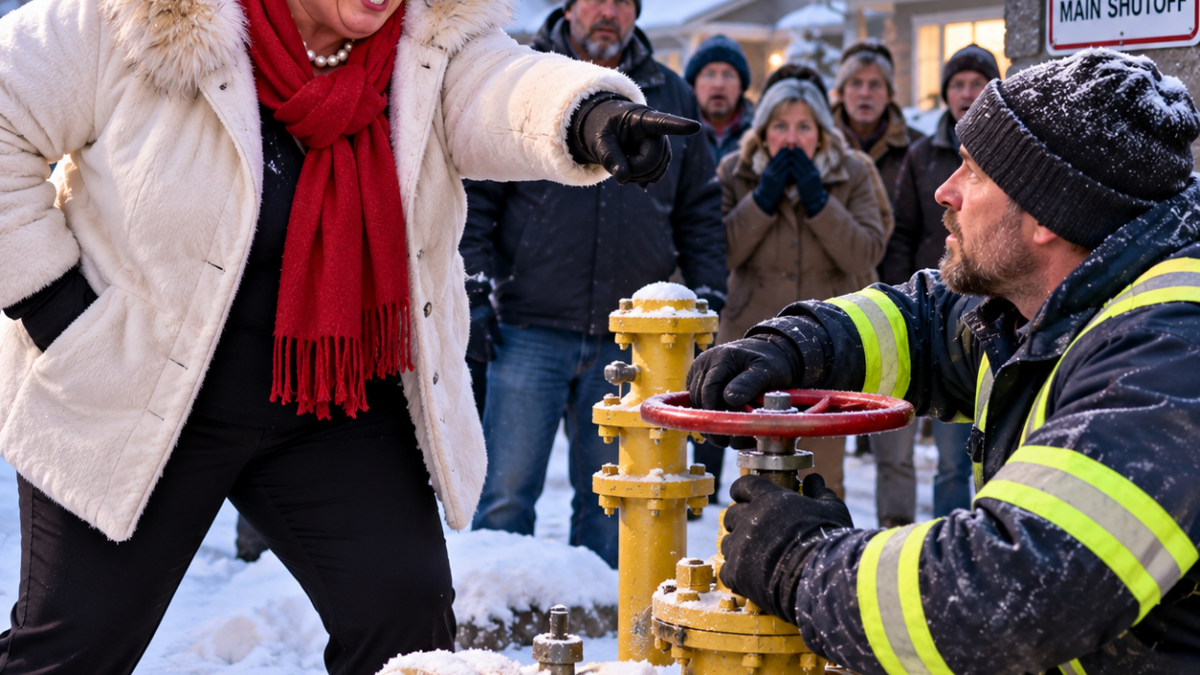
PART 2
The North Star representative explained it carefully because I kept asking the same question in slightly different ways, hoping there was some technicality I had missed.
North Star supplied the gas.
North Star maintained its regulated infrastructure.
My house had a service connection and meter subject to utility rules.
The homeowners association did not suddenly become a gas company because its president printed something on letterhead.
“Could an HOA shut off service for unpaid HOA fines?”
“No.”
“Could they lock the meter?”
“No.”
“Could they operate the service valve?”
“Not without authorization.”
I wrote every answer down.
Nineteen years in HVAC teaches you that the most dangerous sentence in the trades is probably it’s fine.
The second most dangerous is somebody told me.
So I wanted names.
Case number.
Time.
Representative ID.
Everything.
I went to Gail’s house the next afternoon.
Not angry.
No recording theatrics.
No crowd.
I stood on her driveway while she scrolled through her phone.
“I spoke with North Star.”
“Congratulations.”
“They say the HOA has no authority over residential meters.”
She didn’t look up.
“North Star owns the supply line.”
“They said more than that.”
“Preston.”
Finally she looked at me.
“The utility brings gas to our development. From there, it’s community infrastructure.”
“What document says that?”
“The governing documents.”
“Which section?”
“Fourteen point three.”
“You’ve got the number memorized?”
“I wrote the amendment.”
That sentence stayed with me.
“You wrote it?”
“The board adopted it.”
“When?”
“Five years ago.”
“With homeowner approval?”
She smiled.
“You really should attend meetings.”
Then she pointed toward my house.
“You don’t like how Ridgemont operates, sell.”
“My pipe, my rules,” she added.
I walked home thinking about those four words.
My pipe.
My rules.
They sounded too practiced.
The following Saturday she showed up at nine in the morning.
Clipboard.
Camera.
Tape measure.
Bridget was eating cereal while cartoons played in the living room.
Gail announced an “annual infrastructure inspection.”
“I need basement access.”
“No.”
Her face hardened.
“The board has authority to inspect the gas-line entry point.”
“Show me the inspection notice.”
“This is your notice.”
“No.”
She lifted the camera and photographed me standing in my own doorway.
“Refused inspection.”
“Correct.”
“Thousand-dollar fine.”
“Send it in writing.”
“And your gas remains under review.”
She walked away.
I watched her boots crunch across the frozen gravel.
Then I got my coat.
County recorder.
The original Ridgemont Estates covenants were forty-eight pages, recorded in 2001.
I read every page.
Nothing granting the HOA ownership of natural-gas infrastructure.
Nothing giving the board authority to operate a residential meter.
Nothing authorizing utility disconnection.
Then came an amendment filed five years earlier.
Three signatures.
Board officers.
No evidence in the file of a membership-wide vote.
Section 14.3:
The association shall maintain ownership and operational authority over subsurface utility infrastructure within the community.
There it was.
Gail had not merely interpreted an ambiguous rule broadly.
The board had inserted language claiming utility authority.
I requested certified copies of both versions.
The clerk handed me the stack while snow began falling outside.
Seven dollars and change.
I put everything in a binder.
Original declaration.
Amendment.
North Star case notes.
Fine notices.
My photographs showing inconsistent enforcement.
Lloyd’s statement.
Then December fourteenth arrived.
Nora’s school Christmas concert.
She had been practicing for three weeks.
Shelby ironed her red dress that morning and hung it on the bedroom door.
I was supposed to be home early.
Heating season had other plans.
I pulled into the driveway around 4:30.
Already dark.
Minnesota winter dark feels different from ordinary night.
The air looked blue under the streetlights.
The porch light was off.
Shelby always left it on.
I entered.
Immediately knew.
Cold house.
Not cool.
Cold.
An HVAC tech learns temperature with skin before a thermostat confirms it.
The living-room floor felt sharp through my socks.
Thermostat:
41°F.
Furnace:
silent.
Shelby sat on the couch with Nora and Bridget wrapped in blankets.
“What happened?”
“Around noon,” she said. “Thermostat stopped holding.”
“You call me?”
“I did. You were on the mechanical-room job.”
I checked my phone.
Three missed calls.
My stomach dropped.
I went downstairs first.
Furnace controls normal.
Electrical supply present.
No obvious equipment failure.
Then outside.
East side.
Behind the boxwoods.
Gas meter.
Steel padlock attached at the shutoff point.
New.
Bright.
On the face, scratched by hand:
G.H.
I ran my thumb over the initials without touching anything else.
Fourteen below zero.
My breath clouded the entire meter.
Bolt cutters hung in my garage maybe fifteen feet away.
I could have cut that lock in seconds.
Every part of me wanted to.
My wife was inside.
My daughters were shivering.
I repaired gas-fired equipment for a living.
This was my house.
Then I imagined Gail calling law enforcement.
He damaged community utility equipment.
He tampered with a meter.
He created a hazardous condition.
Exactly the story she wanted.
I stepped away.
Inside, I plugged in electric heaters using safe circuits I knew could handle the load, closed unused rooms, opened cabinet doors near vulnerable plumbing, and called North Star.
The after-hours technician pulled the meter status.
“Our system shows your service active.”
“There’s a physical lock.”
“Who put it there?”
“HOA president, apparently.”
Pause.
“Do not operate or remove anything.”
“I wasn’t going to.”
“That is utility equipment. We’re documenting it as suspected tampering.”
I asked for the case number.
Then called the sheriff.
Forty minutes later, the thermostat read 38.
Deputy arrived.
Nice guy.
Cold.
Confused.
He looked at the lock.
Looked at me.
Called Gail.
She arrived eight minutes later.
Eight.
Not twenty.
Not forty.
Eight.
As if she had been waiting.
Camel-colored coat.
Gloves.
Clipboard even then.
“That’s association property,” she said.
Deputy frowned.
“The meter?”
“The infrastructure.”
She pulled out a copy of Section 14.3.
“Association operational authority. Mr. Cole owes outstanding assessments.”
“I dispute the assessment.”
“That doesn’t matter.”
The deputy looked between us.
I showed him North Star’s case number.
Original covenants.
Recorded utility contact.
He rubbed his jaw.
“Sounds like there’s a civil disagreement over the governing documents.”
I stared.
“My kids are in a thirty-eight-degree house.”
“I understand.”
“No. You understand the temperature. I’m asking whether she can lock a regulated gas meter.”
He looked uncomfortable.
“I’m not a utility lawyer.”
Gail spoke.
“Exactly.”
I wanted to yell.
Instead:
“Put in your report that North Star told me the meter was physically interfered with without their authorization.”
“I can document what everybody said.”
“Do that.”
The deputy left.
Gail left.
By seven, the house was thirty-six degrees.
Nora’s Christmas concert started without her.
Her red dress remained hanging upstairs.
That hurt Shelby more than the cold.
“She worked so hard,” she whispered.
I looked at our girls wrapped in blankets.
“We’re not staying here if temperature keeps dropping.”
We moved everyone into the living room.
Safe electric heat.
Layers.
Sleeping bags.
Blankets.
The windows began frosting from the inside.
Bridget looked at me.
“Daddy?”
“Yeah?”
“Is our house broken?”
“No, baby.”
“Then why’s it cold?”
I looked at Shelby.
“Somebody shut off something they weren’t supposed to.”
“Can you fix it?”
I had fixed heat for strangers at two in the morning during blizzards.
I had crawled through attic insulation.
Worked frozen rooftops.
Restarted boilers in schools before children arrived.
And there I was, unable to legally touch my own service because I knew doing so could complicate an investigation.
“I’m going to get it fixed.”
That night I did not sleep.
By sunrise I had made three calls.
North Star formal complaint.
County building department inquiry.
Minnesota utility regulator complaint.
Then I went to work only long enough to tell Hank Bowman what happened.
Hank ran Bowman Mechanical.
Twelve trucks.
Twenty-two technicians.
His office chair groaned whenever he leaned back.
He listened.
Then:
“You fix heat for a living.”
“Yes.”
“And somebody turned yours off.”
“Yes.”
He stared at me.
“Take the week.”
“Hank—”
“That wasn’t a question.”
“We’re slammed.”
“We’ll live.”
“I can work calls.”
“No.”
He pointed at the door.
“Handle your house.”
North Star dispatched a technician with authority over the meter.
Their technician removed the unauthorized lock.
Not me.
Not Gail.
The utility.
Service restored after checks.
The furnace fired.
Warm air returned.
But by then the problem was no longer one house.
I went back to the county recorder.
Original plat.
Utility easements.
That was where Gail’s amendment collapsed.
A twenty-foot easement along the subdivision’s north side had been dedicated to North Star.
Recorded in 2001.
The utility’s rights predated Gail’s amendment.
The HOA couldn’t give itself somebody else’s infrastructure by rewriting its own rules.
That much even a non-lawyer could understand.
Then I requested HOA financial records.
At first Gail ignored me.
Second request:
The board will review your request at the next quarterly meeting.
I made the third request formally and copied appropriate state oversight contacts.
Four days later, the records appeared.
I started reading at the kitchen table.
Shelby graded spelling tests across from me.
At first, nothing obvious.
Landscaping.
Snow removal.
Insurance.
Pool maintenance.
Legal.
Then:
GAS MAINTENANCE AND INFRASTRUCTURE FEE.
$85 per home per month.
One hundred ten homes.
$9,350 monthly.
$112,200 yearly.
Five years.
$561,000.
I stopped.
“Shelby.”
She looked up.
“What?”
“Come here.”
She read the line.
“Is that the thing we pay?”
“Yes.”
“For North Star?”
“That’s what it’s supposed to be.”
I called North Star the next morning.
“Has Ridgemont Estates HOA paid you for maintenance of community gas infrastructure?”
Representative searched.
“No.”
“Any maintenance contract?”
“No.”
“Any invoices billed to our HOA?”
“No.”
“Any payments received?”
“No.”
They maintained their own regulated assets.
The HOA had collected more than half a million dollars under a gas-maintenance label.
Current HOA bank balance:
about $14,000.
I went back through expenses.
Couldn’t account for the gap.
Some money may have moved through legitimate association categories.
But nowhere near enough.
Where did the rest go?
County business filings.
Property records.
Two companies.
Huffman Property Holdings LLC.
GH Rental Group.
Both tied to Gail’s home address.
Both formed during the same years the utility fee had been collected.
Both owned rental duplexes in the next county.
Purchase prices combined:
roughly $395,000.
Cash purchases according to the source records.
I sat in my truck outside the recorder’s office.
Heat blasting.
Snow against the windshield.
On the passenger seat:
Half a million dollars in homeowner fees.
Utility statement showing no maintenance payments.
Two LLC filings.
Rental-property deeds.
It wasn’t proof by itself that HOA money bought those buildings.
But it was enough to justify people with subpoena power asking.
I drove to Lloyd’s.
He answered in slippers and an old Vikings sweatshirt.
I spread everything across his kitchen table.
For an hour, I explained.
When I finished, his coffee was cold.
He looked at the documents.
Then me.
“What do you need?”
Not:
Are you sure?
Not:
Maybe Gail had a reason.
What do you need?
“Witnesses.”
“About the fines?”
“About anything involving gas.”
Lloyd gave me Darla Evers.
Sixty-eight.
Retired school-bus driver.
Lived at the end of the street.
Her kitchen smelled like Pine-Sol and banana bread.
She listened while I explained.
Then opened a drawer.
Pulled out a yellow legal pad bound to a pen with a rubber band.
“What’s that?”
“My memory.”
Page after page.
Dates.
Times.
Gail visits.
Fine amounts.
Threats.
Utility shutoff.
Two winters earlier, Gail had shut off Darla’s gas over $320 in fines.
Darla couldn’t afford the amount that month.
Not without cutting groceries.
She spent much of that winter at her daughter’s house in Rochester.
Ninety miles away.
“Why didn’t you fight it?”
“With what money?”
She asked it without self-pity.
Just fact.
“I called the board.”
“What happened?”
“Gail answered.”
“Utility?”
“I thought the association owned it.”
There it was.
Gail’s greatest weapon was not the padlock.
It was certainty.
If someone says they own the pipe, quotes a section number, mails official stationery, and has been president eight years, most homeowners do not pull county easements.
They believe her.
Darla smoothed the legal pad.
“My mother told me if somebody lies to your face, write the words down. Liars forget what they said. You shouldn’t.”
I copied every relevant page.
Then made the calls.
State utility regulators.
North Star Gas.
County attorney.
I did not ask anyone to punish Gail.
I reported facts.
Possible unlicensed utility activity.
Fees collected.
Unauthorized meter control.
Utility easement issue.
Financial discrepancies.
North Star sent investigators.
The state assigned a utility investigator.
County attorney’s office accepted the financial packet for review.
When I finally came home, Shelby was making grilled cheese.
Butter.
Bread.
Warm kitchen.
The furnace running.
She looked at me.
“How was the day?”
“I made phone calls.”
“Good ones?”
“The kind that create case numbers.”
She smiled.
Then her expression changed.
“You think this gets worse?”
“Yes.”
“How much worse?”
“I don’t know.”
That was the truth.
Gail knew something had shifted.
People who control a small system develop a sense for resistance.
Her first response was an email blast.
URGENT COMMUNITY ALERT — GAS SERVICE AT RISK.
She claimed an unnamed resident had filed frivolous complaints with outside agencies.
Those complaints, she warned, could cause a neighborhood-wide service interruption.
Any loss of heat would be the responsibility of that person.
No name.
None needed.
Everyone knew.
Within a week, people stopped waving.
One neighbor crossed the street rather than pass me.
A note appeared beneath my windshield wiper.
STOP CAUSING TROUBLE. SOME OF US HAVE FAMILIES.
I read it twice.
Then carried it inside.
Shelby found it on the counter.
Her face changed.
“Who wrote this?”
“No idea.”
“We have a family.”
“I know.”
“No, Preston.”
She pointed toward the bedrooms.
“Nora missed her concert because that woman shut off our heat. Bridget slept under three blankets. I am done pretending you’re the one making this uncomfortable.”
I looked at her.
“What do you want me to do?”
“Don’t stop.”
That mattered.
Because for months I had worried that fighting Gail would make my family’s life harder.
Now the person sharing that life was telling me silence had already made it harder.
Gail called an emergency HOA meeting.
Thursday.
7:00 p.m.
Nine degrees outside.
Forty-eight chairs.
Most filled.
She used a projector.
Proposed a $1,500 special assessment per household for emergency gas-infrastructure upgrades.
Think about that.
Residents had already paid $85 per month for five years.
Now Gail wanted another $165,000.
Before the investigation could expose what the first $561,000 had funded.
Her second proposal:
Suspend my pool, gym, and common-area privileges until I withdrew complaints.
I sat third row.
Didn’t argue.
Didn’t interrupt.
I recorded the portion of the meeting I was legally entitled to preserve as a participant and attendee, consistent with applicable consent law.
Gail pointed at me.
“I have managed the gas system in this community for five years.”
That sentence mattered.
She continued.
“Five years without a single problem until he moved here and started filing complaints.”
People nodded.
“I keep this neighborhood running.”
Then:
“Without this board, you would freeze.”
I watched faces.
Some believed her.
Some were scared.
One woman leaned toward her husband.
“If we vote no, she’ll come after our heat.”
That was when I understood what Ridgemont had become.
Not a neighborhood.
A place where people cast votes based on fear of losing utilities.
Proposal passed.
Twenty-eight to twelve.
I lost pool and gym access.
I couldn’t have cared less.
Three days later, North Star trucks arrived.
One.
Then another.
Then a third.
Technicians began at the main supply and worked house by house.
Meter.
Connection.
Valve.
Documentation.
No drama.
Just professionals in insulated coveralls walking through frozen yards.
They knocked on Gail’s door first.
I watched from my kitchen.
She opened it.
For the first time in eight years of controlling Ridgemont, Gail Huffman had no clipboard.
The inspection took days.
That made her nervous.
Darla saw what happened next.
Late at night, temperatures around nineteen below.
A silver SUV moved slowly down Ridgemont Drive.
Gail.
Another man.
They stopped near meters that had previously been locked or manipulated.
Darla recorded from inside.
I watched the video the next morning.
I will not describe the technical handling in detail because gas infrastructure is not something homeowners should imitate or experiment with.
What mattered was obvious.
Gail was moving from property to property after inspectors had begun looking.
Trying to remove visible evidence of prior interference.
North Star didn’t need padlocks to know something had happened.
Equipment records changes.
Seals show disturbance.
Service history exists.
And the larger problem was underground.
By the third day, North Star’s field supervisor called regional safety management.
Unauthorized modifications had been made at several community distribution points.
They altered flow and created unsafe conditions.
Two locations showed gas leakage.
Not movie-style clouds.
Not flames.
The more frightening kind.
Leakage detectable by professional instruments before residents necessarily knew anything was wrong.
The utility’s regional safety director contacted state pipeline authorities.
Wednesday.
4:15 p.m.
Temperature falling.
Order issued:
Emergency shutdown.
All gas to Ridgemont Estates.
One hundred ten homes.
No exceptions.
North Star called me at 4:30 because I had an open complaint.
“We have to isolate the entire subdivision.”
“How long?”
“We don’t know yet.”
“Tonight?”
“Yes.”
I looked through the window.
Shelby was helping Bridget with homework.
Nora was reading.
“Every home?”
“Every home.”
“Including Gail’s?”
Pause.
“Yes.”
That answer should have felt satisfying.
It didn’t.
I had wanted Gail stopped.
I had not wanted one hundred nine other families cold.
The trucks moved down the street.
House after house.
Service isolated.
The furnace in our hallway stopped.
Silence.
That background hum people never appreciate until it disappears.
By eight, Ridgemont was cold.
Every house.
Including Gail’s.
The next night:
Twenty-two below zero.
Wind made it feel worse.
News stations warned people not to stay outside.
Electric heaters appeared everywhere.
So did extension cords, which terrified me almost as much as the gas issue.
The electrical load on the subdivision climbed.
I went house to house with other HVAC and electrical tradespeople checking safe temporary-heating setups, not because the HOA asked us, but because nobody needed a second emergency.
Hank sent four Bowman Mechanical technicians after shifts ended.
“No charge,” he told me.
“You can’t eat four guys’ labor.”
“I can eat whatever I want. It’s my company.”
I argued.
He hung up.
Faith Lutheran Church opened a warming center.
Cots.
Coffee.
Blankets.
Seventeen families the first night.
Thirty-one the second.
Darla went.
She sat in a folding chair holding that yellow legal pad.
I brought her coffee.
“What are you writing now?”
“Everything.”
“You’re at a church warming center.”
“Exactly.”
She tapped the pad.
“When this ends up in court, I want somebody to need a bookmark.”
Two houses suffered frozen plumbing.
The Andersons came home to water spreading through their basement.
A copper line had split.
Water froze along the concrete nearly as fast as it spread.
That damage made people angry in a new way.
Until then, Gail could blame me.
Outside agencies.
Bad luck.
Overreaction.
But burst pipes have invoices.
Hotel rooms have receipts.
Lost groceries have dollar amounts.
Cold turns politics into arithmetic very quickly.
The county organized an emergency community meeting.
Saturday.
10:00 a.m.
Community center.
Portable heat from emergency equipment.
Diesel generator outside.
Eighty-three residents.
Blankets.
Coats.
One baby wrapped so heavily only its eyes showed.
Two television crews.
Sheriff’s deputies.
State utility investigator.
North Star regional operations manager.
Assistant county attorney.
Gail arrived eight minutes late.
Camel coat.
Perfect hair.
Controlled face.
She sat front row.
Hands folded.
For a few minutes, she looked like she still believed she was attending another HOA meeting.
Then Investigator Waller began.
No theatrics.
“Our review indicates that Ridgemont Estates Homeowners Association collected recurring utility-related fees from 110 households for approximately five years while representing that those fees supported gas-system maintenance.”
Nobody moved.
He continued.
“Preliminary records show approximately $561,000 collected under those categories.”
Someone behind me whispered:
“Jesus.”
Waller kept reading.
“North Star Gas has confirmed it did not contract with the association for those maintenance services and received no corresponding payments.”
That was the first crack.
Not Gail’s face.
The room’s belief.
People looked at each other.
Five years.
Eighty-five dollars a month.
Everybody doing the same multiplication.
The North Star manager stood.
Projected a system diagram.
Unlike Gail’s spreadsheet, this one had utility engineering markings.
“Our inspection identified multiple meters showing evidence of unauthorized interference and several unauthorized modifications within regulated infrastructure.”
He did not explain how those modifications had been constructed.
He didn’t need to.
“Two locations showed active leakage.”
The room shifted.
“Because of the condition of the system, service must remain suspended until affected sections are excavated, replaced, tested, and recertified.”
“How long?” somebody asked.
He looked down.
“Current estimate: nineteen days.”
The reaction came all at once.
“What?”
“Nineteen?”
“We have kids.”
“My pipes already froze.”
“My mother is eighty.”
The county supervisor raised a hand.
“Please.”
Nobody cared.
Then Dale Finch stood.
Seventy-one.
Retired electrician.
His wife had COPD.
He didn’t raise his voice.
That made everybody listen.
“I paid eighty-five dollars every month.”
He turned toward Gail.
“That’s fifty-one hundred dollars.”
Gail looked at him.
“My wife can’t tolerate cold air.”
Silence.
“We’re sleeping at our daughter’s house ninety minutes away.”
He took one step toward the aisle.
“I am seventy-one years old, Gail, sleeping on a pullout couch because the neighborhood gas system you told us you managed is shut down.”
Gail opened her mouth.
“Everything I’ve done has been for—”
“Where is my money?”
She stopped.
Dale repeated it.
“Where is my money?”
Diesel generator rumbled outside.
A baby fussed.
Camera shutter clicked.
Gail looked toward the panel.
The assistant county attorney stood.
Young woman.
Steady voice.
“This office has opened a criminal financial investigation into the management of Ridgemont Estates HOA funds.”
Gail’s posture changed.
Not much.
Enough.
“Potential offenses under review include substantial misappropriation of association funds, unlawful interference with regulated utility infrastructure, and conduct creating public safety risk.”
She looked at Gail.
“Ms. Huffman, you are not being arrested today. You should obtain legal counsel before making any further public statements concerning these matters.”
That was the first moment Gail stopped being president.
Not legally.
Psychologically.
She stood.
Picked up her purse.
Turned toward the exit.
One deputy shifted slightly.
Did not block her.
Just became visible.
The county supervisor said:
“We’re asking residents to remain until emergency-relief information is complete.”
Gail sat.
For forty minutes, she said nothing.
This was a woman who had once fined me for a trash can left out two hours.
A woman who photographed grass blades.
A woman who told me:
My pipe, my rules.
Now she sat beneath fluorescent lights while eighty-three neighbors heard that the gas-maintenance money did not appear to have maintained gas.
Her camel coat no longer looked expensive.
It looked like a coat.
That sounds small.
It wasn’t.
Authority often survives through costume.
Clipboard.
Title.
Letterhead.
Meeting table.
Section numbers.
Take away belief, and those objects become ordinary again.
The emergency period lasted nineteen days.
Nineteen.
Ridgemont became a place of extension cords, borrowed heaters, hotel receipts, church coffee, frozen plumbing, and neighbors who had barely spoken suddenly checking each other’s houses.
The county prioritized elderly residents.
Families with infants.
Medical vulnerability.
Some residents temporarily relocated.
Others stayed.
Bowman Mechanical technicians volunteered evenings.
Electricians checked overloaded circuits.
Shelby organized meal deliveries through the elementary school.
Nora and Bridget helped label bags.
At one point Nora looked at me across the church fellowship hall.
“Dad?”
“Yeah?”
“Did you make everybody lose gas?”
That question hit exactly where Gail had intended.
“No.”
“But people say you called the gas people.”
“I did.”
“So…”
I crouched.
“I told them something was wrong.”
She waited.
“If a fire alarm goes off at school because somebody smells smoke, is the person who pulls the alarm responsible if everyone has to leave?”
“No.”
“The problem is the smoke.”
She thought.
“So Gail is smoke?”
Shelby covered a laugh with her hand.
“Something like that.”
Bridget looked up.
“Can we eat?”
That ended the philosophy lesson.
During those nineteen days, forensic accountants began tracing HOA money.
Subpoenas.
Bank statements.
Transfers.
LLC accounts.
Rental-property transactions.
The numbers were more complicated than the story people wanted.
Not every missing dollar had gone directly into Gail’s pocket.
Some HOA expenses were legitimate.
Some accounting was sloppy.
Some money moved through accounts before reaching traceable personal use.
Eventually investigators tied approximately $312,000 to personal expenditures and Gail-related property activity under the case presented in the source story.
That was enough.
The two rental duplexes became central.
Huffman Property Holdings.
GH Rental Group.
Residents had spent five years paying for “gas maintenance.”
Gail had spent those years becoming a landlord.
When investigators asked her lawyer for documentation showing the utility-fee authorization and spending, the paper trail turned against her.
Remember the amendment?
Section 14.3.
The clause Gail had relied on.
The original declaration required broader approval for material covenant changes.
Investigators and counsel challenged the validity of the later amendment process.
Even if it had been valid internally, it could not overwrite North Star’s preexisting utility rights.
Gail had built her entire utility kingdom on a clause that did not give her what she claimed.
Then Darla’s video arrived.
Late-night attempts to undo visible meter interference.
Then the emergency meeting recording.
Gail’s own voice:
I have managed the gas system for this community for five years.
Five years.
She had said it proudly.
Now investigators quoted it back.
That is why I had started documenting.
People change explanations when consequences appear.
Records don’t.
Six weeks after the shutdown, charges were filed.
Three serious counts in the source case:
Financial misappropriation exceeding the felony threshold.
Unlawful interference with gas infrastructure.
Reckless endangerment-related conduct.
The exact statutory labels mattered less to me than the fact somebody outside Ridgemont finally said:
This is not an HOA disagreement.
That sentence mattered.
For three years, Gail had used HOA vocabulary to make everything sound administrative.
Fine.
Assessment.
Inspection.
Compliance.
Infrastructure.
Enforcement.
But you can wrap dangerous behavior in meeting language and it stays dangerous.
The arrest became local news.
By afternoon, camera crews stood near the Ridgemont sign.
Same snowbanks.
Same reporter.
Different story.
Gail could not immediately post the full bail amount and spent eleven days in custody before family arranged bond.
People in the subdivision celebrated.
I didn’t.
Shelby noticed.
“You okay?”
“Yeah.”
“You don’t look happy.”
“I wanted her stopped.”
“She is.”
“I didn’t spend three years wanting jail.”
Shelby folded laundry.
“No. You spent three years wanting her to leave us alone.”
That was the difference.
Revenge had sounded good when I stood beside the padlocked meter.
Less good when real consequences arrived.
Necessary consequences can still feel heavy.
Darla felt differently.
“Eleven days?”
She took a bite of banana bread.
“I spent three months away from my own house.”
“I know.”
“She’ll survive.”
Darla had earned the right to be less philosophical.
The plea negotiations took months.
Gail’s attorney challenged financial calculations.
Questioned intent.
Separated board decisions from personal decisions.
Argued that she believed the HOA had utility authority.
The prosecution had the amendment history.
North Star ownership records.
Fee ledgers.
Property purchases.
Darla’s notes.
Video.
My complaint chronology.
Meeting recording.
Eventually Gail entered a negotiated plea under the source outcome.
Eighteen months supervised probation.
Three hundred hours community service.
Restitution totaling approximately $312,000 into the HOA operating structure and affected losses as ordered.
The rental LLCs were dissolved.
The duplexes were sold to help satisfy restitution.
Gail stood before the judge in a gray blazer.
I attended only because victims had been notified.
She answered:
“Yes, Your Honor.”
Again.
“Yes, Your Honor.”
No clipboard.
No tape measure.
No speech about standards.
I didn’t need an apology.
At that point, an apology would have been another performance.
Her resignation email arrived the same week.
One sentence.
Effective immediately, I resign from the Board of Directors of the Ridgemont Estates Homeowners Association.
Eight years of controlling lawn height, paint, trucks, utility access, people’s fear.
One sentence to leave.
Lloyd forwarded it to me.
His message:
Fourteen words. New record.
I counted.
He was wrong.
I didn’t correct him.
North Star finished repairs on day nineteen.
Every affected section was replaced or repaired.
System tested.
Pressure verified.
State inspection completed.
New utility-controlled anti-tampering protections went onto all 110 service points.
Bright.
Industrial.
Access restricted to authorized technicians.
No HOA key.
No board key.
No Gail key.
The morning service restoration began, I stayed home.
Not because I needed to.
Because I wanted to hear it.
Shelby stood in the kitchen.
Nora and Bridget were doing homework at the dining table even though school had reopened.
Everyone still wore sweaters by habit.
The furnace control energized.
Tick.
Pause.
Ignition sequence.
Then the burner caught.
Whoosh.
I had heard that sound thousands of times.
Commercial furnaces.
Churches.
Schools.
Apartments.
Homes.
Never like that.
Warm air moved through the ductwork.
Floor registers began breathing heat.
Bridget stopped writing.
Her pencil hovered.
“Daddy.”
“What?”
She smiled.
“The house is humming again.”
I looked toward the hallway vent.
“Yeah, baby.”
She put her hand over the register.
“It’s warm.”
Nora did the same thing.
Shelby looked at me.
Nineteen days.
Church cots.
Electric heaters.
Frozen pipes.
Neighbors turning against each other.
All because one woman convinced a subdivision that a board title made her a utility operator.
The house hummed.
I went into the garage and cried for about thirty seconds where nobody could see.
Not because we had won.
Because my kids were warm.
That spring, Ridgemont held an actual election.
Open nominations.
Secret ballots.
Five board seats.
Real turnout.
People asked me to run for president.
Absolutely not.
I had spent enough years thinking about HOA presidents.
But I agreed to chair an unpaid infrastructure committee.
Pipes.
Drainage.
Mechanical systems.
Things I actually knew.
Our first rule was simple:
The HOA does not operate regulated utilities.
It sounds ridiculous that we needed to write it.
We wrote it anyway.
Second:
No major covenant amendment without the member approval required by the governing documents and law.
No three-person rewrite.
No phantom authority.
Third:
Independent annual financial review.
The first professional audit in twenty-five years.
Fourth:
Homeowners could inspect association financial summaries online.
Not after three emails.
Not after an attorney threat.
By default.
Gus—wrong neighborhood. Lloyd—looked at the portal the first night.
“Boring.”
“That’s the goal.”
“Where’s the missing money?”
“Gone.”
“Then this is depressing.”
“It’s supposed to prevent next time.”
He nodded.
“Fine.”
The special $85 gas-maintenance fee disappeared immediately.
People expected dues to drop by exactly eighty-five.
They didn’t.
Association insurance had increased.
Emergency legal work.
Snow removal.
Reserve rebuilding.
But for the first time, homeowners could see why money moved.
Transparency changed the tone.
When the new board proposed legitimate dues changes, people argued.
Then voted.
Nobody feared losing heat if they disagreed.
That felt revolutionary.
Shelby and I started the Ridgemont Warm Neighbors Fund in April.
Not HOA-controlled.
Voluntary.
Separate nonprofit account administered with community oversight.
Purpose:
Help residents facing heating emergencies.
No fines.
No assessments.
No shame.
Darla was the first person we offered help.
She refused.
“Give it to somebody else.”
“You spent a winter displaced.”
“That’s over.”
“We’re not paying Gail’s bill.”
“I don’t need charity.”
Shelby sat across from her.
“It isn’t charity.”
Darla crossed her arms.
“What is it?”
“The neighborhood returning something it should have given you years ago.”
Darla’s eyes filled.
She looked furious about it.
“I hate crying.”
Shelby handed her a napkin.
“I teach third grade. I’ve seen worse.”
Darla laughed through the tears.
She accepted assistance toward winter heating costs.
Then donated twenty dollars back the next month.
“Darla.”
“It’s voluntary.”
“You’re impossible.”
“So I’ve been told.”
First winter:
Twenty-two households received help.
Some once.
Some for several months.
An older couple.
A single mother.
Family hit by medical bills.
Nobody lost heat over a few hundred dollars.
Not while we could help.
That fund became the thing I was proudest of.
Not Gail’s conviction.
Not the refund.
Not the board changes.
Warm houses.
People using power differently.
The neighborhood slowly learned to talk again.
The three neighbors who had reported my activity to Gail avoided me for months.
Eventually one came over.
His name was Eric.
I had known his face for three years and not his name.
He stood in my driveway.
“Preston.”
“Yeah.”
“I owe you an apology.”
I waited.
“Gail gave us a break on violations.”
“I know.”
“She said you were trying to destroy the HOA.”
“I know.”
“I reported your trailer once.”
“I figured.”
He looked at the ground.
“My wife was pregnant. We couldn’t afford fines.”
“That doesn’t make spying okay.”
“No.”
“But I understand fear.”
He looked up.
“I should’ve told you.”
“Yes.”
“I’m sorry.”
I nodded.
“Thanks.”
He started to leave.
“Eric.”
He turned.
“Don’t do it again.”
He almost smiled.
“Won’t.”
That was enough.
Another neighbor apologized badly.
“Everybody did it.”
“No.”
“Most people.”
“No.”
He became defensive.
We never got close.
Also fine.
Accountability does not require friendship.
Lloyd became one of my best friends.
Funny considering he had been the first neighbor whose messy yard showed me the enforcement was selective.
One Saturday we finally moved his boat.
It had been sitting on blocks so long I joked archaeology students should tag it.
He stared.
“You’re HOA infrastructure chair now.”
“That doesn’t make me landscaping police.”
“Good.”
“Also your boat looks terrible.”
“That’s harassment.”
“Document it.”
We laughed.
Ridgemont needed laughter.
For years, people had whispered.
After Gail, they argued openly.
Open disagreement felt healthier than quiet obedience.
The garage door kept screaming.
Remember that?
Day one.
Fix later.
Three years.
Still later.
Every time it opened:
SCREEEECH.
Shelby complained.
Nora complained.
Even Bridget started covering her ears.
I had repaired half the neighborhood before dealing with my own door.
One Saturday, months after the Warm Neighbors Fund started, I finally put tools on the garage floor.
Old rollers out.
Track cleaned.
Worn hardware replaced.
Springs serviced professionally and safely—garage-door spring work is one of those jobs where even someone handy should respect stored energy and training.
An hour later, I pressed the button.
Door lifted.
Smooth.
Quiet.
Shelby appeared in the doorway.
She looked at the door.
Then me.
“That was on your list the day we moved in.”
“I know.”
“Three years.”
“I know.”
“You could have fixed it anytime.”
“I was busy.”
She smiled.
“Fixing bigger things?”
I looked down the street.
Darla’s house.
Lloyd’s boat.
New North Star meter protections.
Community center.
Our home.
“Yeah.”
“I guess.”
Shelby leaned against the frame.
“You know what I hated most?”
“Gail?”
“No.”
“What?”
“How normal she made it feel.”
That stopped me.
She continued.
“Every new fine, every letter, every threat, we adjusted. Like that was just life.”
I knew exactly what she meant.
“That’s how control works.”
“I know.”
“You pay one stupid fine because fighting costs more.”
“Then another.”
“Then another.”
“Then one day your kids are sleeping in the living room because somebody decided they own your heat.”
We stood there in the quiet garage.
No grinding door.
No clipboard.
Just truth.
Later that year, the county closed out parts of its investigation and released more audit findings.
Residents learned how long warning signs had existed.
Board minutes with missing attachments.
Unapproved amendments.
Expenses approved by Gail alone.
Accounts reviewed by no independent person.
One former treasurer claimed Gail handled everything because she “understood finances better.”
He had signed statements anyway.
People were furious.
Then embarrassed.
Because every year they had re-elected her unopposed.
Eight years.
Nobody wanted the job.
That became the neighborhood’s second lesson.
Power does not always get seized.
Sometimes it gets abandoned by everyone else.
Nobody wants to attend meetings.
Nobody wants to read financials.
Nobody wants to challenge the person with the binder.
Then one day that person is making decisions no single volunteer should be making.
Our new board rotated roles.
Term limits.
Two signatures on major expenses.
Conflict-of-interest policy.
Infrastructure decisions reviewed by licensed professionals.
Not exciting.
Good governance is aggressively unexciting.
I came to love that.
One winter after everything settled, the temperature dropped to eighteen below.
Not twenty-two.
Still brutal.
I woke at 4:30 out of habit.
Furnace running.
Normal.
I walked downstairs.
Put my hand over the supply register.
Warm.
Then I looked through the window.
North Star meter beside the house.
Untouched.
No padlock.
No initials.
I made coffee.
Shelby came down.
“What are you doing?”
“Checking heat.”
“You’re an HVAC tech.”
“It’s what we do.”
“No.”
She looked at me.
“You’re checking for Gail.”
I hated that she was right.
Maybe trauma is too dramatic a word.
But your body remembers certain patterns.
For a long time, cold mornings meant I checked the meter before coffee.
Eventually I stopped.
The girls stopped asking whether the house could be turned off.
That mattered more.
Nora became fascinated by the whole thing in the way kids do after danger passes.
“Dad?”
“What?”
“Could Gail really own gas?”
“No.”
“Why did people believe her?”
“Because she believed herself loudly.”
Nora thought.
“That’s dumb.”
“Yes.”
“Adults are dumb.”
“Frequently.”
Bridget looked up.
“Are kids dumb?”
“Also frequently.”
“Okay.”
Parenting solved.
Darla’s notebook became neighborhood legend.
She eventually donated a copy to the HOA archive.
On the front she wrote:
MEMORY IS NOT A RECORD.
I framed that sentence in the community center.
Darla objected.
“You framed my handwriting?”
“Yes.”
“Take it down.”
“No.”
“You’re becoming Gail.”
“Noted.”
She laughed.
The Warm Neighbors Fund grew.
Local HVAC suppliers donated.
Church contributed.
Bowman Mechanical matched employee gifts one winter.
Hank refused publicity.
“Put the company logo somewhere and I pull the money.”
“You understand donations terribly.”
“I understand marketing. I hate it.”
We kept the logo off.
A local energy-assistance program partnered with us later.
That made the fund less about emergency charity and more about connecting families with long-term help.
Shelby handled most of it.
She was better with people.
I was better with furnaces.
One February, we helped a young father whose hours had been cut.
He stood in our kitchen filling out paperwork.
“I’ll pay it back.”
“You don’t have to.”
“I will.”
“No.”
“Preston.”
I looked at him.
“Help somebody else when you can.”
He went quiet.
That was the whole model.
Darla called it socialist nonsense.
Then baked cookies for every fundraiser.
Contradiction was part of her charm.
Gail eventually completed community service.
I heard where.
Didn’t care.
She moved after the restitution process forced financial changes.
Her Ridgemont house sold.
The buyer was a couple from Wisconsin.
First week, the husband walked over.
“You Preston?”
“Yeah.”
“I heard something happened with the previous owner.”
“Something.”
He looked nervous.
“People hate this house?”
“No.”
“Good.”
“Houses don’t commit accounting fraud.”
He stared.
Then laughed.
“I think we’ll get along.”
They did.
His wife planted flowers.
Kids played basketball.
Within a year, Gail’s old address was just another house.
That felt right.
A neighborhood should not keep monuments to bad leaders.
It should normalize the space they occupied.
The two rental duplexes sold too.
Proceeds went toward restitution obligations.
Residents received credits and reserve restoration according to the settlement structure.
Nobody got rich.
That is another fiction people have about lawsuits and restitution.
Half a million dollars disappears through years of misuse, emergency repairs, frozen pipes, legal expenses, and disrupted lives.
A court order does not put time back.
Darla never got that winter at home.
Nora never got her Christmas concert back.
The Andersons never got their original basement drywall.
But money matters because consequences without restitution are incomplete.
What mattered even more was structural change.
North Star owned and controlled what North Star was supposed to own and control.
HOA handled what HOA was supposed to handle.
Those lines stopped blurring.
At the next annual meeting, a homeowner proposed the board oversee backup generators for everyone.
I raised my hand.
“No.”
He looked offended.
“Why?”
“Because utilities and emergency power need professional design and individual ownership arrangements, not Gail 2.0.”
The room laughed.
He did too.
Proposal became:
Educational workshop on safe backup power.
Much better.
I ran it with electricians.
No HOA touching anyone’s equipment.
I had developed an allergy to community utility empires.
Three years after Gail, I found my original little notebook while cleaning the garage.
First page:
GARAGE DOOR — FIX LATER.
BASEMENT MORTAR — FIX LATER.
FURNACE — NOW.
MAILBOX — HOA WOMAN SAYS 3/4″ SHORT.
I laughed.
Shelby read over my shoulder.
“You wrote HOA woman?”
“I didn’t know her name yet.”
“You should’ve moved.”
“Helpful.”
She flipped pages.
Fine amounts.
Repair lists.
Temperatures.
Then one entry from the gas shutoff night.
HOUSE 36°. GIRLS ON COUCH. DO NOT TOUCH LOCK. CALL UTILITY.
She stopped.
“You wrote this that night?”
“Apparently.”
“Why?”
“I document.”
She closed the notebook.
“You always do.”
I realized that habit had probably saved us.
Not because one notebook won the case.
Because documentation changed my behavior.
When angry, write.
When threatened, record the date.
When someone claims authority, find the document.
When money is demanded, ask where it goes.
Boring habits.
Powerful outcome.
I started teaching apprentices the same thing.
Not Gail’s whole story.
They already knew it from the news.
But at Bowman Mechanical, I added a section to new-tech orientation:
If a customer claims an HOA, landlord, manager, or neighbor has altered regulated utility equipment, do not improvise.
Make it safe.
Document.
Contact the utility or authority.
Never let an argument become a technical hazard.
That was the professional lesson.
The personal lesson took longer.
I had spent months thinking revenge meant Gail losing.
Her board seat.
Money.
Property.
Authority.
Then Warm Neighbors started.
Darla stayed warm.
A young father stayed in his house.
Twenty-two households got help.
That felt better than any courtroom update.
Gail had used heat as leverage.
We turned heat into something people shared.
That was a different kind of power.
Not control.
Capacity.
One Saturday, Nora—older now—helped at a fund drive.
She was carrying boxes into the community center.
Stopped near the old projector.
“Is this where Gail had the meeting?”
“Yes.”
“The one where everybody voted against you?”
“Yes.”
She looked around.
Same fluorescent lights.
Same folding chairs.
Different people laughing while setting up coffee.
“Seems smaller.”
“It is.”
“Did it used to be bigger?”
“No.”
She thought.
“Then why?”
I understood.
Fear enlarges rooms.
Makes tables look like benches.
Makes clipboards look official.
Makes neighbors look like judges.
Years later, the same room was just drywall and bad coffee.
“Because we were scared.”
She nodded.
“Were you?”
“Very.”
“Even though you knew she was wrong?”
“Especially then.”
“Why?”
“Being right does not automatically protect you.”
That became one of the most honest things I ever told my daughter.
You can know the rules.
Know your rights.
Have the document.
Still worry about money.
Children.
Time.
Reputation.
Retaliation.
That is why systems matter.
People should not need to be HVAC technicians with document habits to keep heat in their homes.
The rules should stop someone before it gets that far.
Ridgemont finally built those rules.
The new board was not perfect.
Once they sent me a letter because my trailer stayed out twenty-five hours beyond the permitted window.
I laughed when I opened it.
Shelby said:
“What?”
“Trailer violation.”
“Is it valid?”
I checked.
It was.
“Yeah.”
“You going to fight?”
“No.”
I moved the trailer.
Paid no fine because it was a first notice.
That moment mattered.
A rule applied consistently did not feel like persecution.
It felt like a rule.
Lloyd got the same notice two months later for his boat.
He called.
“Selective enforcement!”
“You voted for the policy.”
“I was misled.”
“You were awake.”
“Debatable.”
He moved the boat.
Healthy governance is sometimes annoying.
That is fine.
Darla died several years later.
Eighty-two.
At home.
Warm.
Her daughter found the yellow legal pad in the kitchen drawer.
Same rubber band.
Same pen.
Last page had grocery items.
Milk.
Coffee.
Bananas.
And a note:
FURNACE FILTER — PRESTON SAID CHANGE.
I cried when her daughter showed me.
We established a small emergency-heating grant in Darla’s name within the existing fund.
No plaque at her house.
She would have hated it.
At the first announcement, Shelby read Darla’s line:
If somebody’s lying to your face, write down exactly what they say.
The room laughed.
Then applauded.
I could almost hear Darla complaining.
My girls grew.
Nora went into engineering.
Bridget wanted nothing to do with HVAC.
“Too many basements.”
Fair.
One Thanksgiving, Nora came home from college during an early cold snap.
She walked past the thermostat.
Stopped.
Touched the register.
“You still check?”
“Check what?”
“The heat.”
“I’m an HVAC tech.”
She smiled.
“Mom says you used to check the meter every morning after Gail.”
“Your mother exaggerates.”
“She said every morning.”
“Most.”
Nora looked outside.
“You know what I remember?”
“What?”
“The red dress.”
I stopped.
Her concert dress.
She had been nine.
“I don’t remember the cold that much,” she said. “I remember being mad I couldn’t wear the dress.”
“I’m sorry.”
“Dad.”
“What?”
“I’m not blaming you.”
“I know.”
“She made you think everything was your fault.”
That landed harder than I expected.
“I guess.”
“You still do that sometimes.”
“Do what?”
“Take responsibility for things you only reported.”
She was right.
Again.
Parents raise children hoping they become wise.
Then resent when they use it on us.
“I’ll work on it.”
She smiled.
“Document that.”
Smart mouth.
Definitely mine.
The original padlock eventually came back to me after the case concluded and evidence was released.
Steel.
G.H. scratched into it.
I held it.
Thought about keeping it.
Trophy.
Reminder.
Something dramatic to put in a frame beside Darla’s quote.
Instead, I gave it to the utility investigator for a training display after identifiers were properly handled.
I didn’t want it in my house.
Gail had occupied enough space.
The meter outside was reminder enough.
Every winter, it did its job.
Quietly.
No politics.
No HOA.
Just regulated service.
My house changed.
Basement mortar repaired.
Shutters repainted eventually—not because Gail ordered it, but because Shelby wanted blue.
Garage door silent.
New roof.
Kitchen updates.
Girls’ height marks on a wall near the pantry.
The foreclosure Gail mocked became home.
That mattered.
Her insult the night she shut off the gas:
You bought the cheapest foreclosure on the block. Live like it.
For years I heard it whenever something broke.
Then one day I stopped.
Price is not belonging.
Perfection is not belonging.
Standards are not belonging.
A house becomes yours through ordinary repetition.
Lunches packed.
Homework spread over tables.
Arguments.
Snow boots piled by doors.
Furnace filters changed.
Kids growing.
Warm air moving through ducts.
Gail could fine a shutter.
She could not define home.
That was the part she never understood.
Ridgemont’s gas shutdown became one of those local stories people retold incorrectly.
Five years later, newcomers said:
“Didn’t the old HOA president blow up the gas main?”
No.
“Didn’t she personally steal half a million?”
More complicated.
“Didn’t Preston get everyone’s heat shut off?”
Absolutely not.
Stories simplify.
Records matter.
At one annual meeting, I finally stood up and corrected the mythology.
“North Star shut service down because inspectors found conditions they considered unsafe.”
Not because I asked them to punish anyone.
Not because the HOA lost a fight.
Safety.
That distinction matters.
One homeowner asked:
“Would you file the complaint again knowing we’d lose gas nineteen days?”
Hard question.
People expected yes.
I said:
“I would file it sooner.”
Silence.
“If there is unsafe gas infrastructure, pretending otherwise so the furnace stays on tonight does not make your family safer.”
The North Star manager, invited that year, nodded.
That was the truth.
The shutdown was miserable.
The alternative could have been worse.
You do not gamble with gas because cold weather makes the truth inconvenient.
That became the deepest lesson from those nineteen days.
Sometimes the action that protects a community feels like the thing hurting it at first.
Inspection.
Shutdown.
Evacuation.
Repair.
Accountability.
None feel good.
But safety is not a popularity contest.
Gail understood popularity through fear.
She never understood safety through limits.
The Warm Neighbors Fund still exists.
Different volunteers now.
Shelby eventually stepped back.
I retired from Bowman Mechanical after twenty-seven years in the trade.
Hank threw a party and complained the entire time.
“You’re abandoning me.”
“You told me to take a week.”
“Not eight years.”
“You’re bad at boundaries.”
“So are you.”
He gave me a framed service wrench.
Ridiculous.
I hung it in the garage.
Under the old notebook.
Retirement changed winter.
No emergency calls.
No frozen rooftop units at midnight.
No school boilers.
First January, I woke during a blizzard and instinctively reached for my phone.
Nothing.
Shelby rolled over.
“You’re retired.”
“I know.”
“Go back to sleep.”
I listened.
Furnace humming.
Garage quiet.
Wind.
House warm.
I slept.
That might be the most satisfying ending of all.
Not Gail’s plea.
Not the duplex sales.
Not restitution.
Sleep.
Years earlier, Gail had turned cold into a weapon.
She made people believe warmth depended on obedience.
In the end, every system that had allowed that was replaced.
Meters under utility control.
Books open.
Board authority limited.
Emergency assistance voluntary.
Neighbors watching out for one another instead of reporting one another.
Darla’s legal pad became a lesson.
Lloyd’s refusal to spy became a friendship.
Shelby’s warning became something I finally understood.
She had told me Gail was measuring how much I would take.
Turns out she was right from the beginning.
The first fine was never really about shutters.
The second wasn’t about a truck.
The grass ruler wasn’t about grass.
The utility trailer wasn’t about appearances.
Each demand asked the same question:
Will you challenge me?
For too long, my answer was no.
I paid.
Adjusted.
Stayed busy.
Told myself peace was cheaper.
Then Gail crossed the one line she thought would finally force me to surrender.
Heat.
She looked at my house, my wife, my daughters, a Minnesota winter, and decided cold would make me easier to control.
Instead, it forced me to ask who actually owned the pipe.
That question opened everything.
The easement.
The amendment.
The fees.
The money.
The LLCs.
Darla.
North Star.
The investigation.
One question.
Who actually has authority here?
People should ask it more often.
Not because authority is always illegitimate.
Because legitimate authority can answer.
With records.
With law.
With limits.
Gail answered with:
My pipe. My rules.
She was wrong on both counts.
Last winter, temperature dropped below twenty again.
Not quite the coldest night from that year.
Close enough.
I was in the garage working on a small woodworking project.
The door lifted silently.
Still smooth after all these years.
Shelby came out wearing slippers.
“You coming inside?”
“In a minute.”
“It’s freezing.”
“Garage is heated.”
“Show-off.”
I put away the tools.
Hit the switch.
Door descended without a squeak.
Then I stood there for a second.
That door had screamed on the first day we moved in.
I kept meaning to fix it.
Then life got bigger.
Fines.
Heat.
Investigations.
Neighbors.
Warm Neighbors.
Kids.
Years.
I finally fixed the door only after everything else.
Shelby had said I was busy fixing bigger things.
At the time, I thought she meant the HOA.
Now I think she meant us.
Because the neighborhood was never repaired by Gail losing.
It was repaired by people deciding what kind of place Ridgemont would become afterward.
A place where an elderly woman did not leave home because she was $320 short.
A place where disagreement did not threaten utilities.
A place where neighbors reported leaks, not one another.
A place where books opened.
Votes mattered.
Professionals handled systems that could hurt people.
And one cold morning years after Gail was gone, I walked from the garage into the hallway.
Warm air came from the floor register.
The furnace was humming.
Shelby was making coffee.
Photographs of the girls lined the wall.
Nothing dramatic happened.
Nobody knocked.
Nobody measured anything.
Nobody threatened us.
The house simply worked.
That was all I had wanted from the beginning.
I stopped near the thermostat.
Seventy degrees.
Outside:
Twenty-one below.
I smiled.
Shelby saw me.
“What?”
“Nothing.”
“You’re staring at the thermostat.”
“I’m appreciating infrastructure.”
“You’re retired and somehow getting worse.”
“Probably.”
She handed me coffee.
From upstairs came footsteps.
Nora and Bridget were both home for the holidays, arguing about a bathroom like they were nine and six again.
I listened.
Furnace.
Footsteps.
Coffee machine.
Wind outside.
House humming.
Years earlier, Bridget had looked up from her homework after nineteen days of cold and said:
Daddy, the house is humming again.
I didn’t know then how long that sentence would stay with me.
Now I do.
Warmth is ordinary until somebody takes it.
Home is ordinary until somebody threatens it.
Good systems are invisible until somebody abuses them.
And power is easiest to recognize when a person thinks nobody will ever ask where it came from.
Gail Huffman thought she controlled my heat.
She thought a board amendment made the gas system hers.
She thought fines made neighbors obedient.
She thought money collected in small monthly amounts would never be added together.
She thought fear would keep 110 families quiet.
She was wrong.
Not because I was smarter.
Because eventually enough people stopped accepting her answer and opened the records.
I took a drink of coffee.
Warm air moved past my ankles.
Outside, Minnesota froze.
Inside, everything was exactly as it should have been from the start.
And for the first time in years, nobody in Ridgemont had to ask permission to stay warm.
[END OF STORY]

