PART 2: HOA Karen Gave Me 30 Days to Remove 84 Cattle From My Family Ranch—She Never Checked the Deed
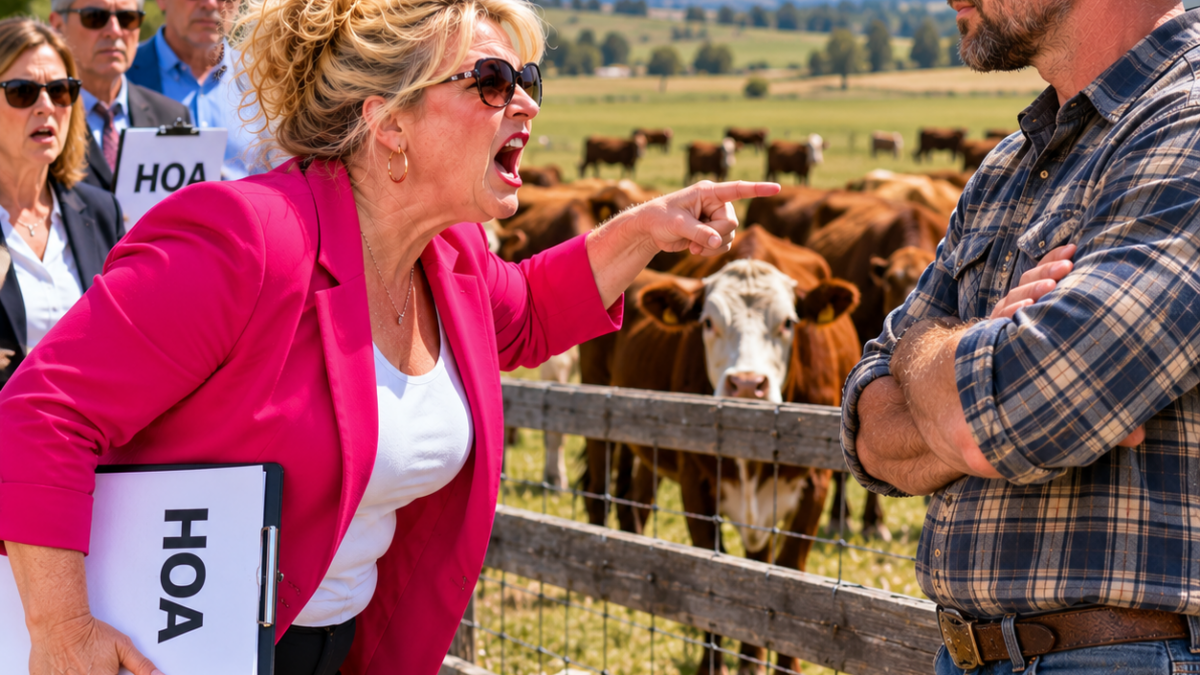
PART 2
“Fowler Grazing Trust.”
I didn’t answer.
The woman at the assessor’s office waited.
“Ms. Fowler?”
“I’m here.”
“You know what that is?”
“No.”
“It’s the taxpayer of record for Tract C.”
“How long?”
She clicked around.
“Twelve years in this system. Every payment current.”
“Who signs?”
“I can’t see that from this screen.”
“Is there an address?”
She read me one.
It was the ranch.
My ranch.
Same mailbox.
Same gravel driveway.
Same address where my grandfather had lived until March.
I wrote FOWLER GRAZING TRUST on the back of Delia’s violation notice.
The words looked familiar and foreign at the same time.
My name.
Not my ownership.
I thanked the assessor and hung up.
Then I sat at the kitchen table until the coffee went cold.
Grandpa had never mentioned a trust.
Not once.
At least not to me.
He talked about cattle.
Rain.
Fences.
Hay.
Diesel prices.
When I was a teenager, he talked about boys I should stay away from.
When I was twenty-five, he talked about why town jobs made people soft.
When his knee got bad, he talked about which gates needed to be rehung lower because he couldn’t climb as easily.
He never said:
Tessa, there is a legal entity holding the only reliable water on this ranch.
That seemed like a detail worth sharing.
Two days later, I attended the Stillwater Bend board meeting.
The clubhouse had beige walls, fluorescent lights, and the kind of carpet designed to hide stains rather than avoid them.
About twenty residents were there.
Delia sat in the middle of a long folding table.
Three-ring binder.
Nameplate.
Glass of water.
Everything squared to the edge.
I signed up for open comment.
When my turn came, she looked at the clock.
“Three minutes, Ms. Fowler.”
“I won’t need all three.”
I stood without notes.
“My family has grazed Tract C since before Stillwater Bend existed. The HOA’s notice claims ownership. I’m pulling the underlying title records now. I’m asking that you suspend enforcement until we establish who actually owns the parcel.”
Delia folded her hands.
“Anything else?”
“Yes. If your board has a deed conveying Tract C to the association, I’d like a copy.”
Her eyes didn’t change.
“Your time is still running.”
“I’m done.”
“Thank you.”
I sat.
At the end of the meeting, Delia announced for the minutes:
“The thirty-day cure period remains in effect.”
No discussion.
No title review.
No hesitation.
Someone behind me clapped.
One person.
That was enough to make me want to turn around.
I didn’t.
I drove home through their stone entrance, crossed the cattle guard, and stopped at the gate where her violation notice still left a rectangle of adhesive over Grandpa’s initials.
E.F.
I rubbed my thumb over the steel.
My grandfather built that gate in 1998.
Same year Stillwater Bend appeared.
Same year the north pasture apparently stopped being part of his personal deed.
That coincidence started bothering me.
So did the way he talked.
He never called it “my north pasture.”
He said:
“The north.”
Or:
“The herd’s water.”
I had always thought that was ranch shorthand.
Maybe it wasn’t.
The Ellsworth County Recorder’s Office occupied one room on the first floor of a building that smelled like old paper and floor wax.
Beth worked behind the counter.
Gray hair.
Reading glasses on a chain.
The kind of county employee who seemed to know where documents lived before you finished asking.
“I need the original Stillwater Bend plat.”
“What year?”
“1998.”
She didn’t ask why.
Rolled back to microfilm.
Threaded it through a reader.
The image came up sideways.
I rotated it.
There it was.
Stillwater Bend.
Curved streets.
Ninety-one numbered lots.
Retention pond.
Stone entrance.
And along Slate Creek:
TRACT C — COMMON AREA.
My stomach tightened.
It was official.
Not Delia’s homemade map.
Not something printed from an HOA website.
County record.
I stared until Beth said:
“There should be a dedication.”
I looked at her.
“A what?”
“The plat shows what the developer drew. The dedication shows what was legally conveyed.”
She rolled forward two frames.
Another recorded page appeared.
I started reading.
The undersigned hereby dedicates…
Tract A.
Tract B.
Then signatures.
I leaned closer.
“Where’s Tract C?”
Beth leaned over my shoulder.
Read.
Then:
“It isn’t there.”
I sat back.
“Could it be somewhere else?”
“Maybe another instrument.”
“Can we check?”
We did.
Deeds.
Transfers.
Corrections.
Supplemental dedication.
Nothing obvious.
The map labeled the sixty-two acres common area.
The dedication never gave the HOA the sixty-two acres.
“The assessor said taxes are under Fowler Grazing Trust.”
Beth typed.
Waited.
Turned her monitor.
Parcel.
Tract C.
Taxpayer:
FOWLER GRAZING TRUST.
Twelve years of payments.
No HOA payments.
Not one.
I felt a rush of relief.
For about ninety seconds.
Then Beth asked:
“Do you know who the trustee is?”
“No.”
“Do you have the trust document?”
“No.”
“Then you still need that.”
The relief faded.
I printed the plat.
Dedication.
Tax history.
Went directly to the Stillwater Bend office.
Delia was there.
Of course she was.
She looked up when I entered.
“Ms. Fowler.”
I laid the documents on her desk.
“Your map labels Tract C common area.”
“Yes.”
“Your dedication never conveyed it.”
She looked down.
I pointed.
“Tracts A and B. That’s it.”
She read for maybe one breath.
Then squared the papers.
Pushed them back.
“The county accepted the plat.”
“The county accepted a drawing.”
“The association has used that ground for twenty years.”
“Usage is not a deed.”
She smiled.
Patient.
That smile bothered me more than anger would have.
“Tessa, your grandfather probably created some tax vehicle.”
“Fowler Grazing Trust.”
“Exactly.”
“You know about it?”
“I know how ranchers operate.”
She capped her pen.
“They move property around to protect assets. That does not establish your personal ownership.”
“I’m not claiming personal ownership yet. I’m telling you the HOA doesn’t have a deed.”
“That is your interpretation.”
“It’s the dedication.”
“It’s a technicality.”
“It’s the document that transfers land.”
She tilted her head.
“If your grandfather was so certain, don’t you think he would have told you?”
That landed.
She saw it.
I hated that she saw it.
Then she leaned back.
“The violation remains.”
“Thirty days?”
“The notice provides a cure period.”
“So fines start after?”
She reached for another sheet.
“The board has discretion.”
“Meaning?”
“Meaning livestock remain on association common area today.”
She picked up her pen.
“Two hundred fifty dollars per day begins this morning.”
I stared.
“You just moved the start date.”
“I clarified enforcement.”
“That isn’t clarification.”
“Then appeal.”
“To whom?”
“The board.”
“The board you control?”
She smiled again.
“Have a nice afternoon.”
Outside, the truck seat was hot enough to burn through denim.
I stood with the door open and did the math.
$250 daily.
$7,500 monthly.
Eighty-four cattle.
No fall calf check yet.
Operating expenses rising.
Grandpa had left the ranch in decent shape.
Not rich.
Ranches like ours don’t produce piles of cash.
They produce land equity, old equipment, cattle, and bills timed around seasons.
Then Delia stopped attacking the pasture.
She attacked the business.
Carol Hines called from the bank.
Carol had handled Grandpa’s operating line for years.
“Tessa.”
Her voice sounded wrong.
“What happened?”
“I received correspondence from Stillwater Bend HOA.”
My hand tightened around the phone.
“About what?”
“They’re claiming part of the collateral property is in an active ownership dispute.”
“It isn’t collateral.”
“I know what you’re saying.”
“Do they have a deed?”
“I’m not making the title decision.”
“Carol—”
“The examiners froze new advances until the issue clears.”
I closed my eyes.
That line paid for mineral.
Diesel.
Vet bills.
Repairs.
Hay when weather forced us to buy.
“When?”
“Effective immediately.”
“Who signed the letter?”
Pause.
“Delia Rutherford.”
Of course.
Dunlap Feeders was next.
They had a handshake agreement for my second cutting.
No signed contract.
Small counties still run on handshakes right up until a handshake becomes inconvenient.
I called.
No answer.
Called again.
Finally got a text.
Going another direction this year. Sorry.
That meant they had heard.
I walked the north pasture that evening.
June Bug came first.
Sixteen-year-old cow.
Red with a white face.
She had been the first calf Grandpa put into my arms when I was twelve.
I had been too small.
She kicked.
I dropped her.
Grandpa laughed so hard he had to sit on the tailgate.
For years afterward he called her “your first management failure.”
June Bug grew into the herd leader.
When she moved, the others followed.
At dusk she walked toward Slate Creek.
I followed.
Water moved over gravel.
Cool.
Clear.
Constant.
I knelt and put my hand in it.
August was coming.
South ponds would shrink.
The well would not keep up.
Without this creek, hauling water would cost more than the calves were worth.
I called a land attorney in Bannock County.
One county over.
I deliberately avoided Ellsworth lawyers.
Stillwater Bend had ninety-one households.
I didn’t want somebody who played golf with Delia’s husband.
Ray Stallings practiced out of a brick office above a pharmacy.
He was in his sixties.
Wire-frame glasses.
No wasted words.
I brought Grandpa’s whole green file box.
Ray read.
For forty minutes, almost nothing.
Plat.
Dedication.
Tax history.
Probate deed.
My inheritance papers.
Then he removed his glasses.
Rubbed his eyes.
“Ms. Fowler.”
“Tessa.”
“Tessa. You’re asking whether the HOA owns Tract C.”
“Yes.”
“That’s the wrong question first.”
“What’s the right one?”
“Do you?”
I sat still.
“The ranch came to me.”
“Most of it.”
“The pasture has been used with the ranch my whole life.”
“That’s not title.”
“The taxes—”
“Paid by a trust.”
“My family’s trust.”
“Maybe.”
I hated that word.
“Ray.”
He tapped my probate deed.
“This does not include Tract C.”
“I know.”
“The HOA’s dedication does not include Tract C either.”
“I know.”
“So right now I have two people saying the ground isn’t the other person’s.”
He slid the deed toward me.
“I need to know whose it actually is.”
“How?”
“Chain of title.”
“Can’t you do that?”
“I am going to.”
He pointed at Grandpa’s box.
“You’re going to do something else.”
“What?”
“Find out what Fowler Grazing Trust is.”
Two weeks of homework.
Old statements.
Tax notices.
Canceled checks.
Bank records.
Every box in the shop.
Every drawer in Grandpa’s desk.
Three days in, my phone rang from an unknown number.
“Is this Elwood Fowler’s granddaughter?”
“Yes.”
“Harold Beckett.”
The name meant nothing.
“I served on the Stillwater Bend board years ago.”
I stood up.
“When?”
“Secretary, 2002 through 2006.”
“Okay.”
“I heard what Delia’s doing.”
I waited.
He cleared his throat.
“I have old association files in my garage.”
“Why?”
“Nobody ever asked for them back.”
“Mr. Beckett—”
“Harold.”
“Harold, what’s in them?”
“That’s why I called.”
His garage smelled like damp cardboard and fertilizer.
An old Buick sat under a dust cover.
He pulled down a banker’s box.
ASSOCIATION LEGAL — MISC.
“Dig.”
I did.
Old insurance letters.
Fence disputes.
Drainage.
Developer correspondence.
Then a two-page letter on law-office letterhead.
LOWELL PRICE.
Association’s first attorney.
Dated 2004.
I read the first paragraph.
Then the second.
My hands started shaking.
Price had reviewed Stillwater Bend’s founding documents and identified a discrepancy.
The recorded plat labeled Tract C common area.
The deed of dedication transferred only Tracts A and B.
No instrument had conveyed Tract C to the association.
Title, Price wrote, remained with Fowler family holdings.
He recommended two options.
Buy the tract properly.
Or correct the plat to remove the common-area label.
Neither happened.
I turned to Harold.
“You knew?”
“The board knew.”
“Why didn’t they fix it?”
He looked ashamed.
“Money.”
“What money?”
“Buying sixty acres costs money.”
“So they left a false map?”
“They told themselves nobody cared. Elwood kept cattle there. Residents walked the edge. Everybody got along.”
“Until Delia.”
Harold nodded.
I turned the page.
Stapled behind the letter was a routing slip.
BOARD TRANSITION FILE RECEIVED.
List of names.
Initials.
Dates.
Then one signature pressed hard enough to emboss the back.
Delia Rutherford.
I stared.
“When did she get this?”
“When she took over.”
“She signed for the file?”
“All of it.”
“She had this letter?”
Harold looked at the signature.
“That is her name.”
For the first time since the violation appeared, I stopped wondering whether Delia might honestly believe the plat.
She had received a legal opinion explaining the error.
She knew there was no conveyance.
And she taped the notice over my grandfather’s initials anyway.
“Why call me now?”
Harold stared at the floor.
“I should’ve called sooner.”
“That’s not an answer.”
He rubbed his thumb along the edge of the box.
“I spent twenty years telling myself it wasn’t my mess anymore.”
Then:
“Turns out that doesn’t make it disappear.”
I copied everything.
Ray read Price’s letter.
Then the routing slip.
He leaned back.
“That’s useful.”
“Useful?”
“Very.”
“She knew.”
“It helps establish knowledge.”
“So we win.”
He gave me a look.
“What?”
“We still don’t know who owns the ground.”
I hated him a little for being right.
“What do I do with the letter?”
“Put it in front of the full board.”
“Why?”
“Because right now Delia can say anything privately.”
He tapped the signature.
“Make her respond to this on the record.”
The next Stillwater Bend meeting was packed.
Forty-something residents.
Word had spread.
I got my three minutes.
This time I brought Price’s letter.
I read only the important paragraph.
“No instrument has ever conveyed Tract C to the association.”
The room quieted.
Then I held up the routing slip.
“This transition file was received by Delia Rutherford when she became president.”
Someone whispered.
I did not accuse her of lying.
Ray told me not to.
Facts first.
“I’m asking the board to suspend fines and withdraw the livestock notice until a court or title professional determines ownership.”
At the end of the table sat Marla Pruitt.
First-year board member.
Teacher, I later learned.
She actually read board packets.
She turned toward Delia.
“Did you know about that letter?”
Delia did not flinch.
Not even slightly.
“I’m aware of it.”
A murmur.
Marla leaned forward.
“You received a legal opinion saying the HOA never got title?”
“I received a twenty-year-old opinion from an attorney the association no longer uses.”
“It says no conveyance existed.”
“It says he couldn’t locate one.”
I spoke.
“That isn’t what it says.”
Delia’s head turned.
“Your time expired four minutes ago.”
Then she addressed the room.
“What this association has is more than a piece of paper.”
She spoke well.
That mattered.
“Twenty years of open, continuous use.”
Residents nodded.
“We maintain the creek bank.”
More nodding.
“We treated thistle.”
A man behind me said, “That’s true.”
“Our children have walked that land since Stillwater Bend was built.”
Then:
“There are legal doctrines recognizing rights created through long, open, continuous use.”
The room shifted.
She had given them a story they could live with.
Nobody wanted to think they had been walking private land for twenty years.
Nobody wanted to think dues had been spent maintaining someone else’s pasture.
Delia transformed uncertainty into entitlement.
I started:
“Prescriptive rights don’t work the way—”
“Ms. Fowler.”
She tapped the microphone.
“Your time has expired.”
Marla moved to suspend fines pending title review.
Another board member seconded.
Vote:
Four to two against.
Fines continue.
Notice remains.
I drove home with the windows down because my truck air conditioner had died two summers earlier and ranch cash had always gone somewhere else first.
I should have felt vindicated.
I had proved Delia knew the map was questionable.
Instead I felt worse.
Price’s letter said title stayed with Fowler holdings.
Not:
Tessa Fowler.
Not:
Elwood Fowler’s estate.
Not even:
Fowler Grazing Trust.
Just family holdings.
I could prove Delia did not have clear title.
I still could not prove that I did.
Ray filed for a temporary restraining order.
We asked the court to pause HOA enforcement until title could be resolved.
Monday morning.
Small courtroom.
Delia in navy blazer.
Binder.
Two board members.
I wore the only jacket I owned.
Ray argued.
Plat discrepancy.
Dedication.
Taxes.
Price letter.
Knowledge.
Then the HOA attorney stood.
He approached carefully.
“Ms. Fowler, do you personally hold title to Tract C?”
“My family—”
“That wasn’t my question.”
I looked at Ray.
“Is your name on a deed to Tract C?”
“No.”
“Are you currently trustee of a trust holding Tract C?”
“I don’t know.”
There it was.
The worst possible truthful answer.
The judge asked Ray for chain of title.
Ray had found the 1998 transfer.
My grandfather had deeded the north pasture out of his personal ownership that same year he sold the south sixty acres to the developer.
Warranty deed.
Elwood Fowler to Fowler Grazing Trust.
Sixty-two acres.
That meant the pasture had not been in Grandpa’s name when he died.
It had not been part of his estate.
Probate could not give me what he did not personally own.
The judge listened.
Then denied the TRO.
Not because the HOA proved ownership.
Because I had not established standing.
I wasn’t yet the record owner.
Outside, Ray caught up.
“Tessa.”
“They won.”
“No.”
“The judge denied us.”
“On standing.”
“They won.”
“No one ruled they own Tract C.”
Across the courthouse steps, Delia was speaking to three residents.
“The court upheld the association’s position.”
I turned.
“That is not what happened.”
She looked at me.
“The motion was denied.”
“Because title is unresolved.”
She smiled.
“Have a good afternoon.”
The rumor reached town before I reached the ranch.
Tessa lost.
HOA won.
Court says pasture belongs to subdivision.
None of those statements were true.
All of them traveled faster than the order.
Two days later, I heard the post driver.
If you live around ranches long enough, certain sounds become warnings.
A cow bawling wrong.
A pump losing prime.
A diesel engine spinning without firing.
A post driver hammering where no fence should be.
I took the side-by-side over the ridge.
Four men from Ridgeline Fence and Post.
Steel posts.
Wire.
They weren’t fencing the subdivision boundary.
They were fencing across the water gap.
Directly between my herd and Slate Creek.
I stopped.
“Who authorized this?”
Foreman wiped his forehead.
“Association.”
“Do you have a work order?”
“Yes, ma’am.”
“Let me see it.”
He held the clipboard but kept his hand on it.
I photographed.
INSTALL APPROX. 400 FT FENCE — TRACT C — RESTRICT LIVESTOCK ACCESS AT CREEK.
Authorized:
Delia Rutherford.
Her signature.
Not the board.
Her.
“Stop.”
Foreman shook his head.
“I’m sorry.”
“You know title is disputed.”
“I have an order from the association.”
“From one woman.”
“I’m not getting into it.”
I filmed.
Every post.
Every roll of wire.
Every face.
I called Ray.
His voice went cold.
“They’re fencing the water?”
“Yes.”
“Today?”
“Yes.”
“What date?”
“August twelfth.”
Silence.
Then:
“Document everything.”
“I am.”
“Do not touch the workers.”
“I won’t.”
“Do not cut the fence tonight.”
That surprised me.
“Ray—”
“Don’t.”
“They’re keeping cattle from water.”
“Haul water.”
“Do you know what that costs?”
“Yes.”
“Then why—”
“Because right now I need you to remain the person complying with court process while they become the people escalating on disputed land.”
I wanted to throw the phone.
Instead, I said:
“Fine.”
Those next ten days nearly broke me.
Two hired water loads a day.
Twelve hundred gallons each.
Sometimes more.
Troughs.
Heat.
Dust.
August hit 105.
Cattle stood along the new fence hearing Slate Creek.
They could smell water.
Hear water.
Couldn’t reach it.
The south ponds had gone to mud.
I slept four hours at a time.
When the tanker arrived, I was outside.
When it left, I cleaned troughs.
Then fed.
Then checked cattle.
Then paperwork.
Then calls.
On the fourth day, June Bug stopped eating.
She stood near the fence with her head low.
I brought feed.
She ignored it.
That scared me more than Delia.
Doc Prentiss came at nine that night.
Old ranch vet.
Hands permanently rough.
He checked her eyes.
Gums.
Skin.
Started fluids.
“She’s dehydrated.”
“I’m hauling.”
“I know.”
“It isn’t enough?”
“For the herd maybe. Not for an old cow already stressed.”
“She’s sixteen.”
“I know June Bug.”
Of course he did.
Everybody knew June Bug.
Grandpa had called Doc the night she was born.
He stayed two hours.
Before leaving, he looked at me.
“Tessa.”
“What?”
“If this keeps up, she’ll be the first.”
I didn’t ask:
First what?
I knew.
After his truck disappeared, I sat on an overturned bucket beside her.
Dark pasture.
Cattle shifting around us.
Creek moving beyond the fence.
For the first time, I considered selling.
Not because Delia was right.
Because cattle did not care about legal principles.
They needed water.
The sale barn could take them.
I could preserve some money.
Maybe rebuild later.
I put my face in my hands.
Grandpa had kept that herd through drought.
Recession.
Bad knees.
A cattle-price crash.
One year when ice destroyed half the fencing.
I had managed five months.
Then I heard his voice in memory.
Not inspirational.
Grandpa wasn’t built that way.
He would have said:
Quit feeling sorry for yourself and solve the thing in front of you.
So I got up.
Checked June Bug again.
Went inside.
The fines passed $18,400.
Carol called.
Bank still frozen.
Dunlap formally bought hay elsewhere.
Then Delia sent another letter.
Cure period ending.
Association intends to remove livestock from Tract C.
Licensed hauler scheduled.
6:00 a.m.
Eleven days away.
Eighty-four head loaded onto someone else’s trailers.
That letter cured my self-pity.
I read it twice.
Then laid it on the table.
I had spent the summer trying to prove Delia did not own the pasture.
Wrong target.
Somebody owned it.
Something owned it.
Fowler Grazing Trust had paid taxes for twelve years.
Grandpa created it in 1998.
Then hid or lost the paperwork.
I needed the trust.
Ray said:
“Trusts leave two trails.”
“What?”
“Paper and habit.”
“I’ve looked for paper.”
“Then follow habit.”
“What did Elwood do every year that might connect to it?”
Taxes.
Banking.
Safe-deposit boxes.
Insurance.
I called the small bank on Main Street.
Clock out front had been seven minutes slow since I was a child.
“Did Elwood Fowler maintain a safe-deposit box?”
The woman checked.
“Yes.”
My pulse jumped.
“For how long?”
“Twenty-six years.”
“Can I access it as estate representative?”
“We’ll need probate documentation.”
“I have it.”
“And the key.”
Of course.
The key.
I tore Grandpa’s shop apart.
Desk drawers.
Toolbox.
Coffee cans.
Old coats.
Tackle boxes.
Under the seat of his truck.
Nothing.
I called the bank.
“What happens if I don’t have it?”
“Drill fee.”
“How long?”
“We schedule.”
“How long?”
“Possibly two weeks.”
Two weeks.
Haulers in eleven days.
I kept looking.
Bottom tackle box.
Old lures.
Weights.
Prince Albert tobacco tin.
Grandpa hadn’t smoked in thirty years but kept those tins for screws.
Inside:
One small key.
Taped to paper.
A box number in his handwriting.
I laughed.
Then cried.
Then drove to the bank.
They put me in a private room.
Table.
Chair.
Safe-deposit box.
I opened it.
Rubber-banded papers.
Yellowed edges.
Folded so long the creases were stiff.
Top document:
FOWLER GRAZING TRUST.
Executed 1998.
Behind it:
Warranty deed.
Elwood Fowler, grantor.
Fowler Grazing Trust, grantee.
Legal description.
Sixty-two acres along Slate Creek.
I knew those boundary calls by then.
I could have walked them blind.
There it was.
Ownership.
Not Delia’s plat.
Not family tradition.
Not tax history.
Title.
I turned pages.
Trust terms.
Successor trustees.
First:
My grandmother.
Died 2004.
Second:
My uncle Wayne.
Died 2012 in a truck accident in Kansas.
Third:
Tessa Marie Fowler.
I stopped breathing.
Read again.
Tessa Marie Fowler, successor trustee.
Then:
Sole remaining beneficiary.
I covered my mouth.
Grandpa had not accidentally forgotten the pasture.
He had protected it.
Maybe from creditors.
Maybe from a bad cattle year.
Maybe from himself.
Maybe all of those.
He created a legal box around the one piece of land the ranch could not survive without.
Then life passed.
Grandma died.
Uncle Wayne died.
Grandpa got old.
And he died before telling me where he kept the key.
I cried for maybe ninety seconds.
Then I kept reading.
Because ranching doesn’t stop for crying and legal documents definitely don’t.
The trust schedule listed acreage.
Sixty-six.
I frowned.
The north pasture was sixty-two.
I found the second description.
Four acres.
Long narrow strip.
South end.
I pulled the plat from my bag.
Laid it beside the trust.
Traced.
County road.
North into Stillwater Bend.
Entrance road.
Cattle guard.
Stone sign.
Stormwater pond.
My hand froze.
The trust owned the entrance.
Not just the road.
The land underneath the entrance road.
The sign.
The drainage structure residents called a lake.
Behind the deed was another paper.
1998.
Signed by Grandpa and the original developer.
LICENSE AGREEMENT.
Not easement.
Not deed.
Not dedication.
License.
Permission for subdivision access and drainage across the four-acre strip.
Revocable by grantor or successor upon ninety days’ written notice.
I thought about Grandpa’s notebook.
Gate strip — license, not sale.
He had written the answer twenty-five years ago.
I simply hadn’t understood the question.
I drove to Ray’s office with the papers on the passenger seat.
He read the trust.
Then read it again.
Then stood.
That was the first time I saw Ray move quickly.
“You accept trusteeship today.”
He pulled forms.
“We notarize.”
“Okay.”
“Record tomorrow morning.”
“Okay.”
“Once recorded, you have standing.”
“I own the pasture?”
“The trust owns the pasture.”
“I control the trust.”
“You serve as trustee and beneficiary subject to the instrument.”
He pointed at me.
“Use precise language.”
“Fine.”
Then he reached the four-acre strip.
Stopped.
Read the license.
Looked over his glasses.
“Oh.”
“Yeah.”
“Tessa.”
“What?”
“We discuss this carefully.”
“I could close their entrance.”
“After ninety days’ proper notice, depending on all applicable law and emergency-access issues, the license gives you significant leverage.”
“They’re trying to take my herd.”
“I know.”
“I want the notice ready.”
He held up one hand.
“Not today.”
“Why?”
“Because retaliation feels good and often looks bad later.”
“It isn’t retaliation.”
“It will be described that way.”
He tapped the north-pasture deed.
“First, establish title.”
Then the entrance license.
“Second, preserve leverage.”
I hated his patience.
It saved me more than once.
For four days, we built the record.
Certified tax receipts.
Twelve years.
Every payment from Fowler Grazing Trust.
Certified chain of title.
No HOA conveyance.
No correction.
No deed.
No transfer.
My acceptance of trusteeship recorded.
County seal.
Then Marla Pruitt emailed.
No greeting.
No explanation.
One attachment.
An email Delia had sent months earlier to Camden Land Partners.
Subject:
TRACT C AMENITY VALUE.
She asked whether converting the creekside pasture into a walking trail and pickleball expansion would raise property values for lots backing the north edge.
Camden replied with estimates.
Delia’s home was one of those lots.
I read the email twice.
This wasn’t really about cattle violating a covenant.
The cattle were in the way.
The pasture had a creek.
Shade.
Open space.
A trail.
Pickleball.
Higher values.
Including Delia’s.
“Ray.”
“I see it.”
“She wants the land.”
“She wants a use of the land.”
“She knew the HOA didn’t own.”
“Which matters.”
He made another call.
Paula Winslow.
County attorney.
She reviewed the plat discrepancy and title chain.
Meeting Thursday.
The haulers were scheduled Friday morning.
Then Delia discovered my trusteeship filing.
Public records.
She moved quickly.
Emergency board meeting Tuesday night.
Marla sent me the packet at 11:15.
The board passed a resolution asserting prescriptive rights over Tract C.
Twenty years of mowing.
Weed control.
Resident use.
Open and continuous maintenance.
Then paragraph three.
I read it.
Again.
Notwithstanding the absence of a recorded conveyance to the association…
I stared at the words.
Delia had just written the admission for us.
To explain why they supposedly needed prescriptive rights, she formally acknowledged the absence of title.
Board resolution.
Meeting minutes.
Her language.
Ray called at 11:28.
“You see paragraph three?”
“Yes.”
“Print six copies.”
“Why six?”
“I like copies.”
Wednesday, Delia sent notice to all ninety-one Stillwater Bend households.
Possible temporary disruption at main entrance due to Fowler dispute.
Residents should direct concerns to board.
She thought I would threaten the road.
She was preparing them to see me as the aggressor.
That night I put three documents in a manila envelope.
Certified title chain.
Recorded trustee acceptance.
1998 license.
Then another envelope.
Not yet delivered.
Ninety-day revocation notice.
Ray had drafted it carefully.
I set my alarm for 4:30.
Lay awake listening to cattle near the fence.
Three hours of sleep.
At 5:50, I came over the ridge.
The haulers were early.
Gooseneck trailer.
Double-deck semi.
Ridgeline truck.
Two men with sorting sticks.
Delia.
Clipboard.
County cruiser.
Deputy Neil Carver leaning against the door with coffee.
And fifteen or twenty residents gathered along the subdivision fence.
Phones.
One lawn chair.
I parked.
Grabbed the envelope.
Walked down.
Delia didn’t address me.
“Open the gate.”
She said it to the hauling foreman.
Carver lifted one hand.
“Hold on.”
“The association has a scheduled livestock removal.”
“Ma’am, we’re going to slow down.”
“There’s a court ruling.”
I stopped in front of him.
“Deputy, can you read these before anybody loads cattle?”
Delia made a sound.
“Another delay.”
Carver held out his hand.
“Two minutes.”
I gave him the envelope.
He set his coffee on the cruiser hood.
First:
Warranty deed.
Elwood Fowler to Fowler Grazing Trust.
Second:
Dedication conveying only A and B to the HOA.
Third:
Recorded acceptance of trusteeship.
Carver read.
Then read again.
People along the fence got quiet.
He looked up.
“Ms. Rutherford.”
Delia stepped forward.
“This ground is not titled to the association.”
Someone behind her said:
“What?”
Carver continued.
“It’s titled to Fowler Grazing Trust. Ms. Fowler is the recorded trustee.”
Delia didn’t blink.
Instead, she opened her binder.
Tab.
Pulled the Tuesday resolution.
“The association has prescriptive rights.”
She handed it to him.
“Twenty years of continuous use and maintenance.”
Carver began reading.
I said:
“Third paragraph.”
Delia turned toward me.
“Excuse me?”
“Have him read the third paragraph aloud.”
Carver looked down.
Then read.
“Notwithstanding the absence of a recorded conveyance to the association…”
He stopped.
Looked at Delia.
“That’s your board saying there’s no deed.”
“There doesn’t need to be one if prescriptive rights—”
A car came down the subdivision road.
Paula Winslow got out.
Jeans.
County jacket.
Ray had apparently moved our Thursday meeting to six in the morning at a cattle gate.
She introduced herself.
“I’m Paula Winslow, county attorney.”
Delia’s expression shifted for the first time.
Paula held a file.
“I reviewed the chain of title yesterday.”
Delia started:
“This is an association matter.”
Paula ignored that.
“No recorded instrument conveyed Tract C to Stillwater Bend HOA.”
She continued.
“The plat label conflicts with the dedication. Association counsel identified that error in 2004 and recommended correction.”
Residents murmured.
“Second, a board vote does not itself establish prescriptive rights.”
Delia crossed her arms.
“We have used that property for twenty years.”
“Any civil claim you believe you possess can be litigated.”
Paula’s voice stayed flat.
“But you do not have a recorded ownership interest authorizing livestock removal today.”
Then she pointed at my documents.
“The tract has also been separately assessed to Fowler Grazing Trust, with taxes paid by that trust, not your association.”
Delia said:
“The board made these decisions.”
Fast.
Too fast.
“This was board action. I execute board decisions.”
That was when I opened my second folder.
Violation notice.
Signed Delia.
Bank letter.
Signed Delia.
Dunlap letter.
Signed Delia.
Fence work order.
Signed Delia.
Original meeting minutes.
Motion initiated by Delia.
Then Price’s 2004 letter.
Finally the routing slip.
Her signature.
I laid it on the cruiser hood.
I didn’t say:
You lied.
I didn’t need to.
Everyone could see her name.
Received.
Twenty years earlier, the association’s own lawyer told them Tract C was never conveyed.
When Delia took the presidency, she signed for that file.
The Ridgeline foreman read the fence work order over my shoulder.
Then stepped back from the gate.
Hands into pockets.
Deputy Carver handed the papers back.
“All right.”
He pointed toward the trailers.
“Back them off the private approach.”
Delia’s head snapped toward him.
“You can’t—”
“I’m not letting cattle be removed from disputed private land based on this paperwork.”
Then he looked at the fence crew.
“That fence blocking creek access?”
The foreman nodded.
“Remove it.”
“Deputy—” Delia began.
Paula cut in.
“Ms. Rutherford, any claim the HOA wishes to assert can go through counsel.”
The foreman had fence pliers out before the sentence ended.
His crew drove down.
Started cutting wire.
Pulling posts.
Forty minutes.
That was all it took to undo ten days of misery.
The herd heard the creek.
They were already moving down the ridge before the last posts came free.
June Bug led.
Slowly.
Old cow.
Heat had taken weight off her.
She approached the bank.
Stepped sideways.
Down.
Then stood in Slate Creek up to her hocks.
Drank.
And drank.
And drank.
I watched for maybe a minute.
That was the closest I came to falling apart in front of Delia.
I remembered myself at twelve.
Holding June Bug as a calf.
Grandpa laughing.
His hand on my shoulder.
His boots in the same creek.
Then I turned back toward the gate.
Most residents had moved away from Delia.
Not dramatically.
People simply found other places to stand.
She was beside her SUV.
Alone.
I took out the last envelope.
“Mrs. Rutherford.”
She looked at it.
Did not reach.
I held it there until she finally took it.
“What is this?”
“The trust owns another parcel.”
She frowned.
“Four acres.”
Her eyes changed.
I pointed south.
“Your entrance road.”
Silence.
“Cattle guard.”
She looked toward the subdivision.
“Stone entrance sign.”
I continued.
“Stormwater pond.”
“That’s impossible.”
“Same trust.”
“No.”
“1998 deed.”
She opened the envelope.
Pulled the first sheet.
I watched her read.
“My grandfather gave the developer a license.”
“An easement.”
“No.”
She looked up.
“A revocable license.”
The residents nearest us had gone quiet again.
“Ninety days written notice.”
She stared at me.
“This is our only entrance.”
“I know.”
“You cannot close access to ninety-one homes.”
“I haven’t.”
“You just served me notice.”
“I served the association notice that the license will terminate in ninety days unless we reach a lawful agreement.”
“You’re threatening families.”
“No.”
I looked at the fence lying in the grass.
“You threatened my herd.”
Her jaw tightened.
“Same thing.”
“It isn’t.”
I stepped closer, but kept my voice low.
“Those residents did not put that notice on my gate.”
She said nothing.
“Most of them did not call my bank.”
Nothing.
“They did not order a fence across my water.”
I looked at the envelope.
“I’m giving the association ninety days to fix a twenty-five-year-old paperwork problem properly.”
Then I walked away.
The association attorney called Ray before the end of the week.
Things moved quickly once every lawyer was reading the same documents.
The livestock violation was withdrawn.
All fines voided.
$18,400 already paid under protest returned with interest.
The board formally suspended every enforcement action involving Tract C.
My bank received a correction letter.
Carol called.
“They lifted the title hold.”
I sat at the kitchen table.
“You’re sure?”
“Yes.”
“Operating line?”
“Available again.”
I closed my eyes.
“Thank you.”
“Tessa.”
“Yeah?”
“I’m sorry.”
“You didn’t cause it.”
“I still hated making that call.”
“I know.”
Dunlap Feeders did not come back that season.
They had already bought elsewhere.
Some losses don’t reverse because paperwork improves.
By October, the county recorded a corrected plat.
Tract C common area disappeared.
The sixty-two acres remained exactly where they always had been.
Only the paper finally caught up.
Stillwater Bend residents called a special meeting in September.
I didn’t attend.
Didn’t want to.
Marla told me afterward.
Delia arrived with the binder.
Started again with twenty years of maintenance.
A man in the third row asked:
“How much of my dues did you spend putting a fence across somebody else’s cattle water?”
Delia replied:
“The board authorized the project.”
He asked:
“Who signed the work order?”
She stopped.
Removal vote:
61 to 9.
Delia lost the presidency she had held for three terms.
Later she tried to file for election again.
Election committee rejected her under the association’s revised eligibility rules.
Then the insurance fight began.
Stillwater Bend carried directors-and-officers coverage.
Normally, that protects volunteer board members when they make mistakes within their authority.
The insurer reviewed:
Violation notice.
Bank interference.
Hay-buyer letter.
Fence contract.
Price letter.
Routing slip.
Delia’s signature acknowledging receipt.
Coverage denied for the conduct at issue under exclusions and scope limitations the carrier invoked.
Her personal attorney called it wrong.
The insurer disagreed.
Litigation followed.
Our civil case took months.
Not dramatic months.
Depositions.
Invoices.
Expert reports.
Bank records.
Vet bills.
Water-hauling receipts.
Ray made me keep everything.
“Even diesel?”
“Yes.”
“Feed?”
“If it relates.”
“Phone calls?”
“Write down dates.”
“I run cattle, Ray.”
“Congratulations. You also run a lawsuit now.”
I hated lawsuits more than drought.
At least drought doesn’t pretend to have office hours.
Delia’s deposition lasted most of a day.
I wasn’t in the room for all of it, but Ray later walked me through the parts affecting the case.
Her position changed.
First:
She believed the plat.
Then:
She believed prescriptive rights existed regardless of title.
Then:
She acted on board instructions.
Then:
The bank letter was merely informational.
Then:
The fence was temporary livestock management.
But documents don’t care how you remember things later.
Price letter.
Routing slip.
Her signature.
Work order.
Her signature.
Bank letter.
Her signature.
Camden Land Partners email.
Her email.
The motive became harder to hide.
Creekside trail.
Pickleball expansion.
Higher property values.
Her house in the affected row.
We eventually reached judgment.
$242,000.
Pasture damage.
Fence removal.
Water hauling.
Veterinary expenses.
Lost hay opportunity.
Attorney fees where recoverable.
And the biggest component:
Damages tied to interference with my lender and buyer after Delia had notice the ownership claim was not what she represented it to be.
There was also a misdemeanor case tied to trespass and attempted livestock removal.
Probation.
Fine.
Restitution.
No jail.
Ray had warned me.
“You expecting prison?”
“No.”
“Good.”
“I want the record.”
“You’ll get a record.”
I didn’t want Delia locked away.
I wanted the thing she had done recognized for what it was.
She sold her Stillwater Bend house in November.
The deck that looked directly over my north pasture.
Trail proposal died.
Pickleball proposal died.
The creek remained a creek.
Then came the entrance.
The four acres.
I had ninety-one households by the throat if I wanted them.
I thought about that phrase.
Then rejected it.
They were not Delia.
Some had supported her.
Some clapped at that first meeting.
Some believed the HOA because people trust official-looking paperwork.
But a dozen people being wrong does not justify punishing ninety-one households.
There were kids.
Older residents.
People leaving for night shifts.
Delivery drivers.
Emergency vehicles.
The license was leverage.
It wasn’t a weapon I wanted to use.
The new board met with Ray.
Then me.
Marla had become acting president.
We sat at a conference table.
No binder theatrics.
She looked tired.
“Tessa, we need permanent access.”
“I know.”
“We can’t operate on a revocable license.”
“I agree.”
She looked surprised.
“You do?”
“That’s how this started.”
Ray almost smiled.
I continued.
“I don’t want another family dealing with this twenty years from now.”
We negotiated.
The association bought the access rights at appraised value through a properly recorded permanent easement arrangement and related conveyance structure Ray and their counsel prepared.
Road.
Drainage.
Necessary access.
Everything described.
Signed.
Recorded.
No ambiguity.
I had one condition.
Permanent covenant running with the appropriate Stillwater Bend property.
North pasture belongs to Fowler Grazing Trust.
HOA has no enforcement authority over it.
No livestock rules.
No trail.
No recreational conversion.
No common-area claim.
No encroachment.
Ever.
Marla read it.
Then looked up.
“That’s nonnegotiable?”
“Yes.”
She nodded.
“Okay.”
Eleven days.
Signed.
Recorded.
That was the moment I finally believed the fight was over.
Not when Delia lost the presidency.
Not when I got the judgment.
Not when fines disappeared.
When the correct documents were recorded.
Grandpa would have understood.
Paper lasts longer than meetings.
The bank reopened my line in October.
Spring came.
Dunlap Feeders called.
“Still got second cutting?”
I almost laughed.
“Probably.”
“Same terms?”
“You disappeared last year.”
Long pause.
“We had to protect ourselves.”
“I know.”
“You selling?”
Small county.
Long memory.
Longer future.
“Yes.”
We did business.
No speech.
No punishment.
That’s ranch country.
You decide what you can live with, then see the same people at the feed store for the next twenty years.
All eighty-four head made it through that summer.
Every one.
June Bug recovered.
Four days after the creek fence came down, she started eating normally again.
Doc Prentiss stopped by.
Watched her chewing hay.
“Stubborn old woman.”
“Which one?”
He looked at me.
“Both.”
June Bug lived two more years.
Her last summer was easy.
Good rain.
Full ponds.
Slate Creek cool.
By then she had slowed.
She still led when she felt like it.
Sometimes another cow passed her and she seemed personally offended.
Then one September afternoon, I found her beneath cottonwoods in the north pasture.
She had died lying down.
Herd nearby.
No struggle.
No fence between her and water.
I sat beside her longer than I needed to.
Maybe longer than was sensible.
Ran my hand over her forehead.
That cow tied half my life together.
Twelve-year-old me.
Grandpa.
The summer Delia tried to remove them.
The gate.
The trust.
Everything.
I called Doc.
Then called the rendering service.
Before I left, I walked to Slate Creek.
Water over gravel.
Same sound.
I cried there instead.
Grandpa’s photograph hangs beside the kitchen door now.
He is standing at the north gate.
One hand on the crossbar.
Hat pushed back.
E.F. burned into the steel.
Under the photograph hangs the framed 1998 warranty deed.
Not because I enjoy looking at legal descriptions.
Because I nearly lost the ranch’s future to a document nobody had read.
The violation tape left a shadow on the gate.
Adhesive and sun fading.
I could remove it.
I haven’t.
Earl from the feed store once asked:
“Why leave that ugly mark?”
“Reminder.”
“Of Delia?”
“No.”
“Then what?”
“To read.”
He laughed.
“That’s depressing.”
“Saved the cattle.”
“Fair.”
The ranch changed after Grandpa died.
It had to.
I changed rotation.
Rebuilt two stretches of fence.
Added a larger storage tank near the south side so a dry spell wouldn’t put us in quite the same position again.
Not enough for eighty-four head indefinitely.
Enough for emergencies.
Ray approved.
“Heaven forbid you solve something without litigation.”
“I’m growing.”
“I’m proud.”
I also learned the business better.
Grandpa had carried half the ranch in his head.
Which pump needed kicking.
Which pasture held longer after rain.
Which cow would abandon a calf if moved too quickly.
Who paid late.
Who always paid.
Which tractor made a noise that sounded catastrophic but wasn’t.
When he died, I inherited land and cattle.
Not his memory.
That summer taught me how dangerous that gap could be.
So I wrote things down.
Everything.
Water system map.
Gate maintenance.
Mineral schedule.
Tax parcels.
Insurance.
Trust documents.
Copies at the bank.
Copies with Ray.
Copies in a fireproof cabinet.
The safe-deposit key now hangs in a labeled envelope.
No Prince Albert tin.
I loved Grandpa.
I do not intend to imitate his filing system.
Stillwater Bend changed too.
Marla became president in the next election.
She called before doing anything near our fence.
First time:
“We’re trimming brush near the boundary.”
“Okay.”
“Want the contractor map?”
“Yes.”
She emailed it.
Second time:
“County wants to inspect the stormwater pond.”
“The access easement covers it.”
“We know. Still letting you know.”
I appreciated that.
Respect is cheap compared with litigation.
A year later, the subdivision wanted to build a walking path.
Not on my pasture.
Inside their actual property.
Marla invited me to the planning meeting anyway.
Delia’s old supporters were there.
Some avoided looking at me.
One man named Howard finally approached.
“You remember me?”
“Yes.”
He had been the one who applauded when Delia refused to pause the first notice.
He rubbed the back of his neck.
“I owe you an apology.”
I waited.
“I believed her.”
“I know.”
“I thought the map settled it.”
“So did I for a while.”
That surprised him.
“You did?”
“It was a recorded plat.”
He looked relieved.
Then ashamed of being relieved.
“I shouldn’t have clapped.”
“No.”
“I was angry about cattle being in what I thought was common space.”
“I know.”
He nodded.
“Sorry.”
“Thank you.”
He started away.
Then turned.
“June Bug still around?”
At that time she was.
“Yeah.”
“Good.”
That mattered more than the apology.
The county eventually corrected associated records everywhere the error had propagated.
Assessor maps.
Subdivision references.
A note on the old plat directing readers to the correction instrument.
Beth at the recorder’s office called me when it was done.
“You finally have boring paperwork.”
“Best kind.”
“You’d be amazed how many fights start with exciting paperwork.”
“I believe you.”
I brought her cookies at Christmas.
She said bribery was illegal.
Then ate three.
Harold Beckett came to the ranch once after the case ended.
The old board secretary.
He stood at the gate.
“I should’ve fixed it in 2004.”
“You couldn’t do it alone.”
“I could have pushed harder.”
“Probably.”
He looked toward the creek.
“Elwood knew.”
“About the letter?”
“Everything.”
That caught me.
“What do you mean?”
Harold smiled.
“Your grandfather knew the plat was wrong.”
“Then why didn’t he fix it?”
“He and the board got along.”
I stared.
“That’s it?”
“He said if they left his cows alone, he didn’t care what their map called it.”
I closed my eyes.
That sounded exactly like Grandpa.
Harold continued.
“Price told him to demand a correction.”
“And?”
“Elwood said paper didn’t water cattle.”
I laughed despite myself.
“Of course.”
“He was wrong, you know.”
“I know.”
Harold looked at the gate.
“He got away with being wrong because people were reasonable.”
“Until they weren’t.”
“Exactly.”
That stayed with me.
Grandpa had protected the pasture through the trust.
Smart.
Then tolerated the bad plat because relationships were good.
Dangerous.
People confuse peace with permanence.
They aren’t the same.
A handshake can work for twenty years.
Then one person arrives who needs the paper.
Suddenly paper is all that matters.
I added that lesson to every agreement afterward.
Fence access with neighbors?
Writing.
Hay purchase?
Writing.
Equipment sharing?
Writing.
Nobody loved it.
One rancher said:
“What happened to trust?”
I answered:
“Still here. It just gets signatures now.”
Ray laughed when I told him.
“Finally.”
“You lawyers ruin everything.”
“We preserve your ability to prove what happened after everyone gets mad.”
“Same thing.”
Years passed.
The 4-acre entrance arrangement became so normal nobody thought about it.
That was the goal.
Residents crossed every day.
School buses.
Mail.
Ambulances.
No notices.
No threats.
The association maintained its road under the permanent recorded rights.
The storm pond functioned.
My cattle remained north.
Everybody knew which side of the fence belonged to whom.
Boundary disputes are boring when boundaries are respected.
I prefer boring.
One June evening, Marla stopped at the ranch.
I was replacing a hinge.
She handed me an envelope.
“What’s this?”
“Board minutes.”
“I don’t want them.”
“You might.”
I opened.
Stillwater Bend board had passed a resolution.
Unanimous.
Recognizing the history of the Fowler ranch and requiring any future board to consult recorded title before asserting property jurisdiction outside platted lots and common areas.
I looked up.
“This is because of Delia.”
“This is because of all of us.”
Marla leaned on the gate.
“I voted against suspending your fines.”
“Four to two.”
“I was one of the two trying to suspend.”
I corrected myself.
“You were.”
“I still stayed on the board after.”
“That’s not a crime.”
“I watched it happen longer than I should have.”
I knew what she meant.
People like Delia rarely operate alone.
Not because everyone agrees.
Because enough people tell themselves:
Not worth fighting tonight.
Then the next meeting.
Then another.
Authority grows inside other people’s fatigue.
Marla said:
“I want future boards to have to open the records.”
“Good.”
She looked at Grandpa’s initials.
“Your grandfather really welded this?”
“1998.”
“Same year as the subdivision.”
“Yep.”
“Strange.”
“What?”
“Two things built the same year. One was right and one was wrong.”
I smiled.
“The gate lasted better.”
She laughed.
By then, the herd was smaller.
I sold some older cows.
Kept better replacements.
June Bug’s last heifer became the new leader.
Not because cattle inherit titles.
She just had the same habit.
First down the ridge.
First through the gate.
First to water.
I named her Cricket because Grandpa would have hated the name.
He believed cows should have practical numbers unless they did something to earn a name.
I had already broken that rule with June Bug.
Cricket made two.
Every evening in June, I opened the north gate.
Cricket came.
Then the herd.
They crossed the pasture.
Down the bank.
Into Slate Creek.
Sometimes I stood there with my boots in the water.
No reason.
Just because I could.
I thought about the night June Bug stood at the fence, head down.
That memory never softened completely.
The civil judgment was paid over time.
Not all at once.
Law rarely delivers one dramatic check.
There were payment schedules.
Liens.
Asset issues.
Insurance disputes.
Eventually, enough was collected to cover what the court ordered under the settlement structure and judgment enforcement.
I did not track Delia after she moved.
People tried to tell me things.
“She lives near Wichita now.”
“I heard Gerald left.”
“Somebody saw her at—”
I stopped them.
I didn’t care.
That surprised me.
During the fight, Delia occupied every hour.
Her letters.
Her fines.
Her fence.
Her emails.
Her plans.
Afterward, I wanted the space back.
The opposite of revenge is not forgiveness.
Sometimes it’s indifference.
Ray asked once:
“If she apologized, would it matter?”
“No.”
“You sure?”
“I don’t need her to understand.”
He nodded.
“That’s expensive wisdom.”
“Your bills helped.”
He laughed.
I paid him anyway.
The Stillwater Bend trail eventually got built.
On their land.
Not mine.
It curved around the pond and stayed well inside the recorded boundary.
Residents used it.
One afternoon I saw Howard walking his dog.
He waved.
I waved.
On the other side of the fence, Cricket watched them.
Nobody complained.
No signs.
No enforcement.
Just coexistence.
That was all we ever needed.
The county library invited me once to speak about agricultural inheritance.
I said no.
Then Ray volunteered me.
So I stood in a room with twenty farmers and ranch families and told them the least dramatic version possible.
“Know what is in probate.”
“Know what is in trust.”
“Know who succeeds as trustee.”
“Know where the documents are.”
An older man raised his hand.
“My kids know.”
“Have they seen it?”
“They know.”
“Have they seen it?”
He frowned.
“No.”
I looked at him.
“Mine knew too.”
That quieted the room.
Afterward, a woman my age came up.
“My father keeps everything in his head.”
“Mine did.”
“He says I’ll figure it out.”
“I almost did too late.”
She looked scared.
Good.
A little fear can make people organize paperwork.
Six months later she emailed me.
They had completed an estate review.
Found an old access easement nobody remembered.
Nothing dramatic.
Exactly the point.
Grandpa’s trust turned out to be smarter than I understood.
Ray explained why after the case.
Cattle prices had collapsed in the late nineties.
Grandpa carried debt.
He sold sixty acres to the developer to stabilize the ranch.
Then placed the north pasture and access strip into the grazing trust.
He isolated the water source.
Protect the piece without which the rest of the operation failed.
“He understood concentration risk,” Ray said.
“He would have punched you for saying that.”
“It’s what he did.”
“He called it not being stupid.”
“Same principle.”
I looked at the trust.
“He never told me.”
“People who grew up in his generation sometimes believed documents were for bad days and talking about bad days invited them.”
“That’s ridiculous.”
“Yes.”
“Why are you defending him?”
“I’m not.”
Ray smiled.
“I’m translating.”
The trust contained one note we had initially overlooked.
Not legally operative.
Just a handwritten page clipped behind the original instrument.
Grandpa’s writing.
North water stays with herd.
Gate strip stays ours until subdivision secures itself right.
I found that line months later.
Stared at it.
He had anticipated both problems.
Water.
Entrance.
He built leverage into the land.
Not because he planned to fight Stillwater Bend.
Because he understood dependency.
The ranch depended on Slate Creek.
The subdivision depended on the entrance.
Balance.
He did not give either away casually.
Then he forgot to explain it.
I framed that note too.
Ray said my kitchen was becoming a title office.
I told him to mind his business.
The gate remained.
Same crossbar.
Same initials.
After the violation shadow faded, I considered repainting.
Couldn’t.
The original steel had Grandpa’s torch marks.
I cleaned rust.
Oiled hinges.
Left the tape shadow.
One morning, a Stillwater Bend landscaping crew approached.
Young guy in a mower.
Stopped at the boundary.
Called.
“Ms. Fowler?”
“Yes.”
“We’re supposed to cut the creek edge.”
“Which side?”
He checked his map.
“HOA side.”
“Good.”
“Can I cross your gate to turn around?”
I smiled.
“Ask me again.”
Silence.
“Can I cross your gate to turn around?”
“Yes.”
He laughed uncertainly.
“Thank you.”
“You’re welcome.”
Permission.
Such a small thing.
The whole summer could have been avoided with it.
Can we use this?
Do we own this?
Can we maintain this?
Do we have title?
Instead:
Get them off.
All of them.
Confidence had almost cost me a herd.
Years later, Stillwater Bend invited me to their annual meeting.
Marla was leaving the presidency.
She had served two terms.
“Come for five minutes.”
“Why?”
“Because people should remember.”
“I hate meetings.”
“Everyone hates meetings.”
“That’s why Delia got three terms.”
“Exactly.”
I went.
New board candidates.
Budget.
Drainage.
Boring things.
At the end Marla held up the corrected plat.
“This is Tract C.”
Then the permanent covenant.
“This is why we do title review now.”
She looked toward me.
“Tessa, anything?”
I stood.
Ninety-one households.
Some familiar.
Many new.
I said:
“Read what you sign.”
That was it.
Marla stared.
“You drove twenty minutes to say four words?”
“Five.”
Someone counted quietly.
Laughter.
Meeting ended.
Grandpa would have approved.
He hated speeches.
The ranch turned profitable enough that I eventually replaced the truck.
My old one had no air conditioning and more rust than paint.
I kept it three years longer than sensible because Grandpa bought it.
Then one August afternoon the transmission gave up while I was hauling mineral.
I sat beside the road.
Called a tow.
Told Grandpa aloud:
“I tried.”
Wind moved through grass.
No answer.
Fine.
New truck.
Working air conditioning.
Luxury.
I drove it through the north gate the first evening.
Cricket backed away suspiciously.
Cows trust old trucks.
New ones have to earn it.
That made me laugh.
On the passenger floor sat the ranch file binder.
Deeds.
Trust.
Maps.
Water plan.
Insurance.
Everything backed up digitally too.
I had become the opposite of Grandpa in one narrow area.
No mystery.
If I died tomorrow, whoever came after me would know exactly what the ranch owned.
Exactly where.
Exactly why.
That became part of loving the place.
Not just maintaining fences.
Making ownership legible to the next person.
The lawsuit taught me something uncomfortable about inheritance.
You can inherit property without inheriting understanding.
People say:
“It’s in the family.”
As if that makes everything automatic.
It doesn’t.
A ranch is contracts.
Tax parcels.
Water rights.
Trusts.
Fences.
Loans.
Equipment.
Relationships.
Habits.
Some recorded.
Some not.
Grandpa knew all of them because he had lived there sixty years.
I knew the memories.
That wasn’t the same thing.
Delia exploited that gap.
She saw a young woman three months into ownership.
Boots dusty.
Truck old.
Grandfather dead.
She assumed uncertainty meant weakness.
She was partly right.
I was uncertain.
I just kept reading.
That was the part she misjudged.
The Fowler Grazing Trust still exists.
I kept it.
Ray recommended changes around administration, but not dismantling the structure.
The north pasture remains in it.
So does the history.
The entrance strip changed through the permanent agreement, properly recorded.
No one relies on a revocable handshake anymore.
That matters.
When I pass Stillwater Bend’s stone sign, I sometimes think about the first time I watched those houses go up from Grandpa’s truck.
I was eleven.
He hated the construction noise.
I asked:
“Why’d you sell?”
“Bank wanted money.”
“Do you miss it?”
“No.”
“Really?”
He looked toward the new framing.
“Land you need is land. Land you don’t need is an expense.”
Then he pointed north.
“Never sell the water.”
At eleven, I thought he meant the creek.
He meant the pasture.
Maybe the trust.
Maybe all of it.
I finally understood twenty-five years later.
One summer, drought came back.
Bad one.
South ponds dropped.
Grass browned.
Slate Creek narrowed but kept running.
I stood at the water gap watching cattle drink.
Cricket’s daughter was leading by then.
Another generation.
I thought about what would have happened if Delia’s claim had succeeded.
Maybe I would have sold.
Maybe the pasture would now be a trail.
Pickleball courts.
Benches.
HOA signs.
Nothing wrong with trails.
Nothing wrong with pickleball.
Wrong land.
That distinction matters.
A pleasant use does not make taking property acceptable.
That summer made the covenant feel worth more than the judgment ever had.
The subdivision residents still walked their trail on their side.
My cattle drank on mine.
Nobody needed to lose.
That was the tragedy of Delia’s approach.
She manufactured a zero-sum fight where none existed.
She wanted the pasture because the map gave her a sentence she could use.
She ignored the documents underneath.
Then every escalation made retreat more humiliating.
Once she fined me, admitting uncertainty meant admitting the fine might be wrong.
Once she wrote the bank, admitting uncertainty meant admitting she had interfered with financing.
Once she ordered the fence, admitting uncertainty meant admitting she had endangered livestock.
People sometimes keep making bad decisions because the cost of saying “I was wrong” keeps rising.
Eventually the cost of not saying it rises higher.
That’s where Delia ended.
I once asked Marla whether Delia had ever privately admitted the title problem.
Marla thought.
“Not exactly.”
“What did she say?”
“After the Price letter came out, she said the association couldn’t surrender twenty years of expectations because of one technical defect.”
I laughed.
“Technical defect.”
“That’s what she called it.”
“A missing deed.”
“Yes.”
Marla looked embarrassed.
“I thought it sounded reasonable for about ten minutes.”
“That’s how she talked.”
“Yes.”
I understood.
Delia’s greatest skill was making her preferred outcome sound like the responsible one.
Protect property values.
Enforce covenants.
Maintain common areas.
Preserve expectations.
All respectable phrases.
You could hide a lot inside them.
That is why documents mattered.
A deed doesn’t care how responsible a person sounds.
The Price letter didn’t care who held the binder.
The trust did not care that ninety-one households had assumed something for twenty years.
Facts are rude that way.
Grandpa would have appreciated rude facts.
He was one.
When June Bug died, I buried a small marker near the cottonwoods.
Not a grave marker exactly.
A flat stone.
JUNE BUG
2006–2024
Grandpa would have mocked me.
“She was a cow.”
Yes.
She was also continuity.
Some evenings I stop there.
Not often.
Ranch work doesn’t encourage standing around.
But sometimes.
The creek is close enough to hear.
That is what matters.
The first anniversary of Delia’s fence, I walked to the water gap at the same time of night Doc had treated June Bug.
No ceremony.
I checked the troughs.
Looked at the old fence-post holes.
Grass had grown over them.
Almost invisible.
I could still find each one.
Four hundred feet.
A day to build.
Forty minutes to remove.
Ten days of damage.
Years of consequences.
Physical things disappear faster than legal ones.
Maybe that’s why I keep the papers.
The recorded covenant.
Corrected plat.
Trust.
They are the real fence now.
Better than wire.
A few Stillwater Bend residents joined my county-library estate session over the years.
One introduced herself.
“I’m from the subdivision next to Tessa’s ranch.”
I smiled.
“We know.”
She laughed.
Then asked a good question about HOA common-area title.
Afterward she said:
“I moved in after Delia.”
“You got lucky.”
“So I’ve been told.”
“What did people say?”
“That nobody reads anything anymore because they’re afraid of owning a pasture by accident.”
I laughed hard enough to embarrass myself.
Good.
Fear used productively.
Ray retired eventually.
He called.
“I’m done.”
“No.”
“Yes.”
“Who do I bother now?”
“I’m sending you to my partner.”
“I don’t like your partner.”
“You haven’t met her.”
“Exactly.”
He came to the ranch one last time.
I cooked steaks.
He brought wine too expensive for my kitchen.
We sat on the porch.
He looked north.
“You did okay.”
“High praise.”
“You were a terrible client.”
“I paid.”
“Late once.”
“Bank was frozen.”
“Excuses.”
We watched cattle move.
Then he said:
“You know when I thought you were going to lose?”
I turned.
“When?”
“Court hearing.”
“Thanks.”
“You had no standing.”
“I remember.”
“You looked like you were going to quit.”
“I nearly did.”
“What stopped you?”
I thought about the answer.
At the time I would have said the hauler letter.
Or June Bug.
Or Grandpa.
But years later, I knew.
“The account name.”
“Fowler Grazing Trust?”
“Yeah.”
“Why?”
“Because somebody was paying taxes.”
Ray nodded.
“Paper trail.”
“Habit trail.”
He smiled.
“You listened.”
“Eventually.”
That was Grandpa’s legacy too.
Not just land.
Persistence through boring evidence.
The bank payment.
Safe-deposit rent.
Tax receipt.
A key in a tobacco tin.
Nothing dramatic alone.
Together, they saved the ranch.
The Stillwater Bend entrance sign remains.
Brass letters.
Stone.
The land underneath it is governed by proper recorded rights now.
Every once in a while I see somebody taking family photos there.
Christmas cards.
Prom pictures.
New homeowners.
They have no idea the entrance nearly became bargaining collateral in a cattle dispute.
Good.
People should be allowed not to inherit every conflict attached to a place.
The documents are clear now.
That’s enough.
Marla once asked whether I regretted selling them permanent access instead of keeping the revocable license.
“No.”
“You had leverage forever.”
“I don’t want leverage forever.”
She thought about that.
“Delia would have.”
“I know.”
Maybe that was the difference between us.
I wanted boundaries.
She wanted control.
Those can look similar from far away.
They aren’t.
Boundaries tell everybody where authority stops.
Control keeps looking for somewhere else to go.
I still have Delia’s original violation notice.
It is folded in the green file box.
I almost threw it away after the case.
Couldn’t.
GET THEM OFF.
Thirty days.
$250 daily.
Tract C common area.
Her signature.
The tape is gone.
The paper yellowing.
Sometimes I show it at estate workshops.
Then I put the 1998 deed beside it.
One says the HOA owns the pasture.
One actually establishes ownership.
I ask:
“Which would you rather have?”
Everybody laughs because the answer is obvious.
It wasn’t obvious that June morning.
Official letterhead is powerful when you don’t have your own paper ready.
That is another thing I teach.
A demand is not a fact because it has a logo.
A board vote is not title.
A map label is not necessarily a conveyance.
A long assumption is still an assumption until the underlying rights support it.
But I never tell people:
Ignore your HOA.
That would be just as foolish.
Read.
Verify.
Ask.
Then act.
Boring advice.
Boring saved me.
The ranch is still 320 acres in the operation, with the trust-held pasture connected by management and use the way Grandpa intended.
Some technical ownership pieces sit in different legal buckets.
I understand every one now.
I can point to them.
Explain them.
Find the recorded instrument.
That is what stewardship means to me now.
Not pretending everything is simple.
Knowing exactly where the complexity lives.
I never became the rancher Grandpa was.
Not exactly.
He could judge a cow’s weight from fifty yards.
I use scales.
He knew rain by smell.
I use radar.
He could fix balers with wire and profanity.
I call someone before I make things worse.
But I learned the place.
Eventually.
Delia had looked at me that first morning and said:
“You’ve had this place three months. You don’t know what you own.”
The sentence bothered me for years because it was true.
At that moment, I didn’t.
She was still wrong about what followed.
Not knowing yet does not mean someone else gets to decide for you.
You learn.
You open boxes.
You pull deeds.
You ask old board secretaries uncomfortable questions.
You look under tackle gear for a key.
You keep going until the record stops being a mystery.
One late June evening, I walked down from the north gate.
Cricket’s granddaughter led the herd.
Same sideways drop down the bank.
Same creek.
Water flashing gold in the sunset.
I stopped halfway.
Behind me, Grandpa’s gate was open.
Across the fence, I could see roofs of Stillwater Bend through trees.
Cars moving on the entrance road.
People coming home.
Nobody fighting.
Nobody filming.
No violation taped across steel.
The heifer reached Slate Creek.
Stopped.
The cows crowded behind her.
Then she stepped in.
The herd followed.
Hooves splashed.
Water moved over gravel.
I thought of June Bug drinking after ten days behind Delia’s fence.
Then Grandpa sitting in his truck on the ridge the day he died.
The last view he chose was cattle.
I used to think he left me a ranch.
That was only partly true.
He left me responsibility.
Some land in probate.
Some land in trust.
One strange license.
A green metal box full of incomplete clues.
And a record that had been waiting twenty-five years for somebody to read it all the way through.
I stood at the creek until the herd finished.
Then walked back toward the gate.
The sun had dropped behind the ridge.
Grandpa’s initials were dark against the steel.
E.F.
Below them, faint but still visible, was the shadow where Delia Rutherford had taped her violation.
I ran my thumb across it.
I could clean it tomorrow.
I probably never will.
Then I swung the gate closed behind the herd.
Not because the HOA told me to.
Not because a plat called the pasture something it wasn’t.
Because the cattle were watered.
The land was secure.
And this time, I knew exactly who owned it.
[END OF STORY]

