PART 2: HOA Karen Called My 9 Acres Worthless and Offered Me $5,500—Then a Geologist Dug 32 Feet Down
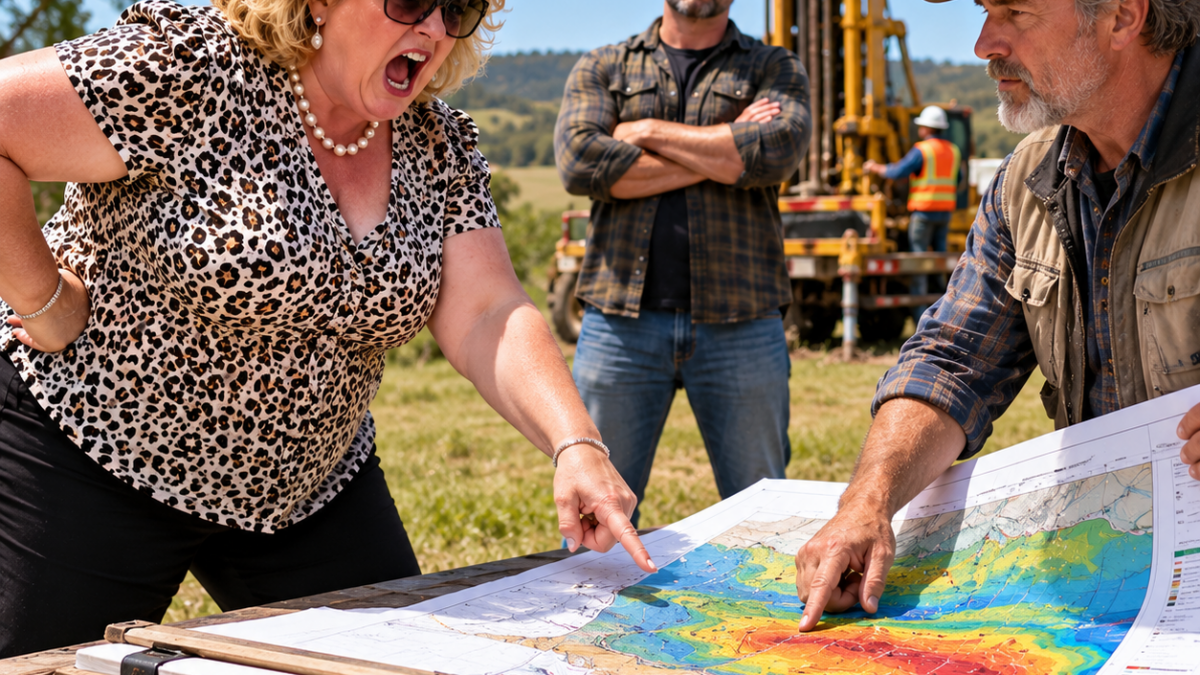
PART 2
The next morning, I wrote Sylvia one letter.
One page.
No accusations.
No threats.
No mention of the purchase offer.
I asked a single question:
Please provide the recorded instrument that places the Bowen parcel under the jurisdiction of the Copper Hollow Estates Homeowners Association.
I sent it certified.
Return receipt requested.
Six days later, Sylvia responded.
She mailed me the HOA’s annexation resolution.
That was it.
No deed.
No owner consent.
No recorded annexation agreement.
Just board minutes showing four people had voted to declare my property part of their association.
It was like asking someone for proof they owned your truck and receiving a handwritten note that said:
WE VOTED. IT’S OUR TRUCK NOW.
I added it to the box.
Then I went to the county.
The Register of Deeds office was one room with four filing drawers, two public computers, and a woman named Marjorie who had worked there long enough that people stopped needing to explain why they came in.
“I need the Bowen parcel.”
She looked over her glasses.
“Walter Bowen?”
“Yes.”
“Your grandfather?”
“Yes.”
She typed for maybe ninety seconds.
“1962.”
A scanned deed appeared.
Walter J. Bowen.
9.2 acres.
Old legal description.
Bearings.
Rods.
Iron pin.
Section corners.
I read it slowly.
Nothing about Copper Hollow.
Nothing about HOA covenants.
Nothing tying the parcel to any subdivision.
“Can I get a certified copy?”
Marjorie printed it.
“You having trouble?”
“I don’t know yet.”
She looked at me for a second.
Then:
“That usually means yes.”
I took the deed to the September HOA meeting.
Nine or ten homeowners sat in folding chairs.
Coffee in paper cups.
Sylvia and the other board members sat at a table in front as if the room were a courtroom.
Sylvia even had a little gavel.
I had never seen her use it.
She just liked having it.
I waited through landscaping.
Pool maintenance.
Streetlight repair.
Then homeowner comments.
I raised my hand.
Sylvia sighed before calling my name.
“Ms. Bowen.”
I stood.
“I pulled the deed to my property.”
I held up the certified copy.
“It contains no reference to Copper Hollow Estates or this association. I’m asking again what recorded authority you’re using to fine me.”
Sylvia didn’t even look at the paper.
That detail stayed with me.
She didn’t glance at it.
Didn’t say:
Let me see.
Didn’t pretend to check.
Instead:
“You’re out of order.”
“I’m in homeowner comments.”
“You’re out of order.”
“I’m not a homeowner in your HOA. That’s the point.”
She turned to the agenda.
“Item nine. Vegetation abatement, Bowen parcel.”
Two board members looked down.
One woman in the third row met my eyes.
Then deliberately looked away.
Sylvia continued.
“The property owner has refused repeated maintenance notices. I’m requesting authorization for the association to enter the parcel, clear the overgrowth, correct drainage, and assess all costs back to the owner.”
I said:
“That’s private property.”
Sylvia set the gavel down.
“It’s association property.”
“No deed says that.”
“You just don’t have the paperwork to know it yet.”
“All in favor?”
Four hands.
Motion passed.
Then she moved to item ten.
Just like that.
I sat in my truck afterward for ten minutes.
Not driving.
Doing arithmetic.
Attorney retainer.
Court costs.
Fines.
A fight over nine acres every person involved—including Sylvia—kept calling worthless.
I almost convinced myself to sign the purchase agreement.
Not because $5,500 was fair.
Because peace has a price when you’re tired.
Then I remembered her silence in my kitchen.
Why do you want it?
No answer.
Thursday morning, machinery arrived.
Not Monday.
That was the first thing I had underestimated about Sylvia.
She didn’t make empty threats.
She scheduled them.
At six in the morning, diesel woke me.
I looked out the window.
Skid steer.
Excavator.
Truck.
Three workers.
One man walking my fire line with orange marking paint.
I pulled on boots.
Went outside.
“You can’t be here.”
The man kept walking.
“We’re contracted through the association.”
“This is my property.”
“You’ll need to talk to the association.”
“I’m talking to the people standing on my land.”
He finally stopped.
“Ma’am, I’ve got a work order.”
“From somebody who doesn’t own the ground.”
He shrugged.
Not rude.
Worse.
Indifferent.
He had been paid.
He wasn’t interested in my title dispute.
The skid steer started scraping the rise.
Scrub oak came out along the west side.
Grandpa had kept those trees because they slowed wind across the open sand.
The excavator moved toward the low end.
Then dug a trench.
Thirty feet long.
Far deeper than anything I could understand.
“What is that for?”
“Drainage correction.”
“There’s no drainage problem.”
He kept digging.
“There’s almost no water on this rise at all.”
No answer.
I stopped arguing.
My job had taught me arguing with contractors while machinery is moving accomplishes almost nothing.
Documentation does.
Truck name.
License plate.
Company.
Time in.
Time out.
Photos.
Video.
Equipment.
Trench dimensions.
I stood beside it with a tape measure.
Then drove straight to the sheriff’s office.
The deputy listened.
“HOA dispute?”
“They entered land I own without permission.”
He wrote it down.
“You understand this is probably going to be treated as a civil matter.”
“I understand.”
“So what do you want from us today?”
“A report number.”
He looked up.
“That’s it?”
“I want it on record that I objected on the day it happened.”
Something changed in his expression.
“That’s not a bad instinct.”
Nine days later, Sylvia recorded a lien.
$18,600 in fines.
$3,200 in “abatement.”
Administrative fees.
Total:
$21,800.
Marjorie from the recorder’s office called me herself.
“A lien has been recorded against your parcel.”
She said it carefully.
Then waited.
“A real lien?”
“Recorded instrument.”
“Does that mean it’s valid?”
“I can’t give legal advice.”
Of course.
But her silence said enough.
That evening I walked to the trench.
Sunset turned everything orange.
The west side of Grandpa’s field looked wounded.
Scrub oak gone.
Tracks pressed into sand.
I stood at the edge.
Then noticed the trench wall.
Pale.
Almost white.
Not like the top layer.
Not brown.
Not gray.
Uniform.
I climbed down.
Put my palm against the wall.
Took a photo for scale.
Mostly because documenting had become automatic.
Then I went inside.
Set the phone beside the paperwork box.
Forgot the photo existed.
The lien became real when my title company called.
I had been refinancing my house.
Different parcel.
Process started months earlier.
The woman was apologetic.
“We have a recorded encumbrance associated with adjacent property under your name.”
“It’s an invalid HOA lien.”
“I understand.”
“They don’t have jurisdiction.”
“I understand.”
“Then why is it stopping the refinance?”
“Because it’s recorded.”
That sentence cost me money.
The rate lock expired.
By the time I could eventually refinance, the new payment would be roughly four hundred dollars more each month.
That was when Sylvia’s paperwork stopped being irritating.
It became measurable damage.
For three nights, I barely slept.
Then I came up with what I thought was a strategy.
Prove the land was buildable.
Sylvia’s entire narrative was:
Useless.
Unbuildable.
Unsellable.
No value.
If an independent professional proved a house could sit there, maybe her whole story collapsed.
Maybe the board backed off.
Maybe I could get enough leverage to clear the lien.
I called the county conservation office.
A man there listened.
“Sand?”
“Yes.”
“Call Rhodes.”
“Who?”
“Dr. Emmett Rhodes. Retired state geological survey.”
“I need a buildability opinion.”
“Call Rhodes anyway.”
Dr. Rhodes arrived three days later.
Sixty-six.
Mud-covered pickup.
Work boots.
Old field jacket.
He shook my hand.
“Show me.”
I started explaining.
HOA.
Fines.
Buildability.
Need a letter.
He listened without interrupting.
Then walked directly toward the windmill.
“Who poured this pad?”
“My grandfather.”
“When?”
“Early sixties.”
He crouched.
Ran his thumb along the concrete.
Looked up all four steel legs.
“No settlement?”
“Not that I know of.”
“Ever?”
“No.”
“Sixty years?”
“About that.”
He stood.
“That’s unusual.”
“Good unusual?”
He didn’t answer.
Then he saw the trench.
Walked over.
Climbed down.
Put his hand against the pale wall exactly where mine had been.
He stayed silent long enough that I got uncomfortable.
“They left this open since August.”
Nothing.
“They called it drainage work.”
Nothing.
“There’s no drainage problem.”
He climbed out.
Went to his truck.
Returned with a hand auger.
He worked several test locations.
Turn.
Pull.
Lay material on a tarp.
Again.
Again.
Again.
Each time he rubbed the pale sand between his fingers.
Finally he wiped his hands on his jeans.
“I want a rig.”
“A drilling rig?”
“Small one.”
“For what?”
“Three holes.”
“How deep?”
“As far as she’ll reasonably go.”
“What are you looking for?”
He closed the tailgate.
“I want to know how deep this material continues.”
“How much?”
“About forty-eight hundred.”
I laughed once because I thought he was kidding.
He wasn’t.
That month I had:
A dead refinance.
An $21,800 lien.
Attorney quotes starting around $3,000.
Daily HOA fines.
And now a retired geologist wanted $4,800 because Grandpa’s dirt had made him curious.
I sat at the kitchen table with my checkbook open.
Twenty minutes.
Through the window, the windmill stood against the evening sky.
Grandpa’s words came back.
Ground holds it better than good soil would.
I wrote the check.
Sylvia didn’t slow down.
New fine statement.
Same categories.
Daily penalties.
Then another letter.
Sixty days to cure the balance or the association would begin foreclosure proceedings against the parcel.
Foreclosure.
On land she had called worthless.
I went back to Marjorie.
“This time I want everything.”
“Everything what?”
“Anything anyone has requested, filed, or pulled concerning that parcel.”
She brought out a county file.
Tax history.
Plat notes.
Old permits.
Request log.
Most names meant nothing.
Survey company.
Utility.
Title examiner.
Then one entry from the previous fall.
Request:
State surficial geology mapping.
Township.
Range.
Section.
My section.
Requester’s name:
Redacted.
I stared.
“Why is that blacked out?”
“Privacy request attached at the time.”
“Can I get the name?”
“You can submit an open-record request.”
“How long?”
She gave me an apologetic look.
“Longer than you want.”
I filed it.
Somebody had asked the county what geology lay beneath my grandfather’s field almost a year earlier.
Somebody had specifically requested mapping.
Then somebody had hidden the requester’s name.
I still didn’t understand the significance.
But I knew enough to care.
Rhodes brought the rig Thursday.
Rain.
Three core holes.
Four hours.
He laid labeled sections along his tailgate.
I stood under an umbrella while he handled pale sand like evidence from a crime scene.
When he finished, he shut the tailgate.
“I’ll call you.”
“When?”
“When I know.”
He drove away.
Eight days.
Nothing.
On the eighth night, my phone rang.
9:29 p.m.
“Kate.”
“Dr. Rhodes?”
“You home tomorrow morning?”
“Yes.”
“Good.”
“What did you find?”
“I’ll show you.”
He hung up.
He arrived at eight.
No coffee.
No small talk.
He pushed newspapers across my kitchen table and began laying out core samples in order.
First six inches:
Darker soil.
Then pale sand.
More.
More.
More.
The entire table became a timeline of color.
Raw-sugar beige.
Uniform.
Rhodes tapped the final sample.
“Thirty-two feet.”
“Thirty-two feet of sand?”
“Thirty-two feet is where we stopped.”
“Not where it ends?”
“No.”
I sat.
“What is it?”
“Silica sand.”
I waited.
“High purity. Low iron. Well sorted. Rounded grains.”
That meant nothing to me.
He saw it.
“Glass grade.”
I looked at the cores.
“I hired you to tell me whether I could build a house.”
“I know.”
“Can I?”
“That’s not the interesting question.”
“Emmett.”
He almost smiled.
“You’ve spent months trying to prove this land is like normal land.”
“Yes.”
“It isn’t.”
Then he explained.
Wind-deposited quartz-rich sand.
Old dune formation.
Sorted naturally until much of the unwanted material disappeared.
Water moved through it too easily.
That was why farming had always been poor.
Why septic conditions were bad.
Why ordinary development didn’t make sense.
Why Grandpa’s corn looked ridiculous.
Why the windmill pad had barely moved in sixty years.
Everything that made the land bad for what Sylvia claimed mattered made it valuable for something else.
“Glass?”
“Glass manufacturing. Foundry uses. Filtration. Depending on final processing.”
“How valuable?”
Rhodes reached into his jacket.
Pulled out folded paper.
Pencil numbers.
Acreage.
Depth.
Recovery assumptions.
Setbacks.
Conservative royalty rate.
He turned it around.
Estimated royalty potential over a long-term lease:
Approximately $2.4 million.
I stared.
Then I laughed.
Not happy laughter.
The number was too absurd.
“Two point four million?”
“Conservative scenario.”
“Sylvia offered me fifty-five hundred.”
Rhodes didn’t laugh.
I grabbed my phone.
Calculated.
The offer was roughly two-tenths of one percent of the potential royalty value.
Sylvia had sat in that chair.
Four feet from where the core samples were now laid out.
Called my land worthless.
Offered $5,500.
The laughter stopped.
Rhodes kept both hands on the chair.
“There’s a problem.”
“Of course there is.”
“How do you get it out?”
I frowned.
“Excuse me?”
“This is bulk material. You don’t put it in a pipeline.”
“Trucks.”
“Lots of them.”
I looked toward the window.
Copper Hollow loop road.
Private.
Surrounding my parcel.
No county-road frontage.
No second entrance.
No farm lane.
Nothing.
Grandpa had sold the developer the strip that became the loop.
Copper Hollow controlled the road around me.
Rhodes said:
“Before an operator leases mineral material, they look at haul access.”
“So the field could be worth two million dollars.”
“Potentially.”
“And I can’t get it out.”
“Not without lawful road access.”
I went to the window.
The road looked harmless.
Two hundred feet of asphalt.
Mailboxes at the bend.
Lawns.
SUVs.
A wall doesn’t have to be concrete.
Sometimes it is a recorded road covenant controlled by the woman who wants your land.
I called one aggregate company.
Rhodes gave me the number.
Land manager was friendly at first.
Then I gave township and section.
Silence.
“Ma’am, I’d need to check whether we have a conflict on that ground.”
“What conflict?”
“I’ll have someone contact you.”
Nobody did.
So I stopped calling companies.
I started reading county indexes.
Saturday.
All day.
Grantor.
Grantee.
Parcel after parcel along the same geological ridge.
Eventually:
Ridgeline Aggregate Partners.
One parcel east.
Another west.
Option agreement.
Purchase.
Another option.
Four nearby parcels acquired or controlled over fourteen months.
Quietly.
No public marketing.
No obvious pattern unless you looked at all of them together.
They were assembling the ridge.
My parcel sat in the middle.
I drove home with the radio off.
And somewhere between the county building and my house, the entire fight changed.
I had been trying to prove Sylvia wrong about whether the land could hold a house.
That no longer mattered.
Nobody needed to build a house there.
The questions were now:
Did Copper Hollow legally control my parcel?
And did I have the right to use the road?
If Sylvia’s annexation was valid, she could fine and regulate me.
If it wasn’t:
Every fine was void.
The clearing crew had trespassed.
The lien had been recorded without authority.
And her attempt to buy the land looked very different.
I got home at nine.
Didn’t take off my coat.
Pulled out Grandpa’s 1962 deed.
This time I read the legal description aloud.
Every line.
Two-thirds through, I stopped.
There was language about the portion later conveyed for roadway development.
I read again.
Then called Marjorie’s voicemail at 9:40.
“I need the original Copper Hollow subdivision plat tomorrow morning.”
She had it waiting at eight.
1994.
Forty-two lots.
Loop road.
Drainage parcels.
And in the middle:
My grandfather’s boundary.
Four words were lettered inside.
ACCEPTED — NOT PART HEREOF.
I put my finger on them.
Marjorie said:
“Kate.”
“What?”
“It isn’t in the subdivision.”
I stared.
“It never was.”
For three days, I ran the title index forward from 1962.
Every recorded instrument.
Transfer.
Mortgage.
Release.
Easement.
Nothing annexing my parcel.
No owner signature.
No covenant acceptance.
No declaration.
No membership agreement.
Sylvia’s board had simply voted that I belonged to them.
Then billed me.
That was when I finally hired Emily Ward.
$3,000 retainer.
Real-estate attorney one county over.
She read my box for two hours.
Then placed the lien beside the 1962 deed.
“They recorded an encumbrance against property in which the association has no membership or assessment interest.”
“So it’s void?”
“We ask a hearing officer or judge to declare it void.”
“They knew.”
“Careful.”
I hated when lawyers said that.
“She tried to buy it.”
“I know.”
“She called it worthless first.”
“I know.”
“She sent machines.”
“I know.”
“What do we call that?”
“Later.”
Emily filed.
Void liens.
Vacate fines.
Challenge abatement charges.
County set hearing ten days out.
Then I did something Emily advised me not to do.
I sent Sylvia another certified letter.
One page.
Plat book.
Page number.
Recording date.
And the four words:
ACCEPTED — NOT PART HEREOF.
I wanted proof she had received them.
Four days later, green card came back.
Her signature.
The next night, Sylvia called an emergency board meeting.
I learned from the woman who had looked away from me in September.
Her name was Elaine Mercer.
She called at 10:30.
Talking quickly.
“Kate?”
“Yes?”
“They passed something.”
“What?”
“Road-use covenant.”
My stomach tightened.
“What does it say?”
“No commercial hauling. No industrial vehicles. No extraction traffic anywhere on Copper Hollow’s private loop.”
“When?”
“Effective immediately.”
“Vote?”
“Four to one.”
“You were the one?”
“Yes.”
“Who wrote it?”
“Sylvia.”
“Tonight?”
“No.”
Pause.
“She brought it printed.”
I closed my eyes.
Sylvia had received my certified letter showing her annexation resolution was built on nothing.
Instead of retreating, she created a second barrier.
One that did not depend on me being an HOA member.
Even if I won the lien hearing, Copper Hollow controlled the private road.
No haul trucks.
No sand lease.
Potentially millions trapped beneath nine acres.
Emily read the new covenant.
“This is smarter.”
I hated hearing that.
“Can she do it?”
“Private-road owners can regulate road use in many circumstances.”
“She passed it because of me.”
“Probably.”
“Does motive matter?”
“Sometimes. But we need a stronger right.”
“What right?”
“Your access.”
“I’ve used the road for decades.”
“Usage is one thing. Recorded rights are better.”
She tapped the plat.
“Whatever the developer got from your grandfather in 1994.”
Second lien arrived two days later.
$6,400.
Additional abatement.
Legal fees.
I put it on Emily’s desk.
She read.
Set it down.
“What breaks the road covenant?”
“Original easement.”
“And if Grandpa didn’t reserve one?”
“Then we have a very different problem.”
I drove home feeling sick.
I was eight days from a hearing that might prove I had been right all along about HOA jurisdiction and still leave $2.4 million stranded.
Rhodes called that night about an assay number.
He heard my voice.
“What happened?”
I told him.
Long pause.
Then:
“Who owned the road land before the developer?”
“My grandfather.”
Another pause.
“Kate.”
Something in his voice made me sit up.
“A man who sells access land to a developer usually doesn’t leave himself landlocked.”
“Unless he was stupid.”
“Was he?”
“No.”
“Find what he reserved.”
I searched the box.
Nothing.
House.
Desk.
Files.
Then I remembered the windmill.
Grandpa had a steel lockbox bolted to the concrete pad.
Fence pliers.
Wire.
Tools.
Things he wanted close to the field.
I went outside at dusk.
The hinge had rusted.
Penetrating oil.
Hammer.
Twenty minutes.
Then the lid broke loose and slammed against the windmill leg.
Inside:
Pliers.
Wire.
Old bottle opener.
And a manila envelope sealed inside a freezer bag.
On the front:
RECORDED COPY — 1994.
My heart started pounding.
Grant of easement.
Walter J. Bowen to Copper Hollow Development Company.
The road strip.
Developer received what it needed.
Then reservation clause.
I read it under my phone flashlight.
Again.
Again.
General access easement.
Full length of the roadway.
All purposes.
No restriction as to vehicle class.
Appurtenant to the Bowen parcel.
Running with the land.
In perpetuity.
Grandpa had sold the road strip and reserved permanent access to the property he kept.
I sat on the concrete.
Wind moved through the steel frame overhead.
Low hum.
I laughed once.
A tired, stupid laugh.
Grandpa had solved the road problem in 1994.
Thirty years before Sylvia invented it.
Two days before the hearing, Marjorie called.
“Your records request cleared counsel.”
I drove over.
She had the unredacted request log.
Didn’t say anything.
Just turned it toward me.
One line.
State surficial geology map.
My township.
My section.
Requested in person.
Eleven months before Sylvia wrote the worthless-land letter.
Requester:
S. Hargrove.
I stared.
“Is that her?”
Marjorie said:
“You tell me.”
Signature.
Sylvia’s.
She had researched what lay beneath my land before the first fine.
Before annexation.
Before machines.
Before the lien.
Before the $5,500 offer.
My hands went cold.
“Certified copy?”
Marjorie asked.
“I want four.”
I did not call Sylvia.
Did not call the board.
Did not post online.
I drove to a print shop.
Copied the entire box.
Tabbed everything.
Emily reviewed the geology request.
Then looked at me.
“This changes motive.”
“She knew.”
“It shows she requested geological information.”
“She knew.”
“Kate.”
“Fine. It shows she was looking.”
Emily nodded.
“And we’ll let the documents say the rest.”
The hearing was Thursday.
County administrative room.
Fluorescent lights.
No jury.
Hearing officer Gail Prescott.
No relation to Sylvia.
She looked like a woman who had been listening to land disputes since before breakfast and wanted everybody to get to the point.
Sylvia arrived with counsel.
Binder.
Two board members behind her.
Blazer.
Calm smile.
She thought the hearing was about HOA fines.
That was her mistake.
Her attorney went first.
The board had acted in good faith.
Boundary interpretation.
Procedural disagreement.
Reasonable belief that the parcel fell within Copper Hollow’s community scheme.
Then:
“Ms. Hargrove even attempted to assist the petitioner by offering to purchase an otherwise difficult and unmarketable parcel.”
I almost laughed.
Emily stood.
Three documents.
1962 deed.
1994 plat.
The words:
ACCEPTED — NOT PART HEREOF.
She explained there was no recorded annexation instrument.
No owner signature.
No acceptance of covenants.
No authority to assess.
No authority to fine.
No authority to send contractors.
No authority to record liens.
Prescott read.
Forty seconds.
Then looked over the top of the page.
“Counsel, do you have a recorded annexation instrument?”
Sylvia’s attorney shifted.
“We have board minutes adopting the parcel—”
“That was not my question.”
“No.”
“An owner-signed declaration?”
“No.”
“Recorded amendment?”
“No.”
Something left the room.
One of the board members behind Sylvia leaned forward.
Elbows on knees.
Sylvia whispered to her attorney.
He pivoted.
“Even if the tribunal finds the parcel outside the association, the petitioner has no commercial access for the extraction use she is apparently contemplating. Copper Hollow adopted a valid private-road covenant restricting heavy industrial traffic.”
There it was.
Their fallback.
Her attorney continued:
“The parcel has no direct public frontage. Any claimed mineral value is therefore academic.”
Academic.
Sylvia looked at me.
For the first time that morning.
A small victory in her eyes.
Emily reached for the manila envelope.
“Recorded grant of easement, 1994.”
She handed it up.
“Walter Bowen conveyed the road strip to the original developer while reserving an access easement for the retained Bowen parcel.”
Prescott turned to page two.
Emily read:
“General access. All purposes. No restriction by vehicle class. Appurtenant to the Bowen parcel. Perpetual.”
Then:
“The HOA may impose rules on its members subject to governing law. It cannot erase a recorded property right that predates the association’s current road restriction.”
Sylvia’s attorney immediately requested a recess.
Sylvia said:
“No.”
Out loud.
Her lawyer turned.
That was the moment I knew she still thought she could talk her way through it.
She had spent six years in rooms where nobody interrupted her.
She didn’t understand that the louder person does not own the record.
“I’d like to speak,” she said.
Prescott allowed it.
Sylvia talked about service.
Volunteer hours.
Property values.
Neighborhood safety.
How difficult HOA leadership could be.
How nobody thanked board members.
Then she looked directly at me.
“I had no idea what was under that ground.”
Silence.
“Neither did she.”
Emily did not move for two seconds.
Then she pulled another document.
A memorandum of option.
Recorded in March.
Hollow Creek Holdings LLC.
Sole member:
Sylvia Hargrove.
Option granted to:
Ridgeline Aggregate Partners.
Subject:
Acquisition rights tied to the Bowen parcel.
I stared at Sylvia.
I had seen pieces of the pattern.
Not that.
Emily spoke evenly.
“Ms. Hargrove’s entity entered an exclusive option with Ridgeline Aggregate Partners contingent upon her acquisition of the Bowen parcel.”
Sylvia’s attorney put his hand flat on the table.
“Ms. Hargrove will need a moment.”
Sylvia didn’t take one.
“I never saw any geological survey.”
Emily picked up the next tab.
County request log.
Unredacted.
Eleven months before the worthless-land letter.
S. Hargrove.
State geological mapping.
Same township.
Same section.
Prescott read it.
Then looked at Sylvia instead of her attorney.
“Is this your signature?”
Sylvia’s lawyer leaned toward her.
She answered anyway.
“I request maps all the time.”
Somebody behind me said quietly:
“You were.”
Sylvia turned halfway around.
Emily continued.
Then Dr. Rhodes’s certified core log.
Assay.
Thirty-two feet of high-purity silica encountered before drilling stopped.
Potential lease valuation.
Approximately $2.4 million in royalty over the modeled lease life.
Rhodes sat second row in a jacket I had never seen him wear.
He looked straight ahead.
Emily placed Sylvia’s $5,500 purchase agreement beside the estimate.
Then the HOA letter.
She read Sylvia’s own words:
“Unbuildable, unsellable, of no meaningful value to the association or its owner.”
Signed:
Sylvia Hargrove, President.
The room went quiet.
Not shocked noise.
Arithmetic silence.
$5,500.
$2.4 million.
Geology request.
Option agreement.
Annexation resolution.
Daily fines.
Abatement.
Liens.
Road covenant.
One line of paperwork after another suddenly fitting together.
Prescott squared the documents.
Then issued the ruling.
Both liens void.
All HOA fines against my parcel vacated.
Abatement charges vacated.
The association lacked jurisdiction over the Bowen parcel.
The newly adopted road restriction could not extinguish my preexisting recorded access easement.
Then she said:
“I am referring the lien filings and supporting record to the district attorney’s office for review.”
Sylvia finally stopped looking angry.
She looked scared.
A man stood in the back row.
“May I place something on the record?”
He introduced himself.
Dale Ferris.
Land manager.
Ridgeline Aggregate Partners.
Prescott allowed him to speak.
“Ms. Hargrove approached us.”
Sylvia turned in her chair.
Dale continued.
“In February. We did not solicit the Bowen parcel.”
Her lawyer stopped arguing.
Started writing.
Behind Sylvia, the first board member stood.
Walked to the opposite side of the aisle.
Then the second followed.
Neither looked at her.
Sylvia turned right.
Empty seats.
Turned back.
That image stayed with me longer than anything she said.
Not shouting.
Not humiliation.
A woman who had spent years speaking for everyone turning around and discovering nobody wanted to sit behind her anymore.
Prescott called the next matter.
That surprised me.
Just like that.
Our hearing was over.
Clerk stamped papers.
People gathered files.
Sylvia sat for another few seconds.
Binder perfectly squared.
Then picked it up.
Walked out alone.
I caught her in the parking lot.
Not intentionally.
We were both heading toward our cars.
She looked at me.
I had spent months imagining speeches.
None came.
Instead I said:
“You were right about one thing.”
She stopped.
I looked back at the county building.
“Somebody was going to make money on that land.”
Then I walked away.
The Copper Hollow board removed Sylvia eleven days later.
Same people who had voted to annex me.
Same board that authorized machines onto my property.
Two called afterward.
Both wanted to explain.
“We never really felt comfortable.”
I listened.
Didn’t argue.
What was there to say?
Comfort had never been the standard.
They had raised their hands anyway.
The district attorney reviewed the referral.
Slowly.
Months.
Requests.
Interviews.
Recorded documents.
The eventual criminal case ended the following summer with Sylvia entering a plea to a felony count associated with the fraudulent lien filing.
Probation.
Restitution.
And a permanent prohibition against serving on an HOA board in the state under the source outcome.
That last condition was the one she fought hardest.
Not money.
Not probation.
The board ban.
I wasn’t surprised.
For Sylvia, authority had never been volunteer work.
It had become identity.
Emily filed the civil action.
Trespass.
Abuse of process.
Improper encumbrances.
Economic damages.
Other claims supported by the record.
That case settled for $210,000.
Refunded fines.
Abatement damage.
Legal costs.
Refinance losses.
The roughly $400 monthly increase I had been carrying.
Time.
Property damage.
Everything documented.
The box by my toaster finally became useful for something other than raising my blood pressure.
Ridgeline terminated Sylvia’s option after the hearing.
Dale Ferris told me why later.
“We had a representation clause.”
“What does that mean in English?”
“The person bringing us the opportunity has to have lawful authority and disclose conflicts.”
“She didn’t.”
“No.”
“Did you know she was HOA president?”
“We knew she was involved with Copper Hollow.”
“Did you know she was the person fining me?”
“No.”
“Would you have signed the option?”
Dale stared at me.
“No.”
Sylvia had also purchased or optioned three nearby properties using borrowed money.
Speculation.
She assumed the sand project would eventually connect through my parcel.
Once Ridgeline ended its relationship with her, she was left holding land without the buyer she expected.
I didn’t celebrate that either.
People think revenge feels like fireworks.
Most of mine felt like paperwork finally stopping.
Sylvia sold her Copper Hollow home the following spring.
I didn’t watch.
Didn’t care which truck came.
Didn’t care where she went.
I heard through Marjorie.
That’s how county news travels.
The HOA rescinded the annexation resolution.
Repealed the road covenant as applied to my parcel.
State regulators reviewed Copper Hollow governance.
New policy:
Future annexations required recorded owner-signed instruments.
No more voting someone into an association from across a table.
Emily told me:
“That rule will outlive you.”
“Good.”
Then came Ridgeline.
Not Sylvia’s option.
Mine.
Dale sat at my kitchen table.
Same kitchen.
Same chair.
That mattered more than I expected.
A year earlier, Sylvia had pushed a $5,500 purchase agreement across that table.
Now Ridgeline brought a twenty-year mineral lease.
Royalty based.
Minimum payments.
Operational controls.
Reclamation.
Access plan.
Insurance.
Surface protections.
Emily read every line.
Then made them rewrite several.
I added one clause myself.
Reclamation had to restore contour.
Cap disturbed areas.
Replant native vegetation.
No abandoned pit.
Grandpa would have hated a permanent scar.
Dale agreed.
Then:
“The windmill stays.”
He looked toward the window.
“That thing?”
“That thing.”
“We may need operating room.”
“You can go around it.”
“How much buffer?”
“Enough.”
Emily looked at me.
“Kate.”
“Nonnegotiable.”
Dale smiled.
“It stays.”
Another clause:
Truck access from north end.
Dust control.
Operating hours.
Road maintenance contribution.
No overnight staging inside Copper Hollow.
I had learned something from Sylvia.
When everybody is friendly, that is exactly when you put the agreement in writing.
We signed in October.
Same table.
Different pen.
I kept Sylvia’s purchase agreement in the box beside the lease.
Not because I enjoyed comparing the numbers.
Because I wanted to remember how close I had come to believing her.
Dr. Rhodes came back the following spring for the first cut.
He refused mileage.
Wouldn’t let me buy lunch.
Walked the exposed face with hands in his jacket pockets.
Twenty minutes.
Then:
“Cleanest column I’ve logged in thirty-one years.”
“You already told me that.”
“I was reserving judgment.”
“You charged me $4,800.”
“Professional curiosity is expensive.”
I laughed.
Then he asked:
“You still have that trench photo?”
I did.
Me standing in Sylvia’s unauthorized excavation.
Palm flat against the pale wall.
No idea what I was touching.
I showed him.
He studied it.
“That was your first core.”
“I didn’t know.”
“Most discoveries start that way.”
That evening, after trucks stopped, I walked to the windmill.
Sun low.
Orange light.
Steel frame humming in the wind.
Same sound I remembered from childhood.
The field had changed.
Working face farther north.
Equipment tracks.
Survey markers.
But the windmill remained.
Four legs.
Same concrete.
No settlement.
Grandpa’s words:
Ground holds it better than good soil would.
For years I thought he was making peace with bad land.
Maybe he was.
I don’t think he understood glass-grade silica.
He wasn’t a geologist.
He never talked about quartz purity.
But he understood the place.
He knew the windmill didn’t move.
He knew water vanished.
He knew crops hated the sand.
And for whatever reason, he kept it.
When the developer came in during the nineties, he sold only what they needed for the road.
Reserved access.
Kept the field.
That decision became my future.
I framed Sylvia’s letter.
Not the purchase agreement.
The letter.
“Unbuildable, unsellable, of no meaningful value…”
Her signature.
Beside it:
First royalty check stub.
People who visit usually don’t ask.
Those who know the story don’t need explanation.
The first payment did not make me rich overnight.
That is another thing people misunderstand about royalties.
Checks arrive over time.
Production varies.
Taxes exist.
Legal fees exist.
Land restoration matters.
I kept my job at the school district.
For a while, anyway.
Boilers still broke.
Bus contracts still expired.
Roofs still leaked.
My supervisor asked:
“Why are you still here?”
“Health insurance.”
He laughed.
I was serious.
The lease gave me breathing room.
Not a different personality.
I paid off the refinance balance.
Built emergency savings.
Repaired the house.
And created a separate account for reclamation obligations because I did not trust future-me to remember what present-me had promised.
Emily approved.
“You’re becoming responsible.”
“Don’t spread it around.”
Copper Hollow changed too.
New board president:
Elaine Mercer.
The woman who had looked away at that September meeting.
She called me three weeks after Sylvia was removed.
“I owe you an apology.”
“For what?”
“I knew something felt wrong.”
“Okay.”
“I didn’t speak.”
“I noticed.”
She went quiet.
“I was afraid Sylvia would come after my house next.”
“That was probably reasonable.”
“That doesn’t make it right.”
“No.”
“What do you want from us?”
That question surprised me.
“Nothing.”
“There has to be something.”
“Read your documents.”
“We are.”
“Then keep doing it.”
Copper Hollow hired independent counsel.
Reviewed every fine Sylvia’s board had issued over six years.
Some valid.
Some questionable.
Some unsupported.
Refunds went out.
Not because I demanded it.
Because once people started reading, other problems surfaced.
That became the real aftermath.
Not Sylvia losing.
People opening files.
One homeowner learned he had been charged for mailbox paint that was already approved.
Another had paid a “special compliance fee” nobody could find in the governing documents.
A retired couple had been threatened over a ramp modification that county accessibility rules supported.
Elaine called me after the review.
“I understand now.”
“What?”
“Why you kept the box.”
I looked toward the toaster.
The box was still there.
“Habit.”
“No.”
She said:
“Protection.”
Maybe.
I eventually moved everything into labeled binders.
The original box survived.
Cardboard soft at the corners.
Coffee stain on one side.
Nora—my niece, not daughter; I never had children—once asked why I didn’t throw it away.
“Because that box paid for itself.”
She looked confused.
“Cardboard doesn’t pay.”
“Exactly.”
The HOA had cost me months of sleep.
But the documentation turned intimidation into evidence.
That mattered more than anger ever could.
The road issue settled into normal operations.
My easement gave me broad access.
But I did not pretend “all purposes” meant I could ignore everyone living there.
Ridgeline negotiated road-management terms with Copper Hollow.
Truck windows.
Speed.
Dust.
Maintenance contributions.
School-bus timing.
Emergency access.
Reasonable things.
At the first meeting, one homeowner stood.
“Why should we tolerate mining trucks?”
I answered honestly.
“Because my access right predates your HOA.”
He didn’t like that.
Then I added:
“And because I live here too. So let’s make it work.”
That helped.
Not everybody became happy.
They didn’t have to.
Rights and neighborliness are different.
You can have the first and still work for the second.
Ridgeline agreed to pay for extra asphalt maintenance.
That turned several opponents into reluctant supporters.
People become more philosophical when somebody else pays for road resurfacing.
The old loop improved.
Irony again.
Sylvia had tried to use the road to trap my land’s value.
The sand lease ended up funding better road maintenance than Copper Hollow had managed in years.
Elaine joked:
“We should send Sylvia a thank-you card.”
“Don’t.”
“I’m joking.”
“Good.”
The unauthorized trench disappeared after reclamation work.
Part of me almost wanted it left.
That trench had revealed the pale sand.
But it was also trespass.
I preferred the ground restored.
The scrub oak on the west side was harder.
Mature trees do not return because a settlement check clears.
Ridgeline planted new native windbreak species under my reclamation plan.
Smaller.
Years from becoming what Grandpa had protected.
That loss still bothered me more than the money.
Sylvia could refund fines.
Pay damages.
Lose office.
But she could not make a thirty-year-old scrub oak appear again.
Some consequences stay physical.
I marked the original tree line on an old aerial photograph.
Maybe someday the replacements will reach it.
The geology itself fascinated me after a while.
I started reading.
Silica.
Grain shape.
Purity.
Industrial sand markets.
I called Rhodes with questions until he stopped answering immediately.
“You created this problem,” I told him.
“You hired me.”
“You should’ve warned me geology was addictive.”
“You work in facilities. You were already hopeless.”
Fair.
He explained how old wind processes sorted sediment.
How iron content affects glass color.
Why grain shape matters in foundry applications.
How a landscape that looks empty can hold a record of ancient climate.
I would stand at the working face and think:
Grandpa called this bad soil.
A geologist called it a clean column.
Sylvia called it worthless.
The land never changed.
Only the language did.
That taught me something.
Value can exist long before anyone has the vocabulary to describe it.
Grandpa kept the field without knowing why it might someday matter.
Maybe because it was his.
Sometimes that is enough.
One afternoon, Dale from Ridgeline brought an older executive to tour.
The man looked at the windmill.
“We could move that.”
“No.”
He glanced at Dale.
Dale said:
“Don’t.”
Smart man.
The executive smiled.
“Sentimental?”
“Yes.”
That was the first time I admitted it without pretending there was another reason.
The windmill had no production value.
It barely ever had.
It stayed because Grandpa bolted it there.
Because I once stood underneath it at nine years old and listened to him call bad ground good.
Because the entire story started with something that never settled.
Some things deserve to remain useless.
The first large royalty year allowed me to establish a scholarship at the school district.
Small.
Trade programs.
HVAC.
Electrical.
Welding.
Facilities work.
I named it after Walt Bowen.
The superintendent wanted a plaque.
I said no.
Then they made one anyway.
WALT BOWEN SKILLED TRADES SCHOLARSHIP.
I stood at the ceremony feeling embarrassed.
The first recipient was a girl going into industrial maintenance.
Her father worked nights at a grain elevator.
She shook my hand.
“Thank you.”
I said:
“Don’t thank me. Thank sand.”
She thought I was joking.
Fine.
Grandpa would have hated a scholarship named after him.
That made me like it more.
Marjorie retired.
Her last week, I brought pie.
She looked suspicious.
“What do you want?”
“Nothing.”
“People only bring pie before they need a deed.”
“I already got mine.”
She laughed.
Then handed me a photocopy.
The original records-request page.
S. Hargrove.
“I thought you’d want another.”
“I have certified copies.”
“This one’s free.”
I folded it.
“Thanks.”
She looked serious.
“You know what bothered me?”
“What?”
“She came in here almost a year before your trouble started.”
“I know.”
“She was polite.”
That detail bothered Marjorie.
“She asked about geology like it was a school project.”
“Did she say why?”
“Property planning.”
I shook my head.
“Of course.”
“She knew what she was looking for.”
Maybe.
Or she knew enough to keep looking.
Either way, she did not stumble into my kitchen with $5,500 by accident.
The option agreement proved intent to acquire.
The geology request proved curiosity before the fines.
The sequence did the rest.
That is why dates matter.
At work, when a contractor told me a repair happened in April, I checked the invoice.
That same habit saved my land.
Letter:
Worthless.
Nine days later:
Purchase offer.
Months earlier:
Geology request.
Even earlier:
Aggregate activity along the ridge.
Later:
Option agreement.
Then:
Annexation.
Fines.
Abatement.
Lien.
Road covenant.
Each paper alone had an innocent explanation available.
Together they told a story.
That is what people who misuse paperwork often forget.
Paper accumulates.
So do dates.
Sylvia’s defenders disappeared quickly after the hearing.
Not because everyone suddenly became brave.
Because defending her became socially expensive.
That frustrated me.
Where were they when the field was being cleared?
When the lien killed my refinance?
When four people raised their hands to enter my property?
But anger has a shelf life.
I couldn’t keep living inside September.
Two board members wrote me apology letters.
Real ones.
Not emails.
One paragraph from each.
I kept them.
Not in the evidence box.
Different folder.
APOLOGIES.
Emily laughed when she saw the label.
“You have a system for everything.”
“Yes.”
“You’re frightening.”
“Thank you.”
One letter said:
I believed Sylvia because she always had a document.
That sentence stayed with me.
She always had a document.
Exactly.
Authority often looks like a page somebody printed first.
That is why the answer is not distrust paperwork.
The answer is read the next page.
And the page behind that.
The HOA annexation resolution looked official.
My deed was older.
The road covenant looked official.
The easement was stronger.
The worthless-land letter looked official.
The geology request was earlier.
Sylvia’s documents did not fail because paper means nothing.
They failed because better paper existed.
I taught that lesson at work too.
One new facilities employee complained about a vendor.
“He says the warranty expired.”
“What does the warranty say?”
“He said—”
“No.”
I handed him the file.
“Read.”
He rolled his eyes.
Two hours later:
“Warranty has eighteen months left.”
“Congratulations.”
“You knew?”
“I suspected.”
“How?”
“Because people tell you the version best for them.”
That is not cynicism.
It is administration.
The mining lease did change the field.
I won’t pretend otherwise.
Trucks.
Noise.
Work face.
Dust control.
Industrial activity.
Some mornings I missed the emptiness.
The low sand rise had always been quiet.
Grandpa’s windmill against the sky.
Scrub oak.
Nothing else.
Now there were scheduled operations.
Safety barriers.
Survey stakes.
Equipment.
I chose that.
Nobody forced me.
The money mattered.
But so did making the choice myself.
That distinction separated Ridgeline from Sylvia.
Dale asked permission.
Negotiated.
Paid.
Recorded.
Restored.
Sylvia declared.
Fined.
Entered.
Liened.
Offered pennies.
People sometimes asked:
“How could you let a mining company dig up your grandfather’s land?”
I answered:
“He left me land, not instructions to freeze it in time.”
The windmill stayed.
Reclamation stayed.
I kept a section untouched around the old pad.
The rest could work.
Grandpa had farmed.
Sold road land.
Changed things when necessary.
Preservation is not always refusing change.
Sometimes it is controlling the terms.
I learned that slowly.
The first year of extraction, I visited the working face almost every week.
Second year, monthly.
Then less.
It became normal.
Value is strange that way.
At first, every truck seemed to carry proof Sylvia had lied.
Eventually trucks were trucks.
The land became business.
That was healthier.
I didn’t want my grandfather’s field to exist forever as evidence against Sylvia.
She had occupied enough of my life.
One spring evening, Elaine from Copper Hollow walked over.
No board papers.
Just sneakers.
She stood by the fence.
“Can I ask something?”
“Sure.”
“Did you ever think about selling to her?”
I laughed.
“Yes.”
Her eyes widened.
“Seriously?”
“Several times.”
“For $5,500?”
“Not because it was fair.”
“Then why?”
“Because I was tired.”
She went quiet.
“I think people don’t understand that.”
“What?”
“How close bullying gets to working.”
That was exactly it.
Stories make resistance sound inevitable.
It isn’t.
There were nights I would have signed almost anything for silence.
Then Sylvia overreached one more time.
Or another document appeared.
Or Grandpa’s windmill was outside the window.
Persistence can look heroic afterward.
During the thing itself, it often looks like being too stubborn to stop.
“I’m glad you didn’t,” Elaine said.
“So am I.”
She smiled.
“Also our road is nicer now.”
“There it is.”
“I’m practical.”
Copper Hollow eventually built a small community garden.
On actual HOA land.
They invited me to the opening.
Someone joked:
“Think the soil will grow corn?”
I said:
“Better than mine.”
Nobody understood except Elaine.
Fine.
My own parcel still grew almost nothing without help.
That hadn’t changed.
The flaw was the asset.
Rhodes’s phrase became a kind of joke between us.
When my old truck developed a dashboard rattle, I said:
“Maybe the flaw is the asset.”
“No,” he said. “Sometimes the flaw is a broken truck.”
He eventually stopped consulting.
Health.
Age.
He gave me one of his field notebooks.
Not the original lease work.
A blank one.
“Why?”
“You ask too many questions.”
“I have email.”
“Paper survives.”
That sounded like Grandpa.
I use it now.
Not geology.
Property notes.
Dates.
Repairs.
Things future-me will otherwise swear I remember.
Rhodes died a few years later.
His wife called.
She said there was something in his office with my name.
A small sample bag.
Pale sand.
Label:
BOWEN — HOLE 2 — 31.5 FT.
Under it in pencil:
Flaw is the asset.
I keep it by the framed Sylvia letter.
Now people do ask.
“What’s the bag?”
“Sand.”
“Why is it framed?”
“Long story.”
It is.
The twenty-year lease still has years to run.
Production has not matched every optimistic projection each season.
Commodity markets move.
Royalties vary.
That $2.4 million was always a modeled estimate, not a guaranteed check.
I understood that before signing.
Emily made sure.
Another thing worth remembering:
Potential value is not cash.
It still requires contracts.
Markets.
Access.
Permits.
Extraction.
Reclamation.
But even with conservative production, $5,500 became absurd the moment the geology was understood.
The important comparison was never:
$5,500 versus guaranteed millions.
It was:
$5,500 versus the informed value Sylvia was positioning herself to capture.
She wanted the upside while telling me none existed.
That was the betrayal.
Not negotiation.
Deception.
Had she walked into my kitchen and said:
“Kate, aggregate companies are buying this ridge. I think your parcel may be valuable. I’d like to make an offer.”
We could have talked.
Her offer still would have been rejected.
But it would have been business.
Instead she created pressure.
Fines.
Abatement.
Lien.
Threatened foreclosure.
Then offered relief if I sold.
That is why the consequences mattered.
The first royalty check came on a Friday.
I stared at it.
Not enormous.
Still more than Sylvia’s entire offer.
I carried it to the hallway.
Set it against her worthless-land letter.
Same signature at the bottom.
Then had both framed.
People think I framed it as revenge.
Maybe partly.
Mostly I framed it because I wanted to remember my own ignorance.
When Sylvia called the field worthless, I didn’t know better either.
That humbled me.
She knew more than I did.
But she assumed she could keep it that way.
That was her mistake.
The last time I saw Sylvia was years later at a county hardware store.
We ended up in the same aisle.
PVC fittings.
Of all things.
She saw me.
I saw her.
Neither moved for a second.
She looked older.
So did I.
“Kate.”
“Sylvia.”
Her eyes dropped to the fittings in my hand.
“How’s the land?”
It was an extraordinary question.
I almost laughed.
“Still there.”
“I heard they’ve reduced production.”
“A little.”
She nodded.
Then said:
“I always thought that project was overvalued.”
There it was.
Even now.
No apology.
No acknowledgment.
No ownership.
I realized I no longer needed any.
“Maybe.”
She looked surprised.
I picked up another fitting.
“Take care.”
I walked away.
No parking-lot speech.
No final line.
No need.
The hearing had happened.
The deeds had spoken.
The royalty checks cleared.
Anything more would have been performance.
At home, the windmill still stands.
Steel darker now.
Concrete weathered.
Ridgeline has maintained the agreed buffer.
No equipment crosses it.
Sometimes after operations shut down, I walk there.
The working face sits farther away.
Native reclamation on older sections has started taking.
Grass.
Shrubs.
Young trees.
Not Grandpa’s original scrub oak.
Not yet.
Maybe someday.
The evening light still goes flat and orange.
Wind moves through the steel.
Low hum.
Same sound from childhood.
I put my hand on one leg sometimes.
No practical reason.
Still solid.
No settlement I can see.
When I was nine, Grandpa said:
“Ground holds it better than good soil would.”
Back then, I thought he was comforting himself.
Now I think he was simply paying attention.
He may never have known what the ground contained.
Maybe he did.
I’ll never know.
What I know is that he kept it.
When developers surrounded it, he kept it.
When farming it made no sense, he kept it.
When he sold the road strip, he kept permanent access.
Then he left the parcel to me.
Not knowing I would someday have to read every piece of paper he signed to keep it.
The box by my toaster is gone now.
Its contents live in proper files.
The original cardboard box is on a shelf.
Empty.
I kept that too.
Facilities people keep things.
Some habits save you.
The hallway frame remains between the kitchen and back door.
Sylvia’s letter on one side.
First royalty stub on the other.
Three sentences calling the land useless.
One piece of paper proving somebody paid to use what lay beneath it.
Nobody who comes into my house needs me to explain what the frame means.
If they know the story, they understand.
If they don’t, it just looks like paperwork.
That feels appropriate.
Because the entire fight began when Sylvia believed paperwork only had power when she was the one holding it.
She was wrong.
The deed mattered.
The plat mattered.
The access easement mattered.
The geology request mattered.
The option agreement mattered.
The timestamps mattered.
Even the letter calling my land worthless mattered.
Especially that one.
She wrote it because she needed everyone else to believe my grandfather had left me nothing but sand.
For a while, I almost believed her too.
Then a geologist drilled thirty-two feet down.
And I finally understood what Grandpa had been trying to tell me since I was nine.
The ground had never been bad.
We had simply been asking it to be something it wasn’t.
[END OF STORY]

