PART 2: HOA Karen Called ICE on My “Housekeeper”—Then Found Out She Was My Sister-in-Law and an ICE Director
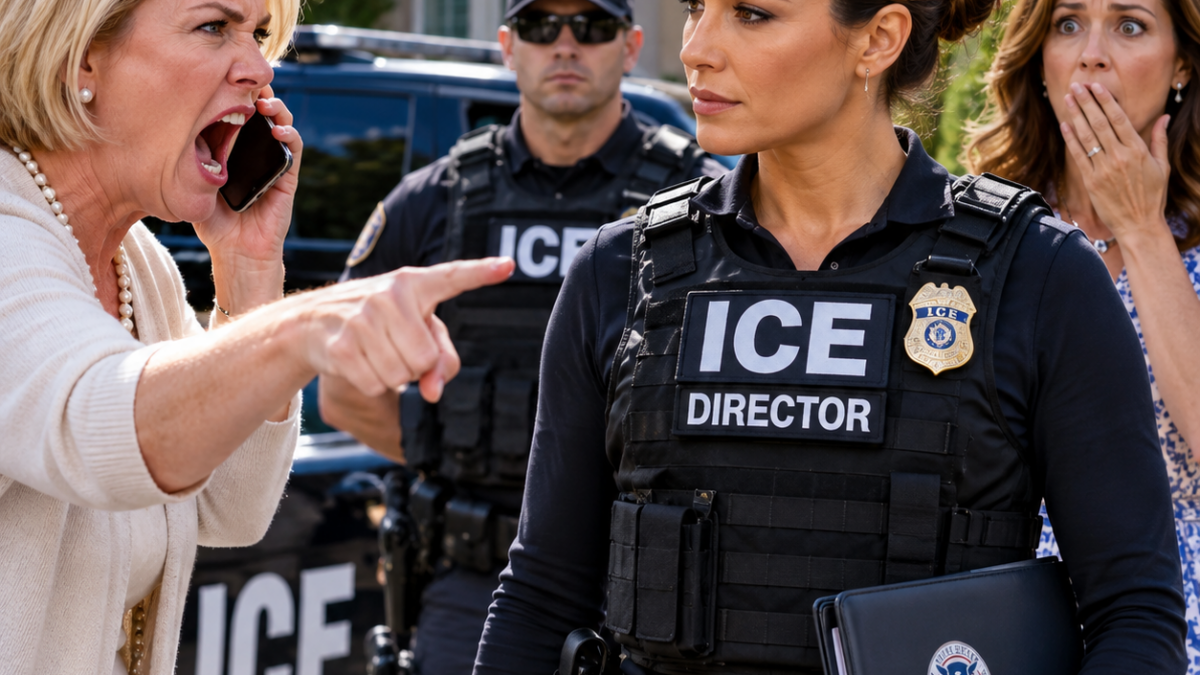
PART 2
Maria stared at us from the doorway.
“What do you mean, she’s calling immigration?”
Elena picked up the hose again, turned it off at the spigot, and coiled it so neatly that I could tell she was furious.
My sister-in-law did everything more precisely when she was angry.
“I mean,” she said, “your HOA president thinks brown women carrying garden hoses are undocumented domestic workers.”
Maria’s face changed.
She was usually the gentlest person in our family.
She was the one who remembered birthdays, sent thank-you notes, brought soup when neighbors got sick, and believed that almost every disagreement could be fixed if people sat down and talked like adults.
But she was also Elena’s older sister.
“Jack.”
“Yes?”
“Did you explain?”
“Several times.”
“And?”
“Elena being your sister apparently sounded like part of the conspiracy.”
Maria closed her eyes.
“You’ve been retired less than a month.”
“Twenty-six days.”
“I told you not to count.”
“It makes this feel more impressive.”
Elena laughed despite herself.
That helped.
We went inside.
Our dining room still looked like a warehouse.
Half-open boxes leaned against the wall.
Maria’s grandmother’s dishes were stacked on the table beside packing paper.
A lamp had no shade.
Three framed photographs were resting on the floor because we hadn’t agreed where to hang them yet.
It was supposed to be temporary chaos.
The harmless kind.
Instead, we sat down like we were assembling an operations center.
Old habits.
I pulled a legal pad from the kitchen drawer.
Maria groaned.
“No.”
“What?”
“The legal pad.”
“What’s wrong with the legal pad?”
“You used those before deployments.”
“I use them for grocery lists.”
“You alphabetize grocery lists.”
“That’s efficient.”
Elena sat across from me.
“Let him have his legal pad.”
Maria looked between us.
“I hate when both of you get that expression.”
“What expression?” Elena asked.
“The one where you decide something is now a mission.”
Neither of us answered.
Maria pointed at us.
“Exactly.”
Elena leaned back.
“Okay. Nobody is launching a mission. But we are going to document everything.”
That was reasonable.
I wrote DOCUMENTATION at the top of the page.
Maria saw it.
“You literally just wrote a mission heading.”
“I wrote documentation.”
“With capital letters.”
“Would lowercase make you feel better?”
“No.”
Elena pulled out her phone.
“For the record, Jack should not bait her.”
“Agreed.”
“He should not exaggerate anything.”
“Agreed.”
“He should not threaten federal action.”
“Agreed.”
Maria looked relieved.
Then Elena added, “But if Karen makes a report, she makes a report.”
Maria looked at her sister.
“Elena.”
“What?”
“You know what.”
“I’m not doing anything improper.”
“I know.”
“And I’m certainly not going to use my position to settle a personal HOA dispute.”
“Good.”
“But I’m also not going to pretend somebody can knowingly file false accusations against people because she dislikes how they look.”
The room went quiet.
That was the line.
Not revenge.
Accountability.
There was a difference, and Elena understood it better than any of us.
Her job had exposed her to every kind of immigration story imaginable.
Some involved real crimes.
Some involved families terrified of paperwork.
Some involved employers exploiting workers.
And far too many involved people trying to weaponize government agencies against neighbors, former spouses, tenants, employees, or strangers they simply didn’t like.
“Does that happen often?” I asked.
“More than you’d think.”
“False reports?”
“Bad reports. Malicious reports. Vague reports. Sometimes someone sees a Spanish-speaking family unloading furniture and decides they’ve discovered an international smuggling operation.”
Maria shook her head.
“Elena…”
“I’m serious.”
“What happens?”
“Usually nothing dramatic. Information is evaluated like anything else. But knowingly making false statements to federal officials can create its own problems.”
I tapped my pen.
“So we let the process be the process.”
“Exactly.”
Elena pointed at me.
“And you stay out of it.”
“I can do that.”
She laughed.
“No, you can’t.”
“I can try.”
“That’s more believable.”
Maria opened her laptop.
“If we’re documenting, I want to know what authority Karen actually has.”
“HOA website,” I said.
“Already looking.”
Within minutes she had Willow Creek Estates’ covenants, architectural standards, meeting notices, budget summaries, board rosters, enforcement procedures, and several years of newsletters.
Karen’s photograph appeared everywhere.
Karen cutting a ribbon at the renovated pool.
Karen handing out a “Best Holiday Display” certificate.
Karen standing beside a police officer at National Night Out.
Karen presenting a plaque to herself on behalf of the board for “Outstanding Community Leadership.”
Elena leaned over.
“She gave herself a plaque?”
“Apparently.”
“That’s incredible.”
Maria clicked another page.
“Oh, it gets better.”
The newsletter contained a column titled FROM THE PRESIDENT’S DESK.
Karen had written eleven hundred words on “protecting our shared standards.”
I read two paragraphs.
Then I stopped.
“This woman has declared war on patio umbrellas.”
“Taupe only,” Maria said.
“Of course.”
Elena found the violation process.
“What covenant did she mention?”
“She didn’t give a number.”
“Then tomorrow’s letter should be interesting.”
It arrived at 7:12 the next morning.
Not through the mail.
On our welcome mat.
A pristine white envelope embossed with the Willow Creek Estates logo.
Karen had apparently walked over before breakfast and left it personally.
I photographed the envelope where it lay.
Then the door.
Then the time on my phone.
Maria opened it.
VIOLATION NOTICE.
UNAPPROVED LANDSCAPING PERSONNEL.
Covenant 7.14.
Penalty: $100.
Continued violations subject to increased fines.
Elena was drinking coffee.
She read it.
Then looked at me.
“Am I landscaping personnel now?”
“I guess you’ve been promoted from illegal housekeeper.”
“Excellent.”
Maria already had the covenants open.
She searched.
“No 7.14.”
“What?”
“There’s a 7.12 and then Section Eight.”
I took the computer.
She was right.
Covenant 7.14 did not exist.
Not an outdated version.
Not a cross-reference.
Nothing.
Karen had invented a rule.
I photographed the notice.
Scanned it.
Put the original into a plastic sleeve.
Then I wrote KAREN BREWER / HOA on a binder.
Elena stared at it.
“You made a binder.”
“I like binders.”
“I know.”
“Evidence likes binders too.”
Maria pointed out the front window.
“Speaking of evidence.”
Karen was across the street.
Technically on the sidewalk.
She appeared to be studying one of the community trees.
But she was watching our house.
Waiting.
Probably expecting a government vehicle.
I gave her a wave.
She turned away.
That morning I took a walk.
Not an investigation.
A walk.
At least that was what I told Maria.
My first stop was next door.
Frank and Helen Miller.
Frank was retired Air Force.
Within five minutes we were discussing aircraft maintenance, military bureaucracy, and the universal truth that any machine designed by a committee will eventually require a hammer.
Then I mentioned Karen.
Frank’s face changed.
“Queen Karen.”
Helen came outside carrying iced tea.
“What did she do?”
“That obvious?”
“She doesn’t introduce herself unless she’s issuing a warning.”
“She thinks my sister-in-law is an undocumented housekeeper.”
Helen nearly dropped the tray.
“What?”
“She threatened to call immigration.”
Frank’s expression hardened.
“That woman is out of control.”
Then they told me about Sergeant Nomad.
The name made me think they were discussing an old military friend.
They were not.
Sergeant Nomad was a ceramic garden gnome.
Red hat.
Green jacket.
Tiny painted mustache.
Their granddaughter had given him to Frank after his retirement.
Karen declared him aesthetically incompatible with Willow Creek.
First warning.
Then a $50 fine.
Then $200.
Finally an attorney letter.
“We moved him to the backyard,” Helen said.
There was embarrassment in her voice.
That bothered me more than the story itself.
“You shouldn’t be embarrassed.”
“I know.”
“But?”
“You get tired.”
Frank looked toward Karen’s house.
“That’s how she wins.”
There it was.
Not authority.
Exhaustion.
I thanked them and kept walking.
Two houses farther down lived David and Sofia Garcia.
Young couple.
Two children.
Golden retriever.
Their garage looked like every family garage I had ever seen—bicycles, soccer gear, an inflatable pool toy, stroller, bags of mulch.
David was trying to repair a loose bicycle chain while his son repeatedly asked whether he was finished.
I introduced myself.
“New guy?”
“Month.”
“Welcome to Willow Creek.”
He lowered his voice.
“Mostly.”
I laughed.
“HOA?”
He looked at me.
“You met her.”
“Yesterday.”
“What’d you do?”
“Existing.”
“That’ll get you.”
When I told him what happened with Elena, he stopped smiling.
“She said that?”
“Almost word for word.”
Sofia came out and listened.
When I finished, she crossed her arms.
“Last summer my cousins came from Mexico.”
“Visiting?”
“For two weeks. All legal. Not that it should matter for using a swimming pool as guests.”
David nodded.
“Karen suddenly decided we had an overcrowding problem.”
“She proposed a guest limit,” Sofia said. “Only after she saw us at the pool together.”
“Did it pass?”
“No. Enough people objected. She said everyone was twisting her intentions.”
David looked toward my house.
“Your sister okay?”
“She’s angry.”
“Good.”
That surprised me.
“Good?”
“Fear is what Karen counts on.”
I walked home with two new stories.
Before reaching my driveway, somebody called out.
“Major.”
A man was washing a dark pickup across the street.
Tall.
Close-cropped gray hair.
Marine Corps flag mounted inside the garage.
He pointed the hose at me.
“You look like you walk with purpose.”
“Occupational damage.”
“Marcus Davis.”
“Jack Morgan.”
“Gunnery Sergeant Davis, retired.”
“Major Morgan, retired.”
He shut off the hose.
“Now that we’ve established which one of us did more actual work…”
I laughed.
Instantly liked him.
Gunny Davis was also an attorney.
Semi-retired.
Mostly veterans’ cases, small civil matters, and the occasional pro bono disaster he found personally offensive.
Karen qualified.
He read the violation notice.
Then asked for the covenants.
I brought him a printed copy.
He flipped through.
“Seven fourteen?”
“Doesn’t exist.”
He grinned.
“She invented it.”
“Looks that way.”
“That is spectacularly stupid.”
“So I’ve been told.”
“What else?”
I told him about Elena.
Not her job.
Just that she was my sister-in-law and a citizen.
Gunny’s amusement vanished.
“She filed anything yet?”
“We don’t know.”
“Do not confront her again.”
“Already been instructed.”
“Good.”
“She’ll probably send more fines.”
“Excellent.”
I stared at him.
“My sister-in-law said almost the same thing.”
“Smart woman.”
“She is.”
“Jack, people like Karen depend on informal power. People assume the letterhead means authority. They assume the lawyer threat means liability. They assume fighting costs more than surrender.”
He tapped the fabricated notice.
“But once somebody starts documenting the gap between what she can legally do and what she claims she can do, her behavior changes from annoying to useful.”
“Useful?”
“To us.”
That afternoon Elena came over.
She closed the front door behind her.
“The call happened.”
Maria stopped chopping vegetables.
I looked up.
“What exactly?”
“A report came into a federal intake channel concerning your address.”
Maria’s shoulders dropped.
“She actually did it.”
“Yes.”
“What did she say?”
Elena hesitated.
“Enough to make it obvious she had no factual basis.”
“Meaning?”
“She described a Hispanic woman performing yard work and claimed you were concealing an undocumented domestic worker.”
Maria put the knife down.
Her eyes filled.
That reaction hit me harder than Karen’s words had.
Maria wasn’t crying because she feared for Elena.
She knew Elena was safe.
She cried because someone had looked at her sister and reduced her entire life to skin color, yard work, and suspicion.
Elena crossed the kitchen and hugged her.
“I’m okay.”
“I know.”
“I promise.”
Maria wiped her eyes.
“I hate that woman.”
“I know.”
Elena looked at me.
“The report will be handled through normal channels. Nobody in my office is going to turn this into a personal circus.”
“Good.”
“But the complainant may be contacted if investigators determine she knowingly provided false information.”
“Also good.”
“Jack.”
“I said two words.”
“I know your two-word voice.”
Gunny later advised that we challenge the HOA violation formally and request records.
So I wrote the letter.
No threats.
No mention of Elena’s position.
I disputed the $100 fine.
I stated that Elena Ramirez was a family member and invited guest at my residence.
I noted that the cited Covenant 7.14 did not exist in the governing documents supplied by the association.
I demanded withdrawal.
Then I requested financial records and board minutes under the access provisions available to homeowners.
Three years.
Budgets.
Contracts.
Invoices.
Vendor relationships.
Enforcement records.
Board votes.
Gunny reviewed it.
“Too polite.”
“Really?”
“No. Keep it.”
We sent everything certified.
Karen responded through the HOA attorney.
My request was “overbroad.”
Providing the records would allegedly impose “substantial administrative burden.”
Search and copying charges might exceed several thousand dollars.
Gunny laughed when he read it.
“Standard intimidation.”
He drafted the reply.
Specific record categories.
Specific authority.
Specific deadlines.
Specific objections to excessive charges.
The paperwork war had begun.
Karen responded by escalating everything else.
Violation number two.
My truck was parked too close to the sidewalk.
I measured.
Photographed.
No such rule.
Violation number three.
Improperly stored recreational equipment.
The recreational equipment was my nephew’s soccer ball resting against the garage wall.
Violation number four.
Grass height.
Four and one-quarter inches, according to Karen.
Maximum four.
I had mowed forty-eight hours earlier.
I took twelve measurements.
Average height: three and seven-eighths.
Gunny loved that one.
“Never make a surveyor-adjacent Marine measure his grass.”
“I’m not a surveyor.”
“Emotionally you are.”
Karen then fined the Garcias for pool guest violations based on a policy that still had never passed.
She cited Frank Miller for putting Sergeant Nomad temporarily back in his front flower bed.
She issued a warning to an elderly widow named Joan Mercer because her nephew’s work van remained in her driveway overnight while he repaired her kitchen.
The file grew.
So did the number of people willing to talk.
Then Frank gave us the first financial thread.
He had served on the architectural review committee two years earlier.
Karen pushed the board to create a preferred-vendor program.
One company handled landscaping around nearly all common areas.
Evergreen Landscaping.
“They were expensive,” Frank said.
“How expensive?”
“Always twenty, thirty percent higher than the other bids.”
“Why use them?”
“Karen said reliability mattered more than cost.”
Gunny asked, “Who owns Evergreen?”
Frank looked at him.
“Karen’s brother-in-law.”
Silence.
“You’re sure?”
“Franklin Brewer. Her husband’s brother.”
“Did she disclose that relationship?”
“Not to the committee.”
Gunny leaned forward.
“What happened when you raised it?”
“I was removed two months later.”
“Reason?”
“Lack of alignment with community priorities.”
Gunny smiled without humor.
“Of course.”
Corporate filings confirmed the connection.
Then we looked at HOA expenditures.
Landscaping spending had risen almost thirty percent.
Security expenses had also jumped.
The description was vague.
CAMERA MODERNIZATION.
MOTION LIGHTING.
COMMUNITY SAFETY EQUIPMENT.
I walked the neighborhood.
Most cameras appeared concentrated around the entrance nearest Karen’s street.
Two cameras covered the common area beside her property.
Motion lights illuminated a walkway behind her backyard.
Maybe innocent.
Maybe not.
We requested invoices and board approval.
Karen resisted.
That resistance interested Gunny more than the numbers.
“Good governance hates darkness,” he said.
“What does bad governance hate?”
“Subpoenas.”
Meanwhile, Elena heard that the complaint Karen made was being reviewed alongside other publicly documented complaints connected to her address and phone number.
I did not ask Elena to obtain information she was not supposed to share.
She did not.
What eventually became relevant came through official contacts and records.
Karen had repeatedly called local authorities about “suspicious people.”
Delivery drivers.
Landscapers.
Teenagers walking home.
Guests in the neighborhood.
The pattern, taken by itself, didn’t automatically establish a crime.
But it explained why neighbors reacted to her with fear instead of annoyance.
She had spent years borrowing institutional power.
Police.
Code enforcement.
HOA attorneys.
Now immigration.
Whatever institution carried more authority than she did became a tool she tried to point at somebody else.
The irony was that institutions also create records.
Records survive intimidation.
Gunny circulated a petition for a special HOA meeting.
The bylaws required a minimum percentage of homeowners.
We reached it in two days.
By the end of the week, more than triple the required number had signed.
The meeting agenda:
Enforcement practices.
Vendor contracting.
Financial transparency.
Presidential conduct.
Karen sent a neighborhood-wide email.
I still have a copy.
Dear Willow Creek Residents,
A small number of recently dissatisfied homeowners have requested a special meeting to discuss concerns regarding the consistent enforcement of community standards.
The board welcomes civil discussion but remains committed to preserving the values that have made Willow Creek one of the region’s premier residential communities.
I encourage every resident who supports responsible leadership, neighborhood safety, and high standards to attend.
—Karen Brewer, President.
Gunny printed it.
“She just recruited our audience.”
“She thinks they support her.”
“Some do.”
“Probably.”
“Doesn’t matter.”
Maria looked nervous.
“It matters to me.”
We were sitting around our dining table.
This time the boxes were mostly gone.
The room finally looked like a home.
And yet we had covered the table with binders.
Gunny.
Frank and Helen.
David and Sofia.
Me.
Maria.
Elena joined remotely.
Not as an official participant.
As family.
I hated the fact that she had to think about boundaries between those roles at all.
“This cannot become a mob,” she said.
“It won’t,” I promised.
“You present facts.”
“Yes.”
“No humiliating speeches.”
I looked at Gunny.
He shrugged.
“She means you too.”
“I know.”
“No implying anybody is guilty of crimes that haven’t been established.”
Gunny nodded.
“Agreed.”
“And Jack?”
“Yes?”
“Do not reveal my position until it becomes relevant.”
“I wasn’t planning to.”
“You definitely were planning to.”
“Eventually.”
She sighed.
Maria smiled.
“Welcome to my marriage.”
We rehearsed.
Not theatrically.
Structurally.
First: fabricated and unsupported violations.
Second: pattern of selective enforcement.
Third: vendor conflicts.
Fourth: security spending.
Fifth: governance failures.
Sixth: Karen’s report concerning Elena.
Gunny would discuss fiduciary obligations and conflicts.
Frank would describe the preferred-vendor issue.
David would describe Karen’s attempt to limit family guests after his relatives visited.
Other homeowners would speak if they chose.
No shouting.
No personal insults.
No revenge performance.
Just facts.
The next night, the clubhouse was full forty minutes before the meeting.
People stood along the walls.
Extra chairs filled the back.
Karen sat at the front in a red suit with a gavel.
Bob Harris, vice president, sat beside her.
Cynthia Wells, secretary, sat on the other side.
The HOA attorney had a stack of folders.
Karen saw me enter with Gunny.
She smiled.
Not nervously.
Triumphantly.
That told me she still believed the evening belonged to her.
Two unfamiliar men stood at the back.
Professional clothes.
Quiet.
Elena had told me colleagues might attend as private observers because issues connected to the federal complaint were now being coordinated formally.
I did not acknowledge them.
At seven sharp, Karen struck the gavel.
“This meeting will come to order.”
The chatter stopped.
“As residents know, Mr. Morgan has requested this special session because of several disagreements he has had with reasonable community standards.”
I remained seated.
“He will be given an opportunity to speak. I ask everyone to remember that one unhappy homeowner should not be allowed to undermine years of responsible leadership.”
Gunny whispered, “She really cannot help herself.”
Karen looked at me.
“Major Morgan, you have ten minutes.”
I stood.
“According to the special-meeting provision, petitioned agenda items are not subject to a ten-minute presentation limit.”
The HOA attorney leaned toward Karen.
Whispered.
Her jaw tightened.
“You have the floor.”
I walked to the podium.
Put down my binder.
Looked around the room.
Most faces were familiar now.
A month earlier, they were strangers.
“Thank you for coming.”
No theatrics.
“I requested this meeting because the disputes involving my home exposed broader questions about whether our association’s rules are being enforced accurately, consistently, and lawfully.”
Karen rolled her eyes.
I opened the binder.
“The first issue began when President Brewer observed my sister-in-law doing yard work at my home.”
Karen interrupted.
“Landscaping personnel.”
“No.”
I held up a photograph.
“Elena Ramirez. My wife’s sister.”
Murmurs.
“I informed President Brewer of that relationship on the day she confronted us.”
Karen leaned into her microphone.
“Anyone can claim someone is family.”
Gunny closed his eyes.
She had walked straight into it.
I continued.
“The following morning I received this.”
The violation notice went onto the projector.
UNAPPROVED LANDSCAPING PERSONNEL.
COVENANT 7.14.
$100.
I displayed the current covenants.
“There is no Covenant 7.14.”
People started talking.
Karen hit the gavel.
“It was an administrative citation error.”
“Then let’s look at the others.”
Truck.
Soccer ball.
Grass.
Each notice appeared beside the governing documents.
One by one.
Either unsupported.
Misstated.
Or enforced in ways nobody could explain consistently.
Then Helen stood.
“Our gnome.”
Laughter rippled through the room.
Karen looked irritated.
Helen did not laugh.
“My granddaughter gave us Sergeant Nomad fifteen years ago.”
That stopped people.
“Karen fined us two hundred dollars until we removed him.”
Frank stood beside her.
“We did it because we were tired.”
Karen said, “The ornament violated architectural standards.”
Gunny asked from his seat, “Could you identify the applicable written provision?”
Karen glared.
“This isn’t your presentation.”
“Then identify it for Mrs. Miller.”
Silence.
David Garcia stood.
“Can I say something?”
I stepped back from the podium.
He faced the neighbors.
“Last summer, my wife’s relatives visited from Mexico.”
He paused.
“They were here legally, but I’m ashamed that I even feel obligated to say that.”
Sofia took his hand.
“After Karen saw us using the pool together, she proposed new guest restrictions.”
Karen interrupted.
“That proposal was about overcrowding.”
David turned toward her.
“It wasn’t overcrowded until you saw us.”
A low sound moved through the room.
Then another homeowner stood.
And another.
A woman fined because her teenage son’s basketball hoop remained near the curb.
A man cited for washing his truck Sunday morning.
Joan Mercer explained the warning concerning her nephew’s work van.
Each story alone sounded petty.
Together they formed something else.
A pattern.
Karen hit the gavel harder.
“Enough! This meeting is not an open microphone for every complaint anyone has ever had.”
Gunny stood.
“Actually, under the petitioned agenda…”
The attorney whispered to her again.
Karen looked like she wanted to throw the gavel.
I raised my hand.
The room quieted.
“Enforcement is only half the issue.”
I turned the slide.
EVERGREEN LANDSCAPING.
The room changed.
People knew that name.
Their dues paid it.
“Association landscaping expenditures increased by approximately thirty percent over the period we reviewed.”
Karen interrupted.
“Inflation.”
“Possibly.”
I changed slides.
“Evergreen also received contracts without evidence of meaningful competing bids in records available to us.”
Gunny stood.
“State corporate records identify Evergreen’s owner as Franklin Brewer.”
People looked toward Karen.
Gunny continued.
“President Brewer’s brother-in-law.”
Now the room erupted.
Karen stood.
“That is completely legal!”
Gunny didn’t flinch.
“Nobody said employing a relative is automatically illegal.”
That was important.
“What matters is whether the relationship was disclosed, whether the board fulfilled its fiduciary duties, whether bids were obtained as required, and whether Karen participated in decisions where she had a personal conflict.”
Frank Miller approached the microphone.
“I served on the architectural review committee.”
Karen glared at him.
“I raised concerns about Evergreen two years ago.”
“You were removed for repeatedly obstructing board functions.”
“I was removed after asking why we were required to recommend your brother-in-law.”
“You are lying.”
Frank held up a signed statement.
“I put it in writing.”
Gunny displayed records.
Payments.
Contracts.
Committee notes.
Then security expenditures.
It wasn’t proof of embezzlement.
We were careful to say that.
But enough money had been spent with enough opacity to justify independent review.
The membership understood immediately.
Their dues.
Their reserves.
Their liability.
Karen understood what was happening too.
She abandoned denial and attacked motive.
“This is a coup.”
Her voice echoed through the clubhouse.
“That’s what this is.”
Nobody spoke.
“A disgruntled retiree moves here, refuses to respect our standards, brings his cronies together, digs through private records, attacks my family, and now expects you to reward him for destroying this community.”
I said nothing.
She pointed at me.
“He created this.”
Still nothing.
“And all because I tried to protect Willow Creek from suspicious people he brought onto our streets.”
There it was.
Gunny looked at me.
I walked back to the podium.
“Let’s talk about that.”
Karen folded her arms.
“You accused Elena Ramirez of being undocumented.”
“I reported a suspicious situation.”
“I told you she was family.”
“You claimed that.”
“I told you she was a citizen.”
“I had no way to verify it.”
“You could have spoken to her.”
Karen laughed.
“Why would I?”
The room went silent.
Not dramatic silence.
Ugly silence.
Because everybody heard what sat underneath that sentence.
I continued.
“You threatened to call immigration.”
“I had every right.”
“And then you did.”
Some residents turned toward her.
Karen lifted her chin.
“Yes.”
It was almost proud.
“Yes, I did. And if the federal government chooses to investigate her, that’s not my fault.”
Maria was sitting near the front.
I saw her hands tighten.
Elena wasn’t there.
Not physically.
That mattered.
This was not her stage.
Karen continued.
“Maybe instead of attacking me, Mr. Morgan should be asking why immigration hasn’t cleared his so-called relative.”
I took a breath.
“Karen.”
“What?”
“You still haven’t asked Elena a single question.”
“I don’t need to.”
“That is precisely the problem.”
I let the room settle.
“The woman you saw watering roses wasn’t an employee.”
Karen rolled her eyes.
“She wasn’t undocumented.”
Nothing.
“She wasn’t hiding from immigration.”
Karen looked impatient.
“Elena Ramirez is a senior regional director with United States Immigration and Customs Enforcement.”
For one full second nobody reacted.
The sentence seemed too absurd.
Then someone gasped.
Karen blinked.
“What?”
I repeated it.
“My sister-in-law works for ICE.”
Her face went still.
Not pale yet.
Just blank.
As though the words had entered but found nowhere to land.
I continued.
“The report you made accused a senior federal official of being an undocumented domestic worker based on nothing more than seeing her doing yard work.”
A laugh escaped somewhere in the back.
Not cruel.
Disbelieving.
Then another.
Karen turned red.
“You’re lying.”
“No.”
“You expect us to believe your gardener runs ICE?”
“My sister-in-law.”
“This is ridiculous.”
The HOA attorney had gone very pale.
He leaned toward Karen.
She pushed him away.
“Don’t.”
I looked toward the back.
One of the two quiet men stepped forward.
“Mrs. Brewer?”
Every head turned.
Karen froze.
The man removed identification, showed it to her rather than the room, and spoke calmly.
“My colleague and I would like to speak with you after the meeting regarding the report you submitted.”
No handcuffs.
No dramatic declaration.
No sirens.
That made it worse.
Karen stared at the identification.
Then at me.
“What did you do?”
“Nothing.”
“You set me up.”
“No.”
“You had them come here!”
“I didn’t tell you to make the call.”
Her mouth opened.
Closed.
The agent spoke again.
“Ma’am, we’re not disrupting the meeting. We just need to arrange an interview.”
Karen looked around.
Her authority was disappearing visibly.
The people she had spent years intimidating now watched her confront a government system she could not control.
And for the first time, she couldn’t write a fine to make the problem go away.
She pointed at me.
“This man orchestrated everything!”
Gunny stood.
“No, Karen.”
She turned.
“You fabricated violations.”
He held up one page.
“You concealed a vendor relationship.”
Another.
“You targeted families.”
Another.
“And you made the federal report.”
He put the papers down.
“Jack documented you.”
Karen reached for the gavel.
Cynthia suddenly put her hand over it.
Everyone looked at her.
Karen stared.
“What are you doing?”
Cynthia’s hand shook.
But she did not move it.
“No more.”
Karen’s face twisted.
“Excuse me?”
“I said no more.”
Cynthia looked terrified.
But something had changed.
“You told us the landscaping contracts were vetted.”
“They were.”
“You told us legal approved every violation.”
“They did.”
The HOA attorney spoke quietly.
“No, ma’am.”
Karen turned toward him.
He looked miserable.
“Our firm reviewed notices submitted to us for collection. We did not independently certify every covenant interpretation.”
Karen stared at him.
“You’re abandoning me too?”
“I represent the association.”
Not Karen.
The distinction landed.
Bob pushed his chair back.
“I didn’t know Evergreen was Frank’s company.”
Karen spun.
“You knew!”
“No.”
“You met him!”
“At a Christmas party!”
“You knew he was family!”
“I didn’t know he owned the vendor!”
The room began shouting.
People wanted answers.
Receipts.
Audits.
Board minutes.
Refunds.
Karen slammed her palm on the table.
“SHUT UP!”
Nobody did.
That might have been the moment her presidency truly ended.
Not when the federal agents approached.
Not when the financial questions were raised.
When she shouted and the neighborhood discovered it no longer had to obey.
Gunny raised his voice.
“Motion from the floor!”
The room slowly quieted.
“Pursuant to the removal provisions of the bylaws, I move for an immediate vote of no confidence in President Karen Brewer and a formal recall process.”
“I rule that out of order!”
Cynthia spoke.
“You can’t chair a motion concerning your own removal.”
Karen stared at her.
Bob slowly opened the bylaws.
Gunny told him the page.
Bob read.
Then swallowed.
“He’s right.”
“You spineless little—”
“Karen.”
It was Cynthia.
Again.
“Stop.”
Bob moved to the center microphone.
His hands trembled.
“Motion has been made.”
“I object!”
“Noted.”
“Bob!”
“Motion has been made.”
Somebody shouted, “Second!”
Then ten more.
Bob looked overwhelmed.
“Okay. Seconded.”
Discussion lasted forty minutes.
Karen defended herself.
At first angrily.
Then desperately.
She said Willow Creek had been declining before her leadership.
She said people begged her to enforce standards.
She said homeowners wanted property values protected.
She said family businesses could provide good services.
She said immigration reports were everyone’s civic duty.
Some of what she said probably contained truth.
That made the rest more disturbing.
Karen had not started as a cartoon villain.
She had likely begun as the person willing to volunteer.
Then willing to make decisions.
Then willing to enforce them.
Eventually the difference between responsibility and control disappeared.
Frank Miller spoke.
David Garcia.
Joan Mercer.
Others.
Then Maria stood.
I hadn’t known she planned to.
She walked to the microphone.
Karen watched her.
Maria’s voice was gentle.
That made every word sharper.
“My sister came to my house because she loves me.”
She paused.
“She spent three weekends helping me unpack because my husband and I had moved again after twenty-two years of military life.”
People listened.
“She planted roses with me because our mother used to grow them.”
I looked at Elena’s empty seat in my mind.
Maria continued.
“You saw my sister doing something kind for me and decided that the only explanation was that my husband must have hired her illegally.”
Karen looked down.
“You never introduced yourself to Elena.”
Silence.
“You never asked her name.”
More silence.
“You never asked why she was there.”
Karen’s hands tightened.
“You just decided.”
Maria swallowed.
“And then you tried to use the government to make that decision true.”
That was the part that broke me.
Because underneath the HOA war, legal documents, vendors, bylaws, fines, and jokes about Sergeant Nomad, there was something painfully small.
A woman watering her sister’s roses.
Nothing suspicious.
Nothing political.
Nothing complicated.
Just family.
And Karen had looked at that moment and seen something dirty.
Maria returned to her chair.
I squeezed her shoulder.
The vote came.
Bob asked for hands supporting removal as president pending the formal recall procedure.
They rose across the room.
Front.
Back.
Sides.
Even people who had once supported Karen.
I counted only five hands against.
One was Karen’s.
The motion passed.
Then the board voted to suspend her authority immediately while counsel completed the formal removal process.
Cynthia took the gavel.
Karen stared at her.
“You can’t do this.”
Cynthia’s voice trembled.
“We just did.”
The two federal officials waited near the wall.
Karen gathered her purse.
Her papers.
She nearly left the gavel.
Then seemed to remember it wasn’t hers.
She put it down.
That image stayed with me.
For years, neighbors associated that piece of wood with Karen.
She carried it like authority itself.
But the gavel had always belonged to Willow Creek.
Not to her.
As she walked toward the door, she passed me.
“You happy?”
I looked at her.
“No.”
She almost laughed.
“Liar.”
“I wanted you to leave my family alone.”
“You destroyed me.”
“You did that yourself.”
She flinched.
Then kept walking.
The officials followed her outside.
Nobody cheered.
I was grateful for that.
This wasn’t a football game.
There were still consequences coming for dozens of people.
Financial.
Legal.
Emotional.
The meeting continued past midnight.
With Karen gone, people began asking the questions they should have asked years earlier.
Who approved contracts?
Where were competitive bids?
How many fines were unsupported?
Could residents receive refunds?
How much money was in reserves?
What had the attorney known?
What records needed preservation?
Gunny recommended immediate independent counsel.
Not the same firm.
That surprised the HOA attorney.
Probably intentionally.
An interim financial committee formed.
Frank volunteered.
Cynthia offered full access to records.
Bob looked like a man who had been released from captivity and immediately told he had to help clean the prison.
Around twelve thirty, somebody nominated me as interim president.
I laughed.
Nobody else did.
“No.”
Gunny grinned.
“I nominate Major Jack Morgan.”
“I decline.”
“You can’t decline before a second.”
“Watch me.”
Someone seconded.
I stared at Gunny.
“You’re dead to me.”
“Noted.”
People laughed.
Then David Garcia spoke.
“Jack, just temporary.”
“No.”
Helen Miller stood.
“Please.”
That made it harder.
“I just retired.”
Frank said, “Perfect. You’ve got time.”
The room laughed again.
I looked at Maria.
She mouthed:
Your choice.
That meant she would support me.
It did not mean she wanted it.
Neither did I.
But when I looked around the room, I understood what they were really asking.
Not for a hero.
For a transition.
Somebody people trusted long enough to get the systems repaired.
“Sixty days.”
Gunny shook his head.
“Ninety.”
“Sixty.”
“Election process takes longer.”
“Seventy-five.”
“Done.”
I pointed at him.
“I hate you.”
“Leadership loves sacrifice.”
“Spoken like an enlisted Marine.”
“Exactly.”
The vote passed.
At 1:04 in the morning, less than five weeks into retirement, I became interim president of the homeowners association I had spent the previous month fighting.
Maria laughed all the way home.
“This isn’t funny.”
“It is a little funny.”
“I commanded Marines.”
“And now you’ll command mulch disputes.”
“I am resigning tomorrow.”
“No, you’re not.”
“I could.”
“You won’t.”
Elena was waiting at our kitchen table.
She had come over after her colleagues finished their conversation with Karen.
“How’d it go?”
Maria pointed at me.
“Meet President Morgan.”
Elena stared.
Then burst out laughing.
I opened the refrigerator.
“I need a beer.”
“ICE director gets mistaken for gardener and you end up HOA president.”
“Do not summarize my life like that.”
“It’s objectively excellent.”
I handed her a beer.
“What happened with Karen?”
Elena’s expression became professional.
“Nothing I can discuss casually.”
“Fair.”
“I can tell you that she was interviewed.”
“Arrested?”
“No.”
“Charged?”
“Jack.”
“I know.”
“Processes take time.”
That answer remained true for months.
Karen’s federal complaint became only one part of a broader examination of her pattern of reports and representations.
I deliberately stayed out of it.
So did Elena unless her official role required otherwise.
The financial side moved faster.
Our first board action was freezing discretionary contracts.
Second: independent forensic audit.
Third: ninety-day moratorium on non-safety fines.
I had argued for sixty.
Gunny publicly reminded everyone of that.
“President wanted sixty,” he announced.
“Counsel wanted ninety.”
“Counsel is not on the board.”
“Counsel is smarter than the board.”
“Point of order.”
People laughed.
That laughter mattered.
HOA meetings had apparently been miserable for years.
I wanted them boring.
Boring is healthy governance.
The forensic accountants arrived.
What they found was worse than we expected.
Evergreen Landscaping had indeed received repeated no-bid work.
Not every invoice was fraudulent.
The company had performed real services.
But rates often exceeded market comparisons significantly.
Disclosure of the family relationship was inconsistent.
Several jobs appeared poorly documented.
Then came other vendors.
A painting contractor connected to a cousin.
Pool maintenance linked socially to one of Karen’s close friends.
Security upgrades concentrated disproportionately near Karen’s property.
HOA debit card purchases included groceries, meals, fuel, and one spa charge categorized as “clubhouse maintenance.”
Gunny stared at that invoice.
“I’ve been maintaining clubhouses wrong my whole life.”
Cynthia was horrified.
“I signed monthly reports.”
“Did you see individual transactions?”
“No.”
“Why not?”
“Karen summarized them.”
That sentence became Willow Creek’s unofficial lesson.
Never let one person summarize the money they control.
The audit identified more than fifty thousand dollars requiring explanation, reimbursement, or further investigation.
Independent counsel referred portions to local authorities.
Again, no victory dance.
People had to pay to fix the damage.
Reserve accounts were lower than residents believed.
Deferred maintenance existed.
Trust was shattered.
Removing Karen was easy compared with rebuilding that.
I spent mornings reviewing invoices instead of fishing.
Afternoons answering homeowners who wanted every old fine reversed immediately.
Evenings in town halls.
The Marines had never prepared me for a three-hour debate over whether a basketball hoop constituted a permanent structure.
At home, Maria found me staring at covenant language one night.
“What are you doing?”
“Trying to define seasonal decorations.”
“Go to bed.”
“Halloween inflatables are creating interpretive problems.”
“Jack.”
“Yes?”
“You fought in Fallujah.”
“I did.”
“You can survive a plastic ghost.”
“It’s eight feet tall.”
“Bed.”
“Yes, ma’am.”
The ninety-day moratorium changed the neighborhood almost immediately.
People relaxed.
Kids left bicycles outside.
Nobody received a warning because a trash can stayed at the curb until dinner.
Sergeant Nomad returned.
The Millers held a ceremony.
Frank wore an old Air Force cap.
Gunny saluted the gnome.
I refused.
“You’re disrespecting a decorated veteran,” Frank said.
“He’s ceramic.”
“He has seen things.”
Helen cried laughing.
We eventually wrote what everyone called the Sergeant Nomad Clause.
Personal decorative items were permitted unless they posed an actual safety problem, substantially interfered with common property, or violated a narrow, clearly stated rule approved by membership.
No “aesthetic disharmony.”
No presidential taste tests.
David Garcia joined the covenant review committee.
Sofia joined the pool committee.
They rewrote guest policies so limits, when necessary, applied equally and were based on capacity rather than vague discretionary concerns.
Joan Mercer helped write a rule clarifying temporary contractor vehicles.
Frank joined financial oversight.
Every significant vendor relationship had to include written conflict disclosure.
Competitive bids required above a threshold.
Monthly spending reports published.
Board email accounts retained.
Minutes detailed actual votes.
No verbal “emergency approval” unless there was an actual emergency.
Most important to me, we changed enforcement.
Informal contact first, when appropriate.
Then written warning.
Clear citation.
Photographic evidence if necessary.
Reasonable time to correct.
Independent appeal.
No person who initiated a violation could act as sole appeal authority.
Gunny called it “basic due process.”
I called it “how adults behave.”
For once, he agreed.
Karen stayed in her house during those months.
Curtains closed.
Flag removed.
Her husband, Peter, was rarely seen.
Neighbors speculated constantly.
I stopped it whenever I heard it at meetings.
“We deal in facts.”
“But—”
“No.”
“Everybody knows—”
“No.”
“Jack—”
“We spent months fighting invented stories. We’re not starting new ones.”
That became another lesson.
You cannot defeat a culture of accusation by becoming better at accusing.
One Saturday morning, I was trimming the hedge when Peter Brewer walked over.
I almost didn’t recognize him.
Karen had been such a large presence that her husband existed mostly as background.
He looked exhausted.
“Major Morgan?”
“Jack.”
“Peter.”
“I know.”
He nodded.
For a while, he watched me cut branches.
Finally:
“I owe you an apology.”
“You didn’t call immigration.”
“No.”
“You didn’t write the fines.”
“I signed some checks.”
“That’s between you and whoever’s reviewing them.”
“I should have stopped her.”
I put down the trimmer.
“That’s different.”
He stared at his shoes.
“I kept telling myself the HOA made her happy.”
I waited.
“She’d been lonely after our kids left. She got elected. Suddenly everybody needed her.”
He gave a sad laugh.
“At first she fixed things.”
“I believe that.”
“You do?”
“Yes.”
He looked surprised.
“Why?”
“Because people don’t usually hand power to someone who’s terrible from day one.”
Peter nodded.
“She organized storm cleanup. Got the pool repaired. Helped an elderly couple during a flood.”
“What happened?”
“I don’t know.”
He thought.
“Maybe she liked being the person everybody had to call.”
That sounded right.
Peter rubbed his face.
“Then anyone who questioned her became an enemy.”
He looked toward his house.
“I stopped questioning her.”
“Why?”
“Peace.”
The word hurt.
People often surrender truth for temporary peace.
It rarely stays peaceful.
Peter looked at me.
“She’s angry with you.”
“I know.”
“More angry with Elena.”
“That’s unfortunate.”
“She thinks Elena used her job to target her.”
“She didn’t.”
“I know that now.”
He paused.
“Karen doesn’t.”
“That is something she’ll have to work out.”
Peter nodded.
Before leaving, he said, “The house is going on the market.”
I felt no satisfaction.
Just tiredness.
“I’m sorry.”
He looked at me sharply.
“You mean that?”
“Yes.”
“You hate her.”
“No.”
That surprised even me.
I had hated what she did.
I had been furious.
But hatred requires maintenance.
I had enough maintenance issues already.
Two weeks later, Karen came to my door.
Maria was home.
I almost didn’t open it.
Then I did.
Karen looked different.
No clipboard.
No HOA polo.
No large sunglasses.
She held an envelope.
“I need to speak with you.”
“About?”
“Elena.”
My body tightened.
“No.”
“Jack.”
“You do not use my family to relitigate this.”
“I want to apologize.”
I stopped.
Maria appeared behind me.
She heard.
Karen looked at her.
“Can I come in?”
Maria said, “No.”
I loved my wife.
Karen nodded.
“Fair.”
She stayed on the porch.
For several seconds she struggled.
It was the first time I had ever seen Karen Brewer search for words rather than throw them.
“I was wrong.”
Maria said nothing.
“I saw Elena working outside and made an assumption.”
Still nothing.
“I convinced myself I knew what I was seeing.”
Karen’s voice cracked.
“And when you corrected me, I thought you were lying.”
“Why?” Maria asked.
Karen looked at her.
“I don’t have a good answer.”
“You had an answer then.”
Karen closed her eyes.
“I thought people took advantage of rules.”
Maria crossed her arms.
“So you decided everybody who looked a certain way was breaking them.”
Karen’s face flushed.
“Yes.”
That honesty surprised me.
Maria did not rescue her.
Good.
Karen continued.
“I made the report.”
“We know.”
“I shouldn’t have.”
“No.”
“I’ve been interviewed about it. More than once.”
I did not ask details.
“I also went through old complaints I made.”
Her voice became quieter.
“I told myself they were all about security.”
She looked toward the street.
“I don’t think they were.”
That was the first thing she said that sounded like accountability rather than regret.
“What do you want from us?” I asked.
“Nothing.”
“Forgiveness?”
She shook her head.
“I don’t think I’m entitled to ask.”
Maria looked at me.
Then back at Karen.
“Did you apologize to the Garcias?”
“Yesterday.”
“The Millers?”
“Yes.”
“Joan?”
“Yes.”
“Elena?”
Karen swallowed.
“I wrote her.”
“That’s between you and her.”
“I know.”
She handed me the envelope.
“What is this?”
“My resignation.”
“You’ve already been removed.”
“From every committee too.”
“You don’t have committee positions.”
“I know.”
Despite myself, I almost smiled.
“So what is it?”
“A statement for the board. Full resignation from any future appointed role. And disclosure about the vendor relationships.”
That mattered.
“Why?”
“Because the audit will find it anyway.”
“At least that’s honest.”
Karen looked at the ground.
“Honesty would’ve been more useful six months ago.”
“Yes.”
She winced.
“I deserve that.”
“No.”
She looked up.
“You don’t have to turn everything into punishment.”
For the first time, I saw tears in her eyes.
“I already lost.”
Maria spoke softly.
“Losing is not the same as understanding.”
Karen looked at her.
Then nodded.
“You’re right.”
She walked away.
Maria closed the door.
For several seconds, neither of us spoke.
Then she said, “I still don’t like her.”
“You don’t have to.”
“Do you feel sorry for her?”
“Yes.”
Maria stared.
“Seriously?”
“I can feel sorry for someone and still believe consequences belong to them.”
She considered that.
“That sounds annoyingly healthy.”
“Retirement has changed me.”
“You’re HOA president.”
“Temporary.”
“You’ve said that for three months.”
“Election is Saturday.”
“Thank God.”
The election had the highest turnout in Willow Creek history.
I refused nomination.
Gunny tried.
I threatened to expose his secret preference for pineapple pizza.
He withdrew.
Cynthia ran for president.
That surprised many people.
Not me.
She had spent months doing the uncomfortable work of admitting how passive she had been under Karen.
Her campaign was simple.
“I signed things I should have read. I stayed quiet when I should have asked questions. If you elect me, my first promise is that nobody on this board will ever be allowed to hide behind silence again—including me.”
She won.
David Garcia became vice president.
Frank Miller joined finance.
A young mother named Aisha Coleman became secretary.
Gunny became legal advisor only after promising not to attend every meeting.
He broke that promise immediately.
At my final meeting as interim president, Cynthia handed me a plaque.
I groaned.
“No.”
“Yes.”
“I have enough military plaques to build furniture.”
“This one has Sergeant Nomad on it.”
I stared.
It did.
Someone had engraved a tiny gnome in the corner.
The room erupted.
The plaque read:
TO MAJOR JACK MORGAN
FOR HELPING WILLOW CREEK REMEMBER THAT A COMMUNITY IS NOT THE SAME THING AS CONTROL.
I hated how much I liked it.
After the meeting, David pulled me aside.
“My kids asked why you’re not president anymore.”
“Tell them I escaped.”
“I told them democracy.”
“Less accurate.”
He smiled.
Then became serious.
“Thank you.”
“You did the work too.”
“You started it.”
“No.”
I looked across the clubhouse.
Frank was arguing with Gunny.
Helen was talking to Sofia.
Cynthia was helping Joan with some paperwork.
Kids were running near the doors.
“Karen started it.”
David laughed.
“You know what I mean.”
“I do.”
The investigations continued after Karen moved.
I learned only what became appropriate to know.
The HOA resolved civil financial claims tied to improper expenditures.
Insurance covered part.
Karen and associated vendors repaid portions under negotiated agreements.
Authorities reviewed financial conduct separately.
The federal issues connected to her complaint and broader reporting history were handled through the appropriate process.
There was no dramatic midnight raid.
No helicopter.
No cinematic sentencing delivered on my lawn.
Real accountability is usually less theatrical.
Interviews.
Lawyers.
Repayment.
Agreements.
Court dates.
Records.
Consequences accumulating slowly.
That was enough.
I did not need Karen in prison to feel vindicated.
I needed Maria to feel safe in her garden.
I needed Elena to visit without being treated like a suspect.
I needed the Garcias to use the pool with their family.
I needed Frank to put his ridiculous gnome wherever he pleased.
I needed Willow Creek to learn that authority was borrowed, not owned.
Spring came.
Maria’s roses exploded into color.
Red.
Pink.
Yellow.
She added lavender along the walkway.
One Saturday, Elena arrived wearing old jeans and carrying gardening gloves.
I opened the door.
She held up the gloves.
“Housekeeper reporting for duty.”
I groaned.
Maria yelled from the kitchen.
“Do not encourage her.”
Elena walked past me.
“Do you have my employment authorization?”
“Get out.”
“I might need to speak with management.”
“I am no longer management.”
“Best news I’ve heard all year.”
She went outside.
I followed.
The roses had become Maria’s pride.
Elena crouched beside one bed.
“You overwater these.”
“I don’t touch them.”
“Smart.”
“Learned early.”
We worked for an hour.
Mostly Elena worked.
I moved bags.
Maria supervised.
At noon, Gunny appeared at the edge of the yard.
“Major.”
“Why are you here?”
“Official HOA business.”
“I resigned.”
“Doesn’t matter.”
“What?”
He pointed toward the sidewalk.
Sergeant Nomad stood there.
Frank and Helen were behind him.
David and Sofia.
Cynthia.
Half the neighborhood.
“What is happening?”
Frank raised the gnome.
“We are establishing diplomatic relations.”
“With my house?”
“With the garden.”
I looked at Elena.
“This feels like your fault.”
“Federal government denies involvement.”
Frank planted Sergeant Nomad beside one rosebush.
Maria laughed.
“You are not leaving that thing there.”
Helen hugged her.
“Thirty minutes.”
“Twenty.”
“Deal.”
Children gathered.
Someone brought lemonade.
Another neighbor brought folding chairs.
What began as a joke turned into lunch.
Right there on my front lawn.
The same lawn where Karen had stood months earlier and pointed at Elena like she was something unwanted.
Now Elena was sitting on the grass telling a group of kids how to identify herbs by smell.
Sofia and Maria traded recipes.
Frank told Air Force stories nobody believed.
Gunny corrected him despite not being present for any of them.
Cynthia arrived with copies of the new annual budget because apparently even picnics could become board meetings.
I stepped onto the porch.
For a moment, nobody noticed me.
That was perfect.
I looked at Elena.
Then at Maria.
At the roses.
At the gnome.
At the houses.
At people who had once lived behind closed doors because they were afraid the wrong yard decoration or visiting relative could become a violation.
I had spent twenty-two years believing peace was something you protected from obvious threats.
Weapons.
Violence.
Chaos.
But peace at home was different.
Sometimes what threatens it is smaller.
A rumor.
A letter.
A fine.
A person who decides they know who belongs.
A community too tired to question them.
The day Karen confronted me, I thought the fight was about Elena.
Then I thought it was about discriminatory harassment.
Then corruption.
Then governance.
By the end, I realized it was about something simpler.
Who gets treated like they belong.
Karen thought belonging could be enforced by uniformity.
Same lawns.
Same decorations.
Same behavior.
Same type of people.
But Willow Creek became a real community only after it stopped trying to make everyone identical.
The Garcias brought big family groups to the pool.
Nobody panicked.
Joan’s nephew parked his work van overnight.
Nobody cared.
Kids left soccer balls in driveways.
Frank displayed Sergeant Nomad with what I considered excessive pride.
The world kept turning.
Property values remained fine.
Perhaps even better.
People actually wanted to live there.
Three months after the picnic, Elena came for dinner.
No gardening.
She wore a dark suit because she had come directly from work.
We ate outside.
Maria brought grilled chicken.
I poured drinks.
The sun lowered behind the houses.
At some point, Elena looked toward Karen’s old house.
A new family had moved in.
Young couple.
Baby.
A grandmother who seemed to visit every day.
“Do you ever think about her?” Elena asked.
“Karen?”
“Yes.”
“Less.”
“What about the report?”
I shrugged.
“Only when somebody brings it up.”
“That’s probably healthy.”
“What happened with the letter she sent you?”
Elena was quiet.
“She apologized.”
“I know.”
“She didn’t make excuses.”
“That’s something.”
“She told me she’d spent years convincing herself she could identify who belonged by looking.”
Maria reached across the table and touched her sister’s hand.
Elena continued.
“She said calling immigration on me forced her to look back at every other person she’d reported.”
“What did you say?”
“I told her I hoped she kept looking.”
“That’s it?”
“What was I supposed to say?”
“I don’t know.”
“So did she.”
We sat quietly.
Then Elena smiled.
“She did get one thing right.”
“What?”
“I am very good at removing things.”
I stared.
Maria covered her face.
“That joke is terrible.”
“I waited months.”
“You should have waited forever.”
Elena lifted her glass.
“To retirement.”
I lifted mine.
“Finally.”
Maria looked at me.
“You’re on the neighborhood emergency planning committee.”
“That doesn’t count.”
“And landscape advisory.”
“Advisory.”
“And Gunny says you’re helping rewrite disaster procedures.”
I pointed at him though he wasn’t there.
“That man cannot keep a secret.”
Elena smiled.
“You’ll never retire.”
Maybe she was right.
But there are worse things than being needed by people who also understand you can say no.
The next morning, I sat on the porch with coffee.
Maria was asleep.
The street was quiet.
A newspaper landed in somebody’s driveway.
Sprinklers clicked.
A dog barked.
The new neighbor across the street waved.
I waved back.
Then movement caught my eye.
Elena’s roses.
One stem had bent under the weight of a blossom.
I walked down, found a small stake, and tied it gently.
Behind me someone said, “Need a permit for that?”
I turned.
Gunny stood on the sidewalk grinning.
“I will shoot you with the garden hose.”
“Threat against legal counsel.”
“You’re trespassing.”
“HOA business.”
“I’m calling immigration.”
He laughed so hard he had to sit on my porch steps.
That joke only became funny after it stopped hurting.
Maybe that’s another definition of healing.
Something once used to frighten you becomes small enough to laugh at.
Not because it never mattered.
Because it no longer controls the room.
Maria came outside.
“What are you two doing?”
“Harassing each other,” Gunny said.
“Go home, Marcus.”
“Yes, ma’am.”
He left.
Maria sat beside me.
We looked down the street.
“You got your quiet neighborhood,” she said.
I listened.
Lawn mower.
Kids somewhere.
Wind chimes.
“Eventually.”
“Worth it?”
I thought of Karen.
Of meetings.
Binders.
Elena’s face when she heard the accusation.
Maria crying in the kitchen.
The Millers hiding a gift from their granddaughter.
David explaining why he had felt obligated to tell me his relatives were legal.
Cynthia admitting she had signed what Karen gave her.
Peter saying he chose silence because it was easier.
Then I looked at the roses.
“Yes.”
Maria leaned her head against my shoulder.
The neighborhood would never be perfect.
Good.
Perfect communities exist only in brochures and in the imagination of people who think every difference is a defect.
Real communities are noisy.
They disagree.
Their kids leave bikes out.
Their grass grows unevenly.
Their families arrive from different places.
Their gardens contain ugly gnomes.
Sometimes they need rules.
Always they need judgment.
And they need people willing to ask who benefits when rules are enforced.
Karen Brewer’s greatest mistake was not confusing Elena with a housekeeper.
People make mistaken assumptions.
Her greatest mistake was deciding her assumption mattered more than the truth after we corrected her.
Then using authority to punish us for refusing to accept her version.
That choice brought everything else into the light.
The invented violation.
The targeted fines.
The hidden vendor relationships.
The sloppy financial oversight.
The fear.
The silence.
All because Karen saw a woman watering roses and decided she knew her story.
She didn’t.
Elena Ramirez was my sister-in-law.
She was an American citizen.
She was a senior ICE official.
But even if she had been a housekeeper, Karen still would not have had the right to treat her as less human.
That became the most important lesson in the entire mess.
Elena’s title made Karen’s assumption spectacularly foolish.
It did not make the assumption wrong.
It was wrong before anyone knew Elena’s job.
Months later, Willow Creek held its annual block party.
Cynthia asked Maria and me to come early.
When we arrived, Sergeant Nomad stood beside the clubhouse entrance wearing tiny sunglasses.
I stopped.
“No.”
Frank appeared.
“Yes.”
“Why?”
“He’s head of security.”
“He’s ceramic.”
“He has zero discriminatory incidents under his command.”
I couldn’t argue.
A hand-lettered board listed community activities.
Kids’ games.
Barbecue.
Pool hours.
Garden exchange.
Neighborhood history display.
One table held old HOA photographs.
Karen appeared in several.
Nobody had removed them.
I was glad.
Rewriting history is another form of control.
Karen had served here.
She had done some good things.
Then she crossed lines.
Both belonged to the story.
Near sunset, Cynthia tapped a microphone.
My stomach dropped.
“No speeches.”
Maria smiled.
“You knew.”
“Maybe.”
“Betrayal.”
Cynthia laughed.
“I promise this isn’t about Jack.”
“Good.”
“It’s about all of us.”
People gathered.
She spoke for five minutes.
Not about Karen.
Not about scandal.
About the year.
The new financial safeguards.
Higher meeting attendance.
Successful pool repairs.
More volunteers.
A balanced budget.
Then she said:
“A community is strongest when no one person is powerful enough to become the community.”
I looked at Gunny.
“Did you write that?”
He whispered, “Wish I had.”
Cynthia continued.
“We learned that rules are tools. They can protect people, or they can be used to intimidate them. The difference is accountability.”
She looked toward me.
“Jack taught us something important.”
I shook my head.
She ignored me.
“But so did Maria.”
Maria blinked.
“And Elena.”
Elena, standing near the food table, froze.
“And Frank and Helen. And David and Sofia. And Joan. And even Bob and me, though our lesson was painful.”
Cynthia’s voice softened.
“We learned that silence is a decision too.”
Nobody moved.
“So tonight isn’t a celebration of defeating anyone.”
She gestured toward the tables.
“It’s a celebration of learning how to disagree without becoming enemies.”
Applause rose.
I joined it.
That was the ending I wanted.
Not Karen in handcuffs.
Not revenge.
Not humiliation.
A neighborhood that no longer needed either.
After dark, families started leaving.
Elena helped stack chairs.
Maria gathered serving bowls.
I found Sergeant Nomad sitting alone beside the clubhouse.
Frank had forgotten him.
I picked him up.
Ugliest thing I’d ever seen.
I carried him three houses over and placed him carefully in the Millers’ flower bed.
Frank opened the door.
“You brought my soldier home.”
“He was abandoned in the field.”
“Never leave a man behind.”
“He weighs eight pounds.”
“Still.”
Helen came out.
She looked at the gnome.
Then at me.
“You know Karen hated him.”
“I’m aware.”
“She said he made the neighborhood look cheap.”
“What do you think?”
Helen smiled.
“I think he looks like freedom.”
I laughed.
“That may be overstating it.”
“Maybe.”
She adjusted his red hat.
“But I’m keeping him right here.”
“Good night, Helen.”
“Good night, Jack.”
I walked home.
Maria had left the porch light on.
Elena was waiting near her car.
“You ready?” I asked.
“To leave?”
“Yes.”
“Almost.”
She looked at our garden.
The roses were dark shapes beneath the porch light.
“Strange.”
“What?”
“That this started here.”
I nodded.
“You with a hose.”
“Karen with a clipboard.”
“Me trying to retire.”
“That was always unrealistic.”
I smiled.
She hugged me.
“Thanks for standing up for me.”
“You didn’t need me to.”
“That wasn’t the point.”
I understood.
She stepped back.
“Good night, Jack.”
“Night.”
She drove away.
I stayed on the sidewalk a little longer.
Months earlier, Karen stood on that same piece of concrete and promised that federal authorities would arrive to restore order.
In a strange way, she got part of her wish.
Authorities became involved.
Lawyers became involved.
Auditors became involved.
Homeowners became involved.
The difference was that once everybody looked carefully, the disorder wasn’t where Karen had pointed.
It was inside the system she controlled.
And fixing it required something stronger than punishment.
It required people who had spent years feeling powerless to remember they still had a vote.
A voice.
A right to ask questions.
A right to insist on evidence.
I finally understood why my retirement hadn’t felt peaceful before all this.
Peace isn’t simply the absence of conflict.
Sometimes silence only means nobody feels safe enough to speak.
Willow Creek had been quiet when we arrived.
Beautiful lawns.
Clean sidewalks.
Perfect mailboxes.
But underneath all of it were families checking their curtains when Karen passed.
Neighbors afraid of certified envelopes.
People moving sentimental objects into backyards because fighting wasn’t worth the stress.
A Hispanic family wondering whether every new restriction was really about them.
Board members signing papers because saying no was uncomfortable.
That wasn’t peace.
It was compliance.
What came afterward was messier.
Meetings ran long.
Neighbors disagreed openly.
Budget proposals got challenged.
Kids forgot bicycles.
Garden decorations multiplied.
Gunny argued about everything.
But nobody whispered when the president walked past.
That was peace.
I went inside.
Maria was waiting in the kitchen.
“Everything locked?”
“Yes.”
“Lights?”
“Yes.”
“Gnome returned?”
I stared.
“How did you know?”
“Frank texted me.”
“Everyone in this neighborhood talks too much.”
She kissed me.
“Good.”
We turned off the kitchen light.
Through the front window, I could see the roses Elena had watered that first afternoon.
They had grown taller.
Maria planned to add another row in spring.
Maybe Elena would help.
Maybe Karen, wherever she ended up, would remember that garden differently than we did.
Maybe she would remember it as the place where her power began to collapse.
I didn’t.
I remembered my wife laughing while her sister sprayed me accidentally with the hose.
I remembered dirt under Elena’s fingernails.
I remembered Maria choosing rose colors.
Family.
That was what Karen had failed to see.
And in the end, that blindness cost her far more than an HOA presidency.
She believed authority meant having the power to decide who belonged.
Willow Creek eventually learned the opposite.
Authority is legitimate only when it protects everyone’s right to belong.
That included the homeowners who voted for Karen.
The homeowners who opposed her.
The Garcias and their visiting relatives.
Joan’s contractor nephew.
Frank and Helen and their ridiculous gnome.
Maria.
Me.
And Elena Ramirez—the “illegal housekeeper” who had been nothing more dangerous than a sister helping another sister plant roses.
Karen called immigration because she thought the system would confirm her prejudice.
Instead, her call became the moment everyone finally started asking questions.
Questions about her accusations.
Questions about her rules.
Questions about contracts.
Questions about money.
Questions about fear.
And once people started asking, Karen’s power disappeared.
Not because I outranked her.
Not because Elena held a federal title.
Not because Gunny was a lawyer.
Those things helped us navigate the fight.
But the decisive moment happened inside a crowded clubhouse when ordinary homeowners raised their hands and said:
Enough.
That was the real revenge.
Karen spent years convincing everyone Willow Creek belonged to her.
Then, in one night, the neighborhood remembered it belonged to them.


