PART 2: HOA Karen Called 911 on My Cabin—Then Froze When She Learned Her FBI Husband Reported Directly to Me
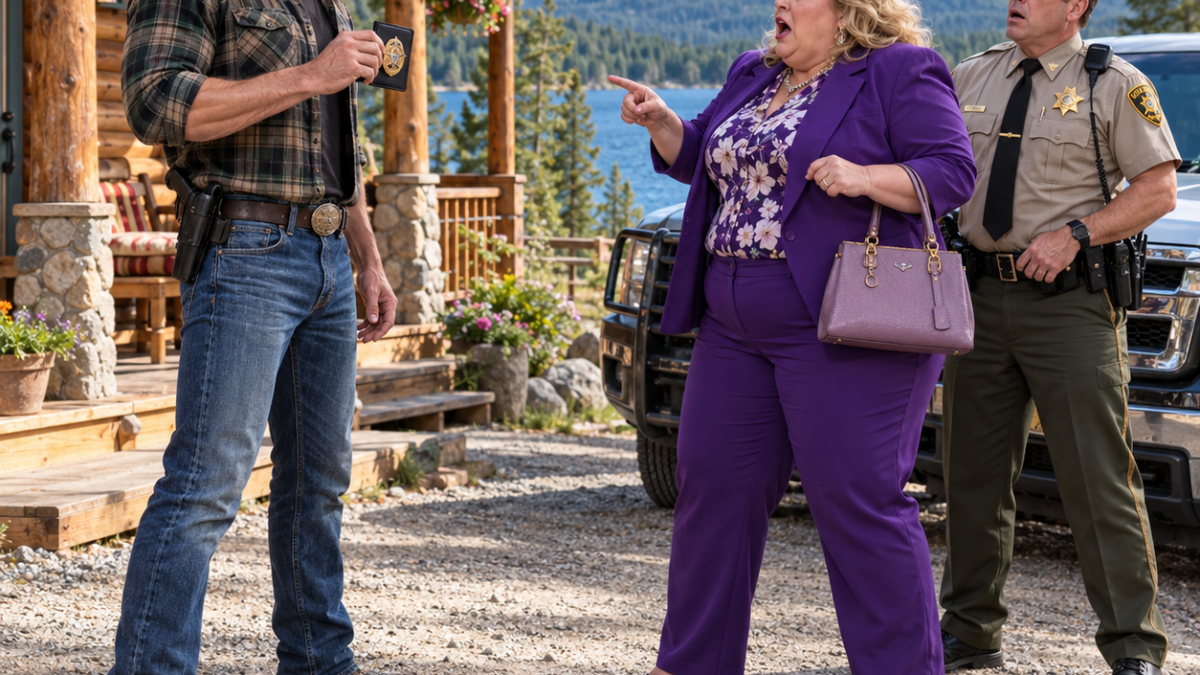
PART 2
For three seconds, Diane Fletcher simply stared at me.
Her wineglass remained suspended halfway between the side table and her chest, her fingers wrapped so tightly around the stem that I wondered if it might break.
“What?”
Her voice was almost a whisper.
I didn’t repeat myself immediately.
I wanted her to understand it without drama.
Without me raising my voice.
Without a threat.
“I’m Supervisory Special Agent Alexandria Morgan,” I said. “Jason Fletcher reports directly through my chain. He’s been assigned under me for six months.”
Her lips parted.
Nothing came out.
I continued.
“You told me not to challenge you because your husband works for the FBI. You suggested his position gave you access to influence you do not have. And you used that threat after months of harassment and after a false emergency call brought deputies to my private property.”
“I didn’t know.”
“Obviously.”
“I thought—”
“I know what you thought.”
Her face flushed.
“I wasn’t threatening you.”
“You told me you knew how the system worked because your husband was FBI.”
“That isn’t a threat.”
“You also said you knew what real agents looked like.”
Her eyes flicked away.
“I was angry.”
“So was I.”
I stepped back from the doorway.
“But my anger isn’t the issue.”
“Alex, listen—”
“No.”
That stopped her.
“I’m not discussing Jason’s career with you. I’m also not going to use his employment against him because of something you did. Jason is responsible for Jason. You are responsible for you.”
Some color returned to her face.
Then I added:
“But your using his FBI position to intimidate neighbors is a problem. The false complaints are a problem. The 911 call is a problem.”
“I didn’t make a false call.”
“The deputies found nothing.”
“That doesn’t mean there was nothing before they arrived.”
I stared at her.
Even now.
Even with everything she had just learned, she couldn’t let herself back away.
“That right there, Diane, is why you need to stop.”
She crossed her arms again, trying to rebuild some of the authority she had lost.
“You can’t order me around because you’re Jason’s boss.”
“I’m not ordering you around as a federal agent.”
I pointed down the hill toward my property.
“I am telling you, as the owner of that cabin, to stay away from me and stop making false reports.”
Her jaw tightened.
“You’re trying to intimidate me now.”
“No. My lawyer already did the formal part.”
She remembered the cease-and-desist.
I saw it.
“All I’m doing is giving you one final chance to respect it.”
I turned.
Behind me, Diane said:
“What are you going to tell Jason?”
I stopped.
“That depends on what becomes necessary to keep the workplace conflict-free and properly documented.”
Her voice changed.
“Please.”
I looked back.
Not smug now.
Not condescending.
Scared.
“Don’t punish him.”
“I just told you I won’t.”
“He didn’t know.”
“I believe that.”
“Then leave him out of it.”
“I intend to as much as possible. You’re the one who brought his job into this.”
She flinched.
That landed.
I walked to my Jeep.
Diane didn’t follow.
When I glanced in the mirror, she was still standing in the doorway, wineglass forgotten in one hand.
I drove back up the mountain.
The adrenaline hit halfway home.
My hands tightened around the wheel.
Not because Diane frightened me.
Because I hated what had just happened.
The cabin was supposed to be the place where I wasn’t Supervisory Special Agent Morgan.
I had bought it because Dr. Ellis, my therapist, had looked at me three years earlier and said:
“You have forgotten how to exist somewhere without being responsible for something terrible.”
She wasn’t wrong.
My first decade in the Bureau had been spent in counterterrorism.
Long hours.
Classified briefings.
Threat assessments.
Weeks when success meant proving something awful never happened.
Then I moved into violent crime.
Kidnappings.
Trafficking.
Organized networks.
Cases involving children.
Some files never leave you.
You close them.
You testify.
People go to prison.
Everyone congratulates the team.
Then you go home and lie awake remembering the room where you found someone.
Or the look on a parent’s face.
Or something a suspect said casually because to him it meant nothing.
By year fifteen, I was sleeping badly.
Jumping at unexpected knocks.
Working too much.
Turning down invitations because normal conversations felt exhausting.
Dr. Ellis told me I needed distance.
Not vacation.
Distance.
A place associated with nothing federal.
Nothing urgent.
Nothing bloody.
I found the cabin online.
$150,000.
Eight acres.
A-frame built in the 1970s.
Exterior stain faded almost silver.
Solar panels from a previous owner.
Old stone fireplace.
Sagging porch.
Gravel driveway.
No neighbors visible from the house.
The realtor apologized for almost every feature.
I loved all of them.
I bought it that week.
Spent winter reinforcing the porch, fixing plumbing, replacing the roof, and doing just enough work to make the place safe without making it polished.
That mattered.
I didn’t want polished.
I spent all week inside buildings where everything was badge-access controlled, fluorescent, monitored, filed, documented, and scheduled.
At the cabin, I wanted a coffee mug with a chipped handle.
I wanted firewood stacked wrong.
I wanted boots by the door.
I wanted silence.
Diane entered that silence three months after I settled into the place.
The first time she showed up, I had been splitting wood.
She introduced herself like a cruise director.
Bright smile.
Community welcome packet.
Then the violation notice.
Peeling exterior.
Unapproved solar panels.
Gravel driveway.
I remember looking at the paper and wondering if she had driven all the way up my private road to hand me three complaints about a property she had no jurisdiction over.
“My property predates the HOA.”
Diane smiled.
“That’s a common misunderstanding.”
“It isn’t.”
“Everyone within Pinewood Estates is subject to community standards.”
“My deed says otherwise.”
“We’ll let the association attorney determine that.”
“Already did.”
That was the moment her smile died.
Some people hear:
I checked.
And respond:
Good, let’s compare documents.
Diane heard:
You don’t control me.
Everything after that flowed from that one wound.
The notices multiplied.
One taped to my door.
One mailed.
Another emailed.
$100 per day threatened.
I forwarded everything to Paul Hendris, my property attorney.
Paul reviewed the recorded declaration, chain of title, and parcel documents.
He confirmed again:
My land had never been annexed into the HOA.
The cabin existed before Pinewood.
No covenant ran with my parcel.
No voluntary joinder.
No assessment obligation.
Diane had no authority.
Paul wrote a cease-and-desist.
Polite.
Precise.
Certified.
Diane signed for it.
Then ignored it.
County inspectors came next.
Unsafe structure complaint.
Potential sanitation issue.
Maybe unpermitted solar installation.
I stood with an inspector while he checked the renovated roof, electrical system, septic records, and solar permit history.
Finally he closed his clipboard.
“Everything looks fine.”
“I know.”
“You have a dispute with somebody?”
“HOA president.”
He sighed like he had heard that sentence before.
“County doesn’t enforce HOA rules.”
“I told her.”
“I’ll note the complaint as unfounded.”
Two weeks later:
Noise.
Sheriff’s deputy at the property.
“Reported shouting and loud music around two a.m.”
“I was in Richmond.”
“You have anything proving that?”
I almost laughed.
“I was inside the Richmond field office most of the night.”
He stared.
“That’ll do.”
It should have stopped there.
Instead, Diane escalated to a possible drug operation.
That wasn’t a property complaint.
That was an attempt to turn law enforcement into pressure.
And now she had revealed that she believed Jason’s federal employment gave her some special protection.
That was the part that required care.
When I returned to the cabin after confronting her, I called Paul.
“You ignored my advice.”
“Yes.”
“I told you not to confront her.”
“Yes.”
“Did you at least avoid threatening her?”
“Yes.”
“What happened?”
I told him.
There was silence.
Then:
“Her husband works under you?”
“Yes.”
“Directly?”
“Within my supervisory chain.”
Paul made a sound that was almost a groan.
“Alex.”
“I didn’t know until today.”
“I understand.”
“She used his job to intimidate me.”
“That complicates everything.”
“I know.”
“You need to disclose this professionally.”
“I know.”
“Not handle it privately.”
“I know.”
“You keep saying that.”
“Because I know.”
“Then promise me you’ll follow your ethics process before doing anything that could touch Jason’s employment.”
“I will.”
“Good.”
“Paul?”
“Yes?”
“I’m angry.”
“I also know that.”
“I wanted to scare her.”
“I know.”
“I didn’t.”
“That’s the important part.”
I looked at the cold coffee on my porch.
“No. The important part is that I almost enjoyed watching her realize who I was.”
Paul was silent.
Then:
“You’re allowed to be human.”
“Not when someone else’s career is sitting near the blast radius.”
“Then do it clean.”
That was what I did.
Monday morning, before talking to Jason, I made the appropriate internal disclosure that I had a personal dispute involving his spouse and asked for guidance on avoiding any conflict of interest.
I documented the relevant facts.
That Jason had not participated.
That I had seen no evidence he knew about Diane’s conduct.
That I did not want any employment decision influenced by the dispute.
Then I arranged for another manager to handle any sensitive performance issue involving Jason while the situation existed.
Only after that did I ask him to come to my office.
He arrived at 9:07.
White shirt.
Dark tie.
File folder in hand.
“Morning, boss. Baxter case?”
“Close the door.”
His expression changed.
He sat.
I didn’t drag it out.
“Your wife is Diane Fletcher.”
His face went blank.
“Yes.”
“She is the HOA president at Pinewood Estates.”
He blinked.
“Yes.”
I watched understanding arrive slowly.
“You own property there?”
“I own the A-frame cabin at the end of North Ridge Road.”
His mouth opened.
“Oh.”
“That reaction tells me Diane has mentioned the cabin.”
“She complains about an owner who refuses to follow HOA rules.”
“Jason, the parcel is not subject to those covenants.”
He looked down.
“I don’t deal with the HOA.”
“I know.”
I began with April.
Violation notice.
Then May.
More notices.
Attorney letter.
County inspection.
False noise complaint.
Then the 911 call.
Jason grew paler with every sentence.
“She reported a drug operation?”
“Possible drug activity.”
“At your cabin?”
“Yes.”
“Jesus.”
“Deputies responded.”
He closed his eyes.
“I’m sorry.”
“I’m not asking you to apologize for her.”
“I should have known.”
“Maybe. But I haven’t seen evidence you participated.”
“I didn’t.”
“I believe you.”
His shoulders dropped slightly.
Then I told him about Saturday.
Diane’s house.
Her claim that her husband was FBI.
Her statement that she knew how the system worked.
That she knew what “real agents” looked like.
The implied threat.
Finally:
“She told me you report to Alex Morgan.”
Jason covered his face with one hand.
“Oh, God.”
“That was approximately my reaction.”
He rubbed his forehead.
“Alex, I swear to you, I have never given her anything. No access. No case information. No badge use. Nothing.”
“I believe you.”
“She tells people I’m FBI sometimes. I hate it.”
“That needs to stop.”
“I know.”
“Especially if she’s using it to make people think she has influence.”
“She does that?”
“She did it to me.”
He sat there looking sick.
I hated it.
Jason was a solid agent.
Methodical.
Quiet.
Never a discipline issue.
The kind of person who arrived prepared and didn’t need credit.
His wife’s behavior was not his misconduct.
That distinction mattered.
“I’ve disclosed the conflict,” I said.
He looked up quickly.
“To who?”
“Leadership and the appropriate ethics channel.”
His face tightened.
“Am I under investigation?”
“No.”
“Is HR—”
“Jason. Listen.”
He stopped.
“I specifically documented that I have no evidence you were involved.”
He stared.
“You did?”
“Yes.”
“Thank you.”
“I’m not doing you a favor. I’m stating the truth.”
He nodded.
“What happens now?”
“Professionally, I stay away from employment decisions that could be influenced by this conflict where necessary. Personally, Diane needs to stop contacting me and stay away from my property.”
“I’ll talk to her.”
“She already received a cease-and-desist.”
“I know.”
“She ignored it.”
“I’ll make her understand.”
I leaned back.
“Don’t make promises you can’t control.”
He looked defeated.
“She listens to me.”
I didn’t answer.
The silence did enough.
Jason stared at the floor.
“She’s become obsessed with the HOA.”
“I’ve gathered that.”
“It wasn’t always this bad.”
“I don’t need details about your marriage.”
“No. I know.”
He stood.
At the door, he turned.
“For what it’s worth, Alex, I really am sorry.”
“I know.”
“I’ll handle what I can.”
“Handle your boundaries. She has to handle herself.”
He nodded and left.
That evening, Jason drove three hours to Pinewood Estates.
I didn’t know what happened inside his house until much later.
But Jason eventually told an investigator enough of it that I understood the shape.
He found Diane cooking dinner.
Garlic.
Olive oil.
Television in the background.
Everything normal except him.
“We need to talk.”
Diane immediately knew.
“Alex told you.”
“She’s my boss, Diane.”
“She came to my house.”
“You called 911 on her.”
“I reported something suspicious.”
“She was reading a book.”
“You weren’t there.”
“The deputies were.”
Diane became defensive.
“She refuses to follow community rules.”
“Because her land isn’t subject to them.”
“That’s what she says.”
“That’s what the documents say.”
Diane slammed down the knife.
“So now you’re taking her side?”
“This isn’t a side.”
“Yes, it is.”
“No. It’s a deed issue and a harassment issue.”
“I’m protecting property values.”
“You used my job to threaten her.”
“I didn’t threaten anyone.”
“You told my supervisor you knew how the FBI worked because I was an agent.”
Diane looked away.
“That was stupid.”
“You think?”
“I didn’t know who she was.”
Jason apparently stared at her for a long time.
Then he said:
“That sentence is the whole problem.”
“What does that mean?”
“You shouldn’t need someone to be powerful before you stop mistreating them.”
Diane’s face changed.
That was probably the first honest thing anyone had said to her in months.
She started crying.
Jason didn’t soften.
“She could have made this much worse for me.”
“She threatened you?”
“No.”
“She’s your boss. Of course she can hurt you.”
“She documented that I’m not involved.”
Diane blinked.
“She did?”
“Yes.”
“So maybe this isn’t serious.”
Jason laughed once.
Bitterly.
“Diane, she is protecting me from consequences you created.”
“I said I’m sorry.”
“No. You said you didn’t know who she was.”
“Same thing.”
“It is absolutely not the same thing.”
The argument continued.
Hours.
Everything that had been wrong between them for years apparently came pouring into the same kitchen.
Diane’s obsession with control.
Jason’s habit of withdrawing.
Her public use of his federal job as status.
His choice not to confront it.
Her HOA fights.
His embarrassment.
By midnight he was sleeping in the guest room.
Diane promised to stop.
For two weeks, she did.
Those were the best two weekends I had experienced at the cabin since spring.
No notices.
No deputies.
No inspectors.
No Diane.
I read two books.
Hiked six miles.
Repaired part of the porch railing.
Sat beside the fire pit until midnight.
It was almost enough to convince me the problem had ended.
Then the apology arrived.
Hand-delivered envelope.
Neat cursive.
Dear Ms. Morgan,
I want to apologize for my behavior during the past several months. I did not understand your professional position in relation to Jason, and I recognize that some of my actions may have been perceived as excessive.
I hope we can move forward peacefully as neighbors.
Sincerely,
Diane Fletcher
I read it twice.
The sentence that mattered was the one she didn’t mean to write.
I did not understand your professional position.
She wasn’t apologizing because the harassment was wrong.
She was apologizing because she had discovered I had authority.
I put the letter in a file.
Not the trash.
I had learned better.
Then Jim Holloway stopped by.
Jim lived half a mile down the road.
Seventy-three.
Retired English teacher.
Golden retriever named Max.
The kind of neighbor who somehow knew everything while claiming he hated gossip.
“Diane’s driving past your place.”
I looked at him.
“How often?”
“Every few days.”
“Stopping?”
“No.”
“Photographing?”
“I’ve seen her phone out once.”
“Anything else?”
“She’s still talking about you at meetings.”
“Name?”
“No.”
“What does she say?”
“Some residents think they’re above community standards.”
I sighed.
Jim continued.
“Most people are tired of her.”
“That helps very little.”
“I know.”
“Has she contacted you about me?”
“She asked whether you live here full-time.”
“What did you say?”
“None of her damn business.”
I smiled.
“Thank you.”
He shrugged.
“I taught sophomores for thirty-eight years. Diane doesn’t scare me.”
The driving continued.
Not every day.
Just enough.
White SUV.
Slow past my road.
Sometimes stopping near the turn.
Never entering.
Never technically violating anything obvious.
But after months of harassment, it felt like surveillance.
Paul agreed.
“We have a pattern.”
“Enough for a protective order?”
“With the police reports, cease-and-desist, false emergency report, ongoing monitoring? We can ask.”
We filed.
The judge granted a temporary restraining order.
Five hundred feet from my property.
No contact.
No monitoring.
No indirect communication.
A deputy served Diane on Thursday.
Jim called me afterward.
“I have never seen a human being turn that shade of red.”
“I don’t need a description.”
“She yelled in the driveway.”
“Jim.”
“I’m just telling you.”
“Did you record it?”
“No.”
“Good.”
“Three neighbors did.”
“Of course they did.”
Jason came home that evening and saw the order.
That argument was apparently shorter.
“What did you do?”
“Nothing.”
“She got a court order.”
“She’s exaggerating.”
“Diane, a judge reviewed evidence.”
“I drove past the cabin.”
“How often?”
Silence.
“How often?”
“I don’t know.”
“That means often.”
“I live here.”
“You don’t live on her road.”
“She’s making me look dangerous.”
Jason looked at her.
“You called 911 and reported drugs because of a paint dispute.”
“That wasn’t why.”
“What was suspicious?”
Diane couldn’t answer.
Jason put the order on the table.
“This is exactly what she told you to stop doing.”
Diane cried.
Jason went upstairs.
They barely spoke after that.
Two weeks later, Diane violated the order.
Saturday afternoon.
Late July.
I was on the porch.
Reading again.
That detail became almost absurd.
Every major escalation in the story seemed to begin with me doing the least threatening thing possible.
Sitting.
Reading.
Then I heard the SUV.
I knew the engine by then.
White vehicle around the bend.
Slow.
It stopped inside the prohibited distance.
The door opened.
Diane stepped out.
My entire body went alert.
I stood.
“Diane.”
She raised both hands.
“I just want to talk.”
“You’re violating the order.”
“Please.”
“Leave.”
“Five minutes.”
“Leave.”
“I need to explain.”
I pulled out my phone.
Her expression changed.
“Don’t.”
“Go back to your vehicle.”
“Alex, please.”
“I’m calling the sheriff.”
Her voice cracked.
“You destroyed my marriage.”
I stared at her.
“No.”
“Yes, you did.”
“I didn’t call 911.”
“You turned Jason against me.”
“I didn’t make him move into the guest room.”
“You humiliated me.”
“You came onto my road.”
She took another step.
I dialed.
“Stop.”
That word came out in my command voice.
The one I hated bringing to the cabin.
Diane froze.
“Thirty seconds. Get in the car.”
Then I spoke to dispatch.
“My name is Alexandria Morgan. I have an active restraining order against Diane Fletcher. She is currently within the exclusion zone at my property and approaching me.”
Diane’s eyes widened.
She turned.
Ran to the SUV.
Gravel sprayed as she reversed.
I gave dispatch the plate anyway.
Twenty minutes later, deputies arrived.
I showed them the order.
My phone recording.
Time stamp.
Jim’s exterior camera from farther down the road eventually confirmed the vehicle’s approach.
An hour later, the deputy called.
“Ms. Morgan?”
“Yes.”
“We located Mrs. Fletcher.”
I waited.
“She’s under arrest for violating the order.”
I closed my eyes.
“Understood.”
“We’ll need you for a statement later.”
“Of course.”
“You okay?”
“Yes.”
I hung up.
Then I sat down.
My hands shook.
Not fear.
Not satisfaction.
Adrenaline with nowhere to go.
I had spent years working cases where arrests meant rescuing people from danger.
You expect relief.
Sometimes there is none.
Just quiet.
Diane called Jason from the county jail.
He was working.
He left and drove three hours.
Posted bond.
Brought her home.
According to what he later told a friend, they barely spoke during the drive.
Then Monday arrived.
Federal offices are terrible places for private humiliation.
People imagine professionalism means nobody gossips.
Professionalism means people gossip quietly.
By the time Jason entered the building, most of the relevant people knew his wife had been arrested for violating a restraining order protecting someone within his supervisory chain.
He had done nothing wrong.
That didn’t stop the embarrassment.
Mike Torres, an agent who had known Jason for years, pulled him aside.
“Man, are you okay?”
Jason apparently said:
“No.”
That answer traveled back to me through nobody official.
I didn’t want details.
What did matter officially was documentation.
Because a spouse had used Jason’s position as leverage during the harassment, the matter had to be recorded carefully.
Jason cooperated.
No disciplinary finding against him.
No evidence he had given Diane access, information, badge authority, or assistance.
Nothing.
Professionally, he remained in good standing.
Personally, he wanted out.
He requested transfer to Charlotte.
I did not oppose it.
Neither did I advocate for it.
The Bureau approved it through normal channels.
He came to my office before leaving Richmond.
He looked ten years older.
“Charlotte starts next month.”
“I heard.”
“Fresh start.”
“I hope so.”
He sat.
For a few seconds neither of us spoke.
Then he said:
“Diane thinks you destroyed us.”
I kept my expression still.
“What do you think?”
Jason looked toward the window.
“I think we were already cracked.”
That surprised me.
“She just found the hammer.”
He rubbed his hands together.
“I knew she had control issues.”
I said nothing.
“I knew she threw my title around.”
“You didn’t know the specifics.”
“No.”
“Jason, I’m not your therapist.”
He almost smiled.
“I know.”
“Then don’t confess your marriage to me.”
“Fair.”
He stood.
“Thank you.”
“For what?”
“For keeping my record clean.”
“I recorded facts.”
“Most people wouldn’t have been that careful.”
“I supervise agents. Not spouses.”
He nodded.
“I should have stopped her earlier.”
“You couldn’t control her.”
“I could have drawn boundaries.”
“That’s different.”
He looked tired.
“I’m learning.”
He extended his hand.
I shook it.
“You’re a good agent.”
“That’s still true?”
“Yes.”
He swallowed.
“I needed to hear that.”
“Then take it to Charlotte and prove it again.”
He left.
I watched him walk down the hall.
That was the last time I supervised Jason Fletcher.
The HOA situation changed quickly after Diane’s arrest.
Pinewood held an emergency board meeting.
I did not attend.
Jim did.
He called afterward.
“She’s out.”
“As president?”
“Unanimous except Diane.”
“That sounds awkward.”
“Extremely.”
“Who’s interim?”
“Me.”
I almost dropped the phone.
“You?”
“I missed the meeting where they nominated people.”
“You were literally at the meeting.”
“Technicality.”
I laughed.
“What’s your platform?”
“Fix the road. Plow snow. Stop yelling at people about paint.”
“You have my vote.”
“You don’t vote.”
“Even better.”
Jim’s board reviewed the governing documents with independent counsel.
They discovered what Paul had been telling Diane from the beginning.
My parcel was outside the covenant burden.
The board sent me a letter.
One page.
Ms. Morgan,
After review of recorded documents and governing instruments, the Pinewood Estates Association acknowledges that your parcel is not subject to the association’s architectural restrictions.
All prior notices are withdrawn.
We apologize for the inconvenience.
That was it.
No threat.
No lecture.
No drama.
One page solved what Diane had spent months escalating.
I framed nothing.
I put it in the property file.
Diane’s criminal case for violating the restraining order proceeded separately.
She received a misdemeanor conviction, financial penalty, probation conditions, and the existing no-contact provisions remained.
I did not ask for maximum punishment.
At the hearing, the judge asked whether I wanted to make a statement.
I kept it short.
“I bought the cabin because I needed somewhere quiet.”
I looked toward Diane.
“I asked her to leave me alone. My attorney asked. The deputies asked. The court ordered it.”
Then I looked at the judge.
“I want the order enforced because I want this to end.”
That was all.
Afterward, Diane’s attorney approached Paul.
“She wants to send another apology.”
I shook my head.
“No contact means no contact.”
Her lawyer nodded.
Message received.
By August, Jason had moved into a separate room.
By September, he filed for legal separation.
By October, he had moved out.
Eventually divorce papers followed.
I learned most of that indirectly.
Jim heard things.
Neighbors talked.
I tried not to.
Diane’s marriage was not my business.
Her violating the court order had been.
Her losing the HOA presidency had been a predictable consequence.
Her relationship with Jason belonged to them.
That distinction helped me sleep.
One afternoon in late September, I saw her SUV.
It passed on the main mountain road.
Well outside the restricted area.
Diane was driving.
She looked thinner.
Hair pulled back.
No designer sunglasses.
No slow turn of the head toward my property.
She saw my Jeep.
Then immediately looked forward.
For a moment, I felt something I didn’t expect.
Not victory.
Not pity.
Recognition.
Here was a woman who had turned a peeling cabin into a symbol of defiance.
Then destroyed pieces of her own life trying to force that symbol to surrender.
I understood obsession.
Not hers.
Mine.
Cases can do that to investigators.
You convince yourself one arrest will fix something bigger.
One conviction will make a family whole.
One rescued victim will erase the twenty you couldn’t reach.
It never does.
That was another reason the cabin mattered.
It reminded me there had to be a line where work stopped.
Diane had no such line.
The HOA became her identity.
Disagreement became disrespect.
Noncompliance became attack.
My cabin became proof that she lacked control.
Once that happened, facts barely mattered.
Whether the cabin looked nice.
Whether solar panels were safe.
Whether the driveway affected anyone.
Whether the covenants even applied.
None of it mattered.
She needed me to submit.
That was the real violation she had been trying to correct.
And I never would.
In November, Pinewood held an election.
Jim won officially.
His first meeting agenda contained three items.
Winter road maintenance.
Snowplow contract.
Emergency tree removal policy.
No paint colors.
No driveways.
No investigations of neighbors.
Jim called me afterward.
“Most boring meeting of my life.”
“Congratulations.”
“I mean painfully boring.”
“Healthy governance is usually boring.”
“Spoken like a federal supervisor.”
“Spoken like someone who enjoys sleeping.”
Christmas that year, I spent the entire week at the cabin.
Snow started on the twenty-third.
By Christmas Eve, pine branches sagged beneath it.
The gravel driveway disappeared under white.
Solar panels held a thin edge of snow until the sun cleared them.
I built a fire.
Made tea.
Read.
No cruisers.
No letters.
No Diane.
Just quiet.
Dr. Ellis had been right.
You need somewhere the job cannot follow you.
It had taken me longer to understand that the job was not the only thing capable of invading peace.
Control does it too.
Fear.
Anger.
The need to prove a point.
Diane had brought all of those things up the mountain.
For months, I let her drag me into watching the road.
Listening for engines.
Checking cameras.
Saving screenshots.
Waiting for the next escalation.
Even after she was gone, part of me kept waiting.
On Christmas morning, I caught myself looking down the driveway for a white SUV that wasn’t coming.
I turned off the security monitor.
Put my phone in a drawer.
Walked outside.
Snow reached my boots.
The mountains were silent.
I stayed there until I felt my shoulders drop.
That was the first time I believed it was really over.
Jason transferred to Charlotte.
Before he left, his professional record remained intact.
That mattered to me more than Diane ever understood.
She had believed my authority over Jason was the weapon.
It wasn’t.
Authority is not permission to retaliate.
If I had damaged his career because I hated what his wife did, I would have proved something ugly about myself.
I didn’t need to.
Jason was not Diane.
He deserved a separate judgment based on his own conduct.
He got one.
He moved forward.
The marriage did not.
By spring, Diane listed the Pinewood house.
Jim mentioned it while we crossed paths on a trail.
“House sold.”
“I heard.”
“You don’t sound happy.”
“Why would I?”
He shrugged.
“She tried to run you off.”
“She failed.”
“She lost the presidency.”
“Yes.”
“Marriage.”
“Not my victory.”
“House.”
“Also not.”
Jim studied me.
“You’re difficult to celebrate with.”
“I celebrate things.”
“Name one.”
“Your snowplow contract was under budget.”
He laughed so hard Max barked.
Then his face became serious.
“Most people here know what really happened now.”
“That’s good.”
“They’re embarrassed.”
“They shouldn’t be.”
“Some believed her.”
“People usually trust the person holding the office until given a reason not to.”
“She gave plenty.”
“Eventually.”
Jim nodded.
“For what it’s worth, most people are glad you stayed.”
I looked down the trail.
“I was never leaving.”
“I know that now.”
That evening, I returned to the porch.
Same weathered siding.
Same solar panels.
Same gravel driveway.
Every item Diane had demanded I change remained exactly where it had been.
Not because I wanted a monument to winning.
Because there had never been a legitimate reason to change them.
That distinction mattered.
If she had raised an actual safety issue, I would have fixed it.
If my property genuinely harmed neighbors, I would have listened.
But authority becomes dangerous when it stops asking:
Is this necessary?
And starts asking:
Can I make them obey?
I had seen that in much more serious settings throughout my career.
Different scale.
Same instinct.
Bad supervisors.
Corrupt officials.
Criminal organizations.
Abusive partners.
People who treated resistance as proof they needed to apply more pressure.
Diane was not a cartel leader.
She was an HOA president with a folder and too much confidence.
But the emotional mechanism was familiar.
Control feels justified to the person who thinks order depends on them.
That is why boundaries matter.
The following April marked one year since Diane had first driven up my driveway with the violation notice.
I found the original paper in my property file.
Exterior paint.
Solar panels.
Driveway.
Three boxes.
Three demands.
I sat with it for a while.
Then I walked outside.
The porch boards needed resealing.
Not because Diane said so.
Because winter had been hard.
I bought stain.
Spent two weekends working.
Jim stopped by.
“You painted.”
“Stained.”
“Diane would feel vindicated.”
“Don’t ruin this for me.”
He laughed.
“What about the driveway?”
“Still gravel.”
“Solar panels?”
“Still offensive to civilization.”
“Excellent.”
We sat on the porch drinking coffee.
Max slept near the steps.
Jim eventually asked:
“Did you ever think about using the FBI thing against her?”
I looked at him.
“What do you mean?”
“When she told you Jason worked for the Bureau.”
“Yes.”
“You could’ve scared her worse.”
“I did scare her.”
“You know what I mean.”
I did.
I could have implied Jason’s job was in danger.
Could have suggested I would ruin him.
Could have let her believe his career depended on her obedience.
For a moment at her front door, I had wanted exactly that.
“No,” I said.
Jim raised an eyebrow.
“Okay. Yes.”
He smiled.
“I wanted to.”
“That sounds more honest.”
“I didn’t.”
“Why?”
“Because Jason hadn’t done anything.”
“That simple?”
“No.”
I looked toward the trees.
“Because power is easiest to abuse when you’re convinced the person deserves it.”
Jim became quiet.
“That sounds like something you learned at work.”
“More than once.”
“You think Diane learned that?”
“I don’t know.”
“She used Jason’s job as a weapon.”
“Yes.”
“And it backfired.”
“Yes.”
“Seems poetic.”
“Maybe.”
“But?”
“But if the lesson is only ‘don’t threaten someone more powerful than you,’ then nothing important was learned.”
Jim nodded slowly.
“The lesson should be don’t threaten people.”
“Closer.”
We drank coffee.
The cabin creaked behind us.
Wind moved through pine.
It felt normal.
That was what I wanted.
Months later, I received one final piece of mail connected to Diane.
Not from her.
Her attorney.
A notice confirming settlement of a minor civil claim arising from the harassment and property-related costs.
No dramatic amount.
No life-changing judgment.
Just enough to cover fees and damages that should never have existed.
Paul called.
“Want to pursue more?”
“No.”
“We have an argument.”
“I know.”
“You sure?”
“Yes.”
“Why?”
“I have the thing I wanted.”
“What?”
“Silence.”
He laughed.
“You are the only client I know who says that after paying legal fees.”
“Put it on your website.”
“Terrible marketing.”
I signed.
Done.
Diane eventually moved away.
I heard she started therapy after the arrest.
I hope it helped.
That is not sarcasm.
By then I had spent enough years around consequences to know punishment and change are not the same thing.
A court can force distance.
A board can remove a president.
A husband can leave.
A house can be sold.
None of those things automatically teach someone why they crossed the line.
That work, if it happens, is quieter.
I never knew whether Diane did it.
I didn’t need to.
The story also followed Jason longer than it should have.
People in Richmond remembered.
Then they stopped caring.
Another case arrived.
Another office scandal.
Another promotion.
Another transfer.
That is how workplaces work.
Charlotte eventually sent strong reports about him.
Reliable.
Professional.
Steady.
Exactly the agent I had known.
A year later, he emailed me about a case coordination issue.
Strictly professional.
At the bottom:
Hope the cabin is still quiet.
I stared at the sentence.
Then replied:
It is. Hope Charlotte is treating you well.
He answered:
It is.
Nothing else.
That felt right.
No shared grievance.
No blaming Diane.
No emotional debris.
Two professionals who survived someone else’s choices.
The following winter, Pinewood’s HOA newsletter arrived in my mailbox.
I almost threw it away.
Then I read it.
Snow removal schedule.
Road-grading budget.
Bear-proof trash reminders.
Volunteer trail cleanup.
At the bottom:
Reminder: the association has jurisdiction only over parcels legally subject to the recorded covenants. Owners with questions may request copies of governing documents from the board.
I smiled.
One sentence.
That was Diane’s legacy, whether she liked it or not.
The board now checked before claiming authority.
Sometimes accountability improves systems even when the person who caused the problem is gone.
That mattered more to me than seeing Diane punished.
One Saturday that spring, I hiked to the ridge above Pinewood.
From there, the entire community looked small.
Roofs between trees.
Mountain roads.
The old Fletcher house somewhere below, now belonging to another family.
My cabin hidden behind the ridge.
You could not tell from that height who had been president.
Who had called 911.
Who had FBI credentials.
Who owned which road.
Power disappears quickly with distance.
I liked that.
I sat on a rock.
Drank water.
Thought about the first time Diane had held up that violation notice.
Back then, I believed the dispute was about paint.
Then I believed it was about HOA authority.
Then harassment.
Then Jason.
Eventually I understood it was about something simpler.
Diane could not tolerate a boundary she had not created.
That was why the cabin bothered her.
It existed before her rules.
My deed existed outside her authority.
My refusal reminded her she did not control everything inside the landscape she called her community.
When one notice failed, she sent another.
When legal correspondence failed, she called inspectors.
When inspectors failed, she used deputies.
When noise complaints failed, she escalated to drugs.
When discovering my identity should have ended everything, she kept watching.
When a court order told her to stay away, she still came back.
At every stage, the next consequence existed because she refused to accept the previous boundary.
That was the tragedy.
People sometimes imagine ruin arrives with one massive choice.
Usually it doesn’t.
Usually there are exits.
Many of them.
Small moments where someone can say:
Enough.
I was wrong.
I’ll stop.
Diane passed every exit.
Until the road narrowed to handcuffs.
That wasn’t revenge.
It was accumulation.
I started back toward the cabin as evening settled over the ridge.
When I reached the property, sunlight hit the solar panels.
The weathered siding glowed gold.
The driveway was still gravel.
A few weeds grew at the edges.
The porch stain I had chosen myself looked good.
I sat in the same chair where I had been reading when deputies first came up the road.
The same railing.
The same view.
For a long time, I did nothing.
Then I opened a book.
Somewhere around chapter four, I realized I had stopped listening for vehicles.
I had stopped checking the bend in the road.
That may sound small.
It wasn’t.
Hypervigilance had been part of my life for years.
The cabin was supposed to teach me I could lower my guard.
Diane had temporarily turned it into another place where I watched doors.
Now the quiet had returned.
Not because I had frightened her with my title.
Not because her husband reported to me.
Not because a court punished her.
Because the boundary finally held.
That distinction mattered.
If I ever tell the story, people usually laugh at the same part.
“Who does your husband report to?”
“Alex Morgan.”
“I’m Alex Morgan.”
It is a satisfying reveal.
I understand why.
Diane had spent months assuming I was powerless because of what my cabin looked like.
Old siding.
Solar panels.
Gravel.
Jeans.
Bare feet.
Then she discovered the woman she had dismissed had authority over the very badge she was trying to borrow.
But that was not the real lesson.
The real lesson is that it should not have mattered who I was.
I could have been a teacher.
A nurse.
A retiree.
A mechanic.
A widow.
Unemployed.
Nobody important at all.
The deed would still have been the deed.
The false 911 call would still have been wrong.
The harassment would still have been harassment.
The restraining order would still have deserved respect.
Diane’s mistake was not threatening the wrong person.
It was believing some people are safe to mistreat.
That is a much uglier mistake.
And eventually it destroyed the life she thought her borrowed authority protected.
Her HOA presidency disappeared.
Her reputation collapsed.
Her marriage ended.
The mountain house she had obsessed over preserving was sold.
Jason transferred.
Neighbors stopped trusting her.
But I didn’t take those things from her.
I never touched her marriage.
Never disciplined Jason for her behavior.
Never campaigned against her presidency.
Never forced her to violate the restraining order.
She made each choice herself.
I protected one cabin.
That was all.
A weathered A-frame on eight acres.
Peeling siding.
Solar panels.
Gravel driveway.
A place worth far less than the Fletcher house down the hill.
But value and price are not the same.
That cabin gave me back something twenty years of federal work had slowly taken.
The ability to sit somewhere without being on duty.
The ability to read without checking a phone.
The ability to hear a car on a road and assume it belonged to a delivery driver instead of a threat.
Peace.
Diane tried to make peace conditional on obedience.
I refused.
A year after she left Pinewood, I sat on the porch at sunset.
No badge.
No sidearm.
No case files.
No HOA notice.
No sheriff’s cruisers.
Just coffee.
Pines.
A dog barking somewhere far below.
Orange light across the mountains.
The cabin looked almost exactly as it did the first time she drove up my driveway.
That made me smile.
Not because she lost.
Because I never had to become the person she believed power was supposed to be.
I did not need to ruin Jason to protect myself.
I did not need to threaten Diane with federal authority.
I did not need to control the HOA.
I needed documentation, boundaries, and the willingness to enforce them when she crossed them.
That was enough.
It usually is.
Diane thought power came from saying:
My husband is FBI.
She was wrong.
Jason’s badge belonged to Jason.
My title belonged to my job.
Neither belonged in a neighborhood argument.
Real authority was quieter.
A deed.
A cease-and-desist letter.
A police report.
A restraining order.
A court order.
Documents that did not care who looked important.
Diane had spent months trying to use borrowed power.
Then one afternoon she discovered borrowed power disappears the moment the person you are threatening understands exactly where it came from.
I took another sip of coffee.
Opened my book.
Turned the page.
And for the first time in a long time, the mountain was quiet enough that I never looked up.
[EXPANDED ENDING — CONTINUATION]
A few months after Diane moved away, Pinewood Estates stopped feeling like a place recovering from a scandal and started feeling like a neighborhood again.
That change happened quietly.
There was no ceremony.
No dramatic announcement.
No newspaper headline saying THE HOA IS NORMAL NOW.
One weekend I arrived at the cabin and noticed somebody had finally filled the pothole near the main entrance.
The next weekend, the board had trimmed several dead trees along the shared access road.
Then the snowplow contract was posted online before winter with the price, contractor information, and vote count.
Jim Holloway sent the documents to every property owner.
At the bottom of his email he wrote:
“If anyone has questions, ask. If we don’t know, we’ll find out. Nobody gets to invent authority anymore.”
I read that sentence twice.
Then smiled.
That was probably the most useful thing Diane ever contributed to Pinewood Estates.
Not intentionally, of course.
She taught everyone what happened when a board president stopped treating authority as a responsibility and started treating it as personal power.
Jim went in the opposite direction.
Meetings became dull.
Budgets became public.
Violation letters nearly disappeared.
When somebody complained about a neighbor’s house color, Jim asked whether the color created a safety hazard.
It did not.
Complaint closed.
When someone objected to a family installing solar panels, Jim asked whether the governing documents actually prohibited them.
They did not.
Complaint closed.
When a resident wanted to fine another homeowner because a boat trailer remained visible for four days, Jim asked:
“Did the trailer hurt anybody?”
No.
“Did it block a road?”
No.
“Is this worth thirty minutes of our lives?”
No.
Complaint closed.
I liked Jim’s system.
One Saturday morning he stopped by with Max.
I was replacing a rotten porch step.
He watched me measure the board.
“You know,” he said, “if Diane were still president, she’d probably make you submit that lumber for architectural approval.”
I kept working.
“Jim.”
“Yes?”
“If you say her name while I’m holding a hammer, I’m not responsible for what happens.”
He grinned.
“I’m seventy-three. I’ve lived dangerously.”
Max dropped a stick at my feet.
I threw it.
Jim leaned against the porch railing.
“Can I ask you something?”
“Depends.”
“Do you regret buying this place?”
That surprised me.
I put the drill down.
“No.”
“Not even after all that?”
“No.”
“You got deputies at your house. Inspectors. Lawyers. Court orders. Your employee’s marriage basically exploded around you.”
“Jason wasn’t my employee.”
“You know what I mean.”
“I do.”
He waited.
I looked across the clearing.
The cabin roof caught the morning sun.
Wind moved through the trees.
“No,” I said again. “I don’t regret it.”
“Why?”
“Because if Diane could make me leave, then this place would stop being what I bought it for.”
“Peace?”
“Choice.”
Jim nodded.
That was something I had only begun to understand.
At first, I thought the cabin represented escape.
Then I thought it represented peace.
But after Diane, I realized it represented something deeper.
Choice.
I chose when to come.
I chose whether to repair the siding.
I chose whether the driveway stayed gravel.
I chose whether to sit on the porch all day doing absolutely nothing.
My job took choices away from me constantly.
If the phone rang at three in the morning, I answered.
If someone disappeared, we worked.
If a case broke open on Christmas Eve, Christmas waited.
That was the work.
I accepted it.
But the cabin was the place where I chose.
Diane could not stand that.
Her entire approach to the HOA depended on believing community standards mattered more than individual boundaries.
That was why my refusal felt personal to her.
Every time I said:
No, Diane.
She heard:
You are not important.
That was never what I meant.
But I could not control what she heard.
Only what I did.
Jason eventually settled into Charlotte.
I heard through professional channels that he was doing well.
Solid evaluations.
Strong case work.
No disciplinary problems.
Exactly what I expected.
A year after his transfer, our offices collaborated on an interstate kidnapping investigation.
His name appeared on the conference invite.
For half a second, I considered assigning someone else.
Then I stopped myself.
That would have been another kind of unfairness.
Jason had done nothing wrong.
So I joined the call.
His face appeared on-screen with six other agents.
He looked healthier.
More rested.
When it was his turn to brief the case, he was concise and prepared.
Professional.
No awkwardness.
After the call ended, he sent me a private message.
Good seeing you, boss.
I replied:
You too. Strong briefing.
Thirty seconds later:
Thanks. Charlotte has been good.
I typed:
Glad to hear it.
Then his next message appeared.
Heard Pinewood finally fixed the road.
I laughed.
Word travels.
He responded:
Some things never change.
I almost asked about Diane.
I didn’t.
That chapter belonged to him now.
A few weeks later, though, he called.
Not through office channels.
My personal phone.
I stared at his name before answering.
“Jason.”
“Hey, Alex.”
“Everything okay?”
“Yeah. Nothing work-related.”
I waited.
He sounded uncertain.
“I wanted to tell you the divorce is final.”
I closed my eyes for a moment.
“I’m sorry.”
“Don’t be.”
“That doesn’t mean it’s easy.”
“No.”
Silence.
Then he said:
“I’ve thought about what happened a lot.”
I leaned back in my chair.
“Jason, you don’t owe me another apology.”
“I know.”
“Then why are we talking about this?”
“Because for twenty years Diane told people what I did.”
I said nothing.
“She loved saying FBI.”
His voice carried no anger now.
Just fatigue.
“At restaurants. Parties. HOA meetings. Anytime somebody questioned her.”
“Did you know?”
“Some of it.”
“And?”
“I told myself it was harmless.”
He laughed once.
“Made her feel important.”
“You were uncomfortable.”
“Yes.”
“But you let it go.”
“Yes.”
He paused.
“That’s the part I own.”
That sentence mattered.
Not:
I should have controlled her.
Not:
You should have warned me.
Not:
Diane ruined everything.
Just:
That’s the part I own.
“I should have told her clearly that my badge wasn’t hers to use.”
“Probably.”
“I should have drawn that boundary years ago.”
“Yes.”
“I’m not saying that would’ve stopped her.”
“It might not have.”
“But I could’ve done my part.”
I smiled slightly.
“You sound better.”
“I am.”
“Good.”
He took a breath.
“She’s moving on too.”
I didn’t ask how.
He volunteered.
“Therapy. New city. Smaller place.”
“I hope it helps.”
He sounded surprised.
“You mean that?”
“Yes.”
“After everything?”
“Jason, I wanted her to leave me alone. I never wanted her destroyed.”
“I know.”
“And I certainly didn’t want your marriage destroyed.”
“That wasn’t yours to destroy.”
Good.
He understood that now too.
“I appreciate you saying that.”
“Alex?”
“Yeah?”
“There’s one thing I’ve always wondered.”
“What?”
“When she told you I was FBI and asked if you knew how the system worked…”
I laughed before he finished.
“What did you actually think?”
I remembered Diane standing in her doorway.
Wine before noon.
Arms folded.
Absolute certainty.
“I thought I was being punked.”
Jason started laughing.
Real laughter.
Probably the first time we had ever laughed together about any part of it.
“She really said she knew what real agents looked like?”
“Word for word.”
“Oh God.”
“That was approximately my reaction.”
He laughed harder.
Then I said:
“Jason.”
“Yeah?”
“You were a good agent before Diane met me.”
“Thanks.”
“You’re still a good agent now.”
He became quiet.
“Means a lot.”
“Don’t make it weird.”
“Yes, boss.”
We hung up.
That call gave me more closure than any court order had.
Not because Jason absolved me.
I didn’t need absolution.
Because everyone had finally returned responsibility to the right place.
Diane’s choices belonged to Diane.
Jason’s silence belonged to Jason.
My response belonged to me.
Nobody needed to carry somebody else’s actions forever.
The following spring, the new owners of the Fletcher house moved in.
Young couple.
Two children.
Golden doodle.
They had no idea who I was.
That made me happy.
The first time I met them, I was walking near the community trail when their dog slipped its leash and came charging toward me.
Friendly.
Huge.
Completely uninterested in personal boundaries.
A man in his thirties ran after it.
“I’m so sorry!”
I caught the dog by the collar.
“It’s fine.”
“He thinks every human being exists specifically to meet him.”
The dog licked my wrist.
“Evidence supports that theory.”
The man laughed.
“I’m Daniel.”
“Alex.”
“We just bought the Fletcher place.”
There it was.
I kept my face neutral.
“Nice house.”
“Yeah. Previous owners apparently had some neighborhood drama.”
I almost choked.
“Really?”
“That’s what the realtor said.”
“Realtors are gifted at understatement.”
He laughed.
Then his wife walked up with the children.
We talked for five minutes.
Normal things.
Road conditions.
Cell coverage.
Winter weather.
Where to buy firewood.
Nobody mentioned the FBI.
Nobody mentioned Diane.
Nobody mentioned the cabin.
As they walked away, I stood there thinking about how strange property can be.
A house holds so much emotion for the people inside it.
Then ownership changes.
Fresh furniture arrives.
New photographs go on the walls.
Children run through rooms where somebody else once cried.
The building doesn’t remember.
People do.
Maybe that is merciful.
By summer, Jim convinced Pinewood to rewrite its board procedures.
Not the covenants.
The procedures.
Clear complaint standards.
No anonymous enforcement unless safety required it.
Written jurisdiction check before sending violation notices.
Board approval before referring residents to government agencies.
No use of personal professional status to influence HOA disputes.
When Jim showed me that last rule, I stared at him.
“Really?”
He shrugged.
“Seemed relevant.”
“You wrote a Diane clause.”
“We call it the Borrowed Badge Rule.”
I laughed so hard coffee came out my nose.
“Jim.”
“What?”
“That is terrible.”
“It passed unanimously.”
“Of course it did.”
He became serious.
“We learned something.”
“What?”
“People should not have to prove they’re powerful before a board treats them fairly.”
I looked at him.
That was exactly it.
For months, people had told the story as:
HOA Karen picked the wrong woman.
I hated that framing.
Because it implied everything would have been acceptable if I had been powerless.
As if Diane’s only mistake was bad target selection.
No.
The lesson was not:
Be careful who you bully.
The lesson was:
Don’t bully people.
You should not need a federal title.
A lawyer.
Money.
Influence.
A famous relative.
A badge.
A platform.
Or the perfect piece of paperwork to deserve basic boundaries.
That became increasingly important to me.
I started noticing it at work too.
Junior agents hesitating to challenge senior people.
Victims intimidated by official titles.
Witnesses assuming somebody in a suit must have authority.
We build a lot of unnecessary fear around positions.
I began making a point in my unit meetings.
“Authority is responsibility, not insulation.”
One new agent asked what that meant.
“It means your badge gives you more rules, not fewer.”
Nobody knew the sentence came partly from Diane Fletcher standing in yoga pants with a glass of wine telling me her husband worked for the FBI.
Probably better that way.
Another year passed.
The cabin changed slowly.
I replaced the old porch.
Not because Diane asked.
Because a support beam finally needed it.
I repainted the exterior.
Not the beige Pinewood standards once preferred.
Dark green.
Almost black in shade.
Jim stopped by halfway through.
“You know this technically lowers property values.”
“Get off my land.”
He grinned.
“Solar panels staying?”
“Until death.”
“Driveway?”
“Gravel forever.”
“Good.”
The new paint looked beautiful.
The irony did not escape me.
For months Diane had insisted the cabin needed painting.
Then two years after she left, I painted it voluntarily.
The difference was everything.
Choice.
One Friday afternoon, Dr. Ellis asked about the cabin.
“You still go?”
“Almost every weekend.”
“Does it feel safe again?”
I thought before answering.
“Yes.”
“Completely?”
“No place feels completely safe after you’ve spent twenty years doing my job.”
“That isn’t what I asked.”
I smiled.
Therapists are annoying when they know you well.
“Yes,” I said. “It feels like mine again.”
“What changed?”
“Diane left.”
“That’s external.”
“I know.”
“What changed internally?”
I looked toward the window.
“I stopped checking whether she lost enough.”
Dr. Ellis waited.
“For a while,” I continued, “I thought consequences would make me feel better.”
“Did they?”
“Briefly.”
“Which consequences?”
“Removal from the board. Arrest. The restraining order. Her moving.”
“And?”
“None fixed the thing inside me that was still waiting for the next car.”
“So what did?”
“Time.”
“Anything else?”
I nodded.
“Realizing I didn’t need her to understand.”
That was probably the final step.
For months I wanted Diane to admit it.
That she had been wrong.
That the cabin was outside the HOA.
That she lied to deputies.
That she used Jason’s badge as status.
That she violated my boundaries.
I imagined the perfect apology.
Not:
I’m sorry I didn’t know who you were.
But:
I’m sorry because what I did was wrong no matter who you were.
I never got that apology.
Eventually I stopped needing it.
Peace cannot depend on the person who hurt you achieving perfect self-awareness.
Sometimes they never do.
Sometimes the best ending available is distance.
Documentation.
A closed door.
And a life that continues without them.
Three years after the first violation notice, Pinewood held a summer barbecue near the trailhead.
Jim guilted me into attending.
“I don’t do HOA parties.”
“You aren’t in the HOA.”
“Exactly.”
“You’re community-adjacent.”
“That is not a thing.”
“It is now.”
I went.
Kids ran around with water balloons.
Somebody grilled burgers.
A bluegrass trio played badly.
Max stole two hot dogs.
Nobody arrested him.
A woman I barely knew came over.
“You’re Alex, right?”
“Yes.”
“I moved here last year.”
“Welcome.”
“You’re the cabin person.”
I closed my eyes.
“Please don’t call me that.”
She laughed.
“Sorry. Jim told us the story during board orientation.”
“Why?”
“He said it’s our example of jurisdiction.”
“Fantastic.”
She smiled.
“Actually, he never mentioned what you do for work.”
That surprised me.
“He didn’t?”
“No.”
“What did he say?”
“That the old board tried enforcing rules on property they didn’t control, then escalated instead of checking documents.”
I looked across the lawn at Jim.
He was pretending not to watch us.
“That’s accurate.”
The woman continued.
“He said the biggest lesson was to check whether we have authority before telling somebody what to do.”
“Also accurate.”
“Then somebody else told me later you were FBI.”
“There it is.”
She laughed.
“But that almost makes the story worse.”
“How?”
“Because everyone focuses on the boss reveal.”
I nodded.
“Exactly.”
“She shouldn’t have done it to anybody.”
I looked at her for a second.
“Exactly.”
Maybe the community had finally learned the right lesson.
That evening, after the barbecue, I walked back toward my cabin alone.
The air smelled like pine and charcoal smoke.
Sunlight fell between the trees in long gold bands.
When I reached the driveway, I stopped at the spot where Diane’s SUV had once parked when she violated the restraining order.
Nothing marked it.
No sign.
No scar.
Just gravel.
I remembered standing on the porch with my phone in my hand.
Thirty seconds.
Get back in your car.
Back then, that moment felt enormous.
Now the place looked ordinary.
That is what healing does.
It takes locations where something frightening happened and slowly makes them boring again.
I walked up the steps.
Made coffee even though it was evening.
Sat down.
The porch had become my favorite place again.
Sometimes, in late summer, fog rolled up the valley after sunset.
It swallowed the roads first.
Then the lower houses.
Eventually only treetops and mountain ridges remained.
The world became smaller.
Quiet.
On nights like that I thought about Diane.
Not often.
Just enough.
I wondered whether she had found somewhere new where nobody knew the story.
I hoped so.
Not because I believed she deserved to escape consequences.
She had already faced them.
But consequences are supposed to end somewhere.
Otherwise they become vengeance.
Maybe she had a small apartment.
Maybe she had learned to walk past a crooked mailbox without thinking it was her job to fix it.
Maybe she saw an ugly house and kept driving.
Maybe she heard somebody tell her no and survived it.
I hoped she did.
Because if she learned nothing, then every painful thing that happened became nothing but damage.
And I preferred to believe people could change.
Even Diane.
Especially Diane.
A year later, I received a Christmas card.
No return name on the front.
My stomach tightened before I opened it.
Inside was one sentence.
I finally understand that I should have left you alone from the beginning. I am sorry.
Signed:
Diane Fletcher.
I sat at the kitchen table for a long time.
No explanation.
No excuse.
No Jason.
No mention of my position.
No “if.”
No “but.”
Just:
I should have left you alone.
I am sorry.
I considered calling Paul.
Then laughed.
The case had been closed for years.
The restraining order had expired after all conditions were satisfied.
There was nothing legally significant about the card.
It was just an apology.
The one I had once wanted.
Strangely, receiving it did not change much.
That told me I had already healed without it.
But I appreciated it.
I did not respond.
Not because I was angry.
Because the relationship required nothing else.
Some apologies are not openings.
They are endings.
I placed the card in the property file behind the original violation notice.
The first letter and the last.
On one page:
Paint your cabin.
Remove your solar panels.
Pave your driveway.
On the other:
I should have left you alone.
Three years separated them.
A marriage.
An arrest.
A transfer.
A sold house.
Thousands in legal expenses.
A community overhaul.
All because one person could not accept a boundary.
I closed the folder.
Walked outside.
Sat on the porch.
The cabin was dark green now.
Solar panels caught the late afternoon sun.
The gravel driveway curved through the trees.
Nothing looked dramatic.
That was my favorite thing about it.
A few minutes later, a vehicle came up the road.
For years, that sound would have made my body tense.
This time I barely looked up.
UPS truck.
The driver stopped.
Carried a box to the porch.
“Afternoon.”
“Afternoon.”
“Nice place.”
“Thanks.”
He pointed toward the solar panels.
“Those work pretty well out here?”
“Most of the year.”
“Thinking about installing some.”
“I recommend it.”
He handed me the scanner.
I signed.
He drove away.
I opened the package.
New coffee grinder.
Very exciting.
That was the ending Diane never understood.
She believed victory would look like power.
Someone humiliated.
Someone defeated.
Someone forced to obey.
My victory looked like a delivery driver coming up the road and me not caring.
It looked like a boring HOA budget.
A gravel driveway.
A repaired porch.
A letter I did not need.
Jason doing good work in Charlotte.
Diane living somewhere else, hopefully better.
Jim complaining about snowplow bids.
A cabin that belonged only to itself again.
People still tell the story because the reveal is satisfying.
“My husband is FBI.”
“Who’s his supervisor?”
“Alex Morgan.”
“I’m Alex Morgan.”
Fine.
It is funny.
But when I think about that day now, I remember something else.
The second after Diane’s face changed.
The moment I realized I could frighten her.
That moment mattered because I had a choice.
I could have borrowed the same kind of power she had tried to borrow.
I could have said:
I control Jason’s future.
I could ruin him.
You should be afraid.
I didn’t.
Because that would have made her misunderstanding contagious.
Jason’s career was not my weapon.
My title was not my weapon.
The Bureau was not my private enforcement tool.
And years later, that is the part I am proudest of.
Not that Diane discovered who I was.
That I remembered who I was after she did.
An agent.
A supervisor.
A property owner.
A neighbor.
A person entitled to boundaries.
And a person responsible for not abusing power simply because anger made abuse feel justified.
That lesson followed me longer than Diane ever did.
One Sunday evening, I sat on the porch until the last sunlight vanished behind the Blue Ridge.
The air cooled.
Owls started somewhere deeper in the woods.
A porch light glowed behind me.
My coffee went cold.
I didn’t care.
On the table beside me sat a paperback novel.
For almost four years, every important scene in this story somehow involved me trying to read.
I picked it up.
Opened to the marked page.
Then smiled.
No sirens.
No white SUV.
No violation notice.
No phone vibrating.
Nothing to document.
Nothing to defend.
Nothing to prove.
Just a cabin.
Just trees.
Just me.
I started reading.
And this time, nobody interrupted.
[END OF EXPANDED ENDING]

