PART 2: HOA Fined Me $500 a Day for “Illegal Guests”—Then She Learned the Men Outside Were Secret Service
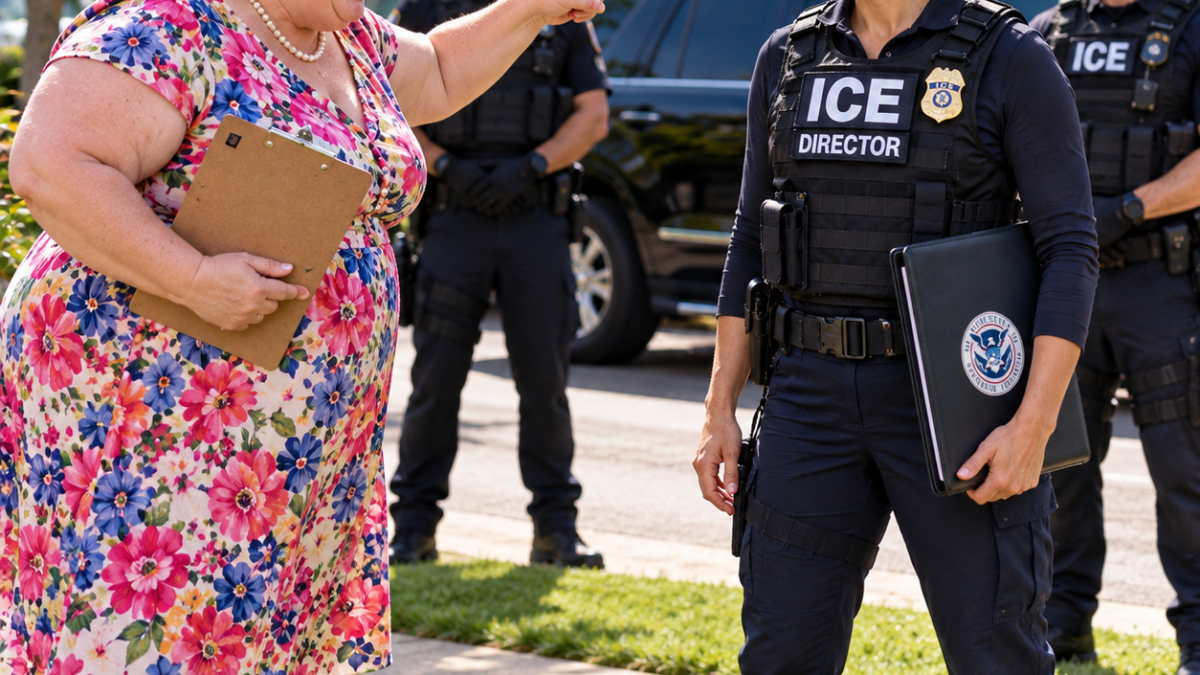
PART 2
I hung up the phone and stayed at the dining room table for another minute.
The house was quiet.
For twenty years, quiet had almost never meant safety to me.
Quiet could mean an encrypted line had gone dead.
It could mean someone important was waiting for an answer.
It could mean a room full of people had suddenly realized something was wrong.
But retirement had changed the meaning of silence.
In Serenity Meadows, silence was supposed to mean peace.
That was why I had come there.
Instead, I was beginning to understand that the silence in our neighborhood had been manufactured.
People weren’t peaceful.
They were afraid to complain.
And Karen Miller had mistaken their fear for respect.
My federal contact, Dan Mercer, had been very clear.
Do not identify the agents.
Do not speculate about their assignment.
Do not tell Karen whom they might be protecting.
Document everything.
So that was exactly what I did.
I created three folders.
The first was labeled HOA GOVERNING DOCUMENTS.
The second was labeled FINES AND NOTICES.
The third was labeled MILLER.
Old habits die hard.
By noon, every letter Karen had ever sent me had been scanned, dated, and organized.
I photographed the envelopes.
I saved the certified-mail receipts.
I wrote down the approximate time of every conversation I could remember.
Then I drafted a formal response.
No insults.
No threats.
No emotion.
Karen had charged me $1,500 without following the ten-day notice requirement contained in her own rules.
That was the only issue I addressed.
I quoted the provision.
I attached copies of her invoices.
Then I wrote:
“Because the Association failed to provide the contractually required notice and cure period, I dispute these fines in their entirety. Please confirm in writing that enforcement activity has been suspended pending proper review.”
I printed two copies.
One went into my folder.
The other went certified mail.
Then I made lunch.
People imagine dramatic confrontations when they think about fighting somebody powerful.
They imagine shouting.
Lawyers.
Police.
Courtrooms.
Most of the important fights I had witnessed during my career began much more quietly.
A timestamp.
A signature.
A sentence someone wished they had never written.
Karen received my letter the following afternoon.
I knew because the return receipt arrived electronically.
For forty-eight hours, nothing happened.
No fresh violation.
No angry knock.
No SUV creeping past my driveway.
Even the neighborhood seemed to exhale.
I spent Tuesday evening sanding the driver-side fender of my Mustang.
Wednesday morning, I found Karen’s answer taped to my front door.
She had not canceled the fines.
She had doubled down.
NOTICE OF EMERGENCY BOARD DETERMINATION.
The letter claimed the HOA board had conducted an emergency meeting and voted to classify the “ongoing unidentified vehicular presence” near my property as an immediate community security issue.
Therefore, according to Karen, the board had voted to waive the ten-day correction period.
The fines would remain.
Another $500 had been added.
The total was now $2,000.
I read the letter twice.
Then I laughed.
Not because it was funny.
Because Karen had just created another document.
And people like Karen never understood the danger of documents until the documents stopped serving them.
At eleven that morning, I was working in the garage when her shadow stretched across the concrete.
I kept sanding.
“That certified-letter trick was cute,” she said.
I shut off the orbital sander.
Dust floated between us.
“Good morning, Karen.”
“You received the board’s determination?”
“I did.”
“Then you understand you owe two thousand dollars.”
“No.”
Her lips tightened.
“The board voted.”
“When?”
“Monday evening.”
“Where?”
“My residence.”
“Who attended?”
“The board.”
“That wasn’t my question.”
Her face reddened.
Karen’s board consisted of three people.
Karen.
Her husband, Barry, who served as treasurer.
And Carol Jensen, the secretary and Karen’s closest friend.
I leaned against my workbench.
“Was public notice given?”
“It was an emergency.”
“Were minutes recorded?”
“Of course.”
“Good.”
That single word made her hesitate.
“Good?”
“I’ll request a copy.”
She stared at me.
For somebody who loved paperwork, Karen suddenly seemed uncomfortable with the idea of anyone reading hers.
Then she lifted her chin.
“You’re trying to intimidate me.”
“No.”
I wiped sanding dust from my hands.
“I’m trying to understand what I’m being charged for.”
“You know exactly what you’re being charged for.”
She pointed toward the sedan.
“Those men have been sitting there every day.”
“They’re parked legally.”
“They’re surveilling the neighborhood.”
“How do you know?”
“Because I’ve been documenting them.”
That caught my attention.
“Documenting them how?”
“Photographs. Times. Vehicle descriptions. Their movements.”
Every instinct I had developed over twenty years sharpened at once.
I kept my expression neutral.
“How often?”
“As often as necessary.”
“You’ve been photographing the men?”
“I’ve been protecting this community.”
She sounded proud.
I looked past her toward the street.
The sedan was there.
Karen had no idea how badly she had just complicated things.
“What exactly do you intend to do with your photographs?”
“I have a file.”
“Of course you do.”
“And if these men continue loitering here, I’ll forward it to the proper authorities.”
The irony was almost beautiful.
“Which authorities?”
“The police, for starters.”
“Fine.”
That answer irritated her because she wanted fear.
Instead she got agreement.
Karen stepped farther into my garage.
“I’m also scheduling a full exterior compliance inspection of your property for next Tuesday at ten.”
“You’re inspecting my property because I disputed an unrelated fine?”
“I’m inspecting your property because homeowners who disregard one rule usually disregard others.”
There it was.
Retaliation, spoken almost proudly.
I nodded.
“Tuesday at ten.”
Her eyes narrowed.
“You’ll cooperate?”
“I’ll be here.”
She gave me a smile that was supposed to be triumphant.
“Wonderful.”
Then she left.
I watched her SUV disappear around the corner.
That afternoon, I took a walk.
Not to calm down.
To listen.
The first house belonged to Tom and Maria Henderson.
They were both in their thirties, with two kids and the exhausted expressions of people raising a family while working full time.
A portable basketball hoop stood near the driveway.
I had seen their son shooting baskets there after school.
Maria was pushing her daughter on a backyard swing when I called over the fence.
“Hey, Maria.”
She smiled.
“Jack. Everything okay?”
“Can I ask you something about the HOA?”
Her smile vanished.
That told me almost everything I needed to know.
“What happened?”
I pointed toward the basketball hoop.
“How much are they charging you for that?”
Maria’s face changed.
“How did you know?”
“I remember seeing a violation notice.”
She lowered her voice.
“A hundred dollars a month until we remove it.”
“For a basketball hoop?”
“They say portable recreational equipment can’t remain visible from the street.”
“Tom told them the kids use it every day.”
“And?”
She gave a tired laugh.
“Karen said daily use doesn’t make it permanent landscaping.”
I looked toward the hoop.
The plastic backboard was faded from the sun.
A child’s name was written in marker near the base.
“Why haven’t you fought it?”
“With what time?” Maria asked. “Tom leaves at six. I work at the clinic. We have homework, dinner, laundry, soccer. Karen knows that.”
That sentence stayed with me.
Karen knows that.
Predators always understand schedules.
They understand exhaustion.
They understand who has time to resist and who doesn’t.
My next stop was Mr. Abernathy’s house.
Walter Abernathy was eighty-six and had lived in Serenity Meadows since before there was a Serenity Meadows Homeowners Association.
He was kneeling beside a rose bush when I found him.
“Afternoon, Jack.”
“Mr. Abernathy.”
“If this is about my mailbox, I’m keeping it.”
I stared at him.
He smiled.
“Karen’s been complaining about that box since Eisenhower.”
I laughed.
“Maybe not quite that long.”
“Feels like it.”
The mailbox was beautiful.
Solid cedar, built by Walter and his late wife nearly thirty years earlier.
The newer HOA rules required a standardized black metal design.
“How much has she fined you?”
“Depends which month.”
“You pay?”
He snipped a dead bloom.
“Never.”
“She threatened you?”
“Every year.”
“Lien?”
“Twice.”
“What happened?”
“My daughter sent a lawyer a letter. Karen disappeared for six months.”
Then Walter looked at me more closely.
“She’s after you now?”
I told him about the sedan.
Not who the men were.
Just the fines.
The inspection.
The emergency board meeting.
Walter shook his head.
“That woman’s going to pick the wrong fight one day.”
I looked toward Karen’s house.
“I think she already did.”
By sunset, I had spoken with seven homeowners.
The pattern was almost identical.
An elderly woman fined because her trash bin remained visible thirty minutes after pickup.
A widower charged because his driveway had a hairline crack.
A nurse on night shifts cited for leaving holiday lights up until January third.
A young couple fined because a toddler’s plastic playhouse could be seen over their privacy fence.
No catastrophe.
No genuine community hazard.
Just constant, relentless pressure.
And money.
Always money.
The next morning I went to the county records office.
HOAs varied by state and structure, but Serenity Meadows’ governing documents required the board to maintain records available for homeowner inspection.
I submitted the request the proper way.
Meeting minutes.
Annual budgets.
Expense reports.
Vendor payments.
Fine revenue.
Board resolutions.
The clerk helping me was a gray-haired woman named Denise who wore reading glasses on a chain around her neck.
When she saw the association name, she looked at me over the rims.
“Serenity Meadows?”
“Yes.”
She sighed.
“That place again.”
“Again?”
Denise caught herself.
“I didn’t say anything.”
“You didn’t have to.”
Four hours later, I understood.
The records were a mess.
Some months had detailed minutes.
Others had barely a paragraph.
Expenses were described with vague labels such as COMMUNITY BEAUTIFICATION and ADMINISTRATIVE CONSULTING.
Fine revenue had exploded during Karen’s presidency.
Five years earlier, violation fines had brought in a modest amount.
By the previous year, they had become one of the association’s largest sources of discretionary income.
That was unusual enough.
Then I found the invoices.
Miller Rose Landscaping.
The mailing address was Karen and Barry’s home.
I checked it twice because I assumed I had misunderstood.
I hadn’t.
The HOA had paid thousands of dollars to a landscaping company apparently operating from the president’s residence.
Invoices referenced vague work.
“Seasonal beautification.”
“Ground enhancement.”
“Common-area consulting.”
No detailed labor.
No material breakdown.
No competing bids attached.
No meeting minutes authorizing many of the payments.
I photographed everything.
Then I found the emergency meeting about my property.
Or rather, I found what claimed to be the emergency meeting.
The date on the page was Monday.
But the document numbering sequence placed it after records entered Wednesday morning.
The typeface looked slightly different from the other minutes.
Even without proving anything, it was suspicious.
Very suspicious.
I called Sarah Coleman that evening.
Sarah lived three streets over.
She was a retired paralegal, and I had met her at a neighborhood cookout months earlier.
Karen had recently fined her for a small satellite dish that had been installed legally years before.
I showed Sarah the documents at my dining room table.
She read them silently.
Then she went back to the beginning and read them again.
Finally she looked up.
“Jack.”
“Yes?”
“This is not an HOA dispute anymore.”
“That was my impression.”
“Where did you get these?”
“Association records.”
“All properly requested?”
“Yes.”
“And these copies are exact?”
“Yes.”
Sarah held up one of the landscaping invoices.
“Do you know whether Miller Rose Landscaping is actually registered as a business?”
“Not yet.”
“We should find out.”
She looked at the fine-revenue numbers.
Then at the minutes.
Then at my violation notices.
“How many homeowners know about this?”
“Four or five.”
“Then four or five is not enough.”
By seven that evening, Maria and Tom Henderson were sitting at my table.
Walter Abernathy came carrying a folder thick with violation letters going back years.
Sarah brought sticky notes, highlighters, and the expression of a woman rediscovering a professional skill she had been waiting to use.
I made coffee.
Then I showed them everything.
Nobody spoke while I explained the fine revenue.
Nobody spoke when Sarah walked them through the procedural problems.
When I placed the Miller Rose invoices in the center of the table, Tom leaned forward.
“That address.”
“Yes.”
“That’s Karen’s house.”
“Yes.”
Maria whispered, “You’re kidding.”
“I wish I were.”
Walter’s reaction was quieter.
He stared at the invoice for almost thirty seconds.
Then he said, “My wife used to tell me that woman wasn’t right.”
“What do we do?” Maria asked.
Sarah folded her hands.
“We do not accuse anybody of a crime without a proper audit.”
That mattered.
Angry people jump to conclusions.
Sarah didn’t.
“We have records that justify serious questions,” she continued. “That’s enough. We petition for a special meeting. We demand an independent audit. And we challenge the board’s procedures.”
Tom looked at me.
“What about Tuesday?”
I smiled.
“Tuesday is useful.”
By midnight, we had a plan.
Karen expected to arrive at my house and inspect me in isolation.
Instead, she would see the people she had been fining one at a time.
We wouldn’t yell.
We wouldn’t threaten.
We wouldn’t block her.
We would stand there holding our violation notices.
Then Sarah would give her a petition requesting a special association meeting and a forensic financial review.
We spent the next four days knocking on doors.
I had expected resistance.
What I found was relief.
At almost every house, the conversation began the same way.
“We’re reviewing the HOA’s enforcement practices.”
Then the homeowner would glance toward Karen’s street.
Lower their voice.
And tell us a story.
One man had been charged because his work van remained overnight in his driveway while his garage door was being repaired.
A teacher received two notices because weeds grew beside her fence during the week she was caring for her mother in hospice.
A couple who had lost a baby had been fined because their lawn went unmowed for twelve days.
That one stopped me.
The husband, Eric, stood on his porch holding the notice.
His voice didn’t shake until the end.
“We came home from the hospital without our daughter,” he said. “There were flowers on the table from people we barely knew. Food on the porch. Cards everywhere.”
He looked down at Karen’s letter.
“And this was taped to the door.”
Maria covered her mouth.
The notice was for excessive grass height.
Dated three days after the funeral.
Something cold settled in my chest.
During my government years, I had seen power used responsibly and irresponsibly.
The scale changed.
The principle didn’t.
The ugliest kind of authority was rarely loud at first.
It began with somebody deciding the rules mattered more than the people the rules were meant to serve.
Eric signed our petition.
So did his wife.
By Monday night, we had 108 signatures.
More than two-thirds of the neighborhood.
I called Dan Mercer.
“I need to update you.”
“Go ahead.”
I told him Karen had photographed the sedan repeatedly.
That she maintained written records.
That she had threatened me financially.
That a public confrontation was likely Tuesday morning.
Dan was quiet.
“The protective movement has been adjusted,” he finally said. “The specific operational concern near your street is ending.”
“That mean the car moves?”
“Soon.”
“Can I identify what agency they’re with?”
“Not the protectee. Not routes. Not schedules. Nothing operational.”
“I understand.”
Another pause.
“If she directly accuses those personnel of being your private guests or commercial employees, you may state that they are federal agents conducting official duties. Nothing beyond that.”
“That’s enough.”
“Jack.”
“Yes?”
“Don’t turn this into theater.”
“I’m retired, Dan.”
“That wasn’t my question.”
I smiled despite myself.
“I won’t.”
Tuesday arrived bright and cool.
At 9:45, people began appearing.
Walter came first.
He carried a photograph of his cedar mailbox and every fine Karen had issued him.
Then the Hendersons arrived.
Tom rolled the basketball hoop down from their driveway as if he were bringing evidence into court.
Sarah came carrying the petition.
By 9:58, twenty-six homeowners were standing along the sidewalk.
Nobody shouted.
Nobody carried signs.
That made the scene more powerful.
At exactly ten, Karen’s white SUV turned onto my street.
She slowed.
I saw her face through the windshield.
Confusion.
Then anger.
Barry sat beside her.
Carol Jensen was in the back.
Karen parked.
The door opened.
She climbed out in a navy pantsuit with her clipboard tucked under one arm.
“What is this?”
Nobody answered immediately.
She looked from me to Sarah to the neighbors.
“This is a scheduled compliance inspection of Mr. Riley’s residence. Everyone else needs to leave.”
Sarah stepped forward.
“Homeowners are entitled to observe from public and common areas.”
“This is intimidation.”
“No,” Sarah replied. “This is accountability.”
Karen’s eyes flicked to the petition.
“What’s that?”
“A request for a special association meeting and independent financial audit.”
Barry went pale.
I noticed it instantly.
Karen did too.
She turned on him.
“Barry.”
“I didn’t say anything.”
Nobody had accused him of anything yet.
That was interesting.
Karen recovered.
“This is ridiculous. There will be no audit.”
“There will be if the membership votes for one,” Sarah said.
“The board controls association finances.”
“The homeowners fund them.”
Karen’s face hardened.
“You people have no idea how much work I’ve done for this neighborhood.”
Walter Abernathy stepped forward.
“I know exactly how much work you did on my mailbox.”
A few people laughed.
Karen pointed at him.
“You’ve been in violation for years.”
“My wife and I built that mailbox with our own hands.”
“And the rules require uniformity.”
“My wife is dead.”
The laughter disappeared.
Walter’s voice remained calm.
“That box is one of the last things outside that house she touched. You knew that because I told you. You fined me anyway.”
Karen opened her mouth.
Nothing came out.
Maria lifted one of her notices.
“You fined us a hundred dollars a month because my son plays basketball in his own driveway.”
Another homeowner spoke.
“You fined my mother while she was recovering from surgery.”
Another.
“You fined us during our daughter’s funeral.”
Karen turned toward Eric.
Her face changed.
For a second, even she looked ashamed.
Then defensiveness replaced it.
“The board cannot selectively enforce rules based on personal circumstances.”
Sarah answered.
“A board can exercise reason.”
Karen’s fingers tightened around the clipboard.
“This meeting is over.”
“It hasn’t started,” Sarah said.
Karen turned toward me.
“This is your doing.”
“I asked questions.”
“You organized this mob.”
“It’s not a mob.”
I gestured toward the homeowners.
“It’s your membership.”
Her face flushed.
“Fine. We’ll deal with them later. Right now, I’m conducting your inspection.”
She marched toward my driveway.
I stayed where I was.
“Before you come onto my property, I want clarification on the alleged violation involving the sedan.”
She stopped.
“What clarification?”
“You’ve repeatedly claimed the occupants are my guests.”
“They are.”
“No.”
“Then your employees.”
“No.”
“Then identify them.”
“I told you I wasn’t permitted to.”
Karen laughed sharply.
“Convenient.”
The black sedan was still across the street.
The driver sat motionless.
His partner looked forward.
Karen swung around and pointed directly at them.
“Those men have been surveilling residents for more than a week. I have photographs. Times. Locations. Vehicle descriptions. I have every right to know who they are.”
“No,” I said. “You don’t.”
“I am president of this association.”
“That does not give you jurisdiction over a public street.”
“It gives me responsibility for community safety.”
“Then you should have contacted law enforcement instead of charging me five hundred dollars a day.”
“I tried to resolve it internally.”
“You tried to make money from it.”
Her jaw clenched.
“You owe twenty-five hundred dollars.”
“No.”
“The board says otherwise.”
“The board’s own bylaws say otherwise.”
“The board waived the rule.”
“After I cited it.”
She stepped closer.
“I’m done arguing with you.”
“So am I.”
I looked toward the sedan.
Then back at Karen.
“The men you’ve been photographing are not my houseguests.”
“I knew it.”
“They aren’t commercial drivers.”
Her expression flickered.
“They’re federal agents conducting official duties.”
Silence.
Not ordinary silence.
The kind that changes the temperature of a place.
Karen stared at me.
“What?”
I repeated it.
“They’re federal agents.”
Her eyes shifted toward the black sedan.
Then back.
“What agency?”
“I’m not discussing their assignment.”
“You’re lying.”
“No.”
She laughed.
Too loudly.
“Nobody is going to believe this.”
The driver’s door of the sedan opened.
Every head turned.
A man in a dark suit stepped out.
He didn’t rush.
He didn’t posture.
He simply closed the door and walked across the street.
Karen backed up half a step.
He stopped several feet away.
“Mrs. Miller?”
She swallowed.
“Yes.”
He held out identification long enough for her to read it.
I watched the color disappear from her face.
“My name is Special Agent David Cole. United States Secret Service.”
Nobody spoke.
Karen stared at the credentials.
Agent Cole put them away.
“The vehicle parked on this street has been present in connection with authorized federal duties.”
Karen looked at me.
Then him.
Then the homeowners.
“I—I didn’t know.”
Cole’s expression never changed.
“You were not required to know.”
“I was concerned about security.”
“That concern could have been reported to local law enforcement.”
“I have photographs.”
“Yes, ma’am.”
The way he said it made her suddenly seem unsure whether possessing those photographs was something to brag about.
“I documented suspicious activity.”
“You documented federal personnel performing lawful duties in a public area.”
Her mouth opened.
Closed.
Cole continued.
“To be clear, Mr. Riley was not employing us, housing us, or operating a commercial enterprise involving this vehicle.”
Every one of Karen’s fines had just collapsed in a single sentence.
Sarah looked down at her papers to hide a smile.
Karen’s grip on the clipboard loosened.
“But I didn’t interfere.”
Agent Cole paused.
“That determination is not mine to make here.”
It was a perfectly neutral statement.
Karen heard it as thunder.
“Am I in trouble?”
“I’m not discussing any ongoing administrative or investigative matter with you.”
Her face went white.
Barry whispered something behind her.
Karen snapped around.
“What?”
“I said we should go.”
“No.”
Her panic turned instantly into anger.
She pointed at me.
“You set me up.”
“I told you the men weren’t my guests.”
“You could have explained.”
“I wasn’t authorized to.”
“That’s insane.”
“No. That’s confidentiality.”
She looked at Agent Cole.
“So he knew?”
Cole gave her nothing.
“Ma’am, I’ve said what I can say.”
Then he turned to me.
“Mr. Riley.”
“Agent.”
He gave me the smallest nod.
Walked back across the street.
Got into the sedan.
And closed the door.
The entire exchange lasted perhaps ninety seconds.
It destroyed six months of Karen’s certainty.
Nobody cheered.
Not yet.
The humiliation was too complete.
Karen stood in front of twenty-six neighbors holding a clipboard full of fines based on a story she had invented.
Sarah stepped forward.
“This would be an appropriate time to suspend Mr. Riley’s fines.”
Karen looked at her.
Sarah held out the petition.
“And accept this.”
“What is it?”
“You know what it is.”
“I’m not taking it.”
“Then I’ll send it by certified mail.”
That landed.
Karen looked at me.
She knew exactly what certified mail meant now.
A record.
A date.
A receipt.
No convenient denial.
Her attention shifted toward the homeowners.
“You’re all making a terrible mistake.”
Walter shook his head.
“No, Karen.”
He lifted the photograph of his mailbox.
“Our mistake was letting you think nobody would ever stand beside the person you picked next.”
I saw something break in her then.
Not remorse.
Control.
Her authority had always depended on isolation.
One homeowner in one driveway.
One violation notice on one door.
One frightened family deciding it was easier to pay.
She had never imagined all those doors opening at once.
She turned toward Barry.
“Get in the car.”
He moved immediately.
Carol followed.
Karen yanked open the driver’s door.
Then Sarah called after her.
“The petition has 108 signatures.”
Karen froze.
For the first time that morning, she looked genuinely afraid.
“That’s more than the threshold required for a special membership meeting,” Sarah continued. “We’ll see you Thursday night.”
Karen got into the SUV.
She slammed the door.
The engine started.
She pulled away too quickly and rolled through the stop sign at the corner.
Walter watched her disappear.
Then said, “Somebody fine her.”
The neighborhood exploded in laughter.
Even I laughed.
But the fight wasn’t over.
It had only changed arenas.
Thursday’s meeting began at seven.
At 6:20, the clubhouse parking lot was already full.
People arrived carrying folding chairs because there weren’t enough seats inside.
I had never seen more than twenty homeowners attend an HOA meeting.
That night, almost every household in Serenity Meadows was represented.
The room buzzed with conversation.
Not whispered conversation.
Open conversation.
People were comparing notices.
Fines.
Letters.
Stories.
I realized how much damage Karen had done beyond money.
She had separated us.
When people believe everybody else is obeying peacefully, they assume their own conflict is personal.
They hide it.
They feel ashamed.
Karen’s greatest source of power had not been the bylaws.
It had been our ignorance of one another.
Sarah opened the meeting because the petitioning homeowners had asked her to serve as temporary moderator until procedural questions were resolved.
Karen objected immediately.
“You have no authority to chair this meeting.”
Sarah held up the bylaws.
“Article Eleven permits petitioning members to select a temporary chair if the board refuses to recognize a properly called special meeting.”
“I did not refuse.”
“You sent this.”
Sarah held up a letter.
Karen had delivered it that afternoon.
It declared the petition defective.
The defect?
Three signatures included middle initials that did not appear in the property roster.
The room groaned.
Sarah remained calm.
“We obtained corrected signatures.”
Then she held up a second stack.
“And thirty-four additional signatures.”
Karen’s face tightened.
Sarah continued.
“Would you like to challenge those as well?”
Karen sat down.
The first motion requested suspension of disputed fines until an independent review.
It passed overwhelmingly.
The second motion required production of detailed financial records.
Passed.
The third motion commissioned an independent forensic audit.
That was when Barry stood up.
“We don’t need an audit.”
His voice cracked.
Every head turned.
Barry had rarely spoken at meetings.
Karen glared at him.
He kept going.
“It’ll cost money.”
Sarah nodded.
“That’s true.”
“So why waste homeowner money because Jack is angry about a parking dispute?”
“This is not about parking.”
She placed copies of the vendor invoices on an overhead projector.
MILLER ROSE LANDSCAPING.
The address appeared on the wall.
A murmur moved through the room.
Barry sat down.
Karen remained standing.
“That is a legitimate company.”
“Excellent,” Sarah replied. “Then an audit will confirm that.”
“You’re accusing us of stealing.”
“No.”
Sarah’s voice sharpened.
“We are asking where association money went.”
“Same thing.”
“No, Karen. It isn’t.”
That distinction mattered.
Sarah refused to let anger make us careless.
“We have not reached a conclusion,” she continued. “We have identified transactions requiring independent review.”
Karen looked around the packed clubhouse.
Five days earlier, people would have looked away.
Nobody did.
The audit motion passed 121 to 8.
The final motion concerned leadership.
The petition requested a recall vote on Karen, Barry, and Carol.
Carol resigned before the vote.
She stood, crying, and said she had signed documents Karen placed in front of her without reading them carefully.
Karen called her a coward.
Carol left.
Barry resigned ten minutes later.
That surprised everyone.
Especially Karen.
She turned toward him.
“You can’t do that.”
Barry stared at the table.
“I just did.”
“Barry.”
He wouldn’t look up.
“You’re my husband.”
“I know.”
“We’re in this together.”
Those words changed the room.
Barry finally looked at her.
His face was gray.
“That’s the problem.”
Karen slapped her palm against the table.
“You spineless little—”
“Enough,” Sarah said.
Karen rounded on her.
“You stay out of my marriage.”
“Then keep your marriage out of association finances.”
The room went silent.
Karen’s recall vote proceeded.
One hundred twenty-four properties voted for removal.
Nine against.
Three abstained.
Sarah read the result.
Karen stood motionless.
For years she had issued notices declaring other people noncompliant.
Now the neighborhood had issued one to her.
She gathered her papers.
“You’ll regret this.”
Nobody answered.
She walked out alone.
Walter Abernathy was elected interim president.
The reaction embarrassed him.
People stood and applauded.
He waved for everyone to sit.
“I’m eighty-six,” he said. “If you make me do this for more than six months, I’ll fine all of you.”
More laughter.
Then he became serious.
“I don’t want us replacing one dictator with another.”
That sentence mattered more than anything said that night.
“We need rules,” Walter continued. “People bought homes here expecting standards. But rules should protect neighbors, not punish them for living.”
He looked toward Maria and Tom.
“The basketball hoop stays.”
Tom grinned.
Walter looked at Sarah.
“The audit happens.”
Then he looked at me.
“And Jack’s twenty-five-hundred-dollar fine?”
The room erupted.
Sarah smiled.
“I believe the appropriate legal term is nonsense.”
The vote to void it was unanimous.
Afterward, I stood outside the clubhouse beneath the parking-lot lights while people shook my hand.
I hated being the center of attention.
Always had.
In my career, success often meant nobody knew my name.
That suited me.
But that night felt different.
Eric, the man Karen had fined after his daughter’s funeral, approached quietly.
“I wanted to thank you.”
“You don’t owe me anything.”
“Yeah,” he said. “I do.”
He looked toward the clubhouse.
“My wife and I almost sold our house.”
“Because of Karen?”
“Not just her.”
He struggled for the words.
“After the baby, everything here felt wrong. We thought everybody was watching us fall apart. Then those notices started coming.”
His eyes filled.
“We figured maybe this place didn’t want people like us.”
“What kind of people?”
“People who couldn’t keep everything perfect.”
That sentence hit harder than any threat Karen had made.
I put my hand on his shoulder.
“There’s no such thing.”
Eric nodded.
“I know that now.”
The forensic auditor began work the following Monday.
Her name was Rebecca Sloan.
She had the calm demeanor of a surgeon.
Rebecca asked for five years of bank statements, vendor records, canceled checks, tax forms, contracts, meeting approvals, reimbursement receipts, credit-card statements, and electronic accounting data.
Within forty-eight hours, she requested three additional years.
That was not a good sign.
A week later, she asked whether Miller Rose Landscaping had ever submitted proof of insurance.
Nobody could find any.
She asked for payroll records.
None.
Equipment purchases.
None.
Employee records.
None.
Business licensing.
Nothing.
What did exist were checks.
Lots of checks.
Checks from the HOA to Miller Rose.
Checks endorsed by Barry.
Transfers into an account controlled jointly by Karen and Barry.
The total grew.
Twenty thousand.
Thirty-eight.
Fifty-four.
Seventy-one.
By the time Rebecca finished, the number exceeded eighty thousand dollars.
And that was only the vendor scheme.
There were association credit-card charges at resorts.
Restaurants in other states.
A luxury spa.
An auto-detailing service.
Karen’s salon.
One payment to a department store the week before Christmas.
Another charge associated with the down payment on the white SUV she drove around the neighborhood while delivering fines.
The irony was almost too neat.
But the ugliest discovery involved the fines themselves.
Karen had aggressively increased enforcement because fine revenue was being used to cover gaps created by unauthorized spending.
She wasn’t merely obsessed with rules.
She needed the money.
Every basketball hoop.
Every trash can.
Every unmowed lawn.
Every grieving family.
Every elderly homeowner.
They had become revenue.
When Rebecca presented her findings to the interim board, nobody celebrated.
I expected satisfaction.
Instead, the room felt sick.
Walter stared at the report.
“All those years,” he whispered.
Sarah sat beside him.
“You couldn’t have known.”
“I should have.”
“No.”
Walter looked at her.
“I watched neighbors move.”
His voice broke.
“I thought they were tired of the rules.”
Maybe some were.
Maybe others had simply been tired of fighting Karen.
The board voted unanimously to send the audit to law enforcement and the association’s attorney.
That decision turned our neighborhood dispute into something else entirely.
Detectives interviewed homeowners.
Bank records were subpoenaed through the proper process.
Rebecca provided her work papers.
Carol Jensen cooperated quickly.
Barry did too.
Karen did not.
For almost two weeks, we barely saw her.
Curtains closed.
SUV gone most days.
No visitors.
Then, one Friday morning, I was outside checking the Mustang’s battery when two unmarked county vehicles stopped in front of the Miller house.
People noticed.
Of course they noticed.
But nobody gathered outside.
Nobody shouted.
Nobody celebrated.
That would have made us what Karen always accused us of being.
A mob.
Instead, we remained inside our homes and let the legal process do what it was designed to do.
By noon, word spread that investigators had executed a search warrant relating to the HOA finances.
Nobody knew more than that.
Nobody needed to.
The next surprise came from Dan Mercer.
He called me one afternoon.
“How’s civilian life?”
“Quiet.”
He laughed.
“I saw a news story about your neighborhood.”
“Define quiet.”
“Fair.”
I leaned against my kitchen counter.
“What happened with Karen’s photographs?”
“Nothing you need to worry about.”
“That’s government language.”
“You remember it well.”
“Was she charged with anything related to the agents?”
“No.”
I was relieved.
Despite everything, I never wanted federal consequences manufactured simply to punish her.
Karen had made a stupid mistake.
The financial evidence was different.
That involved real victims.
Real money.
Real choices.
Dan continued.
“For what it’s worth, your handling of the situation was appropriate.”
“High praise.”
“Don’t let it go to your head.”
“Too late.”
He laughed again.
Then his tone softened.
“You doing okay, Jack?”
The question surprised me.
“I’m fine.”
“That wasn’t what I asked.”
Dan had known me a long time.
I looked out the window.
Children were playing basketball in the Hendersons’ driveway.
Walter was watering his roses.
Maria stood talking to another neighbor at the mailbox.
“Yeah,” I said.
“I think I am.”
The criminal case took months.
Real cases do.
They do not resolve in forty-five dramatic minutes.
Lawyers become involved.
Records are challenged.
Amounts are disputed.
Intent is argued.
Karen hired an attorney.
Barry obtained a separate one.
That told us plenty about the condition of their marriage.
The association also filed a civil claim seeking recovery of improperly spent funds.
Former homeowners came forward after local reporting exposed the audit.
Some had kept records.
Some hadn’t.
Some wanted money back.
Others only wanted somebody to admit what happened had been wrong.
The neighborhood changed during those months.
At first, our new board overcorrected.
Nobody wanted to enforce anything.
Walter joked that if somebody parked a tank in the community pool, we might need three meetings before asking them to move it.
Eventually, balance returned.
The bylaws were rewritten.
Fines became a last resort.
Written warnings were mandatory.
Appeals went before multiple board members.
No single officer could order monetary penalties.
Hardship considerations were added.
Financial statements were posted quarterly.
Contracts above a modest threshold required multiple bids.
Related-party transactions had to be disclosed publicly.
Association meetings were recorded in detailed minutes.
It wasn’t glamorous.
Democracy rarely is.
It was paperwork.
Transparency.
Procedure.
Exactly the things Karen had pretended to value.
One Saturday morning, Walter knocked on my door.
He was carrying his cedar mailbox.
Or rather, what remained of it.
A delivery truck had backed into the post the previous evening.
The side panel was cracked.
The door hung from one hinge.
Walter looked devastated.
“Can you fix it?”
I took it from him.
“I can try.”
We spent six hours in my garage.
He told me about his wife, Eleanor.
They had built the mailbox during a summer when money was tight and their children were young.
Eleanor had painted tiny roses inside the door where nobody could see them unless they opened it.
Walter showed them to me.
Faded red petals.
Almost gone.
“I used to tell her nobody would ever notice those,” he said.
“What did she say?”
“That was the point.”
I looked at him.
Walter smiled.
“She said not everything beautiful needs an audience.”
That sounded like something I should have learned during my old career.
We repaired the box without sanding away the roses.
The next morning, three neighbors helped reinstall it.
Maria brought coffee.
Tom brought a level.
Eric brought concrete.
Nobody asked permission from the HOA.
They didn’t need to.
The revised rules specifically protected historically existing personal features when reasonable.
Walter stepped back to admire the mailbox.
“Perfect.”
“It leans a little.”
“So do I.”
Months later, Karen’s case finally reached a resolution.
The state did not charge every dollar described in the audit.
Some expenses fell into gray areas.
Some records were too poorly kept.
Some conduct was unethical without necessarily meeting the legal standard for theft.
That distinction mattered.
But prosecutors did pursue the clearest unauthorized transfers and false vendor payments.
Barry accepted an agreement requiring cooperation, restitution, and probation.
Karen held out longer.
Eventually, faced with bank records, invoices, witness testimony, and her own signatures, she entered a plea on financial charges rather than take the case to trial.
The court ordered restitution.
There were additional penalties and restrictions.
The civil case remained.
I attended one hearing.
Not because I wanted to watch her suffer.
Because Walter asked me to drive him.
Karen looked smaller in court.
Not physically.
Something about her presence had changed.
No clipboard.
No board title.
No audience she controlled.
Just a woman sitting beside her attorney while another authority explained rules to her.
At one point, the judge asked whether she understood the restitution terms.
Karen answered quietly.
“Yes, Your Honor.”
I thought about all the times neighbors had tried explaining their circumstances to her.
The grieving couple.
The exhausted parents.
The old widower.
She had always answered with the same idea.
Rules were rules.
Now rules were being applied to her.
Walter sat beside me.
He didn’t smile.
Neither did I.
Outside the courthouse, he said, “I thought I’d feel better.”
“I know.”
“Do you?”
“No.”
He looked surprised.
“Then what was all this for?”
I thought about it.
“Stopping it.”
Walter nodded slowly.
“Not revenge?”
“No.”
He looked toward the courthouse doors.
“Feels like revenge sometimes.”
“Consequences usually do when they arrive late.”
Karen and Barry listed their house that fall.
By then, legal bills, restitution exposure, and the civil case had placed enormous pressure on them.
The white SUV disappeared first.
A smaller used sedan replaced it.
Then the FOR SALE sign went up.
Nobody vandalized it.
Nobody mocked them.
Nobody mailed Karen copies of her old violation notices.
A few residents suggested throwing a celebration when she moved.
Walter shut that down immediately.
“We won,” he told them at a board meeting. “Act like it.”
That became one of my favorite things he ever said.
The moving truck arrived on a gray Saturday morning.
I was in my front yard raking leaves.
Karen came outside carrying a cardboard box.
For the first time in months, we were alone within speaking distance.
She saw me.
Stopped.
I expected her to turn away.
Instead, she set the box down.
“Happy?”
I leaned on the rake.
“No.”
She laughed bitterly.
“Don’t insult me.”
“I’m not.”
“You destroyed my life.”
I considered my answer carefully.
“No, Karen.”
Her eyes flashed.
“You organized them.”
“I showed people records.”
“You called federal agents on me.”
“I didn’t.”
“You humiliated me.”
“You issued fines against something you didn’t understand.”
“You turned my neighbors against me.”
“They were already angry.”
Her face tightened.
“You think you’re some hero.”
“No.”
“Everybody treats you like one.”
“That doesn’t make it true.”
She stared at me.
Leaves moved along the curb between us.
Then she said something I didn’t expect.
“I worked for years to keep this place from falling apart.”
“I believe you believed that.”
“You think that makes me feel better?”
“No.”
Karen looked toward the houses.
“When I became president, nobody cared. People left garbage cans out. Lawns got bad. Nobody came to meetings. Nobody volunteered.”
Her voice softened.
“So I fixed things.”
“At first.”
She looked at me sharply.
I continued.
“You probably did.”
That stopped her.
I had read old minutes.
In Karen’s first year, playground equipment had been repaired.
Streetlights upgraded.
Landscaping improved.
Expenses had initially looked normal.
Something changed later.
“I think people thanked you,” I said. “And you liked being the person who fixed everything.”
Karen said nothing.
“Then disagreement started feeling like disrespect.”
Her eyes watered.
She hated that I could see it.
“And somewhere along the way,” I continued, “you decided the neighborhood belonged to you instead of all of us.”
“I didn’t steal eighty thousand dollars.”
“Then you should have fought that amount in court.”
“I did.”
“And the court separated what could be proved from what couldn’t.”
She crossed her arms.
“You sound just like Sarah.”
“She’s usually right.”
For one second, Karen almost smiled.
Almost.
Then it vanished.
“What about Barry?”
“What about him?”
“He says this was all my idea.”
“I’m not part of your marriage.”
“He signed everything.”
“Then he answered for what he signed.”
Karen looked toward her house.
Barry was carrying another box to the truck.
For a moment, she no longer looked like the president who had terrified half the neighborhood.
She looked tired.
Old.
Human.
That didn’t erase anything.
But it mattered.
“Do you hate me?” she asked.
I shook my head.
“No.”
“Why not?”
“Because that would mean you still run part of my life.”
She stared at me.
That answer seemed to hurt more than anger would have.
I picked up the rake.
Karen lifted her box.
Before she turned away, I said, “I hope wherever you go next, you don’t need to control everybody to feel important.”
She looked back.
For once, she had no response.
She walked toward the truck.
By late afternoon, the Miller house was empty.
The moving truck pulled away.
No applause.
No celebration.
Just a truck disappearing around the corner.
I expected some enormous feeling of victory.
Instead, I heard a basketball bouncing.
Thump.
Thump.
Thump.
Tom Henderson’s son missed a shot.
The ball rolled into the street.
I picked it up and tossed it back.
“Thanks, Mr. Riley!”
“You’re welcome.”
Walter was across the road checking his mailbox.
Maria was talking with Eric’s wife.
A dog barked somewhere behind a fence.
Normal sounds.
The exact life I had come here looking for.
The following spring, something happened that mattered more to me than Karen’s conviction, the audit, or even the Secret Service incident that had started everything.
Eric and his wife, Rachel, invited the neighborhood to their backyard.
They had planted a small flowering tree beside the patio in memory of their daughter.
No speeches were planned.
No ceremony.
People simply came.
Someone brought sandwiches.
Someone brought lemonade.
Children chased each other across the lawn.
Walter brought a rose from his garden.
Rachel stood beside the tree with her hand resting on its thin trunk.
At one point she looked around at everyone.
“When we lost Emma,” she said, “we thought this was the place we needed to escape.”
People became quiet.
She took a breath.
“Now I think this is where we needed to stay.”
Eric slipped an arm around her.
Rachel looked toward me.
I immediately looked away.
I didn’t want a thank-you.
I didn’t deserve one.
All I had done was refuse to pay a ridiculous fine.
But that was the strange truth about communities.
Sometimes one person refusing to bow gave somebody else permission to stand.
And then somebody stood beside them.
And another.
Until fear changed sides.
The black sedan never returned.
I eventually learned that the protected individual connected to the original assignment completed her time in the area safely.
That was all I needed to know.
I never told the neighborhood who she was.
Neither did the agents.
Some secrets deserve to remain secrets.
Years of government work had taught me that.
Serenity Meadows returned to being wonderfully boring.
The new board still sent notices occasionally.
Real ones.
A dangerous dead tree.
A vehicle blocking emergency access.
A collapsing fence.
But the notices were respectful.
Homeowners were given time.
People could explain unusual circumstances.
Once, Walter received a complaint because his roses extended too far over the sidewalk.
He brought the letter to my house.
“Can you believe this?”
I read it.
“It’s legitimate.”
“Traitor.”
“Your rose bush scratched Maria yesterday.”
Walter frowned.
“She walked too close.”
“You’re trimming it.”
“You’ve become everything we fought against.”
The next morning, I found him outside trimming the roses.
He saw me watching.
“Not a word.”
I saluted.
My Mustang finally ran too.
Two years after the whole mess, I backed it out of the garage under its own power.
The engine coughed, shook, then settled into a rough idle.
Neighbors came outside.
Tom clapped.
Maria covered her ears.
Walter shouted, “Noise violation!”
I laughed so hard I nearly stalled the car.
That evening, I parked the Mustang in my driveway.
Nobody measured how long it stayed there.
Nobody photographed it.
Nobody left an envelope in my door.
I sat on the porch with a cold drink and watched the sunset.
For twenty years, I had worked in places where important people made important decisions while people like me stayed in the background making sure the systems held.
I had believed retirement meant walking away from responsibility.
Serenity Meadows taught me something different.
Responsibility doesn’t disappear when the stakes get smaller.
Sometimes the stakes are a nation.
Sometimes they’re one grieving couple.
An old man’s mailbox.
A child’s basketball hoop.
A woman being fined because she came home from surgery too exhausted to roll her trash can behind a fence.
Justice is not only the dramatic thing that happens in court.
It is also the decision to ask why.
To read the fine print.
To keep the receipt.
To stand beside a neighbor who is tired of standing alone.
Karen thought power lived in a title.
President.
Board.
Violation.
Lien.
But titles are only as strong as the trust beneath them.
Once that trust was gone, her entire kingdom disappeared in less than a week.
The federal agents had frightened her because they represented an authority greater than hers.
But in the end, the Secret Service didn’t defeat Karen Miller.
The neighborhood did.
Not with threats.
Not with humiliation.
Not even with revenge.
We defeated her by telling each other the truth.
By opening our doors.
By comparing the letters she expected us to hide.
By refusing to let one frightened homeowner face her alone.
And that turned out to be the lesson I carried with me longer than anything else.
I moved to Serenity Meadows because I wanted peace.
For a while, I thought peace meant nobody bothering me.
No alarms.
No secure calls.
No emergency deployments.
No people depending on me.
I was wrong.
Peace isn’t silence.
Sometimes silence is simply what injustice sounds like when everyone is too isolated to speak.
Real peace is knowing the people around you will notice when someone is being treated unfairly.
It is knowing that if a widow’s yard becomes overgrown because she is in the hospital, somebody will mow it instead of measuring it.
It is knowing that if a family is grieving, the neighborhood brings dinner instead of a violation notice.
It is knowing an old man can keep the mailbox he built with the woman he loved.
Years later, Walter’s mailbox is still there.
The tiny roses Eleanor painted inside the door have faded even more.
You almost have to know where to look.
Every once in a while, when I walk past, Walter opens the little wooden door and checks whether they’re still visible.
They are.
So is the basketball hoop.
So is Emma’s tree.
And on quiet summer evenings, when children are riding bicycles and neighbors are talking across driveways, I sometimes think about the morning Karen stood on my lawn demanding five hundred dollars because of two men sitting silently inside a black sedan.
She believed she had found another violation.
Instead, she accidentally exposed everything wrong with the system she had built.
The fines.
The fear.
The hidden money.
The isolation.
All because she could not tolerate one thing she didn’t control.
I never thanked her for that.
I doubt I ever will.
But sometimes consequences begin with the smallest mistake.
A photograph.
A clipboard.
A threat made to the wrong homeowner.
Or a black sedan parked legally on a quiet suburban street.
I spent twenty years protecting secrets for powerful people.
The strangest battle of my life began because one HOA president couldn’t accept that there was one secret she simply wasn’t entitled to know.
And after everything that happened, I finally got the quiet life I had been searching for.
Not because nobody bothered me anymore.
Because Serenity Meadows had finally become the kind of place where nobody had to fight alone.



