PART 2: HOA Bulldozed My Airstrip Weather Station for Luxury Garages—Then the FAA Ordered Every One of Them Torn Down
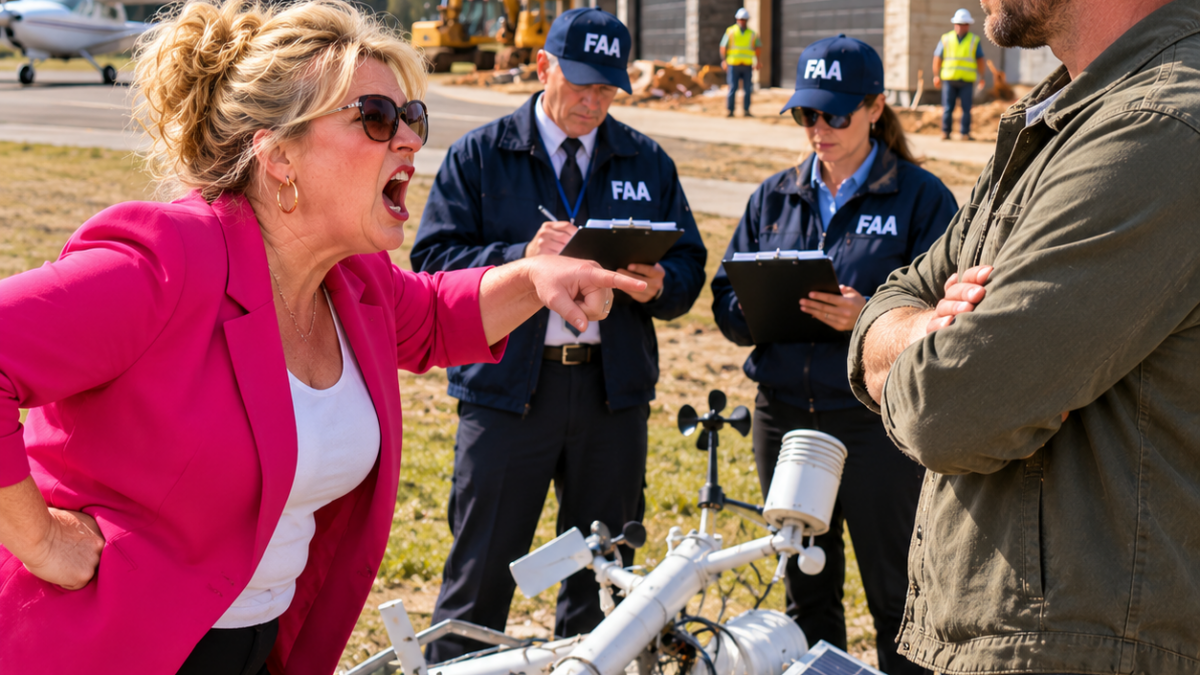
PART 2
Walsh Field existed before Fairmont Ridge had a name.
Before the stone entrance sign.
Before the curved streets.
Before the landscaping committee.
Before Karen Ashford ever bought a house overlooking my north approach.
My father carved the runway out of a hayfield in 1962.
Calvin Walsh.
He borrowed a transit from a county surveyor and rented a tractor from a man who charged less if Dad promised to repair whatever he broke.
The first runway was dirt.
Two thousand nine hundred feet north to south.
He used old fertilizer sacks filled with lime to mark the ends until he could afford real paint.
Four years later, he paved it.
Not well.
But enough.
Dad believed pavement could be improved.
Mud could not.
Every spring, he repainted the runway numbers himself.
When his hands got too stiff, I started doing it.
I still do.
People sometimes called Walsh Field a private strip because it looked like one.
Small hangar.
One main runway.
No terminal.
No tower.
But the field was published.
Identifier W22.
Listed in the chart supplement.
Public-use.
My business operated from it.
Crop spraying in summer.
Transient traffic when somebody needed the valley.
And in winter, Walsh Field served another purpose.
The mountains around us make distance deceptive.
The regional hospital is not far as a crow flies.
By road, especially in winter, it can be a long ride.
Walsh Field became a relay point for air ambulance crews coming down from the high country.
When fire season hit, tankers and support aircraft used us too.
It wasn’t glamorous.
It was useful.
Dad liked useful things.
That was why I installed the weather station.
February 2018 changed everything.
Dad had a stroke at ten o’clock at night.
I found him in the kitchen sitting on the floor beside the table.
Not collapsed.
Just sitting there.
One side of his face wrong.
I knew enough to call emergency services immediately.
The dispatcher asked whether air transport was possible.
I said yes.
Walsh Field was fifteen minutes away from where Dad lived.
Then the helicopter crew asked:
“What’s the ceiling at your field?”
I stepped outside.
Looked up.
Black sky.
Clouds somewhere above.
“How high?”
I didn’t know.
“Visibility?”
I could see the barn light half a mile away.
Beyond that?
Guessing.
The nearest published weather source was almost forty miles away.
Conditions in that valley could be completely different.
The crew would not launch blind into an unverified field.
They were right.
That did not make it easier.
The ambulance drove Dad over the pass.
Fifty-two minutes.
He was alive when we reached the hospital.
He died before morning.
I spent the next few months being angry at weather.
Then I realized weather hadn’t done anything wrong.
We had failed to measure it.
So I fixed that.
An automated weather observation system is not cheap.
I could have installed the lowest-cost setup.
I didn’t.
I spent $92,000.
Sensor mast.
Ceiling equipment.
Visibility sensor.
Backup battery.
Dedicated phone line.
Recording.
Calibration.
Everything.
The FAA commissioned it in 2019.
It got a frequency.
A published phone number.
Pilots could call from anywhere.
They could listen to a flat robotic voice tell them exactly what the sky was doing over Walsh Field.
No guessing.
No standing in a driveway staring at darkness.
When the installation was finished, I bolted Dad’s wooden sign to the base of the mast.
WEATHER DON’T CARE WHO’S WAITING.
Roy Kesler laughed when he saw it.
Roy was an A&P mechanic.
He had worked on my father’s aircraft before he worked on mine.
“Your old man’s grammar was terrible.”
“He knew.”
“Could’ve fixed it.”
“Wouldn’t.”
Roy touched the sign.
“Sounds like him.”
That sign stayed there until Karen’s contractor snapped it in half.
There was another piece of history I barely thought about.
In 2016, three years before the station went in, Walsh Field had received federal money.
The original pavement was failing.
You could patch sixty-year-old asphalt only so many times.
The tanker crews were getting heavier.
Cracks were opening.
The runway needed a real resurfacing.
I applied for an Airport Improvement Program grant.
$1.4 million.
Federal funds.
I signed a stack of documents thick enough to stop a door.
Grant assurances.
Airport layout documents.
Maintenance obligations.
Use restrictions.
Federal conditions.
At the time, I cared about one thing.
Pavement.
The contractor resurfaced the strip.
The job finished.
I put the grant documents into a blue folder.
The blue folder went onto a shelf above the hangar workbench.
I did not open it again for nine years.
That was almost fatal to my case.
North of the field sat eighty acres that had once been open land.
A developer bought it in 2004.
Fairmont Ridge Estates.
One hundred sixteen homes.
Stone entry sign.
Curving streets.
Clubhouse.
Gated secondary access.
The marketing brochure described Walsh Field as a “heritage aviation feature.”
That should have bothered me.
It didn’t.
I was thirty-two.
Trying to keep a spraying business alive.
Paying attention to equipment.
Fuel.
Insurance.
Not real-estate marketing language.
The subdivision wrapped around the north approach.
Dad warned me once.
“Read their plat.”
“I did.”
“No, you looked at it.”
“What’s the difference?”
“You’ll know when it costs you money.”
Dad was irritatingly good at being right after the fact.
Karen Ashford moved into Fairmont Ridge during the second phase.
She had sold luxury residential property for twenty years.
By the time she became HOA president, Fairmont Ridge stopped feeling like a neighborhood association and started feeling like a sales office.
Glossy newsletters.
New logo.
Branding.
Professional photography.
Karen referred to the northern common area beside my runway as “the legacy parcel.”
At first she said it warmly.
Then December came.
Certified letter.
FAIRMONT RIDGE HOMEOWNERS ASSOCIATION.
My weather station was described as an “unpermitted private structure” installed on HOA common area designated Tract C.
Thirty days to remove it at my expense.
I read the letter twice.
I genuinely thought they had made an administrative mistake.
I replied by email and certified mail.
Attached photographs.
Attached the chart supplement page showing Walsh Field and the station information.
Explained that the equipment was commissioned aviation infrastructure.
Included the frequency.
Included the telephone number.
Explained that medical flight crews and other pilots relied on it.
Karen never answered.
That silence bothered me more than an argument would have.
If somebody believes you are wrong, they usually explain why.
Karen said nothing.
Instead, she placed “Tract C obstruction removal” on the February board agenda.
Nine minutes.
The board approved removal.
I wasn’t notified.
According to the minutes, I was not a party.
Two months later, I was on final approach when the station went silent.
After I filmed the demolition, I called the sheriff.
Deputy came in about twenty minutes.
Young.
Careful.
Polite.
He photographed the broken mast.
The concrete.
The cable trench.
Dad’s sign.
I explained the radio call.
“She told you to land somewhere else?”
“Yes.”
“On the common frequency?”
“Yes.”
He wrote that down.
Then I handed him my deed.
He read the legal description slowly.
Karen walked over.
No argument.
No theatrics.
She handed him one sheet.
He read it.
Then again.
He gave me my deed back.
“Mr. Walsh, I think this is civil.”
“She just destroyed ninety-two thousand dollars of equipment.”
He glanced toward the plat page.
“The parcel appears to be HOA property.”
“That station serves a federally published airport.”
“I understand.”
“No, I don’t think you do.”
He stayed calm.
“Sir, I cannot arrest a survey.”
I hated that sentence.
Mostly because it was true.
“Can I see the document?”
Karen handed it to me.
Four seconds.
Recorded 2004 plat.
Tract C.
Fairmont Ridge Homeowners Association.
1.8 acres.
That night, I downloaded the full subdivision plat.
Four sheets.
Printed them across my kitchen table.
I found Tract C.
Then my deed.
The legal boundary stopped forty feet south of the weather-station pad.
Forty feet.
I sat there until midnight.
My father’s deed was clear.
The HOA plat was clear.
The mast had been on Fairmont Ridge property.
I had poured the foundation there in 2019.
Crane.
Concrete truck.
Electrical work.
Six weeks of visible construction.
Not one HOA complaint.
Not one warning.
Nothing for six years.
Until Karen wanted that location.
The newsletter arrived the next morning.
Roy brought me a copy.
Front page:
OBSTRUCTION REMOVED — TRACT C IMPROVEMENT MOVES FORWARD.
Below the headline was a full-color architectural rendering.
Twelve luxury garage bays.
Stone veneer.
Carriage lighting.
Glass doors.
Private storage.
Sports cars in the rendering.
THE CARRIAGE VAULT AT FAIRMONT RIDGE.
Roy placed the newsletter on my workbench.
Tapped the image.
“That was printed before yesterday.”
“I know.”
“Gloss stock. Layout. Mailing.”
“I know.”
“Two weeks minimum.”
Probably more.
Which meant Karen’s board had commissioned marketing while my weather station was still operating.
She hadn’t removed the mast and then decided what to do with the land.
She already knew.
Roy looked toward the runway.
“You lose the weather, you may lose the tankers.”
“I know.”
“They won’t commit to this valley loaded without local conditions.”
“I know.”
He watched me.
“Do you?”
That night I pulled the AWOS data drive.
The bulldozer had gone around the equipment shed.
Every observation was still there.
Every ninety seconds.
Six years.
Then:
9:12:52.
Normal report.
9:14:22.
Normal report.
Then nothing.
I copied the drive three times.
Printed logs.
Saved video.
Saved photographs.
Saved Karen’s first letter.
Saved my reply.
Chart supplement.
Radio information.
I built the file the way Dad would have.
Then sent the HOA a demand.
Replace the station.
Or fund a replacement.
Nine days later, the HOA mailed me a response.
It wasn’t an offer.
It was an invoice.
$18,400.
“Removal of unauthorized structure.”
Equipment.
Labor.
Disposal.
They destroyed my station and billed me for the bulldozer.
I stuck the invoice to my refrigerator.
Not because that was strategic.
Because I didn’t know where else to put something that ridiculous.
Thirty days later, Fairmont Ridge recorded a lien.
Not against the airstrip.
Against my house.
The house Dad built in 1971.
The house where he died.
That got me to an HOA meeting.
Forty residents.
Coffee urn.
Folding chairs.
Karen at the front.
I signed up for public comment.
Walked to the podium carrying the weather logs.
“I need everybody here to understand what that station actually did.”
Karen placed a kitchen timer on the table.
Three minutes.
I looked at it.
“You’re timing me?”
“Everyone receives the same opportunity.”
I started.
Explained published weather.
Medical flights.
Fire operations.
Explained why local ceiling mattered.
Explained the station had been operating normally when the contractor removed it.
The timer beeped.
Karen smiled.
“Thank you, Mr. Walsh.”
“I have two pages left.”
“Your time has expired.”
“This could affect emergency operations.”
“Next speaker.”
She looked past me.
I stood there for half a second.
Then stepped away.
Three residents followed me outside.
Two apologized.
Sorry about the station.
Sorry about Karen.
Sorry about the lien.
Apologies are easy.
The third person was Nancy Boyle.
Board secretary.
Eleven years.
She stood by my truck.
Keys clenched in one hand.
“They removed me from the project committee in January.”
“Why?”
“I asked a question.”
“What question?”
She glanced at the clubhouse.
Then back at me.
“Ask when the garage bays went on sale.”
I waited.
“Not when the board approved them.”
She got into her car.
Left.
I stood there with the lien on my house and the invoice on my refrigerator.
For the first time, anger gave way to curiosity.
Fairmont Ridge records were available to HOA members.
I wasn’t a member.
But some garage buyers were.
Harold Pruitt had known my family twenty years.
Retired dentist.
He invited me into his kitchen.
His wife sat beside him.
He placed the Carriage Vault purchase packet on the table.
“I don’t want trouble.”
His wife looked at him.
“Harold, we already have trouble.”
He sighed.
“I paid eighty-five thousand dollars for a garage that’s now sitting behind a legal dispute.”
I opened the packet.
Twelve bays.
$85,000 each.
Total presales:
$1,020,000.
Then I saw Harold’s contract date.
I read it again.
Four months before the board voted to remove my “obstruction.”
Karen had sold the garages before formally declaring the station a problem.
The station was not removed because the HOA discovered an encroachment.
The HOA discovered the encroachment because Karen had already sold something that required the ground.
Then I found another line.
PROJECT MANAGEMENT COMPENSATION.
Six percent of project cost.
Payable to association president acting as project manager.
Karen.
Six percent.
Now motive had a number.
I drove three hours the next morning to see Ellen Danforth.
Aviation attorney.
Roy had recommended her.
“She knows what an AWOS is without Googling it.”
That sounded sufficient.
Ellen reviewed everything.
Deed.
Plat.
Logs.
Purchase contracts.
Management fee.
My demand.
Karen’s invoice.
She read quietly for eleven minutes.
Then looked up.
“You want me to tell you she committed a crime.”
“I want you to tell me this matters.”
“It matters.”
“Good.”
“But ugly conduct is not automatically a legal claim.”
She tapped the subdivision plat.
“They own Tract C.”
“Yes.”
“If they own the land, they can generally remove an encroachment.”
“A federally commissioned weather station?”
“Ownership comes first.”
“They let it sit six years.”
“That helps in some arguments. Not the basic title question.”
“She sold garages before removing it.”
“That goes to motive.”
“Motive matters.”
“Motive does not beat a recorded deed.”
I leaned back.
“So what do I have?”
“A negotiation.”
“That’s it?”
“Until you can show something limiting their use of Tract C.”
“Do we have that?”
“Not yet.”
I hated “yet.”
Ellen sent a cease-and-desist anyway.
Certified.
No construction on Tract C until the dispute was resolved.
They poured the garage foundation the next morning.
I saw the concrete pump while flying the pattern.
Boom extended over the exact spot where Dad’s sign had stood.
Gray concrete going into forms.
I landed.
Called Ellen.
“They’re pouring.”
“I know.”
“What do we do?”
“We document.”
“I’m tired of documenting.”
“I know.”
That afternoon, I called the county building department.
“How did a twelve-bay structure get permitted near the end of a public-use runway?”
The clerk pulled the application.
“Accessory storage structure. HOA common area.”
“Does the application mention Walsh Field?”
Paper moving.
Pause.
“No.”
“Airport?”
“No.”
“Runway?”
“No.”
“Approach surface?”
“No.”
I thanked her.
Hung up.
Everything Karen submitted was technically clean.
Correct owner.
Correct parcel.
Correct project type.
The forms simply omitted the airport beside it.
She wasn’t smashing through rules.
She was moving through openings.
The next newsletter changed direction.
My airplane appeared on the front page.
Photo taken from a resident’s backyard during a spraying run.
Headline:
AERIAL CHEMICAL OPERATIONS ADJACENT TO RIDGE HOMES.
Three paragraphs.
Children.
Property values.
Chemical drift.
Noise.
An “operator refusing meaningful engagement.”
Two homes pulled listings that week.
One neighbor I had waved at for fifteen years stopped waving.
Roy came to the hangar.
“Tanker contractor called.”
My stomach dropped.
“What did they want?”
“To know whether we’ll have published weather this season.”
“What’d you say?”
“That I’d call them back.”
He crossed his arms.
“Bennett, if they take Walsh Field off their list, Karen doesn’t have to win the lawsuit.”
“I know.”
“No. Listen.”
He pointed toward the runway.
“The field can die while you’re still arguing.”
That night I sat in the hangar until after dark.
I had proof Karen had presold garages.
Proof she received a management fee.
Proof she removed an operational weather source.
Proof she’d omitted the airport from the county permit application.
None of it changed the deed.
Tract C belonged to Fairmont Ridge.
I went looking through old documents.
Not because I had a theory.
Because I didn’t know what else to do.
Boxes.
Old board material Roy had saved.
Airport maintenance records.
Then my hand hit the blue folder on the shelf.
2016 federal grant.
I moved it aside.
Kept searching.
The lien finally pushed us into court.
Judge ordered mediation.
Retired judge.
Conference room.
Whiteboard nobody used.
Ellen arrived with binders.
Weather logs.
Chart supplement.
Video.
Purchase agreements.
Six-percent fee.
County permit.
Karen’s attorney was Lawrence Beckwith.
Gray suit.
Tired.
He listened.
Never objected.
When Ellen finished, Beckwith uncapped his pen.
Set it down.
Then asked the mediator:
“Whose name is on Tract C?”
That was his whole case.
Ellen argued broader airport use.
Historical operations.
Federal involvement.
Reliance.
But I watched the mediator’s face.
He was done.
Clear recorded title.
Fairmont Ridge Homeowners Association.
Encroaching structure.
Owner’s right to remove.
Any claim over manner or damages was separate.
Central title issue?
No dispute.
I lost.
Not “temporary setback” lost.
Lost.
$18,400 invoice remained.
Lien remained.
Karen’s title remained.
I sat in that conference room realizing the sentence I had repeated for months—
She destroyed equipment on my land—
was wrong.
The equipment had not been on my land.
Karen packed slowly.
Stopped beside my chair.
“You lost your own property line, Mr. Walsh.”
I said nothing.
She smiled.
“Try zoning next.”
Then left.
Here is the thing that mattered later.
Karen was right.
She owned Tract C.
Fairmont Ridge still owns it now.
That fact never changed.
That night, I couldn’t sleep.
Four bankers boxes from discovery sat in my living room.
Association records.
Most boring.
Landscaping.
Pool bids.
Maintenance.
Meeting packets.
I started reading because I needed something for my hands.
Box three.
Near the bottom.
2004 closing file.
Fairmont Ridge purchasing common areas from the developer.
Title commitment.
Schedule B exceptions.
Item three:
FEDERAL AVIATION OBLIGATIONS OF RECORD AFFECTING TRACT C, AS MORE PARTICULARLY DESCRIBED IN INSTRUMENTS RECORDED BOOK 411.
Blue pen in margin.
Initials.
K.A.
Date.
I read it forty times.
Federal aviation obligations.
I didn’t know what that meant.
I photographed it.
Sent it to Ellen at 1:14 a.m.
Three words.
DOES THIS MATTER?
She called before sunrise.
“Bennett, where’s your 2016 grant file?”
“What?”
“The runway grant.”
“In the hangar.”
“Go get it.”
I drove there in the dark.
Pulled down the blue folder.
Blew dust off it.
Opened the grant agreement.
Then the folded airport layout plan.
I spread it across the workbench.
Federal approval stamp.
Runway.
Taxi area.
Airport property boundary.
I traced the boundary north.
It did not stop at my deed line.
It wrapped around Tract C.
All 1.8 acres.
Inside the federally approved airport boundary.
“Ellen.”
“I’m here.”
“This shows their land inside the airport.”
“Yes.”
“But they own it.”
“Yes.”
“Then what?”
Her voice changed.
“Bennett, listen carefully.”
I did.
“When Walsh Field accepted federal grant money, you accepted federal grant obligations.”
“Okay.”
“They attach to airport land shown in the approved airport layout.”
“For how long?”
“Twenty years for these obligations.”
“Until 2036.”
“Yes.”
“So?”
“So selling the ground doesn’t erase them.”
I looked at the plan.
“They bought the dirt.”
“They bought the dirt.”
“But the obligations stayed.”
“Yes.”
“And Schedule B says they knew?”
“That title commitment says the encumbrance was disclosed before they took title.”
I stood in the cold hangar.
Seven months.
I had been arguing:
Who owns Tract C?
Wrong question.
Karen owned it.
The real question was:
What was she legally allowed to do with federally obligated airport land before 2036?
That answer did not belong to the HOA.
It didn’t belong to the county.
And it didn’t belong to the mediator who had just ruled against me on title.
It belonged to the Federal Aviation Administration.
At four in the morning, I made coffee.
Ellen started explaining Part 16.
Formal FAA compliance complaint.
She filed in June.
Sixty-one pages.
Grant agreement.
Airport layout plan.
Recorded Book 411 instrument.
Title commitment.
Karen’s initials.
Weather logs.
Garage presale dates.
County permit.
Chart supplement.
My video.
FAA district office.
Compliance specialist.
Dale Overbeck.
Six days later, Fairmont Ridge received a federal response directive.
Thirty days.
Nancy called me.
“They read it tonight.”
“What happened?”
“Karen laughed.”
“About what?”
“She asked whether anyone in the room was an airplane.”
Beckwith filed their response.
Private residential property.
Fee-simple title.
Ownership judicially confirmed.
No federal property interest.
Request dismissal.
Then Karen accelerated construction.
Six-day work week.
Early mornings.
Work lights.
Framing.
Stone.
Glass.
She wasn’t building faster because of weather.
Nancy told me what Karen said during a board meeting.
“Nobody bulldozes twelve garages families already paid for.”
That was the strategy.
Make the project too expensive to undo.
Put twelve residents’ money behind it.
Finish the buildings.
Fill them with cars.
Then dare federal regulators to become the people who remove them.
Three weeks later, Ellen called.
Worried.
She rarely sounded worried.
“Karen filed with the county.”
“For what?”
“She wants Walsh Field declared abandoned and nonoperational.”
I sat down.
“Why?”
“Think about the federal case.”
I did.
“The obligations attach to airport property.”
“Yes.”
“If she can show there’s no functioning airport—”
“She argues the protections have nothing meaningful left to protect.”
“What’s her evidence?”
“Three main points.”
Ellen read.
“Declining operations.”
“Okay.”
“No published weather source.”
I laughed once.
She didn’t.
“And a sworn affidavit from Karen stating the weather station had been broken and unmaintained for years before removal.”
Silence.
“She swore that?”
“Yes.”
“Under penalty?”
“Yes.”
County hearing first.
FAA response nine days later.
Two clocks.
Ellen told me:
“Forget the garages for now.”
“Hard to.”
“If the field gets declared dead, everything becomes harder.”
“What do we do?”
“Keep it flying.”
So we did.
The AWOS hard drive became central.
Six years.
Report after report.
Every ninety seconds.
No multi-year outage.
No long deterioration.
April 9.
9:12:52.
Working.
9:14:22.
Working.
Next cycle—
nothing.
Ellen requested corresponding federal station-status records.
They matched.
Official outage logged at 9:14.
Same morning.
A station “broken for years” does not report normal conditions ninety seconds before a bulldozer destroys it.
Roy built the operational history.
Maintenance logs.
Fuel.
Flight records.
Spraying operations.
Medevac relay flights.
Transient traffic.
Fire tanker usage.
The regional medical flight program sent a letter confirming Walsh Field’s relay role.
Fire contractor sent another.
Three of last four seasons.
Continued use dependent on reliable local weather.
That sentence kept me awake.
It proved importance.
It also proved how much Karen had hurt us.
A week before the county hearing, Nancy came to my house.
Parked away from the driveway.
Walked up.
Envelope in hand.
“Executive session minutes.”
“Confidential?”
“They were.”
“Why are you giving them to me?”
She looked toward Tract C.
Garage crews working under lights.
“Because I typed them.”
October minutes.
Before the project started.
Association counsel had briefed the board.
Tract C carried aviation encumbrances of record.
Federal release recommended before improvements.
Margin note.
Blue handwriting.
Karen.
Two words.
LEGACY NOISE.
I looked at Nancy.
“You kept this?”
“Eleven years of board files.”
“Why now?”
She looked away.
“Because she made me set that timer in front of you.”
“What?”
“At the meeting.”
Her voice tightened.
“I put it on the table.”
“Karen told you.”
“Yes.”
“I did it.”
“Nancy—”
“I knew you had more to say.”
She handed me the envelope.
“I’m done helping her make people small.”
Two days before the county hearing, invitations arrived.
Cream cardstock.
Gold foil.
CARRIAGE VAULT GRAND OPENING.
August 11.
Three days before Fairmont Ridge’s FAA response deadline.
Press invited.
Ribbon cutting.
Refreshments.
The county hearing came first.
Bad carpet.
Forty folding chairs.
Karen wore navy.
Beckwith beside her.
Binder with tabs.
She spoke well.
I will always give her that.
She described Walsh Field as an aging private strip.
Seasonal operations.
Declining traffic.
No functioning weather station.
Aging owner.
Residential growth surrounding a marginal facility.
Then Beckwith read her affidavit.
“The automated weather facility had been nonfunctional and inadequately maintained for a period of years prior to its removal.”
Ellen did not object.
I wanted her to.
She let him read every word.
Then she stood.
“Exhibit one.”
AWOS logs.
Projected on screen.
9:12:52.
Wind.
Ceiling.
Visibility.
Altimeter.
Temperature.
9:14:22.
Same.
Next interval absent.
“Exhibit two.”
Federal outage record.
Station offline:
April 9, 9:14 a.m.
Ellen looked at the board.
“The petitioner states the station had been dead for years.”
Pause.
“The station’s own log and the federal record show that the petitioner’s contractor is the reason it stopped between two normal reporting cycles.”
One board member leaned forward.
“Ms. Ashford.”
Karen looked up.
“Your petition cites lack of weather reporting as evidence that Walsh Field is nonoperational.”
“Yes.”
“You removed the weather-reporting station.”
“That was a separate property matter.”
“It does not appear separate.”
Karen shifted.
“The equipment was unauthorized on association land.”
“That may address ownership.”
He looked at the log.
“It does not explain why your affidavit says it was broken for years.”
Roy testified.
No notes.
He never needed them.
Medevac relay.
Fire operations.
Seasonal spray work.
Transient aircraft.
Maintenance history.
Then the letters.
The board denied Karen’s petition.
Not close.
I expected that to shake her.
It didn’t.
She walked outside smiling.
Why wouldn’t she?
She still owned Tract C.
She still had twelve completed garages.
She still had my lien.
Still had my invoice.
Still had a court ruling confirming title.
And four days later, she had a ribbon cutting.
I attended.
Not to confront her.
Not to ruin it.
I wanted to watch.
Maybe that sounds strange.
But Dad’s field was behind every photograph.
I needed to see what she had built where his sign used to stand.
White tablecloth.
Coffee.
Logo cups.
Reporter.
Photographer.
All twelve garage doors open.
Perfect concrete.
Stone fronts.
Carriage lights glowing in daylight.
Harold stood beside his wife.
He looked sick.
Karen held oversized ribbon-cutting scissors.
Gold handles.
She spoke for three minutes.
Thanked the board.
Thanked residents.
Used the word “vision” twice.
Then:
“This is what moving forward looks like.”
She raised the scissors.
A man in a gray polo walked up the driveway.
Government badge.
Folder.
I had never met him.
Dale Overbeck.
FAA compliance specialist.
He waited.
Karen noticed him.
Then noticed him again.
“Can I help you?”
“Ms. Ashford?”
“Yes.”
“Airport District Office.”
The scissors stopped.
“I need to serve you with the agency’s final decision.”
He handed her a folder.
Another to Beckwith.
The photographer took one more picture.
Then lowered his camera.
The newspaper reporter opened a notebook.
Karen read page one.
Her face barely changed.
Her right hand did.
The scissors lowered slowly.
The decision started with 2016.
$1.4 million federal airport improvement grant.
Grant obligations extending through 2036.
Approved airport layout plan.
Tract C inside the boundary.
Karen looked up.
“We own this property.”
Overbeck nodded.
“Yes, ma’am.”
“A court already confirmed that.”
“Yes.”
I will remember his next sentence as long as I live.
“The obligation follows the ground, ma’am. Not the name.”
Karen looked at Beckwith.
He was already flipping through exhibits.
The federal decision answered everything.
Book 411.
Aviation obligations recorded before Fairmont Ridge acquired title.
2004 title commitment listing those obligations as Schedule B exceptions.
Karen’s initials beside them.
Executive-session minutes.
Project attorney warning the board to obtain a federal release.
Karen’s handwritten response:
LEGACY NOISE.
The county permit application.
No airport disclosure.
Presale contracts.
Four months before obstruction vote.
Six-percent project-management fee.
The FAA did not treat this as an innocent misunderstanding.
The association had actual notice.
The project converted obligated airport property to non-aeronautical residential storage without federal release.
Worse, the completed buildings penetrated the protected approach surface at the north end.
Then came the order.
Four lines.
Remove the structures.
Restore Tract C to grade.
Reinstate a published weather source.
All costs borne by Fairmont Ridge.
Nobody cheered.
People like to imagine scenes like that end with applause.
They don’t.
Thirty residents stood there doing arithmetic.
Harold spoke first.
Quiet.
“What happens to our deposits?”
Karen did not answer.
I didn’t say anything either.
What could I say?
I walked past the coffee.
Past the stone.
Past the twelve open garage doors.
Onto the dirt near where the weather mast had stood.
Wind southwest.
Maybe eight knots.
Ceiling around four thousand.
There was no machine left to say so.
Fairmont Ridge appealed.
Eleven weeks.
Failed.
Deadline:
December 12.
Demolition began at eight in the morning.
I went to the fence.
Did not film.
I had spent enough months looking through a phone.
The glass garage doors came off first.
Twelve.
Laid flat on the grass.
Then carriage lights.
Stone veneer.
Hydraulic breaker.
Roof sections.
Block walls.
By the end of day two, the Carriage Vault was rubble.
Third day, saw crew cut the slab into squares.
Trucks carried it away.
I thought about Karen’s D6 backing away from my broken weather mast in April.
Same kind of machine.
Opposite direction.
Total demolition and restoration cost:
Approximately $1.9 million.
Insurance denied coverage for intentional conduct.
The money had to come from somewhere.
The association levied a special assessment.
$16,400 per home.
One hundred sixteen houses.
That part never felt good.
Harold paid eighty-five thousand dollars for a garage.
Then another sixteen thousand four hundred dollars to help demolish it.
He deserved better.
Most residents did.
The twelve garage buyers sued.
Association and Karen individually.
The board withdrew Karen’s indemnification.
Eleven-minute vote.
People had finally read the title commitment.
They had finally read the executive minutes.
No longer “legacy noise.”
Now it was the reason each family owed thousands.
Karen was removed as president.
New bylaws permanently barred her from serving again.
Civil judgment against her reached $340,000.
Then there was her affidavit.
Property disputes can be ugly.
People misunderstand boundaries.
People interpret contracts differently.
But Karen had sworn that the weather station had been dead for years.
The machine had been reporting normally less than two minutes before her contractor destroyed it.
That was referred for investigation.
Charges followed related to the false sworn statement and destruction of aviation-related infrastructure.
Karen eventually entered a plea.
Eleven months.
Restitution.
Additional financial consequences.
I did not attend sentencing.
People were surprised.
“You don’t want to see it?”
“No.”
“After what she did?”
“Especially after what she did.”
I had spent almost a year letting Karen decide where my attention went.
I was done.
The lien on my house was released.
The $18,400 demolition invoice disappeared.
Fairmont Ridge reimbursed legal and compliance costs required under the orders.
Then, on a cold Tuesday in March, the weather-station company returned.
New mast.
New foundation.
Same location.
Tract C.
Still owned by Fairmont Ridge.
That’s the part people sometimes misunderstand when I tell the story.
I did not win the land.
Never did.
The HOA still owns that 1.8 acres.
They just do not get to use it however they please until the federal obligations expire.
Ownership and use were different questions.
It took me seven months and one humiliating mediation to learn that.
The replacement station cost $148,000.
Fairmont Ridge paid.
Same sensor height.
Same published location.
Same field identifier.
Roy repaired Dad’s sign.
He ground a channel into the break.
Welded a thin steel brace behind it.
Rejoined the wood.
A gray repair line remained across the front.
“Paint it?” I asked.
“No.”
“It looks broken.”
“It was broken.”
“I know.”
“Then why hide it?”
Roy never wasted words.
We bolted the sign to the new mast.
WEATHER DON’T CARE WHO’S WAITING.
Gray scar straight through the sentence.
The station came online on a Thursday.
I stood beside it.
Technician ran checks.
Phone.
Frequency.
Sensors.
Then the synthetic voice came through my handheld.
“Walsh Field automated weather observation…”
Wind.
Visibility.
Ceiling.
Temperature.
Altimeter.
The same flat voice I had heard thousands of times.
I thought I would feel something enormous.
Victory.
Relief.
Dad.
Mostly, I felt tired.
Then the technician packed up.
Roy left.
The field got quiet.
The station kept talking to nobody.
Every ninety seconds.
Exactly what it was built to do.
Spring turned into summer.
Fire crews returned.
Not immediately.
They wanted certification.
Maintenance records.
Proof the weather source was operational again.
We gave them everything.
By July, Walsh Field was back on the seasonal list.
Air ambulance program restored normal relay status.
That felt better than the court orders.
The HOA elected a new board.
Nancy became vice president.
She refused the presidency.
“Why?”
“I’ve seen what happens to people with that chair.”
“Fair.”
Harold got part of his garage money back through the settlement.
Not all.
He stopped by the hangar one afternoon.
“I hated you for about two weeks.”
“I know.”
“You did?”
“You stopped answering my calls.”
“Oh.”
He stood beside the airplane.
“My wife said I was angry at the wrong person.”
“She seems smart.”
“Annoyingly.”
He looked toward Tract C.
Bare ground again.
Weather mast standing alone.
“You really thought you owned that parcel?”
“For years.”
“You didn’t?”
“No.”
He laughed.
“Then Karen was right.”
“About title.”
He smiled.
“That’s got to hurt.”
“It used to.”
“What changed?”
I pointed toward the mast.
“I learned that being right about one thing doesn’t make you right about everything else.”
Harold nodded.
“Karen never learned that.”
Maybe.
I stopped thinking about whether she learned anything.
That became important.
At first, every development in the case felt like a scoreboard.
Lien.
Karen.
FAA.
Board.
Court.
Garages.
My house.
Her judgment.
Afterward, scorekeeping felt cheap.
Dad would have hated it.
He had a simpler view of work.
Do the thing correctly.
Then leave it working for the next person.
The weather station wasn’t really mine anymore.
Not in the way I had thought when I installed it after Dad died.
Pilots called it.
Emergency crews used it.
People I would never meet depended on it.
That became clear in October.
Cold rain.
Ceiling dropping.
I went to bed around eleven.
At two in the morning, the scanner in my kitchen woke me.
It had done that for years.
Then stopped for eleven months.
Now the sound came back into the house like an old clock restarting.
“Wind one-niner-zero at six.”
I opened my eyes.
“Ceiling one thousand five hundred.”
Rain at the window.
“Altimeter three-zero-one-two.”
Eight minutes later, I heard rotor blades.
Low.
Coming up the valley.
I got out of bed.
Walked to the window.
An air ambulance descended toward Walsh Field.
Landing light cutting through rain.
It touched down on my father’s runway.
Stayed maybe four minutes.
Then lifted again.
Northbound.
Somebody two counties away had needed help.
I never learned who.
I didn’t ask.
That was the point.
Dad used to say:
“Weather doesn’t care who’s waiting.”
When I was young, I thought it was one of those phrases fathers repeat because they like the sound of it.
It wasn’t.
He meant the sky does not care how urgent your problem is.
Cloud does not lift because somebody has a sick child.
Wind does not calm because an ambulance needs to land.
Weather gives no exceptions.
The only useful thing you can do is tell the truth about it.
That was what the station did.
All night.
Every night.
No opinions.
No board meetings.
No project-management fees.
No property lines.
Just the truth about the sky.
After the helicopter left, I stood at the window listening to the rotor sound fade into the mountains.
Then the scanner spoke again.
Another observation.
Same robotic voice.
I thought about April.
Karen beside the D6.
Clipboard.
My father’s sign in the dirt.
“You’re a guest with a hobby.”
I thought about mediation.
“You lost your own land.”
She had not been entirely wrong.
I had been careless.
I built expensive infrastructure forty feet beyond my deed.
I signed federal documents I didn’t understand well enough.
I put an important file on a shelf for nine years.
I ignored subdivision records when Dad told me to read them.
If I tell this story like I did everything correctly and Karen simply attacked me, I’d be lying.
I made mistakes.
Large ones.
The difference was that my mistakes did not give her the right to ignore obligations she knew existed.
That was the part the FAA decision finally made clear.
People like clean heroes and villains.
Real life is rarely generous enough to give you that.
I was wrong about ownership.
Karen was right about the deed.
Then she used that correct fact to justify decisions she knew another set of rules prohibited.
She thought winning one argument erased every other rule.
It didn’t.
The new HOA board asked me to attend a community meeting the following spring.
I almost said no.
Nancy called.
“Please.”
“Why?”
“Because people need to hear what actually happened.”
“They’ve had a year of lawyers.”
“They understand the money.”
She paused.
“They don’t understand the airport.”
So I went.
Same clubhouse.
Same folding chairs.
Different president.
No timer.
About sixty residents.
Some looked embarrassed.
Some angry.
Some tired.
Nancy introduced me.
I stood.
No binder.
No logs.
No legal exhibits.
I said:
“Fairmont Ridge owns Tract C.”
People shifted.
I continued.
“Karen was right about that.”
That surprised them.
“I was wrong about my property line.”
More silence.
“My weather station was forty feet onto HOA land.”
A man near the back frowned.
“Then why did the FAA make us remove everything?”
“Because ownership was never the last question.”
I explained the federal grant.
The airport layout.
The obligations.
How they remained attached to the ground.
How the title commitment disclosed them.
How the HOA could own the parcel while still being restricted from using it for non-aeronautical purposes.
One woman raised her hand.
“So we bought land with restrictions?”
“Yes.”
“And the board knew?”
“The records show the restriction was disclosed.”
She closed her eyes.
“Then why did we build?”
I could have said Karen.
Could have pointed.
Instead:
“Because enough people stopped asking that question.”
Nancy looked at me.
I kept going.
“A functioning board is supposed to make it hard for one person to make a million-dollar mistake.”
Nobody argued.
The new board adopted changes.
Two signatures on major contracts.
Independent legal review for property development.
Mandatory disclosure of title exceptions.
Conflict-of-interest rules.
No president acting as paid project manager.
Members got access to financial packets before large votes.
Boring rules.
Good rules.
Later, Nancy walked me to the parking lot.
“You could’ve blamed all of them.”
“What good would that do?”
She looked back at the clubhouse.
“I spent years thinking my job was to keep meetings calm.”
“Was it?”
“No.”
“What was it?”
“Make them honest.”
Dad would have liked that.
The following summer, I repainted runway numbers.
Same ritual.
Hot asphalt.
White paint.
Roy helped for about fifteen minutes.
Then claimed his back hurt.
“You’re useless.”
“I’m older than you.”
“Three months.”
“Still older.”
At the north end, I stopped near the weather mast.
Dad’s sign had weathered.
The repaired crack showed more clearly after winter.
I touched the gray line.
For years, I had thought repairing something meant making the damage disappear.
Dad never believed that.
He repaired tools visibly.
A patch was a patch.
A welded bracket was a welded bracket.
“You hide the repair,” he once told me, “somebody trusts it in the wrong way.”
“What does that mean?”
“It means scars are instructions.”
At the time I thought he was talking nonsense.
Now the sign made sense.
The crack stayed visible because the sign had a history.
So did the field.
So did I.
Walsh Field was not what it had been before Karen.
It was better documented.
More regulated.
Less casual.
I read every federal notice now.
Every airport-layout revision.
Every title exception.
Every easement.
Dad would’ve enjoyed watching me become obsessive about paperwork after spending half my life teasing him for saving everything.
I found another note of his in an old hangar drawer.
Not profound.
Just a maintenance list.
REPAINT 17/35.
CHECK SOUTH LIGHT.
CALL ROY.
BUY COFFEE.
At the bottom:
READ WHAT YOU SIGN.
I laughed so hard Roy came out of the shop.
“What?”
I handed it to him.
He read it.
“Your dad warned you.”
“Apparently.”
“You listen?”
“Apparently not.”
Roy folded the note.
Handed it back.
“Dead men are unbearable.”
“Tell me about it.”
In time, the special assessment became less raw.
Not forgotten.
People had paid real money.
Some had to take loans.
Some delayed renovations.
Harold sold his sports car.
His wife claimed that part was an improvement.
Karen’s house eventually sold.
I never drove past on purpose.
Once, coming back from town, I saw moving trucks.
That was all.
I kept going.
Someone asked:
“Didn’t you want to watch her leave?”
“No.”
“Why not?”
“Because then she still gets the afternoon.”
They didn’t understand.
I did.
For nearly a year, Karen controlled my attention.
Her letters.
Her meetings.
Her garage project.
Her lien.
Her petition.
Her affidavit.
Her deadlines.
When the case ended, I wanted my days back.
Flying.
Maintenance.
Weather.
Normal work.
That was the real victory.
Not watching stone walls come down.
Not a judge’s order.
Not her removal as president.
Getting up and thinking first about wind instead of Karen Ashford.
The Carriage Vault left one strange legacy.
For a while, you could still see the rectangular color difference in the soil.
Where the slab had been.
Grass grew lighter.
Then darker.
Then normal.
By the third year, you had to know where to look.
The mast remained.
White pole.
Sensors.
Small equipment enclosure.
Nothing luxurious.
No stone.
No glass.
No carriage lights.
Just something useful.
One afternoon, a young pilot landed.
Maybe twenty-four.
Cessna.
He taxied toward the hangar.
Got out.
“Mr. Walsh?”
“That depends.”
He smiled.
“I called your weather number from forty miles out.”
“Good.”
“Ceiling was lower than forecast.”
“Usually is.”
“I would’ve gone around the valley without it.”
I looked toward the mast.
“That’s what it’s there for.”
He noticed the sign.
Read it aloud.
“Weather don’t care who’s waiting.”
Then:
“Who wrote that?”
“My father.”
“Good line.”
“Bad grammar.”
He laughed.
I watched him leave an hour later.
No idea where he went.
Didn’t matter.
That evening I sat outside the hangar.
Sun low.
Runway cooling.
Weather station talking into the radio every ninety seconds.
The voice never sounds proud.
That’s what I like about it.
It doesn’t know what happened.
Doesn’t know lawyers.
Doesn’t know Karen.
Doesn’t know federal grants.
It just measures.
Maybe that’s why I trust it.
The whole fight began because people were telling stories.
Karen told the neighborhood I had placed junk on HOA land.
Technically, I had placed equipment on HOA land.
I told people she had stolen my property.
Technically, I didn’t own the ground.
She told the county the airport was dying.
The logs said otherwise.
She told them the weather station had been broken.
The machine had kept its own record.
In the end, the most powerful witnesses were the things nobody could persuade.
Timestamps.
Title documents.
Grant obligations.
Airport layout.
Presale contracts.
Maintenance records.
The station’s last report.
Machines and paper.
Boring truth.
That changed the way I handle disputes.
I argue less.
Document more.
Dad would’ve approved.
He hated people who talked while working.
“Measure first.”
That was one of his rules.
Another:
“Don’t fix the wrong thing.”
I had spent seven months fixing the wrong thing.
I tried to prove Tract C was mine.
It wasn’t.
No amount of anger changed that.
The moment Ellen found the federal obligations, we stopped arguing ownership.
We asked the correct question.
That was the turn.
Not revenge.
Precision.
Years later, people still tell the story wrong.
“That’s the airstrip guy who got the HOA’s garages demolished.”
Technically true.
Not how I see it.
The FAA ordered the garages removed because they violated obligations attached to federally supported airport land.
I filed the complaint.
I provided the evidence.
But I didn’t swing the wrecking tool.
I didn’t decide the remedy.
That matters.
Karen once believed power meant she could make decisions fast enough that everybody else had to live with them.
Build first.
Sell first.
Finish first.
Get cars inside.
Make reversal too painful.
She miscalculated one thing.
A completed mistake is still a mistake.
Expensive concrete does not become legal because it hardened.
Twelve families paying for something does not erase a restriction.
A ribbon cutting does not change the airport layout.
And ownership does not erase obligations attached to the land before you bought it.
That became Fairmont Ridge’s most expensive lesson.
Mine was cheaper.
Barely.
Read everything.
Especially the boring pages.
The title exception.
The folded drawing.
The grant assurance.
The thing sitting on a shelf gathering dust.
Dad’s warning again.
Read what you sign.
The October after the station came back, we had another bad night.
Not the medevac night.
A different one.
Low clouds.
Wind gusting.
I was at the hangar when a tanker support pilot called.
“Walsh, you still there?”
“Unfortunately.”
“Station says ceiling twenty-one hundred.”
“Sounds right.”
“Forecast had thirty-five.”
“Forecast doesn’t live here.”
He laughed.
“We may use you at first light.”
“Runway’s open.”
He paused.
“Glad you’re back.”
Not:
Glad you beat the HOA.
Not:
Glad the garages came down.
Glad you’re back.
I looked down the runway.
Lights glowing.
Weather mast blinking.
“Yeah.”
I said.
“Me too.”
That became enough.
The field kept operating.
Planes came.
Planes left.
People bought houses around it.
New HOA residents moved in who had no idea what the Carriage Vault had been.
One asked Nancy why there was a weather station on association land.
She told him:
“Long story.”
He asked me later.
I gave him the short version.
“The HOA owns the dirt.”
He looked confused.
“The airport controls the use?”
“Federal obligations restrict it.”
“For now?”
“Until 2036, at least under the current grant obligations.”
He stared at the mast.
“So what happens after that?”
I smiled.
“Ask me in 2036.”
I’ll be older then.
Maybe retired.
Maybe not flying.
Walsh Field may look different.
That’s normal.
Airports change.
Neighborhoods change.
People die.
Other people take over.
What matters is that decisions happen honestly.
If Fairmont Ridge wants a different future for Tract C after the obligations end, there will be procedures.
Review.
Notice.
Aviation analysis.
Real paperwork.
Not a bulldozer at nine fourteen in the morning while the weather station is still talking.
That is the part I wanted fixed.
Not Karen.
The process.
Dad’s field had survived sixty years because people treated the runway as something more important than the person currently holding the keys.
I understand that now.
One evening, I found myself standing at the new mast during sunset.
I don’t usually get sentimental around equipment.
Equipment fails.
You replace it.
But I looked at Dad’s repaired sign.
Gray scar through the words.
Wind moving through the grass.
The automated voice came over my handheld.
“Wind two-two-zero at eight.”
Almost the exact same wind from the morning the old station died.
“Ceiling four thousand.”
I laughed.
“Altimeter three-zero-one-two.”
The report finished.
No blade.
No silence.
Just another observation.
I put the radio down.
Thought about the old man.
That night in 2018.
The unanswered question.
What’s the ceiling?
I had spent $92,000 trying to make sure nobody ever had to say:
I don’t know.
Karen’s contractor silenced that answer for eleven months.
Then the system came back.
Better documented.
Protected.
More expensive.
Scarred.
But speaking.
Maybe that is why the FAA order never felt like the real ending.
The garages coming down was a consequence.
Karen losing her position was a consequence.
The lien disappearing was relief.
The judgment was paperwork.
The real ending happened at two in the morning when that helicopter came down through rain.
Somebody had called the published number.
Somebody heard the weather.
Some pilot decided:
We can get in.
Then somebody waiting in the mountains got an aircraft.
I never knew their name.
I never needed to.
Dad wouldn’t have either.
He would have stood beside me at the window listening to the rotors disappear.
Then probably said:
“Station working?”
“Yes.”
“Good.”
That would have been the whole conversation.
So that’s how I remember everything now.
Not Karen.
Not the twelve luxury garages.
Not the day federal officials stopped her ribbon cutting.
Not the demolition.
I remember a dark valley.
Rain.
A robot voice reporting the ceiling.
An air ambulance landing on the runway my father cut out of a hayfield in 1962.
Four minutes later it lifted into the night.
And the weather station kept talking after it was gone.
Every ninety seconds.
Telling the truth about the sky to whoever might be waiting next.
That was all my father ever wanted.
And in the end, that was the one thing Karen Ashford could not take away.

