PART 2: HOA Built a Neighborhood Around My Private Airstrip—Then Told Me I Had to Stop Flying
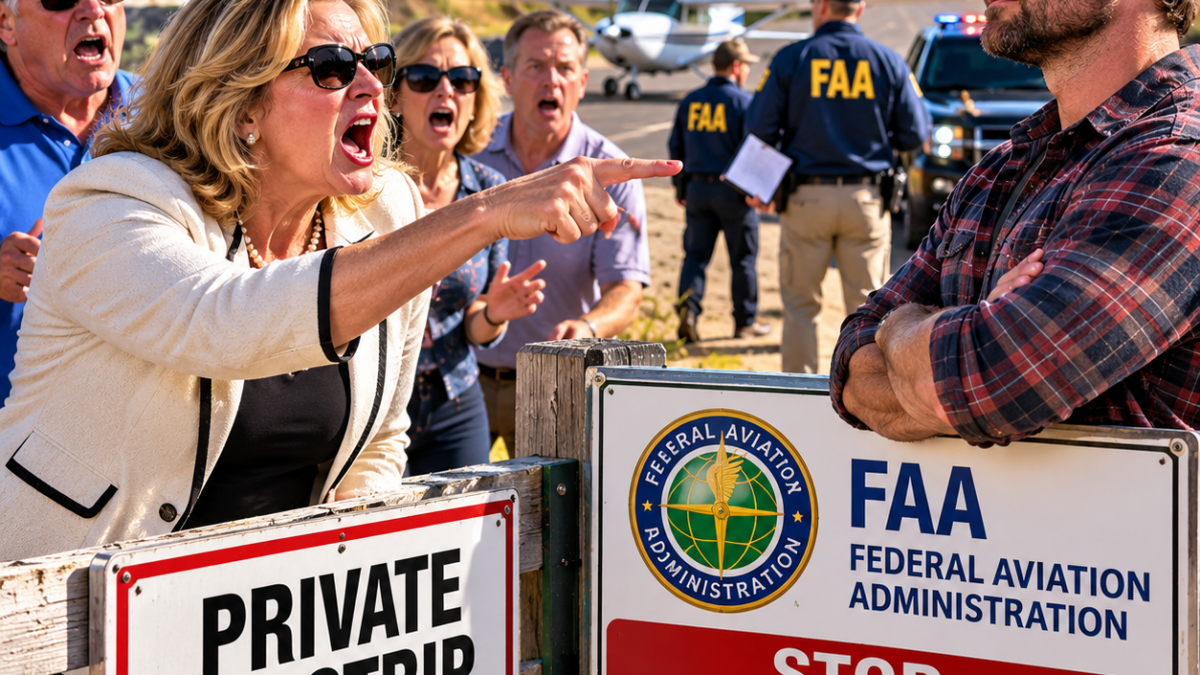
PART 2
“Send me a copy.”
“I’d rather you come in,” Aaron said.
His tone had changed. Before, he had sounded like a county employee answering a routine planning question. Now he sounded like someone who had found something in a file he did not want misunderstood over the phone.
“When?”
“Tomorrow morning. Eight-thirty.”
“I’ll be there.”
I ended the call and sat alone in the barn office.
Dad’s maintenance ledger was open in front of me.
Through the wall I could hear the wind moving against the hangar siding.
For a long time, I stared at the line Celeste had crossed without even realizing she had crossed it.
Telling future residents that the airport would probably close was one thing.
Calling me difficult was one thing.
Trying to pressure me with noise complaints was one thing.
But somebody had represented to the county that I had confirmed my own runway was abandoned.
I had done no such thing.
Molly found me twenty minutes later.
She came through the barn carrying two mugs of coffee.
“You okay?”
I looked at her.
“They told the county the runway was abandoned.”
She stopped.
“What?”
“For ten years.”
She slowly put the coffee down.
“We flew out of here last month.”
“I know.”
“You used it after the August storm.”
“I know.”
“Grandpa logged everything.”
“I know.”
Her face hardened.
“And they said you confirmed it?”
I nodded.
Molly looked toward the old ledger.
“Then take that tomorrow.”
“I intend to.”
She pulled out the chair across from me.
“And the airport registration.”
“Yes.”
“And your flight logs.”
“Yes.”
“And the photos from the storm-relief trips.”
I looked at her.
“You’ve thought about this.”
“I’ve been watching those excavators all week.”
There was anger in her voice, but underneath it was something else.
Fear.
The same fear I was trying not to admit.
If the houses went up far enough, the argument would change.
Right now, Brier Glenn was building near an existing runway.
If twenty families moved into completed houses, suddenly I would be operating an airplane near homes full of children.
The physical facts would not have changed.
But the emotional and political pressure would.
That was when I understood what speed meant to the developer.
They did not necessarily need to defeat me in an argument today.
They only needed to build fast enough that stopping them became more painful than stopping me.
The next morning, I drove to the Bellweather County Planning Office with Dad’s ledger on the passenger seat.
Aaron met me near reception.
He looked younger than he sounded on the phone, maybe early thirties, with tired eyes and an ID badge hanging from a blue county lanyard.
“Thanks for coming.”
He led me into a conference room.
Subdivision plans covered the table.
At the center sat a land-use compatibility report prepared by Calder Peak Consulting.
Aaron opened it to a marked page.
There was a photograph of Mercer Field.
For several seconds, I did not understand what I was seeing.
The grass was tall.
Unusually tall.
Then I remembered.
Two summers earlier, the gearbox on my mower had failed. Replacement parts took almost two weeks to arrive. During that stretch, the field had grown higher than normal.
Someone had photographed it then.
The caption read:
**FORMER AGRICULTURAL LANDING AREA—INACTIVE SINCE 2014. PERMANENT CLOSURE ANTICIPATED.**
Below the photograph was a statement indicating that the adjacent property representative had confirmed nonuse.
I looked at Aaron.
“That means me.”
“Yes.”
“I never spoke to this consultant.”
“I didn’t find a signed confirmation.”
“I never confirmed anything verbally either.”
Aaron nodded.
“I believe you.”
I pointed at the photograph.
“Look right there.”
At the edge of the frame was one of my white threshold markers.
Fresh paint.
Dad’s ledger showed the exact week I had painted it.
Routine maintenance had been turned into evidence of abandonment.
I opened the ledger.
Page after page.
Fuel purchases.
Mowing.
Drainage work.
Inspection notes.
Aircraft movements.
After Dad’s handwriting became shaky, mine took over.
I showed Aaron photographs from 2019, 2021, and 2023.
One showed my Cessna loaded with radio equipment after a severe storm damaged communications infrastructure west of the county.
Another showed two volunteer emergency coordinators standing beside the airplane.
“This runway has never been abandoned.”
Aaron rubbed his forehead.
“The problem is that planning approved the revision based partly on submitted materials.”
“Then suspend it.”
“I can’t.”
“Why not?”
“Because I’m a permit technician.”
I leaned back.
He continued.
“We need the zoning administrator.”
Twenty minutes later, Denise Carver joined us.
She was direct, patient, and careful with every sentence.
I liked that immediately.
She reviewed the report.
Then my records.
Then the old approach map.
“This map is from 1992,” she said.
“The runway hasn’t moved.”
“I’m not saying it has. I’m saying I need current documentation if I’m going to base county action on it.”
“So construction continues?”
“Unless we establish a conflict with a recorded restriction, county ordinance, permit condition, or applicable aviation requirement, yes.”
I stared through the conference room glass at people walking between offices.
Every hour mattered.
Denise must have seen it on my face.
“Mr. Mercer, I understand your concern.”
“Do you?”
“Yes.”
“They can pour concrete faster than we can have meetings.”
Her expression tightened.
“That is why I suggest you contact the Virginia aviation office today.”
I did it from the parking lot.
Priya Noland answered after I was transferred twice.
I gave her Mercer Field’s information.
She found it within minutes.
“Private use,” she said. “Active status. Runways one-eight and three-six. Turf.”
Relief washed through me so suddenly I had to sit on the hood of my truck.
“Has any closure been reported?”
“No.”
“Then someone filed county documents saying something that directly conflicts with the state record.”
“What happens now?”
“First, I can send you certified state information. Second, depending on structure locations and elevations, proposed construction may require aviation compatibility or federal obstruction review.”
“Can you stop construction?”
“No. Federal or state aviation review does not automatically cancel local building permits.”
That disappointment must have been obvious in my silence.
“But,” she continued, “if local approvals relied on incorrect airport information, your county may have its own process.”
I looked toward the planning building.
“How quickly can I get the certified records?”
“I’ll start today.”
When I returned inside, Aaron had printed the revision history.
The original plan showed more than six hundred feet of open land near my southern approach.
Three months later, the developer moved eleven houses west.
Bigger lots.
Better creek views.
Higher sales value.
Six roofs now sat beneath or dangerously near the mapped approach area.
The developer was called Larks Residential.
I drove home thinking about those eleven lots.
By the time I reached Mercer Field, framers were working on the nearest house.
Celeste’s white SUV sat beside the sales trailer.
I parked along my fence.
She saw me immediately.
I carried the consultant report toward her.
“Who told Calder Peak my runway was abandoned?”
Her eyes dropped to the paper.
Then back to me.
“You’re confusing historical use with lawful use.”
“That wasn’t my question.”
“The county approved the subdivision.”
“That wasn’t my question either.”
A construction superintendent stood nearby pretending not to listen.
Celeste lowered her voice.
“Every day you delay this project costs real families money.”
“I haven’t delayed anything.”
“You are trying to.”
“No. I’m trying to find out who told the county I agreed to close my runway.”
She stared at me.
Then she said something I would remember for a long time.
“There is no safety problem if you stop flying.”
The construction superintendent finally looked at her.
I did too.
“That’s your solution?”
“It is the reasonable one.”
“Reasonable for who?”
“For everyone.”
“My father built Mercer Field before Brier Glenn existed.”
“And the area has changed.”
“Because your developer changed it.”
“You cannot freeze an entire community in 1989.”
“I’m not trying to. I’m asking you not to build houses into an active approach.”
Her expression became cold.
“You seem emotionally attached to this runway.”
That sentence hit me harder than I expected.
Maybe because she intended it as a weakness.
“Yes,” I said. “I am.”
She smiled as if I had admitted something useful.
“Then perhaps you are not evaluating the situation objectively.”
I stepped closer.
“You submitted a report saying I confirmed this runway was abandoned. Did you speak to Calder Peak?”
Her eyes did not move.
“Talk to their consultant.”
Then she turned away.
That evening, Molly and I walked the strip with Dad’s yellow bucket.
Near the southern threshold, she stopped.
“Dad.”
A new wooden stake stood just beyond our fence.
On the orange plastic cap were two words.
**LIGHT POLE.**
I measured it twice.
Photographed it.
Recorded the coordinates.
Then I sent everything to Priya.
My phone rang ten minutes later.
“Owen.”
“Yes?”
“Do not rely only on your old map.”
“What does that mean?”
“I checked the current federal airport record. Your approach information is still active.”
I stared at the little wooden stake.
Priya continued.
“That pole location falls inside an area that needs closer review.”
“How close?”
“Close enough that I need verified elevations.”
“The pole?”
“The pole, nearby roofs, grading, landscaping. Everything.”
I looked toward the development.
From the farmhouse, those stakes had seemed tiny.
From the runway centerline, they looked like warnings.
The next morning, I hired Grant Holloway.
Grant was a licensed surveyor who had worked in Bellweather County for twenty-seven years.
He showed up in a mud-streaked pickup with a survey-grade receiver and the personality of a man who preferred numbers to people.
“You want opinions,” he told me, “hire somebody else.”
“I want measurements.”
“Good.”
Molly walked with us carrying the yellow bucket and a printed subdivision plan.
Grant measured both thresholds.
The runway centerline.
Fence locations.
House pads.
The proposed light pole.
Finished grading where he could legally observe it.
By noon, he was staring at his tablet.
“What?”
He enlarged the plan.
“The nearest roof is a problem if this finished grade is accurate.”
“What kind of problem?”
“It gets into the mapped approach surface.”
Molly leaned closer.
“What about the pole?”
“Worse.”
He moved to another layer.
“And these trees.”
The landscaping plan showed ornamental pears.
Rows of them.
Planted directly beneath the same approach.
Then Grant frowned.
“What?”
“These elevations don’t make sense.”
“How?”
“The approved plan appears to use road grade in places where the building pads are already higher.”
“How much higher?”
“We need field checks.”
We made them.
Imported fill had raised two lots several feet above the plan.
I called Aaron.
He came out that afternoon.
The construction superintendent introduced himself as Wade Mercer.
No relation.
He carried rolled drawings under one arm.
“Field conditions required fill,” Wade explained.
“Was the change submitted?” Aaron asked.
“That goes through development.”
Celeste stepped out of the sales trailer.
She looked at Grant.
“You entered Brier Glenn property?”
Grant barely looked up.
“No.”
“You took measurements.”
“From Owen’s land, public right-of-way, and visible recorded reference points.”
Her mouth tightened.
Aaron asked Wade for the updated grading calculations.
Celeste answered instead.
“The county already has the required documents.”
Aaron turned toward her.
“Then providing the updated field conditions shouldn’t be difficult.”
She crossed her arms.
“If you delay occupancy because of one man’s hobby runway, Brier Glenn will seek reimbursement for the losses.”
“Hobby runway?” Molly said.
I touched her arm.
“Not here.”
Celeste smiled faintly.
That afternoon, Denise called an emergency staff review.
She did not freeze the subdivision.
But for seventy-two hours, she prohibited new poles, landscaping, and additional roof framing in the disputed southern area.
It was not victory.
It was time.
And time was what we needed.
That night, my kitchen table disappeared beneath paper.
Molly scanned Grant’s survey.
I organized airport records.
We pulled flight logs.
State registration.
Threshold photographs.
Maintenance documentation.
At 9:17 p.m., an email arrived from Calder Peak Consulting.
They claimed their abandonment statement came from an interview with a neighboring property representative.
No name.
No signed note.
No transcript.
But they attached the original photograph.
I opened it at full resolution.
Tall grass.
Runway.
Threshold marker.
Then Molly leaned over my shoulder.
“Go back.”
“To what?”
“The truck.”
A consultant vehicle sat near the edge of the photograph.
Its side window reflected part of the scene behind the photographer.
I enlarged it.
Pixels broke apart.
Molly pointed.
“Is that pink?”
My hand stopped on the mouse.
In the reflection stood a woman wearing a deep pink suit.
Celeste.
She was pointing toward my runway.
Then Molly noticed the photo metadata.
“Dad.”
“What?”
“The date.”
The photograph had been taken four days after Celeste signed Brier Glenn’s revised application certifying that the supporting information was accurate.
For a few seconds neither of us spoke.
Then I saved the original file in three places.
I sent copies to Denise, Aaron, Priya, and Elaine Porter, an aviation attorney I had hired that afternoon.
Priya responded first.
**Federal reviewers accepted the inquiry. They want exact structure coordinates.**
Denise emailed Larks Residential immediately.
**Do not submit marketing exhibits. Provide the coordinates used to locate every proposed structure.**
The tone had changed.
The next county meeting took place in a room with no windows.
Rain tapped against the building.
Celeste sat across from me.
Wade was beside her.
Franklin Voss, Brier Glenn’s treasurer and a liaison to the developer, had three folders lined up in front of him.
Larks Residential’s attorney sat at the end.
Denise placed Grant’s survey beside the approved grading plan.
“These elevations do not match.”
The developer’s attorney leaned forward.
“Field adjustments are common.”
Aaron tapped the sheet.
“Not six feet of fill next to an aviation concern.”
Celeste spoke.
“The runway issue is being exaggerated.”
I kept quiet.
Elaine had told me before the meeting, “Let them talk.”
It was harder than it sounded.
Franklin asked for ten business days to provide corrected coordinates.
Priya’s federal request gave them forty-eight hours.
Denise held them to forty-eight.
The temporary restrictions remained.
Outside the meeting room, Celeste caught up with me near the elevator.
“You understand what you’re doing to these buyers?”
I pressed the button.
“They deserve correct information.”
“They have deposits.”
“I know.”
“They have school registrations.”
“I know.”
“Moving dates.”
“Then why did you sell them houses next to a runway while telling the county it was abandoned?”
Her face hardened.
“Stop flying for twelve months.”
I stared at her.
She continued.
“Sign an agreement. Larks will compensate you. They’ll purchase the necessary easement.”
“For what?”
“To resolve the incompatibility.”
“You mean make your paperwork true after the fact.”
She reached into her folder and pulled out a sealed envelope.
“Read it before you decide.”
I took it.
Not because I was interested.
Because Elaine had taught me to collect everything.
At home, Molly put the envelope beside Dad’s yellow bucket.
“Open it.”
I did.
The number at the top was larger than I expected.
Large enough to replace the hangar roof.
Large enough to pay off my mortgage.
Large enough that, for one uncomfortable minute, I imagined taking it.
Then I read the conditions.
I would surrender the southern approach easement.
Accept future restrictions.
End aircraft operations after one year.
Allow part of the hangar apron to fall within their control.
And one paragraph authorized Brier Glenn to begin advertising a future public amenity called the **Mercer Greenway** as soon as I signed.
Molly read it twice.
“They already named the park.”
I sat back.
“They planned the runway’s death before they had my signature.”
She looked at me.
“You’re not considering this, are you?”
I didn’t answer quickly enough.
Her face changed.
“Dad.”
“It’s a lot of money.”
“So was Grandpa’s work.”
“That isn’t fair.”
“No. What they’re doing isn’t fair.”
I stood and walked toward the kitchen window.
For years after Dad died, I had avoided changing much at Mercer Field.
Same runway markers.
Same wind indicator.
Same bucket.
I told myself it was practical.
Some of it wasn’t.
Some of it was grief.
Celeste was right about one thing.
I was emotionally attached.
The question was whether that made me wrong.
“What would you do?” I asked Molly.
She looked toward the barn.
“I’d make the decision you can live with when nobody is angry anymore.”
That was exactly the kind of answer her grandfather would have given.
I sent the agreement to Elaine.
She called ten minutes later.
“Do not sign this.”
“I wasn’t going to.”
“Good.”
“What did you see?”
“They aren’t buying airspace.”
“What are they buying?”
“Control.”
She walked me through the language.
The proposed easement touched the runway entrance.
The hangar apron.
Future access.
The agreement was broader than necessary to solve any safety concern.
The next morning, Larks finally submitted coordinates.
Twenty-six houses.
Two entrance monuments.
Twelve streetlights.
A community pavilion.
Grant compared the list to the plans.
Then he tapped one sheet.
“They left something out.”
“What?”
“The stormwater berm.”
I found Aaron.
He opened the drainage revision.
The berm ran along the western edge of the subdivision, directly beneath the extended runway centerline.
Fourteen feet above original grade.
Then two rows of pine trees on top.
“Which revision?” I asked.
“Three.”
“When was the aviation disclosure filed?”
“Revision one.”
“Did anyone compare later revisions to the airport?”
Aaron went silent.
At 3:14 p.m., Denise expanded the county hold.
No additional building, grading, lighting, or landscaping inside the mapped review area until the new elevations were checked.
The orange notices went up before sunset.
The next morning, Molly called me from the southern fence.
“Dad, come down here.”
I found her standing beside the ditch.
One of Grant’s stakes lay in the mud.
Pulled from the ground.
“Wind?”
She shook her head.
“Look.”
The hole where it had been placed was clean.
I checked the camera.
Rain and darkness filled most of the footage.
At 11:48 p.m., headlights appeared.
Wade’s pickup stopped on the public shoulder.
Then Celeste’s white SUV arrived.
The rear door opened.
A deep pink trouser leg appeared beneath the dome light.
Celeste stepped out.
She looked up and down the road.
Then lifted the lower fence rail and crossed onto my land.
My hands went cold around the mouse.
On the screen, she walked directly to Grant’s survey stake.
She checked something on her phone.
Pulled the stake from the wet ground.
Threw it into the ditch.
Then photographed the empty spot.
Molly whispered, “She knew exactly which one.”
I did not call Celeste.
I did not post the video.
I did not drive to Brier Glenn.
Elaine’s instructions were simple.
“Evidence first.”
Grant returned.
He reset the stake using his recorded coordinates.
Then signed a field report.
“Pulling wood out of the ground doesn’t move geometry,” he said. “It just makes somebody’s intentions easier to understand.”
I filed a trespass report.
The deputy watched the video and accepted a copy.
He promised nothing beyond documentation.
That was enough.
Elaine sent the footage and Grant’s report to Denise.
Franklin responded within two hours.
Celeste, he claimed, had been inspecting possible storm drainage issues.
The stake, according to him, appeared to be abandoned debris that could interfere with mowing.
Denise replied with three questions.
Why did she enter near midnight?
Why did she cross a private fence?
Why did she photograph the location afterward?
No answer came.
That afternoon, Priya called.
“The coordinates Larks submitted do not match elevations certified in their county package.”
I closed my eyes.
“How bad?”
“Potentially significant.”
“Meaning?”
“Several structures may require formal aeronautical review.”
“They never requested one.”
“I know.”
Grant already had verified elevations.
He also had photographs of trusses stacked beside foundations the approved plans described as one-story residences.
The Brier Glenn sales site advertised those same homes as two-story “overlook residences.”
Priya asked me one final question.
“Is Mercer Field active today?”
I looked toward Dad’s yellow bucket beneath the workbench.
“Yes.”
“No temporary closure?”
“No.”
“No intention to abandon?”
“None.”
“Then send me everything.”
I did.
Eleven years of logs.
State registration.
Maintenance history.
Runway marker photographs.
Training visits.
Emergency support flights.
Molly spent the evening searching archived development pages.
At 8:40 p.m., she turned her laptop toward me.
“Look.”
An older Brier Glenn rendering showed Mercer Field.
Not vaguely.
Clearly.
A dotted approach corridor crossed the southern lots.
The file had been replaced three months before homes went on sale.
The current version showed my runway as a narrow green strip labeled:
**FUTURE TRAIL CONNECTION.**
Molly looked at me.
“They didn’t overlook Mercer Field.”
“No.”
“They erased it.”
Monday morning, the orange county notices still hung on the affected lots.
Construction equipment sat silent.
Buyers gathered outside the sales office.
At 9:12, Priya sent me a message.
**Federal field personnel will arrive Wednesday to verify submitted coordinates and elevations.**
Five minutes later, Celeste pulled up outside my gate.
She stayed inside her SUV.
A small training airplane was approaching from the south.
It descended across the exact space where Brier Glenn’s rooftops were planned to rise.
Celeste lowered her window.
“That aircraft is flying over our property.”
“No,” I said. “It’s flying the established approach to Mercer Field.”
The trainer touched down on the grass.
Celeste watched it roll past.
“Did you contact the FAA to interfere with Brier Glenn?”
“I provided airport records after the county discovered conflicting information.”
“You know what I mean.”
“No, Celeste. I know what you want me to mean.”
Her fingers tightened around the steering wheel.
“You could cost families their homes.”
“Those families deserved accurate disclosures before they paid deposits.”
She raised the window.
Then drove away.
She never mentioned the video.
Tuesday night, Franklin sent Elaine a letter accusing me of increasing aviation activity to manufacture a conflict.
That allegation lasted less than an hour.
My flight logs showed activity had decreased because construction dust had repeatedly blown toward the southern threshold.
The state airport file also established Mercer Field’s active history long before Larks purchased the adjoining land.
Wednesday morning, two government vehicles stopped beside my hangar.
Priya arrived with an FAA aviation safety specialist named Owen Beck.
Denise joined them.
So did Grant.
We began with the runway.
They photographed the markers.
Checked coordinates.
Reviewed records.
Owen Beck placed survey-grade equipment at both thresholds.
Grant compared the readings.
The difference was less than four inches.
Then Owen opened Larks Residential’s permit package.
For a moment, he said nothing.
Grant leaned closer.
“What?”
Owen pointed.
“The developer’s plan places the southern threshold here.”
I looked.
The point was wrong.
Not by a few feet.
By 187 feet.
Northwest.
That single error shifted the projected approach corridor away from six premium lots.
Denise’s voice went flat.
“Who certified these coordinates?”
Grant checked the signature block.
“A subcontractor.”
He enlarged the image.
“This doesn’t look like a field survey. It looks derived from old topography.”
We moved toward the subdivision boundary.
Celeste arrived with Franklin and Larks’s attorney.
Her heels sank into the damp shoulder.
“You do not have authorization to enter HOA property.”
Priya remained calm.
“We are on the public right-of-way.”
“The development is private.”
“We do not need to enter it today.”
Denise stepped forward.
“But the county can require verified measurements for structures built under county permits.”
Larks Residential was ordered to provide as-built foundation elevations for every affected lot.
The first result came before lunch.
The first house pad was four feet six inches higher than the approved plan.
The second was nearly three feet higher.
Neither change had been properly reflected in the aviation-related materials.
Owen entered the measurements into his computer.
Sloping approach surfaces appeared across the screen.
The first roof entered the evaluation area.
Then the second.
Three proposed second stories appeared likely to do the same.
Priya spoke carefully.
“These structures require further aeronautical evaluation.”
Franklin stepped forward.
“So the FAA is shutting construction down?”
“No,” she said. “That is not what I said.”
Denise closed the county file in her hands.
“But I am.”
Everyone looked at her.
“At 2:17 p.m. today, Bellweather County is issuing an emergency administrative hold on building, grading, and occupancy permits for fourteen southern lots pending verified elevations, corrected aviation disclosures, and safety review.”
Nobody spoke.
A worker lowered his drill.
Across the development, a concrete truck slowly reversed.
Celeste stared at Denise.
“This is temporary.”
Denise met her eyes.
“That depends on whether the rest of your records are accurate.”
I should have felt victorious.
Instead, I felt exhausted.
Because Grant had noticed something else.
He enlarged the site plan.
A thin gray line stood near the unfinished clubhouse.
It represented a proposed eighty-six-foot decorative water tower designed to look like a farm silo.
On the aviation exhibit?
Nothing.
No tower.
No total assembled height.
No meaningful review.
Denise pulled the permit history.
The structure had been split into separate applications.
Foundation under utilities.
Tank under water systems.
Decorative shell inside the clubhouse package.
No single drawing showed reviewers the complete eighty-six-foot structure.
Franklin objected.
“Those are normal departmental categories.”
Denise looked at him.
“Departments do not change geometry.”
Celeste folded her arms.
“It isn’t built.”
I pointed toward the clubhouse.
The circular concrete base was already there.
Six anchor bolts stuck from it.
“The foundation is.”
Owen Beck explained that depending on location and height, proposed structures near an established airport could trigger federal notice and evaluation.
The FAA was not seizing county authority.
It was doing exactly what it was supposed to do: evaluate potential effects on airspace.
Bellweather County controlled the permits.
That distinction mattered.
For days, Franklin and Celeste had implied that I had summoned federal agents to punish homeowners.
In reality, their own filings had created the problem.
By Thursday afternoon, the county wanted everything.
Utility drawings.
Lighting plans.
Landscape plans.
Grading revisions.
Aviation correspondence.
Emails between Brier Glenn, Larks Residential, and Calder Peak Consulting.
Elaine issued a preservation notice covering related records.
Then my phone started ringing.
Not from lawyers.
From homeowners.
The first caller was Aaron Pike.
Not the county technician.
Another Aaron Pike—a coincidence that confused me for about ten seconds.
This Aaron had already closed on a completed house north of the frozen lots.
His purchase packet showed Mercer Field.
But the label read:
**SEASONAL AGRICULTURAL ACCESS.**
He thought it was a farm lane.
I invited him over.
He came to the hangar carrying a thick folder.
I showed him the state registration.
Flight logs.
Photographs.
Historic records.
The brass wind indicator above the hangar door clicked in the breeze.
Aaron turned pages slowly.
“They knew this was an airport?”
“They had written notice before your house was framed.”
His jaw tightened.
Not at me.
At the packet in his hands.
By sunset, four more residents had called.
Each had been told something slightly different.
Inactive strip.
Private open space.
Seasonal farm use.
Future greenway.
One resident, Lydia Monroe, brought something better.
She kept every warranty promise, HOA announcement, and sales document in a kitchen binder.
Six months earlier, Celeste had distributed a printed Q-and-A at a community meeting.
One question read:
**WILL AIRCRAFT OPERATIONS AFFECT BRIER GLENN?**
The answer:
**THE ADJACENT LANDOWNER HAS AGREED TO DISCONTINUE AVIATION USE BEFORE COMPLETION OF PHASE TWO.**
I read it twice.
“I never agreed to this.”
Lydia looked embarrassed.
“She told us the runway would become a walking trail.”
“That’s why you bought?”
“One reason.”
Elaine scanned the page.
“Did Celeste say this verbally too?”
“Yes.”
“Exactly?”
Lydia thought.
“She said an understanding was already in place.”
Friday morning, Denise found the same supposed agreement referenced in an internal Larks traffic study.
No signature.
No date.
No recorded instrument.
Elaine requested the original documentation.
Franklin’s response arrived at 11:32.
Two sentences.
The agreement, he claimed, had been communicated verbally through the HOA president.
Celeste had not simply assumed my runway would eventually close.
She had apparently promised buyers that it would.
Elaine requested clarification.
Celeste responded by calling an emergency Brier Glenn meeting Monday evening.
The clubhouse was unfinished, so the board set folding chairs inside the garage of a model home.
More than forty residents showed up.
Some held purchase packets.
Others carried printed emails.
I stood near the back with Molly.
Elaine sat at a folding table.
Celeste opened the meeting.
“The recent permit interruption is the result of an unexpected aviation conflict—”
“Unexpected to who?”
Aaron’s voice came from the third row.
The room went silent.
Celeste looked toward him.
“Aaron, questions will be taken—”
“You told us that runway was going away.”
Several residents murmured.
Franklin looked down at his papers.
Elaine placed Lydia’s Q-and-A sheet on the table.
“Mrs. Harrow, this document states Mr. Mercer agreed to discontinue aviation operations.”
Celeste kept her expression calm.
“That was the understanding during preliminary planning.”
“Between whom?”
“The involved parties.”
“Who specifically?”
“I don’t recall.”
Elaine pushed another document forward.
The traffic study.
“Who communicated the agreement to the developer?”
“I would need to review records.”
Elaine placed three printed emails beside it.
Denise had released them that morning.
The earliest email was from Celeste.
Fourteen months before construction.
Subject line:
**AIRSTRIP ISSUE.**
Elaine read one sentence.
Not dramatically.
She did not need to.
Celeste had written that I refused to discuss closing Mercer Field.
The next sentence was worse.
She advised the developer that continued aviation use would likely become impractical once houses surrounded the property.
No misunderstanding.
No missing conversation.
They knew I had refused.
Their strategy was to build until my refusal no longer mattered.
The garage became absolutely silent.
Lydia stood.
“You told us he agreed.”
Celeste adjusted the cuff of her blazer.
“The board relied on professional projections.”
Aaron spoke again.
“No. You relied on us signing contracts before we learned the truth.”
Larks Residential’s attorney stood.
“I think we should recess.”
The garage door opened.
Denise entered carrying a document box.
Priya and Owen Beck followed her with rolled maps.
Nobody moved.
Denise walked to the folding table.
“I’m posting an updated county order.”
Celeste’s face lost color.
Denise continued.
“Bellweather County is suspending all active phase-two permits associated with unresolved aviation compatibility, elevation, grading, and disclosure issues.”
She listed them.
Clubhouse.
Water tower.
Street lighting.
Landscaping.
Twenty-three unfinished homes.
Construction could resume only after corrected plans, complete disclosures, verified measurements, and independent review.
Owen unrolled a map.
Red shapes covered much of the eastern construction area.
He pointed toward them.
“I want to be precise. The FAA has not condemned these residences. Federal review identified proposed structures requiring evaluation. Bellweather County suspended the permits because submitted applications did not accurately or completely represent relevant airport operations and structure information.”
That distinction changed the room.
The homeowners were still angry.
But they were no longer angry at me.
Franklin finally looked up.
“What about completed homes?”
Denise answered.
“Occupancy will be reviewed individually. No resident is being removed tonight.”
A woman in the front row began crying quietly.
Her husband put an arm around her.
The sound cut through my anger.
These people were not the enemy.
They had been sold certainty that did not exist.
Priya unrolled a second map.
“Several corrective layouts are possible.”
Option one preserved nearly every completed home.
Cancel the water tower.
Remove six unoccupied foundations closest to the approach.
Lower lighting poles.
Protect undeveloped western lots as permanent open space.
Option two shortened Mercer Field.
Option three moved future construction east and created recorded aviation protections.
Celeste pointed toward the open-space option.
“Those lots belong to Brier Glenn.”
Grant spoke from the side wall.
“Not yet.”
He placed the phase-two conveyance schedule on the table.
The developer planned to transfer common areas only after final county acceptance.
That had never occurred.
The parcels still belonged to Larks Residential.
Their correction remained the developer’s responsibility.
For weeks, Celeste had spoken as if Brier Glenn controlled every inch around me.
Now her own association did not even own the land she had been claiming authority over.
Larks’s attorney whispered with Franklin.
Then he faced Denise.
“We would like to discuss the preservation alternative.”
Elaine touched my sleeve.
Quietly, she said, “This is the first real negotiation.”
I looked at the map.
Six unfinished foundations.
Undeveloped lots.
Approach corridor.
The future of Mercer Field.
“Preserving the houses is only the beginning,” I said.
The attorney looked at me.
“What else?”
“The runway remains operational.”
He nodded carefully.
“And?”
“No more hiding it.”
Celeste leaned back.
“Owen—”
I raised one hand.
“I’m not talking to you right now.”
The room went silent again.
I turned toward the developer’s attorney.
“The six closest foundations come out.”
He wrote something.
“The undeveloped western lots become protected open space.”
Another note.
“The approach protection is recorded.”
He kept writing.
“The water tower moves.”
“That can be evaluated.”
“Streetlights get lowered, shielded, and properly reviewed.”
“Potentially.”
“No. Not potentially. If engineers determine they need to be lowered, they get lowered.”
He looked toward Priya.
She said nothing.
That was enough.
“Every buyer gets corrected disclosure documents.”
The room reacted strongly to that one.
I continued.
“Larks pays the independent safety-review costs, county reinspection expenses, and reasonable professional costs I incurred because of inaccurate project information.”
Franklin shook his head.
“That could be substantial.”
“So was building twenty-three houses from bad information.”
Celeste pushed back her chair.
“You are letting one private landowner dictate an entire community’s future.”
Aaron answered before I could.
“No.”
Everyone looked at him.
He held up his sales packet.
“We are telling the people who sold us homes to tell us the truth.”
Lydia stood.
“So am I.”
Another homeowner raised her hand.
Then another.
The residents voted overwhelmingly to support negotiation around the preservation plan.
Celeste voted against opening the HOA’s original development records for independent review.
It was her final board vote.
The next morning, Franklin resigned as treasurer.
Three days later, Brier Glenn homeowners recalled Celeste.
Lydia became interim president.
I heard the result from Aaron.
He called while I was changing oil in the hangar.
“It’s done.”
“What?”
“Recall vote.”
I put down the wrench.
“How bad?”
“Not close.”
I leaned against the workbench.
For months I had imagined what it would feel like if Celeste lost control.
Satisfaction, maybe.
Vindication.
Instead, I mostly felt tired.
Molly came into the hangar.
“What happened?”
“Celeste is out.”
She waited.
“You don’t look happy.”
“I thought I would.”
“Maybe because you didn’t actually want her life ruined.”
“No.”
“You wanted her to stop.”
“Yeah.”
Molly picked up Dad’s bucket.
“Then maybe this is enough.”
It was.
Lydia’s first resolution as interim president prohibited Brier Glenn from negotiating away neighboring property rights or making land-use commitments without written authority and public board notice.
The federal structure reviews continued.
The FAA required formal evaluation and changes involving the proposed water tower, several lighting poles, and one rooftop feature.
Families were not thrown out of finished homes.
There was no dramatic evacuation.
No federal officer chained the subdivision gate.
No row of bulldozers flattened completed houses.
The truth was less theatrical and far more satisfying.
Bad plans had to be corrected.
Once Larks Residential signed a corrective agreement and posted a restoration bond, the county allowed construction to resume only on properly reviewed lots outside the protected area.
The six empty foundations nearest my approach were removed.
I watched the first one come out.
The excavator bucket cracked through the concrete.
For a strange moment, I remembered standing with Molly months earlier and watching the concrete go in.
Back then, I had felt helpless.
Now the machinery was undoing the exact mistake I had been told was too expensive to correct.
Grant stood beside me.
“Funny thing about concrete,” he said.
“What?”
“Everybody treats it like destiny right up until somebody brings a bigger machine.”
I laughed.
By early fall, native grass covered those parcels.
A walking trail was built along the edge of the protected open space—not across my runway, but beside it.
The developer paid for triple-pane windows in the nearest occupied homes.
Pending buyers received the option to continue, move to another Brier Glenn lot, or cancel without penalty.
Corrected disclosures identified Mercer Field accurately.
Not seasonal farm access.
Not abandoned open space.
Not a future greenway.
An active private-use airport.
With published coordinates.
With an established approach.
With a history older than Brier Glenn itself.
Celeste was not arrested in some dramatic public scene.
That would have made a cleaner revenge story.
Reality was different.
The county referred questions surrounding inaccurate land-use filings to the appropriate professional and licensing review channels.
Elaine negotiated a settlement preventing Celeste from representing Brier Glenn in future land-use negotiations.
Larks reimbursed my professional costs.
Calder Peak amended its report.
The developer agreed to provide Mercer Field notice whenever future structures within the review area were proposed.
Justice came as corrected drawings.
Stamped surveys.
Recorded easements.
Signed disclosures.
Expense reimbursements.
And contractors measuring twice before pouring anything.
Months earlier, I would have considered that boring.
After living through the alternative, boring felt wonderful.
The first Saturday after the western lots were restored, I rolled my Cessna out of the hangar before sunrise.
Molly was already there with the yellow bucket.
“So,” she said, “runway inspection?”
“Tradition.”
We walked the full length.
The grass was dry.
No branches.
No stones.
No construction debris.
Near the southern threshold, I stopped.
Beyond the fence stood the new open space.
Farther east were the finished Brier Glenn houses.
Their lower, properly reviewed lighting still glowed faintly.
Nothing intruded into the protected path.
Molly kicked a pebble into the bucket.
“Grandpa would have enjoyed this.”
“The fight?”
“No.”
She smiled.
“The part where you refused to sell.”
I looked toward the hangar.
Dad’s brass wind indicator turned above the roof.
“I almost did.”
She stopped walking.
“What?”
“That first offer.”
“You never told me that.”
“I considered it for maybe sixty seconds.”
“That counts.”
“It was enough money to change things.”
She looked at me.
“Would you regret taking it?”
“Yes.”
“Then you made the right choice.”
“I know that now.”
We reached the end of the strip.
Beyond the fence, several Brier Glenn residents were gathering.
Aaron.
Lydia.
Two families I recognized from the emergency meeting.
They had folding chairs.
Coffee.
One little boy held plastic binoculars almost as big as his face.
I walked over.
Lydia raised her cup.
“Morning.”
“What’s all this?”
Aaron grinned.
“We were told there might be airplane noise.”
I laughed.
“Terrible neighborhood.”
“Apparently.”
The boy pointed toward my Cessna.
“Are you flying that?”
“I am.”
“Is it loud?”
“Sometimes.”
He looked delighted.
His mother looked embarrassed.
“Sorry.”
“No. He’s asking the right question.”
I crouched near the fence.
“You stay behind the marked line, okay?”
He nodded seriously.
“Okay.”
I finished the preflight.
Checked fuel.
Oil.
Control surfaces.
Tires.
I climbed inside.
For a second, before starting the engine, I looked through the windshield.
The houses remained beyond the approach.
Residents stood where construction crews had once worked from inaccurate plans.
The future greenway existed—but where everyone had lawfully agreed it could exist.
I started the engine.
The propeller became a blur.
The brass wind indicator pointed steadily.
I taxied to the north end.
Turned south.
Opened the throttle.
The Cessna accelerated across the grass.
Every bump in that runway was familiar.
Dad had graded the original strip.
I had repaired it.
Molly had walked it beside me since she was a kid.
People had tried to erase it on maps.
Call it abandoned.
Promise it away.
Build around it until operating became impossible.
But as the wheels lifted from Mercer Field, the runway remained exactly what it had always been.
Alive.
I climbed south.
The corrected open space passed beneath my wing.
The houses remained safely outside the approach.
When I returned twenty minutes later, the boy with the binoculars was jumping up and down.
I taxied back.
Shut down.
Silence returned.
Then Lydia walked through the pedestrian gate carrying a folder.
“What’s that?”
“New disclosure packet.”
She handed it to me.
Mercer Field appeared on page one.
Bold print.
A proper map.
Recorded aviation protections.
Clear language explaining potential aircraft activity.
I looked at her.
“No more ‘understandings’?”
She shook her head.
“Only facts.”
That phrase stayed with me.
A few weeks later, I received an unexpected email.
From Celeste.
The subject line contained only my name.
For several minutes I did not open it.
Then I did.
It was short.
She did not apologize for everything.
She did not suddenly become a different person.
She wrote that she had believed the subdivision’s success depended on removing uncertainty, and over time she had begun treating Mercer Field as a problem to be eliminated rather than an existing neighbor to be respected.
She said she still believed housing should have been allowed near the airport.
So did I.
That had never been the problem.
Then she wrote:
**I should never have represented an agreement you did not make.**
I read that sentence twice.
Molly walked into the kitchen.
“You okay?”
“Celeste emailed me.”
“Oh.”
She immediately looked suspicious.
“What does she want?”
“I don’t think she wants anything.”
I turned the laptop toward her.
She read it.
“Are you going to answer?”
“I don’t know.”
“What would you say?”
I thought about it.
Then typed:
**The houses were never my enemy. The false information was. I hope whatever comes next goes better for everyone.**
Molly read it.
“That’s very mature.”
“You sound disappointed.”
“I was hoping for something with more attitude.”
I laughed.
“Your grandfather would haunt me.”
“He might approve one sarcastic sentence.”
I sent the message exactly as written.
Celeste never replied.
I never heard from her again.
Winter arrived.
Construction in the approved parts of Brier Glenn continued.
This time, permit notices came properly.
Surveyors checked heights.
The water-tower redesign was moved and shortened.
Lighting specifications came through official review.
The new developer liaison called before sending teams near my fence.
The difference was almost absurd.
What had once required lawyers, federal reviewers, emergency county meetings, and a homeowner revolt could often be solved with a five-minute telephone call.
“Owen, we’re measuring near the western open space Thursday. Any issue?”
“No.”
“Runway active?”
“Yes.”
“Understood.”
That was it.
No threats.
No laminated HOA notice.
No claim that I had to stop flying because people expected quiet.
Just facts.
One Sunday in early spring, Molly and I walked the runway.
She carried the yellow bucket.
Its handle squeaked every third step.
Near the southern threshold, she stopped and looked toward Brier Glenn.
Children were riding bicycles along the new trail.
A couple walked a dog.
Farther away, a family sat on a back porch.
Nobody looked frightened by the airport.
Nobody came running toward the fence with a complaint.
A training airplane approached from the south.
The children stopped.
One of them pointed.
The airplane descended over the protected open space and touched down.
Molly smiled.
“You know what’s funny?”
“What?”
“They told everyone airplanes would ruin the neighborhood.”
I watched two kids waving at the pilot.
“Looks ruined.”
“Completely.”
We kept walking.
At the hangar, I hung Dad’s bucket beneath the workbench.
The brass wind indicator clicked overhead.
I had spent months believing I was fighting for a runway.
Eventually I understood I had been fighting for something more precise.
The right for an existing fact to remain a fact, even when somebody with more money, more paperwork, and a bigger development preferred a different story.
Mercer Field never needed to defeat Brier Glenn.
The airport and the neighborhood could exist together.
They only needed honest maps.
Correct measurements.
Safe setbacks.
Recorded agreements.
And people willing to admit that an inconvenient truth did not stop being true because enough houses were built around it.
A year after the first confrontation, Lydia invited me to Brier Glenn’s annual meeting.
I nearly declined.
Molly convinced me to go.
“Why?”
“Because you spent a year complaining that they never listened to you.”
“They listen now.”
“Then go enjoy it.”
The clubhouse was finally complete.
Without the eighty-six-foot silo tower.
The ceiling was lower than the original rendering.
The lighting was warm.
A large framed subdivision map hung near the entrance.
I stopped in front of it.
Mercer Field was clearly labeled.
So was the aviation easement.
The western open space.
The trail.
The approach corridor.
Nothing erased.
Nothing disguised.
Aaron saw me staring.
“Better?”
“Much.”
“You should see the old sales map.”
“I have.”
“No, the one Lydia framed in the records room.”
I looked at him.
“She framed it?”
“Next to the corrected one.”
“Why?”
“Board education.”
I laughed.
The meeting itself lasted less than an hour.
Budget.
Landscaping.
Drainage.
Trail maintenance.
Then Lydia reached the final agenda item.
“Neighboring-property coordination.”
I leaned back.
She summarized the procedures Brier Glenn had adopted after the Mercer Field dispute.
Written authorization.
Recorded easements.
Public notice.
Professional verification.
No board member could promise changes involving land the association did not own.
It sounded painfully obvious.
Sometimes obvious rules only exist because someone once proved they were necessary.
After the meeting, Lydia walked me outside.
“Do you still hate us?”
“I never hated Brier Glenn.”
“Celeste?”
I thought about it.
“No.”
“Really?”
“She made bad decisions.”
“Very bad.”
“Yes.”
“But no?”
“No.”
Lydia studied me.
“You’re nicer than I would be.”
“I had a year to get tired.”
She laughed.
We stopped near the edge of the trail.
My runway lights were visible through the trees.
“What do you think happens someday when you don’t want to fly anymore?” she asked.
I looked toward Mercer Field.
“I don’t know.”
“Would you ever sell?”
“Maybe.”
“To the development?”
“Maybe.”
She raised her eyebrows.
“I thought the answer would be absolutely not.”
“That was Celeste’s mistake.”
“What?”
“Assuming she knew my future before I did.”
Lydia smiled.
“Fair.”
“If someone wants to buy something I own someday, they can ask.”
“And if you say no?”
“Then it means no.”
She nodded.
Simple.
That was all I had wanted from the beginning.
Years later, I would probably remember the federal maps.
The county hold.
The email proving they knew I had refused to close.
The night-vision footage of Celeste pulling Grant’s stake.
The emergency meeting.
Those were the dramatic parts.
But the moment I remember most happened one evening that summer.
I was sitting outside the hangar.
Dad’s old maintenance ledger rested on my lap.
I had started digitizing it so the original pages could be stored safely.
Molly came over carrying the yellow bucket.
She put it beside me.
“You missed something.”
“What?”
She opened the ledger to one of Dad’s old entries.
July 1989.
The handwriting was dark and steady.
**Finished south drainage today. Strip finally looks like a runway. Molly’s dad says I’m crazy for doing all this work. Maybe I am. Still worth it.**
I laughed.
Molly looked at me.
“He called you Molly’s dad?”
“I guess you were important before you knew it.”
She sat beside me.
We looked out across the grass.
Dad had never known Brier Glenn.
Never known Celeste.
Never known federal filings would someday be used to defend what he built.
He had just graded a strip of land because it mattered to him.
Decades later, strangers nearly erased it with a few inaccurate sentences.
And other strangers—surveyors, planners, homeowners, attorneys, aviation specialists—helped preserve it by doing the opposite.
Measuring.
Recording.
Checking.
Telling the truth.
The sun dropped lower.
The new houses glowed orange beyond the trees.
Their families were home.
Their children were safe.
My runway was open.
No one had to lose everything for the outcome to be fair.
Molly leaned against my shoulder.
“You know Grandpa would complain about the houses.”
“Absolutely.”
“He’d say they ruined his view.”
“Every Sunday.”
“He’d still let the kids watch the airplanes.”
“Of course.”
The brass wind indicator turned above us.
The metal clicked once.
Then again.
A sound I had heard most of my life.
For months, that little sound had reminded me of what I might lose.
Now it reminded me that some things survive not because they are louder than everything built around them, but because somebody bothered to preserve the record of what was there first.
I closed Dad’s ledger.
Across the field, the grass runway ran straight and green between the trees.
Beyond it stood Brier Glenn.
Not my enemy.
Just my neighbor.
And for the first time since Celeste walked up to my fence in that deep pink suit and told me I had to stop flying, there was nothing left between us that needed to be hidden, threatened, or erased.
Only a fence.
A recorded easement.
A safe approach.
And facts everyone could finally see.
[END OF STORY]

