PART 2: HOA Built a 40-Slip “Community Marina” on My Private Lake—Then Woke Up and the Water Was Gone
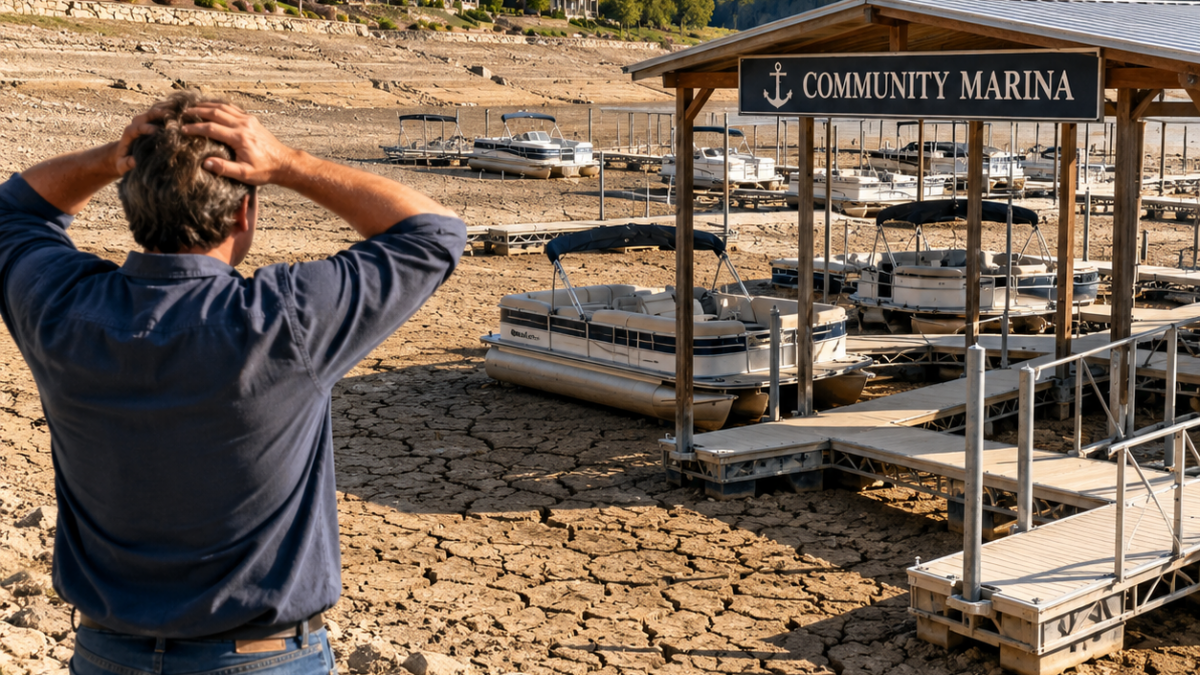
PART 2
“How far would the reservoir drop,” Clara asked, “if you diverted the entire northern stream into the hay fields?”
I didn’t answer immediately.
Not because I didn’t know.
Because I did.
Engineers spend their lives learning not to guess when numbers are available.
I had flow records dating back decades. I knew the reservoir’s surface area, storage curve, inlet rates, evaporation losses, outlet geometry, and the exact elevation at which the eastern shallows began exposing lakebed.
I stood from the kitchen table, went to the filing cabinet, and pulled out my maintenance notebook.
“Under current conditions?” I asked.
“Yes.”
“Maybe fourteen feet over seventy-two hours.”
Clara stared at me.
“Fourteen?”
“Approximately.”
“And the marina?”
I pictured it.
The floating dock had been installed in one of the shallowest parts of the basin because shallow installation meant shorter pilings and cheaper construction.
“At eleven feet down,” I said, “most of their flotation bottoms out.”
“The ramp?”
“Dry long before that.”
She leaned back.
Neither of us said anything for several seconds.
Then Clara looked at the decree again.
It was the same document I had obtained in 1976.
WD-1976-008.
A number I had written, copied, referenced, and filed so many times I could have recited it in my sleep.
The decree recognized our family’s water use priority dating back to 1952 and authorized diversion of both streams for beneficial agricultural use on the Crane property.
No HOA approval.
No neighboring landowner approval.
No requirement that I preserve a recreational lake level.
The reservoir existed because of my agricultural water right.
Not the other way around.
Clara tapped the page.
“Before you touch that valve, we verify everything.”
“That was my intention.”
“I mean everything.”
“I know what you mean.”
She smiled faintly.
“You’re the reason I became an attorney.”
“And you’re the reason I keep paying for toner.”
That got a laugh out of her.
It was the first laugh either of us had managed since she arrived.
Then she became serious again.
“This can’t look retaliatory.”
I looked at her.
“It isn’t.”
“I know that. But Diane will call it that.”
“My western fields need irrigation.”
“Then document it.”
“I already do.”
“I know.”
She glanced toward the filing cabinet.
“You document breakfast.”
“That’s how you win arguments forty years later.”
She smiled again.
That afternoon she called Boyd Whitaker, a property attorney she trusted.
Boyd had practiced agricultural and water law for twenty-six years and had the irritating habit, common among very good attorneys, of asking questions whose importance did not become obvious until later.
He wanted four things.
The decree.
The reservoir permit.
My 1984 boundary survey.
And every piece of correspondence involving the developer or HOA.
Clara scanned them.
The 2007 objection.
The developer’s reply.
The 2009 objection.
The HOA’s reply.
The original marketing documents.
Diane’s new demand.
By the following Thursday, Boyd called us.
Clara put him on speakerphone at the kitchen table.
“I searched everything,” he said.
“How everything?” I asked.
“County deed index. Easements. Development records. State water registry. Permit archives. Developer name. Successor company. HOA. Your parcel. Their parcel.”
“And?”
“There is no easement.”
I looked at Clara.
She had expected the answer.
So had I.
Still, hearing it from an independent attorney changed the weight of the room.
Boyd continued.
“There is also no recreational corridor, no recorded agreement, no license, no conveyance, and no instrument granting Harbor View Estates any right to use the reservoir.”
“What about the agreement their permit application claimed existed?” Clara asked.
“Doesn’t exist.”
“Anywhere?”
“Nowhere I can find.”
His tone changed slightly.
“Emmett, that statement appears to have been false when the application was submitted.”
I looked through the kitchen window.
The reservoir was almost full.
Sunlight lay across the water like a sheet of metal.
Boats moved near the eastern shore.
People who had bought houses believing they owned access to something my father and I had built were enjoying a warm afternoon.
I didn’t hate those residents.
That part mattered.
Most had probably been told the same story.
They bought homes.
Paid dues.
Received welcome packets showing a marina.
They trusted their developer.
Then they trusted their HOA.
Their mistake was understandable.
Diane’s was becoming harder to excuse.
Boyd kept talking.
He had reviewed the building permits for both the marina and pavilion.
Neither contained proof that the HOA owned the land beneath the structures.
The county had approved construction based largely on what the applicant claimed.
No one had checked my deed.
No one had checked my survey.
No one had checked the water decree.
Fifteen years of assumptions had been stacked on top of one another until everyone inside the development treated those assumptions like law.
Then Boyd said something that made Clara reach for her pen.
“I also read the diversion language.”
She looked at me.
Boyd continued.
“Emmett holds the right to divert the northern stream for beneficial use on the Crane property up to the adjudicated amount. There’s no notice requirement to the HOA, neighboring owners, or the state before exercising that right.”
“That’s my reading,” Clara said.
“It’s mine too.”
Boyd paused.
“Before anyone does anything, though, I want a hydrologist.”
I frowned.
“I can calculate the drawdown.”
“I know you can.”
“Then why—”
“Because when Diane alleges you destroyed a community amenity, I don’t want the critical hydraulic analysis coming only from the man she’s suing.”
I stopped arguing.
That was why Clara liked him.
Three days later, Sylvia Oaks arrived at 7:15 in the morning with a field truck full of equipment.
She was a state-certified hydrologist with eighteen years of experience and no interest whatsoever in neighborhood politics.
She measured the stream.
Then measured it again.
She surveyed the reservoir shallows.
Measured dock flotation.
Checked the boat ramp grade.
Ran bathymetric transects.
Asked me about valve settings.
Asked for historical flow records.
Asked for maintenance logs.
At one point, I tried to explain why the HOA and I were fighting.
She raised one hand.
“I don’t need to know who’s angry at whom.”
I stopped.
She pointed at the reservoir.
“I need to know what the water will do.”
I liked her immediately.
Her report arrived the following Friday.
Nineteen pages.
Sealed.
Signed.
Boring enough to make most people’s eyes glaze over.
Beautiful to me.
Her calculations came within inches of mine.
Full diversion during dry-season conditions would lower the reservoir approximately fourteen feet over seventy-two hours.
The dock would begin losing functional flotation well before maximum drawdown.
The launch ramp would become useless early.
At full projected drawdown, the waterline would sit roughly fifty-eight feet beyond the bottom of the ramp.
The pavilion would overlook exposed silt instead of open water.
Sylvia had even included a cross-section.
One drawing showed the reservoir full.
Dock floating.
Ramp submerged.
Water at the pavilion.
The second showed the same shoreline after diversion.
Dock sitting in mud.
Ramp ending nowhere.
Water far away.
Clara studied it.
“That picture is going to make somebody very unhappy.”
“It’s not a picture,” I said.
“It’s an engineering section.”
She gave me the look my late wife used to give me whenever I was being technically correct in a way no normal person appreciated.
“Yes, Grandpa. That engineering section is going to make somebody very unhappy.”
Boyd drafted our response to Diane.
Four paragraphs.
No insults.
No threats.
No dramatic language.
Crane Reservoir was my private property.
The HOA’s demands were rejected.
The marina, ramp, and pavilion had been installed without any recorded right.
And no future demand would be considered unless the HOA could produce the easement it claimed existed.
We attached the decree.
The permit.
The boundary survey.
And Boyd’s record search.
I mailed the packet certified.
Then I waited.
Diane received it Monday.
What happened next, I learned later through discovery and the HOA board minutes.
She called the HOA’s regular attorney.
He told her water law was outside his practice and referred her to a specialist.
That specialist reviewed our documents.
Then he independently searched the records.
His conclusion matched ours.
The HOA had no recorded access right.
The marina was on private property.
The developer’s claimed agreement could not be found.
And the wisest course was immediate negotiation.
He warned Diane that continuing to operate the marina increased the HOA’s exposure.
He told her to seek a legitimate easement before the problem got worse.
That should have ended it.
Instead, Diane searched the internet for another answer.
She found the phrase “prescriptive easement.”
Long-term use, she apparently believed, could turn fifteen years of trespassing into ownership rights.
She called the attorney and asked about it.
He explained the problem.
A prescriptive-right claim depended on facts and state law, but my written objections were devastating to the theory.
“Did Mr. Crane ever object in writing?” he asked her.
Diane admitted I had sent a letter in 2009.
He told her to send it immediately.
She went into the HOA files the next morning.
And found it.
My old certified letter was still there.
Three paragraphs.
Private property.
No access right.
No permission.
The mail receipt was attached.
Diane read it.
Then she did something that changed the entire case.
She did not send it to her attorney.
Instead, she called an emergency board meeting.
There were three voting members.
Diane.
Carol Brennan, who had only recently joined.
And Marcus Fell.
Marcus was a former municipal infrastructure planner.
He understood documents.
Before Diane sent the first demand to me, Marcus had already asked one basic question.
Where is the recorded easement?
She never gave him one.
Now she asked the board to approve a second demand claiming fifteen years of continuous use had created prescriptive rights.
Carol voted yes.
Marcus voted no.
Then he insisted his objection be entered in the minutes.
His statement was simple.
He had searched the public records.
He had found no easement.
He had previously asked Diane for one.
She had not produced it.
And he warned that the board should review any written objection from me before claiming continuous adverse use.
Then he looked directly at Diane.
“Is there an objection letter in our files?”
According to the minutes, she said yes.
“Have you read it?”
“Yes.”
That one word would matter later.
The second HOA letter reached me Saturday morning.
I opened it beside my mailbox.
For the first time in years, I felt genuine anger.
Not irritation.
Not professional disagreement.
Anger.
They were threatening to sue me for interfering with access to my own property.
They ordered me to preserve the reservoir level.
They repeated the dredging and lighting demands.
Then they gave me thirty days to comply.
I read the letter twice.
Folded it.
Drove back to the farmhouse.
And called Clara.
“Second letter came.”
“What are they claiming?”
“Prescriptive easement.”
There was silence.
“How long to comply?”
“Thirty days.”
Another pause.
Then my granddaughter said four words.
“Now we file first.”
Boyd’s complaint went to court Monday morning.
Forty-one pages.
Nine exhibits.
Three major claims.
The first concerned the unauthorized structures.
Fifteen years of marina operation on my lakebed.
The dock.
The ramp.
The pavilion.
No easement.
No license.
No compensation.
No consent.
The second concerned interference with my water rights.
Diane had demanded I maintain water levels to benefit a recreational marina, effectively telling me not to use agricultural water in the manner authorized by my decree.
The third attacked their prescriptive claim.
Boyd attached both certified objections.
Their entire legal theory depended on acting as though those letters did not exist.
Now they were exhibits.
The complaint was served before noon.
At 9:15 that same morning, I was standing beside the eastern inlet valve.
I had checked the western hay fields.
They needed water.
I had checked the stream.
Approximately 2.1 cubic feet per second.
I checked the diversion mechanism.
Perfect condition.
I had serviced it in February.
The steel wheel felt familiar in my hands.
I had designed that structure when my beard was still dark.
I thought about my father digging primitive ditches with a shovel.
I thought about the summer we built the reservoir.
I thought about my wife bringing lemonade down to the crew.
I thought about all the years she had sat beside me on the porch looking across that water before cancer took her in 2017.
The HOA saw a lifestyle amenity.
I saw forty years of work.
I saw my father’s problem solved.
I saw engineering.
I saw a family history.
And I saw hay that needed irrigating.
At 9:20, I turned the valve.
Metal moved against metal.
The stream changed direction.
Instead of entering the reservoir, the northern flow moved into my field system.
I watched for half a minute.
Checked the downstream residual.
Then wrote the time in my field notebook.
9:20 a.m.
Full diversion.
Authorized agricultural use.
No notification required.
I got in my truck and drove home.
Nothing exploded.
No sirens.
No dramatic rush of water.
That was the beautiful part.
The revenge Diane expected would have looked angry.
What happened instead looked like routine maintenance.
Water simply stopped arriving.
By Tuesday evening, the reservoir was noticeably lower.
Clara had driven up after the court filing.
We walked to the western ridge around five.
From there, we could see the whole basin.
“The dock is dropping,” she said.
“Six feet down.”
“How much farther?”
“Eight.”
She folded her arms.
“You sure about this?”
I looked at her.
“Legally?”
“No.”
She looked toward me.
“Personally.”
That was harder.
I put my hands in my pockets.
“I don’t enjoy what this does to the residents.”
“I know.”
“They were lied to too.”
“I know.”
“But if I back down because they built enough money on top of somebody else’s property, then the lie becomes permanent.”
Clara nodded.
My wife would have understood that.
Margaret had been gentler than I was, but not weaker.
Once, when our daughter was young, a neighbor repeatedly cut through our field because the route saved him five minutes.
I kept saying it wasn’t worth an argument.
Margaret finally told me, “If you keep letting somebody borrow a boundary, one day they’ll forget it was yours.”
I hadn’t thought about that sentence in years.
Now I could hear her voice perfectly.
By Thursday morning, the marina was dying.
Two residents arrived with boats around 7:30.
Their trailers rolled down the concrete ramp.
Then stopped.
The ramp ended in mud.
The water was still yards away.
One man climbed out of his truck and simply stared.
His wife walked to the dock.
Several slips were resting directly on exposed silt.
“What the hell happened?”
I heard that question later from half a dozen people.
By ten o’clock, the waterline was nearly sixty feet beyond the ramp.
By noon, the pavilion had become an observation deck overlooking gray mud.
Patricia Miller, a resident from the second row of homes, took a picture.
She posted it to the neighborhood forum.
WHERE IS THE WATER?
Within an hour, nearly everyone in Harbor View Estates seemed to be online.
Some blamed drought.
Others suspected a broken dam.
Several demanded emergency action.
Then somebody looked at the county parcel map.
“This lake isn’t on HOA land.”
Someone else posted the tax parcel.
Another resident found the water registry.
And at four in the afternoon, Marcus posted something much more damaging.
A link to the county easement search.
Blank.
Under it he wrote:
There is no recorded easement for this reservoir in the county record.
That was when Diane drove to my property.
She didn’t come alone.
Several residents followed.
I was near the valve housing checking field pressure when I saw them approaching from the county-road side.
Diane wore a cream-colored jacket and sunglasses pushed on top of her head.
She looked furious.
“Mr. Crane!”
I closed my notebook.
“You need to reverse this immediately.”
“What?”
“The lake.”
“It’s a reservoir.”
“Whatever you want to call it.”
“I call it what the permit calls it.”
A man behind her interrupted.
“Can you please just tell us what’s happening?”
His tone was different.
Worried.
Not hostile.
I answered him instead.
“I diverted one feeder stream into my irrigation system.”
Diane stepped closer.
“You drained our marina.”
“No.”
“You absolutely did.”
“I used my water.”
She laughed once, but there was no humor in it.
“You cannot seriously believe you have the right to destroy a community amenity because of a paperwork dispute.”
That sentence almost did what nothing else had done.
Almost made me lose my temper.
“Paperwork dispute?”
“Yes.”
I looked toward the exposed basin.
“Your entire marina exists because nobody bothered to read the paperwork.”
She opened her mouth.
I kept going.
“My deed is paperwork.”
I pointed toward the reservoir.
“My permit is paperwork.”
I pointed toward the inlet.
“My water decree is paperwork.”
Then toward the mud beneath her marina.
“My boundary survey is paperwork.”
I looked at her.
“Property ownership is paperwork, Ms. Hollis.”
The residents behind her had gone quiet.
One woman asked, “Did the HOA know this wasn’t community property?”
Diane immediately turned.
“Our legal position is that the community has acquired permanent access rights through long-standing use.”
I looked at her.
“Then let the court decide.”
“You’re punishing two hundred ten homeowners.”
“No.”
I shook my head.
“I’m irrigating hay.”
She stared at me.
“You expect people to believe this is farming?”
I gestured toward the field lines.
Water was moving through the western system exactly as it had been designed to do.
“You’re welcome to look.”
Her face changed.
Not much.
But enough.
Because that was the moment she realized the water hadn’t vanished.
It had gone somewhere useful.
Somewhere legal.
Somewhere documented.
One of the men walked toward the fence line and looked across the hay ground.
“You’re really using it.”
“Yes.”
He looked back at the reservoir.
“So if he has the water rights…”
Diane cut him off.
“This is an active legal dispute. Nobody should draw conclusions based on Mr. Crane’s statements.”
Another resident said, “Then show us the easement.”
Nobody spoke.
I looked at Marcus, who had just arrived at the back of the group.
He didn’t smile.
He didn’t need to.
Diane turned toward him.
“Not here.”
Marcus answered calmly.
“This is exactly where we should discuss it.”
She lowered her voice.
“You’re a board member.”
“Yes.”
“Then act like one.”
“I am.”
The resident who had asked about the easement repeated his question.
“Does the HOA have one?”
Marcus looked at Diane.
She looked at me.
Then at the residents.
Finally she said, “The matter is legally complex.”
Marcus answered.
“No recorded easement has been found.”
A murmur moved through the group.
Diane turned red.
I had spent most of my professional life in rooms where one badly supported assumption could ruin a million-dollar project.
The sound people make when they realize an assumption has failed is always the same.
Silence first.
Then questions.
Lots of questions.
A state water authority truck arrived around 2:30.
Ray Cobb stepped out.
Ray had been an inspector long enough that nothing about him moved quickly unless it needed to.
Diane walked directly toward him.
“Thank God.”
Ray looked at her.
“Ma’am?”
“This man is draining a residential lake.”
Ray glanced at me.
Then at the valve.
Then at his folder.
“Mr. Crane is exercising diversion rights under decree WD-1976-008.”
“You already knew?”
“His attorney provided professional courtesy notice that complaints might be received.”
Diane seized on the word.
“Notice. So permission was required.”
“No.”
Ray opened his folder.
“Notice was not required.”
She blinked.
“Then stop the diversion.”
“I have no regulatory basis to do that.”
“This is destroying property values.”
“That’s not within my authority.”
“Hundreds of people use this lake.”
“That also doesn’t change the decree.”
She stared at him.
Ray continued in the same tone.
“The reservoir is a private impoundment. The diversion is within the authorized water right. I’ve inspected the valve. I’ve reviewed the decree. There is no violation.”
One resident asked, “So the HOA never owned the water?”
Ray considered his words.
“The state water authority does not determine your private access arrangements. I can tell you that Mr. Crane holds the recorded water right and the reservoir permit.”
Diane crossed her arms.
“This is unbelievable.”
Ray closed his folder.
“Records are public.”
That ended the conversation.
By Friday, the neighborhood forum had become a war zone.
Screenshots of the developer’s old brochures appeared beside county records.
Residents compared what they had been promised to what had actually been recorded.
Some were furious with me.
I understood.
Their view had become mud.
Their boats were unusable.
Some had paid premiums specifically for “lakefront” property.
One man posted that he had spent twelve thousand dollars renovating his dock-side equipment locker.
Another had bought his house only six months earlier.
But anger slowly shifted.
People began asking what the HOA had known.
That question led to Marcus.
And Marcus had documents.
The emergency board meeting began at five Friday evening.
I was not there.
I learned the details afterward.
Diane arrived first.
Carol next.
Marcus last.
He brought a manila folder.
He placed my 2009 objection letter on the table.
Then he placed his unanswered emails beside it.
According to Marcus, Diane looked at the documents for several seconds.
Then said, “We need to focus on stabilization.”
Marcus asked, “When did you find this letter?”
She knew which one he meant.
“This week.”
“Before the vote?”
She didn’t answer immediately.
“Before the vote?”
“Yes.”
Carol looked between them.
“What letter?”
Marcus slid it across the table.
Carol read it.
Then looked at Diane.
“You told me we had fifteen years of uncontested use.”
“I said we had fifteen years of continuous use.”
“You said it created rights.”
“Our attorney discussed prescriptive rights.”
Marcus interrupted.
“No, he didn’t.”
Diane stared at him.
“You weren’t on that call.”
“No. But I called him this afternoon.”
The room went still.
Diane’s face changed.
Marcus had phoned the water-law specialist whose firm name Diane placed on the second demand letter.
The attorney had not written it.
He had not approved it.
And he had specifically advised settlement after seeing my recorded documents.
Worse, when Marcus sent him my 2009 objection letter, the attorney immediately confirmed what he had already told Diane.
The prescriptive claim was untenable.
Carol whispered, “Diane…”
Diane straightened.
“We were defending the community.”
Marcus answered.
“You were defending a marketing brochure.”
“You have no idea what happens if we admit this.”
“I know exactly what happens if we don’t.”
Marcus pointed through the common-room windows toward the reservoir.
Although the water itself wasn’t visible from there, everyone knew what the marina looked like.
“Our boats are sitting in mud because we threatened the man who controls the legally permitted water system.”
“He did this deliberately.”
“He exercised a right we demanded he surrender.”
“He retaliated.”
“His fields are being irrigated.”
“He could have waited.”
Marcus stared at her.
“Waited for what?”
Diane didn’t answer.
“For us to sue him?”
Nothing.
“For us to establish rights that our own files show we never had?”
Carol pushed the objection letter away from herself as though it were hot.
“Why didn’t you show me this before I voted?”
“I was trying to protect property values.”
“You let me sign something our attorney told you was wrong.”
“I made a judgment call.”
Marcus leaned back.
“No.”
His voice remained quiet.
“You hid a document.”
That was the end of Diane’s presidency.
She did not resign that night.
She went home.
But Sunday at 8:43 in the morning, an email reached the board.
Two sentences.
Effective immediately.
She wished the community well.
Marcus became interim president at noon.
At one o’clock, he called Boyd.
Boyd let him speak first.
Marcus said, “We’re not contesting ownership.”
Boyd waited.
“We’re not contesting the water rights.”
More silence.
“We’re withdrawing the prescriptive claim.”
Boyd finally asked, “What are you proposing?”
Marcus answered with the only useful question anyone from that HOA had asked since the dispute began.
“What does Mr. Crane need to settle?”
Boyd came to the farmhouse that afternoon.
Clara joined us remotely.
I sat at the same kitchen table where I had designed pieces of the reservoir system more than forty years earlier.
Boyd laid out options.
“We can litigate.”
“How long?” I asked.
“Could be years.”
“I’m seventy-nine.”
“I know.”
“What would winning look like?”
“Declaratory judgment. Removal. Damages. Potential fee recovery. Additional claims against the developer’s successor.”
“And settlement?”
“We make the record impossible to misinterpret ever again.”
That interested me more.
I had never wanted to bankrupt two hundred ten homeowners.
I didn’t want retirees receiving special assessments because their board president had refused to read a deed.
I wanted the problem fixed.
Permanently.
“Tell Marcus six things,” I said.
Boyd lifted his pen.
“First, the marina goes.”
“All of it?”
“The dock. Ramp. Pavilion. Anything inside my boundary.”
He wrote.
“Second, they restore the shoreline.”
“To what standard?”
“Pre-marina condition. Licensed supervision.”
Boyd nodded.
“Third, I want a recorded acknowledgement.”
Clara spoke from the laptop.
“Not just a settlement agreement.”
“No.”
I looked toward the window.
“I want future buyers to find the truth before they buy.”
Boyd nodded again.
“Recorded against the HOA parcel and referenced against yours.”
“Exactly.”
“Fourth?”
“The document calls it Crane Reservoir.”
Boyd almost smiled.
“Not Harborview Lake?”
“They can call the moon whatever they want in their newsletter. The county record uses the legal name.”
Clara laughed softly.
“Fifth?”
“They acknowledge my diversion right.”
“Permanent?”
“Yes.”
“No future minimum-level demand?”
“None.”
“And six?”
I stopped.
This one mattered differently.
“The developer.”
Boyd waited.
“They sold those families lake access they didn’t own.”
“Yes.”
“Don’t make the residents carry all of that.”
Boyd looked at me for a long moment.
“You want compensation shifted toward the developer’s successor.”
“I want the people who created the lie to pay for the lie.”
That became the most difficult part of negotiations.
The HOA wanted out quickly.
The developer’s successor did not.
Their attorneys argued that the current company had inherited assets, not necessarily every misrepresentation associated with a project from years earlier.
Boyd responded with the 2006 permit application.
Existing recreational water corridor per prior agreement with adjacent landowner.
Then my 2007 certified objection.
There had been no agreement.
The developer had been told so before much of the project was sold.
Boyd was ready to ask a judge why marketing continued afterward.
Suddenly, settlement became much more attractive.
Residents also began asking their own questions.
Some hired attorneys.
Others pulled purchase documents.
The sixty lakefront-unit owners discovered repeated references to “community lake access,” “marina privileges,” and “exclusive waterfront amenities.”
The development had charged premiums based partly on those representations.
The situation stopped being Emmett Crane versus Harbor View Estates.
It became residents asking their developer and HOA who had sold them something nobody had owned.
Marcus came to see me two days later.
Alone.
He parked near the farmhouse and walked onto the porch carrying no folder.
That surprised me.
People had been visiting me with folders for weeks.
“Coffee?” I asked.
“Please.”
We sat outside.
The reservoir was still low.
I had reduced the diversion after the western fields received what they needed, but had not fully restored inflow pending final settlement terms.
From the porch, the exposed shoreline looked raw.
Marcus stared at it.
“I owe you an apology.”
“You asked for the easement.”
“I should have pushed harder.”
“You pushed more than anybody else.”
“Not enough.”
I poured his coffee.
“That’s a dangerous way to judge yourself.”
He looked at me.
“How?”
“By pretending you knew then what you know now.”
He considered that.
“My wife says the same thing.”
“She sounds sensible.”
“She is.”
We sat quietly.
After a while he said, “People are angry.”
“I know.”
“Some at you.”
“I know.”
“A lot at Diane.”
I said nothing.
“And now at the developer.”
“That makes more sense.”
He smiled slightly.
“You really don’t enjoy this, do you?”
“What?”
“Winning.”
I looked across the fields.
“I enjoy irrigation systems working.”
“That wasn’t what I meant.”
“I know.”
He waited.
Finally I said, “My wife died nine years ago.”
“I’m sorry.”
“Margaret hated grudges.”
I rubbed my thumb against the coffee mug.
“She used to tell me anger is expensive because you pay for it long after the other person goes home.”
Marcus nodded.
“So no, I don’t want Diane ruined.”
“Even after this?”
“I want her stopped.”
There was a difference.
It mattered to me.
“I want the records corrected. I want the structures off my property. I want those homeowners to know the truth. And I want nobody ever sending another letter telling my granddaughter that her grandfather’s life’s work belongs to an HOA because somebody printed a pretty brochure.”
Marcus looked toward the low reservoir.
“I can do that.”
“Then do it.”
Negotiations finished that week.
The HOA agreed to remove the marina within ninety days.
The pavilion and ramp would follow.
The shoreline restoration would be supervised by a hydrologist.
A permanent recorded acknowledgement would state that Crane Reservoir, its lakebed, and eastern shoreline were private Crane property.
The HOA formally withdrew every claim of recreational easement.
It acknowledged my 2007 and 2009 objections.
It acknowledged that no community access right had ever been recorded.
It agreed not to interfere with my lawful water diversions.
The developer’s successor agreed to a confidential compensation package addressing years of unauthorized use and the misrepresentations associated with the access claim.
Part of that money went toward reducing the HOA’s restoration burden so residents would not absorb all of it through assessments.
That had been important to me.
Boyd also insisted the county planning archive be corrected.
The old application could not simply remain there implying a valid agreement had once existed.
Marcus personally submitted the administrative correction.
A notation was attached to the file referencing the settlement and confirming that the claimed prior agreement had not been substantiated.
Clara read every page before I signed.
So did I.
Six instruments.
Six signatures.
When I finished the last one, the clock said 3:44 Thursday afternoon.
Boyd closed the folder.
“That’s it.”
I looked at him.
“That’s it?”
“That’s it.”
After months of letters, lawyers, surveys, hydrology reports, filings, arguments, accusations, and water calculations, I had expected something louder.
Maybe relief should make noise.
It didn’t.
It felt like silence.
I shook Boyd’s hand.
Then Clara hugged me.
“You okay?”
“I’m hungry.”
She laughed into my shoulder.
“That means yes.”
I drove home.
But I didn’t go inside.
I continued past the farmhouse.
Down the service road.
Toward the eastern inlet.
The valve housing stood exactly where it had stood since 1983.
Weathered concrete.
Steel access panel.
Grease marks around the mechanism.
Nothing impressive.
No decorative stonework.
No Harborview Lake sign.
Just infrastructure.
I put my hand on the wheel.
For a moment I remembered the first time I had operated it.
Margaret had been there.
She stood near the bank wearing my old canvas jacket because the morning was colder than expected.
Our daughter was still young enough to complain that there was nothing interesting about watching water go through a pipe.
Dad had already been sick.
But he came down anyway.
When the system finally worked, he watched the reservoir begin filling.
Then looked at me and said, “Should’ve built one thirty years ago.”
That was Dad.
Compliments usually arrived disguised as criticism.
I laughed aloud at the memory.
There was nobody there to hear it.
Friday morning, I returned at 6:14.
The settlement was effective.
The western hayfields had received enough water.
I turned the valve back.
The gate moved.
The sound of the stream changed.
Water that had been traveling toward the western fields redirected through the inlet.
Seconds later it began entering Crane Reservoir again.
No cheers.
No ceremony.
No reporters.
Just water.
I walked down to the bank.
The reservoir looked wounded at that low level.
Mud flats exposed.
Dock still resting awkwardly in the shallows.
Tracks from equipment near the old launch area.
But the inflow was steady.
It would refill.
Not instantly.
Not overnight.
That was fine.
Some things should take time.
I stood there longer than necessary.
Then drove to the farmhouse.
My logbook was still on the kitchen table.
I opened it.
Friday.
6:14 a.m.
Eastern inlet restored to reservoir.
Reservoir filling.
Matter closed.
I stopped after writing those words.
Matter closed.
For fifteen years, I had tolerated structures on my property because confrontation seemed less useful than documentation.
Maybe that had been a mistake.
Maybe not.
People like Diane often believe patience is weakness because nothing dramatic happens while a patient person is preparing.
They see silence and assume surrender.
They see an old farmer and assume he doesn’t understand paperwork.
They see water and assume it belongs to whoever bought the nicest view.
But land remembers boundaries even when people ignore them.
Records remember signatures.
And water obeys gravity, not marketing departments.
Two weeks later, Clara came back.
The reservoir was rising.
We walked the western ridge in the evening.
Below us, contractors had begun dismantling the marina.
One section at a time.
The dock boxes labeled HARBORVIEW LAKE were stacked beside the work area.
The first time I saw them piled there, I felt something unexpected.
Sadness.
Clara noticed.
“What?”
“Nothing.”
“You’re staring.”
I pointed.
“People made memories down there.”
She looked at the marina.
“Probably.”
“Kids learned to fish.”
“Probably.”
“Couples sat on that dock.”
“Yes.”
“None of that was wrong.”
Clara looked at me.
“No.”
“The lie underneath it was.”
She slipped her arm through mine.
“That’s why you didn’t sue the residents.”
“No.”
“That’s why you pushed compensation toward the developer.”
I nodded.
For a while we just stood there.
Then Clara said, “We could create legal access someday.”
I looked at her.
“What?”
“A small one.”
She spoke carefully.
“Not for the HOA as an entitlement. Your choice. Maybe a limited conservation or youth fishing program. Recorded correctly. Controlled correctly.”
I stared at the reservoir.
“You’ve been talking to your mother.”
“Maybe.”
“My daughter always did like volunteering me for things.”
Clara laughed.
I thought about it.
Not then.
Too soon.
But someday?
Maybe.
The mistake had never been people enjoying the water.
The mistake was people deciding enjoyment created ownership.
There was enough room in my world for generosity.
There just wasn’t room for entitlement disguised as law.
By late summer, the dock was gone.
The pavilion came down after that.
Contractors removed the ramp carefully and regraded the shoreline.
Sylvia returned twice to supervise restoration.
Native vegetation was replanted.
The disturbed bank was stabilized.
Old pilings were extracted.
Every completion stage was photographed, surveyed, and documented.
Naturally, I kept copies.
Clara accused me of having enough records to prosecute the next century.
I told her the next century could buy its own filing cabinet.
Marcus remained HOA president through the following election.
He did something Diane never had.
He created a property-rights verification policy.
Before the HOA claimed control over any road, drainage area, recreational facility, boundary feature, or utility corridor, somebody had to produce the recorded instrument supporting that claim.
Not a brochure.
Not a welcome packet.
Not “we’ve always used it.”
A document.
Residents approved the policy overwhelmingly.
The HOA entrance sign changed too.
The words HARBORVIEW LAKE COMMUNITY were removed from the amenity panel.
Nobody asked me what I thought about that.
They didn’t need to.
The county record said enough.
Diane sold her home the following spring.
I saw the listing.
The description mentioned “reservoir views.”
Not lake access.
That small wording change made me smile more than it probably should have.
We never spoke again.
I didn’t need an apology.
Her resignation, the recorded withdrawal, and the corrected documents were enough.
The developer settlement remained mostly confidential.
But the residents knew enough.
They knew they had been sold an amenity the developer never secured.
Several homeowners received negotiated adjustments through separate claims.
The HOA avoided the catastrophic special assessment people had feared.
And property values, despite all the predictions of collapse, stabilized.
The houses still had mountain views.
Trails.
Open space.
A quiet rural setting.
It turned out their neighborhood had never needed to own my reservoir in order to be worth living in.
That lesson may have been the most expensive one of all.
One evening the following year, I sat on the porch while the reservoir reflected the sunset.
No marina.
No pavilion.
No boats.
Just water.
Clara had driven up for the weekend.
She brought a folder.
I groaned when I saw it.
“No.”
“You haven’t even looked.”
“I’m retired.”
“You’ve been retired for years.”
“Exactly. I’m experienced at it.”
She sat beside me.
The folder contained a draft conservation access agreement.
Four Saturdays each summer.
Local schoolchildren.
Catch-and-release fishing from a small designated shoreline area.
No permanent structures.
No motorized boats.
Supervised access only.
Revocable under specific conditions.
Every boundary stated.
Every right limited.
Every responsibility assigned.
Every document recordable.
I read all eleven pages.
Clara waited.
Finally I said, “Page seven.”
“What?”
“Insurance language is vague.”
She stared at me.
Then burst out laughing.
“You’re impossible.”
“Fix page seven.”
“So that’s a yes?”
“I didn’t say that.”
“You’re editing it.”
“That’s different.”
She closed the folder.
Three months later, twelve kids stood along the western shoreline holding fishing rods.
One little boy caught nothing for three hours and declared it the best day of his life.
A girl named Sophie caught a small trout, screamed so loudly I thought she had been bitten by a snake, then refused to touch the fish.
I helped her release it.
As it disappeared beneath the surface, she looked up at me.
“You own the whole lake?”
“Reservoir.”
“The whole reservoir?”
I looked across the water.
Legally, the answer was simple.
But I thought about Dad.
Margaret.
My daughter.
Clara.
The farmers who had worked this ground.
The residents who had once believed a brochure.
The children fishing under an agreement drafted correctly this time.
“I’m responsible for it,” I told her.
She considered that.
Apparently it was close enough.
Years earlier, Diane had stood in nearly the same place and demanded I maintain “her” lake.
She believed ownership came from repetition.
Call something a community amenity often enough.
Print it often enough.
Charge for it long enough.
And eventually everybody forgets to ask the oldest and simplest question.
Whose is it?
I never forgot.
Neither did my files.
And when forty years of quiet documentation finally met fifteen years of assumptions, I didn’t need to yell.
I didn’t need to tear down their marina in the middle of the night.
I didn’t need to threaten anybody.
I turned one legal irrigation valve.
The water went exactly where the decree said it could go.
The marina settled into the mud.
The residents started asking questions.
The documents answered them.
And when the truth finally reached the county record, I turned the valve back.
The reservoir filled again.
That evening after the children left, Clara and I sat on the porch while the last sunlight faded across Crane Reservoir.
She looked toward the water.
“Grandpa?”
“Yeah?”
“Do you ever regret waiting fifteen years?”
I thought for a long time.
“Sometimes.”
She waited.
“Then I remember something your grandmother used to say.”
“What?”
I looked at the reservoir, full again, quiet beneath the darkening sky.
“Being patient doesn’t mean letting people take what’s yours.”
Clara smiled.
“What does it mean?”
I closed the logbook sitting beside my chair.
“It means making sure that when you finally stand your ground, you’re standing on something nobody can move.”
And this time, when I looked across the water, there were no signs calling it Harborview Lake.
No unauthorized dock.
No HOA pavilion.
No argument about who controlled the shoreline.
Just Crane Reservoir.
My father’s land.
My family’s water.
And a system that, after everything, was finally working exactly the way it had been designed to work.
The following spring, I learned that winning a property dispute and healing from one were two very different things.
The legal fight was over.
The marina was gone.
The shoreline had been restored.
The county records were corrected.
The developer’s successor had paid its share of the settlement, and the HOA had formally surrendered every claim it had ever made against Crane Reservoir.
On paper, everything was clean.
Life, however, rarely fits inside a recorded instrument.
There were still people in Harbor View Estates who blamed me for what had happened.
Not many.
But enough.
One April morning, I found a handwritten note tucked beneath the windshield wiper of my truck while I was buying fertilizer at the county co-op.
YOU RUINED OUR COMMUNITY.
No signature.
I read it twice.
Then folded it and put it in my shirt pocket.
Years earlier, something like that would have made me angry.
At seventy-nine, anger took too much energy.
I had irrigation lines to inspect.
By noon, I had almost forgotten about it.
Almost.
That afternoon, Marcus called.
“You hear about the petition?”
“What petition?”
A long silence followed.
“That answers my question.”
Apparently, twelve residents had submitted a proposal asking the HOA to pursue “restoration of recreational water privileges” through a voluntary agreement with me.
The wording was careful.
Nobody claimed ownership anymore.
Nobody used the phrase established amenity rights.
Nobody threatened litigation.
That alone told me how much had changed.
“What do they want?” I asked.
“Limited access.”
“To what?”
“The reservoir.”
I leaned against the kitchen counter.
“For boats?”
“No.”
“Marina?”
“Absolutely not.”
“Then what?”
“Fishing. Kayaks. Maybe community nature days.”
I looked through the window.
The reservoir was nearly full again.
Spring runoff had been good.
The repaired eastern shoreline had greened faster than I expected. Native sedges were beginning to establish along the shallows. Red-winged blackbirds had returned. Two mule deer had been drinking near the old pavilion site that morning.
For the first time in years, the eastern edge looked like land instead of an amenity package.
“I’m not interested in rebuilding what we just removed,” I said.
“I know.”
“Does everyone else?”
“I think so.”
“Thinking isn’t enough.”
Marcus sighed.
“You’re beginning to sound like your granddaughter.”
“No. She sounds like me.”
He laughed.
Then grew serious.
“There’s something else.”
“What?”
“The people pushing this aren’t Diane’s old crowd.”
I waited.
“It’s mostly families. Some newer owners. And a few people who were pretty angry at you during the drawdown.”
That caught my attention.
“Why would they want to negotiate with me now?”
“Because time passed.”
That was the whole answer.
And maybe the best one.
Marcus continued.
“They watched the restoration. They watched you let the school kids come out. Some of them realized you weren’t trying to keep everyone away. You were trying to stop people from pretending they owned something they didn’t.”
I said nothing.
Then he added, “Patricia Miller signed the petition.”
I remembered Patricia.
She had been one of the residents standing near Diane the day the water disappeared.
She had looked more frightened than angry.
Her home was one of the lakefront units.
Or reservoir-view units, as the real estate listings now correctly called them.
“She still live there?”
“Yes.”
“Thought she was selling.”
“She almost did.”
“What changed?”
“You should ask her.”
I didn’t.
Not then.
Two Saturdays later, Patricia appeared at the farmhouse carrying a pie.
That made me suspicious immediately.
People rarely brought pie before uncomplicated conversations.
“Apple,” she said.
“I can see that.”
She looked uncomfortable.
“I didn’t know if you liked apple.”
“I do.”
“Good.”
Neither of us moved.
Finally I opened the screen door.
“Come in.”
She sat at the kitchen table where Clara and Boyd had once spread decades of legal records.
I cut the pie.
Patricia declined a slice even though she had brought it.
That confirmed my suspicion.
She hadn’t come for pie.
“My husband wanted to come,” she said.
“Why didn’t he?”
“He’s embarrassed.”
“About what?”
She stared at her hands.
“About what he said to you.”
I remembered him now.
The man near the valve.
Blue jacket.
Boat owner.
He had been one of the angrier residents.
“He called me a thief.”
Patricia nodded.
“Yes.”
“He apologized later.”
“Not properly.”
I poured coffee.
“Properly according to whom?”
“Me.”
I nearly smiled.
Patricia took a breath.
“When we bought our house, we paid almost ninety thousand dollars more than a comparable unit on the other side of the development.”
“For water access.”
“Yes.”
“And you were told the marina belonged to the community.”
“We were told the lake belonged to the community.”
I sat opposite her.
She continued.
“Our closing packet had pictures of the marina. The agent walked us down there before we signed anything. There was a map with the water shaded blue like it was part of the development.”
“But no easement.”
“We didn’t know what an easement was.”
There was no defensiveness in her voice.
Only embarrassment.
“My husband and I had saved for twenty-two years,” she said. “We thought we were buying the house where we’d retire.”
Something in her expression changed.
“When the water dropped, we thought you had taken that retirement away from us.”
I understood more than I wanted to.
She looked toward the reservoir through the window.
“Then everything came out.”
“The records.”
“The letters.”
“The developer documents. Diane’s emails. Marcus’s meeting minutes.”
She shook her head.
“We weren’t angry because you stole something from us. We were angry because we discovered it had never been ours.”
That sentence stayed with me.
Patricia finally accepted a slice of pie.
We ate quietly.
After a while she said, “The petition isn’t asking you to give anything back.”
“There’s nothing to give back.”
“I know.”
She corrected herself.
“It’s asking whether something new can be created.”
That distinction mattered.
More than she probably realized.
“What kind of something?”
“No docks.”
“Good.”
“No permanent structures.”
“Better.”
“No motorboats.”
“Keep going.”
She smiled.
“A walking path outside the protected shoreline zone, maybe four community access days a year, supervised kayaks, fishing.”
“Who supervises?”
“That would have to be negotiated.”
“Insurance?”
“Negotiated.”
“Parking?”
“Negotiated.”
“Trash?”
She laughed.
“Negotiated.”
“You’re learning.”
“I had an expensive teacher.”
That one got me.
I laughed harder than I expected.
Patricia smiled too.
Then her face softened.
“There’s one more reason I came.”
“What?”
“My grandson.”
I waited.
“He’s eight.”
“Good age.”
“He has autism.”
I said nothing.
“He doesn’t like crowded places. Doesn’t like baseball games. Birthday parties are hard. School assemblies are worse.”
She looked down at the half-eaten pie.
“But he likes water.”
Her voice became quieter.
“When the marina existed, he used to sit at the end of the dock early in the morning before anyone else came out. He wouldn’t fish. He’d just watch the surface.”
I looked toward the reservoir.
“When the dock disappeared, he asked me every day when the water place was coming back.”
My chest tightened slightly.
“I told him the truth.”
“What truth?”
“That the dock should never have been there.”
Patricia swallowed.
“He cried.”
I could picture that.
Children understand loss long before they understand property law.
“So when I saw those school kids fishing here…”
She stopped.
I waited.
“I wondered whether there might be a way for him to sit by the water again someday without anybody pretending that sitting there means we own it.”
There it was.
Not entitlement.
A request.
The difference was enormous.
“What’s his name?”
“Ethan.”
I nodded.
“Bring Ethan next Saturday.”
Patricia looked up sharply.
“What?”
“Eight o’clock.”
“To fish?”
“If he wants.”
“He probably won’t.”
“Then don’t bring a fishing rod.”
She stared at me.
“Mr. Crane—”
“Emmett.”
Her eyes watered.
I looked away before she could turn gratitude into something larger than it needed to be.
“Eight o’clock,” I repeated.
She nodded.
“Eight.”
The following Saturday, Ethan arrived carrying binoculars almost too large for his face.
He didn’t shake my hand.
I didn’t ask him to.
He stood beside Patricia near the farmhouse while she explained that he preferred knowing exactly what would happen before it happened.
I understood that better than she probably expected.
“First,” I told him, “we walk down the west trail.”
He watched me.
“Seven minutes?”
I thought about it.
“About seven.”
“Exactly?”
“Depends how fast you walk.”
He considered this.
“Can we walk medium?”
“We can walk medium.”
That apparently satisfied him.
We walked.
He didn’t say anything for the first five minutes.
Then he noticed the inlet measuring staff.
“What are the numbers?”
“Water elevation.”
“Why?”
“So I know how high the reservoir is.”
“Every day?”
“Most days.”
“Do you write it down?”
“Yes.”
“Where?”
“In a logbook.”
That stopped him.
“You write it every time?”
“I try to.”
He looked at Patricia.
Then back at me.
“I like logs.”
I smiled.
“So do I.”
At the shoreline, Ethan sat on a flat rock.
No dock.
No boats.
No pavilion.
Just water moving gently against the bank.
For nearly an hour he said almost nothing.
He watched dragonflies.
A pair of ducks landed near the reeds.
He followed them through the binoculars until they disappeared around a bend.
Then he looked at me.
“Did you make this?”
“The reservoir?”
“Yes.”
“With a lot of help.”
“Why?”
“To save water for the farm.”
He pointed toward the hay fields.
“For that grass?”
“Exactly.”
He thought about this.
“Then why did people put boats here?”
That was a harder question than any lawyer had asked me.
“Because someone told them they could.”
“But they couldn’t.”
“No.”
“So they were lying?”
“Some people were.”
“Everybody?”
“No.”
That distinction mattered too.
“Most people believed what they were told.”
Ethan looked back at the water.
“That happens at school.”
I didn’t ask for an explanation.
After another twenty minutes, he stood.
“Can I come again?”
I glanced at Patricia.
She looked like she was trying very hard not to cry.
“We’ll figure something out,” I said.
Ethan nodded.
He accepted that.
Children sometimes handle uncertainty better than adults, provided you don’t disguise it as certainty first.
That evening, I called Clara.
“I want to revisit the access agreement.”
She was quiet.
“Because of the petition?”
“Partly.”
“What’s the other part?”
“An eight-year-old with binoculars.”
She laughed softly.
“I’m going to need more than that for a legal description.”
“You’ll get it.”
Over the next month, we built something completely different from what had existed before.
Not a marina.
Not community ownership.
Not a permanent recreational easement.
A limited revocable stewardship license.
Clara insisted on the terminology.
I insisted on reading every word.
Access would be permitted six Saturdays per year between May and September.
Twenty residents maximum per access day.
No motorized boats.
No permanent structures.
Portable kayaks only.
Catch-and-release fishing.
No alcohol.
No fires.
No commercial events.
No transfer of rights.
No claim of exclusivity.
No adverse-possession or prescriptive-right accumulation.
The agreement specifically stated that permitted use was permissive and could never become evidence of an ownership interest.
That sentence was mine.
Clara called it excessive.
I called it historical memory.
The HOA had to carry insurance.
Provide volunteers.
Remove all trash.
Respect agricultural operations.
Stay out during irrigation maintenance.
And contribute annually to shoreline conservation.
The strangest provision was Ethan’s.
Not by name.
But because of him.
We created a two-hour quiet-access period at the beginning of each scheduled Saturday.
No music.
No group activities.
No announcements.
Just people who wanted to sit beside water without noise.
When Marcus saw it, he asked where that idea came from.
“Experience,” I said.
He didn’t press.
The agreement was approved unanimously.
Not by the board.
By the whole HOA membership.
Marcus insisted on a community vote because he wanted the new arrangement to begin differently from the old one.
Transparent.
Documented.
Voluntary.
Nobody was buying a fantasy this time.
The first official stewardship day was in June.
Twenty people came.
Ethan arrived first.
At 7:58.
He checked his watch.
“You said eight.”
“It is eight.”
“It’s seven fifty-eight.”
“Then I’m early.”
He thought about it.
“That’s acceptable.”
I nearly laughed.
By noon, families were scattered along the designated shoreline.
A teenager collected litter even though there wasn’t much.
Two retirees helped me replace a section of wildlife fencing.
Patricia’s husband, Daniel, spent most of the morning avoiding me.
Finally he approached while I was checking a sprinkler riser.
“Emmett.”
“Daniel.”
He shoved both hands into his pockets.
“I owe you something.”
“If it’s another pie, your wife already covered that.”
He smiled nervously.
“No.”
I waited.
“I called you a thief.”
“You did.”
“I said you stole our lake.”
“You did.”
He winced.
“You’re not going to make this easy, are you?”
“I’m making it accurate.”
He nodded.
“I deserved that.”
Then he looked toward Ethan, who was sitting beside the water with his binoculars.
“I was wrong.”
I said nothing.
“Not just legally.”
His voice tightened.
“I was wrong about you.”
That was harder for him to say.
I could tell.
“I thought because you were willing to let the water disappear, you didn’t care what happened to anybody over there.”
He gestured toward the development.
“Then you fought to keep the settlement from landing entirely on us.”
“That seemed fair.”
“You didn’t have to.”
“No.”
“And then you let Ethan come here.”
I looked toward the boy.
“He likes the ducks.”
Daniel laughed.
“Yeah.”
A silence.
Then he said, “I’m sorry.”
This time, it sounded proper.
I held out my hand.
He shook it.
That should have been the end of it.
Instead, Daniel became one of the most reliable volunteers we had.
He knew carpentry.
By late summer, he had built portable benches for the shoreline.
Portable was important.
Nothing anchored.
Nothing permanent.
I checked.
Twice.
By the second year, the stewardship days became something I had never expected.
Not an HOA amenity.
A partnership.
Residents helped monitor invasive plants.
Children learned where irrigation water came from.
Clara gave a short talk about property rights and conservation one Saturday and somehow made a room full of teenagers listen to water law for twenty minutes.
Marcus organized a volunteer crew after a spring storm washed debris into the eastern cove.
Nobody called it Harborview Lake anymore.
Not even casually.
At first that pleased me.
Later I stopped noticing.
Then came the letter.
It arrived in November.
Not from the HOA.
From Diane Hollis.
I recognized her name immediately.
No lawyer.
No certified envelope.
Just ordinary mail.
I almost threw it away unopened.
Instead, I carried it to the kitchen table.
The letter was three pages.
Handwritten.
Diane said she had moved two counties south.
She was working part-time for a small hospitality company.
She had followed the news about the stewardship agreement through former neighbors.
Then she wrote something I had not expected.
She apologized.
Not elegantly.
Not perfectly.
But genuinely.
She admitted she had treated the development’s marketing documents as though repeating them made them legally true.
She admitted she had found my 2009 objection before the emergency board vote.
She admitted she withheld it because she believed acknowledging the truth would destroy property values and expose the HOA to claims it could not afford.
Then came the sentence I read three times.
I convinced myself that protecting the community justified hiding information from the community.
I put the letter down.
Margaret would have understood that sentence.
Not approved of it.
Understood it.
Fear makes intelligent people do remarkably stupid things.
Diane wrote that she had lost friendships.
Lost her position.
Sold her home.
Spent months blaming everyone else.
The developer.
Marcus.
Me.
The lawyers.
Then one evening she had found an old Harbor View Estates brochure in a moving box.
On the cover was the reservoir.
Blue water.
Sunrise.
The marina.
And the words YOUR LAKE. YOUR COMMUNITY.
She said she stared at it for a long time.
Then finally understood how much of her identity as HOA president had been built around defending a promise somebody else had made falsely.
She had not created the lie.
But she had chosen to protect it after learning the truth.
That part was hers.
At the end, she wrote:
I do not expect forgiveness. I only wanted the record between us to contain one truthful document written by me.
That line nearly made me smile.
Even her apology had become a record.
Maybe I had influenced her more than either of us realized.
I called Clara that evening.
“Diane wrote.”
Silence.
“Diane Hollis?”
“How many Dianes do we have?”
“What did she want?”
“Nothing.”
“That makes me suspicious.”
“She apologized.”
Another silence.
“That makes me more suspicious.”
I laughed.
Then I read parts of it to her.
When I finished, Clara said, “Are you going to respond?”
“I don’t know.”
“You don’t have to.”
“I know.”
“What do you want to say?”
That was the problem.
I didn’t know.
For three days, the letter sat on the corner of my kitchen table.
Then on Sunday morning, I wrote back.
One page.
No legal citations.
No permit numbers.
No lecture.
I told Diane that what she had done was wrong.
I told her the consequences were real.
I told her some residents had spent months frightened about their homes because she chose concealment over honesty.
Then I wrote:
But people should not be sentenced forever to the worst decision they ever made.
I paused after that sentence.
Margaret would have liked it.
I continued.
I told Diane the reservoir was full.
The shoreline had healed.
The residents had a limited stewardship program now.
Children fished there.
Ethan watched ducks.
Nothing had returned to the way it was.
Something better had been built instead.
At the bottom I wrote:
Your apology is accepted.
Not erased.
Accepted.
There is a difference.
I mailed it Monday.
We never became friends.
We never needed to.
A year later, a Christmas card arrived.
No long message.
Just a photograph of Diane standing beside two grandchildren under a tree.
Inside she had written:
Still learning the difference.
I knew exactly what she meant.
By my eighty-second birthday, the farm had begun changing too.
Age has its own property laws.
You can negotiate with neighbors.
You can negotiate with lawyers.
You can negotiate with an HOA.
You cannot negotiate indefinitely with your knees.
Clara started visiting more often.
My daughter did too.
One Sunday afternoon, the three of us sat at the kitchen table discussing what would happen to the Crane property after I was gone.
That conversation bothered me more than any court filing ever had.
I had spent my life preserving boundaries.
Now I had to decide what happened when I was no longer there to stand inside them.
My daughter didn’t want to farm.
She loved the property.
But her life was elsewhere.
Clara surprised me.
“I want to keep the reservoir.”
I looked at her.
“You want five hundred twenty acres?”
“I didn’t say I want to run hay.”
“Land doesn’t care what you want.”
She smiled.
“There are lease arrangements.”
“Tenants neglect valves.”
“Then I’ll hire good tenants.”
“You’re an attorney.”
“I know.”
“That’s already one strike.”
She kicked me under the table.
My daughter laughed.
It had been years since all three of us laughed in that kitchen at once.
We eventually created a family conservation and agricultural trust.
The hay ground would remain productive.
The reservoir would remain tied to the land and water rights.
The stewardship program could continue under defined conditions.
Development along the shoreline would be prohibited.
No marina.
No subdivision.
No glossy brochures.
Clara insisted on adding the last restriction herself.
I told her glossy brochures were not technically a land use.
She told me to stop being difficult.
I told her difficulty was hereditary.
The trust documents took eight months.
I read every page.
Twice.
On the day I signed them, Clara brought my oldest reservoir logbook from the filing cabinet.
The cover was cracked.
Pages yellowed.
My handwriting on the first entries looked younger somehow.
Sharper.
Less patient.
She placed the old book beside the new trust agreement.
“You realize these are basically the same thing,” she said.
I looked at her.
“One is a maintenance log.”
“One is a trust.”
“So?”
“Both are you trying to tell somebody in the future exactly what happened.”
I had never thought of it that way.
She was right.
That evening, we walked to the ridge.
Below us, Crane Reservoir reflected the sky.
On the eastern shore, the remnants of the old marina were impossible to see.
Grass had covered the scars.
Willows were coming back.
A small group of residents had just finished a stewardship day.
Portable benches were being carried out.
Trash bags loaded into a pickup.
Nothing left behind.
Exactly as agreed.
Ethan was there too.
He was eleven now.
Taller.
Still carrying binoculars.
He had started helping me record bird sightings.
At some point, without either of us deciding it formally, he had also started helping with water-level readings.
He walked toward us carrying a clipboard.
“Mr. Crane.”
“Emmett.”
He ignored that correction as usual.
“Elevation is down point-three from Thursday.”
“Wind?”
“Southwest.”
“Rain?”
“None.”
“Good.”
He handed me the clipboard.
His handwriting was precise.
I looked at Clara.
She smiled.
“Don’t even think about recruiting him.”
“Too late.”
Ethan adjusted the strap on his binoculars.
“I want to be a hydrologist.”
Clara laughed.
I didn’t.
I looked at him seriously.
“That’s hard work.”
“I know.”
“Lots of math.”
“I like math.”
“Fieldwork in bad weather.”
“I like rain.”
“Government paperwork.”
He hesitated.
“I can learn.”
That answer satisfied me.
A few weeks later, I gave him a copy of Sylvia Oaks’s old reservoir report.
Not the legal file.
Just the technical report.
He carried it home like treasure.
Maybe someday he would understand every equation in it.
Maybe he wouldn’t.
That part didn’t matter.
What mattered was that the same reservoir once used as a symbol of entitlement had become something else entirely.
A classroom.
A boundary lesson.
A place people visited because permission had been given, not because ownership had been assumed.
And strangely enough, that made sharing it easier.
On the last stewardship Saturday of that summer, I sat under a cottonwood near the western bank.
My legs were tired.
Clara was helping children untangle fishing line.
Marcus was arguing with Daniel about whether a folding table counted as “temporary equipment.”
Patricia was laughing at both of them.
Ethan stood twenty yards away watching a great blue heron.
Nobody knew I was watching them.
For years, when I looked at Harbor View Estates, I saw trespass.
Then conflict.
Then paperwork.
That afternoon, I saw neighbors.
Not owners.
Not enemies.
Neighbors.
There is a difference there too.
A big one.
I thought about the morning the reservoir disappeared.
The panic.
The accusations.
Diane shouting that I had drained “her” lake.
Residents holding phones.
The marina sagging into mud.
At the time, I believed the satisfying ending would be proving I was right.
The deed was mine.
The water right was mine.
The survey was mine.
The valve was mine.
The court record would prove it.
And it did.
But being right turned out to be only the first half of the ending.
The second half was deciding what to do after nobody could take those rights away from me.
I could have fenced the reservoir permanently.
Posted NO TRESPASSING signs every hundred feet.
Called the sheriff whenever someone wandered close.
Legally, I could have made Crane Reservoir something the development could only see from a distance.
For a while, that would have felt deserved.
Maybe even satisfying.
But Margaret’s voice kept returning to me.
Anger is expensive because you pay for it long after the other person goes home.
So I protected the boundary.
Then I opened a gate.
On my terms.
That distinction was everything.
Near sunset, the final families packed up.
Ethan remained by the water.
“Time to go,” Patricia called.
“One minute.”
She looked at me.
I nodded.
Let him have his minute.
He watched the reservoir through his binoculars.
Then lowered them.
“Mr. Crane?”
“Yeah?”
“Why did the water disappear that time?”
I knew he had heard the story.
Everybody had.
But children sometimes ask questions because they are finally ready for the answer, not because they lack the facts.
“The farm needed it.”
“All of it?”
“Enough of it.”
He thought.
“And because the HOA was wrong?”
I considered my response.
“Yes. But I didn’t move the water to punish them.”
He looked skeptical.
“You were mad.”
“I was.”
“So it was revenge.”
Kids have an uncomfortable talent for eliminating adult nuance.
I smiled.
“Maybe part of me enjoyed the timing.”
He nodded as if this confirmed an important scientific hypothesis.
“But the valve existed long before the HOA,” I continued.
“The water right existed long before the HOA. And the fields needed irrigation whether Diane Hollis liked me or not.”
“So both things can be true?”
“What things?”
“You can be right and mad.”
I laughed.
“Yes.”
“And you can do the right thing while mad?”
“That’s harder.”
“But possible?”
I looked across the reservoir.
“Yes.”
He nodded.
That satisfied him.
Patricia called again.
This time he left.
I remained under the cottonwood until almost everyone was gone.
Clara sat beside me.
“You tired?”
“A little.”
“You want me to drive back?”
“No.”
“You sure?”
“I still have a license.”
“That wasn’t my question.”
I gave her a look.
She smiled.
The sun dropped lower.
Orange light spread across Crane Reservoir.
No docks.
No pavilion.
No artificial shoreline lights.
Just the water and the fields beyond it.
Clara leaned back against the tree.
“You know what Grandma would say about all this?”
“I’m afraid to ask.”
“She’d say you could have saved everybody three years of trouble by talking to the neighborhood sooner.”
I laughed.
“That sounds like Margaret.”
“She’d also say you enjoyed watching that dock hit the mud.”
“I did not.”
Clara stared at me.
“All right.”
“How much?”
“A little.”
She laughed.
I did too.
Then the laughter faded.
“I miss her,” I said.
Clara’s expression softened.
“I know.”
“She would have liked Ethan.”
“She would.”
“She would have fed every kid who came here.”
“Definitely.”
“Then complained about the grocery bill.”
“Absolutely.”
We sat quietly.
Night insects began along the bank.
A breeze moved through the cottonwood leaves.
The water reflected the first star.
For most of my life, I had believed good engineering meant controlling uncertainty.
Measure the flow.
Calculate the volume.
Design for pressure.
Document maintenance.
Know what a system will do before you ask it to do it.
But people are not reservoirs.
Families are not pipelines.
Communities are not equations.
You can have every document correct and still end up with something broken.
You can win every legal argument and still lose something human if winning becomes the only thing you care about.
The HOA had learned that ownership could not be manufactured through repetition.
I had learned something too.
A boundary is not a wall.
It is a line that tells both sides where respect begins.
The next morning, I opened my logbook.
Reservoir elevation stable.
Northern inlet nominal.
Western distribution offline.
No maintenance required.
I stared at the page.
Then added something I normally would never have put in an engineering log.
Stewardship day successful. Twenty attendees. No incidents.
Ethan identified one great blue heron.
I smiled at the sentence.
Margaret would have teased me for it.
Then I closed the book.
Years from now, after I was gone, someone might open that logbook.
Maybe Clara.
Maybe Ethan.
Maybe someone I would never meet.
They would find forty years of numbers.
Flow rates.
Valve inspections.
Repairs.
Rainfall.
Water levels.
And buried among those measurements, they would find the record of a fight over a marina that never should have existed.
They would find that the reservoir dropped fourteen feet.
That a community panicked.
That lawyers arrived.
That records mattered.
That the shoreline was restored.
And if they kept reading long enough, they would also find something the court documents could never fully explain.
The people came back.
Not because they had won access.
Because they learned how to ask.
And I said yes.
Not forever.
Not without conditions.
Not because anyone was entitled to it.
Because once the boundary was respected, generosity became possible again.
That was the part Diane never understood when she demanded control of my reservoir.
She thought rights were obstacles.
They weren’t.
Rights were what made trust possible.
Without them, every kindness could become an obligation.
Every permission could become a claim.
Every shared thing could eventually be taken.
But when everyone knew exactly what belonged to whom, sharing stopped being surrender.
It became a choice.
And choices freely made are worth far more than privileges taken by assumption.
That evening, as I locked the filing cabinet in the second bedroom, I noticed the old Harbor View Estates brochure still inside.
I had kept it as evidence.
Blue water.
Beautiful marina.
Perfect houses.
YOUR LAKE. YOUR COMMUNITY.
For years, seeing it had irritated me.
This time, I took it out.
Walked to the kitchen.
And dropped it into the recycling bin.
I didn’t need it anymore.
The lawsuit was finished.
The records were corrected.
The truth was recorded where it belonged.
Outside, Crane Reservoir caught the last light of the day.
Tomorrow morning I would check the inlet.
Next week, Ethan would probably ask me another hundred questions.
Next month, Clara would find some new paragraph in the trust documents she wanted me to approve.
Life would keep moving.
Water always does.
And after everything that happened, that was the ending I had never expected but somehow liked the best.
The HOA had once believed my silence meant they could take what belonged to me.
They were wrong.
I stood my ground.
I proved the truth.
I watched their unauthorized marina settle into the mud.
But when the anger finally drained away, I discovered something more satisfying than revenge.
I got my reservoir back.
And then, because it was truly mine again, I finally had the freedom to share it.

