PART 2: HOA Built 26 Lake Cabins Inside My Water-Rights Corridor—So I Waited Until Their Refinance Closing and Put an 84-Year-Old Deed on the Table
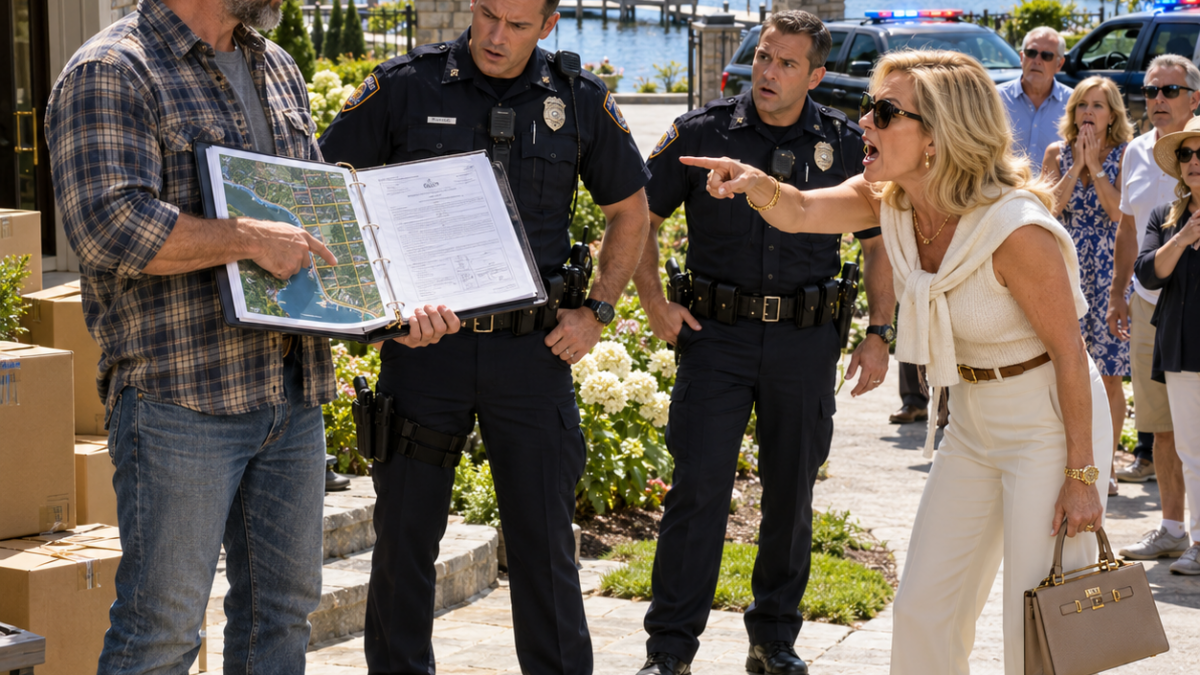
I inherited my father’s lake property on a Saturday, drove there for the first time in nineteen years, and counted twenty-six cabins standing along a shoreline I remembered as nothing but hardwood trees and cold mountain water.
Every cabin had a dock, every dock extended into water my family had controlled since 1938, and an access road now ran through a fifty-foot corridor no one had ever been given permission to develop.
I didn’t call the HOA, confront the developer, or send a single angry letter that night—I went home, opened my father’s probate file to page six, and decided the right moment to speak would come much later.
My name is Nora Voss.
I had practiced land-use law in Asheville for thirty years.
I knew how to read a deed.
More importantly, I knew the difference between something appearing legal and actually being legal.
My father, Leonard Voss, had owned the lake property for most of his life.
The original family purchase went back to October 1938, when my family acquired 140 acres surrounding Voss Lake in western North Carolina.
The old deed was eight pages.
Most people would have cared about the legal description.
I cared about page six.
That page granted my family the surface rights, riparian rights, water-column rights, bed rights, and one clause that mattered more than everything else when I returned to the lake in November 2021:
The exclusive right to authorize or deny commercial use, residential use, or infrastructure installation within fifty feet of the ordinary high-water mark.
And then came the language lawyers notice immediately.
Those rights ran with the land in perpetuity.
Binding on successors and assigns.
My father had understood exactly what that meant.
When part of the eastern shoreline was transferred within the family in 1962, the deed specifically referenced the 1938 water-rights reservation and stated that it remained in full force.
But I knew none of what had happened after that when I first drove up to the lake.
I had stayed away for nineteen years.
Career.
Life.
Then my husband David became sick.
After he died in 2014, the lake became one of those places I kept telling myself I would return to when I was ready.
My father kept going.
Until age and health finally stopped him.
He died in March 2021.
Seven months later, probate transferred the lake property to me.
That November, I drove three hours from Asheville.
At the ridge overlook, I stopped the way our family always had.
Voss Lake spread below me.
Fourteen hundred acres of cold gray mountain water.
The farmhouse still stood on the western bank.
The old dock was still there.
But the eastern shoreline looked completely different.
Cabins.
At least twenty from the overlook.
When I reached the farmhouse and stood on the back porch, I counted again.
Twenty-six.
Twenty-six cabins.
Twenty-six docks.
A gravel access road.
Every structure crowded close to the water.
I stood there at 3:47 that afternoon without saying a word.
Then I got in my car and drove back to Asheville.
I didn’t photograph anybody.
I didn’t knock on doors.
I didn’t call the HOA.
I didn’t call the developer.
I went straight to my home office, opened the probate documents, and found the original 1938 deed.
Page six.
I read it once.
Then again.
The clause was not vague.
Not ceremonial.
Not some obsolete reference to fishing privileges.
It was an operative property right.
Residential use.
Infrastructure.
Fifty feet from the ordinary high-water mark.
Perpetual.
Binding on every successor.
I called James Okafor, a property-rights attorney I had known for years.
“There are twenty-six cabins inside my shoreline corridor.”
Silence.
Then:
“Who holds the water rights?”
“I do.”
“What does the deed say?”
I read page six aloud.
James was quiet.
Finally he said, “Don’t contact anyone.”
“I wasn’t planning to.”
“Give me two weeks. I want the entire eastern-bank title chain.”
Two weeks later, he called.
“Nora, every cabin is inside your fifty-foot corridor.”
I closed my eyes.
“All twenty-six?”
“All twenty-six. Every dock too. And the access road.”
“How did this happen?”
“The developer’s title company found the 1938 deed.”
My eyes opened.
“They found it?”
“Yes.”
“And?”
“They decided it had no current legal effect.”
I looked down at page six.
In perpetuity.
Binding on successors and assigns.
Then James told me the HOA was preparing to refinance millions in development debt.
I asked one question.
“When does it close?”
And that was the moment I decided I would not stop twenty-six families at their front doors.
I would wait until the one room where the developer, the HOA, the lender, the title company, and the money all had to sit at the same table.
PART 2
James called me again the following Monday.
Not because anything had changed.
Because he wanted me to understand exactly how twenty-six cabins had ended up standing on a shoreline protected by language that had been sitting in the county records for eighty-three years.
“Nora,” he said, “I’m going to start in 1938 and work forward.”
“That’s how I would do it.”
“I know.”
I sat at my desk with the probate file open.
Page six facing upward.
James began with my father.
Leonard Voss had bought the property in October 1938 for $1,400.
Different time.
Different market.
The Alderman family had been selling off land during the last years of the Depression.
Their attorney had drafted the conveyance carefully because the family had dealt with timber-rights transactions before and understood that vague reservations caused lawsuits generations later.
So they had not written some loose phrase like “subject to water rights.”
They enumerated everything.
Surface.
Riparian.
Water column.
Lake bed.
Commercial use.
Residential use.
Infrastructure.
Fifty feet from the ordinary high-water mark.
And then:
In perpetuity.
Successors.
Assigns.
James had read it three times.
“There isn’t much room to fight the language.”
“I know.”
“The drafting is unusually good for 1938.”
“My father always said the Aldermans had a careful lawyer.”
“They did.”
Then he moved to 1962.
That was the year my father divided part of the original holding.
He transferred the eastern-bank parcel to his brother Raymond.
That deed mattered more than I initially realized.
Because my father had not simply assumed Raymond knew about the 1938 reservation.
He put the recording reference directly into the new deed.
Book 14.
Page 212.
The conveyance was expressly made subject to the earlier water-rights reservation.
Full force.
Condition of conveyance.
James paused.
“Nora, that paragraph makes the later title history very difficult for them.”
“Because the eastern parcel was created subject to the reservation.”
“Exactly.”
Raymond owned the eastern bank.
But he never received the right to ignore the fifty-foot shoreline corridor.
When he died, his son Paul inherited the parcel subject to the same restriction.
Then, in June 2019, Paul sold it.
Buyer:
Caulfield Land Group LLC.
Developer:
Derek Caulfield.
Purchase price:
$485,000.
“That’s where the mistake happened?” I asked.
“Yes.”
James had obtained the 2019 title commitment.
Mountain Title Associates.
Thirty-four pages.
He went straight to Schedule B.
That is the part of a title commitment where recorded easements, restrictions, reservations, liens, and other encumbrances are supposed to be identified.
Item fourteen listed:
Book 14, page 212.
They had found it.
That was the part that bothered me.
This wasn’t a forgotten document nobody had located.
Mountain Title’s examiner had discovered the exact deed.
Exact recording reference.
Exact water-rights instrument.
Then somebody wrote beside it:
Historical water-rights notation from 1938.
No current legal effect.
No exception required.
I stared at the phone.
“They actually wrote that?”
“Exactly that.”
“After reading perpetuity?”
“I don’t know how much of the deed they read.”
“But they had the instrument.”
“Yes.”
“They cleared it.”
“Yes.”
I picked up page six.
The language seemed almost insultingly clear now.
James said, “Age doesn’t extinguish a recorded reservation when the reservation expressly says it survives.”
“I know.”
“Mountain Title treated age like expiration.”
“There is no expiration.”
“No.”
He continued.
Caulfield Land Group closed.
Then waited roughly fourteen months before breaking ground.
August 2020.
The first cabin foundation.
Then another.
Then another.
Eventually twenty-six building permits.
Twenty-six foundations.
Twenty-six framing inspections.
Twenty-six certificates of occupancy.
County permitting never caught the problem.
Not because county officials necessarily did anything improper.
Their setback review dealt with zoning and parcel lines.
The fifty-foot corridor wasn’t a zoning setback.
It was a private recorded property restriction.
Something title examination was supposed to surface.
And Mountain Title had surfaced it.
Then dismissed it.
James overlaid the county’s ordinary high-water-mark survey data with the cabin locations.
Closest foundation:
Eleven feet from the high-water mark.
Farthest:
Forty-three.
Not one was outside fifty feet.
Twenty-six cabins.
Twenty-six docks.
One shoreline access road.
Everything required authorization from the holder of the reservation.
Me.
Nothing had been authorized.
I sat silently.
Finally I said, “Did Caulfield know?”
“He knew what his title commitment told him.”
“That the reservation was supposedly dead.”
“Yes.”
“So don’t call him fraudulent.”
“I wasn’t going to.”
That distinction mattered.
Thirty years of land-use law had taught me not to confuse an incorrect position with a dishonest one.
Caulfield had a serious problem.
But based on what we knew at that point, he had relied on a professional title commitment.
The cabin buyers had relied on their own closing documents.
The HOA had inherited common-area responsibilities.
Twenty-six families had paid hundreds of thousands of dollars each believing they were buying legitimate lakefront cabins with docks.
I asked James, “What were the sale prices?”
“Between about $285,000 and $425,000.”
“Total?”
“I’m calculating.”
“And the HOA?”
“Lakeview Pines HOA owns the common areas and access infrastructure.”
“Refinancing?”
“That’s the interesting part.”
The development had originally used a construction loan.
$3.8 million.
James had found a filing indicating that the HOA was preparing a refinance.
A lender would require a new title commitment.
New examiner.
New Schedule B.
Meaning book 14, page 212 would have to pass through another set of eyes.
That created the moment.
I didn’t want to send twenty-six cease-and-desist letters to families.
I didn’t want residents waking up to notices threatening cabin removal before we knew the full liability chain.
I wanted one room.
One table.
Everybody whose decision mattered.
HOA.
Developer.
Lender.
Title examiner.
Counsel.
And me.
“Find the closing date,” I said.
James went quiet.
“You want to surface it there.”
“Yes.”
“That could be months.”
“I can wait.”
“You’ve already waited nineteen years to come back to the lake.”
“That isn’t the same thing.”
“I know.”
I looked toward the framed survey on my office wall.
“James, if we send a letter now, everybody starts defending separately.”
“Yes.”
“The HOA gets one lawyer.”
“Probably.”
“Caulfield gets another.”
“Yes.”
“Title company starts coverage review.”
“Yes.”
“Cabin owners panic.”
“Yes.”
“And the lender hears about it secondhand.”
“Yes.”
“But at refinancing, clean title is mandatory.”
“Correct.”
“And if the lender’s examiner is competent, they have to flag page six.”
“Correct.”
“So we let their own process bring it to the surface.”
He laughed quietly.
“You haven’t changed.”
“I’m sixty.”
“You practice land use.”
“Exactly.”
For the next eleven months, I did almost nothing visible.
That was the hardest part.
I knew the cabins were there.
Every morning, somewhere in the back of my mind, I knew twenty-six structures stood inside a corridor my father had protected in 1938.
But I also knew patience was not surrender.
James completed the title analysis.
He filed a notice of interest so any diligent examiner would know the current water-rights holder had counsel.
He monitored county instruments.
I returned to the lake several times.
Quietly.
I began cleaning the farmhouse.
Dust.
Old curtains.
Mouse evidence in the pantry.
My father’s fishing equipment.
The aluminum boat he had used for decades.
I found his coffee mug beside the old wood stove.
Blue ceramic.
Chipped handle.
For a few minutes I sat at his table holding it.
That was when the legal issue stopped feeling purely professional.
I had spent the first few weeks thinking like an attorney.
Chain.
Notice.
Successor liability.
Title exception.
Remedies.
But my father had been sitting at that same table while those cabins began appearing across the water.
Had he known?
Maybe.
His final years had been slower.
He stopped visiting in 2019.
Construction began in 2020.
By then he was eighty-eight.
I wondered whether anyone had mailed him something.
Whether he ignored it.
Whether he had ever stood on the porch and seen the first foundation.
I never found evidence that he did.
Part of me was grateful.
He would have been furious.
Leonard Voss had spent his life reading grading specifications and survey descriptions.
The idea that somebody could find an eight-line perpetual reservation and write “no current legal effect” would have offended him more deeply than the cabins themselves.
One Saturday, I walked to our old dock.
The boards creaked.
Same cold water.
Same deep eastern channel.
But now docks lined the opposite shore like teeth.
Families sat on them.
Children fishing.
Someone grilling.
A dog jumped into the water from cabin eight.
I watched them.
They didn’t look like trespassers.
That mattered.
They looked like people using homes they had paid for.
James had already told me the practical remedy.
Easement.
Not demolition.
A recorded authorization bringing what already existed into compliance.
Compensation for the period of unauthorized use.
Future annual fee.
No expansion without approval.
That would preserve the cabins.
Preserve my rights.
Correct the records.
Still, I needed leverage strong enough to make every party negotiate seriously.
That was where the refinancing mattered.
Late September 2022, James called.
“October eighteenth.”
I looked at the calendar.
“What time?”
“Nine a.m.”
“Where?”
“Blue Ridge Title Group. Courthouse Square.”
“Who is the examiner?”
“Thomas Aldred.”
“And?”
“He found it.”
I sat straighter.
“What did he do?”
“Schedule B, item eleven. Book 14, page 212. Open exception.”
“He did not clear it?”
“No.”
“Good.”
“He called me yesterday.”
“What did you tell him?”
“The truth.”
James explained that Thomas had reviewed the reservation and wanted confirmation of its current status.
James told him:
Operative.
Unmodified.
Not extinguished.
Held by Nora Voss.
No authorization had ever been granted for the twenty-six cabins, docks, or access road.
Thomas reported the issue to the lender.
The lender’s senior loan officer, Patricia Webb, called James next.
Same questions.
Same answers.
She made a decision I respected.
Do not cancel the closing yet.
Bring everybody into the room.
Address the exception together.
HOA president Sylvia Grant.
Two board members.
HOA counsel.
Derek Caulfield.
His attorney.
Blue Ridge’s closing officer.
Title examiner.
Bank by conference call.
James.
Me.
Perfect.
I drove up the night before.
Checked into a small inn two blocks from the courthouse.
Put the probate file on the nightstand.
I didn’t read it again.
I knew page six.
At five-thirty the next morning, I woke without an alarm.
October air.
Cold.
Leaves at peak color across the mountain ridges.
I walked Courthouse Square once before sunrise.
The title office was dark.
Eighty-four years earlier, my father had signed the deed only yards away in the old register’s office.
Back then, the square had looked different.
The building that held Blue Ridge Title probably didn’t exist.
But book 14, page 212 had survived.
My father had trusted paper to outlive him.
That morning I was about to find out if it had.
James met me at 8:15.
He carried two files.
“Ready?”
“Yes.”
“No speeches.”
“I wasn’t planning one.”
“No revenge language.”
I looked at him.
“James.”
“I know.”
“You’ve known me twenty-five years.”
“That is why I’m reminding you.”
We entered at 8:52.
Susan Holt, the closing officer, showed us into the conference room.
Documents arranged at every seat.
Pens lined up.
Water bottles.
Everything prepared for a normal refinance.
The kind where people sign for an hour and leave relieved.
Sylvia arrived at 8:57.
Dark blazer.
Focused.
Two board members behind her.
She looked at me without recognition.
Derek arrived at 9:02.
Tall.
Confident.
Carol Breen beside him.
Thomas Aldred sat at the head of the table with Susan.
Patricia Webb called in at 9:05.
Susan opened the meeting.
“Before document execution, we need to address one open title exception.”
Nobody moved.
Thomas spoke.
“Schedule B, item eleven references an instrument recorded book 14, page 212, Harlan Ridge County Register of Deeds.”
Derek’s eyes moved toward Carol.
Sylvia looked at her attorney.
Thomas continued.
“The instrument is a 1938 deed containing a water-rights reservation that I believe retains current legal effect and bears directly on the subject properties.”
Then he looked at me.
“Ms. Voss is the present holder of those rights.”
Now Sylvia recognized why I was there.
Patricia’s voice came through the speaker.
“Ms. Voss, Mr. Okafor, would you like to address the exception?”
I opened James’s file.
Removed eight pages.
Certified copy.
Placed them in the center of the table.
“This is the deed recorded in October 1938.”
Nobody spoke.
“My father, Leonard Voss, was the grantee. I am his successor.”
I turned to page six.
Then I read.
Surface rights.
Riparian rights.
Water-column rights.
Bed rights.
Exclusive authority to authorize or deny commercial use, residential use, or infrastructure installation within fifty feet of the ordinary high-water mark.
In perpetuity.
Successors.
Assigns.
When I stopped, the room stayed silent.
Patricia spoke first.
“Mr. Okafor, any later instrument modifying that reservation?”
“None.”
“Release?”
“None.”
“Partial extinguishment?”
“None.”
“Waiver?”
“None.”
James opened the 1962 division deed.
“In fact, the deed that created the eastern-bank parcel expressly incorporated book 14, page 212 and stated the reservation remained in full force.”
Sylvia reached across the table.
She picked up page six.
Read it.
Then asked me:
“What does this mean for our cabins?”
I answered calmly.
“It means every cabin on the eastern shore is built inside my water-rights corridor without authorization.”
A board member whispered, “Every cabin?”
“Yes.”
“Docks?”
“All twenty-six.”
“Road?”
“Yes.”
Derek reached for the deed.
He read page six.
His face didn’t collapse.
There was no cinematic gasp.
He just became very still.
Carol asked James, “When was this identified in our title chain?”
James opened Mountain Title’s 2019 commitment.
“Before Mr. Caulfield bought the parcel.”
Carol stared at him.
“What?”
“Schedule B, item fourteen.”
He passed her the page.
“They found book 14, page 212.”
Derek leaned toward her.
Carol read the notation.
Historical water-rights notation.
No current legal effect.
No exception required.
Her expression changed.
“That was Mountain Title’s conclusion?”
“Yes.”
“And your position is it was wrong.”
“It was plainly wrong.”
Derek looked at me.
“You’ve known about this how long?”
“Since November last year.”
His eyes narrowed.
“You waited eleven months?”
“I confirmed the entire chain first.”
“You waited until our refinance.”
“Yes.”
Sylvia looked almost offended.
“Why?”
That was the question I had expected.
“Because twenty-six families live in those cabins.”
She stopped.
“If I had sent twenty-six notices last November, what do you think would have happened?”
No answer.
“Every household hires counsel. The HOA hires counsel. The developer hires counsel. The title company opens a claim. Everyone panics separately.”
I pointed to the table.
“Here, the lender cannot close until title is addressed. Everybody who needs to solve this is in one room.”
Derek leaned back.
“You planned this.”
“I waited for an efficient forum.”
“That’s cold.”
“No.”
I looked at him.
“It’s methodical.”
Patricia interrupted.
“I’m placing the closing on hold for twenty-four hours pending title-counsel review.”
Nobody argued.
She continued.
“The bank will not fund until we understand the legal effect of this exception.”
Susan marked the file.
No documents signed.
No money moved.
The refinance stopped.
Not because I yelled.
Not because I threatened.
Because page six existed.
I left the title office with James.
We walked to the courthouse square.
He exhaled.
“Well.”
“Good examiner.”
“Thomas?”
“Yes.”
“He did his job.”
“So did you.”
“No. I inherited paper.”
James shook his head.
“You inherited a property right. There’s a difference.”
The bank called the next morning.
Commitment withdrawn pending resolution.
The lender would not refinance common infrastructure built inside a recorded shoreline corridor until that corridor was legally authorized.
By noon, Sylvia had already received calls from residents.
The HOA community portal lit up.
Questions.
Rumors.
What happened at closing?
Why did the bank stop funding?
Who is Nora Voss?
What is book 14, page 212?
Does this affect our cabins?
At first, the board sent a careful message.
A historical title issue had been discovered.
Closing postponed.
Counsel reviewing.
That wording lasted about twelve hours.
Then residents started pulling the deed themselves.
The county records were online.
Cabin twenty-two belonged to Margaret Holt, a retired contracts attorney.
She found page six.
Read it.
Then posted:
The deed expressly says the reservation runs with the land in perpetuity. I would like to know why this was not disclosed as an exception when we purchased.
That changed the conversation.
Because now it wasn’t Nora Voss versus Lakeview Pines.
It was twenty-six owners asking why their own title work had missed something recorded since 1938.
Derek stopped returning resident calls on advice of counsel.
Legally sensible.
Politically terrible.
By Sunday, the portal had hundreds of messages.
One owner wrote:
I paid $340,000 for my cabin. Did I buy something the developer didn’t have authority to sell?
Another:
Can Nora make us tear down our homes?
Another:
My lender approved this property. How did nobody find an eighty-four-year-old deed?
Sylvia called a property litigator named Ross Tanner.
Ross did exactly what James had done.
Read from the beginning.
1938 deed.
Valid.
1962 deed.
Explicit incorporation.
No later release.
Cabins inside corridor.
Twenty-year adverse-possession period nowhere near satisfied.
No public-trust exception.
No estoppel because I had never made any representation on which buyers relied.
Sylvia asked:
“Find another argument.”
Ross did.
Then gave her the answer lawyers sometimes hate giving.
“There isn’t one.”
“What does she want?”
“Probably an easement.”
“No removal?”
“She has the right to seek it. Her attorney has not signaled that as the preferred remedy.”
“Can I tell residents the cabins are safe?”
“You can tell them the practical settlement is likely to preserve them.”
The HOA called a meeting.
All twenty-six owners.
Some in person.
Some online.
James and I did not attend.
Their lawyer explained the deed.
There was anger.
But not primarily at me.
Residents wanted to know why Derek’s title company had found the reservation and dismissed it.
Why individual cabin closings had relied on the same chain.
Why no one asked the water-rights holder for authorization before construction.
Sylvia called James the next day.
“What does Nora want?”
James said, “You’ll have the letter.”
Three weeks after the failed refinance, the demand arrived.
Seventeen pages.
James sent it to three recipients.
Caulfield Land Group.
Lakeview Pines HOA.
Mountain Title Associates.
The first section established ownership.
The second established the chain.
The third mapped every encroachment.
Twenty-six cabins.
Twenty-six docks.
Access road.
Every foundation’s distance from the ordinary high-water mark.
Eleven feet.
Fifteen.
Twenty-three.
Thirty-one.
Forty-three.
Every one under fifty.
Then came compensation.
That part took more work.
James commissioned a valuation analysis of comparable private-lake shoreline licensing arrangements.
Commercial licenses for residential shoreline use in western North Carolina.
Rates ranged.
Eight percent.
Ten.
Twelve.
Fourteen.
Lakeview Pines had produced approximately $8.7 million in aggregate cabin sales.
At the midpoint market rate of eleven percent:
$957,000.
Then James looked at unjust enrichment.
A certified appraiser estimated direct lake access had added roughly thirty-five percent to cabin values.
On $8.7 million:
More than $3 million of value attributable to lakefront access.
James chose the more conservative method.
$957,000.
Then added twenty percent because nobody negotiated permission before building.
Demand:
$1,148,400.
When I saw the number, I looked at James.
“High.”
“Defensible.”
“I said high.”
“It’s an opening demand.”
“I don’t want twenty-six families paying for Mountain Title’s error.”
“They may not.”
“Explain.”
“Developer. Insurer. HOA. Multiple liability tracks.”
“And removal?”
“We need to preserve it.”
I knew he was right.
The demand said that if they refused to resolve the matter, I would seek a declaration of the reservation’s validity, damages, unjust enrichment, trespass remedies, and removal of unauthorized structures.
All twenty-six cabins.
Docks.
Road.
At defendants’ expense.
That was the nuclear alternative.
I never wanted to use it.
But a right you refuse to preserve becomes leverage you have already surrendered.
James wrote that my preferred result was authorization, not destruction.
Recorded perpetual easement.
Compensation for past unauthorized use.
Annual fee going forward.
No expansion without written approval.
Legal fees reimbursed.
Thirty days.
When cabin owners saw page fourteen—the removal section—the community exploded again.
This time I understood their fear.
I would have been afraid too.
Imagine paying $385,000 for a lake cabin.
Then learning the title company misread an old deed.
Then reading that the water-rights holder technically could ask a court to order your house removed.
Margaret Holt called James.
Not as HOA counsel.
As a homeowner.
“Is Nora serious about demolition?”
James answered carefully.
“She is serious about protecting every remedy while negotiations remain open.”
“That isn’t what I asked.”
“She prefers an easement.”
“Will she meet residents?”
“After counsel establishes the framework.”
Margaret apparently said, “That sounds like a lawyer.”
James replied, “Both of us are lawyers.”
I liked Margaret without meeting her.
Eight days after the demand, Ross called James.
“The HOA wants to negotiate.”
That was the first sentence.
Not:
We deny.
Not:
The deed is obsolete.
Not:
You waited too long.
Not:
Public lake.
Not:
Waiver.
They had read the record.
They knew.
Ross accepted three parts immediately.
Recorded acknowledgment.
Perpetual easement.
Negotiated compensation.
The argument was money.
Good.
Money can be negotiated.
Ownership cannot.
Ross started with the past-use figure.
“The owners bought in good faith.”
James agreed.
“The compensation is not punitive.”
“They did not know.”
“Still not punitive.”
“Then remove the twenty-percent uplift.”
James called me.
“They want the adjustment gone.”
“Ten percent.”
“Not zero?”
“Ten.”
“That makes past compensation approximately $1.053 million.”
“Correct.”
“You sure?”
“Yes.”
“That becomes your floor?”
“Yes.”
James returned to Ross.
$1,053,000.
Floor.
Then annual fee.
HOA offered $18,000 per year, adjusted periodically for inflation.
I rejected it.
Not because eighteen thousand was insulting.
Because fixed fees become absurd when the asset appreciates.
I wanted a percentage.
Seven percent of gross annual HOA assessments.
Minimum $20,000.
That way if the community’s revenue expanded, so did the easement value.
And if the board artificially reduced assessments, the floor remained.
Ross took it to the board.
Meanwhile, Derek’s attorney fought with Mountain Title.
The title insurer’s first response was uncomfortable.
They had identified the instrument.
So was this really an undisclosed defect?
Or a professional examination error?
Mountain Title argued its policy might not cover an instrument that technically appeared in Schedule B, even if the examiner wrongly concluded it had no legal effect.
Derek’s lawyer argued the opposite.
The commitment effectively told him the reservation was irrelevant.
That was the title assurance he relied on.
Weeks passed.
I did not care who ultimately paid as long as the settlement came together.
But Derek cared.
A lot.
His proceeds from Lakeview Pines were already invested in two other projects.
He did not have $1 million sitting untouched in a checking account.
Then Mountain Title called.
Coverage approved.
Policy limit:
$485,000.
That left roughly $568,000 of the settlement figure for Derek.
Separate professional-liability claims could continue later.
Not my problem.
Derek told his attorney:
“Close the settlement.”
Three negotiation sessions.
That was all.
No lawsuit.
No injunction.
No cabin demolition.
Final terms:
First, the 1938 reservation would be acknowledged in a recorded instrument.
Not hidden in an old deed.
Not buried behind a title examiner’s note.
A modern public document would state that book 14, page 212 remained legally operative.
Second, the acknowledgment would be recorded against every affected parcel.
Twenty-six cabin parcels.
Plus the HOA’s common-area parcel.
Twenty-seven parcels.
Third, past-use compensation:
$1,053,000.
Fourth, my attorney fees and transaction costs:
$95,000 paid by Caulfield Land Group.
Fifth, perpetual water-access easement.
Existing cabins authorized.
Existing docks authorized.
Existing access road authorized.
No expansion.
No additional cabin.
No dock enlargement.
No new infrastructure in the fifty-foot corridor without separate written authorization from the water-rights holder.
Sixth, annual easement fee.
Seven percent of gross HOA assessment revenue.
Minimum $20,000.
Running with the land.
Binding future owners.
Future boards.
Future developers.
Future title examiners.
Everybody.
The settlement closing occurred on a Friday in December.
I didn’t make a dramatic entrance that time.
There was nothing left to reveal.
Escrow cleared before ten.
$1,053,000.
Documents signed.
Register’s office recorded them before noon.
At 12:20, James called.
“All instruments recorded.”
“Every parcel?”
“All twenty-seven.”
“Cross-reference?”
“Book 14, page 212 now points to the acknowledgment and easement.”
“Cabin parcels?”
“Yes.”
“HOA parcel?”
“Yes.”
“Anyone searching Lakeview Pines?”
“Will see the reservation immediately.”
I leaned back.
“As it should have been.”
“As it should have been.”
For a moment neither of us spoke.
Then I said, “My father wrote that clause in 1938 for this exact reason.”
James corrected me gently.
“The Aldermans’ attorney wrote it.”
I smiled.
“My father read it.”
“That he did.”
“And preserved it in 1962.”
“Yes.”
“He just needed someone to keep reading.”
James was quiet.
Then he said:
“Go to the lake, Nora.”
I did.
Saturday morning.
Three-hour drive.
Same mountain road.
Same switchbacks.
Same overlook.
I stopped at the ridge crest.
Below me, Voss Lake lay flat and gray in December light.
Fourteen hundred acres.
Western farmhouse.
Eastern shore.
Twenty-six cabins.
Nothing looked different.
That was strange.
Fourteen months earlier, I had stood in the exact same place and counted those buildings like evidence.
Now all twenty-six remained.
Same roofs.
Same docks.
Same access road.
Not one board removed.
Not one family displaced.
The difference existed in the county records.
That was enough.
I drove past the farmhouse and around toward the eastern-bank access road.
For the first time in my life, I walked that shore from the cabin side.
Cold gravel under my boots.
Cabins on my left.
Lake on my right.
Ordinary high-water mark near my shoulder.
The fifty-foot corridor stretching inland underneath every foundation.
But now every structure was authorized.
That changed the feeling completely.
Not mine in the sense that I owned the cabins.
Not theirs in the sense that the reservation had disappeared.
Two property interests existing together because a recorded instrument finally said how.
Cabin three had smoke coming from the chimney.
Cabin fourteen—Sylvia’s—had a light in the window.
One owner was sweeping leaves from a dock.
A man looked up as I passed.
“Morning.”
“Morning.”
He didn’t know who I was.
Or maybe he did and chose not to say.
Either way, I appreciated it.
At cabin twenty-two, a woman stepped off the porch.
“Nora?”
I stopped.
“Margaret Holt?”
She smiled.
“Apparently we’ve both read a lot about each other.”
“That happens in property disputes.”
She walked down.
We stood near the lake.
“I wanted to say thank you.”
That was not what I expected.
“For what?”
“Not making this about us.”
“You were parties to the encroachment.”
“We were also idiots.”
“No.”
“We bought cabins without understanding our deeds.”
“You hired professionals to understand them for you.”
She looked toward her dock.
“I’m a retired contracts lawyer. I should have read everything myself.”
“That’s hindsight talking.”
“I pulled page six in five minutes after Sylvia mentioned the recording number.”
“You knew where to look after someone identified the issue.”
“That still bothers me.”
“It should bother Mountain Title more.”
She laughed.
Then grew serious.
“Were you ever actually going to make us tear these down?”
I considered the question.
“If everybody had refused to acknowledge the reservation?”
Her face changed slightly.
“I would have gone to court.”
“For removal?”
“I would have preserved the claim.”
“That’s a lawyer answer.”
“It’s the only truthful one.”
She nodded.
“But you wanted the easement.”
“Yes.”
“Why wait until closing day?”
I looked across the lake toward my father’s farmhouse.
“Because I needed everybody to hear the same sentence at the same time.”
“Page six.”
“Page six.”
“That was ruthless.”
“Methodical.”
Margaret laughed.
“I heard Ross say that.”
“Good lawyer.”
She looked at me carefully.
“You knew the refinance would fail.”
“I knew clean title was required.”
“That’s a yes.”
“Yes.”
“Did it feel good?”
Another question requiring honesty.
“Yes.”
Her eyebrows rose.
I continued.
“Not because twenty-six homeowners were scared. I hated that part.”
“Then what?”
“Because the deed had been sitting in the public record for eighty-four years. Somebody finally had to treat it like it mattered.”
She nodded slowly.
“I understand that.”
We talked for nearly an hour.
She told me about the portal fight.
The fear.
The calls to lenders.
One resident had considered selling immediately.
Another had barely slept after reading the removal paragraph.
Sylvia took a lot of anger from residents.
Derek took more.
Mountain Title took the most.
“People blamed you too,” Margaret said.
“I assumed.”
“Some said you were extorting us.”
“I assumed that too.”
“I did not.”
“Why?”
“Because I used to write contracts.”
She smiled faintly.
“The right existed before we bought. We just didn’t know.”
“Exactly.”
She looked at her cabin.
“I paid $412,000 for this place.”
“James showed me the deed.”
“My husband wanted to retire here.”
“Do you?”
“Yes.”
“That’s why the easement exists.”
Her eyes softened.
“You could have been harder.”
“I was hard enough.”
“Yes.”
That made both of us laugh.
Before leaving, Margaret asked if I wanted coffee.
I declined.
Not because I disliked her.
Because I wanted to finish the shoreline alone.
I walked south.
Cabin after cabin.
Each one inside the protected corridor.
Yet now, legally, something had changed.
Before settlement:
Unauthorized.
After settlement:
Authorized by recorded easement.
Same wood.
Same concrete.
Same docks.
Different legal reality.
That is what people misunderstand about property law.
Not every dispute needs something physical moved.
Sometimes the remedy is paper.
Correct paper.
Paper signed by people who actually hold the rights they claim to convey.
Eventually I reached the southern shoal.
As a child, I had known that section from a boat.
The bottom rose unexpectedly there.
My brother Mitchell once grounded the aluminum boat in twelve inches of water and blamed me for three summers.
Standing on shore, I could see why.
The water color changed gradually.
Shallow.
Clear.
Familiar.
I had spent nineteen years away.
That thought hurt more that morning than it had in all the legal meetings.
Nineteen years.
Career.
David’s illness.
Grief.
My father aging without me at the lake nearly as often as before.
I had told myself I would return when ready.
Then he died.
And the property came back into my life not as memory, but as responsibility.
Twenty-six cabins forced me to read a deed.
But reading that deed forced me back to the lake.
I wasn’t sure whether to resent that or be grateful.
Maybe both.
That afternoon I returned to the farmhouse.
Made coffee on Leonard’s stove.
Sat at his desk.
The probate file was no longer thin.
Original eight-page deed at the bottom.
Title analysis.
1962 division deed.
2019 commitment.
James’s notes.
GIS maps.
Closing summary.
Demand.
Negotiation notes.
Settlement.
Acknowledgment.
Easement.
Escrow confirmation.
Recording receipts.
What had begun as eight pages had become a small archive.
I opened my legal pad.
First entry:
26 cabins visible eastern bank.
Then:
Page six.
Then:
Call James.
Then months of notes.
Names.
Dates.
Questions.
At the end:
Recording complete.
All instruments filed.
I uncapped my pen.
Wrote:
The deed says what it has always said.
Page six runs with the land in perpetuity.
The lake is recorded correctly.
I closed the pad.
Placed it inside the file.
Then I stopped.
Something felt unfinished.
I opened it again.
Added one more sentence.
No families displaced.
That mattered.
More than the million dollars.
More than the refinance.
More than watching Derek Caulfield go still at the table.
More than proving Mountain Title wrong.
I was proud that nobody lost a home.
The money was substantial.
I won’t pretend it wasn’t.
$1,053,000 is life-changing money.
But I did not treat it like winnings.
A large portion went into a trust for long-term maintenance of the lake property.
Shoreline management.
Forest work.
Water-quality monitoring.
Farmhouse preservation.
Legal contingencies.
The annual easement fee went into the same account.
My brother Mitchell joked that our father would finally approve of me charging people to use the lake.
“He wouldn’t.”
“He absolutely would.”
“He’d complain the number was too low.”
“That is what I mean.”
We both laughed.
It had been years since we laughed about Dad without the laugh turning into grief.
That alone felt like progress.
Mitchell came up to the lake the following spring.
He hadn’t visited in almost as long as I had.
We stood on the western dock.
He looked east.
“Those are the famous cabins.”
“Unfortunately.”
“Twenty-six?”
“Yes.”
He counted.
Lost his place.
Started again.
“Dad would have lost his mind.”
“I know.”
“He would’ve driven over there the first afternoon.”
“I know.”
“You waited eleven months.”
“I’m not Dad.”
“No.”
He smiled.
“You’re worse.”
“How?”
“You’re a lawyer.”
I elbowed him.
He nearly dropped his coffee.
Then he became quiet.
“He left this to you because he knew.”
“Knew what?”
“You’d read the deed.”
That caught me.
I looked at him.
“He gave you the Asheville house.”
“I know.”
“He gave me the lake.”
“I know.”
“Why?”
Mitchell stared at the water.
“Because I would’ve sold it.”
I started to object.
He shook his head.
“Eventually.”
“Maybe.”
“No. Definitely.”
He shrugged.
“I loved it here. But not like you.”
“I stayed away nineteen years.”
“That’s not the same thing.”
I waited.
“You always understood what places meant to him.”
I looked toward the porch.
“I’m not sure I did.”
“He thought you did.”
We stood there silently.
That conversation stayed with me.
For years, I had interpreted inheritance as logistics.
Asheville house to Mitchell.
Lake to me.
Balanced enough.
But maybe my father had made a more specific decision.
Mitchell would manage a house.
I would manage a deed.
That sounded like Leonard.
The Lakeview Pines settlement changed the development too.
Not dramatically.
No cabins removed.
No gates closed.
No residents evicted.
But the HOA’s governance documents changed.
The new easement became one of the first documents included in every resale packet.
Any buyer received:
1938 reservation acknowledgment.
Perpetual easement.
Annual fee obligation.
No-expansion clause.
Ordinary-high-water-mark corridor map.
Nobody could ever purchase there again and say they had not been told.
The annual fee became part of the HOA budget.
Some residents complained.
Of course they did.
Twenty thousand minimum divided across twenty-six cabins felt irritating to people who believed they had already paid for unrestricted lake access.
I understood.
But irritation is different from legal uncertainty.
Eventually the fee became normal.
That is what happens with properly documented rights.
They move from crisis to line item.
Derek Caulfield settled his own claims against Mountain Title’s professional-liability side later.
I learned only broad details.
Not my case.
Mountain Title changed internal review procedures for old reservations.
Any deed language containing perpetual, successor, assign, reservation, or shoreline-right terminology required secondary legal review before an examiner could clear it.
That interested me.
Not because I wanted revenge on Mountain Title.
Because systems should learn.
One examiner’s mistaken sentence had cascaded into:
Twenty-six cabin sales.
Millions in value.
A failed refinance.
Three legal teams.
One title-insurance claim.
One professional-liability dispute.
A seven-figure settlement.
And eleven months of uncertainty.
All because someone saw 1938 and assumed old meant dead.
Old does not mean dead.
Recorded property law is full of old rights.
Mineral rights.
Access rights.
Riparian rights.
Restrictions.
Reservations.
Easements.
Sometimes a document survives longer than every person who remembers why it was drafted.
That is precisely why it is recorded.
One summer afternoon, Sylvia Grant called me.
“We want to replace three docks.”
“With same footprints?”
“Mostly.”
“Mostly isn’t a measurement.”
She laughed nervously.
“I was told you’d say that.”
“Send plans.”
The old dynamic could have returned easily.
HOA wants improvement.
Water-rights holder says no.
Conflict.
But the easement had created a process.
I reviewed drawings.
One dock extended farther into the deep channel than the original.
I rejected that portion.
Sylvia asked why.
“Navigation and habitat.”
“We don’t have boats that large.”
“Future owners might.”
“Could we shorten it six feet?”
“Eight.”
“Seven?”
“Eight.”
She sighed.
“Eight.”
Approved.
No lawsuit.
No title company.
No lender.
No one waiting eleven months.
Paperwork working exactly as intended.
That was the best part.
The original reservation gave me veto power.
But power without a working relationship becomes exhausting.
The easement transformed that power into administration.
Plans.
Review.
Approval.
Denial where necessary.
Clear reasons.
I could live with that.
One year after settlement, Margaret invited me to the annual cabin gathering.
I declined twice.
She called a third time.
“You are impossible.”
“So I’m told.”
“Come for one hour.”
“Why?”
“Because half these people still imagine you as a woman sitting in Asheville waiting for an opportunity to take their houses.”
“That sounds entertaining.”
“It isn’t.”
“I know.”
“So come.”
I went.
Saturday afternoon.
Tables along the common area.
Twenty-four of the twenty-six owners present.
Children.
Dogs.
Food.
Lake.
As soon as I arrived, conversations became noticeably quieter.
Margaret walked over.
“You see?”
“I told you this was unnecessary.”
“No. This is necessary.”
She pulled me toward Sylvia.
The HOA president looked slightly embarrassed.
“Nora.”
“Sylvia.”
“I’m glad you came.”
“I’m not.”
That made her laugh.
Good.
The room relaxed a little.
Margaret tapped a glass.
I whispered, “Don’t.”
Too late.
“Nora Voss is here.”
Everyone already knew.
She continued.
“I asked her to come because for a year we talked about her more than we talked to her.”
Fair.
“Some of us blamed her. Some blamed Derek. Some blamed Mountain Title. Some blamed Sylvia, which was particularly unfair.”
Sylvia muttered, “Thank you.”
Laughter.
Margaret looked at me.
“Would you say something?”
I hated public remarks that weren’t billable.
But I stood.
“I’m not here to explain the lawsuit that never happened.”
A few smiles.
“There was no lawsuit because all of us eventually agreed on one basic fact.”
I pointed toward the lake.
“The deed existed before any cabin.”
Silence.
“None of you created the title mistake.”
Several people looked relieved.
“Derek relied on a title commitment that turned out to be wrong.”
More silence.
“The responsibility was to fix the record without destroying twenty-six families’ investments.”
A man near the back raised his hand.
“Did you ever consider removal?”
Straight question.
I gave a straight answer.
“Yes.”
The mood tightened.
“As a legal remedy.”
I continued.
“If settlement had failed and everybody had denied the reservation, I would have asked the court to enforce every available right.”
No point lying.
“But I never wanted twenty-six cabins torn down.”
Someone exhaled audibly.
I looked around.
“I wanted one thing more than money.”
Margaret asked, “What?”
“For the county record to tell the truth.”
A few people nodded.
“Now it does.”
I sat.
That was enough.
Later a man introduced himself as Thomas Park.
Cabin eleven.
He had been one of the angriest people on the portal.
“I said some things about you.”
“I didn’t read the forum.”
“You’re lucky.”
“I’m disciplined.”
He smiled.
“I called you a title pirate.”
“That’s fairly creative.”
“I’m sorry.”
“You were scared.”
“I was furious.”
“Same family.”
He looked toward his cabin.
“My wife thought we were going to lose everything.”
“I’m sorry.”
“You don’t need to apologize.”
“I know.”
That surprised him.
“I’m still sorry she went through it.”
He nodded.
Then asked:
“Was waiting until refinance meant to maximize pressure?”
“Yes.”
He appreciated the honesty.
“Would you do it again?”
I thought.
“Yes.”
“Even knowing how scared everyone got?”
That was harder.
“I might meet residents sooner after the closing.”
“But still closing day first?”
“Yes.”
“Why?”
“Because before that day, the title company’s mistake was an argument.”
“And after?”
“The lender made it a problem nobody could ignore.”
Thomas nodded.
“That makes sense.”
Later, a child ran past carrying a fishing rod.
He nearly collided with me.
“Sorry!”
“You’re fine.”
His father shouted for him to slow down.
I watched the boy run toward the dock.
For a second I saw myself.
Six years old.
My father’s hand beneath my back.
Cold mountain water.
That memory hit harder than expected.
I walked away from the gathering.
Down to the shoreline.
Margaret found me later.
“You okay?”
“Yes.”
“Too many lawyers?”
“Too many memories.”
She stood beside me.
“My husband died too.”
I looked at her.
“Five years ago.”
“I’m sorry.”
“That’s why I bought the cabin.”
I understood immediately.
“Needed somewhere else.”
“Yes.”
“Somewhere with work?”
“No.”
She smiled.
“Somewhere with no work.”
I laughed.
“Opposite strategy.”
She nodded toward the lake.
“Did your husband like it here?”
“David?”
“Yes.”
“He came twice.”
“Not his place?”
“Not really.”
“My father’s.”
“That can be complicated.”
“It was.”
We stood silently.
Something about that conversation changed Lakeview Pines for me.
Until then the cabins had represented documents.
Twenty-six violations.
Twenty-six coordinates.
Twenty-six instances of unauthorized residential use.
But each cabin also contained somebody’s reason for buying it.
Retirement.
Grief.
Family.
Escape.
Investment.
Dream.
Property law must remain precise precisely because land becomes emotional.
If ownership were decided by who cared more, every dispute would be endless.
Records give emotion boundaries.
The next spring, I restored the old western dock.
Not replaced.
Restored.
Same footprint.
Fresh boards.
Reinforced supports.
Mitchell helped.
Badly.
“You’re holding that backward.”
“It’s a drill.”
“You have thirty years in real estate law and suddenly you’re a carpenter?”
“No.”
“That part is obvious.”
We worked two weekends.
When finished, I sat at the end.
Feet above the water.
Across the lake, the twenty-six docks remained.
I did not resent them anymore.
That surprised me.
They had become part of the view.
Not the view I remembered.
But landscapes change.
The legal mistake had been corrected.
Trying to force the physical world back to 1961 would have punished the wrong people.
The deed never required me to preserve memory exactly.
It gave me authority.
Authority includes discretion.
I had used mine.
Years later, a developer approached the HOA about adding six more cabins above the eastern road.
Not inside the existing easement footprint.
The proposal would require new utility crossings through part of the fifty-foot corridor.
Sylvia sent it to me before anyone spent serious money.
I reviewed.
Denied.
The developer called me.
“We can compensate you.”
“No.”
“Name a price.”
“No.”
“The project increases tax value.”
“No.”
“Can you explain?”
“Yes.”
I sent a written response.
The easement intentionally authorizes only existing structures.
The eastern-bank density is sufficient.
Additional shoreline infrastructure would increase runoff, dock congestion, and habitat pressure.
Denied.
That was the end.
No fake title conclusion.
No construction first.
No sunk-cost strategy.
They asked.
I said no.
The developer built somewhere else.
That single event proved the settlement worked.
Rights were no longer obstacles to be discovered after construction.
They were part of planning.
Exactly where they belonged.
By then, the $1,053,000 settlement had mostly disappeared into long-term decisions.
Taxes.
Trust funding.
Legal costs already reimbursed.
Property restoration.
Lake monitoring.
I funded a shoreline ecological survey.
Not because the deed required it.
Because twenty-six cabins changed drainage and habitat.
The biologists found several areas needing vegetative buffers.
The HOA cooperated.
Native plants went in.
Runoff controls improved.
One owner complained that the new plantings blocked part of his lake view.
Margaret told him:
“You bought a cabin, not the ecosystem.”
I liked Margaret more every year.
The annual fee also funded water-quality testing.
For decades, my father judged the lake by looking at it.
Clarity.
Algae.
Fish.
Temperature.
Now we had data.
Nitrates.
Phosphorus.
Bacteria.
Sediment.
Not romantic.
Useful.
The first two years looked good.
I mailed the report to every cabin owner.
No demand.
No warning.
Just numbers.
Thomas Park replied:
Never thought the woman who almost tore down my cabin would send me lake chemistry.
I wrote back:
I never almost tore down your cabin.
He responded:
Page 14 says otherwise.
Fair.
I laughed so loudly Mitchell heard from the kitchen.
“What?”
“Nothing.”
My relationship with the lake changed too.
For years after David died, places connected to childhood felt frozen.
Returning meant confronting everyone who wasn’t there.
My father.
My mother.
David.
Younger versions of myself.
That was why I stayed away.
Then inheritance forced me back.
The title dispute gave me a task large enough that grief had to wait outside the conference room.
But once the dispute ended, grief returned.
Softer.
More manageable.
I started spending summers at the farmhouse again.
Exactly as I had as a child.
June.
July.
Part of August.
I rowed the old aluminum boat after repairing its seams.
The first time I reached the eastern deep channel, I stopped rowing.
Bass still held there.
Not the same fish.
Same water.
I looked toward the cabins.
A woman waved.
I waved back.
Then I thought about my father at age eight teaching me to row.
“Don’t fight the water.”
I could hear him.
“Use the blade. Let the boat tell you.”
He had said things like that.
Practical lessons that became metaphors only after he died.
I put the oars back in.
Turned toward home.
One evening, James came to the lake.
First visit.
He stood on the porch looking east.
“So those are the famous twenty-six.”
“Yes.”
“They look smaller from here.”
“Everything looks smaller when it isn’t in a file.”
He laughed.
I poured wine.
We sat.
“You waited eleven months,” he said.
“You advised patience.”
“Two weeks. You extended it.”
“You found the refinance.”
“You asked.”
“That’s how lawyers work.”
He looked toward the water.
“Do you regret the timing?”
“No.”
“Do you regret anything?”
That question stayed between us.
Eventually I answered.
“I regret not coming back sooner.”
“To catch construction?”
“No.”
He turned.
“To see Dad.”
James said nothing.
There wasn’t anything useful to say.
My father had lived until eighty-nine.
I had a career.
A sick husband.
My own life.
No villain.
Just time.
Still, nineteen years was nineteen years.
“I thought the lake would wait.”
“It did.”
“People didn’t.”
“No.”
The sky darkened.
Cabin lights came on across the water.
Twenty-six small rectangles.
For years I would have seen them as intrusions.
That night they looked like people living.
I told James about Margaret.
Thomas.
The ecological project.
The dock approvals.
He smiled.
“You created a functioning servitude relationship.”
“Please never describe my life that way again.”
“You’re the land-use attorney.”
“I’m off duty.”
“Impossible.”
We sat there until the water went black.
Before he left the next morning, James went to my father’s desk.
I showed him the file.
He lifted the original deed.
Eight pages.
“Still remarkable.”
“What?”
“That all of this was sitting on page six.”
I nodded.
“Eighty-four years.”
“One bad title note almost erased it.”
“Almost.”
“But not actually.”
“No.”
That distinction was everything.
Mountain Title’s examiner had not extinguished the right.
Could not.
Their error changed behavior.
Not ownership.
Derek built because he believed the reservation was irrelevant.
Buyers purchased because they believed title was clean.
Lenders financed.
County officials permitted.
The world behaved for two years as though page six meant nothing.
Yet legally, page six remained exactly where it had always been.
That was why records matter.
Truth can be ignored without being changed.
A few years after settlement, Blue Ridge Title invited me to speak at a continuing-education seminar.
Title examiners.
Real-estate attorneys.
Surveyors.
Bank counsel.
Topic:
Legacy deed restrictions in modern development.
I almost declined.
Then agreed.
I used no names.
No sensational story.
Just chronology.
1938 reservation.
1962 incorporation.
2019 title commitment.
Incorrect clearance.
2020 construction.
2021 inheritance.
2022 refinance.
2022 correction.
I put the Mountain Title notation on a slide.
Historical notation.
No current legal effect.
Then beneath it:
Runs with the land in perpetuity.
The room understood.
Afterward, a young examiner approached.
“How do you avoid this?”
“Read the instrument.”
“I mean systematically.”
“So do I.”
She waited.
“Never treat age as evidence of extinguishment.”
She nodded.
“Then what?”
“Find the release.”
“If there isn’t one?”
“Assume it still matters until competent analysis tells you otherwise.”
“What if the language is ambiguous?”
“Escalate.”
“What if a developer pressures you to clear it?”
“Then you should become more cautious, not less.”
She wrote that down.
That gave me more satisfaction than the settlement check.
One error had caused enough damage.
Maybe the story could prevent another.
Lakeview Pines eventually refinanced.
Months after settlement.
This time Blue Ridge listed the reservation and the new easement properly.
No open exception.
No uncertainty.
The bank closed.
Funds released.
The HOA used part of the refinance to improve drainage along the eastern road and repair shared infrastructure.
Exactly what refinancing was supposed to do before page six stopped it.
Nothing permanently collapsed.
That mattered.
The closing I interrupted wasn’t destroyed.
It was postponed until the title became honest.
That was the difference between leverage and sabotage.
I never wanted Lakeview Pines insolvent.
I wanted the lender to refuse pretending the collateral was clean when it wasn’t.
Once the encumbrance was resolved, business continued.
Better.
Years passed.
My hair became grayer.
Mitchell started complaining about his knees.
Margaret sold cabin twenty-two to a younger couple.
Before closing, their title commitment listed:
Book 14, page 212.
Acknowledgment instrument.
Perpetual easement.
Annual fee covenant.
No-expansion provision.
All in Schedule B.
Exactly as they should.
Margaret called me afterward.
“You’re going to like this.”
“What?”
“The buyers asked about page six before they asked about the roof.”
I laughed.
“What did you tell them?”
“That the scary woman across the lake owns the water rights.”
“Margaret.”
“I also told them you’re reasonable.”
“Better.”
“They read everything.”
“Excellent.”
“And they still bought.”
“Even better.”
That resale was perhaps the final proof the correction had worked.
Clear disclosure did not destroy property value.
It stabilized it.
Buyers can accept encumbrances.
What destroys trust is discovering them after closing.
The young couple renovated the kitchen.
Rebuilt Margaret’s old dock under approval.
Sent me plans first.
No crisis.
When they eventually sold again, page six would still be there.
Not as a surprise.
As part of title.
My father would have approved.
On what would have been Leonard’s ninety-fifth birthday, Mitchell and I sat on the porch.
He brought an old tackle box.
Inside were fishing licenses going back decades.
Dad kept everything.
Receipts.
Permit cards.
Handwritten lake-depth notes.
Mitchell found a folded copy of the 1962 division deed.
Not certified.
Just Dad’s personal copy.
Page four had a pencil mark beside the book 14, page 212 reference.
A single check mark.
Nothing else.
I stared at it.
“What?”
Mitchell asked.
“He checked it.”
“Of course he did.”
“No. Look.”
I showed him.
My father had reviewed that clause in his own copy.
The same reference that later saved the reservation from being buried.
Mitchell smiled.
“He knew.”
“Yes.”
I touched the pencil mark.
All those years later, that little mark felt more emotional than the million-dollar settlement.
My father had made sure the eastern parcel never forgot where its shoreline rights ended.
He couldn’t control whether future title examiners read carefully.
But he left the trail.
That was enough.
One autumn morning, I drove to the overlook again.
No legal meeting.
No closing.
No problem.
Just because.
I parked.
Got out.
Looked down.
The lake.
Farmhouse.
Eastern cabins.
Twenty-six.
Still.
I no longer counted them automatically.
That amused me.
For years the number had been welded to the story.
Twenty-six cabins.
Twenty-six docks.
Twenty-six encroachments.
Now I saw roofs.
Smoke.
Water.
Trees.
The development had become part of the lake’s current life.
Not its original one.
But current.
I thought about what revenge would have looked like.
Maybe I could have filed immediately.
Sought removal.
Put twenty-six households through years of litigation.
Forced Caulfield toward bankruptcy.
Dragged Mountain Title through public trial.
Maximized damages.
That would have been dramatic.
Perhaps satisfying for ten minutes.
But it would not have restored the eastern bank of my childhood.
You cannot undo time by hurting whoever happens to be standing there now.
The cabin buyers did not draft the title commitment.
Their children did not read the 1938 deed.
The docks themselves had no intent.
The smarter remedy was the one we chose.
Acknowledge the right.
Compensate the unauthorized use.
Authorize what could reasonably remain.
Prevent expansion without consent.
Correct the record.
Make future mistakes harder.
That is not softness.
It is control.
Real control.
The ability to distinguish between what the law allows you to demand and what justice actually requires.
I stayed at the overlook longer than usual.
Then drove down.
At the farmhouse, I made coffee.
Went to my father’s desk.
Opened the left drawer.
Pulled out the file.
The original deed remained at the bottom.
Still eight pages.
Still page six.
Above it now sat everything that happened because one title examiner misunderstood eight lines.
I turned to the final legal pad entry.
The deed says what it has always said.
Page six runs with the land in perpetuity.
The lake is recorded correctly.
No families displaced.
I added one last line years after I thought the file was finished.
Nothing more required.
Then I closed it.
Outside, Voss Lake lay beyond the porch.
The old western dock.
The eastern bank.
Twenty-six cabins.
The water between us.
My father had fished there for fifty years.
I had learned to swim there.
Then left.
Then returned.
And discovered that land does not forget simply because people do.
The county record had remembered.
Book 14.
Page 212.
An eight-page deed from 1938.
One reservation clause.
One line that outlived Leonard.
Outlived Raymond.
Passed through Paul.
Survived a developer.
Survived twenty-six sales.
Survived a title company’s mistake.
Survived construction.
Survived financing.
Survived eighty-four years.
Until one Tuesday morning in October, I placed it in the middle of a refinancing table and read it aloud.
That was all.
No shouting.
No sheriff.
No bulldozer.
No families standing outside demolished homes.
Just a deed.
A lender.
A room full of people.
And a sentence the property had been waiting eighty-four years for someone to read correctly.
The cabins stayed.
The docks stayed.
The road stayed.
But now they stayed because I authorized them.
Not because someone forgot to ask.
Not because a title examiner decided “old” meant “dead.”
Not because a developer spent enough money to make the truth inconvenient.
They remained because the holder of the water rights executed a legal easement saying they could.
That distinction was invisible from across the lake.
But it was everything.
The HOA refinanced.
The buyers kept their homes.
The developer paid his share.
The title insurer paid its policy limit.
The county record was corrected.
And every future buyer would see page six before signing anything.
That was the ending I wanted.
Not destruction.
Recognition.
My father once taught me that boundaries are only useful when people know where they are.
He was talking about grading work at the time.
But the principle was bigger than that.
The truth had been sitting in the register’s office since October 1938.
No one needed me to invent a right.
No one needed a judge to create one.
No one needed a board to vote.
No one needed a developer to agree.
The right already existed.
I only had to read it.
Then wait for the exact room where everyone else finally had to read it too.
And once page six reached that table, the money stopped, the signatures stopped, and twenty-six cabins worth millions of dollars suddenly depended on the permission of a woman they had never thought to ask.
I could have used that moment to destroy them.
Instead, I used it to make the record honest.
And every morning I sit on my father’s porch now, look across Voss Lake at those twenty-six cabins, and remember something thirty years of property law taught me over and over:
A mistake can survive for decades.
An assumption can survive through generations.
Millions of dollars can be built on top of bad paperwork.
But none of that changes what a valid deed says.
And sometimes the most powerful revenge isn’t tearing anything down.
It’s waiting until closing day, placing the original record on the table, turning to page six—
and letting eighty-four years of ownership speak for itself.

