PART 2: He Was Found Unconscious in the Garbage, Unable to Walk—Two Weeks Later, King Did What No One Expected
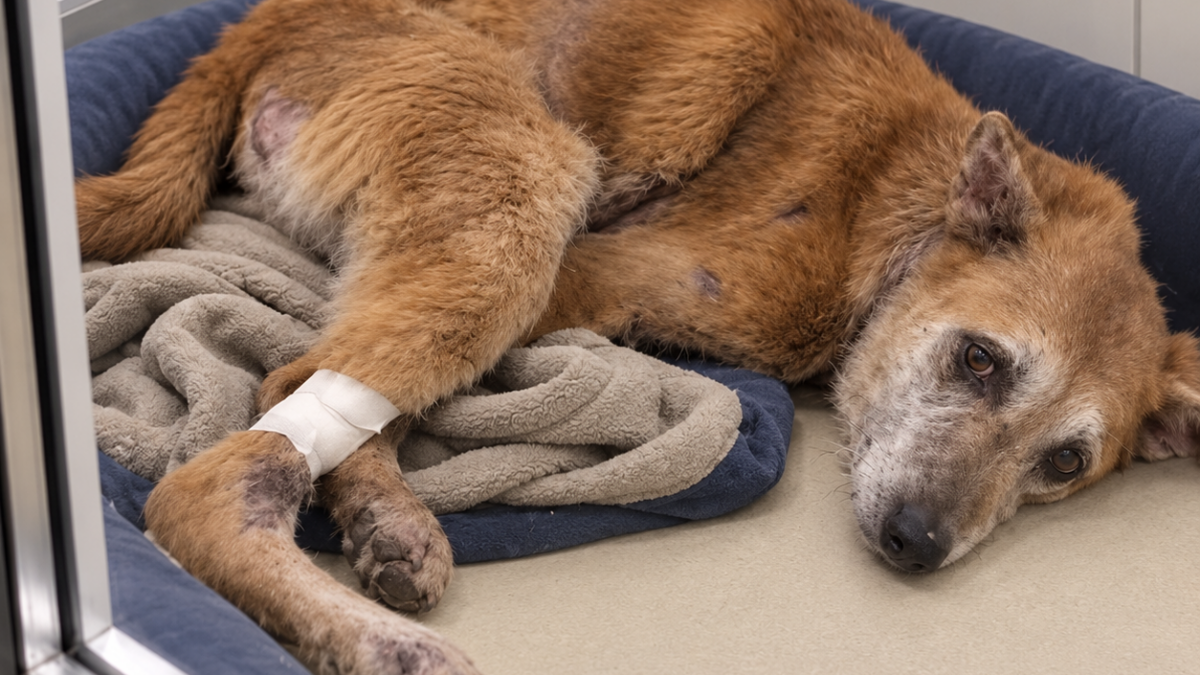
PART 2
The first shelter listened while I explained what little we knew.
Found unconscious.
Unable to move properly.
Severe weakness.
Deformed legs.
Already at a clinic.
I had barely finished before the woman on the phone became quiet.
“We don’t have medical capacity for something like that.”
“Can you take him if the clinic stabilizes him?”
“What’s the prognosis?”
“Poor.”
Another pause.
“I’m sorry.”
The call ended.
Second shelter.
Same story.
Different wording.
“We’re full.”
Third.
“We can’t take a critical orthopedic case.”
Fourth.
“We don’t have a foster equipped for this level of care.”
Fifth.
“How old is he?”
“I don’t know.”
“Can he walk?”
“Not right now.”
“Is the deformity congenital?”
“We don’t know.”
“Any diagnosis?”
“They’re still evaluating.”
“I’m sorry.”
Again.
Again.
Again.
Every call ended with some version of no.
Most weren’t cruel.
That’s important.
Shelters are not magical buildings with infinite money, space, staffing, and medical resources.
They make impossible decisions every day.
A dog who may require prolonged hospitalization, mobility support, specialized care, and possibly expensive treatment can overwhelm an already stretched rescue.
I understood that.
I still hated hearing no.
After another rejection, I put the phone down.
The veterinarian came out.
“You don’t have to find placement tonight.”
“Yes, I do.”
“He can’t leave anyway.”
“That isn’t why.”
She looked at me.
I couldn’t explain it well.
Maybe I was afraid that if nobody agreed to take responsibility for King beyond the next few hours, the world would start treating him like a lost cause.
The dog had already been discarded once.
I couldn’t allow the medical language around him to become another form of abandonment.
Critical.
Poor prognosis.
Deformed.
Expensive.
Uncertain.
No placement.
No space.
All true.
Still a dog.
Still breathing.
The veterinarian sat beside me.
“We’re treating him.”
“I know.”
“Medication. Fluids. Monitoring.”
“I know.”
“You’ve done what you can tonight.”
I looked through the doorway.
King had barely moved.
“What happens if he gets worse?”
“We respond.”
“And if he dies?”
Her face softened.
“He won’t be alone.”
That was meant to comfort me.
Instead it made something settle inside my chest.
No.
He wouldn’t.
The shelter calls could wait.
I stood.
“Can I see him?”
“For a few minutes.”
They let me sit near him.
King’s eyes remained closed.
I touched his forehead.
His body was warm beneath the blanket now.
Not healthy.
Not safe.
But warmer than when we found him.
“Hey.”
Nothing.
“I tried.”
I don’t know why I felt the need to explain the shelters to an unconscious dog.
“Nobody wants to take you right now.”
The sentence sounded horrible.
I corrected it immediately.
“No. That’s wrong.”
King breathed.
I continued.
“They can’t take you.”
Better.
“That’s different.”
I stroked his head.
“So here’s what we’re going to do.”
I had no plan.
No organization behind me with endless money.
No special facility waiting.
Just a dog I’d met that afternoon and savings I’d been protecting for reasons that suddenly felt less important.
“If you have a day, you get a good day.”
King’s ear moved slightly.
“If you have three days, you get three.”
I swallowed.
“And if you’ve got longer…”
I looked at his deformed legs.
“We’ll figure that out later.”
That became the promise.
Not that he would survive.
I couldn’t promise that.
Not that he’d walk.
No idea.
Not that every medical problem could be fixed.
Also unknown.
The promise was smaller and more honest.
Whatever time King had would not look like the garbage where he’d been found.
The next morning, he was still alive.
I arrived carrying food the clinic had approved.
The veterinarian met me.
“He’s stable.”
The word sounded beautiful that day.
Yesterday:
Critical.
Today:
Stable.
“What changed?”
“Not much.”
I almost laughed.
“Then why does stable sound so good?”
“Because in his condition, not getting worse overnight matters.”
Fair.
I walked in.
King’s eyes opened.
Actually opened.
Not fully.
But enough to look at me.
“Hey.”
His gaze seemed unfocused.
I offered my hand.
He sniffed.
One small movement.
Then stopped.
“That counts.”
A technician smiled.
“You’re going to count everything, aren’t you?”
“Yes.”
For the next several days, I did.
Eyes opening.
Count.
Eating one bite.
Count.
Lifting head.
Count.
Changing position.
Count.
The first time he drank voluntarily.
Count.
Survival at the beginning was measured in tiny things.
The veterinary team treated his immediate health problems.
The original story never gave us one clean diagnosis that explained every issue, and I won’t invent one now.
What we knew was enough.
King was seriously ill.
His body was weak.
His limbs were abnormal.
He had likely been unable to move properly for some time.
Everything about him suggested he had been living without the care he needed.
The team gave medication.
Nutrition had to be careful.
Rest mattered.
Observation mattered.
King slept constantly.
I visited constantly.
At first, I worried I was bothering the staff.
Then one nurse said:
“He seems more alert when you’re here.”
That was all the encouragement I needed.
I came every day.
Sometimes twice.
Brought food when allowed.
Sat beside him.
Talked.
I talked about nonsense.
Weather.
Traffic.
The man who had found him.
The shelters that had refused.
My own dogs.
Anything.
King did not need the information.
I did.
Silence makes death feel too close.
Conversation made the room feel inhabited by life.
One afternoon, I said:
“You know, I have other dogs.”
King’s eye opened.
“They’re going to think you’ve taken over.”
Nothing.
“They’re dramatic.”
King breathed.
“You’ll fit right in.”
At that point, I hadn’t decided to take him home.
Maybe I had without admitting it.
By day three, something changed.
Not dramatic.
His head stayed up longer.
A nurse placed food near him.
King sniffed.
Then ate several bites without needing much encouragement.
When I arrived, the veterinarian said:
“He’s more responsive.”
“That’s good?”
“Yes.”
“You sound surprised.”
“I am cautiously encouraged.”
There are phrases that only medical people can say.
Cautiously encouraged.
I grabbed onto both words.
“What are his chances now?”
“Still guarded.”
“Better than yesterday?”
“Yes.”
Good.
One step.
King began recognizing the food container.
At least I believed he did.
I’d enter carrying it.
His head moved.
“You know this?”
He sniffed.
“That’s right.”
Food became one of the things connecting him back to ordinary dog behavior.
When an animal is close to dying, eating becomes medicine.
Later, eating becomes appetite.
Later still, appetite becomes greed.
I wanted King to reach greed.
I wanted him begging from a table.
Stealing something he shouldn’t.
Annoying me during dinner.
Those are privileges of the living.
The fourth day, King licked food from my fingers.
Slowly.
I held my hand still.
His tongue touched.
Again.
The nurse nearby said:
“Look at him.”
I smiled.
“What?”
“He’s trying.”
That phrase worried me.
We often describe survivors as “fighters” or say they’re “trying,” as though the animals who die didn’t try hard enough.
I don’t believe that.
King wasn’t morally stronger because he was improving.
His body happened to be responding.
Medicine happened to be helping.
Care happened to arrive in time.
Still, watching him eat felt like participation.
Not passive survival.
Interest.
The world still contained something he wanted.
That mattered.
By the end of the first week, the staff no longer greeted me with the expression reserved for someone whose dog might die before the next visit.
Hope entered the room.
Carefully.
King still couldn’t move normally.
His front legs were particularly difficult.
The deformity meant he couldn’t support himself the way a typical dog should.
When he tried shifting, his body folded awkwardly.
But he was trying to reposition.
He wanted to move.
That was new.
The veterinarian said:
“His immediate medical condition is stabilizing.”
“Can he go home?”
“Not yet.”
“When?”
“Let’s not rush.”
I hated patience.
King needed it.
So did I.
I spent my savings.
Not all at once.
One bill.
Another.
Medication.
Hospitalization.
Tests.
Care.
Every time I saw the total, I felt a moment of fear.
Then I’d look at King.
Still here.
Money can be earned again.
King couldn’t earn another body.
I paid.
A friend asked:
“You don’t even know this dog.”
I remember the conversation because it irritated me.
“I know him.”
“You met him a few days ago.”
“I know.”
“What if he doesn’t make it?”
That question.
As though survival should determine whether care had been worthwhile.
“Then he dies having been cared for.”
My friend became quiet.
I continued:
“I don’t know how long he has. That’s not the same as saying the days don’t matter.”
That became one of the clearest truths King gave me.
We often justify kindness by outcome.
If rescue succeeds, worth it.
If the animal dies, tragedy.
But the kindness was still worth doing before we knew.
Comfort has value even if the ending is short.
Food matters even if it is the last meal.
A clean bed matters even if the animal sleeps in it once.
A gentle hand matters even if there isn’t another morning.
I had accepted that with King.
Then King complicated things by refusing to die.
On day eight, he was noticeably brighter.
He watched people enter the room.
He ate.
He lifted his head when I spoke.
One afternoon, I walked in and he attempted to move toward me.
His legs couldn’t do what he wanted.
But intention was obvious.
His body shifted.
Front end struggled.
The nurse supported him.
“Easy.”
King kept trying.
I knelt.
“I’m here.”
He reached me in a series of awkward movements and finally rested his head against my leg.
I froze.
Then placed my hand on his neck.
The nurse looked away.
Maybe giving us privacy.
Maybe crying.
I certainly was.
“You came to me.”
King closed his eyes.
That was the day I stopped calling shelters.
Not because every shelter had refused.
Because I knew where King was going if he left the hospital.
Home with me.
The decision scared me.
My home already had dogs.
My schedule wasn’t designed around a severely disabled dog.
I didn’t know what his long-term mobility would look like.
Didn’t know what equipment he might need.
Didn’t know how expensive future care could become.
Those were real questions.
I asked the veterinarian.
“Am I insane?”
She smiled.
“Do you want a professional answer?”
“Yes.”
“Yes.”
I laughed for the first time in days.
Then she became serious.
“You’ll need to understand his needs.”
“I do.”
“No, you understand today’s needs. Home is different.”
She was right.
We talked.
Flooring.
Rest.
Nutrition.
Monitoring.
Assistance with movement.
Protecting joints and skin.
Keeping him clean.
Introducing other dogs carefully.
Follow-up.
No fantasy.
No “love will solve everything.”
Love doesn’t fix deformed legs.
Love buys the things that help.
Love shows up.
Love adapts.
That I could do.
At two weeks, King was ready to leave the hospital.
Fourteen days.
The same dog people had expected might die during the first days.
The staff gathered when I came.
Someone joked:
“You’re taking our patient.”
“I’m paying enough. I should get something.”
The veterinarian laughed.
King was on a blanket.
More alert.
Still physically limited.
Still fragile.
But alive enough to leave.
I brought a soft bed for the ride.
When I lifted him, he put his head against my chest.
I remembered the first time.
Limp.
Unconscious.
Garbage smell on his fur.
Now his eyes were open.
I whispered:
“You made it out.”
Not everything.
Just hospital.
One chapter.
We drove home.
I had prepared a quiet area separate from my other dogs.
Soft bedding.
Food.
Water.
Non-slip surfaces.
Nothing fancy.
Everything deliberate.
When I placed King down, he looked around.
His nose moved constantly.
A house contains a thousand smells an animal notices before humans realize there’s anything to smell.
Other dogs.
Food.
Fabric.
Me.
Outside air.
King watched.
Then rested.
The first night, I barely slept.
Every sound:
King?
Every silence:
King?
I checked.
Breathing.
Sleeping.
Good.
Again.
I knew he had survived two weeks in a hospital.
My brain still expected catastrophe.
That is what fear does.
It keeps working after danger changes.
King slept better than I did.
The other dogs knew he was there.
Of course.
They gathered outside the room.
Sniffing.
One whined.
Another scratched lightly at the door.
“No.”
I was cautious.
Too cautious, perhaps.
King needed rest.
Introduction would come later.
For the first several days, the home routine was simple.
Food.
Medication.
Rest.
Gentle cleaning.
Short periods of movement.
Watching everything.
King loved food.
There it was.
Greed.
I had wished for it.
Now I had it.
He began anticipating meals.
I’d enter with a bowl.
His head lifted.
His body shifted.
He tried moving before I even put the food down.
“Wait.”
King did not appreciate that concept.
“You almost died two weeks ago.”
No effect.
“You can wait ten seconds.”
Still trying.
I laughed.
“Fine.”
That appetite helped his strength return.
Nourishing meals.
Proper rest.
Continued care.
Nothing magical.
Just what his body had been missing.
Over time, King became more interested in everything beyond survival.
The doorway.
Sounds.
Other dogs.
Outside.
Toys.
At first, he’d watch.
Then one day, another dog passed the baby gate.
King’s eyes followed.
Tail moved.
Once.
I leaned closer.
“Was that a wag?”
Another small movement.
“You want to see them?”
King looked toward the gate.
We began careful introductions.
One calm dog first.
Neutral.
Slow.
I let the other dog sniff from a distance.
King’s body stiffened.
Then relaxed.
The other dog approached.
Sniff.
King sniffed back.
Nothing dramatic.
Perfect.
A peaceful introduction is better than a cinematic one.
The second meeting lasted longer.
Then another dog.
Eventually, King was part of the room.
That’s when the next problem became obvious emotionally.
King wanted to play.
His body wouldn’t let him.
One of my dogs picked up a toy and ran.
King’s head followed.
The dog returned.
Play bow.
King became visibly excited.
He tried pushing himself up.
His front legs bent.
He collapsed.
Tried again.
Same.
The other dog waited.
Tail wagging.
King shifted.
Couldn’t get where he wanted.
I watched his frustration.
That hurt differently than watching him sick.
Sickness made the goal simple.
Survive.
Now survival had happened.
King wanted life.
That’s more complicated.
He wanted to participate.
I crouched beside him.
“You want in, don’t you?”
The other dogs ran across the room.
King’s eyes followed.
His front paws worked desperately against the floor.
But the deformity meant they couldn’t bear weight normally.
I supported his chest.
He moved a little.
Tail wag.
One dog approached and licked his face.
King became more animated.
The desire was there.
We needed to find a way for the body to join.
I spoke with the veterinarian.
“Can anything be done for the legs?”
We discussed support.
The source story tells us we tried bandaging his front legs, and that’s what we did.
Not to magically straighten them.
To provide support.
I wrapped carefully under guidance.
Not too tight.
Positioned to help stability.
The first time, King looked at the bandages like I’d betrayed him.
“I know.”
He tried chewing.
“No.”
Chew.
“King.”
Chew.
“You survived the garbage to be defeated by bandages?”
He did not find me funny.
The supports helped a little.
With assistance, he could position himself more effectively.
But mobility remained difficult.
Very difficult.
King still needed more.
We tried helping him physically during play.
One hand supporting.
Short movement.
Let him sniff other dogs.
Let him participate.
But hands are not independence.
King couldn’t spend his entire life waiting for me to hold his body every time he wanted to cross a room.
I began researching mobility options with his care team.
That is how the wheelchair entered our life.
The idea frightened me at first.
Wheelchair.
It sounded huge.
Permanent.
Like admitting something.
Then I realized what an absurd human reaction that was.
A wheelchair isn’t defeat.
It is equipment.
If legs cannot give an animal enough mobility, wheels may give some back.
That is success.
I measured King.
Checked what he needed.
Ordered one.
Then waited.
When the package arrived, I placed it on the floor.
The other dogs immediately investigated.
King watched from his bed.
“Well.”
I opened the box.
Parts.
Straps.
Frame.
Wheels.
I stared.
“Please tell me there are instructions.”
There were.
I read them repeatedly.
Adjustment mattered.
Height.
Support.
Alignment.
Comfort.
The device had to fit King, not simply attach to him.
The first fitting took time.
King wasn’t impressed.
He wanted to turn around and bite the straps.
“Give me five minutes.”
King twisted.
“Three?”
Another twist.
“Two.”
Eventually, he was positioned.
His body supported.
Wheels behind or around him according to the frame setup.
His front end supported as much as his condition required.
I held him steady.
For a few seconds, King did nothing.
The dogs watched.
I watched.
King looked down.
Then forward.
He moved one part of his body.
The wheels shifted.
Barely.
He stopped.
Again.
A little farther.
I held my breath.
He moved.
Not smoothly.
Not quickly.
But the device responded.
King looked startled.
So did I.
“Again.”
He tried.
The wheels rolled another few inches.
One of the dogs became excited and ran around us.
King’s head snapped toward him.
Then King moved again.
This time with purpose.
Toward the dog.
I started laughing.
“That’s it.”
King moved.
Stop.
Adjust.
Move.
A clumsy first lesson.
But something had changed.
Distance no longer required my arms.
The wheelchair could translate King’s effort into forward motion.
That was everything.
The next sessions were short.
We didn’t throw him into the device and expect him to understand.
He had to learn balance.
Turning.
Stopping.
How much effort.
How to navigate.
The floor mattered.
Thresholds mattered.
Space.
We adapted the house.
Furniture moved.
Clearer pathways.
Rugs placed where needed.
The other dogs learned to give him space.
Mostly.
One was terrible at this.
He would run directly across King’s path.
“Move.”
Dog stared.
King rolled forward.
Dog finally moved.
Household traffic rules developed.
The first time King followed the other dogs from one room into another without me carrying him, I cried.
Not dramatically.
It just happened.
One dog ran into the hallway.
Another followed.
King saw.
He started moving.
Wheels rolling.
Slow.
Then faster.
He disappeared around the doorway.
I stood still.
For months, movement had always involved my hands.
Lift King.
Support King.
Reposition King.
Carry King.
Now King had gone to another room because he wanted to.
I followed.
He was near the other dogs.
Tail moving.
I leaned against the wall.
“There you go.”
King didn’t care about my emotional breakthrough.
He wanted whatever the dogs were interested in.
Good.
The wheelchair became part of life.
Not every hour.
King still needed rest.
He still had his physical limitations.
But movement became an option.
An option changes a life.
He could explore.
Approach.
Join.
Choose.
That’s what the device gave him.
People sometimes saw photos and said:
“Poor dog.”
I understood the instinct.
Then I’d watch King in the wheels heading toward his friends.
Poor?
He had problems.
Yes.
His body was different.
Yes.
But pity didn’t describe the whole dog.
King enjoyed things.
Food.
Attention.
Other dogs.
Movement.
Warm places.
He had survived an illness everyone feared would kill him.
Now he was busy being inconvenient.
That is not a tragedy.
One afternoon, the other dogs began playing in the yard.
King was watching through the open doorway.
He became restless.
I hesitated.
Outdoor terrain was harder.
We had to choose safe surfaces.
No stairs.
No dangerous slopes.
The device needed space.
I checked everything.
Then brought him out.
The dogs noticed immediately.
One ran toward King.
Circle.
Run away.
Come back.
King rolled.
A little.
Then more.
The dog dashed across the grass.
King tried following.
The wheels moved differently outdoors.
Slower.
But he continued.
I walked beside him.
Not touching.
Ready.
King moved.
His friend returned.
They sniffed.
The other dog ran again.
King followed.
Not fast enough.
Didn’t matter.
He was in the game.
That’s when I understood what I’d bought.
Not wheels.
Participation.
King didn’t need to win races.
He needed access to the same world his friends occupied.
The wheelchair gave him enough.
He became more confident.
You can see confidence in disabled animals when they stop waiting for help before trying.
King began initiating movement.
He saw me.
Moved toward me.
Saw a bowl.
Moved.
Saw another dog.
Moved.
Choice becoming action.
That is freedom.
His body still required support.
But his world was no longer limited to where someone placed him.
I thought about the garbage.
That image came back often in those months.
King unconscious.
Unable to move himself away.
What if rain had come?
What if a vehicle had approached?
What if nobody had looked closely?
What if the man had assumed he was already dead?
A life can turn on someone kneeling down.
That first man deserved more credit than he ever asked for.
He could have kept walking.
He didn’t.
He moved King out of the rubbish.
Stayed.
Called.
Waited until I arrived.
That was the first rescue.
Mine came second.
The veterinarian’s third.
Then everything after.
King’s survival belonged to a chain.
I eventually contacted the man who found him.
“Remember the dog?”
“How could I forget?”
“He’s alive.”
Silence.
Then:
“Really?”
“Really.”
“How is he?”
“Different.”
I sent a photo.
King in his wheelchair.
Other dogs around him.
The man’s response came several minutes later.
**I can’t believe that’s him.**
Then:
**He looks happy.**
I stared at the words.
Happy.
Not merely alive.
That was the upgrade.
The man called.
“I thought he was dying in my arms.”
“So did we.”
“Can he walk?”
“Not normally.”
“But the wheels?”
“They help.”
He laughed softly.
“King.”
“You remember the name?”
“You told me after.”
I had.
“He deserved it.”
Yes.
King had grown into the name.
Not because he was powerful in some heroic way.
Because dignity had returned.
He had a place.
People adjusted around his needs.
Food came.
Care came.
Friends came.
A home arranged itself partly for him.
That is what belonging looks like.
He stayed.
There was never a point where I seriously considered sending him somewhere else after hospital discharge.
Maybe technically he began as rescue care.
But he had already been rejected enough.
Not by cruel shelters.
By circumstances.
By whoever had allowed him to end up in trash.
By a body that couldn’t do what he wanted.
My house became the place that said yes.
Yes, you’re complicated.
Stay.
Yes, you need help.
Stay.
Yes, you cost money.
Stay.
Yes, you may always use wheels.
Stay.
That is family.
Not loving only the easy version.
King became part of the pack.
At first, the other dogs treated him cautiously.
Then normally.
That was beautiful.
Dogs often adapt more quickly to differences than humans.
King had wheels?
Fine.
Sniff.
Play.
Move on.
One dog learned not to stand behind the wheels.
Another still forgot.
King learned to maneuver around them.
They slept near each other.
King didn’t need his wheelchair while resting.
He had soft bedding.
He’d lie among them.
Bodies touching.
I loved seeing that.
The dog found alone in garbage now had to deal with too many friends stealing bed space.
A much better problem.
Food was another source of drama.
King became extremely interested in whatever everyone else had.
I fed according to his needs.
He disagreed.
If another dog finished first and looked toward King’s bowl, King became protective.
Not aggressively.
Just determined.
“That’s yours.”
I moved the other dog away.
King ate.
Then checked every other bowl.
“You almost died and this is your priority?”
Food.
Of course.
The appetite I once celebrated became a management problem.
Perfect.
That’s what I wanted.
Normal trouble.
He gained strength.
Not enough to correct the deformities.
But enough that his overall body condition improved.
His coat looked better.
His eyes brighter.
The sick dog slowly became a disabled dog.
That sentence matters.
Sick and disabled are not the same.
At the beginning, King’s survival was threatened by his health condition.
Later, his legs remained deformed, but the crisis passed.
Disability became something we accommodated rather than something killing him.
That transition changed how I looked at him.
I stopped checking every breath.
Stopped assuming a quiet afternoon meant something was wrong.
I learned King.
His normal.
His tired.
His excited.
His hungry.
His irritated.
His comfortable.
Knowing someone’s normal is one of the deepest forms of care.
The clinic appointments gradually changed too.
At first:
“Will he survive?”
Later:
“How is his weight?”
“How’s his skin?”
“Any pressure areas from the wheelchair?”
“How much time is he using it?”
“Any discomfort?”
Practical questions.
No death hovering over every sentence.
One day, the vet who had first warned me he might not survive looked at King moving in his wheels.
She smiled.
“I really didn’t expect this.”
I looked at her.
“You didn’t expect him to survive.”
“No.”
King rolled toward a technician carrying treats.
“Neither did I.”
The vet laughed.
“He clearly did.”
King reached the technician.
Received treat.
Important medical milestone.
We adjusted the wheelchair as his body changed.
That is part of mobility care.
Fit isn’t permanent.
Straps.
Height.
Padding.
We checked.
No rubbing.
No sores.
No pressure injuries.
If something looked wrong, stop.
Adjust.
The wheelchair was freedom only if it remained comfortable.
That’s another thing people miss.
Assistive devices are not magic.
They require fitting, monitoring, and maintenance.
King taught me all of that.
I became embarrassingly familiar with wheel alignment.
A friend once visited and found me adjusting King’s equipment.
“You could’ve been a mechanic.”
“I am.”
“For dogs.”
“Apparently.”
King tried moving before I finished.
“Wait.”
He moved.
“King.”
Another movement.
“You waited unconscious in garbage for who knows how long. You can wait thirty seconds.”
No.
He couldn’t.
Impatience is a privilege.
He had earned it.
The months passed.
King’s history became something visitors asked about.
I told it carefully.
“Found in garbage.”
“Seriously?”
“Yes.”
“Someone threw him away?”
“It appeared he’d been abandoned, but we never knew the exact history.”
That distinction mattered.
I wouldn’t invent certainty.
We knew how he was found.
Not every event before.
“He almost died?”
“Yes.”
“And now?”
I’d point.
King rolling toward food.
“Now he does that.”
That was enough.
People often expected a dramatic explanation for his deformed legs.
We didn’t have one.
Congenital?
Past illness?
Injury?
Something else?
The original information did not confirm.
So I stopped needing an answer.
King’s body was his body.
We worked with it.
Not every rescue mystery gets solved.
The obsession with “what happened?” can sometimes distract from “what does he need now?”
King needed a home.
Got one.
Needed nutrition.
Got it.
Needed medical support.
Got it.
Needed mobility assistance.
Wheelchair.
Needed companions.
Pack.
The missing history became less urgent as the present became fuller.
I think that is one of the healthiest things rescue teaches when done well.
Past matters.
But the animal is standing—or rolling—in front of you now.
Respond to now.
King began exploring more confidently.
He learned the exact distance between his bed and the kitchen.
Very important.
He learned where treats were stored.
Even more important.
He learned which door led outside.
The first time I saw him waiting near it in his wheelchair, I laughed.
“You want out?”
King looked toward the door.
I opened.
He rolled.
Choice.
The garbage had been a place he couldn’t leave.
Home became a place he could move through.
That contrast stayed with me.
Mobility isn’t only physical function.
It’s power over location.
Where do I want to be?
Can I get there?
At first, King had no control over either.
Later, he had some.
Some was transformative.
The other dogs helped motivate him.
If they became excited, King became excited.
Door.
Visitors.
Meals.
Yard.
He joined the emotional rhythm of the house.
One dog barked.
Everyone moved.
King moved too.
Not always efficiently.
But present.
That may have mattered more than speed.
He belonged to events.
Not watching from a bed while life happened elsewhere.
I remembered the moment at home before the wheelchair when he wanted to play but couldn’t reach them.
That had hurt.
Now he could enter.
Assistive equipment can change social life as much as physical life.
King taught me that without any theory.
He simply became happier when he could go where the others went.
His personality grew louder.
At the hospital, he had been nearly silent.
At home, he developed preferences.
He liked some dogs more than others.
Loved certain foods.
Disliked being cleaned when he thought food was coming.
Enjoyed attention.
Sometimes became stubborn about leaving the wheelchair even when tired.
“You need rest.”
King tried rolling.
“No.”
Roll.
“Bed.”
He looked offended.
“You are not in charge.”
He disagreed.
Eventually I learned to read when he was actually tired.
Assisted him out.
Soft bed.
He’d settle.
One of the dogs often lay beside him.
That was my favorite time.
No equipment.
No medical story.
Just two dogs asleep.
People sometimes called King “inspiring.”
I never knew how to respond.
He wasn’t living to inspire anybody.
He wanted dinner.
He wanted company.
He wanted movement.
If humans saw something meaningful in that, fine.
But King didn’t need to carry our lessons.
Still, I learned them.
Especially this one:
A good life does not require a perfect body.
That sounds obvious until you meet an animal whose body challenges every expectation.
At first, I thought of success as:
Can we fix King?
Later:
Can King be comfortable and engaged?
Much better question.
Fix implies the animal is unacceptable until corrected.
Support asks what enables life now.
The wheelchair supported.
Bandages supported.
My hands supported.
The dogs supported socially in their own way.
King didn’t become acceptable because he moved more.
He moved more because he was already worth helping.
That’s the order.
I wish more people understood it.
Some visitors saw the wheelchair and immediately looked sad.
Then King would roll over, shove his nose toward them, demand attention, and ruin their tragic narrative.
Good.
Disability is not automatically misery.
King’s medical needs were real.
But so was joy.
One does not erase the other.
He could have difficult days and still have a good life.
Healthy animals do too.
We monitored.
Adjusted.
Chose comfort.
That was the standard.
Years didn’t need to be perfect.
They needed to be worth living from King’s perspective as best we could assess.
He gave us plenty of evidence.
Appetite.
Interest.
Social behavior.
Rest.
Seeking affection.
Exploring.
Play.
Those things matter.
There were days he didn’t want the wheelchair.
Fine.
Rest.
Days he moved immediately when fitted.
Good.
We followed him.
Not a schedule designed to produce inspirational videos.
King’s life was not content.
It was life.
The video people eventually loved—King moving around with other dogs—came naturally.
I filmed because I wanted to remember.
He was rolling after one of his friends.
The other dog stopped.
King reached him.
They sniffed.
The dog bounced backward.
King followed.
I laughed behind the camera.
Nothing dramatic.
But if you compare it to the garbage image, it is almost impossible.
The beginning:
Unconscious.
Still.
Discarded.
The later scene:
Moving because he wants to.
Following a friend.
Home.
That is a complete emotional arc without adding anything.
People often want more.
Who abandoned him?
Were they caught?
Did they regret it?
I don’t know.
The source never gave us an investigation or an identified owner.
I won’t create one.
King’s satisfaction didn’t depend on their punishment.
The person responsible for leaving him, if that is what happened, had already made the cruelest statement possible:
You’re no longer worth caring for.
King’s life answered.
Wrong.
Not through revenge in the human sense.
Through evidence.
A stranger found value.
I found value.
Veterinarians found value.
The other dogs accepted him.
A wheelchair gave him movement.
Every day King lived comfortably disproved the judgment that a helpless dog belonged with garbage.
That is enough revenge for me.
The trash pile said:
End.
King’s wheelchair said:
Forward.
There is no courtroom line better than that.
I spent a lot of time thinking about the man who first found him.
He had no responsibility to King.
Yet he stopped.
That contrast with abandonment is important.
One person may have walked away.
Another stranger walked toward.
You don’t need a lifelong relationship to change an outcome.
Sometimes you only need to stay until the next person comes.
That man did exactly that.
He moved King away from rubbish.
Sat beside him.
Called.
Waited.
What if he had thought:
Someone else will handle it?
King might have died there.
Instead:
Someone became him.
Then I became the next someone.
That’s how compassion works in systems.
Hand the life forward without dropping it.
The clinic staff did the same.
Everyone carrying a piece.
Eventually the life reached home.
I once sent the finder another picture months later.
King sleeping among the dogs.
He replied:
**Hard to believe he was the same dog.**
I wrote:
**Same King. Different life.**
That became the simplest description.
We often say rescue animals transform.
Sometimes they do physically.
Weight.
Coat.
Strength.
But King remained King.
What transformed most was the environment around him.
Garbage to bed.
Isolation to pack.
No mobility to wheels.
Uncertainty to routine.
Bodies matter.
Environment matters enormously too.
A disabled dog beside trash is vulnerable.
The same disabled dog in an adapted home can thrive.
That’s not inspirational magic.
That’s accessibility and care.
I learned to look at disability differently because of him.
Instead of asking:
“What can’t he do?”
Ask:
“What barrier is stopping him?”
Front legs can’t support normal movement.
Barrier: mobility.
Tool: wheelchair and support.
Floor slippery?
Barrier.
Add traction.
Can’t reach friends?
Clear pathways.
Gets tired?
Resting places.
This mindset changed King’s world.
And mine.
The first months, my house looked like a small rehabilitation center.
Bandages.
Padding.
Medication.
Equipment.
Towels.
Eventually those things became ordinary household objects.
Wheelchair parked near the wall.
Like a leash.
No drama.
I liked that.
Normalizing assistive care reduces pity.
King’s wheels weren’t a symbol of tragedy.
They were his way outside.
His way to friends.
His way to investigate the kitchen.
Very important.
One morning, I forgot to move his wheelchair away from where one dog could reach it.
The dog stole a strap.
I walked in.
King was watching.
The thief was chewing.
“No!”
Chaos.
I retrieved it.
Checked damage.
Minor.
King looked at me.
“This is your brother’s fault.”
The other dog wagged.
I repaired the strap.
For an hour, I was angry.
Then laughed.
That scene could not have happened during the hospital week.
There hadn’t been enough life for ridiculous problems.
Now we had plenty.
Ridiculous is good.
The wheelchair also gave King opportunities to make his own bad decisions.
Trying to move through spaces too narrow.
Following dogs too quickly.
Turning badly.
We supervised.
Protected.
But also let him learn.
Independence requires some room for mistakes.
Not dangerous ones.
Small ones.
King would bump lightly.
Pause.
Reposition.
Try again.
Problem solving.
His confidence improved.
I loved seeing that.
The first day, every wheel movement surprised him.
Months later, the chair was part of his body map.
Animals adapt.
Not perfectly.
But often beautifully.
His front legs remained deformed.
Bandaging had helped somewhat with support, but it didn’t transform anatomy.
That’s okay.
The wheelchair wasn’t a consolation prize.
It was an adaptation to reality.
We stopped waiting for a miracle and started building a life.
That was much more useful.
The veterinary team supported that shift.
One visit, I asked:
“Should we still be trying to get him to walk without it?”
The vet answered:
“We should maintain the function he has and support him appropriately. But his quality of life isn’t a test he has to pass by walking normally.”
I remembered that.
King did not owe us normal walking.
He owed nobody anything.
He had already survived.
After that, I relaxed.
We still did supportive care.
But the goal changed.
Not performance.
Comfort and participation.
King’s happiest moments often involved the other dogs.
They became his motivation.
Sometimes one would run outside and King would immediately look at me.
The look said:
Chair.
Now.
I learned.
“Okay.”
Fit.
Adjust.
Out.
King followed.
I sometimes wondered if he understood his disability.
Probably not as a concept.
He understood effort.
He understood that certain things required equipment.
Animals live in practical reality.
Maybe that’s easier.
Humans attach identity and shame.
King attached straps and went after friends.
I admired that simplicity.
He didn’t hate the wheelchair for proving he was different.
He learned that it moved.
Useful.
Done.
If he disliked anything, it was waiting while I put it on.
Impatience again.
A good sign.
The dog once barely conscious had places to be.
That is the title of his second life.
Places to be.
Food bowl.
Yard.
Friends.
My chair.
Door.
Sunlight.
King had destinations.
That mattered because when he was found, it appeared somebody had treated his inability to get around as a reason to dispose of him.
The cruel logic was:
He can’t move, so he’s useless.
Our answer:
Then we’ll help him move.
Simple.
That’s emotional revenge at its cleanest.
Not returning cruelty.
Removing its premise.
He cannot walk normally?
Fine.
Wheels.
He needs care?
Provide it.
He costs money?
Pay what we can.
He needs time?
Give it.
Every problem used to justify abandonment became a problem to solve instead.
That is what love looks like when it grows up.
Not “I wish you were easier.”
“How do we make this work?”
King stayed.
The years after rescue were not one continuous dramatic climb.
There were veterinary concerns.
Equipment adjustments.
Days of fatigue.
Moments I worried.
That’s life with a medically complicated animal.
But none returned him to the crisis of the garbage.
We had a safety net.
That is the difference.
If King seemed off, vet.
If equipment rubbed, adjust.
If appetite changed, watch.
If he needed rest, rest.
No neglect.
No waiting until collapse.
Being known changes risk.
He had people who knew his normal.
I became able to spot small changes.
His eyes.
Posture.
Interest in food.
How he held his head.
Care becomes pattern recognition.
That helped.
One evening, King didn’t want dinner.
My stomach dropped immediately.
The dog who lived for food refusing food?
Call.
The vet assessed.
Minor issue.
Treatable.
He recovered quickly.
Years earlier, maybe no one would have noticed until severe.
Now one missed meal triggered attention.
That is what belonging does.
It narrows the gap between problem and response.
King had once been found only when unconscious.
Later, someone noticed before he even needed to ask.
That’s a huge transformation.
I sometimes imagined what King would say if he could understand the whole story.
You were found in garbage.
He’d probably look at me for food.
Shelters refused because you were too critical.
Food?
Doctors thought you might die.
Food.
I spent my savings.
Definitely food.
Dogs are good at reducing human drama.
King cared about now.
Maybe that’s why being with animals can heal rescuers too.
We carry past images.
They carry smells.
Schedules.
Immediate needs.
King pulled me forward the same way the wheels pulled him.
Not literally.
But close.
He made the rescue story stop being only about what had happened.
Every new routine wrote something else.
Morning.
Meal.
Wheelchair.
Play.
Nap.
Repeat.
A life is mostly repetition.
King’s repetition became safe.
That is the outcome.
One of the other dogs became especially close to him.
They slept near each other often.
I watched the able-bodied dog adjust naturally.
If King was on the floor, the dog lay down.
If King rolled toward him, he waited.
No pity.
Just companionship.
That’s what King had been missing most when found.
Someone nearby.
The first man gave him that while waiting for me.
I continued.
Then dogs joined.
The opposite of abandonment is not rescue.
It is staying.
Rescue is how staying begins.
King had people stay.
That’s the line I keep returning to.
The shelter rejections initially felt like rejection of King.
Later, I understood them differently.
Those organizations had limits.
They said:
We cannot responsibly take this.
I had a different set of circumstances and said:
I can try.
Neither makes one side cruel.
What matters is that somewhere in the chain, one yes existed.
Animals sometimes need only one.
Not one person to do everything.
One yes that leads to another.
The man:
Yes, I’ll stop.
Me:
Yes, I’ll take him.
Vet:
Yes, we’ll treat.
Me again:
Yes, I’ll bring him home.
Wheelchair:
Not a person, but another yes.
Yes, movement is still possible in another form.
King’s life grew from those answers.
I think about the savings sometimes.
Money gone.
Do I regret it?
No.
Would I encourage anyone to financially destroy themselves impulsively?
Also no.
Rescue has to be sustainable.
But in my situation, I made a choice I could live with.
Savings became treatment.
Treatment became time.
Time became home.
There are worse conversions of money.
I never calculated the cost per day.
Didn’t want to.
King wasn’t an investment with a return.
He was a responsibility I accepted.
Still, the return came anyway.
Not financially.
A home with a dog who should not have been there if the first prognosis had been correct.
That was enough.
The first vet bill represented uncertainty.
Later bills represented maintenance.
That shift made me smile.
At the beginning:
Pay because maybe he lives.
Later:
Pay because he has a long-term life to maintain.
Huge difference.
King’s name became a joke among friends.
“King needs his chair.”
“King wants dinner.”
“King has taken over the living room.”
Exactly.
A king requires accommodations.
One friend brought him a silly cushion like a throne.
I hated it.
King loved the cushion.
So it stayed.
He’d rest there after using the wheelchair.
The dog once lying in garbage now had a throne.
Too obvious.
Still satisfying.
I took a picture.
Sent it to the finder.
He replied:
**Now the name makes sense.**
Yes.
Not because King needed royalty.
Because contrast has emotional power.
Trash to throne.
But I was careful never to make the beginning cute.
Abandonment wasn’t a setup for a beautiful story.
I’d erase it if I could.
King didn’t need suffering to deserve a cushion.
He should have had care from the start.
The happy ending belongs to what came after.
Not to the harm.
That distinction matters in every rescue story.
We should not romanticize suffering because transformation is moving.
The goal is fewer transformations needed.
King deserved to have never been found unconscious.
Since we couldn’t change that, we built from there.
One day, while adjusting his wheelchair, I noticed how calm he had become during the process.
Early:
Twist.
Chew.
Confusion.
Later:
Wait.
Look.
Move when released.
Trust through repetition.
He knew the device meant access.
That relationship developed slowly.
A piece of equipment once unfamiliar became a signal.
Adventure.
Friends.
Outside.
His eyes changed when I brought it over.
Excitement.
That moved me.
Imagine being a dog whose legs don’t support you properly, then learning that a frame with wheels means your world is about to get bigger.
King knew.
I don’t need scientific proof of the thought.
His behavior was enough.
He wanted it.
The first months, I often had to encourage movement.
Later, sometimes King rolled before I was ready.
“Wait.”
No.
King had gone from needing someone to carry him from garbage to needing someone to tell him to slow down.
That’s a story.
The wheelchair also improved his relationship with space.
He could choose shade.
Sun.
Closer to me.
Closer to dogs.
A little farther.
Choice sounds small until you lose it.
King had lost almost all physical choice when found.
Regaining even partial control was powerful.
That’s why assistive devices matter.
They don’t need to create normality.
They create options.
Options are dignity.
I learned.
King aged.
Of course.
The source story ends with him alive, in the rescuer’s home, using his wheelchair, playing with friends and enjoying life. I won’t invent a later death or unsupported final illness.
So when I think of his ending, I leave him where the real story leaves him.
Alive.
That matters.
Still there.
Still part of the household.
Still surrounded by dogs.
Still using the wheelchair when he needs it.
Still King.
A lot of rescue stories get pushed toward death because writers want emotional closure.
King doesn’t need that.
His closure is life.
The dog no one expected to survive got to reach a point where survival wasn’t the daily subject anymore.
That’s enough ending.
I remember one afternoon especially.
Sunlight.
Yard.
The other dogs outside.
King in his chair.
One dog ran past him.
King turned.
Followed.
The wheels bumped lightly over the ground.
I walked behind, ready if he needed help.
He didn’t.
Another dog came from the side.
King stopped.
They touched noses.
Then moved again.
Nobody was treating him like a patient.
Not the dogs.
Not King.
For a few minutes, neither was I.
I simply watched.
That’s when I realized the promise I’d made in the hospital had been exceeded.
I had said:
If you only have a little time, I’ll make it kind.
King had taken “a little time” and turned it into a life.
I whispered:
“You cheated.”
King kept moving.
“You were supposed to be the dog nobody expected to survive.”
He rolled after his friend.
“Look at you.”
He didn’t need to look.
He was busy.
That was perfect.
The man who found him had said:
“He’s alive. I think.”
Now there was no “I think.”
Alive was obvious.
Hungry.
Curious.
Social.
Stubborn.
Moving.
Loved.
Alive in all the ways that matter beyond a heartbeat.
That is the final payoff.
When a dog is discarded because his body has become difficult, the deepest answer isn’t simply keeping the heart beating.
It’s giving that difficult body a life worth inhabiting.
We did.
Not perfectly.
But enough.
King’s front legs remained deformed.
We didn’t pretend they weren’t.
His wheelchair remained necessary for meaningful mobility.
We didn’t hide it.
He needed help.
We gave it.
The happy ending wasn’t restoration to some imaginary perfect dog.
The happy ending was adaptation without abandonment.
That’s stronger.
Because King’s body did not have to become easier in order for his life to become valuable.
I wish that idea reached more people.
A disabled animal is not a failed animal.
A wheelchair is not a tragic ending.
Dependence is not the opposite of dignity.
Care does not reduce worth.
King demonstrated all of that by existing.
No speech required.
When visitors asked:
“Does he know he’s different?”
I answered:
“He knows where the food is.”
That usually ended the conversation.
Dogs don’t need human categories.
King knew:
This is my home.
These are my dogs.
This is the person who feeds me.
This thing helps me move.
Good.
The rest is our complication.
He became especially happy when the whole pack was together.
I think dogs understand membership deeply.
Maybe not as a word.
As pattern.
Sleeping bodies.
Shared smells.
Routine.
Where everyone goes.
Who returns.
King learned he belonged to a group.
That is the exact opposite of being left alone in trash.
Membership is the revenge.
He was not left behind anymore.
If the dogs moved and King could join safely, he joined.
If he needed help, I helped.
If he wanted rest, somebody often stayed nearby.
The pack included his needs.
No vote.
No inconvenience debate.
He was simply one of them.
Humans could learn from that too, but again, King did not exist to teach us.
He existed to eat.
I returned once to the area where he’d been found.
Not with King.
No reason to take him there.
Trauma tourism helps humans more than animals.
I went alone.
The garbage area looked ordinary.
Nothing about it held the memory except me.
I stood where I believed the man had been sitting.
I pictured King unconscious.
Then pictured the wheelchair.
The place seemed smaller than I remembered.
That’s what time does.
Places tied to fear grow enormous in memory.
Return, and they become pavement, rubbish, walls.
King had outgrown the location psychologically in my mind.
His life no longer fit inside that image.
I left.
Didn’t take a photo.
No need.
Home held better ones.
Back at the house, King was resting.
One dog beside him.
He looked up when I entered.
Tail movement.
I sat.
“You have no idea where I went.”
King sniffed me.
“Good.”
I was glad.
He didn’t need the origin story.
I did.
Maybe less as years passed.
The garbage became less central.
That is a successful rescue narrative.
The beginning eventually becomes only the beginning.
King’s wheelchair had scratches by then.
Marks from use.
I liked them.
Equipment should look used.
Those scratches represented distance.
Rooms crossed.
Yards explored.
Friends followed.
Every scratch answered the original stillness.
King had moved.
Again.
Again.
Again.
Not the way a typical dog moved.
His way.
Enough.
I once considered replacing the wheelchair entirely even though it still functioned, just because it looked worn.
Then I realized:
Worn is good.
He used it.
We replaced parts when needed.
Maintained.
But I didn’t need it to look new.
King’s life didn’t need presentation.
It needed function.
That’s another rescue lesson.
Instagram-perfect isn’t care.
Clean and safe.
Fit correctly.
Working.
That’s enough.
Same with home.
My house was never spotless after King.
Dogs.
Wheelchair.
Blankets.
Food.
Supplies.
Life.
Good.
A spotless house is easy if nobody needs anything.
I preferred ours.
One evening, during dinner, King made enough noise and movement that one guest asked:
“Was he always this demanding?”
I laughed.
“No.”
“What changed?”
“He learned people listen.”
That answer stopped me after I said it.
Learned people listen.
Yes.
At the beginning, King couldn’t ask.
Unconscious.
Later, he could.
And asking had results.
Food.
Help.
Movement.
Attention.
That changes an animal.
It changes people too.
Once you become the person who answers, you keep listening.
I listened for King even when I slept.
Not fear anymore.
Habit.
If equipment shifted.
If he needed repositioning.
If something sounded different.
Family ears.
His needs became part of the house’s acoustic pattern.
That sounds strange.
Anyone who cares for a disabled animal understands.
You know the sounds.
Normal scratch.
Normal wheel.
Normal sigh.
Something different.
You wake.
That awareness kept him safe.
It also made him deeply known.
No garbage pile can know a dog.
A home can.
That is perhaps the strongest contrast.
Abandonment says:
I don’t want to know what happens next.
Care says:
I want to know every day.
King got the second.
When I think of the shelters that refused, I no longer remember their names.
They weren’t the villains.
Resource limitations are real.
Their no led to my yes becoming permanent.
Not a moral superiority story.
A circumstance.
King needed one place capable of holding the responsibility.
It happened to be mine.
I’m grateful.
Terrified at first.
Grateful later.
His case taught me that rescue sometimes begins before you know you are adopting.
One decision.
Take to clinic.
Next decision.
Pay another day.
Next.
Visit.
Next.
Home.
Then you look around and realize a life has intertwined with yours.
No grand plan.
King simply stayed.
That is how some families form.
Accidentally.
Urgently.
Then completely.
The other dogs never asked whether he was temporary.
They knew before I did.
King knew maybe before I did.
I was last.
Typical human.
One morning, after he had been with us a long time, King was resting without the wheelchair.
A younger dog dropped a toy near him.
King grabbed it.
The younger dog pulled.
Tug.
King couldn’t brace conventionally with his front legs.
Still, he held.
The other dog adjusted.
Less force.
They played.
I watched.
Adaptation again.
Even games can change.
They didn’t need identical bodies.
They needed a shared way to participate.
That’s companionship.
King eventually released.
The younger dog ran.
King watched.
Then looked toward the wheelchair.
I laughed.
“You’re serious?”
He wanted more.
I fitted him.
Out he went.
Those moments were the answer to every early prognosis.
Not because doctors were wrong to be cautious.
They had been honest based on what they saw.
King’s condition really had been critical.
He really might have died.
Survival doesn’t mean the first warning was exaggerated.
It means outcome beat probability.
That’s different.
I respected the team more because they hadn’t promised.
They treated him even while uncertain.
That is medicine.
Try when reasonable.
Tell the truth.
Adapt.
King got honesty and care.
A powerful combination.
I sometimes thought of the first night’s promise:
“If you have a day, you get a good day.”
King kept adding days.
So I kept my part.
That became years of little promises.
Today food.
Today comfort.
Today wheels.
Today friends.
You don’t build a good life in one heroic act.
You maintain it.
Every day.
That is less cinematic.
More meaningful.
If someone asked me what King taught me about revenge, I’d say the word doesn’t fit animals very well.
King didn’t spend his life angry at whoever left him.
At least nothing in his behavior suggested such a human narrative.
He had needs in front of him.
So emotional revenge belongs to us, the storytellers.
We look at the beginning and want balance.
We want cruelty answered.
Here’s the balance:
A person may have decided King was too broken to keep.
I decided broken wasn’t the right word.
The veterinarian treated.
The wheelchair moved.
The pack accepted.
King lived.
That’s the answer.
They discarded the body because it couldn’t move easily.
We rearranged a home so that body could belong.
They left him among things nobody wanted.
He became wanted every day.
They left him still.
He learned motion.
They left him alone.
He got a pack.
They left him with no future we could see.
He made one anyway.
Nothing else is needed.
The final image I keep is not the garbage.
It isn’t even the hospital.
It’s King moving through the house in his wheelchair while the other dogs head toward the yard.
One dog ahead.
Another behind.
King in the middle.
Part of traffic.
Not road traffic.
Family traffic.
His wheels making a soft sound against the floor.
He reaches the door.
I open it.
He goes out.
That image contains everything I wanted for him.
A door opens.
King can go through it.
He doesn’t need to wait for someone to carry him out of rubbish.
He has a way forward.
Maybe not the way he would have moved in another body.
Who cares?
Forward is forward.
Outside, the dogs gather.
King joins.
I stand at the door.
For a second, I remember the first man kneeling beside him and saying:
“Please tell me you can help him.”
I wish I could go back and answer differently.
At the time I said I didn’t know.
Now I would tell him:
“Yes.”
Not because I alone could help.
Because King was about to meet a chain of people who would refuse to let his condition be the last thing said about him.
“Yes, we’ll help him.”
“He won’t become a perfect dog.”
“He doesn’t need to.”
“His legs will still be different.”
“We’ll support them.”
“He may need wheels.”
“We’ll buy them.”
“He’ll need money.”
“We’ll spend what we can.”
“He’ll need patience.”
“We’ll learn.”
“He’ll need somewhere to stay.”
“He can stay.”
“And one day, the dog you’re afraid might die on this piece of cloth will chase other dogs through a home where everyone knows his name.”
That’s what I’d say.
Because that is what happened.
King survived the clinic.
Two weeks after he arrived with almost no hope, he left alive.
Then he did something even harder.
He lived afterward.
Recovery is not the same as surviving a medical crisis.
He had to adapt.
Gain strength.
Learn the home.
Meet dogs.
Try to stand.
Fail.
Try again.
Accept bandages.
Learn wheels.
Move.
Rest.
Repeat.
He did all of it.
We did it with him.
The wheelchair did not erase his deformities.
It erased some of the distance they created.
That’s enough.
His friends didn’t need him to walk normally to want him nearby.
Neither did I.
That’s enough.
King didn’t need to become easy.
He needed someone willing to keep choosing him.
That’s enough.
The garbage never became part of his home story except when I told people where he came from.
To King, home smelled like food, dogs, bedding, and us.
I prefer that.
Animals should not have to carry the symbolism of our stories every day.
Let us remember.
Let them live.
King lived.
And when I see him moving in the wheelchair, I never think:
Poor King.
I think:
There you are.
That’s the dog I almost didn’t get to meet.
That’s the dog veterinarians were afraid wouldn’t survive.
That’s the dog shelters couldn’t take.
That’s the dog I promised to sit beside if he only had a little time.
That’s the dog who turned a few uncertain days into a home.
There you are.
Still moving.
Still interested.
Still here.
The person who abandoned him, if that is how he ended up there, may have thought King’s story was finished the moment he was left beside the garbage.
They were wrong.
That was barely the first paragraph.
His real life began when one man looked twice.
Then stayed.
When I arrived.
When a vet treated the dog nobody expected to survive.
When food became appetite.
When a hospital discharge became homecoming.
When deformed legs became a problem to accommodate instead of a reason to give up.
When bandages weren’t enough and wheels became the answer.
When another dog ran past and King followed.
When the wheelchair stopped looking like medical equipment and started looking like freedom.
When the house stopped calling him a rescue and simply called him King.
That’s the ending.
Not revenge through suffering.
Revenge through belonging.
Not a dramatic punishment.
A daily contradiction of the idea that he was disposable.
Every bowl filled.
Every blanket washed.
Every medication given.
Every wheelchair strap adjusted.
Every dog waiting for him.
Every time I opened the door and King moved through it.
All of it said the same thing:
You were worth stopping for.
You were worth treating.
You were worth the money.
You were worth the work.
You were worth adapting for.
You were worth bringing home.
You were worth keeping.
King never needed to hear the words.
His life showed them.
And if I had to choose between the image of him unconscious in garbage and the image of him rolling toward his friends, I know exactly which one deserves to be the last scene.
King in his wheelchair.
The other dogs around him.
His head up.
His body supported.
Moving toward something he wants.
Not because someone is carrying him.
Not because someone is dragging him away from danger.
Because he has a way to move.
Because he has somewhere to go.
Because there are dogs waiting.
Because there is a person behind him who will be there if the wheels get stuck.
Because there is a bed inside.
Food.
Water.
Care.
Tomorrow.
The dog who had once been left where unwanted things were thrown away finally had something those discarded objects never could.
A place that wanted him back.
So I let King roll ahead.
I don’t rush him.
I don’t apologize for the wheelchair.
I don’t wish in that moment that his legs looked different.
I simply watch him go.
One wheel turns.
Then the other.
His friends move around him.
King follows.
And every foot of ground he crosses says more than revenge ever could.
Someone once left him because he could no longer get around on his own.
Now he doesn’t have to.
He has wheels.
He has friends.
He has me.
And most importantly, he has a home that never asks him to earn the right to stay.



