PART 2: He Thought Someone Had Dumped Trash in the Empty Lot—Then He Opened the Crate and Found Prayer
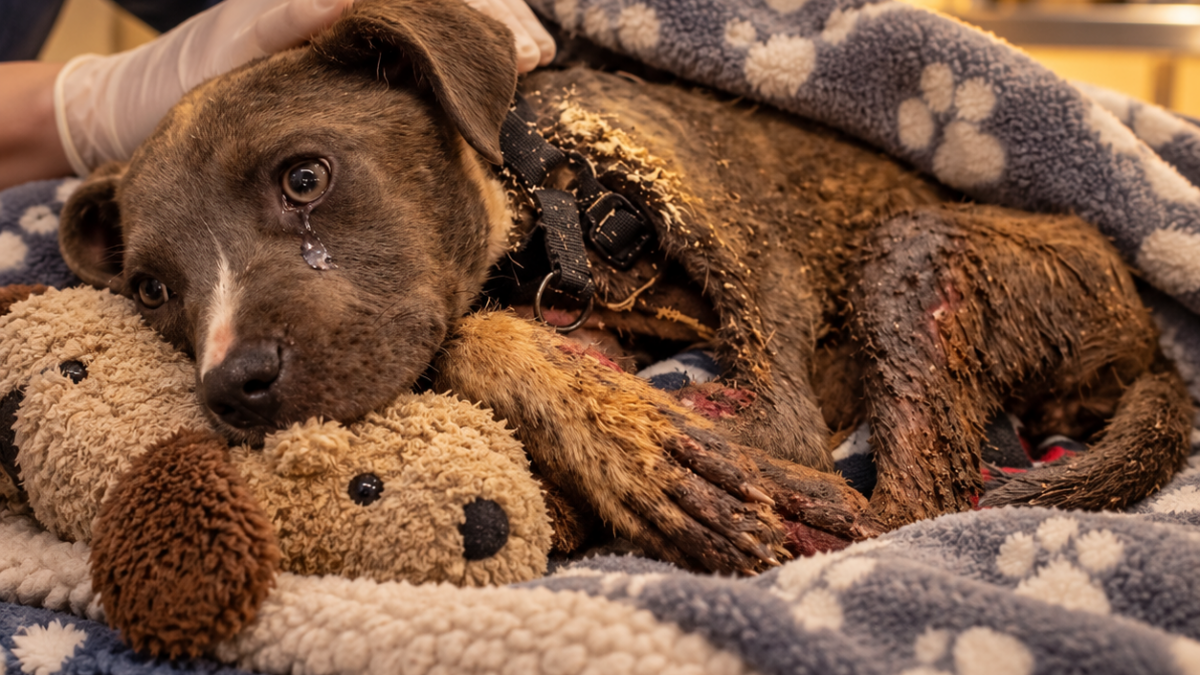
I thought the call would be another ordinary abandoned-puppy case until the man on the phone told me the little dog inside the crate was too weak to stand, too exhausted to cry, and still trying to press herself toward his hand whenever he reached for her.
By the time I arrived at that empty lot, she was wrapped in an old towel inside a stranger’s kitchen, trembling so badly that the coffee cup beside her rattled against the table, yet every time someone touched her gently, she leaned closer as if she had been waiting her entire short life to discover that human hands could also mean comfort.
We named her Prayer because that first night there was almost nothing we could promise her except that we would stay—and none of us knew yet that the person who left her there had made one mistake that would eventually bring the entire story back to their door.
My name is Rachel Moore, and I had been volunteering with Heartland Pet Rescue for almost nine years when Prayer came into my life.
The call came shortly after 7:00 on a Tuesday morning.
A man named Thomas Reed lived beside a vacant lot on the edge of town, and from his kitchen window he had noticed what looked like an old plastic crate near a pile of discarded tires.
At first he ignored it.
People dumped things there constantly.
Furniture.
Broken appliances.
Trash bags.
But when he walked outside to take his recycling bin to the curb, he heard something.
Not barking.
Not whining.
A faint movement.
Then a soft scratch.
He went closer.
Inside the crate was a puppy.
She was tiny, maybe ten or twelve weeks old, with a light brown coat that was patchy from severe skin irritation. The bedding beneath her was badly soiled, and she was so weak that when Thomas opened the crate, she tried to stand and immediately sank back down.
He didn’t leave her there.
That decision probably saved her.
Thomas carried the entire crate into his house, wrapped the puppy in a clean towel, set a shallow bowl of water nearby, and started calling local rescues until someone answered.
That someone was me.
When I arrived, Thomas was kneeling beside the kitchen table.
The puppy lay wrapped in two towels.
Her head rested against his palm.
“I didn’t know what else to do,” he said.
“You did exactly what you were supposed to do.”
I crouched.
The puppy lifted her eyes.
That was all.
No attempt to escape.
No growl.
No energy for anything except breathing.
I touched one finger to the side of her face.
She leaned toward it.
Thomas swallowed.
“She keeps doing that.”
“Doing what?”
“Trying to get closer whenever somebody touches her.”
I looked at the little dog.
Despite everything, she still wanted contact.
That broke something in me.
We moved quickly.
At Riverbend Veterinary Center, Dr. Allison Grant took one look and brought us directly into treatment.
The puppy was dehydrated.
Extremely underweight.
Her skin was inflamed and painful.
She needed careful cleaning, fluids, bloodwork, temperature support, and close observation.
When a technician offered water, the puppy’s tongue moved slowly.
Then she drank.
Not much.
But enough to make everyone in the room watch.
“Good girl,” I whispered.
She looked at me.
“What do we call her?” the technician asked.
Nobody had thought that far ahead.
Thomas had come with us.
He stood near the door.
Then he said quietly:
“Prayer.”
Dr. Grant looked up.
“Prayer?”
Thomas nodded.
“Because I think she needs one.”
The name stayed.
But water was only the beginning.
Prayer refused food.
Her bloodwork came back.
Dr. Grant stared at the results longer than I liked.
“What?”
She turned the screen toward me.
“Her sodium is dangerously elevated.”
“How dangerous?”
“Dangerous enough that we have to be extremely careful.”
I didn’t understand.
“If she’s dehydrated, can’t we just give her more fluids?”
“Not quickly.”
Dr. Grant shook her head.
“If we correct this too fast, we can create serious neurological complications. Her body has adapted to these levels. We have to bring them down slowly.”
“How long?”
“We monitor. We adjust. We don’t rush.”
Prayer lay beneath a warm blanket, one sore paw resting against the edge.
The room became very quiet.
There was no dramatic procedure that could fix everything in an hour.
No miracle injection.
Just careful medicine.
Time.
And a fragile little puppy whose body had already been pushed too far.
That evening, she still would not eat.
At midnight, she still would not eat.
By morning, her sodium had moved only slightly.
Dr. Grant called me into treatment.
Prayer was awake.
Barely.
I sat beside her.
“Come on, sweetheart.”
A technician placed a tiny amount of soft food near her mouth.
Prayer turned away.
Then paused.
Smelled it.
Looked at us.
And slowly took one bite.
PART 2
Nobody celebrated loudly.
That’s the strange thing about moments you have been waiting for all night.
You imagine everyone cheering.
Instead, all four of us simply stopped breathing.
Prayer chewed once.
Swallowed.
Then lowered her head.
Dr. Grant whispered:
“Again.”
The technician offered another tiny piece.
Prayer smelled it.
For a second, nothing happened.
Then she opened her mouth.
Second bite.
I covered my face.
Thomas, who had returned before work, looked away toward the wall.
“Is that good?” he asked.
Dr. Grant smiled.
“Very.”
“Then why does everybody look like they’re about to cry?”
“Because rescue people are unstable.”
That came from Maria, one of the veterinary technicians.
We laughed.
Quietly.
Prayer ate five bites that morning.
Five.
I wrote the number in my phone because somehow it felt important.
Five bites.
The first proof that her body had not completely given up.
But we weren’t out of danger.
Not even close.
Her sodium level had to come down slowly.
Too slowly for my patience.
Exactly slowly enough for her safety.
Every few hours, bloodwork.
Adjust fluids.
Recheck.
Wait.
Prayer slept through most of it.
Whenever she woke, someone was beside her.
That became our unspoken rule.
She had already spent enough time alone.
## 1
For the first forty-eight hours, Prayer’s world was small.
Warm blankets.
Soft voices.
IV tubing.
A shallow water dish.
A few spoonfuls of food.
People entering and leaving quietly.
She was too tired to care who we were.
But she noticed hands.
That fascinated me.
You might expect a neglected puppy to shrink from people.
Prayer did sometimes flinch at sudden movement, especially if a hand reached over her head.
But if you approached from the side and let her smell you first, she would lean into your palm.
Every time.
Maria said:
“She shouldn’t still trust us.”
Dr. Grant answered:
“Maybe trust isn’t what we think it is.”
“What do you mean?”
“Maybe right now she just knows warmth feels better than being alone.”
I thought about that.
Trust doesn’t always begin as faith.
Sometimes it starts as relief.
## 2
Thomas visited every day.
He had no obligation to.
He wasn’t the owner.
Hadn’t caused the problem.
Didn’t work with rescue.
He was a fifty-eight-year-old electrician who had gone outside one morning expecting to move trash away from his fence.
Instead, he became the first person in Prayer’s new life.
On the third day, he brought a small stuffed dog.
“Is this stupid?”
“Yes,” I said.
He looked offended.
“I’m still giving it to her.”
Prayer eventually slept with her chin across it.
Thomas took fourteen photographs.
“Don’t say anything.”
“I haven’t.”
“You’re thinking it.”
“I am.”
## 3
On day four, her sodium reached a safer range.
Not normal.
Safer.
That word became beautiful.
Her temperature stabilized.
She began eating small meals voluntarily.
She could lift herself onto her front legs.
Then one afternoon, while Maria changed the bedding, Prayer tried to stand.
Her hind legs shook.
I instinctively reached for her.
Dr. Grant stopped me.
“Let her try.”
Prayer pushed.
Almost upright.
Collapsed.
Paused.
Tried again.
This time she stood for maybe three seconds.
Four.
Then sat down.
Thomas whispered:
“Look at you.”
Prayer looked toward his voice.
Her tail moved.
Once.
The room went silent again.
First bites.
First stand.
First tail wag.
Recovery happens in tiny pieces.
## 4
By day six, we began learning more about her skin.
Some irritation was from prolonged poor care.
Some from parasites.
There was secondary infection.
Nothing untreatable.
But healing would take weeks.
Medicated baths.
Topical care.
Antibiotics.
Good nutrition.
Time.
Again, time.
Prayer hated baths.
Not dramatically.
She simply looked betrayed.
Maria washed her with warm water and a gentle medicated shampoo.
Prayer stood stiffly in the tub.
I held her chest.
“You’re okay.”
She stared at me as though filing a formal complaint.
Afterward, we wrapped her in towels.
Thomas arrived ten minutes later.
“She looks smaller.”
“Wet puppies always do.”
“She was already small.”
“Then now she’s very small.”
Prayer sneezed.
Thomas laughed.
That was the first time I heard a normal sound around her.
Not worried voices.
Not medical equipment.
Laughter.
Prayer’s life was starting to include ordinary things.
## 5
On day eight, she walked.
Not far.
From one blanket to the other side of the treatment kennel.
Maybe four feet.
But she did it without falling.
Maria opened the kennel.
Prayer looked at the floor.
Then at us.
One step.
Second.
Third.
Her legs trembled.
She continued.
When she reached me, she pressed her head against my shin.
I knelt.
“Hi.”
Her tail moved.
More than once this time.
We posted our first public update that evening.
No graphic photographs.
No shocking language.
Just a clean picture of Prayer wrapped in a yellow blanket and an explanation that she had been found abandoned in unsafe conditions, was receiving veterinary treatment, and had taken her first independent steps.
People responded immediately.
Messages.
Donations.
Foster offers.
Most were kind.
One was strange.
A woman wrote:
**Where exactly was she found?**
I answered generally.
East side of the county.
She replied:
**What kind of crate?**
That question stayed with me.
## 6
I sent the message to our rescue director, Denise.
“Could be nothing.”
“Could.”
“Could be somebody who recognizes the situation.”
“Exactly.”
We checked the account.
Name:
Melissa Crane.
Mostly private.
Profile photograph showed a woman in her thirties with two dogs.
No obvious connection.
We didn’t contact her again.
Instead, Denise called animal control.
Prayer’s abandonment had already been reported because leaving an animal in that condition was an investigation matter.
Officer Luis Herrera had photographed the crate.
Blue plastic.
Metal door.
One corner cracked.
No tag.
No name.
But there was something we hadn’t noticed.
A faded sticker beneath the handle.
Most of the printing had peeled away.
A few numbers remained.
Officer Herrera photographed it under better light.
It was part of an old veterinary boarding label.
We could make out:
**…582**
And three letters:
**CRA**
Not much.
But sometimes not much is enough to begin.
## 7
Prayer left the clinic on day eleven.
Not because she was fully recovered.
Because she was stable enough to continue healing in foster care.
That foster was supposed to be me.
Temporarily.
I had two dogs already.
Walter, a twelve-year-old Lab mix.
And Daisy, a six-year-old Beagle with strong opinions.
My house was not looking for another dog.
I told everyone this.
Repeatedly.
Dr. Grant handed me Prayer’s medications.
“Temporary.”
“Yes.”
Maria carried out the blankets.
“Absolutely.”
Thomas brought the stuffed dog.
“Clearly.”
Denise gave me the foster papers.
“All of you need to stop smiling.”
Nobody did.
Prayer rode home in the passenger seat inside a clean carrier lined with soft blankets.
Halfway there, she fell asleep.
Head against the stuffed dog.
I drove twenty miles below the speed limit.
## 8
Walter met her first.
He was gentle with puppies.
Mostly because he considered them beneath his dignity.
Prayer sniffed his face.
Walter sniffed hers.
Then walked away.
Excellent.
Daisy was different.
She examined Prayer from nose to tail.
Prayer froze.
Daisy sneezed.
Prayer sneezed back.
Something was decided between them.
Within thirty minutes, Daisy was lying beside Prayer’s pen.
That became important later.
At first, Prayer slept almost constantly.
Her body had a lot of repair to do.
She ate four small meals a day.
Drank normally.
Took medication.
Hated the medicated wipes.
Loved chicken.
Loved warm laundry.
Feared the sound of plastic crates being dragged across hard floors.
That last one took me a while to understand.
The first time I moved her empty travel crate, it scraped against the tile.
Prayer dropped flat.
Not ran.
Not barked.
Just became small.
I stopped immediately.
“Okay.”
Daisy came over.
Sniffed her.
Prayer stayed frozen for nearly a minute.
Then slowly stood.
After that, I lifted crates.
Never dragged them.
## 9
The investigation moved quietly.
Officer Herrera traced the partial veterinary sticker.
The letters “CRA” could have belonged to dozens of clinics.
But the number format helped.
One local practice used six-digit boarding labels ending in the last three digits of a patient number.
Crane Veterinary Wellness.
Interesting name.
Melissa Crane.
Her account.
But that didn’t mean anything by itself.
The clinic was owned by Dr. Robert Crane.
Melissa was his niece.
Denise called.
Not accusing.
Just asking whether they could identify the crate label.
They could.
The label was old.
But yes, it was theirs.
Patient number ending 582.
Records search:
A female puppy.
Tan.
Approximately eight weeks old at first visit.
Owner:
Melissa Crane.
My stomach dropped.
## 10
The record contained a name.
**Poppy.**
Prayer had once been Poppy.
Vaccinated once.
Treated for fleas.
No follow-up.
No second vaccine.
No skin treatment.
The clinic notes indicated she had been obtained “from a friend with accidental litter.”
Melissa told animal control the puppy had been rehomed two weeks before Prayer was found.
To whom?
“Someone online.”
Name?
Didn’t remember.
Phone number?
Deleted.
Messages?
Phone changed.
Address?
Unknown.
Officer Herrera asked:
“Did you use a blue plastic crate?”
Melissa hesitated.
“Maybe.”
“Did you give the crate to the new owner?”
“I don’t remember.”
Not proof.
But enough for more questions.
## 11
The biggest break came from Thomas.
Not intentionally.
He called me one afternoon.
“I remembered something.”
“What?”
“The car.”
“What car?”
“The morning I found Prayer.”
He had mentioned hearing a vehicle before dawn but hadn’t thought anything of it.
Many people used the road.
Now he remembered why it stood out.
“It backed into the lot.”
“How do you know?”
“My bedroom window faces the alley.”
“Did you see it?”
“Only taillights.”
“What kind?”
“Small SUV.”
Color?
“Dark.”
Helpful, but vague.
Then:
“My neighbor has cameras.”
I nearly dropped the phone.
## 12
The camera wasn’t pointed directly at the empty lot.
But it caught the street.
At 4:43 a.m., a dark gray crossover slowed.
Turned.
Disappeared toward the lot.
At 4:49, it returned.
The license plate was partially visible.
Officer Herrera enhanced the footage.
Four characters clear.
Melissa Crane drove a dark gray crossover.
Plate matched the visible characters.
Still not absolute proof.
But now the story was narrowing.
Melissa was interviewed again.
Her account changed.
She had driven through that neighborhood.
Why?
Couldn’t remember.
At 4:43 in the morning?
She worked early.
But she didn’t work at the clinic.
Her uncle later confirmed that.
Then she said she had been visiting a friend.
Name?
She refused.
Her attorney became involved after that.
## 13
Meanwhile, Prayer discovered the yard.
The first time I carried her outside, she stood on the grass and didn’t move.
She’d been in hospital rooms.
My kitchen.
A small indoor pen.
Grass seemed like a new planet.
Daisy ran past.
Prayer watched.
Then took one step.
Another.
Sniffed.
A leaf moved.
Prayer jumped backward.
Daisy chased it.
Prayer followed.
For three minutes, she forgot she was recovering.
She ran.
Not fast.
Not far.
But she ran.
Her body was still too thin.
Her coat still patchy.
Her legs still weak.
None of that mattered.
She chased Daisy across the yard.
Then collapsed in the grass.
Not from illness.
From puppy exhaustion.
I sat beside her.
She rolled partly onto her side.
Sun on her belly.
Daisy lay nearby.
That photograph later became the one people shared most.
Not the rescue photograph.
Thank God.
A puppy in sunlight.
That’s who I wanted people to see.
## 14
The skin improved.
Slowly.
Fur returned first as a soft fuzz.
Then thicker.
Her ribs became less visible.
Her face changed.
That’s something people don’t always notice.
Malnourished puppies have an old look.
Prayer had looked tired beyond her age.
As she gained strength, her face became young.
Eyes brighter.
Ears higher.
Mouth open when she ran.
She started stealing socks.
That was the moment I knew we were in trouble.
I found five beneath the couch.
“Prayer.”
She looked at me.
Daisy looked guilty too.
Walter left the room.
Smart dog.
## 15
Thomas visited on Saturdays.
Prayer recognized his truck.
The first time she heard it pull into my driveway, she ran to the front door.
I opened it.
Thomas stepped inside.
Prayer launched herself at his legs.
Not gracefully.
She was still small enough that it didn’t matter.
Thomas crouched.
“Hey, little girl.”
Prayer climbed into his lap.
Thomas cried.
He didn’t hide it.
“I was afraid she wouldn’t remember.”
“She remembers.”
Prayer licked his face.
“Okay. She remembers too much.”
## 16
The rescue posted a transformation video after six weeks.
Nothing shocking.
First frame:
Prayer wrapped in a blanket at the clinic.
Then:
Eating.
Standing.
Walking.
Grass.
Daisy.
Sunlight.
The final clip showed Prayer racing across my yard with a tennis ball three times too big for her mouth.
The video spread farther than we expected.
Hundreds of thousands of views.
Then more.
Local news called.
We agreed to one interview.
Careful language.
No sensational details.
No blaming anyone not charged.
The reporter asked:
“Why did you name her Prayer?”
I told the story.
Thomas had said she needed one.
The reporter asked:
“And did it work?”
I looked at Prayer asleep beside Daisy.
“I think people worked.”
That was the truth.
Prayer wasn’t saved by a wish.
She was saved by Thomas noticing.
A rescue answering.
Veterinarians measuring.
Technicians watching sodium.
Fosters feeding.
Officers investigating.
People acting.
Hope mattered.
Action mattered more.
## 17
Melissa saw the video.
We know because she contacted the rescue.
Not through her attorney.
Directly.
She emailed:
**That dog belongs to me.**
Denise called me immediately.
I reread the message.
“Why now?”
“Because she’s healthy.”
“That isn’t fair.”
“I didn’t say it was.”
Melissa claimed she had never surrendered ownership.
Prayer had supposedly been rehomed temporarily.
Now she wanted her returned.
Our attorney responded.
The rescue had accepted Prayer under animal-control hold and medical transfer pending investigation.
Ownership would be decided through legal process.
Melissa sent another message.
**I paid for her first vet visit. She’s mine.**
Then another:
**You people are using my dog for publicity.**
That made me angry.
Not because I cared about publicity.
Because she had waited until Prayer looked like a puppy again.
No email while Prayer lay in critical care.
No phone call.
No missing report.
No search.
Now:
Mine.
## 18
The case got stronger.
The empty lot had one more camera.
Not obvious.
A trail camera mounted by the property owner because people dumped construction debris.
Officer Herrera hadn’t found it during the first inspection because it faced inward toward the tire pile.
The property owner checked the memory card weeks later.
There she was.
Melissa.
Clear enough.
4:45 a.m.
Gray crossover.
She opened the rear door.
Pulled out the blue crate.
Set it beside the tires.
Stood there for twelve seconds.
Then drove away.
No ambiguity.
No stranger.
No temporary rehoming.
No lost contact.
Melissa.
## 19
When confronted, she finally admitted it.
Not immediately.
Through her attorney.
Prayer had developed skin problems.
Then stopped eating well.
Melissa became overwhelmed.
She had recently moved.
Money was tight.
She had called one rescue but didn’t get an immediate answer.
She became frustrated.
Scared the veterinary cost would be too high.
So she drove to the empty lot.
Her attorney emphasized that she believed someone would find the crate quickly.
Officer Herrera asked the obvious question.
“Why not leave her at a shelter?”
Melissa said she was embarrassed.
“Why not call your uncle’s clinic?”
More embarrassment.
“Why not knock on the door of the man who lived beside the lot?”
Silence.
Every answer eventually reached the same place.
She had options.
She chose secrecy.
## 20
I struggled with anger after that.
Not abstract anger.
Specific.
Melissa knew Prayer.
Had named her Poppy.
Had taken her to a veterinarian.
Prayer had probably slept in her home.
Played with her things.
Trusted her.
Then, when care became difficult, Melissa removed herself from the problem and left the responsibility somewhere strangers might find it.
The phrase that bothered me most was:
“I thought someone would help her.”
Maybe.
But if you believe someone should help, why not be that someone long enough to hand the animal safely to the next person?
That’s the line.
## 21
Melissa wasn’t portrayed publicly as a monster.
I refused.
Her life didn’t need to be destroyed for Prayer’s recovery to matter.
But accountability did matter.
The final case involved abandonment and animal-care violations under local law.
She accepted a plea.
Fines.
Restitution toward Prayer’s veterinary expenses.
Probation.
Mandatory animal-welfare education.
A temporary restriction on owning additional animals during the compliance period.
She formally relinquished any claim to Prayer.
That last part mattered most to me.
No more:
Mine.
Prayer belonged to her future.
## 22
Melissa’s restitution didn’t cover all the medical care.
Not close.
Prayer’s treatment had been expensive.
But something interesting happened.
The rescue board voted to put part of the restitution into an emergency medical fund.
Prayer’s Fund.
I argued against the name.
Lost.
The fund helped animals whose owners genuinely wanted to surrender safely but feared they couldn’t afford immediate care.
That was important.
We didn’t want Prayer’s story to teach:
Poor people are bad pet owners.
Wrong lesson.
Sometimes finances collapse.
Sometimes people need help.
The lesson was:
Ask.
Call.
Hand the animal to someone safely.
Don’t disappear.
Prayer’s Fund helped make that easier.
## 23
The first dog helped by the fund belonged to a man named Hector.
His elderly terrier needed treatment he couldn’t afford.
Hector had been sleeping in his car after losing housing.
He called the shelter before things became dangerous.
We arranged temporary foster care and medical support.
Months later, when Hector found stable housing, the terrier went back to him.
That story made me cry.
Prayer’s case had begun because somebody hid a problem.
The fund rewarded people who didn’t.
That’s justice I understand.
## 24
Prayer continued becoming a completely unreasonable puppy.
She dug one hole beneath my hydrangeas.
Then another.
Stole Daisy’s bed despite having three of her own.
Chewed the corner of a rug.
Discovered sprinklers.
Hated the vacuum.
Loved bananas.
I have no explanation for the bananas.
The first time she barked at her reflection in the sliding glass door, Walter looked at me with an expression that clearly said:
You brought this here.
I apologized.
He did not accept.
## 25
At three months in foster care, Prayer’s coat had returned almost completely.
Soft tan fur.
White chest.
Dark nose.
Her eyes stayed enormous.
People who saw recent photographs couldn’t connect her to the puppy from the clinic.
Good.
That transformation made people emotional.
What made me emotional was something smaller.
One afternoon, Prayer didn’t finish dinner.
I immediately worried.
Old habits.
I checked her temperature.
Normal.
Energy?
Very normal.
She had destroyed a cardboard box fifteen minutes earlier.
I called Dr. Grant anyway.
“She left food.”
“How much?”
“Maybe a quarter.”
“Rachel.”
“She always finishes.”
“Prayer is now a healthy puppy who occasionally gets full.”
I stared at the bowl.
Dr. Grant continued:
“This is a good problem.”
She was right.
A puppy who once wouldn’t eat because her body was failing had become secure enough to decide she’d had enough.
I left the bowl.
Prayer went to sleep beside Daisy.
## 26
The first time Prayer slept in the sunshine with Daisy became one of my favorite memories.
Not because of the photograph people later loved.
Because of the position.
Prayer on her side.
Belly exposed.
Legs stretched.
Eyes closed.
No crate.
No walls.
No one watching her.
Completely vulnerable.
Completely relaxed.
Daisy’s back touched hers.
I stood at the kitchen door and watched.
Recovery changes posture.
At the clinic, Prayer had curled inward.
Made herself small.
Now she occupied space.
A lot of it.
## 27
Adoption applications started around month four.
I hated all of them.
Not because they were bad.
Because they existed.
Denise called me out immediately.
“You’re doing it.”
“Doing what?”
“Finding reasons.”
“This one works ten-hour shifts.”
“They work from home three days.”
“Still.”
“This family has another dog.”
“What if Prayer doesn’t like him?”
“They already met.”
“She tolerated him.”
“Rachel.”
“What?”
“You are becoming a foster failure.”
I objected.
Strongly.
Then went home and found Prayer sleeping with her head on Walter’s back.
I knew.
Didn’t admit it.
## 28
Thomas complicated everything.
He wanted Prayer too.
Not impulsively.
His wife had died several years earlier.
He lived alone.
Fenced yard.
Stable job.
No other animals.
He had found her.
Saved her first.
He would have been an excellent adopter.
When he finally asked, my stomach dropped.
“Would it be wrong?”
“No.”
“I keep thinking about her.”
“I know.”
“She knows me.”
“She does.”
Thomas looked at Prayer.
Then at Daisy.
Prayer was trying to steal the same toy Daisy had.
He smiled.
“She also belongs here.”
I didn’t answer.
He did.
“You’re keeping her.”
“I haven’t decided.”
“Sure.”
Everyone had become unbearable.
## 29
I made myself think seriously.
Prayer deserved the best home.
Not the home that made me feel best.
That’s a dangerous distinction in rescue.
I looked at my life.
Two existing dogs.
Yard.
Work from home most days.
Experience with medical care.
Prayer bonded deeply to Daisy.
Walter tolerated her.
I could afford her.
I wanted her.
That last point wasn’t enough by itself.
Combined with everything else?
Maybe.
I told Thomas:
“If I don’t adopt her, you’re first call.”
He nodded.
“Fair.”
Then he kissed Prayer’s forehead.
“Make her earn it.”
Prayer stole his glove.
## 30
The adoption became final six months after Prayer was found.
Denise brought paperwork to my house.
Thomas came.
Dr. Grant came after work.
Maria too.
Ridiculous for one adoption.
Prayer didn’t understand any of it.
I signed.
Name:
Prayer Moore.
Owner:
Rachel Moore.
I looked at the line longer than necessary.
Denise said:
“You okay?”
“Yes.”
“You’re crying.”
“No.”
Maria handed me tissues.
Traitors.
## 31
Thomas gave Prayer a new collar.
Yellow.
Small metal tag.
One side:
**PRAYER**
Other:
**I AM HOME**
I almost made him take it back.
Then I put it on her.
Perfect.
## 32
Prayer grew.
Not huge.
About forty-three pounds fully grown.
Long legs.
Lean body.
Ridiculous ears.
She became fast.
Very fast.
The same puppy once too weak to stand could cross my yard in seconds.
She and Daisy developed a daily routine.
Three laps around the fence.
Fight over a toy.
Drink water.
Collapse in the sun.
Walter watched like an exhausted grandfather.
For years, people continued sending messages:
How is Prayer?
Is she okay?
Did she stay with the foster?
I posted occasional updates.
But less over time.
That was intentional.
Prayer deserved to become a dog instead of a permanent tragedy.
## 33
The first anniversary of her rescue, Thomas came over at 7:00 a.m.
Same approximate time he’d called us.
He brought donuts.
For humans.
Chicken for Prayer.
We walked to the empty lot.
Not with Prayer.
I didn’t want to make the place symbolic for her.
It meant nothing to her now.
Good.
The city had cleaned it.
Tires gone.
Grass cut.
The place where Thomas found the crate looked ordinary.
He stood there.
“I hate this lot.”
“I don’t.”
He looked at me.
“Why?”
“Because it’s not where she lives.”
That changed his expression.
We left.
## 34
Prayer never returned there.
She had better places.
My kitchen.
Daisy’s bed.
Thomas’s porch.
Riverbend Veterinary Center, where she was treated like royalty.
The park.
A lake she loved.
The sunny patch beside the fence.
Places defined by life.
Not abandonment.
## 35
Melissa contacted the rescue once after completing her probation.
She asked whether Prayer was alive.
Denise forwarded the message to me.
My first reaction was anger.
Then curiosity.
I wrote:
**Yes. She is healthy and adopted.**
Melissa replied:
**Thank you. I think about her every day.**
I didn’t know what to say.
So I didn’t.
Two days later:
**I know I don’t deserve pictures. I just wanted to know she made it.**
That was different.
I sent one.
Prayer asleep beside Daisy.
No explanation.
Melissa answered:
**Thank you.**
Nothing else.
## 36
I never told Prayer about Melissa.
Obviously.
Dogs don’t need our moral narratives.
Prayer knew who filled her bowl.
Who opened the door.
Who sat beside her when thunder frightened her.
Who took her to the vet.
Who returned.
That was enough.
## 37
Over time, my anger toward Melissa changed.
Not disappeared.
Changed.
I still believed she had made a serious, harmful choice.
But the more I worked rescue, the more I saw how close overwhelmed people can come to bad decisions.
A woman called us one night crying.
Three puppies.
Eviction the next morning.
No car.
She said:
“I don’t know what to do.”
We went.
Because she called.
That’s the difference.
She didn’t hide them somewhere and hope chance would become responsibility.
She asked.
We helped.
Prayer’s story made me answer those calls differently.
Less judgment.
More urgency.
People often need an exit before panic turns into abandonment.
## 38
Prayer’s Fund grew.
A local business matched donations.
Then a veterinary clinic.
Then an elderly woman left part of her estate to the rescue.
Within five years, the fund had assisted more than two hundred animals.
Food.
Temporary boarding.
Emergency treatment.
Safe surrender transportation.
Spay/neuter support.
Every grant required one thing:
Communication.
Tell us what’s happening.
Don’t disappear.
That became Prayer’s legacy.
Not a punishment.
A doorway.
## 39
Thomas eventually adopted a dog.
Not Prayer.
A senior Boxer named Rosie.
Nine years old.
Gray muzzle.
Arthritis.
Nobody had applied for her in four months.
Thomas walked into the shelter and said:
“Show me the one people keep walking past.”
I laughed when Denise told me.
Rosie lived with him for five years.
He said they were the best five.
When she died, Prayer sat beside him on the porch while he cried.
Full circle in ways nobody planned.
## 40
Prayer grew especially close to Thomas.
Whenever his truck pulled into my driveway, she knew.
Even at ten years old.
Tail.
Door.
Excitement.
He always said:
“She was mine for twenty minutes before she was yours.”
“Incorrect.”
“I carried the crate.”
“Temporary possession.”
“Legal technicality.”
Prayer didn’t care.
She loved both of us.
Dogs are generous that way.
## 41
Daisy died first.
She was fourteen.
Cancer.
Quick decline.
Prayer was eight.
She had never lived in my home without Daisy.
The day after, she searched.
Bedroom.
Kitchen.
Yard.
Daisy’s bed.
Then sat beside it.
I didn’t remove the bed.
Not for weeks.
Prayer eventually started sleeping there.
Grief isn’t uniquely human.
I don’t claim animals understand death the way we do.
But they understand absence.
## 42
After Daisy died, Prayer became more attached to Walter.
Poor Walter was sixteen.
He had wanted a peaceful retirement.
Prayer disagreed.
She slept near him.
Followed him slowly.
If he slipped, she stood nearby until I helped.
The puppy he once considered annoying became his companion.
Walter died peacefully at seventeen.
After that, Prayer was the only dog.
The house felt empty.
She felt it too.
We adjusted.
## 43
When Prayer turned ten, Dr. Grant noticed a mild heart murmur.
Nothing urgent.
Monitoring.
At eleven, arthritis in one knee.
Medication helped.
At twelve, she slowed.
The dog who used to fly across the yard now walked.
Still happy.
Still hungry.
Still stealing socks occasionally.
Age was allowed.
That’s important.
Prayer had spent her beginning fighting to survive.
Her later problems were ordinary.
Old joints.
Gray face.
Long naps.
What a privilege.
## 44
People sometimes sent me the original rescue video.
“Look how far she’s come!”
I appreciated the intention.
But eventually I stopped watching it.
Prayer didn’t need to keep being compared to her worst day.
I had newer videos.
Prayer refusing to come inside because she liked the sun.
Prayer barking at a snowman.
Prayer stealing Thomas’s sandwich.
Prayer snoring.
Those were better.
## 45
On her thirteenth birthday, Thomas brought a cupcake for me and a dog-safe treat for Prayer.
She ate the treat in four seconds.
Then stared at his cupcake.
“No.”
Prayer stared.
“No.”
She moved closer.
“Absolutely not.”
He gave her a tiny piece of plain cake.
I glared.
Thomas shrugged.
“She survived critical sodium levels. She can have cake.”
“That is not medicine.”
“Birthday medicine.”
Prayer supported his argument.
## 46
At fourteen, kidney disease appeared.
Early.
Manageable.
Diet change.
Medication.
More water.
Prayer hated the prescription food.
Of course.
We negotiated.
Dr. Grant told me:
“The goal is quality, not perfection.”
That became my rule.
Prayer ate.
Walked.
Wanted affection.
Enjoyed the yard.
Good.
## 47
Then came the winter she stopped running entirely.
Not suddenly.
One day I realized I couldn’t remember the last time she’d sprinted.
That hurt.
I looked at the yard.
The fence line she used to race with Daisy.
The sunny patch where they slept.
Prayer stood beside me.
Gray around the muzzle.
I touched her head.
“You used to be fast.”
She looked at me.
“You were.”
Tail wag.
She didn’t care about youth.
Why do we?
## 48
Thomas came over more often.
He was older too.
Retired.
Prayer and Thomas took slow walks together.
They were perfect.
Both stubborn.
Both needed breaks.
One afternoon, I watched from the porch.
Thomas stopped near the oak tree.
Prayer stopped.
He sat on a bench.
Prayer lay beside him.
Twenty minutes.
No movement.
Just two old friends sitting.
I photographed them.
That became my favorite picture of Prayer.
Not the sunshine puppy.
Not the blanket.
This one.
Old dog.
Old man.
Peace.
## 49
Prayer’s final decline began at fifteen.
Kidneys worsened.
Appetite changed.
Some mornings she ate.
Some she didn’t.
Dr. Grant had retired from full-time practice but still came in twice a week.
She examined Prayer.
Then sat on the floor.
“You remember me?”
Prayer sniffed her.
Tail moved.
Dr. Grant laughed.
“I spent enough money on your treatment to be unforgettable.”
Technically the rescue did.
But I let her have it.
## 50
We adjusted medications.
Prayer improved for several months.
Then one morning she refused chicken.
That was the moment I knew.
Prayer refused food sometimes.
Never chicken.
I called.
Bloodwork showed advanced kidney failure.
Hospitalization might buy time.
Maybe days.
Maybe weeks.
I asked:
“Comfort?”
Dr. Grant was quiet.
“Uncertain.”
I looked at Prayer.
She was tired.
Not panicked.
Just tired.
I remembered her first days.
How hard everyone had worked to keep her alive.
And I realized love sometimes asks the opposite thing at the end.
Not:
Stay.
But:
You don’t have to.
## 51
I called Thomas.
He arrived within twenty minutes.
Prayer heard his truck.
Even then.
Her head lifted.
Tail moved twice.
Thomas came inside.
Knelt slowly.
His knees weren’t good.
“Hey, little girl.”
Prayer pressed her forehead into his chest.
Thomas cried.
“So you remember me.”
Of course.
## 52
We chose an in-home goodbye.
No clinic.
Prayer had spent enough important moments under fluorescent lights.
Her last day was sunny.
That mattered only because she loved sunshine.
I put her bed near the back door.
The door open.
Warm air.
Birds.
Thomas sat beside her.
I sat on the other side.
The old stuffed dog he bought on her first hospital stay was still in a box upstairs.
I brought it down.
Missing one ear.
Prayer sniffed it.
Then rested her head across it.
Fifteen years collapsed.
## 53
Dr. Grant came herself.
Retired or not.
“I started this case.”
“You didn’t have to.”
“Yes, I did.”
She sat beside Prayer.
No white coat.
No rush.
Just Allison.
Prayer’s breathing was slow.
I touched her shoulder.
The fur there was thick.
Healthy.
No sore patches.
No irritation.
No evidence anyone looking at her now could easily recognize from that first morning.
That was the body she had grown into.
Not the body we found.
## 54
Thomas whispered:
“Remember when she couldn’t stand?”
“Yes.”
Prayer’s paw rested near his hand.
He put one finger beneath it.
“She leaned into my hand in the kitchen.”
“I know.”
“I thought she was dying.”
“So did I.”
He looked at me.
“We did all right.”
I smiled through tears.
“She did most of it.”
## 55
Dr. Grant gave the first medication.
Prayer relaxed.
No fear.
I scratched behind her ear.
The same place she’d leaned into my fingers at Thomas’s house.
“You don’t have to keep trying.”
My voice broke.
I had said the opposite fifteen years earlier.
Come on.
Eat.
Stand.
Stay.
Now:
Rest.
That’s the arc nobody wants but everybody who loves an animal eventually faces.
## 56
Prayer breathed slowly.
Thomas held one paw.
I kept my hand against her chest.
Dr. Grant waited until we were ready.
Nobody ever is.
Still, we nodded.
The final medication went in.
Prayer exhaled.
One breath.
Another.
Then quiet.
The sunshine remained exactly the same.
Birds kept moving.
The world was rude enough to continue.
## 57
Thomas bent forward.
Pressed his forehead to hers.
“Best thing I ever found near garbage.”
I laughed and cried simultaneously.
“That sounds terrible.”
“She knows what I mean.”
Maybe she did.
Maybe not.
## 58
Prayer’s ashes stayed with me.
Part of them.
Thomas asked for a small amount.
I said yes immediately.
He placed them beside Rosie’s urn.
I put Prayer’s beside Daisy and Walter.
Family.
## 59
I did not scatter her ashes in the empty lot.
People suggested it.
No.
That place didn’t deserve the ending.
The empty lot was where somebody left her.
Home was where she lived.
Big difference.
## 60
Prayer’s Fund received hundreds of donations after we announced her death.
We did not repost the worst photographs.
We used the picture of Prayer and Thomas on the bench.
Old.
Peaceful.
Caption:
**Prayer, 15. Loved all the way home.**
That was enough.
## 61
The fund later expanded.
Safe Surrender Assistance.
Emergency medical grants.
Temporary foster care.
Transportation.
Crisis boarding.
A simple hotline.
The first question wasn’t:
Why did you let this happen?
It was:
What do you need right now to keep this animal safe?
That question saved lives.
I know because I watched it happen.
## 62
A young mother called at midnight once.
Dog.
Eviction.
No car.
She was sobbing.
“I don’t want to leave him somewhere.”
I closed my eyes.
Prayer.
“We’re coming.”
She surrendered safely.
Months later, after stabilizing her housing, she adopted again from us.
Not the same dog—he had already found a home.
She cried.
So did we.
No shame.
Just responsibility.
## 63
Melissa never contacted me again after Prayer died.
I don’t know whether she heard.
Probably.
Public posts were visible.
I don’t know what she felt.
I don’t need to.
Her guilt isn’t Prayer’s legacy.
Her punishment isn’t Prayer’s ending.
That’s important.
## 64
If you want the “revenge” version, I can give you one.
Melissa left Prayer hidden where she hoped somebody else would take responsibility.
The camera exposed the truth.
She lost any claim to Prayer.
She paid fines and restitution.
She faced restrictions.
Her actions became part of a public case.
The money she paid helped create systems preventing other animals from being left the same way.
The puppy she once couldn’t manage lived fifteen years.
That’s enough.
## 65
But the most satisfying answer was never punishment.
It was abundance.
Prayer once lay weak beside a water bowl and needed encouragement to take a few sips.
Years later, she had three water bowls because I was obsessive.
Prayer once refused food because her body was shutting down.
Years later, she rejected expensive prescription food because she preferred chicken.
Prayer once couldn’t stand.
Later she ran through grass fast enough that I couldn’t photograph her clearly.
Prayer once slept inside a crate that had become unsafe.
Later she slept wherever she wanted.
Couch.
Bed.
Sun.
Daisy.
Thomas’s feet.
Everywhere.
## 66
That is the revenge.
Not pain returned.
Life returned.
## 67
The person who made Prayer small lost the power to define her.
Prayer took up space.
She occupied beds.
Destroyed toys.
Barked.
Ran.
Got old.
Needed arthritis medication.
Became inconvenient.
Became expensive.
Became loved.
## 68
People underestimate the importance of “inconvenient.”
A rescued animal becoming inconvenient means it finally expects to stay.
Prayer didn’t spend fifteen years performing gratitude.
Thank God.
She demanded breakfast.
Ignored me.
Rolled in mud after baths.
Refused to come inside.
Stole food.
That’s safety.
An animal doesn’t need to spend its life saying thank you for being saved.
It needs to live.
## 69
Prayer lived.
That’s the sentence.
Everything else is explanation.
## 70
Years later, Thomas and I returned once more to the empty lot.
The city had built a small community garden nearby.
Children’s bicycles.
Raised vegetable beds.
Sunflowers.
The exact place where the crate had been was now grass.
Thomas looked around.
“Do you remember the spot?”
“Approximately.”
He pointed.
“There?”
“Maybe.”
He laughed.
“Good.”
“What?”
“That we can’t tell.”
I understood.
The place had lost its power.
## 71
There was no plaque.
No memorial.
No reminder.
Again:
Good.
Prayer’s memorial was elsewhere.
In the rescue office.
A framed photograph.
Prayer running.
Not weak.
Not wrapped in towels.
Running.
Beneath it:
**WHEN PEOPLE ASK FOR HELP BEFORE THEY RUN OUT OF OPTIONS, WE ANSWER.**
That’s her legacy.
## 72
Thomas died several years after Prayer.
Heart failure.
Peacefully.
His daughter called me.
In his wallet, behind his driver’s license, he had kept a tiny photograph.
Prayer at about six months old.
Tongue out.
Standing in my yard.
On the back:
**Found her 4/12. Best thing I ever carried home.**
I cried for an entire evening.
## 73
His daughter gave me the photograph.
I keep it beside Prayer’s collar.
Yellow.
Scratched.
The tag still says:
**I AM HOME.**
Simple words.
More powerful than anything else in the story.
## 74
Because that is what Prayer needed from the beginning.
Not fame.
Not outrage.
Not a viral video.
Home.
Safety.
Consistency.
A bowl that would be filled again.
A person who returned.
A friend in the sunshine.
Time.
## 75
The comments under her transformation videos always said:
“She looks like a different dog.”
They meant it kindly.
But she wasn’t different.
She was Prayer without crisis.
That’s important.
The playful dog was always inside the frightened puppy.
She simply needed enough safety for us to meet her.
## 76
That’s true of many rescue animals.
We don’t create their personality.
We remove enough fear for it to emerge.
Prayer emerged loudly.
Mostly through stolen socks.
## 77
I still foster.
Fewer dogs now.
I’m older.
One at a time.
Whenever a frightened puppy arrives, I remember Prayer’s first bite.
Five tiny bites.
That was all.
Nobody looking at those five bites could have predicted fifteen years.
That’s why I don’t underestimate small progress.
One bite.
One step.
One tail wag.
One night of sleep.
Beginnings rarely look impressive.
## 78
The rescue keeps Prayer’s old medical chart archived.
Dangerously elevated sodium.
Dehydration.
Skin infection.
Poor condition.
Monitoring.
Gradual correction.
Then:
**Eating voluntarily.**
I love that line.
Clinical.
Boring.
Wonderful.
## 79
“Eating voluntarily” eventually became:
Running voluntarily.
Playing voluntarily.
Trusting voluntarily.
Living voluntarily.
## 80
The first hands Prayer knew after the crate belonged to Thomas.
She leaned into them.
The last hands she felt belonged to Thomas, me, and Dr. Grant.
Gentle.
No urgency.
No fear.
I can’t undo what happened before Thomas found her.
Nobody can.
But I can tell you what came afterward.
And afterward was longer.
Much longer.
## 81
One terrible morning did not get equal weight with fifteen good years.
It shouldn’t.
## 82
That’s why, when people ask me to tell Prayer’s story now, I start differently.
I don’t say:
“She was found in terrible condition.”
I say:
“Prayer loved bananas.”
People laugh.
Then I tell them she raced Daisy around the yard.
That she adored Thomas.
That she hated medicated baths.
That she slept in sunshine.
Then, if necessary, I explain where she started.
Because I want people to meet the dog before the suffering.
## 83
The suffering was something done to her.
The life was hers.
## 84
That distinction matters.
## 85
If Melissa ever thinks about the puppy she called Poppy, I hope she remembers the same thing.
Not the crate.
Not the court.
Not the fines.
I hope she remembers that Prayer lived.
Maybe that brings guilt.
Maybe relief.
Both can exist.
But her feelings are not the center.
Prayer is.
## 86
We eventually stopped using Prayer’s original photograph in fundraising materials.
Some people disagreed.
“The before-and-after is powerful.”
Yes.
But there is a cost to freezing an animal in the image of its worst day.
So we used the running photograph.
Donations did not stop.
People can care without being shocked.
That’s something I wish more organizations trusted.
## 87
You don’t always need the ugliest detail to move someone.
Sometimes the image of what safety creates is stronger.
Prayer running through grass.
That’s enough.
## 88
The Facebook version of her story that people shared years later had one line I loved:
**She was once too weak to stand. Then she learned how much yard forty-three pounds of joy could cover.**
That was Prayer.
## 89
And if you still want a dramatic ending, here it is.
A person once left a puppy hidden in an empty lot because responsibility felt overwhelming.
Years later, the money from that case helped people choose a different option.
The puppy grew old enough to develop gray fur.
The man who found her became family.
The foster became permanent.
The frightened body became a healthy one racing in sunlight.
The dog who once refused food lived long enough to become picky.
The dog who once had nowhere safe to sleep spent fifteen years choosing between three beds and usually taking mine.
## 90
No punishment could be more satisfying than that reversal.
## 91
Prayer didn’t defeat anybody.
She outlived a moment.
That is different.
And better.
## 92
She outlived the crate.
Outlived the medical crisis.
Outlived the investigation.
Outlived the viral posts.
Outlived Daisy.
Outlived Walter.
Almost outlived Thomas.
She became old.
I keep returning to that word.
Old.
What a privilege for an animal we once feared might not survive the week.
## 93
At the end, her body failed for ordinary reasons.
Not because someone neglected her.
Not because someone left her.
Because she had lived long enough for kidneys to age, joints to ache, fur to turn gray.
I will take that ending every time.
## 94
On her last day, Prayer’s tag rested against the blanket.
**I AM HOME.**
I touched it after she died.
Those words had been true for fifteen years.
They remained true afterward.
## 95
Home isn’t always a place an animal begins.
Sometimes it is something built afterward.
One meal.
One night.
One person.
Then another.
Repeated until fear stops expecting loss.
Prayer got there.
## 96
So when I think of Thomas walking toward what he assumed was dumped trash, I think about the tiny difference between noticing and not noticing.
He could have stayed inside.
Could have assumed the lot was somebody else’s problem.
Could have called city sanitation the next day.
Instead, he heard movement.
Walked closer.
Opened the crate.
Carried Prayer home.
One choice.
Then another.
That’s how rescue happens.
## 97
No superhero.
Just people refusing to walk away.
## 98
Thomas refused.
We refused.
Dr. Grant refused.
Maria refused.
Prayer refused too, in her own way.
Five bites.
Three seconds standing.
Four feet walking.
One lap around the yard.
Then fifteen years.
## 99
That’s the progression I want remembered.
## 100
Prayer was once a tiny puppy wrapped in blankets while a veterinary team watched numbers on a screen and lowered her sodium level one careful step at a time.
Nobody could rush her recovery.
Nobody could promise the ending.
We could only do the next right thing.
Water.
Warmth.
Food.
Medicine.
Foster.
Patience.
Evidence.
Accountability.
Home.
And when all those small decisions finally added up, the puppy who had once been too weak to hold herself upright became the dog I watched race through my backyard beside her best friend, sunlight flashing across a healthy coat while Thomas laughed from the porch and tried to pretend he wasn’t crying.
That is the Prayer I remember.
Not hidden.
Not helpless.
Not alone.
Running.
Loved.
Home.
And in the end, the person who left her behind became a footnote in a life that grew far larger than the moment they tried to walk away from.
That was enough justice for me.
More than enough.
Because Prayer did not merely survive what happened to her.
She lived long enough for it to stop being the most important thing anyone could say about her.
**THE END**


