PART 2: He Cried Behind a Locked Gate for Days—Then I Climbed the Wall and Found the Dog Everyone Else Had Walked Past
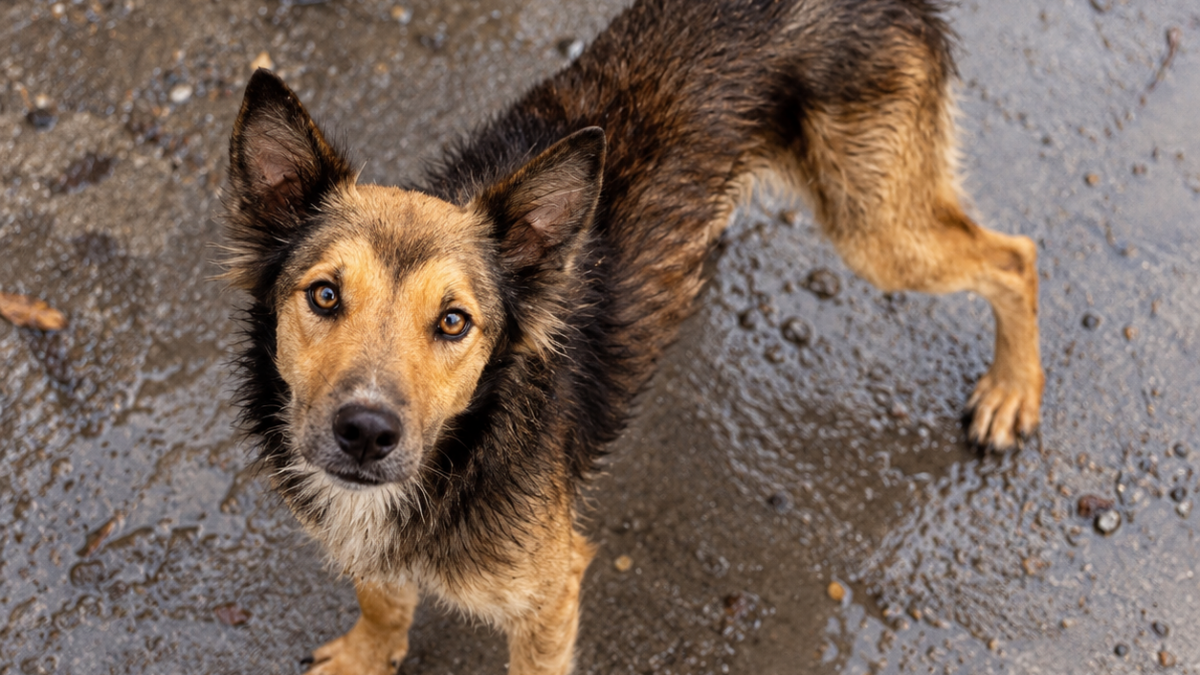
For three days, people on that street heard a dog crying behind a locked metal gate, but every time they passed the property, they told themselves someone else would eventually do something.
When I climbed over the wall and finally saw Zeus, he was standing on legs that barely seemed strong enough to hold him, yet the first thing he did when I spoke softly was give me the faintest wag of his tail as if he was still willing to believe a human voice could mean safety.
I thought the hardest part would be getting him over that wall and keeping him alive long enough to recover, but the name written on one forgotten document inside that house eventually led us to a truth far bigger than one starving dog behind one locked gate.
My name is Rachel Bennett, and at the time I worked with a small independent rescue outside St. Louis. We weren’t a large organization with trucks, uniforms, or a full-time legal team. Most days it was a handful of volunteers answering messages, borrowing crates, coordinating vet appointments, transporting animals in our own cars, and stretching donations far enough to cover one more bag of food or one more medical bill.
The message about Zeus came from a seventeen-year-old girl named Maya.
She wrote:
Please help. There is a dog locked behind a gate at the empty house near mine. He has been crying for days. I don’t think anyone is feeding him.
There was a blurry photograph attached.
Even through the gate, I could see how thin he was.
I called her immediately.
“Is anyone living there?”
“I don’t think so.”
“Have you seen anyone come in or out?”
“No.”
“Did you call animal control?”
“My mom did. They said they’d send someone when they could.”
“When was that?”
“Yesterday.”
“And he’s still there?”
“Yes.”
I grabbed my keys.
The property sat at the end of a narrow residential street where most homes had small front yards, chain-link fences, children’s bikes, and flower pots. This house was different. The grass had grown tall. Curtains were closed. Mail spilled from the box. A rusted metal gate blocked the driveway.
Then I heard him.
A cry.
Not loud.
Not dramatic.
Just weak enough to make my stomach tighten.
“Zeus?”
Maya stood across the street with her mother.
“That’s what the neighbor says his name is.”
I walked to the gate.
The padlock was closed.
“Hello?”
Nothing from the house.
I knocked.
No answer.
I walked around the side as far as the neighboring fence allowed.
Still no visible person.
Then Zeus appeared behind the gate.
He was a large shepherd mix, probably sixty pounds at a healthy weight, but there was nothing healthy about him that day. His coat was dusty and dull, his body far too narrow, and small dark parasites clung around his ears and neck. His eyes looked exhausted.
But when he saw me, he came closer.
Slowly.
His tail moved once.
I crouched.
“Hey, sweetheart.”
He stopped several feet away.
Unsure.
I held up the soft food I’d brought.
His nose moved.
That was all it took.
I knew I couldn’t stand outside waiting.
The side wall was about six feet high.
Maya’s mother said:
“Are you seriously going over?”
“Yes.”
“Shouldn’t you wait for police?”
“I’ve called dispatch. They’re sending someone.”
“Then wait.”
I looked through the gate.
Zeus had lowered himself to the ground.
He was still watching the food.
“No.”
I climbed.
Gracefully?
Absolutely not.
I scraped my jeans, nearly lost one shoe, and landed inside the yard harder than intended.
Zeus backed away.
I immediately sat down.
“Okay.”
No pressure.
No grabbing.
No sudden movement.
I opened the food and placed it on the ground several feet from me.
Zeus stared.
Then took one step.
Another.
When he reached the bowl, he ate so quickly I had to pull it away after a few bites to keep him from making himself sick.
“I know.”
He looked at me.
“I know you’re hungry.”
I gave him smaller portions.
While he ate, I spoke quietly.
“You’ve been waiting a long time, haven’t you?”
His tail moved.
Barely.
After several minutes, he came close enough to sniff my hand.
Then he did something I still remember more clearly than almost anything from that day.
He leaned his forehead against my wrist.
Not for long.
Just one second.
Then backed away.
It felt like permission.
When the officer finally arrived and helped us open the gate legally, Zeus didn’t resist when I wrapped my arms beneath his chest.
But lifting him nearly stopped me emotionally.
I could feel every ridge beneath his fur.
“Easy.”
He was lighter than he should have been.
Outside the property, we sat on the curb waiting for transport to the clinic.
Zeus rested his head against my arm.
Then the dog who had spent days crying where everyone could hear him slowly lifted his muzzle and tried to lick my hand.
I laughed and cried at the same time.
“You’re unbelievable.”
At the veterinary hospital, Dr. Hannah Cole examined him and gave us the first piece of good news.
“He is very underweight, dehydrated, covered in fleas and ticks, and his liver values are mildly stressed, but I don’t see evidence of permanent organ damage yet.”
“Yet?”
“We need bloodwork repeated after feeding and fluids.”
“Can he recover?”
She looked at Zeus.
“Yes.”
For the first time all day, I breathed.
But then the police officer called me from the property.
“Rachel?”
“Yes?”
“We found something inside.”
“What?”
“A folder with veterinary records.”
Pause.
“The owner listed on them isn’t the person who owns the house.”
And that was the first moment I realized Zeus had not simply been forgotten.
Someone had placed him there.
Then walked away.
PART 2
The veterinary folder was old and badly wrinkled, found on a kitchen counter beneath unopened mail, utility notices, and a stack of grocery-store advertisements that had never been touched. The officer couldn’t simply hand private records to me, but because Zeus was now under an active welfare investigation, animal control was able to verify the relevant information through proper channels.
The name listed on every veterinary page was Caleb Monroe.
Zeus had been registered to him for almost six years.
Annual exams.
Vaccinations.
A minor stomach infection.
One emergency visit after Zeus cut a paw on broken glass.
Two years earlier, the veterinarian had described him as:
Friendly, energetic, highly food motivated, affectionate with familiar adults.
I read that sentence on the screen when Officer Daniels showed me.
Friendly.
Energetic.
Highly food motivated.
I looked through the glass into the treatment room.
Zeus was asleep under a warming blanket with an IV catheter taped to one front leg. His body looked almost too small for his head.
“That’s him?”
Daniels nodded.
“Same microchip.”
“What happened?”
“That’s what we’re trying to find out.”
The address listed in Zeus’s records wasn’t the house where we’d found him.
It was twenty minutes away in a newer neighborhood.
Animal control drove there that evening.
The place was empty.
The landlord confirmed Caleb Monroe had moved out almost four months earlier.
“Did he have a dog?” Daniels asked.
“Big brown-and-black one,” the landlord said. “Quiet dog. Friendly.”
“Zeus?”
“Yeah.”
“What happened to him when Caleb moved?”
The landlord shrugged.
“I assumed he took him.”
He hadn’t.
The abandoned house belonged to Caleb’s uncle, Robert Monroe, who had died the previous winter. Probate paperwork showed the property was still tied up in an estate dispute and wasn’t legally occupied. Caleb had a key because he had been helping clear the building after his uncle’s death.
That explained how Zeus could be behind a locked gate.
It didn’t explain why.
The backyard contained a torn dog bed, two plastic bowls, three empty feed bags, and a storage bin with an old leash, flea shampoo, and half a bag of stale treats.
Those objects told a story more disturbing than an empty yard would have.
Zeus hadn’t been dropped there for one night.
Someone had tried to make the place function as temporary housing.
Then someone stopped coming.
Dr. Cole ordered what she called a controlled refeeding plan.
My instinct was simple.
Give him everything.
Her response was immediate.
“No.”
“He’s hungry.”
“Exactly.”
“That makes no sense.”
“It does medically.”
Severely undernourished animals can become very ill if fed too much too quickly after prolonged deprivation. His digestive system, electrolytes, liver, and heart all needed time to adjust.
Small meals.
Measured calories.
Frequent checks.
Fluids.
Bloodwork.
Parasite treatment.
Rest.
Patience.
I hated the word patience.
Zeus needed it.
The first night after rescue, he slept almost continuously.
We moved him from the hospital into our rescue’s small medical foster room once Dr. Cole decided he didn’t need twenty-four-hour hospitalization. The room was nothing special: washable floor, one window, two crates, a dog bed, and a folding cot for whichever volunteer pulled overnight duty.
I volunteered.
Not because anyone asked.
Because when I stood to leave the clinic, Zeus lifted his head.
That was enough.
At eleven that night, I fed him the third small meal of the evening. He ate every bite, licked the bowl, then kept licking the empty floor where the bowl had been.
“I’m sorry.”
He stared at me.
“Doctor’s orders.”
He licked the floor again.
“I know.”
I sat beside him but didn’t touch him.
His trust was strange.
He allowed handling when necessary.
He leaned into me sometimes.
But if I moved too fast, his body tightened.
If a door closed loudly, he flinched.
If I stood between him and the exit, he shifted away.
He wasn’t afraid of people exactly.
He was afraid of being unable to leave.
At two in the morning, I woke to soft footsteps.
Zeus was standing beside my cot.
He looked at me.
Then lowered himself onto the blanket beside my sleeping bag.
Not touching.
Just close.
I stayed completely still.
Within minutes, he slept.
The next morning, Maya came with her mother.
She stopped in the doorway.
“Is that really him?”
Zeus already looked slightly different.
Not healthier, exactly.
Cleaner.
We had removed most of the ticks and started flea treatment. His coat had been gently wiped down. His eyes had received lubricating drops because dehydration had irritated them.
Maya’s face crumpled.
“I thought he was going to die.”
“So did I.”
Zeus lifted his head at her voice.
Maya crouched.
“Hey.”
His tail moved once.
Her mother covered her mouth.
“You saved him,” I told Maya.
She shook her head quickly.
“No. You did.”
“I climbed a wall.”
“You answered the message.”
She still looked uncertain.
“For three days people heard him,” I said. “You were the one who kept asking until somebody came.”
That mattered.
Rescue stories often focus on the person carrying the animal away.
But somebody usually notices first.
Somebody decides not to ignore what they saw.
Maya had been that somebody.
We posted one update on the rescue’s page.
Nothing graphic.
Nothing accusing anyone.
Zeus is safe, receiving veterinary care, and beginning a closely monitored recovery after being found alone behind a locked gate. We are especially grateful to the young neighbor who reached out and refused to ignore him.
Within hours, messages began arriving.
At first people simply wished him well.
Then came one that changed everything.
I know that dog.
Another:
Please call me. I used to live with Zeus’s owner.
Then:
Caleb has done this kind of thing before.
I called Officer Daniels.
“You’re going to want to see these.”
The woman who had lived with Caleb was named Stephanie Lane.
She agreed to meet Daniels at the animal-control office.
I attended because the rescue now had legal custody of Zeus during the investigation.
Stephanie brought photographs.
Zeus on a couch.
Zeus wearing a red bandanna at Christmas.
Zeus beside a lake.
Zeus younger, heavier, shiny-coated, mouth open in a relaxed grin.
I almost didn’t recognize him.
Stephanie cried when she saw the newest photograph.
“Oh my God.”
“You haven’t seen him recently?”
“Not in almost a year.”
“Was he yours too?”
Her answer was complicated.
“Caleb bought him. Caleb’s name was on everything. But I raised him with him.”
“What happened when you separated?”
“I wanted Zeus.”
“Caleb said no?”
She laughed without humor.
“He knew I wanted him, so of course he said no.”
“Was Zeus being neglected then?”
“Not like this.”
“Anything concerning?”
Stephanie thought for a long time.
“Caleb got impatient when Zeus got older.”
“How?”
“Zeus gained weight. Needed more exercise. Started having stomach issues. Caleb said the vet bills were ridiculous.”
“Did you offer to take him again?”
“Three times.”
“What did Caleb say?”
Stephanie looked toward me.
“He said, ‘He’s my dog.'”
That sentence would become a theme.
Ownership.
Not responsibility.
Possession.
Not care.
Another former neighbor named Aaron called.
He remembered Zeus spending long periods tied in Caleb’s backyard during Caleb’s last summer at the rental property.
“How long?” Daniels asked.
“Couple hours. Sometimes more.”
“Did he have shade?”
“Yeah.”
“Water?”
“I think.”
“Did he look thin then?”
“Somewhat.”
“Did you report it?”
Aaron looked embarrassed.
“No.”
“Why?”
“It didn’t look that serious.”
I understood.
Gradual neglect trains observers to accept each stage.
A dog loses a few pounds.
Maybe he’s sick.
A dog spends more time outside.
Maybe the owner is busy.
A dog cries.
Maybe he’ll stop.
A day passes.
Then another.
By the time the situation looks undeniable, everyone wonders how nobody noticed.
Usually people did notice.
They just didn’t know when concern became responsibility.
Aaron remembered another detail.
A white SUV had started appearing at Caleb’s rental property several nights a week.
The driver was a woman.
Tara Whitfield.
Caleb’s new girlfriend.
Public records showed Caleb and Tara had moved into a condominium complex about six weeks before Zeus was found.
The condo association had a strict thirty-pound pet limit.
Zeus weighed thirty-eight pounds when rescued and should have weighed more than sixty.
He could never have lived there legally.
Motive began taking shape.
Not proof.
But motive.
Animal control contacted Caleb.
He answered on the second call.
At first, he said he didn’t know where Zeus was.
Officer Daniels reminded him the dog was microchipped in his name.
Silence.
Then Caleb changed his answer.
Zeus had “run away.”
“From where?” Daniels asked.
“The old house.”
“When?”
“A couple weeks ago.”
“Why was he there?”
“I was between places.”
“Why didn’t you report him missing?”
“I figured he’d come back.”
Daniels looked at me while the phone remained on speaker.
“Mr. Monroe, the dog was found behind a locked gate.”
Long silence.
Then Caleb said:
“Someone must’ve locked it after he got out.”
“How would he get back inside?”
Another silence.
“I don’t know.”
Caleb claimed a friend named Mike had been feeding Zeus.
Last name?
He couldn’t remember.
Phone number?
Lost when he changed phones.
Where did Mike live?
“Nearby.”
Specific address?
Didn’t know.
Payment records showing Caleb paying Mike?
Cash.
Any messages?
Deleted.
The imaginary friend was becoming very convenient.
Then the phone data arrived.
Not immediately.
Proper legal procedure took time.
Once investigators established enough evidence, they obtained records showing Caleb’s phone had visited the abandoned property repeatedly over six weeks.
At first nearly every day.
Then every second day.
Then twice in one week.
Then nothing.
Eleven days before Maya’s message, Caleb’s phone stopped appearing near the property completely.
No other known device connected to him showed a regular pattern of visits either.
For eleven days, Zeus had likely been alone.
The food bags were empty.
The water bowl held rainwater and leaves.
The back door was locked.
He had no access inside.
Night temperatures had dropped close to freezing several times.
Dr. Cole documented his body condition carefully.
She estimated that Zeus had been receiving inadequate food for longer than the final eleven days.
The decline had started before Caleb stopped coming completely.
Caleb’s version changed again.
He said Zeus had been “refusing food.”
Dr. Cole almost laughed when she heard that.
“This dog?”
She pointed at Zeus, who was licking the underside of a slow-feeder bowl after finishing breakfast.
“He tried to eat gauze yesterday.”
“So that’s not plausible?”
“Could an ill dog refuse food? Yes. Does Zeus currently show evidence that he voluntarily refused enough food to reach this condition? No.”
Bloodwork didn’t support a severe chronic illness causing weight loss.
No cancer.
No advanced kidney disease.
No endocrine condition.
No intestinal obstruction.
Parasites contributed.
But not enough.
The simplest explanation remained the strongest.
He hadn’t been adequately fed.
At the end of the first week, Zeus weighed forty pounds.
Only two pounds gained.
I was disappointed.
Dr. Cole wasn’t.
“Slow is good.”
“I want sixty.”
“You’ll get sixty.”
“When?”
“When his body gets there.”
“I hate medicine.”
“You hate time.”
Also true.
Zeus began showing us pieces of his personality.
Day six, he barked once when a delivery driver knocked.
We all turned.
Zeus looked surprised by his own voice.
Day eight, he picked up a stuffed duck.
Held it three seconds.
Dropped it.
Day ten, he followed me into the kitchen without hesitation.
That was when the dancing started.
I was preparing his meal.
He smelled it.
His tail began moving.
Then both front paws lifted briefly from the floor.
Down.
Up again.
A tiny bounce.
“What are you doing?”
Bounce.
I laughed.
“Are you dancing?”
Another bounce.
He had barely been able to stand twelve days earlier.
Now he was lifting his paws because dinner was coming.
I called our volunteer Emma.
“Come here.”
“What?”
“Watch.”
Zeus bounced.
Emma screamed.
I glared.
“Don’t scare him.”
“Sorry.”
Zeus bounced again.
The video on my phone lasted twenty-two seconds.
I didn’t post it.
The legal case was active.
But I watched it constantly.
The first real setback came two days later.
I accidentally closed the exercise-yard gate behind us.
The latch clicked.
Zeus froze.
His body changed instantly.
Head low.
Ears back.
He rushed toward the gate and started pawing.
Not violently.
Desperately.
“Zeus.”
No response.
I opened it immediately.
He ran through.
Stopped ten feet away.
Looked back at me.
I felt horrible.
“Okay.”
I sat down.
“That’s information.”
Our behavior consultant, Lisa, used that phrase constantly.
Not bad behavior.
Information.
The gate told us something.
Confinement had become frightening.
So we started slowly.
Day one:
Walk through open gate.
Treat.
Leave.
Day two:
Touch gate.
Treat.
Leave.
Day three:
Move gate halfway.
Treat.
Open.
Later:
Let latch rest without clicking.
Treat.
Open.
Weeks.
No forcing.
No “he has to learn.”
He was learning.
But learning safety requires control.
Eventually the latch clicked.
Zeus looked back.
I opened it.
Again.
Click.
Open.
Click.
Open.
One afternoon, the gate clicked and Zeus kept sniffing a patch of grass.
No reaction.
I stood there blinking hard.
Lisa looked at me.
“Don’t ruin it.”
“I’m not doing anything.”
“You’re crying.”
“Allergies.”
“In December?”
“Shut up.”
The messages between Caleb and Tara arrived next.
Three weeks before Zeus was found:
Tara: Condo says no dogs over 30 lbs.
Caleb: I know.
Tara: What are you doing with Zeus?
Caleb: Old house for now.
Four days later:
Tara: Did you find him somewhere?
Caleb: Nobody wants a big dog that age.
Zeus was only six.
Not even truly old.
Tara: Rescue?
Caleb: Too much paperwork.
Then:
Tara: At least keep feeding him.
No response.
A week later:
Tara: Have you checked Zeus?
Caleb: Been busy.
Three days later:
Tara: Give me the key. I’ll feed him.
Caleb: Don’t need you involved.
Those four words destroyed his claim that he had delegated care.
He hadn’t failed to find help.
He had refused help.
When Officer Daniels interviewed Tara, she cried.
“I should’ve gone anyway.”
“Without permission?”
“I should’ve called somebody.”
“You asked him repeatedly.”
“I knew something was wrong.”
“Did you know Zeus was in that condition?”
“No.”
“If you had?”
“I would’ve broken the gate myself.”
I believed her.
Still, guilt doesn’t follow legal responsibility neatly.
People carry what they carry.
Caleb hired an attorney.
His lawyer was good.
Calm.
Professional.
He reframed the whole situation.
Caleb had temporarily housed Zeus at a family property.
He had believed a third party was helping.
He had become overwhelmed during a housing transition.
He had not intended harm.
Intent would matter in some ways.
But not all.
An animal still needed food.
Water.
Care.
The attorney sent a letter demanding Zeus be returned.
I read it twice.
Then a third time.
“Returned?”
Daniels nodded.
“He’s still registered owner unless he voluntarily relinquishes or court intervenes.”
I felt sick.
“You’re telling me he could get Zeus back?”
“Not while the protective hold remains.”
“After?”
“We’ll ask the court.”
“Ask?”
Daniels sighed.
“Rachel, the system has process.”
“The system didn’t sit behind a gate.”
“No.”
He looked at Zeus sleeping under the office desk.
“But if we ignore process, we lose cases.”
I hated that he was right.
We filed everything.
Veterinary evidence.
Timeline.
Property photographs.
Text messages.
Witness statements.
Caleb’s conflicting explanations.
The judge extended Zeus’s protective custody pending the cruelty case.
Caleb was not allowed to reclaim him.
I slept better that night.
Stephanie came to visit.
I wasn’t sure how Zeus would react.
He heard her voice before seeing her.
His head snapped toward the hallway.
Stephanie stepped into view.
Zeus stood.
For a second, nobody moved.
Then Zeus ran.
Not fast—he still wasn’t strong enough for fast—but faster than I’d seen.
Stephanie fell to her knees.
“Baby.”
Zeus pressed against her.
Tail moving wildly.
She buried her face in his neck and cried.
I stepped out of the room.
That moment belonged to them.
Later Stephanie told me:
“I feel like I failed him.”
“You weren’t his owner anymore.”
“I knew Caleb could be cruel when angry.”
“Did you know he would do this?”
“No.”
“Then stop rewriting your past with information you only have now.”
She looked at me.
“You sound like a therapist.”
“I’m not.”
“Good.”
Stephanie offered to take Zeus permanently.
That complicated me.
She loved him.
He clearly loved her.
But she had two dogs already, one senior with medical needs, and lived in a small apartment.
She knew it too.
“I want to say yes.”
“You don’t have to prove anything.”
“I hate that Caleb got to decide I lost him.”
“He doesn’t get to decide now.”
We agreed Stephanie would remain part of Zeus’s life.
Not owner.
Not stranger.
Family in another form.
She visited often.
Zeus always celebrated.
Then went home with me.
At one month, Zeus weighed forty-seven pounds.
His coat began changing.
Dull fur shed away.
The new coat underneath looked deeper in color.
Thicker.
Softer.
His eyes no longer looked sunken.
He carried the stuffed duck around the room.
He started sleeping belly-up.
That one got me.
A dog who sleeps with his abdomen exposed is not thinking about immediate escape.
Not always.
But with Zeus, it mattered.
At six weeks, he discovered the couch.
I had tried to maintain rules.
No dogs on furniture.
Zeus had orthopedic beds.
Blankets.
A padded mat.
Then one rainy evening I found him on the couch with his head on my pillow.
He opened one eye.
I stared.
He closed it.
“Unbelievable.”
I sat beside him.
Rule ended.
Maya started volunteering every Saturday.
At first she did laundry.
Then bowls.
Then walked calm dogs.
Her mother worried she’d become too attached.
She did.
Good.
Maya had a natural way with scared animals.
No grabbing.
No baby voice.
She simply sat.
Zeus adored her.
Every time she arrived, he made a strange sound between a bark and a howl, then performed his kitchen dance even when no food existed.
“You’re his person,” I told her.
She smiled.
“You’re his person.”
“Apparently he has several.”
Best answer.
Two months after rescue, Zeus reached fifty-four pounds.
Dr. Cole smiled when he stepped onto the scale.
“Now we’re talking.”
I almost hugged her.
“Still want sixty-two.”
“Rachel.”
“Fine.”
She checked his bloodwork.
Liver values nearly normal.
Protein levels improved.
Red blood cell count better.
No evidence of permanent organ damage.
That was the phrase I had waited for.
“No permanent damage?”
“Not from what we can see.”
I cried.
Dr. Cole handed me a tissue without comment.
She had learned.
The criminal charges were filed shortly afterward.
Failure to provide adequate food and water.
Failure to provide necessary care.
Abandonment-related charge under local statute.
No dramatic language.
No sensational terms.
Specific legal obligations.
Specific failures.
The complaint documented Zeus’s condition but avoided unnecessary detail.
That mattered to me.
We didn’t need to turn his body into spectacle.
Evidence was enough.
Once the case became public, local media found us.
I declined most interviews.
Maya’s mother declined all.
We allowed one written statement:
Zeus is recovering well. We appreciate concern, but our priority is his health and a fair legal process.
Simple.
No attacks.
No photos of him at his worst.
Still, court filings were public.
The story spread.
People began sending adoption applications.
Hundreds.
Some wonderful.
Some alarming.
I want the famous dog.
Delete.
My son saw him online. Can we surprise him?
No.
We have no fence but let dogs roam free.
No.
Need guard dog.
Absolutely not.
Then there were genuinely good homes.
Experienced.
Stable.
References.
I kept finding problems.
Emma noticed.
“Rachel.”
“What?”
“You’re rejecting everyone.”
“No, I’m not.”
“You rejected a veterinary nurse with a fenced acre.”
“Her work schedule.”
“Her husband works from home.”
“Still.”
“You rejected a retired couple.”
“They travel.”
“They take dogs.”
“Unpredictable.”
Emma stared.
“He’s already adopted you.”
“No.”
“Rachel.”
“He needs a home.”
“He has one.”
“This is foster care.”
“You bought him a Christmas stocking.”
“It was discounted.”
“It says ZEUS.”
“Customization was free.”
She walked away laughing.
I signed the adoption paperwork three weeks later.
No announcement.
No dramatic post.
Just my name.
Rachel Bennett.
Owner.
Zeus Bennett.
I hated how much that meant.
Ownership had been the word Caleb used without responsibility.
I wanted it to mean the opposite.
Not possession.
Commitment.
That night I cooked chicken and rice.
Zeus stood behind me.
The bowl came out.
He danced.
Both front paws lifting.
Tail whipping.
I laughed.
“You’re home.”
He stopped dancing.
Walked forward.
Pressed his head into my thigh.
Stayed there.
I put both hands on him.
“Yeah.”
The court hearing happened three weeks later.
Caleb pleaded not guilty initially.
Dr. Cole testified.
Precise.
No emotional exaggeration.
The prosecutor asked:
“Could Zeus’s condition result from missing one or two meals?”
“No.”
“Three?”
“Highly unlikely.”
“Could untreated parasites contribute?”
“Yes.”
“Would they alone explain his condition?”
“No.”
“Was his weight loss consistent with prolonged inadequate nutrition?”
“Yes.”
The defense asked:
“Can you state who failed to feed him?”
“No.”
“Can you prove Mr. Monroe personally withheld food?”
“No.”
The attorney sat.
Then the prosecutor stood.
“Who was the registered owner?”
“Caleb Monroe.”
“Who was responsible for arranging care?”
“Ultimately, the owner.”
Maya testified.
She was terrified.
Her hands shook.
I sat behind the prosecutor with her mother.
“How long did you hear Zeus crying?”
“At least three days.”
“Did you see anyone enter the property?”
“No.”
“Why did you keep contacting people?”
Maya looked genuinely confused by the question.
“Because he was still crying.”
That sentence changed the room.
No performance.
No tears.
Just obvious morality.
If the problem remains, the responsibility to keep asking remains too.
The defense tried to minimize what she knew.
“You never saw Mr. Monroe at the property?”
“No.”
“You never saw the dog’s food before those three days?”
“No.”
“So you cannot tell us what care the dog received earlier.”
Maya nodded.
“No.”
The attorney smiled slightly.
Then Maya added:
“But nobody came while I was watching.”
Silence.
The attorney stopped.
Stephanie testified that she had offered to take Zeus before Caleb moved.
Some of the testimony was limited by relevance objections.
Enough remained.
Alternative existed.
Caleb refused.
Tara testified too.
She produced the messages.
Give me the key. I’ll feed him.
Don’t need you involved.
The defense argued people say things in relationships that don’t reflect actual plans.
True.
But the message existed.
So did the empty bowls.
So did Zeus.
The most damaging witness wasn’t any of us.
It was Caleb himself.
During a pretrial interview recorded with counsel present, the investigator asked:
“Why didn’t you surrender Zeus?”
Caleb answered:
“I didn’t want people judging me.”
“Judging you for what?”
“For leaving a dog.”
“So instead you left him at the house?”
Caleb realized the problem.
“I was going back.”
“When?”
“I don’t know.”
“You told Tara you were busy.”
“I was.”
“For eleven days?”
Silence.
That clip never needed a jury.
His lawyer changed strategy shortly afterward.
A plea agreement was reached.
Caleb admitted to neglect and an abandonment-related offense at a reduced level.
Probation.
Fines.
Restitution for part of Zeus’s medical care.
Mandatory animal-welfare education.
A multi-year restriction on owning or possessing companion animals without court approval.
Regular compliance checks during part of probation.
Some people online complained.
They wanted prison.
Long sentences.
Public destruction.
I understood the anger.
I had felt versions of it.
But when the judge read the animal-ownership restriction, I exhaled.
No new dog depending on him.
That mattered.
At sentencing, Caleb stood.
“I loved Zeus.”
I almost laughed.
Then I stopped myself.
Maybe he did believe that.
The judge asked:
“What does that mean to you?”
Caleb looked confused.
“I had him almost six years.”
“That’s duration.”
Pause.
“Love, in this context, is not the legal question. Responsibility is.”
Caleb said nothing.
The judge continued:
“An animal cannot unlock a gate, purchase food, call a veterinarian, arrange transport, or surrender itself safely. Ownership creates duties precisely because the animal depends on the owner for those things.”
Caleb nodded.
“You had alternatives.”
Another nod.
“Former partner.”
Pause.
“Current partner offering help.”
Pause.
“Rescue organizations.”
Pause.
“Animal control.”
Pause.
“A veterinarian.”
The judge looked at him.
“You chose delay.”
That word mattered.
Not one dramatic act.
Delay.
Then more delay.
Every day Zeus paid for Caleb’s avoidance.
Outside court, a reporter asked:
“Do you feel Zeus got justice?”
I hated the question.
Zeus wasn’t in court wanting Caleb punished.
He was at my house sleeping on a couch he wasn’t supposed to use.
“I think Zeus got a future.”
“Is that justice?”
“For him, yes.”
Consequences continued without our help.
Caleb worked for a property-maintenance company.
Court records revealed he had used a company vehicle during at least two visits to the abandoned property while clocked in elsewhere.
His employer investigated.
Suspended him.
Then terminated him.
Caleb later posted that animal activists had ruined his career.
No rescue volunteer contacted the company.
His own records did.
Actions travel.
Tara left him.
I learned because she contacted us months later asking how Zeus was doing.
“He’s good.”
“Can I see him?”
I hesitated.
She had not harmed him.
She had tried to help.
So we met at the rescue office.
Zeus sniffed her.
Tail wag.
No dramatic recognition.
Tara cried anyway.
“I’m sorry.”
“For what?”
“I knew he was there.”
“You asked Caleb repeatedly.”
“I should’ve done more.”
I said the same thing I’d said to Stephanie.
“You only know the ending now.”
She shook her head.
“I knew enough to worry.”
That sentence stayed with me.
Worry is information too.
Maybe not certainty.
Enough to act safely.
Tara began volunteering at a community pet-food bank later that year.
“I kept thinking about people who genuinely can’t afford food,” she told me. “Caleb could. But some people can’t.”
That distinction mattered.
Financial struggle is not the same as neglect.
Asking for help is not failure.
We don’t prevent abandonment by shaming every struggling owner.
We prevent it by making responsible choices easier.
That idea became Zeus’s Pantry.
At first it was a shelf in our rescue office.
Twenty bags of donated food.
Then forty.
A local grocery store offered damaged outer bags with intact packaging.
A veterinary clinic added vouchers.
A church donated storage space.
Within three months, we had a real program.
No social-media humiliation.
No photographs required.
Basic information.
Temporary assistance.
Referral to low-cost veterinary resources.
The first person through the door was a single mother named Carla.
Two children.
Old Labrador named Benny.
Her hours had been cut at work.
She was feeding Benny part of her own dinner.
“I don’t want you to take him.”
“We aren’t.”
She stared at me.
“Promise?”
“This is food assistance.”
She started crying.
Zeus happened to be under my desk.
He stood.
Walked toward her.
Carla touched his head.
“Is this him?”
“Yes.”
“The gate dog?”
“His name is Zeus.”
She nodded.
“Right. Sorry.”
Zeus leaned against her leg.
Carla left with sixty pounds of food and a referral for low-cost arthritis medication for Benny.
Six months later she returned with a donation.
Not because we required it.
Because she could.
Benny stayed home.
That’s success.
Zeus reached healthy weight at six months.
Sixty-one pounds.
I wanted sixty-two.
Dr. Cole refused to indulge me.
“He looks excellent.”
“One more pound.”
“Absolutely not.”
“Why?”
“Because you’re turning weight restoration into a competition.”
Maybe.
His coat was now thick and glossy.
His tail curved higher.
His shoulders had filled out.
The dog in the first rescue photograph looked like a distant relative.
People kept saying:
“He looks like a different dog.”
I corrected them.
“Same dog.”
Recovery doesn’t create a new animal.
It uncovers what deprivation hid.
Food anxiety remained.
At first, if dinner was ten minutes late, Zeus paced.
He followed me.
Licked the empty bowl.
Then the floor.
Then me.
I started using consistent meal times.
Breakfast at seven.
Dinner at six.
Same location.
Same cue.
Food appeared.
Every day.
Months passed.
One evening I came home twenty-five minutes late because of traffic.
I expected panic.
Zeus was sleeping.
He lifted his head.
Tail wagged.
No pacing.
No bowl licking.
He trusted dinner was still coming.
I nearly cried into the kibble bag.
Closed gates improved too.
Car rides took longer.
The first time I left him in the car for thirty seconds while I returned a library book, he panicked visibly through the window.
So we stopped.
Training.
One second.
Five.
Ten.
Door opens.
Person returns.
Eventually two minutes.
Five.
Ten.
At some point, Zeus learned that departure wasn’t permanent.
That’s a large lesson for a dog abandoned behind a locked gate.
One year after rescue, we posted the kitchen-dance video.
I had saved it from week two.
Then filmed a new one.
Same angle.
Same kitchen.
Old video:
thin Zeus barely lifting his paws.
New video:
healthy Zeus bouncing beside me, thick coat shining, tail swinging hard enough to move his whole body.
Caption:
One year ago, Zeus could barely stand. Today he dances when dinner is coming.
The post traveled farther than anything we’d ever shared.
Hundreds of thousands of views.
People loved the transformation.
I was careful about why.
We did not post close-up images of his worst condition.
We didn’t need them.
The story was not:
Look how awful he looked.
It was:
Look how fully he lives now.
Maya graduated high school that spring.
She asked if Zeus could be in her graduation photographs.
Her mother rolled her eyes.
“He isn’t graduating.”
Maya said:
“He started my career.”
She had decided to study veterinary technology.
So yes.
Zeus wore a blue bow tie.
He hated it.
The photograph hangs in our rescue office.
Maya in graduation gown.
Zeus beside her.
Underneath she later wrote:
He taught me that hearing suffering and answering it are two different things.
Stephanie remained in Zeus’s life.
Every few months, she visited.
Zeus remembered her every time.
No confusion.
No divided loyalty.
Dogs can love more than one person.
Eventually Stephanie married, moved, and adopted a senior dog.
She sent me a photograph.
Caption:
This one needed somewhere to land. Zeus taught me not to wait until it’s convenient.
Good.
Caleb completed probation without new animal-related violations.
The court notified our rescue when certain restrictions changed because we had restitution involvement.
He petitioned early to shorten the animal-ownership prohibition.
Denied.
A year later, he tried again.
Denied until the original minimum term expired.
His attorney argued Caleb had attended classes and complied fully.
The judge answered:
“Compliance with court orders is expected.”
I saved that line.
Petty?
A little.
Caleb wrote me seven years after the rescue.
Handwritten.
No lawyer.
No demand.
No excuse in the first paragraph.
That surprised me.
He said he had spent years thinking of the old house as a temporary mistake.
He kept telling himself he’d go back.
Then each missed day made it harder to face the next one.
Instead of solving the problem, he avoided it.
One sentence stopped me.
I kept thinking I had more time to fix it while Zeus was the one paying for every day I waited.
True.
He wrote that he didn’t expect forgiveness.
He hoped Zeus had a good life.
I didn’t reply.
Not as punishment.
There was nothing useful to reopen.
Zeus had moved forward without him.
Some apologies do their work without receiving an answer.
By then Zeus was thirteen.
Gray muzzle.
Mild arthritis.
One hip stiffer after long walks.
He still danced.
Lower now.
More bounce than jump.
Dr. Cole used it as a joke during checkups.
“Kitchen dance?”
“Yes.”
“Both paws?”
“Mostly.”
“Good.”
At ten, Zeus had developed a small splenic mass found incidentally during an ultrasound for stomach trouble.
I panicked.
Imaging suggested benign.
We monitored.
Six months.
Minimal change.
One year.
Slight growth.
Because his heart and kidneys were still strong enough, we chose surgery before age increased the risk.
The mass was removed.
Benign.
I cried so loudly after Dr. Cole told me that a technician brought tissues before entering the room.
Zeus woke from anesthesia and immediately looked toward the food shelf.
Of course.
At eleven, Zeus became slightly overweight.
Four pounds.
Dr. Cole said:
“He needs to lose weight.”
I stared.
“Say it again.”
“He needs to lose four pounds.”
I started laughing.
She looked annoyed.
“This isn’t funny.”
“You are telling me Zeus is overweight.”
“Four pounds can worsen arthritis.”
“I know.”
But I couldn’t stop smiling.
The dog we once weighed every ounce for now needed portion control.
That felt like victory.
We reduced cheese.
Zeus considered this betrayal.
Good.
Let him have ordinary problems.
Zeus’s Pantry grew beyond food.
Short-term boarding for owners hospitalized unexpectedly.
Emergency supplies after apartment fires.
Transport to low-cost clinics.
Temporary foster support during housing transitions.
The whole program revolved around one principle:
A crisis doesn’t have to become abandonment.
One man facing heart surgery came to us crying.
Two dogs.
No nearby family.
He had almost surrendered both to the county shelter.
We boarded them ten days.
He came home.
They came home.
No permanent separation.
No broken bond.
Zeus slept beneath the office desk while I signed the intake paperwork.
His story had become infrastructure.
At twelve, his heart developed a murmur.
Mild.
Then moderate.
Medication.
Monitoring.
No crisis.
At thirteen, he had his first fainting episode in the backyard.
One second standing.
Next second down.
I screamed his name.
By the time I reached him, his eyes were open.
Emergency clinic.
Heart-rhythm issue.
Medication adjustment.
He came home the next day.
I didn’t sleep that night.
Zeus did.
I lay beside his bed remembering our first night.
Then he had weighed less than forty pounds.
Now he was a heavy old dog with a gray face and expensive heart medication.
I touched his chest.
“You really committed to staying.”
Tail.
One slow tap.
Maya, now a veterinary technician herself, came over.
“You scared her.”
Zeus blinked.
“Don’t do it again.”
He sneezed.
Maya looked at me.
“I think that’s legally binding.”
“Good.”
We got another full year.
A good year.
Not a perfect one.
Slow walks.
Warm afternoons.
Senior-dog supplements.
Occasional coughing.
Lots of naps.
Pantry events.
Kitchen dances reduced to one-paw lifts.
At fourteen, we made him a dog-safe cake.
He ate too fast.
Burped directly into Maya’s face.
She looked offended.
I laughed until I cried.
Then winter came.
Zeus stopped finishing breakfast.
At first two bites remained.
Then half.
One morning, nothing.
Chicken?
No.
Cheese?
He sniffed.
Walked away.
I called Dr. Cole.
Bloodwork showed worsening kidney function.
Heart disease had progressed.
Liver changes consistent with age.
No single catastrophe.
Everything together.
A body becoming tired.
We adjusted medication.
Added fluids.
Special food.
Zeus hated the special food.
Of course.
He rallied for two weeks.
Ate.
Walked.
One evening, he performed a tiny kitchen bounce.
I cried.
Maya laughed.
“You’re encouraging him.”
“Absolutely.”
Then decline again.
Dr. Cole came to the house.
Zeus lay on his favorite bed near the kitchen.
She listened to his heart.
Checked gums.
Watched breathing.
Sat beside me.
“Could be days. Maybe a week or two.”
“Good days?”
“Maybe a few.”
“Pain?”
“Not severe now.”
“Now.”
She didn’t answer.
She didn’t have to.
The question was not how long we could keep his heart beating.
The question was when continued time stopped belonging to him and started belonging to my fear.
I remembered Caleb’s letter.
I kept thinking I had more time to fix it while Zeus was the one paying for every day I waited.
Different situation.
Same warning about delay.
I wasn’t going to wait for crisis because I couldn’t say goodbye.
We scheduled home euthanasia for the next evening.
His final day was ordinary on purpose.
No crowd.
No social-media farewell.
No dramatic event.
Maya came.
Stephanie called by video but decided not to visit because Zeus was tired.
Tara sent a message.
Emma brought chicken.
Zeus ate three pieces.
Victory.
We sat in the yard.
Cold sun.
Dry grass.
Zeus watched birds.
His breathing was heavier.
Still calm.
At five, I brought out his first new collar from after rescue.
Blue fabric.
Soft.
ZEUS stitched in white.
Not the collar from the abandoned house.
We never kept that.
I placed the blue one beside him.
“Remember?”
Probably not.
Good.
Maya sat on the floor.
Held his paw.
“I heard you.”
Her voice shook.
Zeus looked at her.
“Back then.”
She wiped her face.
“I didn’t know how to get you out.”
Another breath.
“So I kept asking.”
She looked at me.
“And she climbed the stupid wall.”
“Excuse me.”
“It was stupid.”
“It worked.”
“You almost lost a shoe.”
“Details.”
Zeus’s tail moved faintly.
Maya laughed through tears.
Dr. Cole arrived after sunset.
She had known Zeus almost fourteen years.
From emaciated rescue case to gray old dog.
She knelt beside him.
“Hey, handsome.”
Zeus sniffed her.
No excitement.
Too tired.
Dr. Cole looked at me.
“Ready?”
No.
“Yes.”
I sat behind Zeus so his head rested in my lap.
Maya held one paw.
I stroked the gray fur around his eyes.
“I climbed a wall for you.”
Ear movement.
“Terrible technique.”
Maya laughed.
“I sat on a curb with you.”
Zeus breathed.
“You leaned your head against me before you knew whether I was safe.”
My throat closed.
“And then you spent fourteen years proving you made a decent guess.”
Dr. Cole gave the sedative.
Zeus relaxed slowly.
The tension left his shoulders.
His head became heavier in my lap.
I whispered:
“No more locked gates.”
Breath.
“No more empty bowls.”
Another.
“No more worrying whether dinner comes.”
Maya pressed her forehead against his paw.
“No more waiting.”
I swallowed.
“Everybody heard you eventually.”
Then:
“And somebody answered.”
The final medication went in.
Zeus took one slow breath.
Then another.
Then stillness.
I expected the quiet afterward to feel like the abandoned house.
It didn’t.
That silence had been absence.
This was rest.
Different.
Painfully different.
But different.
Zeus was cremated.
Most ashes came home.
Some went beneath a tree outside the rescue office.
Maya chose the inscription:
ZEUS
HE CRIED WHERE EVERYONE COULD HEAR HIM.
ONE PERSON ANSWERED.
THEN HE SPENT THE REST OF HIS LIFE TEACHING US TO ANSWER FASTER.
Below it we added:
BELOVED FAMILY DOG.
Not victim.
Not case number.
Family dog.
Zeus’s Pantry kept its name.
Years after Zeus died, people who never met him brought food.
They saw his photograph on the wall.
Not the rescue photograph.
The kitchen photograph.
Glossy coat.
Gray muzzle.
Front paws lifted.
Tail blurred from movement.
A happy old dog waiting for dinner.
That’s the image we use.
His suffering explains the program.
His recovery represents it.
Maya eventually became director of community outreach.
She visited schools, veterinary-tech programs, neighborhood associations, housing organizations.
Her message wasn’t:
Be a hero.
It was practical.
If you notice an animal in concerning conditions, report it.
If nothing changes and concern remains, follow up through safe channels.
If you’re a minor, involve trusted adults.
If you’re struggling financially with an animal you love, ask for help before the situation becomes an emergency.
If you need to surrender, surrender safely.
Shame kills solutions.
Responsibility creates them.
One day a ten-year-old child visiting the rescue pointed at Zeus’s photograph.
“Why is he dancing?”
Maya smiled.
“Because dinner was coming.”
“Was he always happy?”
She looked at me.
Then back at the child.
“No.”
“Why?”
“Sometimes animals have hard beginnings.”
The child studied the photograph.
“Then why is he happy there?”
Maya answered:
“Because beginnings aren’t the whole story.”
That became one of my favorite sentences.
The old house was eventually sold.
Renovated.
New windows.
New fence.
Fresh paint.
A family moved in.
Children played in the yard.
A golden retriever slept on the porch.
I drove past once by accident.
At first my stomach tightened.
Then I saw the gate.
New.
Open.
The dog could walk from yard to porch.
I kept driving.
The place belonged to another story now.
Good.
The original gate was removed during renovation.
I was glad.
Sometimes people want to preserve artifacts from rescue cases.
Old chains.
Old crates.
Broken collars.
I understand.
But not every object deserves meaning.
That gate had power only while Zeus was trapped behind it.
Once opened, it became metal.
Let it become scrap.
People still ask whether I felt revenge when Caleb lost his job, paid restitution, faced restrictions, and had to sit in court while strangers described his failures.
A little.
I’d be lying if I said none.
But anger fades when the animal lives long enough.
Zeus became more interesting than Caleb.
That is the healthiest revenge.
The person who caused harm becomes smaller.
The life that survived becomes larger.
Caleb once treated Zeus like a problem he could postpone.
Zeus became a program that prevented hundreds of other animals from becoming postponed problems.
Caleb once refused Tara a key because he “didn’t need her involved.”
Zeus’s Pantry became a place built around getting more people involved before crisis.
Caleb once said nobody wanted a big dog that age.
Zeus lived long enough to become a senior dog loved by half the county.
You can call that revenge.
I call it consequence plus time.
The better revenge was the kitchen.
A full bowl.
A thick coat.
A ridiculous dance.
Maya laughing.
Stephanie rubbing Zeus’s ears.
Emma complaining about dog hair.
Dr. Cole telling me he needed to lose four pounds.
The better revenge was every ordinary thing Zeus got to experience after someone had nearly reduced his life to a locked yard.
Mud.
Vaccinations.
Birthday cake.
Arthritis.
Heart medicine.
Gray fur.
Slow walks.
Annoying dietary restrictions.
Old age.
People underestimate how beautiful boring problems are when an animal almost never got the chance to have them.
I kept Caleb’s letter for years.
Not displayed.
In a file.
Eventually I threw it away.
Not angrily.
It had finished its purpose.
Zeus didn’t need it.
Neither did I.
The apology didn’t become our memorial.
The kitchen photograph did.
Maya once asked me:
“Do you think Zeus remembered the gate when he was old?”
“I don’t know.”
“I hope not.”
I thought about that.
“Maybe he remembered it without living there.”
“What does that mean?”
“His body reacted to latches for years. Then it stopped.”
“So he forgot?”
“Not necessarily.”
I looked at his photograph.
“Maybe healing isn’t forgetting. Maybe it’s the memory no longer deciding what happens next.”
Maya smiled.
“That sounds very therapist-like.”
“I’m still not a therapist.”
“Good.”
I still think about the people on that street who heard Zeus.
I don’t hate them.
That’s too easy.
Most cruelty doesn’t survive because everyone around it is cruel.
It survives because responsibility becomes diluted.
Someone assumes the owner will return.
Someone assumes animal control already knows.
Someone assumes a neighbor called.
Someone assumes the dog is naturally thin.
Someone assumes the crying will stop.
Everyone hears.
Nobody owns the decision.
Then a teenager sends one more message.
That changes everything.
Maya broke the chain.
That’s why I always say Zeus’s rescue began with her.
Not with my wall climbing.
Not with the clinic.
Not with court.
A seventeen-year-old girl heard a dog.
Asked for help.
Nothing changed.
Asked again.
That is courage too.
Persistence.
If I could go back to the first day, I would still climb the wall.
Probably with a ladder.
Age brings some wisdom.
I would bring more soft food.
Call the clinic earlier.
Wear better shoes.
But mostly, I’d stop wasting emotional energy asking:
Why didn’t anyone do something sooner?
The useful question was:
What can I do now?
That’s what rescue is.
Not rewriting the last three days.
Changing the next one.
Zeus lived almost fourteen more years after that yard.
Fourteen.
I sometimes calculate it.
Thousands of breakfasts.
Thousands of dinners.
Hundreds of walks.
Dozens of veterinary visits.
Countless naps.
One very expensive splenic surgery.
Several couches destroyed by hair, though not structurally.
Three slow feeders.
Four beds.
One pantry program.
One veterinary technician inspired.
One rescue volunteer permanently emotionally compromised.
Worth it.
At the end of his life, nobody would have recognized the dog Maya photographed through the gate.
Not because Zeus became someone else.
Because he finally had enough safety for his real personality to show.
Food-obsessed.
Gentle.
Slightly dramatic.
Suspicious of carrots.
Terrified of sprinklers.
Loving toward women.
Friendly with children.
Excellent at stealing oven mitts.
Convinced every meal required choreography.
That was Zeus.
Not the ribs.
Not the parasites.
Not the locked gate.
Those were things that happened to him.
They were never his identity.
The last photograph hanging in my house shows him at nine.
No legal case.
No rescue equipment.
No caption.
He is in the kitchen.
Front paws lifted.
Mouth slightly open.
Tail blurred.
My hand visible at the edge holding a dinner bowl.
If someone who doesn’t know the story sees it, they say:
“Happy dog.”
Perfect.
Exactly.
Because the story was never supposed to stay:
Look how badly he suffered.
It was supposed to become:
Look how completely he lived afterward.
And he did.
Zeus was found behind a locked gate calling for someone to answer him.
Eventually someone did.
Then another.
A veterinarian.
A teenager.
A foster team.
A court.
A donor.
A pantry volunteer.
Hundreds of families who heard his name years later.
His cry stopped long before his story did.
That is the part I want remembered.
Not how close he came to being lost.
How far he went after somebody finally opened the gate.
And if you ask me what justice looked like in the end, I won’t point you toward Caleb’s sentence, his fines, his restrictions, or the job he lost.
I’ll point to Zeus at fourteen years old, gray around the muzzle, standing in my kitchen with one stiff front paw lifted because he knew dinner was coming.
He didn’t cry anymore.
He danced.
That was enough.


