PART 2: For Two Years, This Pit Bull Lived on a Chain So Short He Couldn’t Lie Down—When I Cut It, He Did Something I Never Expected
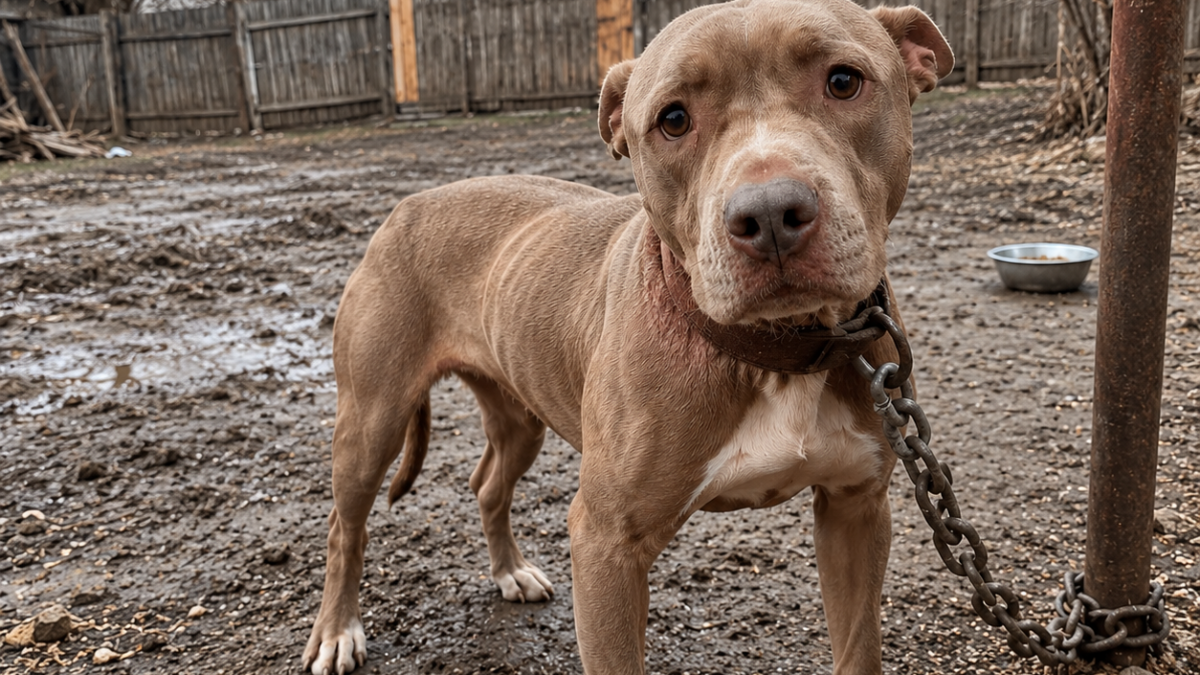
At 11:47 on a Tuesday morning, I walked into a backyard after receiving a complaint about a Pit Bull who had allegedly spent nearly two years attached to the same rusted chain, and I expected fear, resistance, or at least one desperate attempt to run the second I set him free.
Instead, when my bolt cutters snapped through the metal and the broken chain dropped into the dirt, the dog stared at the open gate, looked back at me, and made a choice that stopped every person standing in that yard from speaking.
But what I didn’t know yet was that freeing him from that chain would be the easiest part of the case, because the man who had kept him there was about to return—and the two years everyone had been too afraid to talk about were finally going to become evidence.
My name is Jordan Reeves. I’m thirty-six years old, and I’ve worked animal control for twelve years.
The call came just before noon.
I had barely returned from another job and was pouring coffee when dispatch said, “Jordan, we’ve got a welfare complaint. Caller says a dog has been chained in a backyard for about two years.”
“Two years?”
“That’s what she says.”
“Caller name?”
“Naomi Ellis. Moved into the apartment next door three weeks ago.”
I put the coffee down.
The address was in an older apartment complex on the east side of town. It wasn’t wealthy, but it wasn’t abandoned either. Families lived there. Kids rode bicycles along the sidewalk. People sat outside in folding chairs in the evening.
Naomi met me near the parking lot.
She was thirty-two, wearing jeans, a gray sweatshirt, and the expression of someone who had rehearsed what she wanted to say and was still afraid of saying it.
“You’re Jordan?”
“Yes.”
“Thank you for coming.”
“Tell me what you saw.”
She looked toward the row of backyards.
“I heard him the first night.”
“Heard what?”
“Whining. Sometimes barking. Mostly this… crying sound.”
“How often?”
“Every day.”
She swallowed.
“I asked the maintenance guy. He said the dog has been there almost two years.”
“Outside?”
“Yes.”
“All the time?”
“That’s what everybody says.”
“What did the neighbors do?”
Naomi’s face tightened.
“They told me not to get involved.”
“Why?”
“The owner.”
“What about him?”
“They said he’s dangerous.”
I had heard that description before. Sometimes accurate. Sometimes neighborhood mythology. Either way, fear can keep an animal invisible for a long time.
Naomi looked at me.
“One woman told me, ‘That dog has survived this long. Leave it alone.'”
Her eyes filled.
“Last night I couldn’t sleep. I kept thinking that if I didn’t call because I was scared, then everybody had a reason not to call.”
We walked toward the backyard.
A wooden privacy fence blocked most of the view, but one plank was missing.
I looked through.
And saw him.
A tan-and-white Pit Bull sat beside a metal post driven into the ground.
A heavy chain ran from a rusted collar to the post.
The chain was short.
Far too short.
Even from the fence I could see the limited circle of bare earth around him.
Water bowl nearly empty.
Plastic shelter tilted against one wall.
No blanket.
No toy.
No room to move beyond that small patch of dirt.
The dog saw me.
He didn’t bark.
Didn’t rise.
Didn’t pull away.
He simply watched.
His eyes were brown.
Exhausted.
Not empty.
That would have been easier.
There was still something in them.
Waiting.
I entered the yard with Naomi behind me and another officer covering the gate.
The Pit Bull followed every movement.
His neck showed irritation where the collar rubbed.
I crouched several feet away.
“Hey, buddy.”
Nothing.
I placed my hand on the dirt.
He sniffed the air.
Then moved forward as far as the chain allowed.
His nose touched my fingers.
He smelled my wrist.
My sleeve.
Then, so gently I barely felt it, he licked my palm.
I looked at Naomi.
She covered her mouth.
I reached for the bolt cutters attached to my belt.
The dog watched.
“Easy.”
I positioned the jaws around one link.
For a second I wondered what he would do when two years of resistance disappeared.
Run?
Panic?
Freeze?
The metal snapped.
The chain fell.
The sound echoed against the fence.
The gate stood open behind me.
The dog looked at it.
Then he looked at me.
He took one step.
Then another.
And instead of running toward freedom, he sat directly at my feet.
Slowly, he lowered his head onto my knees.
The entire yard went silent.
I put one hand against his cheek.
And that’s when I understood something that stayed with me long after the case ended.
He wasn’t asking where he could go.
He was asking whether this time, someone was going to stay.
PART 2
For several seconds, I didn’t move.
Neither did he.
His head was heavy across my knees, warm despite the cold air, and I could feel the faint tremor running through his body.
Naomi stood behind me crying quietly.
My backup officer, Luis Ramirez, had stopped at the gate.
He had worked with me for seven years and had seen more animal-welfare calls than either of us could count.
Even he said nothing.
Finally I whispered:
“You’re okay.”
The dog’s ears moved slightly.
I slipped a soft lead around his neck instead of using the rusted collar.
When I tried to stand, he stood too.
Not running.
Not pulling.
Just following.
The first thing he did after two years on a short chain was take three steps beside me.
Then he stopped.
He looked back.
At the metal post.
At the broken chain.
At the small circle of dirt that had been his entire world.
I wondered what a dog understood about places.
Did he see confinement?
Home?
Habit?
Nothing at all?
I didn’t know.
What I did know was that he did not want to return to it.
We walked out through the gate.
Naomi touched her chest.
“That’s it?”
“What?”
“He’s free?”
“He’s in protective custody.”
Her face changed.
“So the owner can get him back?”
“That depends on the investigation.”
The dog looked up at me.
I hated saying those words with him standing there.
“It isn’t over yet.”
Naomi stared toward the yard.
“What do you need from me?”
“Everything.”
She nodded immediately.
That answer would matter later.
We loaded the dog into my truck.
He hesitated at the open door.
I gave him time.
He sniffed the step.
Then climbed in.
He sat in the passenger seat.
Not the back kennel.
I normally followed procedure more strictly.
That day, I made an exception.
I clipped the safety tether to his harness.
Then started the engine.
He flinched at the vibration.
I rested one hand near him.
Not touching.
“Easy.”
He looked at me.
Then, after perhaps thirty seconds, leaned sideways until his shoulder pressed against my arm.
Luis saw it through the windshield.
He smiled.
“Guess you’ve been selected.”
“Don’t start.”
“Already started.”
We drove to Greenview Animal Hospital, the clinic contracted for county welfare cases.
Dr. Elena Park met us in the intake room.
She took one look at the collar and frowned.
“How long?”
“Neighbors say about two years.”
Her eyes lifted.
“Two years?”
“That’s what we’re investigating.”
She crouched.
The dog immediately moved closer to me.
Dr. Park noticed.
“Bonded fast.”
“I cut the chain.”
“Apparently that qualifies you as family.”
I tried not to react.
“Let’s not get ahead of ourselves.”
She removed the metal collar.
The skin beneath was irritated and partially bare, but there were no severe open injuries.
That was one relief.
He was underweight but not dangerously so.
Muscle loss around the rear legs.
Overgrown nails.
Parasites.
Skin inflammation.
No major acute disease.
“He survived,” Dr. Park said.
I looked at the dog.
“That’s a low standard.”
“I know.”
She continued the examination.
“Any name?”
“Not yet.”
We scanned for a microchip.
Nothing.
I checked the collar.
No tag.
Naomi had never heard the owner call him anything.
Maintenance staff claimed they didn’t know.
For the moment, he was Case 24-117.
I hated that.
“Can we call him something?”
Dr. Park smiled.
“You rescued him.”
“Protected custody.”
“Fine. You protected-custodied him.”
Luis leaned through the doorway.
“How about Freedom?”
“No.”
“Chain?”
I stared at him.
“Absolutely not.”
Dr. Park scratched beneath the dog’s chin.
“What about Ben?”
The dog looked at her.
“Ben?” I repeated.
His tail moved once.
Luis laughed.
“He voted.”
“Apparently.”
So Ben it was.
Not official.
Just something kinder than a case number.
Dr. Park documented everything carefully.
Photographs.
Measurements.
Condition score.
Collar irritation.
Chain length.
Range of movement.
The chain itself went into evidence.
So did the collar.
I returned to the apartment complex that afternoon.
Naomi was waiting.
She had already spoken with three neighbors.
“I told them animal control needs statements.”
“Good.”
“But they’re scared.”
“Also expected.”
One older woman named Mrs. Franklin agreed to talk through a closed screen door.
“Dog’s been there since before last Christmas,” she said.
“How long exactly?”
“Maybe twenty-two months.”
“Who owns him?”
“Darren Cole.”
“What can you tell me about Darren?”
She hesitated.
“Temper.”
“Toward people?”
“Toward everybody.”
“Did you ever see him hit the dog?”
She shook her head quickly.
“No. Don’t put words in my mouth.”
“I won’t.”
“I saw him yell.”
“How often?”
“Enough.”
“Feed the dog?”
“Sometimes.”
“Water?”
“Sometimes.”
“Who did it the rest of the time?”
She looked toward the yard.
“People.”
“What people?”
“Us.”
That surprised me.
Mrs. Franklin continued.
“If bowl was empty, somebody would toss water over fence.”
“You never called?”
Her face hardened.
“You new officers always ask that like there’s one answer.”
I let the silence sit.
Finally:
“Tell me the real answer.”
She looked down.
“Darren told a man two buildings over that if anybody called county on him, he’d know who.”
“Did he threaten anyone directly?”
“Not me.”
“Did you believe he’d retaliate?”
“Yes.”
“Why?”
She looked at me.
“Because people here have to keep living here after you leave.”
That sentence changed how I handled the rest of the investigation.
It was easy for an officer to tell residents they should have spoken sooner.
Then I got into a county truck and went home.
They stayed.
Naomi understood that and still called.
That made her courage different.
Not louder.
More expensive.
The maintenance supervisor, Calvin Moore, gave us access to property records.
Darren rented the unit attached to the yard.
“Any pet registration?”
“Yes.”
He pulled a file.
Dog listed:
**Male Pit Bull mix. Name: Atlas.**
I stared at the form.
Atlas.
Age when registered: approximately two.
That meant he was around four now.
Owner: Darren Cole.
Vaccination records expired nineteen months earlier.
“Any complaints?”
Calvin looked uncomfortable.
“Internally?”
“Anything.”
He opened another file.
Noise complaint.
Odor complaint.
Broken fence complaint.
Then three maintenance requests where workers refused yard access because “dog chained outside.”
“Nobody reported welfare concerns?”
Calvin didn’t answer.
“Calvin.”
He rubbed his forehead.
“We told Darren the chain couldn’t obstruct maintenance.”
“That wasn’t my question.”
“I know.”
“Did management know the dog lived outside?”
“Yes.”
“For how long?”
He looked at me.
“Probably most of two years.”
Naomi’s statement suddenly became stronger.
Not rumor.
A pattern.
“Why didn’t management call?”
Calvin exhaled.
“Property owner didn’t want trouble with Darren.”
There it was again.
Fear.
Convenience.
Someone else’s problem.
I asked for written records.
Calvin hesitated.
“You’ll subpoena them if I don’t?”
“If necessary.”
He slid the folder toward me.
“Make copies.”
By five that afternoon, we had enough to keep Atlas—Ben—under protective custody while the county attorney reviewed.
At 5:22, Darren Cole called.
I knew it was him before he introduced himself.
His voice came hard.
“You took my dog.”
“I’m Officer Jordan Reeves.”
“You cut my chain.”
“I removed an animal under welfare authority pending investigation.”
“You trespassed.”
“We entered pursuant to the complaint and visible welfare concerns.”
“You had no right.”
“We can discuss that with county legal.”
He swore.
I stayed quiet.
People often expect escalation.
Silence works better.
Finally he said:
“Where’s Atlas?”
“Safe.”
“I want him back.”
“There’s a hold.”
“He’s my property.”
I hated that wording, though legally animals are often treated as property in certain contexts.
“He’s also subject to animal-welfare laws.”
“You think because he’s outside he’s abused?”
“I’m not discussing findings by phone.”
“I fed him.”
“Good.”
“He had water.”
“We’ll document all available evidence.”
“He likes being outside.”
I looked at the photograph on my desk.
The circle of bare dirt.
The short chain.
“Then we’ll document that too.”
Darren’s voice dropped.
“You don’t know who you’re messing with.”
There it was.
Not quite a direct threat.
Close enough to record.
“Mr. Cole, this call is logged.”
Silence.
Then he hung up.
Luis leaned against the doorway.
“Friendly.”
“Charming.”
“You want patrol notified?”
“Yes.”
That wasn’t drama.
It was procedure.
I also called Naomi.
“He’s been notified.”
She went quiet.
“Did he ask who called?”
“Not from me.”
“He’ll guess.”
“Do you have somewhere else to stay tonight?”
“No.”
“Do you feel unsafe?”
A pause.
“A little.”
That was enough.
We coordinated extra patrol through the complex for the next several nights.
I hated that Naomi now needed protection because she had done the right thing.
But fear thrives when everybody acts separately.
The more people knew, documented, and watched, the less power intimidation had.
The next morning, I visited Atlas.
Dr. Park had switched to his registered name.
“Atlas.”
His tail moved immediately.
So he knew it.
I crouched.
“Hey, Atlas.”
He came toward me.
Not cautiously this time.
Straight over.
Head against my thigh.
Dr. Park watched from behind me.
“You know this isn’t helping your professional boundaries.”
“I don’t know what you’re talking about.”
“Sure.”
Atlas had slept almost fourteen hours.
The clinic night technician said he barely moved.
“He ate?”
“Everything.”
“Any barking?”
“Once when the lights went out.”
“Fear?”
“Probably.”
The technician added:
“He doesn’t know how to use a dog bed.”
I looked through the kennel glass.
The padded bed sat untouched.
Atlas slept on the floor beside it.
That stayed with me.
That afternoon we transferred him to the county shelter’s quiet wing.
He hated the indoor run at first.
Not the enclosure.
The noises.
Doors.
Metal bowls.
Other dogs.
He flattened himself against the wall.
I sat outside.
Ten minutes.
Twenty.
Then he came forward.
I gave him a blanket.
He sniffed it.
Walked around it.
Then lay beside it.
“Close enough.”
By day three, he slept on it.
By day five, he discovered toys.
Not play.
Discovery.
A rubber ball rolled toward him.
Atlas jumped backward.
Stared.
The ball stopped.
He approached.
Sniffed.
Pushed it with his nose.
It rolled.
He jumped again.
I laughed.
Atlas looked offended.
Then pushed it again.
Within ten minutes, he was chasing the ball inside the run.
A volunteer filmed six seconds.
I made her promise not to post it.
“Active case.”
She nodded.
Then said:
“It’s hard knowing nobody saw this side of him for two years.”
I looked at Atlas.
“No.”
“What’s hard?”
“Knowing this side existed the whole time.”
We just hadn’t given it anywhere to appear.
The legal hearing was scheduled nine days after removal.
Darren hired an attorney.
That surprised no one.
He wanted immediate return.
His argument was predictable.
Atlas had food.
Water.
Shelter.
No severe untreated medical condition.
Outdoor tethering alone, his attorney argued, did not automatically prove illegal treatment under every applicable provision.
Our case could not rely on emotion.
It needed specifics.
Chain length.
Environmental conditions.
Veterinary findings.
Maintenance records.
Duration.
Witness statements.
Darren’s own statements.
And one thing we didn’t have yet.
Proof Atlas had truly spent nearly all his time chained.
Then Naomi called.
“I found something.”
“What?”
“The apartment has a security camera.”
“Yours?”
“The building.”
I knew about cameras in the parking lot.
“Does one cover the backyard?”
“Not directly.”
“Then what?”
“Reflection.”
I didn’t understand.
Naomi explained that the camera above the side entrance captured a glass door leading toward the courtyard.
In that glass, during daylight, you could see a partial reflection of Darren’s yard.
That sounded weak.
Then Calvin called.
“Jordan, you should come.”
The property company retained thirty days of footage.
We couldn’t prove two full years.
But we could prove pattern.
Day after day.
Morning.
Afternoon.
Night.
Atlas in the same radius.
Same chain.
Sometimes pacing.
Sometimes sitting.
Sometimes lying as far as the short tether allowed.
Rain.
Cold.
Sun.
Still there.
More importantly, maintenance logs included archived inspection photographs.
Every three months.
Different dates.
Different seasons.
Atlas appeared in the background.
Same post.
Same chain.
A full eighteen months of documented images.
Calvin stared at the monitor.
“I never really looked.”
“What do you mean?”
“I saw him.”
He swallowed.
“But I never looked.”
That was perhaps the most honest sentence anyone in that complex gave me.
People had seen Atlas every day.
Seeing is not the same as allowing yourself to understand.
At the hearing, Darren wore a clean button-down shirt.
He looked nothing like the dangerous figure neighbors whispered about.
Mid-forties.
Short hair.
Calm.
That is another mistake people make.
They expect neglect to have a costume.
It doesn’t.
The judge reviewed veterinary findings first.
Darren’s attorney emphasized Atlas was not emaciated.
True.
No broken bones.
True.
No severe acute infection.
True.
Then Dr. Park testified.
“Is the absence of catastrophic injury evidence of adequate welfare?” the county attorney asked.
“No.”
“What did you observe?”
“Chronic collar irritation, muscle deconditioning, overgrown nails, parasites, low body condition, and behavioral indicators consistent with prolonged confinement and limited enrichment.”
Darren’s attorney objected to behavioral interpretation.
The judge limited the statement.
Fine.
We didn’t need overreach.
Then photographs.
The chain measured less than six feet.
The post placement reduced usable radius.
The shelter could be reached, but lying fully stretched away from mud was difficult depending on the chain position.
Maintenance images showed duration.
Weather records showed multiple periods of heat and cold while Atlas remained outdoors.
Neighbor statements established repeated lack of water refills that residents supplemented.
Then Naomi testified.
She was terrified.
I could see it from the back row.
Her hands shook.
Darren stared at her.
The judge noticed.
“Mr. Cole, look at counsel.”
He did.
Naomi described her first night.
The crying.
The questions.
The warning.
Don’t get involved.
Then she said:
“I kept thinking everyone was waiting for someone else.”
The courtroom quieted.
“What made you call?”
Naomi swallowed.
“Because the dog couldn’t call.”
Simple.
No exaggeration.
No speech.
The county attorney asked:
“Did you have any personal dispute with Mr. Cole before this?”
“No.”
“Did you know him?”
“No.”
“Any reason to fabricate?”
“No.”
Darren’s attorney suggested three weeks was too short for Naomi to know two years of history.
She agreed.
“I don’t know two years personally.”
Then pointed toward the maintenance records.
“But the building does.”
That was stronger than anything we coached.
We hadn’t coached her at all.
Then Darren testified.
He loved Atlas, he said.
Atlas preferred outside.
He became destructive indoors.
He had escaped once.
The chain was for safety.
He worked long hours.
He fed him before work and after.
Sometimes neighbors interfered.
He planned to build a larger run.
“When?” the county attorney asked.
“Eventually.”
“Atlas had been registered at the property twenty-three months.”
“Yes.”
“How long was he tethered?”
“Not all the time.”
“Approximately?”
“I don’t know.”
“Hours per day?”
“Varied.”
“Did he sleep outside?”
“Sometimes.”
Maintenance footage contradicted enough of that to matter.
Then came a question nobody expected.
“Why did Atlas stop receiving veterinary care?”
Darren shrugged.
“He didn’t need it.”
“Vaccines?”
“I gave some myself.”
“Records?”
“No.”
“Parasite prevention?”
“Sometimes.”
“License renewal?”
“Forgot.”
Nothing dramatic.
Just a picture of a dog slowly becoming less and less attended to.
Darren’s attorney argued that the county was turning imperfect ownership into criminality.
That was a legitimate concern.
Government shouldn’t seize animals because officials personally prefer another style of care.
The judge knew that.
So the ruling was measured.
Atlas would remain in protective custody while the welfare case continued.
Darren was ordered not to remove or contact him outside supervised process.
A full disposition hearing would follow.
He left angry.
Outside the courthouse, he passed Naomi.
He didn’t touch her.
Didn’t threaten her.
Just said:
“Hope you’re happy.”
Naomi froze.
I stepped between them.
“Mr. Cole.”
He kept walking.
Naomi looked at me.
“Am I?”
“What?”
“Happy?”
I thought about Atlas sleeping on his first blanket.
“Not yet.”
She nodded.
“Me neither.”
The case became local news after court records turned public.
Someone found the image of the chain.
A television station requested an interview.
I refused.
Naomi refused.
The shelter declined because the case was open.
That should have limited the story.
It didn’t.
Social media found Atlas.
Comments exploded.
People wanted Darren punished immediately.
Others defended him.
Some accused Naomi of destroying a man’s life over a dog.
Then someone posted Naomi’s apartment number.
That changed everything.
We documented it.
The post came from an account connected to one of Darren’s friends.
Police contacted the person.
The information was removed.
No threats were made, but Naomi was shaken.
“I’m moving.”
I didn’t blame her.
The property management company offered to transfer her to another building without penalty.
Naomi refused at first.
“Then he wins.”
I told her:
“Safety isn’t surrender.”
She looked at me.
“Easy for you to say.”
She was right.
I wore a badge.
She didn’t.
She transferred.
That decision later became one of the reasons the apartment owner took a deeper look at how management had handled complaints.
Calvin’s records showed residents had mentioned Atlas before.
No one made a formal welfare report.
But the property owner knew enough to ask why.
An internal review started.
Three managers had received complaints about noise, odor, and tethering.
None contacted animal control.
One email said:
**Tenant Darren can be difficult. Avoid escalation unless lease violation is clear.**
That email became public during later proceedings.
The property company suddenly had its own problem.
Not because they legally owned Atlas.
They didn’t.
Because they had made an organizational choice to avoid conflict while an animal remained visibly confined on their property.
They hired new management.
Updated complaint procedures.
Added anonymous reporting.
Naomi called me when she heard.
“That feels better than people yelling online.”
“Why?”
“Because something changed.”
Exactly.
Atlas changed too.
Three weeks after rescue, he learned stairs.
The shelter’s quiet wing had two steps leading into an enclosed yard.
First time, Atlas stopped.
Lifted one paw.
Put it down.
Stared.
The volunteer waited.
He eventually stepped up.
Then down.
Then up again.
Ten minutes later, he was running over them like he’d invented stairs.
He discovered grass.
Real grass, not the worn ring around a post.
He rolled.
For almost a full minute.
Back twisting.
Legs in the air.
Mouth open.
Luis stood beside me.
“Look dangerous.”
“Terrifying.”
Atlas sneezed.
Rolled again.
Then discovered sprinklers.
He hated sprinklers.
That was reassuring.
Normal preferences.
Normal opinions.
Not every moment needed symbolic meaning.
Some days he was simply a dog who did not want water sprayed at his face.
We began behavior evaluations.
Important because Darren’s attorney had described him as difficult indoors.
Atlas did show anxiety around closed doors.
He paced when isolated.
Loud male voices made him freeze.
He chewed one kennel mat.
He pulled hard on leash.
None of that made him unsafe.
It made him inexperienced.
Two years with almost no world had left him unprepared for ordinary life.
Cars.
Stairs.
Vacuum cleaners.
Television.
Doorbells.
Flooring.
Mirrors.
The first time Atlas saw his reflection, he barked at himself for five minutes.
Then hid behind me.
“You are extremely brave.”
He looked offended.
By week five, he voluntarily entered an office and slept while people worked.
That became his favorite place.
Especially under my desk.
Luis caught him there one afternoon.
“You’re definitely adopting him.”
“No.”
“You’re letting evidence sleep on your boot.”
“He chose the boot.”
“Sure.”
Professional boundaries were becoming a joke.
Still, I couldn’t adopt while the case was active.
And I wouldn’t plan around an outcome before a judge ruled.
That mattered.
Atlas deserved decisions based on law and welfare, not my attachment.
The final hearing came nearly two months after rescue.
By then, additional evidence surfaced.
A former girlfriend of Darren’s contacted the county after seeing coverage.
Her name was Rachel Monroe.
She had lived with Darren when Atlas was a puppy.
“He wasn’t always chained,” she said.
“What happened?”
“Darren got frustrated.”
“With what?”
“Everything Atlas did.”
Chewed shoes.
Jumped.
Puppy accidents.
Normal things.
“Did you train him?”
“I tried.”
“What happened when you moved out?”
Rachel’s face changed.
“I wanted to take Atlas.”
“Why didn’t you?”
“Darren said no.”
“Did you fight him legally?”
“No.”
“Why?”
She looked ashamed.
“I didn’t know I could.”
Then:
“I also didn’t want another fight.”
Fear again.
Different person.
Same result.
Rachel had photographs.
Atlas as a puppy.
Inside.
Sleeping on a couch.
Playing with a rope toy.
Lying beside Rachel’s legs.
That demolished one part of Darren’s claim.
Atlas had lived indoors.
He had not always been an “outside dog.”
Something changed after Rachel left.
The final hearing was packed.
Not because the case was nationally important.
Because people had chosen sides online.
I hated that.
Real cases become harder when spectators need heroes and villains.
Darren’s attorney opened with a reasonable argument.
Atlas had never been denied all food or shelter.
There was no evidence Darren intentionally caused severe injury.
The county was stretching welfare law based on public pressure.
Our attorney responded:
“This case is not about whether the animal survived. The law does not require suffering to become catastrophic before intervention.”
That framed everything.
Survival versus welfare.
Then the evidence.
Duration.
Conditions.
Veterinary findings.
Management records.
Rachel’s testimony.
Naomi.
Maintenance photographs.
Darren’s own messages.
One text to Calvin six months earlier:
**Dog stays outside. Stop telling maintenance to go back there.**
Another:
**Chain keeps him from wrecking stuff.**
Not illegal alone.
But context.
Then something happened that none of us expected.
Darren asked to speak directly.
His attorney advised against it.
He insisted.
The judge allowed limited testimony.
Darren looked toward the photographs.
His voice was quieter than before.
“Atlas was my girlfriend’s idea.”
Rachel looked down.
“When she left, dog became my problem.”
That sentence changed the room.
His attorney shifted.
Darren continued.
“I worked twelve-hour shifts.”
“Mr. Cole,” his attorney whispered.
But he kept going.
“He tore up the apartment when I left him inside.”
“Did you seek training?” the county attorney asked.
“No.”
“Crate training?”
“No.”
“Veterinary behavior advice?”
“No.”
“Rehoming?”
“I posted once.”
“Where?”
“Online.”
“Response?”
“People ask stupid questions.”
“What questions?”
“If he was good with dogs. Kids. Vaccinated.”
Those were not stupid questions.
But nobody interrupted.
Darren looked toward me.
“I chained him because it worked.”
There it was.
Not hatred.
Convenience.
The dog stopped destroying things.
Stopped escaping.
Stopped being a problem inside the house.
So the temporary solution became permanent.
A day became a week.
Week became months.
Months became two years.
“Why didn’t you surrender him?” the county attorney asked.
Darren shrugged.
“Didn’t want him put down.”
That answer held irony nobody needed to point out.
He believed a shelter might fail Atlas.
So he kept him in a condition that prevented Atlas from having a life.
The judge took a recess.
When we returned, the ruling came carefully.
Darren’s ownership rights were terminated under the applicable welfare findings.
Atlas was transferred to county custody for lawful placement.
Darren received fines, mandatory educational requirements, and restrictions on future animal ownership for a defined period, along with compliance conditions.
Not prison.
Not destruction.
Accountability.
Darren stared at the table.
The judge added:
“This court is not finding that you never cared about this animal. It is finding that whatever care existed was not enough to meet his welfare needs.”
That distinction mattered.
People can care and still fail.
Love without responsibility is not protection.
Outside, reporters waited.
Naomi came through another exit.
Good.
Darren walked past me.
For a second, I expected anger.
Instead he stopped.
“He’s really different?”
I looked at him.
“Atlas?”
“Yeah.”
“What do you mean?”
“Inside.”
I thought about the dog asleep beneath my desk.
“He’s learning.”
Darren nodded.
“He ever bite?”
“No.”
“Destroy stuff?”
“One mat.”
He almost smiled.
“Sounds like him.”
I didn’t answer.
Then he asked:
“You taking him?”
“Placement hasn’t been decided.”
He looked toward the courthouse.
“He’s better off.”
It was not a full apology.
Not redemption.
But it was the first truthful thing I heard from him that wasn’t forced by evidence.
Then he left.
That afternoon, I drove directly to the shelter.
Atlas heard my keys before I opened the door.
He came running.
Tail moving.
He stopped in front of me.
I crouched.
“You’re free.”
He licked my chin.
“Legally this time.”
He did not understand.
Good.
Dogs should not have to understand court.
I sat on the floor.
Atlas leaned against me.
For ten minutes, neither of us moved.
Then shelter director Monica stood in the doorway holding a folder.
“You know what this is.”
“No.”
“Jordan.”
“I am on duty.”
“Technically you clocked out twelve minutes ago.”
“That’s unsettling.”
“Application.”
I stared at her.
“You’re assuming.”
“Everyone is assuming.”
“What if I’m not the best home?”
Monica crossed her arms.
“Then we’ll evaluate you like everybody else.”
Fair.
I took the folder.
Adoption application.
Name.
Address.
Work schedule.
Fenced yard.
Other animals.
References.
Veterinarian.
Experience.
Backup caregiver.
I filled everything out.
The next day.
Not that afternoon.
I wanted one night without emotion deciding.
At home, my apartment felt strange.
Quiet.
I thought about why I wanted Atlas.
Was it because I freed him?
Because he put his head on my knees?
Because the case had become personal?
Those were not good enough reasons.
A dog is a fifteen-year commitment, not an emotional trophy.
I worked long shifts.
Sometimes twelve hours.
I lived alone.
I had a small fenced yard.
Could I provide enough?
I called my sister.
“You adopting the chain dog?”
“How does everyone know?”
“Mom.”
“How does Mom know?”
“Probably Luis.”
“Traitor.”
“Yes.”
My sister had two dogs.
She agreed to be backup.
My landlord allowed pets.
Dr. Park agreed to be veterinarian.
Work policy allowed employees to adopt after case closure if another staff member handled the process.
Everything lined up.
Still, I hesitated.
The next morning, I went to the shelter without the application.
Atlas was in the yard with a volunteer.
He saw me.
Ran toward the fence.
Stopped.
Waited.
I entered.
He came straight over.
Then—just like the first day—sat at my feet.
Head on my knees.
That ended the debate.
I adopted him.
Officially.
Atlas Reeves.
Luis laughed for three full minutes.
“Sounds like a tax attorney.”
“Stop.”
“You gave dog your last name.”
“That’s how forms work.”
“Sure.”
Atlas’s first day home was not magical.
He refused to enter the front door.
Stood outside for twenty minutes.
I opened the door.
Waited.
He sniffed the threshold.
Backed away.
I sat inside on the floor.
No pulling.
No coaxing.
Atlas eventually placed one paw across.
Then another.
He entered.
Immediately turned around.
Exited.
Tried again.
Third time, he stayed.
The living room confused him.
Rug.
Couch.
Television.
Window blinds.
He sniffed everything.
Then chose the corner beside the door.
I had bought a giant orthopedic bed.
He ignored it.
Of course.
That night, I placed a blanket near him.
He slept on the floor.
Second night, partially on blanket.
Fourth night, fully on it.
Two weeks later, he used the bed.
I took a picture.
Sent it to Naomi.
She replied:
**Look at him.**
Then:
**Does he know he’s home?**
I stared at Atlas.
No.
Not yet.
Home is not a room.
Home is repetition.
Breakfast tomorrow.
And the next day.
And the next.
Door opens.
Person comes back.
Bowl stays full.
Chain never appears.
Nobody shouts because you are learning.
That took time.
Atlas panicked when I clipped on a leash at first.
Not because of walking.
Because anything attached to his collar meant confinement.
So we switched to a harness.
Better.
He froze when left alone in the yard.
If I went inside, he immediately stood at the door.
So I stopped leaving him outside alone.
People said:
“He has to learn.”
Yes.
But learning did not require recreating fear.
We started with seconds.
I stepped inside.
Returned.
Five seconds.
Ten.
Thirty.
One minute.
Atlas learned doors could close and reopen.
Then came my work schedule.
That was harder.
First day I left, my sister stayed with him.
Atlas sat at the front window for almost two hours.
Then slept.
Second day, less.
After two weeks, he stopped waiting at the window continuously.
After a month, my sister sent me a picture.
Atlas asleep upside down on the couch.
I stared at it.
His legs were open.
Belly exposed.
Head hanging off the cushion.
The dog who once couldn’t stretch fully at the end of his chain now occupied half my furniture like he paid rent.
That picture became my favorite.
Training started slowly.
Sit.
Stay.
Come.
Touch.
Leave it.
Atlas learned ridiculously fast.
Not because he was exceptional.
Because nobody had asked anything of his mind for years.
He loved puzzles.
Food toys.
Scent games.
He learned to open cabinet doors, which was less useful.
One morning, I found a bag of treats destroyed.
Atlas sat nearby looking innocent.
“Wasn’t you?”
Tail wag.
“Must be burglary.”
Tail wag harder.
“Very sophisticated criminal.”
He sneezed.
Normal.
Every normal problem made me happy.
Chewed mail.
Mud.
Barking at delivery drivers.
Stealing socks.
Those were privileges.
They meant Atlas had become comfortable enough to be inconvenient.
Naomi visited three months after adoption.
She stood at my door nervous.
“What if he doesn’t remember me?”
“He barely knew you.”
“Still.”
Atlas approached.
Sniffed.
Then tail moved.
Naomi knelt.
“Hey.”
Atlas leaned into her.
She cried immediately.
“Everybody cries around this dog.”
“Shut up.”
We sat on the porch.
Naomi had settled into her new apartment.
Safer building.
Better management.
“You regret calling?”
She looked at Atlas.
“No.”
“Even after the harassment?”
“Ask me when it happened, maybe.”
She rubbed his chest.
“But now? No.”
Then:
“I regret waiting three weeks.”
“Don’t.”
“I heard him from day one.”
“You were new. Scared.”
“Still.”
I thought about Mrs. Franklin.
Calvin.
Rachel.
Everyone who had seen some part and delayed.
“If you spend your life punishing yourself for not acting sooner, you miss what acting eventually changed.”
Naomi smiled.
“That sounded practiced.”
“Occupational hazard.”
The apartment complex changed significantly after the case.
New ownership policies.
Annual pet-welfare checks for outdoor animals.
Anonymous reporting.
Management training.
More lighting.
Cameras covering shared yards.
Darren moved out.
Mrs. Franklin called me months later.
“Quiet now.”
“Good.”
She hesitated.
“I should’ve called.”
There it was again.
I told her the same thing.
“You helped him survive.”
“What?”
“Water.”
She became quiet.
“Not enough.”
“No.”
I didn’t lie.
“But it mattered.”
She cried.
People want absolution.
Sometimes the honest answer is more useful.
You should have acted earlier.
And what you did still mattered.
Both.
Atlas became known around the shelter because I sometimes brought him for controlled staff visits.
Not because I wanted publicity.
He liked certain people.
Especially Dr. Park.
He hated Luis for no reason.
Luis took it personally.
“I rescued you too.”
Atlas turned away.
“I was at the gate.”
Nothing.
“I filled water.”
Atlas walked to Dr. Park.
“Unbelievable.”
We laughed.
Then came the first anniversary.
Local news called again.
They wanted an update.
I initially refused.
Monica changed my mind.
“One interview.”
“Why?”
“Because people saw the chain photo. They should see the outcome.”
I agreed with conditions.
No footage of Darren.
No dramatic recreation.
No address.
No monetized misery.
The reporter came to my backyard.
Atlas was rolling in grass.
She asked:
“Do you think he remembers being chained?”
I hated that question.
“I don’t know.”
“Does he have lasting trauma?”
“Some behaviors probably connect to his history.”
“Like what?”
“He doesn’t like being tethered to stationary objects. He gets anxious if left alone outside. Certain metal sounds startle him.”
“Will that ever go away?”
“Maybe. Maybe not.”
She looked toward Atlas.
“Would you say he’s healed?”
I thought about it.
“No.”
She seemed surprised.
“No?”
“I’d say he’s living.”
“What’s the difference?”
“Healing makes it sound like there’s a finish line.”
I pointed toward Atlas.
“He doesn’t need to become a dog with no history. He just needs enough good days that history isn’t deciding every moment.”
That quote became the headline.
I hated that too.
But people responded.
Not with pity.
With stories.
Dogs who had lived outside.
Dogs rescued from neglect.
People learning patience.
Then the shelter received an increase in applications for adult Pit Bulls.
That was worth one uncomfortable interview.
A year later, Atlas completed a canine good citizen course.
Luis showed up to watch.
Atlas ignored him during graduation.
Perfect.
Two years after rescue, Naomi called.
“You need to come to the old complex.”
“Why?”
“Trust me.”
I went.
The backyard where Atlas had been chained looked completely different.
The metal post was gone.
The bare circle replaced with grass.
A small fenced community dog area stood beyond it.
Bench.
Shade.
Water station.
No memorial plaque.
No giant picture.
I liked that.
Calvin met us.
“Property company funded it.”
“Because of lawsuit?”
“No lawsuit.”
“Then why?”
“Because they didn’t want that yard to mean only one thing.”
Naomi smiled.
Mrs. Franklin sat on the bench.
Three dogs played.
One child threw a ball.
I stood where the chain post used to be.
For a second, I saw Atlas sitting there.
Then a Labrador ran through the spot.
Memory overwritten by movement.
Good.
Calvin said:
“We named nothing after Atlas.”
“Thank you.”
“Figured you’d hate it.”
“Correct.”
Naomi looked at me.
“Does revenge get better than this?”
“What revenge?”
“The place that kept him stuck becoming a place dogs run.”
I smiled.
“That’s not revenge.”
“What is it?”
“Repair.”
She nodded.
“Better.”
Darren completed his court requirements.
For years, I heard nothing.
Then four years after the case, I received a letter at the animal-control office.
Handwritten.
No return address.
It began:
**Officer Reeves,**
I almost threw it away.
Then saw:
**This is Darren Cole.**
I read.
He wrote that the required animal-welfare classes had angered him at first.
He went because the court required it.
Then one instructor showed video of chronic tethering behavior.
Pacing.
Shutdown.
Reduced muscle condition.
Fear around confinement.
He recognized Atlas.
Not literally.
Behaviorally.
Darren wrote:
**I kept thinking because I fed him, I wasn’t hurting him. I understand now that I made his world six feet wide because six feet was easier for me.**
I stopped there.
That sentence was hard.
He continued.
**I don’t expect you to respond. I don’t want him back. I saw the anniversary video. He looked happy. I am glad. I was not ready to own a dog and I kept one anyway because admitting I couldn’t handle him felt like failure. What I did was worse.**
No excuses.
Then:
**Naomi was right to call.**
That mattered.
At the bottom:
**If she ever asks, tell her I know that now.**
I called Naomi.
Not immediately.
A week later.
I asked if she wanted to hear something from Darren.
She went quiet.
“Is it threatening?”
“No.”
“Then yes.”
I read the relevant parts.
She didn’t speak for nearly a minute.
Finally:
“Do you believe him?”
“Doesn’t matter much.”
“Why?”
“Atlas is safe either way.”
Naomi considered that.
“Still feels good.”
“Why?”
“Because for years everybody said calling would make things worse.”
She breathed.
“And it didn’t.”
That was the satisfaction.
Not humiliation.
Not destroying Darren.
Truth finally becoming impossible to avoid.
Atlas was six then.
Strong.
Healthy.
Obsessed with peanut butter.
Terrified of balloons.
We still couldn’t explain the balloon issue.
He loved children.
Ignored most dogs.
Disliked Huskies for reasons known only to him.
Slept under my blankets despite weighing sixty pounds.
At seven, he learned to swim accidentally.
We were walking beside a pond.
A duck appeared.
Atlas forgot gravity.
He jumped.
Immediately regretted every decision that led there.
I pulled him toward the bank.
He climbed out.
Shook water on me.
Then barked at the duck from safety.
Luis heard the story.
“Heroic.”
“Very.”
Atlas never voluntarily swam again.
At eight, gray appeared around his muzzle.
At nine, arthritis began.
The dog who once lived on a chain had finally reached an age where slowing down came from years lived, not years stolen.
That distinction meant everything to me.
I bought ramps.
Orthopedic beds.
Supplements.
Medication.
Atlas accepted all except the ramp.
He considered it suspicious.
Then one evening he used it when he thought I wasn’t watching.
I pretended not to see.
At ten, Dr. Park found a heart murmur.
Mild.
Monitor.
At eleven, not mild.
Medication.
More monitoring.
Our walks shortened.
Atlas still wanted to go.
He just wanted the neighborhood at a slower speed.
People recognized him.
Not from the news anymore.
From life.
Kids knew Atlas.
Mail carrier kept treats.
Mrs. Franklin sometimes visited.
Naomi moved out of state but sent holiday cards addressed to:
**Jordan & Atlas**
One included a photograph of her own rescue dog.
A beagle mix named Milo.
Underneath she wrote:
**Calling you changed more than one dog.**
I framed it.
At twelve, Atlas’s rear legs weakened.
The first time he couldn’t climb onto the couch, he looked genuinely offended.
I lifted him.
“Don’t get used to this.”
He immediately got used to it.
Every evening, he stood beside the couch and stared until I lifted him.
Manipulative.
Beautiful.
One winter night, thunder woke me.
Atlas hated storms less than when he was young but still became uneasy.
I found him in the hallway.
He looked toward me.
I sat on the floor.
He walked over.
Then put his head on my knees.
Exactly like the first day.
Twelve years disappeared.
The yard.
The bolt cutters.
Broken chain.
Open gate.
Atlas choosing me instead.
I touched his gray muzzle.
“You remember?”
Probably not.
Dogs don’t preserve stories the way humans do.
Thank God.
But bodies remember patterns.
Safety too.
He slept against me until the storm passed.
At thirteen, his heart disease progressed.
Dr. Park had retired from full-time practice by then but still saw Atlas.
“Old friend privilege,” she said.
Tests confirmed what I already sensed.
We were entering the last chapter.
I hated that phrase.
Chapters end cleanly.
Aging doesn’t.
There were good mornings.
Then bad evenings.
Appetite.
No appetite.
Walk.
No walk.
Bright eyes.
Tired eyes.
Medication adjustments.
Quality-of-life charts.
I had guided hundreds of owners through this.
Nothing prepared me for my own dog.
Luis came over one evening.
Atlas slept between us.
“You know what you’d tell somebody else.”
“I know.”
“Doesn’t mean you have to decide tonight.”
“I know.”
“You want me to stop talking?”
“Yes.”
“Excellent.”
We sat quietly.
A month later, Atlas stopped eating breakfast.
Then chicken.
That frightened me.
Atlas had once stolen an entire rotisserie chicken from my counter.
Ignoring chicken meant something.
Dr. Park came to the house.
She examined him.
Listened to his heart.
Watched him breathe.
Then looked at me.
“Jordan.”
I knew.
I hated knowing.
“Today?”
“Could be.”
“What if tomorrow’s better?”
“Could be.”
“Then—”
She touched my arm.
“You asked me twelve years ago what healing looked like.”
I stared.
“I did?”
“Not exactly. But enough times.”
She looked at Atlas.
“Sometimes the last safe thing we give them is not making them stay because we’re afraid to lose them.”
I sat beside him.
Atlas opened his eyes.
His tail moved once.
Luis came.
Naomi joined by video from another state.
Mrs. Franklin visited that morning.
Calvin too.
I didn’t invite a crowd.
They came in small intervals.
People who had been part of the chain breaking.
Naomi saw Atlas on video.
“Oh, buddy.”
His ears moved at her voice.
She cried.
“Do you remember me?”
I smiled.
“He remembers kindness.”
Maybe.
Maybe not.
But it was true enough.
She whispered:
“Thank you for staying.”
After the call ended, I sat on the floor.
Atlas’s head returned to my knees.
Of course it did.
Full circle is usually something writers invent.
Sometimes life insists.
I touched the place where the rusted collar had once rubbed his neck.
Hair had grown back years earlier.
No visible mark.
But I remembered.
“First day I thought you’d run.”
Atlas breathed slowly.
“You had an open gate.”
I smiled through tears.
“And you picked my knees.”
Dr. Park prepared quietly nearby.
I continued talking.
“You were terrible at fetch.”
Tail movement.
“You hated balloons.”
Another breath.
“You almost drowned chasing one duck.”
Luis laughed from the doorway.
Atlas opened one eye.
“I know. Sensitive.”
Then I said what mattered.
“You don’t owe me anything.”
My voice broke.
“Not gratitude. Not another day. Nothing.”
Because that’s something I had learned from rescue animals.
People love to say rescued dogs are grateful.
I hate it.
Safety is not a favor they owe us repayment for.
Food isn’t charity when someone depends on you.
Shelter is not a debt.
Atlas had given me twelve years because that was his life.
Not payment.
I rested my forehead against his.
“You can rest.”
His breathing slowed.
My hand remained on his cheek.
No chain.
No post.
No fence he couldn’t cross.
Just home.
When Atlas was gone, I sat there longer than I expected.
Luis eventually asked:
“You okay?”
“No.”
“Good answer.”
The house became unbearable the next day.
His bowl.
Harness.
Bed.
The ramp he hated.
Hair on the couch.
One old rubber ball under the table.
I left everything for weeks.
People told me to take time.
I did.
Then I returned to work.
First call back was a barking complaint.
Of course.
A Labrador.
Loose in a yard.
Owner forgot to bring him inside before work.
No neglect.
Neighbor annoyed.
Ordinary.
I was grateful.
I didn’t want another Atlas immediately.
Stories don’t repeat on schedule.
Months later, the shelter asked whether I would speak at a training session for new officers.
Topic:
**Chronic Tethering and Community Fear.**
I said yes.
I used Atlas’s case.
Not his emotional ending.
The investigation.
What we did right.
What we missed.
Naomi’s courage.
Mrs. Franklin’s fear.
Management’s avoidance.
The importance of documenting without shaming witnesses.
One trainee asked:
“Why didn’t neighbors call sooner?”
I answered:
“Wrong question.”
She looked surprised.
“What should we ask?”
“What made calling feel more dangerous than staying silent?”
That changed the discussion.
Because if enforcement wants reports, people need safe ways to report.
Anonymous systems.
Clear anti-retaliation process.
Follow-up.
Trust.
We changed county policy.
Complaints involving feared retaliation could be coded for confidential handling.
Officers received guidance on minimizing identifying information.
Property managers were given mandatory reporting education for severe visible welfare concerns.
Not because Atlas was special.
Because his case showed a gap.
Three years later, complaints came earlier.
Not all.
More.
One involved a Shepherd living on a balcony with inadequate shelter.
Another a senior dog tethered behind a business.
Both resolved before months became years.
That was Atlas’s real revenge.
Time stolen from him became time saved for the next dogs.
Naomi eventually became a housing advocate.
I didn’t expect that.
She said the experience changed how she thought about silence inside apartment communities.
Tenants often knew about unsafe situations.
Animals.
Children.
Elderly neighbors.
Domestic conflicts.
But fear of landlords, neighbors, or retaliation kept them quiet.
She worked on anonymous tenant reporting systems.
Once, years after Atlas died, she called.
“You know what I hate?”
“What?”
“That people still call me brave.”
“You were.”
“I was terrified.”
“Those aren’t opposites.”
She laughed.
“Still annoying.”
“Occupational consistency.”
She told me her organization had helped one apartment resident report a dog left unattended in dangerous heat.
The dog was removed within hours.
Owner hospitalized unexpectedly.
No cruelty.
Just crisis.
Neighbors found help.
Dog reunited.
Naomi said:
“That’s the version I wish Atlas had.”
“Me too.”
“But maybe his case helped create it.”
“Probably.”
She went quiet.
“Then okay.”
That’s how I learned to think about Atlas.
Not as a tragedy redeemed by rescue.
Nothing gives back those two years.
You cannot refund time.
You cannot turn confinement into a gift because something beautiful happened afterward.
Atlas deserved those years.
He should have had walks.
Beds.
Grass.
Training.
Visitors.
Vet appointments.
Stupid toys.
He should have chased ducks earlier.
He should have been inconvenient.
He should have had a normal life before thirty-six-year-old me arrived with bolt cutters.
The good years did not erase the bad.
They simply refused to let the bad years own the ending.
There is a difference.
Darren wrote one more letter after Atlas died.
He had seen the shelter’s memorial notice.
I had allowed one photograph.
Atlas asleep upside down on my couch.
No chain picture.
Under it:
**Atlas Reeves, beloved companion and the dog who taught our county that survival is not the same thing as welfare.**
Darren’s letter was short.
**I am sorry he is gone. Thank you for giving him what I didn’t. I used to think the worst thing that happened to Atlas was losing him to animal control. Now I know it was the two years before that.**
I read it once.
Then placed it inside Atlas’s file.
I did not respond.
Not out of anger.
Because the story no longer needed anything from Darren.
He had understood.
Atlas had lived.
That was enough.
I kept the broken chain link.
For years it sat in an evidence bag.
After the case closed, the county allowed the nonessential piece to be released.
I almost threw it away.
Instead, I placed it in a drawer.
Not displayed.
Not sentimental.
Just there.
One day a new officer saw it.
“What’s that?”
“Old case.”
“Why keep it?”
I thought about the answer.
Then said:
“To remember what doesn’t look urgent until you count the days.”
A chain.
Food bowl.
Dog alive.
Nothing dramatic on day one.
But multiply by seven hundred mornings.
Seven hundred nights.
Heat.
Rain.
Cold.
No movement.
No touch.
No choice.
Welfare cases often become invisible because each individual day looks survivable.
Duration changes everything.
The officer nodded.
“Atlas?”
I looked at her.
“You know the case?”
“Everybody does.”
I smiled.
“Good.”
Not because I wanted fame attached to him.
Because institutional memory matters.
New officers should know what happens when communities normalize something for too long.
Years later, I still pass the old apartment complex occasionally.
The dog run remains.
Grass worn in places.
Water bowl.
Bench.
Kids.
Dogs.
No plaque.
Perfect.
Once I stopped.
A young woman was throwing a ball for a brindle Pit Bull.
The dog raced across the exact spot where Atlas’s post once stood.
Back and forth.
Free.
The woman noticed me.
“Beautiful dog,” I said.
“Thanks. Her name’s Luna.”
“How old?”
“Three.”
“Rescue?”
“Yeah.”
Luna brought the ball.
Dropped it.
Looked at me.
I threw it.
She ran.
The woman laughed.
“She’ll make you do that forever.”
“Good.”
I meant it.
Let dogs demand time.
Let them be inconvenient.
Let them need walks.
Training.
Money.
Patience.
Let them take up space.
The opposite of neglect isn’t heroism.
It’s ordinary responsibility repeated every day.
Atlas taught me that more clearly than any manual.
People still ask what I remember most about the rescue.
They expect:
The rusted chain.
The irritated neck.
The yard.
Naomi crying.
The court ruling.
Maybe the day Atlas came home.
Those things matter.
But I always return to 11:47.
The sound of metal snapping.
The chain falling.
The gate open.
I expected freedom to look like running.
Atlas taught me otherwise.
Freedom can look like a dog who finally has every direction available to him—and chooses one human being because, for the first time in years, choice itself is new.
He sat down.
Placed his head on my knees.
And waited.
Not because a chain forced him.
Because he wanted to.
That was the first decision of his new life.
For twelve years after that, he made thousands more.
Which bed.
Which toy.
Which patch of sunlight.
Whether to chase the duck.
Whether to ignore Luis.
Whether to sleep on the couch or directly on top of me.
Whether to walk left or right at the corner.
Small choices.
Ordinary choices.
The kind people don’t think about until an animal has spent years without them.
That is why I never describe Atlas as the dog I freed.
The bolt cutters freed his body.
The rest took years.
Trust.
Routine.
Safety.
Choice.
And one day, without my noticing exactly when, the dog who once had only six feet of earth began living as though the whole world belonged to him.
That is the ending I wanted for him.
Not revenge.
Not a courtroom victory.
Not a ruined former owner.
A dog stretched across my couch, taking up far more room than necessary, asleep so deeply that when I opened the front door, he didn’t even bother lifting his head.
Because he knew I would come back.
Because he knew the door wasn’t closing forever.
Because he knew nobody was going to attach him to anything and walk away.
That certainty took years to build.
But we built it.
And every time I remember the chain hitting the dirt, I no longer hear the metal first.
I remember what happened after.
Silence.
One step.
Then another.
Atlas sitting at my feet.
His head lowering onto my knees.
And a dog who had spent two years with almost no choices making the first one that mattered.

