PART 2: For Four Days, Crows Attacked the Tiny Puppy Hiding in the Rain—Then We Found Out She Was Fighting Something Even Deadlier
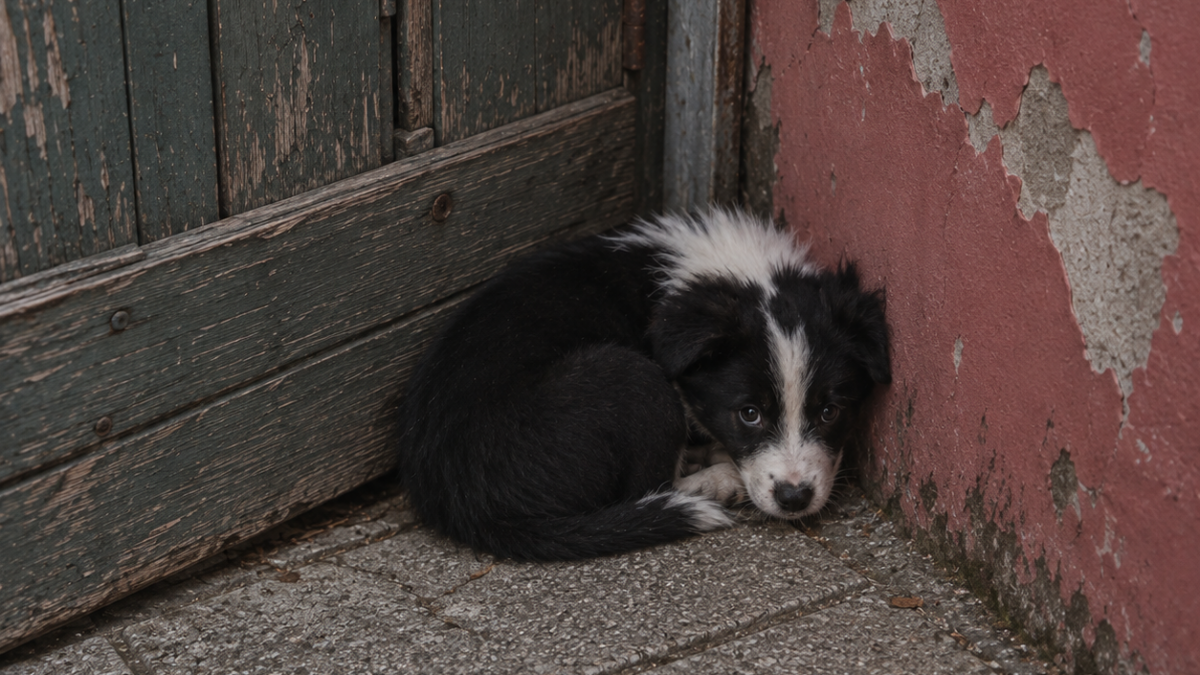
The first time I saw Willow, she was curled behind an abandoned storage shed while crows circled above her, waiting for her to move. She had spent four days soaked by cold rain, starving and too weak to defend herself, and by the time I crawled into that narrow gap, her tiny body barely weighed three pounds. I thought getting her away from those birds would end the nightmare, but a few hours later the veterinarian walked into the room with a test result that made every person around me go silent.
My name is Megan Foster, and I had been volunteering with a small dog rescue outside Seattle for six years when a woman named Teresa called me on a gray Tuesday morning.
“There’s a puppy behind the old storage building on Mason Street,” she said. “Please come before those birds kill her.”
“What birds?”
“Crows.”
At first, I thought she was exaggerating.
Then I heard them through the phone.
Cawing.
Sharp.
Constant.
When I arrived with another volunteer named Josh, rain was coming sideways across the vacant lot. Teresa stood beside a chain-link fence holding an umbrella that was doing almost nothing.
“She’s back there.”
She pointed toward the shed.
“How long?”
Teresa’s expression changed.
“I noticed her four days ago.”
I stopped.
“Four days?”
“I thought someone would get her.”
That sentence made something inside me tighten.
Someone would get her.
Apparently several people had thought the same thing.
A delivery driver had seen her.
Two teenagers had taken pictures.
Someone had posted her online asking whether she belonged to anyone.
People had looked.
Then people had gone home.
The puppy had not.
Josh and I moved behind the building.
The gap between the shed and a broken concrete wall was barely wide enough for my shoulders.
Then a crow dropped from the roof.
Something tiny flinched in the darkness.
“There.”
I crawled closer.
The smell hit me first.
Wet fur.
Mud.
Infection.
The puppy was curled into herself so tightly I could barely see where her body ended. She was some kind of Border Collie or Australian Shepherd mix, black-and-white beneath the mud, with large ears that looked too big for her tiny head.
One ear was bleeding.
There were wounds across her back and neck.
Her eyes opened when my hand moved toward her.
She didn’t growl.
She didn’t run.
She simply stared.
“Hey, baby.”
A crow landed behind me.
The puppy flinched so violently that her chin struck the ground.
That was when I understood.
She wasn’t hiding from us.
She was hiding from them.
Every time she lifted her head, they came down.
I took off my jacket and pushed it gently around her.
When I touched her, I could feel every rib.
“Josh.”
He heard my voice change.
“How bad?”
“Very.”
I lifted her.
She weighed almost nothing.
Her head fell against my chest.
Teresa covered her mouth when I emerged.
“Oh my God.”
Josh opened the van.
I wrapped the puppy in two dry blankets and placed her against me while he drove.
For the first few miles, I kept checking her chest.
Up.
Down.
Up.
Down.
“You’re still here.”
At the clinic, Dr. Aaron Klein rushed her into treatment.
Her temperature was low.
She was dangerously dehydrated.
Several wounds were already infected.
Her body condition was frightening for such a young puppy.
Then he ran the infectious disease tests.
Twenty minutes later, he returned.
I knew from his face.
“What?”
He placed the result on the counter.
“Parvovirus.”
My stomach dropped.
“No.”
“I’m sorry.”
“She’s already starving.”
“I know.”
“She’s infected.”
“I know.”
“She’s less than three pounds.”
“I know.”
I looked through the glass.
The puppy was lying under warming blankets with an IV line disappearing beneath one tiny leg.
“What are her chances?”
Dr. Klein was quiet.
“That depends on how much she has left.”
I walked into the treatment room and sat beside her.
“We need a name.”
Josh looked at the rain running down the windows.
“Willow?”
I touched the puppy’s head.
“Willow.”
Her ear moved.
That was enough.
“You survived four days out there,” I whispered. “So you and I are not quitting in this room.”
Dr. Klein stood behind me.
“Megan, I need you to understand that parvo can turn very fast.”
I looked at Willow.
“So can we.”
PART 2
The first night was deceptively quiet.
That is one of the cruel things about serious illness in very small animals.
Sometimes the worst moments are not loud.
There was no dramatic collapse.
No screaming.
No frantic struggle.
Willow simply slept.
Her tiny body remained under warming blankets while fluids ran through the catheter taped to one front leg. Every few minutes, I watched her ribs rise and fall because I had already become afraid of what it would mean if they stopped.
Dr. Klein came into the isolation room shortly after midnight.
“You should go home.”
I looked at him.
“Are you?”
“No.”
“Then neither am I.”
“I’m working.”
“So am I.”
“You’re sitting on the floor.”
“Highly technical rescue work.”
He sighed.
Willow’s eyes opened.
Barely.
I leaned closer.
“Hey.”
Her nose moved toward my fingers.
Then she closed her eyes again.
Dr. Klein crouched.
“Her temperature is better.”
“That’s good.”
“Yes.”
“You said that like there’s a second sentence.”
“There is always a second sentence.”
I hated that about veterinary medicine.
Good news often arrived holding something worse behind its back.
“She’s profoundly dehydrated, malnourished, and fighting multiple infected wounds. Parvo alone can overwhelm a healthy puppy. Willow does not have much reserve.”
“But she has some.”
“Yes.”
“That’s enough.”
Dr. Klein studied me.
“I know what you’re doing.”
“What?”
“Turning uncertainty into defiance.”
“Is that medically contraindicated?”
“No.”
“Good.”
He stood.
“Try to sleep.”
“I’ll sleep when she eats.”
That took much longer than I expected.
The next morning, Willow licked water from a syringe.
We celebrated.
Then she vomited.
By afternoon, bloody diarrhea began.
Dr. Klein had warned us.
Knowing something may happen does not make it easier when it does.
Parvovirus attacks rapidly dividing cells, especially in the intestinal tract. In young puppies, the damage can become devastating quickly. Fluid loss. Electrolyte imbalance. Infection risk. Weakness. A body already small enough to hold in two hands suddenly being asked to survive a war inside itself.
Josh stood outside the isolation room.
“You need anything?”
“Coffee.”
“Food?”
“No.”
“For you, Megan.”
“Oh.”
“Yes. You also have organs.”
“Coffee.”
“That is not food.”
“Fine. Something I can eat with one hand.”
He disappeared.
Willow shifted beneath the blanket.
I whispered, “You’re making everyone bossy.”
Her tail did not move.
Not yet.
Day two became worse.
Her wounds needed more aggressive cleaning.
Some were punctures.
Others were scratches and torn skin.
At first, we had assumed most of the damage came from the crows.
Dr. Klein wasn’t certain.
“Some of these may be older.”
“Older than four days?”
“Possibly.”
That bothered me.
“How old?”
“Impossible to say exactly.”
“What could cause them?”
“Birds. Another animal. Trauma before she ended up behind the shed.”
I looked at Willow.
“Do you think someone dumped her?”
“I think she did not appear out of the sky.”
The question stayed with me.
How did a puppy that young end up alone?
No collar.
No chip.
No reports matching her.
No one searching publicly.
Nothing.
Teresa sent me the original online post someone had made on the second day Willow was seen.
The picture showed the shed.
The rain.
And a tiny dark shape near the wall.
Caption:
Anybody know whose puppy this is? She’s been behind the old building since yesterday.
Twenty-three comments.
Poor thing.
Someone should call animal control.
I’m at work or I’d go.
Hope somebody gets her.
Any update?
Nobody had.
I stared at those words until my anger became useless.
Josh looked over my shoulder.
“Don’t.”
“What?”
“Start hating everyone.”
“They knew.”
“They saw a picture.”
“Someone was there to take it.”
“Yes.”
“And walked away.”
“Yes.”
“That makes me furious.”
“I know.”
He pointed toward Willow.
“Then put it somewhere useful.”
I hated when people were reasonable around me.
So I put the phone down.
Willow needed wound care.
Anger could wait.
Day three nearly broke us.
That morning, she refused even the small amount of nutritional support she had tolerated.
The vomiting became more frequent.
The bloody diarrhea worsened.
Her weight dropped.
When I picked her up for the veterinarian to change the bedding, she felt lighter than the night before.
That should not have been possible.
“She’s disappearing,” I whispered.
Dr. Klein heard me.
“No.”
“Look at her.”
“I am.”
“She’s getting smaller.”
“She is losing fluid and body mass.”
“That’s what I said.”
“No. You said disappearing.”
He turned toward me.
“She’s here.”
I stared at him.
“She is critically ill, but she is here. Don’t mourn a patient who is still fighting in front of you.”
That sentence hurt.
Because I had been doing exactly that.
I looked down at Willow.
Her eyes were closed.
“Sorry.”
Dr. Klein adjusted the IV pump.
“She doesn’t need optimism. She needs us to keep doing the next thing.”
The next thing.
That became our rule.
Not day twenty-one.
Not adoption.
Not someday.
The next thing.
Medication.
Fluids.
Temperature.
Clean bedding.
Wound care.
Rest.
Repeat.
Willow stayed at the clinic during the day, but staffing limitations meant she could not remain under the same level of direct observation overnight unless we transferred her to the emergency hospital.
The cost would have been staggering.
The rescue was small.
Our emergency fund was already strained.
So we made another plan.
I brought her home at night with Dr. Klein’s instructions, supplies, medications, and his personal phone number written on the top of the sheet even though he pretended it was only the clinic number.
My guest room became an improvised medical station.
Plastic sheeting.
Washable pads.
Heating equipment.
Gloves.
Disinfectant.
Medication schedule taped to the wall.
Separate trash bags.
Separate clothes because parvo is brutally contagious to unprotected dogs.
My own dog, Daisy, stayed with my sister for safety.
The first night at home, I set six alarms.
12:30.
2:00.
3:30.
5:00.
6:15.
7:00.
I did not need most of them.
I barely slept.
At 1:10, Willow vomited.
At 2:04, I cleaned bloody diarrhea.
At 2:30, I checked her gums because I convinced myself they looked paler.
At 3:11, I called Dr. Klein.
He answered on the third ring.
“What happened?”
“She’s breathing faster.”
“How fast?”
I counted.
He asked questions.
Temperature.
Gum color.
Responsiveness.
Fluid schedule.
Then said, “Monitor. Bring her immediately if it changes.”
“Are you sleeping?”
“I was.”
“Sorry.”
“No, you’re not.”
“Correct.”
He hung up.
At 4:00, Willow’s breathing settled.
I sat against the wall beside her bed.
She was so tiny under the blankets that I could have mistaken the mound for laundry.
“You have no idea how much trouble you are.”
Her ear moved.
“Good. Feel judged.”
At 5:22, I touched her head.
Her tail moved.
Barely.
One tiny flick.
I froze.
“Willow?”
Again.
Not happy enough to wag.
Not strong enough for enthusiasm.
Just a movement because I was there.
I cried.
Not because it meant she was safe.
It didn’t.
Because it meant she still had enough of herself left to respond.
That morning, I carried her back to the clinic wrapped in a fresh blanket.
Dr. Klein opened the carrier.
“How was the night?”
“Horrible.”
“Good.”
I stared.
“What?”
“You’re both here.”
Fair.
Day four became a blur.
Day five became worse.
At her lowest point, Willow weighed barely over two pounds.
I stood at the scale reading the number.
“No.”
The technician, Sofia, recorded it.
I looked at her.
“That’s wrong.”
“We weighed twice.”
“She came in almost three.”
“I know.”
“That’s too much.”
“I know.”
I wanted somebody to argue.
No one did.
Willow’s ribs pressed sharply against skin that already looked too thin.
Her head seemed oversized because the rest of her had shrunk.
Dr. Klein changed her nutritional plan.
More careful support.
More monitoring.
Not too much at once.
Her damaged intestine could not simply be flooded with food because we were desperate to put weight back on.
Everything had to be earned slowly.
I hated slow.
Willow needed slow.
Day six revealed another problem.
We had shaved portions of her coat earlier for wound access, but the skin beneath several matted areas had worsened.
Dr. Klein removed more fur.
That was when we saw the full extent.
Deep infected punctures near the shoulders.
Inflamed pockets beneath the skin.
Drainage.
Swelling.
One wound near her neck had partially sealed over while infection remained underneath.
I stared.
“Crows did that?”
“Some, likely.”
“And the others?”
“Again, I’m not certain.”
He flushed the wound.
Willow whimpered.
I turned my face away.
Dr. Klein stopped.
“You need to be able to see this.”
“I can see it.”
“You looked away.”
“She’s hurting.”
“Yes.”
“I hate it.”
“So do I.”
He continued carefully.
“This is what treating infection looks like.”
Willow cried again.
I put my hand near her nose.
“I’m here.”
She licked my thumb.
One tiny lick.
I almost lost it.
Later, Officer Marissa Cole from animal services arrived.
Teresa’s call and Willow’s condition had triggered an abandonment inquiry.
“What do we know?” she asked.
“Not much.”
“Chip?”
“No.”
“Collar?”
“No.”
“Witnesses?”
“People saw her at the lot. Nobody saw her arrive.”
“Cameras?”
That caught my attention.
“Maybe.”
The abandoned storage building itself had no active cameras.
But across the street was a small building-supply company.
The owner, Mr. Halpern, agreed to check.
His exterior camera pointed toward the vacant lot entrance.
Footage was stored for thirty days.
We had four days to review.
Officer Cole warned me.
“Do not get your hopes up.”
“I don’t have hopes.”
“That is obviously false.”
“Fine. Low hopes.”
The first two nights showed nothing useful.
Delivery trucks.
Cars.
Rain.
A raccoon.
Then, on footage timestamped 11:48 p.m. five nights before Willow was rescued, a sedan stopped at the edge of the lot.
My body went rigid.
Someone got out.
Too far away for a face.
The passenger-side door opened.
A small shape appeared on the ground.
The person returned to the car.
The vehicle drove away.
The shape remained.
Willow.
Officer Cole paused the footage.
I stopped breathing.
“No.”
The figure on the screen was tiny.
Willow stood for several seconds.
Then followed the car.
She ran after it.
Or tried.
The sedan disappeared.
Willow stopped in the rain.
Turned.
Walked toward the storage shed.
That was where she remained.
I covered my mouth.
“She chased them.”
Officer Cole’s face tightened.
“Yes.”
“They left her sick?”
“We don’t know what condition she was in at that exact moment.”
“She was already under three pounds five days later.”
“Yes.”
“She already had wounds.”
“Some may have come afterward.”
“Marissa.”
“I need facts, Megan.”
I knew.
Still hated it.
“Can you get the plate?”
“Maybe.”
The angle was poor.
Rain distorted the image.
But the vehicle entered under a streetlight.
Partial plate.
Color.
Model range.
Enough for investigators to begin.
I drove back to the clinic furious.
Willow was asleep.
She did not care about plates.
I sat beside her.
“You ran after them.”
No response.
“Why?”
Stupid question.
Puppies follow the person they trust.
That was why.
Day seven.
Still vomiting.
Day eight.
Still diarrhea.
Still infection.
Still fighting.
I began measuring time in syringes and laundry loads.
My hands smelled permanently of disinfectant.
I stopped knowing what day of the week it was.
Josh came to my house one evening carrying food.
“For you.”
“I have crackers.”
“That is not dinner.”
“I’m busy.”
He looked into the medical room.
Willow was sleeping.
“You’re going to collapse.”
“No.”
“That confidence is based on?”
“Spite.”
He put soup on the counter.
“Eat.”
I did.
Halfway through, Willow cried.
I was out of the chair before thinking.
Josh followed.
She had soiled the bedding.
Again.
Nothing emergent.
Just messy.
Exhausting.
Normal for where we were.
I cleaned.
Josh changed pads.
Willow watched us with tired eyes.
He said, “You know she’s going to become a completely ungrateful teenager if she survives.”
“She’s a dog.”
“Same principle.”
Willow’s tail moved.
Josh pointed.
“She agrees.”
Day nine brought no miracle.
Day ten brought something smaller.
Her eyes changed.
Dr. Klein noticed before I did.
He entered the exam room while I held Willow under a blanket.
“Look at her.”
“I am.”
“No. Her eyes.”
Willow was watching Sofia prepare medication.
Not staring through her.
Watching.
Tracking.
Aware.
I whispered, “Hey.”
She turned toward me.
Fully.
Focused.
I smiled.
“There you are.”
Dr. Klein nodded.
“That is encouraging.”
“She still won’t eat.”
“I know.”
“She’s still having diarrhea.”
“I know.”
“But?”
“But today she looks more present.”
That was enough to carry me through another night.
Day eleven, no food.
Day twelve, the bowl changed everything.
Sofia warmed a small amount of the soft gastrointestinal food.
I expected Willow to turn away.
She did.
Sofia shrugged.
“We’ll try later.”
We set the dish near her bed.
Willow slept.
Five minutes later, her nose moved.
I saw it.
“Wait.”
Sofia stopped.
Willow lifted her head.
Smelled the air.
Looked at the dish.
Then lowered her head again.
My shoulders dropped.
Then she looked back.
She crawled forward.
Barely two inches.
Sniffed.
One lick.
I grabbed Sofia’s arm.
“Don’t move.”
“I wasn’t.”
Another lick.
Willow paused.
Then took a tiny bite.
I started crying immediately.
Sofia whispered, “Megan.”
“I know.”
“She ate one bite.”
“I know.”
“Don’t scare her.”
“I’m not.”
I was apparently whisper-crying.
Willow took another bite.
Then another.
Maybe a teaspoon total.
That was all.
I would have framed the bowl if that weren’t deeply unsanitary.
Dr. Klein entered.
“What happened?”
Sofia pointed.
“She ate.”
“How much?”
“Not much.”
I looked at him.
“Wrong reaction.”
He smiled.
“Very good.”
“Better.”
“Very, very good.”
“That’s acceptable.”
That night, Willow ate another small amount.
No vomiting immediately afterward.
I sat beside her at 2:00 a.m.
“You have no idea what you just did.”
Tail.
Stronger.
Just once.
Day thirteen, two small meals.
Day fourteen, appetite still cautious.
Day fifteen, weight stopped falling.
That number on the scale mattered more than almost any number I had ever seen.
Not gaining yet.
Just not losing.
Dr. Klein tapped the chart.
“This is what we wanted.”
I stared at Willow.
“Are we winning?”
He gave me a warning look.
“Are we improving?”
“Yes.”
“I’ll take it.”
The investigation improved too.
Officer Cole identified the sedan.
Registered to a woman named Lauren Pike.
Thirty-one.
Address six miles away.
A welfare officer visited.
Lauren initially denied owning Willow.
Then investigators found an online marketplace post from weeks earlier.
A litter of Australian Shepherd–Border Collie mix puppies.
The contact number matched hers.
The photos showed four puppies.
One of them had Willow’s exact white chest marking.
My stomach twisted.
Officer Cole called me.
“She admitted Willow came from the litter.”
“What did she say happened?”
“She says the puppy got sick.”
“And?”
“She couldn’t afford a veterinarian.”
I closed my eyes.
“Then why dump her?”
“She claims she attempted to give her away.”
“To who?”
“No names yet.”
“Shelter?”
“No documented surrender attempt.”
“Rescue?”
“No.”
“So she drove her to a vacant lot.”
“That appears consistent with the footage.”
“In the rain.”
“Yes.”
“Sick.”
“Yes.”
“Underweight.”
“We are establishing timeline and condition.”
I hated investigative vocabulary when the truth felt simple.
She left a sick baby in the rain.
But legal accountability needed more than my feelings.
Officer Cole interviewed two buyers from the litter.
One had a healthy puppy.
The other reported that his puppy had diarrhea shortly after purchase but recovered after veterinary treatment.
That suggested parvo exposure may have affected the litter before Willow was abandoned.
Not definitive.
Relevant.
The litter had not received full vaccinations.
Lauren said she could not afford them.
Again, poverty.
Again, fear.
Again, choices.
I did not want to become someone who believed money problems automatically meant cruelty.
I had helped owners who loved their animals desperately and could not afford emergency bills.
The difference was what they did next.
They called.
Asked.
Surrendered.
Borrowed.
Looked.
Lauren left Willow behind a shed at midnight.
That was the difference.
Day sixteen.
Willow gained one ounce.
I announced it like a major election result.
Josh said, “An ounce?”
“Yes.”
“You called me for an ounce?”
“Yes.”
“Okay.”
He paused.
“That’s actually great.”
Correct.
Day seventeen.
Her wounds began looking cleaner.
Day eighteen.
No vomiting for almost twenty-four hours.
Day nineteen.
Diarrhea improved.
Day twenty.
Willow barked.
Not a powerful bark.
A tiny, raspy protest when Sofia delayed breakfast.
Everyone in isolation froze.
Dr. Klein looked up.
“What was that?”
Willow barked again.
I laughed.
“She has complaints.”
“Excellent.”
Day twenty-one, Dr. Klein repeated testing and reviewed her clinical picture.
He stood beside the table.
“Parvo is no longer the thing I’m most worried about today.”
I stared.
“Say that again.”
“She is recovering.”
“You hate strong statements.”
“I do.”
“So?”
He smiled.
“Willow is recovering.”
I sat down.
Three weeks.
Twenty-one days.
Four days before that in rain.
More than three weeks since someone left her.
And for the first time, I believed she might actually become a puppy instead of a patient.
Recovery accelerated after that.
Not instantly.
But visibly.
She began eating three meals.
Then demanding them.
Her weight climbed.
Two pounds became two and a half.
Then three.
Three and a half.
Her wounds closed.
Antibiotics continued.
The shaved patches of skin went from angry red to pale pink.
Soft fur appeared.
At first, just fuzz.
Then enough to change her entire appearance.
Her ears looked enormous again.
Her paws grew.
Her body lengthened.
We had been so focused on keeping her alive that I forgot puppies grow fast when given the chance.
At four weeks, she discovered toys.
Josh rolled a small blue ball.
Willow watched.
It bumped her paw.
She jumped backward.
We laughed.
She looked offended.
Josh rolled it again.
This time she pounced.
Missed.
Pounced again.
Then grabbed it.
Her tail moved violently.
“Look at that.”
I sat on the floor.
Willow brought the ball toward me.
Not all the way.
Close enough.
“You finally remembered you’re a puppy.”
She attacked my shoelace.
“Yes. Definitely a puppy.”
The first time she heard crows outside after recovery, everything changed.
We were walking her in the enclosed clinic yard.
Three crows landed on a power line.
Caw.
Willow froze.
Her tail tucked.
Her body dropped.
I stopped immediately.
“Okay.”
Another caw.
Willow pulled toward the door.
I did not force her to stay.
We went inside.
People sometimes think recovery means proving fear is unreasonable.
It doesn’t.
Willow had learned through direct experience that those sounds meant pain.
We would not teach trust by trapping her beneath them.
Over the next weeks, we worked gently.
Crow sound at a distance.
Treat.
Inside if needed.
No pressure.
One crow on a roof.
Willow noticed.
Looked at me.
Treat.
Later, two birds.
Still tense.
But no collapse.
Months afterward, she could hear them without panicking.
She never liked them.
I considered that reasonable.
The legal case moved toward a hearing.
Lauren surrendered any claim to Willow before it reached the final stage.
That was the first thing I cared about.
Willow would not go back.
The rest was accountability.
Neglect and abandonment charges were pursued under local law.
There were photographs.
Camera footage.
Veterinary records.
Online litter advertisements.
Statements.
The timeline.
Lauren’s attorney argued that she panicked because Willow became sick and she had no money.
Officer Cole showed evidence that she had received money from selling other puppies.
That complicated the claim.
Not because those funds necessarily covered emergency care.
But because no documented attempt had been made to use available resources for Willow.
At the hearing, Lauren looked younger than I expected.
Nervous.
She cried.
Part of me resented the tears.
Willow had not had the luxury of crying somewhere warm.
Then I reminded myself that accountability does not require me to deny another person’s humanity.
It requires truth.
Lauren testified that she believed Willow might die.
The prosecutor asked:
“So why did you leave her outdoors rather than seek humane euthanasia or surrender?”
Lauren looked down.
“I was scared I’d get in trouble.”
That answer was devastating.
She was afraid of consequences.
So she transferred the consequences to a two-pound puppy.
Four days of rain.
Hunger.
Crows.
Parvo.
Infected wounds.
That became the heart of the case.
Not whether Lauren had money.
Whether fear for herself justified abandoning a helpless animal.
It did not.
Dr. Klein testified about Willow’s condition.
He was careful.
No exaggeration.
Severe dehydration.
Malnutrition.
Parvovirus.
Multiple wounds.
Infection.
Critically low body weight.
Need for intensive care.
The defense asked whether Willow could have contracted parvo after being abandoned.
“Possible,” he said.
My heart tightened.
Then the prosecutor asked:
“Would that change whether a critically ill puppy should be left outdoors?”
“No.”
Simple.
The defense asked whether the crow wounds occurred after Lauren left Willow.
“Some likely did.”
“So Ms. Pike did not cause those wounds directly.”
Dr. Klein answered:
“She left the puppy without protection in the environment where those injuries occurred.”
The courtroom became quiet.
That was the distinction.
Lauren did not control the crows.
She controlled the car door.
The sentence was not theatrical.
Probation.
Fines and restitution obligations.
Restrictions on breeding and animal ownership for a court-defined period.
Mandatory humane-care education.
Permanent surrender of Willow.
Some people online wanted more.
They always do.
I understood the anger.
But I had spent too many nights with Willow to make another person’s suffering the center of her story.
Our revenge was already happening.
Willow was gaining weight.
The puppy left to disappear had become impossible to ignore.
The foster home came next.
Not mine.
That surprised people.
I loved Willow.
Deeply.
But Daisy was returning home, and Willow deserved a household prepared to handle a high-energy herding mix puppy after months of isolation.
The foster family was perfect.
Sarah and Ben Mitchell.
One calm adult rescue dog named Archie.
Fenced yard.
No young children.
Sarah worked from home.
They had experience with medically fragile fosters.
When Sarah met Willow, she sat on the floor and waited.
Willow approached.
Sniffed her knee.
Then stole the string from her sweatshirt.
Sarah laughed.
“I think that’s yes.”
Archie was introduced slowly.
Willow became nervous.
Then curious.
Archie, an eight-year-old retriever mix, looked at her with the tired patience of an uncle who had not agreed to babysit.
Willow bounced.
Archie walked away.
She followed.
He turned.
She stopped.
Good communication.
Within three days, Willow was sleeping against him.
Sarah sent me a photograph.
I cried.
Josh looked at the image.
“She upgraded from crows.”
“Significantly.”
Foster life revealed how much personality Willow had been storing.
She was nosy.
Extremely intelligent.
Slightly manipulative.
She learned where treats were kept within one afternoon.
She discovered laundry baskets.
She believed socks should be redistributed around the house.
She loved sprinklers.
Hated the vacuum.
Tried to herd Archie even though he refused to acknowledge that he was livestock.
She also followed Sarah everywhere.
Bathroom.
Kitchen.
Laundry room.
Office.
If Sarah closed a door, Willow waited outside.
Not panicked.
Just determined.
At night, she slept in a crate beside Sarah’s bed at first.
Within a month, she graduated to a dog bed.
Then mysteriously to Sarah and Ben’s bed at 4:00 a.m.
“Temporary failure of boundaries,” Ben said.
Three months later, the boundary remained failed.
Willow’s forever family had already been approved before she completed foster recovery.
Their names were Nathan and Rebecca Hale.
They lived forty minutes away on a half-acre lot with an older Border Collie named Scout.
They had followed Willow’s progress but never pressured us.
That mattered.
Rebecca asked, “When will she be ready?”
I answered, “When she is.”
“Okay.”
No bargaining.
No “we’ve already bought everything.”
No demanding a date.
They waited.
Willow had spent enough of her life being forced by other people’s timelines.
Her adoption would happen on hers.
The first meeting happened in a quiet fenced field.
Scout entered first.
Calm.
Twelve years old.
Black-and-white.
He sniffed the fence.
Willow arrived.
Stopped.
Looked at Scout.
Scout looked at her.
Then returned to smelling grass.
Perfect.
We walked them parallel.
Distance.
Closer.
Willow pulled once.
Relaxed.
Scout barely cared.
Eventually they sniffed.
Willow bounced.
Scout stared at her with deep disappointment.
Rebecca laughed.
“He’s going to regret this.”
Nathan said, “He already does.”
Willow followed Scout.
He ignored her.
She followed more.
By the end of the meeting, they were walking side by side.
Rebecca crouched.
Willow approached.
Instead of reaching immediately, Rebecca waited.
Willow smelled her hand.
Then climbed partially into her lap.
Rebecca closed her eyes.
I looked away.
Not because I was sad.
Because I knew.
The second meeting confirmed it.
The third made leaving obvious.
Adoption day arrived five months after Willow was found.
She weighed more than four times what she had at her lowest point.
Her coat had returned.
Soft black-and-white fur covered the shaved areas.
Small scars remained beneath it.
Her ears still seemed too large.
Her eyes were bright.
She had survived parvo.
Infection.
Starvation.
Exposure.
Fear.
She walked into the rescue on her own leash.
No blanket.
No emergency carrier.
I held the adoption papers.
“You know what these mean?”
Willow tried to eat the corner.
“Apparently not.”
Rebecca signed.
Nathan signed.
Sarah cried.
Ben pretended not to.
Scout slept through most of the ceremony.
Josh brought a stuffed crow toy.
I stared at him.
“No.”
“What?”
“That is deeply inappropriate.”
“It’s symbolic.”
“You need therapy.”
Willow saw it.
Grabbed it.
Shook it violently.
The entire room erupted into laughter.
Josh raised both hands.
“See?”
I had to admit.
The symbolism had improved.
Willow carried the stuffed crow out to the car.
That image became one of my favorites.
Not because it meant revenge against birds.
The crows had been animals doing what opportunistic animals do around weakness.
The real reversal was the tiny puppy who once cowered when wings moved overhead now marching toward a car carrying a toy in her mouth.
Nathan opened the back door.
Scout was already inside.
Willow jumped in beside him.
Then turned.
Looked at me.
My chest tightened.
I went closer.
“Listen.”
Her tail wagged.
“You don’t hide anymore.”
She licked my chin.
“That’s the deal.”
Rebecca hugged me.
“We’ll take care of her.”
“I know.”
“You can visit whenever.”
I nodded.
Then stepped back.
The car drove away.
For the first time since I met Willow, someone drove away with her and it was not abandonment.
She was going home.
The first night, Rebecca sent a photograph.
Willow asleep upside down on a cream blanket.
Scout beside her.
Caption:
She found the softest place in the house in under six minutes.
The next morning:
Breakfast successfully inhaled. Working on manners.
That afternoon:
She has stolen one sock and a gardening glove.
By day three:
Scout has accepted his fate.
I laughed at every update.
Willow adapted quickly.
She loved the yard.
Chased toys.
Rolled in grass.
Barked at squirrels.
She discovered a shallow plastic pool during summer and tried to dig the water out.
She followed Nathan when he worked outside.
Rebecca said Willow had appointed herself supervisor of all gardening.
But rain remained complicated.
The first heavy storm after adoption came in October.
Rebecca called.
“She won’t go outside.”
“That’s okay.”
“She’s trembling.”
“Don’t force her.”
Willow hid beneath the kitchen table.
Scout lay nearby.
Rebecca sat on the floor.
No reaching.
No dragging.
Just presence.
When the rain softened, Willow came out.
The next storm, less trembling.
The next, she remained on the couch.
Months later, she would run through drizzle.
Heavy rain always made her pause.
History does not vanish simply because life gets good.
It just stops controlling every decision.
Crows remained another issue.
One morning, Rebecca sent me a video.
Two crows on the backyard fence.
Willow stood twenty feet away.
Watching.
Body tense.
Scout beside her.
A crow called.
Willow looked at Scout.
Scout yawned.
Willow looked back.
Then picked up a tennis ball.
Walked away.
I watched the video five times.
The fear had not disappeared.
She had simply learned that she had choices besides hiding.
That is what safety gives you.
Options.
At one year after rescue, we held a small gathering.
Willow came.
She was no longer tiny.
Still smaller than Scout, but athletic now.
Fast.
Confident.
She ran through the fenced field with three other dogs.
Josh stood beside me.
“Is that really her?”
“You’ve seen her.”
“Not running like that.”
Willow changed direction.
Flew across the grass.
No limp.
No hesitation.
Her black-and-white coat flashed in the sun.
Teresa came too.
The woman who had finally called us.
She had avoided visiting earlier because she carried enormous guilt.
“I should have called the first day.”
“Yes.”
The word came out before I could soften it.
She looked down.
I touched her arm.
“But you called.”
“After four days.”
“Yes.”
“I keep thinking about those days.”
“So do I.”
She started crying.
“I thought someone else would handle it.”
I remembered.
Someone.
The invisible person everyone assigns responsibility to.
Someone will call.
Someone will stop.
Someone will rescue.
Sometimes nobody does until one person decides “someone” means them.
I looked toward Willow.
“She survived.”
Teresa nodded.
“That doesn’t erase waiting.”
“No.”
“But you can decide what you do next.”
“What do you mean?”
“Stop waiting next time.”
She nodded.
She did more than that.
Teresa became a volunteer.
Not immediately.
Three months later.
She helped with intake calls.
Then transportation.
Eventually neighborhood outreach.
Whenever someone said, “I saw this animal yesterday,” Teresa would ask:
“Did you report it yesterday?”
No judgment.
Just a reminder.
One afternoon she transported a sick kitten to the clinic.
Afterward she texted:
Didn’t wait.
I sent back:
Good.
Willow changed our rescue too.
Her case showed how much damage four days of public inaction could allow.
We created a simple response guide for local neighborhood groups.
If you see an injured or vulnerable animal:
Call animal control or rescue directly.
Do not assume an online post is enough.
Provide exact location.
Stay nearby if safe.
Take photographs only if they help identify the animal or document condition.
Do not chase frightened animals into traffic.
Follow up.
Simple steps.
We called the program Willow Watch.
I hated the name at first.
Too cute.
Josh loved it.
Of course.
The program partnered with delivery drivers because they spend entire days moving through neighborhoods where vulnerable animals may be visible before anyone else notices.
Carl—the driver from Bruno’s case years earlier—would have approved.
Within six months, a delivery driver reported an injured beagle before sunset.
Another reported puppies beneath an abandoned trailer.
One bus driver reported a dog trapped behind fencing.
Not every call became a dramatic rescue.
That was the goal.
Early help is usually boring.
Boring is beautiful.
The legal restrictions on Lauren remained in place for the period set by the court.
She completed required education.
Paid restitution slowly.
I expected never to hear about her again.
Then, two years after Willow’s adoption, Officer Cole called.
“Do you remember Lauren Pike?”
“Yes.”
“She wants permission to send something through the agency.”
My stomach tightened.
“What?”
“A letter.”
“To me?”
“To the rescue.”
“What does she want?”
“She says nothing.”
I considered refusing.
Then said, “Send it.”
The letter arrived in a plain envelope.
Lauren wrote that she had watched Willow’s public updates from a distance.
Not because she wanted the dog returned.
She knew that was impossible.
She wrote:
I told myself I left her somewhere people would see her. That was how I made it sound less terrible. I kept telling myself somebody would find her in the morning. I never thought about what “somebody” meant. I wanted a stranger to take responsibility for what I was too afraid to handle.
I read that sentence twice.
It sounded painfully familiar.
Someone.
Lauren continued:
I knew she was sick. I did not understand parvo, but I knew she was sick. I was afraid a clinic would cost money I did not have and afraid surrendering her would expose that the puppies had not been properly vaccinated. I chose what protected me. She paid for it.
No excuses.
At least not in that paragraph.
She wrote that the animal-care course required through court had connected her with a nonprofit that helped pet owners access low-cost vaccines and spay/neuter services.
After her restrictions allowed it, she volunteered there doing paperwork.
Not animal handling.
Paperwork.
She wrote:
I do not expect forgiveness. I am telling you because the class I originally resented showed me resources I should have looked for before I left her. If someone comes in scared now, I give them every number I wish I had called.
I sat with the letter.
Josh found me.
“What?”
I handed it to him.
He read.
Long silence.
“What do you think?”
“I don’t know.”
“Angry?”
“Some.”
“Good?”
“Some.”
“Complicated?”
“Yes.”
He put the letter down.
“You don’t have to resolve it.”
I looked toward the framed picture of Willow hanging in the rescue office.
Healthy.
Running.
“You’ve become very wise.”
“I’ve always been wise.”
“No.”
Fair.
I never answered Lauren.
Not because I wanted to punish her.
There was simply nothing I needed to say.
Her accountability did not require my absolution.
If she spent the rest of her life helping frightened owners find better options, good.
Willow did not need to participate in that redemption.
Willow was busy.
She had Scout.
Tennis balls.
A yard.
A family.
At three years old, Willow became an excellent hiking dog.
Rebecca sent photos from easy mountain trails.
Willow standing beside streams.
Willow under pine trees.
Willow wearing an orange safety vest.
Willow refusing to cross one shallow wooden bridge until Scout went first.
Every photo still shocked me a little.
The puppy I once carried because she could not hold up her own head now climbed hills.
Scout aged.
By the time Willow was four, he was almost sixteen.
His hips weakened.
Walks shortened.
Willow adjusted without anyone teaching her.
She stopped trying to herd him.
Waited when he moved slowly.
On good days, they lay in the yard.
On bad days, she slept beside his bed.
When Scout died, Willow searched the house.
Rebecca called crying.
“She keeps checking his spots.”
I drove over.
Willow greeted me.
Then walked toward Scout’s empty bed.
I sat beside it.
She lay down.
“She misses him.”
Rebecca wiped her eyes.
“I know.”
Willow stayed there all afternoon.
Loss was not the same thing as abandonment.
But to a dog with her history, absence still carried weight.
For several weeks she became clingier.
Rebecca let her.
Nathan slept with one hand resting off the side of the bed where Willow could touch it.
Eventually, she stopped searching.
She continued sleeping on Scout’s bed.
Nobody moved it.
Months later, the Hales adopted another adult rescue named Pepper.
Not immediately.
Not as replacement.
Pepper was six.
Calm.
Slightly overweight.
Completely uninterested in Willow’s attempts to control his movement.
They became friends.
Different from Scout.
That was healthy.
Not every relationship must recreate the one before.
Willow turned five.
Then six.
No one knew exactly how old she had been when abandoned, so her “birthday” became rescue day.
Rebecca baked dog-safe cupcakes.
Nathan objected to the hat.
Willow objected more.
Pepper ate part of his.
Normal family nonsense.
That was all I ever wanted for her.
At seven, Willow started coming to some Willow Watch training events.
Only short appearances.
Rebecca would bring her in.
People heard the story.
Then met the dog.
Delivery drivers saw the tiny puppy from the old photographs transformed into a healthy adult.
One driver, Jamal, raised his hand during a session.
“I’ve seen dogs before and thought someone probably already called.”
Teresa answered.
“So call anyway.”
“What if five people called?”
“Then animal control knows five people saw it.”
Willow lay under the table.
Jamal looked at her.
“So that’s the lesson?”
I said, “One of them.”
“What’s the other?”
I thought.
“Seeing isn’t helping until you act.”
Willow sneezed.
Apparently approved.
One winter evening, Rebecca called me laughing.
“You need to see what she did.”
She sent a video.
Snow in the yard.
Pepper running.
Willow chasing him.
Above them, crows circled.
Three.
Maybe four.
Calling loudly.
Willow stopped once.
Looked up.
Then continued playing.
No hiding.
No collapsing.
No panic.
I watched until the video ended.
Then replayed it.
I cried quietly.
Not because she had defeated crows.
That would have been silly.
She had defeated the expectation that fear would always control her.
That mattered.
Willow aged beautifully.
At nine, gray appeared around her muzzle.
I sent Rebecca:
Absolutely not.
She replied:
I’ve spoken to management. Aging remains mandatory.
At ten, Willow developed mild arthritis.
At eleven, she preferred shorter hikes.
At twelve, she began sleeping more.
The puppy who once could fit comfortably in one hand had become an old dog.
Again, I found myself grateful for gray hair.
Old age is not the tragedy people think it is when you met someone at death’s door.
It is evidence.
Meals.
Winters.
Summers.
Birthdays.
Vet visits.
Friends.
Thousands of ordinary mornings that almost never happened.
Lauren’s court restrictions ended long before then.
Officer Cole retired.
Dr. Klein’s beard went gray.
Josh became rescue director.
I moved from field rescue into training and foster coordination because my knees had begun filing formal complaints.
Willow remained.
Always in the background of our history.
The rescue office kept one photograph from day one.
Not the worst one.
I refused that.
A picture of Willow wrapped in a towel in my arms.
Small.
Wet.
Eyes barely open.
Beside it was another photograph taken on her tenth rescue anniversary.
Willow standing in Rebecca’s yard.
Gray muzzle.
Tail up.
Sunlight.
Underneath:
FOUR DAYS WAITING. A LIFETIME AFTER SOMEONE CALLED.
That became the phrase people remembered.
Willow’s final year began quietly.
At around thirteen or fourteen, her kidneys started changing.
Nothing catastrophic.
Medication.
Diet.
Monitoring.
She still ate well.
Then less well.
Rebecca called more often.
“Is this normal?”
Sometimes yes.
Sometimes no.
Old dogs create a new language in families.
How long did she sleep?
How much water?
How interested in breakfast?
Did she greet you?
Did she still want the yard?
Did she seek affection?
We monitored quality, not simply numbers.
One rainy afternoon, I visited.
Willow stood in the doorway.
Old.
Beautiful.
She looked at the rain.
Then at me.
“You still hate it?”
Tail wag.
She stepped outside.
Only onto the covered porch.
Sat.
Rain fell beyond the roof.
I sat beside her.
“You know, you once spent four days in this stuff.”
She leaned against my leg.
“You have excellent reasons for being picky.”
A crow landed in a maple tree.
Called once.
Willow looked.
Then put her head on my knee.
I stroked the gray fur between her ears.
That moment felt like the entire story.
Rain.
Crow.
Willow.
No fear.
Not because the world had changed.
Because her place in it had.
She had shelter.
Choice.
A person beside her.
The following spring, her kidneys worsened.
Then her appetite declined.
Rebecca called.
“The vet thinks we’re close.”
I knew what she meant.
I drove over.
Willow was on Scout’s old bed.
They had replaced the cushion many times, but Rebecca still called it Scout’s bed.
Pepper had died the year before.
Willow had outlived them both.
Nathan sat nearby.
Rebecca was on the floor.
Their veterinarian, Dr. Evans, had already examined Willow.
Supportive treatment might buy a little time.
Maybe days.
Possibly weeks.
The question was whether those days would feel good.
Rebecca looked at me.
“I don’t know how to do this.”
“Yes, you do.”
“No.”
“You’ve been doing it for thirteen years.”
“That’s different.”
“It’s the same promise.”
“What promise?”
I looked at Willow.
“Don’t make her carry fear alone.”
Rebecca started crying.
Willow lifted her head.
Tail movement.
Still.
That tail.
The same tiny movement that carried us through day eight of parvo.
Now old.
Slow.
Still there.
Dr. Evans returned that evening after the family decided.
Home.
No hospital.
No final emergency.
Willow lay under a warm blanket.
Outside, rain fell.
Of course it did.
I almost laughed at the universe’s lack of subtlety.
Rebecca said, “Listen.”
Crows.
Somewhere nearby.
Not close.
Still audible.
Nathan shook his head.
“You have got to be kidding me.”
I smiled through tears.
“She gets the last word.”
We opened the window slightly.
Rain smell entered.
Willow’s nose moved.
No panic.
Rebecca held her head.
Nathan kept a hand along her back.
I sat near her front paws.
Dr. Evans waited.
Nobody rushed.
I thought of the first time.
The narrow gap behind the shed.
Cold mud.
Open wounds.
Three pounds.
Crows dropping from the roof.
Willow trying to disappear into herself because hiding was the only defense left.
I put my hand near her nose.
“Hey.”
Her eyes found me.
Older.
Cloudier.
Still Willow.
“You’re not hiding.”
Tail.
Tiny.
Rebecca cried harder.
I continued.
“You never have to hide again.”
Dr. Evans gave the first medication.
Willow relaxed.
Her body became soft.
The tension left her face.
Nathan whispered, “Good girl.”
Rebecca kissed her forehead.
I remembered day twelve.
One lick of food.
Then another.
I remembered the scale at two pounds.
The blue ball.
The stuffed crow.
Scout.
The first rainstorm in her new home.
The first video where crows called and she chose a tennis ball instead.
I whispered, “You got so many days.”
Her breathing slowed.
“So many.”
The final medication went in.
One breath.
Another.
Then stillness.
Rain continued.
A crow called once.
Then nothing.
For a long time, we stayed exactly where we were.
That was the ending Willow deserved.
Not alone behind a building.
Not soaked.
Not hungry.
Not waiting for people who had decided someone else would help.
She died inside a home where three people were watching every breath because losing one mattered.
The reversal was almost too perfect to bear.
Weeks later, Nathan and Rebecca brought Willow’s things to the rescue.
Not everything.
They kept her collar.
Scout’s old bed stayed.
They donated extra medication, clean blankets, toys, bowls.
Rebecca held the stuffed crow Josh had given Willow on adoption day.
It was torn.
Missing one wing.
She laughed.
“Do you want this?”
I stared.
“That ridiculous thing survived thirteen years?”
“Barely.”
I took it.
Josh saw it later.
“I knew it was meaningful.”
“You were inappropriate.”
“Historically correct.”
We put it in a small memory box with Willow’s first rescue photograph.
Not public.
Ours.
The Willow Watch program continued.
After her death, donations increased.
People who remembered the story gave in her name.
We expanded emergency response training.
The first grant funded insulated carriers, microchip scanners, protective gloves, and trauma supplies for volunteer responders.
The second funded a hotline partnership with local animal control.
Response times improved.
Some cases still ended badly.
Rescue is not a machine where compassion guarantees survival.
But animals were noticed sooner.
A puppy under a porch was picked up the same afternoon.
A senior dog seen wandering in freezing rain was reported by three separate delivery drivers within twenty minutes.
An injured cat behind a supermarket was transported before infection set in.
I kept thinking:
This is Willow’s revenge.
Not against Lauren.
Not against crows.
Against delay.
Delay had almost killed her.
Now her name shortened it for others.
One evening, a delivery driver named Jamal—the same one from the training years earlier—called me.
“I found a puppy.”
My heart tightened.
“Where?”
“Behind a dumpster near Westfield.”
“Condition?”
“Wet. Scared. Still standing.”
“Did you call animal control?”
“Already did.”
“Can you stay?”
“Yes.”
“How long?”
“As long as it takes.”
I smiled.
That was the whole point.
The puppy was rescued within forty minutes.
Healthy except for fleas and mild dehydration.
No fifteen-day medical battle.
No emergency hospitalization.
No viral story.
Perfect.
Boring is beautiful.
Lauren died from the center of Willow’s story long before Willow died from the world.
I do not mean physically.
I mean emotionally.
For years, I thought accountability needed a final conversation.
Maybe Lauren apologizing to me.
Maybe asking about Willow.
Maybe me deciding whether to forgive.
It never happened.
Eventually I realized Willow did not need a reconciliation scene.
Some stories are not improved by bringing the person who caused harm back into them.
Lauren did her court requirements.
Later helped distribute resources.
Good.
Willow lived her life.
Better.
That was enough separation.
The last update I ever received indirectly about Lauren came from the nonprofit where she volunteered.
She had helped a young man surrender two sick puppies rather than abandon them.
He had arrived embarrassed, afraid of judgment, and nearly left.
Lauren reportedly told him:
“Stay. Let them help the dogs first. We can talk about everything else later.”
I sat with that for a long time.
Did it undo Willow’s four days?
No.
Nothing does.
Did it matter?
Yes.
Accountability should change behavior.
Otherwise it becomes only punishment remembered.
I hope Lauren remembered Willow every time she told someone not to leave.
Not as a source of self-pity.
As a warning.
Willow’s photograph remained in our training room.
New volunteers asked about her.
I told the story differently as years passed.
At first, I emphasized survival.
Later, I emphasized action.
“Four days?” they would ask.
“Yes.”
“People saw her?”
“Yes.”
“And nobody called?”
“Eventually one person did.”
They would look angry.
Good.
Then I would say:
“Don’t waste that anger judging people in an old story. Use it when you see something tomorrow.”
That was the lesson.
You may not know whether an animal belongs nearby.
Call.
You may think somebody else noticed.
Call.
You may worry about being dramatic.
Call.
You may be wrong.
Fine.
I would rather investigate ten healthy neighborhood dogs than arrive four days late for another Willow.
The vacant lot changed too.
The storage shed was demolished years after the rescue.
A small hardware store was built there.
For the grand opening, the owner contacted us.
He had heard the story.
“Can we put up something?”
I was hesitant.
I did not want a sentimental monument to suffering.
We settled on something useful.
A weatherproof sign near the side entrance.
Not about Willow’s injuries.
No gruesome photograph.
Just:
SEE AN ANIMAL IN DISTRESS? DON’T ASSUME SOMEONE ELSE CALLED.
Below it were local animal-control and rescue numbers.
In one corner, a small black-and-white paw.
That was all.
Teresa visited the sign after it went up.
She stood quietly.
“I hate that she waited here.”
“I know.”
“I wish this existed then.”
“So do I.”
She touched the printed number.
“But it exists now.”
Yes.
That became another kind of justice.
Make the next choice easier.
Years after Willow died, I sometimes still dreamed about her first night.
Not the ending.
The beginning.
I would crawl behind the shed.
She would be there.
Tiny.
Wet.
Crows overhead.
But in the dream, I arrived on day one.
Not day four.
That is the impossible version rescuers carry.
Earlier.
Sooner.
Before.
Before the infection.
Before the dehydration.
Before the worst pain.
Reality does not give us before.
Only now.
That is why “now” matters so much.
The first photograph I keep at home is not from the shed.
It is from adoption day.
Willow carrying that ridiculous stuffed crow toward Nathan and Rebecca’s car.
Black-and-white fur growing back.
Tail up.
Head high.
Behind her, Sarah is crying.
Josh is laughing.
I am pretending not to cry.
Willow looks forward.
That is how I choose to remember her.
Moving toward something.
Not hiding.
I also keep the final porch photograph.
Old Willow.
Gray around the muzzle.
Rain beyond the roof.
A crow in the tree.
Her head against my knee.
Together, those two pictures hold the entire life.
Young dog moving toward home.
Old dog resting safely inside it.
Everything between them mattered more than the four terrible days that brought us together.
That is the part rescue stories sometimes get wrong.
The suffering is dramatic.
People share it.
Talk about it.
Remember the shocking photograph.
But rescue is supposed to make the dramatic part smaller over time.
Willow’s true story was not:
Puppy attacked by crows.
It was:
Dog loved for thirteen years.
The parvo lasted weeks.
Her family lasted the rest of her life.
The wounds healed.
Her routines stayed.
The rain stopped being a prison.
It became weather.
Crows stopped being attackers.
They became birds she could choose to ignore.
That is recovery.
Not erasing what happened.
Shrinking its power.
The tiny puppy I found had only one strategy.
Hide.
The adult Willow had dozens.
Walk away.
Look at Scout.
Find Rebecca.
Pick up a ball.
Go inside.
Stay outside.
Trust.
Choice is a luxury neglected animals lose first.
A good home gives it back.
Willow got hers back.
Every day.
Until her last.
People sometimes still ask me whether I think Willow knew we saved her.
I don’t.
I think dogs understand simpler things.
Cold.
Warm.
Pain.
Relief.
Alone.
Together.
Hungry.
Fed.
Afraid.
Safe.
Maybe that is enough.
Willow did not need to understand the word rescue.
She understood that food arrived.
Medicine came.
Hands became gentle.
Doors opened into safe rooms.
People left and returned.
Rain could fall without touching her.
Crows could call without reaching her.
She learned that hiding was no longer necessary.
That knowledge was bigger than any word.
When I think about the first four days now, I still get angry.
But anger no longer gets the final sentence.
Willow does.
The dog everyone expected someone else to save became the reason hundreds of people learned to stop waiting for “someone.”
She changed response procedures.
She changed Teresa.
She changed Lauren, eventually, in whatever limited way accountability can.
She changed me.
Most importantly, she got to change herself from a terrified two-pound patient into a stubborn, clever, deeply loved old dog with gray around her muzzle and strong opinions about rain.
That was the satisfying ending.
Not that nothing bad ever happened again.
Scout died.
Pepper died.
Willow aged.
Her kidneys failed.
Love does not prevent endings.
It changes what fills the space before them.
Willow’s space became full.
Full bowls.
Full beds.
Full yards.
Full years.
Full rooms of people noticing when she lifted her head.
And on the final rainy evening of her life, when a crow called outside the window, Willow did not crawl behind anything.
She stayed where she was.
Warm.
Dry.
Loved.
Her head in Rebecca’s hands.
Her family around her.
Her name spoken softly.
No fear forcing her into a corner.
No one walking away.
No one waiting for somebody else.
We were already there.
And after everything Willow survived, that was all I had ever wanted for her.

