PART 2: For 827 Days, Nobody Chose Baxter and Kaia—Then One Rainy Tuesday Changed Everything
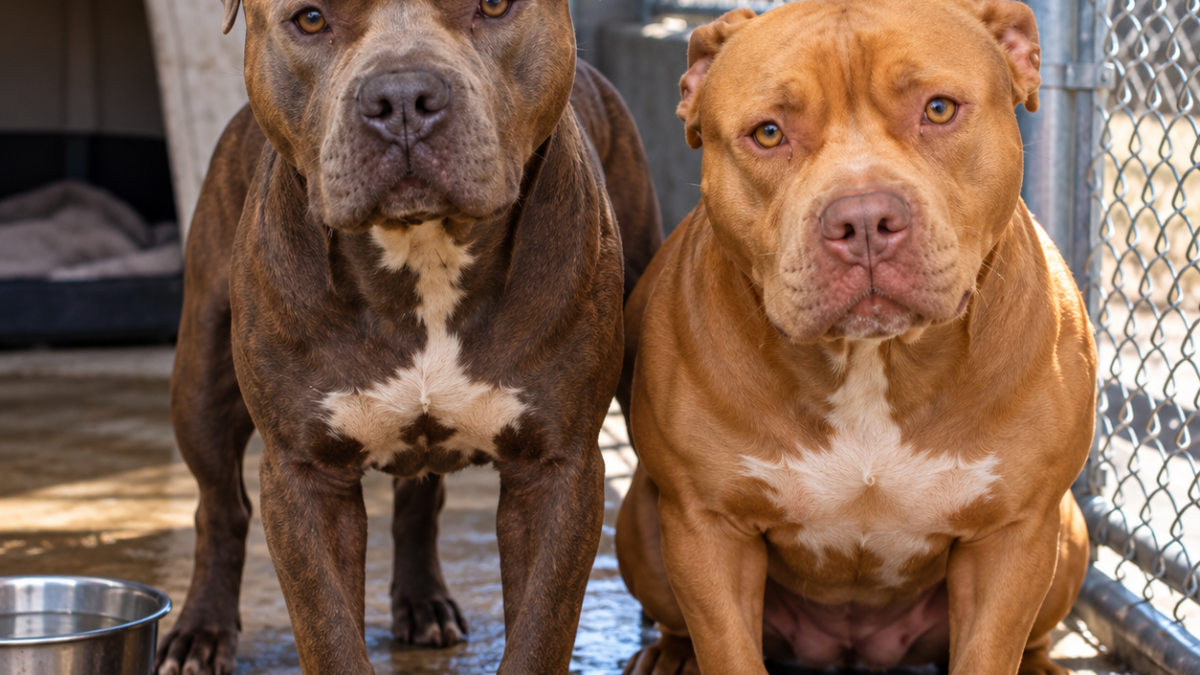
PART 2
I remember staring at him because nobody had ever phrased it that way.
People came into shelters asking for friendly dogs.
Small dogs.
Young dogs.
Dogs that didn’t shed.
Dogs that knew commands.
Dogs good with children.
Dogs good with cats.
Dogs that matched the picture already living in their heads.
Nobody had ever walked through our doors and specifically asked for the dogs nobody wanted.
“Excuse me?” I said.
The man wiped rainwater from his forehead.
“The ones who’ve been here the longest.”
“You don’t have a breed preference?”
“No.”
“Age?”
He shook his head.
“Color?”
That almost made him laugh.
“No.”
I lowered the clipboard.
“What about size?”
“I live on six acres.”
That got my attention.
“Fenced?”
“Five of them.”
“Other pets?”
“Not anymore.”
Something changed in his face when he said that.
Not dramatically.
Just a slight tightening around his mouth.
I recognized grief by then.
Working in a shelter teaches you to recognize it in people as easily as in animals.
“I’m Emma.”
“Thomas.”
We shook hands.
His grip was gentle.
I walked him toward the adoption wing.
Baxter heard us first.
Of course he did.
His head appeared around the corner.
Then came the blue ball.
Thomas stopped outside Baxter’s kennel.
Baxter picked up the ball, dropped it, and looked at him expectantly.
Thomas smiled.
“You’re subtle.”
Baxter barked once.
Kaia came to her gate.
Thomas looked toward her.
Then back at Baxter.
Then at me.
“Those two?”
“Baxter and Kaia.”
“How long?”
I hesitated.
“More than two years.”
His smile disappeared.
“Why?”
“They’re bonded.”
“What does that mean exactly?”
“It means we strongly believe they should stay together.”
Thomas crouched near Baxter’s kennel.
Baxter pressed his chest against the gate.
Thomas didn’t immediately reach through.
Good.
Instead, he let Baxter smell his fingers.
Baxter’s tail swept back and forth.
“And that’s why nobody takes them?”
“It’s one reason.”
“What’s the other?”
“They’re adults. They’re large. They don’t photograph as well as puppies. Baxter has some arthritis beginning in one hip. Kaia takes time to trust strangers.”
Thomas looked at Kaia.
She was watching him.
“How long does she take?”
“Depends on the stranger.”
He sat down on the floor.
That was unusual.
Most visitors crouched for ten seconds, then stood when a dog didn’t immediately approach.
Thomas simply sat.
Kaia watched.
One minute passed.
Then two.
Baxter dropped his ball through the lower opening of the gate.
It rolled into the hallway and stopped beside Thomas’s boot.
Thomas picked it up.
“You want this?”
Baxter’s whole body answered.
Thomas rolled it back.
Baxter pounced.
For perhaps five minutes, the two of them played through the kennel gate.
Then something small happened.
Kaia moved closer.
Thomas noticed but didn’t turn directly toward her.
He just continued rolling Baxter’s ball.
Kaia took another step.
Then another.
Eventually she reached the front of her kennel.
Thomas rested one hand on the floor.
Kaia lowered her nose.
Sniffed.
Stopped.
Sniffed again.
Then touched his fingers.
Thomas didn’t move.
Kaia stayed.
I felt something tighten in my chest.
“You’ve had dogs before,” I said.
“Three.”
“At once?”
“Two at once. Long time ago.”
“What happened to them?”
He looked at Baxter.
“Old age.”
“And the third?”
This time, the pause lasted longer.
“My wife’s dog.”
I waited.
“She passed last winter.”
“I’m sorry.”
“Me too.”
Kaia pressed her nose lightly against his knuckles.
Thomas looked down.
“My wife, Margaret, picked every animal we ever had. I always told her we had enough.”
He smiled faintly.
“She never listened.”
“Sounds familiar.”
“House is too quiet now.”
That sentence explained more than the entire adoption questionnaire could have.
We introduced Baxter first in the visitation room.
He behaved exactly as expected.
He ran in.
Saw Thomas.
Looked for a toy.
Found a rope.
Brought it to him.
Thomas laughed.
“You’re making a strong case.”
Baxter shoved the rope against his knee.
After ten minutes, I brought Kaia.
She entered cautiously.
The second she saw Baxter, the tension left her shoulders.
Baxter crossed the room immediately.
He touched noses with her.
Then he returned to Thomas.
Kaia followed.
That was important.
Normally, when meeting strangers, Kaia stayed several feet behind Baxter.
This time, she came close enough that Thomas could touch her chest.
He didn’t pet her over the head.
He scratched gently beneath her neck.
Her eyes softened.
I had seen hundreds of adoption meetings.
Some were loud and immediate.
A dog climbed into someone’s lap, everyone cried, papers were signed.
Others were slower.
This one felt different.
Not because anything dramatic happened.
Because nothing had to.
Three tired creatures were sitting in one room together.
Baxter.
Kaia.
And Thomas.
Each of them had lost something.
Each of them seemed to understand silence.
After almost forty minutes, Thomas looked at me.
“How much to adopt both?”
I felt my heartbeat change.
“You’re serious?”
“I wouldn’t ask if I wasn’t.”
“There’s an application.”
“Fine.”
“Home check.”
“Fine.”
“Because they’re bonded, we’d want to make sure—”
“Emma.”
He smiled.
“Give me every form you’ve got.”
I almost hugged him.
Instead, I ran to the front desk.
That was when my supervisor stopped me.
His name was Richard Hale.
And that was when everything became complicated.
## THE DECISION I HAD BEEN DREADING
Richard had become shelter director six months earlier.
He wasn’t cruel.
I want to make that clear.
Life is easier when the person standing in your way is obviously terrible.
Richard wasn’t.
He was practical.
Sometimes painfully practical.
He had worked in municipal administration before coming to Pine Ridge, and he viewed the shelter in numbers.
Intake.
Output.
Average length of stay.
Medical costs.
Kennel utilization.
Adoption conversion rates.
Those numbers mattered.
Of course they did.
A shelter can’t function on emotion alone.
But animals don’t experience life as a spreadsheet.
That was where Richard and I often disagreed.
He was standing beside the printer when I reached the office.
“Where are you going?”
“Adoption packet.”
“For?”
“Baxter and Kaia.”
He looked at me.
“Together?”
“Yes.”
“Who’s interested?”
“Thomas Reed. Six acres. Fenced property. Prior dog experience.”
Richard didn’t look happy.
That confused me.
“This is good,” I said.
“I know.”
“Then why do you look like someone canceled Christmas?”
He lowered his voice.
“We need to talk.”
My excitement disappeared.
“About what?”
“Baxter and Kaia are scheduled for transfer.”
I stared at him.
“Transfer where?”
“Different partner facilities.”
I actually thought I had misunderstood him.
“Different?”
“Kaia has placement at North County. Baxter can go to Lakeshore.”
“No.”
“Emma—”
“No.”
“Keep your voice down.”
“They’re bonded.”
“I know.”
“You signed their behavioral notes.”
“I know.”
“Then why are they being sent to two different shelters?”
Richard closed the office door.
“Because they’ve been here more than two years.”
“So?”
“So we’re full.”
“So we separate the two dogs who have gotten through everything together?”
“That’s not fair.”
“No, Richard. It’s exactly what you’re proposing.”
His jaw tightened.
“North County believes Kaia has a stronger chance of adoption as a single dog.”
“And Baxter?”
“Lakeshore has more demand for larger males.”
I couldn’t believe what I was hearing.
“We have someone in the visitation room who wants both of them.”
“Then he can apply.”
“Great.”
“But until he’s approved, the transfer remains scheduled.”
“When?”
“Friday.”
It was Tuesday.
Three days.
“Why wasn’t I told?”
“We finalized it this morning.”
“You knew I would object.”
“Yes.”
At least he admitted it.
I grabbed the application.
Richard put his hand over it.
“Emma.”
“What?”
“Don’t promise this man anything.”
“I’m not promising.”
“Don’t tell him the shelter will hold them indefinitely.”
“Three days isn’t indefinitely.”
“Don’t turn this into something personal.”
I pulled the paper from beneath his hand.
“It became personal about eight hundred days ago.”
## THOMAS’S APPLICATION
I didn’t tell Thomas every detail immediately.
I didn’t want to panic him before I knew whether his application had any issues.
He completed eight pages.
Veterinary references.
Personal references.
Property information.
History of animals.
Emergency care plan.
Financial information wasn’t required, but he volunteered that he was retired from the fire department and owned his home outright.
The veterinary reference came back within an hour.
Dr. Miller had treated Thomas’s animals for nearly twenty years.
“One of the best owners I’ve had,” she told me.
“Any concerns about two large dogs?”
She laughed.
“Tom Reed? He once slept on his kitchen floor for four nights because his old shepherd couldn’t climb stairs after surgery.”
That was enough for me.
The home check was scheduled for Wednesday morning.
I went myself.
The rain had stopped, but clouds still hung low over the hills.
Thomas lived in an old white farmhouse about twenty minutes outside town.
The property was beautiful without being fancy.
Large fenced yard.
Covered porch.
Mudroom.
Dog beds still stacked in a closet.
Water bowls beneath the kitchen sink.
Photographs covered one wall.
Thomas and a woman I assumed was Margaret.
Two shepherd mixes.
A black Lab.
Family pictures.
Grandchildren.
Life.
There was one photograph near the center.
Margaret sat on the porch with an elderly black dog against her knees.
Thomas saw me looking.
“That’s Lucy.”
“Your wife’s dog?”
He nodded.
“Seventeen years.”
“Seventeen?”
“Stubbornest creature God ever made.”
He smiled.
“Margaret loved her.”
I looked at the empty dog bed near the fireplace.
“You haven’t moved it.”
“Not yet.”
“You don’t have to.”
He looked away.
That was when I became certain.
This wasn’t a man trying to fill a hole by grabbing the first dog available.
He understood that one animal did not replace another.
He was simply ready for life to enter his house again.
The fence passed inspection.
The home passed.
The reference passed.
Everything passed.
I called Richard from Thomas’s driveway.
“Approve him.”
“I need to review it.”
“There’s nothing to review.”
“Emma.”
“Richard.”
He sighed.
“Bring the file back.”
When I returned, he went through every page.
Twice.
Finally, he signed.
My shoulders dropped.
“They can go?”
“After the standard waiting period.”
“Richard, they’ve been waiting 827 days.”
“Not their waiting period. His.”
Pine Ridge had a twenty-four-hour finalization policy for adult adoptions involving multiple animals.
Normally, I supported it.
Impulse adoption helps nobody.
That day, I hated it.
“Tomorrow?”
“Tomorrow afternoon.”
“And the transfer?”
“If the adoption finalizes, obviously it’s canceled.”
I nearly smiled.
Then he added:
“If.”
## THE POST THAT CHANGED EVERYTHING
Shelters use social media constantly.
Most of our adoption posts disappeared into the internet with twenty likes and three comments.
Baxter and Kaia had been posted dozens of times.
Nothing.
That Wednesday afternoon, our volunteer coordinator, Jenna, uploaded another photograph.
Baxter and Kaia were lying beside each other in the visitation yard.
She wrote:
**After more than two years of waiting, our longest-term bonded pair may finally have found their person.**
Within two hours, the post had thousands of shares.
I don’t know why that one took off.
Timing.
The photograph.
The story.
Internet luck.
By evening, local news pages had reposted it.
Comments poured in.
People celebrated.
People asked how to donate.
People said they had seen Baxter and Kaia months earlier but couldn’t take two dogs.
For once, their bond wasn’t the thing pushing people away.
It was the reason people cared.
I went home smiling.
At 9:17 that night, Jenna called.
“You need to see Facebook.”
“What happened?”
“Someone says they’re his dogs.”
My stomach dropped.
I opened the post.
A man named Aaron Voss had commented beneath it.
**Those dogs aren’t yours to give away. They belonged to my brother. Your shelter was told years ago.**
Below the comment, he had posted an old photograph.
Baxter.
Kaia.
Younger.
Standing in front of a red barn.
My hands went cold.
There was no question.
It was them.
## THE PAST RETURNS
By Thursday morning, Aaron Voss had called the shelter four times.
Richard arrived early.
So did I.
“So now what?” I asked.
“We investigate.”
“They were never claimed.”
“Apparently he says they were.”
“He says his brother owned them.”
“That’s still a claim.”
“Two years later?”
Richard rubbed his forehead.
“I don’t like it either.”
Thomas called at 8:10.
“I saw the comments.”
“I’m sorry.”
“Does this mean I can’t pick them up?”
“Not yet.”
Silence.
Then:
“Are they okay?”
That question told me everything about him.
He wasn’t asking whether his adoption was ruined.
He was asking about Baxter and Kaia.
“They’re fine.”
“Keep them together.”
“I will.”
“Emma.”
“Yeah?”
“Whatever happens, keep them together.”
I promised.
It was a promise I wasn’t technically authorized to make.
I made it anyway.
Aaron arrived at eleven with a folder of photographs.
He was fortyish, clean-shaven, expensive jacket, irritated from the moment he entered.
“Those dogs belonged to my brother, Caleb.”
“What happened to Caleb?” Richard asked.
“Died three years ago.”
“I’m sorry.”
Aaron shrugged slightly.
“They were on his property.”
“What happened after he died?”
“Things got complicated.”
“Did you take responsibility for the dogs?”
“No.”
“Who did?”
“A neighbor fed them.”
“For how long?”
“I don’t know.”
“Did anyone contact animal control?”
“Not that I know.”
Richard continued.
“Did anyone report them missing after they arrived here?”
Aaron shifted.
“We didn’t know where they were.”
“They were publicly listed.”
“I don’t follow shelter websites.”
“They were scanned for microchips.”
“Caleb never chipped them.”
“Any registration records?”
“No.”
“Veterinary records?”
Aaron produced several receipts.
One mentioned a dog named Baxter.
Another mentioned Kaia.
There was no doubt Caleb had owned them.
The legal question was whether ownership still existed after prolonged abandonment.
But something else bothered me.
“How did they leave your brother’s property?” I asked.
Aaron looked at me.
“No idea.”
“Were they loose?”
“Maybe.”
“Were they being cared for?”
“I told you, a neighbor fed them.”
“Did they have shelter?”
“Probably.”
Probably.
That word stayed with me.
“Why are you claiming them now?”
His expression changed.
“They’re family property.”
“Animals aren’t furniture.”
“I didn’t say they were.”
“Then why wait over two years?”
Aaron turned toward Richard.
“Is she always like this?”
“Often,” Richard said.
I almost respected him for that.
Aaron wanted the dogs returned to Caleb’s estate.
But Caleb’s estate had closed nearly two years earlier.
The property had been sold.
Aaron admitted he didn’t even know where the dogs would go.
“So you don’t want them yourself?” I asked.
“That’s not the point.”
“What is the point?”
He looked toward the adoption wing.
“The point is you don’t get to turn my brother’s dogs into some heartwarming internet story.”
There it was.
Not love.
Control.
Or perhaps grief expressed badly.
I wasn’t sure yet.
Richard told him we would review the records.
Until then, Baxter and Kaia were placed on administrative hold.
Thomas’s adoption froze.
The transfer froze too.
For once, bureaucracy protected them.
## THE RED BARN
The photograph bothered me.
Baxter and Kaia standing beside the barn.
Behind them was another dog.
Smaller.
White chest.
I zoomed in on the photograph later.
There were old buckets.
A chain-link enclosure.
A broken doghouse.
Nothing obviously alarming.
Still, I wanted to understand how Baxter and Kaia had ended up ten miles from Caleb’s property.
I contacted the animal control officer who had originally brought them to Pine Ridge.
Her report said:
**Two adult dogs found together near County Route 14. Both thin, dehydrated, no tags. Female reluctant to leave male.**
Nothing else.
I found the name of the neighbor listed in old property documents.
Helen Marsh.
She still lived nearby.
I called her.
“Caleb Voss?”
Her voice cooled immediately.
“What about him?”
“I’m calling regarding Baxter and Kaia.”
Silence.
Then:
“They’re alive?”
My heart jumped.
“You know them?”
“I fed them.”
“Can I ask what happened?”
Helen breathed out.
“Caleb got sick.”
“His brother said that.”
“He was sick for months.”
“Were the dogs cared for?”
“At first.”
“And later?”
She hesitated.
“I’m not trying to cause trouble for a dead man.”
“I understand.”
“But those dogs were alone most days.”
“Did Aaron help?”
She gave a humorless laugh.
“Aaron?”
That answered something.
“After Caleb died, what happened?”
“The house was locked. Property lawyers came and went. Dogs stayed outside.”
“For how long?”
“Weeks.”
My stomach tightened.
“I brought food.”
“Why didn’t you call animal control?”
“I did.”
That made me sit straighter.
“When?”
“Twice.”
“Our records don’t show—”
“County jurisdiction changed around then. They told me someone from the estate was handling it.”
“Did anyone?”
“No.”
“What happened to Baxter and Kaia?”
“One morning, they were gone.”
“Escaped?”
“I always thought someone opened the side gate.”
“Who?”
“I don’t know.”
“Why?”
“Because that gate had a latch a dog couldn’t move.”
I wrote everything down.
Then Helen said something else.
“Kaia wouldn’t leave without Baxter.”
“What do you mean?”
“Caleb used to take Baxter into town sometimes. Kaia would lie at the gate until he came back.”
Even before Pine Ridge, they had been inseparable.
“Did Aaron know they were there?”
“Of course he knew.”
“You’re certain?”
“I saw him at the property.”
“When?”
“Three days after Caleb’s funeral.”
That changed everything.
## THE VIDEO
Helen had one more thing.
A security camera.
Her house faced part of Caleb’s driveway.
She had replaced the system since then, but she kept old footage after a property dispute.
“I don’t know whether I still have that week,” she told me.
Two hours later, she called back.
“I found something.”
The video arrived by email.
Grainy.
No sound.
Timestamped almost three years earlier.
A truck entered Caleb’s property.
Aaron’s truck.
He got out.
Another man joined him.
They carried boxes from the house.
Twenty minutes later, Baxter appeared near the fence.
Kaia followed.
Aaron looked toward them.
The video didn’t show every part of the yard.
He disappeared from view.
Several minutes later, Baxter and Kaia came running down the driveway.
The gate stood open.
Aaron’s truck left shortly afterward.
Did the video prove he intentionally abandoned them?
Not completely.
It didn’t show him opening the gate.
But it proved something important.
He knew the dogs were there.
He knew they were loose when he left.
And afterward, he never reported them missing.
Richard watched the footage three times.
Then he sat back.
“That’s bad.”
“For him.”
“Yes.”
“So we finalize Thomas.”
“Not yet.”
I wanted to scream.
“Why?”
“Because we send this to legal.”
“Richard—”
“Emma, this is exactly when we need to do things correctly.”
I hated that he was right.
Our county attorney reviewed everything.
The next morning, she sent her conclusion.
Caleb’s estate had been legally closed.
No claim for the dogs had been filed during the shelter’s statutory holding period.
Aaron had demonstrated knowledge of the dogs’ situation and had failed to reclaim them despite public notice.
Pine Ridge had lawful custody.
Baxter and Kaia were available for adoption.
Aaron’s claim was rejected.
I called Thomas.
“Come get your dogs.”
He didn’t speak for several seconds.
Then I heard him laugh.
Not loudly.
Just one broken little sound.
“Both?”
“Both.”
“You’re sure?”
“I’m looking at the approval.”
“When?”
“Now.”
“I’ll be there in twenty minutes.”
He lived twenty-five minutes away.
He arrived in eighteen.
## BUT RICHARD STOPPED ME AGAIN
I had Baxter leashed.
Jenna had Kaia.
Thomas was signing the final page.
Then Richard stepped into the lobby.
“Emma.”
Not again.
I turned.
“What?”
He gestured toward his office.
“No.”
“We need to talk.”
“Unless the building is on fire, we really don’t.”
His expression was serious.
“Now.”
I handed Baxter’s leash to Jenna.
Inside the office, Richard closed the door.
“Corporate partner wants to review the case.”
“What corporate partner?”
“North County’s parent organization.”
“Why?”
“Because Aaron contacted them.”
I stared at him.
“Why would they have any authority over our adoption?”
“They don’t.”
“Then why are we talking?”
“Because he threatened to sue the county and every organization involved.”
“So?”
“So our board chair is nervous.”
I laughed.
I actually laughed.
“Those dogs waited 827 days. We finally have an approved adopter, and now some man who left them unclaimed for years gets to delay them because he knows the word lawsuit?”
“Emma.”
“No.”
“Listen.”
“No, you listen.”
I felt two years of frustration rise into my throat.
“They have done everything we’ve asked of them. They learned our schedule. They learned our rules. They learned to sleep through barking and disinfectant and strangers walking past their kennels. They watched hundreds of animals leave. They waited. And now, when somebody finally chooses both of them, we’re going to punish them because an administrator is afraid of an email?”
Richard didn’t answer.
I continued.
“You wanted to separate them three days ago.”
His face hardened.
“That’s unrelated.”
“No, it isn’t.”
“It was a capacity decision.”
“They are not capacity.”
“I know that.”
“Do you?”
He stared at me.
For several seconds, the room was completely quiet.
Then he said something I didn’t expect.
“You think I don’t care about them.”
“I think numbers matter more to you.”
“Numbers keep this place open.”
“And dogs are why it exists.”
“I know.”
“Then act like it.”
Richard looked through the glass wall toward the lobby.
Baxter was sitting beside Thomas.
Kaia stood pressed against Baxter’s shoulder.
Thomas wasn’t rushing anyone.
He was simply waiting.
Richard breathed out.
“The county attorney approved the adoption.”
“Yes.”
“The board has no legal basis to block it.”
“Exactly.”
He nodded.
“Then finalize it.”
I blinked.
“What?”
“You heard me.”
“That’s it?”
“No.”
He looked at me.
“Afterward, you’re coming back in here so I can explain why you cannot yell at your director like that.”
I smiled.
“Fine.”
“And you’re writing an incident summary.”
“Gladly.”
“Emma.”
“Yes?”
“Go get those dogs home.”
## THE MOMENT THEY LEFT
People imagine shelter adoptions as celebrations.
Balloons.
Pictures.
Applause.
Sometimes they are.
Baxter and Kaia’s adoption was quieter.
Thomas signed the final page.
I clipped a new identification tag onto Baxter’s collar.
Then one onto Kaia’s.
Thomas knelt.
“Ready?”
Baxter immediately walked toward the front door.
Kaia stopped.
Her body became stiff.
I knew why.
She had left the shelter before for veterinary visits.
She had always returned.
The front door didn’t mean home to her.
It meant uncertainty.
Thomas didn’t pull her.
He sat down right there in the lobby.
“Take your time.”
Baxter turned back.
He walked to Kaia.
Touched his nose to her cheek.
Then returned toward the door.
Kaia took one step.
Then another.
I held my breath.
Thomas rose slowly.
They crossed the lobby together.
When the automatic doors opened, Baxter froze for half a second at the sound.
Then he stepped outside.
Kaia followed.
The sky had cleared.
Sunlight reflected from puddles in the parking lot.
Thomas opened the rear door of his SUV.
There were two new dog beds inside.
Two harnesses.
Two bowls.
A blue ball.
I laughed when I saw it.
“You bought the ball?”
“Seemed mandatory.”
Baxter jumped in.
Kaia placed her front paws on the vehicle, then looked back at me.
That nearly ended me.
I crouched.
“Go.”
She watched me.
“You don’t have to come back this time.”
Her ears moved.
“Go home.”
She climbed inside.
Thomas closed the door gently.
Before getting behind the wheel, he hugged me.
Not long.
Not dramatic.
Just enough.
“Thank you.”
“Give them time.”
“I’ve got plenty.”
The SUV pulled away.
Baxter’s face appeared in the rear window.
Kaia sat beside him.
I watched until the vehicle disappeared.
Then I cried so hard Jenna had to bring me tissues.
Richard walked into the lobby.
He handed me another box.
“Here.”
“What is it?”
“Tissues.”
“Are you trying to become likable?”
“No.”
“Good.”
He turned away.
But I saw him wipe his eyes too.
## THEIR FIRST NIGHT
Thomas sent a photograph at 7:43 that evening.
Baxter was asleep on the rug.
Kaia was standing in the kitchen doorway.
Caption:
**One down. One suspicious.**
At 9:15:
Kaia lying beside Baxter.
Caption:
**Progress.**
At 11:02:
Both dogs asleep.
Baxter on a bed.
Kaia on the floor beside him.
Caption:
**I don’t think she trusts the furniture yet.**
The next morning, I called.
“How was the night?”
“Baxter snores.”
“I could have warned you.”
“You should have.”
“And Kaia?”
“She woke every time I moved.”
“Normal.”
“I went to the bathroom at three. She followed me.”
“Also normal.”
“When I came back, she wouldn’t lie down until Baxter did.”
I smiled.
“Very normal.”
Thomas paused.
“Emma?”
“Yeah?”
“The house doesn’t feel empty.”
That sentence stayed with me all day.
## THE FIRST WEEK
Baxter adapted quickly.
Of course he did.
By day two, he had discovered the porch.
By day three, he had discovered Thomas kept dog treats in the pantry.
By day four, he had discovered mud.
Kaia took longer.
She wouldn’t enter the bedroom.
Wouldn’t eat unless Baxter started first.
Wouldn’t stay in the yard unless Thomas remained outside.
If a vehicle slowed near the property, she returned immediately to the porch.
Thomas never forced her.
He opened doors.
Then waited.
He placed food down.
Then stepped back.
He let Baxter teach her the house was safe.
By the end of the first week, Kaia slept inside the living room.
By the second, she allowed Thomas to brush her.
By the third, she chose a spot beside his chair.
Then came the photograph that made the entire shelter stop working for five minutes.
Thomas was sitting on his porch.
Baxter lay across his feet.
Kaia was asleep with her head in his lap.
Jenna printed it.
We taped it above the staff coffee machine.
Richard pretended not to care.
I caught him looking at it every morning.
## AARON WASN’T FINISHED
Three weeks after the adoption, a letter arrived from Aaron’s attorney.
He intended to challenge the shelter’s handling of the dogs.
The county responded.
The case went nowhere.
Then Aaron took his complaints online.
He claimed Pine Ridge had exploited his dead brother.
He claimed we had ignored ownership evidence.
He posted selected photographs.
He accused Thomas of knowingly taking stolen animals.
That was when I became angry.
Attack me.
Attack the shelter.
But Thomas hadn’t done anything except offer two old dogs a home.
The comments grew ugly.
I called him.
“Don’t read Facebook.”
“I don’t.”
“Good.”
“My granddaughter does.”
“Oh.”
“She called and said strangers are saying I stole dogs.”
“I’m sorry.”
He was quiet.
“Can anyone take them?”
“No.”
“You’re sure?”
“Absolutely.”
“Then that’s all I care about.”
But it wasn’t all I cared about.
I had spent years watching Baxter and Kaia lose because people were too uncertain to choose them.
I wasn’t going to let uncertainty follow them home.
The county couldn’t publicly release confidential files.
But Helen could tell her story.
And she wanted to.
So did Dr. Miller.
So did the original animal control officer.
So did Thomas.
A local reporter named Rachel Kim contacted Pine Ridge about the controversy.
Richard initially said no.
I told him that silence was letting Aaron write the story.
For once, he agreed.
The resulting article was careful.
It included the timeline.
Caleb’s illness.
The weeks the dogs remained behind.
The neighbor’s efforts to feed them.
The date Aaron visited the property.
The date Baxter and Kaia were found.
The shelter’s public hold period.
The years of adoption listings.
Aaron’s failure to submit a claim.
And finally, Thomas’s approved adoption.
The reporter asked Aaron one question he could never answer clearly:
If Baxter and Kaia mattered as family property, why had he not searched for them during the 827 days their photographs were publicly available?
His answer was:
“I had other things happening.”
The article ended with a photograph of Baxter and Kaia asleep on Thomas’s porch.
Public opinion changed overnight.
Aaron deleted most of his posts.
But the story wasn’t finished.
## WHAT HELEN FOUND
A month later, Helen called me again.
“I’ve been cleaning Caleb’s old papers.”
“Why do you have them?”
“He left some things in my garage before he got really sick.”
She sounded uncertain.
“I found a notebook.”
“What kind?”
“Veterinary notes. Feeding schedules. Things about the dogs.”
My chest tightened.
“Anything important?”
“Something about Aaron.”
I drove to Helen’s house after work.
The notebook was ordinary.
Spiral binding.
Caleb’s handwriting.
Baxter’s weight.
Kaia’s medication.
Food brands.
Reminders.
Then, near the final pages, an entry dated shortly before Caleb entered hospice care.
**Talked to Aaron again. He says he can’t take both. Told him they stay together or neither goes. Helen says she can help temporarily. Need proper placement before hospital.**
I read it twice.
Then another entry.
**Aaron angry. Says two dogs are too much trouble. I told him Baxter won’t do well without K.**
Caleb knew.
He had specifically told his brother not to separate them.
Suddenly, Aaron’s entire argument about protecting Caleb’s wishes collapsed.
Helen covered her mouth.
“He knew.”
“Yes.”
“Caleb knew exactly what they needed.”
I photographed the pages with permission.
The county attorney received copies.
Aaron’s attorney withdrew the remaining complaint days later.
That could have been the end.
But Richard did something I never expected.
He scheduled a board meeting.
## THE POLICY
“I want to change bonded-pair procedure,” he told me.
I stared.
“Which direction?”
He almost smiled.
“Your direction.”
The proposed policy was simple.
Animals documented by veterinary and behavioral staff as genuinely bonded would not be separated solely to improve length-of-stay statistics without a formal welfare review.
Transfers would require compatible joint placement whenever reasonably possible.
Adoption outreach for bonded pairs would begin earlier.
Not after two years.
Earlier.
“Why now?” I asked.
Richard looked toward Baxter and Kaia’s photograph above the coffee machine.
“Because I was wrong.”
I said nothing.
Maybe because I wanted to hear him say more.
He sighed.
“You’re enjoying this.”
“A little.”
“Don’t.”
“Continue.”
“I looked at them and saw two long-stay numbers occupying two kennels.”
“Yes.”
“I knew they were bonded, but I told myself separation would be temporary.”
“You did.”
“I was wrong.”
“Correct.”
“Emma.”
“Sorry.”
He continued.
“I don’t want the next Baxter and Kaia waiting two years because we were too slow to tell their story properly.”
That mattered.
The board approved the policy unanimously.
North County adopted similar guidelines several months later.
Then Lakeshore.
One pair of dogs who had spent 827 days being passed over ended up changing how three shelters handled bonded animals.
That was the first part of what I came to think of as their revenge.
Not revenge against one person.
Revenge against every assumption that had kept them invisible.
## SIX MONTHS HOME
Thomas invited shelter staff to his property six months after the adoption.
I almost didn’t recognize Baxter.
He had gained muscle.
His coat shone.
The gray around his muzzle remained, but he looked younger somehow.
He saw me step from the car and ran across the yard.
“Don’t you dare knock me down!”
He knocked me down.
I sat in the grass laughing while he climbed halfway into my lap.
Kaia stood near the porch.
I didn’t call her.
I waited.
Eventually she walked over.
She sniffed my shoulder.
Then pressed against my side.
That felt even better than Baxter flattening me.
Thomas came outside carrying lemonade.
“Traitors.”
“They remember me.”
“I feed them.”
“Apparently not enough.”
Baxter ran toward him immediately at the word feed.
We sat on the porch.
Kaia lay against Thomas’s boots.
Baxter wandered between everyone, collecting attention.
Inside the house, I noticed something.
The old dog bed near the fireplace was no longer empty.
Kaia used it.
Lucy, Margaret’s dog, had slept there for years.
I wondered if Thomas had struggled with that.
He seemed to read my face.
“First time she slept there, I cried.”
“I’m sorry.”
“I’m not.”
He looked through the window.
“Margaret would’ve liked her.”
“You think?”
“Margaret liked every difficult animal.”
I smiled.
“Then definitely.”
He pointed toward a framed photograph on the wall.
Margaret with Lucy.
Next to it was a new photograph.
Thomas between Baxter and Kaia.
Not replacing the first.
Beside it.
That was exactly right.
## THE CALL I NEVER EXPECTED
Almost a year after the adoption, Aaron called the shelter.
When the receptionist transferred him to me, I nearly refused.
“What do you want?”
“I want to talk.”
“About what?”
“Baxter and Kaia.”
“They’re not coming back.”
“I know.”
His voice sounded different.
Smaller.
“I’m not asking for that.”
I said nothing.
“My daughter saw the article.”
“Okay.”
“She’s sixteen.”
Still nothing.
“She asked me why I left them.”
That caught me.
“What did you tell her?”
“The truth.”
“And what truth is that?”
“I didn’t want them.”
At least he finally said it plainly.
“My brother was dying. Everything was a mess. The house. Bills. Lawyers. My mother was falling apart. I saw two dogs and thought they were one more problem.”
“You knew Caleb wanted them together.”
“Yes.”
“You opened the gate?”
Silence.
Then:
“Yes.”
I closed my eyes.
There it was.
After all the denials.
All the posts.
All the legal threats.
“Why?”
“I thought they’d go somewhere.”
“You thought?”
“I wasn’t thinking.”
“They could have been hit by cars.”
“I know.”
“They were found dehydrated.”
“I know.”
“They spent more than two years in a shelter.”
“I know.”
His voice broke slightly on the last word.
I didn’t feel sorry for him.
Not yet.
Maybe never.
“Why are you telling me this?”
“My daughter said I should stop pretending.”
I looked toward the photo above my desk.
Baxter and Kaia on Thomas’s porch.
“What do you want from me, Aaron?”
“Nothing.”
“Forgiveness?”
“No.”
Good answer.
“I wanted to ask if they’re okay.”
“They’re better than okay.”
He breathed out.
“That’s good.”
“You don’t get credit for that.”
“I know.”
“Thomas does.”
“I know.”
“Baxter and Kaia do.”
“I know.”
I waited.
Aaron finally said:
“Tell him I’m sorry.”
“No.”
He seemed surprised.
“No?”
“If you’re sorry, write it yourself.”
He did.
## THE LETTER THOMAS ALMOST BURNED
The envelope arrived at Thomas’s house a week later.
He called me.
“What do I do with this?”
“Whatever you want.”
“I want to throw it in the stove.”
“That’s an option.”
“You read it?”
“No.”
“Good.”
He didn’t open it for three days.
Then he did.
Later, he showed it to me.
Aaron didn’t make excuses.
At least not many.
He wrote that his brother’s illness had frightened him.
That responsibility felt like one more thing collapsing onto him.
That he opened the gate because he told himself someone else would solve the problem.
He admitted that when the Facebook post went viral, embarrassment turned into anger.
Instead of admitting what he had done, he tried to regain control of the narrative.
Then he wrote:
**I kept saying they were my brother’s dogs, but I never behaved like someone who cared about what my brother wanted. You did more for them in one day than I did when they depended on me.**
Thomas read that line twice.
Then folded the letter.
“Do you forgive him?” I asked.
“No.”
I appreciated his certainty.
“Maybe someday?”
“Maybe.”
He looked into the yard.
Baxter was digging somewhere he absolutely wasn’t supposed to.
Kaia watched him.
“Doesn’t matter.”
“What doesn’t?”
“Whether I forgive him.”
He pointed toward the dogs.
“They don’t need anything from that man anymore.”
That was true.
## BAXTER’S SCARE
A little more than two years after adoption, Baxter stopped eating.
Thomas called me before calling the vet.
I yelled at him for that.
Then we both went to the clinic.
It turned out to be treatable.
Age-related problems.
Medication.
Diet change.
But for forty-eight hours, we were terrified.
Kaia refused food again.
Just like at Pine Ridge.
She lay beside Baxter’s bed.
If he stood, she stood.
If he slept, she slept.
When Baxter finally ate several bites of chicken, Kaia walked directly to her bowl and ate too.
Dr. Miller shook her head.
“I’ve seen bonded dogs before.”
“And?”
“These two are ridiculous.”
Thomas laughed.
I nearly cried.
Baxter recovered.
Not completely to his younger self.
But enough.
His walks shortened.
His naps lengthened.
His blue ball became something he carried more often than chased.
Kaia adjusted herself to his pace.
She had once been the quieter one.
Now she became his shadow.
If he stopped on a walk, she stopped.
If he needed help getting into the SUV, she waited until Thomas lifted him before jumping in herself.
They had spent their entire lives doing some version of that.
Waiting for each other.
## YEAR FOUR
Thomas turned seventy-two.
Baxter was estimated to be around eleven.
Kaia perhaps ten.
By then, the three of them were known around town.
Not because Thomas wanted attention.
He hated it.
But Pine Ridge sometimes shared updates.
People remembered the bonded pair who had waited more than two years.
One update showed Baxter asleep in sunlight while Kaia rested beside him.
Thousands of people commented.
Someone wrote:
**I remember seeing these two at the shelter years ago. I wish I could have taken them. I’m so glad someone did.**
Another wrote:
**This is why senior dogs deserve a chance.**
Another:
**Two dogs aren’t twice the trouble. Sometimes they’re each other’s courage.**
That line stayed with me.
Each other’s courage.
Yes.
That’s exactly what they were.
## THE WOMAN WITH THE RED LEASH
One afternoon, a woman named Melissa entered Pine Ridge.
She was young.
Maybe twenty-eight.
She wanted to adopt.
“I saw Baxter and Kaia’s story,” she said.
“Okay.”
“I want a bonded pair.”
I smiled.
“Really?”
“I’ve been thinking about it for months.”
We had two dogs available.
Rosie and Finn.
Sisters.
Seven years old.
Their owner had entered assisted living.
They had been at Pine Ridge four months.
Melissa adopted both.
Then another couple asked about a bonded pair.
Then another.
The policy change helped.
The publicity helped more.
Within two years, our average wait for bonded pairs dropped dramatically.
They were still harder to place.
Of course.
But now we didn’t introduce them apologetically.
We didn’t say:
“Unfortunately, they need to go together.”
We said:
“They come as a team.”
Language matters.
People hear possibility differently when you stop presenting love as a burden.
## RICHARD’S RETIREMENT
Five years after Baxter and Kaia went home, Richard announced he was leaving Pine Ridge.
We held a small party.
He hated parties.
Which improved mine.
When I handed him a gift, he looked suspicious.
“What is this?”
“Open it.”
Inside was a framed copy of the bonded-pair policy.
At the bottom, staff had written:
**For the director who eventually listened.**
He laughed.
“Eventually?”
“Accuracy matters.”
He pointed at me.
“You were insufferable.”
“I was correct.”
“Those aren’t mutually exclusive.”
Fair.
Then he handed me an envelope.
Inside was my promotion letter.
Director of Adoption Programs.
I looked up.
“No.”
“Yes.”
“I don’t want your job.”
“It’s not my job.”
“Good.”
“You’ll run adoption and placement.”
I looked at the paper again.
“Why me?”
“Because you remember the numbers represent living things.”
That was one of the kindest things he ever said.
Then he ruined it.
“And because somebody else should have to deal with you.”
## KAIA’S LAST GIFT TO BAXTER
Time eventually catches every dog.
Kaia slowed first.
It surprised all of us.
Baxter had been the one with arthritis.
We had always assumed he would become fragile sooner.
But one spring, Kaia began losing weight.
Tests followed.
Medication.
More tests.
Thomas called me after the veterinarian gave him the news.
I drove to the farmhouse that evening.
Kaia lay on the porch.
Baxter beside her.
Thomas sat on the step.
“How long?” I asked.
“Nobody knows.”
We didn’t say much after that.
For several weeks, Kaia still had good days.
She walked the property.
Ate chicken from Thomas’s hand.
Sat in sunshine.
On difficult days, Baxter stayed beside her.
He had trouble standing himself by then.
Still, if Kaia moved rooms, Baxter followed.
Slowly.
Painfully.
Stubbornly.
One afternoon, Thomas tried leaving Baxter in the living room while taking Kaia onto the porch.
Baxter barked until he was allowed to join her.
“Fine,” Thomas told him. “You win.”
Baxter always won.
Kaia’s final morning was peaceful.
Thomas called me before sunrise.
I arrived before the veterinarian.
Kaia was lying on her bed near the fireplace.
The same bed that had once belonged to Lucy.
Baxter lay with his body pressed against hers.
When I entered, Kaia lifted her head.
Her tail moved once.
I sat beside her.
“Hey, beautiful.”
Baxter watched me.
Thomas knelt on her other side.
There were no dramatic speeches.
No perfect words.
Just hands on fur.
Quiet voices.
Morning sunlight.
And Baxter refusing to leave her.
When Kaia was gone, Baxter remained beside her for a long time.
He sniffed her face.
Then lay down.
Thomas cried openly.
So did I.
Eventually, Baxter stood.
He walked toward the front door.
Then turned back.
For one horrible second, I thought he was waiting for her.
Maybe he was.
Thomas opened the door.
Baxter stepped onto the porch alone for the first time in years.
## THE EMPTY SIDE
The next weeks were hard.
Baxter searched.
Not constantly.
But enough.
He checked Kaia’s favorite spot in the yard.
He paused beside her bowl.
At night, he sometimes woke and looked toward the other dog bed.
Thomas moved the bowls after several days.
He couldn’t move the bed.
I visited frequently.
Baxter still greeted me.
Still ate.
Still enjoyed slow walks.
But something in him had changed.
He had spent almost his entire known life with Kaia.
We worried grief would take him quickly.
Instead, Baxter surprised us again.
He adapted.
Not because he forgot.
Because animals understand something humans struggle with.
Love can continue even when routine changes.
Thomas started taking him into town.
Short trips.
Hardware store.
Drive-through coffee.
Pine Ridge.
The first time Baxter returned to the shelter, I was nervous.
Would he remember?
He absolutely did.
He walked through the lobby.
Stopped.
Looked down the adoption hall.
Then pulled Thomas toward my office.
“Traitor,” Thomas said.
Baxter pressed his head into my lap.
He stayed for two hours.
He met Rosie and Finn.
Sniffed a puppy.
Stole half a sandwich from Jenna.
A complete success.
## AARON RETURNS
I didn’t see Aaron again until six years after Baxter and Kaia’s adoption.
He walked into Pine Ridge one Saturday afternoon.
I recognized him immediately.
Older.
More gray.
Less certainty.
I stood behind the front desk.
“Can I help you?”
He knew exactly who I was.
“I’m not here for Baxter.”
“Good.”
“I heard about Kaia.”
My expression changed.
“How?”
“Your website.”
He looked down.
“I’m sorry.”
“Thank you.”
He handed me an envelope.
“A donation.”
I didn’t take it immediately.
“For what?”
“The bonded-pair program.”
That surprised me.
“Why?”
He swallowed.
“Because Caleb was right.”
I took the envelope.
Inside was a check.
Not enormous.
But significant.
“Does this make you feel better?” I asked.
“No.”
Again, a good answer.
“Then why do it?”
“Because feeling bad isn’t useful.”
I looked at him.
That sounded like something I might have said.
Maybe years earlier, I would have wanted to punish him.
To refuse his money.
To tell him he had no right to attach himself to their story.
But the donation could help another pair.
Another Baxter and Kaia.
I accepted it.
“Thank you.”
He nodded.
“How’s Baxter?”
“Old.”
He smiled sadly.
“He always was the goofy one.”
That stopped me.
“You remember?”
“Yeah.”
“Blue ball?”
Aaron laughed.
“Since he was a puppy.”
For the first time, I could imagine that before everything went wrong, these dogs had been loved by more than one person.
Life is complicated that way.
People fail terribly.
That doesn’t erase every moment that came before.
It also doesn’t excuse what followed.
Both can be true.
“Would Thomas let me see him?”
“No.”
I answered immediately.
Aaron nodded.
“I figured.”
“Don’t ask again.”
“I won’t.”
And he didn’t.
## BAXTER’S FINAL SUMMER
Baxter reached an estimated fourteen years old.
For a large dog, that felt miraculous.
His face turned almost completely gray.
His hearing faded.
His back legs weakened.
But he still carried a blue ball.
Not the original.
That had disintegrated years earlier.
Thomas bought replacements.
Always blue.
That summer, Baxter spent most afternoons beneath the maple tree near the porch.
Thomas placed a thick outdoor bed there.
I visited on Sundays.
Sometimes we talked.
Sometimes we simply sat.
One afternoon, Baxter was asleep between us.
Thomas said:
“You know, I almost didn’t come to the shelter that day.”
I looked at him.
“Why?”
“Rain.”
I laughed.
“Seriously?”
“I was halfway there and nearly turned around.”
“What made you keep driving?”
“Margaret.”
“Your wife?”
“Something she used to say.”
“What?”
He looked down at Baxter.
“She said the animals who need you rarely arrive at convenient times.”
That sounded exactly like the woman I had learned about through stories.
“I wish I’d met her.”
“She would’ve liked you.”
“Why?”
“You’re both bossy.”
“Thank you.”
“Wasn’t a compliment.”
Baxter opened one eye.
We laughed.
Then Thomas became serious.
“I thought I was saving them.”
“So did I.”
“Turns out the house needed them more than they needed the house.”
I understood.
## BAXTER’S LAST MORNING
When Thomas called me at 5:42 on an August morning, I knew before answering.
“Emma.”
“I’m coming.”
“You don’t have to—”
“I’m coming.”
Baxter was lying near the fireplace.
Not on his bed.
On Kaia’s.
Thomas told me he had moved there during the night.
Maybe coincidence.
Maybe not.
I chose not to analyze it.
I sat beside him.
His eyes opened when I touched his shoulder.
“Hey, handsome.”
His tail moved.
Barely.
But it moved.
Thomas sat across from me.
The blue ball was beside Baxter’s front paw.
“I think he’s ready,” Thomas whispered.
I nodded.
Baxter had spent his whole life waiting for Kaia.
At kennel doors.
At veterinary offices.
Behind fences.
Beside beds.
If there is any fairness in the universe, I like to believe she didn’t make him wait long that morning.
Baxter left quietly.
Safe.
Home.
Thomas’s hand on his chest.
Mine beneath his chin.
The blue ball beside him.
Afterward, none of us moved for a long time.
Finally, Thomas said:
“827 days.”
I looked at him.
“What?”
“They waited 827 days for this house.”
“Yes.”
He wiped his eyes.
“I got almost seven years.”
I nodded.
“Seven years wasn’t enough.”
“No.”
“But it was more than zero.”
That broke both of us.
## THE REVENGE PEOPLE EXPECTED
When people hear parts of Baxter and Kaia’s story, they sometimes expect the ending to focus on Aaron.
They want dramatic punishment.
They want him humiliated.
They want a courtroom.
They want someone to lose everything because he once walked away from two dogs who depended on him.
But that isn’t the ending I remember.
Aaron did face consequences.
His legal claim failed.
His public accusations collapsed when the timeline came out.
People learned what had really happened.
He eventually admitted his role.
His own daughter forced him to examine the kind of man he had been in that moment.
Maybe that hurt more than any fine could have.
But the most satisfying revenge had nothing to do with hurting Aaron.
It was Baxter and Kaia living well.
Every sunrise on Thomas’s porch was revenge against abandonment.
Every warm winter night was revenge against loneliness.
Every bowl filled on time was revenge against uncertainty.
Every veterinarian visit was revenge against neglect.
Every walk taken side by side was revenge against the idea that keeping them together was inconvenient.
Every photograph of the two of them sleeping safely was an answer to the people who said adopting two was too complicated.
Their revenge was life.
A long one.
A gentle one.
A life nobody could take back from them.
## THE TWO EMPTY COLLARS
After Baxter died, Thomas removed both collars from their hooks.
He put them in a wooden box.
Kaia’s red collar.
Baxter’s blue one.
The tags still carried Thomas’s phone number.
He brought the box to Pine Ridge several months later.
“I want you to keep these.”
“I can’t.”
“Why?”
“They’re yours.”
“They’re theirs.”
He placed the box in my hands.
“What am I supposed to do with them?”
“You’ll know.”
For almost a year, they stayed in my office.
Then we renovated the adoption wing.
We created a small room specifically for bonded pairs.
Not larger kennels.
A real room.
Couches.
Beds.
A small fenced patio.
Less noise.
More time together.
Above the entrance, we hung a wooden sign.
**THE BAXTER & KAIA ROOM**
Beneath it, inside a shadow box, were their collars.
Visitors asked about them constantly.
And every time they did, staff told the story.
Not the sad version.
The important version.
Two dogs waited more than two years because they loved each other too much for us to pretend separating them wouldn’t matter.
Then someone finally understood that taking two dogs wasn’t doubling the burden.
It was accepting a family that already existed.
## THOMAS COMES BACK
A year after Baxter died, Thomas returned to Pine Ridge.
Alone.
He walked through the adoption hall slowly.
I didn’t ask why he was there.
Eventually, he stopped outside the Baxter & Kaia Room.
Inside were two senior beagles.
Molly and June.
Eleven and twelve.
Bonded.
Overweight.
Gray faces.
Terrible singing voices.
Thomas stood at the glass.
Molly barked.
June immediately joined.
He smiled.
“No.”
I said nothing.
“Absolutely not.”
“Okay.”
“I’m too old.”
“Okay.”
“Two beagles?”
“Terrible idea.”
“They howl.”
“Constantly.”
He looked at me.
“Stop agreeing with me.”
“I’m not doing anything.”
He looked back at them.
“How long?”
“Seven months.”
He closed his eyes.
“Emma.”
“Yeah?”
“I hate you.”
“I know.”
Three days later, Molly and June went home with him.
The photograph remains on my desk.
Thomas in the middle.
Two gray beagles on either side.
Behind him on the wall were Baxter and Kaia’s pictures.
Not replaced.
Never replaced.
Just joined.
## YEARS LATER
I’m no longer the young staff member who argued with Richard outside the kennel hallway.
My hair has gray in it now.
I have been at Pine Ridge long enough that some volunteers weren’t even born when Baxter and Kaia first arrived.
The building has changed.
The policies changed.
I changed.
One thing hasn’t.
Every morning, the first sound is still the lock.
Then bowls.
Then paws.
Then hope.
Some dogs jump.
Some hide.
Some stare through the gate.
Some have been there a day.
Some months.
Occasionally, one much longer.
Whenever a staff member becomes discouraged, I take them to the Baxter & Kaia Room.
I point toward those two collars.
And I say:
“They waited 827 days.”
Usually, the staff member thinks I’m telling them to be patient.
I’m not.
I’m reminding them that our job is to keep trying.
Patience without effort is just waiting.
Baxter and Kaia had already done enough of that.
Our responsibility was to tell their story better.
Reach farther.
Ask different people.
Challenge assumptions.
And never confuse difficult placement with impossible placement.
## THE RAINY TUESDAY
Every year, on the anniversary of their adoption, Thomas visits.
Even now.
Sometimes he brings Molly and June.
Sometimes just photographs.
We sit in the lobby and drink terrible shelter coffee.
He always complains.
I always remind him nobody forced him to come.
One year, it rained.
Hard.
Almost exactly like that first Tuesday.
Thomas stood by the front door.
“You remember?”
“Of course.”
“I asked you to show me the dogs nobody wanted.”
I smiled.
“That’s not exactly what you said.”
“Close enough.”
“You said, ‘Show me the ones everybody keeps walking past.'”
He looked impressed.
“You remember the exact words?”
“I remember everything.”
We stood quietly.
A family passed through the lobby with a newly adopted dog.
A little girl held the leash.
The dog looked terrified.
Her father knelt beside her and waited.
Good.
Someone had taught him not to pull.
Thomas watched them leave.
“Funny thing,” he said.
“What?”
“I thought nobody wanted Baxter and Kaia.”
I looked at him.
“They were wanted.”
“By each other.”
Exactly.
Before Thomas.
Before me.
Before Pine Ridge.
Before social media posts.
Before policies.
Before anyone else chose them.
They had already chosen each other.
That was the part people misunderstood.
Their story was never about two unwanted dogs.
It was about two dogs who already had a family of two and spent 827 days waiting for a human willing to respect it.
## THE LAST THING I LEARNED FROM THEM
For years, I believed Baxter was the brave one.
He was loud.
Playful.
Always first through a doorway.
Kaia seemed more fragile because she watched before moving.
I was wrong.
Baxter’s courage was visible.
Kaia’s was quiet.
She kept standing up every morning even after hundreds of people walked away.
She kept approaching the gate.
Kept trusting Baxter.
Eventually trusted Thomas.
Courage doesn’t always look like running forward.
Sometimes courage is remaining open after disappointment teaches you to close.
And Baxter?
People thought he protected Kaia.
Maybe he did.
But she protected him too.
When he was sick, she waited.
When his body slowed, she slowed.
When thunderstorms came, she lay beside the divider.
When visitors passed, she stayed.
Neither was the hero.
Neither was the burden.
They were a team.
That is why separating them for convenience would have been the easiest decision and the wrong one.
## WHAT HAPPENED TO AARON
Years later, Aaron became an occasional donor to our bonded-pair fund.
He never used Baxter and Kaia’s names publicly.
I respected that.
Once, his daughter came to volunteer.
She didn’t introduce herself as Aaron’s daughter.
I recognized the last name.
I never mentioned it.
She worked quietly.
Cleaned kennels.
Walked older dogs.
Sat with frightened ones.
After several months, she finally said:
“My dad told me what happened.”
I looked at her.
“You don’t owe me an explanation.”
“I know.”
“He made the decision. Not you.”
“I know.”
She looked toward the Baxter & Kaia Room.
“I think he spent years trying to undo one bad afternoon.”
“Can you undo it?”
“No.”
“Can you do something different tomorrow?”
She nodded.
“That’s what I tell him.”
Aaron never became part of Baxter and Kaia’s happy ending.
Thomas earned that place.
But Aaron became proof of something else.
Accountability isn’t only punishment.
Sometimes it is refusing to hide from the person you used to be.
I never became his friend.
I never told him what he did was acceptable.
It wasn’t.
But I stopped needing him to suffer.
Baxter and Kaia had already won.
## THE BENCH
When Pine Ridge expanded its outdoor exercise area, Thomas donated a bench.
The plaque was his idea.
It reads:
**BAXTER & KAIA
THEY WAITED FOR EACH OTHER.
WE JUST HAD TO CATCH UP.**
People sit there while meeting adoptable dogs.
Children read the names.
Volunteers take breaks.
Senior dogs nap beneath it.
One rainy afternoon, I sat there alone.
A new dog named Chester was in the yard.
He had been returned twice.
He didn’t trust easily.
He stayed twenty feet away from me.
I didn’t call him.
I didn’t reach.
I simply sat.
Eventually, Chester moved closer.
Fifteen feet.
Ten.
Five.
Then he lay down beside the bench.
I looked at Baxter and Kaia’s plaque.
“Yeah,” I whispered.
“I learned.”
## THE ENDING THEY DESERVED
Baxter and Kaia’s story did not end when they left Pine Ridge.
It did not end when Kaia’s bed became empty.
It did not end when Baxter carried his blue ball for the last time.
Their story lives in every bonded pair that remains together because someone points to their file and says, “Remember Baxter and Kaia.”
It lives in Molly and June sleeping at Thomas’s house.
It lives in Rosie and Finn.
It lives in our policy.
It lives in the room carrying their names.
It lives in two worn collars behind glass.
And it lives in me.
Because whenever someone stands at our front desk and says:
“Two dogs sounds difficult.”
I don’t argue.
I just smile.
Then I tell them about a big shaggy dog who used to perform with a blue ball.
And a quiet girl who could look into your eyes without making a sound.
I tell them about mornings at the shelter.
About noses touching through wire.
About thunderstorms.
About waiting.
About one rainy Tuesday.
And about an old man who entered our shelter because his house was too quiet and asked for the animals everybody else kept walking past.
Then I tell them what happened after Thomas brought them home.
Baxter slept near the fireplace.
Kaia eventually claimed the bed that had belonged to a dog Thomas’s wife once loved.
They explored six acres.
They grew old.
They stayed together until they couldn’t.
They were never separated for someone else’s convenience.
They were never abandoned again.
They were never treated like an inconvenience again.
And for nearly seven years, every door they watched open belonged to their own home.
That matters to me.
Because for 827 days, I had watched Baxter look up every time the shelter entrance opened.
Every visitor made his tail move.
Every footstep offered possibility.
Then the footsteps passed.
The door closed.
Night came.
Kaia moved beside the divider.
Baxter settled beside her.
Tomorrow they tried again.
People sometimes call that sad.
I don’t anymore.
I call it loyalty.
Hope.
And perhaps the purest kind of love I have ever witnessed.
The world kept saying:
Not today.
Not you.
Not both.
Too old.
Too large.
Too complicated.
Baxter and Kaia answered in the only way they knew.
They stayed beside each other.
Until one man finally walked through the rain and said yes.
Yes to Baxter.
Yes to Kaia.
Yes to two bowls.
Two beds.
Two sets of veterinary bills.
Two muddy dogs.
Two aging bodies.
Two histories he couldn’t change.
And one bond he never tried to break.
That was their victory.
And if there was revenge in their story, it wasn’t loud.
It wasn’t cruel.
It didn’t destroy anyone.
It was much better than that.
The dogs people called too complicated became the reason other bonded dogs were kept together.
The pair nobody wanted became the pair thousands of people remembered.
The animals who spent more than two years behind shelter doors became the names above a room built to give others a better chance.
And the man who once opened a gate and walked away eventually had to live knowing strangers had shown his brother’s dogs more loyalty than he had.
Baxter and Kaia never knew any of that.
They didn’t understand policies.
Or internet arguments.
Or legal claims.
Or board meetings.
They understood simpler things.
Thomas’s truck meant adventure.
The pantry meant treats.
The porch meant afternoon sun.
A blue ball meant Baxter wanted to play.
A warm bed meant the night was safe.
And each other meant home.
Maybe that was enough.
Maybe it was everything.
Sometimes when the shelter is quiet, I still remember them through the divider.
Baxter’s nose pressed against the wire.
Kaia curled beside him.
Two dogs waiting for a door to open.
If I could speak to them then, I wouldn’t tell them how long it would take.
I wouldn’t explain all the people who would pass.
I wouldn’t warn them about Aaron’s claim.
Or Richard’s transfer plan.
Or the years growing old would eventually take from them.
I’d tell them only this:
One Tuesday, it’s going to rain.
A man with mud on his boots is going to walk through that front door.
He won’t ask which dog is cutest.
He won’t ask for the youngest.
He won’t ask which one causes the least trouble.
He’s going to ask for the ones everyone else keeps walking past.
And when we bring him to your kennels, Baxter, you’re going to drop that ridiculous blue ball at his feet.
Kaia, you’re going to watch him for a while.
Then you’re going to take one careful step closer.
And that step is going to carry both of you all the way home.
So hold on.
Stay beside each other.
The right door hasn’t opened yet.
But it will.

