PART 2: Everyone Walked Past the Kitten Whose Eyes Were Swollen Shut—Then One Tiny Paw Changed Everything
PART 2
I barely slept that night.
Smushie stayed at the veterinary clinic.
I stayed home staring at my phone.
Every notification made my heart jump.
At 1:17 a.m., the clinic called.
My hands shook before I answered.
“Hello?”
“This is Leah from Greenfield. Smushie’s temperature dropped a little, but we’ve stabilized it.”
“Is she worse?”
“Not necessarily. She’s still very sick.”
“Is she awake?”
“On and off.”
“Did she eat?”
“Not yet.”
I sat on the edge of my bed.
“What happens if she doesn’t?”
“We keep supporting her.”
That answer sounded so simple.
Support her.
Fluids.
Warmth.
Medication.
Nutrition.
Monitoring.
Things she should never have needed if someone had cared for her earlier.
I looked at the photograph I’d taken before handing her over.
Even in the image, her head looked too large for her body because she was so thin.
One eye was almost completely hidden.
Her fur stuck out in dirty spikes.
And somehow, even then, there was something about her that looked stubborn.
Not fierce.
Not angry.
Just unwilling to disappear quietly.
“Can you tell her I’m coming in the morning?”
Leah laughed softly.
“I will.”
I knew Smushie wouldn’t understand.
I needed to say it anyway.
—
At seven the next morning, I was standing outside Greenfield before the doors officially opened.
Dr. Patel let me into the treatment room.
Smushie looked smaller than I remembered.
That seemed impossible.
A catheter was taped to one front leg.
Warm blankets covered everything except her head.
The swelling around her eyes remained severe.
But when I said her name, one ear moved.
“Smushie.”
Her head lifted half an inch.
Then fell.
I sat down beside the kennel.
“That’s enough.”
Her nose moved toward my fingers.
“Don’t show off.”
Dr. Patel stood behind me.
“She’s been responding to voices.”
“Good?”
“Very.”
“Food?”
“She licked a small amount.”
Relief hit me so quickly that I almost laughed.
“How much?”
“A few teaspoons.”
“That’s all?”
“For her, that’s a win.”
Smushie made a tiny sound.
I touched the blanket near her chest.
“Did you hear that? You’re winning.”
Her tail didn’t move.
I wasn’t sure she had enough strength.
But her paw flexed.
—
Over the next forty-eight hours, we learned how complicated her condition was.
Severe dehydration.
Upper respiratory infection.
Conjunctivitis.
A bacterial infection around the eyes and face.
Parasites.
Fleas.
Malnutrition.
Dr. Patel suspected she’d gone without consistent food for far too long.
Her bloodwork showed infection but no catastrophic organ failure.
That mattered.
Everything mattered.
Every number.
Every degree of temperature.
Every spoonful of food.
Every time she urinated normally.
Every time she lifted her head.
Rescue stories are often compressed into two photographs.
Before.
After.
People see the sick animal and then the healthy one.
They don’t see the twelve hours between feedings when you’re watching a monitor and wondering whether the heart rate is changing.
They don’t see the veterinarian checking gums.
The technician warming fluids.
The foster volunteer washing towels at midnight.
The small calculations.
The fear.
The waiting.
Smushie’s recovery began in teaspoons and minutes.
—
On the third morning, she ate from my finger.
Dr. Patel had mixed a high-calorie food into something almost like soup.
I dipped the tip of my finger into it and held it near Smushie’s mouth.
She sniffed.
Nothing.
I waited.
Her nose moved again.
Then her tongue touched my finger.
Once.
Twice.
A third time.
“Yes.”
Dr. Patel smiled.
“Don’t scare her.”
“I’m not scaring her.”
“You’re practically vibrating.”
Smushie licked again.
I started crying.
Dr. Patel handed me a tissue.
“You’re going to be exhausting, aren’t you?”
“Probably.”
Smushie ate half a teaspoon.
We treated it like she’d finished Thanksgiving dinner.
—
The swelling was slower to improve.
Every blink hurt.
You could see it.
She would squeeze her eyes closed, then open them with visible effort.
Medication helped.
Warm compresses helped.
Time helped.
On day four, her left eye opened enough for me to see it clearly.
Green.
Bright green.
I leaned toward the kennel.
“Well, look at you.”
Smushie stared back.
One eye visible.
The other still swollen.
She looked ridiculous.
Beautiful.
Alive.
Her paw reached through the kennel opening.
I offered one finger.
She hooked it gently.
That became our routine.
—
Meanwhile, Melissa kept the piece of cardboard.
I wanted to forget about it.
Part of me hated myself for that.
The address beneath the words **FREE KITTENS. TAKE THEM.** was incomplete.
Rain had washed away half the marker.
We could make out a street number ending in 4.
Maybe 104.
Maybe 204.
The street name looked like “Carver.”
Or “Carter.”
Or possibly “Carmen.”
There were too many possibilities.
Melissa reported it to animal control anyway.
“Probably nothing will come of it,” she warned me.
“I know.”
“The box could’ve been reused.”
“I know.”
“Someone could’ve written it months ago.”
“I know.”
She looked at me.
“You don’t sound like you know.”
I stared through the glass at Smushie.
“I just keep thinking about the word kittens.”
Plural.
Melissa’s face softened.
“I know.”
“Where are the others?”
“We don’t know.”
That question haunted me.
—
The rescue posted a private request through local animal-control networks asking whether any similar kittens had been found in the area.
Within six hours, we had an answer.
Two.
One tiny gray male had been found three blocks away behind a dumpster.
Dead.
The second was a calico female found near a storm drain.
Alive, but critically sick.
My stomach dropped.
“Same age?”
“Approximately.”
“Same symptoms?”
Melissa nodded.
“Malnutrition. Eye infection. Respiratory disease.”
“Where is she?”
“County shelter transferred her to another rescue.”
“Could they be littermates?”
“Possibly.”
I sat down.
Smushie slept inside her kennel.
Three kittens.
Maybe more.
Someone had put them in a box.
Then what?
Left it open?
Dumped it?
Had they scattered while sick and terrified?
How many had nobody found?
—
The calico survived.
Her rescuers named her Peach.
A week later, we arranged DNA testing.
Not because it was necessary for their care.
Because by then animal control wanted to know whether the three cases were connected.
The test wasn’t courtroom magic.
But it could support what we already suspected.
Smushie and Peach were almost certainly siblings.
The dead gray kitten couldn’t be tested properly because no usable sample had been preserved.
Still, the pattern mattered.
Similar age.
Similar condition.
Same neighborhood.
Same week.
Then a fourth kitten appeared.
Orange.
Male.
Found underneath a shed almost a mile away.
He was weak but alive.
They named him Milo.
Three survivors.
One dead.
Maybe the litter was four.
Maybe five.
Maybe six.
We had no way to know.
—
On day six, Smushie stood for the first time.
Her legs shook.
I had my hands ready under her chest.
She pushed herself upright.
Paused.
Looked at me with one open eye and one half-open eye.
Then took a single step.
“Easy.”
Another.
Her back legs trembled.
She sat.
I laughed.
“Okay. That’s enough.”
Smushie disagreed.
She stood again.
Dr. Patel watched from the doorway.
“She’s stubborn.”
“That’s why she’s here.”
Smushie took three more steps.
Then collapsed into my hands.
I held her against my chest.
Her body was warmer now.
Not healthy yet.
But warmer.
She pressed her face into my shirt.
For the first time, I heard a sound I hadn’t expected.
A purr.
Weak.
Raspy.
But unmistakable.
I closed my eyes.
There are moments in rescue when you think the heart will break from sadness.
Nobody warns you it can hurt just as much from hope.
—
She left the clinic on day nine.
Not because she was cured.
Because she was stable enough to continue treatment in foster care.
The plan was for her to stay with a foster named Beth.
Beth had experience with fragile kittens.
She also had two calm dogs, three cats, and the patience of a saint.
I brought Smushie there myself.
“This is temporary,” I told her while carrying the crate inside.
Smushie stared at me.
“Don’t look at me like that.”
Beth laughed.
“You’re already attached.”
“I’m a volunteer.”
“That’s not what I said.”
“I am absolutely capable of emotional boundaries.”
Smushie sneezed directly onto my shirt.
Beth smiled.
“Strong boundaries.”
—
The first night in foster care, Smushie slept for almost ten hours.
Soft fleece blanket.
Heating pad beneath half the bed.
Food nearby.
Fresh water.
No cars.
No rain.
No sidewalk.
No one stepping around her.
Beth sent me a photograph at 5:43 the next morning.
Smushie was asleep on her back.
One paw above her head.
Mouth slightly open.
I stared at the picture for several minutes.
A week earlier, I’d been afraid she wouldn’t survive the night.
Now she had enough safety to sleep carelessly.
That mattered more than I knew how to explain.
—
Her personality started appearing in pieces.
First came curiosity.
Then appetite.
Then attitude.
Once the medication reduced the swelling around both eyes, she began watching everything.
Beth walking across the room.
Dogs moving past.
Sunlight on the floor.
A leaf outside the window.
She studied the world like she’d been given access to a secret.
Then came the stick.
It wasn’t even a cat toy.
One of Beth’s dogs, Moose, carried in a small twig from the yard and dropped it near Smushie’s blanket.
Smushie stared.
Beth was sitting nearby.
She took out her phone.
The kitten leaned forward.
Sniffed.
Paused.
Then touched it.
Tap.
Nothing happened.
She tapped again.
The stick rolled half an inch.
Smushie’s ears lifted.
Tap.
Roll.
Then something switched on.
She pounced.
Not gracefully.
Her legs were still recovering.
But she jumped.
Beth laughed so loudly that Moose barked.
Smushie froze.
Then attacked the stick again.
When Beth sent me the video, I watched it twelve times.
The kitten who had once spent all her energy breathing now had enough left over for nonsense.
That was when I knew she wasn’t only surviving.
She was becoming a kitten.
—
Her foster room became too small within two weeks.
She climbed everything.
The first time she climbed a scratching post, she got halfway up, panicked, and screamed.
Beth rescued her.
Ten minutes later, Smushie did it again.
“She’s not very bright,” Beth told me.
“She’s persistent.”
“Those are different things.”
Smushie attacked Beth’s shoelaces.
“She contains multitudes.”
—
Her face changed.
The swelling disappeared.
The skin healed.
Her eyes opened fully.
And they were enormous.
Green.
Slightly crossed when she focused too intensely.
Her little nose sat in the middle of a face that still looked permanently compressed.
The name Smushie stopped sounding sad.
It became perfect.
She looked like someone had gently smushed the world’s most dramatic cat into existence.
She made expressions that seemed almost human.
Offended.
Suspicious.
Outraged.
Judgmental.
Hungry.
Mostly hungry.
Photos of her spread through the rescue’s social media.
People loved her.
I tried not to think about that.
Because public affection has a strange way of making one forgotten animal visible while thousands remain unseen.
Still, if people were looking at Smushie, we could make them look at the others too.
Peach.
Milo.
The gray kitten who hadn’t survived.
—
Animal control found the first real lead nearly a month after Smushie’s rescue.
A convenience store sat across from the alley behind the laundromat.
The owner had security cameras.
At first, he said footage only saved for fourteen days.
Too late.
Then an employee remembered the system had recently been backed up after a break-in.
Old clips existed.
Officer Ramirez called Melissa.
“We may have something.”
I shouldn’t have gone.
I went.
The video was grainy.
Timestamped 2:13 a.m.
A pickup truck entered the alley.
Dark color.
Older model.
It stopped beside the laundromat.
A man got out.
He wore a hooded sweatshirt.
Baseball cap.
Couldn’t see his face.
He walked to the passenger side and lifted out a cardboard box.
My throat tightened.
He placed it near the wall.
The same wall where I found Smushie.
Then he returned to the truck.
The box moved.
Before the man drove away, one tiny head appeared over the edge.
I covered my mouth.
The truck disappeared.
The box remained.
For eighteen minutes, nothing happened.
Then one kitten climbed out.
Another.
Then a third.
Then a fourth.
Four.
The footage quality made colors hard to distinguish.
But four small bodies scattered into the alley.
One headed toward the street.
One disappeared behind the laundromat.
Another crawled beneath a fence.
The fourth remained near the box.
“Can you tell which one was Smushie?” I asked.
Officer Ramirez shook her head.
“No.”
“Can you identify the truck?”
“Possibly.”
“License plate?”
“Partial.”
That was enough to start.
—
The registration led to a man named Derek Vaughn.
Thirty-four.
Lived six miles away.
Owned the truck.
When animal control interviewed him, he denied everything.
Said he’d lent the vehicle to friends.
Couldn’t remember which night.
Said he didn’t own cats.
Then Officer Ramirez asked whether he knew anything about the cardboard box.
He said no.
She showed him a photograph.
His expression changed.
Barely.
But she noticed.
“Recognize the handwriting?”
“No.”
“You sure?”
“Yes.”
His girlfriend did.
That mattered.
—
Her name was Elise.
She called animal control two days later.
“I think I know the kittens.”
Officer Ramirez recorded the interview.
Derek had allowed a stray female cat to live in their garage during winter.
Not because he cared.
Because Elise had fed her.
The cat gave birth.
Five kittens.
Smushie’s litter had been five.
My heart sank.
“What happened to the fifth?”
Elise started crying.
She didn’t know.
For several weeks, she’d cared for the mother and kittens.
Then she left town to visit her sister.
When she came home, the cats were gone.
Derek told her someone from a farm had taken them.
She believed him.
Until she saw a local rescue post showing Smushie’s face.
“I knew that kitten.”
“How?”
“Her nose.”
I understood.
Smushie had a small dark mark beside one nostril.
Elise had photos.
Healthy kittens.
Five of them.
Smushie was there.
Smaller than the others.
Face normal.
Eyes open.
Fed.
Clean.
Alive.
The mother cat stood beside them.
“Where’s the mother?” I asked.
Elise shook her head.
“I don’t know.”
That question became the next nightmare.
—
Derek changed his story when confronted with Elise’s photographs.
He admitted removing the kittens.
Not dumping them.
“Rehoming.”
At two in the morning.
In a cardboard box.
Behind a closed laundromat.
“People take free cats all the time,” he told Officer Ramirez.
“You left them in an alley.”
“There are apartments nearby.”
“They were approximately six weeks old.”
“They could walk.”
“One died.”
Silence.
“Three were found critically ill.”
“They were fine when I left them.”
“Why did you write ‘FREE KITTENS. TAKE THEM’?”
“So people would know.”
“At two in the morning?”
Derek shrugged.
That shrug later mattered to me more than I wish it did.
Not legally.
Emotionally.
Four animals left behind.
One dead.
Three close.
Shrug.
—
The mother cat was found three days later.
Still near Derek’s property.
Thin.
Searching.
She had been living beneath a neighbor’s porch.
Elise recognized her immediately.
They named her Pearl.
I went to see her.
She was gray and white.
Same green eyes as Smushie.
When I showed Beth the photograph, she stared.
“That’s her mother.”
“Yeah.”
Smushie was asleep in her lap.
Beth looked down.
“She probably looked for them.”
“I know.”
That sentence hurt differently.
Pearl had survived.
Her kittens had survived or died scattered through the city.
All because one man was “tired of dealing with cats.”
That was the phrase Elise said he’d used.
Not evil.
Not dramatic.
Tired.
It reminded me how much suffering begins with somebody deciding another life is inconvenient.
—
Pearl joined the rescue.
Peach recovered.
Milo recovered.
Smushie thrived.
The gray kitten remained the one we couldn’t fix.
We gave him a name after the fact.
Ash.
It felt wrong that he should be the only one without one.
—
Derek received citations at first.
That made me furious.
“Citations?”
Officer Ramirez sighed.
“Hannah.”
“He dumped five kittens.”
“We’re still building the case.”
“One died.”
“I know.”
“They were sick.”
“We need to show what condition they were in when he left them.”
“Elise has photos.”
“Which show them healthy several days earlier.”
“So?”
“So the defense will argue the infections developed afterward.”
I stared at her.
“He abandoned six-week-old kittens at two in the morning.”
“That part is much easier to prove.”
“Then charge him.”
“We are.”
Justice moves like something with arthritis.
Pain doesn’t.
That was the lesson.
—
Smushie gained weight.
Two pounds.
Then three.
Then more.
Her foster home became the center of her universe.
She followed Beth into the bathroom.
Waited outside the shower.
Attacked towels.
Climbed onto Moose while he slept.
The seventy-pound dog accepted this without protest.
Smushie discovered human beds.
That ended all discussions about where she was supposed to sleep.
She developed a habit of pressing her forehead against people’s mouths when she wanted attention.
Not cheeks.
Mouths.
“Why?” I asked.
Beth shrugged.
“She’s weird.”
Smushie shoved her face against mine.
“Personal boundaries.”
She purred louder.
“No.”
More purring.
I kissed her forehead.
She won.
—
Two months after the rescue, we reunited Pearl with the surviving kittens.
We didn’t know what would happen.
Cats don’t always recognize relatives after separation.
Smells change.
Circumstances change.
We introduced them slowly.
Pearl entered first.
Smushie was behind a gate.
For several seconds, neither moved.
Then Smushie made a tiny chirping sound.
Pearl’s head snapped toward her.
She walked to the gate.
Smushie approached.
Noses met through the bars.
Pearl began grooming Smushie’s forehead.
Beth burst into tears.
So did I.
Peach joined next.
Then Milo.
For one afternoon, the family existed again.
Not intact.
Ash was missing.
We all knew it.
But four were alive.
That counted.
—
The court case gained attention when the security footage became part of the public record.
Local news covered it.
The phrase “dumped kittens” appeared everywhere.
I hated how simple headlines made it sound.
People saw grainy footage.
They didn’t smell Smushie’s infected fur.
They didn’t hold her cold body.
They didn’t see Peach on oxygen.
They didn’t see Ash dead behind a dumpster.
Still, attention brought witnesses.
A neighbor remembered Derek complaining about kittens.
A coworker remembered him saying he planned to “get rid of them.”
A text from Derek to a friend surfaced.
**Got rid of the cat problem last night.**
Another:
**Left the babies where somebody will take them. Not my responsibility now.**
That second message changed the tone of the case.
Not my responsibility.
He had created the danger.
Then declared himself finished with it.
—
His attorney offered an explanation.
Derek had not intended harm.
He believed someone would take the kittens.
He didn’t understand how vulnerable they were.
He thought the mother cat would be fine.
He had made a mistake.
A mistake.
I thought about Smushie’s swollen eyes.
Ash.
Pearl searching under porches.
Mistake felt too soft.
But courts don’t sentence emotions.
They sentence conduct.
So we kept evidence.
—
Meanwhile, adoption applications for Smushie started arriving.
Dozens.
Then hundreds.
Her photographs had spread.
People loved the funny face.
The crossed eyes.
The strange expressions.
Some applications were excellent.
Some wanted “the famous kitten.”
Those were rejected immediately.
Beth asked me one evening:
“What are you going to do?”
“What do you mean?”
“You know what I mean.”
“No.”
“Hannah.”
Smushie was asleep across my shoulders like a scarf.
“I’m reviewing applications.”
Beth laughed.
“Sure.”
“I am.”
“You come here every day.”
“I volunteer here.”
“No, you volunteer with the rescue. You come here to see one cat.”
Smushie opened one eye.
“She’s medically complicated.”
“Not anymore.”
“She has follow-up appointments.”
“So do all rescue cats.”
“She likes me.”
“She likes the mailman.”
I looked offended.
Beth smiled.
“Adopt her.”
“I don’t know if that’s the right thing.”
“Why?”
“Because maybe one of those applicants has a bigger house.”
“She doesn’t care.”
“A quieter schedule.”
“She sleeps eighteen hours a day.”
“More experience.”
Beth pointed at me.
“You held her when she almost died.”
I looked at Smushie.
She started purring before I touched her.
“That’s emotional manipulation.”
“Yes.”
—
I still waited.
Maybe because adopting her meant admitting something.
I had stopped that first day because she needed me.
At some point, the equation reversed.
I needed her too.
That scared me.
Rescue teaches you to accept temporary love.
You help.
You heal.
You let go.
If you keep everyone, you stop being able to help the next one.
But sometimes one stays.
That isn’t failure.
It’s just the story choosing a different direction.
—
Smushie’s adoption became official three months after I found her.
I signed the papers at Beth’s kitchen table.
Smushie sat on the form.
Literally.
I tried moving her.
She bit the pen.
Beth laughed.
“Very solemn.”
“Can you control your foster animal?”
“Not my foster animal anymore.”
I looked at Smushie.
She stared back.
“You’re expensive.”
Purr.
“You bite.”
Purr.
“You have zero respect for sleep.”
Purr.
I signed.
“Fine.”
She stepped across the wet ink.
Her paw print appeared near my signature.
We kept it that way.
—
The court hearing happened two weeks later.
I attended.
Not with Smushie.
She had already spent enough of her life connected to Derek.
I didn’t want a courtroom becoming part of her world.
Elise testified.
She cried.
She explained that she had cared for Pearl and the kittens.
That she left town believing Derek would continue feeding them.
That he lied when she returned.
The defense asked why she hadn’t taken the cats to a shelter earlier.
Fair question.
Painful question.
“I thought they were safe in the garage until they were old enough.”
“With Mr. Vaughn?”
“Yes.”
“And you trusted him?”
“At the time.”
Derek stared at the table.
Elise continued.
“I was wrong.”
There was strength in that.
Owning the mistake.
Something Derek still hadn’t done.
—
Officer Ramirez presented the footage.
Truck.
Box.
Kittens.
Leaving.
Then veterinary records.
Smushie.
Peach.
Milo.
Ash.
The judge asked:
“How old were the kittens?”
“Approximately six to seven weeks.”
“Could they survive independently?”
Dr. Patel answered.
“Not safely under those conditions.”
“Would a reasonable owner understand that?”
“Yes.”
Derek’s attorney objected.
The judge overruled.
—
Dr. Patel described Smushie’s condition.
“Severe dehydration. Significant malnutrition. Infection. Facial swelling. Respiratory symptoms. Parasite burden.”
“Was she at risk of death?”
“Yes.”
“How immediate?”
“Without intervention, potentially very.”
My hands clenched under the bench.
I had heard all of it before.
Still hurt.
Then the prosecutor showed the first photograph.
Smushie on the sidewalk.
Tiny.
Swollen.
Dirty.
The courtroom went silent.
Even Derek looked.
For once, he didn’t shrug.
—
The plea offer came before a full trial.
Animal abandonment.
Neglect-related counts.
Fines.
Probation.
Restitution for veterinary care.
Mandatory humane-education classes.
A prohibition on owning or possessing animals during probation.
Not enough.
It never feels enough.
Ash was still dead.
Smushie had still suffered.
Peach and Milo had still nearly died.
Pearl had still searched.
No sentence rearranges the past.
But Derek would have a record.
He would repay costs.
He would be barred from animals for years.
He would no longer be able to say nothing happened.
That mattered.
—
At sentencing, Derek finally spoke.
“I didn’t mean for any of them to get hurt.”
The judge looked at him.
“But you intended to leave them.”
“Yes.”
“In an alley.”
“I thought somebody would find them.”
“At two thirteen in the morning?”
Silence.
“I thought by morning.”
The judge waited.
Derek looked uncomfortable.
Then he said the sentence I will always remember.
“I just didn’t want them anymore.”
There it was.
Not complicated.
Not confusion.
Not poverty.
Not emergency.
Didn’t want them.
The judge leaned forward.
“Not wanting responsibility does not erase responsibility.”
I looked down.
That sentence settled something in me.
Not everything.
But something.
—
Derek received probation, substantial fines, restitution, community service, and an animal-possession ban for the duration allowed under the negotiated sentence.
I wanted more.
Officer Ramirez knew.
Outside court, she said:
“You’re disappointed.”
“Yes.”
“Understandable.”
“Ash died.”
“I know.”
“Smushie almost died.”
“I know.”
“He goes home.”
“Yes.”
I looked at her.
“How is that justice?”
She thought for a moment.
“It isn’t complete justice.”
I appreciated that answer.
No speech.
No pretending.
“Then what is it?”
“A boundary.”
“What?”
“The system finally told him there is a line, and what he did crossed it.”
I looked toward the courthouse.
“Feels small.”
“It is.”
She paused.
“But small boundaries sometimes prevent the next animal from ending up in a box.”
I hoped she was right.
—
I came home angry.
Smushie met me at the door.
By then she was healthy enough to sprint through the apartment like something possessed.
She launched herself onto the couch.
Missed.
Hung from the edge.
I grabbed her before she fell.
“What are you doing?”
She attacked my sleeve.
“Your court case happened today.”
Bite.
“You don’t care?”
Bite.
“Derek was sentenced.”
Smushie grabbed my wrist with both paws and kicked.
I started laughing.
It surprised me.
The whole day had been heavy.
Then this ridiculous cat dragged me out of it.
She didn’t know who Derek was.
Or maybe she remembered a garage.
A box.
A voice.
I hoped not.
Either way, she wasn’t thinking about him.
She was thinking about murdering my sweatshirt.
That was better.
—
Months passed.
Her fur became soft.
Her body filled out.
Her eyes remained huge.
Her face retained the slightly smushed expression that had given her the name.
She became famous for looks she made when annoyed.
One photograph caught her staring at a cucumber as if personally betrayed.
Another showed her sitting inside a grocery bag with only her face visible.
People sent messages from everywhere.
“Is this really the same kitten?”
Yes.
Same kitten.
Different life.
—
At one year old, Smushie discovered that cabinets opened.
This was catastrophic.
She learned to hook one paw beneath the door and pull.
First came towels.
Then pots.
Then cereal.
One morning, I woke to find the kitchen floor covered in pasta.
Smushie sat in the middle of it.
“Explain.”
She blinked.
“Was this you?”
Blink.
“You live here for free.”
She attacked one noodle.
I took a picture.
Evidence.
—
Peach was adopted by a family with two older cats.
Milo went to a retired teacher.
Pearl stayed with Elise.
That surprised people.
It surprised me too.
Elise asked whether she deserved another chance.
Melissa answered carefully.
“That isn’t the question.”
“What is?”
“Can you give Pearl a safe home now?”
Elise did.
She installed cameras.
Registered her.
Kept her indoors.
Took her for veterinary care.
Sent updates.
Sometimes failure should disqualify people.
Sometimes it should change them.
Elise changed.
Pearl adored her.
I couldn’t argue with the cat.
—
Every year, the rescue held a small reunion.
Not public.
Just foster families and adopters.
Smushie tolerated Peach.
Ignored Milo.
Tried to steal Pearl’s food.
Pearl still groomed her forehead.
Even when Smushie was three times the size she’d been at rescue.
Motherhood apparently ignores dignity.
—
When Smushie was two, I moved into a new apartment.
She hated it for exactly six hours.
Then she discovered the windows.
Birds.
Squirrels.
A maple tree close enough that leaves brushed the glass.
She sat there every morning.
Watching.
I often wondered whether she remembered the street.
Cats remember more than we understand.
Smells.
Sounds.
Places.
Maybe she remembered rain.
Cold pavement.
Footsteps passing.
Or maybe the brain protects them by filling the present so completely that the past loses its shape.
I hoped for the second.
—
Her story continued online.
People used the word miracle.
I didn’t love that.
Miracle can make rescue sound like magic.
It wasn’t.
Smushie lived because someone noticed.
Then because veterinarians treated her.
Because technicians stayed overnight.
Because medication worked.
Because foster volunteers cleaned.
Because donors paid bills.
Because Beth monitored her.
Because people did things.
Miracles are beautiful.
But action is repeatable.
That matters more.
—
At three, Smushie began sleeping on my chest.
Not beside me.
Not near my feet.
Chest.
Every night.
Nine pounds of cat pressing directly on my lungs.
“You survived the streets to kill me in bed.”
Purr.
“I need oxygen.”
Purr.
“You’re selfish.”
Purr.
I moved her.
She returned.
Every night.
Eventually I stopped fighting.
—
At four, she developed a minor dental issue.
Nothing serious.
Still, when Dr. Patel called after the procedure, my stomach dropped exactly as it had years before.
“She’s fine.”
“You should start with that.”
“I just said hello.”
“Wrong.”
Dr. Patel laughed.
“You haven’t improved.”
“Neither has she.”
Smushie screamed from the carrier.
“Apparently.”
—
At five, we began fostering kittens in my apartment.
I wasn’t sure how Smushie would react.
The first foster was a terrified black kitten named Pip.
He hid behind the toilet.
Wouldn’t eat.
Wouldn’t approach people.
Smushie sat outside the bathroom door.
For hours.
Not crying.
Not pawing.
Just sitting.
Eventually Pip came out.
He saw her.
She blinked.
He walked closer.
That evening, he ate.
Three days later, he followed Smushie everywhere.
She acted annoyed.
She also slept beside his crate.
I realized then that Smushie had become something I hadn’t expected.
Proof.
For frightened kittens.
For me.
For everyone who remembered the sidewalk.
Proof that the first day is not the whole life.
—
We fostered nine kittens that year.
Smushie disliked five.
Tolerated three.
Loved one.
Her standards remained mysterious.
Every kitten was adopted.
Smushie stayed.
Queen of the apartment.
—
At six, she became obsessed with running water.
Sink.
Bathtub.
Dripping faucet.
She screamed until I turned it on.
“You’re a cat.”
Scream.
“There’s water in your bowl.”
Scream.
“Filtered water.”
Scream.
I turned on the tap.
She drank.
I surrendered.
—
At seven, I found the old scarf I’d wrapped around her the day I rescued her.
It had been stored in a box.
There were tiny stains that never completely came out.
I held it.
Smushie approached.
Sniffed.
Then walked away.
No reaction.
I sat on the floor.
For some reason, that made me cry harder than recognition would have.
Maybe the scarf meant nothing.
Good.
Let it mean nothing.
Let the street become meaningless.
—
By then, Derek’s probation had ended.
The animal ban expired.
I learned because Officer Ramirez told Melissa, and Melissa told me.
My first reaction was anger.
“He can own animals again?”
“Legally.”
“That’s insane.”
“I know.”
For several weeks, I searched shelter databases.
Asked local rescues to flag applications.
Not illegally.
Just based on public conviction records and standard screening.
Most organizations already had.
His name remained in case files.
He couldn’t erase it.
Months later, a rescue director told me Derek had tried to adopt a dog.
Denied.
Another shelter did the same.
A breeder checked his background.
Refused.
The law’s ban ended.
Memory didn’t.
I won’t pretend I hated that.
I loved it.
Quietly.
Every door that closed was one animal who didn’t enter his care.
—
That was the closest thing to revenge Smushie’s story ever needed.
He had treated living creatures as disposable.
Now animal organizations treated his application as a risk.
He had assumed nobody would care enough to track what happened after the box.
People cared.
For years.
He wanted the kittens gone.
Instead, one of them became the most recognized animal our rescue had ever handled.
He wanted responsibility to end in an alley.
It followed him into court.
Into records.
Into every adoption screening that came later.
Sometimes revenge isn’t destroying someone.
Sometimes it’s making sure their choice has consequences longer than they expected.
—
Smushie turned eight in the spring.
Eight.
I still struggle with that number.
The kitten I once thought might not survive the night had become a middle-aged cat with strong opinions about breakfast.
We celebrated at home.
No party hat.
I tried one when she was three.
She bit me.
Lesson learned.
I bought her a ridiculous catnip fish.
She ignored it.
Then spent forty minutes playing with the cardboard packaging.
Some things never change.
—
That evening, I pulled up the first photograph.
Smushie on the sidewalk.
Face swollen.
Eyes nearly closed.
Dirty.
Tiny.
I placed my phone beside her.
She looked at the image.
Then at me.
Then stepped directly onto the screen.
“That’s you.”
She sat.
“Very symbolic.”
She began cleaning one paw.
“You nearly died.”
No reaction.
“I cried over you for weeks.”
Lick.
“You cost the rescue thousands.”
Lick.
“You have no gratitude.”
Purr.
I laughed.
That was the ending I wanted.
Not tears.
Not court.
Not Derek.
A healthy cat refusing to care about her own tragedy.
—
Later that year, the rescue renovated its neonatal room.
Melissa asked me to come see it.
There were incubators.
Heating units.
Oxygen.
Dedicated feeding stations.
Better isolation spaces.
“How did you pay for all this?”
She pointed at a small plaque.
I stared.
**THE SMUSHIE FUND**
**For kittens who need someone to stop.**
I covered my mouth.
“No.”
Melissa smiled.
“Yes.”
Donations raised over years through Smushie’s story had paid for part of the renovation.
Not because we’d begged using her suffering.
Because people remembered her.
They remembered the eyes.
The stick.
The strange expressions.
The recovery.
“How many kittens will this help?”
“We don’t know.”
“Guess.”
“Hundreds, eventually.”
I sat down.
Smushie was home asleep.
Probably on my pillow.
Completely unaware that her survival had become infrastructure.
I loved that.
—
The first patient in the renovated room was a four-week-old tabby with pneumonia.
Tiny.
Weak.
Couldn’t regulate temperature.
I visited.
The kitten lay beneath heat.
For a second, the years disappeared.
I saw Smushie.
Dr. Patel stood beside me.
“You okay?”
“Yeah.”
“No, you’re not.”
“I am.”
She looked through the incubator.
“Do you know how many times I’ve thought about her?”
“Smushie?”
“That first night.”
I looked at her.
“You thought she’d die.”
“Yes.”
“So did I.”
Dr. Patel smiled.
“She was irritatingly determined.”
“Still is.”
—
The kitten survived.
Then another came.
And another.
Smushie’s fund paid for fluids.
Medication.
Formula.
Testing.
Small things.
Life-saving things.
Every invoice felt like an answer to that cardboard box.
**FREE KITTENS. TAKE THEM.**
The words had once meant abandonment.
Now Smushie’s name meant care.
I never planned that symbolism.
Life built it anyway.
—
A reporter contacted me on the eighth anniversary of her rescue.
They wanted a follow-up.
I declined at first.
Then they asked one question.
“What do you want people to understand when they see Smushie now?”
I thought about it.
Not “adopt.”
Not “donate.”
Not “look how cute she is.”
I said:
“That suffering isn’t identity.”
The reporter paused.
“What do you mean?”
“She was a sick kitten. She isn’t a sick kitten forever.”
“So what is she?”
I looked across the room.
Smushie was hanging halfway out of a laundry basket.
“Annoying.”
The reporter laughed.
“Seriously.”
“I am serious.”
Then I added:
“She’s funny. Bossy. affectionate when she wants something. Terrified of the vacuum. Obsessed with running water. Bad at jumping. Good at opening cabinets.”
I smiled.
“The worst thing that happened to her is not the most interesting thing about her.”
That became the quote they used.
I’m glad.
—
We never found the fifth kitten.
That is the piece of the story that still hurts.
Elise’s photographs showed five.
Smushie.
Peach.
Milo.
Ash.
One more.
Black and white.
Female, we thought.
No confirmed rescue intake matched her.
Maybe someone took her in.
Maybe she survived.
Maybe she didn’t.
I stopped telling myself certainty was possible.
Rescue includes unanswered questions.
You save who you can reach.
You remember who you couldn’t.
—
Ash’s name went onto a small memorial wall at the rescue.
Not dramatic.
Just a little tag.
**ASH — FOUND TOO LATE.**
Every time I walked past it, I thought about timing.
I found Smushie on that sidewalk.
What if I’d been five minutes later?
An hour?
What if I’d taken another street?
People love saying “everything happens for a reason.”
I don’t.
Too many terrible things happen for terrible reasons.
Smushie suffered because someone abandoned her.
Ash died because help didn’t reach him soon enough.
There’s no poetry in that.
The meaning came afterward.
From what people chose to do next.
—
At eight years old, Smushie remains healthy.
Her face still makes people laugh.
One eye waters occasionally.
Dr. Patel says it isn’t serious.
She still likes sticks more than expensive toys.
I have evidence.
Christmas morning:
$30 interactive cat toy.
Ignored.
Twig brought in accidentally on my coat.
Best day of her life.
—
She still follows me from room to room.
If I close a door, a paw appears underneath.
If I sit down, she eventually finds me.
If I cry, she gets uncomfortable and tries to bite my hair.
Comfort is not her strongest skill.
Presence is.
And maybe that’s enough.
—
Sometimes I wonder what she thought the day I found her.
Animals don’t tell stories the way we do.
They don’t organize events into betrayal, rescue, justice, recovery.
Maybe she just knew:
Cold.
Pain.
Hunger.
Voice.
Warm hands.
Car.
Needle.
Blanket.
Food.
Sleep.
Then more food.
Then play.
Then home.
Maybe that’s better.
Humans carry narratives.
Animals carry experience.
Smushie’s experience changed.
That is what mattered.
—
Years after Derek’s case ended, I received a letter.
No return address.
Inside was a single page.
The handwriting was unfamiliar.
The first sentence made my stomach tighten.
**I was Derek Vaughn’s coworker.**
I almost stopped reading.
The writer said Derek had talked about the kittens before dumping them.
Had joked that shelters charged surrender fees.
Had complained that no one wanted free animals.
Had said it would be easier to “leave them somewhere.”
The coworker hadn’t understood how serious he was.
After seeing the court coverage, he felt guilty.
The final line read:
**I should have said something when I heard him talking. I didn’t. I’m sorry.**
I sat with that letter for a long time.
Then I filed it beside the original intake documents.
Not because it changed the case.
It didn’t.
Because it revealed something familiar.
Silence.
Again.
Someone heard.
Didn’t act.
Someone saw.
Kept walking.
Smushie’s story began inside that gap between noticing and intervening.
—
I don’t hate the coworker.
I don’t forgive him either.
Those aren’t always the only options.
Sometimes you just let a lesson remain uncomfortable.
He should have spoken.
He knows that now.
Maybe next time he will.
Maybe that’s all remorse can honestly do.
Change the next choice.
—
The rescue later started a small education program about abandoned litters.
What to do if a stray cat gives birth.
How to contact local rescues.
Why kittens shouldn’t be dumped.
Why leaving food alone isn’t enough.
Why surrender fees can often be waived in genuine emergencies.
Why silence is dangerous.
Elise volunteered.
So did Officer Ramirez.
I occasionally brought Smushie.
Bad decision.
She hated crowds.
At one event, she escaped her harness and ran under a table holding informational pamphlets.
The entire display collapsed.
People screamed.
Smushie emerged wearing a paper sign around her neck.
The sign read:
**REPORT ANIMAL ABANDONMENT.**
Someone took a picture.
It became the rescue’s most shared post that year.
I hated everything.
Melissa laughed for weeks.
—
“She did more outreach in ten seconds than we did in six months,” she said.
“She’s banned.”
“She’s the face of the program now.”
“No.”
Smushie bit the corner of a brochure.
“Perfect spokesperson.”
—
There are days when I still feel angry about what happened.
Mostly when I see old footage.
The box.
The truck.
Four kittens climbing out.
The empty alley.
I imagine going back into that video.
Opening the box myself.
Taking all five.
Finding Pearl immediately.
Changing everything.
But grief loves impossible revisions.
Reality only gives us forward.
So we went forward.
—
Smushie went from the sidewalk to the clinic.
From the clinic to foster care.
From foster care to my home.
From survival to play.
From play to confidence.
From one forgotten kitten to a name on a fund that saves others.
Peach grew old enough to sleep in sunbeams.
Milo became obsessed with a retired teacher’s lap.
Pearl lived indoors.
Ash was remembered.
The fifth kitten remained a question.
And Derek?
He became less important every year.
That might be my favorite part.
At first, his decision shaped everything.
Eventually, Smushie’s life grew so large that he barely fit inside the story.
That’s how it should be.
—
People sometimes ask whether I wish Smushie knew how many people love her.
No.
She doesn’t need thousands.
Animals don’t measure love in numbers.
She needs the person who fills the bowl.
The hand she trusts.
The bed she steals.
The voice she recognizes.
The door that opens.
The person who comes back.
I can give her that.
—
Last winter, Smushie got sick for two days.
Nothing major.
Stomach upset.
Still, she refused breakfast.
I panicked.
Eight years vanished instantly.
I saw the tiny kitten again.
Cold.
Swollen.
Barely alive.
I called Dr. Patel before the clinic opened.
She answered sleepily.
“Hannah?”
“She’s not eating.”
“Who?”
“Smushie.”
Silence.
Then:
“Of course.”
“What does that mean?”
“It means I knew exactly which cat this would be.”
“She’s not eating.”
“One meal?”
“Yes.”
“Hannah.”
“What?”
“Bring her in at nine.”
“Nine?”
“The clinic opens at eight.”
“I know.”
“Why nine?”
“Because Smushie is probably fine and I need coffee before dealing with you.”
I was offended.
She was right.
Smushie had eaten half a sock.
Not swallowed.
Just chewed enough fibers to upset her stomach.
She recovered by afternoon.
I aged ten years.
—
Dr. Patel looked at me.
“Someday she’s going to be old.”
“No.”
“Hannah.”
“Absolutely not.”
“She’s eight.”
“Fake news.”
Dr. Patel laughed.
Smushie screamed from the exam table.
“I agree with her.”
—
But time moves.
That’s part of rescue too.
Saving them doesn’t stop time.
It gives time back.
That’s all.
And what a gift that is.
Eight years.
Maybe ten more.
Maybe five.
Nobody knows.
What matters is that Smushie got years at all.
Years Derek never considered when he left a box behind a laundromat.
Years the sidewalk almost took.
Years that began because one tiny paw moved toward my hand.
—
Sometimes I return to that street.
The laundromat is now a bakery.
The brick wall has been painted blue.
There are outdoor tables where the box once sat.
Nobody eating there knows.
Why would they?
Places move on.
I stood there once with coffee.
A woman sat near the exact spot.
Her toddler dropped a piece of bread.
A pigeon stole it.
The child laughed.
Ordinary life.
I liked that.
The ground didn’t need to stay tragic forever.
Neither did Smushie.
—
I thought about bringing her.
Then remembered she hates cars.
No need.
The street has nothing left to give her.
Home does.
—
On the eighth anniversary, I took one new photograph.
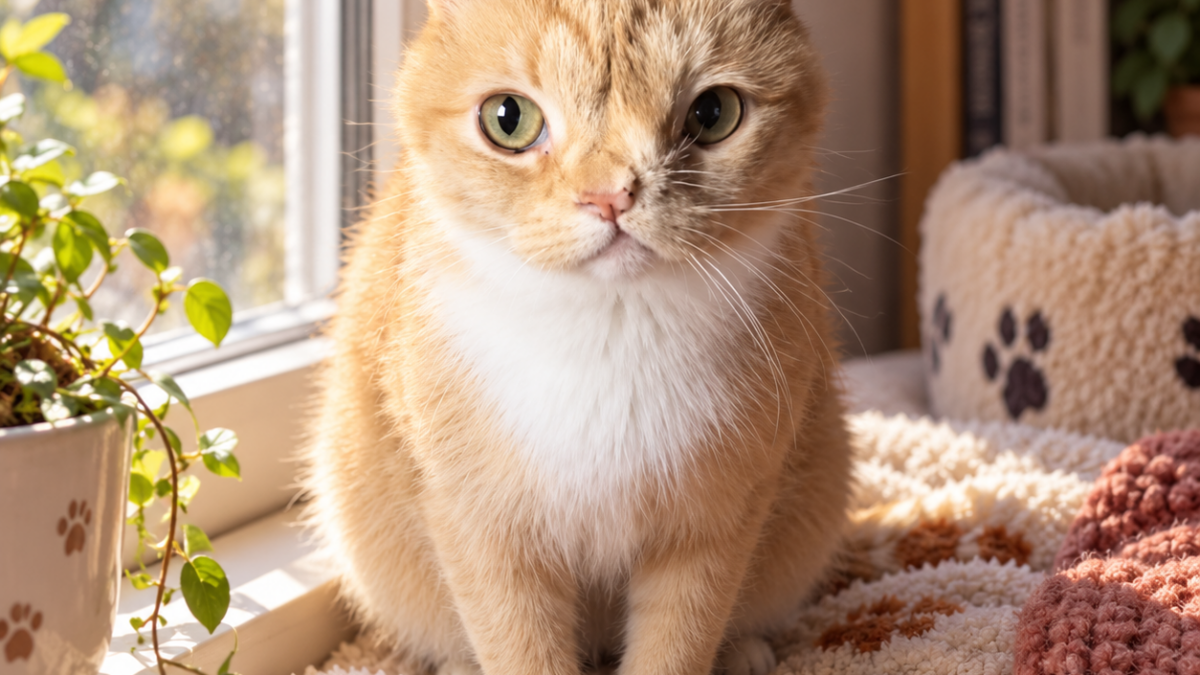
Smushie was sitting in the window.
Healthy.
Round.
Fur clean.
Eyes wide open.
Sunlight across her face.
I placed it beside the old photo.
Before and after.
People love those.
I looked at them.
Then I realized the second photo still wasn’t the full story.
Neither was the first.
One photograph showed suffering.
One showed survival.
But life is everything between and after.
The medicine.
The baths.
The stick.
The first purr.
Beth.
Pearl.
Peach.
Milo.
Court.
The adoption papers with a paw print.
Cabinet doors.
Kittens fostered.
Years of sleep.
Eight birthdays.
Thousands of ordinary mornings.
That’s the real transformation.
—
Smushie climbed into my lap while I was looking at the pictures.
I touched her face.
The swelling had been gone for years.
But sometimes my hand still remembered how fragile she felt.
“Do you know how ugly you were?”
She bit me.
“Fair.”
I laughed.
“Very pretty now.”
Purr.
“Vain.”
More purring.
—
If I could speak to the version of myself standing on that sidewalk, I’d tell her to kneel faster.
Don’t worry about the groceries.
They can sit in the rain.
Don’t worry about being late.
Don’t wonder whether someone else will help.
Don’t assume you’re overreacting.
Stop.
Look.
Touch the tiny paw.
Make the call.
You don’t need to know how the story ends before deciding that the life in front of you matters.
—
And if I could speak to Smushie?
I wouldn’t tell her about Derek.
Or court.
Or the people who walked by.
I wouldn’t explain why she was abandoned.
Animals don’t need our explanations for human failure.
I would tell her something simpler.
“You made it.”
That’s all.
You made it.
From a box.
Through an alley.
Across a sidewalk.
Into a clinic.
Through fever.
Through infection.
Through hunger.
Into warmth.
Into play.
Into a family.
Into eight years and counting.
—
The person who left her thought he was ending responsibility.
Instead, he started a chain of consequences that followed him into court.
The people who walked past thought she wasn’t theirs to worry about.
One person stopped.
Then another helped.
Then another.
And the chain changed direction.
That is the part I carry with me.
Cruelty spreads when people pass it along.
So does care.
—
Smushie’s story never became beautiful because she suffered.
I want that clear.
Her suffering was unnecessary.
Cruelty doesn’t create strength.
Neglect doesn’t create miracles.
People sometimes romanticize survivors and forget they should never have needed to survive those things in the first place.
What became beautiful was what happened after.
Someone stopped.
Doctors treated.
Fosters loved.
Investigators followed evidence.
Witnesses spoke.
A judge drew a boundary.
Adopters opened homes.
Donors built a medical room.
Volunteers learned.
Other kittens lived.
That beauty belonged to the response.
Not the harm.
—
Tonight, as I write this, Smushie is asleep beside me.
Not elegantly.
She is on her back.
One back leg hanging off the couch.
Mouth slightly open.
A tiny snore every few breaths.
The same cat who once spent every bit of energy staying alive now wastes enormous amounts of energy doing absolutely nothing.
I love that for her.
Her bowl is full.
Her eyes are open when she wants them to be.
Her bed is warm.
No one is walking past.
No one is leaving her in a box.
No one is deciding she’s inconvenient.
She is eight years old.
Healthy.
Loved.
Ridiculous.
Home.
And the kitten who once reached one tiny paw toward a stranger no longer has to ask anyone to stop.
The people who matter already stayed.



