PART 2: Buddy Lay Alone With a Shattered Jaw, Unable to Eat or Cry—Then One Tiny Movement Told Us He Still Wanted to Live
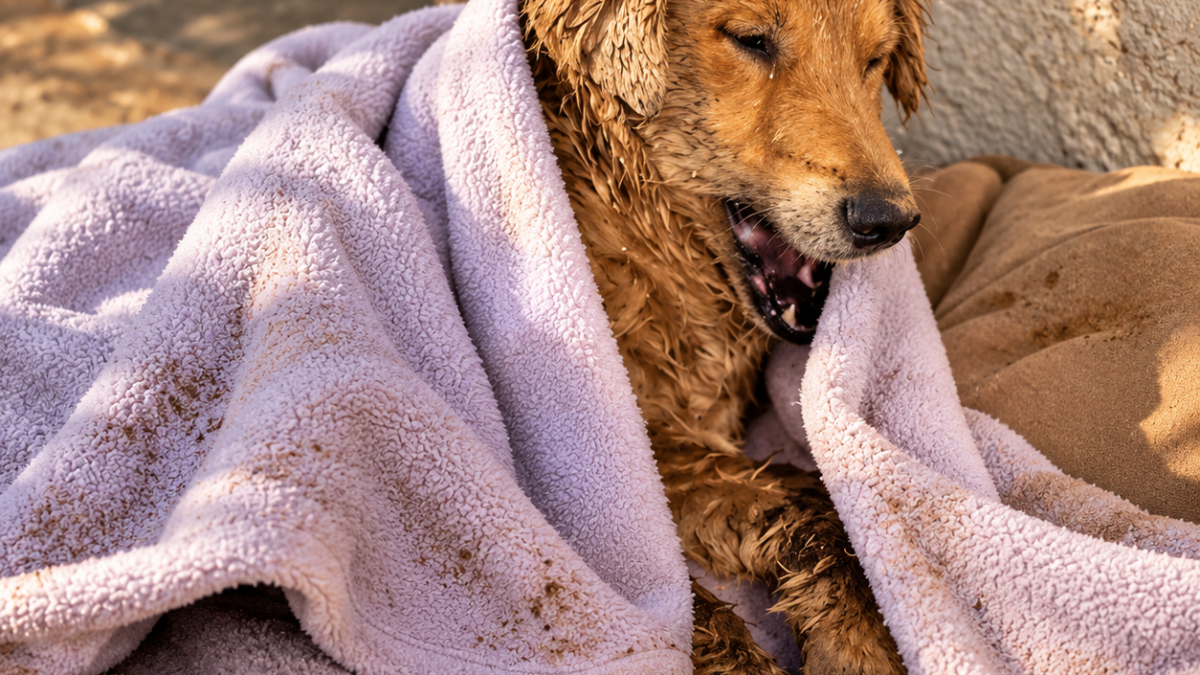
PART 2
I stared at the tag in Rachel’s hand.
It was bent nearly flat and covered in grime, but the number was there.
Not all of it.
Enough.
A partial phone number and what looked like the beginning of a name.
B-U-D.
“Buddy,” Rachel said.
I looked through the glass toward the operating room doors.
“Buddy.”
The dog had a name.
That changed something.
It always does.
A nameless animal is a case.
A dog named Buddy had once belonged inside someone’s life.
Someone had called him that.
Someone had chosen the collar.
Someone had fastened the tag.
And somehow that same dog had ended up lying alone in the dirt with a jaw so badly destroyed he couldn’t eat.
Rachel photographed the tag and sent it to the officer who had responded to the original report.
“Can they trace it?”
“Maybe.”
“Do it.”
Then we waited.
The surgery lasted almost four hours.
There is nothing dramatic about waiting outside an operating room.
No heroic music.
No grand speeches.
Just plastic chairs, vending-machine coffee, bad lighting, and the same thought repeating until it becomes unbearable.
Please come through the doors.
Please come through the doors.
When Dr. Carter finally did, I stood so quickly the chair scraped across the floor.
“He’s alive.”
Those two words carried the whole room.
Rachel put both hands over her face.
I exhaled for what felt like the first time in hours.
Emily sat opposite us.
“The damage was severe. We removed the portion of the lower jaw that couldn’t be saved. We cleaned infected tissue and stabilized what remained.”
“Can he eat?”
“Eventually, yes.”
“Eventually?”
“He will have to adapt.”
“How much jaw did he lose?”
“Enough that his face will always look different.”
I didn’t care.
“Will he hurt?”
“Not like he did before.”
That mattered more than everything else.
Emily continued.
“He’s still not out of danger.”
Of course.
Severe dehydration.
Malnutrition.
Infection.
Anesthesia.
His body had been under strain for too long.
“But the surgery itself went as well as I could have hoped.”
I nodded.
“When can I see him?”
“In a little while.”
Buddy woke slowly.
His face was bandaged.
An IV ran into one front leg.
His tongue rested slightly differently because of the missing section of jaw.
He looked strange.
Fragile.
Beautiful.
I stood beside the kennel.
“Hey, Buddy.”
His eyes opened.
A few seconds passed.
Then his tail moved.
Once.
Weakly.
Emily was behind me.
“He knows your voice.”
“I’ve known him for one day.”
“Sometimes one good day matters.”
I stayed until after midnight.
Buddy slept.
Really slept.
Not the tense, shallow rest of an animal trying to survive.
His whole body softened into the blanket.
Every time a nurse checked him, his tail made a small movement.
Not much.
Enough.
The first night passed without crisis.
That itself felt like a victory.
The next morning, Emily called before I arrived.
“He ate.”
I stopped in the middle of my kitchen.
“What?”
“Not much. Soft food. But he swallowed it.”
“How?”
“Different technique. He’s adapting already.”
I drove to the hospital faster than I should admit.
Buddy was sitting when I entered.
Not standing.
Sitting.
His head lifted.
Tail.
There.
Again.
Emily brought in a shallow bowl.
Very soft food.
Almost a puree.
Buddy sniffed.
Hesitated.
You could see uncertainty in his face.
His mouth did not work the way it had before.
He tried to take one bite.
Most of it fell out.
Buddy stopped.
My chest tightened.
Then he tried again.
This time, he angled his head differently.
A small amount stayed in.
He swallowed.
Rachel whispered:
“Come on.”
Buddy took another.
Then another.
Food smeared across his face.
He didn’t care.
Nobody did.
By the fourth bite, Emily was crying.
She tried hiding it by turning toward the counter.
I saw.
“Doctor?”
“Allergies.”
“Inside the surgical ward?”
“Very severe.”
Buddy kept eating.
That was the first real moment I believed his life might become larger than the injury.
We had saved him from dying.
Now he had to learn how to live in a changed body.
The investigation began moving at the same time.
Police traced the partial number on Buddy’s tag through old veterinary records.
The number belonged to a man named Thomas Reed.
Forty-four.
Lived almost eighty miles from where Buddy was found.
The name registered to a dog matching Buddy’s description.
Same coloring.
Same approximate age.
Microchip registration existed too, though nobody had scanned Buddy initially because his medical condition took priority.
Once stable enough, they scanned him.
Match.
Buddy had officially belonged to Thomas Reed.
The officer called him.
Thomas claimed Buddy had been missing for three weeks.
That sounded possible.
Dogs get lost.
Injuries happen.
Then the officer asked:
“When did you report him missing?”
Silence.
Thomas had not.
No shelter calls.
No police report.
No online posts.
No flyers.
No veterinary contact.
Nothing.
His explanation changed.
Buddy had “run off all the time.”
Then:
“He probably wandered.”
Then:
“He wasn’t really my dog anymore.”
That sentence interested police.
Whose dog was he?
Thomas said a friend had taken him.
Name?
He gave one.
The friend denied it.
Now the story had a crack.
Then another.
The veterinarian who had treated Buddy years earlier checked old records.
Buddy had last been seen fourteen months before.
Healthy.
Sixty-seven pounds.
Friendly.
No jaw problem.
No chronic disease.
The photograph in his medical file looked nothing like the dog sleeping under blankets now.
Same eyes.
Same ears.
Everything else different.
A former neighbor contacted investigators after learning Buddy had been found.
She remembered him.
“He was always in the yard.”
“How did Mr. Reed treat him?”
“Depends.”
“On what?”
“Whether he was in a good mood.”
That wasn’t evidence by itself.
But it was a beginning.
She remembered yelling.
Buddy being left outside for long stretches.
One incident when she saw Thomas shove the dog away with his boot.
Nothing she had considered severe enough to report at the time.
Now she regretted that.
Everyone in animal cases regrets something.
I should have looked closer.
I should have asked.
I should have called.
Guilt spreads outward while the person responsible finds explanations.
The neighbor also remembered a dark blue pickup.
Thomas’s.
And one night about three weeks earlier, she heard a dog yelping in the yard.
One sharp cry.
Then silence.
The next morning, Buddy was gone.
That got everyone’s attention.
Police asked Thomas about the night.
He denied anything happened.
Then said Buddy might have been hit by a car after escaping.
Could be.
Except the injury did not look consistent with a typical road collision, according to the veterinary surgeon.
Emily was careful.
“We cannot tell you exactly what object caused the fracture.”
“But?”
“The pattern suggests a concentrated high-force impact rather than diffuse blunt trauma.”
“What does that mean in normal language?”
“Something hit the jaw hard.”
“Car?”
“Possible, but not the most typical pattern.”
“Kick?”
“Possible.”
“Tool?”
“Possible.”
We still had possibilities.
Not truth.
Buddy didn’t care about any of it.
He had started recognizing the hospital routine.
Morning medication.
Breakfast.
Short walk.
Rest.
Food.
More rest.
He was weak, but he wanted to stand.
Day three after surgery, he walked six steps down the hallway.
Slow.
Tail low.
One nurse crouched.
“Buddy.”
He saw her.
Tail moved.
He walked toward her.
Seven steps.
Eight.
Then sat heavily.
She gave him a piece of soft food from a spoon.
I stood nearby watching.
There was no drama in Buddy.
That was what stayed with everyone.
Some rescued dogs arrive terrified.
Others arrive defensive.
Buddy arrived gentle.
Too gentle, almost.
Every time someone apologized for causing temporary discomfort during treatment, Buddy would lean into them.
As if comforting the person hurting him accidentally.
Emily said one morning:
“He has no idea how angry everyone is on his behalf.”
“Good.”
She looked at me.
“You don’t want him to know?”
“No.”
Buddy deserved a life bigger than human anger.
By the end of the first week, the fever was gone.
His blood values improved.
He gained almost three pounds.
Not much.
Still important.
He could eat soft food reliably.
Not elegantly.
The missing portion of his jaw meant some food fell from one side.
So we changed bowls.
Raised them slightly.
Adjusted texture.
Buddy learned.
Animals are extraordinary adapters when pain is removed.
That sentence sounds inspirational until you remember he never should have needed to adapt at all.
On day eight, a volunteer entered the room holding a tennis ball.
Buddy’s ears lifted.
“Does he play?”
I shrugged.
“Try.”
She rolled the ball.
Buddy watched.
It tapped the wall.
Nothing.
She rolled it again.
This time Buddy stood.
Walked over.
Sniffed.
Then picked it up.
Or tried to.
The changed jaw made it difficult.
The ball slipped.
He tried again.
Slipped.
Again.
On the fourth attempt, he managed to hold it between his remaining jaw and upper teeth.
His tail started wagging.
The volunteer laughed.
“Look at you.”
Buddy carried the ball two steps.
Dropped it.
Picked it up.
Dropped it.
Didn’t matter.
He looked proud.
I turned away for a moment.
Rachel noticed.
“You okay?”
“Yes.”
“You’re crying.”
“No.”
“Sure.”
I stared through the window.
The dog who had been unable to drink was trying to carry a tennis ball.
There are worse reasons to cry.
Around day ten, Buddy surprised Emily.
The surgical site was healing faster than expected.
No spreading infection.
No major complication.
He adapted to eating.
His hydration stabilized.
His energy rose.
When familiar staff entered, Buddy stood before they called him.
Tail moving.
He had favorites.
Nurse Sarah, because she brought chicken.
Dr. Carter, because she scratched behind his left ear.
Rachel, because she sat on the floor.
Me?
I apparently existed to transport him and absorb drool.
I accepted my role.
Then the police called again.
They had found something.
A convenience-store camera on the highway near where Buddy was discovered.
It showed Thomas Reed’s dark blue pickup heading toward that remote area nearly three weeks before Buddy was found.
Timestamp:
11:42 p.m.
Another camera farther down the route captured it returning at 1:09 a.m.
Thomas had told police he hadn’t been anywhere near the area in months.
Now he had to explain.
He said he drove out there to “clear his head.”
Alone?
“Yes.”
No dog?
“No.
Investigators obtained phone-location records with legal authorization.
Thomas’s phone traveled the same route.
Stopped near the area where Buddy was later found.
Stayed approximately twenty-eight minutes.
Then returned.
Still not direct proof Buddy was with him.
Then officers searched the bed of the pickup.
It had been cleaned.
Very clean.
Too clean, according to the investigator.
But inside one narrow seam near the tailgate, forensic technicians found several dog hairs.
Buddy’s coloring.
DNA testing later confirmed the hairs were consistent with Buddy.
Thomas changed his story again.
“Buddy used to ride in the truck.”
True.
Old hair could remain.
But the truck had been professionally detailed two weeks before that night, according to receipts.
The hairs had likely been deposited afterward.
Then police recovered deleted messages from Thomas’s phone.
The messages were between him and his brother.
Three weeks earlier:
**Brother:** What happened to Buddy?
**Thomas:** Nothing.
Later:
**Brother:** Heard him yelping earlier.
No reply.
Next morning:
**Brother:** Where’s the dog?
**Thomas:** Gone.
**Brother:** Gone where?
**Thomas:** Took care of it.
That phrase made my hands shake.
Took care of it.
We had seen what “taken care of” looked like.
Sixty miles from home.
Broken jaw.
Starving.
Unable to drink.
Emily read the messages and put the phone down.
“I hate people sometimes.”
“Only sometimes?”
“Professional ethics require optimism.”
A week later, Thomas’s brother gave a fuller statement.
That night, he had visited the house.
He and Thomas argued.
Buddy approached during the argument.
Thomas shoved him away.
Buddy came back.
According to the brother, Thomas grabbed a heavy flashlight from the truck and swung it.
He claimed he didn’t see the exact impact.
He heard Buddy cry.
Then saw blood around the mouth.
“What did Thomas do?”
“He said the dog bit his tongue or something.”
“Did Buddy receive veterinary care?”
“No.”
“Why?”
“Thomas said it would cost too much.”
That was the first moment the case stopped being primarily abandonment.
Now there was a suspected cause.
Investigators found the flashlight in a garage toolbox.
Clean.
But not discarded.
Forensic testing found traces that could not conclusively be tied to Buddy because of cleaning and time.
The brother’s testimony mattered more.
So did the timeline.
According to him, Buddy spent nearly two days in Thomas’s yard after the injury.
Unable to eat properly.
Drooling.
Bleeding.
Then disappeared.
The dark blue pickup traveled to the remote location that night.
The phrase:
Took care of it.
That was the state’s case.
When I learned Buddy had potentially suffered two days before being dumped, I had to leave the clinic room.
I walked outside.
Rachel followed.
“You okay?”
“No.”
“What are you thinking?”
I looked at the parking lot.
“He leaned into my hand.”
“I know.”
“After that.”
“I know.”
“After somebody hurt him that badly, he still leaned into a stranger’s hand.”
Rachel said nothing.
There was nothing useful to say.
A person can beat trust out of an animal.
Sometimes they fail.
Buddy’s kindness survived.
That became the thing that made everyone angriest and proudest at the same time.
He did not become hard.
He did not become cruel.
He did not pass pain forward.
Animals are better than us at some things.
By week three, Buddy left the hospital.
Not for adoption yet.
He needed continued monitoring.
Medication.
Weight gain.
Follow-up imaging.
He moved into foster care with Rachel.
I told her this was a mistake.
“Why?”
“You’re going to keep him.”
“No.”
“You say that every time.”
“I have three dogs.”
“You said that before dog number three.”
She ignored me.
Buddy entered her house cautiously.
Her oldest dog, Moose, a gentle eleven-year-old Labrador mix, met him first.
Moose sniffed Buddy.
Buddy froze.
Moose walked away.
Best possible introduction.
Buddy followed.
Within fifteen minutes, Buddy discovered the water bowl.
He drank.
Stopped.
Drank again.
Rachel called me.
“He keeps drinking.”
“Not excessive?”
“No. Normal.”
“Then?”
She was quiet.
“I know it’s stupid.”
“It isn’t.”
“He can drink without hurting.”
That was the kind of thing people around Buddy understood.
A bowl of water could become emotional.
The first night in foster care, Buddy refused the dog bed.
He slept beside Rachel’s couch.
Head on the floor.
When Rachel woke at 2:00 a.m., he was still there.
At 4:00, same.
At 6:00, Buddy stood and followed her into the kitchen.
Morning.
No crisis.
No empty field.
No hospital.
Breakfast.
The next evening he used the bed.
Progress.
He learned the backyard.
At first, he stayed close to the door.
Then farther.
Moose became his guide.
If Moose approached something, Buddy did too.
Steps.
Lawn mower.
Garden hose.
Neighbor’s barking dog.
Everything passed through Moose’s judgment first.
Buddy trusted his friend’s confidence before his own.
Within two weeks, Buddy started playing.
Not wildly.
His jaw limited certain games.
No hard tugging.
No rough sticks.
But soft balls worked.
Plush toys.
He loved one ridiculous stuffed duck.
The duck became disgusting almost immediately.
Rachel washed it.
Buddy waited beside the laundry room as though she had kidnapped a family member.
“You’ve created a monster,” she told me.
“You fostered him.”
“Still foster.”
“Sure.”
Buddy gained weight.
Five pounds.
Then eight.
His coat became glossy.
The hollows around his eyes disappeared.
His posture changed.
Pain does something to posture.
So does relief.
The dog I first saw lay with his entire body protecting itself.
Now Buddy stretched.
Sometimes on his back.
Legs loose.
Mouth slightly open.
Sleeping deeply.
That mattered more than any medical report.
The criminal proceedings began while Buddy recovered.
Thomas Reed was charged with multiple animal-cruelty offenses and abandonment.
His attorney argued accident.
Buddy approached during an argument.
Thomas reacted reflexively.
The injury was unintended.
Then, according to the defense, Thomas panicked.
It was an ugly mistake.
Not prolonged cruelty.
The prosecutor disagreed.
The important part was not only the blow.
It was everything afterward.
A dog catastrophically injured.
No veterinarian.
No shelter.
No emergency call.
Two days of suffering.
Then a midnight drive to a remote location.
Abandonment.
Leaving Buddy unable to eat or drink.
That was choice after choice after choice.
Panic might explain one minute.
Not days.
Thomas wanted a plea agreement.
The prosecutor consulted the evidence.
The case became stronger when the brother agreed to testify fully.
Thomas offered to plead to a lesser count.
The state rejected the first offer.
He increased it.
Still negotiations.
People online became furious when details leaked.
Some threatened Thomas.
I hated that.
Not because I felt sympathy for him.
Because Buddy’s story did not need more violence attached to it.
Rachel said exactly what I was thinking.
“He hurt an animal because he lost control.”
“Yes.”
“And people are threatening to hurt him because they’re angry.”
“Yes.”
“Do they hear themselves?”
“Apparently not.”
We asked supporters not to harass anyone.
Let court work.
Let evidence work.
Let consequences be clean.
Buddy did not need revenge in the form of more cruelty.
He needed justice.
There is a difference.
Then came the preliminary hearing.
I attended.
So did Rachel.
Emily testified as an expert witness.
She explained Buddy’s injury.
The fracture.
Tissue damage.
Infection.
Malnutrition.
How difficult eating would have been.
How severe the pain likely was.
Thomas stared at the table.
His attorney asked:
“Doctor, can you state with certainty that this fracture was caused by a flashlight?”
“No.”
“Could it have resulted from a collision?”
“Possible.”
“Could the dog have fallen?”
“Possible.”
“So you cannot tell this court how the injury occurred?”
Emily remained calm.
“I can tell the court how long the dog lived without adequate treatment afterward.”
Silence.
The attorney changed direction.
That answer mattered.
Even if nobody proved the exact object beyond reasonable doubt, the untreated catastrophic injury and abandonment remained.
Thomas’s brother testified next.
He looked sick.
He admitted he had not called police after witnessing the argument.
“Why not?”
“He’s my brother.”
“You saw the dog bleeding?”
“Yes.”
“And did nothing?”
“I told Thomas to take him to a vet.”
“Did you confirm that happened?”
“No.”
“Why come forward now?”
He looked toward the prosecutor.
“Because I saw the pictures.”
That was honest.
Not heroic.
Late truth is still truth.
He described the flashlight.
The swing.
Buddy yelping.
Blood.
Thomas saying the dog was “fine.”
Then Buddy missing.
The defense attacked the brother’s credibility.
Family conflict.
Old disputes.
Money.
Reasonable strategy.
Then the text messages appeared.
Where’s the dog?
Gone.
Gone where?
Took care of it.
The room changed.
You could feel it.
Thomas eventually accepted a plea before full trial.
Not to every allegation.
But serious ones.
Animal cruelty.
Failure to provide necessary care.
Abandonment.
The sentence included incarceration, probation after release, financial restitution for a portion of Buddy’s medical care, and a long-term prohibition on owning or possessing animals.
Was it enough?
People argued.
I stopped.
Because meanwhile Buddy was learning how to catch pieces of chicken tossed gently across Rachel’s kitchen.
That was more satisfying.
The day sentencing became final, Rachel brought Buddy to the rescue yard.
Not court.
We wanted no circus.
He ran toward me.
Actually ran.
Slower than some dogs.
But strong.
Healthy.
His jaw looked different.
Always would.
One side of his lower face was shortened.
His tongue sometimes slipped slightly to the side.
People noticed.
Then stopped noticing.
Because Buddy himself didn’t care.
Rachel threw the stuffed duck.
Buddy chased.
Picked it up awkwardly.
Ran back.
I held my hand out.
He refused to give it to me.
“That’s mine.”
Buddy backed away.
“Traitor.”
Rachel laughed.
“You wanted him confident.”
“Not criminal.”
He ran again.
There.
That was revenge.
A man once decided Buddy wasn’t worth the cost of treatment.
Now dozens of strangers had donated to his surgery.
He decided the dog could be left to die.
Buddy ran.
He tried to erase the evidence of his failure by abandoning Buddy hours from home.
Buddy became the evidence that convicted him.
There is something almost poetic about surviving what someone expected would silence you.
Buddy couldn’t speak.
Didn’t need to.
His X-rays spoke.
His microchip spoke.
The traffic cameras spoke.
The text messages spoke.
The veterinary records spoke.
The brother spoke.
And Buddy lived long enough for all of them to be heard.
A month after leaving the hospital, Rachel called me.
“I have a problem.”
“You adopted him.”
“No.”
“You’re going to.”
“That’s not the problem.”
“What?”
“He won’t sleep unless Moose is in the room.”
I laughed.
“That is your problem?”
“Yes.”
“Put Moose in the room.”
“He snores.”
“So does Buddy.”
“I know.”
“Then everyone suffers together.”
She hung up.
Two weeks later, paperwork arrived.
Buddy Mercer—no.
Buddy Hale.
Rachel’s last name.
I called.
“You foster, huh?”
“Shut up.”
“Three dogs?”
“Four.”
“You said you had too many.”
“I was wrong.”
“You’re never wrong.”
“Enjoy this moment.”
Buddy had a home.
Permanent.
Moose.
A yard.
Soft food.
Multiple ridiculous bowls.
A stuffed duck.
A woman who took photographs of him sleeping because she still remembered what pain looked like.
The first anniversary of Buddy’s rescue came quietly.
Rachel invited the people who had worked on his case.
Emily.
Several nurses.
The farmer who found him.
The officer.
Thomas’s brother even sent a message through the prosecutor thanking the team for saving Buddy.
He did not attend.
Probably wise.
Buddy’s party lasted about thirty minutes before he became bored.
Cake.
Dog-safe.
Soft enough for him.
He ate faster than anyone expected.
Emily laughed.
“Look at that jaw.”
Buddy looked at her.
Food around his mouth.
She touched his head.
“You adapted better than all of us.”
The farmer who found him stood near the fence.
Older man.
Quiet.
He watched Buddy playing.
“You know what I thought when I saw him?”
“What?”
“That I was finding a body.”
I looked at Buddy.
“He wasn’t ready.”
“No.”
The farmer swallowed.
“He looked at me.”
“Same thing he did when we arrived.”
“I almost kept driving.”
I turned.
“What?”
“I was checking fencing. Saw something brown by the embankment. Thought it was trash.”
He smiled sadly.
“Then the trash moved.”
That phrase stayed with me.
How many rescues begin because somebody looks twice?
He called.
We came.
Buddy lived.
Simple decisions become enormous in hindsight.
Years passed.
Buddy adjusted completely to the partial jaw.
Eating remained messy.
He did not care.
Rachel invested in washable mats.
Problem solved.
He drank normally.
Played.
Walked.
Snored.
The scar softened.
His weight stabilized.
The first time a stranger asked:
“What’s wrong with his face?”
Rachel answered:
“Nothing.”
The man looked embarrassed.
“I meant—”
“He had surgery.”
“Oh.”
Buddy leaned into his leg.
Rachel smiled.
“He doesn’t know he looks different.”
That became how we handled it.
Buddy did not need people treating him like a tragedy.
He had already graduated.
At three years post-rescue, Moose died.
Old age.
Buddy changed.
He searched rooms.
Waited near Moose’s bed.
Stopped playing for several days.
Rachel sat with him.
She called me.
“He keeps bringing the duck to Moose’s bed.”
I had no answer.
Grief again.
Animals love.
Therefore animals lose.
Buddy eventually began playing again.
The duck moved away from the empty bed.
Life continued.
Months later, Rachel fostered a young shepherd mix named Toby.
Buddy hated him for perhaps ten minutes.
Toby had puppy energy.
Buddy had adult dignity.
Toby jumped on him.
Buddy walked away.
Toby followed.
Buddy gave one correction.
Toby listened.
By week two, they slept together.
Buddy became teacher.
Not because suffering made him wise.
Because experience made him older.
Important distinction.
I dislike stories that turn abused animals into saints.
Buddy was not a saint.
He stole sandwiches.
He barked at delivery drivers.
He rolled in disgusting things.
He once ate half a birthday cake before anyone stopped him.
He ignored commands when squirrels were involved.
He was a dog.
That was the point.
He deserved ordinariness.
At five years, Rachel sent me a winter photograph.
Buddy asleep near the fireplace.
Tongue slightly out through the missing-jaw side.
Blanket over his body.
Caption:
HE REFUSES TO MOVE.
I remembered finding him in dust.
Unable to eat.
Unable to drink.
I stared at that image for a long time.
A comfortable dog refusing to move because he is warm is one of the most beautiful things in rescue.
At seven years, arthritis began mildly in one hip.
Supplements.
Then medication.
Reduced long walks.
He hated reducing anything.
Rachel told him:
“You’re old.”
Buddy ignored her.
At eight, he developed a benign lump.
Biopsy.
Fine.
Rachel called me crying.
“Good news usually comes without tears.”
“Not in this family.”
Fair.
At nine, his remaining teeth required more attention.
Dental cleaning became complicated because of his anatomy.
Emily, by then working at another hospital, came in to consult.
When Buddy saw her, his tail started wagging.
Nine years.
He remembered her.
Or remembered her smell.
Or simply liked her.
Emily crouched.
“You’re impossible.”
Buddy leaned against her.
She cried.
“Allergies?”
I asked.
“Still severe.”
The surgery went well.
At ten, Buddy slowed.
At eleven, more.
Gray around muzzle.
Clouding eyes.
Still eating.
Still messy.
Still adored.
The dog who had once faced death because he couldn’t eat lived long enough for his human to complain that he had become picky.
“Chicken again?” Rachel asked one evening.
Buddy stared.
“Your food is expensive.”
Buddy stared.
“You have a perfectly good bowl.”
Stare.
Rachel gave chicken.
Buddy won.
Some endings are better when they contain absolutely no dignity.
Around twelve, Buddy developed kidney disease.
Early.
Manageable.
Diet.
Fluids later.
Medication.
Regular bloodwork.
Rachel handled it.
He had already beaten worse.
But age is not an enemy you defeat.
It is a privilege you eventually pay for.
Buddy’s final year came gently.
He slept more.
Walked slower.
Preferred sun patches.
Toby, older too by then, stayed near him.
One spring morning, Rachel called.
“He won’t eat.”
That sentence takes you back.
Always.
No matter how many healthy years came between.
I remembered the first bowl after surgery.
Buddy learning how.
Now refusing.
“What does the vet say?”
“Kidneys are worse.”
“Pain?”
“Some. Controlled.”
“Quality?”
She went quiet.
“I don’t know.”
That meant she did.
I drove over.
Buddy was on a bed in the living room.
Not the dog I found.
Not physically.
He was old now.
Thin in the way elderly dogs become thin.
Clean.
Warm.
Surrounded by things that belonged to him.
The duck had finally been retired to a shelf because it had no structural integrity left.
Buddy opened his eyes.
Tail.
One soft beat.
I sat.
“Hey, old man.”
He leaned his head into my hand.
Same gesture.
Years earlier.
Dust.
Broken jaw.
Pain.
A hand.
Lean.
It came back so sharply I almost couldn’t breathe.
Rachel sat across from me.
“He still does that.”
“I know.”
“He always trusted people.”
I thought about the person who hurt him.
“More than we deserved.”
Rachel shook her head.
“Some people.”
Fair correction.
The veterinarian came the next day.
Home visit.
No hospital.
Buddy hated hospital floors now.
Not fear.
Age.
We laid him on his favorite blanket.
Toby rested nearby.
Rachel held Buddy’s head.
I sat behind her.
The veterinarian gave sedation.
Buddy relaxed.
His jaw looked the way it always had.
Different.
Perfect.
Rachel whispered:
“You know something?”
Buddy’s eyes half-closed.
“You were the most expensive foster failure of my life.”
Tail.
One movement.
I laughed through tears.
“She’s insulting you.”
Rachel kissed his head.
“You were worth every dollar.”
Buddy breathed slowly.
“Every ruined mat.”
Another breath.
“Every piece of chicken.”
She broke.
“And every day.”
The veterinarian waited.
No rush.
Buddy had been forced to endure pain once because someone chose not to act.
We would not make him endure now because we were afraid to let go.
Rachel nodded.
The final medication entered.
Buddy exhaled.
His body softened.
No jaw pain.
No hunger.
No thirst.
No abandoned field.
No need to hold on.
His heart stopped while a human hand rested against the same place I had first touched him years earlier.
For a long time, nobody moved.
Then Rachel said:
“He finally stopped fighting.”
I shook my head.
“I don’t think he ever thought of it as fighting.”
“What then?”
“Just living.”
Buddy was cremated.
Rachel placed his ashes beside the remains of the stuffed duck.
I told her the duck belonged in biohazard disposal.
She threatened me.
Normal grief.
Months later, the rescue hospital created a small fund for emergency maxillofacial cases.
Animals with jaw injuries.
Severe dental trauma.
Facial infections.
Rachel asked if we could name it after Buddy.
We did.
Not because he was famous.
Because his story demonstrated something important.
A terrible injury does not automatically mean an animal has no quality of life.
Adaptation matters.
Pain control matters.
Surgical creativity matters.
And sometimes saving part of a jaw is enough to save the whole future.
The first dog helped by the Buddy Fund was a young terrier struck by a vehicle.
Different injury.
Different story.
Her family could not afford the full emergency cost.
The fund covered the gap.
She survived.
Rachel sent me a photo.
“Buddy paid it forward.”
I smiled.
“He would have stolen her chicken.”
“Still counts.”
Years after his death, people occasionally ask me about the dog with half a jaw.
I correct them.
“Buddy.”
Not the jaw.
Buddy.
The injury was something that happened to him.
Not his name.
He liked warm floors.
Soft tennis balls.
Chicken.
Moose.
Toby.
Rachel.
He drooled.
He stole sandwiches.
He had no concept of personal space after he trusted you.
He leaned into hands.
Always.
That is what I remember most.
The lean.
Even the first day.
When every reason in the world told him a human hand might hurt, Buddy leaned.
Not much.
Just enough.
That tiny gesture started everything.
Sometimes people ask about Thomas Reed too.
“Did he get what he deserved?”
I never know how to answer.
The court punished what it could prove.
He lost his freedom for a period.
Lost money.
Lost the right to own animals for years.
Lost public credibility.
His own brother testified.
The evidence he tried to leave in the middle of nowhere came back into a courtroom.
If you want a satisfying legal ending, yes.
He faced consequences.
But the most complete defeat happened somewhere else.
Thomas left Buddy believing the dog’s story would end silently in an empty field.
It didn’t.
Buddy survived surgery.
Learned to eat.
Gained weight.
Played.
Found a home.
Loved other dogs.
Became old.
Died warm.
And his name went onto a fund that helped save animals with injuries like his.
Think about that.
Someone tried to reduce Buddy to pain.
Buddy became relief for other animals.
Someone tried to make him disappear.
His name remained.
Someone decided veterinary care was not worth the cost.
Years later, strangers donated specifically because Buddy had proven what treatment could accomplish.
That is humiliation deeper than any public shouting match.
The person who discarded him lost control of the ending.
Buddy took it back simply by living.
I returned once to the place where we found him.
Not for ceremony.
Work brought me nearby.
I drove down the old road.
Same dust.
Same low hills.
Same emptiness.
I stopped near the embankment.
Couldn’t identify the exact spot immediately.
Vegetation had changed.
Rain had altered the ground.
I found what I thought was close.
I stood there.
No dog.
Good.
No blood.
No blanket.
Nothing.
The place had forgotten.
I was glad.
Places do not need to remember suffering.
People do.
Long enough to prevent repetition.
Then we should remember recovery more.
I took out my phone.
Opened one old video.
Buddy at Rachel’s house.
Maybe four years after rescue.
Running toward the camera with the stuffed duck hanging awkwardly from the side of his mouth.
His partial jaw made the toy tilt.
He didn’t care.
He ran.
Tail high.
Rachel laughing behind the camera.
Then Buddy dropped the duck at her feet.
Looked up.
Waiting for another throw.
I watched it twice.
Then looked at the empty field.
That was the story.
Not where he started.
Where he went.
People love to say animals live in the present.
Maybe that is why they survive us.
Humans keep returning to the wound.
Who did it?
Why?
Was punishment enough?
Did they regret it?
Buddy never asked me any of those questions.
He asked for food.
Then comfort.
Then play.
Then home.
At the end, rest.
Maybe healing is simpler than we make it.
Not easy.
Simple.
Remove the pain.
Treat what can be treated.
Feed.
Wait.
Show up tomorrow.
Repeat until survival becomes routine.
Repeat until routine becomes a life.
Buddy’s body was permanently changed.
His jaw never grew back.
His face never became symmetrical.
He never ate exactly like another dog.
None of that stopped him from having a complete life.
That matters.
People confuse physical completeness with worth.
Buddy destroyed that idea every day.
He was missing bone.
Not joy.
Missing teeth.
Not love.
Missing part of a jaw.
Not a future.
The first time I saw him, I thought the injury was the most important thing about him.
Years later, it became one of the least interesting.
That is the ending every injured animal deserves.
For their wound to become boring.
For the scar to stop being the headline.
For ordinary life to become bigger.
Buddy got there.
He lay alone in silence because pain had taken his voice.
Then he spent years filling houses with the sounds of living.
Nails on floors.
A tail hitting furniture.
Bowls moving.
A soft bark at the door.
The ridiculous snoring Rachel complained about.
He went from unable to eat to begging for chicken.
From too weak to move to chasing balls.
From abandoned to followed everywhere by people who wanted one more day with him.
And in the end, the man who tried to leave Buddy behind became little more than a footnote.
Buddy became the story.
That is the kind of revenge I believe in.
Not returning pain.
Outliving its purpose.
Someone hurt him.
Buddy healed.
Someone abandoned him.
Buddy was chosen.
Someone thought he wasn’t worth treatment.
Buddy became the reason other animals received it.
Someone left him where they believed no one would find him.
A farmer looked twice.
We came.
Buddy leaned into my hand.
And everything after that belonged to him.

