PART 2: A Stray Dog Followed Me for Four Days—Then I Realized He Wasn’t Following Me at All
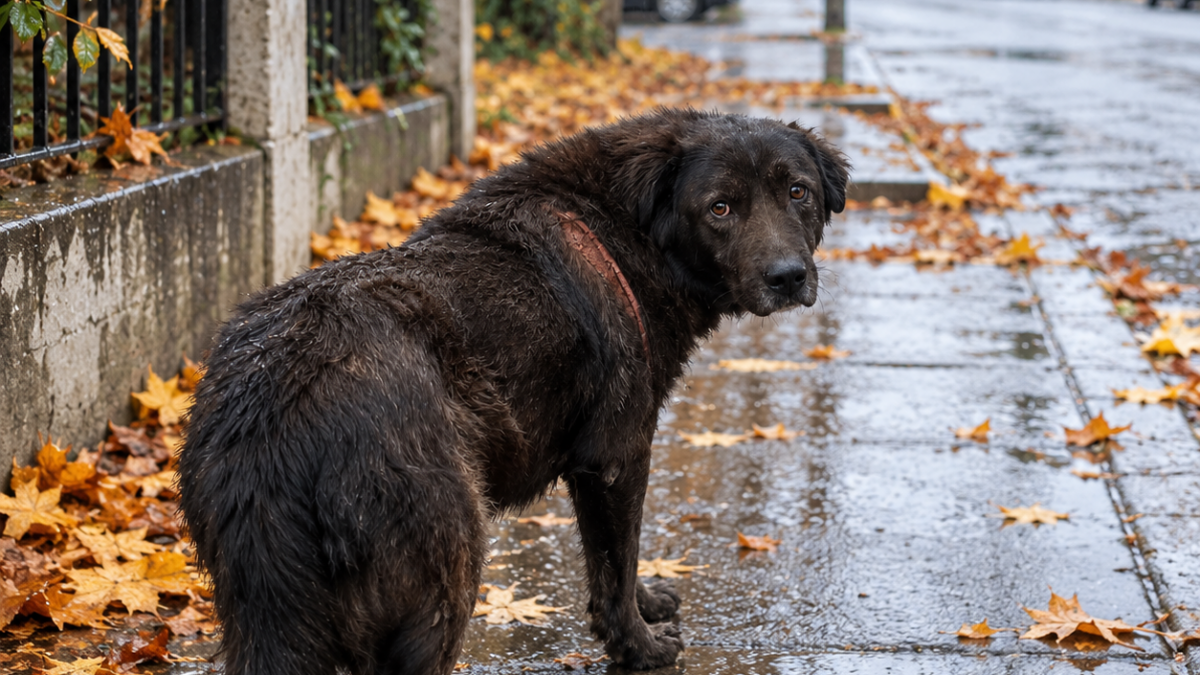
For four straight days, a stray dog followed me through every part of my routine—coffee shop, office, grocery store, bank, home—and by Thursday morning I had finally decided that whatever strange attachment he had formed to me needed to end.
What bothered me was not that he stayed ten or fifteen steps behind me, but that every few blocks he would suddenly stop, turn his whole body, and stare at something over my shoulder with a concentration so intense that I started checking reflections in store windows without admitting to myself why.
Then, at a quiet intersection two blocks from my house, the dog froze again, and before I could turn around, a stranger’s voice came from somewhere close enough to make every hair on my arms rise: “James, don’t look back—just keep walking.”
My name is James Miller. I’m thirty-nine years old, and until that week I considered myself the least dramatic person in Greenwood.
I’m an accountant.
I live alone.
I buy the same black coffee from the same café every weekday morning, take the same route to Cherry Street, and usually spend my evenings convincing myself that spreadsheets are less exhausting than people.
The dog appeared Monday at 8:15.
I had just stepped out of the Morning Star Café when I noticed him beside the front window.
Large dog.
Dark coat, almost black except for a gray patch beneath his chin.
One ear stood straight up. The other bent slightly at the tip.
He wasn’t begging.
Wasn’t pacing.
Wasn’t interested in the breakfast sandwich carried by the man beside me.
He was watching me.
I looked behind myself.
Nobody.
“Not today,” I muttered.
Then I walked to work.
At 11:40, I stepped outside my accounting office to grab lunch.
The dog was sitting across the street.
Same dog.
Same stare.
I stopped.
He stood.
I walked.
He followed.
Not beside me.
Never close enough to touch.
Always roughly ten steps back.
I went into West End Grocery.
He waited outside.
I crossed Kingston Boulevard to my bank.
He sat near the ATM until I came back out.
At 6:45 that evening, I reached my house at 58 Elmwood Drive and found him sitting near my front steps.
“Absolutely not.”
His tail moved once.
I put out a bowl of water anyway.
Tuesday morning, he was still there.
Wednesday, he had become neighborhood gossip.
Mrs. Peterson from two houses down stopped me near my mailbox.
“James, that dog has been staring at your house for three hours.”
“I know.”
“Maybe he belongs to you now.”
“He definitely does not.”
My friend Tom was worse.
“Maybe he’s in love with you.”
“Tom.”
“What? You finally attracted a loyal male presence.”
I hung up.
But by Wednesday night, I noticed something that stopped being funny.
Every time the dog paused, he looked behind me.
Not at squirrels.
Not at people.
At vehicles.
Especially one.
A white cargo van.
I saw it once near Morning Star.
Again across from my office.
Then Wednesday evening on Elmwood Drive.
I told myself white vans were common.
Delivery companies used them.
Contractors used them.
Every city had dozens.
Thursday morning, I decided I was done.
At 10:30, I left home intending to walk the dog to the municipal animal shelter and let professionals figure out why he had chosen me.
He followed.
Of course.
At Maple and Oak, irritation finally won.
I stopped so suddenly he almost walked into me.
I turned.
“Listen, I don’t know what you think we are doing here, but—”
The sentence died.
The dog wasn’t looking at me.
His body had gone rigid.
Head high.
Ears forward.
Every muscle aimed past my shoulder.
I started to turn.
A voice behind me said quietly:
“James, don’t.”
I froze.
“Keep walking.”
My mouth went dry.
“Who are you?”
“Someone trying to make sure you reach the next corner.”
The dog stepped closer to my leg.
Across the street, a delivery truck passed, and for one hopeful second I told myself I had imagined everything. Then the dog’s growl started low in his chest—not wild, not frantic, but deliberate. I had never heard him make a sound before.
For the first time in four days, he wasn’t ten steps behind me.
He pressed against my leg and faced whatever was behind us.
And in that instant, I understood that he had never been following me because he wanted food, a home, or even my attention.
He had been watching my back.
PART 2
“Keep moving,” the stranger said again.
I obeyed.
That is not typical for me.
I’m the person who reads contracts before clicking ACCEPT.
I check restaurant bills.
I return grocery carts.
When a stranger tells me not to turn around, my natural instinct is to demand identification, references, and possibly a written explanation.
But the dog beside me had become completely different.
For four days he had been quiet.
Cautious.
Almost detached.
Now his shoulder was pressed against my leg and his attention was locked behind us.
I heard an engine.
Slow.
Too slow.
The stranger walked beside me without getting close enough to look threatening.
Woman.
Maybe early forties.
Dark jacket.
Baseball cap.
Nothing remarkable except her eyes, which kept moving between parked cars and storefront windows.
“Who are you?” I whispered.
“Lena Brooks.”
“That means nothing to me.”
“It’s not supposed to.”
“Police?”
“Keep walking.”
“That was not an answer.”
“It’s the answer you need for another thirty seconds.”
The dog moved with us.
At the corner, Lena pointed toward a laundromat.
“Inside.”
“I’m not following a stranger into—”
“Public building, twenty people, security cameras.”
That was annoyingly reasonable.
We went in.
The dog stopped outside.
I looked back.
He was staring across the street.
The white van rolled past the intersection.
No business logo.
No side windows.
It didn’t stop.
But the dog watched until it disappeared.
Then he came inside.
A woman folding towels complained immediately.
“No dogs.”
Lena showed her something from her coat.
The woman read it.
Then looked at me differently.
I hated that.
“Back table,” Lena said.
I stayed standing.
“Identification.”
She took out a badge.
Detective Lena Brooks.
Greenwood Police Department.
Special Investigations.
I stared.
“Why is Special Investigations following me?”
“We weren’t.”
“Excellent. That clears everything up.”
“We were following the van.”
I looked through the window.
“And the van was following me.”
“No.”
“Detective, I have seen it outside my office, my house, my coffee shop—”
“It wasn’t following you.”
She looked down.
The dog had sat beneath the table.
“It was following him.”
I followed her eyes.
The dog looked at me.
Then toward the window.
I sat slowly.
“Start over.”
Lena did.
Three weeks earlier, police had received the first of several complaints involving a private animal transport company operating under the name Safe Harbor Canine Transit.
They advertised boarding, behavioral transport, emergency relocation, and rehoming assistance.
Most customers found them online.
Some were owners dealing with eviction.
Some were elderly people entering hospitals.
Some were families relocating across state lines.
They handed their dogs over believing the animals were being transported to kennels, trainers, fosters, or new homes.
Then problems started.
“One family paid to have their dog transported to a trainer in Northwood,” Lena said.
“The trainer never received him.”
“Where did the dog go?”
“We’re still determining that.”
“Another?”
“A woman was told her dog escaped during transport.”
“Did he?”
“We don’t think so.”
I looked at the animal beside me.
“And him?”
“We first saw him Sunday night.”
“Where?”
“Industrial district.”
Lena pulled out her phone.
Security footage showed a white cargo van moving through a warehouse parking lot.
Same van.
A dark dog appeared behind it.
For half a second, he ran alongside.
Then the van accelerated out of frame.
The dog disappeared into an alley.
I looked beneath the table.
“So he escaped?”
“That’s our assumption.”
“From them?”
“Yes.”
“Why not grab him?”
“We tried.”
“How?”
“Animal control searched that night. He disappeared.”
“And Monday he found me.”
Lena nodded.
“Near Morning Star.”
“Why me?”
“That part we don’t know.”
“Then why did the van follow me for four days?”
“Because you were the first person he stayed near long enough for them to notice.”
I leaned back.
“That’s absurd.”
“Probably.”
“You’re telling me I accidentally became cover for a dog fleeing an animal transport company.”
“That’s the simplified version.”
“I prefer simplified versions.”
“Accountants usually do.”
I stared.
“How do you know I’m an accountant?”
“We identified you Tuesday after we realized the van had changed routes to match yours.”
“You ran my information?”
“Yes.”
“That feels invasive.”
“You were potentially being followed.”
“Fair.”
I looked at the dog.
“So he wasn’t following me.”
Lena smiled faintly.
“He was. Just not for the reason you assumed.”
The dog stood and moved closer.
I had never touched him before.
Not really.
I had left water.
One leftover piece of chicken Tuesday night.
But every time I approached, he retreated.
Now he pressed his shoulder against my knee.
“What happens to him?”
“Animal control.”
That was exactly where I had been taking him.
But suddenly I didn’t like the answer.
“Shelter?”
“Temporary protective hold.”
“Is he safe there?”
“Safer than on Elmwood with that van circling.”
Fair again.
I hated how often Lena was reasonable.
We waited ten minutes.
A marked animal-control vehicle pulled behind the laundromat.
The dog saw it.
Immediately backed under my chair.
An officer named Kelly entered with a slip lead.
“Easy, buddy.”
The dog retreated farther.
Kelly tried treats.
Nothing.
Lena tried.
Nothing.
Then both women looked at me.
“No.”
Kelly smiled.
“You’re the safe person.”
“I met him four days ago.”
“Apparently he doesn’t care.”
“I don’t own a dog.”
“Also apparently irrelevant.”
I crouched.
“Come on.”
The dog looked at me.
I held out my hand.
He approached.
One step.
Then another.
His nose touched my fingers.
Kelly slipped the lead gently around his neck.
The dog froze.
Then looked at me.
Something in his expression changed.
I knew what it looked like.
Betrayal.
Ridiculous.
Dogs do not understand municipal procedure.
Still, I heard myself say:
“I’m coming.”
Kelly looked up.
“To the shelter?”
“Yes.”
Lena smiled.
I pointed at her.
“Don’t.”
“I didn’t say anything.”
“You were about to.”
We drove separately.
I followed the animal-control vehicle to the Greenwood municipal shelter.
The dog never stopped looking through the rear window.
At me.
By the time we arrived, I had forgotten I was supposed to be at work.
My phone had seven messages.
Three from my supervisor.
Two from Tom.
One from Mrs. Peterson asking whether “my dog” had finally come inside.
One voicemail from an unknown number.
I ignored all of them.
The shelter veterinarian scanned the dog.
The scanner beeped.
Microchip.
“Good,” I said.
The veterinarian didn’t look relieved.
“Maybe.”
“What does that mean?”
“Registered to Safe Harbor Canine Transit.”
Lena’s expression hardened.
“Not an individual?”
“No.”
“When registered?”
“Eight months ago.”
“Previous registry?”
The veterinarian pulled the history.
“Chip originally registered to Margaret Hale.”
Lena leaned closer.
“Address?”
The veterinarian read it.
Lena wrote it down.
I asked:
“Who’s Margaret Hale?”
“We’re going to find out.”
The dog’s name appeared on the registry.
**Rook.**
“Rook?” I said.
His head snapped up.
There it was.
His name.
I crouched.
“Rook.”
Tail movement.
Small.
Certain.
For four days I had called him Dog.
Buddy once.
Sir when he blocked my front steps.
Now he had a name.
“Hey, Rook.”
He came toward me.
The veterinarian smiled.
“Definitely him.”
The medical exam revealed no emergency injuries.
He was thin.
Dehydrated.
Paw pads irritated.
A healing abrasion on one shoulder.
Old pressure spots near his elbows.
His coat had been neglected.
But his heart was strong.
Teeth decent.
Estimated age six.
“What breed?” I asked.
The veterinarian shrugged.
“German Shepherd, maybe some Labrador, maybe something else.”
“So technically?”
“Dog.”
“Finally, a medical term I understand.”
Rook didn’t appreciate my humor.
Lena left to follow the registry.
I finally checked my phone.
My supervisor had progressed from:
**Where are you?**
to:
**James, are you alive?**
Then:
**CALL ME NOW.**
I called.
“Hi, Robert.”
“Where are you?”
“Animal shelter.”
Silence.
“Why?”
“A dog.”
More silence.
Then:
“James, I need you to start at the beginning.”
That took twelve minutes.
At the end Robert said:
“You’re saying a police detective told you a van was following a stray dog that was following you.”
“Yes.”
“Do you hear how that sounds?”
“I lived it, Robert.”
“Are you coming back?”
I looked at Rook.
He was lying inside a temporary kennel.
Eyes fixed on me.
“Eventually.”
Robert sighed.
“Take the day.”
“You sure?”
“No. But there’s no accounting code for this.”
I drove home at four.
Alone.
That bothered me more than expected.
The water bowl was still beside my porch.
I picked it up.
Then put it back down.
Stupid.
Rook wasn’t coming.
Still, I left it.
At 6:20, Lena called.
“Margaret Hale died six months ago.”
I sat at my kitchen table.
“Oh.”
“Seventy-four. Heart condition.”
“What does that have to do with Rook?”
“We found her niece.”
“Was Rook hers?”
“Yes.”
“Then why was the chip registered to Safe Harbor?”
“Margaret was hospitalized eight months ago. She couldn’t keep Rook during recovery.”
“Safe Harbor took him?”
“She paid them to place him in temporary boarding.”
I already knew what came next.
“They didn’t return him.”
“No.”
“What did they tell her?”
Lena paused.
“That he escaped.”
I looked at the water bowl outside.
“When?”
“Two days after pickup.”
“Did she search?”
“Her niece says Margaret spent weeks looking.”
My stomach tightened.
“She died thinking he was missing?”
“Yes.”
I didn’t know why that hit me so hard.
Maybe because Rook had spent four days watching the van.
Waiting for danger.
And somewhere months earlier, an elderly woman had spent days watching a door, waiting for him.
“What did Safe Harbor say happened?”
“Transport stop. Leash failure.”
“Any proof?”
“No.”
“Did they refund her?”
“Partial.”
I laughed once.
Cold.
“Generous.”
“James.”
“Sorry.”
“No, you’re not.”
“No.”
Lena continued.
“Margaret’s niece has veterinary records, photos, boarding contract, emails.”
“Enough?”
“For what?”
“To prove they lied.”
“Maybe.”
I hated maybe.
“What’s the niece’s name?”
“Anna Hale.”
“Does she want Rook?”
Silence.
“Lena?”
“She hasn’t decided.”
I didn’t understand why that disappointed me.
Rook belonged to Margaret.
Margaret was gone.
Her niece had every right to decide what happened next.
I had known the dog four days.
Five if we counted Thursday.
This was none of my business.
That evening, Tom came over.
I hadn’t invited him.
He entered carrying pizza.
“You look terrible.”
“Thank you.”
“Where’s Romeo?”
“Shelter.”
Tom stopped.
“You actually called animal control?”
“Not exactly.”
I told him the entire story.
Halfway through he stopped eating.
At the end:
“Okay.”
“That’s it?”
“What am I supposed to say?”
“You usually have plenty.”
“This is beyond my normal range.”
He looked through the window.
“Think the van people were going to hurt you?”
I hated the question.
“I don’t know.”
“Did Detective Brooks?”
“She said they wanted the dog.”
“Still.”
I rubbed my forehead.
“I don’t want to make this into something bigger than it is.”
“James.”
“What?”
“A mysterious van followed you to work and home for four days.”
“When you say it like that—”
“How else should I say it?”
I hated that too.
Tom looked toward the empty water bowl.
“You miss him.”
“No.”
“You left the bowl.”
“I forgot it.”
“You placed it directly beside the porch.”
“I forgot it deliberately.”
Tom smiled.
“Hopeless.”
The next morning, I woke at six.
For the first time all week, no dark dog sat outside.
I should have felt relieved.
I didn’t.
At 7:45 I went to Morning Star.
The owner, Lisa, handed me my black coffee.
“Where’s your dog?”
“Not mine.”
“Where is he?”
“Shelter.”
Her face fell.
“Why?”
“This is going to take too long.”
“I have coffee.”
I told her enough.
Not everything.
When I finished, she stared.
“You’re kidding.”
“I wish.”
“White van?”
“Yes.”
“I saw that van.”
I froze.
“When?”
“Tuesday morning.”
“Where?”
“Across the street.”
“Doing what?”
“Nothing.”
“Did you see who was inside?”
“No.”
“But it was parked there?”
“Maybe twenty minutes.”
I called Lena.
She arrived fifteen minutes later.
Lisa pulled exterior camera footage.
There it was.
White van.
Tuesday.
The camera angle captured only part of the plate.
But enough to support the ongoing timeline.
Then Lisa clicked Monday.
My first morning with Rook.
At 8:12, the van passed.
At 8:14, Rook appeared from an alley.
At 8:15, I exited the café.
He watched me.
Then looked toward the road.
The van circled the block.
Rook moved behind me.
I started walking.
He followed.
The van followed too.
I felt cold.
“He didn’t choose me randomly.”
Lena watched the screen.
“Probably not entirely.”
“What does that mean?”
“You were leaving when he needed movement.”
“Movement?”
“A person walking away from the van.”
I stared at the footage.
Rook keeping distance.
Using me.
Not in a calculating human sense.
But in the simplest animal sense.
That person is moving away from danger.
Stay near that person.
Then Tuesday came.
Then Wednesday.
At some point, movement became routine.
Routine became trust.
Lena watched me.
“You okay?”
“Yes.”
“You’re lying.”
“Accountants don’t lie. We reconcile.”
“That was terrible.”
“I’ve had a difficult week.”
The investigation grew quickly after that.
Safe Harbor Canine Transit rented a warehouse on the south side.
Their public records listed two owners:
Calvin Marsh.
Derek Sloan.
The company wasn’t technically a shelter.
It presented itself as a transport and placement service.
That distinction mattered because oversight requirements were different.
They charged owners for relocation.
Charged rescues for transport.
Charged families for training placements.
Money moved in several directions.
Dogs apparently did too.
Except records did not match.
I learned that part because Lena made what I still consider a tactical mistake.
She mentioned bookkeeping.
We were sitting in Morning Star three days after the shelter transfer.
“Safe Harbor’s filings are a mess,” she said.
I looked up.
“What kind of mess?”
“You’re smiling.”
“No, I’m not.”
“You absolutely are.”
“What filings?”
“Public nonprofit partners, transport invoices, vendor payments.”
“Safe Harbor isn’t nonprofit.”
“No. But some organizations paying them are.”
“Can I see?”
“No.”
“Then why mention them?”
“I was talking.”
“Careless.”
She stared.
“You are the first person I’ve met who hears ‘suspicious animal transport company’ and gets excited by invoices.”
“I told you. Spreadsheets are less exhausting than people.”
A week later, with appropriate authorization through the investigation, a forensic accountant reviewed seized business records.
Not me.
I was not law enforcement.
I had no legal role.
That annoyed me more than it should have.
Then Lena called.
“Our accountant wants to talk to you.”
“Why?”
“You noticed something.”
“I haven’t seen the records.”
“Public filings.”
I had looked.
Of course I had.
Safe Harbor’s website listed partnerships.
Several were charities whose annual financial reports were public.
I pulled them out of curiosity.
One organization reported paying Safe Harbor $42,000 for transport.
Safe Harbor’s own business filing reflected less than half that revenue from the client.
Could be timing.
Could be accounting methods.
Could be nothing.
But another charity showed a similar mismatch.
Then another.
I told Lena.
She passed it to investigators.
Searches followed through legal process.
More records surfaced.
Duplicate transport numbers.
Dogs listed as moved to kennels that had never received them.
Boarding charges after animals supposedly escaped.
Owner payments and rescue payments attached to the same dog.
One animal generating three separate fees.
“That’s fraud,” I said.
Lena raised one eyebrow.
“Potential fraud.”
“Right. Innocent until reconciled.”
“You are enjoying this.”
“I’m enjoying arithmetic.”
The bigger discovery wasn’t money.
It was dogs.
Investigators found an unlicensed holding property outside Greenwood connected to one of Safe Harbor’s subcontractors.
Seventeen dogs were there.
Alive.
Some healthy.
Some underweight.
Several had microchips registered to families who had been told their animals escaped or had been transferred elsewhere.
Rook had apparently been held there too.
A worker later confirmed he had been moved into the van Sunday night because Safe Harbor was relocating dogs after learning authorities were asking questions.
Rook escaped during a stop.
Then found me.
When Lena told me seventeen dogs had been removed from the property, I sat silently.
“James?”
“Seventeen?”
“Yes.”
“All alive?”
“Yes.”
I closed my eyes.
“Good.”
Then:
“How many owners?”
“Still identifying.”
That process became emotional chaos.
One couple had been searching six months.
Their Beagle was found.
A military family had paid for temporary boarding during relocation.
Their Shepherd was found.
A woman had been told her elderly terrier died after escaping.
He was alive.
Older.
Thin.
But alive.
Every reunion added another piece to the case.
And every piece made Safe Harbor’s public explanation harder to defend.
Their attorney released a statement saying administrative failures did not equal intentional wrongdoing.
Some dogs had complicated behavioral histories.
Some transfers had been subcontracted.
Recordkeeping was incomplete.
They denied deliberately misleading owners.
Then they claimed Rook belonged to Safe Harbor.
That changed everything for me.
The letter came to my house.
Certified mail.
Safe Harbor’s attorney demanded I stop representing Rook as abandoned or stolen and stated the company maintained a lawful ownership interest.
I called Lena.
“They sent me a legal letter.”
“I know.”
“You know?”
“They sent one to the shelter too.”
“They claim Rook belongs to them.”
“I know.”
“He belonged to Margaret.”
“James.”
“What?”
“Breathe.”
“I am breathing.”
“Not like a normal person.”
I read the letter again.
“They say Margaret relinquished him.”
“Anna has the contract.”
“Temporary boarding?”
“Yes.”
“So they’re lying.”
“We’ll establish that through evidence.”
I hated evidence when it moved slower than outrage.
Anna Hale came to Greenwood the following week.
She asked to meet Rook.
The shelter allowed it.
I had no reason to attend.
Lena called anyway.
“You should come.”
“Why?”
“Rook still responds best to you.”
“That feels manipulative.”
“Yes.”
I went.
Anna was fifty.
Short brown hair.
Kind face.
She held a red fleece blanket folded over one arm.
“James?”
“Yes.”
She hugged me.
I stood awkwardly.
“Sorry,” she said.
“No. Fine.”
“My aunt would’ve hugged you too.”
That made me uncomfortable in a different way.
We entered the visitation room.
Rook came through another door with a shelter employee.
He saw me first.
Tail moved.
Then he saw the blanket.
He stopped.
Anna lowered herself slowly.
“Rookie?”
Everything changed.
Rook’s ears lifted.
His body froze.
Anna placed the blanket on the floor.
He approached.
Sniffed.
Then his tail began moving.
Not the little cautious motion I’d seen.
Full movement.
His entire back half.
Anna covered her mouth.
“That’s Aunt Margaret’s blanket.”
Rook pushed his face into it.
Then looked at Anna.
She whispered:
“You remember me?”
He approached.
Sniffed her hand.
Then leaned against her chest.
Anna cried.
I looked away.
It wasn’t my moment.
After a few minutes, she showed us photographs.
Margaret sitting in a recliner with Rook across her feet.
Rook wearing a ridiculous green Christmas sweater.
Rook lying beside a hospital bed after Margaret’s first surgery.
Rook on the same red blanket.
“He slept next to her every night,” Anna said.
“What happened when she went into the hospital?” Lena asked.
“She needed heart surgery. Rehab afterward. Maybe two months.”
“Why Safe Harbor?”
“They advertised medical boarding transport.”
Anna’s face tightened.
“They picked him up at her house.”
“Did Margaret sign ownership transfer?”
“No.”
“You’re certain?”
“I have every document.”
She opened a folder.
Temporary-care agreement.
Eight weeks.
Boarding destination listed.
Emergency contacts.
Return authorization.
No surrender.
No transfer.
No adoption rights.
Lena photographed everything for the case.
Anna touched the picture of Margaret.
“When they said Rook escaped, Aunt Margaret blamed herself.”
I felt anger rising again.
“She blamed herself?”
“She said if she’d chosen another company he’d be home.”
Anna’s voice broke.
“She put flyers everywhere. Paid people to search. Called shelters every morning.”
“Did Safe Harbor help?”
“They said they did.”
“Did they?”
“I don’t know.”
Later evidence suggested they did not.
Anna continued:
“Margaret’s health got worse. She died in March.”
Rook was lying beside the blanket now.
Head on his paws.
“She asked about him two days before.”
Nobody spoke.
“What did she say?” I asked.
Anna looked at Rook.
“She said, ‘Maybe he found somebody kind.’”
I had to leave the room for a minute.
I went into the hallway.
Lena followed.
“You okay?”
“No.”
“Good answer.”
“She died not knowing.”
“I know.”
“And he was sitting in some holding property.”
“Yes.”
I punched nothing.
Kicked nothing.
I stood beside a vending machine and stared at a package of pretzels because I didn’t know where else to put anger.
Lena said:
“This is why we build cases carefully.”
“I know.”
“If we rush, defense attacks the investigation.”
“I know.”
“If we document everything—”
“I know.”
She paused.
“Still angry?”
“Yes.”
“Good.”
That surprised me.
“You just told me to calm down.”
“No. I told you why patience matters. Anger can stay.”
Fair.
Anna did not take Rook home.
That surprised me.
We sat in the visitation room afterward.
Rook slept with his head on Margaret’s blanket.
“You don’t want him?” I asked.
Anna smiled sadly.
“I do.”
“Then?”
“My husband has advanced Parkinson’s. We have two elderly cats. I’m his full-time caregiver.”
“Oh.”
“I can’t give Rook what he needs.”
She looked at me.
“He already chose somebody.”
I knew where that was going.
“No.”
Anna laughed.
“You said that very quickly.”
“I have a job.”
“So do most dog owners.”
“I live alone.”
“Many dog owners do.”
“I have never owned a dog.”
“That’s an argument for training, not against him.”
“You’ve known me forty minutes.”
“I’ve watched Rook look at you.”
I looked down.
Rook’s eyes were closed.
“That’s not a legal qualification.”
“Thank God.”
I didn’t agree to anything.
Rook remained under protective custody while ownership was resolved.
But because the municipal shelter became overcrowded after the Safe Harbor seizure, approved foster homes were needed.
Three days later, Monica, the shelter director, called.
“You have a fenced yard?”
“No.”
“Yes, you do.”
“Technically.”
“Six-foot fence?”
“Yes.”
“No pets?”
“No.”
“Workday?”
“Eight to five.”
“You can take lunch at home?”
“Usually.”
“Excellent.”
“No.”
“Rook needs a foster.”
“Find a foster.”
“We did.”
“Good.”
“You.”
I closed my eyes.
“You people are manipulative.”
“Only when effective.”
I fostered Rook.
Temporary.
I made everyone repeat that word.
Monica.
Lena.
Anna by phone.
Tom.
Especially Tom.
“Temporary dog,” I told him.
Tom looked at the new dog bed in my living room.
“You bought orthopedic memory foam.”
“It was on sale.”
“Temporary.”
“Yes.”
“You also bought three toys.”
“Starter supplies.”
“And a tag.”
“Required.”
The tag said:
**ROOK**
and my phone number.
Tom held it up.
“Temporary.”
“Leave my house.”
Rook’s first night was strange.
He entered cautiously.
Sniffed every room.
Stopped at the hallway mirror.
Growled at himself.
I laughed.
He looked at me.
“That’s you.”
Rook looked back at the mirror.
Growled again.
“Still you.”
Ten minutes later, he ignored it.
He chose the floor beside my bedroom door.
Not the dog bed.
Of course.
At 2:11 a.m., I woke.
Rook stood beside the bed.
Just watching.
“What?”
No movement.
“You need outside?”
He walked toward the hallway.
I followed.
He drank water.
Then returned.
I got back into bed.
Rook remained beside it.
“Go sleep.”
He lay down.
For the first time in years, another living thing slept in my room.
I thought it would bother me.
It didn’t.
The next morning, I made coffee.
Rook followed me.
Bathroom.
Kitchen.
Closet.
Front door.
“Personal boundaries.”
Tail wag.
“Learn them.”
He did not.
Walking him was worse.
Rook checked every white van.
Every one.
He would stop.
Body tense.
Watch.
If it passed, he continued.
We worked with a behavior specialist.
Her name was Dr. Rachel Kim.
She explained something simple.
“Don’t drag him away from the trigger.”
“So what do I do?”
“Give him distance. Let him observe. Reward recovery.”
“Recovery?”
“The moment he can disengage and return attention to you.”
First session, white delivery van.
Rook froze.
I stepped farther from the road.
He watched.
Van passed.
I said his name.
Nothing.
Five seconds.
Ten.
Then Rook looked at me.
Dr. Kim whispered:
“There.”
I gave him chicken.
Rook ate.
“That’s it?”
“That’s the beginning.”
Weeks later, his recovery became faster.
Then one morning, a white van passed and Rook looked at me before I said anything.
I nearly cried over poultry-based reinforcement.
Tom found this hilarious.
“You’re becoming a dog person.”
“No.”
“You carry chicken in your pocket.”
“Training.”
“You talk about thresholds.”
“Behavior science.”
“You bought him a birthday cake and don’t know his birthday.”
“That was the shelter.”
“James.”
“Get out.”
The investigation continued.
Safe Harbor owners Calvin Marsh and Derek Sloan were formally charged with a combination of fraud-related offenses and animal-welfare violations after months of investigation.
I don’t remember every legal count.
What I remember is the hearing where their attorney argued that Rook had been surrendered.
Anna sat beside me.
She brought Margaret’s temporary boarding contract.
Original.
Signed.
Safe Harbor’s copy looked different.
One page included a transfer clause.
Margaret’s did not.
Document examination later showed the clause had been added to a later version.
That became serious.
Then the financial records arrived.
The forensic accountant called me.
His name was Nathan Wu.
“I hear you like reconciliations.”
“Who told you?”
“Detective Brooks.”
“I knew I shouldn’t trust her.”
Nathan laughed.
“I need context on something you flagged in public filings.”
We met with investigators.
Everything I saw was lawfully provided for review.
I say that because Robert, my supervisor, spent twenty minutes warning me not to become “an accountant vigilante.”
I promised.
Then became extremely annoying with spreadsheets.
Safe Harbor’s records contained repeated service invoices using slightly different vendor names.
Greenwood K9 Boarding.
Greenwood Canine Board.
GKW Boarding Services.
At first glance, separate vendors.
Banking records showed payments converged through related accounts.
Dates overlapped.
Dogs appeared to be boarded in two places simultaneously.
Transportation mileage was billed twice.
Some rescues paid for one service while owners paid Safe Harbor separately.
Nathan found most of it.
I found one thing.
Rook’s file.
A line item two weeks after Margaret was told he’d escaped.
**Behavioral boarding: 14 days.**
I stared at the screen.
“They charged for him after reporting him missing.”
Nathan leaned closer.
“Yes.”
“Then another month?”
Another invoice.
**Extended placement management.**
Rook was profitable while officially lost.
My stomach turned.
Nathan said:
“That’s useful.”
“Useful?”
“As evidence.”
I looked at Rook’s ID number.
The same pattern appeared with other dogs.
A Beagle named Molly.
Reported escaped.
Boarding fees afterward.
A Shepherd named Ace.
Reported transferred.
Transport invoices weeks later.
A senior terrier named Buttons.
Reported deceased after an alleged escape.
Still generating charges.
Those spreadsheets did what anger couldn’t.
They created a pattern.
A boring, devastating pattern.
I had spent my adult life making numbers line up.
These didn’t.
That became part of the case.
Safe Harbor’s defense changed.
Now they argued subcontractors caused record errors.
Then one subcontractor cooperated with investigators.
He provided messages.
Instructions.
Locations.
The holding property.
Dog movement lists.
Rook’s name.
Not Rook, actually.
Internal nickname:
**Black Shepherd 12.**
I hated that.
Margaret called him Rookie.
I called him Rook.
Safe Harbor reduced him to inventory.
The messages showed the owners knew he had not escaped.
They moved him between locations.
Then ordered him transported again shortly before authorities found the holding property.
Rook escaped before they could move him.
Four days later, he saved himself by attaching his fate to a boring accountant holding black coffee outside Morning Star.
At least that is how I choose to tell it.
The case went public in a bigger way after the charges.
News stations wanted Rook.
Not me.
Rook.
The dog who exposed the transport operation.
I refused most requests.
One reporter said:
“But people need to see him.”
“Why?”
“He’s the face of the case.”
“He’s a dog.”
“Exactly.”
“No, not exactly.”
Rook didn’t need to perform trauma for cameras.
He had done his part.
Still, Anna wanted one photograph released.
Margaret’s.
Rook lying on the red blanket.
Beside it, a recent photo.
Rook asleep on my couch.
The caption from the police department was simple:
**Rook is safe.**
Nothing else.
That picture spread farther than any dramatic footage could have.
Former Safe Harbor clients began calling.
More records.
More claims.
Not all were legitimate.
Investigators sorted them.
Some people simply had disputes over services.
Others had clear evidence.
The final number of affected animals was larger than seventeen.
Some had been lawfully placed.
Some transferred.
Some returned.
Some were still unaccounted for.
Not every story had a satisfying ending.
That’s important.
Real investigations don’t turn every missing animal into a reunion.
But enough were found to matter.
Enough owners learned the truth.
One afternoon, an elderly man named Mr. Harris came to the shelter.
His dog, Lucy—a little tan terrier—had been among those recovered.
Safe Harbor told him she escaped eight months earlier.
He had searched every week.
When Lucy entered the visitation room, she stopped.
Mr. Harris whispered:
“Baby?”
Lucy ran.
I will never forget the sound he made.
Not a word.
Something deeper.
He dropped to his knees.
Lucy climbed into his lap.
Lena stood beside me.
“This is why patience matters,” she whispered.
I looked at her.
“You’ve been waiting months to say that.”
“Yes.”
“Annoying.”
“Worth it.”
The public pressure around Safe Harbor became intense.
Too intense sometimes.
People posted home addresses.
Threats.
Rumors.
Lena publicly asked people to stop.
“Let the case happen in court.”
I agreed.
Justice is not strangers frightening someone’s family.
It is evidence.
Process.
Consequences.
I wanted Calvin Marsh and Derek Sloan held responsible.
I did not want a mob.
That distinction mattered especially after someone threw something through a window at a property wrongly believed to belong to one of them.
Wrong address.
Wrong family.
That moment cured several people online of their enthusiasm for vigilante behavior.
The legal case took almost a year.
During that year, Rook stopped being temporary.
Not legally.
Emotionally.
He knew my schedule better than I did.
Morning Star allowed him on the patio.
Lisa kept dog biscuits behind the counter.
Mrs. Peterson bought him a ridiculous blue raincoat.
Rook hated it.
She insisted.
“Handsome boys need coats.”
“He has fur.”
“James, let him have fashion.”
Tom took pictures.
I considered ending the friendship.
At the office, Robert eventually allowed Rook in on Friday afternoons after everyone signed what he called “the least necessary workplace agreement I’ve ever written.”
Rook slept beside my desk.
Clients loved him.
One woman disclosed three years of unreported freelance income while petting him.
Robert said:
“Dog improves compliance.”
I said:
“Make him partner.”
“Does he bill?”
“Chicken.”
“Cheaper than you.”
Fair.
Rook’s fear of white vans diminished.
Never completely.
But one day, almost a year after Maple and Oak, we were walking past the same intersection.
A white cargo van approached.
Rook noticed.
Body tightened.
I stopped.
“Rook.”
He looked at the van.
Then at me.
Van passed.
Rook sniffed a fire hydrant.
That was it.
I stood there like an idiot.
Rook pulled gently.
“Coming?”
I laughed.
“Yes.”
We walked.
The place that had terrified me became an ordinary corner again.
That felt bigger than any courtroom ruling.
The ownership hearing came first.
Safe Harbor still claimed Rook.
Anna challenged.
The county supported protective placement.
The judge reviewed Margaret’s original contract.
Chip history.
Safe Harbor records.
Added transfer clause.
Internal messages.
Veterinary history.
Then asked Anna:
“Ms. Hale, are you seeking possession of Rook as your aunt’s heir?”
Anna looked at me.
I wanted to disappear.
“No, Your Honor.”
The judge seemed surprised.
“You’re not?”
“I want the court to establish that Safe Harbor never owned him.”
“And after that?”
Anna smiled.
“I want him to stay with James.”
Every head turned toward me.
I hate being looked at.
The judge asked:
“Mr. Miller, do you want that?”
I looked at Rook’s photograph in the file.
Then at Anna.
“Yes.”
No hesitation.
That surprised me more than anyone.
The ruling came thirty minutes later.
Safe Harbor had no lawful ownership claim.
Margaret’s estate held the valid interest.
Anna, authorized through the estate, transferred Rook to me.
Legal.
Final.
I signed the adoption papers that afternoon.
Tom came with me.
He brought balloons.
I had previously told him Rook disliked balloons.
“Why?”
“Celebration.”
“He hates them.”
“I forgot.”
“You bought twelve.”
We left them in the car.
At the shelter, Monica handed me the paperwork.
“Congratulations.”
“Thank you.”
Rook stood beside me.
Anna gave me Margaret’s red blanket.
“This belongs with him.”
I took it.
“Are you sure?”
“Yes.”
Then another item.
A small leather collar.
Too small for him now.
His puppy collar.
Tag:
**ROOKIE**
I swallowed.
“Margaret called him Rookie?”
“When he was little.”
“How did it become Rook?”
“My uncle shortened it.”
I touched the old tag.
“He still responds.”
Anna nodded.
“She would’ve liked you.”
“You don’t know that.”
“She hated people who talked too much.”
“Then definitely.”
Anna laughed.
Before leaving, she knelt beside Rook.
“Your grandma loved you.”
I had to look away.
Rook licked her cheek.
She hugged him.
Then stood.
“Take him home.”
I did.
That night, I spread Margaret’s red blanket on the couch.
Rook sniffed it.
Circled twice.
Lay down.
Within minutes, he was asleep.
Deeply.
I sat on the floor beside him.
“You know you’re mine now?”
No response.
“Legally.”
Snore.
“I signed forms.”
Nothing.
“Very important forms.”
Rook stretched.
One paw landed on my shoulder.
“Fine.”
I stayed there.
The criminal case against Safe Harbor ended months later.
Calvin Marsh and Derek Sloan eventually entered plea agreements on multiple counts rather than taking every charge through trial.
The court ordered restitution to affected owners and organizations.
Their company ceased operating.
Licenses connected to animal transport were revoked.
They were prohibited from operating comparable animal-care businesses for a significant period and received additional sentences based on the broader financial and welfare findings.
Some people online complained the consequences weren’t dramatic enough.
Others celebrated.
I felt mostly tired.
Lena called after the final hearing.
“How does revenge feel?”
“I didn’t get revenge.”
“You helped find the financial pattern.”
“I reconciled numbers.”
“Which helped destroy their defense.”
“Their records destroyed their defense.”
“Accountant answer.”
“Correct answer.”
She laughed.
Then:
“You know what Marsh said in court?”
“No.”
“He said Rook ruined him.”
I looked at the dog asleep beside my desk.
“No.”
“What?”
“He ruined himself.”
Lena was quiet.
“Rook just got away.”
That was the only version I ever accepted.
Rook had not set out to expose anyone.
He did not want justice.
He wanted distance from a van.
Safety.
Water.
Food.
A place to sleep.
Then one boring man walked out of a coffee shop at the correct moment.
Everything else happened because humans finally paid attention.
The restitution process lasted another year.
This was where my skills became useful again.
Several small rescues had been double-billed or charged for services not performed.
They lacked accounting staff.
I volunteered.
One evening Tom found me surrounded by invoices at the dining table.
“You do this for fun now?”
“No.”
“It’s Saturday.”
“Restitution deadline Monday.”
Rook slept beneath the table.
Tom looked at him.
“He made you interesting.”
“I resent that.”
“Before him, your Saturday activity was organizing receipts.”
“This is also organizing receipts.”
“Point proven.”
The recovered money wasn’t enormous for every organization.
A thousand here.
Four thousand there.
But small rescues operate on thin margins.
One director cried when she learned they’d recover enough to cover overdue veterinary bills.
That felt better than any headline.
Safe Harbor had turned animals into transactions.
Spreadsheets helped turn some of those transactions back into food, medicine, rent, and care.
Maybe revenge can be boring.
Maybe the best kind comes with audit trails.
Rook changed too.
At two years home, he finally stopped sleeping facing the front door.
I hadn’t noticed the habit until it disappeared.
Every night, wherever he slept, he positioned himself toward the entrance.
Watching.
One evening, I found him on Margaret’s blanket with his back to the door.
His face toward me.
That almost destroyed me.
Safety is often visible only in retrospect.
The first deep sleep.
The first time a dog stops monitoring exits.
The first time he hears a van and chooses not to watch.
The first time you leave for work and come home to find him still sleeping instead of waiting at the window.
Tiny things.
To someone else, nothing.
To me, proof.
Mrs. Peterson became Rook’s unofficial grandmother.
She fed him too much.
I protested constantly.
“He’s gaining weight.”
“He’s handsome.”
“Those are unrelated.”
“He was skinny when he came.”
“That was three years ago.”
“You starve him.”
“I measure his food.”
“Exactly.”
She ignored me.
Rook loved her.
He would drag me toward her porch.
Traitor.
Tom remained convinced Rook had planned everything.
“I think he profiled you.”
“For what?”
“Low risk.”
“That’s insulting.”
“You wore khakis and carried black coffee.”
“So?”
“He looked at you and thought: that man will file paperwork.”
Rook wagged.
“See?”
I ended calls on Tom frequently.
Lena became a friend.
Strangely.
She had been married once.
No children.
Owned two cats.
Considered dogs “too emotionally transparent.”
Rook adored her.
She pretended not to care.
Every time she visited, she brought treats.
“You know you’re reinforcing attachment.”
“I’m reinforcing silence.”
“He’s not barking.”
“Exactly. Working.”
Five years after the case, Lena retired from police work and joined a nonprofit focused on animal-transport accountability.
She asked me to help design financial review procedures.
“No.”
“Why?”
“I already have a job.”
“Volunteer.”
“Worse.”
“Rook wants you to.”
Rook was asleep.
“Don’t involve him.”
We built the procedures.
Of course.
Basic vendor verification.
Transport logs.
Payment matching.
Confirmation that receiving facilities actually received animals.
Nothing sophisticated.
Just systems designed to make disappearing dogs harder.
That mattered to me.
Because Safe Harbor’s scheme had succeeded partly because nobody compared records across organizations.
Each family saw one missing dog.
Each rescue saw one strange invoice.
Each kennel saw one incorrect transport record.
Only when everything was connected did the pattern become obvious.
It’s like accounting.
A single number can look normal.
Context tells the truth.
Years passed.
Rook’s muzzle turned gray.
The little gray patch beneath his chin spread upward.
At nine, he slowed slightly.
At ten, arthritis.
At eleven, hearing loss in one ear.
The bent ear, ironically.
At twelve, he developed a heart murmur.
Dr. Kim—now also his regular veterinarian—called it manageable.
Medication.
Monitoring.
No panic.
I had become much better at not panicking.
Mostly.
One morning, Rook didn’t finish breakfast.
I called the clinic within six minutes.
Dr. Kim answered.
“James.”
“Yes?”
“One missed breakfast.”
“He always eats.”
“One.”
“He looked at the bowl strangely.”
“I’m hanging up.”
“You are a medical professional.”
“For animals with actual symptoms.”
“He has symptoms.”
“He’s spoiled.”
She was right.
Rook ate at noon.
I never apologized.
By then, my life looked nothing like the Monday morning when he appeared.
I still worked in accounting.
Still drank black coffee.
Still lived at 58 Elmwood.
But I walked more.
Talked to neighbors.
Volunteered.
Had friends who didn’t work in finance.
I even dated.
Poorly.
Rook was a terrible judge.
He loved everyone.
One woman said:
“If your dog likes me, that’s a good sign.”
I looked at Rook.
“He once tried to follow a garbage collector home.”
Relationship lasted three months.
Rook kept the tennis ball she bought him.
At fifty, I realized something uncomfortable.
The dog had not simply entered my routine.
He had expanded it.
Before Rook, I had treated predictability like safety.
Same café.
Same route.
Same work.
Same house.
No complications.
No stories.
I used to say:
“I don’t like stories.”
What I meant was:
I don’t like situations I can’t control.
Rook had brought an entire criminal investigation to my doorstep by doing nothing more complicated than refusing to face danger alone.
And somehow that made my life better.
Not the danger.
The connection afterward.
Anna visited once a year.
Always on Margaret’s birthday.
She brought one photograph.
Every visit.
Eventually I had an album.
Puppy Rook chewing a slipper.
Rook beside Margaret’s chair.
Rook in snow.
Rook wearing the green sweater.
Rook asleep across Margaret’s feet.
One photograph showed Margaret pointing at the camera while Rook sat beside her.
On the back, Anna had written what Margaret supposedly said when it was taken:
**If anything happens to me, someone better spoil this dog properly.**
I showed Rook.
“You hear that?”
He slept.
“Legal instruction.”
Nothing.
Mrs. Peterson said I exceeded requirements.
Correct.
When Rook was thirteen, Anna brought a sealed envelope.
“What is this?”
“Aunt Margaret wrote it after Rook disappeared.”
My stomach tightened.
“To who?”
“Whoever found him.”
I stared.
“She never mailed it?”
“How could she?”
I opened it later.
Alone.
Margaret’s handwriting shook slightly.
**If you have found my dog Rookie, please know he is loved. He is six years old, afraid of fireworks, likes cooked carrots more than any sensible dog should, and sleeps best when his blanket is near a window. He is gentle but cautious with strangers. Please call me. I will come anywhere.**
Below that, her phone number.
Then:
**If for some reason I cannot come, please don’t assume nobody wants him.**
I stopped reading.
Rook was asleep by the fireplace.
I continued.
**He has never been unwanted a day in his life.**
That sentence broke me.
Because for months, Rook had lived in a place where his name became Black Shepherd 12.
He was moved.
Billed.
Stored.
Transported.
He probably had no idea Margaret was searching.
Margaret had no idea he was still alive.
Two lives separated by people who found confusion profitable.
I sat beside him.
Rook opened one eye.
“Hey.”
Tail thump.
“You were never unwanted.”
Another thump.
“I need you to know that.”
He stood.
Walked over.
Put his head on my knee.
Exactly as Atlas had in another story? Wait not relevant—ignore.
I laughed through tears.
“You don’t understand a word.”
Rook sighed.
Maybe enough.
At fourteen, his health changed quickly.
Heart medication increased.
Arthritis worse.
Walks shortened.
No more long routes to Kingston Boulevard.
Morning Star only on good days.
Lisa had retired, but the new owner knew Rook.
Everyone knew Rook.
Not from the old case anymore.
Because he’d been around forever.
One morning a young employee asked:
“Is this the dog from that van story?”
I said:
“He’s Rook.”
“Right.”
Better.
By fifteen, stairs became difficult.
I built a ramp.
Rook refused it.
I bought a commercial ramp.
Refused that too.
Tom came over, placed three strips of carpet across mine, and Rook used it immediately.
I stared at Tom.
“What did you do?”
“Made it less ugly.”
“Leave.”
Rook sided with him.
Of course.
The final winter was mild.
Rook spent afternoons on Margaret’s red blanket near the window.
Exactly as she had written.
His hearing faded.
Eyes clouded.
But his nose still found chicken from three rooms away.
Mrs. Peterson had moved into assisted living by then.
I took Rook to visit.
She sat in a wheelchair near the courtyard.
When Rook entered, she started crying.
“My handsome boy.”
He recognized her.
Slowly crossed the room.
Placed his head on her knees.
She looked at me.
“He remembers.”
“Food.”
“Don’t ruin this.”
She fed him half a biscuit.
I pretended not to see.
On the drive home, Rook slept.
I realized how many people he had connected.
Margaret.
Anna.
Lena.
Tom.
Mrs. Peterson.
Lisa.
Dr. Kim.
Me.
People who might never have spoken otherwise.
That is something dogs do without understanding it.
They create social architecture.
At least that’s what Lena called it.
I called it fur everywhere.
Rook’s final decline began with breathing.
Slightly faster.
Then appetite.
Then fatigue.
Dr. Kim examined him at home.
She listened to his chest.
Looked at me.
I knew the expression.
“How long?”
“Could be weeks.”
“Months?”
“Maybe.”
“Years?”
“James.”
“Worth asking.”
She sat beside me.
“We manage comfort.”
“I know.”
“You’re going to count everything.”
“I’m an accountant.”
“I know.”
“Food, breathing, walks—”
“Yes.”
“Good days.”
“Yes.”
I made the spreadsheet.
Of course.
Columns.
Meals.
Mobility.
Rest.
Interest.
Breathing.
Pain.
Good day.
Hard day.
Tom saw it.
“Only you would put grief into Excel.”
“It helps.”
“Does it?”
“No.”
But it kept me honest.
For three weeks, good days outnumbered hard.
Then equal.
Then not.
One Thursday morning, Rook stood beside the front door.
I opened it.
He walked to the sidewalk.
Slow.
We took the route toward Maple and Oak.
I didn’t choose it.
He did.
One block.
Rest.
Another.
At the intersection where everything changed fourteen years earlier, Rook stopped.
I looked around.
No white van.
No Lena.
No fear.
Cars passed.
People walked.
A cyclist rang a bell.
Ordinary city morning.
Rook sniffed the corner.
Then sat.
I sat beside him on the curb.
“You know where we are?”
Probably not.
Maybe scent memory.
Maybe coincidence.
I touched his gray head.
“For four days I thought you were making my life difficult.”
Rook breathed slowly.
“You were.”
Tail movement.
“Then I found out you were scared.”
I looked down Maple Street.
“Funny thing is, I was too.”
He leaned against me.
We stayed ten minutes.
Then walked home.
That was his last long walk.
Two days later, he refused breakfast.
Then chicken.
I didn’t call after six minutes this time.
I knew.
Dr. Kim came in the afternoon.
Tom.
Lena.
Anna joined by video.
I placed Margaret’s red blanket on the living room floor.
Rook lay on it.
His breathing was tired.
Not panicked.
Just tired.
Anna spoke through the phone.
“Rookie.”
His ears moved.
She smiled through tears.
“You were such a good boy.”
Rook closed his eyes.
Anna whispered:
“Aunt Margaret found you after all.”
I had to turn away.
When the call ended, Lena sat beside me.
“You okay?”
“No.”
“Still a good answer.”
Tom stood near the window.
For once, no jokes.
Dr. Kim gave us time.
I rested Rook’s head on my knees.
The same place he had pressed against at Maple and Oak when the van approached.
I touched the bent ear.
“You followed me four days.”
His chest rose.
“You know I was trying to take you to the pound?”
Tom laughed softly.
“Great final confession.”
“Quiet.”
Rook breathed again.
“I didn’t want a dog.”
Another breath.
“I definitely didn’t want a criminal investigation.”
Lena smiled.
“Still complaining.”
“Absolutely.”
Then my voice stopped working.
I leaned closer.
“You gave me a life I didn’t know I was avoiding.”
That was true.
Rook didn’t rescue me from tragedy.
I wasn’t broken.
I wasn’t lonely in a dramatic way.
I was comfortable.
Closed.
There is a difference.
He opened things.
Doors.
Neighbors.
Friendships.
Responsibilities.
Grief.
Love.
All the things predictability had kept manageable by keeping them small.
I touched his chest.
“You can stop watching now.”
That mattered.
For years Rook watched doors.
Vans.
Streets.
Reflections.
Even after fear faded, some part of him always noticed.
Not today.
“I’ve got it.”
His eyes opened.
Looked at me.
Then closed again.
“Your shift is over.”
Tom covered his face.
Lena cried without hiding it.
Dr. Kim waited.
Rook left peacefully on Margaret’s blanket with his head on my knees.
No van.
No warehouse.
No one trying to take him.
No need to stay alert.
Just home.
Afterward, I kept the red blanket.
Anna told me to.
I kept his old Rookie tag too.
The new collar.
One toy.
Not all.
Grief can turn a house into a museum if you let it.
I didn’t want that.
A month after Rook died, I returned to Morning Star alone.
Same black coffee.
Different owner.
Same corner table.
I looked toward the window where I’d first seen him.
Nothing there.
Good.
I didn’t want another dog appearing dramatically.
I wanted coffee.
Then Lena sat across from me without asking.
“You look terrible.”
“Everyone says that.”
“You volunteering Tuesday?”
“No.”
“The nonprofit audit team needs help.”
“No.”
“Two rescues.”
“No.”
“Potential duplicate billing.”
I looked up.
She smiled.
“Fine.”
I went Tuesday.
Rook’s legacy apparently included unpaid accounting.
The animal-transport accountability project eventually helped establish a statewide voluntary verification network among participating rescues and boarding facilities.
Transport confirmation.
Microchip checks.
Receiving-facility acknowledgment.
Better records.
No system eliminates wrongdoing.
But gaps become smaller.
Safe Harbor had thrived inside gaps.
We closed some.
Anna created a small fund in Margaret’s name to help elderly pet owners arrange temporary care during hospitalization.
She called it:
**Rookie’s Return Home Fund.**
I protested the name.
She ignored me.
The first year, it helped eleven people.
One was an eighty-two-year-old man who needed surgery but delayed because nobody could care for his Poodle.
The fund paid temporary foster expenses.
He had surgery.
Dog came home six weeks later.
Anna sent me the photo.
Man in recliner.
Poodle across his feet.
I stared for a long time.
That should have been Margaret.
We couldn’t give her that ending.
We could give someone else a version of it.
That is the only kind of revenge against the past that has ever made sense to me.
Not pretending damage disappears.
Making the same damage less likely to happen again.
Years after Safe Harbor closed, I saw Calvin Marsh once.
Grocery store.
Different city.
He recognized me.
I recognized him.
We stood near frozen foods.
Awkward.
He looked older.
“James?”
“Yes.”
“How’s the dog?”
I stared.
“He died last year.”
Calvin’s face changed.
“I’m sorry.”
I didn’t answer immediately.
Then:
“He had fourteen good years after you lost him.”
Calvin looked down.
“I know what happened was wrong.”
I waited.
“I’ve said that in court.”
“That was required.”
He nodded.
Fair.
Then:
“I thought about Margaret.”
That surprised me.
“Why?”
“Her letters were evidence.”
Of course.
She had emailed Safe Harbor constantly after Rook “escaped.”
Please keep looking.
Please call me.
Please don’t give up.
Calvin had read them.
Ignored them.
“I should’ve answered.”
“Yes.”
No comfort.
No cruelty.
Just yes.
He looked at me.
“You hate me?”
“No.”
That seemed to surprise him.
“I don’t know you well enough.”
He almost laughed.
“I hated what you did.”
He nodded.
“That’s fair.”
I picked up my groceries.
Before leaving, I said:
“Margaret died thinking Rook was lost.”
“I know.”
“Rook lived long enough to be very loved.”
He closed his eyes briefly.
“I’m glad.”
I believed him.
Then I walked away.
No dramatic confrontation.
No revenge speech.
Life rarely gives those moments the music people expect.
The real consequence had already happened.
Safe Harbor gone.
Money repaid.
Licenses lost.
Records public.
Dogs recovered.
Systems changed.
Rook safe for fourteen years.
Nothing Calvin said in a grocery aisle could add much.
I went home.
My house was quiet.
Still 58 Elmwood Drive.
I had considered moving many times.
Never did.
Mrs. Peterson’s old house belonged to a young family now.
Their daughter had a Golden Retriever.
The dog sometimes sat near my mailbox.
The first time I saw him, I laughed.
“No.”
He wagged.
“Absolutely not.”
He went home.
Good.
Three years after losing Rook, I did adopt again.
Not because a mysterious animal followed me.
No van.
No detective.
No criminal investigation.
I went to the shelter like a normal person.
Monica had retired.
A younger director showed me dogs.
I told her:
“Older.”
“How old?”
“Whatever nobody’s asking about.”
She brought me a nine-year-old mixed breed named Ellie.
Ellie ignored me completely.
Perfect.
I sat in her kennel.
She went to sleep.
I adopted her the next day.
Tom said:
“Rook would approve.”
“I don’t think dogs run posthumous adoption boards.”
“You’ve become cynical again.”
“Never stopped.”
Ellie didn’t replace Rook.
That’s not how it works.
She created a different life.
She hated Morning Star.
Loved car rides.
Ignored strangers.
Barked at umbrellas.
Slept in the kitchen instead of my room.
Completely different.
Good.
One night, years later, I found Rook’s old tag while cleaning a drawer.
**ROOKIE**
Margaret’s phone number on the back.
Disconnected decades ago.
I held it for a while.
Then placed it beside the red blanket in a box.
Not hidden.
Not displayed.
Just kept.
I thought about Monday at 8:15.
Morning Star.
Black coffee.
Dog by window.
I had looked at him and thought:
Not my problem.
That was who I was.
Not cruel.
Not uncaring.
Just practiced at walking past complications.
Then Rook followed.
Four days.
He followed me to work.
To the store.
To the bank.
Home.
Again.
Again.
Until I couldn’t pretend not to see him.
But the twist I remember isn’t the van.
It’s not that Rook was watching danger behind me.
It’s that, somewhere during those four days, a dog who had every reason to distrust human beings decided I was safer than being alone.
I did almost nothing to earn that.
Water.
One piece of chicken.
Predictability.
Maybe that’s all he needed at first.
Not a hero.
A boring man who walked the same route every day.
Someone Rook could predict.
Sometimes safety starts there.
Not with grand kindness.
With consistency.
I came out of Morning Star.
I walked east.
I went to Cherry Street.
I came home at 6:45.
Rook learned the pattern before I understood he was studying it.
He used my routine until he trusted the person inside it.
Then eventually I learned something from him too.
A predictable life is useful.
But a meaningful one requires room for interruption.
A stray dog.
A frightened neighbor.
A phone call.
A missing animal.
A person asking for help.
Something you did not schedule.
Something that doesn’t fit the spreadsheet.
For most of my adult life, I thought avoiding trouble meant I was doing life correctly.
Rook taught me there are things worth becoming involved in.
People worth knowing.
Dogs worth stopping for.
And sometimes the problem standing in front of you is not actually asking you to solve everything.
Sometimes it only needs you not to walk away.
That is why, whenever someone tells me the story begins with a stray dog following an accountant for four days, I correct them.
Rook wasn’t really following me.
Not at first.
He was moving away from the white van.
I happened to be moving in the right direction.
But somewhere between Monday morning and Thursday at Maple and Oak, that changed.
By Thursday he wasn’t simply using me as cover anymore.
When the van appeared, he stepped in front of me.
He could have run.
He didn’t.
He chose to stay.
Years later, when his body became tired and he could no longer watch every door, I finally got to return the favor.
I stayed too.
That’s the part that matters.
Not who followed whom.
Who stayed when leaving would have been easier.
Rook did that first.
And for the rest of his life, I tried to deserve it.

