PART 2: A Dog Waited Outside My Store for 8 Days—On the 9th Morning, I Followed Him and Found the Man Everyone Said Had Left Town
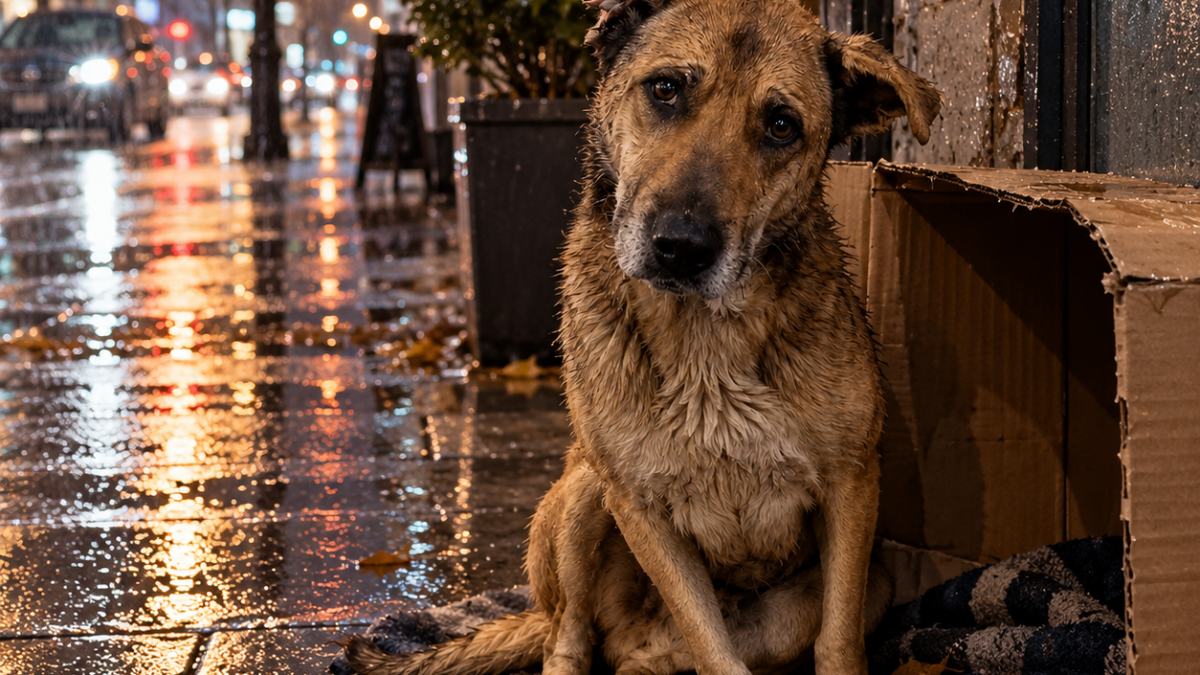
For eight straight mornings, a battered shepherd mix sat beneath the same flickering streetlight across from my grocery store, ignoring cold rain, passing cars, bowls of food, and every stranger who tried to coax him away as though none of those things mattered as much as whatever he believed was supposed to come down Oak Street.
I had owned that little store for thirteen years and thought I understood the rhythms of my neighborhood better than anyone—the delivery trucks before dawn, the retirees arriving for coffee, the school buses after seven—but that silent dog kept returning to the exact same patch of sidewalk until his waiting began to feel less accidental and more like a message nobody had bothered to understand.
Then, on the ninth morning, he finally looked directly at me, crossed the street without touching the biscuit I had offered him, and walked away slowly enough for me to realize he wasn’t leaving—he was asking me to follow.
My name is Michael Turner, though almost everyone on Oak Street calls me Mike, and I was forty-seven years old when that dog changed the way I understood loyalty.
My store, Turner’s Market, sits at 215 Oak Street in a small Ohio town called Millbrook. It isn’t much to look at: three narrow aisles, an old deli counter, a refrigerator that hums louder every winter, and a front bell that has needed replacing since 2016.
I kept telling myself I would replace it.
I never did.
Routine has a way of making broken things feel permanent.
At 6:15 on a Tuesday morning in early November, I unlocked the front door, turned on the lights, started the coffee, and noticed the dog.
He sat beneath the streetlight directly across from me.
Large.
Probably a shepherd mix.
Brown-and-black coat darkened by drizzle.
One ear upright, the other slightly bent.
His tail had an old kink near the end that made it look as though it had healed crooked years earlier.
He wasn’t skinny enough to look like a long-term stray, but he wasn’t well cared for either. Mud covered his legs. His coat needed brushing. No collar that I could see.
I stepped outside.
“Hey, buddy.”
He looked past me.
Not at the store.
Down Oak Street.
I assumed someone nearby owned him.
By lunchtime he was gone.
The next morning, he was back.
Same streetlight.
Same position.
Same eyes watching the road.
On the third day, I put out water.
He drank only after I went inside.
On the fourth, Mrs. Alvarez from the bakery tried offering him sausage.
He ignored her.
“Now I’m offended,” she said.
“Maybe he has standards.”
“Then why is he sitting across from your store?”
Fair.
By day six, half the neighborhood had noticed him.
People took pictures.
Someone posted him in a lost-pet group.
Animal control came by, but when the officer approached with a slip lead, the dog moved away, circled the block, and returned ten minutes after the truck left.
That was when I started wondering whether he was choosing the spot deliberately.
Day seven brought cold rain.
He stayed.
Day eight, temperatures dropped into the thirties.
I put an old produce box beneath the awning across the street with a blanket inside.
He slept beside it.
Not in it.
By the ninth morning, I was irritated with him.
Not because he had done anything wrong.
Because I had begun thinking about him after closing.
Was he hungry?
Where did he sleep?
What was he waiting for?
Why that lamp?
At 6:10, rain began hitting the sidewalk hard enough to bounce.
He was still there.
I grabbed a pack of dog biscuits from the pet shelf, put on my jacket, and crossed the street.
“Okay, friend. We need to negotiate.”
For the first time in nine days, he looked directly at me.
His eyes weren’t wild.
No aggression.
No panic.
Just exhaustion.
The kind I had seen in people waiting outside hospital rooms.
I crouched.
Placed a biscuit on the pavement.
He smelled it.
Then stood.
He did not eat.
Instead, he crossed Oak Street.
Stopped beside my store.
Looked back.
Then walked east.
Twenty feet later, he stopped again.
Looked at me.
I stayed where I was.
He waited.
“Are you serious?”
Tail moved once.
Then he walked another twenty feet.
Stopped.
Looked back.
I glanced through my store window.
Coffee brewing.
Register open.
Delivery due at seven.
Following strange dogs through town was not included in any small-business manual I had ever read.
But something about the way he waited for me felt unmistakable.
I locked the front door again.
Turned the sign back to CLOSED.
Mrs. Alvarez, watching from her bakery doorway, shouted:
“Where are you going?”
I pointed at the dog.
“I have absolutely no idea.”
Then I followed him.
Three blocks.
Five.
Across the railroad crossing.
Into the older part of Millbrook, where houses sat farther apart and sidewalks cracked beneath maple roots.
The dog never hurried.
Every time I fell behind, he stopped.
Waited.
Then continued.
Finally he turned through the sagging gate of a small white house on Wilson Avenue.
The yard was overgrown.
Newspapers covered the porch.
Mail spilled from the box.
The dog climbed the steps.
Scratched once at the front door.
Then looked at me.
That was when I recognized the faded green rocking chair beside the window.
I had seen it before.
And suddenly I knew whose house this was.
“Arthur?”
The dog’s ears lifted.
I walked toward the door.
“Arthur Bell?”
No answer.
The dog pressed his nose against the gap beneath the door.
Then he made the first sound I had heard from him in nine days.
A low, desperate whine.
And I understood that whatever he had been waiting for beneath my streetlight had never been a car.
He had been waiting for someone to notice that his person was missing.
PART 2
I knew Arthur Bell.
Not well enough to call him a close friend, which would later become one of the things I regretted, but well enough that his absence should have bothered me sooner.
Arthur was seventy-eight and had lived on Wilson Avenue since sometime before I was born. He had driven a school bus for thirty-four years, coached youth baseball when his knees still worked properly, and developed the habit of appearing at my store three or four mornings a week for coffee, a newspaper, and exactly two slices of deli turkey.
One slice was supposedly for him.
The other always disappeared beneath the counter into a waiting dog’s mouth.
That dog was Ranger.
And now I finally recognized him.
The shepherd mix standing on Arthur’s porch was older and dirtier than the dog I remembered, but the crooked tail should have told me immediately.
“Ranger?”
His ears lifted.
There it was.
Recognition.
He stepped closer.
I felt like an idiot.
“Why didn’t I know you?”
Ranger didn’t care about my guilt.
He turned back toward the door.
Scratched again.
I knocked.
“Arthur?”
Nothing.
I looked through the front window.
Dark.
Curtains partly closed.
The stack of newspapers on the porch bothered me most.
Arthur read every newspaper as though the future of democracy depended on him personally catching typographical errors.
He would never leave nine days of them outside.
I tried the knob.
Locked.
Ranger moved around the side of the house.
“Where are you going?”
He looked back.
Of course.
I followed.
The side gate stood partly open.
Ranger slipped through.
At the back of the house, one basement window had been covered with plywood.
The kitchen door had a small dog flap.
Ranger pushed through.
Then reappeared.
Whined.
I called 911.
## **1. The Empty House**
Police arrived first.
Officer Dana Mitchell knew Arthur too.
Small town.
That mattered.
She looked at the mail.
Then at Ranger.
“When did you last see Arthur?”
I tried to remember.
“Maybe two weeks.”
“Store?”
“Yes.”
“Anything unusual?”
“No.”
Dana knocked.
Called.
Then used the non-emergency contact information on file.
No answer.
A second officer checked the windows.
No visible person.
Because there was reason to believe an elderly resident might be in distress, they entered.
I stayed outside.
Ranger did not.
He tried following.
Dana told me to hold him.
I crouched and wrapped both arms loosely around his chest.
“Easy.”
He trembled.
Not fear.
Impatience.
Five minutes later, Dana returned.
“No Arthur.”
My stomach dropped.
“What does that mean?”
“House looks like someone left quickly.”
“How?”
“Half-eaten breakfast on the table. Medication organizer still there. Coat missing.”
“Any sign of a struggle?”
“No.”
I hated the relief I felt.
Dana continued:
“There’s a hospital discharge envelope on the counter dated nine days ago.”
“What?”
She handed it to another officer, not me.
“Looks like Arthur was taken somewhere.”
“Then why is Ranger here?”
Dana looked down.
“Good question.”
## **2. The Neighbor**
The woman next door, Mrs. Elaine Cooper, came outside in a robe.
She was eighty-two and missed nothing.
“Are you looking for Arthur?”
“Yes,” Dana said.
Elaine frowned.
“His nephew took him.”
“When?”
“Nine days ago.”
Ranger moved at the sound of the conversation.
I tightened my hold.
“Which nephew?” I asked.
“Brent.”
I vaguely knew the name.
Arthur had mentioned his late sister’s son occasionally.
Not kindly.
Elaine continued.
“Ambulance came that morning. Arthur had fallen in the kitchen.”
“Was he badly hurt?”
“I don’t know. They took him to Mercy General.”
“And Ranger?”
Her mouth tightened.
“Brent came later.”
“What happened?”
“He tried putting Ranger in his SUV. Dog wouldn’t go.”
I looked at Ranger.
“What did Brent do?”
“Left him.”
My jaw tightened.
Elaine said:
“I fed the dog for two days. Then he disappeared. I thought animal control had him.”
“He’s been sitting outside my store.”
Her eyes filled.
“Oh.”
Nine days.
Arthur gone nine days.
Ranger outside my store nine days.
I remembered Arthur’s routine.
Coffee.
Newspaper.
Turkey.
Ranger beside him.
Maybe, after the ambulance took Arthur, Ranger went to the next predictable place in their life.
The place Arthur always walked toward.
Me.
Or at least my store.
## **3. Mercy General**
Dana called the hospital.
Arthur had been admitted after a fall.
Then transferred.
Where?
The hospital could not release details to us.
Fair.
HIPAA does not disappear because a grocer is worried.
But Dana could contact the emergency person listed in the police welfare file.
That person was:
Brent Mercer.
Arthur’s nephew.
Dana called.
Voicemail.
Again.
Nothing.
I asked:
“What do we do?”
“We locate Brent.”
“And Ranger?”
Dana looked at him.
“Technically, Arthur’s property.”
“Wonderful. Can property eat breakfast at my house?”
She almost smiled.
“Temporary care?”
“Yes.”
“Take him.”
That was how Ranger entered my life.
Temporarily.
Of course.
## **4. Ranger Refused to Leave**
That first part was not easy.
Ranger followed me from Arthur’s backyard to the sidewalk.
Then stopped.
I opened my truck door.
He backed away.
“Nope.”
Tail low.
“Come on.”
Nothing.
I tried turkey.
That got his attention.
Not enough.
Finally Elaine brought out Arthur’s old wool blanket.
She held it toward Ranger.
“Here, sweetheart.”
He smelled it.
His posture changed.
We spread the blanket across the truck’s back seat.
Ranger climbed in.
I learned something that morning.
Sometimes safety is not a place.
It is a smell.
## **5. Turner’s Market Has a Dog**
At 8:32, I finally opened my store.
Two hours late.
Mrs. Alvarez marched in.
“You better have discovered buried treasure.”
I pointed behind the counter.
Ranger lay on Arthur’s blanket.
She froze.
“You followed him?”
“Yes.”
“And?”
“Arthur’s missing.”
Her expression changed.
“What do you mean missing?”
“Hospital. Then transferred. We don’t know where.”
Mrs. Alvarez looked at Ranger.
“He went looking for help.”
I shook my head.
“We don’t know that.”
“You always ruin good stories with facts.”
“Facts matter.”
“They can matter after coffee.”
She poured herself a cup without permission.
As usual.
## **6. Brent Calls**
At 11:17, my phone rang.
Unknown number.
“Michael Turner?”
“Yes.”
“This is Brent Mercer.”
I stepped into the stockroom.
“Arthur’s nephew?”
“Yes.”
“Where is Arthur?”
“That’s not your concern.”
My anger arrived immediately.
“Your uncle’s dog has been sitting outside my store for nine days.”
Silence.
Then:
“You have Ranger?”
“Yes.”
“I’ll come get him.”
“Great. Bring Arthur.”
“Arthur isn’t coming.”
My stomach tightened.
“Why?”
“He’s in assisted living.”
“Where?”
Again:
“Not your concern.”
I lowered my voice.
“Brent, your uncle has shopped at my store for thirteen years. His dog came to me because nobody was home. I think that gives me permission to care.”
“It doesn’t.”
“Then tell me where he is.”
“No.”
“Why?”
“Because Uncle Arthur needs peace and stability, not half the town interfering.”
Something in the phrasing bothered me.
Half the town.
Arthur had lived here fifty years.
Those people were not interference.
They were his life.
Brent continued:
“I’ll pick up the dog this afternoon.”
“What facility?”
Click.
He hung up.
## **7. Ranger Hears Arthur’s Name**
I walked back behind the counter.
Ranger lifted his head.
I said:
“Arthur.”
He stood.
Immediately.
Mrs. Alvarez noticed.
“Say it again.”
“Arthur.”
Ranger came around the counter.
Nose searching.
Eyes toward the door.
That hurt.
I crouched.
“I don’t know where he is, buddy.”
Ranger stared at me.
I had the absurd feeling I had disappointed him.
Again.
## **8. Brent Arrives**
Brent came at 2:40.
Forty-six.
Expensive jacket.
Clean pickup.
The kind of man who entered a small store as though inspecting something he might buy.
Ranger saw him.
No excitement.
No fear either.
He simply moved behind my counter.
Brent pointed.
“There he is.”
“Yes.”
“I’ll take him.”
Ranger backed farther away.
I said:
“He doesn’t appear enthusiastic.”
“He’s a dog.”
“So I’ve been told.”
Brent’s jaw tightened.
“Uncle Arthur gave me authority to handle his affairs.”
“Then where is Arthur?”
“You keep asking that.”
“Because you keep refusing.”
“He had a fall. He needs care.”
“I’m glad he’s receiving it. What’s the facility?”
Brent leaned closer.
“You own a grocery store, Mike. You’re not family.”
Correct.
That sentence still made me angry.
I answered:
“Then act like family and let his friends know whether he’s okay.”
Brent stepped toward Ranger.
Ranger gave one low warning sound.
First time I had heard him vocalize at a person.
Brent stopped.
“See? Difficult dog.”
I stared.
“He’s seventy pounds and you walked straight at him while he’s trapped behind a counter.”
“He’s bitten before.”
“Who?”
Brent did not answer.
“Who did he bite?”
Silence.
There it was.
Nothing.
## **9. The Collar**
Brent produced a leash.
Ranger retreated.
I called Dana.
Not to create drama.
To avoid it.
She arrived ten minutes later.
Brent showed paperwork claiming durable power of attorney for Arthur.
Dana read it.
“I’m not adjudicating this at a grocery counter.”
“Then he comes with me,” Brent said.
Dana looked at Ranger.
“Does the document specifically address animal custody?”
“No.”
“Then we need animal control and probably county counsel if there’s a dispute.”
Brent became angry.
Not explosive.
Controlled.
Worse.
“This is ridiculous.”
Dana remained calm.
“What facility is Arthur in?”
Brent stared at her.
“Why?”
“Because I’d like to confirm his wishes if he can communicate them.”
“He can’t.”
That changed everything.
“Why not?”
Brent hesitated.
“Stroke.”
Earlier he had said fall.
Dana noticed too.
“Hospital records showed a fall?”
“He had a stroke afterward.”
“Which facility?”
“I’m done with this.”
He left without Ranger.
As he walked out, Ranger watched him.
Then looked toward the street.
Waiting.
Always waiting.
## **10. We Find Arthur**
Dana could not give me the details, but she followed official channels.
By evening, Arthur had been located.
A rehabilitation center called Cedar Ridge.
Twenty-seven miles away.
Brent had placed him there after discharge from Mercy General.
Arthur had suffered a mild stroke after the fall.
His speech was affected.
His right side weak.
But he was alert.
That mattered.
Dana called me at 7:05.
“He’s alive.”
I sat down.
Ranger was beneath my kitchen table.
“Can he communicate?”
“Yes.”
“Did he ask about Ranger?”
Pause.
Then Dana said:
“The social worker told me he’s been asking about his dog every day.”
I closed my eyes.
Ranger lifted his head when I said his name.
“I’m taking him tomorrow.”
“Mike—”
“Can I?”
“Yes.”
“Then I’m taking him.”
## **11. The Reunion**
Cedar Ridge smelled like disinfectant, soup, and over-warm air.
Ranger hated the automatic doors.
We moved slowly.
A social worker named Melissa Grant met us.
She crouched.
“Hi, Ranger.”
Tail moved.
“How do you know him?”
“Arthur has shown us approximately forty photos.”
I smiled.
Good.
Melissa continued quietly:
“There’s something you need to know.”
“What?”
“Mr. Bell believed Ranger had been surrendered.”
I stopped.
“What?”
“His nephew told him the dog had been placed with a rescue because he was too difficult to manage.”
Ranger pulled gently toward the hallway.
“Did Arthur agree?”
Melissa’s expression answered before she spoke.
“No.”
## **12. Room 214**
Arthur sat in a wheelchair near the window.
Thinner than I remembered.
Right hand resting motionless on his lap.
Face slightly slack on one side.
But unmistakably Arthur.
I stood outside the door.
Ranger saw him.
Everything happened at once.
He pulled free.
Not violently.
Just enough that the leash slipped from my fingers.
He ran.
Arthur turned.
His eyes widened.
“R-Ran…”
That was all he could get out.
Ranger placed both front paws carefully against the chair.
Then lowered himself.
Head into Arthur’s lap.
Arthur’s left hand came down.
Shaking.
Pressed into Ranger’s fur.
His face crumpled.
“Boy.”
One word.
Perfectly clear.
I stepped back.
Melissa turned away.
I pretended to inspect a painting because grown men who own grocery stores apparently become extremely interested in watercolor barns during reunions.
Arthur stroked Ranger’s head.
Again.
Again.
Then looked at me.
His eyes asked the question before his mouth managed it.
“Where?”
I understood.
“Your house.”
His face tightened.
“Store.”
I nodded.
“He sat outside my store for eight days.”
Arthur closed his eyes.
A tear moved down his cheek.
“He knew,” Melissa whispered.
I corrected her gently.
“We don’t know what he knew.”
Arthur opened his eyes.
Pointed at me.
Then at Ranger.
Then managed:
“Mike.”
Pause.
“Help.”
That was enough for me.
## **13. What Arthur Could Tell Us**
Communication after a stroke is slow.
People rush because silence makes them uncomfortable.
Melissa did not.
She used a communication board.
Yes/no questions.
Writing with Arthur’s left hand.
Pictures.
Over the next hour, a story emerged.
Arthur had fallen.
Called emergency services using his medical alert button.
Before the ambulance left, he told Brent:
“Ranger stays with Elaine until I’m home.”
Brent said yes.
Arthur remembered that clearly.
At the hospital, Brent arrived with papers.
Said Arthur needed temporary rehabilitation.
True.
Then told Arthur his house had to be “secured.”
Arthur agreed.
Brent later claimed Ranger had become aggressive and could not stay with Elaine.
False.
He told Arthur a rescue had taken him.
False.
Arthur asked which rescue.
Brent never answered.
Then something else.
Arthur wrote, slowly:
**HOUSE?**
I asked:
“What about your house?”
He pointed.
Melissa said:
“Mr. Bell has been concerned because his nephew brought property documents here.”
My stomach tightened.
“What documents?”
“Sale papers.”
## **14. The House Was Being Sold**
Arthur’s home was paid off.
Small.
Old.
Valuable because developers had begun buying properties near Wilson Avenue for a townhouse project.
Brent had brought Arthur an offer.
Arthur refused.
That much he communicated clearly.
Then Brent claimed his power of attorney allowed him to handle a sale anyway because Arthur could no longer manage the property.
Melissa had objected.
She contacted the facility’s legal liaison.
The sale had not closed.
Yet.
I looked at Arthur.
“Did you want to sell?”
He slammed his left palm against the wheelchair arm.
“No.”
Clear.
Strong.
Ranger lifted his head.
Arthur softened immediately.
“Good boy.”
## **15. The Power of Attorney**
Brent’s document looked legitimate at first glance.
Signed two years earlier after Arthur had minor heart surgery.
It gave Brent limited authority to pay bills and manage finances temporarily if Arthur was incapacitated.
Limited.
That word became very important.
It did not authorize Brent to transfer real estate to himself.
Did not authorize permanent placement decisions.
Did not authorize disposal of personal property beyond ordinary management.
And according to Arthur’s attorney, Helen Shaw, the authority activated only after specific written medical certification.
That certification had never been completed.
Brent had been acting as though he had broader power than the document gave.
## **16. Arthur’s Attorney**
Helen Shaw was seventy-one, five foot two, and had the terrifying calm of someone who had spent forty years watching louder people underestimate her.
She came to Cedar Ridge.
Read the papers.
Then looked at Arthur.
“Did you authorize Brent to list the house?”
Arthur:
“No.”
“Did you authorize him to surrender Ranger?”
“No.”
“Did you authorize a permanent move?”
“No.”
Helen closed the folder.
“Good.”
That one word sounded dangerous.
## **17. The Listing**
Arthur’s house had already been listed privately.
Not publicly.
An off-market sale.
Buyer:
Northbridge Redevelopment LLC.
Purchase price:
Almost forty percent below recent comparable sales.
Managing member of Northbridge:
Caleb Mercer.
Brent’s brother.
Arthur’s other nephew.
Helen looked at me.
“Well.”
“What?”
“This just became less subtle.”
## **18. The Revenge Everyone Expected**
I should clarify something.
I was angry.
Very angry.
Arthur was vulnerable.
Ranger had been left alone.
Brent had lied.
Property was involved.
People hear that and expect dramatic revenge.
Threats.
Fights.
Some cinematic confrontation in a parking lot.
Nothing like that happened.
Helen made three phone calls.
That was far more effective.
The title company received formal notice of disputed authority.
The county recorder received notice.
Adult Protective Services opened an inquiry.
The facility documented Arthur’s wishes.
The proposed closing stopped.
No shouting necessary.
Paperwork can be wonderfully violent to bad plans without hurting anyone.
## **19. Brent Comes to Cedar Ridge**
He arrived the next day.
I happened to be there with Ranger.
Arthur had finished physical therapy.
Brent entered the room.
Saw me.
Then Ranger.
His expression changed.
“Why is he here?”
Arthur answered before anyone else.
“Mine.”
The word came slowly.
But solid.
Brent sighed.
“Uncle Arthur, we’ve been through this.”
Arthur’s face reddened.
I started to stand.
Helen, who was also present, held up one finger.
I sat.
Never ignore a seventy-one-year-old attorney holding up one finger.
Brent continued:
“You can’t care for that dog right now.”
Arthur struggled.
“Temporary.”
“Yes, you’re here temporarily.”
“No.”
Arthur pointed at Brent.
“Dog.”
Then at me.
“Mike.”
Then at himself.
“Home.”
I understood.
Ranger stays with me temporarily.
Arthur goes home.
Brent understood too.
His jaw tightened.
“That house isn’t safe for you.”
Helen spoke.
“That decision is not yours.”
Brent looked at her.
“And you are?”
“Someone who reads documents before using them.”
I almost smiled.
## **20. Arthur’s Capacity**
The central issue became whether Arthur could make his own decisions.
Brent claimed the stroke left him incapable.
Doctors disagreed.
Speech impairment is not the same as cognitive impairment.
Arthur understood:
Who he was.
What property he owned.
His finances.
His family.
The proposed sale.
The consequences.
His wishes.
A geriatric specialist evaluated him.
Conclusion:
Arthur retained decision-making capacity.
He needed assistance communicating.
He did not need people deciding his life for him.
That distinction saved him.
## **21. Ranger Stays With Me**
Arthur could not return home immediately.
Rehabilitation would take weeks.
So Ranger stayed at my house.
The first three nights, he slept beside the front door.
The fourth night, he moved to the kitchen.
By week two, he discovered my couch.
Temporary foster status began collapsing rapidly.
I told Arthur:
“He’s ruining my furniture.”
Arthur smiled.
“Good.”
His speech improved every week.
## **22. Ranger’s Routine**
Every morning at 5:45, Ranger woke me.
Not because he needed outside.
Because Arthur used to wake early.
At 6:10, Ranger stood near my truck.
He expected to go to the store.
So I took him.
At 6:15, he sat beneath the same streetlight.
For the first few days, that scared me.
Had he gone backward?
Then I realized he wasn’t waiting alone anymore.
I sat beside him with coffee.
At 6:30, we opened the store.
Ranger came inside.
The ritual changed.
Not disappeared.
## **23. The Customers**
Everyone knew.
Small town.
Arthur’s situation became impossible to keep private, though we tried to respect details.
People brought Ranger treats.
Too many.
Mrs. Alvarez became the worst offender.
“He has suffered.”
“He is gaining weight.”
“Suffering requires calories.”
“That is not science.”
“It is bakery science.”
Ranger agreed with her.
Traitor.
## **24. Brent’s Second Plan**
The property sale was blocked.
Then Brent attempted a different argument.
He petitioned for guardianship.
He claimed Arthur could not safely manage independent living.
That was more serious.
Not automatically malicious.
Sometimes guardianship is necessary.
But Brent’s petition included claims that did not match medical records.
“Severe cognitive impairment.”
Not supported.
“Unable to understand finances.”
False.
“History of unsafe animal management.”
Apparently Ranger now became evidence.
I read the filing.
One line said Arthur maintained “an unpredictable large dog despite repeated concerns.”
Repeated by whom?
Brent.
Again.
## **25. Ranger’s Behavior Evaluation**
Helen suggested an independent behavior evaluation.
Not because Arthur needed to prove Ranger was perfect.
Because Brent had made the dog part of the case.
A certified behavior consultant named Dr. Erin Wallace evaluated Ranger.
She visited my store.
My house.
Observed him around strangers.
Food.
Leash handling.
Other dogs at a controlled distance.
Her report:
Older shepherd mix.
Moderate separation distress related to owner absence.
No evidence of generalized aggression.
Tolerates handling.
Strong attachment to familiar humans.
Some anxiety with abrupt approach.
Appropriate warning behaviors.
Translation:
Ranger was a dog.
Brent’s claim collapsed.
## **26. The Bite Story**
Remember Brent saying Ranger had bitten?
Helen demanded details.
Eventually Brent identified an incident.
Ranger had “bitten” him six months earlier.
Medical report?
None.
Photograph?
None.
Witness?
Elaine.
That was unfortunate for Brent.
Elaine testified:
“Ranger did not bite him.”
What happened?
Brent entered Arthur’s yard without knocking.
Ranger barked.
Brent swung his briefcase toward him.
Ranger grabbed the briefcase.
Not Brent.
Elaine added:
“It was an ugly briefcase. Dog had taste.”
Court reporter reportedly struggled not to laugh.
## **27. Arthur Improves**
Meanwhile, Arthur worked.
Physical therapy every morning.
Speech therapy.
Occupational therapy.
He practiced buttons.
Stairs.
Writing.
He hated all of it.
Especially speech exercises.
Melissa told him:
“Say ‘beautiful blue balloon.’”
Arthur stared.
“Why?”
“That’s five words. Good.”
He glared.
Therapists are clever.
By week five, he could walk short distances with a cane.
By week seven, he could make coffee under supervision.
That became his personal benchmark.
“If I can make coffee, I can live.”
Not medically complete.
Emotionally persuasive.
## **28. I Learn Arthur’s History**
We became friends for real during those weeks.
Not customer and grocer.
Friends.
Arthur’s wife, Margaret, had died eleven years earlier.
No children.
His sister Louise—Brent’s mother—had died three years earlier.
After that, Brent became more involved.
At first helpfully.
Bills.
Appointments.
Home repairs.
Arthur trusted him.
Trust changed gradually into control.
Brent began deciding.
What Arthur should spend.
Which doctor.
When he should stop driving.
Whether the house was “too much.”
Some concerns were valid.
That made the control harder to recognize.
Good intentions and self-interest can coexist.
Then property values rose.
The balance changed.
## **29. The Bank Statements**
Adult Protective Services reviewed finances with Arthur’s consent.
Several concerning transactions appeared.
Small at first.
$300.
$500.
Then larger “property maintenance” payments to a company Brent controlled.
Some work existed.
Some did not.
A $6,800 roof repair had been billed twice.
A $12,000 “accessibility renovation” was paid even though the work at Arthur’s house amounted to two grab bars and a handrail.
Brent claimed accounting mistakes.
Maybe some were.
Then investigators found transfers to Northbridge.
The pattern became harder to explain.
## **30. Arthur’s Anger**
Arthur rarely raised his voice.
The stroke made that difficult anyway.
But when Helen showed him the statements, he slammed the folder shut.
“Stole.”
Helen answered carefully.
“We don’t know yet which transactions were unauthorized.”
Arthur pointed.
“Mine.”
“I know.”
“Trusted.”
That word hurt more.
I sat beside him.
Ranger put his head under Arthur’s left hand.
Arthur breathed slowly.
Then said:
“Fix.”
Helen nodded.
“We will.”
## **31. The Guardianship Hearing**
Brent expected a quiet proceeding.
Instead, Arthur appeared in person.
Suit.
Cane.
Ranger did not attend.
Again: animals do not need to become props.
Arthur’s doctor testified.
Speech impairment.
Physical limitations.
Cognition substantially intact.
Needs support.
Not substitute decision-making.
Melissa testified about his consistent wishes.
Helen presented the property documents.
Brent’s attorney argued he had acted to protect his uncle.
Some things he did probably had been protective.
That mattered.
The judge asked Arthur directly:
“Mr. Bell, where do you want to live?”
Arthur leaned toward the microphone.
“My house.”
“Do you understand you may need daily assistance?”
“Yes.”
“Are you willing to accept that?”
Arthur frowned.
“Don’t like.”
A few people smiled.
Then:
“But yes.”
“Who do you trust to help with finances?”
Arthur looked toward Helen.
Then Elaine.
Then, unexpectedly, me.
“Not Mike.”
I stared.
The courtroom laughed.
Arthur smiled.
“Bad math.”
Fair.
He chose a professional fiduciary for temporary financial support.
Good decision.
## **32. Brent Loses Control**
The guardianship petition was denied.
A limited supported-decision plan was approved instead.
Brent’s authority under the old power of attorney was revoked.
The attempted house sale remained blocked.
Financial investigation continued.
Arthur retained control of his life.
After the hearing, Brent passed me in the corridor.
He stopped.
“This is your fault.”
I looked at him.
“No.”
“You involved yourself in something that wasn’t your business.”
“Ranger made it my business.”
“That’s ridiculous.”
“Probably.”
He shook his head.
“You think you saved him?”
“Arthur?”
“Yes.”
I answered honestly.
“No.”
“Then what?”
“I followed a dog.”
That was all.
Everything else had required Arthur himself.
## **33. Ranger’s “Revenge”**
People in town called Ranger a hero.
They said he “exposed” Brent.
I corrected them.
Ranger did not understand property law.
He didn’t investigate bank statements.
He didn’t know what a power of attorney was.
He did one thing.
He refused to stop waiting for Arthur.
When waiting failed, he found someone.
That was enough to start a chain.
Heroism does not require understanding every consequence.
## **34. The Financial Case**
Months later, prosecutors filed charges related to financial exploitation and false property filings.
I am careful with this part.
Charges are not the same as guilt.
Evidence was reviewed.
Brent had counsel.
The case moved slowly.
Some counts were resolved through plea agreements.
Others through civil restitution.
The court ultimately ordered repayment of unauthorized funds.
The property transfer attempt was void.
Brent was restricted from acting in fiduciary roles for Arthur.
No dramatic prison scene.
No cinematic collapse.
Accountability came in documents, repayment schedules, court orders, and lost access.
For Arthur, that was enough.
## **35. Caleb Mercer**
Brent’s brother Caleb had been tied to the low-price property deal.
His involvement turned out to be murkier.
He claimed Brent told him Arthur wanted a quick sale.
Emails suggested he should have asked more questions.
But the evidence did not show the same direct involvement in other financial transactions.
He withdrew from the purchase.
Paid legal costs associated with undoing the agreement.
Later apologized to Arthur.
Arthur did not accept immediately.
Good.
Forgiveness does not have a deadline.
## **36. Arthur Goes Home**
Three months after Ranger led me there, Arthur returned to Wilson Avenue.
Not alone.
Home-health aide mornings.
Meal delivery.
Weekly nurse visit.
Medical alert system.
Elaine next door.
Me checking in too often.
Arthur accused me of being annoying.
“Good,” I said.
Ranger arrived first.
I opened the truck door.
He jumped down more quickly than his age suggested.
Walked through the gate.
Up the porch.
Stopped.
The front door opened.
Arthur stood inside with his cane.
Ranger froze.
Arthur smiled.
“Home.”
Ranger ran.
Not far.
Not dramatically.
Straight inside.
Arthur leaned down as much as he could.
Ranger pressed against his legs.
I looked away.
Again, fascinating porch architecture.
## **37. The Lamp Post**
The next morning, at 6:12, I unlocked Turner’s Market.
The streetlight still flickered.
Ranger was not there.
I stood in the doorway longer than necessary.
The empty patch of sidewalk made me emotional.
Mrs. Alvarez arrived.
“Missing him?”
“No.”
“Liar.”
She handed me coffee from my own machine.
How she kept doing that, I don’t know.
At 6:28, I saw Arthur at the far end of Oak Street.
Cane.
Slow steps.
Ranger beside him.
My throat tightened.
They crossed the street.
Arthur entered.
“Coffee.”
“Good morning to you too.”
“Turkey.”
“Two slices?”
Ranger sat.
Arthur smiled.
“Three.”
Life resumed.
Different.
Better.
## **38. The New Routine**
Arthur no longer walked every morning.
Too tiring.
Three times a week.
On bad days, I delivered.
Ranger regained weight.
His coat improved.
The crooked tail became famous.
Children asked to pet him.
Arthur always said:
“Ask him.”
He meant let Ranger choose.
Good rule.
Ranger usually chose yes.
Unless someone moved too quickly.
Then he stepped behind Arthur.
No shame.
## **39. The Store Bed**
Mrs. Alvarez bought Ranger a bed for the market.
Huge.
Expensive.
He refused it.
Preferred the floor near the deli counter.
She was offended.
“I spent eighty dollars.”
“He has principles.”
“He eats fallen bologna.”
“Complex principles.”
Eventually Ranger used the bed when nobody watched.
Dogs enjoy humiliating gift-givers.
## **40. Arthur’s First Winter Home**
Snow came early.
Arthur’s balance was still unreliable.
Ranger adjusted without instruction.
He walked more slowly beside him.
Stopped at curbs.
Waited.
I do not claim he became a service dog.
He did not.
But familiar dogs learn patterns.
Arthur leaned on his cane.
Ranger matched pace.
Two old men, though only one objected to the label.
## **41. Brent’s Public Image**
Brent had been active in local business organizations.
The case became public after court filings.
People reacted harshly.
Some too harshly.
His business lost clients.
Online comments became personal.
I posted something on the store page:
**Arthur is safe and his legal case is being handled appropriately. Please do not contact, threaten, or harass anyone involved. Accountability belongs in the proper process, not at somebody’s home or workplace.**
A customer complained.
“He deserves everything.”
I answered:
“No. He deserves what the evidence supports.”
That distinction matters.
Anger should not replace facts.
## **42. Arthur Reads the Comments**
I tried hiding them from him.
Mistake.
Arthur had a smartphone and too much free time.
He read everything.
One afternoon:
“People stupid.”
“Some.”
“Brent wrong.”
“Yes.”
“Still nephew.”
I looked at him.
“You worried about him?”
Arthur stared at Ranger.
“Angry.”
Pause.
“Not want ruin.”
That was Arthur.
He wanted control restored.
Money returned.
Truth acknowledged.
Not permanent destruction.
## **43. Brent Apologizes**
The apology came almost a year later.
Through Helen.
Arthur agreed to receive a letter.
Not a visit.
Brent wrote that he had convinced himself Arthur’s house would eventually need to be sold anyway.
That Arthur would end up in assisted living.
That managing the money now was “efficient.”
He admitted he began treating future possibilities as present permission.
That sentence stayed with me.
Future possibilities as present permission.
How many people do that to older relatives?
Arthur read the letter twice.
Then put it in a drawer.
“Answer?” I asked.
“No.”
“Okay.”
Three months later, he wrote one line.
**You should have asked me.**
Helen mailed it.
Enough.
## **44. Ranger’s Tail**
Dr. Erin examined the old tail injury.
Healed years ago.
Probably fracture from some unknown event before Arthur adopted him.
Arthur had found Ranger at a county shelter when the dog was around two.
“Broken then?” I asked.
Arthur nodded.
“Why him?”
Arthur looked offended.
“Why not?”
Fair.
He had gone to adopt a small dog.
Left with a seventy-pound shepherd.
Shelters enjoy changing plans.
## **45. Ranger’s Real Name Before Arthur**
The microchip revealed an earlier name.
Max.
Arthur hated it.
“Boring.”
Ranger had become Ranger because Arthur said the dog “patrolled the yard like he owned county jurisdiction.”
No one knew if Ranger remembered Max.
Nobody cared.
## **46. Arthur Drives Again?**
No.
This became a fight.
Arthur wanted his license back.
Doctor recommended waiting.
Arthur complained.
I sided with doctor.
Arthur did not speak to me for one entire store visit.
Bought coffee.
Turkey.
No words.
Mrs. Alvarez whispered:
“Trouble in paradise?”
“Apparently.”
Eventually Arthur accepted a driving evaluation.
Failed the first.
Passed a restricted version months later but chose not to resume regular driving.
He said:
“Too many idiots.”
Statistically, he may have been right.
## **47. I Become the Driver**
Unpaid chauffeur.
Veterinarian.
Doctor.
Hardware store.
Ranger came when possible.
One afternoon Arthur said:
“Need pay you.”
“No.”
“Gas.”
“No.”
“Then turkey free.”
“Absolutely not.”
He laughed.
Stroke had changed his speech, not his bargaining instincts.
## **48. Arthur’s Birthday**
Seventy-nine.
We held a party at the store after closing.
He hated the idea.
Then ate two slices of cake.
Ranger wore a blue bandana.
Hated that too.
Elaine brought photographs from decades earlier.
Arthur and Margaret.
Young.
The house new.
No Ranger yet.
Arthur stared at one picture longer than the others.
Margaret standing beside the same streetlight across from my store.
“What’s that?” I asked.
Arthur smiled.
“First date.”
I froze.
“What?”
“Store was diner then.”
Before my time, the building had been Miller’s Lunch Counter.
Arthur met Margaret there for coffee in 1967.
The streetlight had always been their meeting point.
Suddenly Ranger’s waiting there felt different.
Had Arthur walked him there because that place mattered?
Maybe.
We can’t know.
But Arthur whispered:
“Always meet there.”
That was enough.
## **49. The Streetlight**
Arthur and Ranger had a routine I had never noticed fully.
On mornings Arthur walked to my store, he paused beneath that lamp.
Always.
Why?
Arthur told me.
Margaret used to work at the old pharmacy nearby.
When they were young, they met beneath that light before walking home together.
After she died, Arthur still paused there.
Ranger with him.
Maybe the dog had learned:
This is where we wait for someone we love.
That possibility made the nine days almost unbearable to think about.
## **50. Arthur Stops Waiting for Margaret**
Not literally.
Grief does not work that neatly.
But after the stroke, Arthur began talking about her more.
Maybe nearly losing his home forced him to examine what he was protecting.
One evening he said:
“House not Margaret.”
I looked at him.
“No.”
“Lamp not Margaret.”
“No.”
“Still keep?”
“If you want.”
He smiled.
“Want.”
Memory objects do not have to be the person to matter.
## **51. Ranger’s Anxiety**
Ranger developed separation distress after Arthur returned.
Understandable.
If Arthur went to a medical appointment without him, Ranger paced.
Whined.
Sat by door.
We worked with Erin.
Short absences.
Predictable returns.
No dramatic goodbyes.
Food puzzles.
My store as alternate safe place.
Months.
Progress.
Healing is usually boring.
That is why dramatic stories skip it.
But boring work gave Ranger peace.
## **52. The First Time Ranger Stayed With Me Calmly**
Arthur had a three-hour specialist appointment.
Ranger came to the market.
First hour:
Door.
Second:
Floor near door.
Third:
Asleep.
Arthur returned.
Ranger woke.
Tail exploded.
Then he looked at me.
As if embarrassed for having enjoyed himself.
I said:
“Your secret is safe.”
## **53. The Civil Judgment**
Arthur eventually recovered most unauthorized funds through settlement and court orders.
Not every dollar.
Legal fees consumed some.
Time consumed more.
But enough.
More importantly, his home stayed his.
Helen asked whether he wanted to sue for additional damages.
Arthur declined.
“Enough.”
“You sure?”
“Yes.”
Helen looked at me.
I shrugged.
Arthur had become very good at deciding.
## **54. Brent’s Restriction**
As part of the legal outcome, Brent could not manage Arthur’s finances or property.
Contact remained limited to what Arthur allowed.
That was the consequence Arthur cared about.
No more unilateral decisions.
No more documents appearing beside his hospital bed.
No more people treating slowed speech like lack of thought.
That final point became personal for me.
## **55. Speech Is Not Thought**
After Arthur’s stroke, strangers often spoke louder.
Why?
He wasn’t deaf.
Some used childish tones.
Arthur hated that.
Once a bank employee said:
“Do you understand what I’m asking you, sweetie?”
Arthur stared.
Then said slowly:
“I understand condescension.”
I nearly fell out of my chair.
She apologized.
Good.
## **56. Ranger Becomes Store Security**
Not officially.
Insurance would have hated that.
He simply slept near the front counter.
Shoplifters?
No special interest.
Children dropping crackers?
Excellent attention.
One teenager tried stealing an energy drink.
Ranger watched.
Did nothing.
I caught him.
“Useless.”
Ranger yawned.
Arthur said:
“Union break.”
## **57. The Robbery That Wasn’t**
One night, the alarm at my store triggered.
I arrived with police.
Ranger and Arthur stayed home.
Turns out a shelf collapsed.
No burglary.
Arthur called:
“Need dog.”
“For what?”
“Protection.”
“From canned beans?”
Pause.
“Yes.”
## **58. My Own Life**
I had spent years using the store as an excuse not to have much of one.
Divorced at thirty-nine.
No children.
Work.
Home.
Repeat.
Arthur noticed.
Older people become annoyingly perceptive when given enough coffee.
One morning:
“You date?”
I almost dropped the knife.
“No.”
“Why?”
“Why are we discussing this?”
“You lonely.”
“I have customers.”
“Worse.”
Ranger looked at me.
I felt attacked by both.
## **59. Laura**
Laura Benton came into my life because of Ranger.
She was a veterinary technician at the clinic we used.
Forty-four.
Smart.
Funny.
Unimpressed by me.
Arthur adored her instantly.
This should have warned me.
One visit, Arthur said:
“Mike single.”
I nearly choked.
Laura raised an eyebrow.
“Good to know.”
“Arthur.”
He smiled.
Speech therapy had created a monster.
## **60. Ranger Approves**
Laura came to the store.
Ranger walked over.
Leaning.
Full body.
Arthur said:
“Approved.”
“Can everyone stop?”
No one stopped.
Eventually Laura and I had dinner.
Then another.
I blamed Ranger.
Convenient.
## **61. Arthur Meets Laura Properly**
He interrogated her.
Job.
Family.
Dogs.
Politics.
Coffee preference.
She answered everything.
Then:
“You good to Mike?”
Laura looked at me.
“Depends how annoying he is.”
Arthur nodded.
“Correct.”
I stopped seeking his approval after that.
## **62. Ranger Gets Older**
Time moved.
The dog who waited nine days beneath a streetlight became gray.
Hips stiff.
Hearing weaker.
He still walked with Arthur.
Shorter distances.
Store only once or twice weekly.
Sometimes I picked them up.
Ranger hated getting into my truck less than before.
Because it usually ended at the market.
Turkey has rehabilitative value.
Not scientifically.
Mrs. Alvarez would disagree.
## **63. Arthur’s Eightieth**
Big party.
He objected less.
Ranger received his own plate.
Approved foods only.
Arthur gave a speech.
Slowly.
“Two years ago…”
Pause.
“Thought lost house.”
Pause.
“Lost dog.”
He looked around.
“Got both.”
Then toward me.
“Got annoying grocer.”
Everyone laughed.
I cried.
Quietly.
Laura noticed.
Did not tell anyone.
Good woman.
## **64. Brent Comes Back**
Arthur eventually allowed Brent one supervised visit.
Not because the court required it.
Because Arthur chose.
Brent arrived thinner.
Older somehow.
He sat in Arthur’s living room.
Ranger remained beside Arthur.
Brent did not reach for him.
Good.
“I’m sorry,” Brent said.
Arthur waited.
“I thought I knew what was best.”
Arthur:
“Yes.”
“I told myself the house was too much.”
“Yes.”
“I told myself you’d thank me later.”
Arthur’s eyes narrowed.
Brent continued:
“I stopped asking.”
There it was.
The real admission.
Arthur looked at him.
“Money?”
Brent nodded.
“That too.”
Silence.
Then Arthur said:
“Better.”
Brent looked confused.
“Better?”
“Truth.”
Not forgiveness.
But truth.
## **65. Ranger Approaches Brent**
After nearly an hour, Ranger stood.
Walked toward Brent.
Smelled his hand.
Brent froze.
Ranger moved away.
That was all.
Brent began crying.
Arthur watched.
No comment.
Dogs do not conduct morality plays for us.
Ranger smelled someone familiar.
Then returned to his person.
Enough.
## **66. Arthur’s Decision About Family**
He did not restore Brent as financial helper.
Ever.
He allowed occasional visits.
Birthdays.
Holidays.
Supervised at first.
Then not.
Boundaries remained.
Reconciliation without restored power.
Important distinction.
## **67. The House Trust**
Arthur placed the house in a trust with clear instructions.
He would live there as long as medically reasonable.
After his death, a portion of the estate would go to a local senior-support nonprofit.
Some to Brent and Caleb.
Yes.
Despite everything.
I asked:
“You sure?”
Arthur nodded.
“Family.”
Then:
“Smaller.”
I laughed.
Fair.
## **68. Ranger’s Place in the Will**
Of course.
Detailed pet trust.
Funds for care.
Preferred caretakers:
1. Mike Turner.
I stared.
“Why am I first?”
Arthur:
“Because Ranger chose.”
I looked at the dog.
“You did this.”
Ranger slept.
Coward.
Laura was backup.
Elaine joked she was offended.
At eighty-five, she did not truly want an elderly shepherd.
Still complained.
## **69. Arthur’s Health Declines**
At eighty-two, another stroke.
Smaller.
Still significant.
Hospital.
Ranger returned to my house.
This time he did not wait beneath the streetlight.
That broke my heart in a good way.
He had learned.
Arthur leaves.
Arthur can return.
And if not?
Mike exists.
The store exists.
Home can have more than one anchor.
## **70. Arthur Comes Back Again**
Two weeks.
Then home.
Ranger greeted him less dramatically than before.
Tail.
Whine.
Head under hand.
Arthur laughed.
“Old.”
I wasn’t sure which one he meant.
Both.
## **71. The Last Walk to the Store**
Spring.
Warm.
Arthur insisted on walking.
Laura and I followed at a distance.
He hated being supervised.
Ranger moved slowly.
They reached the lamp.
Arthur stopped.
Placed one hand on it.
Ranger sat.
Arthur looked toward my store.
Then at the street.
“Margaret.”
I nodded.
“Yeah.”
He touched Ranger’s head.
“Good place.”
Then they crossed.
Arthur ordered coffee.
One turkey slice for himself.
Two for Ranger.
No one argued.
## **72. Arthur’s Final Illness**
Cancer.
Pancreatic.
Advanced when found.
At eighty-three, Arthur declined aggressive treatment after discussions with doctors.
His choice.
He wanted home.
So home.
Hospice.
Laura helped me understand what was happening.
Ranger understood changes in his own way.
He stayed closer.
Slept beside Arthur’s bed.
Ate less when Arthur ate less.
We monitored both.
## **73. Brent Returns More Often**
Arthur allowed him.
Caleb too.
The nephews helped.
Groceries.
Yard.
Medication pickups.
No money management.
Interesting how useful people can become once control is removed from the relationship.
Brent once repaired the porch step.
Arthur inspected it.
“Crooked.”
“It is not.”
“Crooked.”
They argued ten minutes.
Family restored enough to argue about lumber.
Good sign.
## **74. Arthur Talks About Ranger**
One evening, I sat beside Arthur’s bed.
Ranger on the floor.
Arthur said:
“Dog saved.”
“You saved him first.”
He shook his head.
“Store.”
“What?”
“Ranger went store.”
“I know.”
“Why?”
I thought about the lamp.
Routine.
Margaret.
Turkey.
Me.
“I don’t know.”
Arthur smiled.
“Because smart.”
“Obviously.”
Then:
“Mike…”
“Yeah?”
“When me gone.”
I knew.
“He comes with me.”
Arthur closed his eyes.
“Good.”
I wanted to say Arthur wasn’t going anywhere.
That would have been a lie.
He deserved better.
## **75. Arthur’s Last Morning**
He died at home in early September.
Quietly.
Brent and Caleb had visited the night before.
Elaine sat with him until midnight.
I arrived at six.
Ranger was beside the bed.
Arthur’s left hand rested near his head.
He was already gone.
Ranger did not understand immediately.
Or maybe he did.
He smelled Arthur’s hand.
Face.
Blanket.
Then lay down.
I sat on the floor.
For hours.
No one forced him away.
Hospice staff gave us time.
## **76. The Streetlight Again**
That night, Ranger would not settle at my house.
At 5:30 the next morning, he stood at my front door.
I knew.
I drove him to Oak Street.
He walked to the lamp.
Sat.
My heart broke.
“Ranger.”
He stared down the street.
Same place.
Same waiting.
I sat beside him.
Rain began lightly.
History repeating itself.
But this time, he was not alone.
I stayed.
At 6:15, Mrs. Alvarez arrived.
Saw us.
Said nothing.
She sat too.
Then Elaine.
Laura.
People began gathering quietly.
Not because we planned it.
Because small towns notice.
Ranger waited beneath the lamp.
And all of us waited with him.
## **77. When Ranger Finally Left the Lamp**
At 7:02, I stood.
Opened the store.
Ranger remained outside.
I didn’t call him.
At 7:19, he looked toward the door.
Then stood.
Crossed Oak Street.
Walked inside.
Lay beside the deli counter.
That was it.
He never sat beneath the streetlight waiting for Arthur again.
Maybe he understood.
Maybe routine changed.
Either way, he chose us.
## **78. Ranger Comes Home With Me Permanently**
Arthur’s trust made it official.
Ranger became mine.
Technically Laura’s too because she had already moved into my house by then.
Ranger preferred Laura.
Of course.
She gave better treats.
I had been betrayed.
Arthur would have loved it.
## **79. The House on Wilson Avenue**
The house remained in the trust temporarily.
Then sold at fair market value according to Arthur’s instructions.
Not to Northbridge.
Not secretly.
Openly.
Professionally.
Funds distributed as he wanted.
Part to senior services.
Part to animal welfare.
Part family.
I walked through once before closing.
Green chair.
Empty bedroom.
Ranger’s old food bowl.
I took nothing except a photograph Arthur had left for me.
Arthur and Margaret beneath the streetlight.
1967.
On the back, Arthur had written shakily:
**Some places teach you who waits.**
That photograph hangs in my store.
## **80. Brent’s Consequence**
People sometimes asked whether Brent “got what he deserved.”
I never knew how to answer.
He repaid money.
Lost authority.
Faced legal penalties.
Lost reputation.
Spent years repairing his relationship with Arthur.
Was present near the end.
Inherited less than he once expected.
Did he suffer enough?
I don’t measure justice that way.
Arthur got to make decisions.
That was the point.
## **81. Ranger’s Old Age**
Ranger turned thirteen.
Then fourteen.
Very old for his size.
Arthritis.
Heart murmur.
Kidney changes.
Laura managed medications.
I managed denial.
She said:
“He’s old, Mike.”
“I know.”
“You’re pretending.”
“I own a grocery store. Denial is tax deductible.”
“It is not.”
“Prove it.”
She did not laugh.
Eventually I listened.
## **82. Ranger Still Went to Work**
Three mornings a week.
He rode in the truck.
Walked slowly.
Customers greeted him.
Children knew him as “Streetlight Dog.”
I hated the name.
Ranger had a whole life beyond nine days.
But stories simplify.
Arthur became “the old man.”
Ranger “the waiting dog.”
Me “the grocer who followed him.”
Real lives are larger than their viral sentence.
## **83. The Newspaper Story**
A regional paper published the story after Arthur’s legal case concluded.
Headline:
**Dog’s Nine-Day Vigil Helps Reunite Stroke Survivor With Community—and Stops Questionable Home Sale**
Too long.
Accurate.
Online versions shortened it.
Some exaggerated.
“Dog Uncovers Fraud Ring.”
No.
There was no ring.
“Hero Dog Saves Owner’s Estate.”
Not exactly.
I corrected people when possible.
Truth is dramatic enough.
## **84. Ranger’s Photo Goes Viral**
The photo everyone shared showed Ranger beneath the lamp in rain.
Mrs. Alvarez had taken it on day eight.
I hated that she had not told me.
She said:
“You were busy.”
In the photo, Ranger’s coat is soaked.
Head turned toward Oak Street.
Empty road beyond.
People saw loyalty.
I saw the fact that I waited too long to follow him.
That guilt stayed.
## **85. Arthur’s Answer to My Guilt**
Before he died, I told him.
“I should’ve recognized Ranger sooner.”
Arthur shrugged.
“Did.”
“On day nine.”
“Still did.”
“I should’ve checked on you when you stopped coming.”
“Could.”
“That’s not reassuring.”
Arthur smiled.
“Mike.”
“What?”
“Everybody could earlier.”
Then:
“Somebody must eventually.”
That sentence changed me.
We cannot spend life punishing ourselves for not acting at the first possible moment.
We should become people who act at the next one.
## **86. The Store Check-In Board**
After Arthur, I started something simple.
A board near the register.
Not public medical information.
Just voluntary check-ins for older regulars who lived alone.
If someone wanted, they could leave an emergency contact.
If they missed their usual routine unexpectedly, we called.
Not invasive.
Opt-in.
Within a year, fifty-three people joined.
One missed coffee led us to call a daughter.
Her father had been hospitalized unexpectedly.
No emergency at home.
Still useful.
Arthur’s absence had taught us to notice.
## **87. The Oak Street Network**
Other businesses joined.
Bakery.
Pharmacy.
Barbershop.
Library.
Informal.
No spying.
Just community.
If Mr. Jenkins missed three chess mornings, someone checked.
If Mrs. Patel didn’t pick up prescriptions, pharmacy called family.
Modern people call it a program.
Older neighborhoods called it knowing your neighbors.
We had forgotten.
Ranger reminded us.
## **88. Brent Volunteers**
Years later, Brent began helping with a senior transportation nonprofit.
I learned from someone else.
At first I assumed image repair.
Maybe it was.
Then he kept doing it after nobody cared about the scandal.
That changed my opinion.
Not everything.
Some.
People are allowed to become better after doing wrong.
Otherwise accountability has no purpose beyond pain.
## **89. Ranger and Brent One Last Time**
Brent visited the store when Ranger was very old.
He stood near the door.
“Can I?”
He meant approach.
I looked at Ranger.
Ranger looked at him.
No reaction.
“His choice.”
Brent crouched several feet away.
Ranger eventually walked over.
Smelled him.
Brent stroked his shoulder.
“I’m sorry, buddy.”
Ranger leaned slightly.
Then returned to Laura.
Brent smiled sadly.
“Fair.”
## **90. Ranger’s Final Winter**
Cold.
He hated ice.
We put rubber mats on the porch.
Sweater.
He looked ridiculous.
Customers loved it.
I refused photographs.
Mrs. Alvarez took them anyway.
Traitor.
At night Ranger slept near our bedroom door.
Not because he waited.
Because the heating vent was there.
I prefer the practical explanation.
## **91. The Diagnosis**
Kidney failure progressed.
Heart issue worsened.
Laura saw the signs before me.
Less appetite.
More sleep.
Trouble standing.
Dr. Erin, who still cared for him, said:
“We can maintain comfort.”
“How long?”
“No honest answer.”
I hated that phrase.
Arthur’s doctors had used similar ones.
Life eventually removes certainty from everyone.
## **92. Ranger Stops Eating Turkey**
That was when I knew.
Turkey.
His religion.
I placed a slice down.
Ranger smelled it.
Looked at me.
Turned away.
I called Laura.
She came from work early.
We sat beside him.
“Not today,” she said.
“No.”
“Soon.”
I nodded.
## **93. One Last Morning at the Store**
I carried him to the truck.
He could still walk short distances.
At Turner’s Market, I opened early.
No customers.
Just us.
Ranger walked inside.
Smelled the deli.
Then crossed to the front window.
The lamp stood outside.
Still flickering after all those years because apparently I repair nothing.
I opened the door.
Ranger stepped outside.
Walked slowly beneath the light.
Sat.
I sat beside him.
No rain.
Beautiful cold sunrise.
I whispered:
“He’s not coming down that street.”
Ranger looked at me.
Maybe heard.
Maybe not.
I touched his shoulder.
“But I’m here.”
He leaned against me.
## **94. Mrs. Alvarez Arrives**
6:20.
She saw us.
Stopped.
Then brought coffee.
For me.
And one piece of turkey.
Ranger actually ate half.
We cried over half a slice of turkey.
People cry over ridiculous things near endings.
## **95. Goodbye at Home**
We chose home.
Ranger hated clinics by then.
Erin came to us.
Laura spread Arthur’s old wool blanket beneath the maple in our backyard.
The same blanket Elaine had used to get Ranger into my truck years earlier.
I had kept it.
Ranger lay on it.
Autumn leaves moved above us.
Brent did not come.
Elaine had died the previous year.
Mrs. Alvarez said goodbye earlier.
It was just Laura, me, Erin, and Ranger.
Small.
Right.
## **96. What I Told Him**
I had planned something eloquent.
Naturally, I failed.
“Good dog.”
That was first.
Then:
“You were very annoying.”
Laura hit my arm.
Ranger’s tail moved weakly.
I laughed.
Then cried.
“You got him home.”
That sentence mattered.
Not the property.
Not the court.
Arthur.
“You got Arthur home.”
Ranger closed his eyes.
I whispered:
“And you got me out of that store.”
That was true too.
Before Ranger, my world was fifteen hundred square feet of groceries.
Work.
Home.
Repeat.
Following him changed more than Arthur’s life.
## **97. The Final Medication**
Erin gave the first medication.
Ranger relaxed.
His head settled into my lap.
Laura held one paw.
I scratched behind his ear.
Street sounds in the distance.
A delivery truck.
A dog barking somewhere.
Ordinary world.
I thought about the ninth morning.
Ranger stopping twenty feet ahead.
Looking back.
Waiting for me to make the right decision.
The final medication came.
One slow breath.
Another.
Then quiet.
No streetlight.
No waiting.
No missing person.
Just home.
## **98. The Blanket**
I kept it.
Could not donate it.
Arthur’s smell long gone.
Ranger’s too eventually.
Still.
It sits in a cedar chest.
Some objects earn retirement.
## **99. The Streetlight Finally Breaks**
Two months after Ranger died, the streetlight stopped working completely.
City crew came.
Replaced the entire fixture.
I stood in the store doorway watching.
The new lamp was brighter.
Efficient LED.
No flicker.
Mrs. Alvarez joined me.
“Looks wrong.”
“Yes.”
“Better.”
“Yes.”
Still wrong.
We get attached to flaws.
## **100. The Plaque I Refused**
People wanted a plaque under the lamp.
I said no.
Then town council asked again.
Still no.
Finally we compromised.
Not for Ranger specifically.
A small sign inside the store:
**NOTICE THE ONES WHO STOP SHOWING UP.**
That was Arthur’s lesson.
Ranger’s too.
## **101. The Community Fund**
Money from Arthur’s estate helped start a local senior-assistance fund.
Transportation.
Pet care during hospitalization.
Temporary foster placements.
Home check-ins.
Exactly the kinds of things that might have prevented Ranger from spending nine days waiting.
That mattered more than a statue.
## **102. The First Dog Helped by the Fund**
A beagle named Lucy.
Owner hospitalized for hip surgery.
No family nearby.
Before the fund, Lucy might have gone into a shelter temporarily.
Instead, foster care.
Owner recovered.
Lucy went home.
Melissa sent me the reunion photo.
I looked at Ranger’s empty bed.
“Good job.”
Not mystical.
Just legacy.
## **103. What Happened to Arthur’s House**
A young couple bought it.
They restored the porch.
Kept the green chair.
Not because they knew its meaning.
Because they liked it.
I smiled when I heard.
They have a dog.
Of course.
Golden retriever.
Very friendly.
Terrible judgment around mud.
Life continues.
## **104. Laura and Me**
We married.
Small ceremony.
Mrs. Alvarez brought too much food.
Ranger was gone by then.
We placed no memorial chair.
No photograph at the altar.
I didn’t need to make grief the center of everything.
But Arthur’s old photo—him and Margaret beneath the lamp—sat on a shelf at home.
That felt enough.
## **105. Brent Attends**
Yes.
Arthur’s nephew.
I invited him.
People found that strange.
He had changed.
Not erased.
Changed.
He came quietly.
Gave us a card.
Inside:
**Thank you for following Ranger when I didn’t follow what Arthur was trying to tell me.**
I kept it.
## **106. The Real Revenge**
People online still ask for the revenge part.
They want dramatic punishment.
Here is the revenge, if that word is necessary:
Brent believed Arthur’s silence after a stroke meant decisions could be made around him.
Arthur regained his voice.
Brent believed the house could be moved on paper before Arthur could object.
The sale was stopped.
Brent believed Ranger was inconvenient.
Ranger became the reason everyone looked closer.
Brent tried to decide the ending.
He lost that power.
Arthur chose.
That was the satisfying part.
## **107. But Ranger Did Not Hate Brent**
Important.
Do not give dogs human grudges because it makes the story cleaner.
Ranger knew Brent.
Sometimes avoided him.
Sometimes approached.
Dogs process people through their own history.
The justice belonged to humans.
Ranger wanted Arthur.
Food.
Routine.
Safety.
That was enough.
## **108. Why He Waited at My Store**
I still cannot prove it.
Routine?
Arthur always stopped there.
The streetlight where Arthur once waited for Margaret.
Turkey.
My scent.
A place Ranger associated with Arthur returning.
Maybe he simply wandered there and stayed because it felt familiar.
Anyone claiming certainty is guessing.
But on day nine, Ranger chose me.
That part I know.
He looked.
Walked.
Waited.
Repeated until I followed.
## **109. Why Day Nine?**
Another question people ask.
Why not day one?
Maybe hunger.
Maybe desperation.
Maybe because I finally approached differently.
Maybe because after eight days he decided this slow grocer was the best available option.
I prefer that explanation.
Arthur would have too.
## **110. The Biscuit**
Remember the biscuit Ranger refused?
I found it later that morning after we located Arthur.
Rain had turned it soft.
I almost threw it away.
Instead, I picked it up.
Why?
No idea.
For years it sat in a sealed plastic bag in my desk drawer.
Laura eventually found it.
“What is this disgusting thing?”
“History.”
“That is mold.”
“Also history.”
She threw it away.
Correct decision.
## **111. The Broken Things**
The old bell at my door still worked badly.
The streetlight used to flicker.
Ranger’s tail had healed crooked.
Arthur’s speech remained uneven.
My marriage had failed.
Brent’s family relationship fractured.
None of those things became perfect.
That matters.
Good endings are not perfect restorations.
They are lives becoming livable.
## **112. Arthur Was Never Helpless**
This is the part I emphasize most when retelling it.
Arthur needed help.
He was not helpless.
Stroke affected speech and movement.
Not identity.
Not rights.
Not preferences.
People around vulnerable adults can make a terrible mistake when they confuse slowness with absence.
Arthur taught us that.
Ranger simply made sure we looked.
## **113. The Store at 6:15**
I still open at 6:15.
Thirteen years became twenty.
Then more.
The refrigerator was finally replaced.
The bell too.
Mrs. Alvarez retired from the bakery but still comes for coffee she does not pay for.
Some traditions resist capitalism.
At 6:15 on rainy mornings, I sometimes look across the street.
Empty sidewalk.
New lamp.
No Ranger.
That emptiness no longer hurts the way it did.
Mostly.
## **114. One Morning**
A few years ago, another dog appeared.
Small terrier.
Red collar.
Sat outside maybe twenty minutes.
I noticed immediately.
Called number on tag.
Owner arrived crying.
Dog had slipped a gate.
Mrs. Alvarez watched.
“Look at you.”
“What?”
“You learned.”
Yes.
## **115. That Was Ranger’s Real Legacy**
Not a viral post.
Not a court case.
Attention.
He changed what I noticed.
Who had not come in.
Which animal seemed out of place.
Which older customer looked confused.
Who needed a ride.
What silence might mean.
Sometimes one story does not teach you what to think.
It teaches you where to look.
## **116. Arthur’s Last Note**
After he died, Helen gave me an envelope.
Arthur had written it months earlier.
Left hand.
Uneven letters.
It said:
**Mike—**
**You follow badly but eventually. Good enough. Take care of Ranger. Take care of yourself too. Store is not whole life.**
**Arthur**
That was all.
I framed it.
Laura likes to point to it whenever I work too late.
Annoying dead man.
## **117. The Photo Beneath the Lamp**
Arthur and Margaret.
1967.
Young.
He has dark hair.
She wears a yellow coat.
They stand beneath the same streetlight.
On the back:
**Some places teach you who waits.**
For years I thought Ranger’s story was about a dog waiting.
Now I think it is about all of us.
Arthur waiting for Margaret decades earlier.
Ranger waiting for Arthur.
Arthur waiting inside rehab for someone to listen.
Me waiting too long to follow.
Brent waiting for a future he tried to force too early.
All of us waiting for something.
## **118. The Difference Between Waiting and Acting**
Ranger waited eight days.
On the ninth, he changed strategy.
That is what stays with me.
Loyalty was not endless sitting.
At some point, he stood.
Crossed the street.
Found the person who might help.
Then kept looking back until I moved.
Maybe that is the better lesson.
Waiting has value.
So does knowing when to stop waiting.
## **119. If I Had Not Followed**
I do not like this question.
People ask anyway.
Would Arthur have lost the house?
Maybe.
Would legal staff have stopped the sale independently?
Possibly.
Would Ranger have been picked up by animal control?
Likely eventually.
Would Arthur and Ranger have reunited?
I hope.
But alternate timelines are useless.
The one we have is enough.
I followed.
## **120. The Ending I Choose**
I could end Ranger’s story at Arthur’s bedside.
Or beneath the streetlight after Arthur died.
Or in my backyard years later.
All of those are true endings.
But the one I choose happened about eighteen months after the morning Ranger first led me away from my store.
Arthur had recovered enough to walk with a cane.
Ranger was gray around the muzzle but healthy.
It was early spring.
Cold sun.
6:20 in the morning.
I was inside Turner’s Market slicing turkey.
Through the window, I saw them approaching.
Arthur stopped beneath the streetlight.
Ranger sat beside him.
For a second, neither moved.
Then Arthur looked down.
Said something I couldn’t hear.
Ranger stood.
Together they crossed Oak Street.
The bell above my door rang.
Arthur entered first.
“Coffee.”
Ranger walked toward the deli.
I said:
“You know, most customers say good morning.”
Arthur sat.
“Turkey.”
“Good morning, Ranger.”
Tail.
Arthur looked at me.
“Three.”
“Absolutely not.”
“Old dog.”
“So?”
“Deserves.”
Ranger stared at me.
I lost.
Three slices.
Arthur smiled.
Sunlight came through the front window.
Cars passed.
Mrs. Alvarez arrived.
The refrigerator hummed.
Nothing dramatic happened.
Nobody was missing.
Nobody was trying to sell a house.
No police.
No lawyers.
No rain.
No dog alone beneath a streetlight.
Just Arthur drinking coffee.
Ranger eating stolen turkey.
And me behind the counter complaining about both of them.
That is the ending I keep because rescue is supposed to become ordinary.
Ranger spent eight days waiting for someone who never came down Oak Street.
On the ninth morning, he decided waiting was no longer enough.
He crossed the street.
Looked back.
And trusted the right person to understand.
I wish I could say I understood immediately.
I didn’t.
I was slow.
Distracted.
Thinking about inventory, coffee, deliveries, and all the small things that feel important until something truly important stands in the rain and asks you to notice.
But Ranger waited for me too.
Twenty feet.
Look back.
Twenty more.
Look back.
Again.
Again.
Until I finally followed.
Years later, after Arthur was gone and Ranger was sleeping safely in my house, I sometimes wondered what would have happened if I had simply opened the store that morning and watched him disappear down Oak Street alone.
Then I would remember Arthur’s note.
**You follow badly but eventually. Good enough.**
Maybe that is grace.
Not getting every moment right.
Getting the next one right when it matters.
And every rainy November morning, when the new streetlight shines across the empty sidewalk, I still look at the place where Ranger sat.
Not because I expect him to return.
Because he taught me something I never want to forget:
Sometimes the quietest thing on your street is the one trying hardest to tell you that somebody needs help.

