HOA Built an Amenity House 38 Feet Inside My Land—So I Tore It Down. Then They Sued Me for $250,000
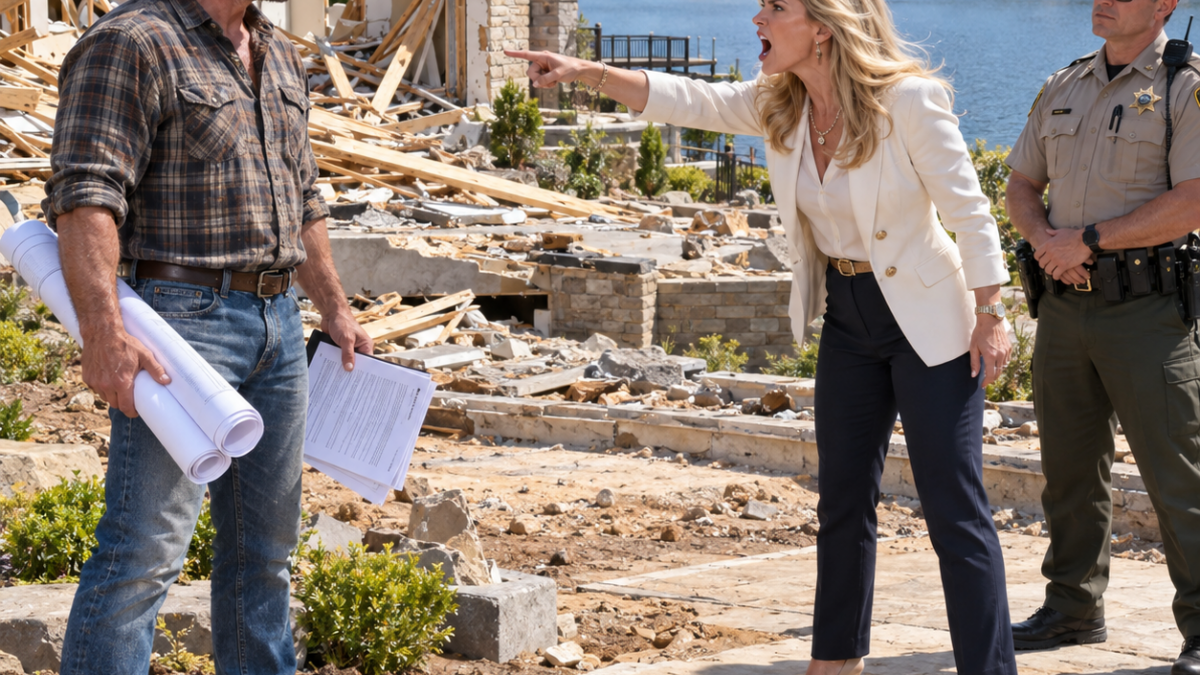
The HOA president leaned back in his leather chair and told me the two-story house sitting thirty-eight feet inside my family’s property was completely legal because the county had stamped their paperwork.
I slid my seventy-two-year chain of title across the table and asked him to show me one document with my signature giving his HOA even one square foot of my land.
He couldn’t—but the look on his face told me he still believed enough paperwork, enough money, and enough construction could eventually make ownership irrelevant.
My family had owned those eighty-seven acres since 1952.
Rolling timber.
A creek along the northern edge.
An old gravel access road on the south.
And a small house near the center of the property where generations of my family had spent weekends, fixed fences, cleared trails, and watched the surrounding farmland slowly turn into subdivisions.
When my father died three years earlier, the land passed to me.
Inside the deed folder, he had left one handwritten note.
Don’t let anyone take this from you.
I didn’t plan to.
Six years before everything happened, a developer bought roughly two hundred acres directly south of me and built Lake View Ridge—a gated development with expensive homes, landscaped entrances, a clubhouse, and an HOA that liked everything neat, controlled, and documented.
We had one boundary disagreement early on when they tried to treat my gravel access road like part of their infrastructure.
A survey settled it.
The road was mine.
They built their own entrance farther east.
I thought that was the end of the story.
Then I left town for five weeks.
Work first.
Then Oregon, where I stayed with my sister while she recovered from surgery.
When I returned in late September, I drove up my gravel road with the windows down.
Pine.
Wet earth.
Cold mountain air.
Everything felt familiar until I rounded a bend near the southern boundary.
Then I hit the brakes.
There was a house where no house should have been.
Two stories.
Fresh framing.
Tyvek wrap.
Windows already installed.
An excavator parked beside stacks of lumber.
Across the front hung a banner:
FUTURE LAKE VIEW RIDGE HOA AMENITY HOME.
I got out slowly.
Fresh orange survey stakes formed a new line thirty feet inside the boundary I had known my whole life.
A construction foreman walked toward me carrying a clipboard.
“Can I help you?”
“I own this land.”
He frowned.
“This is HOA property.”
“No, it isn’t.”
“We’ve got surveys and permits.”
I pointed toward the structure.
“That building is on my property.”
He shook his head.
“The HOA corrected the plat a few months ago. Boundary adjustment. Survey error from the original development.”
My stomach tightened.
“Who told you that?”
“HOA president. Ron Callahan.”
He handed me Ron’s business card.
I went back to my truck and pulled up the county recorder.
There it was.
A “corrected plat” filed April 12.
The boundary had been shifted west roughly thirty feet, carving about four-tenths of an acre from my property and relabeling it HOA common area.
Recorded the same day was a permanent easement supposedly granting Lake View Ridge the right to build on that strip.
The grantor was listed as:
MITCHELL RIDGE HOLDINGS LLC.
I stared at the name.
I had never owned an LLC.
My property had never belonged to an LLC.
It was titled directly in my name.
Before me, my father.
Before him, my family.
Continuous ownership since 1952.
Yet someone had invented a corporate entity, used it to sign away rights to land it had never owned, filed that document with the county, shifted a boundary on paper, and then used those filings to obtain a building permit.
I called my property attorney, David.
“Someone built a house on my land.”
Silence.
Then:
“Say that again.”
I explained.
The fake LLC.
The plat.
The easement.
The construction.
David’s voice became very calm.
“Do not touch anything tonight.”
“What should I do?”
“Photograph everything. GPS coordinates. Survey stakes. Construction. Every vehicle. Every worker. Tomorrow I’ll pull the entire county file.”
“Then what?”
“If it’s what you think it is, this isn’t a boundary mistake.”
“What is it?”
“Fraud.”
I stood at the fence as the sun dropped behind the timber.
The half-finished house cast a long shadow across land my family had owned for seventy-two years.
And for the first time, I understood exactly what my father’s note had been warning me about.
PART 2
The next morning, I was at the county offices before they unlocked the front doors.
I carried my deed.
My father’s estate papers.
The original survey.
Copies of the documents I had downloaded the night before.
The recorder’s office was on the second floor of an old brick government building that smelled like toner, old carpet, and fluorescent lighting.
A clerk named Linda helped me.
She had silver hair, reading glasses on a chain, and the patient expression of someone who had spent decades watching families discover that the most important documents they owned were usually the ones they understood least.
“I need every document recorded against this parcel in the last year.”
I gave her the parcel number.
She typed.
Waited.
Then turned the monitor slightly.
“Three recent filings.”
“What are they?”
“Corrected subdivision plat. Easement and access agreement. Building permit cross-reference.”
“Print all three.”
She did.
I spread them across a public research table beside a window.
The corrected plat was first.
Lake View Ridge Phase Two.
Filed April 12, 2024.
The original boundary appeared in one line.
Then someone had drawn a second one approximately thirty feet west.
A note described it as:
CORRECTED BOUNDARY PER SURVEY AMENDMENT.
Another note claimed the correction addressed a surveying error discovered during later development and reflected “actual use and maintenance patterns established since 2018.”
The language was polished.
Technical.
Boring enough that someone processing dozens of filings might not look twice.
But I had been walking that boundary long before Lake View Ridge existed.
There was no survey error.
The old monuments were still physically in place.
My family’s fence line had not moved.
The earth had not moved.
Only the ink had.
Then I opened the easement agreement.
Permanent.
Irrevocable.
Access.
Improvement.
Construction.
Maintenance.
Community amenities.
Guest accommodations.
Recreational facilities.
All granted by Mitchell Ridge Holdings LLC.
I stared at the signature.
Not mine.
I didn’t recognize it.
The notary stamp came from a county almost two hours away.
I carried the document back to Linda.
“Can you check whether Mitchell Ridge Holdings ever owned this parcel?”
She searched.
Then searched again.
“No.”
“Ever?”
“No.”
“What does the ownership chain show?”
She read from the screen.
Continuous family ownership.
No LLC.
No corporation.
No intervening transfer.
My family.
Then me.
“So an entity that never owned my property recorded an easement over my property.”
Linda chose her words carefully.
“The recorder’s office records properly formatted instruments. We don’t independently verify every ownership claim or signature.”
“How does something like this get through?”
“If the formatting is correct, there’s a notary stamp, and the filing fees are paid, it can be recorded.”
“That sounds insane.”
“It can create problems.”
“This is more than a problem.”
“I understand.”
“No, they built a house.”
That changed her expression.
“A house?”
“Thirty feet onto my land.”
She sat back.
“You need legal counsel.”
“I have one.”
“Good.”
She lowered her voice.
“And I would talk to permitting.”
The assessor confirmed the same thing.
My parcel had never been split.
Tax bills remained in my name.
There had been no conveyance.
No sale.
No boundary transfer.
No legitimate basis for Lake View Ridge’s corrected plat.
Then I went downstairs to permitting.
A woman named Sandra pulled up the amenity house.
Permit approved May 3.
Framing inspection passed.
Electrical rough-in started.
Plumbing approved.
She looked at the plat and easement.
“We issued the permit based on these.”
“They’re fraudulent.”
Her eyes lifted.
“The entity granting the easement never owned the land.”
She typed quickly.
“I’m flagging the permit for legal review.”
“Will construction stop?”
“I can’t personally issue a stop-work order.”
“So they can keep building?”
“Until legal review or a court says otherwise.”
“They’re building on land I own.”
“If your documents are correct, they’re proceeding at risk.”
That phrase stayed with me.
At risk.
I called David from the parking lot.
“I’ve got the county copies.”
“How bad?”
“Worse.”
“Come to my office.”
He was waiting when I arrived.
David Nguyen was methodical.
Never dramatic.
The kind of attorney who made bad facts feel manageable because he broke them into pieces small enough to examine.
He read everything.
Once.
Then again.
He wrote notes in the margins.
Finally he set down the easement.
“This is textbook fraudulent conveyance.”
“Can the HOA claim they relied on it?”
“They can claim anything.”
“Would it matter?”
“For damages and intent, yes. For ownership, no.”
He tapped my deed.
“They don’t own your land.”
Then the fake easement.
“This entity never owned your land.”
Then the corrected plat.
“You cannot redraw a boundary and magically acquire property.”
“The county recorded it.”
“A recorder’s stamp doesn’t create title.”
“They have a building permit.”
“A permit allows construction where the applicant has legal authority to build. It doesn’t grant ownership.”
“So the house?”
“Is a trespassing structure.”
I leaned back.
“Can I remove it?”
David looked at me.
“Yes.”
I thought I had misunderstood.
“Tear it down?”
“You own the property. You did not consent to the structure. There is no valid easement. As a general property remedy, an unauthorized improvement can be removed.”
He immediately raised one finger.
“But.”
“There’s always a but.”
“You do this carefully or not at all.”
“What does carefully mean?”
“Survey first. Independent professional. Confirm every corner.”
“Fine.”
“Notice.”
“Fine.”
“Licensed contractor.”
“Fine.”
“Video.”
“Fine.”
“Inventory salvageable materials.”
“Fine.”
“And I would prefer we first demand the HOA remove it voluntarily.”
“How long?”
“Fourteen days.”
“They’ll keep building.”
“They might.”
“What about an injunction?”
“We can seek one.”
“How long?”
“Emergency motion can be filed immediately. Hearing could still take days or weeks.”
“And if the judge refuses?”
“Then we reassess.”
I looked at the fake easement again.
Someone had invented an entity.
Signed my land away.
Built a house.
And the first thing the legal system was telling me was to be patient.
David saw my expression.
“I know.”
“My father told me not to let anyone take this land.”
“They haven’t taken it.”
“They’re building like they have.”
“And that is why we’re going to make the record perfect.”
That afternoon I hired Karen Delqua.
Licensed surveyor.
Boundary-dispute specialist.
She arrived Saturday morning with two crew members, GPS equipment, old plats, and enough precision gear to settle an argument nobody should have needed.
She started with the historic monuments.
Several had been placed decades earlier.
Concrete.
Iron.
Still there.
Still where the original recorded survey said they should be.
She ran the entire southern boundary.
Cross-checked bearings.
Measured from fixed reference points.
Compared the new HOA plat to the old county record.
Three hours later she stood beside me facing the amenity house.
“The nearest corner is twenty-two feet inside your property.”
“And the farthest?”
“Thirty-eight.”
“Any overlap?”
“No.”
“Any legitimate ambiguity?”
“No.”
She held up her tablet.
“The whole building is yours geographically.”
“I don’t want it.”
She smiled slightly.
“I mean it sits entirely inside your legal description.”
“What about their corrected plat?”
“Fiction.”
“Strong word.”
“Accurate word.”
She zoomed in.
“The original boundary corresponds to physical monuments and historic records. Their correction shifts the line without any underlying conveyance.”
“So somebody moved a line on paper.”
“Yes.”
“Can you certify that?”
“I already am.”
She handed me a USB drive.
Survey.
Coordinates.
Photos.
Overlay.
Legal description.
Everything.
“If this goes to court, will you testify?”
“Yes.”
Monday morning, David drafted the first demand.
Three pages.
No insults.
No accusations he couldn’t prove.
No dramatic language.
Just facts.
The corrected plat was invalid because no conveyance from the true owner supported it.
Mitchell Ridge Holdings LLC had never held title.
The purported easement was void.
The amenity structure sat entirely on my property, between twenty-two and thirty-eight feet inside the boundary.
Construction must stop.
The structure must be removed.
Fourteen days.
At HOA expense.
Attached:
Karen’s survey.
My deed.
The chain of title.
Secretary of State search showing no Mitchell Ridge Holdings LLC.
Photographs.
Ron Callahan called forty-eight hours later.
“We need to meet.”
“There’s nothing complicated here.”
“There’s obviously a misunderstanding.”
“There isn’t.”
“Tomorrow night. Clubhouse. Seven.”
“David will be there.”
“Bring whoever you want.”
That told me what kind of meeting it would be.
The Lake View Ridge clubhouse looked like every high-end development clubhouse designed to convince residents their monthly dues purchased status.
Stone façade.
Massive windows.
Leather furniture.
Artificial fireplace.
Conference room with a polished table large enough for twenty.
Ron sat at the head.
Four board members beside him.
David and I sat at the other end.
Ron wore a blazer with no tie.
He had the practiced confidence of someone who had spent years in real estate development and rarely encountered a conversation he couldn’t manage.
“Thanks for coming.”
“We didn’t come to negotiate whether the land is mine,” I said.
Ron smiled.
“Let’s start with facts.”
“Good.”
He slid a folder toward us.
“We have recorded documents showing the boundary adjustment and permanent easement. The county approved our permit. Everything has been legal.”
David opened our banker’s box.
He removed Karen’s survey.
“This survey was completed last week by a licensed professional.”
Ron didn’t pick it up.
“We have our own survey.”
“No,” David said. “You have a corrected plat built on a fabricated conveyance.”
A board member frowned.
“Fabricated?”
David slid the corporate search toward her.
“Mitchell Ridge Holdings LLC does not exist in the Secretary of State’s registry and has never held title to this property.”
She turned toward Ron.
“I thought the developer handled that.”
Ron ignored her.
“The county accepted the instrument.”
“Recording doesn’t make a void conveyance valid.”
“It creates color of title.”
David almost smiled.
“No.”
Ron leaned back.
“We’ve maintained that buffer for years.”
“Six.”
“Continuous use matters.”
“Not the way you think.”
“This is a community amenity.”
“That doesn’t create property rights.”
Ron looked at me.
“You’re going to destroy a project that benefits hundreds of people over thirty feet?”
“Thirty-eight.”
“You know what I mean.”
“I do.”
He tapped the table.
“Your land has benefited from our development. Property values increased. Roads improved. Services expanded.”
“I didn’t ask you to improve my property.”
“You’re standing in the way of progress.”
“It isn’t progress when you build on somebody else’s land.”
A younger board member spoke.
“What if we buy the strip?”
That was the first intelligent sentence of the night.
David looked at me.
I thought about it.
Not long.
“No.”
Ron’s jaw tightened.
“You won’t even discuss price?”
“You should have discussed price before construction.”
“We believed we owned it.”
“You believed a fake LLC owned it.”
“We relied on recorded documents.”
David pushed the easement toward Ron.
“Show us his signature.”
Ron stared at it.
“Show me where my client signed anything.”
Nothing.
“Show us any deed transferring the strip.”
Nothing.
“Show us where Mitchell Ridge Holdings acquired title.”
Nothing.
The woman beside Ron looked increasingly uncomfortable.
Ron stood.
“If we made a mistake, tearing down a nearly completed structure is not the answer.”
“Then remove it yourselves.”
“We’re not removing a structure that cost our community substantial money.”
“Then you’re choosing what happens next.”
He looked directly at me.
“If you touch that house, we will sue you for everything you own.”
I stood too.
“For removing your house from my land?”
“You destroy community property, you’ll find out.”
David packed our documents.
“Every day you continue building after this meeting makes your position worse.”
Ron’s face reddened.
“Our legal team is comfortable.”
“Then I suggest they read the deed.”
We left.
In the parking lot, David sat behind the wheel without starting his truck.
“He’s scared.”
“He didn’t look scared.”
“That’s why he’s dangerous.”
I stared at the clubhouse.
“What now?”
“TRO.”
“Temporary restraining order.”
“Yes.”
“File it.”
We did.
Survey.
Chain of title.
Fake LLC search.
Plat.
Easement.
Photos.
Everything.
Two weeks later, Judge Harland heard the emergency motion.
The courtroom was small.
Bad acoustics.
Too many cases.
The HOA brought an aggressive litigator named Benson.
David argued first.
Clear title.
Unauthorized construction.
Irreparable harm.
The longer the house remained and the more money the HOA invested, the more pressure existed to treat a trespass as permanent.
Benson stood.
“Your Honor, the HOA relied on recorded documents and a valid county permit.”
“Valid permit based on fraudulent property documents,” David corrected.
Benson turned toward the judge.
“Plaintiff has other remedies. Demolition is not imminent. No emergency justifies stopping a community project.”
Judge Harland flipped through the file.
Not slowly enough for my comfort.
Finally he said:
“I’m not deciding title today.”
David tried to speak.
The judge raised a hand.
“If the owner wants quiet title, file quiet title.”
“The structure is actively being completed.”
“I understand.”
“Every day—”
“I understand.”
He looked at both attorneys.
“I do not find the extraordinary circumstances necessary for emergency injunctive relief. Motion denied.”
My stomach dropped.
Benson smiled.
Ron did too.
Outside the courtroom, David folded the order.
“He didn’t rule against ownership.”
“He let them keep building.”
“He refused emergency relief.”
“Same practical result.”
“For now.”
I looked back at the courtroom doors.
“What did he mean by other remedies?”
David met my eyes.
“Exactly what we discussed.”
The HOA treated the denial like a championship.
Construction accelerated.
Extra crews arrived.
Lights stayed on after dark.
Roofing began.
Electrical rough-in.
Siding deliveries.
They were trying to finish before I could act.
Two Lake View Ridge residents quietly forwarded board emails to me.
One was from Ron.
Judge denied his little stunt. We called the bluff. Finish the amenity house. Once the building is complete, he won’t dare tear it down.
Another board member responded:
Once residents see it finished, he becomes the villain if he keeps fighting.
That email told me everything.
They weren’t relying on law anymore.
They were relying on sunk cost.
Social pressure.
The idea that once enough money had been poured into my land, I would feel morally obligated to surrender it.
I forwarded the emails to David.
His reply came twenty minutes later.
Save originals. Metadata if possible.
We strengthened our record.
Karen returned.
New photographs.
Foundation measurements.
Structure footprint.
Coordinates.
A title expert David knew reviewed everything and issued a written opinion.
The corrected plat was invalid.
The easement was void from inception.
Mitchell Ridge Holdings had no ownership interest and therefore could convey nothing.
My fee-simple title remained intact.
Then we prepared the final notice.
Ten days.
Remove the structure.
Stop all work.
Restore the property.
If not, I would arrange licensed removal.
Materials would be secured and handled responsibly.
Costs billed to Lake View Ridge.
Certified mail.
Return receipts.
Ron signed for his copy.
Day three, he emailed.
We are not responding further to internet-lawyer threats. Our position is clear. We have recorded documents, a valid county permit, and the benefit of a court order refusing to stop construction. Any attempt to damage HOA property will result in immediate legal action.
I printed it.
Filed it.
Day four.
More construction.
Day five.
Roof finished.
Day six.
Exterior siding began.
Day seven.
Interior framing.
Day eight.
Plumbing.
Day nine.
Electricians.
Day ten.
Nothing from the HOA.
Midnight passed.
At seven the next morning, a white truck came up my gravel access road.
Licensed demolition contractor.
Alvarez Demolition and Salvage.
Two additional trucks followed.
Then a small excavator.
I met the owner, Miguel Alvarez, beside the road.
He shook my hand.
“You the owner?”
“Yes.”
“Paperwork?”
I handed him copies.
Deed.
Survey.
Title opinion.
Demand letters.
Final notice.
Court order denying the TRO.
He read more carefully than some lawyers I had dealt with.
“So the judge didn’t say they own it.”
“No.”
“He just wouldn’t stop construction.”
“Correct.”
“You’re sure the whole structure is inside your property?”
“Survey says twenty-two to thirty-eight feet.”
He looked toward the house.
“You want the materials salvaged?”
“As much as possible.”
“Good lumber.”
“I know.”
“Windows?”
“Save them.”
“Doors?”
“Yes.”
“Mechanical equipment?”
“Inventory everything.”
He nodded.
“We’ll document before touching anything.”
Cameras were already recording.
David had advised me not to narrate dramatically.
No social media livestream.
No taunting.
No crowd.
No celebration.
This wasn’t entertainment.
It was removal of a trespass.
Alvarez photographed every exterior wall.
Every window.
Every room.
Appliances.
Stacks of unused lumber.
Electrical equipment.
Then the crew started.
Not with a wrecking ball.
Not some cinematic smash.
They dismantled.
Windows first.
Doors.
Exterior materials.
Roof sections.
Reusable framing.
Anything salvageable.
The excavator handled what could not be safely removed by hand.
I stood near the road.
Watching.
Not smiling.
About forty minutes later, a black SUV came through the Lake View Ridge entrance.
Fast.
Ron.
He stopped near the property line.
Jumped out.
“What the hell do you think you’re doing?”
I stayed where I was.
“Removing the structure.”
“You’re destroying HOA property!”
“It’s on my land.”
“You can’t do this!”
“I gave you ten days.”
Ron moved toward the work zone.
Alvarez stepped between him and the crew.
“Sir, stay back.”
“Get out of my way.”
“Active demolition site.”
“This is our building!”
“Sir, I don’t know whose building it is. I know who owns the ground under my equipment.”
Ron pointed at me.
“I’m calling the sheriff.”
“Please do.”
His hands shook while he dialed.
I had expected police.
That was why David had given the sheriff’s office notice that a civil property dispute might generate a call.
Two deputies arrived.
One was Sergeant Garcia.
Ron reached him first.
“He’s tearing down our amenity house!”
Garcia looked past him at the crew.
“Whose land?”
“Ours.”
“No, it’s mine,” I said.
Ron shoved his phone toward the deputy.
“Corrected plat.”
I handed Garcia Karen’s survey.
Then my deed.
Then the title opinion.
Then the notices.
He read.
Called dispatch.
Waited.
Asked:
“Any court order saying Lake View Ridge owns this land?”
Ron said, “We have a permit.”
“That wasn’t my question.”
“The judge refused to stop construction.”
“That also wasn’t my question.”
Ron’s face reddened.
“We have recorded documents.”
Garcia looked at me.
“Any court order saying you can’t remove the structure?”
“No.”
He looked back at Ron.
“This is a civil property dispute.”
“He’s destroying our property!”
Garcia’s voice stayed calm.
“Your structure is on property he claims and documents show he owns.”
“Claims?”
I almost corrected him.
He continued.
“If you disagree, get an injunction. File suit. But I’m not arresting a landowner based on your HOA saying the land belongs to you.”
Ron stared at him.
“You’re letting him bulldoze a house?”
“I’m telling you law enforcement is not going to decide a disputed title issue at the roadside.”
Alvarez lifted a hand from the work zone.
“Deputy, we need him kept outside the equipment radius.”
Garcia pointed toward Ron’s SUV.
“Stay on your side.”
Ron’s face twisted.
“You’re going to regret this.”
I said nothing.
He stayed another twenty minutes.
Watching pieces of the house come down.
Then he drove away.
By noon, the second floor was gone.
By three, most of the framing had been dismantled.
At 5:15, the site was clear except for the slab and neatly organized salvage.
Alvarez handed me the invoice.
$14,200.
I wrote the check.
Then photographed the cleared footprint.
That evening I emailed the HOA.
The message contained no triumph.
No sarcasm.
Three sentences.
The unauthorized structure has been removed after expiration of the final notice period.
Removal costs total $14,200.
Invoice attached. Payment due within thirty days.
Three days later, a courier knocked on my door.
Lake View Ridge Homeowners Association versus Mitchell.
Complaint.
Damages.
Injunctive relief.
Declaratory judgment.
Destruction of HOA property.
Interference with community interests.
Emotional distress.
They wanted $250,000.
I carried it to David.
He read the first page.
Then the second.
By page six, he was smiling.
“They actually sued you.”
“For exactly what Ron threatened.”
“They sued the landowner for removing a structure they built on his land using an easement from an entity that doesn’t exist.”
“That sounds good when you say it like that.”
“It’s going to sound even better when I say it to a judge.”
“What do they want?”
“Quarter million dollars.”
“For a house they weren’t allowed to build.”
“Correct.”
“And they want the court to declare their rights.”
“Yes.”
I leaned back.
“Good.”
David looked up.
“Good?”
“They brought the title issue into court.”
He smiled.
“You’re learning.”
This time we didn’t ask the court merely to stop construction.
We counterclaimed.
Quiet title.
Trespass.
Slander of title.
Fraud.
Abuse of process.
Removal costs.
Attorney fees.
And a declaration that the corrected plat and easement were null and void.
David made one decision immediately.
“We’re not letting this become a debate about whether demolition was mean.”
“What does it become?”
“One question.”
He tapped my deed.
“Who owned the land?”
Discovery began.
And discovery is where Lake View Ridge’s story stopped being a “mistake.”
At first, Ron insisted the board had relied on paperwork prepared by earlier people.
Developer.
Surveyor.
Prior officers.
Everybody except Ron.
Fine.
Then David requested emails.
Not summaries.
Not meeting minutes.
Original communications.
Design discussions.
Boundary correspondence.
Amenity planning.
Plat corrections.
The HOA’s attorney fought the requests.
Privilege.
Burden.
Irrelevance.
The new judge assigned to the case, Judge Marin, had no patience for it.
“This is a title dispute involving an allegedly fabricated conveyance,” she said at a case-management conference. “Communications regarding creation of that conveyance are relevant.”
Production ordered.
Weeks later, David called me.
“Come in.”
“What happened?”
“Emails.”
I arrived at his office twenty minutes later.
He had pages spread across the conference table.
The first was from a development consultant named Kyle Forester to Linda Marsh, a prior Lake View Ridge board member.
They were discussing amenity options.
Option one:
Redesign and move the building east.
Problem:
Lost view.
Concept weakened.
Option two:
Approach the neighbor.
Buy or lease the strip.
Risk:
Neighbor might say no or demand too much.
Option three:
File a corrected plat claiming a survey error.
Adjust the boundary on paper.
Proceed.
If the neighbor noticed, negotiate later—after the building was already standing and removal became less likely.
I read it again.
“They wrote this?”
“Yes.”
Two days later, Linda answered.
Use option three.
She wrote that I had not been around much.
She believed my father had recently died and I was occupied with personal matters.
File quietly.
Move forward.
If I complained later, they would “offer him something to make it go away.”
I stared at that sentence.
My father’s death had been part of their calculation.
Not compassion.
Opportunity.
Something cold settled in me.
“They knew.”
“Yes.”
“There’s no mistake anymore.”
“No.”
David handed me another email.
Kyle to Linda.
The corrected plat had been drafted.
But there was a problem.
They still needed an actual conveyance or easement from me.
Someone would need my signature.
No one had even seriously approached me.
Kyle wrote that an attorney had suggested they could create a shell entity and execute documents as though that entity had authority.
Not clean.
But enough to “paper the file.”
Linda replied:
Do what you need to do.
David slid the next message over.
Kyle emailed attorney Richard Holt.
Could he draft an easement and create an LLC as grantor?
Holt’s answer was astonishing.
He warned them.
Explicitly.
If I challenged the paperwork, it would fail.
The instruments would not hold because the entity did not own the land.
But if nobody objected?
It might work.
Kyle replied:
Draft it.
Mitchell Ridge Holdings LLC appeared on the easement shortly afterward.
Never registered.
Never owner.
Never legitimate.
A phantom entity existing only long enough to give away land it did not own.
I sat there with the pages in front of me.
For weeks Ron had said:
County approved it.
Recorded documents.
Valid permit.
Above board.
Now the board’s own records showed the opposite.
They knew the line was wrong.
Considered asking me.
Decided asking was risky.
Moved the line anyway.
Then invented paperwork because the corrected plat alone wasn’t enough.
“They used my last name,” I said.
David nodded.
“Mitchell Ridge.”
“So anyone glancing at it might assume it was mine.”
“That would be my interpretation.”
I read Linda’s email again.
I think his dad just passed.
He’s dealing with that.
File quietly.
I stopped feeling angry.
Anger became something cleaner.
Resolve.
“They sued me.”
“Yes.”
“After all this.”
“Yes.”
“What happens now?”
David smiled without humor.
“Now they answer questions under oath.”
Kyle Forester’s deposition came first.
Forties.
Sunburned.
Uncomfortable in a suit.
At the beginning he tried to treat everything as ordinary development administration.
David did not argue.
He simply showed emails.
Date.
Sender.
Recipient.
Words.
One after another.
“Did you know the original boundary placed the proposed building outside HOA property?”
“We knew there was overlap.”
“Did you know the neighbor owned the overlap?”
“We believed there were survey issues.”
David displayed the email.
Option two: approach the neighbor and buy or lease the strip.
“If you believed the HOA already owned the land, why propose purchasing it from my client?”
Silence.
“Mr. Forester?”
“Because there was uncertainty.”
“Your next option was to move the boundary on paper.”
“Correct.”
“Without a deed.”
He shifted.
“The corrected plat addressed what we understood to be—”
David showed the next email.
We need a conveyance or easement from Mitchell to make it legit.
Kyle stopped.
David waited.
“Your words?”
“Yes.”
“So you knew the corrected plat alone was not legitimate.”
“My wording was informal.”
“Did you contact my client?”
“No.”
“Did anyone obtain his signature?”
“No.”
“Did you create Mitchell Ridge Holdings LLC?”
Kyle looked toward his lawyer.
Then answered.
“My attorney prepared the entity documentation.”
“For what purpose?”
“To execute the easement.”
“Did Mitchell Ridge Holdings own the land?”
“No.”
“Had it ever owned the land?”
“No.”
“Did it have authority from my client?”
“No.”
“Then why use it as grantor?”
Kyle’s attorney objected.
David waited until the objection ended.
Kyle answered anyway.
“To get the easement filed.”
The room went silent.
That sentence ended any remaining pretense.
Linda Marsh’s deposition was worse.
She had resigned from the board before Ron became president and moved out of state.
David tracked her down.
Remote deposition.
She confirmed the discussions.
The decision not to approach me.
The plat strategy.
The shell entity.
The idea that after construction began I would be more likely to settle than demand removal.
David asked:
“Did you understand the easement was executed by an entity that did not own the property?”
“We were trying to move the project forward.”
“That wasn’t my question.”
“Yes.”
“Did you understand the property owner had not agreed?”
“Yes.”
“Did you understand asking him was an available option?”
“Yes.”
“Why didn’t you?”
She became defensive.
“We thought he might say no.”
“So rather than risk hearing no, you created paperwork that said yes?”
“We were trying to build something for the community.”
“Easier than permission?”
She stared at the screen.
Finally:
“Yes.”
Ron’s deposition came last.
His strategy was different.
Prior board.
Prior consultant.
Prior lawyer.
He inherited the documents.
He believed them valid.
He had acted in good faith.
That might have protected him partially—until David moved to what happened after I returned.
“Mr. Callahan, when did my client first tell you the structure was on his property?”
Ron gave the date.
“Did he provide a licensed survey?”
“Yes.”
“Did that survey place the entire structure between twenty-two and thirty-eight feet inside his boundary?”
“It was his survey.”
“Did you obtain an independent survey after receiving it?”
“No.”
“Did you pull his deed?”
“No.”
“Did you verify Mitchell Ridge Holdings?”
“No.”
“Did you ask whether that entity existed?”
“No.”
“Did you ask for a conveyance from my client?”
“No.”
“Did you ask to see his signature?”
“No.”
Ron’s jaw tightened.
“We had recorded documents.”
“Did you ask the attorney who supposedly prepared those documents whether the grantor owned the property?”
“No.”
“After receiving written notice of the fraud allegation, did you stop construction?”
“No.”
“You accelerated construction, correct?”
“We continued our project.”
David displayed Ron’s email.
Judge denied his little stunt. We called the bluff. Get the amenity finished and online and he won’t dare touch it.
Ron stared at the screen.
“Your email?”
“Yes.”
“So after a licensed survey showed the structure on my client’s property, you decided to finish construction because you believed social pressure would make him less likely to exercise his property rights.”
“That’s not what I meant.”
“What did you mean by ‘he won’t dare touch it’?”
Silence.
David let it sit.
Then:
“Did my client send a final ten-day removal notice?”
“Yes.”
“Did you remove the building?”
“No.”
“Did you stop construction?”
“No.”
“Did you negotiate?”
“We offered to discuss solutions.”
“After building.”
“We believed the HOA had rights.”
“Based on documents you never verified?”
Ron didn’t answer.
By April, expert testimony was complete.
Karen Delqua explained the survey.
She brought historic plats.
Monument records.
GPS mapping.
Photographs.
She showed how the original boundary followed markers that remained in place.
No missing monument.
No historic error.
No topographic confusion.
The so-called correction simply shifted a line thirty feet west.
“A legitimate plat correction fixes a mistake,” she testified.
“This created a new boundary.”
Benson, the HOA’s attorney, asked:
“Could surveys differ?”
“Of course.”
“Could historical measurements contain inaccuracies?”
“Of course.”
“Then isn’t it possible Lake View Ridge corrected an old mistake?”
Karen didn’t hesitate.
“No.”
“Why are you so certain?”
“Because the original monuments exist.”
She displayed photographs.
Concrete.
Iron pins.
Old references.
“They agree with the original recorded legal description. The corrected plat does not.”
“Could the boundary have been modified later?”
“Yes. By conveyance.”
“Was it?”
“No.”
“How do you know?”
“Because no deed exists.”
The title expert followed.
Thirty years in title insurance.
He explained something so simple that the courtroom became almost absurd.
An easement can only be granted by somebody with legal rights to the property.
If I sign a document granting you an easement over the courthouse, nothing happens.
I don’t own the courthouse.
My signature cannot create rights I never possessed.
Mitchell Ridge Holdings was the same.
No title.
No ownership.
No authority.
Therefore:
No easement.
Benson tried one final point.
“But it was recorded.”
The expert smiled faintly.
“Recording a void document does not make it valid.”
“So what does recording do?”
“Makes it a recorded void document.”
I looked at David.
He didn’t smile.
But I saw his pen stop moving.
The bench trial was scheduled for late May.
One day.
No jury.
Judge Marin.
I barely slept the night before.
Not because I doubted the deed.
Because I had spent months living with somebody else’s mistake—or more accurately, somebody else’s plan—occupying the center of my life.
Property disputes are strange.
The physical issue might occupy four-tenths of an acre.
The mental issue can occupy everything.
Coffee in the morning.
Driving.
Sleep.
Conversations with family.
Every time I looked toward the southern ridge, I saw a house that was no longer there and remembered the argument that still was.
Before leaving for court, I opened my father’s deed folder.
His note remained inside.
Don’t let anyone take this from you.
I folded it.
Put it in my wallet.
Not evidence.
Just company.
Judge Marin began at nine.
David’s opening was short.
“This case is not complicated because plaintiff has filed many documents. The issue is whether any of those documents came from the true owner.”
He pointed toward me.
“They did not.”
Benson framed the case differently.
A community association had reasonably relied on recorded public instruments and county permits.
My demolition, he said, was disproportionate.
Destructive.
Self-help taken too far.
He called it “vigilante property enforcement.”
Judge Marin interrupted.
“Counsel, if the structure was a trespass, what duty did defendant have to preserve it?”
Benson responded that the correct remedy would have been litigation.
“The defendant did litigate.”
“After destruction.”
“He sought emergency relief first.”
“Yes.”
“The court declined to issue the TRO.”
“Yes.”
“Did that denial adjudicate ownership?”
Benson paused.
“No.”
“Then don’t argue it as though it did.”
That set the tone.
Karen testified.
The title expert testified.
The emails came in.
Kyle’s deposition excerpts.
Linda’s admissions.
Ron’s email.
The fake entity.
The final notice.
The demolition photographs.
Sergeant Garcia’s report.
The $14,200 invoice.
Ron testified live.
He tried again to separate himself from the earlier fraud.
“I inherited the project.”
David approached.
“After inheriting it, you received evidence the house was on defendant’s property.”
“Yes.”
“And kept building.”
“We had a county permit.”
“Based on the challenged easement.”
“Yes.”
“Did you verify that easement?”
“I relied on counsel.”
“Which counsel?”
Ron named someone.
“Did that lawyer issue a written title opinion?”
“No.”
“Did anyone?”
“Not at that time.”
“Did you receive defendant’s title expert report before demolition?”
“Yes.”
“What did it say?”
Ron hesitated.
“That the easement was invalid.”
“Did you stop construction?”
“No.”
“Why?”
“We disagreed.”
“Based on what evidence?”
Silence.
David returned to his table.
“No further questions.”
Judge Marin took the case under advisement.
No dramatic ruling from the bench.
No instant victory.
We went home.
One week later, David called.
“Come over.”
“Email it.”
“No.”
“Why?”
“You want to read this on paper.”
I drove to his office.
He handed me twelve single-spaced pages.
Findings of fact.
Conclusions of law.
Order.
Page one:
My family had owned the eighty-seven-acre parcel continuously since 1952.
No valid conveyance transferred the disputed four-tenths of an acre to Lake View Ridge.
Mitchell Ridge Holdings LLC had never held title.
The entity did not exist as a registered property owner.
Its purported easement conveyed no rights.
The corrected plat had no underlying conveyance and was invalid.
Page six:
The amenity house had been entirely inside my boundary.
Twenty-two to thirty-eight feet.
Lake View Ridge received written notice.
Ten-day final opportunity to remove.
Ignored.
Continued construction.
Page eight:
The HOA’s claims for destruction of property, emotional distress, injunctive relief, and damages were dismissed with prejudice.
Then the sentence I read three times:
Defendant owed no duty to preserve a structure unlawfully placed upon his property.
Trespass.
Confirmed.
Quiet title.
Granted.
Corrected plat.
Void.
Easement.
Void.
County recorder ordered to note both instruments as null and void by court judgment.
Then abuse of process.
Judge Marin wrote that Lake View Ridge, through its agents and prior officials, had used the county recording process to expand its claimed footprint without lawful authority.
The language became even stronger near the end.
Plaintiff’s conduct undermined the integrity of property records and forced the true owner to defend title that had been clear for decades.
Attorney fees awarded:
$52,400.
Removal costs:
$14,200.
Total judgment:
$66,600.
I stared at the number.
“They owe me?”
“Yes.”
“They sued me for $250,000.”
“Yes.”
“And now they owe sixty-six six.”
“Yes.”
David smiled.
“That’s not my favorite part.”
“What is?”
He pointed to the final paragraph.
I read.
Property rights are foundational.
An entity cannot file false instruments, build on land it does not own, then sue the true owner for protecting his property.
Defendant acted within his rights.
Plaintiff did not.
I sat back.
For months, Ron had tried to make the fight about everything except ownership.
Community.
Progress.
Property values.
County permits.
Recorded documents.
Sunk costs.
My attitude.
My demolition.
My refusal to negotiate after the fact.
Judge Marin cut through all of it.
Who owned the land?
Me.
That answered everything.
Ron called an emergency board meeting two days later.
Someone recorded it and sent David the audio.
His voice sounded different.
Not confident.
Strained.
“We appeal.”
One board member immediately objected.
“Why?”
“Because the judge is wrong.”
“She said we filed false documents.”
“We relied on those documents.”
“She also said the LLC didn’t exist.”
“A higher court could interpret—”
“Interpret what? An entity either owns land or doesn’t.”
Ron raised his voice.
“We cannot allow one judge to destroy years of work.”
Another board member spoke.
“If we appeal and lose, we pay more attorney fees.”
“We won’t lose.”
“We already lost.”
Silence.
Then someone said quietly:
“Ron, we’re done.”
“I’m not.”
But he was.
The thirty-day appeal deadline passed.
No appeal.
The judgment became final.
Three weeks later, Lake View Ridge mailed a check.
$66,600.
Signed by the treasurer.
No letter.
No apology.
No explanation.
Just payment.
Ron resigned the following month.
The corrected plat and fake easement were formally marked in the county record:
DECLARED NULL AND VOID BY ORDER OF COURT.
Case number.
Judge.
Date.
Permanent.
I drove to the recorder’s office myself.
Linda was still behind the desk.
She recognized me.
“How’d it end?”
I handed her the order.
She read the first page.
Then looked up.
“Well.”
“That’s one word.”
She turned to the final section.
“Fees too.”
“Yes.”
“And they sued you?”
“For $250,000.”
She shook her head.
“I remember that easement.”
“So do I.”
The county record now told the truth.
That mattered almost as much as the judgment.
Paperwork had created the appearance of theft.
Paperwork would now prevent it from happening again.
In June, I hired a contractor to remove the remaining concrete slab.
That was the last physical trace of the amenity house.
The excavator broke it carefully.
Chunks loaded into trucks.
Haul away.
Then topsoil.
Grading.
Seed.
By July, green shoots began appearing.
By early fall, the clearing no longer looked like a demolition site.
It looked like land again.
Karen returned to mark the boundary permanently.
Concrete monuments.
Iron pins.
Regular intervals along the southern line.
Not decorative.
Not threatening.
Precise.
I had her survey recorded and linked to the court order.
Future buyer.
Future HOA president.
Future developer.
Future contractor.
Nobody would ever be able to say they didn’t know where Lake View Ridge ended.
The salvaged materials from the amenity house sat near my barn for a few weeks.
Stacks of studs.
Joists.
Plywood.
Windows.
Doors.
Roofing.
I had a choice.
I could sell everything.
Recover more money.
I didn’t.
Most of the lumber went to a nonprofit two counties away that built housing for low-income families.
They sent a truck.
Volunteers loaded the material.
One young man looked at the stack.
“This all came from one house?”
“Yes.”
“What happened?”
“Long story.”
He laughed.
“Must’ve been.”
The windows and doors went to a salvage yard.
Roofing went to a local contractor at cost.
Nothing useful went to waste.
I liked that.
The HOA had wanted to create a guest amenity for an upscale development using land they stole.
Instead, much of the lumber ended up helping families who actually needed homes.
That felt more satisfying than smashing it into a landfill.
The gravel road remained mine.
I maintained it the way my family always had.
It gave me access to the creek.
Fence line.
Timber.
No HOA signs.
No amenity banners.
No contractors assuming they belonged there.
Just private land doing what private land had done for generations.
A month after the judgment became final, I wrote every Lake View Ridge household.
Not because they were legally entitled to an explanation.
Because many residents had been lied to.
The letter was short.
The court has confirmed that the eighty-seven-acre parcel bordering Lake View Ridge is privately owned and has been continuously held by my family since 1952.
The corrected plat and easement previously filed by the HOA were declared void.
The boundary is now permanently marked.
Please respect it.
Then one more paragraph.
If residents wanted limited recreational access to the creek, they could ask.
In writing.
I would consider reasonable requests.
No new structures.
No improvements.
No assumption of ownership.
No implied rights.
Permission only.
David asked why I included that.
“After everything?”
“The residents didn’t create the fake LLC.”
“Some supported Ron.”
“Some didn’t know.”
“You’re more forgiving than I am.”
“I’m not forgiving the fraud.”
“Then what are you doing?”
“Being a neighbor.”
The first request came from a retired teacher named Susan.
She lived near the northern edge of Lake View Ridge.
She called.
Her voice sounded nervous.
“There’s an old walking trail.”
“I know.”
“Kids have used it to get to the creek for years.”
“I know that too.”
“I understand if you want everyone off now.”
“Do you want access?”
“Yes.”
“For walking?”
“Yes.”
“No vehicles?”
“No.”
“No structures?”
“No.”
“No improvements without permission?”
“Of course.”
I met her at the boundary.
We walked the route together.
Narrow trail.
No problem.
I wrote a one-page permission agreement.
Revocable recreational access.
No ownership interest.
No easement.
No improvements.
Liability terms.
Plain language.
Susan read it.
Then looked at me.
“I was afraid you’d fence everything.”
“I might fence some areas.”
Her face fell.
“For cattle or land management.”
“Oh.”
“I’m not doing it to punish you.”
She nodded.
Then her eyes filled.
“I’m sorry.”
“You didn’t build the house.”
“I believed Ron.”
“A lot of people did.”
“He told us you were trying to steal HOA property.”
“I know.”
“He said you were destroying the community.”
“I know.”
“I feel stupid.”
“Don’t.”
She wiped her eyes.
“You didn’t have access to the board emails I did.”
That seemed to help.
She signed.
I signed.
We shook hands.
Then came two more trail requests.
Same agreement.
Same terms.
That was the difference between permission and theft.
Ask.
Maybe the answer is yes.
Pretend you already own it?
The answer becomes much simpler.
Over the summer, Lake View Ridge changed.
Not physically.
The houses remained.
Clubhouse remained.
Stone entrance remained.
But the board changed.
Ron gone.
Two other members stepped down.
Residents demanded financial transparency.
Legal review procedures were strengthened.
Boundary decisions required independent title verification.
One resident joked to me that the HOA had added a new unofficial rule.
“Before building something, confirm you own the dirt.”
I told him that seemed like a strong policy.
Eventually a group of residents created something called the Lake View Neighbors Group.
Not an HOA.
No fines.
No covenants.
No enforcement.
Just an email list.
Potlucks.
Snow removal coordination.
Neighborhood watch.
Entrance maintenance.
A man named Greg and a woman named Patricia helped organize it.
When Patricia invited me to the first gathering, I almost declined.
I had spent months seeing Lake View Ridge residents mostly through lawyers and property-line disputes.
But something in the invitation felt different.
No demands.
No title.
No “community authority.”
Just:
You’re our neighbor. Come if you want.
So I went.
Backyard.
Warm August evening.
About twenty people.
Food on folding tables.
Kids running through the grass.
People looked at me with the cautious politeness usually reserved for someone who has recently sued your homeowners association and torn down its building.
Patricia stood.
“This is our neighbor to the north.”
That was all.
Not enemy.
Not disputed owner.
Neighbor.
Then she added:
“And he was more patient with us than some of us probably deserved.”
A few people laughed awkwardly.
I stood.
“I’m not joining another HOA.”
This time the laughter was real.
“But I’m happy to be a good neighbor.”
Greg raised his hand.
“What does that mean?”
“If you need something involving my land, ask.”
“Access?”
“Ask.”
“Creek trail?”
“Ask.”
“Emergency use?”
“Ask.”
“Boundary question?”
“Ask.”
Patricia smiled.
“That easy?”
“That easy.”
Someone near the fence called out:
“What if somebody builds another house on your land?”
More laughter.
I waited.
Then said:
“I’ll bring the deed.”
The laughter got louder.
“And the survey.”
Even Greg laughed.
“And probably David.”
That broke whatever tension remained.
I stayed two hours.
Longer than I intended.
Nobody discussed lawsuits after that.
Mostly they talked about snow plowing and mailboxes.
Normal neighborhood problems.
Driving home that night, I stopped near the restored clearing.
Moonlight fell through the trees.
No house.
No construction lights.
No banner.
No stakes showing a fake boundary.
Just grass.
I got out.
Walked to one of Karen’s new monuments.
Concrete.
Iron pin.
My boundary.
I put my hand on it.
My father’s note came back to me.
Don’t let anyone take this from you.
I wondered what he would have thought.
Probably that I spent too much on lawyers.
Definitely that I should have noticed the construction sooner.
Maybe he would have been angry that I demolished the building.
Maybe not.
He had believed in ownership in an old-fashioned way.
You cared for land.
Paid taxes.
Fixed fences.
Kept promises.
You didn’t take what belonged to somebody else.
The strange part was that I never wanted the fight.
Never wanted to be known as the guy who tore down an HOA house.
Never wanted neighbors watching deputies stand beside an excavator while Ron screamed from the road.
Never wanted court.
Depositions.
Fraud exhibits.
Recorded emails discussing my father’s death like it was a business opportunity.
They could have avoided everything.
Move the building thirty feet east.
Ask to buy the strip.
Request an easement.
Call me.
Knock on my door.
Write a letter.
Anything.
Instead, the planning documents had literally listed asking me as the risky option.
Because I might say no.
That sentence stayed with me longer than anything Ron said.
They believed another person’s right to say no was an obstacle to be engineered around.
That was the real problem.
Not the house.
Not the plat.
Not the LLC.
The belief behind all of it.
We want this.
He may refuse.
So don’t ask.
Create a paper trail.
Build fast.
Make removal expensive.
Then negotiate after the fact.
That is how theft dresses when it wears a blazer.
Forms.
Notary stamps.
Board meetings.
Permit numbers.
No crowbar.
No ski mask.
Just a bet that process can manufacture legitimacy before the owner notices.
And for a while, it worked.
The recorder accepted the document.
Permitting accepted the easement.
Inspectors approved framing.
Electrical.
Plumbing.
Workers built in good faith because somebody upstream told them the paperwork was clean.
That was what made the scheme dangerous.
Once a false document enters a system, honest people start relying on it.
The contractor wasn’t trying to steal my land.
The building inspector wasn’t.
Linda at the recorder wasn’t.
Sandra in permitting wasn’t.
The lie moved through legitimate institutions wearing a stamp.
By the time I returned, the structure looked official enough to make me appear unreasonable for objecting.
That was the trap.
Ron leaned on it.
“We have a permit.”
County approval.
Recorded plat.
Valid easement.
Progress.
Community investment.
Words designed to make ownership look like a technicality.
But ownership was the one thing none of their papers could manufacture.
The following spring, I found an old photograph while cleaning my father’s house.
Black and white.
My family standing near the southern field.
No Lake View Ridge.
No clubhouse.
No luxury homes.
Just timber.
Fence.
Grass.
On the back, someone had written 1956.
I carried it outside.
Found roughly the same spot.
Held the photograph up.
The hillside still matched.
Some trees gone.
Others taller.
Development visible beyond the boundary.
The amenity house would have stood just outside the old photograph’s frame.
Almost.
I thought about seventy-two years.
People hear that number and think ownership is abstract.
A deed sitting somewhere.
For me it meant generations.
Fence posts replaced.
Cattle moved.
Storm damage cleared.
Taxes paid.
Creek trails maintained.
Funerals.
Birthdays.
Weekends.
My father teaching me how to sharpen a chainsaw.
My grandfather correcting me when I closed a gate wrong.
Things no corrected plat could capture.
That didn’t make my ownership legally stronger than anyone else’s.
A person who bought yesterday deserves the same protection.
But it made Ron’s “technicality” insult particularly hard to swallow.
Technicality?
My family’s entire relationship with that ground reduced to an inconvenient line on a development plan?
No.
I folded the photograph.
Put it in the deed folder beside my father’s note.
Years from now, someone else may own those eighty-seven acres.
Maybe family.
Maybe not.
Whoever does will inherit a much cleaner record than I did.
The court judgment.
Karen’s recorded survey.
Void notation on the fake plat.
Void notation on the easement.
Permanent monuments.
No ambiguity.
That may be the most useful thing I accomplished.
Winning a lawsuit feels satisfying.
Preventing the next lawsuit is better.
A year after the judgment, I ran into Ron.
Hardware store.
Of all places.
I was buying fencing staples.
He was near the contractor desk.
We saw each other.
Both stopped.
He looked older.
Not dramatically.
Just tired.
For several seconds, neither spoke.
Then Ron said:
“You got what you wanted.”
I shifted the box in my hands.
“I wanted you not to build on my land.”
“You know what I mean.”
“No.”
“You won.”
“This wasn’t a football game.”
He gave a bitter laugh.
“Easy for you to say.”
“Ron, you sued me for a quarter million dollars.”
“We believed you went too far.”
“You knew about the survey before demolition.”
“I didn’t know about those old emails.”
“Fine.”
That was fair.
The worst planning emails predated his presidency.
“But after my survey?”
He looked away.
“You kept building.”
“We had hundreds of thousands invested.”
“Not my decision.”
“I was trying to protect the community.”
“By gambling more community money.”
He stared at me.
“I thought you’d settle.”
There it was.
Not an excuse.
The truth.
“So did everyone before you.”
His face tightened.
“I didn’t create the fake company.”
“I know.”
“I didn’t file the plat.”
“I know.”
“I inherited a mess.”
“Yes.”
“And you made sure I paid for it.”
“No.”
I looked at him.
“You had a chance to stop.”
“When?”
“The night David showed you the survey.”
Ron said nothing.
“You had another chance after the title opinion.”
Nothing.
“Another after the final notice.”
Nothing.
“Another after you received the lawsuit evidence.”
I shook my head.
“You didn’t create the hole, Ron. But you kept digging.”
He looked toward the parking lot.
Then quietly:
“I should’ve stopped construction.”
“Yes.”
It was the closest thing to an apology I would ever get.
I didn’t need more.
We went opposite directions.
That evening, I drove the gravel road from south to north.
The same route I had used for years.
Passed the restored clearing.
Grass shoulder-high in some places.
You could barely identify where the building once sat.
Nature has a way of making human certainty look temporary.
Foundation?
Gone.
Framing?
Gone.
Fake property line?
Gone.
Ron’s emails?
Archived.
Court order?
Permanent.
The irony wasn’t lost on me.
They thought a house would make their claim difficult to reverse.
They believed physical construction would eventually overpower legal title.
In the end, the house was the temporary part.
The deed remained.
A couple years later, Susan called.
The retired teacher with the creek access agreement.
“I need to ask something.”
“Go ahead.”
“A tree came down across the trail.”
“Where?”
She described it.
“I’ll look.”
“We can move it.”
“No chainsaws on my property unless we agree first.”
“Understood.”
There was no defensiveness.
No outrage.
No claims of community rights.
Just respect.
I cleared the tree that weekend.
Four residents helped roll sections aside.
Afterward, Susan brought sandwiches.
We ate beside the creek.
One of the residents asked:
“Do you regret letting us use the trail?”
“No.”
“After everything?”
“You asked.”
They laughed.
But it was true.
That single difference changed everything.
Permission creates relationships.
Assumption destroys them.
Lake View Ridge had spent thousands trying to manufacture rights they might have obtained simply by approaching me honestly.
Maybe I would have allowed a guest house somewhere else.
Maybe I would have sold the four-tenths acre.
Maybe I would have offered a long-term lease.
Maybe I would have said no.
They were afraid of that possibility.
That was why they never asked.
But property rights mean the owner gets to make that choice.
Not a board.
Not a developer.
Not a consultant.
Not a forged LLC.
Me.
One autumn afternoon, David came out to the property.
He had never really seen it outside the disputed area.
We walked the ridge.
He looked toward Lake View Ridge.
“Peaceful.”
“Usually.”
“You ever think about selling?”
“No.”
“Never?”
“Ask me when I’m ninety.”
He laughed.
Then we reached the restored clearing.
He stood there.
“This is it?”
“This is it.”
“I expected it to look more dramatic.”
“That’s the point.”
No scar.
No foundation.
No construction.
Grass.
Young trees.
“Hard to believe a $250,000 lawsuit came from this little piece of ground.”
“Four-tenths acre.”
“Thirty-eight feet.”
“Maximum.”
He shook his head.
“Clients always say property disputes aren’t about money.”
“They aren’t.”
“They’re usually about pride.”
“This one wasn’t.”
“No?”
I looked south.
“It was about no.”
David nodded slowly.
“They didn’t want you to have the power to say no.”
“Exactly.”
We stood there quietly.
Then he said:
“You know what my favorite moment was?”
“Judgment?”
“No.”
“Title expert?”
“No.”
“Kyle admitting the shell company?”
“Close.”
“What?”
“Benson asking whether recording a void document made it valid.”
I smiled.
“And Raymond saying…”
“‘It makes it a recorded void document.’”
We both laughed.
Months of conflict reduced to one sentence.
You cannot stamp truth into a lie.
Eventually the Lake View Neighbors Group became normal.
That meant it became boring.
A success.
Snow-plow coordination.
Lost dogs.
Road hazards.
A yearly cookout.
One fundraiser for a family whose house burned.
I donated lumber.
Not from the amenity house this time.
People stopped looking at me as the man who demolished something.
New families moved in who had never met Ron.
Never heard of Mitchell Ridge Holdings.
Never saw the construction banner.
They only knew that the northern boundary belonged to a neighbor and that if they wanted creek access, they asked.
That was enough.
One summer, a new resident emailed.
Subject:
Question about property line.
Perfect.
Not demand.
Not notice.
Question.
She had bought a home near the northwest corner and was planning a garden fence.
Wanted to confirm she wouldn’t accidentally cross onto my parcel.
I sent Karen’s survey.
Then met her at the monument.
We measured.
Her planned fence stayed eighteen inches inside Lake View Ridge land.
“Thank you,” she said.
“No problem.”
“I heard there was some kind of huge dispute years ago.”
“There was.”
“About this line?”
“Thirty feet of it.”
She looked confused.
“That’s it?”
“Thirty feet can become expensive.”
She laughed.
Then she said something that pleased me more than she probably realized.
“I figured I should ask before building.”
“Yes.”
“You look like you really appreciate that.”
“You have no idea.”
She built her fence.
On her land.
Nobody sued anybody.
That was progress.
Sometimes, on quiet evenings, I still read my father’s note.
Not every week.
Not dramatically.
It stays in the deed folder.
The paper has softened at the folds.
Don’t let anyone take this from you.
When he wrote it, I doubt he imagined an HOA.
Fake company.
Fabricated easement.
Amenity house.
Excavator.
Lawsuit.
Maybe he was thinking generally.
Land attracts pressure.
Development.
Roads.
Utilities.
Neighbors.
Taxes.
Family arguments.
He knew enough life to understand that ownership is easiest to lose when you assume everyone else will respect it automatically.
I did protect it.
But I also learned his note did not mean:
Fight everyone.
It meant:
Pay attention.
Know the boundary.
Keep records.
Don’t sign what you don’t understand.
Ask questions when something looks wrong.
And when necessary, stand firm.
That is different from living angry.
For a while after court, I was angry.
Every truck from Lake View Ridge caught my attention.
Every unfamiliar vehicle near the gravel road made me look twice.
I kept cameras running.
Checked county filings monthly.
Searched my parcel number for new recordings.
David told me that level of vigilance was understandable.
Eventually, it became exhausting.
Then one morning I realized I hadn’t checked the recorder in two months.
Nothing happened.
Another month.
Nothing.
Boundary remained.
Trail users asked permission.
Neighbors waved.
Life returned.
That was the real ending.
Not the judgment.
Not Ron’s resignation.
Not the $66,600 check.
Peace.
The kind you appreciate only after somebody spends months convincing you that you may need to defend your own ground forever.
One fall morning, I walked down to the southern monument.
Fog.
Wet grass.
Lake View Ridge roofs visible through the trees.
I could hear a leaf blower somewhere.
A dog barking.
Normal suburb sounds.
I crossed to the spot where the amenity house had stood.
No trace.
I thought about demolition day.
Alvarez’s machines.
Ron shouting.
Sheriff deputies.
Cameras.
My own stomach tight even though every document said I was right.
I hadn’t enjoyed that morning.
That surprises people.
They hear “I tore down the HOA’s house” and imagine revenge.
Adrenaline.
Victory.
Standing beside an excavator laughing while boards splinter.
It wasn’t like that.
Demolishing a structure feels final.
Even when it should never have existed.
Workers had spent time building it.
Materials had value.
Money had been spent.
The waste bothered me.
That’s why I salvaged what I could.
That’s why donating the lumber mattered.
I wanted something useful to survive their bad decision.
A nonprofit later sent me a photograph.
Small house.
Simple siding.
Family standing on the porch.
Part of the framing had come from Lake View Ridge’s amenity structure.
I kept that photograph too.
Not because I wanted a trophy.
Because it changed the meaning of the material.
The HOA tried to use that lumber to occupy land without permission.
Eventually it helped build a home where the owner wanted it.
That seemed right.
I sat on a fallen log near the clearing.
My phone buzzed.
Lake View Neighbors Group.
Message from Patricia.
Potluck Saturday.
Bring something if you want.
I smiled.
No mandatory orientation.
No fines.
No architectural committee.
No threats.
Just potluck.
I replied:
I’ll bring pie.
Then stood.
Walked back toward the house.
At the gravel road, I stopped beside one of the concrete monuments.
The top had a metal cap stamped by Karen’s survey firm.
Coordinates.
License number.
Date.
Nothing emotional.
That was what made it powerful.
A boundary doesn’t need anger.
It needs accuracy.
Ron had tried to beat accuracy with bureaucracy.
His predecessors tried to beat it with fraudulent paperwork.
They almost succeeded.
If I had been away longer, the amenity house might have opened.
People might have stayed there.
The HOA might have marketed it.
Years could have passed.
Then every future argument would begin:
But the house has always been here.
That was their strategy.
Turn something illegal into something familiar.
Then use familiarity as evidence of legitimacy.
I stopped it before familiarity could set.
That was why the TRO denial ultimately mattered less than Ron expected.
He thought denial meant permission.
It didn’t.
He thought finishing the building would create rights.
It didn’t.
He thought suing me would turn my defense into wrongdoing.
It didn’t.
The deed outlasted all of it.
I reached my house.
Opened the mudroom door.
Inside the hallway hung three framed items.
Not because I needed them to decorate.
Because I liked the sequence.
First:
An old family photograph from the 1950s.
Second:
Karen’s modern survey showing the southern line.
Third:
Judge Marin’s first page of the declaratory judgment.
Past.
Measurement.
Law.
Three different languages saying the same thing.
This land belongs here.
This boundary is here.
This ownership remains.
If someone asks what the story was about, I could say fraud.
That’s true.
I could say HOA overreach.
Also true.
I could say property law.
Obviously.
But underneath all of it, the story was about what happens when people decide they are entitled to the result before they are entitled to the land.
The Lake View Ridge planners wanted a view.
They wanted an amenity house positioned in exactly the right spot.
Moving it east ruined their design.
Buying the land created risk.
Permission might be denied.
So they treated my ownership as a design problem.
Something to route around.
That is where they crossed the line long before any survey stake moved.
You cannot treat another person’s right as an inconvenience.
Not without eventually paying for it.
They did.
$14,200 demolition.
$52,400 attorney fees and costs.
Their own lawyers.
Their own construction loss.
Their own failed lawsuit.
Their board’s credibility.
Ron’s presidency.
And months of neighborhood division.
All because asking first seemed harder than cheating.
Years later, I still own the eighty-seven acres.
The creek still runs north.
The gravel road remains on the southern side.
Timber grows.
Grass covers the old construction area.
Residents occasionally walk the creek trail under written permission.
Lake View Ridge remains south of the monument line.
Exactly where it belongs.
The county record carries a permanent warning beside the fake documents.
NULL AND VOID.
COURT ORDER.
There is something satisfying about those words.
Not because they humiliate anyone.
Because they prevent confusion.
Ron can tell his version.
Linda can tell hers.
Kyle can tell his.
Residents can remember the fight however they want.
Memory changes.
Records don’t have to.
If somebody pulls that parcel fifty years from now, the chain will still show what happened.
Family ownership.
Fraudulent plat.
Void easement.
Court judgment.
Survey.
Clear title.
They will not need me standing there explaining it.
That is what good records do.
One evening, I opened the deed folder again.
My father’s note.
I unfolded it.
The handwriting looked shakier than I remembered.
Don’t let anyone take this from you.
I thought about answering him.
Not aloud.
Just in my head.
I didn’t.
Then I put it back.
Outside, the sun was going down behind eighty-seven acres that looked almost exactly the way they had before Lake View Ridge tried to claim part of them.
No amenity house.
No orange survey ribbons.
No construction banner.
No Ron Callahan.
Just land.
My family had held it since 1952.
My name had been on the deed since the estate transfer.
And now every line was supported by survey monuments and a court judgment nobody could misunderstand.
That is the part I wish people understood about ownership.
It isn’t loud.
The HOA was loud.
Meetings.
Emails.
Threats.
Attorneys.
Permits.
Construction crews.
Lawsuit.
Quarter-million-dollar demand.
Ownership was quiet.
A deed.
A line.
A monument.
A signature.
A history.
Ron had hundreds of pages of documents.
But the core problem never changed.
None of them came from me.
None transferred my land.
None contained my consent.
None could.
They were paper built on nothing.
And in the end, the house built on that paper came down for the same reason.
It had no foundation in ownership.
People sometimes ask if tearing it down was revenge.
No.
Revenge would have been wanting to hurt Lake View Ridge.
I didn’t.
I later gave residents creek access.
Went to their neighborhood gathering.
Helped them when they asked respectfully.
Donated the building materials instead of destroying everything.
I never wanted their homes damaged.
Never wanted their property values ruined.
Never wanted families paying for leadership mistakes.
But I wanted my land back.
Completely.
Without a building they had forced onto it.
Without a fake easement hanging over the title.
Without a corrected plat moving the boundary thirty feet because somebody thought I might be too distracted by my father’s death to notice.
That part mattered.
They had mistaken grief for weakness.
Absence for consent.
A county stamp for ownership.
And patience for surrender.
They were wrong about all four.
If they had asked, the story could have ended with a handshake.
Instead, it ended with an excavator, a lawsuit they lost, a $66,600 judgment, a resigned president, and two fraudulent documents stamped void forever.
I never celebrated the demolition.
But I celebrate what came after.
Silence.
Clear records.
Marked boundaries.
Neighbors who ask.
Land that looks like land again.
Sometimes justice doesn’t look like somebody being dragged away in handcuffs.
Sometimes it looks like grass growing where an illegal house used to stand.
Sometimes it looks like a court clerk stamping NULL AND VOID across a lie.
Sometimes it looks like a retired teacher holding a one-page trail agreement and realizing asking permission works better than claiming entitlement.
And sometimes it is as simple as opening an old folder, seeing your father’s handwriting, and knowing you kept your promise.
The house is gone.
The fake plat is gone.
The easement is gone.
Ron’s lawsuit is gone.
The boundary remains.
The deed remains.
The land remains.
And seventy-two years after my family first took ownership, not one inch of it belongs to Lake View Ridge.
That was true before they filed their paperwork.
It was true while the house was standing.
It was true while Ron threatened me.
It was true when the first judge denied my emergency injunction.
It was true when I hired Alvarez.
It was true when the sheriff arrived.
It was true when the HOA sued for $250,000.
And it was still true when Judge Marin finally put it into an order no one could ignore.
Because paperwork can create an appearance.
A permit can create confidence.
A building can create pressure.
A lawsuit can create fear.
But none of those things can transfer land that the owner never agreed to give away.
That requires something Ron Callahan and Lake View Ridge never had.
My permission.
My signature.
My deed.
And when the entire fight was finally stripped down to that one fact, the answer had been sitting in the county records all along.
The land was mine.
So I decided what stayed on it.
And what came down.

