Nobody Paid Attention to the Quiet ER Nurse With Scars on Her Arm—Until an Aging Military K9 Dropped at Her Feet and Veterans Began Calling Her “Doc.”
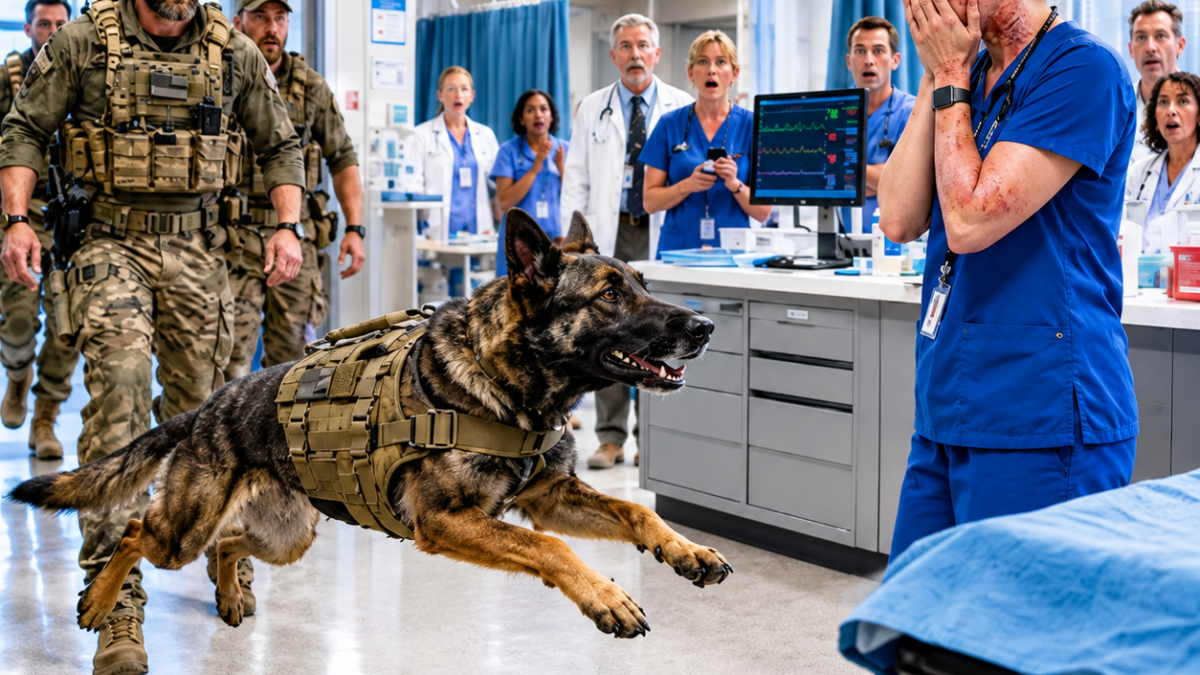
PART2″
A house fire, people guessed.
Car accident.
Explosion.
Domestic abuse.
Mara never corrected anyone.
If a child asked directly, she usually said:
“It hurt a long time ago.”
Then smiled.
“Does it hurt now?”
“Sometimes.”
“Are you okay?”
“Yes.”
That was enough.
Nobody at Chatham County General knew the scars had come from Kandahar Province.
Nobody knew she had once worn body armor instead of blue scrubs.
Nobody knew she had answered to Staff Sergeant Mara Ellison.
Nobody knew an entire reconnaissance unit had called her Doc.
And Mara intended to keep it that way.
At 7:42 that evening, charge nurse Evelyn Carter looked over the top of her computer.
“Go home.”
Mara kept charting.
“I have discharge paperwork.”
“I did it.”
Mara stopped typing.
“You what?”
PART3:
“You’ve covered three extra shifts this week.”
“So?”
“So you look dead.”
“I’m fine.”
Evelyn leaned back.
“You know the problem with working with someone for eleven years?”
Mara sighed.
“You develop opinions.”
“You learn which lies she repeats.”
“I’m fine is not a lie.”
“It is tonight.”
Mara opened her mouth.
Evelyn pointed toward the ambulance entrance.
“Thirty seconds before I clock you out myself.”
“You can’t do that.”
“I’ve been charge nurse since you still believed hospital coffee counted as coffee. Try me.”
Mara almost smiled.
“Fine.”
“Good.”
“Bossy.”
“Alive.”
That word caught her for half a second.
Evelyn noticed.
Mara recovered before she could ask.
She gathered her worn canvas backpack from beneath the desk.
Inside:
Water.
Protein bar.
Phone charger.
Two pens.
Old leather notebook.
Emergency kit.
She had carried an emergency kit for decades.
People teased her.
She always said nurses were allowed to be paranoid.
She walked through the ambulance doors.
Cold rain hit immediately.
Savannah storms could arrive like arguments.
Warm all day.
Violent by night.
She jogged toward her old Ford pickup.
Then heard something beneath the loading dock stairs.
Whimper.
Mara stopped.
Again.
Low.
Frightened.
She crouched.
“Hello?”
A shape moved.
Medium-sized dog.
Tan coat soaked dark.
Maybe forty pounds.
Mixed breed.
One rear leg bloodied.
The dog tried to rise.
Collapsed.
Mara lowered herself slowly.
“Easy.”
Teeth appeared.
Not aggression.
Fear.
She understood fear teeth.
“I know.”
She placed her backpack down.
Removed her jacket.
Held it loosely.
“I’m not coming closer yet.”
The dog trembled.
Rain hit metal above them.
Mara waited.
People always wanted frightened things to trust quickly.
Mara knew better.
After a minute, the dog stopped showing teeth.
She moved closer.
Deep laceration along hind leg.
No obvious fracture.
Blood loss moderate.
Could worsen.
Mara wrapped the jacket around the dog’s shoulders.
“Okay.”
The dog stared.
“Let’s see what stupid thing you did.”
Emergency kit opened.
Sterile saline.
Gauze.
Pressure dressing.
She cleaned the wound.
Dog flinched.
Did not bite.
“Good.”
Another wrap.
Check circulation.
“Toes warm.”
She scratched behind his ear.
“You’re tougher than you think.”
The dog’s eyes softened.
Across the street, blue letters glowed through rain.
HARBORLIGHT VETERINARY EMERGENCY CLINIC.
Mara looked at the dog.
“Lucky night.”
She lifted him carefully.
He gave one weak whine and rested his head against the scarred side of her shoulder.
For a fraction of a second, Mara froze.
Weight.
Warm body.
Blood.
Smoke flashed behind her eyes.
Another dog.
Different night.
Fire.
She forced the memory away.
“Not tonight.”
She carried him across the street.
Harborlight was crowded.
Golden retriever trembling beside one family.
Teenager holding rabbit carrier.
Older woman crying softly into phone.
Receptionist typing.
Mara approached.
“I found him behind the hospital.”
“Appointment?”
“No.”
“We’re about three hours behind.”
“He’s bleeding.”
“So are four other animals.”
Mara did not get angry.
Anger wastes time when somebody at a front desk is exhausted too.
She lowered the dog carefully onto a blanket.
“Can someone at least assess circulation? I placed a pressure dressing.”
That got the receptionist’s attention.
Before she could answer, a young veterinary technician hurried over.
Name tag:
EMILY PARK.
Twenty-four maybe.
Curly hair tied high.
She crouched.
“Oh, buddy.”
Emily examined the bandage.
Then looked at Mara.
“You did this?”
“Yes.”
“Are you a veterinarian?”
“No.”
She checked distal pulse.
“Pressure’s perfect.”
Mara shrugged.
“Nurse.”
“ER?”
“Yes.”
“I knew it.”
Emily smiled.
Then noticed Mara’s scars.
Her eyes stayed half a second too long.
Immediately:
“Sorry.”
“For what?”
“I stared.”
Mara looked at her own arm.
“You’re human.”
Emily flushed.
“Still.”
“It’s fine.”
The clinic doors opened.
Three men entered.
Mara did not look immediately.
She heard posture before she saw it.
That sounds strange.
But veterans often recognize veterans by movement.
Controlled spacing.
Scanning.
Weight balanced.
One man led an aging German Shepherd.
Large.
Black and tan.
Silver muzzle.
Slight stiffness in rear legs.
The dog’s vest identified him as a retired military working dog.
Mara’s hand stopped on the stray’s blanket.
No.
Not because military dogs were rare.
Savannah had bases nearby.
Veterans.
Handlers.
Plenty of possibilities.
The oldest man at the door looked late forties.
Broad shoulders.
Gray at temples.
Faded tactical jacket.
He signed in.
“Caleb Roark.”
Mara’s blood turned cold.
No.
The name traveled through thirteen years in less than a second.
Caleb.
Lieutenant Caleb Roark.
Then Captain.
Then maybe Major.
She did not know.
Because she had stopped checking.
The German Shepherd sniffed.
Once.
Twice.
His entire body changed.
Caleb looked down.
“What is it, Ranger?”
Mara stopped breathing.
Ranger.
The dog turned his head.
His eyes found her.
Mara whispered:
“No.”
Ranger pulled.
Caleb tightened the leash.
“Easy.”
The dog pulled harder.
“Ranger.”
Then he lunged.
Not aggressively.
Desperately.
The leash slipped from Caleb’s hand.
A child screamed.
Receptionist ducked.
Emily stood.
Ranger crossed the entire waiting room.
Mara did not move.
Could not.
He reached her.
Stopped.
For one heartbeat they simply looked at each other.
Old dog.
Scarred nurse.
Then Ranger dropped at her feet.
Not sit.
Collapsed.
His entire body trembled.
A sound came from him Mara had not heard in thirteen years.
High.
Broken.
Almost crying.
He pressed his muzzle against her left forearm.
Exactly where the burn scars thickened.
Mara’s hand hovered.
Then touched his head.
Ranger closed his eyes.
“You can’t.”
Her voice cracked.
“You can’t remember.”
He pushed harder into her palm.
Across the clinic, Caleb Roark had gone completely still.
His face drained.
He looked at Ranger.
Then Mara.
Then the scars.
Then her face.
He walked forward one step at a time.
“Mara?”
She closed her eyes.
Not here.
Please.
Not under fluorescent lights.
Not with strangers.
Not with Ranger crying.
Caleb whispered:
“Doc.”
The word opened something.
She had spent thirteen years building walls over it.
One word walked through them.
Emily looked between them.
“You know her?”
Mara answered too quickly.
“No.”
Caleb answered at the same time.
“She saved my life.”
Silence.
Mara turned.
“Caleb.”
He looked older.
Scar near jaw she did not remember.
His eyes had not changed.
“You’re alive.”
“Obviously.”
“I thought you were dead.”
“I wasn’t.”
“That is becoming clear.”
Ranger remained pressed against her.
Mara tried to step back.
He stood and followed.
Caleb swallowed.
“I looked for you.”
“I know.”
That hurt him.
“You knew?”
“Yes.”
“How?”
“Messages.”
“Then why—”
“Not here.”
Emily remained kneeling beside the stray.
The entire waiting room listened.
Mara hated that.
She pointed.
“The dog needs treatment.”
Emily blinked.
“Yes.”
“That’s why I’m here.”
Caleb’s voice softened.
“Mara.”
“Don’t.”
“People spent years thinking—”
“I said don’t.”
He stopped.
For a moment.
Then Ranger moved his muzzle higher, directly against the scar beginning beneath her elbow.
Caleb stared.
His expression broke.
“He remembers.”
Mara whispered:
“Stop.”
“He remembers where you burned.”
“Caleb.”
Emily looked at Mara.
“You got those scars saving him?”
Mara stepped away.
Ranger followed again.
“No.”
Caleb said:
“Yes.”
Mara turned sharply.
“People died.”
The room became quieter.
Caleb nodded.
“Yes.”
“Then don’t tell it like some beautiful rescue story.”
“I don’t.”
“You just did.”
“No.”
He stepped closer.
“I’m telling them you went back.”
Her jaw tightened.
“For Boone.”
“You brought him out.”
“For Farid.”
“You brought him out.”
“For Ranger.”
“You brought him out.”
Mara’s eyes flashed.
“And Eli?”
Caleb stopped.
There it was.
The name.
The one she carried more faithfully than every life she had saved.
“Where was Eli?”
Caleb did not answer.
Mara looked around.
“That’s what hero stories leave out.”
Her voice remained controlled.
Barely.
“One nineteen-year-old corpsman was trapped beneath the rear axle.”
Ranger whined.
“I told him I’d come back.”
Caleb whispered:
“I know.”
“I didn’t.”
“You couldn’t.”
“I said I would.”
“Mara—”
“I said I would.”
The stray whimpered.
Mara turned immediately.
Professional reflex.
Emotion locked away again.
Emily looked startled at how quickly it happened.
Mara crouched.
“His bandage is soaking through.”
Emily checked.
“You’re right.”
“Vet?”
“Coming.”
“Good.”
For the next twenty minutes, Mara concentrated entirely on the stray.
She helped Emily transfer him.
Then stepped back.
Never crossed into veterinary authority.
When the veterinarian arrived, Mara gave a precise handoff.
“Approximate forty-pound mixed breed. Found under hospital loading dock. Deep right hind laceration. Moderate blood loss. No obvious deformity. Pressure dressing applied twenty-five minutes ago. Distal perfusion intact when last checked.”
The veterinarian stared.
“You sure you’re not one of us?”
“Human ER.”
“Close enough tonight.”
The stray disappeared into treatment.
Ranger’s routine appointment continued.
Mara waited only because Emily promised to update her.
Caleb stayed.
When Mara eventually left Harborlight, the rain had intensified.
She stood beneath the awning.
Arms crossed.
Caleb joined her.
Ranger between them.
For a while none spoke.
Then Caleb said:
“Why?”
Mara watched water pour off roof.
“That’s broad.”
“Why disappear?”
“I didn’t disappear.”
“You stopped answering everyone.”
“Same thing.”
“No.”
“To you.”
“To everybody.”
She turned.
“Did you ever spend six weeks in a burn unit?”
Caleb’s face tightened.
“No.”
“Then don’t tell me what counted as disappearing.”
“Fair.”
She looked back at rain.
He waited.
That surprised her.
Old Caleb would have kept pressing.
Maybe thirteen years had changed both of them.
Finally she said:
“The mission was classified.”
“I know.”
“The official report couldn’t identify half the people.”
“I know.”
“The ceremony happened while I was still undergoing grafts.”
Caleb’s jaw clenched.
“We didn’t know.”
“I know.”
“We asked.”
“I know.”
“Voss tried.”
“I know.”
“Boone wrote.”
“I know.”
Caleb turned.
“You keep saying that.”
“Because I knew.”
“Then why didn’t you answer?”
Mara looked across the street at hospital lights.
“Because everybody wanted to thank me.”
“And?”
“I didn’t want thanks.”
“Why?”
She laughed once.
Small.
Empty.
“Because Eli died.”
Caleb looked down.
Ranger pressed against her leg.
Mara’s hand found his fur automatically.
“Everybody said the same thing.”
“What?”
“You saved Boone.”
She counted on fingers.
“You got Farid out.”
Another.
“You kept Ranger alive.”
Another.
“You treated six wounded until evacuation.”
Another.
“You shielded two civilians.”
Her hand fell.
“And every sentence sounded like they were trying to balance a scale.”
Caleb listened.
“They’d tell me five people lived.”
She stared at rain.
“And my brain would answer: Eli didn’t.”
“Mara.”
“Every time.”
“You think we forgot him?”
“No.”
“Then what?”
“I thought if I let myself feel proud of anyone who lived, I was betraying the one who didn’t.”
Caleb closed his eyes.
There are sentences that explain thirteen years.
That was one.
He said:
“Eli screamed at me too.”
Mara looked over.
“What?”
“When you went back the second time.”
Caleb’s eyes stayed on rain.
“He told me to stop you.”
She barely breathed.
“He said?”
“He said the vehicle was going.”
Mara’s face changed.
“You never told me.”
“You didn’t answer.”
Silence.
Caleb continued.
“He knew.”
“No.”
“He did.”
“You were wounded.”
“So was he.”
“You don’t remember clearly.”
“I remember that.”
Her voice sharpened.
“What exactly?”
Caleb swallowed.
“He said, ‘Tell Doc to quit being stupid and get them out.’”
Mara looked away.
“No.”
“Those were the words.”
“No.”
“He knew the axle had pinned him.”
“Stop.”
“He knew fuel was spreading.”
“Caleb.”
“He told me to tell you—”
“Stop.”
She turned.
Tears in her eyes now.
“He was nineteen.”
“I know.”
“He had a mother in Kansas.”
“I know.”
“He was supposed to start paramedic school.”
“I know.”
“I promised him.”
Caleb’s own voice broke.
“And he told you to leave.”
Mara stared.
Rain.
Thunder.
Hospital lights.
Ranger between them.
Thirteen years of guilt met one detail she had never known.
Not forgiveness.
Not healing.
Just complication.
Sometimes that is where healing starts.
Mara wiped her face angrily.
“I hate you.”
Caleb almost smiled.
“Understandable.”
“You show up with a dog and ruin thirteen years of repression.”
“Ranger did most of it.”
The old dog looked up.
Mara laughed.
One sound.
Then cried harder because she had laughed.
Caleb did not touch her.
He understood enough not to.
Some griefs do not need comfort.
They need witness.
So he stood.
Ranger leaned into her.
Eventually the rain slowed.
Mara returned to work the next night as if nothing had happened.
That lasted until 6:15.
Evelyn approached nurses’ station.
“You have visitors.”
“No.”
“You don’t know who.”
“I know enough.”
Three men stood near ambulance entrance.
One had a cane.
Another held an old photograph.
Third held something in plastic.
Mara stopped.
The man with cane stepped forward.
“Doc.”
She closed her eyes.
“Caleb.”
He was not there.
This one was Daniel Boone.
Sergeant Boone.
Except time had added gray to beard.
A limp.
Lines around eyes.
Mara remembered him unconscious beneath smoke.
Blood through uniform.
She had dragged him by plate carrier.
Now he stood.
Alive.
“Daniel.”
He smiled.
“You remember me.”
“Unfortunately.”
He laughed.
Then immediately cried.
That almost broke her.
He handed her the plastic sleeve.
Inside was a child’s crayon drawing.
Woman in blue scrubs.
Soldier.
Dog.
Sun too large.
At bottom:
THANK YOU FOR SAVING MY DAD.
Mara stared.
Daniel said:
“Her name’s Sophie.”
Her throat tightened.
“She’s seven.”
Mara looked up.
Daniel’s voice trembled.
“She wouldn’t exist if I hadn’t come home.”
“Daniel.”
“My wife was pregnant six months after.”
“Don’t.”
“She asked why I walk with a cane.”
“Please.”
“I told her somebody carried me out of a fire.”
Mara looked around.
Nurses watching.
Patients.
Doctors.
She wanted to disappear.
Then second veteran stepped forward.
Farid Rahman.
Interpreter.
She almost did not recognize him.
Beard now.
Glasses.
He held a framed photograph.
Wife.
Three children.
American flag behind them.
“Mara.”
She whispered:
“Farid.”
He smiled.
“Citizen now.”
He produced folded document.
Naturalization certificate copy.
“Eight years.”
Mara took it.
Hands shaking.
“My youngest son is named Elias.”
Everything inside her stopped.
Farid’s smile disappeared.
“I asked Caleb before choosing.”
Mara could not speak.
“He said you might hate it.”
She looked at him.
“Why?”
“For Eli.”
Mara closed her eyes.
Farid continued:
“My wife says the first English word my oldest daughter learned was safe.”
Mara opened her eyes.
“She learned because every time we told the story, my wife said, ‘The medic made us safe.’”
Mara shook her head.
“I didn’t.”
“You did.”
“For that night.”
Farid nodded.
“Sometimes one night is enough.”
More arrived.
Not dozens.
Not parade.
One by one.
A former communications specialist.
A helicopter crewman who had taken shrapnel.
A civilian contractor.
A woman who brought a letter from her brother who could not travel.
Mara tried working.
Vitals.
IV.
Discharge.
Everywhere she turned, someone from another lifetime waited.
No banners.
No news cameras.
No speeches.
That made it worse.
Grand gestures were easy to resist.
Personal consequences were not.
A man showed her wedding photograph.
Another showed his son’s graduation.
Boone brought videos of Sophie playing soccer.
Farid showed his children arguing over ice cream.
Every image was proof of time Mara had never allowed herself to imagine.
She had frozen everyone inside the convoy.
In her memory, they were always bleeding.
Always twenty-seven.
Thirty.
Thirty-five.
Nobody aged.
Nobody married.
Nobody had daughters.
Nobody became bald.
Nobody complained about mortgages.
Trauma had trapped them in fire.
Reality had kept moving without her.
Caleb arrived last.
Ranger beside him.
Mara looked at him.
“You did this.”
“Yes.”
“I told you not to.”
“You told me you hated me too.”
“I meant that.”
“So did I.”
“I’m serious.”
“So am I.”
Ranger crossed ER.
Sat beside Mara.
Tail thumped.
Evelyn watched.
“That’s Ranger?”
Mara turned.
“How do you know?”
“Everyone knows now.”
Mara glared at Caleb.
He raised hands.
“Not me.”
Evelyn said:
“Half the nurses have Google.”
Mara groaned.
There were old articles.
Declassified pieces.
Veteran forums.
A photograph of young Staff Sergeant Ellison standing beside evacuation helicopter.
No scars yet.
Mara had forgotten the internet existed.
Emily from Harborlight arrived later.
“You didn’t tell us your name.”
“I did.”
“Full name.”
“Mara Ellison is full.”
“Combat medic part.”
“Not usually part of introduction.”
The wounded stray survived.
He needed surgery.
No owner found.
Emily temporarily called him Lucky.
Mara objected.
“That’s terrible.”
“You name him.”
“I’m not adopting him.”
“Didn’t ask.”
“Scout.”
Emily smiled.
“Scout it is.”
Scout eventually recovered.
He also eventually became Mara’s dog.
But that came later.
The veteran visits continued four days.
Mara became angry.
Then exhausted.
Then something else she did not recognize.
Evelyn found her sitting alone in staff room holding the child’s drawing.
“You okay?”
“No.”
“Good.”
Mara looked up.
“Good?”
“You finally gave me a different answer.”
Mara laughed despite herself.
Then:
“I don’t know what they’re trying to do.”
“Thank you?”
“I know.”
“That seems obvious.”
“I mean why now.”
Evelyn sat.
“Because they found you.”
“Wish they hadn’t.”
“No, you don’t.”
Mara’s eyes narrowed.
“Don’t psychoanalyze.”
“I’ve been a nurse thirty-three years. Psychoanalyzing coworkers is our pension.”
Mara looked at drawing.
“I made one decision.”
“Sounds like several.”
“I followed training.”
Evelyn smiled.
“Every heroic nurse says that.”
“I’m not heroic.”
“I didn’t say you were.”
Mara looked up.
Evelyn continued:
“I said you helped people.”
Different.
That mattered.
“You don’t have to turn it into identity.”
Mara looked at scars.
“I stopped being Doc for a reason.”
“Then don’t become Doc again.”
“What?”
“Be Mara.”
Evelyn shrugged.
“Maybe Mara can accept that Doc did something good.”
Mara stared at her.
Annoying woman.
Correct woman.
Worst combination.
That evening, Caleb waited by her truck.
“You stalking me?”
“Veteran persistence.”
“That’s stalking with benefits.”
Ranger sat beside him.
Mara leaned against truck.
“What now?”
“Coffee.”
“No.”
“Dinner.”
“No.”
“Walk.”
“No.”
“Ranger follow-up Friday.”
She hesitated.
Caleb smiled.
“Got you.”
“I care about the dog.”
“Of course.”
“Not you.”
“Never suggested.”
Friday afternoon Mara crossed to Harborlight.
Ranger’s exam.
Scout recovering in kennels.
Emily greeted her.
“Your dog misses you.”
“Not mine.”
Scout began barking when he heard her.
Emily smiled.
“Definitely not.”
Ranger’s veterinarian, Dr. Avery Collins, examined him.
Arthritis.
Old scar tissue.
Mild heart changes.
Nothing emergent.
Caleb relaxed.
Mara pretended not to notice.
Afterward they sat outside.
Savannah sun.
No rain.
Ranger lay between.
Caleb said:
“Boone wants to visit again.”
“No.”
“He figured.”
“Why ask?”
“Because he told Sophie about you.”
Mara frowned.
“Why?”
“Because you’re part of his story.”
“I don’t want to be part of a seven-year-old’s mythology.”
“He told her you were scared.”
That surprised her.
“What?”
“He said heroes aren’t people who aren’t afraid.”
“Daniel loves speeches.”
“He does.”
Caleb smiled.
“He also told her you yelled at him.”
“I did.”
“What did you say?”
“Stop bleeding on me.”
Caleb laughed.
“I forgot that.”
“He was apologizing.”
“For bleeding?”
“Yes.”
“Combat makes people weird.”
“Deep insight.”
They sat.
Then Caleb said:
“What did you do after?”
“After what?”
“Hospital.”
She knew.
“Rehab.”
“Then?”
“Army wanted medical separation.”
“Did you?”
“Eventually.”
“Nursing school?”
“GI Bill. Accelerated program.”
“Why emergency medicine?”
Mara looked at hospital.
“It’s the only place civilian life made sense.”
Caleb understood.
“Chaos.”
“Rules.”
“What rules?”
“Bleeding first. Airway. Breathing. Circulation.”
She shrugged.
“People arrive broken. You do what you can. Then somebody else takes over.”
“Clean.”
“Yes.”
“Unlike memory.”
She looked at him.
“You’ve gotten annoyingly perceptive.”
“Therapy.”
Mara raised eyebrows.
“You?”
“Six years.”
“Voluntarily?”
“Court threatened me.”
She stared.
He laughed.
“Kidding.”
“Not funny.”
“A little.”
Ranger sighed.
Mara scratched his neck.
“How long have you had him?”
“His handler died five years ago.”
She stopped.
“Matt?”
Caleb nodded.
Cancer.
Not combat.
That felt almost unfair.
“Ranger bounced around afterward.”
“No.”
“Family loved him. Couldn’t handle working-dog issues.”
“So you took him.”
“Yes.”
“Of course.”
Caleb looked at Ranger.
“He spent first month sleeping at door.”
“Waiting for Matt?”
“Probably.”
Mara understood too well.
“Then eventually he slept beside my bed.”
“That’s acceptance?”
“No.”
Caleb smiled faintly.
“That’s exhaustion.”
They laughed.
A week passed.
Then storm came.
Worse than first.
Savannah flooded.
ER packed.
Mara worked.
Around 10:20 p.m., Evelyn approached.
“Phone.”
“Who?”
“Caleb.”
Mara’s stomach dropped.
She took it.
“Caleb?”
“It’s Ranger.”
Everything disappeared.
“What happened?”
“Collapsed.”
“Where?”
“Harborlight.”
“What are vitals?”
“Mara—”
“Vitals.”
“Pressure low. Gums pale. They saw free fluid.”
Internal bleed.
“Surgeon?”
“Stuck behind flooding.”
Mara handed phone to Evelyn.
“I’m going.”
Evelyn nodded before Mara asked.
“Go.”
Rain hit horizontally.
Mara crossed street with water above ankles.
Harborlight chaotic.
Emily met her.
“Pressure dropping.”
Ranger lay on table.
Oxygen.
IV.
Pale gums.
Caleb beside him.
Face gray.
Mara walked straight in.
Not veterinarian.
She knew boundary.
But she knew shock.
“What blood products?”
“One unit canine packed red cells started.”
“Warm?”
“Yes.”
“Two lines?”
“One. Other blew.”
“Get second if you can.”
Emily moved.
Mara caught herself.
“This is your team.”
Emily looked at her.
“We need help organizing.”
Mara nodded.
Not commanding treatment.
Coordinating.
“Okay.”
Ranger’s eyes opened slightly.
Saw her.
Tail moved once.
That almost destroyed her.
She leaned down.
Thirteen years vanished.
Smoke.
Dust.
Blood.
Same amber eyes.
Mara whispered:
“Stay with me, soldier.”
Ranger exhaled.
Caleb covered his mouth.
Ultrasound suggested splenic bleed.
Could be tumor.
Could be scar tissue.
Could be old shrapnel adhesion.
Dr. Collins was thirty minutes away in flood traffic.
Thirty minutes can be forever in hemorrhagic shock.
Mara helped keep room calm.
Warm blankets.
Vitals repeated.
Blood.
Access.
Position.
No panic.
She talked Caleb through breathing when his hands began shaking.
He looked at her angrily.
“Don’t nurse me.”
“You’re becoming a second patient.”
“I’m fine.”
Mara almost laughed.
“That line belongs to me.”
Ranger’s pressure dipped.
Emily cursed.
Mara said:
“Again.”
No panic.
“Check perfusion.”
“CRT delayed.”
“Continue current plan.”
“Where the hell is Avery?”
Door burst open.
Dr. Collins.
Soaked.
“Status.”
Emily handed off.
Professional.
Precise.
Collins nodded.
“Good.”
Ranger moved to surgery.
Caleb and Mara waited outside.
Two hours.
No conversation first.
Storm pounding roof.
Caleb’s hands locked together.
Then:
“I can’t lose him.”
Mara stared at floor.
“I know.”
“He’s all I have left of Matt.”
“I know.”
“He found you.”
“I know.”
Caleb laughed weakly.
“You say that a lot.”
“Occupational hazard.”
Silence.
Then:
“I think he brought me here for you.”
Mara looked over.
“What?”
“He didn’t need a vet in Savannah specifically.”
“He had appointment.”
“I chose Harborlight because someone recommended it.”
“Coincidence.”
“Sure.”
“Don’t make him mystical.”
“I’m not.”
Caleb looked toward surgery doors.
“But maybe we both needed him to remember.”
Mara said nothing.
Door opened.
Dr. Collins.
Mask down.
“He made it.”
Caleb folded forward.
Face in hands.
Mara closed eyes.
Collins continued:
“Old scar tissue tore near spleen. We repaired what we could. Removed damaged portion. He’s stable.”
Mara’s knees failed.
Not dramatic.
She simply sat hard.
Ranger survived.
Again.
That word stayed.
Two weeks later Caleb told Mara Ranger had a routine follow-up.
“Come?”
“No.”
“Emily asked.”
“No.”
“Scout asked.”
“Dogs can’t ask.”
“Ranger asked.”
“Caleb.”
“Fine.”
She went.
Of course.
Harborlight parking lot full.
Mara knew before she parked.
“No.”
She sat behind wheel.
People outside.
Veterans.
Hospital staff.
Families.
Children.
First responders.
Flowers.
Chairs.
Even Scout, healing, red bandana.
Mara considered driving away.
Passenger door opened.
Caleb.
She glared.
“You can be mad later.”
“I’m mad now.”
“Expected.”
“I hate you.”
“Consistent.”
Ranger appeared.
Moving slowly after surgery.
He reached Mara.
Leaned.
She closed eyes.
“You’re in on this.”
Tail thump.
“Traitor.”
Commander Elias Voss stepped forward.
Now retired.
White hair.
Same posture.
“Doc Ellison.”
Mara sighed.
“You people do not listen.”
Voss smiled.
“We learned that from you.”
Soft laughter.
Mara wanted ceremony.
She could survive ceremony.
Flags.
Rank.
Prepared words.
Instead, Voss said:
“No medals today.”
Good.
“No citations.”
Better.
“No speeches longer than three minutes.”
Excellent.
“Just people.”
Worse.
Daniel Boone’s daughter Sophie approached.
Seven.
The artist.
She held her father’s hand.
“Are you Mara?”
Mara crouched.
“Yes.”
“You saved my dad?”
Mara looked at Daniel.
He did not intervene.
“I helped him.”
Sophie considered.
“My dad says you yelled.”
Mara almost smiled.
“Yes.”
“What did you say?”
“Stop bleeding on me.”
Sophie laughed.
Then hugged Mara without warning.
Mara froze.
Tiny arms.
No armor.
She hugged back.
Farid’s son came next.
Elias Rahman.
Nine.
He read a note.
Slow English.
“My father says you carried our family through fire before I was born. Thank you for giving me my father.”
Mara looked at Farid.
He cried openly.
Coward.
Then Boone’s wife.
Then interpreter’s wife.
Then one veteran’s husband.
Then children.
No armor.
Caleb stepped forward last.
He looked at scars.
Then her.
“You carried us out of the fire.”
Mara’s eyes filled.
“Caleb.”
“And then you carried the fire alone for thirteen years.”
She looked away.
“You don’t have to anymore.”
Ranger lifted one paw.
Placed it on her forearm.
Exactly over scar.
Room broke.
Mara did too.
Not collapse.
Not scream.
She simply cried.
In front of everyone.
For Eli.
For herself.
For Ranger.
For Boone.
For all the people who grew older while she remained trapped at twenty-eight inside burning convoy.
Voss waited.
Then said:
“We remember Eli too.”
Mara nodded.
That mattered.
Not instead of gratitude.
Alongside it.
Years of her mind insisting only one truth could exist.
Eli died.
True.
Boone lived.
Also true.
Farid lived.
True.
Ranger lived.
True.
Mara was burned.
True.
She could not save everyone.
True.
She saved many.
True.
Healing began when those truths stopped fighting for one chair.
Months later, Chatham County General and Harborlight launched a joint program.
It did not happen magically.
Paperwork.
Legal review.
Funding.
Insurance.
Committees.
Mara hated committees more than gunfire.
The Ranger Response Initiative.
Official purpose:
Emergency preparedness for veterans, service animals, working dogs, and trauma-informed coordination between human and veterinary medical systems.
Unofficially:
Everything Mara had learned from war, emergency nursing, Ranger, and thirteen years of guilt put somewhere useful.
She fought the name.
“Why Ranger?”
Emily stared.
“Because everyone likes him.”
“Better names exist.”
“Name one.”
Mara could not.
Ranger won.
Emily became program coordinator.
Caleb managed veteran outreach.
Dr. Collins taught veterinary emergency response.
Mara taught human trauma awareness and cross-team calm.
Her first class was twelve nurses.
She stood in front.
Hands shaking.
Nobody noticed except Caleb.
Ranger lay beside her chair.
Mara began:
“I am not teaching you to be combat medics.”
A young nurse smiled.
“Good.”
“You’d hate the food.”
Laughter.
Mara continued.
“I’m teaching you what fear does to teams.”
Silence.
“People don’t become stupid during emergencies.”
She looked around.
“They become narrow.”
She tapped her temple.
“Your world shrinks.”
“Hands shake.”
“You repeat actions.”
“You stop hearing.”
“So the calmest person in the room does not have to know everything.”
She looked toward Emily.
“They have to help everyone access what they already know.”
That was what she had done for Harborlight during Ranger’s collapse.
Not practiced veterinary medicine.
Created structure.
She taught pressure control.
Triage.
Communication.
How to speak to veterans waking disoriented.
How service dogs react when handlers are incapacitated.
How not to separate an injured veteran from a working dog unnecessarily.
Veterinary staff taught nurses canine safety basics.
Hospital staff taught vet teams human first aid.
Local paramedics joined.
Police K9 handlers.
Search-and-rescue.
Program expanded.
Mara hated publicity.
Naturally, publicity found her.
A local reporter asked:
“Do you consider yourself a hero?”
“No.”
“Why not?”
“Because hero is a noun people use when they want a clean story.”
Reporter paused.
“What would you call yourself?”
“Nurse.”
“Combat medic?”
“Former.”
“Survivor?”
Mara looked uncomfortable.
“Person.”
That answer made article headline.
She hated it.
Evelyn framed it.
Scout recovered.
Nobody claimed him.
Mara insisted she could not adopt a dog.
Long shifts.
Small house.
Complicated life.
Emily agreed.
Then showed up at Mara’s house with Scout.
“Trial weekend.”
“No.”
“Already approved.”
“By who?”
“You.”
“I did not.”
“You named him.”
“That is not legal adoption.”
Scout walked inside.
Curled on rug.
Never left.
Caleb brought Ranger every Friday.
Scout adored him.
Ranger tolerated puppy enthusiasm despite being old.
Mara’s house changed.
Dog hair.
Bowls.
Toys.
Something alive waiting when she came home.
One evening Caleb stopped by with Ranger.
Mara cooked.
Badly.
They ate pasta.
Scout stole bread.
Ranger slept.
For first time, Caleb asked:
“Were you ever married?”
Mara looked suspicious.
“Why?”
“Conversation.”
“No.”
“Engaged?”
“No.”
“Relationship?”
“Yes.”
“What happened?”
Mara looked at scars.
“He tried.”
“Meaning?”
“After I came home.”
She drank water.
“I couldn’t sleep.”
“Nightmares?”
“Yes.”
“Touch?”
She nodded.
“Sometimes if he touched my left shoulder from behind I was back there.”
Caleb understood.
“He lasted eighteen months.”
“You make that sound like failure.”
“I made it failure.”
“You?”
“I refused help.”
“Because?”
Mara stared at Ranger.
“Because if I got better, Eli stayed dead.”
Caleb went quiet.
She gave a tired smile.
“See? Irrational.”
“No.”
“Therapists call it survivor guilt.”
“I know.”
“You had it?”
“Still.”
“About?”
“Everyone.”
Of course.
They did not become romantic that night.
Or soon.
Their bond was stranger.
Older.
Built from something neither wanted to romanticize.
Years later, perhaps.
But not necessary.
Mara’s healing did not require a man.
Caleb understood that.
He became friend.
Brother.
Witness.
Sometimes that is more important.
Ranger slowed.
Everyone saw it.
Thirteen.
Then fourteen.
Gray muzzle nearly white.
Stairs difficult.
Hearing weaker.
But every Friday he still walked into Chatham County General and found Mara.
Did not need directions.
Nurses learned.
“Ranger’s here.”
Mara might be starting IV.
He waited outside.
Teaching?
Lay beside chair.
Eating lunch?
Put head in lap.
Bad day?
He knew before anyone.
Once Mara froze during trauma involving vehicle burns.
Smell.
Diesel.
Flashback hit hard.
She made it through patient care.
Then walked into empty hallway.
Hands shaking.
Ranger approached.
Pressed head into her palm.
Mara breathed.
One.
Two.
Three.
Present returned.
A resident saw.
Said later:
“He knows.”
Mara answered:
“He remembers.”
Ranger’s final year was gentle.
That mattered.
No emergency.
No dramatic battle.
He slept.
Ate chicken.
Visited.
One spring morning Caleb called.
“It’s time.”
Mara knew.
She went to his house.
Ranger lay on blanket beneath oak tree.
Sun.
Scout beside him.
Caleb sat.
Mara lowered herself.
Ranger raised head slightly.
His nose touched her scars.
Same place.
Always.
“You remembered too much.”
Tail moved.
“You stubborn old soldier.”
She cried.
Caleb did too.
Veterinarian came.
No clinic.
No machines.
Ranger died with Mara’s hand on his head and Caleb’s hand against his chest.
Peaceful.
Afterward Mara sat beneath tree for hours.
Finally said:
“He came back for me.”
Caleb nodded.
“Yes.”
“I thought I saved him.”
“You did.”
Mara looked at empty blanket.
“He saved me too.”
Caleb said nothing.
No need.
Ranger Response Initiative continued.
They changed logo.
Old German Shepherd silhouette.
Mara objected.
Lost vote.
Scout became unofficial mascot.
Worse behaved.
Children loved him.
Mara eventually reduced clinical shifts and became director of trauma education.
She still worked ER nights twice a week.
Could not fully leave.
People asked about scars now.
Sometimes she answered differently.
Child:
“Did that hurt?”
“Yes.”
“Were you scared?”
“Very.”
“Did you save somebody?”
Mara would pause.
Then:
“Yes.”
No longer:
It was long ago.
No longer hiding.
But she always added:
“And some people saved me.”
A photograph hung in Ranger Response hallway.
Not military one.
Mara kneeling beside old Ranger.
His muzzle pressed against her scarred forearm.
Beneath:
SOME SCARS ARE NOT PROOF OF WHAT BROKE YOU. THEY ARE PROOF OF WHO YOU CARRIED THROUGH THE FIRE.
Mara hated the wording initially.
Too sentimental.
Then Eli’s mother visited.
That changed everything.
Mara had avoided her for thirteen years.
Letters unanswered.
Contact refused.
Not because Eli’s mother blamed her.
Because Mara believed she should.
Her name was Sharon Mercer.
Sixties.
Gray hair.
Kansas accent.
She arrived without warning one afternoon.
Mara saw her.
Knew immediately.
Same eyes as Eli.
She nearly left.
Sharon said:
“Don’t.”
Mara stopped.
“I can’t do this.”
“I can.”
“You don’t know—”
“I know exactly who you are.”
Mara shook head.
“No.”
Sharon approached.
“My son wrote about you.”
Mara’s breath caught.
“What?”
“Letters.”
“I never—”
“He called you terrifying.”
Mara laughed despite herself.
Sharon smiled.
“He said Doc Ellison could make a grown man apologize for getting shot.”
Sounds right.
Then Sharon held out envelope.
Old.
Creased.
Military mail.
“He wrote this three weeks before he died.”
Mara did not take it.
“I can’t.”
“You can.”
“No.”
Sharon’s voice became firm.
“My son died.”
Mara flinched.
“I have spent thirteen years grieving him.”
Tears in Sharon’s eyes.
“You do not get to grieve him more than his mother.”
That landed like impact.
Mara stared.
Sharon continued:
“And you do not get to turn his death into your life sentence.”
Mara’s legs weakened.
“I promised him.”
“I know.”
“He died waiting.”
“No.”
Sharon stepped closer.
“He died doing his job beside people he trusted.”
“You weren’t there.”
“No.”
Her voice shook.
“But neither were you when he wrote this.”
She pressed envelope into Mara’s hand.
Mara opened.
Eli’s handwriting.
Messy.
Young.
A letter home.
Mostly jokes.
Food.
Heat.
Men complaining.
Then:
Mom, Doc says if I drink another energy drink she’s going to personally remove my kidneys. She pretends she’s mean but everybody trusts her. If anything ever happens, she’s the one you want standing there.
Mara could not continue.
Sharon pointed.
“Read.”
Mara shook.
Sharon waited.
Mara read farther.
She carries everybody like it doesn’t cost her anything. I don’t think that’s true. Somebody should tell her she doesn’t have to carry all of us forever.
Mara dropped into chair.
Sharon sat beside her.
For thirteen years Mara had built identity around promise:
I said I’d come back.
Now dead nineteen-year-old had apparently left another message:
You don’t have to carry all of us forever.
Mara cried until she had nothing left.
Sharon held her.
Not because Mara saved Eli.
She hadn’t.
Because both women loved someone they lost.
That was enough.
Afterward Sharon asked to see Ranger’s photograph.
Mara showed her.
“He’s handsome.”
“He was.”
“Eli loved dogs.”
“I know.”
Sharon smiled.
“He told me he wanted one after deployment.”
Mara looked toward Scout sleeping.
“I think he would have chosen a terrible one.”
“Like that?”
“Exactly.”
They laughed.
Mara visited Kansas months later.
Eli’s grave.
First time.
She stood.
Placed Ranger unit patch beside stone.
No apology speech.
No bargaining.
Just:
“I came back.”
Wind moved grass.
Then:
“I’m sorry it took so long.”
She returned to Savannah different.
Not cured.
People are not wounds to close.
But lighter.
That year, Ranger Response expanded into three hospitals and two veterinary systems.
Training modules.
Grants.
Veteran crisis protocols.
Emergency transport for service dogs when handlers hospitalized.
A small fund to cover urgent veterinary care for low-income veterans.
Mara objected when board named the fund after Ranger.
Lost again.
Farid joined advisory board.
Boone volunteered.
Sophie, now older, visited annually.
Emily became director after graduate school.
Evelyn retired.
Returned constantly.
Retired nurses are myths.
They never leave.
One afternoon Evelyn found Mara staring at old photograph.
Young Mara.
Uniform.
Ranger.
Caleb.
Boone.
Eli in background.
Alive.
“You okay?”
Mara smiled.
“Yes.”
Evelyn narrowed eyes.
“Real yes?”
“Real enough.”
“Growth.”
“Go away.”
“Retired. Can’t be fired.”
Scout barked.
Evelyn gave him treat.
Mara protested.
“He’s overweight.”
“That’s love.”
“That’s diabetes.”
Normal.
Beautiful.
Years earlier, Mara had thought healing meant forgetting the convoy.
Then she thought it meant forgiving herself.
Eventually she learned healing was neither.
She remembered.
Clearly.
Fuel.
Heat.
Eli’s voice.
Ranger bleeding.
Caleb unable to stand.
Boone unconscious.
Farid holding civilian child.
Her own skin burning.
All of it remained.
But memory became larger.
Now convoy continued beyond fire.
Boone became father.
Farid became citizen.
Ranger lived thirteen more years.
Caleb built life.
Eli’s mother laughed sometimes.
Mara taught hundreds of nurses.
Scout stole bread.
Sophie drew crooked pictures.
The story did not end at explosion.
That was what trauma had lied about.
Trauma said:
This is where time stopped.
Life answered:
No.
Years later, a new nurse joined Chatham County General.
Twenty-three.
Named Ava.
She saw Mara’s scars during orientation.
Tried not to stare.
Mara noticed.
“Ask.”
Ava flushed.
“I’m sorry.”
“For what?”
“I was looking.”
“People look.”
Ava hesitated.
“What happened?”
Mara used to hate that question.
Now she considered.
“Combat.”
Ava blinked.
“You were military?”
“Yes.”
“What did you do?”
“Medic.”
Ava stared.
“You?”
Mara smiled.
“Insulting.”
“No! I mean—”
“I know.”
Ava laughed nervously.
Then:
“Were you scared?”
That question always mattered more than hero.
Mara nodded.
“Terrified.”
“How did you keep working?”
“Because scared people still know things.”
Ava frowned.
Mara continued:
“Your hands can shake and still hold pressure.”
“You can cry and still start an IV.”
“You can be afraid and still make the next correct decision.”
She looked at young nurse.
“Courage is not calm.”
Ava nodded slowly.
“What is it?”
“Movement despite fear.”
Ranger Response class began.
Mara walked in.
Photograph of Ranger behind her.
Scout asleep near door.
Caleb sitting in back because he still attended more sessions than necessary.
Mara started lecture.
“Today we’re talking about shock.”
Then paused.
Looked at scars.
Looked at room.
“For years I taught it as a blood-pressure problem.”
She smiled slightly.
“Turns out there are other kinds.”
Nobody laughed.
They understood.
After class Caleb approached.
“You’re getting good at speeches.”
“Leave.”
“Very moving.”
“I hate you.”
“Still?”
“Always.”
Scout followed them toward parking lot.
Savannah evening warm.
They passed photograph.
Caleb stopped.
“Remember Harborlight?”
“I try not to.”
“You looked like you wanted to kill me.”
“I did.”
“Ranger saved me.”
“He usually did.”
They stood beneath image.
Old dog pressing muzzle to scars.
Caleb said:
“He knew.”
“Yes.”
“Before us.”
“Yes.”
“What?”
Mara looked at photograph.
“That I was still home somewhere.”
Caleb nodded.
Then they walked.
Mara never became famous.
Good.
There were articles.
Awards she avoided.
Veteran organizations invited her.
She attended some.
Declined others.
She did not become symbol every day.
She remained nurse.
Teacher.
Dog owner.
Friend.
Woman who hated cilantro.
Woman who forgot birthdays.
Woman who snapped when tired.
Woman who once spent thirteen years punishing herself.
Not saint.
Not legend.
Person.
That mattered most.
When people told her:
“You saved so many.”
She no longer answered:
Not enough.
Instead:
“I had help.”
When someone mentioned Eli, she did not shut down.
She said his name.
Told stories.
Energy drinks.
Bad jokes.
His terrible singing.
Made him human beyond death.
Every Memorial Day she called Sharon.
Not because guilt required it.
Because friendship did.
And every Friday, even years after Ranger died, Mara sometimes found herself looking toward Harborlight doors at four in afternoon.
Expecting gray muzzle.
Old paws.
Soft thump of tail.
It hurt.
Always would.
But not all pain is injury.
Some pain is love continuing without a body.
She understood that now.
The world had overlooked Mara because she preferred it.
Quiet nurse.
Scarred arm.
Extra shifts.
Calm voice.
No stories.
Nobody realized she had once been combat medic because she had spent years ensuring they wouldn’t.
She thought anonymity protected her from praise.
Really, it protected guilt from contradiction.
Then Ranger recognized her.
That was all.
One dog remembered.
Because he remembered, Caleb knew.
Because Caleb knew, veterans came.
Because veterans came, Mara heard about children born, citizenship earned, families continued, years lived.
Because they returned, she finally understood something no medal or therapist had managed to make her believe.
Failure and courage can exist in the same night.
Loss and rescue can occupy the same memory.
Grief does not cancel gratitude.
Saving five does not make losing one acceptable.
Losing one does not make saving five meaningless.
Those truths can sit together.
That was what Mara had resisted.
The battlefield taught her triage.
Life taught her something harder.
You cannot judge a lifetime by the worst outcome you carry.
Ranger knew before she did.
Maybe dogs are better at simple truths.
He never asked whether Mara saved enough people.
He did not care about reports.
Ranks.
Medals.
Survivor guilt.
He smelled her.
Remembered her.
Walked across a crowded room.
And lay at her feet.
To Ranger, there was no question.
She was the woman who stayed.
The woman who carried him.
The woman whose scars smelled like the night he lived.
The woman he had found again.
Home.
And after all those years, when everyone Mara had once carried returned older, scarred, married, limping, laughing, holding photographs of children who would not exist without that night, she finally let herself consider something she had never allowed before.
Maybe surviving had not been betrayal.
Maybe living afterward was not disrespect.
Maybe Eli did not need her to remain inside the fire forever.
Maybe the dead could be remembered without joining them.
Maybe the living deserved to be seen too.
Including her.
That was the part nobody knew when Ranger first crossed Harborlight Veterinary Clinic and pressed his gray muzzle into her scarred hand.
Everyone thought they were witnessing an old military dog recognize the combat medic who saved him.
They were.
But Ranger was doing something else too.
He was returning a lost woman to the story she had abandoned.
Not the story of the one life she could not save.
The whole story.
The people who lived.
The families that grew.
The dog who came back.
The nurse she became.
The lives she would still touch.
And for the first time in thirteen years, Mara Ellison stopped staring only at the fire behind her.
She looked at everyone who had walked out of it.
Then finally—
at herself.