I Inherited 2,700 Acres With Two Private Bass Lakes—Then I Discovered the HOA Had Been Selling Access to My Water for Seven Years.
PART3:
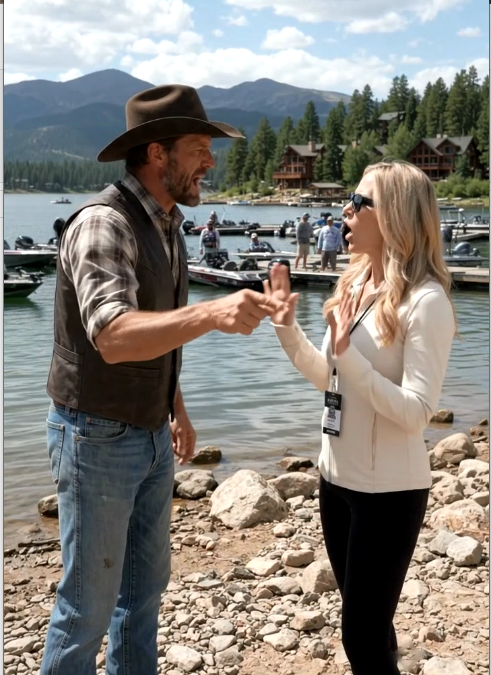
I looked across Elias North toward the tree line separating my property from the subdivision west of me.
My grandfather, Elias Croft, had bought this land in 1931.
Two thousand seven hundred acres of central Tennessee ridge, hardwood forest, creek bottom, pasture, limestone, and two cold spring-fed lakes. He had named them Elias North and Elias South, because apparently when a man spends years surveying timberland, sentiment begins to feel inefficient.
The lakes had passed from him to my grandmother Vera, then to my father Raymond, and finally to me.
Not part of them.
Not fishing rights.
Not shoreline access.
The lakes themselves.
Shoreline, lakebed, water, and all.
I had the deed in the house less than half a mile behind me.
Diane had a laminated badge.
One of us was about to have a very educational autumn.
I simply did not know yet how expensive that education was going to become.
I looked at Diane’s folder.
“What is this event?”
“The Fall Bass Classic.”
“Who runs it?”
“The Pinerest Ridge Recreation Committee administers it on behalf of the HOA.”
“Entry fees?”
She hesitated just long enough.
“That is association business.”
“So yes.”
“It is a permitted event.”
“Permitted by whom?”
“The HOA.”
I almost laughed.
Not because it was funny.
Not yet.
I had spent twelve years working as a civil engineer in Memphis and Nashville. Municipal infrastructure teaches you a few things about paperwork, but the most important lesson is simple: confidence and authority are not synonyms.
A person can sound extremely certain while standing on a document that says exactly the opposite of what they are claiming.
I had seen contractors do it.
Developers did it.
Government departments occasionally did it.
And apparently homeowner associations did it while charging admission to bass tournaments.
Diane took a half step closer.
“Mr. Croft, if you have a complaint regarding lake programming, you’ll need to submit it through the community management office. But right now, you are disrupting a scheduled event.”
“I live here.”
“That does not authorize interference.”
I looked at her for a moment.
Then I nodded toward the water.
“I appreciate the notification.”
Diane seemed surprised.
People carrying folders of authority usually expect resistance. It gives them somewhere to put the speech they practiced.
Instead, I said, “I’ll look into it.”
“You need to make sure you do,” she replied. “We cannot have private individuals disrupting scheduled HOA activities.”
Private individuals.
That was almost impressive.
I turned and walked back toward the house.
The loudspeaker crackled behind me.
“Boat thirty-two, proceed to check-in.”
I did not turn around.
The house sat on a rise above Elias North, built by my grandfather in 1944 from timber he cut on the property himself. The lumber had been rough-sawn, and even after eighty years, some boards remained slightly uneven. I liked them that way. Perfectly machined lumber would have made the place feel less honest.
Inside, I went directly to the study.
My father had kept the important property documents in a cedar box inside the bottom cabinet of an old bookcase. The box was heavy enough that I always had to pull it out with both hands.
I set it on the desk and opened it.
The smell of cedar and old paper came up immediately.
On top sat the deed.
I unfolded it carefully.
I had read it twice during probate fourteen months earlier, after my father died.
Now I read it again.
Slowly.
My grandfather Elias had come to Harland County in 1931 with experience as a timberman and surveyor’s assistant. He had a borrowed transit level, a hand-drawn plat, and a personality that believed measurements were generally more trustworthy than people. He bought the property when much of the surrounding hill country was still timber and rough pasture.
The deed described 2,700 acres and three-quarters by metes and bounds, naming bearings, markers, creeks, ridges, and boundary points.
And there they were.
Elias North.
Elias South.
Both included in their entirety.
No ambiguity.
No community-use clause.
No recreational easement.
No shared-water provision.
No reference to Pinerest Ridge, which made sense because Pinerest Ridge would not exist for another sixty-six years.
I followed every boundary call.
Then I followed it again.
Everything was exactly where I remembered.
I sat back.
On my desk was the notice Diane had handed me.
According to Pinerest Ridge HOA, they had jurisdiction over my lakes.
According to a recorded deed dating to 1931, they did not.
One document had the legal weight of more than eight decades of recorded property ownership.
The other had an HOA logo.
I decided not to guess which one a judge might prefer.
My father had always said the same thing whenever land boundaries came up.
“Don’t argue with somebody’s memory, James. Find the paper.”
So I found the paper.
Then I found more.
My father’s records were meticulous.
He had labeled one banker’s box:
CROFT PROPERTY.
HARLAND COUNTY.
DO NOT DISCARD.
The last instruction was unnecessary.
Nobody in my family discarded paperwork.
I sometimes suspected Crofts would preserve grocery receipts if the county recorder put a stamp on them.
Inside were survey plats, mineral-right documents, timber easements, property-tax records, correspondence, and updated instruments from every transfer in the chain of title.
My grandfather to my grandmother.
My grandmother to my father.
My father to me.
Four generations.
Not a single break.
The latest transfer had been recorded when my father’s estate cleared probate.
While the tournament continued below my house, I spent the rest of that morning reading.
Every few minutes, the loudspeaker drifted up through the trees.
“Weigh-in at two-thirty.”
“Junior division participants, check your livewells.”
“Thanks again to Harland Outdoor Supply for sponsoring today’s event.”
Each announcement felt less like noise and more like evidence.
By noon, I had filled three pages of notes.
At one-thirty, I heard applause from the lake.
At two-thirty, the weigh-in began.
At three-fifteen, someone announced prize money.
At four, engines and trailers began moving toward the access lane.
I did not go back down.
Not because I was afraid.
Because anger is loud.
Records are quiet.
I needed quiet.
The next morning, I walked the boundary between my property and Pinerest Ridge.
Their subdivision occupied land west of mine, approximately 340 homes built in two phases between 1997 and 2004. I remembered when construction began. I had already left for Memphis by then, but my father used to complain about the sound of heavy equipment carrying across the ridge.
Pinerest shared roughly two miles of boundary with my property.
But sharing a boundary is not the same thing as sharing everything on the other side of it.
I walked the fence line.
Some of the cedar posts had been planted by my grandfather in 1948. They were silver-gray above ground and dark as coal where the heartwood entered the soil. The line was not hidden. It was not uncertain. You could stand beside the fence and see exactly where subdivision property ended and Croft property began.
The lakes were well inside my side.
Which created another question.
How were tournament boats getting in?
I spent most of that day walking access trails around Elias North and Elias South.
Near the northwest corner of Elias North, I found the answer.
There was an old farm lane connecting toward the subdivision boundary. Years earlier, my father had used it to haul timber and reach fence sections. The original gate was gone.
In its place, somebody had created a gravel turnout on the subdivision side and widened enough of the old lane to allow trucks pulling bass boats through.
There was no permanent sign.
No booth.
Nothing elaborate.
That explained why I had not immediately noticed.
It looked like an ordinary rural access lane.
Except it led to my lake.
I photographed it.
Then I photographed the tire tracks.
Then I walked down to the bank.
The grass was flattened where people had carried coolers. In the mud near the water, I found pieces of fishing line, a crushed water bottle, two cigarette butts, and a torn corner of a registration tag.
I picked up the paper.
The printed number on it was 41.
Forty-one boats.
At least.
That night, I barely slept.
Not because I doubted the deed.
Because now the dispute had shape.
This was not an accidental trespass.
This was a program.
Someone had widened access.
Someone had organized tournaments.
Someone had collected fees.
Someone had accepted sponsorships.
And someone had decided my lakes could be treated as a community resource without asking the person whose name was on the deed.
Ten days after my encounter with Diane, my neighbor Gerald Patton called.
Gerald had farmed the property north of mine for about forty years. He was a retired schoolteacher with the unique rural talent of knowing almost everything that happened within three counties without ever appearing to ask anybody a question.
“James,” he said, “I heard something you might want to know.”
That sentence from Gerald usually meant somebody had either gotten married, gone bankrupt, bought a tractor they could not afford, or lied about a property line.
“What is it?”
“You know those fishing tournaments they run?”
“I know now.”
He paused.
“How much do you know?”
“Almost nothing.”
“Well.”
Another pause.
“They’ve been doing those for years.”
“How many years?”
“Seven, I think.”
I stared at the wall.
“Seven?”
“Spring and fall mostly. Sometimes extra events in summer. Entry fees. Prize money. Sponsors.”
I picked up a pen.
“How much are the entry fees?”
“Forty, fifty, sometimes sixty dollars a boat from what I’ve heard.”
“How many boats?”
“Depends. Thirty sometimes. Seventy or eighty for the bigger ones.”
I wrote everything down.
“Who runs them?”
“That woman from the HOA recreation committee. Diane something.”
“Ror.”
“That’s her.”
Gerald hesitated.
Then his voice changed slightly.
“James, I don’t think they ever asked anybody.”
I set the pen down.
That was different.
One accidental tournament could be misunderstanding.
Seven years was a system.
Seven years of entry fees meant bookkeeping.
Seven years of sponsorship meant contracts.
Seven years of prize money meant organization.
Seven years of people repeatedly driving trucks and boats onto my property meant somebody had decided this was permitted.
The important question was who.
I pulled a legal pad toward me and wrote three words across the top.
SURVEY.
DEED.
RECORDS.
Then I called an attorney.
Patricia Weller practiced land-use and property law in Nashville. The attorney who handled my father’s estate recommended her and warned me, with admiration, that Patricia did not enjoy weak documentation.
That sounded perfect.
I spoke first to her assistant.
I summarized the situation in about two minutes.
The next afternoon Patricia called personally.
“Mr. Croft?”
“Yes.”
“Patricia Weller. I understand you have an HOA hosting fishing tournaments on two lakes you believe you own.”
“I don’t believe I own them.”
There was a brief silence.
“All right.”
“I have the recorded deed.”
“Even better.”
I explained everything.
The property.
The lakes.
The inheritance.
Pinerest Ridge.
Diane.
The tournament.
Gerald’s information.
Patricia listened without interruption.
When I finished, she said, “The first question in any situation like this is whether the party asserting authority has a legal foundation for the assertion.”
I waited.
“The second question is what the record shows.”
“That’s where I was headed.”
“Good. Because those are usually the same question.”
She asked me to send copies of my deed and probate documents. Meanwhile, her office would pull the subdivision plats, HOA covenants, recorded easements, and anything else affecting the shared boundary.
Eleven days later, I received forty-seven pages from the Harland County Register of Deeds.
I printed all of them.
Then I cleared my dining-room table and arranged the documents chronologically.
The original 1931 deed.
Subsequent transfers.
The Pinerest Ridge plats from 1997 and 2002.
Recorded covenants.
Recorded easements.
Boundary documents.
I spent an afternoon reading.
Outside the window, Elias North moved gently under a light wind.
Inside, Pinerest Ridge began collapsing on paper.
The 1997 subdivision plat showed its eastern boundary terminating at my fence.
Not near the lakes.
Not through the lakes.
At the fence.
The lakes were not included.
They were not labeled.
They were not referenced as amenities.
They were not described as common recreational areas.
They did not appear inside the subdivision plat at all.
The 2002 plat for the later phase showed the same thing.
Boundary at the fence.
Lakes outside.
I moved to the HOA covenants.
Those were recorded in 1998.
The language defining association jurisdiction was explicit.
The HOA governed real property within the boundaries of the Pinerest Ridge planned unit development as recorded in the specified county plat books.
I had those plat pages in front of me.
Elias North was not inside them.
Elias South was not inside them.
The HOA’s own governing document pointed directly to a map proving the HOA had no jurisdiction over my lakes.
I called Patricia.
“I think you’re going to enjoy this.”
“I rarely enjoy HOA documents, Mr. Croft.”
“You might make an exception.”
I explained.
She asked me to send scans.
An hour later she called back.
“You’re right.”
“That sounded painful.”
“It was manageable.”
“So what does it mean?”
“It means their jurisdictional argument is weak enough that I would be uncomfortable calling it an argument.”
I laughed.
She continued.
“There is no recorded easement granting lake access. No license. No lease. Nothing giving Pinerest Ridge legal recreational rights over either body of water.”
“What about seven years of use?”
“Seven years of unauthorized use does not automatically create ownership.”
That was the part I needed.
She then asked whether my father or grandfather might have granted informal permission in writing.
“I don’t think so.”
“Don’t think. Check.”
Patricia and my father would have gotten along.
I went back to the cedar box.
For three days, I read.
Every relevant letter.
Every boundary communication.
Every document involving the neighboring development.
Nothing gave the HOA permission.
Then I found something better.
Two letters.
The first was dated in 1999.
It came from the site manager working on the first phase of Pinerest Ridge. The developer was asking my father whether future residents could use Elias North and Elias South for community recreation.
The letter was courteous.
Professional.
Specific.
They had known the lakes were not theirs.
They had asked.
The second letter was my father’s answer.
I knew his handwriting instantly.
Careful block letters.
Precise spacing.
No wasted language.
He had written:
The lakes located on Croft property are private property. No access for Pinerest Ridge recreational use will be granted.
That was essentially it.
My father had not negotiated.
He had not said maybe later.
He had not said residents could fish casually.
He had said no.
In writing.
In 1999.
I sat at the desk with the letter in my hand longer than I needed to.
My father had been gone fourteen months. There were still mornings when I expected to hear his truck coming down the gravel drive. There were still moments when I reached for the phone to ask him something and remembered halfway through the motion that no one would answer.
He had not been an emotional man.
He did not give speeches about legacy.
He did not decorate ordinary tasks with sentiment.
But he had preserved that letter.
He had placed it in the box.
He had left the answer waiting for the day I needed it.
I photographed both letters and emailed them to Patricia.
She called less than an hour later.
This time there was something almost cheerful in her voice.
“Mr. Croft.”
“James is fine.”
“James, this letter is extremely important.”
“I assumed you might like it.”
“The HOA cannot credibly argue innocent reliance if their developer or predecessor asked for access and your father explicitly denied it.”
I looked at my father’s handwriting on the copy beside me.
“So somebody knew.”
“Yes.”
“Maybe not Diane.”
“Maybe not.”
“But the organization had notice.”
“Exactly.”
She paused.
“And that changes the character of seven years of commercial use.”
I understood what she meant before she finished.
An honest misunderstanding was one thing.
Operating after written denial was another.
Patricia asked whether I wanted her to prepare a formal demand.
“Yes.”
“How aggressive?”
I thought about Diane standing at my shoreline telling me I lacked authorization to interfere with an event being held on my own property.
“Accurate,” I said.
Patricia laughed softly.
“My favorite level of aggression.”
Four days later she sent me a draft.
It was four pages, single-spaced.
It cited the deed.
The subdivision plats.
The HOA covenants.
The absence of an easement.
The lack of a license.
The private status of both lakes.
It identified me as the exclusive owner of Elias North and Elias South.
It informed Pinerest Ridge that no permission had ever been granted for tournament operations.
It demanded three things.
First, all tournament activity had to stop immediately.
Second, the HOA had to confirm in writing that it claimed no future right to access either lake.
Third, it had to provide a full accounting of every dollar collected through tournament operations.
Entry fees.
Sponsorships.
Administrative charges.
Everything.
They had twenty-one days.
Patricia sent copies to the HOA’s registered agent and its board president.
I drove my own copy to the post office.
Doris was behind the counter.
She had worked there since before I moved to Memphis. She looked at the certified-mail envelope. Then she looked at me. She asked nothing.
That is one of the reasons I always liked Doris.
She applied the certified sticker, stamped the receipt, and slid it back across the counter.
I put it in my jacket pocket.
On the way home, I stopped beside Elias North.
The tournament equipment was gone.
No boats.
No PA system.
No folding tables.
Only water.
Late-afternoon light turned the surface copper. A great blue heron stood near the northern shallows, moving one leg at a time with the deliberate concentration of a creature whose entire schedule consisted of waiting for fish to make mistakes.
I watched him for a while.
Then I went home.
The HOA had twenty-one days.
They used nineteen.
Their response came through an attorney named Todd Greer.
Three paragraphs.
He disputed my ownership position without producing a competing deed.
He claimed the lakes had been incorporated into Pinerest Ridge’s recreational infrastructure through long-standing use and community reliance.
Then he raised something called an implied easement by necessity.
The third paragraph suggested the attorneys meet to negotiate.
Patricia forwarded it to me with a note.
Their easement theory is not strong. Call me.
I did.
“What is an implied easement by necessity?” I asked.
“In simplified terms, it protects property that would otherwise be landlocked.”
“Pinerest Ridge isn’t landlocked.”
“No.”
“It has two road entrances.”
“I know.”
“Neither of which involves a lake.”
“I also know that.”
“So how does a recreational fishing tournament qualify as necessary access?”
“It doesn’t.”
That was comforting.
Patricia explained that Pinerest Ridge had public-road access on its northern and eastern sides. Nobody needed to cross my property to reach their homes. Nobody needed my lakes to make productive use of their lots.
They simply liked fishing there.
Preference is not necessity.
Greer’s letter also relied on long-term use.
But seven years was not enough to establish the kind of prescriptive right they were suggesting under the circumstances, and my father’s written refusal created an additional problem for them.
Patricia drafted our response.
This time it was twelve pages with exhibits.
The 1999 letters were attached.
The implied-easement argument was addressed and dismantled.
Then Patricia demanded more detailed records.
Tournament registrations.
Entry-fee schedules.
Prize disbursements.
Sponsor agreements.
Administrative fees.
Internal communications.
Any board minutes involving the lakes.
Any correspondence referencing ownership.
Any discussion about permission.
The letter also instructed the HOA to preserve all relevant documents in anticipation of litigation.
One word appeared in the letter that Patricia later admitted she had included partly for psychological effect.
Spoliation.
It worked.
Four days later, Todd Greer replied by certified mail.
The tone had changed.
The implied-easement argument was no longer emphasized.
He said the board was reviewing the matter internally.
The HOA would provide revenue information within thirty days.
They did not admit fault.
But they had stopped telling me I was wrong.
That was progress.
Around then Gerald called again.
“I hear they had a board meeting.”
“How do you know that?”
“Church.”
I did not ask.
Gerald’s information network was structurally mysterious and probably more reliable than most intelligence agencies.
“Closed meeting,” he continued. “Almost three hours.”
“That sounds fun.”
“Two board members left before it was over.”
That interested me.
“Angry?”
“That’s what I heard.”
“About what?”
“James, at some point you’re asking me to turn gossip into journalism.”
“Fair.”
He laughed.
“Thought you’d want to know.”
I did.
Not because church gossip belonged in a legal filing.
It did not.
But it told me the board was beginning to understand that this was not Diane confronting some stranger by a lake.
This was an institutional problem.
Forty-seven days after they promised the accounting, it finally arrived.
A spreadsheet.
Seven years.
Spring tournaments.
Fall tournaments.
Special events.
Entry fees.
Sponsorship money.
Administrative charges.
Patricia sent it to me with a short message.
Add the totals yourself.
I did.
Then I did it again.
$214,380.
I sat there looking at the number.
Two hundred fourteen thousand three hundred eighty dollars.
That was how much money the HOA’s records showed had moved through its tournament operation over approximately seven years.
The most interesting column was labeled ADMINISTRATIVE FEES.
Almost $40,000.
I called Patricia.
“What exactly were they administrating?”
“Your lake, apparently.”
I could hear papers moving on her desk.
“These look like facility and processing charges.”
“Facility.”
“Yes.”
“They charged people to use a facility they didn’t own.”
“That appears to be what their own spreadsheet shows.”
I leaned back in my chair.
There are moments in any dispute when the argument becomes so neatly documented that continuing to be angry feels almost unnecessary.
This was one of those moments.
Seven years earlier, somebody could have picked up a telephone and asked.
The answer would have been no.
Instead, they created a business model.
They advertised tournaments.
Collected registration fees.
Collected sponsorship money.
Charged administrative fees.
Paid prizes.
And somewhere along the way, repetition apparently transformed trespassing into tradition in their minds.
Patricia walked me through potential damages.
Because we now had evidence that my father explicitly denied access in 1999, she believed there was a strong argument that the HOA’s conduct could be treated as willful rather than accidental.
Under the legal theory she intended to pursue, damages could potentially be multiplied.
“How much?”
“If the court accepts the full amount as actual damages and finds willful trespass, exposure could exceed six hundred forty thousand dollars.”
I wrote the number on my pad.
Then I underlined it once.
I did not celebrate.
I went outside.
Winter had begun settling into the hills. A faint mist floated above Elias North where comparatively warmer water met the cold air. I walked to the north bank.
My father had taught me to fish there when I was seven.
Back then, he had pointed across the surface and said, “There. That’s where they go when the weather turns.”
I had stared at what looked like an ordinary patch of water.
“What is?”
“The ledge.”
“I can’t see it.”
“You don’t have to.”
That answer had annoyed me at seven.
Eventually, I understood.
The lake had structure you could not see from above.
Channels.
Drop-offs.
Submerged timber.
Limestone shelves.
The fish knew every one of them.
My father knew most.
And eventually he taught me.
Standing there decades later, I realized land was much the same.
Ownership had an invisible structure too.
A person looking from the outside saw trees, water, gravel, fence.
The law saw deeds, plats, easements, covenants, recorded transfers, notices, and rights.
Diane had looked at my lakes and seen an HOA amenity.
My grandfather had looked at the same water and filed a deed.
Only one of those things mattered now.
I went back inside.
Then I called Patricia.
“File it.”
The complaint was filed in Harland County Circuit Court on a Thursday morning in early December.
Seventeen weeks had passed since Diane first told me I was interfering with her permitted event.
The lawsuit named Pinerest Ridge Homeowners Association as the defendant.
It alleged willful trespass.
Unauthorized commercial use of private water.
Wrongful collection of revenue generated through use of property the HOA did not own.
It sought actual damages of $214,380.
It sought enhanced damages based on willfulness.
It sought attorney’s fees.
Most importantly to me, it sought a permanent injunction prohibiting Pinerest Ridge from using Elias North or Elias South.
The complaint included the documents.
My deed.
The chain of title.
The subdivision plats.
The covenants.
My father’s 1999 letter.
The tournament accounting.
Certified-mail receipts.
Forty-seven exhibits in total.
I remember Patricia telling me something after filing.
“We are not asking the judge to believe you.”
That sounded strange.
“What are we asking him to do?”
“Read.”
Pinerest Ridge filed its answer three weeks later.
Todd Greer raised three main defenses.
Implied easement by necessity.
Prescriptive easement through open and continuous use.
Equitable estoppel based on the HOA’s supposed reliance on years without objection.
None surprised Patricia.
“Do any of these worry you?” I asked.
“Any lawsuit can surprise you.”
“That wasn’t my question.”
“No.”
I smiled.
She was learning my habits.
The case was assigned to Judge Harold Baines, who had served on the Harland County circuit bench for twenty-two years.
Patricia knew his reputation.
“He likes documents.”
“I like him already.”
“He also dislikes people asking courts to create property rights that are contradicted by recorded instruments.”
“Now I really like him.”
“Do not get emotionally attached to a judge before the hearing.”
“I’ll try to remain professionally indifferent.”
The hearing was scheduled for March.
That gave both sides several months.
Winter moved across the property while lawyers exchanged documents.
I repaired fences.
Cleared storm debris.
Worked on the barn roof.
Walked both lakes.
And watched the Pinerest Ridge access trail remain empty.
No boats.
No tournament banners.
No volunteers setting up tables.
The silence was noticeable.
On several weekends I saw trucks slow along the subdivision side before turning away.
Whether Greer had warned residents or the board had posted something internally, I never learned.
I only knew the tournaments stopped.
One afternoon in January, Diane came to the property.
She did not drive down to the lake.
She stopped at the main gate.
I was replacing a hinge when her SUV pulled onto the gravel shoulder.
She stayed inside for several seconds before getting out.
No blazer this time.
Heavy winter coat.
No badge.
No folder.
That alone made the conversation feel more human.
“Mr. Croft.”
“Diane.”
“Can we talk?”
I set down the wrench.
“Sure.”
She glanced toward the driveway.
“I’ve been advised not to discuss the lawsuit.”
“Then I’d recommend following that advice.”
Her jaw tightened.
“I just want you to understand something.”
I waited.
“When I took over recreation, these tournaments were already considered established community programs.”
“That may be true.”
“I didn’t invent them.”
“I didn’t say you did.”
“We had records going back years.”
“I know. I have them now.”
That landed.
She looked away.
“The board told us the lakes were community recreational resources.”
“Who told the board?”
“I don’t know.”
“Did you ever check the county plat?”
“No.”
“The HOA covenants?”
“I knew what they said.”
“Did you look at the plat they referenced?”
She did not answer.
I leaned against the fence post.
“Diane, when you walked up to me in September, you told me I didn’t have authorization to interfere with a permitted event.”
Her face reddened slightly.
“I was acting on information provided to me.”
“That’s exactly the problem.”
She folded her arms.
“What do you want from us?”
“The same thing I wanted before anybody hired a lawyer.”
“What?”
“Stay off my lakes.”
“And six hundred thousand dollars?”
“That question belongs with Patricia.”
“You know this could bankrupt programs people depend on.”
I looked toward the subdivision.
“Fishing tournaments?”
“Community programs.”
“You charged anglers money to use property you didn’t own.”
“You keep saying we didn’t own it.”
I stared at her.
That sentence explained more than she intended.
“I don’t keep saying it, Diane.”
I nodded toward the house.
“The deed says it.”
She left five minutes later.
I told Patricia about the conversation.
She became very quiet.
“Do not have another substantive conversation with her.”
“I didn’t say anything new.”
“I know.”
“She showed up here.”
“I also know.”
“Are you angry?”
“No. I am practicing a legal technique called wishing my client would stop talking to represented opposing parties.”
“Is that in law school?”
“Advanced course.”
I promised.
February arrived.
Discovery produced more internal HOA documents.
Most were mundane.
Schedules.
Vendor invoices.
Registration lists.
Sponsor emails.
But a handful mattered.
One board email from 2017 referred to “opening the Croft lakes program.”
Not Pinerest lakes.
Croft lakes.
Another message asked whether the association had “ever formalized use permission.”
A board member responded that access had “always been treated as available.”
Patricia highlighted that sentence.
“Notice what it does not say.”
“That anybody gave permission.”
“Exactly.”
Then came a scan of an old file note.
Someone had apparently located my father’s 1999 refusal years earlier.
The note referenced “prior owner unwilling to grant formal lake rights.”
I read it twice.
There it was.
Inside their own archive.
Not only had my father sent the letter.
The HOA had retained knowledge of it.
“Does that matter?” I asked.
Patricia looked at me across her conference-room table.
“Quite a bit.”
From there, settlement discussions became more serious.
Greer proposed that the HOA receive a limited recreational license in exchange for resolving the damages claim.
I rejected it.
Patricia did not argue.
They proposed seasonal access.
No.
Catch-and-release only.
No.
Resident-only fishing.
No.
A shoreline buffer with designated hours.
No.
Finally Patricia asked, “Is there any access arrangement you would consider?”
“No.”
“Good. I wanted to make sure before I tell them that permanently.”
I did not hate the people of Pinerest Ridge.
Most of them probably had no idea.
Some had bought homes believing nearby lake access was part of the community culture.
That was unfortunate.
But the answer was not to legalize someone else’s unauthorized use because enough time had passed for residents to become emotionally attached to it.
My family had said no before the first tournament.
The HOA ignored that answer.
A new generation of residents did not erase it.
March arrived.
The morning of the hearing was cold.
Frost covered the grass along my western fence.
Wood smoke drifted faintly across the ridge.
Elias North lay flat under a gray sky.
I dressed simply.
Dark pants.
Button-down shirt.
Work jacket.
Patricia had suggested a suit.
I owned one.
Then she said, “Actually, wear whatever makes you look like yourself without looking disrespectful.”
So I did.
I drove the same truck I used for fence posts and feed.
Harland County courthouse sat fourteen miles from the property.
I arrived early.
Patricia was already outside the courtroom with her briefcase open beside her. She sat on an old wooden bench polished smooth by decades of nervous hands and restless clothing.
Her legal pad rested across one knee.
“Morning,” she said.
“Morning.”
“You sleep?”
“Some.”
“Good enough.”
Todd Greer appeared several minutes later with a younger attorney carrying a second briefcase.
Greer’s suit looked expensive enough to have its own insurance policy.
He nodded at Patricia.
He did not nod at me.
Diane sat in the gallery.
Charcoal blazer.
Folder on her lap.
Same posture she had worn at Elias North.
Upright.
Prepared.
Certain, or determined to appear that way.
At 9:15, Judge Harold Baines entered.
Everyone rose.
He sat.
We sat.
He adjusted the file in front of him and looked over the parties.
“This is a property-boundary and access dispute,” he said.
His voice was calm.
“The plaintiff claims the defendant has conducted commercial fishing tournaments on privately owned water. The defendant asserts recreational access rights.”
He looked down.
“Let’s see what the record shows.”
Patricia began.
Watching a good property attorney present a documented case is not dramatic in the way television teaches people courtroom work should be dramatic.
She did not pace.
She did not shout.
She did not point at Diane.
She stood at the lectern and built a structure.
First, ownership.
She introduced the 1931 deed.
She traced the chain of title.
Elias Croft to Vera Croft.
Vera to Raymond.
Raymond’s estate to me.
Then the legal description.
Both lakes.
Shoreline.
Bed.
Water.
No reservation.
No exception.
No transferred recreational rights.
Next, the Pinerest Ridge plats.
The 1997 development boundary appeared on the courtroom display.
Patricia enlarged the eastern edge.
There was my property line.
The subdivision stopped there.
She displayed the 2002 plat.
Same boundary.
Then she placed the HOA covenant language beside the plats.
The association’s own governing documents said its jurisdiction extended to property inside the recorded subdivision boundary.
“Your Honor,” Patricia said, “the defendant’s jurisdictional argument fails under its own governing instrument.”
Judge Baines studied the screen.
“The lakes are not shown inside the planned development.”
“No, Your Honor.”
“Are they referenced anywhere on the plats?”
“No.”
“Any recorded amendment adding them?”
“No.”
“Any annexation instrument?”
“No.”
“Any easement?”
“No.”
Todd Greer shifted slightly at the defense table.
Patricia moved on.
She introduced the 1999 correspondence.
The developer’s request.
My father’s refusal.
She enlarged my father’s letter.
Then she read it.
“The lakes located on Croft property are private property. No access for Pinerest Ridge recreational use will be granted.”
The courtroom was completely silent.
Twenty-five years after my father wrote those words, they were doing exactly what he intended them to do.
Preserving an answer.
Patricia looked toward the judge.
“That letter predates the defendant’s tournament program by approximately eighteen years.”
Judge Baines nodded.
“And defendant received it?”
“The request came from the development side, and subsequent HOA records reference the denial.”
She introduced the internal file note.
Prior owner unwilling to grant formal lake rights.
That hurt them.
Greer knew it.
You could see it.
Then Patricia introduced the accounting.
$214,380.
She broke the number down.
Entry fees.
Sponsors.
Administrative charges.
Approximately $40,000 in fees the HOA collected specifically for operating or providing access to events held on my lakes.
“They were not merely allowing residents to fish,” Patricia said. “The defendant created, administered, and monetized organized events on private property after written notice that recreational access had been denied.”
She described the requested damages.
Then she requested a permanent injunction.
Greer stood.
He began with long-standing use.
Seven years of open, continuous tournament operations.
Community expectations.
Residents’ reliance.
The absence of physical barriers around the lakes.
No signs posted every hundred feet.
No locked gates surrounding the shore.
Judge Baines interrupted.
“Counsel, are you suggesting the absence of a fence around an entire body of water constitutes permission?”
“No, Your Honor. I am suggesting it is relevant to the character of use.”
“Proceed.”
Greer continued.
He argued prescriptive easement.
Then implied necessity.
Then equitable estoppel.
He was polished.
Careful.
And completely trapped by the documents.
The strongest part of his argument was the idea that the HOA had used the lakes openly for seven years without my father filing suit.
But my father had been older.
His health had declined.
I had been living away from the property.
More importantly, seven years did not become twenty because it sounded inconvenient.
Judge Baines let Greer finish.
Then he looked down at the file.
He turned several pages.
Nobody spoke.
Finally he raised his eyes.
“Counsel.”
Greer stood.
“Yes, Your Honor.”
“You’ve asserted prescriptive easement.”
“Yes.”
“The applicable period is twenty years.”
Greer began to respond.
Judge Baines lifted one hand.
“You’ve established approximately seven.”
“Yes, Your Honor, but—”
“The doctrine does not apply.”
He looked down again.
“You’ve also asserted implied easement by necessity.”
“Yes.”
“Pinerest Ridge has access to public roads along its northern and eastern boundaries.”
“Yes.”
“So there is no necessity.”
Greer tried another angle.
“The necessity asserted relates to access to the recreational resource—”
“That is not what the doctrine means.”
Silence.
“The doctrine does not apply.”
Judge Baines turned another page.
“Equitable estoppel.”
He glanced at my father’s letter.
“You argue reliance.”
“Yes.”
“The plaintiff’s predecessor in title explicitly denied access in writing.”
Greer said nothing.
Judge Baines continued.
“The defendant’s own records acknowledge reluctance by the prior owner to grant lake rights.”
He closed the file.
“I find no basis for reasonable reliance.”
I felt Patricia shift slightly beside me.
That was the first sign she had given all morning that we were near the end.
Judge Baines looked at both tables.
“The recorded deed establishes ownership of Elias North and Elias South in the plaintiff’s chain of title. The subdivision plats do not include either lake. The defendant’s covenants do not extend its jurisdiction beyond the recorded development boundary. There is no easement, license, lease, or other recorded or proven instrument granting Pinerest Ridge Homeowners Association a right to use the lakes.”
Nobody moved.
“The defendant operated commercial fishing tournaments on those lakes from approximately 2017 through the present despite prior written notice that recreational access had been denied.”
He paused.
“The court finds the trespass willful.”
Diane’s posture changed.
Just slightly.
But I saw it.
Judge Baines looked down at the damages sheet.
“The plaintiff has established actual damages in the amount of $214,380.”
He stated that the applicable willful-trespass remedy allowed that amount to be trebled.
Then he said the number.
“$643,140.”
There are numbers you hear and numbers you feel.
That one seemed to change the air in the room.
“The plaintiff is further entitled to permanent injunctive relief prohibiting Pinerest Ridge Homeowners Association, its agents, committees, representatives, and members acting under association authority from using Elias North or Elias South without the express permission of the owner.”
He awarded attorney’s fees.
Then he signed the order.
That was it.
No shouting.
No dramatic confession.
No one pounded a table.
The clerk took the paperwork.
Judge Baines moved to the next matter.
Seven years of tournaments ended with the movement of a pen.
I remained seated for several seconds.
Patricia began placing papers into her briefcase.
“You all right?” she asked.
“Yes.”
“You don’t look excited.”
“I don’t think excited is the word.”
“What is?”
I looked toward the gallery.
Diane was standing.
She still held the folder.
But there was no badge.
No speech.
No jurisdiction.
“Finished,” I said.
Patricia nodded.
“That’s a good word.”
Across the room, Todd Greer leaned toward the younger attorney and spoke quietly.
Diane did not look at me.
I did not approach her.
There was nothing left for either of us to say.
The record had said it.
Outside, the air had warmed slightly.
I stood on the courthouse steps while Patricia explained what came next.
Judgment collection.
Attorney’s fees.
Enforcement of the injunction.
Possible appeal.
Settlement possibilities.
The HOA faced a judgment larger than several years of its normal operating budget.
“They may want terms,” she said.
“I expected that.”
“Do you want to destroy them?”
“No.”
She studied me.
“I want them off my property.”
“That’s been consistent.”
“They pay what they owe. They acknowledge the lakes aren’t theirs. Then I’m done.”
Patricia closed her briefcase.
“That makes my job easier.”
Settlement negotiations began almost immediately.
The board had several bad options.
They could appeal and spend more money defending arguments Judge Baines had already rejected.
They could attempt to satisfy the entire judgment quickly, which would devastate association finances.
Or they could negotiate payment while accepting the permanent injunction.
Six weeks later, we reached terms.
The HOA agreed to pay actual damages in full.
The remainder of the trebled judgment would be paid under a structured schedule.
My legal fees were covered.
Most importantly to me, Pinerest Ridge signed a formal written acknowledgment that the association possessed no ownership, easement, license, recreational right, access right, or other interest in Elias North or Elias South.
Patricia had that acknowledgment recorded with Harland County.
I insisted on that.
Paper had started the dispute.
Paper would end it.
Three board members resigned over the following weeks.
Diane was one of them.
The property management company ended its contract with the HOA soon afterward.
Gerald called when he heard.
“Well,” he said, “sounds like things are lively over there.”
“I imagine so.”
“Church has opinions.”
“I imagine that too.”
“You want to hear them?”
“No.”
“That is the correct answer.”
I laughed.
A few days later, I drove through my gate after meeting Patricia for the last time regarding the settlement.
The road curved down toward the house.
Elias North appeared first between the trees.
Then Elias South farther beyond the ridge.
Both lakes looked exactly as they had before any of this happened.
That surprised me.
Some part of me expected victory to make the place look different.
Brighter.
Larger.
More mine.
Instead, the water was cold and flat under March light. The hardwoods on the eastern shoreline were still mostly bare. Willows along the north bank had just begun to show green.
A heron stood in the shallows.
Probably the same bird.
Maybe not.
He did not care either way.
I parked near the house.
Then I walked down to Elias North.
The place where Diane had first confronted me was empty.
No tournament canopy.
No placards.
No PA system.
No line of trailers.
Wind moved lightly across the water.
I stood at the edge.
This was the same shoreline where my father had taught me to fish.
The same water my grandfather had included in the 1931 deed.
The same lake my grandmother had protected after he died.
The same property my father had refused to hand over for subdivision recreation in 1999.
For seven years, the HOA had treated repetition as permission.
That was their mistake.
Using something often does not automatically make it yours.
Calling something a community resource does not make it a community resource.
Printing rules does not expand the boundary printed on your plat.
A laminated badge does not create jurisdiction.
An HOA vote cannot transfer somebody else’s deed.
And confidence cannot repair a missing legal right.
My grandfather understood that before Pinerest Ridge existed.
He had been a surveyor’s assistant before he became a farmer.
To him, land was never just scenery.
Every ridge connected to a hollow.
Every creek connected to a watershed.
Every fence connected to a corner marker.
Every parcel connected to a deed.
He believed boundaries mattered because boundaries were agreements preserved across time.
That was why he had recorded everything carefully.
My father understood it too.
When Pinerest Ridge asked to use the lakes in 1999, he did not rely on a handshake.
He wrote a letter.
Private property.
No access.
Simple.
Clear.
Preserved.
Years later, when people he had never met decided his refusal no longer mattered, that old piece of paper remained in a box waiting for someone to need it.
I thought about the morning Diane approached me.
She had been so certain.
“You don’t have authorization.”
Technically, she had been right about one thing.
Somebody did not have authorization.
She just had the parties reversed.
What stayed with me most was how easily institutional confidence can imitate legal authority.
A logo helps.
A title helps.
A badge helps.
A lawyer’s letter helps.
If enough people behave as though a claim is legitimate, the person on the receiving end can begin doubting himself.
That is especially true with property disputes.
Someone moves a marker.
Someone widens a trail.
Someone starts parking on an unused strip of land.
Someone says a lake has always been shared.
Someone says the HOA controls it.
Years pass.
New residents arrive.
Nobody remembers who first asked permission.
Eventually habit begins dressing itself like ownership.
But records have longer memories than people.
The deed remembered.
The plat remembered.
The covenants remembered.
My father’s letter remembered.
Even the HOA’s own files remembered.
That was why I never regretted not arguing with Diane on the first morning.
Had I shouted, she would have shouted back.
Had I threatened her, the board would have framed the dispute as a personal conflict.
Had I blocked vehicles immediately or tried physically removing people, I might have created side issues that had nothing to do with the real question.
Instead, I thanked her.
Then I went home.
And I opened the cedar box.
Everything that mattered was already inside.
The property had survived nearly a century of weather, economic changes, family deaths, development pressure, and shifting county lines.
It did not need me to be loud.
It needed me to be accurate.
Several months after the settlement, I was repairing a dock on Elias South when I noticed a man standing outside the western fence.
He looked to be in his late sixties.
Baseball cap.
Fishing shirt.
Hands in his pockets.
He waited until I looked up.
“Mr. Croft?”
“Yeah?”
“My name’s Henry Wallace. I live in Pinerest Ridge.”
I set down the drill.
“What can I do for you?”
He looked toward the lake.
“I fished those tournaments.”
I said nothing.
“Five years.”
He seemed embarrassed.
“I didn’t know.”
“I figured most people didn’t.”
“They told us the HOA had an agreement.”
“I’ve heard.”
“My grandson fished one with me last year.”
He looked down.
“I wanted you to know I wouldn’t have come on your property if I knew.”
I believed him.
“Thank you.”
He nodded.
Then he started to leave.
“Mr. Wallace.”
He turned.
“You fish much outside tournaments?”
He smiled faintly.
“Whenever my wife lets me.”
I pointed north.
“County reservoir has been good this spring.”
“I’ve heard.”
“No entry fee.”
He laughed.
“That’s already an improvement.”
Then he walked away.
That conversation mattered to me.
Not because I needed an apology.
I didn’t.
But it confirmed something I had suspected.
The people fishing my lakes were mostly not the problem.
They had bought registrations from an organization claiming authority.
They trusted the HOA.
The real failure was institutional.
Somebody had taken an old refusal and treated it as negotiable.
Somebody after that had treated unauthorized use as precedent.
Then somebody else monetized the precedent.
By the time Diane inherited the recreation program, the fiction had been repeated so often that she could stand on my shoreline and sincerely tell the owner he was interfering.
That is how these things happen.
Rarely with one dramatic decision.
More often through layers of small assumptions.
Nobody checks the plat.
Nobody reads the deed.
Nobody finds the old letter.
Everyone trusts the person before them.
Until eventually a bass tournament with eighty boats is operating on private water, and the organization running it has forgotten to ask the only person whose answer matters.
The settlement payments continued according to schedule.
I used part of the money to repair erosion along Elias South.
Another portion went toward rebuilding two old fishing docks.
I installed better gates on the western access lanes, not because a gate created ownership, but because clear physical boundaries prevented future confusion.
At each entrance, I posted a simple sign.
PRIVATE PROPERTY.
ACCESS BY OWNER PERMISSION ONLY.
Nothing about the HOA.
Nothing threatening.
No mention of lawsuits.
Just a statement.
One afternoon, Patricia visited the property.
It was the first time she had seen the lakes in person.
We stood near Elias North.
“So this is what caused all the paperwork,” she said.
“This is it.”
She looked across the water.
“It’s beautiful.”
“Don’t tell the HOA.”
She laughed.
“I think they already noticed.”
We walked along the bank.
I showed her the old cedar fence.
The access lane.
The ledge where my father taught me to fish.
When we reached the house, she stopped at the porch and looked back.
“You know what was unusual about your case?”
“What?”
“You had everything.”
“I had a lot of paperwork.”
“No. You had everything.”
She counted on her fingers.
“Recorded deed. Clean chain of title. Plat maps. Governing documents contradicting the defendant. Written denial of permission. Revenue records. Internal acknowledgment. Most property cases have one perfect document missing.”
“My family kept things.”
“That may be the understatement of the year.”
I smiled.
“My father labeled a box ‘Do Not Discard.’”
“I like your father.”
“You would have.”
Before she left, Patricia gave me the final recorded acknowledgment from the HOA.
It bore the county stamp.
Pinerest Ridge Homeowners Association hereby acknowledged it held no right, title, easement, license, or recreational interest in Elias North or Elias South.
I carried the document inside.
Then I opened the cedar box.
There was still room.
I placed the acknowledgment beside my father’s 1999 letter.
Twenty-five years apart.
Same answer.
No.
I closed the lid.
That should have been the end of the story.
In most practical ways, it was.
Life on the property returned to normal.
Spring warmed the water.
Bass moved shallow.
The hardwoods leafed out.
Summer storms came over the western ridge.
By June, Elias North looked nothing like the gray lake outside the courthouse morning. It was green around the edges and bright under the Tennessee sun.
I began fishing again.
Not tournaments.
Never cared much for them.
Most evenings, I took an old aluminum boat out alone.
Sometimes I brought my father’s rod.
It was heavier than modern equipment and technically worse in almost every measurable way.
I liked it anyway.
One evening, I drifted near the submerged ledge.
The light was beginning to fade.
I cast toward the drop-off.
The lure hit.
I let it sink.
Two seconds later, the line jumped.
I set the hook.
The fish pulled hard.
Not huge.
Four pounds maybe.
A good bass.
I brought it alongside, lifted it carefully, removed the hook, and held it over the water.
For a moment, I thought about my father.
Me at seven years old.
Standing beside him.
“There. That’s where they go when the weather turns.”
At the time, I thought he was teaching me where fish lived.
Maybe he was.
But age changes what you hear inside old memories.
I lowered the bass into the water.
It rested in my hand for a second.
Then it kicked once and disappeared.
The lake settled immediately.
No applause.
No scoreboard.
No loudspeaker.
No numbered placard.
Just water closing over a fish.
I sat there until the sun went behind the ridge.
My family had held that land since 1931.
I used to think inheritance meant receiving something.
The deed.
The house.
The acreage.
The lakes.
Now I understood that inheritance also meant being temporarily responsible for something that existed before you and, if you did your job correctly, would exist after you.
My grandfather had protected it.
My grandmother had protected it.
My father had protected it.
For a while, it was my turn.
The HOA dispute did not make the property more mine.
The judgment did not make the lakes more mine.
The $643,140 ruling did not create a right.
It recognized one that had been there all along.
That distinction mattered.
The court had not given me Elias North and Elias South.
My grandfather’s recorded deed had already done that nearly a century earlier.
Judge Baines simply made Pinerest Ridge stop pretending otherwise.
And in the end, that was the strangest part of the entire experience.
The answer had never been hidden.
It sat in the county register.
It sat in the subdivision plats.
It sat in the HOA’s covenants.
It sat in my father’s letter.
It sat in their own files.
Seven years of tournaments could not erase it.
Hundreds of anglers could not erase it.
More than two hundred thousand dollars in collected revenue could not erase it.
A recreation committee could not erase it.
An attorney’s theory could not erase it.
The answer did not change because nobody bothered reading it.
Land records do not become less true when ignored.
They simply wait.
That autumn, almost exactly one year after Diane first approached me, I walked the western boundary again.
The cedar posts were still standing.
Some had been there since 1948.
They leaned a little.
The wire had rusted in places.
Lichen covered several posts.
But the line held.
I stopped at one post near the hill above Elias North.
My grandfather had probably placed it himself.
I rested a hand against the rough wood.
Beyond the fence, roofs from Pinerest Ridge were visible through the trees.
On my side, the land fell toward the lake.
Two worlds touching at a boundary.
Nothing wrong with that.
Good neighbors do not need to own the same ground.
They only need to know where one person’s ends and the other’s begins.
The wind moved through the hardwoods.
Somewhere down by the water, a fish broke the surface.
I turned and walked toward home.
The lakes were quiet behind me.
And for the first time since that loudspeaker shattered the morning, they sounded exactly the way they were supposed to sound.
Not like a community program.
Not like a revenue stream.
Not like an HOA amenity.
Like water held in the hollow of land my family had never agreed to give away.
Like my father’s letter still speaking from the cedar box.
Like a boundary finally remembered.
Like home.