HOA Karen Threatened to Annex My House “By Force”—Then the Judge Asked to See the Bylaw She Forged.
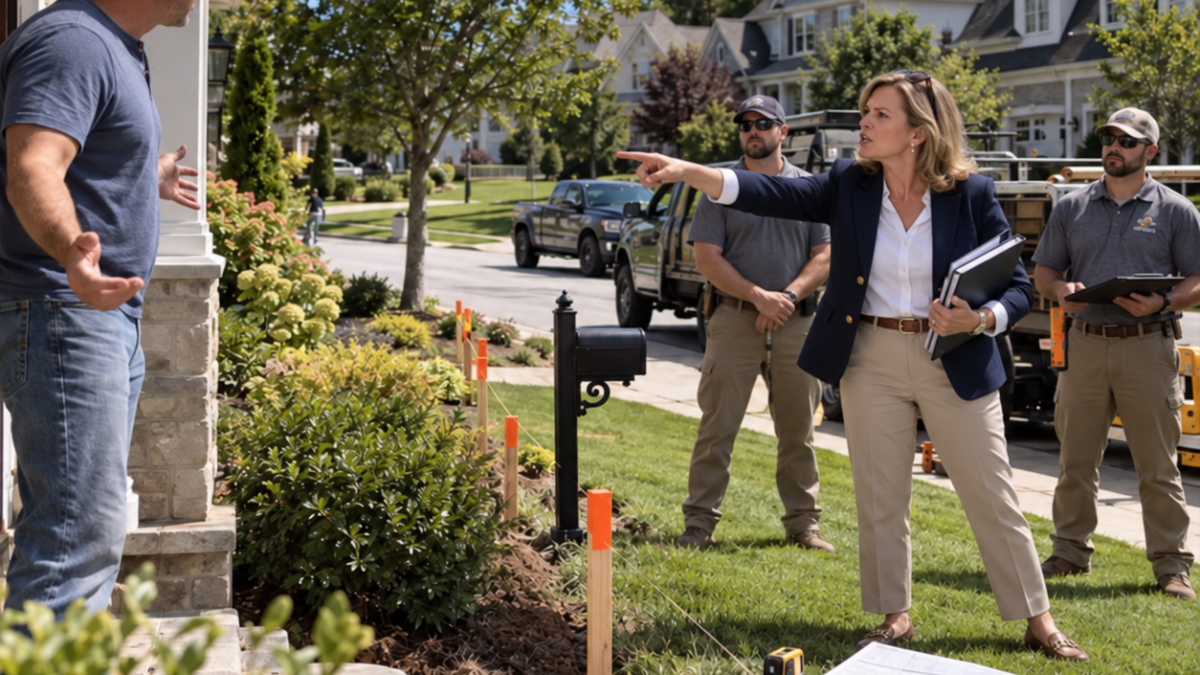
PART2:
One of her board members whispered, “Regina, maybe we shouldn’t call it compulsory.”
She shot him a look.
He became fascinated by his measuring tape.
I stepped onto the porch.
“Let me make sure I understand. You believe your HOA can force my house into your association even though my deed says it isn’t part of your subdivision.”
Regina pointed toward the banner.
“The community has spoken.”
“What community?”
“Willowcrest.”
“I don’t live in Willowcrest.”
“You live adjacent to Willowcrest.”
“Yes.”
“Which creates an obvious continuity problem.”
“For you.”
“For property values.”
“My property value seems fine.”
“You’re thinking individually.”
“It’s my individual house.”
“That attitude is precisely why annexation became necessary.”
I looked past her at the hired guard.
“Did she tell you this was legal?”
The man shifted awkwardly.
“I was told I’m here for traffic control.”
“You’re standing across my driveway.”
He looked at Regina.
Regina blew the whistle again.
“Do not engage with him. He is attempting to undermine command cohesion.”
That was when I started laughing.
I couldn’t help it.
Not a polite chuckle.
Real laughter.
Regina’s face tightened.
“This is not humorous.”
“It’s extremely humorous.”
“You are defying a lawful neighborhood order.”
“You’re not my neighborhood.”
“Not yet.”
I stopped laughing.
Something in the way she said those two words changed the temperature of the morning.
Not yet.
Regina wasn’t joking.
She wasn’t playing dress-up.
She genuinely believed that if she created enough paperwork, enough pressure, enough theater, and enough public embarrassment, she could make ownership itself negotiable.
And as ridiculous as the banner looked, I already knew better than to dismiss her.
Because two months earlier, when I bought that little ranch house by the river, Regina Halford had looked me directly in the eye and told me something I should have taken much more seriously.
“We can fix that little technicality.”
The technicality was the fact that she had no legal authority over me.
My name is Miles Granger.
I’m forty-three years old.
I write software for a logistics company, which means I spend most of my working life trying to convince computers to do exactly what people swear they already told them to do.
I like simple things.
Good coffee.
A charcoal grill.
Fishing badly.
Music without advertisements.
Neighbors who wave and then keep walking.
And, most importantly, not attending committee meetings.
That last one was a major reason I bought the house in Thorn Apple Bluffs.
The property sat just above a river on the edge of town.
Small ranch house.
Two bedrooms.
Detached workshop.
Half-acre lot.
A few mature maples.
Backyard sloping toward a line of cottonwoods near the water.
Nothing luxurious.
But peaceful.
The real selling point appeared in three different documents.
NO HOMEOWNERS ASSOCIATION.
I checked twice before making the offer.
Then I asked the title company.
Then I asked again at closing.
“Absolutely no HOA?”
The closing agent smiled.
“Mr. Granger, you’ve asked that four times.”
“I’ve seen things.”
She laughed.
“You are not part of one.”
“Any restrictive covenants?”
“Only basic county restrictions.”
“Any association rights?”
“No.”
“Any annexation agreements?”
“No.”
“Any pending incorporation into a planned community?”
“No.”
I signed.
Two weeks later, I moved in.
The neighborhood was unusual because my street predated the large subdivision down the hill. Seven older homes lined Riverbend Lane. Built at different times. Different styles. Different lot sizes.
At the bottom of the hill, the street connected to Willowcrest Preserve.
Willowcrest had decorative stone entrance pillars, identical black mailboxes, manicured common areas, matching streetlights, and enough rules to regulate a small European country.
My side had old oak trees, mailboxes that didn’t match, one guy with a rusty boat beside his garage, and Mrs. Talley’s ceramic goose wearing seasonal outfits.
Perfect.
The first month was exactly what I wanted.
I worked from my home office.
Grilled in the evenings.
Cleared brush near the river.
Put up two wind chimes my sister had given me.
I let part of the backyard grow naturally because wildflowers appeared near the tree line.
One Saturday morning, while I was spreading mulch around the front maple, a white Lexus stopped at the curb.
A woman stepped out.
Regina.
She walked toward me carrying a clipboard.
I had no idea who she was.
“Mr. Granger?”
I leaned on the rake.
“That depends.”
Her eyebrows lifted.
“Excuse me?”
“If you’re selling windows, I’m someone else.”
“I’m Regina Halford.”
She waited.
I waited.
“President of Willowcrest Preserve.”
“Congratulations.”
Another pause.
She looked behind me at the house.
Then at the mulch.
Then at the wind chimes.
Something about the chimes offended her immediately.
“I wanted to personally welcome you to the greater Willowcrest residential environment.”
“I’m on Riverbend Lane.”
“Geographically.”
I smiled.
“Also legally.”
Her own smile became thinner.
“Yes. For the moment.”
That phrase registered.
I just didn’t know yet how important it was.
She looked at my lawn.
“You’ve chosen natural landscaping.”
“I’ve chosen not pulling every plant that bees like.”
“Willowcrest emphasizes manicured visual continuity.”
“Good thing I’m not in Willowcrest.”
She wrote something on the clipboard.
I stared.
“Did you just make a note?”
“I make notes.”
“About my yard?”
“About boundary conditions.”
I laughed.
“Boundary conditions?”
“Your property is highly visible from Willowcrest.”
“So is the sky.”
“The sky does not affect resale comparables.”
“Neither do my dandelions.”
She looked almost offended by my confidence.
“You would be surprised.”
“I’m frequently surprised.”
“I regulate vibes for the greater good of property values.”
I thought she was joking.
She wasn’t.
“Vibes?”
“Community presentation.”
“Oh.”
“Consistency.”
“I see.”
“Visual discipline.”
I nodded slowly.
“Good luck with mine.”
Her mouth tightened.
“They’re pretty unregulated.”
That was my first mistake.
Not because I had said anything wrong.
Because Regina Halford interpreted humor as disrespect.
And she considered disrespect a form of rebellion.
Three days later, the first pamphlet arrived.
Glossy.
Professional.
A photograph of Willowcrest’s community gazebo at sunset.
Across the front:
DISCOVER THE BENEFITS OF BELONGING.
Inside was a list of reasons I should voluntarily join the HOA.
Community landscaping.
Architectural guidance.
Neighborhood advocacy.
Seasonal events.
Pergola access.
Butterfly garden privileges.
Enhanced resale value.
That last one had an asterisk.
At the bottom:
Estimated property-value increase: 17.3%.
I actually called the number printed on the pamphlet.
Regina answered.
“Willowcrest Preserve.”
“Seventeen point three percent?”
Silence.
“Mr. Granger.”
“How did you calculate that?”
“Our valuation committee.”
“What methodology?”
“Comparative analysis.”
“Which properties?”
“Representative properties.”
“Could I see the analysis?”
“That information is proprietary.”
“So you made up seventeen point three percent.”
“We did not make it up.”
“Sixteen percent wasn’t persuasive enough?”
“You’re being flippant.”
“Yes.”
“Membership is completely voluntary at this stage.”
“At this stage?”
She paused.
Then corrected herself.
“Currently.”
“No thanks.”
“You haven’t reviewed all benefits.”
“I have a river.”
“We have a butterfly garden.”
“I also have butterflies.”
“Ours are curated.”
That was my introduction to Willowcrest logic.
The next pamphlet promised “harmonized property standards.”
The next promised “collective bargaining power with utility providers.”
The fourth included a photo of three smiling couples beneath string lights.
Someone had circled one sentence in red pen.
Belonging protects everyone.
I wrote RETURN TO SENDER on it.
A week later, the violation letters started.
The first said my mulch was an unauthorized color.
I read it twice.
Then checked the envelope.
Willowcrest Preserve HOA.
I emailed Regina.
“I’m not in your HOA.”
Her response:
“Boundary-adjacent properties remain subject to visual-impact review.”
I replied:
“No, they don’t.”
She sent a PDF.
It was a Willowcrest landscaping guideline.
It applied only to HOA properties.
I highlighted that sentence and returned it.
Two days later:
Wind chimes.
“Excessive auditory disturbance during moderate breezes.”
The letter actually used those words.
I called the county.
No complaint.
No noise violation.
No issue.
Then my mailbox.
Apparently, it was “freelance.”
That was Regina’s term.
She said all Willowcrest mailboxes had to come from an approved vendor and mine lacked architectural coherence.
I reminded her again that I did not belong to Willowcrest.
Her response arrived at 11:42 that night.
That status remains under review.
I stared at the screen.
What did that mean?
I wrote back.
No, it doesn’t.
Then I printed the email.
Software engineers back up everything.
Documents.
Code.
Databases.
Relationships, if we could.
I started a folder.
REGINA.
At first, it was mostly for amusement.
Then she installed cameras.
I noticed the first pole while taking my trash out.
Small black camera attached to a newly installed metal post across from my driveway.
Angled toward my house.
I walked closer.
The pole stood on Willowcrest-owned landscaping near the bottom boundary.
But the lens clearly covered my yard.
A second appeared two days later.
Then a third near the river path.
I emailed Regina.
“What are these cameras for?”
Her answer:
Boundary compliance verification.
“What compliance?”
Potential integration compliance.
I stared at the words.
Potential integration.
I called the HOA management company.
The receptionist sounded confused.
“Your property is not in Willowcrest?”
“No.”
“And they’re monitoring it?”
“Yes.”
“I’ll have to ask the board.”
“Regina is the board president.”
“Oh.”
That “oh” told me plenty.
The next escalation was human surveillance.
Board members began walking past my house.
Slowly.
Clipboards.
One photographed my grass.
Another measured the distance between my mailbox and curb.
A third stood near my driveway studying my trash cans.
I confronted him.
“Can I help you?”
He jumped.
“Oh. Miles.”
“What are you doing?”
“Routine review.”
“Of what?”
He looked toward Regina’s subdivision.
“Boundary conditions.”
“You people really like that phrase.”
He lowered the clipboard.
“Look, I just volunteer.”
“Then volunteer somewhere else.”
“Regina asked us to document inconsistencies.”
“In a property you don’t regulate.”
“I know.”
That surprised me.
“You know?”
He sighed.
“Just between us, I think she believes you’ll join eventually.”
“I won’t.”
“That may be the problem.”
The HOA online forum escalated things further.
I didn’t have access.
I wasn’t a member.
One of my neighbors, Greg Wallace, showed me screenshots.
Regina had posted a photograph of my house beneath the headline:
NEW LONER THREATENS HARMONY ON NORTHERN EDGE.
Loner.
I had lived there six weeks.
Another post zoomed in on my wildflowers.
INVASIVE VISUAL CONDITIONS SPREADING NEAR BOUNDARY.
They were black-eyed Susans.
Native to the region.
Another post displayed my mailbox.
NON-CONFORMING STRUCTURE MAY REDUCE COMMUNITY COHESION.
Comments ranged from supportive to confused.
“Why are we monitoring someone outside the HOA?”
Regina replied:
“Because unmanaged edges become unmanaged centers.”
Another resident wrote:
“Isn’t his property legally separate?”
Regina:
“Legal frameworks evolve.”
That one bothered me.
I printed everything.
Then she came to my house again.
Sunday afternoon.
I was cleaning the grill.
Regina walked up the driveway.
No hello.
No clipboard this time.
Just sunglasses.
“Have you reconsidered?”
“No.”
“You haven’t heard our revised offer.”
“I’m not interested.”
“Six months dues waived.”
“No.”
“Architectural onboarding fee waived.”
“I don’t need architectural onboarding.”
“Free pool access for one year.”
“No.”
“Two years.”
“No.”
She removed her sunglasses.
“What exactly is your objection?”
“Being in an HOA.”
“That’s irrational.”
“No.”
“HOAs protect investment.”
“Sometimes.”
“They ensure standards.”
“Sometimes.”
“They prevent selfish homeowners from degrading neighborhoods.”
I smiled.
“And there it is.”
“What?”
“You don’t want me to join. You want authority over me.”
Her eyes narrowed.
“That’s a cynical interpretation.”
“It’s accurate.”
“You’re benefiting from Willowcrest already.”
“How?”
“Our entrance landscaping beautifies your route.”
“I can survive without begonias.”
“Our neighborhood raises surrounding values.”
“Then congratulations.”
“You use our sidewalks.”
“Public easement.”
“You drive through our entrance.”
“Public road.”
“You benefit without contributing.”
“I bought property outside your HOA on purpose.”
She stepped closer.
“Borders can change.”
“Not because you dislike my mailbox.”
“They can change.”
“My deed can’t.”
Regina smiled.
Slowly.
Bleached teeth.
Cold eyes.
“We can fix that little technicality.”
That was the first moment I truly stopped finding her funny.
I went inside.
Pulled my closing file.
Deed.
Title policy.
County plat.
Survey.
Everything.
My property was clearly outside Willowcrest.
No optional membership clause.
No annexation covenant.
No association declaration.
Nothing.
Still, I called the title company.
The agent reviewed it again.
“You’re clear.”
“Can an HOA annex neighboring property?”
“Not unilaterally.”
“What would be required?”
“Depends on local law, declarations, county approval, owner consent.”
“My consent?”
“Yes.”
“So if I say no?”
“They can’t simply claim your house.”
I felt better.
For approximately six days.
Then Regina filed her map.
The county clerk called me personally.
That alone told me something strange had happened.
“Mr. Granger?”
“Yes.”
“This is Emily Porter from county records.”
“Okay.”
“Do you know a Regina Halford?”
“Unfortunately.”
The clerk tried not to laugh.
“She submitted an amendment to a subdivision boundary.”
My stomach tightened.
“Does it include my property?”
“It includes your entire street.”
I closed my eyes.
“What else?”
“The riverbank.”
“Of course.”
“And the municipal park.”
I opened my eyes.
“She tried to annex a city park into her HOA?”
“Yes.”
“What was her legal basis?”
There was a pause.
Then the clerk actually laughed.
“I’m sorry.”
“No, please. I need this.”
“She submitted a hand-drawn exhibit.”
“Hand-drawn?”
“Technically it appears to have been made in Microsoft Paint.”
I pinched the bridge of my nose.
“She drew a new boundary around everything?”
“Yes.”
“There’s more, isn’t there?”
“An eagle.”
“What?”
“She placed a clip-art eagle at the top.”
I started laughing.
“And underneath it?”
The clerk was now laughing too.
“What?”
“Manifest Destiny.”
I sat down.
“You’re serious.”
“I wish I weren’t.”
“Was it accepted?”
“No.”
“How quickly?”
“About nineteen minutes.”
“Thank you.”
“We’ve marked it rejected.”
“Could I get a copy?”
“I was going to suggest you do.”
The rejected map became Exhibit One in what eventually became a very expensive lesson for Regina.
At the time, I still believed rejection would stop her.
Instead, Regina treated the county clerk’s decision as bureaucratic resistance.
She mailed me what looked like an antique proclamation.
Cream-colored paper.
Fake parchment edges.
Gold foil seal.
NOTICE OF ARCHITECTURAL CONSCRIPTION INTERVIEW.
Report:
Monday.
0800 hours.
Willowcrest Community Center.
Failure to appear may result in involuntary design assignment.
I showed it to Greg.
He stared.
“What does involuntary design assignment mean?”
“I assume they choose my mulch under armed guard.”
“You going?”
“No.”
“Can I go?”
“Why?”
“I want to see what happens when nobody shows.”
I ignored the notice.
Monday at 8:14, Regina left me a voicemail.
“Mr. Granger, your absence from mandatory architectural processing has been documented. Continued refusal will be interpreted as hostile nonparticipation.”
I saved it.
Wednesday, I received another.
FINAL PRE-ANNEXATION COMPLIANCE OPPORTUNITY.
I ignored that too.
Then came Saturday morning.
The banner.
The barricades.
The “Annexation Command.”
Regina had apparently rented a private security guard.
Three board members.
Two volunteers.
And, yes, the plastic bowl.
I stepped off my porch.
“Everyone needs to leave.”
Regina raised her clipboard.
“We are conducting a lawful boundary transition.”
“No, you aren’t.”
“The board approved Resolution 22-A.”
“Your board cannot resolve ownership of my house.”
“You continue to misunderstand collective governance.”
“No. I understand property law.”
“You’re a software engineer.”
“And you sell medical equipment.”
Her face tightened.
“That’s irrelevant.”
“Exactly.”
One board member snorted.
Regina spun around.
“David.”
“Sorry.”
I walked toward the barricade.
The security guard shifted.
“Sir, I was told not to let vehicles cross until the ceremony concludes.”
I looked at him.
“This is my driveway.”
He looked uncomfortable.
“I understand.”
“You’re preventing me from leaving my own property.”
“I was told it’s a private community matter.”
“It’s a public road and private property.”
Regina stepped between us.
“Do not intimidate contracted personnel.”
I pulled out my phone.
“I’m calling the sheriff.”
She smiled.
“Excellent.”
That stopped me.
“You want the sheriff?”
“Absolutely.”
“Why?”
“To enforce the annexation order.”
I stared at her.
She genuinely believed it.
Or had convinced herself that confidence could become law if performed in front of enough witnesses.
I called.
Twenty-three minutes later, Deputy Marcus Bell arrived.
He parked behind the barricades.
Stepped out.
Looked at the banner.
Looked at the flags.
Looked at Regina’s khaki uniform.
Then looked at me.
“Morning.”
“Morning.”
He pointed toward the banner.
“Do I want to know?”
“No.”
Regina marched over.
“Deputy, thank goodness. We require assistance enforcing a lawful neighborhood boundary transition.”
Bell looked at her.
“A what?”
“Annexation.”
He looked at me.
I shrugged.
Regina handed him a folder.
“Here are our documents.”
Bell opened it.
First page.
Resolution 22-A.
Second page.
The rejected county map.
Third page.
Something called a Declaration of Immediate Harmonization.
Bell read.
Then looked at the hand-drawn eagle.
He turned the page sideways.
“Is this an eagle?”
“It represents civic unity.”
Bell looked at me again.
“Manifest Destiny?”
“I didn’t make it.”
Regina crossed her arms.
“The county’s refusal to recognize the expansion is currently under challenge.”
Bell looked at her.
“Through what court?”
“We are pursuing internal remedies.”
“With whom?”
“The board.”
“Your board?”
“Yes.”
Bell closed the folder.
“Ma’am, your HOA board cannot overrule the county records office.”
Regina’s lips tightened.
“That interpretation is narrow.”
“It’s also reality.”
“Deputy, this man is defying a lawful neighborhood order.”
“He’s not in your neighborhood.”
“He is contiguous.”
“That doesn’t matter.”
“It matters for community continuity.”
“Not to me.”
Regina’s face reddened.
“I demand you review his deed.”
Bell looked at me.
“Have it?”
“Inside.”
I brought it.
Survey too.
County plat.
Bell studied them for five minutes.
Then radioed dispatch.
He read parcel numbers.
Waited.
The answer came back exactly as expected.
My property had no HOA encumbrance.
Willowcrest had no authority.
The submitted boundary amendment had been rejected.
Bell lowered his radio.
“Okay.”
Regina smiled as though expecting victory.
He turned toward her.
“You need to remove the barricades.”
Her smile vanished.
“What?”
“And the banner.”
“Deputy.”
“And the cameras pointed onto his property need to be reviewed.”
“They’re on HOA land.”
“The issue is how they’re being used.”
“They’re compliance equipment.”
“He has no compliance obligation.”
Regina gripped the clipboard.
“This is outrageous.”
Bell opened her folder again.
He looked at the rejected map.
Then Resolution 22-A.
“Who prepared these?”
“The board.”
“Who signed them?”
“I did.”
“This county stamp says rejected.”
“Administrative obstruction.”
“And this document says the county approved your expansion.”
Regina said nothing.
Bell’s expression changed.
He looked at the top of the page.
Then the bottom.
“Where did you get this seal?”
Silence.
“Ms. Halford.”
“It’s a community seal.”
“It looks like a county seal.”
“It is stylistically similar.”
Bell stared at her.
Then keyed his radio.
“Dispatch, can you have county records contact me? Possible filing of false instruments. Also start an incident number for harassment and obstruction.”
Regina’s face turned white.
“You’re threatening me.”
“No.”
“This is retaliation.”
“No.”
“I called you.”
“Yes.”
“To arrest him.”
Bell actually laughed.
“I’m aware.”
The hired security guard quietly began moving the barricades.
Regina snapped at him.
“Leave those!”
He shook his head.
“I’m not getting arrested for a driveway.”
Smart man.
Within fifteen minutes, the annexation army was retreating.
Board members folded signs.
Someone carried away the plastic bowl.
The banner came down.
Regina stood near the curb while Bell gave her a formal warning.
Stay off my property.
Do not block access.
Do not represent county approval that does not exist.
Do not contact me except through legitimate legal channels.
I thought that would feel like victory.
Instead, that night, I sat in my living room with every blind closed.
And for the first time since buying the house, I felt afraid.
Not terrified.
Not panicked.
Just exhausted enough for doubt to become dangerous.
My neighbors on Riverbend had started acting differently.
Greg still waved.
Mrs. Talley still talked to me.
But two others had begun avoiding eye contact.
One man finally said what people were thinking.
“Maybe joining would be easier.”
We stood beside our mailboxes.
“Joining Willowcrest?”
He shrugged.
“Regina’s intense, but the subdivision looks good.”
“So she gets to harass people until they surrender?”
“I didn’t say that.”
“You implied it.”
“I’m saying maybe this isn’t worth the stress.”
That night, his words stayed with me.
Was it worth it?
I worked from home.
Every sound outside made me check the cameras.
Every unfamiliar car made me wonder whether Regina had sent someone.
I had bought the place for peace.
Now I was keeping a legal file on a woman who dressed like a suburban field marshal.
Maybe paying dues would be easier.
Maybe approving mulch colors would be easier.
Maybe letting them choose my mailbox would be easier.
Maybe my pride was making everything worse.
That thought scared me.
Because once you begin describing your rights as pride, surrender starts sounding reasonable.
I barely slept.
The next morning, I called a real estate attorney.
Her name was Leia Parrott.
I chose her because three different people recommended her and because her website said she specialized in boundary disputes and HOA litigation.
I expected aggressive.
She was the opposite.
Quiet voice.
Precise language.
The kind of person who made you feel calmer because she clearly did not waste energy on drama.
We met in her office.
I brought two banker boxes.
Leia stared.
“This is two months?”
“Yes.”
She opened the first.
Violation letters.
Photos.
Camera locations.
Screenshots.
Rejected map.
Fake parchment notice.
The sheriff incident report.
Then the annexation banner photo.
She stopped.
“Is that woman wearing camouflage?”
“Khaki.”
“What’s the whistle?”
“I don’t know.”
Leia kept reading.
Ten minutes.
Twenty.
Thirty.
She finally looked up.
“Miles.”
“Yes?”
“Regina just handed you a slam dunk.”
I stared.
“That good?”
“That bad.”
“For her?”
“For her.”
I felt my shoulders drop for the first time in weeks.
Leia tapped my deed.
“Your title is clean.”
“I know.”
“Your parcel is expressly outside Willowcrest.”
“Yes.”
“The county rejected the attempted plat modification.”
“Yes.”
“She continued representing the annexation as effective.”
“Yes.”
“She entered your property.”
“Yes.”
“Blocked your driveway.”
“Yes.”
“Installed surveillance equipment directed toward you.”
“Yes.”
“I assume you told her to stop.”
“Repeatedly.”
“And this?”
She held up the document with the fake county-looking seal.
“Deputy Bell noticed it too.”
Leia’s eyes sharpened.
“This could get ugly for her.”
“What do we do?”
“First, we stop the harassment.”
“How?”
“Temporary restraining order.”
I listened.
“Second, declaratory action and quiet title.”
“What does that accomplish?”
“A court formally declares they have no interest in your property. Regina loses the ability to keep pretending the issue is unsettled.”
“Good.”
“Third, formal trespass notice.”
“Already told her.”
“We’re going to tell her in a way her attorney understands.”
“She has an attorney?”
Leia smiled slightly.
“She will.”
We filed immediately.
The process server found Regina the next afternoon.
I know because my front camera captured it.
She was standing near the edge of my yard measuring the distance from my garbage cans to the street.
A man in a suit approached.
“Regina Halford?”
“Yes.”
He handed her the packet.
“You’ve been served.”
She looked down.
Then up.
Then toward my house.
Even from thirty yards away, I could see her face change.
She pointed at my camera.
I watched from inside.
For once, I didn’t wave.
The temporary restraining order came quickly.
No direct contact.
No surveillance directed at my property.
No HOA personnel entering my land.
No further attempt to represent my property as part of Willowcrest.
No interference with access.
The cameras came down forty-eight hours later.
Silence followed.
Real silence.
For about a week.
I started sleeping again.
Then discovery began.
That was when the story stopped being funny.
Leia obtained internal HOA emails.
Meeting notes.
Financial records.
Draft newsletters.
Private board messages.
The first email came from Regina to the board three weeks after I moved in.
Subject:
NORTHERN EDGE INTEGRATION STRATEGY.
She wrote:
“Miles Granger should be treated operationally as though already governed by Willowcrest. Repetition creates expectation, expectation creates compliance.”
I read that twice.
Another:
“Do not use language suggesting optionality when communicating standards to Riverbend residents.”
Another:
“If we normalize enforcement before legal consolidation, resistance will become socially costly.”
Leia looked at me.
“She knew.”
“Knew what?”
“That she didn’t have authority.”
I continued reading.
There were meeting notes discussing “soft annexation.”
A plan to issue violations anyway.
A plan to encourage Willowcrest residents to complain about Riverbend properties.
A discussion of whether social pressure could force voluntary membership.
Then we found the newsletter draft.
Across the top:
WELCOME, NEW SUBJECTS!
My address appeared beneath:
Recent Acquisitions.
Acquisitions.
As if my house were territory.
I sat back.
“This woman is insane.”
Leia shook her head.
“Don’t use that word.”
“Why?”
“Because it can obscure something important.”
“What?”
“She was organized.”
That was worse.
Discovery continued.
There were notes about hiring “temporary compliance officers.”
One board member had written:
“Are these real code officers?”
Regina replied:
“They only need to appear official enough to encourage cooperation.”
Another email discussed uniforms.
Another discussed door hangers designed to resemble county notices.
Then Leia started laughing.
Not common for her.
“What?”
She turned the laptop toward me.
HOA budget spreadsheet.
One line item:
Annexation Ceremony Supplies — $1,850.
Breakdown:
Banner.
Flags.
Security.
Ceremonial sashes.
Whistles.
Cake.
I stared.
“Cake?”
“Cake.”
“How much?”
“Four hundred and twenty dollars allocated.”
“For an annexation cake?”
“Apparently.”
A later email revealed they had already ordered it.
Because the annexation failed, one board member stored the cake in a basement freezer.
I laughed harder than I had in months.
Then Leia scrolled.
The laughter stopped.
Another document.
Post-Annexation Enforcement Sequence.
My address listed first.
Replace mailbox.
Remove wind chimes.
Landscape correction.
Fence review.
Exterior color inspection.
Dues assessment retroactive to move-in date.
Retroactive dues.
They planned to seize authority, then charge me for the period during which I had been fighting their nonexistent authority.
Leia leaned back.
“This isn’t a misunderstanding.”
“No.”
“It’s a campaign.”
The county attorney became involved after reviewing the fake filings.
Possible slander of title.
Possible forged public-style instruments.
Abuse of process.
Harassment.
The state Attorney General’s consumer protection office asked for documents.
Regina stopped posting online.
Stopped marching past my property.
Stopped emailing.
For a while, I almost missed the absurdity.
Then court day came.
The hearing was supposed to resolve several issues.
Quiet title.
Permanent injunction.
Damages.
Legal fees.
Questions surrounding fraudulent filings were being handled separately, but the evidence overlapped.
The courtroom gallery was nearly full.
Willowcrest residents came.
Riverbend neighbors.
County employees.
Even Deputy Bell sat near the back because he had been subpoenaed regarding the annexation morning.
Greg sat beside me.
He whispered, “Is that glitter?”
I looked toward Regina’s table.
She had brought a trifold presentation board.
Across the top:
EMERGENCY COMMUNITY SOVEREIGNTY.
The letters were silver glitter.
I looked at Leia.
She closed her eyes briefly.
“Do not laugh.”
“I’m trying.”
“Try harder.”
Regina had finally hired an attorney.
A tired-looking man named Mr. Crane.
He kept whispering to her.
She kept ignoring him.
That became the theme of the morning.
The judge entered.
Everyone stood.
Proceedings began.
Leia presented my deed.
Title history.
Original county plat.
Rejected annexation attempt.
Sheriff report.
Trespass documentation.
Regina’s internal emails.
The judge asked simple questions.
“Is Mr. Granger’s property currently part of Willowcrest Preserve?”
Leia answered.
“No.”
Regina interrupted.
“Functionally, yes.”
Her attorney touched her arm.
“Regina.”
The judge looked at her.
“You will speak through counsel unless called.”
“Yes, Your Honor.”
Five minutes later, she interrupted again.
The judge’s expression hardened.
Then Mr. Crane began presenting Willowcrest’s position.
He sounded uncomfortable.
He argued the HOA had historical authority to seek boundary expansion.
Leia agreed.
Seek.
Not impose.
He argued my property benefited from proximity.
Leia agreed.
Irrelevant to membership.
He argued certain association bylaws contemplated annexation.
That was when Regina leaned toward him.
“Section 9.3C.”
Mr. Crane stopped.
Whispered something.
Regina shook her head.
He whispered again.
She reached into a binder.
Pulled out a document.
“Your Honor, if I may.”
Mr. Crane looked like he wanted to disappear.
The judge stared.
“Counsel?”
Mr. Crane cleared his throat.
“My client believes a provision may be relevant.”
Leia sat very still.
I knew that look.
She had seen something.
Regina handed the document forward.
The clerk passed it to the judge.
Regina spoke.
“Section 9.3, subsection C, grants the association the authority to conduct peaceful annexation by force when a neighboring property creates substantial architectural disharmony.”
Silence.
The judge looked up.
“Peaceful annexation by force?”
“Yes.”
The judge read the page.
Then looked at Mr. Crane.
“Counsel, is that your argument?”
Mr. Crane swallowed.
“I have not independently authenticated that page.”
Regina turned.
“What?”
“Regina.”
“It’s in the bylaws.”
The judge looked at Leia.
She stood.
“Your Honor, may we see the original Section 9.3C?”
The judge passed the document.
Leia took it.
Looked at it for maybe five seconds.
Then smiled.
Very slightly.
That smile terrified me, and she was my attorney.
“Your Honor.”
“Yes?”
“This is not from the recorded Willowcrest bylaws.”
Regina snapped, “Yes, it is.”
Mr. Crane whispered, “Please stop.”
Leia held the page up.
“The font is different.”
Regina frowned.
“What?”
“The recorded bylaws use Times New Roman throughout.”
She pointed.
“This uses Cambria.”
The judge leaned forward.
Leia continued.
“The footer is also inconsistent.”
She placed a genuine page beside it.
“Recorded documents include revision dates and page numbers in the lower right. This page has neither.”
Regina’s face changed.
Leia wasn’t finished.
“And the signature.”
She pointed.
“This purported amendment is signed by HOA secretary Patricia Wynn.”
“Yes,” Regina said quickly.
Leia looked toward the gallery.
A woman in the second row raised one hand.
Patricia Wynn.
Former HOA secretary.
Leia called her.
Patricia took the stand.
“How long did you serve as secretary?”
“Four years.”
“When did you resign?”
“2018.”
“Why?”
Patricia hesitated.
Then said, “A chili cookoff dispute.”
The courtroom murmured.
The judge looked confused.
Leia wisely moved on.
“Did you sign an amendment creating Section 9.3C?”
“No.”
“Have you ever seen this page?”
“No.”
“Is that your signature?”
Patricia leaned closer.
“No.”
Regina whispered something to her lawyer.
Mr. Crane looked physically ill.
Leia produced certified bylaws from county records.
The real Section 9.3.
No subsection C.
Nothing about annexation by force.
Nothing remotely similar.
Then the county records clerk testified.
Emily Porter.
The woman who had called me.
She produced the original subdivision plat from 1973.
Clear boundary.
Willowcrest stopped at the lower end of Riverbend.
My property sat outside.
Then she produced an addendum.
The judge read aloud:
“No expansion of the Willowcrest Preserve declaration shall attach to property outside the recorded subdivision without unanimous consent of affected adjacent owners and approval of the county.”
He looked at me.
“Did you consent?”
“No, Your Honor.”
He looked at Regina.
“Did the county approve?”
She said nothing.
“Ms. Halford?”
“No.”
“So on what basis did you repeatedly represent Mr. Granger as subject to your association?”
Regina’s attorney stood.
“Your Honor, I would advise my client not to answer beyond—”
Regina interrupted.
“Because everyone knows his house should be part of Willowcrest.”
The courtroom went silent.
Her attorney closed his eyes.
The judge stared.
“That was not my question.”
“It creates a gap.”
“What creates a gap?”
“His street.”
“In what?”
“Community continuity.”
The judge looked down at the plat.
Then back up.
“Ms. Halford, you understand that private property rights are not determined by whether you find a map aesthetically pleasing.”
She flushed.
“I understand property rights.”
“Do you?”
“Yes.”
“Then explain the document you submitted claiming county approval after the county rejected your filing.”
Regina froze.
The judge lifted another page.
“Explain this seal.”
“It’s decorative.”
“It resembles a government seal.”
“Lots of seals resemble government seals.”
“Explain why the document states, ‘Approved and recognized by county authority.’”
Regina glanced at her attorney.
For once, she listened.
“I decline to answer.”
The judge’s expression hardened.
“That may be wise.”
Deputy Bell testified next.
He described the barricades.
The banner.
The private guard.
The claim that I was defying a lawful order.
Then Leia showed the photograph.
ANNEXATION COMMENCES AT DAWN.
The judge removed his glasses.
“Is that real?”
Bell nodded.
“Yes, sir.”
“And the defendant was dressed in…”
He searched for a neutral word.
“Khaki.”
A few people laughed.
The judge immediately silenced them.
Then Leia showed the internal emails.
Treat him as already governed.
Normalize enforcement.
Make resistance socially costly.
The newsletter.
Welcome New Subjects.
The fake code enforcement discussion.
The budget.
Ceremonial sashes.
The annexation cake.
Even the judge paused at that.
“Cake?”
Leia nodded.
“According to the records.”
Regina whispered loudly to her attorney.
“That was for community morale.”
The judge heard.
“So noted.”
My turn came.
I took the stand.
Leia asked why I purchased the property.
“Because it was outside an HOA.”
“Did you confirm that before closing?”
“Repeatedly.”
“Did you ever agree to join Willowcrest?”
“No.”
“Did you pay dues?”
“No.”
“Sign covenants?”
“No.”
“Request membership?”
“No.”
“Did you invite HOA enforcement?”
“No.”
“What did you do when notices arrived?”
“I responded that they had no authority.”
“Did you threaten Regina Halford?”
“No.”
“Threaten board members?”
“No.”
“Damage HOA property?”
“No.”
“Interfere with their subdivision?”
“No.”
“Then why did you file this lawsuit?”
I looked at Regina.
“Because saying no stopped working.”
Leia let that sit.
“Explain.”
“I told them I wasn’t a member. They sent violations. I showed them my deed. They watched my property. I told them to stop. They installed cameras. I rejected voluntary membership. They tried to alter the boundary. The county rejected it. They pretended it hadn’t. I ignored their interview notice. They blocked my driveway.”
I took a breath.
“At some point, no stops being a conversation and becomes something you need a court to enforce.”
Leia nodded.
“No further questions.”
Regina’s attorney stood reluctantly.
“Mr. Granger, would you agree your property is geographically adjacent to Willowcrest?”
“Yes.”
“Would you agree Willowcrest is well-maintained?”
“Yes.”
“Would you agree property standards can improve neighborhood values?”
“Sometimes.”
“Would you agree your property benefits economically from proximity?”
“Possibly.”
“Then isn’t it reasonable that the HOA might seek some contribution?”
“No.”
He paused.
“Why?”
“Because my house isn’t theirs.”
A few people shifted.
He continued.
“Could your refusal have been perceived as hostile?”
“By someone who believes no means hostility.”
“Did you make jokes about the HOA?”
“Yes.”
“About Ms. Halford?”
“Yes.”
“Could those jokes have embarrassed her?”
“Probably.”
“Do you believe that contributed to escalating tensions?”
I thought about it.
“Maybe.”
Regina looked almost triumphant.
Then I continued.
“But embarrassment doesn’t create a property interest.”
Her face fell.
The attorney tried another direction.
“You characterized my client’s conduct as harassment.”
“Yes.”
“Yet you continued corresponding.”
“To tell her to stop.”
“You retained documents.”
“Yes.”
“Recorded incidents.”
“Yes.”
“Photographed board members.”
“When they entered my property.”
“Isn’t it possible that both sides became fixated?”
I looked at him.
“I wanted them to leave me alone.”
Silence.
“That was the entirety of my goal.”
No further questions.
The most devastating witness for Regina was one of her own board members.
David.
The same man who had nearly laughed during annexation morning.
He had resigned after the restraining order.
Leia asked why.
David looked at Regina.
Then at the judge.
“Because it stopped being ridiculous.”
“When?”
“I’m not sure.”
“The cameras?”
“Maybe.”
“The fake notices?”
“Maybe.”
“The annexation?”
“Yes.”
“Did you believe the HOA actually had authority over Mr. Granger?”
David swallowed.
“No.”
Regina’s head snapped toward him.
Leia continued.
“When did you know?”
“Pretty early.”
“How early?”
“Before the first violation letter.”
That hit hard.
“Then why participate?”
David looked ashamed.
“Regina said if we acted consistently enough, Miles would probably join to make it stop.”
The courtroom became completely silent.
Leia asked, “So the enforcement was intended to pressure him into joining?”
“Yes.”
“Was that discussed?”
“Yes.”
“In meetings?”
“Yes.”
“Emails?”
“Yes.”
“Did Regina direct it?”
David closed his eyes.
“Yes.”
Regina whispered, “Coward.”
The judge heard.
“Ms. Halford.”
She looked forward.
David continued.
Leia showed the forged bylaw page.
“Have you seen this before?”
“Yes.”
“When?”
“About a week before court.”
“Where?”
“Regina emailed it.”
“Did you believe it was authentic?”
“No.”
“Why?”
“Because I had a copy of the bylaws.”
“Did you tell her?”
“Yes.”
“What did she say?”
David hesitated.
Leia waited.
“What did she say?”
“She said courts don’t know HOA documents well enough to notice.”
Even her attorney stopped taking notes.
Regina whispered, “That is completely out of context.”
The judge leaned forward.
“I strongly recommend you remain silent.”
She did.
Finally.
Closing arguments came that afternoon.
Mr. Crane did the best anyone could have done with the facts.
He argued Regina was overzealous.
Mistaken.
Too aggressive in pursuing legitimate concerns.
He said the HOA believed expansion would improve community administration.
He asked the judge to distinguish bad judgment from malice.
Then Leia stood.
No theatrics.
No raised voice.
“This case is not about whether HOAs are good or bad.”
She walked toward the exhibits.
“It is not about mulch.”
Another step.
“It is not about wind chimes.”
Another.
“It is not even fundamentally about annexation.”
She stopped beside my deed.
“This case is about consent.”
She lifted the document.
“Mr. Granger bought a home outside Willowcrest Preserve.”
Then the genuine plat.
“He confirmed it.”
The title documents.
“The county confirmed it.”
The addendum.
“The recorded governing documents confirmed it.”
She turned toward Regina.
“Ms. Halford simply disliked the answer.”
Silence.
“So she tried to change reality through pressure.”
The fake violations appeared on the screen.
“When pressure failed, she escalated.”
The cameras.
“When surveillance failed, she escalated.”
The rejected map.
“When county records rejected her, she escalated.”
The barricades.
“When Mr. Granger still refused, she staged physical interference with access to his own property.”
Then the forged page.
“And when actual law failed her, she brought this court a law of her own creation.”
Regina stared straight ahead.
Leia lowered her voice.
“A homeowner should not need courage to say, ‘You do not own my house.’”
That line stayed with me.
“A homeowner should not need an attorney to prove that a stranger’s volunteer title does not override a recorded deed.”
She faced the judge.
“We are asking this court to do something very simple.”
“Confirm the boundary.”
“End the harassment.”
“And impose consequences substantial enough that Ms. Halford understands what no means.”
She sat.
The judge took a recess.
Forty-five minutes.
Longest forty-five minutes of my life.
Greg and I waited in the hallway.
“So,” he said.
“So.”
“You think annexation cake is still frozen?”
I looked at him.
“That’s what you’re thinking about?”
“I’m hungry.”
I laughed.
It felt good.
When we returned, the judge had his ruling.
He started with property.
My parcel was outside Willowcrest.
Always had been.
No HOA interest attached.
No lien authority.
No regulatory authority.
No valid annexation.
The quiet-title judgment permanently confirmed it.
Then the injunction.
Willowcrest and its agents were prohibited from representing my property as subject to the HOA absent a future lawful voluntary agreement.
No surveillance targeting my home.
No enforcement notices.
No unauthorized entry.
No interference with access.
Then the judge addressed the documents.
His tone changed.
“The court finds Ms. Halford’s conduct regarding purported county approval deeply troubling.”
Regina’s face tightened.
“The purported Section 9.3C is not authentic.”
Mr. Crane lowered his eyes.
“The evidence indicates it was created or presented with knowledge that it did not appear in the recorded bylaws.”
Regina whispered, “That’s not true.”
The judge continued.
“Ms. Halford, you will not interrupt.”
Silence.
“The court is referring matters concerning potentially fraudulent filings and forged association records to appropriate authorities.”
That was when her face went pale.
Then money.
The HOA was ordered to pay my reasonable legal fees and court costs.
Regina personally was found liable for harassment damages.
Fifteen thousand dollars.
Punitive damages.
Another ten thousand.
She stared at the judge.
Her mouth opened.
Closed.
The judge wasn’t finished.
“Given the evidence of deliberate misuse of association authority, the court will also impose restrictions within its equitable jurisdiction.”
Regina’s attorney sat straighter.
“For seven years, Ms. Halford is prohibited from serving as an officer, director, enforcement committee chair, or equivalent leadership position in this association.”
Regina stood.
“What?”
Her attorney grabbed her arm.
“Sit down.”
“You can’t do that!”
The judge stared.
“Ms. Halford.”
“I was elected!”
“Sit down.”
“This is my community!”
“Sit.”
Something in his voice finally reached her.
She sat.
Her hands shook.
Then her clipboard slipped from her lap.
It hit the courtroom floor.
Flat.
Sharp.
For months, that clipboard had been the symbol of everything Regina believed she was.
Authority.
Rules.
Control.
The sound it made hitting the floor was small.
Almost ridiculous.
But I will remember it forever.
Regina looked down at it.
Didn’t pick it up.
The judge finished the ruling.
The HOA had thirty days to remove or correct every public reference falsely suggesting Riverbend properties were members.
All outstanding “violations” issued to nonmembers were void.
The association had to notify residents that its authority ended at the recorded boundary.
A copy of the judgment would be recorded with the county.
No ambiguity.
No technicality.
No “status under review.”
Done.
The separate state investigation continued afterward.
I did not attend every proceeding.
I didn’t need to.
Regina eventually faced additional penalties tied to the false documents and harassment campaign.
Probation.
Fines.
Community service.
Two hundred hours.
And in what remains one of the universe’s better jokes, a substantial portion of that service involved repainting municipal park fencing.
The same city park she had once attempted to include inside her Microsoft Paint empire.
Deputy Bell supervised one of the community-service compliance checks.
Greg sent me a photograph.
Regina in old jeans.
Work gloves.
Paint roller.
Green fence.
I deleted it.
Not because I felt sorry for her.
Because I didn’t need it.
By then, something surprising had happened.
I no longer cared what Regina was doing.
For months, she had occupied space in my head she had never legally managed to acquire on paper.
Every morning:
Check cameras.
Check mailbox.
Check email.
Check road.
Check forum screenshots.
Every night:
Review files.
Save messages.
Wonder what came next.
The lawsuit ended that.
Not with celebration.
With quiet.
Real quiet.
Willowcrest elected a new president.
A man named Peter Lang.
He came to my house about three weeks after the ruling.
He stopped at the edge of the driveway.
Important detail.
He did not step onto my property.
“Mr. Granger?”
“Miles.”
“I’m Peter.”
“I know.”
He looked embarrassed.
“I wanted to apologize.”
“You didn’t do it.”
“I was on the board.”
“So was David.”
“I voted for some of those measures.”
I waited.
Peter looked toward the river.
“We convinced ourselves Regina knew what she was doing.”
“She didn’t.”
“No.”
“We also convinced ourselves this was just a personality conflict.”
“It wasn’t.”
“No.”
He took a breath.
“The HOA has withdrawn every nonmember violation.”
“Good.”
“We removed the cameras.”
“I noticed.”
“We amended our policy to prohibit surveillance outside association property.”
“Better.”
“And…”
He hesitated.
“What?”
“We still have the cake.”
I stared at him.
“What?”
“The annexation cake.”
“You’re joking.”
“No.”
“Why?”
“No one knows what to do with it.”
I started laughing.
Peter did too.
Apparently, it was still in a chest freezer in the Willowcrest community center.
White icing.
Blue border.
A little sugar map.
The words:
WELCOME RIVERBEND!
I shook my head.
“Throw it away.”
“That was my vote.”
“Unanimous?”
“Almost.”
“Who voted against?”
“Regina’s friend Marcy.”
“Of course.”
Peter smiled.
Then he grew serious.
“We’re sorry.”
I nodded.
“Thank you.”
That was enough.
My own neighbors slowly returned to normal.
The people who had stopped waving started again.
One apologized.
“I thought maybe you were making it worse.”
“I was wondering that too.”
“You weren’t.”
“I know that now.”
Mrs. Talley changed the ceramic goose’s outfit.
For one week, it wore camouflage and carried a tiny cardboard sign:
NEUTRAL TERRITORY.
I laughed every time I walked past.
Greg suggested we form our own association.
I told him I would burn down his mailbox.
He promised bylaws would prohibit bylaws.
I still refused.
The most important change happened in me.
For a while, I had been ashamed that Regina scared me.
She was ridiculous.
The camouflage.
The whistle.
The annexation cake.
The Microsoft Paint eagle.
It all sounded like comedy when retold.
But living through it wasn’t always funny.
Being watched isn’t funny.
Having people photograph your home isn’t funny.
Being told repeatedly that the documents proving your rights somehow don’t matter isn’t funny.
Waking up to strangers blocking your driveway isn’t funny.
Watching neighbors withdraw because they don’t want to become targets isn’t funny.
Harassment can wear a ridiculous costume and still work.
That was Regina’s real weapon.
Not the HOA.
Not the clipboard.
Exhaustion.
She counted on making resistance more expensive emotionally than surrender.
One more letter.
One more meeting.
One more complaint.
One more camera.
One more threat.
Eventually, she believed, I would say:
Fine.
Take it.
Tell me what mailbox to buy.
Tell me what color mulch to use.
Tell me when to cut the grass.
Tell me where to park.
Tell me how much I owe.
Just leave me alone.
That is how abusive authority grows.
Not because people agree with it.
Because they become tired of resisting.
For one night, I almost did.
I remember sitting at my kitchen table with the Willowcrest membership packet in front of me.
I had dug it out of the trash.
I actually read the dues schedule.
I calculated the annual cost.
It wasn’t much.
I thought:
Maybe this is cheaper.
Then I realized I wasn’t calculating money.
I was pricing peace.
And Regina had created the problem, then offered to sell me relief from it.
That realization made the decision simple.
No.
Not loud.
Not heroic.
Just no.
Months after the case ended, I had friends over for a barbecue.
Nothing formal.
Greg.
Mrs. Talley.
A few coworkers.
Leia came late because she had another hearing.
Deputy Bell stopped by for fifteen minutes after his shift.
We sat in the backyard near the river.
No speeches.
No banners.
No celebration of defeating Regina.
Someone brought corn.
Someone brought beer.
I burned the first batch of burgers because Greg distracted me with a story.
Leia looked toward the house.
“You know what’s funny?”
“What?”
“This is all you wanted.”
I looked around.
People laughing.
Wind moving through the cottonwoods.
My ridiculous wind chimes making exactly as much noise as they pleased.
“Yeah.”
She took a drink.
“You spent a lot of money proving your right to do nothing.”
I laughed.
“That’s freedom.”
“Sometimes.”
We didn’t talk about court again.
As the sun went down, people left.
I stayed outside.
The river reflected the last light.
For months, every quiet moment had felt temporary.
Like Regina might appear from somewhere with another notice.
That night, it didn’t.
The quiet belonged to me again.
The next morning, I took my coffee outside at 6:47.
Same time I had opened the door to the annexation invasion.
The driveway was empty.
No barricades.
No board members.
No flags.
No plastic bowl.
No security guard.
No Regina.
I walked to the edge of the road.
At the bottom of the hill, the Willowcrest entrance sign caught the morning sunlight.
Perfect flowers.
Perfect stone.
Perfect little world.
And it could stay exactly that way.
Down there.
Away from me.
I turned toward my house.
My mailbox was still freelance.
My mulch was apparently still the wrong shade.
My wind chimes moved in a moderate breeze with complete disregard for community auditory standards.
Dandelions grew near the side fence.
Wildflowers leaned toward the river.
Nothing matched Willowcrest.
Nothing needed to.
That was the entire point.
A few weeks later, the county mailed me the recorded quiet-title judgment.
I opened it at the kitchen table.
Read the legal description.
Parcel number.
Boundary.
Declaration that Willowcrest had no ownership, regulatory interest, membership claim, assessment authority, or lien rights over the property.
I ran my hand across the paper.
Strange feeling.
The document didn’t give me anything.
I already owned the house.
I had always owned it.
The ruling simply forced everyone else to acknowledge reality.
That was what Regina never understood.
Authority does not come from acting certain.
It doesn’t come from a title printed beneath your name.
It doesn’t come from matching mailboxes.
It doesn’t come from people being too polite to challenge you.
And it definitely doesn’t come from a Microsoft Paint map with a clip-art eagle.
You either have legal authority or you don’t.
Regina didn’t.
So she invented it.
When invention failed, she escalated.
When escalation failed, she forged.
And when the judge finally asked to see the rule she had spent months pretending gave her power over my home, her entire little kingdom collapsed in less than ten minutes.
Wrong font.
Wrong footer.
Fake signature.
No Section 9.3C.
No “peaceful annexation by force.”
No ownership.
No control.
Just a woman standing in a courtroom while the documents she thought nobody would inspect were inspected.
People sometimes ask whether I enjoyed watching her lose.
Not really.
The moment I remember isn’t the judge announcing the damages.
It isn’t Regina being banned from HOA leadership.
It isn’t the referral for possible criminal conduct.
It isn’t even the clipboard hitting the floor.
The moment I remember happened much earlier.
Before court.
Before Leia.
Before discovery.
The Saturday morning Deputy Bell stood in my driveway holding Regina’s fake annexation documents.
He looked at my deed.
Looked at her map.
Then asked one simple question.
“Did he agree to any of this?”
Regina started explaining.
Property values.
Community continuity.
Boundary cohesion.
Architectural standards.
He interrupted.
“That isn’t what I asked.”
Then he looked at me.
“Did you agree?”
“No.”
Bell nodded.
“Then that’s the answer.”
Everything after that was really just paperwork catching up.
No.
One word.
Regina heard it as an insult.
Then a challenge.
Then rebellion.
Then a threat to her authority.
But no was none of those things.
It was an answer.
My house.
My deed.
My choice.
No.
That was where her authority ended.
She just needed a judge to explain it.