HOA Karen Reported a Family for “Trespassing” on Their Own Land—Then the Officers Arrived, Looked at the Father, and Said, “Mr. Mayor.”
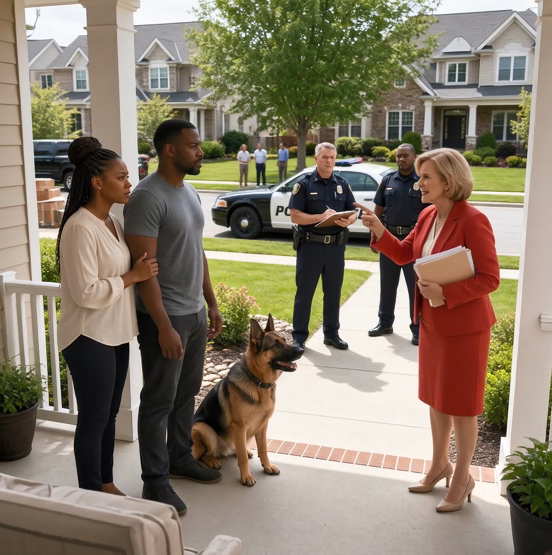
PART3:
He opened the first file.
At 9:40 the night before, the camera showed Wade himself locking the front gate. The chain looped through the steel frame. The padlock snapped shut in his hand. He tugged it twice the way his father had taught him, then turned and walked toward the house with his shoulders rounded against the cold.
The footage rolled forward.
Hours of nothing.
Wind moving through the weeds along the fence.
A cat slipping under the storage building.
Moths swirling in the light.
Then, at exactly 2:13 a.m., headlights appeared on County Road 6.
Not one set.
Six.
They came without hesitation, turning off their beams as they approached the gate, rolling into place like they had rehearsed it.
Tow trucks.
Wade leaned closer.
Grace whispered something Wade could not hear.
The first man out was heavyset, wearing a dark jacket and a ball cap. He walked straight to the gate, pulled something from his pocket, and unlocked Wade’s padlock without cutting the chain.
A key.
The word landed in Wade’s mind with a cold, clean sound.
Whoever had done this had not broken in.
They had let themselves in.
The gate swung open.
The tow trucks entered.
One after another.
The footage from the front gate camera went black six minutes later when a man on a short ladder removed it from the post. But the man never looked up toward the roofline, where Wade had installed three smaller cameras after a break-in the previous year. Those cameras kept recording from angles no one on the ground noticed.
The east camera caught the black SUV arriving at 2:28.
It stopped outside the gate.
The driver stepped out.
Grace made a sound that was not quite a gasp and not quite a sob.
Marissa Caldwell.
Even on grainy security footage, Wade knew her posture. Chin lifted. Shoulders back. One hand at her waist as though the world were a room she had paid to enter first. She wore a cream-colored coat, black gloves, and boots too clean for a gravel yard. Her blond hair was pulled into a smooth knot. The Blackridge Estates emblem shone on the SUV door behind her, an iron gate wrapped in laurel leaves, as if a subdivision built on former soybean fields had been granted a royal crest.
Beside her walked Troy Kessler, owner of Redline Recovery.
Wade knew Troy, though not well. Everyone in the towing business knew everyone else by reputation. Troy was a man who smiled too quickly and sent invoices before jobs were done. Redline had been suspended twice for storage violations and once for towing from a private lot without proper authorization, but Troy always found a lawyer, a loophole, or a new company name before consequences caught up with him.
Troy carried a folder.
He opened it under the yard light and handed papers to his drivers.
The hidden camera above bay two caught one page when the wind flipped it back against his arm.
Emergency Vehicle Abatement Notice.
Wade felt Grace look at him.
He did not take his eyes off the screen.
The operation unfolded with awful efficiency. Drivers moved from truck to van to trailer. Hooks dropped. Winches tightened. Light bars flashed silently in the footage. Men spoke into radios. Marissa walked the yard like she was inspecting a renovation project, pointing once toward Wade’s heavy hauler, once toward the covered Mustang.
At 3:11, one of the Redline drivers pulled the gray cover from the Mustang and tossed it into the gravel.
Grace stepped forward. “No.”
Wade paused the video.
His daughter’s face had gone white.
“Gracie,” he said softly.
“That was Mom’s,” she said.
“I know.”
“She knew that was Mom’s.”
Wade did not answer, because they both knew Marissa had known.
Everyone knew.
Emily Hollister’s funeral procession had driven past Blackridge Estates. Half the county had come. The Mustang, then still primer-gray and half-disassembled, had sat outside the shop with flowers on the hood because Emily had once said that car was the closest thing her father had left her to a love letter.
Marissa Caldwell had sent a sympathy card embossed with the Blackridge Estates crest and misspelled Emily’s name.
On the screen, the Mustang rolled away behind a Redline tow truck at 3:19 a.m.
Grace turned and walked out of the kitchen.
Wade let her go because he could not hold her grief and his anger at the same time without breaking something.
He kept watching.
At 3:52, a Redline driver dropped one of the printed notices. It landed face up in the gravel beneath the hidden camera. The image was sharp enough that Wade could zoom in on the bottom of the page.
Case No. CR-AB-7719-44.
County Seal.
Authorized Emergency Community Hazard Removal.
Signed: Marissa Caldwell, President, Blackridge Estates HOA.
Wade took a screenshot.
At 4:03, Troy Kessler stood beside Marissa near the empty row where the service vans had been.
The camera microphone, cheap but better than nothing, picked up their voices through bursts of static.
“All twenty-two,” Troy said. “Just like you wanted.”
Marissa looked around Wade’s empty yard.
Then she smiled.
“By the time Hollister gets around to fighting this,” she said, “the land will already belong to us.”
Wade’s hands went still on the laptop.
Ben, who had climbed silently into a chair, looked at his father. “What does that mean?”
Wade closed the laptop halfway, then opened it again. He forced himself to breathe through his nose.
“It means,” he said, “Mrs. Caldwell just made a very bad mistake.”
Wade Hollister was not a loud man.
People often mistook that for weakness.
Marissa Caldwell had.
She had mistaken his patience for fear, his manners for submission, and his old work boots for proof that he was beneath her. She had looked at Hollister Fleet and Recovery, at the grease-stained concrete, the patched fencing, the rows of work vehicles, and seen blight. She had looked at fourteen acres of family land and seen a missing road. She had looked at Wade’s grief and thought it made him easier to push.
That was her first mistake.
Her second was assuming he was alone.
At 4:48, Wade called Rebecca Sloan.
Most attorneys would not have answered. Rebecca did on the fourth ring, her voice thick with sleep and irritation until Wade said, “They took the fleet.”
The line went silent.
Then all the sleep left her voice. “Who is they?”
“Marissa Caldwell. Troy Kessler. Redline Recovery. I have footage.”
“Tell me you haven’t left the house.”
“I haven’t.”
“Tell me you haven’t called her.”
“I haven’t.”
“Good. Do not. Send me the video. Send me every still image. Especially documents. Do not touch the gate. Do not clean anything. Do not move anything. I’m getting dressed.”
Wade emailed her the files while she stayed on the phone.
When she opened the screenshot of the abatement notice, he heard her breath change.
“Read me the case number,” she said.
He did.
She typed for a minute.
Then another.
“Rebecca?”
“I’m in the county system.”
“And?”
“No match.”
“Try it without the prefix.”
“I did.”
“Try the civil index.”
“I did.”
The clicking stopped.
Her voice went flat in a way Wade had heard only once before, when she told a contractor across a conference table that lying under oath would be the last professional choice he ever made.
“Wade,” she said, “that order is fake.”
He looked toward the hallway where Grace had disappeared and Ben sat curled in his chair with both arms around his knees.
“You’re sure?”
“There is no filing. No judge. No clerk. No abatement case. No emergency order. The case number doesn’t match county format. The seal is wrong. They used an old version from before the county redesign. And HOA presidents do not sign emergency vehicle abatement notices for private property outside their covenants. They forged government authority.”
Wade stared at the screenshot.
Marissa’s signature looked elegant. Confident. Almost decorative.
“She thought paper would make it legal,” he said.
“No,” Rebecca replied. “She thought paper would make people obey.”
That sentence stayed with Wade for the rest of his life.
By 5:10, the kitchen was fully awake. The coffee maker sputtered. The old refrigerator hummed. Grace came back wearing jeans and a sweatshirt, her face washed but her eyes red. Ben had changed into school clothes without being asked, though it was still dark and nobody was going to school that day.
Wade made his first official call to the sheriff’s non-emergency line.
He gave his name, address, business license number, and a calm report that twenty-two vehicles had been removed from his private property without consent under a suspected fraudulent order. He requested a deputy to document the scene. He asked for the incident number twice and wrote it down.
His second call went to Calvin Roark, owner of Roark County Towing, the most stubbornly honest man Wade knew.
Calvin answered with a cough. “Somebody better be dead.”
“Not yet,” Wade said.
That woke him.
Wade explained only what Calvin needed to know: Redline Recovery had moved vehicles illegally, possibly to a private location, and Wade might need licensed recovery support before noon.
Calvin did not ask for drama. He asked for VINs.
That was why Wade trusted him.
His third call went to his insurance carrier.
His fourth went to Maria Delgado, his office manager, who had worked for Hollister Fleet and Recovery since Wade’s father was alive and could terrify grown men by lowering her glasses.
“Don’t come in through the front gate,” Wade told her. “Park at the house.”
Maria said nothing for three seconds, then asked, “How bad?”
“All of them.”
She inhaled sharply. “Even Emily’s Mustang?”
“Yes.”
There was a quiet word in Spanish that Wade did not know but understood perfectly.
“I’ll be there in twenty minutes,” she said.
“No. Stay home until daylight.”
“Wade, I have keys to your filing cabinets, your insurance folders, your customer contracts, and the little drawer where you keep emergency chocolate. I’ll be there in twenty minutes.”
She hung up.
At 5:42, Deputy Aaron Pike arrived.
He was twenty-seven, new enough to still polish his boots, old enough to know when a situation smelled bigger than the first report. He stepped out of his cruiser with a notebook in hand and stopped at the gate.
The padlock hung open.
The chain dangled.
He looked at it, then at Wade.
“You unlock this, sir?”
“No.”
“Anybody else authorized to?”
“No.”
Deputy Pike crouched without touching the lock. “No cut marks.”
“They used a key.”
Pike’s expression changed.
Wade saw the moment the deputy realized this was not a simple theft report. The lock, the fake order, the number of vehicles, the HOA president’s signature—each piece pulled the morning farther from ordinary.
Grace stood beside the porch with Ben, both wrapped in jackets. Wade wished they were inside. He also knew there were moments when children needed to see the truth handled properly, not hidden like shame.
Deputy Pike documented everything. Photographed the gate. Photographed tire tracks. Took Wade’s first statement. Watched enough of the camera footage to stop writing for a moment and mutter, “You’ve got to be kidding me.”
Then Marissa Caldwell arrived.
She did not come alone.
That was Marissa’s habit. She never entered a confrontation without witnesses she believed she could control.
Two Blackridge patrol SUVs pulled up first, white with green striping and magnetic signs that said Community Safety Division, though everyone knew they were private security guards with flashlights and matching polos. Behind them came a Blackridge maintenance truck, a landscaping rig pulling a trailer, and a black Lincoln Navigator with Marissa in the passenger seat, typing on her phone as if the scene had been arranged for her convenience.
Wade watched them roll toward his gate and felt something inside him go cold.
They had returned.
Not Redline this time. Blackridge itself.
Marissa stepped out wearing the same cream coat from the footage, though now she had added pearl earrings and sunglasses despite the dim morning. Her mouth tightened when she saw Deputy Pike at the gate, but only for half a second. Then she smiled like a woman greeting staff.
“Deputy,” she said. “Thank goodness you’re here.”
Pike stood. “Ma’am.”
“I’m Marissa Caldwell, president of Blackridge Estates HOA. We have an ongoing emergency abatement matter with this property. Mr. Hollister has a history of noncompliance and aggression toward our community representatives.”
Grace made a small noise of disbelief.
Wade held up one hand without looking back.
Marissa noticed the gesture and smiled wider, as if Wade controlling his temper proved she had caused it.
“We’ll need access to complete the cleanup,” she continued. “Our crews are here to remove remaining hazards and assess the eastern strip for safety improvements.”
Wade looked behind her.
The maintenance truck carried orange cones, survey stakes, two rolls of temporary fencing, and a gas-powered auger.
They had not come to inspect.
They had come to mark his land.
Deputy Pike glanced at Wade. “Mr. Hollister, did you authorize these crews?”
“No.”
Marissa laughed softly. “He doesn’t need to authorize enforcement.”
Rebecca Sloan’s car came up the road then, a dark blue sedan moving faster than lawyers usually moved before breakfast. She parked crookedly near the house and stepped out in a charcoal coat, hair pinned badly, laptop bag over one shoulder, fury disguised as professionalism.
“Marissa,” she called, “do not say another word unless your attorney is present.”
Marissa’s face hardened. “Rebecca. Of course he called you.”
“Yes,” Rebecca said. “That’s what intelligent people do before committing more crimes.”
One of the Blackridge security guards shifted uncomfortably.
Marissa pointed at Wade’s gate. “Deputy, I want this man cited for obstruction. He is interfering with authorized community hazard mitigation.”
Rebecca walked to Wade’s side. “Show him the order.”
Marissa lifted her chin. “I’m not required to answer to you.”
“Then answer to him,” Rebecca said, nodding toward Pike.
Pike held out a hand. “Ma’am, if you have legal authority to enter this property, I need to see it.”
For the first time, Marissa hesitated.
Only briefly.
Then she opened the leather folder one of her guards carried and removed a copy of the same notice Wade had seen on camera.
She handed it to Pike with the air of a queen granting mercy.
Pike read the top line.
Then the bottom.
Then he looked at the seal.
“Ma’am,” he said slowly, “where did this come from?”
“The association’s legal compliance office.”
Rebecca gave a humorless laugh. “The HOA has no legal compliance office. It has a converted storage closet and a printer.”
Marissa ignored her. “Deputy, that document authorizes removal of hazardous vehicles and related materials from the abatement zone.”
“This says county emergency order,” Pike said.
“Yes.”
“Signed by you.”
“As the requesting authority.”
Pike looked at Wade.
Wade handed him Rebecca’s printed confirmation from the county database.
“No such case exists,” Wade said.
Marissa’s cheeks flushed. “That is not accurate.”
Rebecca opened her laptop on the hood of Wade’s pickup and turned the screen toward Pike. “Live county record search. No filing. No judge. No abatement order. No authority. No jurisdiction. This property is outside Blackridge Estates HOA boundaries by recorded plat, and the HOA has been notified of that fact seven separate times in writing.”
Pike’s jaw tightened.
Marissa saw control slipping and did what arrogant people often do when facts fail them.
She raised her voice.
“This property affects our community. It sits against our eastern boundary. It lowers values. It creates traffic hazards. It creates noise. It creates visual distress for homeowners who pay substantial dues to maintain a standard of living. Mr. Hollister cannot hide behind some old deed while his junkyard damages hundreds of families.”
Grace stepped forward. “That junkyard paid for my mother’s funeral.”
The words hit the morning so hard even the guards looked away.
Marissa turned toward her, eyes narrowing. “Young lady, this is an adult matter.”
Wade moved then.
Only one step.
He placed himself between Marissa and his daughter.
“Do not speak to my child.”
Marissa smiled, but this time it shook at the edges. “Deputy, you see? Threatening behavior.”
Pike did not move toward Wade.
He looked at Marissa instead. “Ma’am, did you direct Redline Recovery to remove vehicles from this property overnight?”
Marissa folded her arms. “I directed authorized contractors to enforce a lawful notice.”
“Did you enter the property?”
“I supervised.”
“Did you have permission from the owner?”
“The owner was noncompliant.”
“That’s not what I asked.”
Before Marissa could answer, another vehicle turned off County Road 6.
Then another.
Two sheriff’s SUVs.
A plain county sedan.
And behind them, a Cedar Ridge police cruiser.
Marissa’s confidence returned at the sight of more uniforms. She stepped forward, waving one gloved hand.
“Officers,” she called. “Excellent. We need assistance removing these people from association-controlled access land.”
Wade looked down at Ben, who had come to stand beside him.
His son’s small hand slipped into his.
The first man out of the county sedan was Sheriff Daniel Ruiz, gray-haired, broad-shouldered, wearing the expression of someone whose morning had become complicated before coffee. He had known Wade for fifteen years. They had filled sandbags together during the Cedar Creek flood. They had stood beside each other at too many accident scenes. He knew Wade’s father. He had cried at Emily’s funeral and tried to hide it behind his hat.
Sheriff Ruiz walked past Marissa without slowing.
He stopped in front of Wade.
“Mr. Mayor,” he said quietly. “I’m sorry we’re meeting under these circumstances.”
The world seemed to pause.
Grace looked down.
Ben squeezed Wade’s hand.
Deputy Pike straightened.
Marissa blinked.
“What did you call him?” she asked.
Sheriff Ruiz turned, finally giving her his full attention. “Mayor Hollister.”
Marissa stared at Wade as though he had changed shape.
Wade did not smile.
That mattered.
He did not enjoy her shock. He did not use it to gloat. He stood there in old boots, in a faded jacket with grease on one cuff, holding his little boy’s hand, and let the truth arrive without decoration.
Marissa’s mouth opened once before she found words. “That’s not possible.”
Rebecca looked over. “You really don’t attend council meetings, do you?”
“He’s a tow operator,” Marissa snapped.
“He is also the elected mayor of Cedar Ridge,” Sheriff Ruiz said. “Sworn in seven weeks ago after the special election. Blackridge Estates sits inside Cedar Ridge municipal limits. Your HOA does not outrank the city, the county, private property law, or reality.”
The Blackridge maintenance crew went still.
One of the security guards lowered his radio.
Marissa’s face shifted from disbelief to embarrassment to anger so fast Wade could almost see each mask crack.
“If he’s mayor,” she said, voice rising, “then this is even worse. This is abuse of office. He’s using political influence to protect a nuisance property.”
Wade finally spoke.
“My office has nothing to do with my property rights.”
“Oh, please.”
“My attorney contacted the county before any officer arrived. I filed a theft report as a private citizen. I haven’t asked anyone for special treatment.”
Sheriff Ruiz nodded. “That is accurate.”
Marissa pointed toward the empty yard. “He is manipulating you.”
Rebecca closed her laptop. “Marissa, stop.”
“No,” Marissa said. “No, I won’t be intimidated by this good-old-boy nonsense. My residents have rights. Our property values matter. We have signed authority.”
“You have a fake county order,” Rebecca said.
“I have a duty to my community.”
“You had a duty not to steal twenty-two vehicles.”
That word changed the air.
Steal.
Plain. Ugly. Impossible to soften.
Marissa’s sunglasses hid her eyes, but not the color draining from her mouth.
Sheriff Ruiz turned to Deputy Pike. “Secure the document. Bag the lock. Photograph all vehicles present from Blackridge. Nobody leaves until we identify who drove what onto this property.”
One of Marissa’s guards lifted both hands. “Sheriff, I just got called in for traffic cones.”
“Then you’ll want to cooperate fully,” Ruiz said.
Marissa stepped back. “You can’t detain my people.”
“Nobody is detained yet,” Ruiz replied. “But if anyone drives off with potential evidence after being instructed not to, that will change.”
Wade felt Ben press closer to his side.
“Dad,” Ben whispered, “are they going to jail?”
Wade looked down at him.
He wanted to say yes. He wanted to promise consequences immediately, cleanly, the way children deserved justice to work. But Wade had seen enough of life to know justice usually came limping, not marching.
“I don’t know,” he said. “But they don’t get to pretend nothing happened.”
That was the promise he could make.
The morning widened into gray daylight.
Neighbors from Blackridge began to appear along the far side of the road, drawn by patrol lights and rumor. Some wore robes under coats. Some held coffee mugs. A few filmed with phones until Sheriff Ruiz ordered them back behind the shoulder for safety.
Wade recognized several faces.
People who had waved politely from behind tinted SUV windows.
People who had complained about his trucks but called him when their teenage sons slid into ditches.
People who had never visited his shop but knew exactly what they thought it was.
Among them stood Everett Caldwell, Marissa’s husband, in a navy overcoat and loafers unsuitable for gravel. He looked less angry than tired, the way a man looks when he has spent years watching a fire approach and telling himself it was only sunset.
“Marissa,” he called from the road. “What did you do?”
She spun toward him. “Go home.”
“What did you do?”
“Everett, I said go home.”
He looked past her at Wade.
Something like shame crossed his face.
Wade looked away first.
He did not know Everett well, but he knew enough. The man owned a regional insurance brokerage and had built a respectable life by avoiding scenes. Marissa had built hers by creating them, then making others apologize for the smoke.
At 7:18, Maria Delgado arrived with two banker’s boxes, a thermos of coffee, and the expression of a woman ready to fight government, weather, and God in that order.
She hugged Grace first.
Then Ben.
Then Wade, quickly and hard.
“I printed VIN lists, titles, customer contracts, restoration agreements, insurance schedules, photos of every vehicle, maintenance logs, and the emails from Caldwell,” she said. “Also, I brought muffins.”
Rebecca looked at her with admiration. “Maria, you may be my favorite person.”
“I’ve been telling him that for years.”
Wade almost smiled.
Almost.
The first real break came at 7:46.
A county investigator ran the GPS pings from two of Wade’s newer work trucks. Whoever had moved them had not known those units contained active fleet trackers separate from the visible dash systems. The signal placed both vehicles at an industrial warehouse twelve miles away, outside town limits, leased to a company called BRC Land Services.
Rebecca recognized the initials first.
Blackridge Corridor.
The access road project.
She showed Wade the state business registration on her phone. BRC Land Services had been formed six months earlier. Its registered agent was a law office two counties over. Its mailing address was a suite in the same building as a development firm called Varnum Commercial Partners.
Wade knew that name.
Everyone in Cedar Ridge did.
Cole Varnum had been buying land along the new commercial corridor for more than a year, promising boutique retail, medical offices, restaurants, and “lifestyle integration.” He wore expensive boots to construction sites and spoke at town council meetings with the polished sincerity of a man who considered sincerity part of the invoice.
Varnum had approached Wade once.
Just once.
A year earlier, before Marissa started her campaign of letters and complaints, Cole Varnum had come to the shop in a white truck that had never hauled anything heavier than golf clubs. He offered to buy a thirty-foot strip along Wade’s eastern property line for a price that would have seemed generous to anyone who did not understand what land became worth when rich people needed it.
Wade declined.
Varnum smiled.
“Think about the future,” he had said.
Wade replied, “I am.”
The strip Varnum wanted cut across the back of Wade’s lot, then along a rise where an old oak tree stood. Emily had loved that tree. Their kids had learned to climb it. Wade’s father had buried three dogs beneath it. It was also the natural buffer between heavy shop traffic and the houses of Blackridge Estates.
If that strip became a road, Hollister Fleet would be trapped between traffic and complaints until selling became the only sane choice.
Wade had seen the plan before anyone showed it to him.
Now, staring at BRC Land Services on Rebecca’s phone, he saw the rest.
Marissa had not acted alone.
She had acted as the HOA face for a development scheme.
At 8:25, Sheriff Ruiz obtained permission from the district attorney to secure the warehouse pending a warrant. By 9:10, two deputies outside the building confirmed Wade’s vehicles were visible through a gap in the loading dock door.
By 10:03, the warrant was signed.
Wade did not go to the warehouse.
He wanted to.
Every nerve in him wanted to stand there when the doors opened and count his trucks with his own eyes.
But Rebecca told him no.
“You are the victim, the mayor, and the property owner,” she said. “Every move you make will be scrutinized by people looking for conflict. Let law enforcement document recovery first.”
“I need to know if Emily’s car is there.”
Her face softened. “I know.”
Grace stood beside him, arms folded tight. “I want to go.”
“No,” Wade said.
“It’s mine too.”
“I know.”
“Then don’t shut me out.”
“I’m trying to protect you.”
“I’m already hurt.”
That stopped him.
Grace’s voice broke, and suddenly she was not the composed sixteen-year-old who helped with invoices after school, but the little girl who had slept on the floor beside her mother’s hospital bed because she was afraid Emily would leave while she was dreaming.
“You keep doing that,” Grace said. “You keep acting like if you stand between us and everything bad, it won’t hit us. But it does. It hit us when Mom died. It hit us when Mrs. Caldwell told people our shop was trash. It hit us when her people took Mom’s car. I don’t want to be protected from knowing. I want to be with you when we fight back.”
Wade looked at his daughter and felt something inside him give way.
Not break.
Open.
Emily would have known what to say. Emily would have pulled Grace close and somehow made strength feel warm instead of heavy.
Wade was still learning.
He stepped forward and wrapped his arms around his daughter.
She resisted for half a second, then collapsed against him.
“I’m sorry,” he whispered.
Grace’s voice was muffled against his jacket. “I hate her.”
“I know.”
“I really hate her.”
“I know.”
“Mom loved that car.”
Wade closed his eyes. “Yes, she did.”
“If they scratched it, I’m going to jail.”
Despite everything, Wade laughed once.
Grace did too, through tears.
Ben joined the hug from the side because he was ten and still believed hugs had room for everyone.
Across the yard, Marissa Caldwell watched them with a face like stone.
She had been instructed not to leave. Her phone had been taken temporarily for preservation after deputies saw her trying to delete a message thread while “checking her calendar.” That had triggered a sharper conversation with Sheriff Ruiz and an even sharper call to the district attorney.
Now she stood near her Navigator with Rebecca, Deputy Pike, and a Cedar Ridge officer nearby, stripped of audience control, forced to watch the family she had tried to corner remain a family.
That may have been the first real punishment.
Not legal.
Not official.
But real.
At 10:41, Sheriff Ruiz called Wade.
Wade put the phone on speaker because Grace had earned that.
“We found them,” Ruiz said.
Grace gripped Wade’s sleeve.
“All twenty-two?” Wade asked.
“All twenty-two.”
“The Mustang?”
There was a pause.
“It’s here,” Ruiz said. “Cover’s missing. Front fender has a scrape that may have happened during transport. We’ll document it.”
Grace covered her mouth.
Wade looked toward the oak tree beyond the shop and breathed for the first time all morning.
Ruiz continued. “We also found survey markers, temporary signage reading Future Blackridge East Access, and two sets of printed notices declaring the area under community control effective today.”
Rebecca’s eyes narrowed.
Wade looked toward Marissa.
She looked away.
“Troy Kessler is here,” Ruiz said. “He says he acted under documents provided by Caldwell and BRC Land Services. He has counsel on the way. He also says he was told your property had been condemned.”
“By who?”
“That’s what we’re finding out.”
The answer came two hours later.
It came because arrogance writes things down.
Cole Varnum, Marissa Caldwell, and Troy Kessler had exchanged weeks of emails through accounts they apparently believed were private enough to be safe and formal enough to be enforceable. In those emails, Marissa referred to Wade’s land as “the obstruction parcel.” Varnum called it “the mayor’s strip” once, then later corrected himself to “Hollister parcel” after Marissa replied, “Please don’t use that title in writing. It complicates optics.”
She had known.
Not at first, maybe.
But before the theft, before the fake order, before she stood in Wade’s yard acting shocked to hear Sheriff Ruiz say “Mr. Mayor,” she had known Wade was the mayor of Cedar Ridge.
She had lied.
That discovery changed Rebecca’s anger into something colder.
“She knew your public office made this dangerous,” Rebecca said. “So she tried to frame any response from you as corruption before you even responded.”
Wade sat at the kitchen table again, reading copies of the recovered emails that investigators had obtained from Troy’s phone after his attorney advised cooperation.
Marissa had written:
If he reacts emotionally, we characterize it as retaliation by a municipal official.
Cole Varnum had replied:
Understood. The board packet should emphasize public nuisance, not land acquisition.
Troy had written:
Need indemnity if owner claims theft.
Marissa:
He won’t. Men like Hollister bark, then bargain.
Wade read that line three times.
Men like Hollister.
He wondered what she meant.
Men who worked with their hands.
Men with dead wives.
Men who inherited land instead of buying into gates.
Men who still said yes ma’am to women who despised them.
Men who did not perform wealth correctly.
Men who thought a clean deed meant more than a polished lie.
Grace read over his shoulder and went quiet.
“Dad,” she said, “don’t.”
“Don’t what?”
“Don’t let that get in your head.”
He looked at her.
She shrugged, trying to act casual and failing. “Mom used to say people insult what they can’t understand.”
Wade smiled sadly.
“She did.”
“She was usually right.”
“She was always right.”
Grace rolled her eyes. “She was not always right. She thought pineapple belonged on pizza.”
“That was her only flaw.”
Ben, at the counter with a muffin, said, “Pineapple does belong on pizza.”
Grace looked betrayed. “You are too young to understand shame.”
For a moment, there was laughter in the kitchen.
Small.
Bruised.
But real.
Wade held onto it.
By midafternoon, the story had spread through Cedar Ridge.
Not officially. Not completely. But enough.
A tow operator’s fleet had been stolen.
The HOA president was involved.
The mayor was the victim.
Blackridge residents were whispering.
Local reporters were calling.
The town clerk left Wade seven messages asking whether the evening council meeting was still happening.
It was.
That surprised everyone except Wade.
At 4:30 p.m., Rebecca stood in his kitchen and said, “You can cancel. No reasonable person would question it.”
Wade buttoned a clean shirt at the sink window, watching Calvin Roark’s crews begin hauling the recovered vehicles back under sheriff supervision.
“I’m not canceling.”
“You had twenty-two vehicles stolen before dawn.”
“And I’m still mayor.”
“That is exactly why you should take the night.”
He turned from the window. “No. If I cancel, Marissa gets to say city business stopped because of my personal problem. If I show up angry, she gets to say I’m unstable. If I handle the agenda and let the investigation work, she gets nothing from me.”
Rebecca studied him.
“You know she may come.”
“I’m counting on it.”
At 5:15, the Mustang came home.
Calvin himself drove the rollback.
He lowered it slowly in front of bay three as Wade, Grace, Ben, Maria, and two employees stood watching in the amber light of late afternoon.
The gray cover was gone.
The driver’s side fender bore a fresh scrape, white primer showing beneath blue paint Wade and Grace had laid down by hand.
Grace walked to it without speaking.
She touched the scrape with two fingers.
Wade waited for anger.
Instead, she cried silently, shoulders shaking.
Ben looked up at Wade, confused by grief over a car.
Wade knelt beside him.
“That car was one of the places we kept Mom,” he said softly.
Ben thought about that.
Then he walked to Grace and hugged her around the waist.
She put one hand on his head.
Calvin Roark looked away and wiped his nose with the back of his hand, pretending it was the cold.
“I’ll testify to transport damage,” he said gruffly.
Maria sniffed. “You will do more than testify. You will help us fix it.”
Calvin looked at the Mustang. “I can paint about as well as a goat.”
“Then you will bring food.”
“That I can do.”
Wade stood in the yard as truck after truck returned. Some had minor damage. One van had a cracked mirror. A trailer jack was bent. A heavy hauler had been secured wrong and would need inspection. But they were home.
Every return felt like a heartbeat coming back into a body.
At 6:40, Wade drove to Cedar Ridge Town Hall.
He took Grace with him.
Not because he needed protection.
Because she had asked.
Ben stayed with Maria and her husband, who arrived with soup, homework patience, and a promise to teach Ben three new card tricks.
Town Hall was a renovated brick post office with a flagpole out front and a council chamber that smelled faintly of old paper and floor polish. Wade had loved that building as a child because his father used to bring him there when he was mayor in the late 1980s.
Walter Hollister had served two terms back when Cedar Ridge still had a feed mill, two banks, and a parade small enough to turn around in the grocery store parking lot.
People had called Walter “Mr. Mayor” long after he left office. Not because he demanded respect, but because he had earned affection. He filled potholes with his own shovel when crews were backed up. He sat with families after house fires. He knew which widows needed their leaves raked and which teenagers needed a job before they found trouble.
Wade had never planned to follow him.
He liked engines better than speeches. He trusted tools more than committees.
But after the former mayor resigned amid a contracting scandal, Cedar Ridge had become mean in a way Wade did not recognize. Public meetings turned into shouting. Developers circled. Residents stopped believing anyone in office served anything but themselves.
Then, one night at the grocery store, an old woman named Mrs. Abernathy put a hand on Wade’s arm and said, “Your daddy would have hated seeing this town so ashamed of itself.”
Three months later, Wade ran.
He did not run with glossy signs.
He ran with photocopied flyers, a borrowed microphone, and Grace managing his social media with ruthless teenage efficiency. His platform was simple: clean contracts, open meetings, fix roads, protect small businesses, and stop letting rich neighborhoods treat the rest of Cedar Ridge like a service entrance.
He won by 312 votes.
Marissa Caldwell sent no congratulations.
At 6:58 that evening, Wade walked into the council chamber through the side door.
The room was packed.
Usually, Cedar Ridge council meetings drew the same twelve people: two reporters, three retirees, one man mad about drainage, one woman mad about the man mad about drainage, and a rotating cast of residents fighting zoning decisions.
That night, every seat was filled.
Blackridge homeowners sat in clusters, whispering. Wade saw Everett Caldwell near the back, alone. He saw Cole Varnum in a tailored coat by the aisle, expression smooth. He saw Sheriff Ruiz standing along the side wall. He saw Troy Kessler not there, which was wise.
And in the front row sat Marissa Caldwell.
She had changed clothes.
A navy dress. Pearls. Perfect hair. No sunglasses.
She looked like she had dressed for television.
Wade took his seat at the center of the dais.
The whispering rose.
Grace sat behind him in the staff row, arms crossed.
At exactly 7:00, Wade tapped the gavel once.
“This meeting of the Cedar Ridge Town Council is called to order.”
His voice was calm.
The room settled, disappointed perhaps that he had not begun with fire.
They moved through routine business first.
Minutes.
Budget amendment.
Road resurfacing update.
Public works staffing.
A drainage complaint on Sycamore Lane, which Wade handled with such ordinary attention that Rebecca, seated near the aisle, almost smiled.
Then came public comment.
Marissa stood before anyone else could move.
She walked to the podium carrying a folder thick enough to impress people who feared paper.
“Mayor Hollister,” she said.
Her tone made the title sound like an accusation.
Wade nodded. “Mrs. Caldwell.”
“I speak tonight on behalf of hundreds of Blackridge Estates homeowners who are deeply concerned by the mayor’s personal conflict of interest involving land adjacent to our community.”
The room went quiet in the hungry way rooms do when scandal is offered.
Marissa continued. “For months, our association has attempted to address a hazardous nuisance property operated by Mayor Hollister. Instead of cooperating, he has used intimidation, legal threats, and now law enforcement relationships to target our HOA leadership and contractors. This morning, officers under county authority interfered with a lawful abatement process and detained community workers. We believe Mayor Hollister’s dual role as property owner and municipal official requires immediate investigation.”
Grace leaned forward, eyes blazing.
Wade did not move.
Marissa opened her folder. “Furthermore, we have documentation showing that the eastern strip of the Hollister property has long functioned as an implied access corridor for community improvement and emergency planning. His refusal to cooperate is not only selfish, but dangerous.”
A murmur went through the Blackridge section.
Rebecca lowered her head and wrote something.
Wade let Marissa finish.
That was important.
People like Marissa counted on interruption. They built traps around outrage. If Wade cut her off, she became the victim before she had to answer for anything.
So he let her talk.
She spoke for seven minutes.
She mentioned property values eleven times.
Safety six times.
Community standards nine times.
She did not mention the stolen vehicles once.
When the timer beeped, Wade said, “Thank you, Mrs. Caldwell.”
She blinked, perhaps expecting combat.
Wade looked at the next speaker card.
Everett Caldwell.
Marissa turned sharply.
Her husband stood.
He walked to the podium slowly, like every step cost him something.
“Name and address for the record,” Wade said gently.
Everett cleared his throat. “Everett Caldwell. 18 Blackridge Crest.”
Marissa’s hand tightened around her folder.
Everett did not look at her.
“I am a Blackridge homeowner,” he said. “I am also Marissa Caldwell’s husband. I want it understood that I did not know vehicles were being removed from Mr. Hollister’s property last night. I did not authorize it. I did not support it. And I discovered today that my name was used on an internal finance approval I did not sign.”
The room stirred.
Marissa stood. “Everett.”
Wade tapped the gavel once. “Mrs. Caldwell, you are out of order.”
Her face went red.
Everett continued, voice shaking now. “I have provided copies of bank notices and signature comparisons to Sheriff Ruiz. I am ashamed I did not ask harder questions sooner. I believed this was about landscaping disputes and property boundaries. I was wrong.”
He looked at Wade for the first time.
“I’m sorry,” he said.
The apology did not fix anything.
But it cost Everett something to say it publicly, and Wade respected cost.
“Thank you, Mr. Caldwell,” Wade said.
Everett returned to his seat.
Marissa looked as if he had slapped her.
The next speaker was Mrs. Abernathy, eighty-one years old and five feet tall, wearing a purple cardigan and the expression of a woman who had lived long enough to stop being afraid of wealthy neighborhoods.
“I knew Wade’s father,” she began. “Walter Hollister pulled my car out of a ditch in 1994 and refused payment because my husband had just died and he said neighbors don’t invoice grief. Wade is cut from the same cloth. I don’t know much about HOA rules, and I don’t care to. But I know a bully when I hear one dressed up in committee language.”
Someone in the back clapped once, then stopped.
Mrs. Abernathy looked at Marissa. “You ought to be ashamed.”
Marissa stared at the table.
Then came Darnell Price, owner of the barbershop.
Then Kim Nguyen, whose bakery van Wade had repaired for free during the pandemic.
Then Miguel Santos, one of Wade’s employees, who spoke in a voice rough with nerves about how the fleet disappearing meant his paycheck disappearing.
Then Grace.
Wade had not known she filled out a card.
When the clerk called her name, he turned.
Grace stood, smoothing her sweatshirt as if it were formalwear, and walked to the podium.
Wade wanted to stop her.
He did not.
“Grace Hollister,” she said. “County Road 6.”
Her voice trembled on the first word, then steadied.
“My mom died two years ago. Her name was Emily, not Emma, even though Mrs. Caldwell wrote Emma on the sympathy card she sent. My mom used to say the shop was loud because people came there broken and left moving again. She said that was holy in its own weird way.”
The chamber went completely silent.
Grace swallowed.
“Last night, Mrs. Caldwell’s contractors took my mom’s Mustang. My dad and I have been restoring it together. It’s not junk. It’s not a hazard. It’s the last project my mom asked us to finish.”
Wade looked down because if he kept watching her, he would lose the composure he had fought all day to keep.
Grace continued. “Mrs. Caldwell keeps talking about property values. I don’t know much about that. I’m sixteen. But I know what it feels like when someone with power thinks your memories are ugly because they aren’t profitable. I know what it feels like when adults use big words to hide cruel things. And I know my dad didn’t use being mayor to hurt her. He used being my dad to stay calm when she hurt us.”
Marissa’s face had gone pale.
Grace looked directly at her.
“You didn’t just steal trucks,” she said. “You stole the one place my dad still talks to my mom.”
No one moved.
Not even Wade.
Grace stepped back from the podium and returned to her seat.
As she passed, Rebecca reached out and squeezed her hand.
Wade waited until his throat unlocked.
“Thank you, Miss Hollister,” he said, because if he called her Gracie, he would not make it through the meeting.
Public comment continued, but the room had changed.
Marissa’s polished narrative had cracked, and through it people had seen something she could not explain away with phrases like corridor optimization or community hazard.
They had seen harm.
Real harm.
Near the end, Cole Varnum approached the podium.
He smiled with the controlled warmth of a man used to rooms bending toward money.
“Cole Varnum, Varnum Commercial Partners. I want to encourage everyone to avoid rushing to judgment. Development, access, and infrastructure issues are complicated. Communities benefit when stakeholders collaborate rather than inflame—”
Sheriff Ruiz stepped away from the wall.
“Mr. Varnum,” he said, “before you continue, you should be aware anything you say in this public meeting may become relevant to an active investigation.”
Varnum’s smile flickered.
Wade leaned slightly toward the microphone. “You’re welcome to continue.”
Cole Varnum looked around the room, reassessed the temperature, and said, “I’ll reserve further comment.”
“That may be wise,” Rebecca murmured.
Marissa turned on him as he sat down. “Coward,” she whispered, loudly enough for three rows to hear.
That whisper did more to reveal the alliance than any accusation Wade could have made.
The meeting ended at 9:14 p.m.
Wade did not take questions from reporters inside the chamber. He gave one statement outside under the flagpole, with Grace beside him and Sheriff Ruiz ten feet away.
“My family and my business were harmed today,” Wade said. “The investigation will determine who broke the law. I will not interfere with that process. As mayor, I will continue serving Cedar Ridge under the same rule I expect everyone else to follow: no one’s title, wealth, neighborhood, or anger puts them above the law.”
A reporter asked, “Mayor Hollister, do you believe this was politically motivated?”
Wade thought of Marissa’s email.
If he reacts emotionally, we characterize it as retaliation.
He looked into the camera.
“I believe greed looks for whatever weapon is closest,” he said. “Today it used an HOA letterhead.”
That clip went everywhere by morning.
For the next six weeks, Cedar Ridge lived inside the story.
The district attorney announced charges first against Troy Kessler and Redline Recovery: felony theft by taking, criminal trespass, conspiracy, and unlawful towing. Troy’s attorney began negotiating within forty-eight hours.
Troy, as it turned out, had kept everything.
Texts.
Invoices.
Call logs.
A recorded voicemail from Marissa saying, “The vehicles must be gone before sunrise. Once the corridor is physically clear, the rest becomes a paperwork dispute.”
That voicemail ended her claim of misunderstanding.
The charges against Marissa came nine days after the theft.
Forgery.
Criminal trespass.
Conspiracy to commit theft.
False report of a crime.
Attempted extortion.
Tampering with evidence.
The tampering charge came because she had ordered the HOA office manager to delete board packet drafts referencing “forced clearance strategy,” then blamed a software update when investigators requested files.
The office manager did not love Marissa enough to go to prison for her.
Few people did.
Cole Varnum lasted longer.
Men like him had layers between themselves and consequences. Assistants, agents, lawyers, subsidiaries, plausible phrases. He had not signed the fake abatement notice. He had not stood in the yard. He had not ordered tow trucks directly.
But he had funded BRC Land Services.
He had reimbursed Redline through a consulting invoice.
He had received a photo of Wade’s empty yard at 4:26 a.m. and replied:
Excellent. Move fast before he gets traction.
Investigators found that message in Troy’s phone.
Varnum was charged with conspiracy and solicitation.
His company issued a statement expressing confidence, regret, commitment, and no actual apology.
Blackridge Estates imploded socially before it changed legally.
The first emergency HOA meeting after Marissa’s arrest drew nearly four hundred residents.
It had to be held in the elementary school gym because the clubhouse could not hold the outrage.
Marissa came despite her attorney’s advice.
She walked in wearing gray, no pearls, no smile.
People stared.
Some with anger.
Some with embarrassment.
Some with the desperate resentment of those who had agreed with her right up until agreeing became expensive.
Wade did not attend.
Rebecca did, as an observer.
Maria went too, because she said she wanted to watch rich people discover bylaws.
Everett Caldwell stood before the residents and resigned from the finance committee, then read a statement explaining unauthorized expenditures, hidden legal fees, and payments to BRC Land Services that had never been properly approved by the board.
A resident shouted, “Where did our dues go?”
Another yelled, “Did you use our money to steal from the mayor?”
Marissa stood up.
The gym erupted.
She raised both hands. “This association has been under siege by misinformation.”
That was as far as she got.
A woman in the third row stood holding a printed photo of Wade’s empty yard.
“My son works for Hollister Fleet,” she said. “He has two kids. You risked his job for a road.”
A man near the back shouted, “You told us that property was being condemned!”
Marissa said, “It should have been.”
That sentence ended her.
Not legally.
Not officially.
But in the minds of the people who had still wanted to believe she was merely aggressive, merely ambitious, merely misunderstood.
It should have been.
Three words that revealed she did not regret the lie, only the failure.
The board voted that night to remove her as president pending formal recall.
By the end of the month, she was gone.
The Blackridge Community Safety Division was dissolved after residents learned how much they had been paying for uniforms, decals, and authority no one legally possessed.
The HOA attorney resigned.
The management company terminated its contract.
Everett filed for separation before Thanksgiving.
Wade took no pleasure in that.
Marissa had done harm, but watching a life collapse in public is not the same thing as healing. Wade knew the difference. He had seen enough wrecks to understand that twisted metal could be both deserved and tragic.
The civil case moved faster than anyone expected because Marissa’s side had too many documents and too few explanations.
Rebecca filed for damages covering vehicle recovery, repairs, lost business, customer disruption, emotional distress related to the Mustang, attorney fees, security upgrades, and punitive damages.
She also filed to permanently bar Blackridge Estates, its agents, contractors, or successors from entering or asserting control over any portion of Wade’s property without a court order.
The injunction hearing happened in January.
Snow fell that morning, light and wet, turning the courthouse steps slick.
Wade wore his best suit, the one Emily had bought for a wedding years earlier and insisted made him look “dangerously respectable.” Grace wore a navy dress and boots. Ben wore a clip-on tie he hated and removed in the truck before they reached the parking lot, then put back on when Grace threatened him with sisterly violence.
Marissa arrived with her attorney and no entourage.
She looked smaller in the courthouse hallway.
Not humbled exactly.
Reduced.
There is a difference.
At the hearing, Rebecca played the footage.
The courtroom watched tow trucks enter Wade’s yard at 2:13 a.m. They watched the gate open with a key. They watched Marissa step from the black SUV. They watched the Mustang cover hit the gravel. They listened to Troy say, “All twenty-two, just like you wanted.”
Then they heard Marissa’s voice.
“By the time Hollister gets around to fighting this, the land will already belong to us.”
Even the judge’s expression changed.
Marissa’s attorney argued the words were taken out of context.
The judge asked, “What context makes that sentence lawful?”
The attorney had no good answer.
Then Grace testified.
Wade had tried to spare her that, but she insisted.
She sat straight, hands folded, and spoke about the Mustang. About restoring it with her father. About the morning they found it gone. About hearing adults call her mother’s car a hazard.
Marissa looked down during that testimony.
Not because she was sorry, Wade thought.
Because looking at Grace made denial harder.
When Wade testified, Rebecca asked him why he refused to sell the strip of land.
He looked at the judge.
“Because it wasn’t for sale,” he said.
“Any other reason?”
Wade paused.
“Yes.”
“Tell the court.”
“My father bought that land when nobody wanted it. He built a business there. My wife helped me save that business when it almost failed. My children grew up running through that yard. There’s an oak tree on the east rise where we scattered some of my wife’s ashes because she asked us to keep part of her where she could hear the shop working. The strip they wanted runs right through that rise.”
The courtroom was silent.
Wade continued. “People keep talking like land is only valuable when it can be developed. Sometimes land is valuable because it holds what a family survived.”
Rebecca did not ask another question.
She did not need to.
The judge granted the injunction in full.
The civil settlement came three weeks later, after Varnum’s insurers decided trial would be worse.
Wade received enough to repair every damaged vehicle, cover lost income, compensate affected employees, fund new security, and establish a scholarship in Emily’s name for Cedar Ridge students entering trades.
He did not sell the land.
He did pave the front customer area, replace the old sign, add better lighting, and build a small office wing Maria claimed as her kingdom before the paint dried.
The Mustang took longest.
Not because the damage was severe.
Because Wade and Grace refused to rush.
They sanded the scraped fender together on a cold Saturday morning with music playing from an old radio. Ben handed them tools he mostly identified correctly. Calvin Roark arrived with barbecue and, despite warnings, attempted to help wet-sand until Maria banished him to food duty.
In March, the Mustang rolled out of bay three under its own power for the first time in eleven years.
Blue paint bright under the spring sun.
Chrome shining.
Engine rumbling like a memory clearing its throat.
Grace stood beside the open driver’s door, one hand on the roof.
Wade held the keys.
For a moment, neither of them spoke.
Then Grace said, “Mom would say we’re being dramatic.”
Wade smiled. “Your mother was the most dramatic person I ever met.”
“She’d deny that.”
“She’d be dramatic while denying it.”
Grace laughed.
Wade placed the keys in her palm.
Her eyes widened. “Dad.”
“Just around the yard.”
“I don’t know how to drive stick.”
“You’re about to learn.”
“I’m going to stall it.”
“Probably.”
“What if I mess up?”
Wade looked at the car, then at his daughter.
“Then we fix it.”
That was the lesson, in the end.
Not that cruel people never win for a while.
They do.
Not that paperwork cannot be weaponized.
It can.
Not that justice arrives before damage.
It often doesn’t.
The lesson was that some things remain fixable if you refuse to let the people who broke them define what they were worth.
Grace stalled the Mustang three times before she made it twenty feet.
Ben laughed so hard he fell backward into the grass.
Grace threatened to run him over at a walking speed.
Wade stood in the yard with the sun on his face and heard, for the first time in two years, a sound that did not hurt to remember.
His daughter laughing in her mother’s car.
In April, Wade stood beneath the old oak tree on the eastern rise with a shovel in his hand.
The town had approved a different access plan for the commercial district, one that used existing roads instead of stealing from a family business. It cost Varnum Commercial Partners more money and gave them less control. Wade considered that unfortunate in the most satisfying way.
Blackridge Estates planted trees along its boundary as part of a court-approved settlement agreement and formally recorded an acknowledgment that it held no easement, covenant authority, access rights, or enforcement power over Hollister land.
Rebecca framed a copy for Wade’s office.
Maria hung it crooked on purpose, claiming it added character.
At the oak tree, Wade dug a small hole beside the roots where Emily’s favorite wildflowers grew in summer.
Grace carried the sapling.
Ben carried a watering can that sloshed onto his shoes.
It was a young dogwood, delicate and stubborn-looking, chosen because Emily had loved the white blossoms that appeared each spring like small lanterns.
They planted it together.
Not as a memorial exactly.
They already had enough grief markers.
This was something else.
A witness to survival.
When they finished, Wade pressed the soil down gently with both hands.
Grace stood beside him. “Do you think Mom knows?”
Wade looked across the yard.
The shop doors were open. A service van idled near the fuel pump. Miguel laughed at something Calvin said. Maria stood in the office doorway talking on the phone and pointing at someone who probably deserved it. The Mustang sat near bay three, shining blue.
Beyond the fence, Blackridge Estates looked quieter than it used to.
Less like a kingdom.
More like houses.
“I think,” Wade said, “your mom never needed us to win loudly. I think she just wanted us to keep going.”
Grace leaned her head on his shoulder.
Ben wrapped both arms around the watering can and said, “Can we get pizza now?”
“With pineapple?” Wade asked.
Grace groaned. “Don’t start.”
Ben grinned. “Mom would want it.”
Grace pointed at him. “You do not get to use Mom for fruit crimes.”
Wade laughed, and this time the laugh came easily.
Weeks later, Marissa Caldwell accepted a plea agreement.
No one got everything they wanted.
That is how court usually works.
She avoided the longest possible prison sentence but did not avoid consequences. She received felony convictions, restitution obligations, probation with strict conditions, community service outside any leadership role, and a permanent ban from serving on any HOA board or community association board in the state. Troy Kessler lost his towing license and took a plea that required cooperation. Cole Varnum’s case dragged longer, but his company lost financing, the corridor project stalled, and his name became the kind lenders discussed in careful voices.
At sentencing, Marissa asked to speak.
Wade sat in the second row with Grace and Ben.
Rebecca warned him not to expect satisfaction.
She was right.
Marissa stood in a plain black dress, hands clasped, and read from a prepared statement.
She spoke of pressure. Of community expectations. Of mistakes made in pursuit of improvement. Of regret that matters escalated. Of unintended harm.
Wade listened without expression.
Then the judge asked whether she wished to address the Hollister family directly.
For the first time all morning, Marissa looked at them.
Her eyes landed on Grace, then moved quickly away.
“I’m sorry your family experienced distress,” she said.
Grace’s jaw tightened.
Wade felt her anger like heat beside him.
The judge looked unimpressed. “That is not quite the same as being sorry for causing it.”
Marissa’s attorney touched her sleeve.
Marissa swallowed.
“I’m sorry,” she said, voice thinner now, “for what I did.”
It was not enough.
But it was something the old Marissa Caldwell would have choked on before saying.
Outside the courthouse, reporters waited again.
Wade had learned to dislike microphones.
But he stopped because hiding had never been his way.
“Mayor Hollister,” one reporter asked, “are you satisfied with the outcome?”
Wade looked at Grace.
Then at Ben.
Then toward the courthouse doors where Marissa had disappeared.
“Satisfied isn’t the word,” he said. “Nothing gives my daughter back the morning she saw her mother’s car stolen. Nothing gives my employees back the fear that their jobs were gone. Nothing gives my son back the feeling that adults in authority can always be trusted. But consequences matter. Truth matters. And so does refusing to become cruel just because someone was cruel to you.”
Another reporter asked, “What would you say to other homeowners dealing with abusive associations?”
Wade thought about that.
“Keep records,” he said. “Know your deed. Don’t confuse a loud title with legal power. And never assume someone is weak because they’re quiet.”
That quote appeared in newspapers across the state.
Maria clipped every article and made a bulletin board in the office titled Things Wade Said While Pretending He Hates Attention.
Wade threatened to take it down.
No one believed him.
By summer, Hollister Fleet and Recovery was busier than ever.
Some customers came because they needed towing.
Some came because they wanted to shake Wade’s hand.
A few Blackridge residents came too, awkward at first, then grateful when Wade treated them no worse than anyone else. He pulled their cars from ditches, changed tires, hauled a broken-down boat, and refused tips when they tried to pay out of guilt rather than gratitude.
One afternoon, Everett Caldwell brought in an old pickup that had belonged to his father.
He stood in the office doorway, hat in hand, looking like a man unsure whether he deserved ordinary kindness.
Maria glanced at Wade through the interior window.
Wade walked out.
“Everett.”
“Wade.” Everett cleared his throat. “Fuel pump, I think. It’s been sitting too long.”
“We can take a look.”
Everett nodded. “I appreciate it.”
There was a pause full of everything they were not going to say in front of Maria.
Then Everett said, “I’m sorry again.”
“I know.”
“I should have stopped her.”
Wade looked at him for a long moment.
“Maybe,” he said. “But you’re stopping what you can now.”
Everett’s face tightened with emotion. He nodded once and handed over the keys.
That was another kind of repair.
Not friendship.
Not forgiveness, exactly.
But repair.
In August, Cedar Ridge held its annual Founder’s Day parade.
Wade had avoided leading it the previous year because Emily had loved parades and he had not been ready to wave at people from a convertible while missing her.
This year, Grace made the decision.
“We’re taking the Mustang,” she said at breakfast.
Wade looked up from his coffee. “Are we?”
“Yes.”
“Did the mayor approve this?”
“The mayor is emotionally compromised and not objective.”
Ben nodded solemnly over cereal. “It’s true. You need oversight.”
Wade pointed his spoon at both of them. “This family has become a hostile council.”
Grace smiled. “Mom trained us.”
So they took the Mustang.
Wade drove.
Grace sat beside him.
Ben sat in the back holding a small sign Maria had made that read EMILY HOLLISTER TRADE SCHOLARSHIP FUND, because the parade committee had insisted every vehicle needed a theme and Maria had insisted their theme was “making people cry responsibly.”
The Mustang rolled slowly down Main Street under flags and late-summer heat.
People clapped.
Not wildly.
Warmly.
The kind of applause that feels less like performance and more like welcome.
When they passed the Blackridge section, Wade saw families standing along the curb. Some waved. Some looked embarrassed. A little girl holding a snow cone yelled, “Cool car!”
Grace beamed.
Near the end of the route, by the old courthouse square, Mrs. Abernathy stood from her folding chair with the help of a cane.
As the Mustang passed, she called out, “Mr. Mayor!”
Wade lifted one hand from the wheel.
Then another voice joined.
“Mr. Mayor!”
Then another.
Not like the title had sounded in Marissa’s mouth.
Not like accusation.
Like memory.
Like respect.
Like Walter Hollister’s name echoing through his son.
Wade felt his eyes sting and tried to hide it behind sunglasses.
Grace saw anyway.
She reached over and turned up the radio.
An old song Emily had loved spilled into the warm air.
For one impossible second, Wade could almost imagine she was in the backseat laughing with Ben, hair blowing, telling him he was driving too slow.
He pressed the gas just enough for the engine to rumble.
The crowd cheered.
Grace laughed.
Ben shouted, “Faster!”
Wade did not go faster.
He was still mayor, after all.
But he smiled the whole way down Main Street.
That evening, after the parade and the barbecue and the speeches and the hundred small conversations that make a town feel stitched together, Wade returned home at sunset.
Grace drove the Mustang up the long driveway under his careful supervision and only stalled once.
Ben declared this “almost professional.”
The shop yard glowed gold.
The fleet sat behind the fence where it belonged.
The gate had a new lock now, one that logged every access attempt and would have made Wade’s father complain about technology until he secretly admired it. The cameras were upgraded, too, though Wade had kept the little hidden roofline camera that caught Marissa’s sentence. He did not keep it because he wanted to relive the theft.
He kept it as a reminder.
The truth does not always need to be loud.
Sometimes it only needs a clear angle and enough patience to keep recording.
Wade walked to the east rise alone after dinner.
The dogwood they planted beside the oak had survived the summer heat. Its leaves moved gently in the evening breeze. Beyond it, the land Marissa had tried to take sloped toward the boundary fence, then toward Blackridge Estates, where porch lights blinked on one by one.
For months, Wade had thought healing would feel like victory.
It did not.
Victory had sharp edges. Headlines. Court dates. Applause. Apologies that arrived damaged. Checks that paid bills but could not repair mornings.
Healing was quieter.
It was Grace singing off-key in the garage while sanding primer.
It was Ben trusting patrol lights again.
It was employees laughing in a yard that had once looked emptied and violated.
It was the Mustang starting on the first try.
It was Wade standing under the oak and realizing he had gone an entire afternoon without feeling the old weight crush his chest.
He touched the bark.
“Hey, Em,” he said softly.
The wind moved through the leaves.
He did not pretend it was an answer.
He did not need to.
Some love stays without pretending.
Behind him, Grace called from the porch, “Dad! Maria says if you don’t come cut this pie, she’s doing it and nobody will survive the portion sizes!”
Wade smiled.
“I’m coming.”
He took one last look at the boundary line.
Fourteen acres.
A shop.
A yard.
An old oak.
A young dogwood.
A family still standing.
Marissa Caldwell had looked at that land and seen only a road she wanted.
Cole Varnum had seen profit.
Troy Kessler had seen a job.
But Wade Hollister had known the truth from the beginning.
Land is never just land when it holds the proof that people before you worked, loved, failed, rebuilt, and trusted you to protect what they could not carry any farther.
That was why he had not sold.
That was why he had not broken.
That was why, when they stole twenty-two vehicles at 2:13 in the morning and came back at sunrise to accuse his family of trespassing, he did not need to shout to be heard.
He only needed to stand on what was his, hold his children close, and let the truth arrive.
And when it did, it came with flashing lights, a sheriff’s steady voice, and a title Marissa Caldwell had tried to turn into a weapon but never understood.
Mr. Mayor.
Not because Wade was above the law.
Because finally, in the place his father built and his wife loved and his children still called home, the law stood beside him.