PART2:HOA Queen Bulldozed My Wildfire Barrier for the View—Ten Days Later, Lightning Came Straight for Her $2 Million Homes
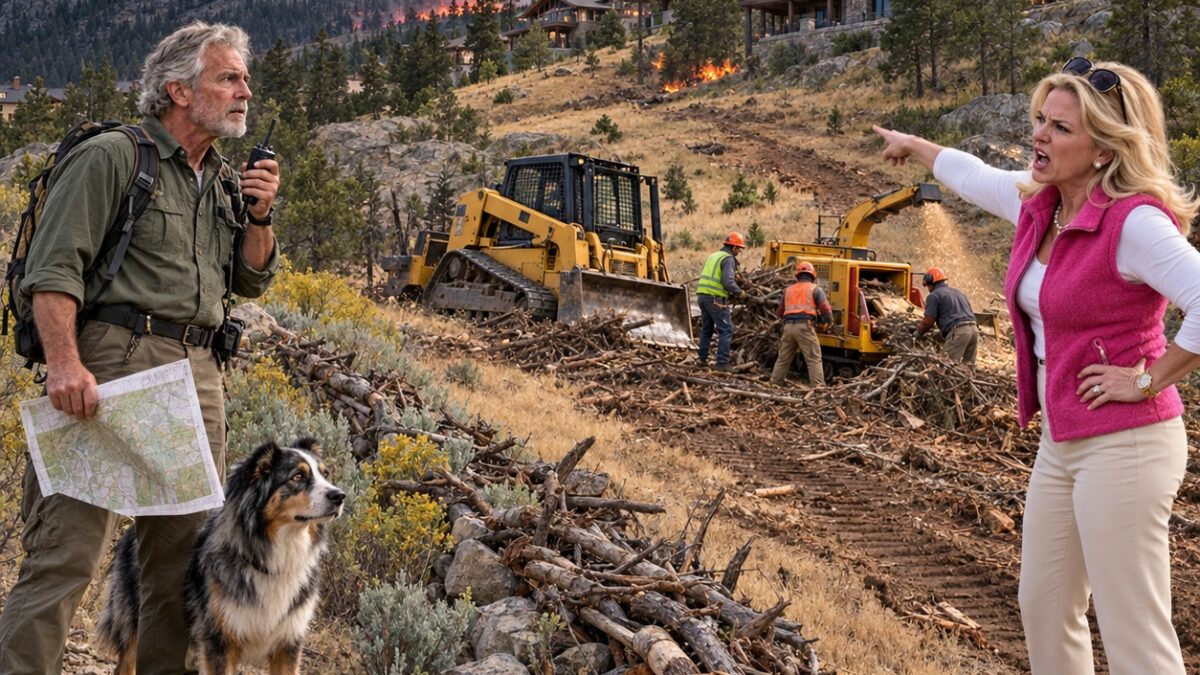
PART2
I named the folder EAGLE CREEK.
Carol used to tease me because every problem in my life eventually became a labeled folder.
Taxes.
Insurance.
Roof.
Juno.
Wildfire.
Even her medical records had started as one binder and become four.
She used to say:
“If I ever disappear, you’ll solve it alphabetically.”
Maybe.
What I knew was that memory gets emotional.
Paper does not.
For three weeks, I stayed professional.
I mailed Brandy a certified copy of Eagle Creek Ranch Estates’ Firewise USA assessment.
I highlighted the barrier.
Then the GPS coordinates.
Then her signature.
Yellow marker.
Impossible to miss.
I attached a cover letter.
Two paragraphs.
No sarcasm.
No threat.
Just the facts.
The return receipt came back three days later.
Her signature.
She had it.
She knew.
Then she held a “community input session.”
I did not attend.
Pete Hazelton did.
Pete lived north of me.
Retired ironworker.
Seventy-ish.
Widower.
Built like somebody had welded him together from leftover bridge components.
He came to my porch after the meeting.
Did not say hello.
Just:
“You owe me coffee.”
“That bad?”
“Coffee first.”
I poured.
We sat.
Juno curled beneath the table.
Pete took one drink.
“She put your barrier on a projector.”
“How big?”
“Forty feet.”
“Impressive.”
“She called it a hillbilly junkyard.”
“Less impressive.”
“With a laser pointer.”
I looked at him.
“A laser pointer?”
“Apparently professionalism requires one.”
I leaned back.
“What else?”
“Said it was dangerous to children.”
“How?”
“Tetanus.”
I stared.
Pete shrugged.
“Maybe children are crawling through it at night with rusty nails. I don’t know.”
“Anything else?”
“She called you a hoarder.”
“In front of the whole room?”
“Whole room.”
I took a drink.
Pete watched me.
“That it?”
“What do you want me to do?”
“Be mad.”
“I am.”
“You don’t look mad.”
“I’m old.”
“That has never stopped me.”
“You were built angry.”
He smiled despite himself.
Then became serious.
“Wyatt, she’s winding people up.”
“I know.”
“She showed photos from the decks. Said property values were being damaged.”
“By fire mitigation.”
“She never said fire mitigation.”
“What did she call it?”
“Debris.”
I nodded.
That mattered.
Language matters before conflict.
If Brandy could make people believe the barrier was trash, then destroying it would feel like cleanup.
Pete rested both forearms on his knees.
“You’re a patient man.”
“Sometimes.”
“Patient men still bleed.”
I looked over the ridge.
Warm wind.
Ponderosa.
Dry needles.
Early summer beginning to smell sharper.
“I’m not bleeding.”
“Not yet.”
The next morning, I drove to the fire district.
Chief Warren Halstead had been in Teller County long enough to know every subdivision built in the wrong place.
Salt-and-pepper mustache.
Khaki uniform.
Radio on his desk.
When I walked in, he was listening to chatter about a ditch burn near Cripple Creek.
He pointed at the chair.
“What happened?”
I placed the folder down.
He read the certified letter.
The Firewise document.
Brandy’s receipt.
Then Pete’s phone recording.
He listened to her call the barrier a junk pile.
Did not blink.
When it finished, he set the phone down.
“Wyatt.”
“Yes.”
“You call me the minute she touches it.”
“I will.”
“I mean touches it.”
“I know.”
He opened his desk drawer.
Pulled district letterhead.
Typed.
Printed.
Signed.
Stamped.
Then pushed the notice toward me.
NOTICE OF PROTECTED FIRE MITIGATION STRUCTURE
I read it.
He tapped the page.
“Post three.”
“Three?”
“Both ends. Center.”
“Large enough?”
“Where a blind badger could read it.”
I smiled.
“You always this poetic?”
“Only before lunch.”
He leaned forward.
“If she removes that barrier after written notice, we move from neighborhood stupidity into fire marshal jurisdiction.”
“What does that mean?”
“It means I stop asking politely.”
I drove home.
Posted one notice at the west end.
One east.
One dead center.
Laminated.
Zip tied.
Ten-inch lettering.
Brandy drove past less than six hours later.
Slowed the Escalade.
Stopped halfway.
Rolled down her window.
Took a photograph.
Then accelerated away.
That night, I got an anonymous letter.
Typed.
No return address.
One sentence.
NOT EVERYTHING THE FIRE DEPARTMENT SAYS IS LEGALLY BINDING.
I laughed in the kitchen.
Juno lifted her head.
I held up the letter.
“You think this is anonymous?”
She sneezed.
“Exactly.”
Two days later, an HOA attorney mailed a demand.
Section 4.2.
Aesthetic standards.
No state wildfire law.
No county code.
No reference to the Firewise plan.
No acknowledgment that I did not belong to the HOA.
Nothing.
They were bluffing.
I wrote one sentence on a sticky note.
Please refer this matter to Chief Warren Halstead at the Teller County Fire Protection District. He is waiting.
Certified.
Again.
Brandy signed.
Again.
Meanwhile, the weather turned worse.
NOAA’s seasonal outlook came out.
Above-normal wildfire potential.
Humidity dropping.
Fuel moisture in single digits.
Dry lightning possible.
I cleaned gutters.
Checked pump fittings.
Ran the generator.
Topped off the cistern.
Repacked my go bag.
Charged radios.
Carol used to say:
“You prepare more than most people pray.”
She had said it once while watching me check three different weather apps before taking her to breakfast.
I told Juno that story.
She thumped her tail.
“You think she was insulting me?”
Tail again.
“Traitor.”
Across the fence, Eagle Creek glowed in the last light.
Decks.
Windows.
Stone chimneys.
Beautiful houses.
Too much ornamental juniper around some of them.
Wood fences in the wrong places.
Vehicles parked under trees.
Every generation believes money can buy exemption from nature.
Fire has never agreed.
The first physical attempt happened on May 27.
I woke before seven to diesel.
Not a delivery truck.
Low idle.
Heavy.
I pulled on jeans and boots.
Opened the front door.
Yellow Bobcat skid steer.
Fifty feet off the gate.
Idling.
Keys inside.
No operator.
Brandy stood beside it.
Hiking vest.
New boots.
Phone raised.
Beverly Turnbull beside her.
HOA secretary.
Clipboard.
Brandy saw me.
“Good morning.”
“Not yet.”
“We’ve decided to handle this.”
“Handle what?”
“The debris.”
I took out my phone.
Started recording.
Brandy’s smile tightened.
“You don’t have permission to record me.”
“You’re on my property.”
Beverly glanced toward the gate.
I walked slowly down.
“Time?”
“What?”
“What time did you arrive?”
“Why?”
“For the record.”
She rolled her eyes.
“Six forty-five.”
“Thank you.”
I pointed at the protected-structure notice.
“Have you read that?”
“Yes.”
“All of it?”
“Yes.”
“You understand this structure is permitted?”
“That notice doesn’t give the fire district authority over HOA concerns.”
“My property is not HOA property.”
“We have good-faith stewardship rights.”
“No.”
She blinked.
“You don’t.”
She waved toward the hillside.
“This impacts our community.”
“So does weather.”
“Mr. Calhoun—”
“Brandy.”
That stopped her.
First name.
No title.
I pointed at her phone.
“You are currently recording yourself standing on private property beside machinery positioned to remove a protected wildfire feature after receiving two certified warnings.”
Beverly turned.
“Brandy.”
“Not now.”
“Maybe we should wait.”
“Beverly.”
“I’m serious.”
Brandy’s face hardened.
“Our operator is coming.”
Right then, a red F-250 crawled up the driveway.
Dust behind it.
A man in a mesh hat leaned through the window.
“Mrs. Holcomb?”
She raised a hand.
“Garrett.”
He parked.
Stepped out.
Looked at me.
Then the skid steer.
Then Brandy.
“You said noon.”
“I need it done now.”
“My dispatch says noon.”
“I changed the schedule.”
Garrett looked uncomfortable.
I walked toward him.
“Garrett?”
“Yes, sir?”
“I’m Wyatt Calhoun. Before you sit in that machine, read this notice.”
Brandy snapped:
“He doesn’t need to.”
Garrett looked at her.
Then at me.
“I’ll read it.”
He walked to the cedar stake.
Bent.
Read once.
Straightened.
Read again.
He took his cap off.
Scratched his head.
Then faced Brandy.
“Ma’am, I’m not touching this.”
She laughed.
Not because anything was funny.
“You signed a contract.”
“For brush and yard debris.”
“That is brush.”
“Not according to this.”
“It’s a pile of dead branches.”
Garrett pointed.
“It says county-approved wildfire mitigation.”
“It’s on private property.”
“Exactly.”
She stared.
He continued.
“I can remove yard debris. I’m not knocking apart something with a fire marshal notice zip tied to it.”
“I’m paying you two thousand dollars.”
“I’ll eat the trip.”
“You will not.”
“I will.”
“Garrett.”
He put the cap back on.
“No.”
She stepped closer.
“You signed.”
He stepped back.
“Ma’am, I signed a work order that said yard debris.”
“It is yard debris.”
“You can call it birthday cake. Sign says fire district.”
I almost smiled.
Brandy saw it.
“Something amusing?”
“No.”
Garrett walked to his truck.
“I’ll send dispatch the cancellation.”
“You’ll hear from my attorney.”
He opened the door.
“I’m sure.”
Then looked at me.
“Sorry, sir.”
“You did the right thing.”
He tipped his cap.
Backed down my narrow drive.
The entire way.
Beverly was already halfway to the Escalade.
Brandy remained where she was.
Phone still raised.
Her hand shook slightly.
I spoke toward the camera.
“Mrs. Holcomb, for your recording, today at approximately six forty-five a.m., you attempted to engage a contractor to remove a permitted fire mitigation structure after written notice from the fire district.”
“Stop talking.”
“You have personally acknowledged receipt of the relevant Firewise documents.”
“Stop.”
“You have been informed that you are on private property.”
“You’re harassing me.”
“I’m standing in my driveway.”
Beverly called from the vehicle.
“Brandy!”
Brandy turned.
Then back.
“This is not over.”
I said:
“That’s what worries me.”
She left.
After they disappeared, I walked to the Bobcat.
Still running.
No idea where she had rented it.
In the cab, on the passenger seat, was a pink Post-it.
I read it.
START AT WEST STAKE. PUSH EAST.
Her handwriting.
I photographed it.
Cab.
VIN.
Tire tracks.
Fuel gauge.
Everything.
Then shut the machine down without moving it.
Called Halstead.
“Warren.”
“She touch it?”
“No damage.”
“What happened?”
“Contractor refused.”
“Good man.”
“Post-it in the machine.”
“What does it say?”
“Start at west stake. Push east.”
Silence.
“Her writing?”
“Looks like it.”
“Photograph it.”
“Done.”
“Video?”
“Done.”
“Send it.”
“I will.”
Another silence.
“Wyatt.”
“Yes.”
“Lock the gate.”
I looked toward the cedar posts.
For the first time since Carol died, I wished she were there just so I could complain.
She would have said:
You should have locked it six months ago.
That afternoon, I bought a lock.
The sound of it clicking shut bothered me.
A small thing.
But after Carol died, an open gate had become part of how I lived.
Neighbors came through.
Emma.
Pete.
Fire crews.
Hank.
No suspicion.
No barriers except the ones that mattered.
Brandy changed that.
Hank Ridley called that evening.
I had sent him the video.
He laughed at Garrett’s line about birthday cake.
Then his voice changed.
“Wyatt.”
“Yeah.”
“She’s going to try again.”
“I know.”
“You’re saying that like you know in your head.”
“I do.”
“I’m telling you to know it in your gut.”
I waited.
“She’s embarrassed.”
“Yes.”
“She tried authority. Didn’t work.”
“Yes.”
“Tried lawyer. Didn’t work.”
“Yes.”
“Tried contractor. Didn’t work.”
“Yes.”
“What does somebody like that do next?”
I looked toward the locked gate.
“Escalates.”
“Exactly.”
He sighed.
“Watch your back.”
“I will.”
“No.”
“What?”
“Watch your property when you’re not there.”
That was the sentence I should have written on the refrigerator.
Ten days later, Emma called.
She was coordinating a search-and-rescue training near Sheridan.
They wanted a retired wildfire guy to run a live-fire module.
Three days.
I said no.
Then she said:
“Dad.”
That tone.
Carol’s tone.
I sighed.
“When?”
“Saturday.”
I boarded Juno.
Double-checked trail cameras.
Locked the gate.
Gave Pete the combination.
“Check once a day.”
“Twice.”
“Once is fine.”
“Twice.”
“You’re impossible.”
“So was your wife.”
Fair.
I left at five Saturday morning.
By late afternoon, I was in Sheridan.
Saturday went fine.
Sunday morning too.
At 11:07, my phone rang.
Pete.
I stepped away from the training ground.
“Hey.”
No answer for half a beat.
“Wyatt.”
Every muscle in my body tightened.
“What?”
“You need to come home.”
“What happened?”
“They’re here.”
“Who?”
“Brandy.”
I closed my eyes.
“How many?”
“Three workers. Orange vests. Tractor. Skid steer. Dump trailer.”
“Barrier?”
“They started at eight.”
“How far?”
“Over two hundred feet gone.”
The world went quiet.
“You called Warren?”
“First thing.”
“Sheriff?”
“Coming.”
“Why didn’t you call sooner?”
“I did. Your phone was in the training trailer.”
I looked down.
He was right.
“Okay.”
“I’m sorry.”
“Pete.”
“What?”
“Don’t apologize.”
“They’re moving fast.”
“Film.”
“I am.”
“Every plate.”
“Done.”
“Every face.”
“Done.”
“Notices?”
“One guy read the center sign.”
“And?”
“Crew boss told him Brandy had authority.”
“Did he continue?”
“Yeah.”
“Get that on video if you can.”
“I got it.”
“Do not go over there.”
“I’m on my porch.”
“Stay there.”
“I know how to stay alive, Wyatt.”
“I know.”
His voice softened.
“Come home.”
“I’m coming.”
I did not finish the training.
Did not go back inside.
Emma found me at the truck.
“Dad?”
“Barrier.”
Her face went blank.
“She did it?”
“Doing it.”
“I’m coming.”
“No.”
“Dad.”
“Finish your job.”
“You think I’m staying?”
“I know you are.”
She stared at me.
Then realized I was right.
She had crews.
Responsibilities.
I opened the door.
She grabbed my arm.
“Call me.”
“I will.”
“Every hour.”
“I’ll try.”
“Dad.”
“Every hour.”
I drove.
Nine hours.
At hour one, Pete sent:
WEST STAKE GONE.
Hour two:
THEY’RE CUTTING ANCHORED MATERIAL.
Hour three:
WORKER READ FIRE NOTICE. BOSS SAID KEEP GOING.
NOAA alert sounded.
RED FLAG WARNING.
Humidity below eight.
Wind gusts thirty-five.
I gripped the wheel.
Hour four:
BRANDY HERE. WHITE ESCALADE. FILMING.
Then:
DEPUTY ARRIVED.
I called Pete.
“What’s happening?”
“Deputy talking to foreman.”
“Brandy?”
“Yelling.”
“Can you hear?”
“Some.”
“What’s she saying?”
“That the HOA authorized it.”
“Deputy?”
“He’s looking at the notice.”
I listened.
Wind noise through Pete’s phone.
Distant diesel.
Then:
“Crew stopped.”
My shoulders dropped slightly.
Pete said:
“Wait.”
I heard something else.
A woman’s voice.
Too distant to make out.
Then engines.
Pete swore.
“What?”
“They started again.”
“Deputy still there?”
“Yeah.”
“What the hell?”
“Brandy’s showing paperwork.”
“What paperwork?”
“No idea.”
I wanted to turn the truck into a missile.
I kept it at seventy-two.
Because rage does not shorten highways.
Another forty minutes.
BARRIER GONE TO CENTER.
Later:
WEST HALF LOADED.
Then:
THEY BROKE THE EAST NOTICE.
Then at 5:42 p.m.:
IT’S ALL GONE.
I pulled into a gas station.
Parked.
Hands on wheel.
Could not move.
A family loaded snacks into an SUV nearby.
Two kids argued over a drink.
Normal life.
I read Pete’s message again.
IT’S ALL GONE.
I thought about the first year Carol helped.
She was already slower then.
Parkinson’s had begun making her right hand unreliable.
She still insisted on carrying rocks.
I told her to sit.
She told me to mind my own business.
She dragged one rock ten feet, sat on it, and announced:
“There. I contributed.”
I had built around that rock.
Never moved it.
I wondered if Brandy’s crew had thrown it into a dump trailer.
Then I looked at the red flag icon on my weather app.
I put the truck in gear.
Kept driving.
At 11:17 p.m., my headlights reached home.
The gate stood open.
The combination lock had been cut.
One half hung from the chain.
I drove through.
Stopped.
Turned the truck so the headlights swept the western line.
Four hundred feet of raw scar.
No barrier.
No anchored branches.
No carefully placed stone.
No native plants.
No cedar stakes.
Nothing but stripped earth.
Ripped stumps.
Tire ruts.
Fresh tracks.
A torn laminated notice moved in the wind.
I left the engine running.
Sat there.
Nine hours of driving had given me time to imagine it.
The reality felt quieter.
That surprised me.
Destruction in your head is loud.
Real destruction often is not.
It just sits there.
I turned off the engine.
Got out.
Wind blew warm against my face.
I walked to the west end.
Found a depression where one of Carol’s rocks had been.
Empty.
I crouched.
Touched the dirt.
Fresh.
Loose.
Then I stood.
No yelling.
No swearing.
No point.
I went to the porch.
Called Halstead.
Second ring.
“Wyatt.”
“I’m home.”
“I know.”
“It’s gone.”
“I know.”
I looked toward the scar.
“What’s the move?”
“Eight a.m.”
“Your office?”
“Yes.”
“What do you need?”
“Everything.”
“I’ve got everything.”
“Good.”
“Warren.”
“Yeah?”
“Was the deputy there?”
“Yes.”
“Why didn’t he stop them?”
Pause.
“Brandy produced what she claimed was board authorization and told him it was a civil property dispute. He ordered the crew to pause while he verified.”
“They restarted.”
“I know.”
“Why?”
“Because she told them to.”
My hand tightened around the phone.
“Did the deputy leave?”
“No.”
“He watched them?”
“He was on the phone with me when they resumed. He ordered them to stop a second time.”
“And?”
“Crew boss complied.”
“But the barrier is gone.”
“They had already removed most of it. The final section came out before he physically positioned his vehicle.”
I looked down.
“Okay.”
“You angry?”
“No.”
“That worries me more.”
“I’m tired.”
“Sleep.”
“I won’t.”
“Try.”
We hung up.
Juno was still at the kennel.
The house felt dead.
I sat on the porch with no lights.
Warm wind.
Dry needles.
Static.
An owl somewhere.
Then the old part of me took over.
The part fire taught.
Plan.
Document.
Brief.
Position.
Do not waste energy fighting the past.
At midnight I went inside.
On a yellow legal pad, I wrote one word:
ACCOUNTABILITY.
Then underneath it:
Carol.
At eight a.m., Halstead read everything.
He watched Pete’s videos.
All of them.
The crew cutting zip ties from the warning signs.
Brandy pointing.
One worker hesitating.
Foreman waving him on.
Deputy arriving.
Brandy holding papers.
Workers restarting.
Halstead stopped the video.
Rewound.
Played Brandy.
She was clear.
“Burn it, chip it, get it off our mountain.”
He paused.
Looked at me.
“Did she actually say our mountain?”
“Yes.”
He shook his head.
Then watched more.
When he finished, he sat back.
Forty seconds passed.
“Wyatt.”
“Yes.”
“Do you understand what she did?”
“To my property?”
“No.”
I waited.
“To her own neighborhood.”
He pulled Eagle Creek’s Firewise assessment.
“Primary defensive feature.”
I nodded.
“Your barrier.”
“Yes.”
“Eagle Creek’s recognition is conditional on maintaining these measures.”
“Yes.”
“Insurance discount?”
“Yes.”
“Group policy through Pikes Peak Mutual?”
“As far as I know.”
He leaned forward.
“She may have compromised the entire policy.”
I stared.
“Suspension?”
“At minimum audit.”
I exhaled.
“And criminal?”
He began listing.
Tampering with a permitted fire-mitigation structure.
Conspiracy.
Interference with approved emergency management planning.
Possible charges related to false authorization.
Contractor liability.
“And every person who knowingly continued after notice becomes part of the investigation.”
I pulled out the signed community wildfire protection plan.
Placed it down.
Brandy’s signature.
October 14, 2023.
Halstead saw it.
Then looked at me.
“She signed this?”
“Yes.”
“Witness?”
“Beverly.”
“So she acknowledged the barrier by coordinate.”
“Yes.”
“Two years before calling it debris.”
“Yes.”
He rubbed his mustache.
Then asked:
“Quiet or public?”
I thought about Carol.
About Pete filming.
About Linda Meacham quietly voting no.
About the workers who had followed an order they should have questioned.
About twenty-four homeowners now sitting above an exposed slope.
“By the book.”
Halstead nodded.
“But the book stays open.”
He smiled slightly.
“That’s what I figured.”
He told me what came next.
District investigation.
Sheriff reports.
District attorney.
Insurance.
State forester.
Federal coordination because of the cross-boundary plan.
Barrier restoration.
Then he pointed at me.
“You stay out of enforcement.”
“Gladly.”
“Do not confront Brandy.”
“I won’t.”
“Do not touch the contractors.”
“I won’t.”
“Get Hank to write a restoration estimate.”
“I will.”
“And Wyatt?”
“Yes.”
“Red flag through Friday.”
“I know.”
“Dry lightning probability Thursday night.”
“I know.”
He looked hard at me.
“Your structure is gone.”
“I know.”
“That slope is open.”
“I know.”
“The HOA refused your warnings.”
“Yes.”
“If weather turns, we pre-position.”
I nodded.
That was the first moment the situation became larger than a property dispute.
Brandy had spent weeks thinking I was defending a pile of brush.
Halstead understood the actual problem.
The hill no longer had its first line.
For the next seventy-two hours, I worked like I was back on assignment.
Hank came up from Colorado Springs.
Walked the scar.
Whistled.
“Hell of a job.”
“Not in the good way.”
“No.”
He photographed everything.
Measured.
Mapped.
Sat on a boulder.
“Two ten.”
“Thousand?”
“Yep.”
“For four hundred feet?”
“Four hundred feet rebuilt to current spec, native plants, anchoring, erosion repair, permitting, labor, inspection.”
“How long?”
“Six months if weather behaves.”
“Put it on letterhead.”
“Already planning to.”
Next, Cassie Nolan at the Gazette.
I gave her permit.
Signed Firewise page.
Photographs.
Video stills.
Sheriff case number.
Halstead’s contact.
She listened.
Then:
“Can I publish?”
“Not until Warren clears the active-investigation material.”
“You’re asking a reporter to wait?”
“I’m asking you not to screw up a criminal case.”
She considered.
“Fair.”
Then insurance.
Pikes Peak Mutual.
Underwriting.
I explained.
They transferred me.
Then transferred me again.
Finally Gail Fairbanks called.
Careful voice.
“Mr. Calhoun, I have the Eagle Creek Ranch Estates group file.”
“Okay.”
“You are not an insured under the policy?”
“No.”
“Why are you calling us?”
“Because a defensive feature listed in their Firewise documentation was intentionally destroyed by their board president.”
Silence.
“Can you prove that?”
“Yes.”
“How?”
“Permit. Firewise plan. Her signature. Video.”
Longer silence.
“Send everything.”
I did.
Two hours later she called again.
“This is going to move quickly.”
Forest Service next.
District Ranger Eleanor Kovacs.
The barrier was listed in a cross-boundary mitigation memorandum.
Not the biggest federal issue in Colorado.
Still real.
Incident report.
State forester copied.
Then homeowners.
Twenty-four certified letters.
Ninety dollars postage.
I kept each one identical.
No accusation beyond what documents supported.
No adjectives.
Just:
On June 8, your HOA president authorized destruction of a permitted fire mitigation structure on my property. That structure is identified in your community wildfire plan as a primary western defensive feature. The fire district and your insurer are now reviewing the matter. Please direct questions to your board.
I attached:
Permit.
Map.
Brandy’s signature.
Fire district notice.
Those letters landed Tuesday.
By lunch, my phone became unusable.
Homeowners.
Reporters.
Unknown numbers.
I stopped answering.
Then I made the offer.
Temporary mitigation.
I would pay Hank’s nonprofit to do emergency reduction on the slope above my property.
Eagle Creek only needed to authorize access.
Halstead sent the proposal.
Emergency HOA meeting Monday night.
I waited.
At 9:15, Linda texted.
BRANDY REFUSED. CALLED IT YOUR PR PLOY. VOTE 6–5 AGAINST. I VOTED FOR. I’M SORRY.
I stared.
Then typed:
THAT WAS A BEAUTIFUL VOTE. THANK YOU.
I meant it.
One vote can be beautiful when it costs you socially.
Outside, thunderheads grew above Turkey Rock.
Not rain clouds.
Dry towers.
Virga beneath them.
Wind smelled faintly metallic.
I stood with Juno.
She pressed against my boot.
Carol used to say:
“You look most like yourself right before a fire.”
Maybe because fear has less room for decoration.
That night, I charged three radios.
Three phones.
Two flashlights.
Body camera.
Set Nomex on the chair.
Boots beside bed.
Pulled weather every hour.
Slept badly.
At 10:17 the next morning, Brandy held her press conference.
Cream suit.
HOA monument sign.
Beverly beside her.
Chet in the background pretending to be busy.
She called the barrier:
“Unpermitted yard debris.”
I laughed once.
Not because it was funny.
Because after everything, she was still trying to win by renaming reality.
She called me a troubled retiree.
Said I had refused neighborly cooperation.
Said the HOA acted in the interest of community health.
She announced possible legal action.
Cassie Nolan stood in front.
Asked nothing.
Brandy kept glancing at her.
Reporters hate nothing more than being ignored.
Ninety minutes later, Cassie published.
The headline did most of the work.
HOA PRESIDENT DESTROYS PERMITTED FIRE BARRIER AS RED FLAG WARNINGS PEAK
She had Halstead’s quote.
The permit.
The Firewise document.
Brandy’s signature.
By afternoon, local television.
By evening, Denver.
At six, Pikes Peak Mutual suspended the group property policy pending audit.
At seven, Linda called.
“Board is exploding.”
“How bad?”
“Three recall motions.”
“Chet?”
“Left the house.”
“Meaning?”
“Duffel bag.”
I rubbed my forehead.
“I don’t need marital updates.”
“You didn’t ask.”
“Exactly.”
She laughed despite everything.
Then:
“Wyatt.”
“Yes.”
“Thank you for offering the mitigation.”
“Didn’t matter.”
“It matters to me.”
“Watch the sky tonight.”
She went quiet.
“I am.”
“Good.”
At eight, Brandy came back.
Cream suit.
Smudged makeup.
No clipboard.
No Beverly.
No performance.
She walked up my porch.
Juno growled.
Brandy ignored her.
“You did this.”
“Please stop pointing.”
“You knew they’d suspend insurance.”
“I knew they’d review it.”
“You called them.”
“Yes.”
“You sent those letters.”
“Yes.”
“You called the Gazette.”
“Yes.”
“You humiliated me.”
I looked at her.
“I sent you the same documents first.”
She began crying.
Actual tears.
“We could lose the house.”
“I’m sorry.”
“No, you’re not.”
“Yes.”
“Then fix it.”
“I can’t.”
“You can call them.”
“And say what?”
“That this is a misunderstanding.”
“It isn’t.”
Her face twisted.
“You hate me.”
“I don’t.”
“Bullshit.”
“I don’t know you well enough to hate you.”
That hurt her more than anger.
She wiped her face.
“Everything Chet built is tied to that development.”
“I know.”
“If insurance goes—”
“I know.”
“You wanted this.”
I stood.
“No.”
She stopped.
“I wanted the barrier left alone.”
Wind rushed through the ponderosa.
Needle cast fell around us.
I continued.
“I sent you the Firewise plan.”
She looked away.
“I sent the fire district notice.”
Silence.
“I sent the attorney letter back.”
Silence.
“You tried once with a contractor.”
Silence.
“He refused.”
Her jaw tightened.
“You came back when I was gone.”
She looked at me again.
“Then I offered emergency mitigation after you destroyed it.”
“That was manipulation.”
“That was wildfire mitigation.”
“You wanted us to admit fault.”
“I wanted somebody to thin the exposed slope.”
Lightning flashed inside the clouds west of us.
White.
No thunder.
Dry.
I looked.
Brandy did not.
She was still staring at me.
“We are going to lose everything.”
I said quietly:
“I didn’t swing the skid steer.”
She covered her mouth.
For one second, she looked less like the woman who had fought me for weeks and more like somebody who suddenly understood her decisions had become real.
Another flash.
Farther south.
“Brandy.”
She lowered her hand.
“You need to go.”
“I’m not done.”
“I am.”
“You don’t get to—”
My voice changed.
“Now.”
She froze.
Every firefighter has a voice they use only when time is gone.
Carol called mine “the no-argument voice.”
Brandy heard it.
She turned.
Walked to the Escalade.
Drove away.
Three minutes later, Pete called.
“Sixteen flashes.”
“How long?”
“Ninety seconds.”
“Rain?”
“None.”
“Halstead?”
“Already called.”
I went inside.
Put on Nomex.
Strapped body camera.
Filled water.
Moved Juno’s crate into the safest room.
Checked pumps.
The wind increased.
At 10:22, dispatch toned.
Lightning strike reported east slope Turkey Rock Ridge. Fire spotted. Type Three engines responding.
I sat on the porch.
Juno at my foot.
Western horizon glowing faintly behind trees.
I rubbed her head.
“Well, girl.”
She looked up.
“Here we go.”
By eleven, three acres.
Dog-hair ponderosa.
Southwest wind around six miles per hour.
Not catastrophic.
Not yet.
But moving east.
Radio traffic sharpened.
Captain Ronnie Briggs on Engine 311.
I knew her.
She had drilled on my property twice.
Compact woman.
Fast speech.
Good tactical brain.
The kind of officer who gave location before explanation.
She believed my barrier still existed.
That was the first thing I needed corrected.
I keyed the mutual-aid frequency.
“Engine 311, civilian Calhoun on east flank.”
Static.
“Calhoun, 311.”
“Be advised, primary defensive feature parcel 831 removed since last preplan. Mechanical destruction June eighth. Barrier absent.”
Silence.
“Calhoun, say again. Primary feature absent?”
“Affirmative.”
Another silence.
Then:
“Copy.”
She switched channels.
I heard only pieces.
“Update division…”
“…planned anchor compromised…”
“…fuel break removed…”
A male voice swore.
Professional radio discipline collapsed for half a second.
Then returned.
At 11:47, Halstead arrived.
Brush truck.
Two sheriff vehicles.
He came to the porch.
“Wyatt.”
“I can help.”
“No.”
“Still red carded.”
“Stay inside.”
“I know the property.”
“So do Briggs and I.”
“Warren.”
He stepped close.
“Your property is not where I need you tonight.”
I stopped.
He continued.
“I need you alive tomorrow.”
That landed.
I nodded.
“Yes, sir.”
“Pump charged?”
“Yes.”
“Cistern?”
“Full.”
“Defensible zone?”
“Clear.”
“Juno?”
“Inside.”
“Good.”
He turned.
Then looked back.
“If evacuation order comes, take the east drive.”
“I know.”
He left.
I sat at the kitchen table.
Scanner.
Juno.
Carol’s photograph.
At 12:15, first ember impacts.
Tiny.
Rice on metal.
The sound is worse when you know what it means.
I went to the window.
Orange glow west.
Not huge.
Enough.
Crews established line east of where my barrier had been.
Thirty feet deeper into my property than planned.
They sacrificed ground because the original anchor was gone.
Saw teams worked.
Engines positioned.
Tankers fed.
I heard Briggs:
“Hold this. Do not chase north.”
Then another voice:
“Spot across north.”
My stomach tightened.
“Location?”
“Gamble oak, slope toward Eagle Creek.”
Another transmission.
“Second spot.”
I stood.
Juno stood with me.
“No.”
At 12:48:
“Spot one contained.”
Relief.
Then:
“Spot two established.”
I closed my eyes.
That one mattered.
Without the barrier, embers had cleared the stripped zone and landed above the line.
At 1:07, spot two grew.
At 1:19, hand crew requested additional engine.
At 1:27:
“Fire moving uphill through oak.”
There it was.
Slope.
Wind.
Fuel.
Physics.
Not revenge.
Not karma.
Physics.
I picked up my phone.
Texted Linda.
EVAC NOW IF ORDER COMES. SHOES ON. KEYS READY.
She answered:
PACKED.
At 1:36, sheriff channel:
Prepare Eagle Creek for evacuation.
At 1:42:
Mandatory evacuation.
Sirens.
I could hear them from my house.
Somewhere up the hill, car doors.
Engines.
Voices.
At 1:51, Linda called.
“Wyatt.”
“Why are you calling?”
“We’re leaving.”
“Then leave.”
“Brandy’s house is empty.”
“Good.”
“Beverly’s got two older neighbors.”
“Good.”
“We’re out.”
“Drive east. Do not stop to watch.”
“I know.”
“Linda.”
“What?”
“Go.”
She hung up.
At 2:02, Briggs called for structure protection.
At 2:07:
“Garage involved, north cul-de-sac.”
I leaned over the radio.
“Which one?”
No answer for me.
Not my channel.
At 2:10, Pete texted.
FOUR-CAR GARAGE.
At 2:17:
FULLY INVOLVED.
At 2:25:
CORVETTE’S COOKED. NO ONE HURT.
I read the final sentence.
Again.
Again.
No one hurt.
I breathed.
“Thank God.”
Juno looked up.
I sat.
Hands shaking now.
Not from fear for property.
From delayed understanding of what could have happened.
Twenty-four houses.
Families asleep.
One road out.
Had the fire moved faster.
Had wind shifted.
Had Briggs arrived ten minutes later.
Five minutes matters.
Ten minutes matters.
That was the entire point.
At 2:38, another spot near a fence.
Caught quickly.
At 2:51, main run slowed.
At 3:04, division reported line holding.
At 3:19, structure crews had the garage contained to itself.
One structure lost.
No house-to-house spread.
No injuries.
No fatalities.
At 3:42, I finally exhaled fully.
I sat in darkness.
Carol’s photograph across from me.
“You’d say I told you so.”
The photograph said nothing.
“You always enjoyed being right.”
Still nothing.
At four, Halstead knocked.
I opened.
He removed his helmet.
Ash on his face.
Eyes red.
“You okay?”
“Yes.”
“Cabin?”
“Yes.”
“Juno?”
She appeared behind me.
He nodded.
“HOA lost one structure.”
“I heard.”
“Garage.”
“I know.”
“Brandy’s brother-in-law.”
I almost laughed.
Stopped myself.
“Everyone out?”
“Yes.”
“Anybody hurt?”
“No.”
“Good.”
He came inside.
Sat at the table.
Took water.
Drank half in one pull.
Then looked at me.
“Eight a.m. sheriff interview.”
“Okay.”
“Noon emergency HOA meeting.”
“I don’t want to go.”
“I know.”
“I really don’t.”
“I know.”
“Then why?”
“Because they need to hear from the person who built the feature.”
I rubbed my face.
“Press at three?”
“Yes.”
“I hate cameras.”
“I know.”
“Anything else?”
He looked toward the window.
“You did good.”
“I sat in my kitchen.”
“You warned people.”
“I sat.”
“You offered mitigation.”
“They refused.”
“You did not enter the line after I told you not to.”
“I considered it.”
“I know.”
“Warren.”
“Yeah?”
“Did we hold the line?”
He was quiet.
Then:
“We held the line we had left.”
I nodded.
“And Eagle Creek?”
He sighed.
“Tonight they learned what the missing line was for.”
He stood.
At the door, he turned.
“Wyatt.”
“Yeah?”
“One garage can be rebuilt.”
“I know.”
“Remember that today.”
I did.
By noon, the smoke had flattened the sun into a pale yellow disk.
Eagle Creek looked older.
Every mailbox had soot.
Black streaks on pavement.
A few shrubs scorched.
The garage at the north end was a smoking shell.
Roof gone.
Steel door folded inward.
Fire engine parked at the curb.
The HOA clubhouse still smelled of combustion, so Halstead refused indoor occupancy.
Meeting outside.
Folding chairs on asphalt.
People in yesterday’s clothes.
Some with masks.
Some carrying insurance folders.
Some carrying coffee they never drank.
Pete came with me.
I parked at the entrance.
“Want me beside you?”
“I’m sitting in the back.”
“So yes.”
We walked up.
Linda saw us.
Nodded.
Beverly looked away.
One man whispered to another.
I recognized faces from Brandy’s community input meeting photographs.
People who had applauded the junk-pile presentation.
I did not care.
Fear changes people.
Sometimes for the better.
Sometimes not.
Halstead stood behind a folding lectern.
No jacket.
Khaki shirt dark with sweat.
He waited until everybody stopped talking.
“Folks.”
Silence.
“I’m Chief Warren Halstead.”
Everybody knew.
“I’ll keep this short.”
He looked toward the black garage.
“Last night this subdivision lost one structure.”
A woman in front began crying.
“You came within approximately one hundred yards of losing six more.”
Murmurs.
“The fire originated from a dry lightning strike on national forest land west of Highway 67.”
He pointed.
“It followed expected topography east.”
Pause.
“Under your approved wildfire protection plan, that fire should have encountered a pre-existing defensive feature at the base of this slope.”
Nobody moved.
“That feature was destroyed June eighth.”
A man shouted:
“By who?”
Halstead did not flinch.
“By contractors acting under authorization from your HOA president.”
Noise erupted.
“Quiet.”
He did not shout.
Did not need to.
“I have permits.”
He lifted a folder.
“Firewise assessment.”
Another page.
“Signed community wildfire protection plan.”
Another.
“Video documentation.”
He looked across the crowd.
“My office has referred multiple criminal counts to the district attorney.”
Someone asked:
“Against Brandy?”
“I will not discuss defendants.”
Everybody knew.
“I will answer wildfire recovery questions.”
A man near the aisle stood.
“Chief, are you saying that barrier would have stopped the fire?”
Halstead shook his head immediately.
“No.”
Good answer.
“Nothing guarantees stopping wildfire.”
He pointed downhill.
“The barrier was intended to reduce ground flame, disrupt fuel continuity, catch some ember transport, and provide a tactical anchor.”
He waited.
“Last night Captain Briggs had to establish that anchor farther east because the designed feature did not exist.”
The man sat.
A woman raised her hand.
“Our insurance?”
Everybody went still.
Halstead answered.
“Pikes Peak Mutual suspended the group policy yesterday pending audit.”
The crowd erupted again.
“What does that mean?”
“Are our homes uninsured?”
“What about claims?”
“Does the garage get covered?”
Halstead lifted both hands.
“Call your carriers.”
That did not calm anyone.
“Your individual policy status may vary. I am not an insurance representative.”
Another man stood.
“My mortgage requires coverage.”
“Call your agent.”
Someone behind me said:
“This is insane.”
Another voice:
“She knew.”
Then:
“She signed it.”
That sentence moved through the crowd.
She signed it.
She signed it.
She signed it.
Beverly lowered her head.
Halstead continued.
“The barrier will be rebuilt.”
“Who pays?”
“Responsibility will be determined through HOA assessments, restitution, insurers, and individuals involved.”
A woman shouted:
“We’re not paying for her mistake!”
Halstead looked at her.
“I understand.”
“Then why did you say assessments?”
“Because I am not your lawyer.”
Good answer again.
Then he looked toward the back.
At me.
“Mr. Calhoun has agreed to allow restoration on his land.”
Every head turned.
I hated it.
Pete whispered:
“Smile.”
“No.”
“Fair.”
Halstead continued.
“He also offered temporary emergency mitigation before last night’s fire.”
The room changed.
Linda closed her eyes.
Someone asked:
“What?”
Halstead said:
“An emergency fuel-reduction proposal was brought to your board Monday.”
Eyes shifted toward board members.
Beverly looked smaller.
“Vote failed six to five.”
A man shouted:
“Who voted no?”
Halstead said:
“That is an HOA matter.”
Linda stood.
“I voted yes.”
Everybody looked.
She stayed standing.
“I voted yes.”
A second board member raised his hand.
“So did I.”
Then another.
The room began doing math.
Six no.
Five yes.
A woman turned on Beverly.
“How did you vote?”
Beverly whispered:
“No.”
“Why?”
Her face crumpled.
“Brandy said it was a trap.”
“A trap to clear brush before a fire?”
“I know how it sounds.”
“You knew the red flag warning!”
“I know!”
The first true anger hit the meeting.
People stood.
Voices rose.
A man pointed toward the burned garage.
“My brother’s Corvette is ash!”
A woman shouted:
“Forget the Corvette!”
The man spun.
“My brother’s garage is gone!”
“Everybody got out!”
“Because we were lucky!”
Halstead slammed one palm onto the folding lectern.
“Enough.”
Silence.
“This is exactly why wildfire planning cannot be reduced to personalities.”
He looked at all of them.
“You can fight about your board after I leave.”
Pause.
“Right now, you decide whether you want to recover.”
That worked.
People sat.
He looked toward me.
“Wyatt.”
I mouthed:
No.
He nodded anyway.
“Please.”
Pete whispered:
“Go.”
“I hate both of you.”
I stood.
Walked to the front.
Cameras turned.
KKTV.
Gazette.
Two phones.
I took off my cap.
Held it.
“My name is Wyatt Calhoun.”
Somebody said:
“We know.”
A small laugh.
Good.
People needed air.
“I live at the bottom of your slope.”
I pointed downhill.
“I built the original barrier with my wife Carol and my daughter Emma.”
The blackened garage smoked behind them.
“I’m not here to gloat.”
No one spoke.
“I’m not happy this happened.”
A woman wiped her face.
“I’m not happy somebody lost a garage.”
I looked directly at the man who had mentioned his brother.
“And I am very glad nobody lost a person.”
He nodded once.
I continued.
“I want to say three things.”
One finger.
“First: permits are not decorations.”
I looked around.
“A wildfire permit tells responders what should exist when they arrive at two in the morning.”
I pointed downhill.
“Captain Briggs had trained using that barrier as an anchor point.”
A reporter wrote fast.
“When it was gone, she had to move her line.”
Second finger.
“Second: not everybody on this board supported what happened.”
I looked at Linda.
“She voted no repeatedly.”
Then toward the others who raised hands.
“So did others.”
I paused.
“Do not turn one person’s decision into permission to destroy each other.”
That seemed to surprise them.
One woman folded her arms.
I continued.
“I’ve seen communities after fire.”
My voice slowed.
“The ugliest part is not always the burned buildings.”
Silence.
“It’s what frightened people do to each other afterward.”
Nobody moved.
“Do not do that.”
Third finger.
“Third: I’m willing to rebuild with you.”
That got them.
A man said:
“After everything?”
“Yes.”
“Why?”
“Because fire doesn’t care whether I like you.”
A few quiet laughs.
I pointed at the slope.
“That hill will still be there next summer.”
Pause.
“Wind will still blow.”
Pause.
“Lightning will still strike.”
I put my cap back on.
“I will allow the barrier to be rebuilt.”
Someone started clapping.
I raised a hand.
“Not finished.”
They stopped.
“I will help train a Firewise committee.”
I looked at Halstead.
“With district oversight.”
He nodded.
“I will not personally take assessment money.”
People exchanged glances.
“But I want one thing.”
They leaned forward.
“Put this in your CC&Rs.”
I spoke slowly.
“No officer, board member, committee, contractor, or agent of this HOA may alter, remove, damage, or authorize work on any recognized wildfire mitigation feature without written approval from the applicable fire district.”
A reporter repeated it under her breath.
“And make it difficult to amend.”
Silence.
“Because no future president should be able to wake up on a Tuesday and decide physics is ugly.”
Linda stood.
One clap.
Then another.
Pete joined.
Then the man whose brother’s garage burned.
Then Beverly.
That surprised me.
Then the woman beside her.
Then more.
Thirty people standing.
Applause in a smoky cul-de-sac.
I wanted no part of the symbolism.
I tipped my cap.
Walked back.
Pete leaned toward me.
“Good speech.”
“I hate speeches.”
“You’re getting worse at hating them.”
“Shut up.”
He smiled.
What none of us knew at that exact moment was that Brandy was at the sheriff’s office with her attorney arranging surrender.
She did not hear the applause.
I think that was appropriate.
That meeting was not about punishing her.
It was about what came next.
The criminal charges moved faster than I expected.
Brandy eventually pled guilty to four counts.
Tampering with a permitted fire mitigation structure.
Conspiracy.
Two counts tied to interference with emergency management planning.
Other related counts were dropped under the plea agreement.
No jail if restitution was paid.
Some people were furious.
They wanted jail.
I did not.
Prison would not rebuild four hundred feet of barrier.
Restitution would.
The fire district fines totaled thirty-eight thousand.
Barrier restoration:
Two hundred ten thousand.
Garage loss:
Approximately three hundred forty thousand.
Then Pikes Peak Mutual went after Chet’s development company.
Subrogation.
They settled for around eight hundred thousand.
Chet’s company sold land.
Chet and Brandy listed their Eagle Creek house.
Sold in October.
Moved to Scottsdale.
Linda later told me Brandy disappeared from social media for two months.
Then started a podcast about HOA accountability.
I stared at her.
“You’re lying.”
“I wish.”
Pete nearly fell off the porch laughing.
I shook my head.
“Good for her.”
Pete stopped.
“What?”
“I mean it.”
“You absolutely do not.”
“People need hobbies.”
“That woman destroyed your wildfire barrier.”
“And now she has a microphone.”
“That’s worse.”
Maybe.
Beverly resigned.
Linda became president by a ridiculous margin.
First major board action:
My language.
Verbatim.
Written into the CC&Rs.
Wildfire mitigation required fire-district approval before alteration.
The community also created a standing Firewise committee.
No president could override it alone.
That mattered.
Court cases end.
Rules can outlive them.
Rebuilding started in September.
Cool Tuesday.
Hank rolled up with a flatbed.
Rock.
Native plants.
Anchored material.
Tools.
State forester inspector.
Eighteen Eagle Creek residents volunteered.
Four board members.
Linda ran food.
Pete claimed the tool station.
Beverly came too.
That surprised me.
She carried stone all morning without asking to be noticed.
Around lunch, she walked over.
“Wyatt.”
“Beverly.”
“I owe you an apology.”
I put down my shovel.
She looked toward the slope.
“I knew the barrier was in the plan.”
I waited.
“I let Brandy convince me it was symbolic.”
“Symbolic?”
“That Firewise mostly wanted paperwork.”
I said nothing.
“She said removing it wouldn’t affect anything.”
“Why did you believe her?”
Beverly looked embarrassed.
“Because she was confident.”
That answer was more honest than most.
I nodded.
“Confidence is cheap.”
“I know.”
She looked toward the burned garage.
“I know now.”
Then:
“I’m sorry.”
“Thank you.”
“You forgive me?”
I considered.
“I’m rebuilding with you.”
She nodded slowly.
“That’s not what I asked.”
“No.”
“Fair.”
She went back to work.
Emma flew down that weekend.
She stepped out of her truck.
Looked at the barrier rebuild.
Looked at me.
“You made it longer.”
“Updated standard.”
“How much?”
“Twenty feet.”
She grinned.
“You’re petty.”
“It’s code.”
“It can be both.”
She started the chainsaw.
I laughed.
Carol would have loved that.
We finished October 12.
Four hundred twenty feet.
Forty feet longer than the original.
Better drainage.
Better spacing.
Updated anchoring.
Improved native plant layout.
Chief Halstead arrived with a laminated notice.
He drove the first post himself.
Stepped back.
“Think a blind badger can read it?”
I looked.
Letters were enormous.
“A blind badger in Denver can read it.”
“Perfect.”
Juno walked the new line.
Sniffed every section.
She stopped near the western end.
Sat.
I looked down.
That was where Carol’s rock had been.
The original had vanished with Brandy’s crew.
Emma and I had replaced it with another granite piece.
Not the same.
Never the same.
I crouched.
Touched Juno’s neck.
“You remember?”
She looked at me.
Maybe.
Maybe not.
We assign memory to dogs because we need witnesses.
She stayed there anyway.
That was enough.
Chet’s company offered me a civil settlement later that year.
One hundred forty thousand.
Release of further claims.
I accepted.
Some people thought I should take more.
I did not want more.
I repaired the fence.
Replaced trail cameras.
Roofed the shop.
Covered some legal expenses.
Then endowed the rest.
The Carol Calhoun Wildfire Mitigation Grant.
Permanent fund.
Each year, rural Colorado homeowners could apply for money to create code-compliant defensible space.
Hank’s nonprofit handled construction.
The first recipient was an eighty-two-year-old widow in Park County.
Her insurance company had threatened nonrenewal.
She could not afford tree work.
The second was a young family in Bailey.
Two children.
One income.
Dense lodgepole against the house.
Both projects were completed before the next fire season.
Hank sent me photographs.
The widow stood in front of her house holding a coffee mug.
Freshly cleared zone behind her.
She had written:
Tell Mr. Calhoun I sleep better.
I sat at my kitchen table.
Read it twice.
Carol’s picture was on the counter.
I looked at it.
“This your fault.”
Juno thumped her tail.
Carol had always believed money should solve a problem if money could solve it.
If it could not, she said people should stop pretending a check was the same thing as care.
The grant felt like care.
Eagle Creek started monthly Firewise workdays.
First Saturday.
Coffee.
Donuts.
Hard hats.
Chainsaws.
Linda runs sign-in.
Pete claims he runs coffee.
They still argue.
At ten, I teach fuel reduction.
Every class has one homeowner who asks:
“Does this really matter?”
I take them to the slope.
I point downhill.
“Fire likes to climb.”
Then uphill.
“Your house is there.”
Then to the barrier.
“This buys time.”
That is the lesson.
Everything else is detail.
Emma visits more now.
Sometimes we walk the rebuilt line.
She talks about retiring from the Park Service someday.
I tell her not to rush.
She reminds me I refused to retire until Carol made me.
Fair.
Juno’s muzzle is gray.
Hips slower.
She still growls at white Escalades.
Also black Escalades.
Blue ones.
Possibly any large SUV.
I consider that unreasonable.
I have not corrected her.
Some prejudices in elderly dogs can remain private.
When red-flag warnings ping my phone, I still get the old feeling.
Chest first.
Then mind.
I walk the barrier.
Four hundred twenty feet.
Anchor points.
Native yucca.
Mountain mahogany.
Pruned pine.
Rock.
The western view opens across granite and forest.
Sometimes the evening sky turns blood orange.
Sometimes dry thunderheads form and disappear without dropping a measurable tenth of rain.
I think about Brandy on the porch.
Crying.
Lightning flashing behind her.
Still arguing about insurance.
Still not looking up.
That may be what stayed with me most.
Not the court case.
Not the money.
Not the press conference.
Not even the garage.
She was so focused on what she believed I had done to her that she failed to see the weather gathering behind her.
I spent thirty-four years around fire.
Most disasters are not caused by somebody knowing nothing.
They are caused by somebody refusing to update what they believe after better information arrives.
Brandy had better information.
Permit.
Maps.
Certified letters.
Fire marshal.
Contractor.
Insurance documents.
Board votes.
Weather.
She kept choosing herself over the evidence.
That is dangerous in wildfire country.
Maybe everywhere.
People ask me if I beat her.
No.
I do not use that word.
Nobody beats wildfire.
Anybody who thinks otherwise has not been around enough of it.
You prepare.
You position.
You reduce risk.
You make better decisions than the fire gives you time to regret.
The same was true with Brandy.
I did not beat her with rage.
I beat panic by refusing to participate in it.
I kept receipts.
Signed documents.
Certified mail.
Video.
Permits.
I called people whose job it was to handle each part.
Halstead handled fire jurisdiction.
Sheriff handled trespass.
District attorney handled criminal law.
Insurance handled coverage.
Hank handled rebuilding.
Cassie handled public reporting.
I handled my property.
That is enough.
My old hotshot captain used to say:
“Let the water run downhill.”
He meant do not fight gravity.
Find the seam.
Anchor yourself.
Use what the terrain gives you.
Brandy destroyed a defensive feature designed around slope.
Then lightning struck west.
Wind blew east.
Fire moved uphill.
Nothing supernatural.
Nothing poetic.
Nothing personal.
Physics.
That is what made it so unforgiving.
Fire did not know Brandy.
It did not know me.
It did not know Carol.
It did not care about a white Escalade or a million-dollar deck.
It followed fuel.
The crews adapted.
That is why no one died.
I make sure people remember that.
Captain Ronnie Briggs.
Her engine crew.
Halstead.
The hand crews.
Sheriff deputies knocking doors.
People who showed up in the dark and worked on a plan that had been damaged before they arrived.
They saved Eagle Creek.
Not me.
My barrier would have helped.
That matters.
But once it was gone, professionals still did their jobs.
One garage burned.
A Corvette melted.
Insurance people made phone calls.
Nobody went to a burn unit.
Nobody lost a child.
Nobody identified a body.
That is victory in wildfire.
Small enough to sound disappointing to people who want a dramatic ending.
Big enough for anyone who has seen the alternative.
One evening after the rebuild, I walked the barrier at sunset.
First snow had not arrived yet.
Cold already gathering in shadows.
Juno followed behind.
Slow.
We reached the west end.
The spot where Carol had helped me set the first rocks.
I stopped.
Took out my phone.
There is a photograph in my favorites.
Carol sitting in a folding chair beside the original barrier.
Straw hat.
Sunglasses.
Cane resting against her leg.
She had caught me taking it.
Her hand was raised toward the camera.
I remember her exact words.
“Wyatt, if you post that, I’ll divorce you.”
I said:
“We’ve been married thirty-two years.”
She answered:
“Then you should know better.”
I smiled at the picture.
The rebuilt barrier stretched behind me.
Beyond it, Eagle Creek.
New garage.
New board.
New rules.
Same mountain.
Same wind.
Same physics.
I put my phone away.
“You were right.”
Juno looked up.
“About the fire problem.”
She sneezed.
“And the ugly part.”
Tail thump.
“Yeah.”
We started toward the cabin.
Behind us sat four hundred twenty feet of branches, stone, native plants, and preparation.
Not pretty.
Not meant to be.
A map written into the ground.
The next engine crew that comes up Highway 67 during a bad night will know exactly where to anchor.
That is what matters.
Five minutes.
Maybe ten.
Enough for a saw crew to cut.
Enough for an engine to reposition.
Enough for a deputy to clear one more house.
Enough for a family to get down the hill.
That was what Carol and I built.
Brandy thought it was debris.
The fire knew exactly what it was.
And when the wind turns again—and on this mountain, eventually it always does—the line will be there.



