My Husband Threw Me Out With Four Cardboard Boxes on Our Anniversary and Thought My $41,000 Salary Meant I Had No Way to Fight Back — Six Weeks Later, I Walked Into Court Alone, Let His Lawyer Laugh at Me, and Waited Until the Judge Opened the Gray Folder That Made the Entire Courtroom Go Silent
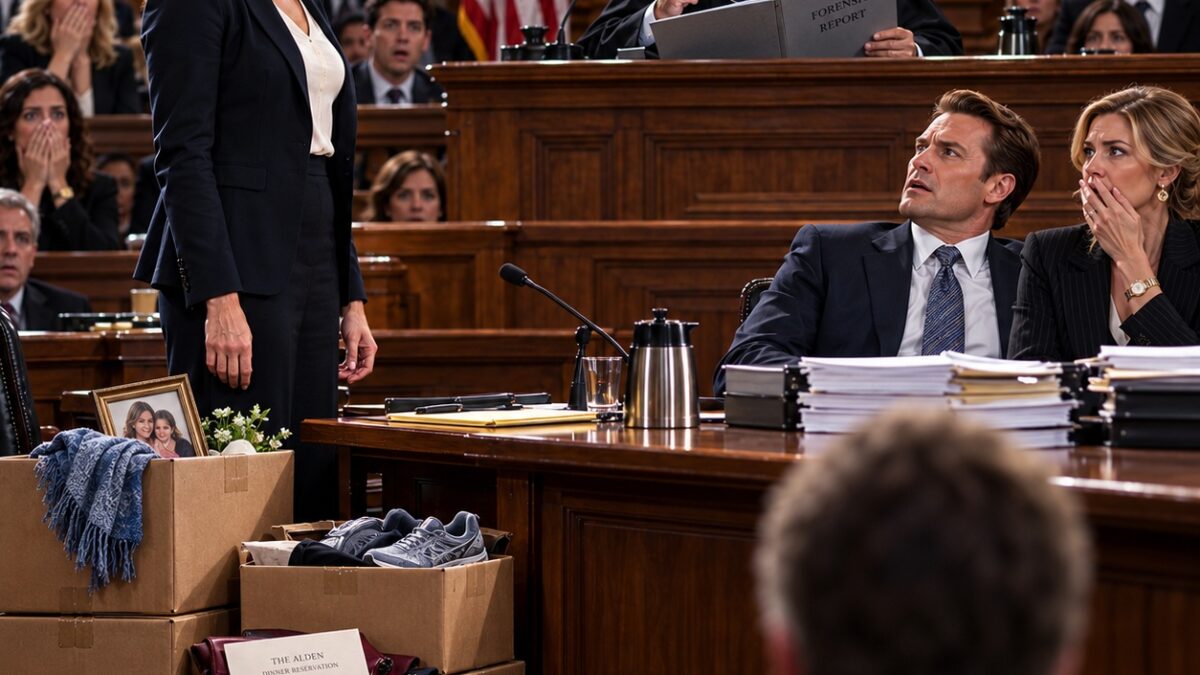
PART 2 and FULL ENDING Thank you

Her fingers tightened around the edge of the table.
I watched recognition arrive slowly.
Not because Moira had met me before. She had stood in my home wearing a cream cashmere sweater, advising me to accept a settlement while sleeping with my husband.
Recognition arrived because she finally understood why the name on the report mattered.
Judge Carter let the silence sit.
Then he said, “For the record, Mrs. Adriana Cole Pruitt is the founder and managing director of Vantage Forensic Partners.”
Nobody moved.
“She has also served as a court-appointed forensic special master in matters involving complex financial tracing in this district.”
Dominic turned his head toward me.
Not quickly.
Almost carefully.
His face had gone blank.
“Adriana?”
It was the first time he had said my name that morning.
Judge Carter continued.
“The report before me was prepared by a conflict-screened team within Vantage and independently certified by two senior examiners. It raises substantial questions concerning the petitioner’s sworn financial disclosure.”
Moira stood too quickly.
“Your Honor, I—I was not aware—”
“That much is apparent.”
A sound came from the gallery.
Dominic’s mother, Millicent, had dropped her reading glasses.
They landed against the wooden bench with a tiny click.
That sound was somehow louder than Moira’s laughter had been.
Dominic stared at me.
“You own Vantage?”
I didn’t answer him.
Judge Carter did.
“Mr. Pruitt, you will speak through counsel.”
Moira sank into her chair.
There are moments people imagine they will enjoy for years.
Vindication.
Recognition.
Watching someone who underestimated you finally understand.
I had imagined that moment more than once during those six weeks.
But standing there, I didn’t feel triumphant.
I felt tired.
Because Dominic’s shock proved something I had spent years refusing to admit.
My husband truly had not known me.
And some portion of that was his arrogance.
Some portion was his indifference.
But some portion belonged to me.
I had let him stop looking.
Years earlier, when Dominic and I met, I had not been pretending to be poor or helpless.
I had already founded Vantage.
The company had started at my grandmother’s kitchen table when I was twenty-six, although she would have rolled her eyes at the word “company.”
Back then it was me, a laptop, two folding chairs, a printer that jammed whenever I needed it most, and a coffeemaker that had survived since the Clinton administration.
My grandmother Ruth had been a bookkeeper for thirty-eight years.
She could look at a column of numbers and tell when something was wrong before she knew why.
“Numbers don’t lie,” she used to say. “People lie around them.”
My father learned that lesson the hard way.
He owned a small construction supply business outside Joliet.
When I was seventeen, his business partner stole from him for almost two years.
Nothing cinematic.
No suitcase of cash.
Just small dishonesties buried inside ordinary paperwork.
By the time anyone noticed, the company was nearly gone.
My father never recovered financially.
My parents divorced three years later.
I became obsessed with the question that had haunted our house during those years:
How could nobody have seen it?
That question became my career.
Accounting degree.
CPA license.
Forensic certification.
Law school at night, although I never built my career around practicing law.
Then investigations.
Banks.
Corporate fraud.
Asset tracing.
Divorce cases involving businesses worth more than some towns.
Vantage grew because I was good at finding the place where a story stopped matching the numbers.
By thirty, I had nineteen employees.
By thirty-two, we had offices in Chicago and New York.
By thirty-five, federal judges and major law firms were retaining our teams for financial analysis in cases where nobody could afford a guess.
Dominic technically knew about Vantage before we married.
That was the part that made his courtroom expression almost impossible to believe.
The company existed in our prenuptial agreement through its legal holding entity, Cole Strategic Holdings.
Dominic had his own attorney.
He had every opportunity to ask questions.
He didn’t.
I still remember sitting beside him in the conference room before the wedding.
His lawyer tapped the section listing my premarital assets.
“Cole Strategic Holdings,” she said. “You understand your fiancée retains full separate ownership?”
Dominic barely looked up from his phone.
“Family bookkeeping thing, right?”
I opened my mouth.
He squeezed my knee under the table and smiled.
“Whatever Adriana had before me stays hers.”
His lawyer looked at me.
I said, “I’m comfortable with the language.”
It was truthful.
Just incomplete.
I thought there would be time later.
That sentence became the excuse I used for years.
There would be time later.
Time to explain why my schedule changed without warning.
Time to tell him that the boring “billing review” I was doing from the guest room sometimes involved tracing eight-figure transactions.
Time to explain why I traveled to Washington or New York and called it a client meeting.
Time to tell him that the company he thought was a tiny bookkeeping consultancy had grown beyond anything I had expected.
At first, Dominic did ask about my work.
And at first, I answered.
Then his own career began accelerating.
He was charismatic, ambitious, and very good at persuading wealthy people that the building he wanted to develop was the building they had always wanted to fund.
His first major commercial deal changed something in him.
Maybe it had always been there.
Success simply gave it permission to speak louder.
At dinner one night, I told him Vantage had been retained on a major case.
I was proud.
Dominic listened for perhaps thirty seconds.
Then his phone buzzed.
He looked down.
“Sorry. This is actually important.”
Actually.
I remember that word.
I remember staring at my plate while he answered a message.
A year later, I received recognition from a national professional organization.
He had an investor dinner the same evening.
“Do you mind skipping your thing?” he asked.
“My thing?”
“The accounting dinner.”
“It’s an award.”
He buttoned his cuff.
“Adriana, I need you beside me tonight.”
So I went.
At the restaurant, one of his investors asked what I did.
Before I could answer, Dominic smiled.
“She works with numbers from home. Billing, mostly.”
Everyone moved on.
I corrected him in the car.
He laughed.
“Oh, come on. I simplified.”
“You made me sound like your assistant.”
“Why are you making this weird?”
I looked out the window.
And because I loved him, because I hated conflict, because the argument seemed smaller than the marriage, I let it go.
That happened again.
And again.
Eventually, “billing” became the version of me Dominic preferred.
I discovered something dangerous about being underestimated by someone you love.
At first, it hurts.
Then it becomes convenient.
If I told Dominic a case was confidential, he complained that I was shutting him out.
If I told him it was boring compliance work, he stopped asking.
So I began telling him less.
I convinced myself I was protecting client confidentiality.
Sometimes I was.
Other times I was protecting the marriage from his ego.
That part was mine.
I see it now.
Back then, I called it peace.
By the fifth year of our marriage, Dominic rarely asked what I had done all day.
He knew my separate tax filings were handled through my business accountant because that arrangement had been established before our wedding.
He knew the condo down payment included money from me.
He knew I traveled.
He knew I had clients.
He simply arranged those facts into the version he preferred.
A modest little wife with a modest little job.
Then Moira Keen entered our life.
The first time I met her, she attended a holiday reception at Dominic’s office.
She wore a dark green dress and laughed at one of his stories before he reached the punch line.
That detail stayed with me.
People reveal loyalties in tiny ways.
She was an associate at Kellner & Taft, the law firm handling several of Dominic’s development transactions.
Smart.
Composed.
Ambitious.
She knew exactly how to make someone feel as though the room had become more interesting because they had entered it.
Dominic liked that.
I noticed.
I said nothing.
Again.
That silence became a habit too.
Months later, I found a hotel charge on a card Dominic almost never used.
I did not investigate him.
That surprises people when they hear what I do for a living.
I could have.
I knew how.
But professional suspicion and marital suspicion are different animals.
I did not want to become the wife who treated her husband like a subject.
I asked him directly.
“Were you in Milwaukee last Thursday?”
“No.”
The answer came too quickly.
I looked at him.
He looked back.
Then he added, “Why?”
I could have confronted him.
Instead, I said, “No reason.”
That was another mistake.
By our seventh anniversary, we were living inside a marriage made mostly of things we did not say.
Then I came home to the boxes.
The night Dominic threw me out, I drove to a brownstone in Lincoln Park that he had visited only once.
He thought it belonged to Vantage and was used for visiting executives.
It did.
It also belonged to me.
I had purchased it before our marriage through Cole Strategic Holdings.
There was nothing secret or illegal about that.
It had been disclosed in the prenup.
Dominic had simply never cared enough to remember.
I carried my suitcase upstairs.
The house smelled faintly of cedar and dust.
There was no food in the refrigerator except mustard, sparkling water, and a lemon that had reached an age I did not want to investigate.
I sat at the kitchen table in my coat.
My grandmother’s framed photograph leaned against my suitcase.
The anniversary dinner envelope was still in my purse.
For almost an hour, I did nothing.
Then I called Claire Bennett.
Claire had been my second employee at Vantage and was now chief operating officer.
She answered with, “You’re supposed to be at dinner.”
“Dinner got canceled.”
She went quiet.
Claire knew me well enough to hear what I was not saying.
“What happened?”
“Dominic filed for divorce.”
Another silence.
Then, very carefully, “Do you need me as your friend or as your COO?”
I closed my eyes.
“Friend first.”
So she listened.
I told her about the boxes.
The emptied accounts.
Moira.
The settlement.
The forty-one-thousand-dollar comment.
Claire did not interrupt until I finished.
Then she said, “I have several thoughts. Most of them would get me removed from a respectable board meeting.”
I laughed.
A terrible little laugh that turned into a sob.
Claire stayed on the phone.
After a while she said, “Now do you need your COO?”
“Yes.”
Her voice changed.
Professional.
Calm.
“Then we start with conflict controls. Nobody at Vantage touches Dominic or any Pruitt entity until outside ethics counsel establishes what we can legally review.”
That was why Claire ran operations.
Even angry, she protected the rules.
“I agree.”
“You also need your own family-law counsel.”
“I can handle an emergency hearing.”
“You can perform your own dental surgery too. Doesn’t make it wise.”
“I’m serious.”
“So am I.”
I almost smiled.
Claire continued.
“Adriana, being capable is not the same thing as being objective.”
That sentence irritated me because it was true.
The next morning I met with Elaine Porter, a divorce attorney who had represented executives, business owners, and one professional athlete whose divorce had generated enough press coverage to ruin breakfast for everyone involved.
Elaine read Dominic’s filing without speaking.
Then she put it down.
“He emptied the joint operating accounts before serving you?”
“Yes.”
“Canceled shared credit?”
“Yes.”
“Claims the condo down payment came almost exclusively from him?”
“Yes.”
“Claims your contribution was a gift?”
“Yes.”
“Is it?”
“No.”
She looked at me.
“Can you prove that?”
“Yes.”
“How easily?”
“Very.”
Elaine leaned back.
“Good. Now tell me what you’re not telling me.”
I almost laughed.
“Is that lawyer instinct?”
“No. It’s woman-who-has-seen-that-face-before instinct.”
So I told her who I was professionally.
Her eyebrows rose.
“You’re that Adriana Cole?”
I hated the relief I felt.
“Yes.”
She studied me for several seconds.
“Does your husband know?”
“He knows enough that he should.”
“That is not what I asked.”
“No.”
Elaine tapped the petition.
“Then we have two divorces here.”
I frowned.
“The legal one,” she said, “and the one between the person he thinks you are and the person you actually are.”
I looked away.
She continued.
“Be careful not to turn the second divorce into a weapon in the first.”
That became my rule.
I would not use professional access improperly.
I would not dig through confidential databases.
I would not turn Vantage into my private revenge machine.
I would not manufacture consequences.
Dominic had filed sworn financial disclosures.
We would challenge them through lawful discovery.
Nothing more.
For ten days, that was exactly what happened.
Elaine’s office requested bank statements, business valuations, tax records, partnership interests, and disclosures of transfers made during the months before the divorce.
Dominic’s side resisted almost everything.
Moira was suddenly listed as second chair on his divorce team despite primarily being a transactional attorney.
I understood why.
She wanted to control the financial narrative.
Elaine noticed too.
“That’s unusual.”
“Very.”
“Personal?”
“Yes.”
Elaine looked at me.
“You’re remarkably calm about that.”
“I’m saving emotional collapse for Thursdays.”
She almost smiled.
Then Dominic’s brother called.
Garrison Pruitt was eleven years older than Dominic.
He had inherited the family’s talent for charm without Dominic’s discipline.
He managed several properties for the family and always seemed to have either lost weight, gained weight, quit drinking, started drinking, found religion, or abandoned it since the last time I saw him.
“Adriana,” he said. “Mom has some of your things.”
“What things?”
“Jewelry. Papers. Whatever Dominic dropped off.”
“Why are they at your mother’s house?”
“He doesn’t want your stuff at the condo.”
My jaw tightened.
Then Garrison added, almost casually, “Your grandmother’s ring is here.”
I sat up.
The sapphire ring.
My grandmother had worn it every day after my grandfather died.
When she gave it to me, she said, “Jewelry should carry memory, not status.”
I had taken it off before a business trip months earlier and left it in a small safe at the condo.
“When can I pick it up?”
“Saturday. Family’s having lunch.”
“That sounds unnecessary.”
“Mom wants to talk.”
“I don’t.”
He laughed softly.
“Come get your ring, Adriana.”
I should have sent Elaine.
I knew that.
I went anyway.
That was not a professional decision.
It was a granddaughter’s decision.
Millicent Pruitt lived in Lake Forest in a house that had been expensive before expensive homes started trying so hard to look expensive.
Stone exterior.
Long gravel drive.
Old trees.
A front door heavy enough to survive a medieval siege.
Tilda opened it.
Garrison’s wife had always been quieter than the rest of the family.
She was forty-four, with soft brown hair and eyes that seemed permanently occupied with a thought she did not intend to share.
When she saw me, something passed across her face.
Concern.
Maybe relief.
“Hi,” she said.
“Hi.”
She hugged me unexpectedly.
Then she whispered near my ear.
“Don’t sign anything.”
She pulled away before I could answer.
Everyone was in the dining room.
Millicent sat at the head of the table.
Dominic was halfway through a glass of wine.
Moira sat beside him.
Seeing her in the family home told me something the affair itself had not.
This was not new.
New mistresses do not get seated beside the son at the mother’s table during a divorce.
Millicent gestured toward a chair.
“Sit, Adriana.”
“I’m here for my ring.”
“We know.”
Garrison reached into his jacket.
He placed a small velvet box beside his plate.
I stared at it.
Millicent folded her hands.
“This situation has become unnecessarily unpleasant.”
I nearly admired the sentence.
“My husband moved another woman into our home and emptied our accounts.”
Millicent’s mouth tightened.
“There are always two sides.”
Moira looked down.
Dominic did not.
“Mom, don’t bother,” he said. “She came for the ring.”
Garrison pushed the box an inch across the table.
Then stopped it beneath his fingertips.
“Moira brought something that could end all this.”
A document appeared.
A waiver.
I scanned the first page.
It released virtually every contested claim.
No challenge to Dominic’s separate-property characterization.
No claim regarding several business interests.
No request for temporary support.
No objection to funds transferred before filing.
I looked at Moira.
“You drafted this?”
“It’s a reasonable path forward.”
“For whom?”
Her voice stayed gentle.
“Adriana, litigation will consume money you don’t have.”
Dominic stared into his wine.
Then he said, “Just sign it.”
I looked at him.
“Did you take my grandmother’s ring so you could trade it for my signature?”
His jaw moved.
“It was in my condo.”
“Our condo.”
“My name is on the deed.”
Millicent exhaled impatiently.
“This obsession with ownership is exactly the problem.”
That almost made me laugh.
Garrison pushed the pen toward me.
“Sign, take the ring, everybody moves on.”
Tilda stared at her plate.
I could see her hands trembling beneath the edge of the table.
I did not sign.
I stood.
“Keep it tonight.”
Dominic looked genuinely surprised.
I turned toward the door.
Then his hand moved.
Maybe he meant to grab the papers.
Maybe he meant to stop me.
His wrist struck the stem of his wine glass.
Red wine spilled across the table and splashed down my cardigan.
Garrison laughed.
Just once.
A reflex.
Dominic looked at the stain and said, “For God’s sake.”
Not “I’m sorry.”
Not “Are you okay?”
For God’s sake.
Tilda stood immediately.
“I’ll get a towel.”
She took my arm.
“Come on.”
The kitchen door closed behind us.
Tilda did not reach for a towel.
She put both hands against the counter.
“I need help.”
Her face was white.
I forgot about the wine.
“With what?”
“Garrison.”
I waited.
She swallowed.
“He’s been taking money from our accounts.”
“How much?”
“I know about one hundred and ninety thousand.”
My expression must have changed.
She rushed on.
“There’s more. There has to be. He has debts. Gambling, mostly. Maybe other things.”
“Have you spoken to an attorney?”
“Yesterday.”
“Good.”
She shook her head.
“No. Not good. Because I found something else.”
She opened the pantry door.
For one strange second I thought she wanted crackers.
Instead she reached behind a stack of paper towels and pulled out a large envelope.
“I made copies.”
“Of what?”
“Documents Garrison brought home.”
I did not touch the envelope.
“Tilda, listen carefully. If these came from accounts you lawfully have access to, give them to your attorney.”
“They did.”
“If they’re business records you were not entitled to take—”
“They were in our home office. Mixed with our personal financial records. I didn’t break into anything.”
“Then your attorney decides what can be used.”
Her eyes filled.
“Adriana, your name is in them.”
That stopped me.
“My name?”
“Not exactly. The divorce.”
She pulled out one page.
I did not take it.
She held it where I could read.
It appeared to be an email printout.
Dominic’s name was in the header.
Moira’s too.
The message discussed moving funds before “A.P. gets visibility through discovery.”
Another line referred to “consulting agreements” that needed to be finalized before the petition was filed.
My breathing slowed.
Professional instinct.
Not panic.
Not anger.
Pattern recognition.
“Tilda, put that back.”
She stared at me.
“You see it, right?”
“I see enough to know I should not be reviewing this in your mother-in-law’s kitchen.”
A laugh escaped her that sounded dangerously close to crying.
“I thought you’d know what to do.”
“I know the first thing.”
“What?”
“You leave with me.”
She froze.
“I can’t.”
“Yes, you can.”
“Garrison will—”
“Do you feel safe going home with him?”
Her silence answered.
I opened the kitchen door.
The dining room had gone quiet.
Dominic looked annoyed.
Millicent looked offended.
Garrison looked confused.
I took my phone from my bag.
“I’m calling a car for Tilda.”
Garrison stood.
“What?”
Tilda appeared behind me.
Her voice shook.
“I’m staying with my sister tonight.”
“What are you talking about?”
“I’m leaving.”
The room changed.
Not loudly.
That is what people misunderstand about family explosions.
The worst ones often begin quietly.
Garrison stared at his wife.
Millicent said, “Tilda, sit down.”
Tilda did not.
Dominic looked at me.
“What did you say to her?”
“Nothing she didn’t already know.”
Garrison’s chair scraped backward.
“Tilda.”
She flinched.
I stepped between them without thinking.
He stopped.
For several seconds, nobody moved.
Then Tilda lifted her chin.
“I know about the money.”
Garrison’s face changed.
Moira looked at Dominic.
Dominic looked at the table.
That was the moment I understood.
Not the details.
Not yet.
But I understood that whatever Tilda had found did not belong only to her marriage.
The silence belonged to everyone in that room.
Tilda and I left together.
My grandmother’s ring stayed behind.
In the car, she cried without making any sound.
I sat beside her and watched the lights along Sheridan Road move across the window.
Finally she said, “You knew something was wrong before I told you.”
“No.”
“You looked like you did.”
“That’s just my face when people hand me documents at terrible family lunches.”
She laughed through tears.
Then she said, “Why did Dominic always act like you were stupid?”
I turned toward her.
“He never said I was stupid.”
“He didn’t have to.”
That hurt more than I expected.
Tilda wiped her face.
“What do you actually do, Adriana?”
I looked out at the dark lake.
“I find where money went.”
She waited.
“That’s it?”
“Mostly.”
“You’re making that sound very small.”
“I’ve had practice.”
The next morning, Tilda met Elaine and her own new attorney.
Everything changed after that.
Not quickly.
Not dramatically.
Correctly.
That mattered.
Her attorney reviewed the records she had lawfully obtained.
Elaine sought emergency discovery based on evidence suggesting Dominic’s financial affidavit was incomplete.
The judge granted limited expedited production.
Vantage remained walled off until independent ethics counsel created a formal conflict screen.
Then a team I did not supervise was retained through Elaine’s office.
I did not touch their work.
I did not select their findings.
I did not sit in the room while they traced transactions.
That restraint was harder than any investigation I had ever conducted.
Every part of me wanted answers.
Instead, I waited.
Three days later, Claire came to the brownstone.
She placed a cup of coffee beside me.
“You look awful.”
“Thank you.”
“You’re welcome.”
She sat across from me.
“The screened team found material issues.”
“How material?”
“I’m not discussing substance with you outside counsel.”
I glared at her.
She smiled.
“You hired me for this personality.”
“I am reconsidering.”
“No, you’re not.”
My phone rang.
Elaine.
I answered.
“Come to my office.”
Her tone made my stomach tighten.
Twenty minutes later, I was sitting across from her.
Tilda’s attorney joined by video.
Elaine placed a legal pad in front of herself.
“The report indicates Dominic omitted interests in several entities.”
“How many?”
“At least three that matter.”
“Value?”
“Still being determined.”
She continued.
“There are also transfers inconsistent with the income represented in his sworn filing.”
“Could they be legitimate?”
“Yes.”
I appreciated that answer.
Forensic work requires respect for alternative explanations.
Suspicion is not proof.
Elaine slid a page toward me.
“This concerns me more.”
It was a transaction summary.
Payments from development entities to consulting companies whose stated services did not match any obvious project activity.
The names were unfamiliar.
The totals were not.
Seven figures moved over several years.
“This isn’t my divorce anymore,” I said.
“Not entirely.”
“Who has seen this?”
“Only the screened team, us, and Tilda’s counsel.”
I looked at Elaine.
“You need independent criminal counsel to advise on referral.”
“Already called.”
She nodded.
“Good.”
There was no celebration.
No dramatic speech.
Only responsible people becoming more careful because the stakes had become larger.
That was the beginning of the case that would eventually bring federal agents into courtroom 7.
But before that happened, Dominic gave us something no forensic report could provide.
His sworn signature.
Illinois divorce proceedings require financial disclosures.
Dominic submitted his.
Then he amended it.
Then he signed an affidavit affirming its completeness.
Elaine read it twice.
I read it once.
One afternoon she called me.
“He left the entities out.”
“All of them?”
“Yes.”
“After the discovery request?”
“Yes.”
“And after Moira received notice that we were challenging transfers?”
“Yes.”
I sat very still.
Elaine said, “Do not call him.”
“I wasn’t going to.”
“Your face says you were going to.”
“You can’t see my face.”
“I’ve known you six weeks. I can hear your face.”
I smiled despite myself.
The referral went through proper channels.
No favors.
No calls to agents I knew personally.
An outside attorney transmitted the information with supporting records and disclosed my personal connection.
Then we stepped back.
For almost two weeks, nothing happened.
Dominic interpreted silence as weakness.
He texted me for the first time since throwing me out.
You are spending money for no reason.
I did not answer.
Another message arrived.
Moira says your lawyer is filing nuisance discovery.
Still nothing.
Then:
You always do this. You turn simple things into projects because it makes you feel important.
I read that sentence several times.
It was almost impressive.
Even then, he could not imagine a world in which I might actually be important to the work happening around him.
Later that evening, he called.
I let it go to voicemail.
His message lasted forty-three seconds.
“Adriana, we had seven years together. I’m trying to make this easy. I know you’re hurt about Moira, and I’m sorry for the timing, but don’t confuse hurt feelings with leverage. You don’t understand my businesses. You don’t understand the debt structures or partnerships. If you keep pushing, you’re going to burn through whatever savings you have and end up exactly where you are now, only poorer.”
I saved the message.
Not as evidence.
As a reminder.
Two days later, I received another call.
This one came from an assistant United States attorney I had worked with years earlier.
Because of the conflict disclosure, she told me almost nothing.
She only said, “The referral has been assigned.”
“I understand.”
“You should not conduct any independent investigation.”
“I haven’t.”
“You should not contact anyone you believe may be involved.”
“I won’t.”
“And you may be contacted for background regarding Vantage’s report.”
“Understood.”
She paused.
Then, softer, “Are you okay?”
That question nearly undid me.
Professionals had spent weeks asking whether the evidence was preserved, whether the discovery was proper, whether conflict procedures were correct.
Nobody had asked that.
“I don’t know,” I said.
And for once, that was enough.
The strangest part of discovering your husband may be involved in financial crimes is how quickly ordinary heartbreak becomes complicated.
I was still a wife whose husband had cheated.
I was still a woman whose belongings had been packed by someone else.
I was still angry about the anniversary.
But now every memory had a second shadow.
The late-night calls.
The unexplained trips.
The locked desk drawer.
The conversations that stopped when I entered.
I kept asking myself whether I had missed them because I trusted him or because I had wanted peace badly enough to look away.
One night, I took my grandmother’s photograph from my suitcase and set it on the brownstone kitchen table.
“I should have seen him,” I whispered.
Her photograph offered no opinion.
That was one of Ruth Cole’s greatest qualities in death.
Claire found me there the next morning.
“You slept here?”
“No.”
“You have pillow lines on your face.”
“I rested aggressively.”
She opened the refrigerator.
“You own a forensic accounting firm and apparently no groceries.”
“I’ve been busy.”
“You have mustard from 2024.”
“It’s vintage.”
She threw it away.
Then she leaned against the counter.
“Do you want to know what I think?”
“Historically, saying no has not stopped you.”
“I think you’re blaming yourself because it feels better than admitting someone you loved made choices you couldn’t control.”
I looked at her.
“That sounds suspiciously therapeutic.”
“I read things.”
“Stop.”
“Never.”
She softened.
“You should have told him more about your life.”
“I know.”
“You should have demanded more respect.”
“I know.”
“But those are marriage mistakes, Adriana. They are not permission slips for whatever he did.”
I looked at my coffee.
There was relief in hearing a distinction I had been afraid to make for myself.
A week later, Tilda moved into a small furnished apartment near her sister.
Garrison sent flowers.
Then apologies.
Then anger.
Then promises.
Then a photograph of their wedding day.
Tilda showed me the messages.
“What do I do?”
“Whatever your attorney advises about communication.”
“I mean emotionally.”
“Oh.”
She laughed.
“You’re terrible at that part.”
“Extremely.”
We were sitting in a diner near the courthouse.
Tilda stirred coffee she had stopped drinking ten minutes earlier.
“I keep remembering good things.”
“Of course.”
“Shouldn’t I hate him?”
“No.”
She looked surprised.
“I don’t hate Dominic every minute either.”
“You don’t?”
“No.”
Sometimes I remembered the man who drove three hours through a snowstorm because my grandmother had fallen.
The man who sat in the hospital cafeteria at two in the morning holding my hand.
The man who once learned to make Ruth’s terrible meatloaf because I was homesick after she died.
Those memories were real.
So were the boxes.
People want betrayal stories to be simple because simple stories are easier to survive from a distance.
Good person.
Bad person.
Truth.
Lie.
Marriage.
Divorce.
But life is rarely generous enough to divide itself that cleanly.
Dominic had loved me.
I believe that.
He had also slowly trained himself to value me according to how useful I was to his image.
Both could be true.
That was what made grieving him difficult.
The federal investigation moved quietly.
Subpoenas went out.
Records came in.
I heard almost nothing.
Meanwhile the divorce continued.
Moira became more aggressive.
At one status conference she referred to my challenges as “speculative.”
At another she accused Elaine of conducting a “fishing expedition.”
Then came mediation.
Dominic entered wearing a navy suit and confidence.
Moira accompanied him.
Elaine sat beside me.
For six hours, we occupied separate rooms while a retired judge walked offers back and forth.
The first offer gave me a modest payment and required broad confidentiality.
I rejected it.
The second increased the payment.
Rejected.
The third offered me the return of part of my condo contribution.
Elaine looked at me.
“Emotionally or legally?”
“Legally.”
“Reject.”
We rejected it.
Near four o’clock, Dominic asked to speak with me directly.
Elaine said no.
The mediator asked again.
“He says he wants closure.”
I almost laughed.
Elaine looked at me.
“You don’t owe him a conversation.”
“I know.”
But I wanted one.
We sat across from each other in the conference room.
No lawyers for five minutes.
The mediator remained.
Dominic looked tired for the first time.
“Why are you doing this?”
I stared at him.
“Doing what?”
“Dragging everything out.”
“You filed for divorce.”
“You know what I mean.”
“No. I actually don’t.”
He rubbed his forehead.
“I offered you more money than you would make in years.”
There it was.
Again.
Money measured against the fictional salary he had assigned me.
“You keep saying that.”
“Because it’s true.”
“Is it?”
He looked irritated.
“You make forty-one thousand dollars a year, Adriana.”
The mediator shifted slightly.
I said, “Where did you get that number?”
“You told me.”
“No. You saw a payroll statement years ago.”
“For forty-one thousand.”
“A salary statement.”
“What’s the difference?”
I almost smiled.
Everything.
Vantage paid me a deliberately modest salary because most of my compensation and ownership value were structured differently through a company I had owned long before our marriage.
Dominic had seen one number.
He had built an entire woman around it.
I leaned back.
“What do you think I do all day?”
“Here we go.”
“Answer me.”
He exhaled.
“You process invoices. Compliance. Billing. Whatever.”
“For whom?”
“Your logistics client.”
“One client?”
“I don’t know.”
“What’s the name of the company I work for?”
Silence.
Seven years.
My husband could name the golf course preferred by an investor he had met twice.
He could remember which Bordeaux Millicent wanted on Christmas.
He could recite the cap rates on buildings he had sold five years earlier.
But he could not name the company he believed employed his wife.
His face hardened.
“This is childish.”
“No,” I said quietly. “This is our marriage.”
The mediator looked away.
Dominic lowered his voice.
“You hid things.”
That surprised me.
“What?”
“I know you have more money than you told me.”
I held his gaze.
“How?”
His expression shifted.
Tiny.
But I saw it.
Professional instinct again.
“Dominic?”
He stood.
“This conversation is over.”
The mediator called the lawyers back.
As Dominic left, I understood something.
He had discovered enough about my separate finances to know I was not broke.
Yet he had still submitted documents suggesting otherwise.
And he had been moving assets before filing.
I told Elaine.
She immediately documented the exchange.
Three days later, the federal case moved.
I was not told the specifics.
I learned only that investigators had obtained evidence independently sufficient to continue.
That distinction mattered to me.
Whatever happened next would not happen because a furious wife had powerful friends.
It would happen because records supported it.
Then came the family court hearing.
The one where Moira laughed.
The one where Judge Carter opened the gray report.
The one where my professional life finally collided with the fictional version of me Dominic had carried for years.
Now, sitting at the respondent’s table, I watched the knowledge settle over him.
“You own Vantage?” he whispered again.
Judge Carter struck the bench lightly.
“Mr. Pruitt.”
Dominic stopped.
The judge turned to Moira.
“Counselor, your own argument this morning emphasized the reliability of Vantage Forensic Partners.”
“Yes, Your Honor.”
“Respondent’s Exhibit 14 identifies undisclosed business interests and transactions inconsistent with your client’s sworn affidavit. Do you contest authenticity?”
Moira looked at the document.
Her throat moved.
“I would need time to review.”
Elaine was not sitting beside me because, for this limited hearing, I had chosen to appear pro se on an emergency motion concerning my own filings.
She sat in the gallery as an observer, arms folded.
She had told me it was stubborn.
She was right.
But there was something I needed to do myself.
Judge Carter continued.
“This report was served fourteen days ago.”
Moira froze.
That mattered.
She had received it.
Or her firm had.
“Your Honor, there may have been an internal routing problem.”
Judge Carter’s expression did not change.
“I see.”
Dominic turned toward her.
“You had this?”
She whispered, “Not now.”
“You had this report?”
“Dominic.”
The judge raised his voice.
“Mr. Pruitt.”
Dominic looked forward.
Judge Carter read several pages.
Then he asked me, “Mrs. Pruitt, are you seeking final findings today?”
“No, Your Honor.”
“What are you seeking?”
“Preservation.”
That word changed the room again.
I continued.
“A temporary order preventing transfer, encumbrance, destruction, or dissipation of disputed assets until complete discovery can be conducted.”
Judge Carter nodded.
“And the condominium?”
“Preserve its status pending valuation.”
“Temporary maintenance?”
“I’m not requesting it.”
Dominic looked at me.
Moira did too.
Judge Carter looked over his glasses.
“You understand you may be entitled to seek relief.”
“Yes.”
“Why aren’t you?”
“Because I can support myself.”
The sentence was simple.
I had wanted Dominic to hear it for seven years.
Not because earning money made me better.
Not because dependence is shameful.
Because he had used the idea of my dependence as a weapon.
The judge reviewed the proposed order.
Then the courtroom doors opened.
Two men in plain suits entered.
A woman followed.
I recognized none of them.
That relieved me.
Independent investigation.
Independent agents.
Independent consequences.
One of the men handed a document to the courtroom deputy.
Judge Carter read it.
His face became very still.
Then he called counsel to the bench.
I remained where I was.
Dominic kept looking at me.
“What did you do?”
I answered him for the first time.
“I filed for discovery.”
His jaw tightened.
“No.”
“Yes.”
“This is you.”
“Dominic, I asked for bank records.”
“What did you do?”
His voice cracked on the last word.
The courtroom deputy stepped closer.
“Sir, remain seated.”
Moira stood.
One of the agents moved toward her.
“Ms. Keen?”
Her face drained.
“Yes?”
“I need you to step into the hallway with us.”
She looked at Judge Carter.
“Your Honor?”
He said, “The federal matter is not before me.”
Another agent approached Dominic.
“Mr. Pruitt, we need to speak with you as well.”
Millicent stood in the gallery.
“What is happening?”
No one answered.
Garrison was already moving toward the aisle.
Then he saw the third agent.
He stopped.
Tilda sat three rows behind him.
They looked at each other.
I will remember that look longer than I remember the handcuffs.
Because there were handcuffs eventually.
But not immediately.
Federal cases are usually less theatrical than movies.
There was paperwork.
Identification.
Instructions.
Quiet conversations.
Attorneys making urgent phone calls.
The family court hearing was recessed.
In the corridor, Dominic was informed that a sealed federal complaint had been unsealed that morning and that a warrant had been issued.
The charges would change over time as the investigation developed.
At that moment, there were allegations related to wire fraud, tax offenses, conspiracy, and financial transactions involving entities connected to his development business.
Allegations.
Not convictions.
That distinction mattered then.
It matters now.
Moira was detained separately.
Garrison sat on a bench with both hands over his face.
Millicent kept demanding explanations from people whose job descriptions did not include comforting her.
Then Dominic saw me.
An agent stood between us.
For a second, he looked like the man I had married.
Not the developer.
Not the husband who packed my life into boxes.
Just Dominic.
Confused.
Terrified.
Human.
“Adriana.”
I stopped.
The agent glanced at me.
I could have kept walking.
Instead, I turned.
Dominic swallowed.
“Did you know?”
“Yes.”
“How long?”
“That an investigation existed? Not long.”
“No.”
His eyes were wet.
He looked toward the courtroom, then back at me.
“How long were you… that?”
I knew what he meant.
Vantage.
The career.
The woman he had suddenly discovered.
“Before I met you.”
He stared.
“All seven years?”
“Yes.”
“Why didn’t you tell me?”
The question hit me harder than any insult he had given me.
Because I had an answer.
Several.
Some made him guilty.
Some made me guilty.
None could be explained in a courthouse hallway.
So I said the truest one.
“I tried at first.”
His face tightened.
“And then?”
“You stopped asking.”
The agent guided him away.
Dominic looked back once.
Then the elevator doors closed.
Six weeks after he had watched mine close.
The federal case lasted eighteen months.
That is the part dramatic stories usually skip.
Consequences take paperwork.
Thousands of pages of it.
They take motions, hearings, interviews, subpoenas, accountants, defense lawyers, prosecutors, continuances, arguments, and mornings when nothing happens at all.
They take facts separating themselves from assumptions.
Garrison cooperated early.
His gambling debts were worse than Tilda knew.
He admitted participating in transactions Dominic presented as legitimate business arrangements.
He claimed he did not initially understand the full scheme.
Prosecutors disagreed about how long he could reasonably make that claim.
Eventually, he entered a plea to reduced charges and agreed to testify.
Moira fought longer.
Her defense was that she had acted as counsel relying on client representations.
That argument might have carried weight if the evidence had ended with legal documents.
It did not.
Investigators found communications showing she had questioned certain transactions privately, then helped revise paperwork after receiving explanations she later admitted she did not believe.
There were also payments to an entity in which she held an undisclosed financial interest.
Her license was suspended during the proceedings.
Later, she accepted a plea agreement.
I saw her only once after the arrest.
We were leaving separate rooms after depositions.
She looked thinner.
Older.
She stopped in the hallway.
“Adriana.”
Elaine touched my arm.
I said, “It’s okay.”
Moira looked at me.
“I owe you an apology.”
I waited.
She swallowed.
“For the affair.”
I said nothing.
“For the way I spoke to you in your home.”
Still nothing.
“And for assuming…”
She stopped.
“Assuming what?”
Her eyes lowered.
“That what Dominic said about you was true.”
That answer surprised me.
“What did he say?”
She gave a tired laugh.
“That you were sweet. Dependent. Not very ambitious. That you never understood his world.”
I felt something inside me settle.
Not break.
Settle.
“Did you ever wonder why he needed you to believe that?”
She looked at me.
Then away.
“I do now.”
I left.
That was the last conversation we had.
Dominic’s case went further.
The investigation established that he had participated in concealing income, using false consulting arrangements, and misrepresenting financial interests.
Some things Tilda feared turned out to be less serious than they looked.
Other things were worse.
That is another reality forensic work teaches you.
Truth rarely arrives in the shape you expect.
Eventually Dominic accepted responsibility in a plea agreement rather than go to trial on every count.
The day before sentencing, his attorney sent Elaine a letter addressed to me.
I left it unopened for two weeks.
Then one Sunday morning, I took it to my grandmother’s kitchen table.
Not literally hers.
That table was long gone.
But I had bought a small oak table for the brownstone because it reminded me of it.
Rain tapped the windows.
My coffee went cold.
Finally, I opened the envelope.
Dominic’s handwriting looked the same.
Adriana,
I have started this letter nine times.
I keep wanting to explain myself, which I’m told is not the same thing as taking responsibility.
So I’m trying not to explain.
I was wrong about the money.
I was wrong about the divorce.
I was wrong about Moira.
I was wrong about what I thought I could hide.
But I keep coming back to you.
I don’t understand how I lived with you for seven years without knowing who you were.
Part of me is angry that you hid it.
I know I probably have no right to be.
Maybe anger is easier than the other possibility.
That you were right in front of me and I decided I already knew everything worth knowing.
I remember your accounting dinner.
I remember asking you to skip it.
I remember introducing you as someone who “did billing.”
I remember you going quiet.
I remember noticing.
That is the part I can’t forgive myself for.
I noticed.
I just liked you quieter.
I don’t know what that says about me.
Probably nothing good.
I am sorry.
Not because I got caught.
Not only because I hurt you.
I am sorry because I spent years asking you to disappear by inches, then blamed you for being small.
Dominic.
I read the letter twice.
Then I cried.
Not because I wanted him back.
I didn’t.
I cried because the man I had spent years waiting to understand me had finally done it when understanding could no longer save anything.
There is a cruelty in late insight.
It can be sincere and still arrive too late.
I never wrote back.
But several months later, I saw him during the final divorce proceeding.
He had already entered his federal plea.
He wore a plain dark suit.
No expensive watch.
No entourage.
No Moira.
Millicent sat behind him.
She looked smaller too.
The divorce itself became surprisingly simple once the financial facts were established.
The condo was marital property subject to the court’s determination despite the way Dominic had characterized my contribution.
My separate ownership of Vantage remained mine under our prenup.
Disputed marital assets were divided through a negotiated settlement reviewed by both sides.
I did not take everything I could have demanded.
I took what my attorneys and I believed was fair.
Elaine asked me about that.
“Are you sure?”
“Yes.”
“You understand fairness is not the same as mercy.”
“I know.”
“And mercy isn’t required.”
“I know that too.”
“Then why?”
I looked through the conference-room window at Chicago.
“Because I don’t want the rest of my life to be organized around punishing Dominic.”
Elaine studied me.
Then nodded.
“That,” she said, “is a better reason.”
Before the final hearing, Millicent approached me in the courthouse lobby.
She held a small velvet box.
My grandmother’s ring.
For months, I had assumed investigators had cataloged it with other property and that it would eventually return through counsel.
Instead, Millicent had kept it.
She held the box toward me.
“This belongs to you.”
I took it.
“Thank you.”
She did not release the box immediately.
Her fingers remained on the edge.
“I was cruel to you.”
I looked at her.
Millicent had never apologized to me.
Not once.
She continued.
“I thought protecting my sons meant believing them.”
Her voice was quieter than I had ever heard it.
“I understand now that sometimes it means refusing to.”
She released the box.
I opened it.
The sapphire caught the courthouse light.
For one second, I was twenty-four again, sitting beside Ruth while she slid the ring from her finger.
Jewelry should carry memory, not status.
I closed the box.
Millicent said, “Dominic loved you.”
“I know.”
“He still does.”
I looked at her.
“That doesn’t change what happened.”
“No.”
Another first.
Millicent agreeing without qualification.
She nodded once.
Then walked away.
Inside the courtroom, Dominic signed the final documents.
So did I.
When it was finished, Judge Carter looked at both of us.
“Marriage dissolved.”
Two words.
Seven years ended in two words.
Dominic remained seated.
I closed my folder.
At the door, he said my name.
I turned.
He stood alone.
“Can I ask you something?”
I waited.
“Were you ever happy with me?”
The question surprised me.
“Yes.”
His eyes closed briefly.
“That makes it worse.”
“Sometimes.”
He looked at me.
“Were you going to tell me? About Vantage?”
“I did tell you pieces.”
“I mean everything.”
I considered lying.
Then I didn’t.
“I don’t know.”
He nodded slowly.
“That’s fair.”
“No. It isn’t.”
He looked confused.
I stepped closer.
“I should have refused to disappear.”
He frowned.
“Adriana—”
“You were responsible for how you treated me. But I was responsible for staying silent when I knew what that treatment was doing to me.”
His eyes filled.
“I thought keeping the peace meant keeping the marriage.”
I looked down at the ring box in my hand.
“It turns out those aren’t the same thing.”
He whispered, “I’m sorry.”
“I know.”
Not I forgive you.
Not it’s okay.
I know.
That was enough.
I walked away.
Tilda was waiting downstairs.
She had finalized her own divorce from Garrison months earlier.
Her life was not magically perfect.
She went back to school part-time.
She rented an apartment smaller than the kitchen in Millicent’s house.
For the first several months, she checked her bank balance every morning because she had spent years afraid of discovering what had disappeared overnight.
One Tuesday, she called me laughing.
“I bought a couch.”
I waited.
“That’s the emergency?”
“With my money.”
I smiled.
“Then yes. That qualifies.”
She chose a blue one.
Garrison went through treatment for gambling addiction while complying with the terms of his sentence and supervised release.
Tilda did not reconcile with him.
But eventually she allowed him to have a relationship with their children under boundaries established through their attorneys and counselors.
Life refused to give anyone a perfectly clean ending.
It gave them work instead.
Mine was learning how to stop hiding.
That turned out to be harder than exposing Dominic.
At Vantage, I had spent years avoiding publicity.
Some of that was professional discretion.
Some of it was habit.
After the divorce, Claire walked into my office holding a magazine.
“They want to interview you.”
“No.”
“I haven’t told you who.”
“No.”
“Adriana.”
“No.”
“It’s a serious professional profile.”
“No.”
She dropped the magazine onto my desk.
“You cannot build a career around transparency and live like a witness-protection participant.”
“I am not in witness protection.”
“Then stop dressing emotionally like you are.”
I stared at her.
“That sentence makes no sense.”
“It does in my heart.”
I laughed.
Three weeks later, I agreed to the interview.
I hated every second of the photo shoot.
But when the article came out, I did not hide it.
I sent it to my mother.
She responded in fourteen seconds.
Finally.
That was the entire message.
I called her.
“What does ‘finally’ mean?”
“It means I have been waiting twelve years for you to stop acting like your success is a medical condition requiring discretion.”
“Mom.”
“I love you.”
Then she hung up.
Apparently Claire had allies.
The following spring, nearly one year after the night of the boxes, I received another federal appointment.
This one was public.
The announcement used my full name.
Adriana Cole.
Founder and Managing Director, Vantage Forensic Partners.
I read it three times.
Then I did something I would not have done a year earlier.
I framed it.
Not because titles matter more than people.
Because hiding had become its own kind of dishonesty.
The anniversary date came around again in March.
I thought it would hurt.
Instead, it arrived like weather.
Noticeable.
Manageable.
Tilda called that afternoon.
“Plans tonight?”
“Work.”
“No.”
“No?”
“You are not spending your former wedding anniversary analyzing bank records.”
“I enjoy bank records.”
“You need help.”
“Professionally, yes.”
She told me to dress nicely.
At seven, I met her downtown.
She had made reservations at the restaurant Dominic and I had been supposed to visit the year before.
Forty-second floor.
Windows overlooking the river.
For a moment outside the entrance, I couldn’t move.
Tilda noticed.
“We can go somewhere else.”
I looked through the glass.
Couples were eating.
A server carried champagne.
Someone near the window was celebrating a birthday.
Ordinary life.
“No,” I said.
“I want to go in.”
The hostess smiled.
“Reservation?”
Tilda looked at me.
I understood.
“Cole,” I said. “Adriana Cole.”
The hostess found it.
“Right this way, Ms. Cole.”
Our table was near the window.
I sat down.
Chicago spread beneath us.
Lights.
Traffic.
The dark ribbon of the river.
A year earlier, I had imagined sitting there with my husband and trying to convince myself we were still happy.
Now Tilda was across from me complaining about the reading load in her business class.
“I am too old for group projects.”
“You’re forty-five.”
“Exactly. Ancient.”
“You bought a blue couch and enrolled in college. You’re unstoppable.”
She laughed.
The server poured water.
I looked at my hand.
My grandmother’s sapphire ring caught the light.
Tilda noticed.
“You’re wearing it.”
“I decided jewelry should leave the box occasionally.”
“Your grandmother?”
I nodded.
“What was she like?”
I smiled.
“Terrifying around inaccurate receipts.”
“Your people.”
“My people.”
We ordered dinner.
Halfway through the meal, Claire arrived.
Then Elaine.
Then my mother.
Tilda had arranged the whole thing.
I looked around the table.
“What is this?”
Claire lifted her glass.
“An intervention.”
“For what?”
“Your inability to celebrate anything.”
My mother said, “She’s had that since childhood.”
Elaine raised her wine.
“To disclosure.”
I groaned.
“That is the worst toast I have ever heard.”
“It worked.”
Everyone laughed.
I looked around the table.
At women who had seen me furious, frightened, humiliated, stubborn, exhausted, and occasionally unreasonable.
Nobody at that table needed me to be smaller.
Nobody needed me to be impressive either.
That difference mattered.
Near dessert, my phone lit up.
An email from Vantage.
Urgent.
Old reflex pulled my hand toward it.
Then I stopped.
Turned the phone facedown.
Claire noticed.
She smiled but said nothing.
The server brought a small chocolate cake with one candle.
I stared at Tilda.
“Why is there a candle?”
“It’s a rebirthday.”
“That isn’t a word.”
“It is tonight.”
My mother nodded solemnly.
“I approve.”
I shook my head.
But I was laughing.
The candle flickered between us.
For one second, I remembered four cardboard boxes.
The divorce papers.
Moira’s quiet smile.
Dominic saying, “With which attorney?”
I remembered courtroom 7.
The gray report.
Judge Carter removing his glasses.
Do you know who is sitting across from you?
For months, I had believed that question belonged to Moira.
Then to Dominic.
Eventually, I understood it belonged to me.
Did I know who was sitting inside my own life?
Did I know the woman I had made quiet because quiet kept other people comfortable?
Did I know the difference between humility and disappearance?
Between privacy and shame?
Between patience and surrender?
I looked at the people around me.
Then at my reflection in the dark window.
I did not see Dominic’s abandoned wife.
I did not see the woman his lawyer had laughed at.
I did not even see the federal expert whose title had silenced a courtroom.
I saw Adriana.
Complicated.
Successful.
Flawed.
Still learning.
Still capable of choosing the wrong person, staying too long, avoiding difficult conversations, and pretending silence was peace.
But no longer willing to disappear.
“Make a wish,” Tilda said.
I looked at the candle.
“I don’t need one.”
Claire rolled her eyes.
“Of course you do.”
So I closed my eyes anyway.
And what came to me was not revenge.
Not Dominic in a courtroom.
Not Moira losing her smile.
Not money.
Not recognition.
I wished that whenever someone I loved asked me to become smaller so they could feel larger, I would recognize the request for what it was.
Then I opened my eyes and blew out the candle.
Outside, Chicago kept moving beneath us.
Cars crossed the bridges.
Office lights switched off one floor at a time.
Somewhere, another marriage was beginning.
Somewhere else, one was ending.
Somebody was being underestimated.
Somebody was finally being seen.
I slipped my grandmother’s ring back onto my finger.
For years, I thought the most powerful moment of my story would be the day my husband discovered who I was.
I was wrong.
It was the day I finally stopped needing his discovery to prove anything at all.
The room had not changed because I stopped making myself small.
I had.
And this time, I intended to stay that size.


