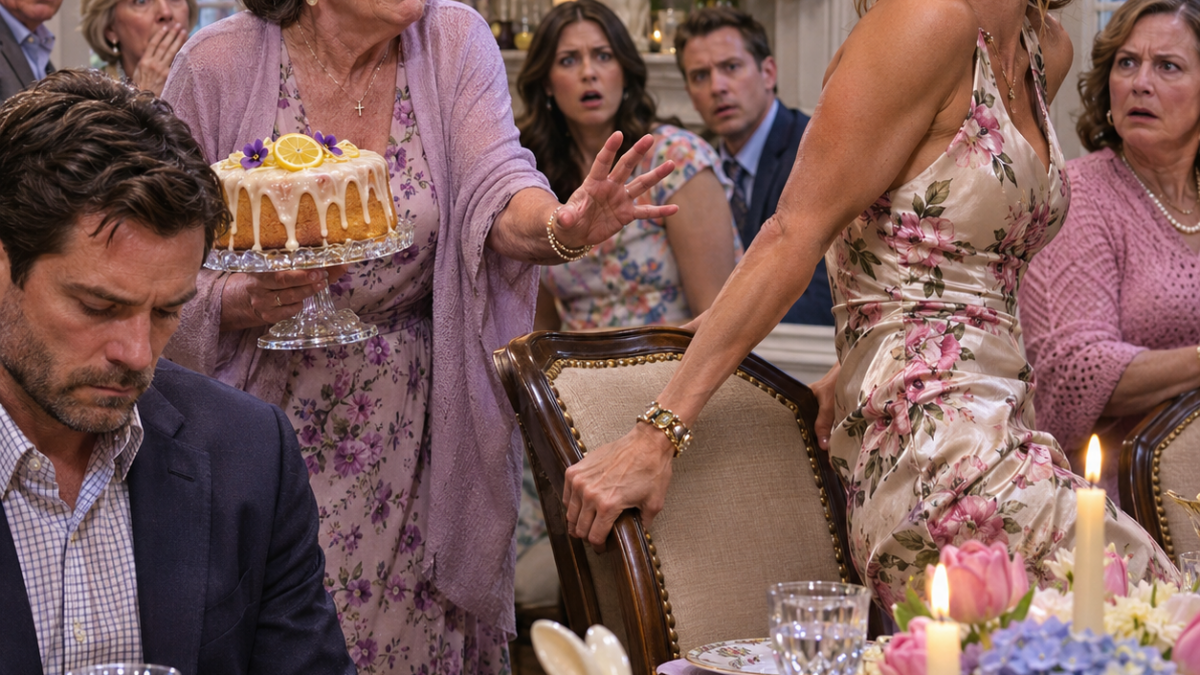
FULL STORY:“I LOVE HOW SHE STILL THINKS SHE BELONGS HERE!” My Daughter-in-Law Dragged My Chair Away in Front of 11 Guests — By Midnight, Every Financial Lifeline I Had Given Them Was Gone
FULL STORY CONTINUATION
Nobody followed me.
That was the detail I kept replaying later.
Not Brianna.
Not Sandra.
Not one of the neighbors.
Not even Derek.
I walked from the dining room into the kitchen, and I could still hear silverware touching plates behind me.
Someone whispered something.
A child asked a question.
Then music came back on in the living room.
Life resumed before I had even reached the front door.
That hurt more than the insult.
I had imagined, stupidly, that someone would stop me.
That Derek would finally stand.
“Mom.”
“Wait.”
“Brianna, what the hell was that?”
Anything.
But the only sound behind me was the muted hum of conversation trying to pretend the room had not just witnessed an old woman being publicly stripped of dignity.
I picked up the cake carrier from the counter.
Brianna had not even cut it.
Of course she hadn’t.
Her dessert table already had a professionally decorated carrot cake, chocolate mousse cups, and pastel macarons.
My homemade lemon pound cake had apparently been sentimental clutter.
I stepped outside.
The air was cool.
The kind of spring evening where you can still feel winter hiding in the shade.
My car was parked three houses down because Brianna had asked me not to block the driveway.
“For guests.”
I remember that now.
Guests.
Apparently I had never been one.
I placed the cake carefully in the passenger seat.
Then sat behind the wheel.
Thirty seconds.
Maybe forty.
My hands rested in my lap.
I was not crying.
That frightened me more than crying would have.
For most of my life, conflict made my body betray me.
Hands shaking.
Voice trembling.
Heat crawling up my neck.
But that night I felt almost unnaturally still.
Like some terrified part of me had finally exhausted itself.
I opened the cake carrier.
I always packed a knife.
Of course I did.
I was Pauline Wakefield.
Prepared for forgotten knives.
Forgotten napkins.
Forgotten birthdays.
Forgotten bills.
Forgotten everything.
I cut myself a slice.
Lemon.
Cream-cheese glaze.
Moist crumb.
It was excellent.
That nearly broke me.
I had spent hours making something beautiful for people who would not even let me sit at their table.
I ate half the slice in my car.
Then I looked through the windshield at the house.
Their house.
The house I had helped them purchase.
The house whose down payment carried money from thirty-one years of waking before sunrise and returning home exhausted.
The house where my daughter-in-law had just told strangers I did not belong.
And for the first time, instead of asking what I could do to make the relationship better, I asked a different question.
Why was I financing people who humiliated me?
I started the car.
Went home.
And began turning things off.
My house felt unusually quiet when I walked in.
I put the cake on the counter.
Changed my blouse.
Made tea.
Then opened my laptop.
I logged into my secondary credit-card account.
Brianna’s name appeared beneath mine.
Authorized User.
I stared at it.
Three years earlier, when I added her, she had squeezed my hand and said:
“You have no idea what this means to us.”
That sentence had made me feel included.
Now I understood.
It meant access.
I clicked:
Remove authorized user.
A warning appeared.
Are you sure?
“Yes.”
Another click.
Done.
Less than four minutes.
That was all it took to end one of the arrangements I had spent years imagining was part of the architecture of family.
Then utilities.
For nearly two years, I had been quietly covering a portion of their electric and water bill.
It had started after Derek’s hours were cut.
“Just until things stabilize.”
Things had stabilized.
My payments never stopped.
Canceled.
A small insurance payment.
Canceled.
Streaming subscription.
Canceled.
One recurring transfer I barely remembered setting up.
Canceled.
The total took less than ten minutes.
I sat back.
My kitchen clock ticked.
Outside, a dog barked.
A cardinal landed on the feeder.
And I realized the world had not ended.
That sounds ridiculous.
But for years I had lived with a superstition:
If I stopped helping, something terrible would happen.
Derek would struggle.
Brianna would resent me.
They would stop calling.
I would end up alone.
Maybe the relationship itself would collapse.
That night I finally understood something humiliating.
If a relationship collapses when money stops, the money was holding up more than bills.
At 9:47 p.m., my phone rang.
Derek.
I watched it.
Did not answer.
At 10:12, again.
No answer.
At 10:30, a text.
Mom, Brianna’s card isn’t working. Can you call me?
I read it twice.
Not:
Mom, I’m sorry.
Not:
Mom, are you okay?
Not:
I should have defended you.
The card.
His first concern was the card.
I placed the phone facedown.
Went upstairs.
Changed into pajamas.
And slept.
Really slept.
Seven uninterrupted hours.
The best sleep I had had in months.
At 8:14 the next morning, Derek called again.
This time I answered.
“Good morning.”
“Mom.”
His voice already had tension in it.
“Did you do something to Brianna’s credit card?”
“Yes.”
“What?”
“I removed her from my account.”
Silence.
“What do you mean removed her?”
“I mean she no longer has access.”
“Why?”
I almost laughed.
“Why?”
“Mom, I know last night was awkward—”
“Awkward.”
I repeated the word.
“Derek, forgetting someone’s birthday is awkward.”
“Spilling wine on someone is awkward.”
“Your wife physically removed my chair from the table, smiled at eleven people, and announced that I did not belong.”
He was silent.
I continued.
“I also canceled your utility autopay and the other payments I was covering.”
“What?”
His voice went higher.
“Mom, you can’t just do that.”
“I can.”
“Brianna is going to lose her mind.”
“That is unfortunate.”
“This is going to cause a huge problem.”
“Derek.”
He stopped.
“I need you to listen carefully because I am not repeating myself.”
Silence.
“I did not make this decision in a rage.”
“I did not come home throwing things.”
“I did not call anyone.”
“I did not threaten you.”
“I sat at my kitchen table and looked at the facts.”
I paused.
“I have spent years helping finance your life.”
“Last night, in the house I helped you purchase, your wife told a room full of people that I did not belong.”
“And you looked at your plate.”
His breath changed.
“I know.”
Two words.
Quiet.
Almost broken.
“You know.”
“I know, Mom.”
“Then tell me why.”
“Why what?”
“Why did you look away?”
“Mom…”
“No.”
My voice sharpened.
“You are forty-one years old.”
“Do not give me ‘Mom’ like I am asking you why you forgot to take out the trash.”
“Your wife humiliated me.”
“You were there.”
“You heard it.”
“You saw my face.”
“And you stared at your plate.”
His voice dropped.
“I froze.”
“No.”
He was quiet.
“You chose.”
That landed.
“I…”
“You chose not to speak because speaking would have cost you something.”
Silence.
“Maybe an argument.”
“Maybe an uncomfortable night.”
“Maybe Brianna being angry.”
“So you let me pay the price instead.”
I heard him exhale.
“I’m sorry.”
“No.”
“Not yet.”
He stopped.
“Don’t apologize because you want the card turned back on.”
“I don’t.”
“Good.”
Another silence.
“What does this mean?”
he asked.
His voice sounded younger.
“It means I am done financing a life I am not welcome in.”
He did not argue.
Couldn’t.
We ended the call quietly.
I placed my phone beside my coffee cup.
My hands were completely steady.
That was the moment I realized something important.
I was not fearless.
I was simply more afraid of continuing as I had been than I was of what might happen if I stopped.
There is a difference.
And sometimes that difference changes everything.
For three days, nobody called.
No Derek.
No Brianna.
The silence felt deliberate.
Punishment.
You withdrew money?
Fine.
We withdraw ourselves.
The old Pauline would have lasted twenty-four hours.
Maybe twelve.
She would have sent a message.
I hope everyone is okay.
Then another.
I’m sorry Easter became uncomfortable.
Imagine that.
Me apologizing for their cruelty because the aftermath made me anxious.
But I did not call.
Tuesday morning, I drove to my attorney’s office.
Margaret Chen had handled my affairs since Richard’s estate.
She was one of those women who could make you feel both comforted and completely incapable of lying to yourself.
Short gray hair.
Reading glasses on a beaded chain.
Precise questions.
No wasted words.
She listened while I told her the whole story.
The rent.
Car repair.
Electric bills.
Credit card.
Four thousand dollars in luxury spending.
Down payment.
Written conditions.
Easter.
When I finished, Margaret removed her glasses.
“How much?”
“Excuse me?”
“How much money have you given them in the last three years?”
I had already done the math.
Because of course I had.
“Between forty-seven and fifty-two thousand dollars.”
Margaret looked at me.
“That is unusually exact for ‘between.’”
“I rounded.”
She almost smiled.
“Documentation?”
“Yes.”
“Transfers?”
“Yes.”
“The down payment?”
“Written acknowledgment.”
“Formal note?”
“No.”
“Repayment schedule?”
“Informal.”
She nodded.
“You could potentially pursue some of it.”
“I don’t want to.”
“Good.”
I blinked.
“Why good?”
“Because you did not walk in here looking like someone who wants money.”
“What do I look like?”
“Someone who wants control of her own life.”
That sentence hit harder than I expected.
I took a breath.
“I want to update my will.”
Margaret’s expression changed slightly.
Not judgment.
Attention.
“Out of anger?”
“No.”
“Are you sure?”
“Yes.”
I thought about it.
“Clarity.”
“That is a better reason.”
We opened my estate file.
My home.
Pension.
Savings.
Investment account.
I had always described myself as a woman of modest means.
Margaret disagreed.
“You’re not rich.”
“I know.”
“But you’ve been careful for decades.”
She turned the screen.
“Careful compounds.”
My estate was larger than I had emotionally allowed myself to understand.
Not enormous.
But substantial.
Enough to matter.
Enough that decisions mattered.
The existing will left the primary estate to Derek and included Brianna through standard spousal provisions.
“I want Brianna removed.”
“All right.”
“Derek stays.”
Margaret looked up.
“Yes.”
“You don’t want to reduce his share?”
“No.”
“Why?”
“Because I am not trying to punish my son financially for disappointing me emotionally.”
She leaned back.
Good answer.
“I want two charities added.”
Literacy organizations.
One local.
One statewide.
Places I had promised myself I would support someday.
“And I want language stating that any major financial gifts or loans made to a beneficiary in the five years before my death are documented and considered during distribution.”
Margaret’s brows rose.
“That is smart.”
“I read.”
She smiled.
“Librarian.”
“Retired librarian.”
“Apparently not retired from research.”
“No.”
We worked for two hours.
When I left, I felt strangely light.
I did not call Derek.
I did not call Brianna.
I did not wave the revised will like a weapon.
That mattered.
A will is not supposed to be a grenade you roll across a holiday table.
It is supposed to reflect reality.
And reality had changed.
That Saturday, I bought flowers.
Six perennials.
Purple.
Yellow.
Deep red.
I had wanted them for months.
Every time I considered going to the garden center, something else came first.
Derek needed help.
Brianna had an appointment.
Someone needed dinner.
I was tired.
There was always a practical reason to postpone anything that existed only for me.
I spent four hours planting them.
My back hurt.
Knees hurt.
My fingers were black with soil.
When I finished, I sat on the front steps.
The flower bed looked uneven.
One plant leaned.
I did not care.
I had made something for myself.
No one had asked.
No one had thanked me.
No one needed to.
That was new.
Nine days after Easter, Derek called.
“Can I come over?”
I hesitated.
“Yes.”
“Tonight?”
“Yes.”
“I want to talk.”
“Come for dinner.”
I made pasta.
Not his favorite.
Not anything special.
Just pasta I happened to want.
That distinction was important.
Derek arrived at six-thirty carrying a bottle of wine.
I noticed.
He had rarely brought things before.
Not because he was deliberately rude.
Because he had grown used to arriving where his mother had already provided everything.
We sat at my kitchen table.
For fifteen minutes, he talked about work.
A difficult project.
A colleague he did not trust.
I listened because I was interested.
Not because I was waiting for the real conversation.
Finally, he set his fork down.
“I’ve been thinking about what you said.”
“Which part?”
“The plate.”
I waited.
“I looked at my plate.”
“Yes.”
“I keep trying to find a reason.”
“What reasons?”
He rubbed the back of his neck.
Same gesture since age four.
“Brianna has a weird sense of humor.”
“Did it sound like humor?”
“No.”
He looked ashamed.
“I told myself everybody was uncomfortable and maybe if I didn’t react, the moment would pass.”
“It passed.”
“Yes.”
“I left.”
He looked down.
“Yes.”
“Why didn’t you stop me?”
His jaw tightened.
“I was afraid.”
That surprised me.
“Of me?”
“No.”
“Brianna.”
He said her name quietly.
“Every time I’ve confronted her about how she treats you, we fight.”
I stared.
“You have confronted her before?”
“Yes.”
“When?”
“Little things.”
“What little things?”
“The way she talks about your clothes.”
“My cooking.”
“The credit-card thing.”
“The wedding seating.”
I went still.
“You noticed the wedding seating.”
He closed his eyes briefly.
“Yes.”
“You knew.”
“I told myself it was her mother handling the chart.”
I laughed once.
No humor.
“So you did exactly what I did.”
“What?”
“Renamed it.”
He looked at me.
“I guess.”
I leaned back.
“Go on.”
He stared at his hands.
“I got tired.”
“Of defending me?”
“Of fighting.”
He looked up quickly.
“That sounds awful.”
“It is awful.”
“I know.”
He swallowed.
“I started letting things go because the cost of bringing them up was immediate.”
“She would be angry.”
“We would fight all night.”
“She would accuse me of choosing you.”
He looked miserable.
“So I took the easier route.”
“You made me pay the cost.”
“Yes.”
That answer mattered.
No excuse.
No “but.”
Just yes.
“She treats me like a resource.”
“I know.”
“She told me the card was for emergencies.”
“I know.”
“She used four thousand dollars on restaurants and clothes.”
“I know.”
“She asked me for a down payment.”
“I know.”
“I gave it because I thought I was helping you build stability.”
“I know.”
“And then she told eleven people I did not belong in the house my money helped buy.”
His eyes filled.
“I know.”
“Then what are you here for?”
He looked at me.
“Because you’re my mother.”
I waited.
“And because what happened was wrong.”
His voice cracked.
“And because I was wrong.”
I felt my throat tighten.
“I should have stood up.”
“Yes.”
“I should have left with you.”
“Yes.”
“I should have told her in that room that she crossed a line.”
“Yes.”
“I didn’t.”
“No.”
“I’m sorry.”
This time, I let the words land.
Not cure.
Not erase.
Land.
“I believe you.”
His face changed.
Relief and pain together.
“But.”
He nodded before I continued.
“I know.”
“Sorry does not put things back.”
“I know.”
“I am not turning the card back on.”
“I’m not asking.”
“I am not paying utilities.”
“I know.”
“I am not fixing financial problems anymore.”
His eyes stayed on mine.
“I understand.”
“Do you?”
“I think I’m starting to.”
I picked up my fork.
“Eat.”
He laughed weakly.
“Mom.”
“Your pasta is getting cold.”
We ate.
It was not reconciliation.
It was the first honest meal we had shared in years.
Derek started calling.
Not every day.
Three times a week.
Sometimes four.
At first, I assumed guilt was driving it.
Then something changed.
The calls became ordinary.
“How was the library fundraiser?”
“What book are you reading?”
“Remember Dad’s old toolbox?”
“Do you think I should switch teams at work?”
He asked questions.
Real questions.
Not openings to requests.
We barely discussed Brianna.
I never forbade her name.
Derek simply seemed to understand that our relationship needed room to breathe without her standing inside every conversation.
Then, in late May, Brianna called me.
Her name on my phone made my stomach tighten.
I almost let it go to voicemail.
Then curiosity won.
“Hello.”
“Pauline.”
“Yes.”
“I was wondering if you’d meet me.”
“Why?”
A pause.
“I think things got really off track.”
I nearly laughed.
Off track.
As if we were two cars that had accidentally taken different exits.
Still:
“All right.”
We chose a neighborhood coffee shop.
Neutral.
No expensive restaurant.
No wine.
No hand squeezing across a linen tablecloth.
I arrived first.
Brianna came in exactly on time.
She looked composed.
Maybe too composed.
She ordered a latte.
Sat opposite me.
“Thank you for coming.”
“Of course.”
She took a breath.
“I know what I did with the credit card was wrong.”
That surprised me.
No soft opening.
No excuse.
I waited.
“You said emergency use only.”
“Yes.”
“It wasn’t.”
“No.”
“I used it for things I wanted.”
“Yes.”
“I’ve been telling myself stories about why it was okay.”
“What stories?”
She stared at her cup.
“That you had plenty.”
I said nothing.
“That four thousand dollars wasn’t much to you.”
Still nothing.
“That you offered the card, so technically I wasn’t stealing.”
My jaw tightened.
“And?”
“That you liked helping us.”
I looked at her.
She swallowed.
“That you needed to feel needed.”
There it was.
The ugliest truth because it contained something real.
I did like being needed.
I had made that vulnerability visible.
Brianna had used it.
Those two truths could coexist.
“I’m ashamed of that one.”
“Why?”
“Because I think I knew.”
“Knew what?”
“That every time I called you a gift or told you we couldn’t manage without you…”
She stopped.
“I knew it worked.”
That hurt.
I appreciated the honesty anyway.
“And Easter?”
Her eyes shifted.
“There isn’t a good explanation.”
“Try.”
“I had wine.”
“No.”
“I was stressed.”
“No.”
“It came out wrong.”
“No.”
She looked up.
I leaned closer.
“I spent thirty-one years around twelve-year-olds.”
“When a person accidentally says something cruel, they look horrified the second it leaves their mouth.”
“You did not look horrified.”
“You smiled.”
“You looked at the room.”
“You waited.”
Her face changed.
“That wasn’t a slip.”
I said.
“That was a performance.”
Silence.
Long.
Uncomfortable.
Then:
“You’re right.”
No tears yet.
No charm.
No defense.
Just:
“You’re right.”
I let the silence stay.
Finally, I asked:
“What do you want?”
Her answer came quietly.
“I want us to be okay.”
“Why?”
“Because Derek is miserable.”
“So this is for him.”
“Partly.”
“What else?”
Her face tightened.
“I don’t like who I became around you.”
I did not expect that.
She continued.
“I started treating you like…”
“A bank?”
Her face flinched.
“A problem.”
“That’s better?”
“No.”
She looked ashamed.
“A person to manage.”
That phrase settled between us.
Manage.
Not love.
Not know.
Manage.
“I’m not a villain, Pauline.”
“I didn’t say you were.”
“I made bad choices.”
“Yes.”
“That’s different.”
“Yes.”
I meant it.
People are not simplified by the worst thing they have done.
But neither are they excused from it.
“So what happens now?”
she asked.
“I don’t know.”
“That scares me.”
“It should.”
She looked up.
“I’m not punishing you.”
I said.
“I am simply no longer doing all the work required to make this relationship look close.”
Her eyes filled.
“What does that mean?”
“It means we find out what is actually here.”
No lunch plans.
No hug.
No instant forgiveness.
We finished coffee.
Went home separately.
That was the beginning of something more honest.
The financial support stayed off.
Completely.
June came later.
Before June, there were months where Derek and Brianna had to solve things themselves.
One day Derek mentioned a car expense.
“Transmission.”
“That’s rough.”
“Yeah.”
Pause.
The old Derek would have waited for me to ask:
“How much?”
The old Pauline would already have been reaching for online banking.
Instead, I asked:
“What are you going to do?”
He sounded surprised.
“Figure it out.”
“Good.”
And they did.
That became one of the most painful revelations of my life.
They always could have figured things out.
I had been saving them from learning that.
I told myself I was generous.
And I was.
But generosity was only half the story.
Fear was the other half.
I had been afraid that if I stopped being useful, I would become optional.
Afraid that if I let Derek struggle, he would resent me.
Afraid that if I did not pay for proximity, proximity might disappear.
That fear started when Richard died.
I had lost my husband at thirty-two.
Then built my entire emotional architecture around never being abandoned again.
The safest way to keep Derek close was to make myself indispensable.
Not consciously.
I never thought:
I’ll pay his bills so he can’t leave.
Fear is rarely that obvious.
It hides inside good intentions.
In July, I booked Ireland.
I had been talking about that trip for twelve years.
My grandmother was Irish.
I had photographs.
Village names.
An old notebook with addresses.
Every year I found a reason not to go.
Too expensive.
Wrong time.
No one to travel with.
Derek might need something.
There was always something.
This time I booked a two-week solo trip.
When I told Derek, he went quiet.
“Ireland?”
“Yes.”
“Alone?”
“Yes.”
“Mom.”
I braced.
Then he said:
“That’s amazing.”
I blinked.
“You think?”
“I didn’t know you still wanted to go.”
“I’ve wanted to go for twelve years.”
“Then why didn’t you?”
Because I was always waiting for the right time.
But there is no right time.
There is only time.
And you either use it or you don’t.
He was quiet.
Then:
“I’m glad you’re going.”
No guilt.
No need.
No concern about himself.
Just glad.
That mattered more to me than any elaborate apology.
The flight left at seven-fifteen in the morning.
I was at the airport before five.
Coffee.
Carry-on.
Book.
For the first time in decades, I was going somewhere because I wanted to.
Not because my son needed me.
Not because somebody was sick.
Not because somebody needed help.
I called Derek.
“Mom, it’s four-thirty.”
“Almost five.”
“Same thing.”
“Not technically.”
He laughed.
“You nervous?”
I thought honestly.
“No.”
“Really?”
“I’m ready.”
A pause.
I could hear him adjusting to this new version of me.
A mother going somewhere without asking whether the family would survive.
“Text when you land.”
“I will.”
“I’m glad you’re going.”
“I know.”
Then I boarded.
Ireland was not magical in the cheap cinematic sense.
No stranger on a cliff gave me the secret of life.
No rainbow appeared over my grandmother’s village at the perfect moment.
What happened was quieter.
For fourteen days, I was Pauline.
Not Mom.
Not Mother-in-law.
Not emergency contact.
Not financial backup.
Just a sixty-three-year-old woman eating soup in cafés, getting lost, taking buses, walking coastal roads, and asking strangers questions.
On the fourth day, I found the village my grandmother’s family had left.
Tiny.
Windy.
Gray stone.
A woman in a café knew the family name.
She pulled an old local-history book from beneath the counter.
There was a photograph.
A family outside a farmhouse.
Grainy.
Maybe my relatives.
Maybe not.
I sat there for an hour.
My grandmother had left Ireland at nineteen.
One bag.
Unknown future.
I had always thought of her as brave.
Then it occurred to me:
She did not begin with nothing.
She began with what she had.
So did I.
I bought the book.
Walked outside.
And something settled inside me.
Not happiness.
Something sturdier.
Ownership.
Of myself.
Derek met me at the airport when I came home.
I had told him I would use a car service.
He stood near arrivals with his hands in his pockets.
When he saw me, he smiled.
Then frowned slightly.
“You look different.”
“I’ve been traveling.”
“No.”
He picked up my suitcase.
“I mean different.”
“I am.”
“Good?”
“Very.”
He asked about everything.
Village.
Café.
Photograph.
Weather.
Food.
People.
Not polite questions.
Real ones.
While driving, he said:
“What finally made you go?”
I looked out the window.
“Easter.”
He did not apologize again.
Did not defend himself.
Just nodded.
“Yeah.”
Then:
“I understand.”
That mattered.
Four days later, Brianna’s mother called.
Sandra.
We had known each other for years.
Never once spoken privately.
“Pauline.”
“Yes.”
“I need to tell you something.”
There are sentences that change your heartbeat immediately.
That was one.
“What?”
“Brianna is pregnant.”
I sat down.
“How far?”
“Ten weeks.”
I calculated.
Around Easter.
Around the night I walked out with my cake.
“Does Brianna know you’re calling?”
“No.”
“Why are you?”
Sandra breathed slowly.
“Because she told me what happened at Easter.”
“Her version.”
“Yes.”
“What did she say?”
“That she made a joke and you took it badly.”
I closed my eyes.
“And do you believe that?”
Sandra went silent.
Then:
“I know my daughter.”
Not yes.
Not no.
A mother’s answer.
“So no.”
“No.”
We sat in that truth.
“She has treated you badly for a while.”
My eyes opened.
“You knew?”
“I noticed.”
“And said nothing.”
“I told myself it wasn’t my place.”
I almost laughed.
Every person in that family had apparently survived by convincing themselves cruelty was somebody else’s jurisdiction.
“Why call now?”
“Because there is going to be a baby.”
Her voice softened.
“And whatever happens between you and Brianna, I thought you deserved to know before somebody else decided when you were allowed to know.”
That meant something.
“Thank you.”
“I don’t know if I did the right thing.”
“You did.”
After hanging up, I sat on the edge of my bed.
Grandmother.
The word filled the room.
I wanted that baby instantly.
That frightened me.
Because love could become another excuse to collapse my boundaries.
What if I started paying for everything again?
What if I used the baby as a way to buy my place back?
What if I became indispensable all over again, this time as Grandma?
I called Eleanor.
My friend of twenty-two years.
She listened.
Then said:
“You’re afraid the baby becomes the new currency.”
I went still.
“Yes.”
“You’ll give everything to the child and use that to reenter the family without making Derek and Brianna finish the work.”
I closed my eyes.
“I didn’t know that was what I was afraid of.”
“I know.”
That was why I called Eleanor.
Brianna called me two days later.
Her voice sounded exhausted.
Less polished.
“I heard my mother called.”
“She did.”
“I didn’t ask her.”
“I know.”
A pause.
Then:
“I want you in the baby’s life.”
My throat tightened.
“Derek does too.”
“I’m glad.”
“But…”
She stopped.
“What?”
“I don’t want to use the baby to pretend you and I are okay.”
That was the most honest sentence she had ever given me.
Not perfect.
Not strategic.
Just tired truth.
“I don’t want that either.”
“So what do we do?”
“We do it slowly.”
“Honestly.”
“We do not make the baby responsible for fixing adults.”
Silence.
Then:
“Can I ask something?”
“Yes.”
“Will you ever trust me again?”
I thought for a long time.
“I don’t know.”
Her breath caught.
“I wish you said yes.”
“I know.”
“But trust isn’t something I can decide because you want reassurance.”
“It has to be built.”
“How long?”
“I don’t know.”
“That’s scary.”
“Yes.”
A tiny laugh.
“You’re not making this easy.”
“No.”
“I used to make everything easy.”
“And look where that got us.”
Another pause.
“Okay.”
she whispered.
“Okay.”
That night, Derek called.
“Brianna told me about your conversation.”
“All right.”
Then abruptly:
“The will.”
I froze.
“What about it?”
“I know you changed it.”
My voice became cold.
“How?”
“Margaret’s assistant knows someone I went to school with.”
He rushed.
“No details.”
“She just said you had been in.”
I made a mental note to discuss privacy with Margaret.
Derek continued.
“I am not calling about money.”
“Then why mention it?”
“Because I need to know if we’re okay.”
My chest tightened.
“You and me.”
he said.
“Not the estate.”
“Not Brianna.”
“Us.”
I breathed.
“The will reflected where we were when I changed it.”
“And where are we now?”
“Somewhere else.”
“Better?”
I thought.
“Ask me in a year.”
He laughed softly.
“Fair.”
Then:
“I think it’s better.”
“So do I.”
The pregnancy did not magically heal anything.
Thank God.
We had ordinary dinners.
Some awkward.
Some good.
Brianna asked me to accompany her to a prenatal appointment when Derek could not make the early portion.
I went.
We sat side by side in the waiting room.
She scrolled her phone.
I read.
No forced conversation.
No performance.
Just shared space.
When she came out, she carried the ultrasound image.
She placed it on the chair between us.
“That’s the heartbeat.”
She pointed.
“It’s really fast.”
Her voice trembled.
I smiled.
“They always are.”
She looked at me.
“Really?”
“Derek’s was.”
“You remember?”
“Of course.”
“I thought something was wrong because it sounded like a tiny horse running.”
Brianna laughed.
“He turned out okay.”
I paused.
“Eventually.”
She laughed harder.
So did I.
Small moments.
That was how trust came back.
Not speeches.
Moments.
June was born on a Tuesday in March.
I spent eleven hours in the hospital waiting room.
No one asked me to stay that long.
I could have left.
I stayed because I wanted to.
That distinction became sacred to me.
At 11:47 p.m., Derek came through the doors.
Scrubs.
Red eyes.
He walked straight to me.
Sat down.
Then leaned his head on my shoulder.
Just as he had when he was nine.
“She’s here.”
I put my hand on his.
“A girl.”
His voice broke.
“She’s so small.”
“They usually are.”
He laughed through tears.
“I didn’t know.”
“You were smaller.”
“Seriously?”
“Yes.”
“Is she okay?”
“Perfect.”
“And Brianna?”
“Tired.”
Then he sat up.
“She wants you.”
I stared.
“What?”
“She asked if you could come in.”
That undid me.
Inside, Brianna looked nothing like the woman from Easter.
No makeup.
Hair messy.
Exhausted.
Open.
In her arms was the smallest person I had seen in decades.
White blanket.
Pink hat.
Tiny fist.
Brianna looked at me.
“Do you want to hold her?”
I thought about everything that led there.
The checks.
The card.
The chair.
The cake.
Ireland.
The coffee shop.
The will.
“Yes.”
I whispered.
“I would.”
Brianna transferred the baby carefully.
Warm.
Soft.
Real.
“What’s her name?”
“June.”
I looked down.
“Hello, June.”
Her eyes fluttered open.
“I’m your grandmother.”
The word felt different.
Not responsibility.
Not function.
Not a role requiring labor.
A relationship.
A fact.
A gift.
Six weeks later, Brianna called.
“I hate to ask.”
“Bring her.”
“What?”
“If you need someone to watch June, bring her.”
“Are you sure?”
“Yes.”
“She’s fussy.”
“So was Derek.”
“She has a feeding schedule.”
“I assume.”
“There are instructions.”
“Good.”
Brianna arrived with a diaper bag large enough for international travel.
She explained everything.
Feed.
Burp.
Sleep.
Cry signals.
Gas position.
Preferred blanket.
I listened.
I did not say:
“I raised a child alone.”
This was her child.
Her knowledge mattered.
When she finally left, I looked at June in the car seat.
“Well.”
She stared.
“It’s just us.”
She made a tiny sound.
I chose to hear agreement.
For four hours, almost nothing happened.
She ate.
Slept.
Needed changing.
Slept again.
At one point, I held her against my chest while reading.
Her body warm.
Heavy in that very specific way sleeping babies are heavy.
I had not felt that weight since Derek was little.
I cried quietly after she fell asleep.
Not from pain.
From return.
When Brianna picked her up, she looked rested.
Human.
“How was she?”
“Perfect.”
“Seriously?”
“We managed.”
She took June.
Held her close.
Then:
“Thank you.”
Not the old:
“You’re such a gift!”
No polished gratitude.
Just:
“Thank you.”
Quiet.
Real.
“I know you mean it.”
She looked at me.
“Same time next week?”
“If you want.”
I clarified.
“I’m offering because I want to.”
Brianna nodded.
“I understand.”
“Good.”
“Same time next week.”
June was around ten weeks old when she smiled at me for the first time.
Not gas.
Recognition.
I had just fed her.
She pulled away.
Focused on my face.
Then her entire expression changed.
A tiny dawning.
A smile.
At me.
I froze.
Then cried after she fell asleep.
Grandmotherhood was rearranging me.
But this time I was watching myself.
I loved June fiercely.
And still said no sometimes.
That was the miracle.
Love did not require total surrender.
Then Derek told me he and Brianna were in couples therapy.
“I pushed for it.”
“Really?”
“Yes.”
“And?”
“Hard.”
“That usually means useful.”
He laughed.
Then:
“I started individual therapy too.”
I sat down.
My son.
Therapy.
That generation of men did not always arrive there easily.
“What are you learning?”
“That I have patterns.”
“We all do.”
“One of mine is…”
He paused.
“If I have a problem, somebody else solves it.”
I knew who somebody was.
“Me.”
“Yes.”
“Your therapist blames me?”
“No.”
Immediately.
“She does not.”
“I don’t either.”
“But it happened.”
“Yes.”
“And I participated.”
“Yes.”
He sounded relieved that I could say it.
Then:
“She thinks it might help if you came to a session.”
I hesitated only briefly.
“Schedule it.”
Dr. Amara Wallace was around forty.
Calm.
Focused.
She explained:
“We are not here to assign guilt.”
“We’re here to understand patterns.”
She asked Derek first:
“What do you want Pauline to understand?”
Derek stared at his hands.
Then me.
“I see you.”
I swallowed.
“Not just as Mom.”
“Not as the person who fixes things.”
“Not as the person who sends money.”
His voice thickened.
“I see a woman who lost Dad at thirty-two.”
“Raised me alone.”
“Worked thirty-one years.”
“Gave up things I never even asked about.”
“And I’m ashamed it took me this long.”
My eyes filled.
“I want you in June’s life.”
“Not because we need childcare.”
“Because she should know you.”
“The real you.”
Dr. Wallace turned to me.
“What do you want from Derek?”
I thought.
Then surprised myself.
“One phone call.”
Derek frowned.
“What?”
“One phone call over the last three years where you called simply to ask how I was.”
No emergency.
No bill.
No problem.
Just:
“Hi, Mom.”
“What are you reading?”
“How was your day?”
Derek’s face crumpled slightly.
“I can do that.”
“I know.”
“You’ve started.”
Dr. Wallace waited.
Then asked me:
“When did helping them stop feeling like a choice?”
I thought.
“When I started anticipating problems.”
“What do you mean?”
“I stopped waiting for them to ask.”
“I paid things because I knew they might struggle.”
“I created solutions to problems that had not happened yet.”
“Why?”
Silence.
Because stopping felt like withdrawing love.
The room went still.
I heard myself say it again.
“Stopping felt like withdrawing love.”
Dr. Wallace nodded.
“They are not the same.”
“I know that now.”
“What taught you?”
I almost smiled.
“Easter Sunday.”
The third therapy session changed me most.
Dr. Wallace asked whether Richard’s death was connected to my giving.
I answered automatically.
“I overcompensated because Derek had one parent.”
She did not respond.
Just waited.
Therapists are dangerous that way.
Silence eventually forces honesty.
I looked down.
“No.”
Derek watched me.
“That’s not all.”
“What else?”
Dr. Wallace asked.
“I was terrified.”
“Of what?”
“Being left again.”
My voice cracked.
“When Richard died, I lost half my world overnight.”
“I had Derek.”
“And somewhere inside me, I decided I would make myself so necessary that he could never leave.”
Derek made a sound.
“Mom.”
I started crying.
“Not consciously.”
“I never thought those words.”
“But I made sure you never lacked.”
“I fixed everything.”
“I paid everything.”
“I made myself indispensable.”
“Because indispensable people don’t get abandoned.”
Derek reached for my hand.
He put his hand over mine.
“Mom.”
“I was nine.”
“I know.”
“I wasn’t going anywhere.”
“I know now.”
“I loved you.”
“I know.”
“I still love you.”
“I know.”
He was crying.
“So why did you think—”
“Because grief is not logical.”
I whispered.
“I wasn’t making decisions only with my brain.”
“I was making them from the part of me that had stood beside a hospital bed and learned that somebody can disappear from your life in one afternoon.”
Derek squeezed my hand.
We sat there.
Mother and son.
Finally seeing the machine beneath thirty years of behavior.
That session did not make me feel guilty.
It made me free.
If I had built a pattern, I could stop building it.
When June was four months old, Brianna called early one Saturday.
“Can you come?”
Something was wrong.
I drove over.
Derek’s car was gone.
Brianna opened the door.
Red eyes.
June on her hip.
“What happened?”
“We fought.”
“About?”
“Therapy.”
We sat.
Brianna looked at her hands.
“Derek said I used you.”
I waited.
“He said I saw you as a resource from the beginning.”
“He used the word managed.”
Her mouth tightened.
“I got angry.”
“Because it was wrong?”
She shook her head.
“Because it wasn’t.”
That mattered.
“He said Easter wasn’t just rude.”
“He said he was ashamed of me.”
“That it was a moral failure.”
I watched her.
“And then?”
“I said…”
She covered her face.
“I said maybe if his mother had stayed out of our lives, things would be different.”
I felt the old sting.
But only for a second.
“Do you believe that?”
Long silence.
“No.”
She whispered.
“No.”
“Why did you say it?”
“To hurt him.”
I nodded.
“Then at least you know.”
She looked at me.
“I don’t know how to do this.”
“Do what?”
“Be in a relationship where I’m not managing the other person.”
The word again.
“My mother…”
She hesitated.
“Sandra manages everybody.”
“Emotion.”
“Money.”
“Guilt.”
“Information.”
“I learned it.”
I studied Brianna.
“Are you telling me so I understand you?”
“Yes.”
“Or so I excuse you?”
She flinched.
“Understand.”
“Good.”
June started fussing.
I took her.
“Call Derek.”
Brianna blinked.
“What?”
“Tell him to come home.”
“That’s it?”
“That’s the next thing.”
“What do I say?”
“I don’t know.”
“You’re his mother.”
“Yes.”
“And you’re his wife.”
She stared.
“This is your marriage.”
“I am not fixing it.”
Something changed in her expression.
Shock.
Maybe respect.
Maybe fear.
“I’ll stay with June.”
“You two talk.”
“Then I leave.”
She called.
Derek came home ninety minutes later.
I stayed in the kitchen feeding June.
Their voices rose.
Dropped.
Rose again.
Then softened.
I did not interfere.
That may have been one of the hardest things I had ever done.
Every instinct wanted to listen.
Mediate.
Translate.
Fix.
Instead, I fed a baby.
Eventually Brianna appeared.
“We’re talking.”
“Good.”
“We’re not okay.”
“Good.”
She frowned.
“Good?”
“Okay is not the goal.”
“What is?”
“Honest.”
She absorbed that.
I kissed June.
Picked up my bag.
On the front steps, Brianna stopped me.
Same steps.
Same house.
Different woman.
“Pauline.”
I turned.
“I know I don’t deserve…”
She stopped.
Started again.
“I know we’re not fixed.”
“No.”
“And maybe some things never go back.”
“No.”
“But I want you to know I’m trying.”
I watched her.
“Not because of June.”
“Not because Derek wants me to.”
“For me.”
Her eyes filled.
“I don’t want to be who I was.”
I believed that she believed it.
That was enough.
“I can see you’re trying.”
“Is that enough?”
“For now?”
I thought.
“Yes.”
“For now, that’s enough.”
The following months became strangely peaceful.
Not because problems disappeared.
Because I stopped assuming they were mine.
I returned to book group.
Started watercolor.
Terrible watercolor.
I painted a lighthouse that looked like a crooked candle.
I kept it.
I saw friends I had neglected.
Had coffee without checking my phone every five minutes.
Went to the doctor.
Started thinking about the next ten years of my life as if I were actually going to live them.
That sounds obvious.
It was not.
For decades, my future had been organized around Derek.
College.
Job.
Marriage.
House.
Children.
I had forgotten I had a future that was not simply a supporting structure for his.
At dinner one night, my friend Carol told me her daughter-in-law had also misused a shared card.
“When I confronted her, she told my son I was controlling them.”
“What did he do?”
“Believed her.”
Carol looked exhausted even telling the story.
“It took two years.”
“I wish I had pulled back earlier.”
“Why didn’t you?”
“Because it felt cruel.”
I understood.
“The hardest thing is realizing stopping the help is not the same as stopping love.”
Carol stared.
“Yes.”
Exactly.
There were women everywhere doing what I had done.
Pouring.
Pouring.
Pouring.
Then wondering why everyone was surprised when the pitcher was empty.
June turned one.
Cake everywhere.
She smeared frosting into her hair.
Derek laughed.
Brianna tried to clean her.
June protested like a tiny dictator.
Sandra stood beside me.
“She has Derek’s eyes.”
“She does.”
Then Sandra became quiet.
“I owe you an apology.”
I looked at her.
“For what?”
“I was at Easter.”
I remembered.
Far end.
Silent.
“I saw what happened.”
“Yes.”
“I said nothing.”
I waited.
“I had noticed things before.”
“The credit?”
“No.”
“The way Brianna talked to you.”
“The wedding table.”
My chest tightened.
“You noticed that?”
“Yes.”
“And?”
“I told myself it wasn’t my business.”
I almost smiled bitterly.
That phrase had harmed all of us.
Sandra looked ashamed.
“It’s always somebody’s business when someone is being humiliated.”
“Maybe.”
“I’m sorry.”
I considered her.
“You called me about the pregnancy.”
“Yes.”
“You told me the truth when Brianna wasn’t ready.”
“Yes.”
“That mattered.”
“Does it make up for Easter?”
“No.”
Her face fell.
“But it counts.”
She nodded.
“Better late?”
“Sometimes.”
We watched June attack her cake.
Then Sandra said:
“Brianna started individual therapy.”
I looked at her.
“Really?”
“Yes.”
“She may not be ready to tell you.”
“That’s fine.”
I did not need every piece of her growth delivered as proof.
That was part of my own growth too.
A year after Easter, I sat at Derek and Brianna’s kitchen table after June’s party.
Quiet.
Coffee.
Nobody needed anything from me.
Forty minutes.
No request.
No check.
No emergency.
No favor.
And I was still there.
That sounds ridiculous.
It felt profound.
Derek came in.
Poured coffee.
Sat opposite me.
“Can I tell you something?”
“Always.”
“Dr. Wallace asked what my marriage would look like if Easter never happened.”
I listened.
“I think we would have stayed comfortable.”
“What does that mean?”
“Easy.”
“On the surface.”
“Not honest underneath.”
He rotated his mug.
“Because you absorbed pressure.”
“Financial pressure.”
“Emotional pressure.”
“Conflict.”
“You made everything easier.”
“And because you made everything easier, Brianna and I never had to become better.”
I sat with that.
“I hate what happened.”
he said.
“So do I.”
“But…”
He hesitated.
“I think something like it was necessary.”
“Yes.”
“You’re not angry I said that?”
“No.”
“I was angry for a long time.”
“At me?”
“At you.”
“At Brianna.”
“At myself.”
“Mostly myself.”
I looked into my cup.
“But anger takes a lot of energy.”
“And?”
“I have better things to do.”
“Like Ireland?”
“Again.”
“Again?”
“The first trip was research.”
He laughed.
“Watercolor?”
“Do not insult me.”
“You paint?”
“Poorly.”
He laughed harder.
And I realized something.
Derek was happy because I was happy.
No benefit to him.
No money.
No convenience.
Just happiness.
That was the kind of proof I had been buying for years.
Now I was receiving it free.
I returned to Margaret’s office six months after the original will change.
“I want to revisit it.”
She raised an eyebrow.
“Changing your mind?”
“Changing my document.”
“Difference?”
“Big one.”
She opened the file.
“What changed?”
“Reality.”
Derek remained primary beneficiary.
The charities stayed.
That part had never been revenge.
The prior-gift provision stayed.
Smart was still smart.
Brianna’s inclusion did not simply return to its old form.
I was not pretending nothing happened.
But June existed now.
Relationships had changed.
Trust had grown.
Margaret drafted a more nuanced arrangement.
Protected.
Measured.
Reflective of where the family actually was.
When she finished, she said:
“This is more complicated.”
“I am more complicated.”
“That is usually healthier.”
I signed.
Went home.
And again told nobody.
No announcement.
No leverage.
The will was not the relationship.
That was another lesson.
The strangest call came from Brianna in October.
No June screaming.
No request.
No scheduling.
Just:
“Can I ask you something personal?”
“Yes.”
“When you left Easter…”
My body remembered before my mind did.
“Yes.”
“What were you thinking?”
“Which part?”
“Walking out.”
I thought.
“I was thinking I had spent years paying for a seat at a table.”
Silence.
“And?”
“That I was done.”
“That’s all?”
“And that I wanted my cake.”
A pause.
Then Brianna laughed.
Not politely.
Really laughed.
I surprised myself by laughing too.
The image of me sitting in my driveway eating lemon pound cake had changed.
It was no longer pathetic.
It was absurd.
Defiant.
Maybe even funny.
We laughed until our breathing settled.
Then Brianna said:
“I talk about Easter a lot in therapy.”
“What does your therapist say?”
“She says I was afraid of you.”
I frowned.
“Afraid.”
“Not physically.”
She sighed.
“I had built a system around you.”
I went still.
“You were manageable.”
“Helpful.”
“Grateful.”
“Generous.”
“I could flatter you.”
“I could make you feel needed.”
“And everything stayed where I wanted it.”
Her voice cracked.
“But you started changing.”
“The card.”
“The conditions on the down payment.”
“You were becoming less easy.”
“More of a person.”
I felt something cold and honest move through me.
“And Easter?”
“I tried to make you small.”
She whispered.
“Why?”
“So I could feel big again.”
Silence.
“The chair.”
“Yes.”
“The comment.”
“Yes.”
“And what happened?”
“You left.”
Another pause.
“And suddenly you were enormous.”
I did not speak.
“You had given Derek his whole childhood.”
“You gave us almost fifty thousand dollars.”
“You showed up for everything.”
“And I told a room you didn’t belong.”
Her voice broke.
“The second you walked out, I knew.”
I closed my eyes.
“Thank you for saying that.”
“I should have said it months ago.”
“You weren’t ready.”
“I’m ready now.”
Then I told her about the wedding.
The back table.
The seating chart.
Her silence lasted several seconds.
“I didn’t know that bothered you.”
“I didn’t let it bother me.”
“That was the problem.”
I continued.
“I forgave things before anyone apologized.”
“I renamed disrespect because naming it honestly frightened me.”
“I am done doing that.”
Brianna breathed.
“What does that mean for us?”
“It means honesty.”
“If something hurts me, I say it.”
“If you think I’m wrong, you say it.”
“If you are wrong, you admit it.”
“If I’m wrong, I admit it.”
“No performance.”
“No managing.”
“No buying closeness.”
Silence.
“Okay.”
she said.
“Okay?”
“Honest.”
Then:
“June is going to know the real Pauline.”
I smiled.
“Poor child.”
“The Ireland Pauline.”
“The terrible-watercolor Pauline.”
“That part is unnecessary.”
“The excellent-lemon-pound-cake Pauline.”
“Very important.”
We laughed again.
That was the first time I believed Brianna and I might someday have something resembling closeness.
Not the fake closeness from the beginning.
Something earned.
The next major holiday was Thanksgiving.
At my house.
Brianna asked.
“Would you mind if we came to you?”
“No.”
I set the table myself.
Good dishes.
Cloth napkins.
Candles.
My place at the head.
Not because I needed status.
Because it was my house.
Derek arrived carrying June.
Brianna carried a casserole.
“I made this.”
She sounded defensive.
“What is it?”
“Sweet potato.”
I smelled it.
“From scratch?”
“Yes.”
“Impressive.”
“I used your recipe.”
I stared.
“My recipe?”
Derek smiled.
“I gave it to her.”
“You had my recipe?”
“I copied it years ago.”
“Why?”
“It’s Thanksgiving.”
he said.
“Your sweet potatoes are Thanksgiving.”
That nearly made me cry.
Not because of food.
Because something I had given existed in their family without requiring money.
We ate.
Four people.
Nobody moved a chair.
Nobody made a speech.
Nobody needed to.
After dinner, Brianna bathed June in my hall bathroom.
We heard splashing.
Baby laughter.
Derek and I sat at the table with wine.
“Dr. Wallace asked what a healthy relationship with my mother looks like.”
I raised an eyebrow.
“And?”
“This.”
He gestured.
“Dinner.”
“Talking about real things.”
“You going to Ireland without me.”
“Me being glad.”
“June knowing you.”
“Not needing you to solve everything.”
Then:
“And you not needing us to need you.”
I looked at him.
That one landed deepest.
“Two adults choosing each other.”
I said.
“Yes.”
He lifted his glass.
I clinked mine.
Exactly.
A few days before Christmas, I volunteered at my old school library.
Holiday reading event.
Second graders.
I chose an old picture book about a bear who gives everything away during winter.
Food.
Blankets.
Wood.
By spring, his shelves are empty.
Then the other animals bring things back.
There is one line where the bear looks at his full shelves and says:
“I didn’t know I was allowed to receive.”
I had read that book dozens of times.
That year I stopped.
One breath.
A little girl in the front row noticed immediately.
“Why’d you stop?”
“I was thinking.”
“About what?”
“How long it can take to learn something simple.”
She frowned.
“Like what?”
I looked at twenty small faces.
“Like you can’t keep giving from an empty place.”
She considered that seriously.
“And sometimes you have to let people give to you too.”
She nodded.
Then, impatient:
“Okay.”
“Keep reading.”
I laughed.
And kept reading.
That afternoon, I called Derek.
No reason.
No problem.
No need.
He answered on the second ring.
“Hey, Mom.”
“How are you?”
A tiny surprised pause.
Still.
“Good.”
“June is trying to climb everything.”
“How old does she think she is?”
“Apparently twenty-seven.”
I laughed.
“She screams at the couch because it won’t cooperate.”
“Derek did that.”
“I did?”
“With stairs.”
“No way.”
“Your father thought you were brilliant.”
“He would stand behind you and tell everyone you were advanced because you tried to climb furniture.”
Derek laughed.
We talked about June.
Christmas.
A book he was reading.
My second Ireland trip.
Normal things.
Twenty minutes.
When we hung up, I sat alone in my living room.
Quiet.
But not lonely.
There is a difference.
I knew lonely quiet.
I had lived in it after Richard died.
This was chosen quiet.
The quiet of a woman whose life no longer depended on the next phone call.
I thought about Easter.
Brianna’s hand on my chair.
Her smile.
The eleven faces.
Derek looking down.
The cake.
My driveway.
My laptop.
The first canceled payment.
Margaret’s office.
Perennials.
Ireland.
June’s first smile.
Therapy.
Brianna’s confession.
Sandra’s apology.
Thanksgiving.
And I understood something.
I had not lost my family.
I had discovered what my family actually looked like when money stopped holding it together.
Derek stayed.
Not perfectly.
But honestly.
Brianna changed.
Not instantly.
But visibly.
June knew me.
Not as a wallet.
Not as the person who fixed everything.
As Grandma Pauline.
And I had found someone else too.
Someone I had neglected more than anyone.
Myself.
Pauline Wakefield.
Sixty-three.
Retired librarian.
Widow.
Mother.
Grandmother.
Excellent at lemon pound cake.
Terrible at watercolor.
Going back to Ireland in spring because the first trip only showed me how much I had not seen.
I had learned late.
But not too late.
You cannot purchase belonging.
You cannot transfer enough money to make someone respect you.
You cannot earn a permanent seat at someone’s table by shrinking yourself every time they need more space.
And you cannot make yourself indispensable without eventually discovering that people have started loving the service you provide more than the person providing it.
For years, I thought the worst thing Brianna ever did to me was pull that chair away.
Now I see it differently.
It was cruel.
It was humiliating.
It was deliberate.
But it also forced a truth into the open that I had spent years paying not to see.
I did not belong at any table where my presence had to be purchased.
The second I understood that, I stopped begging for the chair.
And once I stopped begging, something remarkable happened.
The people who truly wanted me there began making room.
Not because I paid.
Not because I solved.
Not because I sacrificed.
Because they wanted Pauline.
Just Pauline.
And that was the first place I had truly belonged in a very long time.


