The HOA Sold My 5,200-Acre Family Farm Behind My Back—Then Their Lawyer Looked Up at the Bench and Stopped Cold
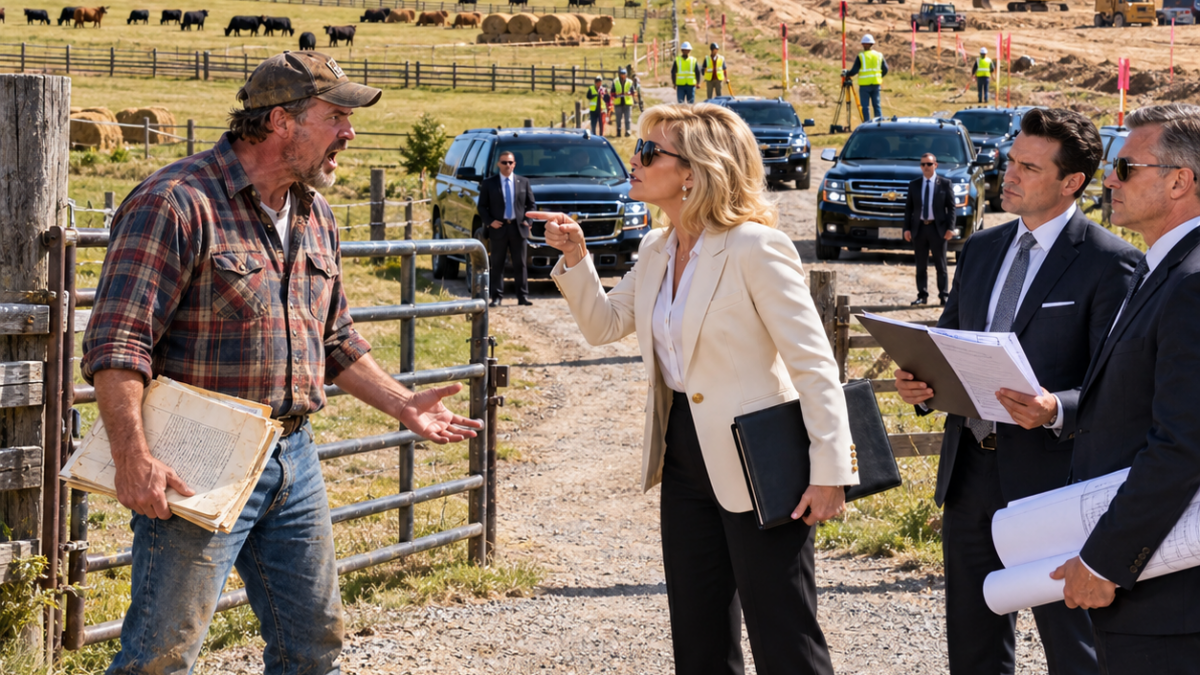
PART2
“I understand exactly what you handed me.”
Dennis raised the camera one final time.
He angled the lens so my porch sat behind me.
Click.
Then all three of them returned to their vehicles.
Karen climbed into the black SUV.
The white pickup followed.
They reversed down the drive, turned onto the county road, and disappeared.
I stood there for another minute.
The orange sign moved slightly in the wind.
NEW OWNERSHIP PENDING.
Behind it stretched the same land that had been in my family since Harry Truman was president.
I should probably explain why I didn’t panic.
It wasn’t because I’m unusually brave.
It wasn’t because twenty-three thousand dollars meant nothing to me.
It wasn’t because I had some secret army of lawyers waiting.
I didn’t.
The reason I stayed calm was simpler.
For eleven years, I had served as a circuit court magistrate in that county.
Civil docket.
Contracts.
Deeds.
Title disputes.
Property claims.
Easements.
Foreclosures.
Boundary conflicts.
I spent my professional life reading documents people believed gave them power.
Some did.
Some didn’t.
The difference was rarely the confidence of the person holding them.
It was what the law underneath the paper actually allowed.
Karen had just handed me forty-seven pages of paperwork and announced that every legal step had been completed.
I knew one hadn’t.
Sooner or later, Green Valley Acquisitions LLC would need clean, marketable title.
To get it, they would have to petition for confirmation.
That petition would enter the county civil docket.
My docket.
I picked up my coffee.
It had gone cold.
I carried the packet inside.
Before doing anything else, I opened a fresh legal pad.
Date.
Time.
8:47 a.m. vehicles entered property.
Names.
Karen Bellamy.
Dennis Harlow.
Unknown attorney representative.
Black SUV plate.
White pickup plate.
Exact language.
Thirty days to vacate.
Trespass warning.
Board voted unanimously.
Every legal step completed.
Orange sign installed and photographed.
Then I wrote one final line.
Transfer confirmation not yet judicially confirmed.
I underlined it.
My grandfather bought the first part of the farm in 1947.
He was twenty-nine years old.
Had come home from military service with more discipline than money.
He bought acreage no one else wanted much.
Dry in places.
Heavy clay in others.
A creek that flooded when snowmelt came too fast.
The first house wasn’t really a house.
More like four walls, a stove, and optimism.
He milled some of the timber himself.
My grandmother used to tell me winter wind came through the boards so hard she could feel it move the curtains.
But they stayed.
Grandpa added acreage.
Then more.
Eventually the farm reached 5,200 acres.
Grain.
Cattle.
Hay.
Some timber along the eastern ridge.
My father took over most operations in the 1960s.
By the time I was old enough to work, summer meant fencing, machinery, dust, fuel, sunburn, and my father finding six more things for me to do after I thought I was finished.
I complained constantly.
Then I inherited the place and spent the next thirty-eight years becoming him.
The title never broke.
Not once.
Grandfather.
Father.
Me.
Every transfer recorded.
Every tax paid.
Every legal description preserved.
The county recorder could trace ownership without leaving the same family name.
That should have made Karen’s plan impossible.
It didn’t.
Because fraud doesn’t need to be legally correct to cause damage.
It only needs to survive long enough to put pressure on someone.
The HOA entered my life fifteen years before that orange sign.
A developer bought roughly four hundred acres along my eastern boundary and proposed a ninety-six-home subdivision.
I didn’t oppose it.
I wasn’t interested in becoming the old farmer who fought every new house.
The developer needed access.
Their preferred road alignment crossed about three-tenths of a mile through the southeast corner of my land.
We negotiated an easement.
A simple one.
Two sentences did almost all the work.
The subdivision had the right to use that strip for road access.
Nothing more.
No governance authority.
No assessment rights.
No ownership transfer.
No expansion of HOA jurisdiction.
Road access.
That was it.
For eleven years, it worked exactly as intended.
They had their subdivision.
I had my farm.
Then Karen arrived.
She moved into Maple Ridge four years before the attempted foreclosure.
Within two months, she ran for HOA president.
Unopposed.
People later told me she had worked in commercial property management.
Lease enforcement.
Compliance.
Tenant disputes.
The kind of career that can teach a reasonable person to respect process.
Or teach the wrong person that procedure is a weapon.
Karen was the second type.
In her first year, the HOA issued more than fifty thousand dollars in fines.
That was more than they had issued in the previous five years combined.
She terminated the outside management company.
Took direct control over the operating account.
Rewrote the violation schedule.
Increased penalties.
Created the compliance officer position Dennis later filled.
She began speaking at meetings about “protecting community standards through consistent enforcement.”
Consistent was doing a lot of work in that sentence.
A widow with a faded fence received monthly penalties.
A family with a work trailer parked behind their house received daily penalties.
Another homeowner was fined for a basketball hoop that had stood in the same driveway for six years.
Most paid.
Not because Karen was right.
Because a $150 fine is often cheaper than a lawyer.
Karen understood that arithmetic.
Then she expanded it beyond the subdivision.
Her theory was almost impressive in its dishonesty.
Because the HOA held a road easement crossing a portion of my property, she claimed my entire farm had become “adjacent infrastructure” subject to HOA compliance authority.
That is not what an easement means.
An easement gives one party a limited right to use someone else’s land for a specific purpose.
It does not make the owner a member of your homeowners association.
It does not give you power to regulate agricultural operations miles away from the road.
It certainly does not let you foreclose on 5,200 acres because hay bales offend your aesthetic preferences.
Karen either knew that or never cared.
Her first notice came three years earlier.
HAY STORAGE VISIBLE FROM HOA CORRIDOR.
$50.
I remember laughing.
Not because the notice was clever.
Because the bales sat forty feet inside my property line.
I wrote back.
Certified mail.
I cited the easement language.
Then I cited something even better.
Section 4.2 of the HOA’s own bylaws.
Agricultural operations exceeding five hundred acres were explicitly exempt from HOA assessments, fines, architectural restrictions, and compliance rules.
My farm was more than ten times that threshold.
I attached a survey.
Marked the hay location.
Requested written confirmation the citation was void.
Karen doubled the fine.
So I sent the same documents again.
She tripled it.
That was when I started the log.
Not because I thought she could take my land.
Because I knew something about disputes.
People remember conversations badly.
Paper remembers perfectly.
Every notice went into a folder.
Every certified mail receipt.
Every signature.
Every amount.
Every response.
Date.
Time.
Delivery method.
Language used.
What I didn’t realize then was that Karen was doing more than harassing me.
She was building the false debt she would later use as the foundation for foreclosure.
Eight months before the orange sign, a new letter arrived.
Not the usual HOA envelope.
Law firm return address.
Twenty-three thousand dollars due.
Eighteen months of accumulated penalties.
Payment within twenty-one days or lien proceedings would begin.
I read it twice.
Then drove directly to the recorder’s office.
People sometimes assume because I worked in the courthouse I could simply call someone and ask for favors.
I never did that.
I used the same public counters as everyone else.
Same forms.
Same fees.
Same records.
I pulled three documents.
HOA declaration.
Subdivision plat.
Recorded easement.
Then I took them home.
Spread everything across my kitchen table.
Maple Ridge covered lots one through ninety-six.
My parcel was not one of them.
Parcel 0418022.
Recorded decades earlier.
Different legal description.
Different tax number.
Different chain of title.
Section 4.2 remained exactly where it had always been.
Agricultural operations above five hundred acres exempt.
The easement remained exactly what it had always been.
Road access.
Nothing else.
I wrote a five-page response.
No insults.
No accusations.
Just citations.
Parcel number.
Plat references.
Deed references.
Exact easement language.
Exact bylaw language.
Thirty-eight years of property tax history.
I ended with two requests.
Void all fines.
Cease asserting HOA jurisdiction over parcel 0418022.
Karen signed for the letter Thursday morning.
Eight days later, I received a mandatory compliance hearing notice.
Tuesday at two.
That would have been inconvenient even if I wanted to attend.
I didn’t.
I was already scheduled to preside over a civil docket that Tuesday.
Had been for six weeks.
Karen took my absence as surrender.
The board issued a default ruling.
Another $4,500.
Then a resolution authorizing a lien.
Signed by Karen.
Signed by two board members.
Certified.
Notarized.
Delivered.
I logged it.
Ten days later, Karen came to the fence personally.
Dennis with her.
Camera ready.
“The board has made its final determination.”
I listened.
“We are filing a lien. If payment is not received within ten days, foreclosure will begin.”
I kept my voice calm.
“This property is not subject to HOA jurisdiction.”
“Our counsel disagrees.”
“You have the easement.”
“We have reviewed it.”
“You have Section 4.2.”
“The board has interpretive authority.”
“No board can interpret itself into ownership authority that doesn’t exist.”
Karen’s face hardened.
“You should retain counsel.”
“If you record a lien against this parcel based on assessments you have no authority to impose, you will be filing a fraudulent instrument.”
Dennis’s camera moved slightly.
I noticed.
So I became more precise.
“I want that statement documented. I am informing you now that the underlying assessments are disputed, the farm is exempt under your own governing documents, and the easement grants road access only.”
Karen didn’t blink.
“The board has retained legal counsel.”
“Good.”
“You’ll be hearing from them.”
She turned away.
Dennis followed.
When they left, I went inside.
Fresh legal pad.
Date.
Time.
Exact quote.
Compliance officer present.
License plate.
Weather.
Method of delivery.
Everything.
Three days later, Dorothy Hayes called me.
Dorothy was seventy-four.
Farmed eight hundred acres about three miles east.
She sounded embarrassed when she asked whether I had been paying Maple Ridge fines.
“No.”
Silence.
Then:
“I have.”
“How long?”
“Eight months.”
“For what?”
She read them.
Dust.
Fencing.
Equipment visibility.
Agricultural noise.
Same theory.
Same language.
Same easement nonsense.
“How much have you paid?”
She told me.
I wrote it down.
“Why?”
“My operating loan comes up every spring.”
I understood immediately.
“If they filed a lien…”
“My bank would review it.”
“And you couldn’t risk that.”
“No.”
She sounded ashamed.
That made me angry.
Not at her.
At Karen.
“Dorothy, listen to me. You did nothing wrong.”
“I should have fought.”
“You kept your farm running.”
“That doesn’t feel like fighting.”
“It is when somebody is using paperwork against your credit.”
After we hung up, I called two more adjacent landowners.
Retired couple.
Three hundred forty acres.
They had paid.
Another cattle operation.
Eleven hundred acres.
Partial payments.
All targeted.
All near Maple Ridge.
All subject to the same invented jurisdictional argument.
That changed my understanding completely.
Karen wasn’t making a mistake with me.
She had a method.
Select adjacent property owners.
Send fines.
Threaten liens.
Count on the cost of resistance.
I went back to the recorder’s office.
This time I requested HOA meeting minutes for the previous two years.
Under state open-meeting requirements, the records were available.
I sat at the public counter reading line after line.
Landscaping contracts.
Parking rules.
Pool maintenance.
Then I found it.
Fourteen months earlier.
AGENDA ITEM 7.
LONG-TERM PROPERTY ACQUISITION STRATEGY.
I leaned closer.
Three adjacent parcels described as “underperforming properties presenting community development opportunities.”
My parcel number was one of them.
The board voted unanimously to pursue acquisition through “all available HOA enforcement mechanisms.”
I read it twice.
Then a third time.
That sentence changed everything.
They weren’t fining me because of hay.
The fines were part of the acquisition strategy.
I copied the entry.
Date.
Page.
Names.
Exact language.
Then I went home and searched the state corporate registry.
GREEN VALLEY ACQUISITIONS LLC.
The company on the transfer paperwork Karen eventually handed me.
Formation date:
Eleven days after that HOA board meeting.
Registered agent:
Thomas Bellamy.
Karen’s brother-in-law.
I sat very still.
Eleven days.
Board identifies properties for acquisition.
Eleven days later, a company tied to Karen’s family is formed.
Months later, that same company supposedly acquires my farm through an HOA foreclosure.
For $180,000.
That was not aggressive compliance.
That was a structure.
A plan.
I created folders.
HOA FILINGS.
NEIGHBOR STATEMENTS.
CORPORATE RECORDS.
Then the lien notice arrived.
Twenty-three thousand dollars.
Recorded against parcel 0418022.
Signed by Karen.
Notarized.
Filed in the county records.
I created a fourth folder.
FRAUDULENT INSTRUMENTS.
I wish I could say I felt calm when I put the lien notice inside.
I didn’t.
A fraudulent lien is still a lien until it is removed.
Banks see it.
Title companies see it.
Lenders see it.
It creates friction.
That was the point.
Karen didn’t need to be right immediately.
She just needed to make owning my farm expensive enough that selling looked easier.
Then the title insurance alert arrived.
CHANGE OF OWNERSHIP RECORDED.
I read the email standing at my kitchen counter.
Parcel 0418022.
Transferee:
Green Valley Acquisitions LLC.
That was the moment the situation became more than a threat.
They had recorded a deed.
I drove to the county recorder.
The clerk pulled it in less than two minutes.
There it was.
My farm.
Transferred.
The legal description matched my grandfather’s land patent.
The foreclosure deed claimed a public auction had occurred seven weeks earlier.
Thursday morning.
At the county courthouse.
I almost smiled.
Not because it was amusing.
Because on that Thursday morning, I had been inside that courthouse.
I had been there every Thursday for eleven years.
There had been no auction.
No crowd.
No foreclosure sale.
No notice posted.
Nothing.
I asked the clerk for the publication record.
A valid nonjudicial foreclosure required public notice before sale.
Three consecutive weeks.
She searched.
Nothing.
She searched again.
Nothing.
Not one publication.
Not one notice.
Not one line.
I wrote down the clerk’s name.
Time.
Search parameters.
Result.
Then I looked up the assessed value.
$4.1 million.
Transfer price:
$180,000.
I sat in my truck outside the courthouse and stared through the windshield.
My grandfather had bought land one piece at a time.
My father had spent his life keeping it productive.
I had spent thirty-eight years preserving it.
Karen had spent less than two years manufacturing fines, creating a shell company through her brother-in-law, inventing an auction, and recording a deed.
On paper, seventy-eight years of family ownership had been erased for $180,000.
That was the first time I felt real fury.
Not hot.
Not wild.
Cold.
Specific.
Useful.
I drove to my bank.
I had used the same institution for four decades.
The agricultural loan officer saw me near the front desk.
“Been meaning to call you.”
That sentence got my attention.
“About what?”
“Someone from the HOA contacted us.”
“When?”
“Couple weeks ago.”
“Who?”
He pulled up a note.
“Caller identified herself as Karen Bellamy.”
“What did she say?”
“That your property was in active default proceedings and the bank should consider placing a review flag on your agricultural accounts.”
I stared at him.
“Did you?”
“No.”
“Why not?”
“Because you’ve banked here forty years.”
He turned the monitor slightly.
“And because she sent nothing.”
“Can I get that entry?”
He printed it.
Date.
Time.
Caller ID.
Name given.
Summary.
Karen had reached beyond my title.
She had tried to touch my credit.
My operating line.
My farm’s financial oxygen.
That was the kind of move designed to make a farmer panic.
I added the bank log to the folder.
That evening, I spread everything across the kitchen table.
Fabricated fines.
HOA exemption.
Road easement.
Board acquisition strategy.
Green Valley formation.
Family connection.
Fraudulent lien.
Fake foreclosure sale.
No publication.
Deed transfer.
Bank interference.
I had spent eleven years watching civil cases come apart because someone believed a stack of signed paper must be legitimate simply because it existed.
Karen had a lot of paper.
So did I.
The difference was mine described what had actually happened.
I called the court clerk.
Didn’t give context.
“If a purchaser wants formal confirmation of a nonjudicial foreclosure sale involving contested title, where does it land?”
“General civil docket.”
I already knew.
I wanted to hear it.
General civil.
My docket.
“Thanks.”
I hung up.
Then I did the hardest thing.
Nothing.
I did not file suit.
Did not call the district attorney.
Did not send Karen another warning.
Did not confront Green Valley.
Because Green Valley had a problem.
Its deed was dirty.
Without judicial confirmation, no serious lender would treat title as clean.
No development partner.
No buyer.
No title insurer willing to ignore the obvious dispute.
Eventually, they would need court confirmation.
So I waited.
Three weeks after Karen posted the orange sign, Maple Ridge sent a community email.
PROPERTY ACQUISITION UPDATE AND FUTURE PLANNING.
Attendance strongly encouraged.
I went.
The clubhouse sat near the subdivision entrance.
Seventy residents showed up.
Karen stood at the front beside the other board members.
Projector behind her.
Printed agendas.
Everything polished.
Everything organized.
She saw me come in.
Her eyes paused.
Then moved on.
I sat in the back.
Legal pad open.
At seven exactly, she called the meeting to order.
Pool budget.
Landscaping.
Parking.
Then:
“Property acquisition update.”
The slide changed.
County parcel map.
My farm outlined in green.
“As many residents know, the board has been addressing the long-term development risk posed by the unmanaged agricultural parcel adjacent to our community.”
Unmanaged.
I had been farming it thirty-eight years.
Karen continued.
“I’m pleased to report this matter has been resolved.”
Next slide.
GREEN VALLEY ACQUISITIONS LLC.
5,200 ACRES.
TRANSFER COMPLETE.
“Following properly conducted foreclosure proceedings, Green Valley Acquisitions has acquired the parcel.”
Two board members applauded.
A few residents followed.
Tentative.
Confused.
A woman near the center raised her hand.
“Was the farmer compensated?”
Karen smiled professionally.
“All legal procedures were followed.”
That wasn’t an answer.
The woman tried again.
“So he agreed to the sale?”
“The prior owner was in default.”
Prior owner.
I wrote that down.
Then I raised my hand.
Karen saw me.
“Mr. Mercer.”
I stood.
“I have one procedural question.”
The room went quiet.
“Were the required public foreclosure notices published for three consecutive weeks in a newspaper of general circulation before the auction?”
Karen took one breath.
“Yes.”
No hesitation.
“All statutory notices were published in full compliance with state law. You were in default on valid HOA obligations. The board acted within its authority.”
I looked at her.
“Three consecutive weeks?”
“Yes.”
“Thank you.”
I sat down.
Wrote:
7:23 p.m.
Karen Bellamy.
Statement: all required statutory auction notices published.
Approximately seventy witnesses.
She continued the meeting.
Pool rules.
Fence colors.
I barely heard any of it.
Not because I was emotional.
Because she had just publicly repeated a claim I knew was false.
That mattered.
Afterward, I waited until most residents left.
Karen caught me in the parking lot.
“Mr. Mercer.”
I turned.
Her tone changed.
Less official.
Almost sympathetic.
“I understand you’re upset.”
“I’m not upset.”
“You should speak with counsel.”
“I understand the process.”
“The transfer is recorded. Continuing to resist will only increase your costs.”
“I appreciate the advice.”
She folded her arms.
“You need to accept that this is over.”
I looked at her.
“I’ll see you in court, Karen.”
She almost smiled.
“Yes.”
Then:
“You will.”
She stepped closer.
“And you’ll lose.”
I drove home.
She was right about one thing.
She would see me in court.
Three weeks later, a new matter appeared in my Monday intake queue.
PETITION FOR FORMAL CONFIRMATION OF NONJUDICIAL FORECLOSURE SALE.
Petitioner:
Green Valley Acquisitions LLC.
Property:
Parcel 0418022.
I read it twice.
They had filed.
And the scheduling system had assigned the matter to my docket.
My courtroom.
For several minutes, I simply sat there.
Not celebrating.
Not planning some dramatic reveal.
Because judges and magistrates have ethical obligations.
I could not use my position to decide my own property rights.
That part mattered.
I immediately reviewed what the petition alleged and prepared the necessary disclosure and referral materials.
I also assembled the public-record evidence showing why the filing presented potential fraud concerns.
The 1947 land patent.
Continuous chain of title.
My recorded ownership.
The limited easement.
Section 4.2.
The nonexistent publication record.
The shell company formation.
HOA minutes.
Neighbor statements.
Bank call log.
Fraudulent lien.
Transfer deed.
I delivered the packet to the clerk so the record would be preserved.
The next morning, the hearing remained on the docket long enough for the procedural conflict and apparent defects to be addressed on the record.
At 8:55, I put on my robe.
I had worn one thousands of times.
That morning, it felt heavier.
At nine, I entered the courtroom.
Sat behind the bench.
At 9:05, the clerk called the matter.
The doors opened.
Karen’s attorney entered first.
Leather binder.
Colored tabs.
Routine posture.
He had appeared before me on other matters.
He knew me professionally.
He did not know, at least not yet, that the land described in his petition belonged to me.
Karen came behind him.
Two board members followed.
They spoke quietly as they approached counsel table.
Her attorney flipped to his first tab.
Then he looked up.
Saw me.
He stopped walking for half a step.
Karen was setting her handbag beside her chair.
Then she looked toward the bench.
And froze.
Not metaphorically.
Her hand stayed on the strap.
Her body halfway into the motion of sitting.
Her face went completely blank.
For the first time since I had known Karen Bellamy, she had no prepared expression.
Her attorney recovered first.
“Your Honor, we’re here on the matter of—”
“I know what matter you’re here on.”
Silence.
I looked down at the petition.
Then back at counsel.
“The petition before the court seeks confirmation of a purported nonjudicial foreclosure sale involving parcel 0418022, approximately 5,200 acres.”
The attorney nodded carefully.
“Yes, Your Honor.”
“The record reflects that I am the current recorded owner of that parcel.”
His face changed.
Karen’s did too.
One board member turned toward her.
The other sat down.
I continued.
“Because I have a direct personal interest in the property, I will not adjudicate the merits of ownership.”
That was the ethical line.
I wasn’t going to use a robe to win my own case.
But there was another problem.
A bigger one.
“The filings before the court present facial irregularities that require immediate administrative and criminal referral.”
The attorney swallowed.
“What irregularities, Your Honor?”
“No evidence of the required notice publication appears in the submitted record.”
He looked down at his binder.
“The underlying lien is based on assessments disputed as outside HOA jurisdiction.”
Another tab.
“The deed identifies a transfer price of $180,000 on property assessed at more than four million dollars.”
Karen finally moved.
“Your Honor—”
Her lawyer raised one hand toward her without turning around.
I continued.
“The court record also includes evidence indicating Green Valley Acquisitions LLC was formed shortly after an HOA board resolution identifying this parcel for acquisition, with a registered agent related to the HOA president.”
Now the attorney looked at Karen.
Actually looked.
Not as client.
As problem.
“The petition cannot proceed before me due to the conflict. The matter will be reassigned for civil review, and the apparent irregularities in the submitted foreclosure documents will be referred to the district attorney and county recorder for investigation.”
Karen stood.
“This is outrageous.”
Her attorney whispered sharply.
“Sit down.”
She didn’t.
“That is my property now.”
The courtroom became utterly still.
Her attorney looked like he wanted the floor to open.
I kept my voice level.
“Mrs. Bellamy, you are represented by counsel. You will communicate through him.”
She sat.
The case was administratively transferred.
The petition did not get the rubber-stamp confirmation Karen expected.
Instead, the entire transaction had just become evidence.
I removed my robe after the matter concluded.
Folded it over the chair.
Then walked out.
As I passed counsel table, I didn’t look at Karen.
I didn’t need to.
In the hallway, behind me, I heard her.
“Can he do that?”
Low voice.
Unsteady.
The attorney answered quietly.
I caught only one sentence.
“He didn’t decide ownership, Karen. He referred the documents.”
That distinction was going to matter.
Within seventy-two hours, the district attorney’s office opened an investigation.
Because the evidence package was already part of the public record, investigators didn’t have to begin from nothing.
They had dates.
Signatures.
Corporate filings.
Minutes.
The deed.
The nonexistent publication history.
The bank contact.
Neighbor statements.
Every piece Karen had created.
The first call I received from the DA’s office was careful.
They spoke to me as a potential victim and witness, not as a judicial officer.
I gave them everything I had retained outside the court record.
Original certified receipts.
My communication logs.
Photographs.
Copies of each violation notice.
Then they went outward.
Dorothy.
The retired couple.
The cattle operator.
Board secretary.
Compliance officer.
Green Valley’s registered agent.
Karen’s brother-in-law.
The county recorder.
Bank employees.
Former HOA manager.
The pattern surfaced quickly.
Karen had not simply invented jurisdiction over my farm.
The HOA had used the same argument against multiple agricultural properties.
Fine them.
Threaten title.
Create financial pressure.
Acquire cheaply if possible.
The board minutes gave prosecutors something even worse.
Intent.
“Acquisition opportunities through enforcement mechanisms.”
Karen had put the plan into official records herself.
Three criminal counts were filed first.
Fraudulent filing of instruments.
Unauthorized transfer of real property.
Conspiracy.
The two board members who signed the acquisition resolution were charged alongside her.
Green Valley’s registered agent was named separately.
Dennis Harlow avoided an initial conspiracy charge by cooperating.
That surprised me.
Apparently a timestamp camera becomes less attractive when prosecutors start asking who told you what to photograph.
On the civil side, things moved even faster.
The Green Valley deed was voided.
The fraudulent lien was struck.
The recorder restored parcel 0418022 to my name.
Continuous chain of title.
No valid interruption.
I went to the recorder’s office the day the correction appeared.
The clerk turned her monitor toward me.
There it was.
Owner:
Same family line.
Same parcel.
Same acreage.
I had expected relief.
Instead, I felt exhausted.
Because legally, the land had always been mine.
All those months had been spent forcing the paper to admit reality.
The other adjacent landowners benefited too.
Dorothy’s assessments were declared invalid.
The retired couple recovered what they had paid.
The cattle operator’s lien threat disappeared.
Green Valley was ordered to disgorge the money involved in the fraudulent transaction.
Then auditors began looking at the HOA account.
That was when Karen’s problems became much larger.
For four years, she had exercised direct control over operating funds.
The audit found Green Valley incorporation expenses had been paid, in part, through HOA funds.
Legal expenses related to acquiring my farm had also been routed through community money.
The homeowners had been funding a scheme most of them knew nothing about.
Karen had sold them the idea as property protection.
In reality, their dues had helped create a company connected to her family.
The community meeting became devastating evidence.
Seventy people had heard Karen state that all required foreclosure notices had been published.
None had.
Residents who had applauded her now realized they were witnesses.
A recall petition started within a week.
Seventy-four of ninety-six homes voted to remove Karen and the entire board.
I didn’t attend.
That was their neighborhood.
Their decision.
But Dorothy called me afterward.
“You should have seen her face.”
“I already saw it once.”
“When?”
“The courthouse.”
Dorothy laughed.
It was the first time I had heard her laugh since this began.
Residents formed a restitution group.
They collected old fines.
Parking penalties.
Paint citations.
Noise assessments.
Landscaping charges.
Four years of small pressure.
Some had paid because fighting wasn’t worth it.
Some had paid because they feared liens.
Some had paid because Karen’s letters looked official.
That was the real lesson running through the entire mess.
Most abuse of authority does not begin with somebody taking 5,200 acres.
It begins small.
Fifty dollars.
One warning.
One letter.
One person deciding it is easier to pay.
Then the person issuing the paperwork learns something dangerous.
People comply.
Karen had learned that lesson too well.
My case simply pushed her method far enough that the structure became visible.
The local newspaper ran a short piece.
HOA PRESIDENT CHARGED IN PROPERTY TRANSFER INVESTIGATION.
Karen’s name appeared in the first sentence.
Green Valley in the second.
I stopped reading.
I wasn’t interested in seeing her humiliated.
People assumed I must have been.
They asked whether I felt vindicated.
I suppose I did.
But vindication is quieter than people think.
It doesn’t feel like standing over somebody after they fall.
It feels like sleeping through the night again.
It feels like opening your mail without wondering which part of your life someone is trying to put a lien on.
It feels like calling your bank and discussing seed prices instead of fraudulent foreclosure.
Ten days after the corrected deed was recorded, the county clerk called me.
“Everything is restored.”
“I saw it.”
“Clean chain.”
“Thank you.”
I hung up.
Then I drove to the back field.
Grandpa first broke that soil in 1947.
Nothing remarkable about it.
Flat grain ground.
Stubble after harvest.
Mud when rain came wrong.
Beautiful green in spring when everything came right.
I parked near the edge.
Turned off the engine.
Sat there.
No courtroom.
No HOA.
No orange notices.
Wind moved through the stubble.
A hawk crossed low over the field.
I thought about Grandpa.
He would have hated every part of what happened.
Not because he was afraid of lawyers.
He disliked paperwork except when it protected him.
He would have been furious that someone took the family name off a deed for even ten days.
But I also think he would have understood why I didn’t shout at Karen that first morning.
Grandpa believed people eventually told you who they were if you gave them enough rope.
Karen had given me forty-seven pages.
Then dozens more.
She built her own case one signature at a time.
The orange sign was still on my fence when I drove back.
PROPERTY UNDER HOA AUTHORIZED TRANSFER.
NEW OWNERSHIP PENDING.
Four months.
Sun had faded the orange slightly.
Edges curling.
The same two zip ties Dennis had installed.
I pulled my truck beside the fence.
Got pliers from the bed.
Cut the first tie.
Then the second.
The sign came loose.
I held it in both hands.
For a second, I considered throwing it into the trash.
Instead, I rolled it carefully.
Put it behind the truck seat.
Evidence.
Grandpa would have approved.
The criminal case lasted longer than the civil correction.
Those things usually do.
Karen’s defense was predictable.
She relied on counsel.
She believed the HOA had jurisdiction.
She misunderstood the easement.
Green Valley had been created for legitimate community planning.
The foreclosure defects were administrative mistakes.
One mistake can happen.
Maybe two.
But prosecutors had the board minutes.
The company formation timeline.
The fake publication claim.
The below-market transfer.
The family connection.
The bank call.
Neighbor fines.
The recorded deed.
Too many mistakes aligned toward one outcome.
Karen eventually entered a plea.
The two board members took agreements as well.
Her brother-in-law faced separate financial penalties and restrictions.
Green Valley disappeared almost as quickly as it had been created.
Dennis testified.
The HOA hired independent management.
New bylaws required dual signatures for significant expenditures.
Outside review before liens.
Annual audits.
Clear jurisdiction maps.
Written conflict disclosures for board members.
No one person controlling the bank account again.
Dorothy called me the first month after the new board took over.
“They refunded me.”
“All of it?”
“With interest.”
“How much?”
She told me.
“Buy something irresponsible.”
“At seventy-four?”
“Especially at seventy-four.”
She laughed.
“I bought a new baler.”
“That is the most farmer definition of irresponsible I’ve ever heard.”
“It has heated mirrors.”
“Now you’re showing off.”
The retired couple got their money back too.
They brought me a pie.
I told them it wasn’t necessary.
They ignored me.
It was apple.
Excellent.
The cattle operator sent whiskey.
Also excellent.
I didn’t become a hero.
I didn’t want to.
The title of hero usually means somebody has decided to simplify a complicated story.
I was a farmer who happened to know property law well enough to recognize when someone had stepped onto a cliff.
If Karen had targeted a different owner first—someone without court experience, someone without records, someone dependent on refinancing at exactly the wrong moment—the ending might have been very different.
That bothered me more than what she did to me.
She chose people because she expected them not to fight.
Older.
Agricultural.
Independent.
Credit-dependent.
Busy.
The same traits that make farmers vulnerable to bureaucratic pressure.
We don’t spend our mornings reading HOA bylaws.
We fix pumps.
Check cattle.
Watch weather.
Meet lenders.
Repair equipment.
Get grain in before storms.
A letter with legal language can be terrifying when one missed payment can threaten an operating loan.
Karen knew that.
Years later, people still ask about the morning in court.
They want the dramatic version.
They picture Karen walking in smug while I sit behind the bench waiting like some kind of movie reveal.
The truth was stranger.
I wasn’t waiting to trap her.
I didn’t know the case would be assigned to me until it appeared.
And once it did, I couldn’t decide my own case.
That would have been wrong.
The power of that morning wasn’t that I was the magistrate.
It was that Karen suddenly realized the paperwork she had treated like a weapon was about to be examined by people who understood it.
The robe wasn’t revenge.
The record was.
That was why her lawyer stopped.
He saw me and immediately understood there was history he had not been told.
A competent attorney hates surprises.
Especially surprises involving his client having attempted to foreclose on the judge’s property.
I later learned Karen had described me to Green Valley’s counsel as “a noncompliant agricultural holdout.”
Not magistrate.
Not civil court officer.
Not someone who had spent eleven years reading deeds.
Just farmer.
She thought that category told her enough.
That mistake sat underneath everything.
She saw hay.
Dust.
Old fencing.
Work trucks.
She saw a man who spent more time in boots than suits.
She decided that meant unsophisticated.
Powerful people make that mistake constantly.
They confuse presentation with capability.
They look at someone who doesn’t advertise credentials and assume none exist.
Grandpa was like that too.
He wore bib overalls to the bank.
Carried cash in an envelope.
Knew exactly what every acre was worth.
Once, when I was a teenager, a machinery salesman tried to charge him a financing fee that wasn’t in the quoted price.
Grandpa listened.
Nodded.
Then pulled the original quote from his shirt pocket.
He had folded it into quarters.
“Is this your signature?”
Salesman said yes.
“Then which one of us changed the deal?”
The fee disappeared.
I had forgotten that story until the week after Karen’s plea.
Maybe we inherit more than land.
I stayed on the bench several more years.
Property cases looked different afterward.
Not legally.
The law didn’t change because something happened to me.
But I noticed fear more.
People entering court with envelopes full of notices.
Small landowners.
Retirees.
Families.
People who had spent months assuming the other side must be right because the other side had letterhead.
Whenever possible, I slowed things down.
Asked the next question.
“Where is the authority for that assessment?”
“Where is the recorded easement?”
“Show me service.”
“Show me publication.”
“Show me the chain of title.”
Not because I favored the smaller party.
Because authority should survive questions.
Real authority usually does.
Fake authority depends on nobody asking.
A year after everything ended, Maple Ridge invited me to a meeting.
I almost declined.
The new president, a middle-school science teacher named Alan Pierce, called personally.
“We’re revising our governance documents.”
“That sounds thrilling.”
He laughed.
“I was told judges enjoy this.”
“Whoever told you that lied.”
“We want your opinion on the easement language.”
“That I can do.”
I attended.
Same clubhouse.
Same projector.
Different atmosphere.
Residents spoke freely.
Board members disagreed.
Nobody looked nervous when they did.
That was healthy.
Alan displayed a map.
The HOA boundary was shown in blue.
My farm in white.
The access easement in yellow.
He pointed at it.
“We’re adding a statement saying this easement conveys road access only and creates no governance, ownership, assessment, or enforcement rights over the servient estate.”
A man in the back raised his hand.
“Do we really need that much detail?”
I answered before Alan could.
“Yes.”
The room laughed.
So did I.
Then Dorothy stood.
She wasn’t even a member.
They had invited adjacent landowners.
“I want another thing.”
“What?”
“No fines against anyone outside the recorded HOA boundary. Ever.”
Alan wrote it down.
The new language passed unanimously.
I remember thinking how different unanimity looked when people understood what they were voting on.
Karen had also gotten unanimous votes.
That never made her right.
Three years after the attempted foreclosure, I retired from the magistrate position.
Not because of the case.
Age.
Timing.
My knees.
My farm still needed me, though maybe less than I needed it.
The retirement ceremony was small.
Clerks.
Lawyers.
My daughter.
A few county employees.
Someone gave a speech about my civil docket.
Someone else gave me a framed copy of the courthouse floor plan as a joke because I used to complain people always got lost before hearings.
Dorothy attended.
She brought a miniature orange sign.
PROPERTY UNDER RETIREMENT TRANSFER.
NEW OWNERSHIP PENDING.
I laughed so hard I had to sit down.
She had become dangerous after seventy-four.
The real orange sign remained in my office.
Rolled in a cardboard tube.
Labeled with the case number.
I never displayed it.
Didn’t need to.
Sometimes visitors asked why I kept so many old folders.
I told them the truth.
“Because forgetting is how people get to try the same thing twice.”
The farm stayed mine.
All 5,200 acres.
I leased some additional grain ground to a younger farmer.
Reduced the cattle herd.
Sold equipment I no longer needed.
Kept the old house.
The fence my father built still runs along the drive.
One of the posts Dennis attached that orange sign to eventually rotted.
I replaced it myself.
Could have hired someone.
Didn’t.
Some jobs matter because they are yours to do.
While setting the new post, I found a piece of the old zip tie buried in the grass.
Black plastic.
Maybe two inches long.
I held it for a moment.
Then tossed it into the truck bed.
Not everything needs to become evidence.
Some things are just trash.
What happened to Karen became less important over time.
That surprised me.
During the worst months, she occupied too much space in my mind.
What notice would arrive next?
What would she file?
Who would she call?
Would the bank get nervous?
Would the title company freeze something?
After the case ended, her name became smaller.
Eventually, she was just someone who had mistaken intimidation for law.
The land outlasted her.
That mattered more.
One spring morning, years after the transfer was voided, I walked the southeast corner where the Maple Ridge road crossed my property.
Cars moved in and out.
Residents waved.
The easement worked exactly as it was supposed to.
Access.
Nothing more.
No fight.
No drama.
Just a road.
That was almost funny.
Fifteen years earlier, I had granted three-tenths of a mile because I believed neighbors should be reasonable with one another.
Karen took that small permission and tried to stretch it across 5,200 acres.
That is how entitlement works.
It rarely begins by demanding everything.
It begins by treating one permission as proof of another.
You let us cross here.
Therefore we have an interest there.
You didn’t fight the first fine.
Therefore the second must be valid.
You paid once.
Therefore you accept our authority.
You missed a hearing.
Therefore you admit the debt.
We filed a lien.
Therefore we can foreclose.
We recorded a deed.
Therefore we own the farm.
Every step depended on nobody going back to the beginning and asking the simplest question.
Where did this authority come from?
In Karen’s case, nowhere.
No deed.
No covenant.
No statute.
No easement language.
Nothing.
Just confidence.
And confidence can carry fraud surprisingly far.
Right up until somebody reads the source document.
The county has digitized most land records now.
Grandpa’s 1947 filing appears on a screen.
Black-and-white scan.
His signature looks darker than the rest because the ink bled slightly into the paper.
Sometimes I pull it up.
Not because I’m worried.
Because seventy-eight years can look very small when reduced to one image.
One man’s name.
One legal description.
One filing stamp.
That document outlived Grandpa.
Outlived my father.
Outlived the original farmhouse.
Outlived tractors.
Outlived banks.
Outlived the first subdivision developer.
It survived Karen too.
I think that is why I never felt like I defeated her.
She challenged something much older than either of us.
All I did was make sure the record stayed honest.
The most satisfying call came from Dorothy five years later.
Her voice sounded different.
Lighter.
“I sold.”
“The farm?”
“Most of it.”
“You finally retired?”
“Don’t insult me.”
“What do you call it?”
“Reducing exposure.”
“Where have I heard that?”
She laughed.
A younger family had bought her acreage.
She kept the house and forty acres.
“The title company asked about the old HOA assessments.”
“What did you tell them?”
“That they were fraudulent and void.”
“And?”
“They said the record was clean.”
There was pride in her voice.
Not because she sold.
Because Karen’s paperwork had failed to follow the land.
That had been Dorothy’s fear from the beginning.
A title cloud.
A lender problem.
Something that would reduce value long after Karen disappeared.
Instead, the correction held.
Clean title.
That phrase means more after you nearly lose it.
I congratulated her.
Before hanging up, she said, “You know what I think about sometimes?”
“What?”
“If you’d just paid the first fifty-dollar fine.”
I knew exactly what she meant.
Karen might have treated payment as consent.
Might have moved faster.
Might have assumed I was another owner who would fold.
“I thought about that too.”
“Good thing you’re stubborn.”
“Occupational requirement.”
“For judges?”
“For farmers.”
After the call, I walked outside.
The west field was green.
Young grain.
Wind moving through it in waves.
Grandpa loved that stage.
Said a field before harvest was all possibility.
I stood at the porch railing.
Same porch where Karen had handed me those forty-seven pages.
Same steps.
Same view.
Different morning.
For years, people told the story wrong.
They said:
“The HOA tried to steal a judge’s farm.”
That isn’t why the story matters.
Karen didn’t know I was a magistrate.
Had I been anyone else, the fraud would still have been fraud.
A deed does not become valid depending on the owner’s profession.
The scary part was that she thought she could do it to a farmer.
Someone she assumed would be isolated.
Someone she believed could be pressured by a lien.
Someone whose business depended on land and credit.
That was the target.
My court experience simply meant she chose the wrong farmer.
But there should not have been a right farmer to target.
That was the lesson I carried into retirement.
Rules are not dangerous because they exist.
Boards are not dangerous because they enforce standards.
Lawyers are not dangerous because they write letters.
The danger comes when people stop demanding the authority beneath the document.
Karen had a title.
President.
She had a board.
She had votes.
She had lawyers.
She had letterhead.
She had a compliance officer.
She had certified mail.
She had notarized filings.
She had a deed.
She even had a company willing to call itself owner.
None of those things gave her what she lacked.
Jurisdiction.
That word isn’t dramatic.
But it destroys a lot of bad cases.
Do you have authority over this person?
This property?
This transaction?
If the answer is no, everything built above it eventually falls.
Karen built an entire foreclosure on no.
The day I retired, I took one item home from chambers that had nothing to do with the HOA.
A small wooden gavel an older judge had given me years earlier.
I never used it much.
Real courtrooms are less theatrical than television.
But I put it on the shelf in my farmhouse office beside Grandpa’s land patent.
Two objects.
One represented law.
The other ownership.
Neither meant much without restraint.
A judge can abuse authority.
An owner can abuse rights.
A board can abuse process.
Power only works properly when it remembers its boundaries.
Karen never did.
That was her real failure.
Not greed.
Not arrogance.
Boundary blindness.
She saw a three-tenths-mile access road and imagined jurisdiction across 5,200 acres.
She saw a $50 fine and imagined a $23,000 debt.
She saw a lien and imagined foreclosure.
She saw foreclosure and imagined ownership.
She saw ownership and imagined development.
One imagined authority stacked on another until she stood at the bottom of my porch holding a forty-seven-page fantasy and telling me to leave my grandfather’s land.
I sometimes wonder what she thought while driving away that morning.
Probably that I was defeated.
I had barely argued.
Hadn’t ripped the sign down.
Hadn’t threatened her.
Hadn’t called police.
Hadn’t even raised my voice.
People who rely on intimidation often mistake calm for weakness.
They don’t understand that sometimes the quiet person isn’t surrendering.
He is recording.
That was all I did.
Record.
Date.
Time.
Quote.
Document.
Parcel.
Receipt.
Signature.
Page number.
Meeting minute.
Publication search.
Bank call.
Corporate filing.
One fact after another.
By the time Karen’s lawyer walked into court, I didn’t need outrage.
She had already supplied the case.
The last time I handled a title dispute before retirement involved two brothers arguing over twenty-six acres their father had divided badly in his will.
No fraud.
No HOA.
Just family confusion.
One brother became emotional.
Started accusing the other of stealing.
I stopped him.
“Mr. Lane, the deed doesn’t care how angry you are.”
The courtroom went quiet.
I realized I sounded exactly like my grandfather.
People argue.
Land doesn’t.
Read the paper.
Find the line.
Respect it.
After the hearing, I sat in chambers alone for a few minutes.
I thought about Karen.
How different everything might have been if she had done the same thing at the beginning.
Read the easement.
Two sentences.
Road access only.
Read Section 4.2.
Agricultural exemption.
Stop.
That was all.
No fines.
No liens.
No shell company.
No fake auction.
No criminal charges.
No recall.
No audit.
No destroyed reputation.
All avoided by accepting a boundary she did not like.
Some people would rather destroy themselves than hear the word no.
Karen did.
My farm is quieter now.
I’m older.
Machines seem louder.
Winters colder.
The porch steps steeper.
My daughter keeps telling me I should move closer to town.
I tell her town keeps moving closer to me.
Maple Ridge is still there.
More houses beyond it now.
Development happens.
That is fine.
Land changes.
Communities change.
What matters is whether change happens legally.
Voluntarily.
Honestly.
Grandpa’s farm will not stay 5,200 acres forever.
Someday my children may divide it.
Sell portions.
Create conservation acreage.
Lease more.
Build homes.
That will be their decision.
That is what ownership means.
Not that land can never change.
That the person with the lawful right gets to decide.
Karen tried to take that decision.
That was the theft.
Not dirt.
Choice.
One morning last fall, I found the old orange sign while cleaning the equipment office.
Still rolled.
Still readable.
PROPERTY UNDER HOA AUTHORIZED TRANSFER.
NEW OWNERSHIP PENDING.
I unrolled it on the workbench.
For the first time, it made me smile.
Not because Karen lost.
Because of how absurd the words looked now.
Authorized by whom?
Transfer under what right?
Ownership pending based on what?
Fourteen words of manufactured certainty.
I took a marker.
On the back, I wrote the final case disposition.
Deed voided.
Lien expunged.
Title restored.
Then the date.
I rolled it again.
Put it back.
Maybe my children will find it someday.
Maybe they’ll throw it out.
That’s fine.
The important evidence is already where it belongs.
County record.
Same parcel.
Same chain.
Same family.
There is one thing from the whole experience I kept framed.
Not the criminal charges.
Not the newspaper article.
Not the recall vote.
Grandpa’s original filing.
Under it, I added a small brass plate.
1947 — PRESENT.
Nothing else.
Because that is the part Karen never understood.
She thought ownership was whatever the latest piece of paper said.
It isn’t.
Ownership is a chain.
Every transfer has to connect.
Every authority has to come from somewhere.
Every step has to be valid.
You cannot create title by piling false documents on top of each other.
Eventually somebody asks for the first link.
Karen never had one.
The HOA had never owned the farm.
Never controlled it.
Never had assessment authority.
Never had a valid lien.
Never held a legitimate foreclosure.
Never conducted a real auction.
Never had the right to transfer anything to Green Valley.
The entire structure began with nothing.
And nothing, no matter how many signatures you put on top of it, remains nothing.
That Tuesday morning, Karen stood on my property and told me the sale was final.
She told me the board had completed every legal step.
She warned me that resisting might make me a trespasser on land my grandfather bought before her parents were probably old enough to drive.
Then she left believing the matter was over.
Four months later, her deed was gone.
Her lien was gone.
Her company was gone.
Her board was gone.
Her authority was gone.
My farm was still there.
The grain still grew.
The cattle still moved across the same pastures.
The east ridge still caught the first sunlight.
The road easement still carried Maple Ridge residents safely to their homes.
And parcel 0418022 still carried the same family chain of title it had carried since 1947.
That is the ending people sometimes find unsatisfying.
They want me to say I took revenge.
Bought Karen’s house.
Turned off the subdivision road.
Put up gates.
Made residents suffer.
I didn’t.
Those homeowners hadn’t tried to steal my farm.
Most didn’t know what Karen was doing.
The easement remained.
The road stayed open.
Life went on.
Because winning a property dispute doesn’t mean becoming the person who abused property rights in the first place.
It means restoring the boundary.
Nothing more.
Nothing less.
And that was enough.
Sometimes, late in the afternoon, I sit on the same porch with coffee and watch vehicles turn from the county road toward Maple Ridge.
They pass across that three-tenths-mile strip.
My land.
Their legal access.
Exactly as the easement intended.
No conflict.
No ownership confusion.
No orange signs.
Every now and then, I think of Karen standing below those steps.
Clipboard tucked under her arm.
Certain.
So certain.
I remember the sentence she gave me in the parking lot after the community meeting.
You’ll lose.
Then I remember her face when she entered courtroom 3C and looked up.
Not because seeing me behind the bench meant I had already won.
It didn’t.
It meant something worse for her.
It meant the paperwork she had counted on no one understanding was finally in a room where every line would be read.
And for the first time since she decided my family farm was an “acquisition opportunity,” Karen Bellamy understood that confidence was no longer enough.
The deed had entered the room.
So had the record.
And unlike her, neither one needed to lie.

