PART2:The Mayor Mocked Me on an Elderly Woman’s Porch—Six Months Later, He Learned I Controlled the Bond on Town Hall
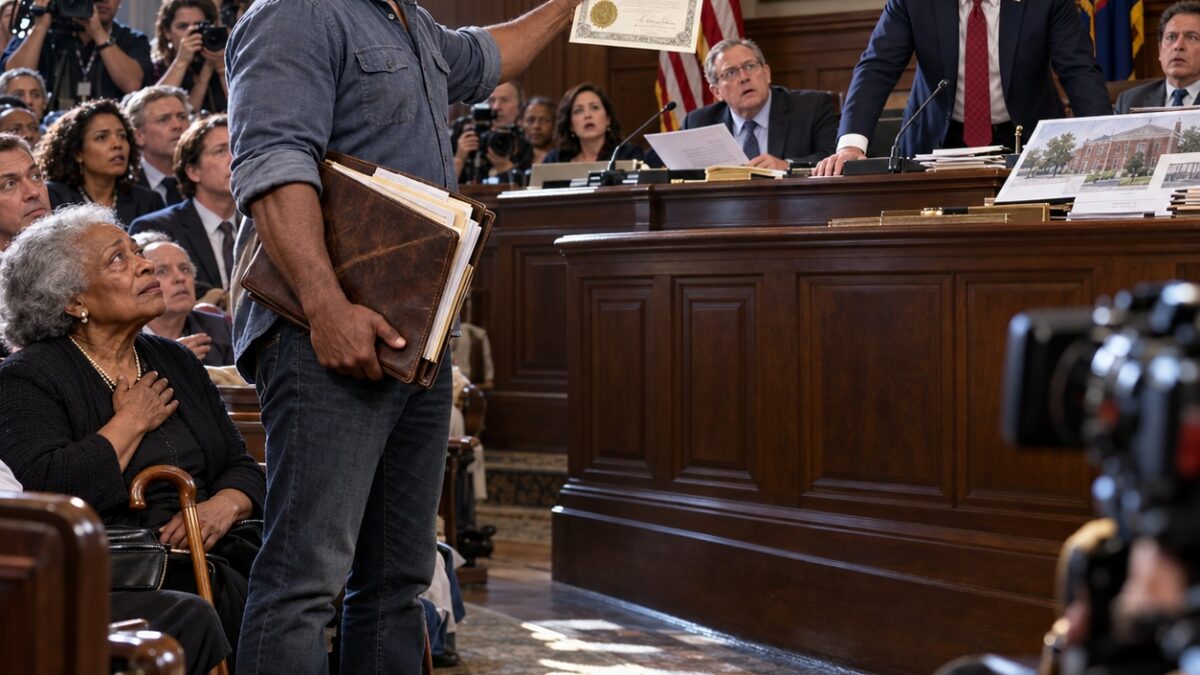
PART2
Mrs. Whitfield lived three blocks from town hall in a weathered two-story house her family had held for three generations.
The porch boards creaked.
Paint peeled near the back steps.
One screen door hinge needed replacing.
The place would never appear in one of Mayor Briggs’s glossy redevelopment brochures.
That was exactly why I loved it.
It looked inhabited.
Not curated.
Sunday afternoons, I sat on that porch with Eleanor.
Sometimes sweet tea.
Sometimes coffee.
Mostly stories.
I listened.
She told me which family had owned the corner store before the highway bypass took half its customers.
Which church had once raised money for school clothes by frying fish behind the fellowship hall.
Which houses had been built by bricklayers who came home from wartime service and were refused mortgages everywhere else.
Which widow had once kept five neighborhood children during a factory strike.
To somebody reading a parcel map, they were lots.
To Eleanor, they were memory with addresses.
Mayor Clayton Briggs saw something else.
Redevelopment corridor.
He called it revitalization.
The brochures were beautiful.
Of course they were.
Artist renderings.
Luxury lofts.
Glass storefronts.
Trees that somehow grew perfectly in computer-generated sidewalks.
Young couples holding coffee.
Outdoor dining.
Boutique retail.
Phrases like:
NEW ECONOMIC ENERGY
A WALKABLE FUTURE
REVITALIZING OUR CORE
Briggs talked about progress as if opposing any part of his plan meant opposing the future itself.
He was good at that.
He had expensive suits.
Perfectly straight ties.
Gold cufflinks he adjusted whenever he wanted a sentence to feel final.
And the kind of smile politicians spend years learning to hold while saying something dismissive.
The plan relied on a redevelopment bond package.
Ambitious.
Large.
Tied to projected tax revenue.
What most residents paid attention to were the pictures.
What I paid attention to was the fine print.
Because tucked beneath the optimistic language were eminent-domain authorities and property-acquisition mechanisms affecting several houses along the redevelopment corridor.
Three elderly homeowners received notices within weeks.
Mrs. Whitfield was one.
Her corner lot mattered more than the others.
It sat closest to town hall.
A keystone parcel for the layout Briggs wanted.
When I saw her notice, I read it twice.
Then again.
Preliminary zoning action.
Redevelopment necessity.
Public benefit.
Acquisition possibilities.
Language designed to sound inevitable before anything actually became inevitable.
Eleanor looked at me over the top of her glasses.
“They taking my house?”
“Not today.”
“That wasn’t my question.”
I smiled despite myself.
She had always been able to hear evasion.
“They’re trying to create a path that could let them.”
She looked toward the porch railing.
“My father fixed that railing.”
I said nothing.
“My husband replaced the boards in ’78.”
Still nothing.
“My babies came home through that door.”
Her voice stayed calm.
That made it harder.
“They got a word for all that in their plan?”
I looked down at the zoning notice.
“No, ma’am.”
She nodded.
“That’s what I thought.”
I began attending public meetings.
Always the same seat.
Near the side.
Worn leather folder in my lap.
I took notes.
Did not speak.
That irritated people who wanted to know what side I was on.
Mayor Briggs certainly noticed.
At one meeting, an elderly homeowner tried to ask whether relocation assistance would cover the difference between his current mortgage-free house and any replacement property.
Briggs smiled.
“We’re getting ahead of ourselves.”
The man sat down.
Another homeowner asked about preserving historically significant homes.
Briggs adjusted his cufflinks.
“We cannot let sentiment block economic opportunity.”
A few people clapped.
Others looked at the floor.
Fear often sounds like silence.
The pastor depended on municipal permits for a church expansion.
The corner-shop owner needed a sidewalk license renewed.
A retired teacher whispered that the eminent-domain language frightened her but never approached the microphone.
Briggs interpreted quiet as agreement.
That was his mistake.
He assumed people who did not challenge him had surrendered.
I knew better.
I had spent too many years around logistics operations where silence meant people were calculating.
Sometimes fear.
Sometimes options.
Sometimes the location of the nearest exit.
Then the cameras came to Eleanor’s porch.
The mayor chose a Wednesday afternoon.
Good light.
Local reporter.
Two council members behind him.
Small crowd.
He wanted an image.
Elderly homeowner receiving official notice.
Mayor explaining progress compassionately.
Maybe a quote about difficult decisions.
Instead, I was sitting beside Eleanor when his black town car pulled up.
Briggs stepped onto the porch in polished shoes.
He looked at me first.
Not because I was important.
Because I did not match what he expected.
Old pickup parked along the curb.
Worn boots.
Pressed but faded shirt.
No visible legal team.
No suit.
No expensive watch.
One hand resting on Eleanor’s shoulder because hers was shaking.
He unfolded the zoning notice like a ribbon.
“Mrs. Whitfield.”
“Eleanor.”
He paused.
“Excuse me?”
“My name is Eleanor.”
A reporter’s camera kept rolling.
Briggs recovered.
“Of course.”
Then his eyes moved toward me.
“And you are?”
“Marcus Reed.”
“What exactly?”
The question was not about my name.
“Friend.”
“Legal counsel?”
“No.”
“Investor?”
I looked at him.
He looked at my clothes.
“Doesn’t look like it.”
A few people laughed.
Not loudly.
The uncomfortable laughter people make when someone powerful has told them where humor is supposed to be.
Eleanor’s fingers tightened around her housecoat.
Briggs handed her the notice.
Then said the sentence I never forgot.
“Ma’am, I’d be careful. Grief makes people vulnerable. Some folks see opportunity.”
The implication sat on the porch between us.
I had returned after my mother’s death.
I was sitting with an elderly homeowner.
Therefore perhaps I was exploiting her.
Maybe trying to buy the property cheap.
Maybe manipulating her.
Briggs did not accuse me directly.
Men like him rarely do when cameras are present.
They imply.
Leave themselves room later.
Eleanor started to speak.
I touched her hand.
Not to silence her.
To save her energy.
I took the notice.
Read the first page.
Folded it once.
Then again.
Handed it back to her.
“You’ll handle this the right way,” I said.
Briggs laughed.
“You handle it.”
He liked the line.
You could tell.
A small public victory.
He had the camera.
The notice.
The title.
I had old boots and a leather folder.
What he did not know was that I had already begun buying pieces of the financial structure underneath his entire project.
Not to destroy him.
That distinction matters.
The redevelopment bond had bothered me from the first time I read the offering documents.
Too dependent on projected revenue.
Too ambitious for the town’s actual tax base.
Too much collateral risk.
And one municipal asset kept appearing in the supporting structure.
Town hall.
The building Briggs stood in front of during press conferences.
The place he treated like an extension of his office.
His project had tied portions of its financing to that building.
If projected revenue failed badly enough, collateral provisions could activate.
Early investors had begun getting nervous.
Some wanted out.
My firm bought small positions.
Then more.
Not publicly.
Through a holding company.
No headlines.
No public announcement.
Just wire transfers.
Signatures.
Documentation.
The same way we handled most investments.
Briggs never asked who was buying the distressed pieces.
He assumed the debt market was abstract.
Numbers.
Institutions.
People who lived somewhere else.
That assumption would matter.
But first, I needed to know whether my interpretation of the bond structure was correct.
So I drove two counties over.
Modest office.
No town gossip.
No cameras.
State-level auditor.
Historic-preservation attorney.
My worn folder between us.
The auditor tapped the bond documents.
“The redevelopment package is leveraged against a municipal asset.”
“Town hall.”
“Yes.”
I already knew.
I wanted confirmation.
The preservation attorney turned pages.
“If projected revenue fails and the bond defaults, the collateral terms activate.”
“And control transfers?”
“Pending restructuring, to the controlling bondholder according to these terms.”
I nodded slowly.
I had spent enough years in logistics to respect the difference between intuition and verification.
“What percentage is controlling now?”
The auditor gave me the current figure.
I knew my holdings.
Not enough yet.
Close.
I bought more.
Quietly.
Not because Mayor Briggs mocked my shirt.
If that had been enough to make me risk capital, I would have deserved to lose it.
I bought because the debt was distressed, the collateral structure was real, and if I became the controlling holder, I could prevent the redevelopment package from using town hall as leverage while stripping elderly residents of their homes.
Financial preparation can look like revenge from the outside.
For me it was contingency planning.
If Briggs succeeded and revenue performed, the bonds could stabilize.
If the project failed, I wanted enough position to force restructuring terms.
Eleanor asked me once:
“What are you doing?”
“Reading.”
“You always say that when you don’t want to explain.”
She was right.
I smiled.
“Trying to make sure you have options.”
“I got one option.”
“What’s that?”
“Stay in my house.”
“That’s a good starting position.”
She looked at me for a long time.
“Your mama said you always got quiet before you made trouble.”
I laughed.
“She lied.”
“No, baby.”
Eleanor smiled.
“She did not.”
The annual town festival came in late summer.
Bright tents.
Barbecue smoke.
Children with painted faces.
Lemonade.
Music stage in front of town hall.
Briggs loved public events.
Good lighting.
Applause.
A microphone.
He thanked developers.
Sponsors.
“Visionaries.”
Then his eyes found me at the edge of the crowd.
I was holding two paper plates.
One for me.
One for Eleanor.
“We appreciate investors who actually contribute to our future,” he said.
His eyes stayed on me.
“Not porch sitters.”
Some people laughed.
Less than before.
I handed Eleanor her plate.
She whispered:
“Don’t you dare.”
“Don’t I dare what?”
“Let him ruin my barbecue.”
I smiled.
Then Briggs raised an eyebrow as if waiting for my response.
I gave him one.
“Contribution doesn’t always look loud.”
That was it.
No insult.
No reveal.
The sentence landed differently than I expected.
The crowd went quiet for half a beat.
Briggs adjusted his gold cufflinks.
Smirked.
Turned back to the festival.
To him, another win.
He had the microphone.
I had a paper plate.
That was fine.
The people I respected most in my life rarely had microphones.
My mother never needed one.
Eleanor certainly did not.
The contractor who keeps a bridge standing does not get applause every time a truck crosses it.
Quiet work is still work.
By autumn, the redevelopment banners began fading.
Literally.
Sun-bleached along the edges.
The project itself began fading with them.
Interest rates climbed.
Outside investors pulled back.
Retail commitments softened.
One major contractor stopped showing up regularly.
Steel deliveries slowed.
Invoices aged.
People started whispering.
Briggs responded the way insecure leaders often do.
More optimism.
He announced that delays were “strategic sequencing.”
He called unpaid invoices “temporary administrative timing.”
He insisted the project remained “fully aligned with long-term revenue projections.”
Language became more confident as reality became less cooperative.
I watched the bond price.
Bought another position.
Then stopped.
Enough.
My firm held the controlling interest.
No announcement.
Just paper.
Eleanor did not know the exact number.
I told her only:
“If things go badly for the project, we may have leverage.”
She looked at me.
“We?”
“Yes.”
“Why you keep saying we?”
“Because I’m not doing this for town hall.”
That answer seemed to satisfy her.
Then the bond payment came due.
It was a Thursday.
I received the notice in a plain envelope routed through the holding company.
No dramatic red stamp.
No siren.
Just paper.
DEFAULT DECLARED.
Terms activated.
I read the notice once.
Then again.
Three times.
The military taught me not to celebrate until the convoy arrives.
A default was not victory.
It meant the town had a serious problem.
People could lose jobs.
Contracts could fail.
Services could be affected.
The goal was not to watch Briggs’s administration burn.
The goal was to prevent a reckless redevelopment project from taking residents with it.
Across town, I later learned, Briggs sat alone in his office.
The gold cufflinks came off.
He set them on his desk.
Maybe for the first time he understood that financial documents do not care how persuasive you sound at a podium.
The emergency council meeting was announced for Thursday evening.
No detailed public agenda.
Only urgency.
By sunset, the chamber was full.
Every seat.
People along walls.
Eleanor came with me.
I told her she did not have to.
She stared at me as though I had suggested she move to Mars.
“They were taking my house and you think I’m missing the meeting?”
Fair.
She sat beside me in the third row.
I carried the same leather folder Mayor Briggs had once treated as if it contained coupons.
The room felt heavy.
Briggs stood behind the podium.
Tie straight.
Hair perfect.
Voice measured.
“There has been a temporary setback.”
Murmurs.
“But I assure you this administration has everything under control.”
That sentence had barely settled when the state auditor rose.
She did not wait for recognition.
“The bond has officially defaulted as of this afternoon.”
The room quieted.
“Under the terms approved by this council, collateral provisions are now in effect.”
Briggs’s face changed.
Only slightly.
A legal representative stepped forward.
Briefcase.
Neutral expression.
“Control of the municipal asset tied to the bond transfers to the majority bondholder pending restructuring.”
Briggs gripped the podium.
“And who exactly is that?”
I stood.
No music.
No dramatic rush.
Just a chair scraping the floor.
Every head turned.
Eleanor looked up at me.
Her eyes filled before I moved.
I walked down the aisle.
Worn folder under my arm.
The mayor stared.
I reached the clerk’s desk.
Opened the folder.
Removed the ownership certification.
The attorney read.
“Marcus Reed Holdings.”
The mayor’s color drained.
“That’s not possible.”
Those were his first words to me.
Not:
You did this.
Not:
How?
“Not possible.”
I finally looked directly at him.
“It is.”
For six months, he had mistaken appearance for capacity.
A faded shirt meant no money.
An old truck meant no influence.
Silence meant no plan.
A porch meant weakness.
Now the paperwork sat on the clerk’s desk.
I turned toward the council.
“I never wanted town hall.”
That was true.
“I don’t want to run your building.”
Also true.
“I want a restructuring that protects the town from the consequences of this default.”
Briggs tried to speak.
The auditor raised one hand.
I continued.
“First condition: pending eminent-domain action against Mrs. Whitfield and the other senior homeowners is halted.”
A murmur moved through the room.
“Second: no forced acquisition of occupied senior-owned properties under the current redevelopment plan during restructuring.”
Eleanor covered her mouth.
“Third: independent ethics review before any future redevelopment agreements move forward.”
Council members shifted.
Some looked relieved.
Some terrified.
“Fourth: all bond-restructuring discussions will be documented and open to independent financial review.”
I paused.
“This is not revenge.”
I looked toward Briggs.
“The town needs to survive your project.”
That sentence mattered.
Because people had jobs.
Businesses.
Public services.
Families.
I had no interest in winning a financial duel if the town lost.
Briggs’s hands tightened on the podium.
“You think you can just take over town hall?”
“No.”
I stayed calm.
“The bond terms your council approved say what happens after default.”
“That was never the intent.”
“Then the council should not have approved language it did not intend to follow.”
The room went silent.
That was logistics again.
Plans are easy when nothing goes wrong.
The quality of a plan shows in failure.
Briggs had built a redevelopment structure around best-case revenue.
Reality delivered another scenario.
The documents had an answer.
He simply had not expected the person holding the answer to sit on Eleanor Whitfield’s porch.
One clap sounded from the back.
Then another.
I hated the applause.
Not because I did not understand the relief.
Because the moment was too serious for victory.
Still, the sound grew.
People stood.
Eleanor did not clap.
She took my hand.
That meant more.
Her fingers were trembling.
“You did all this?”
“I bought paper.”
She laughed through tears.
“Your mama would slap you for talking like that.”
Probably.
The meeting continued for hours.
Financial experts.
Council questions.
Restructuring.
The details were less cinematic than the moment people later remembered.
They always are.
Justice is mostly paperwork after the interesting part.
But the important result held.
Eleanor’s home stayed outside the acquisition plan.
So did the other threatened senior-owned properties.
No bulldozers.
No forced sale.
No rushed relocation.
The redevelopment project paused.
Not every idea in it disappeared.
Some had merit.
The question became whether the town could pursue improvement without treating longtime residents as inconvenient objects.
That conversation should have happened first.
Instead, it happened after default.
Mayor Briggs looked smaller when he left the chamber.
Again, not physically.
Power changes scale.
A microphone can make a man appear larger.
A verified document can return him to actual size.
Six months earlier, cameras had filmed him smiling on Eleanor’s porch.
Six months later, he walked out of town hall past cameras he had not invited.
I did not follow.
Did not give an interview outside.
Did not celebrate on the steps.
I took Eleanor home.
That was where I wanted to be.
We sat on the porch.
Late evening.
Neighbors began arriving.
One with sweet tea.
Another with folding chairs.
Someone brought pound cake.
Children ran near the steps.
People who had been afraid to speak at public meetings now stood in Eleanor’s yard.
The house looked exactly the same.
Peeling paint.
Creaking screen door.
Warm porch boards.
Nothing about it had become more valuable physically.
Yet everybody suddenly understood what had nearly been lost.
Eleanor looked at me.
“Your mother would be proud.”
I stared out at the yard.
There are sentences that reopen grief gently.
That was one.
I swallowed.
“It was never about winning.”
“What was it about?”
“Standing.”
She nodded.
Maybe that answer was too simple.
But it was true.
Standing beside people when powerful institutions expect them to stand alone.
That was what my mother had done all her life.
That was what Eleanor had done.
That was what I understood my investment work to be.
Money can be predatory.
It can also be defensive.
Capital itself has no morality.
Use gives it direction.
I had bought debt because debt was where the leverage sat.
That leverage gave elderly homeowners time.
Sometimes time is the most valuable asset in a fight.
The ethics review started quietly.
No dramatic raids.
No police on town hall steps.
No handcuffs.
Contracts requested.
Emails reviewed.
Closed-session decisions examined.
Vendor relationships.
Acquisition planning.
Communications around eminent domain.
The process bothered people who wanted instant justice.
I preferred it slow.
Documentation is stronger when nobody can dismiss it as theater.
Briggs kept working through the first weeks.
He still entered town hall.
Still wore the suits.
The cufflinks appeared less often.
His public statements grew shorter.
Then records began surfacing.
Not one giant criminal revelation.
A pattern.
Undisclosed pressure.
Closed-door conversations that should have been more transparent.
Redevelopment decisions pushed faster than good governance justified.
Property acquisition treated as a political obstacle rather than a human consequence.
Eventually, the pressure became larger than his ability to explain it.
He announced a press conference.
I did not attend.
Watched later.
He stood on the town hall steps where he had once delivered speeches about progress.
His statement was carefully written.
No meaningful apology.
Politicians are often allergic to plain regret.
He said he was resigning “in the best interest of the town.”
That was enough.
He carried a cardboard box out later.
Somebody photographed it.
People shared the picture.
I did not.
Humiliation was never my objective.
I knew what it felt like to lose power over your own life.
My mother’s death had taught me.
I did not need to enjoy another man’s collapse to believe consequences were necessary.
The gold cufflinks became a strange symbol around town.
People joked about them.
I disliked that too.
Objects make villains easier.
Real failure is rarely contained in cufflinks.
Briggs had convinced himself that leadership meant being the person who could define progress for everyone else.
That was the problem.
Pride had isolated him before resignation ever did.
He surrounded himself with people who applauded plans.
Not enough people willing to ask whether the plan could survive bad numbers.
That is dangerous in military logistics.
Dangerous in municipal finance.
Dangerous anywhere.
The interim council asked me to join a redevelopment advisory group.
I refused the first time.
They asked again.
I agreed only under conditions.
Independent preservation representation.
Residents from affected neighborhoods.
Public minutes.
No investor veto.
No closed process.
I did not want Clayton Briggs replaced by Marcus Reed.
That would have missed the entire lesson.
Leadership is not improved simply because the person holding power has better intentions.
Good systems should limit people with good intentions too.
That was another thing my mother understood without ever using governance language.
She used to say:
“Baby, anybody who tells you they’re the only one who can fix something is trying to sell you themselves.”
I heard her voice constantly during those months.
The town began restructuring.
Some redevelopment plans survived.
Smaller.
More realistic.
Vacant commercial buildings got attention before occupied homes.
Historic-preservation review became part of planning.
Senior homeowners received legal-information sessions before any acquisition discussion.
Not revolutionary.
Basic decency institutionalized.
That is what reform often looks like.
People expect justice to arrive dramatically.
Then the useful part is usually boring.
Procedures.
Notice.
Representation.
Audits.
Transparency.
Safeguards.
Those changes mattered more than Briggs resigning.
Because another mayor would come.
Another developer.
Another “vision.”
The question was whether the next plan required people like Eleanor to be personally rescued by someone with unusual financial leverage.
It should not.
No elderly homeowner should need a former military logistics officer buying municipal debt just to keep a family porch.
The system should protect fairness before heroics are necessary.
That became the point.
My investment firm changed after the experience too.
Before, we preserved historically Black-owned properties one transaction at a time.
Afterward, I began putting more money into preventative work.
Estate planning partnerships.
Title clearing.
Property-tax education.
Legal assistance for heirs’ property.
Historic-designation support where owners wanted it.
Because I had learned something painful.
Saving the house at the moment of crisis is expensive.
Protecting ownership years earlier is cheaper.
The most important rescue sometimes happens before anyone knows a rescue is needed.
Eleanor’s house did not need me to buy it.
That was the mayor’s assumption.
That a man with investment experience sitting beside an elderly widow must want the property.
What she needed was somebody willing to help her keep it.
Those are different forms of capital.
Not every investment seeks ownership.
Some investments protect somebody else’s right not to sell.
That idea became central to my work.
The town slowly learned my actual business.
For months, people had assumed I was retired military living modestly.
True.
They learned about the portfolio.
The holding companies.
The distressed municipal debt.
The preservation properties.
Suddenly some people treated me differently.
That irritated me.
The old pickup had not changed.
My clothes had not changed.
My competence had not appeared overnight.
Money had simply become visible.
One shop owner who barely acknowledged me before started calling me “Mr. Reed.”
I told him:
“Marcus was fine last year.”
He laughed awkwardly.
That was the same problem in reverse.
Briggs had underestimated me because I looked ordinary.
Now other people overestimated me because they knew my holdings.
Both were distortions.
We are terrible at seeing people without symbols.
Clothes.
Titles.
Money.
Uniforms.
Cars.
My military years had stripped some of that out of me.
A supply sergeant with dusty boots can save an entire operation.
A polished officer can ruin it.
Judge what works.
Not what shines.
Eleanor never changed how she treated me.
Thank God.
One Sunday I arrived with expensive pastries from a bakery two towns over.
She looked inside the box.
“What foolishness is this?”
“They’re good.”
“They better wash dishes for that price.”
Then she served them on chipped plates.
Perfect.
I asked whether she wanted repairs done to the house.
Paint.
Porch.
Screen door.
Anything.
She narrowed her eyes.
“You saying my house looks bad?”
“No, ma’am.”
“Then say what you mean.”
“I’d like to fix anything you want fixed.”
“Screen door.”
“That’s it?”
“It squeaks.”
“Paint?”
“Still on there.”
I laughed.
We replaced the hinge.
That was all she allowed.
People often assume preservation means making old houses look new.
Sometimes preservation means letting owners decide what “better” means.
Eleanor did not want a boutique restoration.
She wanted her door to stop squeaking.
Her decision.
Her house.
That principle mattered.
The ethics review concluded months later.
Its findings were serious enough to validate the concerns that had grown during redevelopment.
Not a dramatic corruption thriller.
More mundane.
Process shortcuts.
Conflicts.
Closed decisions.
Pressure.
A culture where opposition was treated as obstruction.
That is how many abuses happen.
Not one criminal mastermind.
A system slowly learning to reward yes.
Briggs had not needed to order anyone to be afraid.
People understood that permits, contracts, access, and city relationships could become complicated if they stood against the mayor.
Fear does not always need explicit threats.
It grows in patterns.
Shop owners knew.
Pastors knew.
Residents knew.
That is why the town’s silence mattered so much.
And why breaking it required more than one mayor’s resignation.
The first public redevelopment forum after the restructuring was uncomfortable.
Good.
People disagreed.
Loudly sometimes.
Eleanor attended.
Of course.
A developer presented a proposal for mixed-use retail on two vacant lots.
A resident objected to building height.
Another supported it.
Historic-preservation counsel explained options.
Nobody called anyone anti-progress.
Nobody accused elderly residents of sentimentality.
The meeting lasted too long.
Coffee ran out.
Perfect.
Democracy is often less efficient than control.
Efficiency is not always the highest value.
Briggs’s original process had been efficient.
He moved decisions quickly.
That was part of the danger.
The military taught me that speed matters.
It also taught me speed without correct information can move disaster faster.
The town had mistaken momentum for progress.
We learned to separate them.
My mother would have liked that too.
She hated being rushed into decisions.
Salespeople feared her.
“Offer expires today?”
She would say.
“Then I guess I don’t need it tomorrow.”
I inherited some of that.
Maybe that was why Briggs’s pressure never worked emotionally.
He wanted urgency.
I wanted structure.
The bond default created urgency of its own.
But preparation let me act without improvising.
That is another lesson people often missed when retelling the story.
They focused on the reveal.
Quiet man secretly owns the bond.
Good headline.
Incomplete lesson.
The important part happened months earlier.
Reading the offering documents.
Buying small positions.
Confirming collateral terms.
Meeting the auditor.
Consulting preservation counsel.
Waiting.
Building options.
The dramatic reveal lasted thirty seconds.
Preparation lasted a year.
Most “overnight” reversals are built that way.
Quietly.
Before anyone is watching.
Eleanor asked me years later whether I had known the project would fail.
“No.”
“Then why buy all that debt?”
“Because I thought the downside was mispriced.”
She stared.
“English.”
I laughed.
“Because the bonds were cheaper than what the collateral rights were worth if the project failed.”
She considered.
“So you thought the mayor was gambling.”
“Yes.”
“And you bought the table?”
I laughed harder.
“Something like that.”
She was pleased with herself.
Then became serious.
“You could have lost money.”
“Yes.”
“For us?”
“For the investment.”
She gave me a look.
I corrected.
“And because I wanted leverage if the town tried to push you out.”
“That’s better.”
The truth was both.
Good intentions do not replace investment discipline.
I would never risk my firm purely for symbolism.
But finance can align with values.
In this case, it did.
We eventually restructured the bond position in a way that allowed town hall to remain a public asset.
That mattered to me.
The source story makes the collateral transfer sound like I “owned” town hall.
I never saw it that way.
Control rights activated pending restructuring.
Those rights were tools.
Not trophies.
I did not want a municipal building.
I wanted enough leverage to stop a bad acquisition plan and force better governance.
Once protections were in place, the objective was preserving town function.
Not holding the building hostage forever.
That distinction separated intervention from revenge.
Some people wanted me to squeeze the town financially.
“Make them pay.”
For what?
Briggs’s arrogance?
Residents would pay.
City workers would pay.
Libraries.
Roads.
Services.
Punishing an institution can punish everyone who had no control over the original failure.
I had spent too long moving supplies into broken systems to confuse leadership with the people trapped under leadership.
The town was not Mayor Briggs.
The HOA was not Linda—wrong story, wrong town, but the principle holds.
Institutions are larger than the person temporarily occupying the microphone.
That is why restructuring focused on survival.
Eleanor’s porch became a gathering place afterward.
Not formally.
No committee.
People just came.
Sweet tea.
Folding chairs.
Stories.
One Sunday, children played near the steps while three older residents argued about whether the town’s first Black-owned grocery had opened in 1948 or 1949.
Eleanor shouted from her chair:
“Forty-eight.”
A retired teacher argued.
Eleanor disappeared inside.
Returned with a church program from 1950 referencing the store’s second anniversary.
Case closed.
Everyone laughed.
That was history.
Not plaques.
Not brochures.
People remembering accurately enough to argue.
I began recording some of Eleanor’s stories with her permission.
Audio.
Dates.
Names.
We partnered with a local archive.
Not because I thought she was dying soon.
Because communities lose information every time an elder dies.
My mother’s death had made that real.
There were stories she took with her.
Things I never asked because I assumed there would be another Sunday.
There was not.
So I asked Eleanor.
Who built this?
Who lived there?
Why did that business close?
Who organized that march?
Which church helped which family?
She answered.
Sometimes corrected herself.
Sometimes called somebody.
Memory became record.
That work felt connected to property preservation.
A deed tells you who owned a parcel.
It does not always tell you why that ownership mattered.
Culture lives between documents.
We needed both.
Briggs had understood only the document side that supported acquisition.
Parcel number.
Assessed value.
Redevelopment potential.
He had missed meaning.
That did not mean meaning should automatically defeat every public project.
Cities change.
Roads expand.
Buildings become unsafe.
Economic development matters.
But when government uses eminent domain, it carries a duty to see more than market price.
That was the principle I became interested in.
Fair process.
Transparent necessity.
Alternatives.
Preservation where practical.
Respect.
Not treating old residents as debris in the path of a rendering.
The town’s new planning framework included a community-history assessment for redevelopment corridors.
Some developers hated it.
Good.
If your project cannot survive learning who lives there, it may need redesign.
One developer became an unexpected ally.
Young guy.
Initially supported Briggs.
After the default, he told me:
“We were sold a cleaner site-acquisition picture than reality.”
“What does that mean?”
“We were told most owners were willing.”
“They weren’t.”
“I know now.”
He adjusted plans.
Built on parcels acquired voluntarily.
Kept Eleanor’s corner intact.
His development succeeded on a smaller scale.
That mattered.
Because the story did not need to become:
Old houses versus future.
That binary was Briggs’s framing.
A town can preserve memory and still build.
Good planning holds multiple truths.
The new storefronts eventually created jobs.
The luxury-loft concept became mixed-income units after restructuring.
Town hall remained town hall.
Eleanor remained on her porch.
Progress happened.
Just not the way one man had demanded.
That may have been the most satisfying outcome.
Not stopping everything.
Improving the process.
Years later, a journalist asked whether I considered Mayor Briggs a villain.
I said no.
The reporter looked disappointed.
I explained.
“He made dangerous decisions and treated opposition with contempt.”
“Isn’t that a villain?”
“That’s a person who should not have had unchecked power.”
People prefer morality plays.
I understand.
But if we tell ourselves bad systems happen only because uniquely evil people appear, we learn nothing.
Briggs was ambitious.
Proud.
Dismissive.
Convinced he understood the town’s future better than residents who had lived there for generations.
Those traits are common.
That is why systems matter.
A good council should slow a bad bond package.
Independent review should expose unrealistic projections.
Eminent-domain safeguards should protect vulnerable homeowners.
Public process should make dissent safe.
If every protection depends on the mayor being humble, eventually you get a mayor who is not.
Build for that.
Logistics taught me redundancy.
Democracy needs it too.
Eleanor lived several more years in that house.
Every Sunday I could, I sat with her.
My firm grew.
I could have bought a nicer truck.
Did not.
Partly habit.
Partly stubbornness after people began associating the old pickup with the story.
Eventually it rattled so badly at stoplights that Eleanor refused to ride in it.
“That thing is going to shake my teeth out.”
“It passes inspection.”
“So does jail food.”
I bought another truck.
Used.
She approved reluctantly.
“You got money.”
“That does not mean I need to waste it.”
“Your mama said the same thing.”
There it was.
Mom.
Always appearing.
Grief changed over time.
At first, every mention of her felt like pressing a bruise.
Later, it became warmth.
Not always.
Some days still hurt.
But I stopped feeling that moving forward meant leaving her behind.
That was something the town conflict taught me unexpectedly.
My promise at her grave had not frozen me in mourning.
It gave grief direction.
Look after people who looked after her.
That became action.
Action became work.
Work became community.
I did not “heal” because Mayor Briggs challenged Eleanor.
I would never give him that credit.
What he did was wrong.
But in responding, I found a way to carry my mother that did not require living entirely in loss.
That belonged to me.
Not him.
People sometimes give adversity too much credit.
“You became stronger because of him.”
No.
My mother built strength.
The military refined discipline.
Eleanor gave me a reason to use both.
Briggs provided a problem.
That is all.
The distinction matters.
One Sunday, after the ethics review was complete, Eleanor brought out an old photograph.
My mother.
Young.
Maybe nineteen.
Standing on that same porch.
I had never seen it.
My mother was laughing.
Eleanor beside her.
Both wearing clothes that made the decade obvious.
I stared.
“Where did you get this?”
“Been in my Bible.”
“For how long?”
“Long enough.”
“Why didn’t you show me before?”
“You weren’t ready.”
I wanted to argue.
Could not.
She was probably right.
I held the photograph.
My mother before me.
Before military deployments.
Before investment firms.
Before funerals.
Just a young woman laughing on a porch I had spent months trying to protect.
That broke me.
I cried.
Not quietly.
Eleanor put one arm around me.
“Let it out, baby.”
I was a grown man.
Former military.
Investor.
Majority bondholder.
All the titles Mayor Briggs had failed to see.
None mattered.
I was a son.
That was the deepest part of the whole story.
The porch had not mattered because it was old.
It mattered because people had lived there deeply.
History is accumulated ordinary life.
Photographs.
Birthdays.
Arguments.
Meals.
Mourning.
Laughter.
If you only measure redevelopment value, you miss the density of those things.
We eventually digitized the photo.
The archive kept a copy.
I kept the original only because Eleanor insisted.
“Your mama belongs with you.”
I framed it.
Not expensively.
She would have mocked that.
The ethics reforms remained in place after public attention faded.
That was the test.
A reform that lasts only while cameras are present is a performance.
Town council adopted stronger disclosure rules.
Bond packages required expanded independent review.
Redevelopment acquisition had new notice and public-hearing standards.
Historic-property impact became part of planning.
None perfect.
Nothing is.
But the next mayor inherited a system harder to bend around personal ambition.
That was success.
The next mayor, incidentally, was boring.
I mean that as praise.
No dramatic speeches.
No gold cufflinks.
Public meetings that ended close to schedule.
She asked hard questions of developers.
Sometimes approved projects residents disliked.
Sometimes rejected ones investors wanted.
Government remained government.
Messy.
Slow.
Necessary.
Nobody wrote national stories about her.
Excellent.
I attended one council meeting years later and realized I had not thought about Clayton Briggs in months.
That felt better than his resignation.
Indifference is the final stage of freedom from someone who once occupied too much mental space.
I did not need him to regret mocking me.
Did not need an apology.
His consequences belonged to him.
My life had moved elsewhere.
That is the part revenge stories often miss.
If your ending depends on the person who hurt you watching you win forever, you are still performing for them.
I stopped performing.
My work expanded into three nearby towns.
Same basic mission.
Historically Black-owned properties.
Senior homeowners.
Family land.
Distressed parcels vulnerable to predatory acquisition.
We made money.
That mattered.
Sustainable preservation cannot rely entirely on charity.
But returns were structured around keeping owners where possible.
Refinancing.
Partial interests.
Long-term leases.
Creative solutions.
No one model.
The principle was consistent.
People should not lose generational property simply because somebody with better lawyers can outlast them.
Sometimes families wanted to sell.
Then we helped them sell well.
Preservation does not mean forcing people to stay either.
Choice.
Always.
That was the word beneath everything.
Eleanor chose to remain.
Briggs’s plan reduced that choice.
The bond leverage restored time and negotiating power.
That was why I considered the intervention successful.
Not because the house stayed old forever.
Because the owner decided.
Property has economic value.
It also creates agency.
That is why taking it is serious.
One afternoon, a young analyst at my firm asked why I still kept the worn leather folder.
By then, we had secure cloud storage.
Encrypted systems.
Professional files.
The folder was unnecessary.
I held it.
“My mother hated throwing things away.”
“That’s not an answer.”
“Good analysts are annoying.”
He smiled.
I opened it.
Inside:
Copies of the original redevelopment notice.
Bond terms.
The ownership certification.
Eleanor’s first zoning letter.
A photocopy of my mother’s porch photograph.
The documents were outdated operationally.
Emotionally, they were architecture.
The folder reminded me that structure often lives inside unimpressive containers.
Briggs saw old leather.
He assumed little value.
Maybe that was why I kept it.
A private joke with myself.
Do not judge the folder.
Read what is inside.
Same with people.
One summer, town hall needed major roof repairs.
There was irony in that.
The building once used as collateral for ambitious redevelopment now needed ordinary maintenance.
The council approved it through normal budgeting.
No bond drama.
No investor rescue.
I smiled when I heard.
That is what healthy institutions do.
Fix the roof before it becomes a crisis.
If only people treated governance the same way.
Small repairs.
Early.
Transparency before scandal.
Listening before revolt.
Correcting before default.
Most disasters grow quietly.
A late invoice.
An unrealistic revenue projection.
A resident too afraid to speak.
A mayor who learns applause comes easier than contradiction.
By the time everybody notices, the problem feels sudden.
It rarely is.
Briggs’s downfall looked sudden at the emergency meeting.
It was not.
The structure had been weakening for months.
Years, maybe.
He mistook performance for stability.
I had spent my military career learning that logistics punishes that mistake brutally.
A convoy does not care about a commander’s charisma if fuel is not there.
A bond does not care about a mayor’s speech if revenue is not there.
Reality is very democratic that way.
It embarrasses everyone equally.
Eleanor loved that line.
“Reality is democratic.”
I told her once.
She laughed.
“No, baby. Reality got a mean streak.”
Maybe she was right.
When she eventually passed, the porch filled again.
Different gathering.
Folding chairs.
Church people.
Neighbors.
Children now older.
The house did not go immediately to a developer.
Her family had legal planning in place because we had done that work years earlier.
That may be the thing I am proudest of.
Not town hall.
Not the bond.
Not Briggs.
Eleanor’s heirs knew what they owned.
Title clean.
Wishes documented.
Options understood.
They chose to keep the house in the family.
Their decision.
Exactly as it should be.
At her funeral, someone said:
“She kept the neighborhood’s stories.”
True.
But by then, many had been recorded.
Archived.
Shared.
Her memory did not depend on one elderly woman remembering everything.
That was another form of preservation.
We learn.
We transfer.
We do not wait until loss to ask questions.
My mother had taught that lesson by leaving too soon for all the questions I had.
Eleanor helped me do better the second time.
After her funeral, I sat on the porch alone.
Same weathered boards.
No camera.
No mayor.
No crowd.
For the first time, the house felt quiet in a way I did not like.
I remembered Briggs standing there years earlier.
Smirking.
Asking whether grief made Eleanor vulnerable.
He had been right about one thing.
Grief does make people vulnerable.
Not foolish.
Not weak.
Vulnerable.
Because love leaves openings.
That is why decent societies protect grieving people instead of exploiting them.
It is why widows need fair process.
Why elderly homeowners need clear notices.
Why families need time.
Why powerful people should be especially careful around those who are hurting.
Briggs saw vulnerability and assumed leverage.
I saw it and remembered responsibility.
That was the moral difference between us.
Not clothing.
Not money.
Not intelligence.
How do you respond when somebody else is exposed?
Do you take?
Or stand?
That question became my definition of character.
I sat until sunset.
Then locked Eleanor’s screen door.
It still creaked slightly.
We had fixed the hinge years earlier, but old houses always invent new sounds.
I smiled.
Let it creak.
Perfection was never the point.
Preservation is not embalming.
A house can age.
A town can change.
People can die.
New businesses can open.
Children can leave.
Roads can improve.
The point is not to stop time.
The point is to stop power from pretending time gives it permission to erase people without listening.
That was what we fought.
Years later, the redevelopment corridor looked different.
Some new buildings.
Some old houses.
Town hall restored.
Storefronts occupied.
Eleanor’s house still on the corner.
A newer family member sitting on the porch.
Mixed-income apartments farther down.
A café in a renovated building that had once been vacant.
Not the shiny uninterrupted vision Briggs put on posters.
Better.
Messier.
More honest.
Progress with memory still visible.
I drove through one afternoon.
Stopped at a light.
Looked toward the porch.
For a second I saw my mother in the old photograph.
Young.
Laughing.
Then Eleanor.
Then myself beside her.
Then Briggs holding the notice.
Memory layers places like that.
The light turned green.
I drove on.
No need to stop.
The house did not require me anymore.
That felt good.
Protection should aim toward independence.
If the thing you protect can never survive without you, maybe you have created dependence instead of strength.
The neighborhood had legal resources now.
Archives.
Planning safeguards.
Organized residents.
My firm could still help.
But the next fight would not begin with everyone whispering alone.
That mattered.
A new generation had learned to stand before crisis.
My mother’s promise—my promise to her, really—had expanded.
At first:
Look after the people who looked after her.
Later:
Help build systems so they do not always need someone like me.
That was the mature version.
Hero stories flatter individuals.
Strong systems make heroes less necessary.
I would rather live in the second world.
People still tell the story differently.
“Mayor mocks quiet man, loses town hall.”
Good click.
Not accurate enough.
Briggs did not lose town hall to me as some personal trophy.
The bond default activated collateral rights.
Those rights created restructuring leverage.
I used that leverage to protect residents, impose independent review, and stabilize the town’s obligations.
Then town hall remained public.
That is the full story.
Less flashy.
More important.
Likewise:
“Rich investor secretly gets revenge.”
No.
I was not sitting on Eleanor’s porch plotting revenge for an insult.
The investments started because the financial structure looked distressed and because I wanted options around a redevelopment scheme threatening generational property.
Briggs’s insult revealed his character.
It did not create my strategy.
People love when humiliation causes a secret billionaire to strike back.
I was not a billionaire.
I was a disciplined investor with a modest lifestyle and a very specific portfolio.
The truth is strong enough.
No need to turn it into fantasy.
My mother would hate fantasy when the real point was responsibility.
She disliked bragging more than bad cooking.
At family gatherings, if I talked too long about something I had accomplished, she would say:
“Marcus, breathe so somebody else gets oxygen.”
I miss that.
Success after she died often felt incomplete because the person who would have punctured my ego was gone.
Eleanor performed that service admirably.
When newspapers began calling about the bond story, she said:
“You planning to buy a nicer shirt?”
“No.”
“Good. That one already disappoints the mayor.”
I laughed until I cried.
Maybe that was her greatest kindness.
She let me remain a person while other people turned me into a symbol.
Symbols are heavy.
I had worn enough uniforms.
I did not need another.
The final time I saw Clayton Briggs was not dramatic.
Grocery store.
Years later.
He looked older.
So did I.
No gold cufflinks.
No mayoral entourage.
Shopping cart.
Milk.
Cereal.
Ordinary.
He saw me.
Paused.
I nodded.
He nodded back.
We passed.
That was it.
No speech.
No apology.
No confrontation in aisle seven.
I was glad.
The story had already taken enough from both our lives.
Consequences had happened.
He resigned.
The town changed.
I did not need him humiliated every time we occupied the same building.
That is another thing age teaches.
Justice and permanent contempt are not the same.
I can believe a man misused power and still allow him to buy groceries in peace years later.
Mercy does not rewrite history.
It simply refuses to live forever inside punishment.
I hoped he had learned something.
Whether he had was no longer my responsibility.
My work was.
The neighborhood was.
My family.
The investors who trusted me.
The homeowners who called because someone had sent them an acquisition offer designed to frighten them.
I had enough.
One young woman contacted our firm after inheriting her grandmother’s property.
Back taxes.
Clouded title.
Developer pressure.
She expected us to tell her what to do.
“Do you want to keep it?” I asked.
She started crying.
Nobody had asked.
Everyone else had asked what the property was worth.
That moment took me back to Eleanor’s porch.
Choice.
Again.
Always.
We helped clear the title.
Structured payment.
She kept the house.
Three years later, she sold voluntarily.
Good price.
Moved closer to work.
Some preservation advocates were disappointed.
I was not.
Preservation succeeded.
She got to choose.
A preserved property is not a prison.
Generational ownership should empower descendants, not trap them beneath ancestor expectations.
That nuance became central to my philosophy.
Eleanor chose to stay.
Another owner may choose to leave.
Respect both.
Briggs’s failure was not wanting development.
It was treating resistance as irrational.
Treating sentiment as economically meaningless.
Treating elderly homeowners as pieces on a board.
People are allowed to value things differently.
Government must sometimes balance competing needs.
That is hard.
Humility belongs in the process.
He had too little.
The town learned.
So did I.
I became less impressed by leverage after using it.
That sounds strange.
Leverage works.
Money works.
Contracts work.
But the best outcome is still one where people listen before leverage becomes necessary.
If I have to become majority bondholder every time an elderly homeowner needs respect, society has failed.
Power is an emergency tool.
Relationship should be ordinary.
That is why I kept going back to porches.
Not literally every Sunday.
But in my work.
Sit.
Listen.
Before models.
Before valuation.
Before strategy.
What does the owner want?
What does the family remember?
What obligations exist?
What is real?
Then build.
Military logistics taught me systems.
My mother taught me people.
Eleanor taught me history.
The town taught me humility.
You need all four.
Systems without people become machinery.
People without structure can be exploited.
History without choices becomes nostalgia.
Humility without action becomes passivity.
Balance.
That is leadership.
Not microphones.
Not cufflinks.
Not applause.
One winter evening, I opened the old leather folder.
The edges were softer now.
Inside was the first zoning notice from Eleanor’s porch.
Mayor’s signature.
Redevelopment language.
I touched it.
Then my mother’s photograph.
For years, I had carried those documents as reminders.
That night, I realized I did not need the original notice anymore.
I scanned it.
Archived the file.
Then shredded the paper copy.
Some memories need objects.
Some no longer do.
I kept the photograph.
Of course.
My mother laughing.
Eleanor beside her.
The porch.
Before any of us knew what would happen there decades later.
I framed it above my desk.
Under it, no award.
No newspaper headline.
No bond certificate.
Just them.
That is the hierarchy of the story.
People first.
Everything else was method.
When young investors ask me about the Briggs deal, they want strategy.
“How did you know?”
“I didn’t.”
“How did you predict default?”
“I didn’t.”
“Then how did you win?”
I usually correct them.
“I prepared for a scenario.”
That is different.
Forecasts are imperfect.
Options matter.
We bought distressed positions because risk and collateral created opportunity.
We verified documents.
We sized exposure.
We did not gamble the whole firm.
Then when the scenario happened, we were ready.
That is discipline.
Not genius.
People prefer genius stories because discipline sounds boring.
Again.
Boring is powerful.
Briggs loved exciting renderings.
The project failed under boring numbers.
I loved boring covenants.
They protected real people.
There is poetry there if you look.
A beautiful future painted on glossy paper nearly erased a porch.
A worn folder filled with ugly legal text helped save it.
Appearance.
Again.
Always the same lesson.
Do not confuse polish with strength.
Town hall eventually hung a small exhibit about the redevelopment period.
Public records.
Planning history.
Community response.
They asked me for the leather folder.
I said no.
They got photographs.
Eleanor’s family loaned a copy of the porch photo.
The exhibit included a quote from her:
“My babies came home through that door.”
I had forgotten telling the archivist she said it.
Seeing the sentence printed made my throat close.
That was the line.
Not mine.
Not Briggs’s.
Hers.
A redevelopment plan had a thousand pages.
Eleanor explained property in seven words.
My babies came home through that door.
Economists cannot put that cleanly into a model.
That does not make it valueless.
Nor does it make development impossible.
It means decisions need language bigger than tax revenue.
That quote became the heart of the exhibit.
Students visited.
Some probably found it boring.
Good.
Maybe one of them would become a planner.
A council member.
A developer.
Maybe years later, standing before an old house, they would remember that doors carry more than square footage.
That is how culture changes.
Small memories placed where future decision-makers might encounter them.
My mother would call that planting seeds.
She was always more poetic than I was.
I still visit her grave.
Less often than in the first years.
I used to feel guilty about that.
Then realized grief does not measure love by cemetery attendance.
I tell her about work.
The neighborhood.
Eleanor.
Things she already would have known if death had not been so final.
Once I told her:
“I kept the promise.”
Then immediately corrected myself.
“I’m keeping it.”
Promises like that do not finish.
There will always be someone older.
Someone vulnerable.
Someone ignored because they are quiet.
I cannot save everyone.
That is ego.
But I can keep designing systems that do not assume silence means consent.
I can keep asking who is missing from the room.
I can keep using capital with some discipline.
I can keep standing when standing matters.
That is enough.
Years after the council meeting, someone sent me the old news footage from Eleanor’s porch.
Mayor Briggs.
Cameras.
Me in worn boots.
The implication that grief made Eleanor vulnerable to me.
I watched once.
Did not feel anger.
I noticed something else.
My hand on her shoulder.
She was trembling.
I had forgotten.
In memory, Eleanor always looked fierce.
But she had been scared.
That mattered.
Courage does not mean she was never afraid.
It meant she refused to let fear turn into surrender.
I had been afraid too.
Not of Briggs.
Of failing her.
Of promising too much.
Of using financial leverage and making the town’s problems worse.
People saw calm.
Inside, I ran scenarios constantly.
That is another danger of hero stories.
They erase fear.
Real courage requires fear.
Otherwise it is simply comfort.
I saved the clip.
Not for the mayor.
For Eleanor’s hand.
A reminder.
People who appear strong may still be shaking.
Stand gently.
That became another rule in my work.
No grand speeches to homeowners in crisis.
No:
I’ll save your house.
No promises before title review.
No treating vulnerable people like supporting characters in my own good deeds.
Explain options.
Ask consent.
Return calls.
Show documents.
Let them decide.
That is standing.
Not taking over.
I wish Mayor Briggs had understood that before his project failed.
Maybe town history would be different.
Maybe his career too.
But life rarely lets us rewrite before.
Only after.
So we build after.
The neighborhood learned.
Town hall learned.
I learned.
And the porch stayed.
That was enough.
If people ask me now what happened to the house, I tell them:
“Family still owns it.”
Not:
I saved it.
Because that language matters.
Eleanor’s family ownership existed before me.
My role was temporary.
A bridge.
Protection.
Leverage.
Then step back.
Good support should know when to leave the center.
Mayor Briggs never learned that while in office.
The microphone became proof of importance.
I spent enough years in logistics to know the best systems disappear when they work.
Nobody thanks the supply chain when medicine arrives on time.
Good.
That means people can focus on living.
My investment firm eventually built a preservation fund named after my mother.
I resisted.
My staff insisted.
She would have hated the attention.
Then secretly loved telling every church friend.
The fund supports legal and financial stabilization for generational properties.
No giant plaque.
No gala.
Applications.
Counsel.
Title work.
Taxes.
Repairs.
Boring money.
Useful money.
Every year, I read reports.
Homes stabilized.
Families assisted.
Properties sold voluntarily at fair value when owners chose.
That is how I carry her now.
Not only grief.
Infrastructure.
She would laugh at me calling love infrastructure.
Still true.
Love needs systems sometimes.
Meals.
Rides.
Legal documents.
Money.
Someone sitting beside you when the mayor comes.
That is what Eleanor had given my mother over decades.
I returned part of the debt.
That is community.
Not everyone paying each other back exactly.
Care circulating.
One day, perhaps someone helped by the fund will stand beside another person.
That would make the promise larger than me.
Good.
It should.
I am older now than my mother was in some of my strongest childhood memories.
That unsettles me.
You grow beyond the age you once considered absolute authority.
Then realize your parents were improvising too.
Mayor Briggs probably was, in his way.
So am I.
We all build from incomplete information.
That should create humility.
Not paralysis.
You still decide.
You just remember you could be wrong.
That is the biggest difference between leadership and performance.
Performance cannot admit uncertainty.
Leadership has to.
At the council meeting, Briggs kept saying control.
“We have it under control.”
He did not.
A better sentence would have been:
“We made assumptions that failed, and we need help restructuring.”
Harder.
More honest.
Maybe his career would have survived.
Pride is expensive.
Financially and otherwise.
The gold cufflinks were never the problem.
What they represented in my memory was the ritual of certainty.
Adjust.
Speak.
Dismiss.
Final.
No room for another perspective.
I stopped wearing cufflinks entirely after the story became famous.
Not logical.
Just amusing.
My staff once gave me cheap novelty cufflinks shaped like tiny porches.
I wore them to one fundraiser.
Eleanor would have loved it.
Life should contain jokes after seriousness.
Otherwise serious people become unbearable.
The town festival eventually returned to the square with no political drama.
Music.
Barbecue.
Children.
I attended one years later.
Bought two plates automatically.
Then remembered Eleanor was gone.
That hurt.
I sat alone for a minute.
Then a young volunteer asked if she could sit.
We talked.
She was studying urban planning.
Had grown up hearing the “town hall bond” story.
She asked:
“Did you know you’d change everything?”
“No.”
“What did you think you were doing?”
“Helping one woman keep her house.”
She looked surprised.
That answer may be the truest.
Big stories often begin with one specific person.
Not “the community.”
Eleanor.
Her trembling hand.
Her porch.
Her babies coming home through that door.
You start there.
Then discover the structure around the problem.
The bond.
The town.
The ethics.
The system.
But if you begin with abstraction, it is easy to forget why any of it matters.
I never did.
Not because I am unusually moral.
Because Eleanor would have reminded me loudly.
That helped.
The young planner asked:
“What should cities do differently?”
I thought.
“Stop calling people obstacles.”
That was my first answer.
Then:
“Make dissent cheap.”
“What do you mean?”
“People should not risk permits, relationships, or retaliation just because they question a project.”
She wrote it down.
I continued.
“And model downside seriously.”
She laughed.
“Now you sound like an investor.”
“I contain multitudes.”
She did not laugh enough.
Young people.
Hard audience.
Still, she understood.
Development needs optimism.
Finance needs skepticism.
Democracy needs both.
Briggs had too much of the first and punished the second.
That imbalance nearly cost the town its hall and residents their homes.
Systems should make skepticism useful before crisis.
That became another planning reform.
Independent fiscal stress testing.
Again:
Boring.
Good.
Sometimes I stand in front of my mother’s photograph and think about the porch scene.
If Briggs had known my portfolio that day, would he have treated me differently?
Almost certainly.
That is the uncomfortable part.
If I had arrived in a tailored suit and luxury car, perhaps he would have called me “Mr. Reed.”
Maybe asked for a meeting.
Maybe never implied I was exploiting Eleanor.
That means the lesson is not simply that he misjudged me.
The deeper failure is that he believed respect should scale with visible status.
That is common.
We all do it.
The goal is not merely to avoid insulting secretly powerful people.
The goal is to stop requiring hidden power before granting dignity.
If I had been broke, unemployed, grieving, and sitting beside Eleanor with no bond holdings at all, Briggs’s comment still would have been wrong.
That matters.
I repeat it whenever someone tells the story as a “you never know who someone really is” tale.
No.
You know enough already.
They are a person.
Start there.
Everything else is secondary.
My mother taught that by how she treated people whose names nobody printed.
Custodians.
Cashiers.
Neighbors.
Children.
The old man who sat alone in church.
No hierarchy of kindness.
I am still trying to match that.
Money makes it harder sometimes.
People behave differently around you once they know you have it.
That can distort your judgment too.
You start believing politeness is affection.
Agreement is wisdom.
Access is respect.
Briggs fell into one version of that.
I guard against another.
My staff has permission to tell me I am wrong.
They use it enthusiastically.
Good.
I never want a room where silence sounds like agreement.
I know where that road leads.
The final version of the redevelopment plan was approved years after the original crisis.
I attended the vote.
Eleanor’s family was there.
Historic homes protected.
Voluntary acquisition only for the relevant phase.
New commercial development on already vacant parcels.
Affordable units included.
Financial assumptions independently reviewed.
The vote passed.
People applauded.
I did too.
That was important.
I had never been against progress.
Neither had Eleanor.
She liked the new café once it opened.
Complained the coffee cost too much.
Still went.
Communities do not need to choose between memory and future.
They need leaders humble enough to design for both.
That may be the most hopeful ending.
Not the mayor losing power.
The town learning how to build without erasing itself.
My old military colleagues sometimes joke that I fought a municipal bond war.
I tell them it was easier than convoy scheduling.
Mostly true.
At least bond documents do not get flat tires.
But the underlying skills were similar.
Read conditions.
Know dependencies.
Plan contingencies.
Do not assume best case.
Protect critical assets.
Move with purpose.
And never mistake noise for capability.
Mayor Briggs had noise.
The town had a vulnerable financial structure.
Eleanor had history.
I had preparation.
In the end, preparation mattered.
Years later, when I replaced that rattling old pickup, I kept the license plate.
It sits in my office.
People ask why.
Because the truck became part of the story strangers told about underestimating me.
I keep it to remind myself that I liked the truck before it became symbolism.
Things are allowed to be ordinary.
That is important.
The leather folder.
The porch.
The pickup.
Cufflinks.
Stories turn objects into moral props.
Real life is messier.
The mayor’s cufflinks did not make him arrogant.
My boots did not make me humble.
Character lives in choices.
He chose ridicule on the porch.
I chose restraint.
He chose financial risk.
I chose to study it.
He chose pressure.
I chose leverage with conditions.
Later, he resigned.
I chose not to humiliate him further.
Choices.
Again.
Always.
That is how people become the stories we tell about them.
Not clothes.
One Sunday afternoon, long after Eleanor was gone, I sat on the porch with her granddaughter.
Same house.
Different generation.
She brought sweet tea.
“I think Grandma made it too sweet.”
“Impossible.”
“She thought sugar was a food group.”
True.
We sat.
Children played inside.
The screen door slammed.
Her granddaughter apologized.
“Old hinge.”
I smiled.
“Some things survive.”
She looked out at the street.
“Grandma used to say you saved this place.”
I shook my head.
“I helped.”
“She’d argue.”
“She argued recreationally.”
We laughed.
Then she became serious.
“We’re thinking about repainting.”
I looked at the peeling trim.
“What color?”
She told me.
Different from Eleanor’s.
For one second, memory resisted.
Then I caught myself.
Her house.
Her generation.
Her choice.
“Sounds good.”
That may have been the final test of what preservation meant.
Not freezing Eleanor’s house exactly as she left it.
Allowing descendants to keep living.
Change paint.
Renovate.
Move furniture.
Create new memories.
A preserved house should not become a mausoleum.
Neither should a town.
Keep what matters.
Let life continue.
That is the balance.
When I left that afternoon, I stood at the bottom of the steps.
Looked back.
Same porch where Briggs had mocked me.
Same boards.
Different paint samples taped near the door.
I smiled.
Six months after that humiliation, I had walked into town hall holding controlling bond rights.
Years later, none of that felt like the most important outcome.
The porch had children on it.
That was.
The house remained useful.
Loved.
Owned by family.
Not because I won a financial contest.
Because enough people eventually remembered that development should serve human life instead of replacing it.
I walked to my truck.
Not the old rattling one.
Another used truck.
Nothing glamorous.
Started the engine.
Before pulling away, I looked once more at the porch.
I thought about my mother.
Eleanor.
The mayor.
The council.
The auditor.
The attorney.
All the paperwork.
All the fear.
All the applause.
Then the simplest truth remained.
Power had come onto that porch expecting an elderly woman to stand alone.
She did not.
That was the story.
Everything else was mechanics.
Municipal bonds.
Collateral clauses.
Holding companies.
Ethics reviews.
Restructuring.
Useful mechanics.
But still mechanics.
The moral architecture was simpler.
Someone stands alone.
Stand beside them.
Not over them.
Not in front of them unless necessary.
Beside.
That was what my mother had done.
What Eleanor had done.
What I tried to do.
Mayor Briggs once thought leadership meant holding the microphone.
I learned from people who rarely had one.
Leadership is being the person who remains when the cameras leave.
It is reading the boring page.
Making the difficult call.
Refusing to confuse quiet with weakness.
Using leverage without becoming addicted to it.
And stepping back once the person you protected can stand without you.
Six months after Clayton Briggs mocked me on Eleanor Whitfield’s porch, he learned my name from a bond document.
I do not consider that the victory.
The victory came years later.
Children running through the same house.
A new generation choosing paint colors.
Town hall still public.
A redevelopment district still growing.
Historic homes still standing.
People arguing openly at council meetings without whispering first.
My mother’s preservation fund helping families I will never meet.
That is what winning looked like after all the noise faded.
Not the mayor losing his microphone.
A town finally learning it did not need to silence anyone to move forward.
And every time I think about that first porch confrontation, I remember the way Briggs looked at my boots and decided he understood me.
He did not.
But the deeper lesson is not that he should have recognized I was an investor.
He should not have needed to know.
Eleanor should not have needed my portfolio.
I should not have needed a controlling bond position.
Respect should have come before leverage.
Fairness should have come before default.
That is the standard I carry now.
Not:
Be careful who you underestimate.
Something better.
Do not make people prove they are powerful before you treat them as if they matter.

