PART2:My Son Threw Me Out of His Wedding in Front of 200 Guests—Then His New Wife Asked for the Keys to My $3 Million Ranch
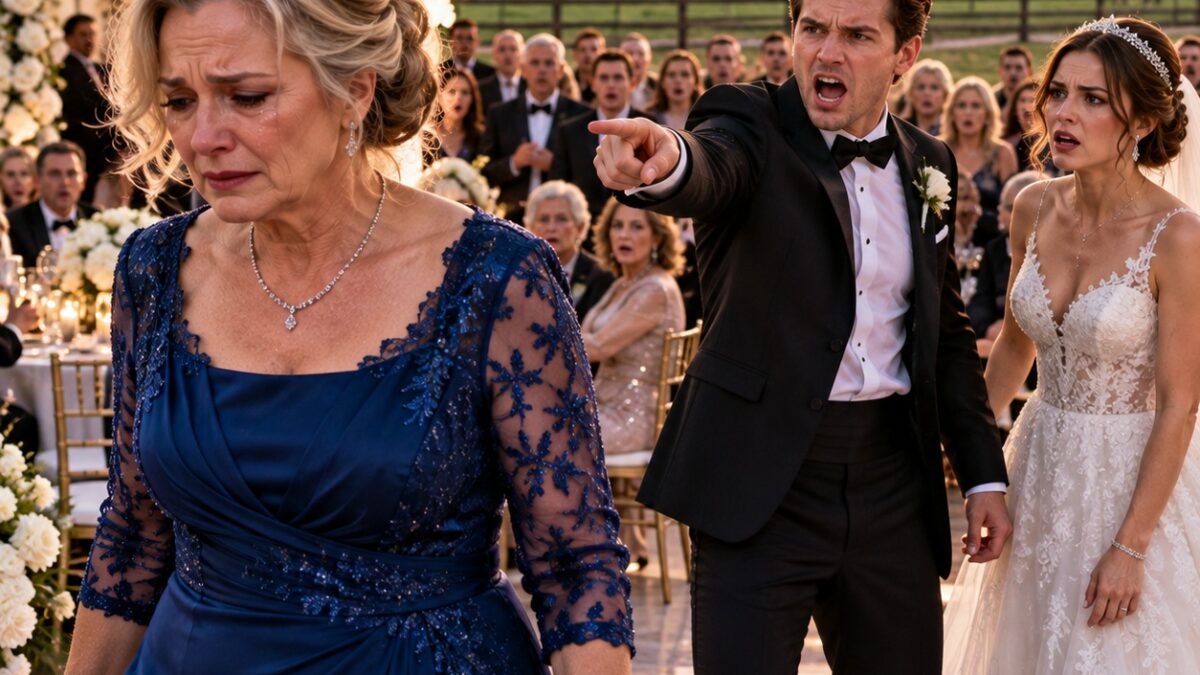
PART2
The drive home took twenty-three minutes.
I remember every one.
The ranch keys hung from a chain around my neck.
Cold metal against my skin.
Robert had given them to me before he died.
He had held my hand.
Weak fingers.
Dry lips.
“Victoria.”
“I’m here.”
“Protect the ranch.”
“I will.”
“Even from Ethan if you have to.”
I had actually laughed.
“Ethan loves this place.”
Robert’s eyes stayed serious.
“People change.”
“Our boy won’t.”
“Maybe.”
Then:
“But land brings out things in people.”
At the time, I thought illness had made him fearful.
Fifteen years later, I finally understood.
That wedding night, I took off the blue dress.
Folded it carefully.
Placed it in the closet.
My mother had worn it while marrying my father.
I refused to let Olivia turn it into something shameful.
I did not sleep.
At nine the next morning, Ethan called.
“Mom.”
His voice was tired.
Not remorseful.
“Can you come to the ranch?”
“I’m already here.”
Silence.
Then:
“I need the keys.”
My fingers closed around the chain.
“What for?”
Another pause.
Olivia’s voice whispered behind him.
Then Ethan:
“We want to make changes.”
“What changes?”
“Modernize.”
That word again.
“Main room.”
“Furniture.”
“Maybe some renovations.”
I stared at the kitchen table Robert built in 1989.
“Those pieces were made by your great-grandfather.”
“Mom, please don’t start.”
“Start what?”
“Living in the past.”
I laughed once.
Small.
“Yesterday you threw your mother out of your wedding because she wore your grandmother’s dress.”
“You don’t get to lecture me about history today.”
“Things change.”
“Olivia’s right.”
There it was.
Olivia’s right.
Three words that had become Ethan’s answer to everything.
Then he told me they would not be coming back to live at the ranch.
They were staying in the city.
“Better for Olivia’s career.”
I felt another piece of the life I imagined disappear.
“But you said you wanted to raise your children here.”
“I changed my mind.”
“Then why do you need the keys?”
His voice hardened.
“Because it’s partly mine.”
Technically, yes.
Robert’s will gave Ethan a fifty-percent future interest.
But Robert had also inserted something unusual.
As long as I remained alive and mentally competent, I controlled the use, management, leasing, modification, and disposition of the ranch.
Ethan could not sell.
Could not lease.
Could not renovate.
Could not divide it.
Not without my written and notarized approval.
I said:
“The keys stay with me.”
“Mom.”
“No.”
“It’s my property too.”
“It’s your inheritance.”
“There is a difference.”
“You’re being childish.”
I nearly shouted.
Instead, I looked around the kitchen.
Robert’s chair.
The old copper pans.
The photograph of Ethan at eight holding a newborn calf.
I said:
“You want independence.”
“Yes.”
“Then take it.”
“What does that mean?”
“It means build your life.”
“Live in the city.”
“Create whatever future you want with Olivia.”
“But the ranch stays under my care.”
Olivia said something behind him.
He repeated:
“Olivia says you’re clinging to material things.”
I closed my eyes.
“No.”
“I’m holding on to the promise I made your father.”
“He’s dead.”
The words landed harder than the wedding.
“My father is dead, Mom.”
“Fifteen years.”
“You keep acting like he’s coming back.”
Silence.
Then Ethan:
“I’m sorry.”
“No.”
I said quietly.
“You aren’t.”
He went silent.
I touched the keys.
“Yesterday, while I was walking out of your reception, a woman I didn’t know stopped me.”
“What?”
“She took my hand.”
“She said, ‘When a son chooses between his mother and his wife, he has already made his choice. Respect it. But respect yourself too.’”
“This isn’t a competition.”
“I know.”
“That’s why I’m done competing.”
“Mom—”
“The keys remain with me.”
“Until when?”
I stared out toward the field.
“Until you have a heart that deserves them.”
Then I hung up.
For hours afterward, I walked through the ranch house.
One room after another.
The walls were thick adobe.
The oldest section dated back more than a century.
Family photographs filled the hallway.
Great-grandparents.
Grandparents.
Parents.
Robert.
Ethan.
History does not make people morally superior.
I knew that.
But it gives weight to decisions.
In Robert’s old study, his last letter to me still sat in the drawer.
Not the secret yellow envelope.
A different letter.
One I had read dozens of times.
Take care of the land. Take care of our son. But above all, take care of yourself. Do not let anyone make you feel less than you are.
That night I cried.
Not for Robert.
For Ethan.
Death is terrible.
But at least death gives you permission to grieve.
When a living child becomes someone you no longer recognize, grief has nowhere to sit.
Three days passed.
No call.
Every morning I made too much coffee.
Every engine on the dirt road made me look toward the window.
By the fourth day, I broke.
I called him.
“Mom?”
“Can we talk?”
“Sure.”
“Not by phone.”
I swallowed.
“Come home.”
“With Olivia.”
“I’ll cook.”
He became quiet.
I heard him ask her.
Then:
“She doesn’t know if that’s a good idea.”
“Please.”
The word tasted like surrender.
“Let me make this right.”
“I want to get to know her better.”
“Maybe I haven’t been fair.”
Every sentence hurt because only part of it was true.
I did want peace.
I was willing to bend for it.
That was what motherhood had trained me to do.
Ethan’s voice softened.
“Really?”
“Really.”
“Tomorrow?”
“Seven.”
“I’ll make your meatloaf.”
He laughed lightly.
“My favorite?”
“Of course.”
“And apple cobbler?”
“If you behave.”
For one moment, my son returned.
It was enough to keep me trying.
The next day I prepared the house as if reconciliation could be cooked.
Meatloaf.
Turkey.
Cobbler.
Fresh tea.
China.
Candles.
I wore beige.
Neutral.
Nothing Olivia could call dramatic.
The keys were beneath my dress.
At 6:50, Ethan’s truck appeared.
He stepped out first.
White shirt.
Dark jeans.
Handsome.
Still my boy if I looked at him from the correct angle.
Olivia followed.
Wine-colored dress.
Designer bag.
Phone already in her hand.
“Good evening, Victoria.”
“Olivia.”
“Come in.”
She entered slowly.
Her eyes moved over everything.
Not admiring.
Evaluating.
“How quaint.”
“The house is over a hundred years old.”
“Very vintage.”
Vintage.
She said the word as though history were a marketing theme.
Dinner began awkwardly.
Then Ethan tasted the meatloaf.
Closed his eyes.
“God, Mom.”
“No one makes it like you.”
I smiled.
Olivia took a bite.
“It’s good.”
Then:
“A little seasoned for me.”
I offered something else.
She declined.
The wall clock ticked.
Finally, I apologized.
Not because I thought I was wrong about everything.
Because I wanted my son.
“I should have handled things differently.”
Ethan looked relieved.
Olivia smiled.
Genuine this time.
“Thank you, Victoria.”
“That means a lot.”
Ethan reached for my hand.
“I went too far too.”
“You shouldn’t have been yelled at.”
My throat tightened.
It was not a full apology.
But I took what I could get.
“Let’s move forward.”
I said.
Olivia raised her iced tea.
“New beginnings.”
We toasted.
I almost believed her.
After dinner, Olivia asked for the restroom.
Second door left.
Ten minutes passed.
Then fifteen.
I finally went to check.
Bathroom empty.
Hallway empty.
Robert’s study door stood slightly open.
That door was normally closed.
I pushed it.
Olivia stood behind the desk photographing documents.
My husband’s desk.
His drawers.
His papers.
She turned.
Pale for half a second.
Then smiled.
“Oh, Victoria.”
“You scared me.”
“What are you doing?”
“Nothing.”
“This room was open.”
“I thought it was interesting.”
“My husband’s study.”
“Yes.”
“So much history.”
She slipped the phone into her handbag.
“Very vintage.”
Again.
I stared.
She laughed nervously.
“I didn’t mean to intrude.”
“Then let’s go back.”
Dinner ended politely.
Too politely.
After they drove away, I went straight to the study.
Nothing obvious was missing.
Deeds.
Will.
Land titles.
Tax papers.
Then I opened the lower drawer.
The yellow envelope was gone.
Robert had placed it there shortly before his death.
Sealed.
He made me promise:
“Only open this if someone tries to take the ranch.”
I had never opened it.
Because nobody tried.
Until now.
I searched every drawer.
Shelf.
Cabinet.
Nothing.
Someone had taken it.
And only three people had been inside the house that evening.
Me.
Ethan.
Olivia.
I sat behind Robert’s desk until sunrise.
For the first time, I was no longer afraid I was being unfair to Olivia.
I was afraid I had not been unfair enough.
The doorbell rang the next morning.
Mr. Miller.
Our family attorney.
Seventy.
White mustache.
Dark suits that always carried a faint trace of pipe tobacco.
He declined breakfast.
Accepted coffee.
Then said:
“Victoria, Olivia called me yesterday.”
I set down my cup.
“She what?”
“She said you asked her to contact me about Robert’s will.”
“I did not.”
“I assumed not.”
“What did she ask?”
Mr. Miller folded his hands.
“Whether Ethan could transfer his interest.”
“Whether he could sell without your consent.”
“Whether your management authority could be challenged.”
I stared.
“What did you tell her?”
“That the information was confidential.”
“She became irritated.”
Then:
“Victoria, what’s happening?”
I told him everything.
Wedding.
Keys.
Dinner.
Study.
Missing yellow envelope.
His face tightened.
“That envelope contained Robert’s private letter?”
“Yes.”
“Do you know what it said?”
“No.”
He leaned back.
“I notarized his signature.”
“He did not let me read the contents.”
“But he told me something.”
“What?”
“That it was insurance.”
“Against what?”
Mr. Miller looked around the house.
“Probably this.”
Then:
“Be careful.”
“Money and property change people.”
“Ethan isn’t like that.”
“Maybe.”
He said.
“But he isn’t alone anymore.”
That afternoon Ethan texted.
Olivia wants to take you to lunch. Just you two. Start fresh.
Everything inside me said no.
Another part said:
Find out what she wants.
So I went.
Two o’clock.
Restaurant near the ranch highway.
Olivia already sat by the window.
White wine.
Phone.
Perfect smile.
“Victoria.”
She began warmly.
“I want us to stop fighting.”
“So do I.”
“Good.”
“Because Ethan is stressed.”
“He feels trapped between us.”
“I never asked him to choose.”
“I know.”
“But he feels he has to.”
She leaned closer.
“Especially because of the ranch.”
There it was.
I let her continue.
“It’s huge.”
“Beautiful.”
“But difficult.”
“Expensive.”
“You’re alone.”
“It’s not easy at your age.”
At my age.
I was fifty-seven.
Not ninety-seven.
She continued.
“You could sell.”
“Or develop.”
“Boutique hotel.”
“Wedding venue.”
“Corporate retreats.”
“I have contacts.”
“We could form a partnership.”
“You contribute the property.”
“We handle operations.”
I asked:
“And the keys?”
Her smile hesitated.
“We’d need full access.”
“Obviously.”
“And where would I live?”
“Oh.”
She waved one hand.
“Anywhere.”
“New York apartment.”
“Condo.”
“Something easier.”
“No stairs.”
“You should enjoy life.”
I drank water.
“Was this Ethan’s idea?”
“Both of ours.”
“Does Ethan know you called Mr. Miller?”
Her face went still.
Then recovered.
“I was exploring.”
“Does he know you photographed documents in Robert’s study?”
She looked toward the window.
“Victoria.”
“We’re trying to help.”
“No.”
“I said.”
She stared.
“No?”
“The ranch is not for sale.”
“It is not a hotel.”
“Not a venue.”
“Not your investment.”
“Not your partnership.”
“It is my home.”
“Ethan owns half.”
“He owns a future interest subject to Robert’s conditions.”
“That’s unfair.”
“It’s protection.”
Her glass touched the table harder than necessary.
“You’re selfish.”
The word did not hurt as much as she intended.
She kept going.
“This property could change Ethan’s life.”
“His children’s lives.”
“And you cling to it because you’re sentimental.”
I stood.
“The ranch is not more important than family.”
“It is simply not the same thing.”
She stared.
Then I said the sentence that made her pale.
“Marriages can end, Olivia.”
“Businesses fail.”
“Promises change.”
“Land remains.”
She rose slightly.
“Are you threatening my marriage?”
“No.”
“I’m refusing to gamble four generations on it.”
I left.
Keys in my hand.
Cold.
Heavy.
Real.
By the time I reached my car, I knew we were no longer having a disagreement.
We were in a fight.
At eleven that night, headlights climbed the dirt road.
Mr. Miller.
He carried a manila envelope.
No briefcase.
That worried me.
“I found something.”
Inside was a copy.
Robert’s handwriting.
Mr. Miller admitted he had made it years earlier without Robert knowing.
“My instinct told me it might matter someday.”
I unfolded it.
Three weeks before Robert died.
Victoria, my love, if you are reading this, someone is trying to take the ranch.
I stopped breathing.
Robert described meeting an older man at the hospital during treatment.
The man had raised a son alone.
Gave him everything.
Then the son married.
His wife slowly persuaded the family that the father could no longer manage his home.
Modernization.
Power of attorney.
Help with medical paperwork.
Two weeks after signing, they sold his house.
Put him in a nursing facility.
Took control.
Robert wrote:
It wasn’t my son who betrayed me. It was my manipulated son. But the result was the same.
Then:
That story frightened me because I thought of Ethan. Not because I distrust him, but because I know love can change judgment.
My tears fell onto the paper.
Robert continued:
If someone asks for the keys, if someone says the ranch is a burden, if someone makes you feel too old or incapable to manage what is yours, resist.
Then the line I will carry until I die:
You are the door, Victoria. You decide who enters.
I covered my mouth.
Mr. Miller touched my shoulder.
“Robert knew.”
“He feared the possibility.”
“What do I do?”
“Legally?”
Mr. Miller said.
“You are protected.”
“Emotionally?”
He paused.
“No document can protect you there.”
Then he warned me about something worse.
A competency challenge.
“If they claim you have dementia.”
“I don’t.”
“I know.”
“But an aggressive legal strategy can create trouble.”
“How?”
“Doctors.”
“Evaluations.”
“Claims of isolation.”
“Unreasonable decisions.”
“Failure to manage property productively.”
He looked sad.
“Go to your physician.”
“Full cognitive exam.”
“Get everything documented.”
“Move important papers out of the house.”
That night I read Robert’s letter four times.
Then I stopped crying.
At seven the next morning, I called my doctor.
At eight, the bank.
At nine, Mr. Miller again.
I moved deeds.
Will.
Robert’s letter.
Copies.
Everything into a safe-deposit box.
Then I completed physical tests.
Memory tests.
Cognitive assessment.
One week later my doctor said:
“You’re healthier than half my patients in their forties.”
I asked:
“Can you put that in writing?”
He laughed.
Then realized I was serious.
“Yes.”
I stored the certificate with the rest.
I was ready before Ethan made his next move.
That fact probably saved the ranch.
It did not save my heart.
Ethan called after hearing about my lunch with Olivia.
“Mom.”
“She says you humiliated her.”
“I said no.”
“You called her temporary.”
“I said marriages can end.”
“Same thing.”
“No.”
“She thinks you need help.”
There it was.
“Professional help?”
“Yes.”
“Maybe a therapist.”
“Doctor.”
“You’re isolated out there.”
“You can’t move forward.”
I closed my eyes.
Exactly what Mr. Miller predicted.
“Do you think I’m mentally incompetent?”
“What?”
“Answer me.”
“No.”
“But I think you’re lonely.”
“Stuck.”
“You live with ghosts.”
“Come stay with us.”
“Leave the ranch for a while.”
Then:
“And give me the keys.”
“For safety.”
The words were almost identical to Robert’s letter.
A burden.
Too old.
Too isolated.
Keys.
I felt chilled.
“No.”
“Mom.”
“No.”
“I don’t need help.”
“I need respect.”
“I can’t respect a decision that hurts you.”
“The decision hurting me is yours.”
He exhaled.
“Olivia says—”
I interrupted.
“Stop telling me what Olivia says.”
“I’m talking to my son.”
Silence.
Then:
“You’re forcing me to choose.”
“No.”
“You already chose at the wedding.”
He hung up.
I sat in the kitchen afterward feeling as though I had become a widow again.
Except this time the person I mourned was still alive.
Three weeks passed.
Then two trucks and a car arrived.
Ethan.
Olivia.
Two attorneys.
I knew what they were before they introduced themselves.
Lawyers carry a particular posture when someone else is about to suffer.
Attorney Williams opened his briefcase.
“Mrs. Taylor, my client wishes to exercise his rights as co-owner.”
Ethan stood at the window.
Would not look at me.
Williams continued.
“Your late husband’s will gives you administrative authority.”
“But it also allows a co-owner to petition for division if management causes deterioration of the asset.”
I almost laughed.
“The ranch is maintained.”
“Physically.”
he said.
“Economically, it is underutilized.”
Attorney Smith joined.
“The property is worth approximately three million dollars.”
“If converted to events, it could generate thirty to fifty thousand dollars per month.”
“I don’t want thirty thousand dollars a month.”
“Think of the family.”
“I am.”
Olivia stood.
Hands resting over her abdomen.
Then smiled.
That smile.
Calculated.
“Think of your grandson.”
My entire body went still.
“What?”
Ethan turned.
Eyes red.
“Mom.”
“Olivia’s pregnant.”
Three months.
Grandchild.
The word hit every soft part of me.
I had dreamed of that child for years.
Imagined small boots on the porch.
A pony.
Robert’s stories.
Now Olivia held the dream like a bargaining chip.
“Congratulations.”
I whispered.
Ethan came closer.
“Then you understand.”
“This is our future.”
“My child deserves stability.”
“Education.”
“Opportunities.”
“And you think the ranch should pay for those.”
“It’s my inheritance.”
“No.”
“It is part of your inheritance.”
“Subject to your father’s instructions.”
Attorney Williams spread papers.
“If you refuse cooperation, we may petition for forced division.”
“And questions regarding your competency may become relevant.”
There it was.
My age.
Living alone.
“Senile stubbornness.”
He did not use the exact phrase immediately.
But he came close.
I reached into the folder beside me.
“My physician has already completed a full cognitive and physical assessment.”
Williams blinked.
“Why would you do that?”
“Because I have a good lawyer.”
He did not like that answer.
Olivia’s smile vanished.
Ethan finally looked at me.
“Mom.”
“Give me the keys.”
“No.”
“Give me the damn keys.”
His shout shook the room.
Attorneys shifted.
Olivia touched his arm.
He pulled away.
“I’ve been patient.”
“You never listen.”
“It is always what you want.”
“What about me?”
“You matter more than anything.”
“Then prove it.”
He held out his hand.
“Give me my inheritance.”
I removed the necklace.
The old iron keys rested in my palm.
Ethan’s hand opened.
For one second, his face changed.
Hope.
Maybe triumph.
I almost gave them to him.
Almost.
Then I remembered Robert.
You are the door.
I closed my fist.
“These keys are not your future.”
“They are your past.”
“Until you understand the difference, you won’t have them.”
Ethan’s face twisted.
Then he said:
“I don’t have a mother.”
I felt those words physically.
“Ethan.”
“A mother who loves her son more than a property doesn’t do this.”
“Don’t.”
“You choose.”
“Either you’re with me or you don’t have a son.”
Tears finally filled my eyes.
“Don’t make me choose that.”
He turned to his attorneys.
“I already chose for both of us.”
Then:
“File it.”
“I want division.”
“I want my share sold.”
“I want her out.”
Olivia stood behind him.
Her expression was soft.
Almost pitying.
But beneath it was satisfaction.
They left.
Three vehicles disappeared in dust.
I closed the door.
Walked to Robert’s chair.
And cried until I could barely breathe.
For Ethan.
For my unborn grandson.
For myself.
For Robert.
For every year of love that had somehow arrived at this room with attorneys and threats.
When the tears stopped, I put the keys back around my neck.
Because love can hurt.
But love cannot require self-erasure.
Two months later, formal papers arrived.
Partition request.
Forced sale.
Claims of poor economic management.
Mr. Miller reviewed them.
“This could take years.”
“Can they win?”
“Not easily.”
Then:
“But Victoria.”
“Yes?”
“Emotionally, everyone already lost.”
He was right.
That night, I sat on the porch beneath a sky so clear it almost hurt.
And I made another decision.
Not against Ethan.
For the ranch.
The next morning:
“I want a new will.”
Mr. Miller hesitated.
“Tell me.”
I dictated.
The ranch would remain under my control as long as I lived.
After my death, it would enter a family trust.
No sale.
No division.
No material alteration for fifty years.
Ethan could receive fifty percent of profits from limited cultural, educational, or historical uses.
The remaining half would support a foundation protecting historic American ranches.
If Ethan challenged the new structure or attempted to force a sale, his benefit would pass entirely to the foundation.
“The keys?”
Mr. Miller asked.
“To the foundation director.”
He looked at me.
“You understand this means Ethan may never own it outright.”
“Yes.”
“Are you punishing him?”
“No.”
“Then what are you doing?”
I looked toward the window.
“Removing the prize from the fight.”
That was the truth.
If neither Ethan nor Olivia could convert the ranch into immediate cash, there was nothing left to manipulate me for.
The land would win.
I signed.
Notarized.
Sealed.
For the first time in months, I slept.
Ethan found out within weeks.
Midnight.
Drunk.
Crying.
“How could you?”
“How could you take my inheritance?”
“I didn’t.”
“You gave it away!”
“I protected it.”
“From me?”
“Yes.”
Silence.
Then:
“You’re selfish.”
“No, Ethan.”
“I loved you too much to let you destroy what your father spent his life building.”
He hung up.
Months passed.
The lawsuit crawled.
I tended roses.
Fed chickens.
Repaired fences.
Watched sunsets alone.
Loneliness changed.
At first, it felt like punishment.
Later, peace.
The keys no longer felt heavy.
They were simply keys.
Then one year became two.
Mr. Miller visited monthly.
“They’re still trying.”
Then:
“No progress.”
Then:
“They may withdraw eventually.”
One October afternoon, he arrived without his briefcase.
I knew before he spoke.
Something had happened.
“Victoria.”
“What?”
“Ethan and Olivia separated.”
My hand tightened around the coffee cup.
“When?”
“Three months ago.”
“Divorce finalized last week.”
“And the baby?”
“Olivia has primary custody.”
“She moved to Dallas.”
“Ethan gets supervised visits.”
My legs weakened.
“Why?”
Mr. Miller sighed.
“She met someone else.”
“A hotel investor.”
“Older.”
“Very wealthy.”
“Ethan discovered the affair.”
I stared at him.
“How is my son?”
“Bad.”
“Living in a motel.”
“Drinking.”
“He lost his job.”
“Or resigned.”
“I’m not sure.”
I began crying.
Not because I felt vindicated.
There is nothing satisfying about learning your child has become exactly as broken as you feared.
“Why hasn’t he come home?”
“Shame.”
Mr. Miller said.
“Maybe pride.”
I wanted to drive to him.
Drag him back.
Feed him.
Put him in his old room.
Tell him none of it mattered.
But I did not know where the line between rescue and enabling lived anymore.
So I waited.
Three weeks later, I saw Olivia in town.
Restaurant patio.
Expensive clothes.
Older man.
She laughed.
Touched his arm.
Looked radiant.
Our eyes met.
She waved.
I did not.
I kept walking.
I wish I could say I understood her soul in that moment.
I did not.
I only knew what her choices had shown me.
She had treated relationships as opportunities.
When one path closed, she found another.
That was enough.
December.
Six in the morning.
Doorbell.
I opened the door.
Ethan.
Thin.
Beard.
Wrinkled clothes.
Red eyes.
My son.
“Mom.”
His voice broke.
“I’m sorry.”
That was all.
No speech.
No explanation.
I pulled him into my arms.
He sobbed like the boy who once fell off a bicycle.
Thirty-five-year-old hands gripping my sweater.
“I’m sorry.”
“I know.”
“I ruined everything.”
I held him tighter.
“Come inside.”
We sat at the kitchen table.
French roast.
Same cups.
Sunrise slowly entering the windows.
For a long time we said nothing.
Finally Ethan looked at the keys.
“They’re still yours.”
“Yes.”
“They always were.”
I nodded.
“I was such a fool.”
I did not contradict him.
Sometimes love means allowing a person to say the true thing.
“She convinced me you were the problem.”
“I believed her.”
“I know.”
“How did you know?”
“Your father.”
I touched the keys.
“He knew that people reveal themselves by what they want from the land.”
Ethan cried again.
“I lost everything.”
“My wife.”
“My son.”
“My job.”
“My dignity.”
“No.”
I said.
“Not everything.”
“You still have me.”
He looked at me.
“And you still have time.”
“I don’t know how to start over.”
“I didn’t either after your father died.”
“But I did.”
“So will you.”
He stayed that day.
Then another.
Then another.
We did not discuss the lawsuit immediately.
We repaired fences.
Fed cattle.
Sat on the porch.
Coffee.
No donut the first week.
Then one morning Ethan brought a box from town.
“Chocolate glazed.”
I almost cried.
Our old ritual returned before our trust did.
That was fine.
Trust should return more slowly.
He withdrew the lawsuit.
Mr. Miller handled it.
No dramatic courtroom victory.
No judge pounding a gavel.
Just paperwork ending a war that should never have started.
Ethan rented a small apartment in town.
Worked at a mechanic’s shop.
Not glamorous.
Honest.
He began therapy.
Stopped drinking.
He had supervised visits with his son.
The boy’s name was Robert.
I did not meet him immediately.
That hurt.
But I respected the process.
Ethan had consequences.
Being my son did not erase them.
Months became years.
He kept showing up.
Work.
Therapy.
Child support.
Visits.
Ranch repairs when invited.
Not when he wanted.
That distinction mattered.
He never asked for the keys again.
Not once.
Five years after the wedding, I was sixty-two.
Ethan was thirty-eight.
Robert was four and a half.
I had finally met him six months earlier.
The first time Ethan brought him to the ranch, I stood on the porch unable to move.
Small boy.
Brown hair.
Big eyes.
He looked like Ethan at that age.
Not exactly.
Enough.
Ethan crouched.
“Robert, this is Grandma Victoria.”
The boy stared at me.
Then at the chickens.
“Do they bite?”
I laughed.
“Only if you insult them.”
He considered.
Then:
“I like chickens.”
That was our beginning.
No speeches.
No dramatic music.
Chickens.
Later he drank hot chocolate on the porch.
Ran under the oaks.
Touched the fence Ethan repaired as a child.
And I finally understood why I had refused to turn the land into a hotel.
Not because commercial use would have been inherently evil.
Because I did not want to make that decision under coercion.
The ranch remained available for the future because I had protected my right to choose.
That difference mattered.
By then, the will had changed again.
Yes.
Again.
Because people can change.
Documents should sometimes recognize that.
Mr. Miller sat with us at his office.
I said:
“I want Ethan to have another chance.”
He looked at me.
“Are you sure?”
“Yes.”
We drafted new terms.
When I die, Ethan can receive the ranch outright—but only if he demonstrates for ten consecutive years that he can maintain it without attempting to sell or exploit it.
If he fails, the property passes to Robert when Robert turns twenty-five.
Ethan read the condition.
Looked at me.
“Ten years.”
“Yes.”
“Do you think I can do it?”
“I don’t know.”
His face fell slightly.
I reached across the table.
“But I want to give you the chance to prove that you can.”
He nodded.
That was the relationship we had now.
Not blind trust.
Earned trust.
There is a difference.
Olivia remarried.
The hotel investor.
Modern mansion.
Travel.
Social media photographs.
Perfect beaches.
Expensive dinners.
She looked happy in pictures.
Maybe she was.
I stopped pretending I knew what lived inside other people.
The source of my peace was no longer hoping she suffered.
That would have kept me tied to her.
I did not need that.
One summer she brought Robert for a visit.
Imported car.
Designer clothes.
Dark sunglasses.
She stepped out.
Looked at the ranch.
“You’re still here.”
“I’m still here.”
“Must be quiet.”
“It is.”
“I like quiet now.”
She told me about hotels.
Success.
Travel.
I listened politely.
Then Robert saw me.
“Grandma!”
He ran.
I lifted him.
Spun him.
He laughed against my shoulder.
When I put him down, I saw Olivia watching us.
I will not claim I knew exactly what she felt.
But her face changed.
For a second, the perfect surface cracked.
“Take care of him.”
she said.
“I will.”
She returned to the car.
No goodbye hug for Robert.
No kiss.
Maybe she was distracted.
Maybe uncomfortable.
I refused to turn one moment into a complete diagnosis of another woman.
I had learned better.
But I knew what I could control.
When Robert was at the ranch, he would know presence.
Attention.
History.
Not because history should trap him.
Because children deserve to know where they came from before deciding where they are going.
A month later Ethan and I were repairing a fence.
He stopped.
“Mom.”
“Yes?”
“I understand the keys now.”
I looked at him.
“Do you?”
“Dad didn’t leave them with you to control me.”
“No.”
“He left them with you to protect me from myself.”
I swallowed.
“Your father was very wise.”
Ethan shook his head.
“You were wise together.”
Then:
“I was just too arrogant to understand.”
I hugged him.
He hugged back.
No lawyers.
No yelling.
No inheritance.
Just my son.
There are things I still regret.
I regret apologizing when I did not truly believe I was wrong just to keep Ethan close.
I regret not confronting Olivia sooner when she photographed documents.
I regret that I did not protect the yellow envelope better.
I regret some of the harsh things I said.
Especially calling Olivia temporary.
Even if marriages can end, I used the possibility as a weapon.
That did not help.
Boundaries do not require cruelty.
I learned that too.
But I do not regret keeping the keys.
Not one day.
Because the keys were never really about access to doors.
They represented decision.
Who decides what happens to the land?
Who decides where I live?
Who decides whether age makes me incapable?
Who decides whether history becomes inventory?
Robert had answered clearly.
As long as I lived and remained competent:
Me.
Ethan wanted that decision before he was ready for it.
Olivia wanted it because the ranch looked like capital.
I kept it because surrendering under pressure would have erased more than property.
It would have taught every person involved that my love could be leveraged against my dignity.
That lesson would have damaged all of us.
The wedding remains painful.
Even now.
Sometimes I remember the exact sound of Ethan’s voice.
“Get out, Mom.”
Two hundred people.
Blue dress.
Silence.
No one following me.
I used to replay it and ask:
Why didn’t anyone stop him?
Now I ask a different question.
Why did I think someone had to?
I walked out myself.
I drove home.
I protected myself before I understood I was doing it.
That matters.
I still own the royal-blue dress.
It hangs inside a garment bag.
One day Robert asked:
“Grandma, why is that old blue thing in plastic?”
I nearly laughed.
“Because it belonged to my mother.”
“Is it important?”
“Yes.”
“Why?”
I thought about telling him the wedding story.
Not yet.
He was too young.
So I said:
“Because sometimes objects remember things for us.”
He accepted that.
Children accept poetry more easily than adults.
The ranch has changed too.
Nothing stays frozen.
We repaired plumbing.
Replaced part of the barn roof.
Added safer fencing.
Upgraded electrical systems.
Preservation does not mean refusing change.
That was another mistake Ethan and Olivia once made about me.
I was not against modernization.
I was against losing control of why and for whom we modernized.
There is a difference between maintaining a home and converting it into a commodity against the owner’s wishes.
Today, we occasionally host local school groups.
Historical society meetings.
Agricultural workshops.
Nothing large.
Nothing that turns the house into a venue.
Robert loves when children visit.
Ethan handles most maintenance.
He does not call it “asset utilization” anymore.
He calls it:
“The ranch.”
Progress.
The keys remain around my neck less often now.
Sometimes on a hook in the kitchen.
Age changes habits.
I am not interested in symbolism every hour of the day.
But when I pick them up, I still hear Robert’s voice.
Protect yourself.
That was the line I ignored for too many years.
Women of my generation were taught that love meant endurance.
Be patient.
Keep peace.
Understand everybody.
Forgive quickly.
Make dinner.
Do not embarrass family.
There is wisdom in patience.
But patience without boundaries becomes permission.
I learned that at fifty-seven.
Late.
Not too late.
Ethan once asked:
“Do you forgive me?”
We were sitting on the porch.
Robert asleep inside after exhausting himself chasing chickens.
I answered honestly.
“I forgive many parts.”
“Not all?”
“I don’t know.”
He nodded.
I continued.
“Forgiveness is not one door.”
“It’s many.”
“The wedding door.”
“The lawsuit door.”
“The things you said about your father.”
“The competency threat.”
“Some opened faster.”
“Some still stick.”
Ethan looked toward the field.
“Fair.”
That answer told me how much he had changed.
Old Ethan would have demanded complete absolution.
New Ethan could live with a mother who still had pain.
Accountability means accepting that apology does not control the injured person’s timeline.
I was proud of him.
I did not say it then.
I told him later.
He also asked once:
“Did you hate Olivia?”
“No.”
“Really?”
“I hated what happened.”
“I feared what she wanted.”
“I disliked how she treated me.”
“But hate is expensive.”
He laughed.
“That sounds like Dad.”
“No.”
“Your father could hold a grudge through three droughts.”
Ethan laughed harder.
It felt good.
Robert could finally return to our conversations as a whole man.
Not only a saint whose memory we fought over.
That was healing too.
Mr. Miller eventually retired.
His son took over much of the practice.
Before retiring, Miller visited one last time.
We sat at the kitchen table.
He drank coffee.
Looked at the keys.
“You know, Robert was the most paranoid client I ever had.”
I stared.
Then laughed so loudly coffee spilled.
“He was.”
“And he was right.”
“Unfortunately.”
Mr. Miller grew serious.
“Not about everything.”
“No.”
“Just about one possibility.”
That distinction mattered.
Robert did not predict Olivia.
Did not magically know the future.
He simply understood human vulnerability.
He had seen another family destroyed.
He created legal safeguards.
Those safeguards gave me time to think instead of forcing decisions under pressure.
That was the real gift.
Not prophecy.
Structure.
Good documents can protect people when emotions become unreliable.
I respected Robert even more for that.
The yellow envelope itself never returned.
We assumed Olivia had taken it.
Never proved it.
I chose not to invent certainty.
Maybe it was misplaced.
Maybe Ethan took it unknowingly.
Maybe Olivia did.
What mattered was that Mr. Miller had preserved a copy.
I used to feel furious that someone entered Robert’s study and violated his private papers.
Now the anger has faded.
The letter served its purpose.
Perhaps better than Robert imagined.
The lawsuit papers remain in a storage box.
I keep them for legal reasons.
Not sentiment.
One day Robert may inherit all this history and wonder why his father’s name appears opposite mine.
I hope Ethan tells him first.
Honestly.
Not:
Grandma tried to steal my inheritance.
Not:
Your mother ruined everything.
But:
I was angry.
I was manipulated.
I made choices.
Your grandmother said no.
I hurt her.
Then I came back.
That is the version I want.
Not because it makes me heroic.
Because it gives Ethan ownership of his own failures and recovery.
Children learn more from accountable parents than perfect ones.
When Robert is older, maybe he will ask why the ranch cannot simply be sold the second money becomes attractive.
I will tell him:
“It can someday.”
“Maybe.”
“The point was never that land is sacred and must never change.”
“The point is that important things should not be surrendered because someone threatens to withdraw love.”
That is the real lesson.
Land can be sold.
Homes can change.
Traditions can evolve.
But decisions made under coercion are not freedom.
I protected the ranch until the people inheriting it could choose freely.
That was all.
I once thought Olivia wanted the ranch because she was evil.
Age softened that conclusion.
Maybe she wanted security.
Status.
Control.
Money.
Maybe growing up taught her that property equals safety.
Maybe she truly believed turning the ranch into a business was smart.
All possible.
Her methods still crossed lines.
Calling my lawyer under false pretenses.
Photographing documents.
Pressuring Ethan.
Using my age and possible incompetence as leverage.
Those actions were wrong regardless of motive.
Understanding is not excusing.
Another distinction I learned late.
I also stopped describing Ethan as “lost because of Olivia.”
That language let him off too easily.
Yes, she influenced him.
But he yelled.
He brought lawyers.
He demanded keys.
He threatened to cut me off.
He filed suit.
Those were Ethan’s choices.
If I wanted him to grow, I had to stop pretending someone else controlled every movement.
He eventually said the same thing.
“She pushed.”
he told me.
“But I walked.”
Exactly.
That sentence was worth more than ten apologies.
Today, when I look at him repairing a fence with Robert nearby, I do not see the twelve-year-old boy wearing Robert’s oversized gloves.
Not entirely.
I see the grown man too.
A man who failed badly.
Lost things.
Learned slowly.
Returned humbly.
That is more honest than forcing him back into childhood because childhood is easier for mothers to forgive.
Our children become adults.
Adult love requires adult accountability.
I wish someone had told me sooner.
Robert, my grandson, is fascinated by the keys.
“Will they be mine?”
he asked once.
“Maybe.”
“Why maybe?”
“Because keys go to people who are ready.”
“How do you know?”
“I don’t.”
He looked offended.
“Then that’s not fair.”
I smiled.
“You’ll understand when you’re older.”
He groaned.
Every child hates that sentence.
Good.
Some traditions survive.
The ranch looks most beautiful at sunset.
Not because sunset makes everything romantic.
Because it softens edges.
The adobe becomes gold.
Fence posts cast long shadows.
Dust hangs in light.
Robert runs.
Ethan works.
I sit.
Sometimes coffee.
Sometimes nothing.
The peace I have now is not the peace I imagined at fifty-seven.
Back then I wanted:
Ethan married.
Grandchildren raised on the ranch.
Everyone together.
Olivia loving the land.
Robert’s legacy continuing without conflict.
That dream died.
What replaced it is less perfect.
Divorce.
Supervised visitation that slowly changed over time.
Therapy.
Smaller apartment.
Mechanic’s wages.
A grandson who lives primarily in another state.
A mother-son relationship with scars.
Yet I trust this life more.
Because nobody has to pretend.
Olivia’s life is not my concern now.
I occasionally hear updates.
Hotels.
Travel.
Social media.
Maybe she is happy.
Maybe not.
I no longer need her unhappiness to validate my choices.
That was a major step.
At first, I wanted karma.
I wanted some dramatic reversal proving I had been right.
Then her marriage to the hotel investor happened.
Her life looked comfortable.
And I realized:
Justice is not requiring the person who hurt you to become miserable.
Justice can simply be keeping what was yours.
My home.
My decision-making.
My relationship with my son on healthier terms.
My grandson in my life.
Peace.
That was enough.
More than enough.
Ethan’s punishment was not losing money.
It was understanding what his choices cost.
That is harder.
He missed years with me.
Lost trust.
Lost his marriage.
Lost daily life with Robert.
Lost a job.
Lost self-respect for a time.
But punishment is not the end of a person unless they decide it is.
He rebuilt.
Slowly.
No inspirational montage.
There were relapses in confidence.
Bad weeks.
Missed therapy once or twice.
Arguments.
Shame.
But he kept returning.
That matters more to me than perfection.
He does not live on the ranch.
That surprises people.
They assume reconciliation meant moving home.
No.
He needed his own life.
That had been one of the original truths beneath all the manipulation.
Ethan did need independence.
Olivia was not wrong about everything.
He works.
Pays rent.
Parents his son when allowed.
Comes to the ranch because he wants to.
Not because he cannot survive elsewhere.
That makes every visit cleaner.
Love without dependence feels different.
Better.
One afternoon, he offered to help replace the old living-room furniture.
I stared.
He laughed.
“Not modernize.”
“Just one chair is literally collapsing.”
I inspected it.
He was right.
We bought a new chair.
Simple.
Comfortable.
Kept the old table.
The world did not end.
Robert’s ghost did not appear to condemn us.
I realized I had also become too rigid in places.
Fear can turn preservation into paralysis.
Once I no longer felt threatened, change became easier.
That was another gift of boundaries.
When you know nobody can force you, you can consider things calmly.
Sometimes you even say yes.
The old chair went to the barn workshop.
Ethan uses it during breaks.
History repurposed.
Not destroyed.
There is a metaphor there.
I will resist overexplaining it.
The royal-blue dress remains in the closet.
One day I may give it to a museum.
Or Robert’s future daughter.
Or no one.
It does not matter.
What matters is that Olivia’s complaint did not define its meaning.
It was my mother’s dress.
Then mine.
It belongs to memory deeper than one wedding.
That is another thing I learned.
People can insult an object, a home, a tradition.
They cannot change what it means unless you give them that authority.
I almost did.
Then stopped.
For years after the wedding, I avoided seeing photographs.
Eventually Ethan showed me one.
He and Olivia under white flowers.
Smiling.
I expected anger.
Instead, sadness.
They had been hopeful.
Even Olivia, perhaps.
People are not always lying when they smile before making terrible choices later.
The marriage contained real moments.
Then failed.
I refused to rewrite every second as fraud.
Life is complicated enough without forcing consistency onto the past.
Ethan asked whether I regretted paying for half the wedding.
“Financially?”
“Yes.”
“No.”
He stared.
“Seriously?”
“At the time, I gave it willingly.”
“That matters.”
“What happened later doesn’t retroactively turn a gift into theft.”
He became quiet.
Then:
“I don’t deserve you.”
I hated that sentence.
“Don’t say that.”
“Why?”
“Because it sounds humble but it lets you avoid responsibility.”
He blinked.
I continued.
“You don’t need to deserve me.”
“You need to treat me properly.”
“Different.”
He laughed.
“Therapy has made you dangerous.”
“No.”
“Your therapist has made you more annoying.”
He laughed harder.
Good.
I have my own therapist too.
Started after the lawsuit.
Best decision.
She once asked:
“Why do the keys need to stay around your neck?”
I became defensive.
“Because they are important.”
“I didn’t ask whether they’re important.”
I hated her for five minutes.
Then realized she was right.
Eventually I stopped wearing them every day.
Put them on the kitchen hook.
At first, anxiety.
Then relief.
Protection is not the same as constant vigilance.
A boundary that must be gripped every second becomes another kind of prison.
Now I wear the necklace when I want.
Not because I am afraid someone will steal the ranch at breakfast.
Growth.
The first time I left the ranch for a weeklong vacation, Ethan looked shocked.
“You’re leaving?”
“Yes.”
“Who’s watching the place?”
“Neighbor.”
“Can I—”
I raised one eyebrow.
He stopped.
Then smiled.
“Have fun.”
Progress.
I went to Santa Fe.
Returned.
Ranch still there.
No hotel ballroom constructed in my absence.
Excellent.
My grandson asked me recently what I would do if he wanted to sell the ranch someday.
I said:
“If it’s legally yours and you understand what you’re doing, that decision may be yours.”
His eyes widened.
“But you said we protect it.”
“Yes.”
“Protecting something doesn’t always mean freezing it forever.”
“Then what does it mean?”
“Making sure nobody forces the decision for the wrong reasons.”
He frowned.
“Adult answer.”
“Unfortunately.”
Then he ran after a chicken.
Probably healthier use of time.
Robert—the husband, not the grandson—would probably argue with some choices I made later.
I used to imagine he would approve everything.
That was comforting but dishonest.
Robert was stubborn.
He might hate therapy.
He might think ten-year conditions were excessive.
Or not excessive enough.
Dead people should not become puppets we use to win arguments.
So I stopped saying:
“Your father would want…”
unless I actually knew.
Instead:
“Your father wrote…”
“Your father said…”
Facts.
Then we make our own choices.
That honors him more.
The letter remains in the safe-deposit box.
Copy at Mr. Miller’s former firm.
I reread it once a year.
Not because it predicts the future.
Because one sentence still matters.
You are the door.
For years I thought that meant:
Keep people out.
Now I understand better.
A door does two things.
Closes.
And opens.
Wisdom is knowing which.
I closed the ranch to Olivia’s plan.
I closed the door to coercion.
Later, I opened it to Ethan’s apology.
Opened it to therapy.
Opened it to Robert.
Opened it to change.
The keys did not teach me to barricade myself.
They taught me choice.
That is a much better inheritance.
If I had handed Ethan the keys that first morning after the wedding, maybe the ranch would have become an event venue.
Maybe successful.
Maybe not.
Maybe Olivia would still have left.
Maybe Ethan would be richer.
Maybe my grandson would have a college fund twice as large.
Those possibilities exist.
But another possibility exists too.
I would have spent the rest of my life knowing I surrendered my home because my son made love conditional.
That cost would have been mine alone.
I could not pay it.
I am glad I did not.
I also know the ranch itself is not worth destroying a family over.
People misunderstand me when I tell the story.
They say:
“You chose property over your son.”
No.
Ethan chose a demand.
I chose a boundary.
If he had said:
“Mom, I love you even if you say no.”
we would never have been separated.
The ranch was only the object around which the real issue became visible.
Control.
Entitlement.
Fear.
Love.
Respect.
That was the fight.
Not dirt and fences.
Years later, Ethan finally understood.
He said:
“I thought if you loved me enough, you would give me what I asked for.”
“And?”
“Now I know that isn’t love.”
“What is it?”
“Control.”
I nodded.
He looked embarrassed.
“I was trying to control you.”
“Yes.”
“So was Olivia.”
“Yes.”
“And you?”
I thought.
“Sometimes.”
His eyebrows lifted.
“When?”
“When I used your father’s memory to make you feel guilty.”
“When I expected you to live here forever because you promised at twenty-two.”
“When I treated your independence like abandonment.”
Ethan stared.
I continued.
“We all had things to learn.”
He reached across the porch.
Took my hand.
That conversation mattered almost as much as the apology.
Because healing becomes real when everyone stops assigning themselves the hero role.
I made mistakes too.
Not the same mistakes.
But real ones.
Today the keys still exist.
Old iron.
Slight rust.
Heavy.
Robert the grandson thinks they look like pirate keys.
Maybe.
When I eventually hand them to someone—Ethan, Robert, perhaps both—I hope the moment is quiet.
No lawyers.
No threats.
No pregnancy announcement used as leverage.
No wedding humiliation.
Just:
“Here.”
“Take care of it.”
And the person receiving them understands that taking care of land is not only about keeping it.
It means knowing when to repair.
When to change.
When to open the gate.
When to close it.
When to let people leave.
When to let them return.
The wedding that broke my family did save something.
Not my life in the dramatic sense.
I was never dying.
It saved my ability to see myself as someone worth protecting.
That was what Robert had tried to tell me.
Take care of the land. Take care of our son. But above all, take care of yourself.
For years, I read those priorities as:
Land.
Son.
Me.
In that order.
I had it wrong.
You cannot protect anyone properly after abandoning yourself.
That was the lesson.
Painful.
Expensive.
Worth learning.
Sometimes I still hear Ethan’s voice in that reception hall.
“Get out, Mom.”
Now another memory follows.
December morning.
Doorbell.
“Mom.”
“I’m sorry.”
Both are him.
The man who hurt me.
The man who returned.
Human beings are not frozen at their worst moment.
Thank God.
If they were, none of us would deserve a second chance.
The second chance did not mean handing him the keys immediately.
That would not have been grace.
That would have been forgetting.
Grace can include conditions.
Time.
Proof.
Boundaries.
Ethan learned that.
So did I.
When Robert runs through the ranch yard now, I sometimes imagine the generations before us watching.
Not literally.
I am not that sentimental.
But history feels close.
My grandfather’s oaks.
My mother’s roses.
Great-grandfather’s walls.
Robert’s barn.
Ethan’s repaired fence.
My grandson’s footprints.
Layer upon layer.
The ranch survived us because nobody owned it in the absolute sense.
We were custodians.
That is what Olivia missed when she looked at it and saw revenue.
That is what Ethan forgot when he shouted:
“My inheritance.”
Inheritance is not merely something you receive.
Sometimes it is something you prove you can carry.
I am sixty-two now.
I no longer believe peace means everyone stays.
Sometimes peace comes after people leave.
Sometimes they return differently.
Olivia left.
Ethan returned.
Robert arrived.
I stayed.
The ranch stayed.
Not unchanged.
Nothing stays unchanged.
But intact enough to keep becoming something new.
If Olivia ever asks me whether I hate her, I would say no.
I would tell her:
“You taught me the price of weak boundaries.”
Maybe that is too generous.
Maybe not.
I no longer need to decide what she deserves.
That account is closed.
My energy belongs here.
If Ethan asks again whether I forgive him, I will probably answer differently next time.
Maybe:
“More than before.”
Forgiveness can move.
So can trust.
So can people.
That is why I changed the will again.
A rigid rule designed during pain should not automatically control a future where someone has genuinely changed.
Robert’s original will protected me because it left judgment alive.
I wanted mine to do the same.
Ten years.
Proof.
Chance.
Not blind inheritance.
Not permanent punishment.
That feels right.
The first version of my new will had been built during war.
Foundation.
Fifty years.
Irrevocable.
Necessary at the time.
The later version reflected peace.
Ethan could earn stewardship.
If he failed, Robert would receive it later.
Neither outcome required me to control everything from the grave.
Another lesson.
We should be careful not to turn protection into domination.
Robert gave me authority while alive.
Not a mission to freeze everyone after death.
I want to honor that balance.
Last month, Ethan and I were in the garden.
The same roses my mother planted forty years ago.
One bush had died.
I said:
“We should replace it.”
Ethan looked shocked.
“You?”
“Yes.”
“You’re voluntarily replacing something historical?”
“Don’t be smart.”
He laughed.
We planted a new rose.
Different variety.
Not the same color.
I stood afterward looking at the empty gap filled with something new.
That felt like our family.
We did not restore exactly what had been there.
We could not.
We planted something else.
Roots will take time.
That is fine.
Robert helped.
Mostly by putting too much water on everything.
He asked:
“Will this rose be here when I’m old?”
“Maybe.”
“What if it dies?”
“Then you plant another.”
Simple.
He nodded.
Children accept impermanence better than adults sometimes.
I looked at Ethan.
He looked at me.
We both understood more than Robert did.
Families are like that.
Some things die.
Some things return.
Some need replacing.
Some should be protected.
The wisdom is not knowing one rule forever.
It is knowing what this moment requires.
That wedding required me to leave.
The phone call required me to say no.
The dinner required me to watch.
The missing envelope required me to investigate.
Olivia’s lunch required a boundary.
Mr. Miller’s warning required preparation.
The legal confrontation required courage.
Ethan’s ultimatum required grief.
The lawsuit required structure.
His return required mercy.
The new will required discernment.
Robert required openness.
Each moment had a different key.
Maybe that is why the old iron ones mean so much to me.
They remind me no door opens itself.
Someone chooses.
For a long time, I thought the most important sentence Robert left me was:
Protect the keys.
Now I think it was:
Protect yourself.
Because once I did, everything else became clearer.
The ranch.
My son.
My grandson.
Even Olivia.
I no longer needed to destroy anyone to feel safe.
I simply needed to refuse to disappear.
My name is Victoria Taylor.
At fifty-seven, my only son threw me out of his wedding in front of two hundred people because his new wife said my blue dress and my presence were too much.
The next morning, he asked for the ranch keys.
I said no.
That no cost me years with my son.
Lawyers.
A lawsuit.
Loneliness.
Tears.
It also bought time.
Enough time for the truth of everyone’s choices to become visible.
Enough time for Ethan to lose what he thought he wanted.
Enough time for him to return without demanding anything.
Enough time for me to stop confusing surrender with love.
Today the ranch is still standing.
The adobe walls are still imperfect.
The yellow kitchen tile still needs replacing.
The old chair finally died.
The new rose is growing.
Ethan earns less money than he once imagined.
He is sober.
In therapy.
Working.
Learning to be a father.
Robert visits.
He runs through the yard his father once promised his children would run through.
That promise came true.
Not the way we expected.
Life rarely honors the details of our plans.
Only sometimes the heart of them.
Ethan looked at me recently from across the fence.
“Mom.”
“Yes?”
“When the ten years are up…”
“What?”
“If you’re still here, I don’t want you to hand me the keys just because the document says you can.”
I stared.
“Why?”
“I want you to decide.”
“Based on who I am then.”
I smiled.
“That’s the point.”
He nodded.
“I finally understand.”
Maybe he does.
Maybe he will understand even more later.
So will I.
We are both still becoming.
The keys are not a trophy.
They are not proof I beat Olivia.
They are not proof mothers should always refuse their children.
They are a reminder that love without boundaries can become fear.
And fear can make even good people hand over things they were never ready to surrender.
I did not.
Not because I loved Ethan less.
Because eventually I understood that loving him did not require protecting him from every consequence of his own choices.
Sometimes the greatest love I could offer was the closed door.
Sometimes it was the open one.
Olivia once looked at the ranch and saw three million dollars.
Ethan once looked at the keys and saw an inheritance.
I once looked at the land and saw only the past.
We were all partly wrong.
Today I look across it and see responsibility.
Temporary.
Shared across generations.
Alive.
That feels more honest.
One day, I will die.
The keys will leave my hand.
That no longer frightens me.
The point was never keeping them forever.
The point was keeping them long enough for the next person to understand what they unlock.
Not a ballroom.
Not a hotel.
Not money.
Not status.
A history.
A responsibility.
A choice.
Until then, they stay with me.
Sometimes around my neck.
Sometimes on the kitchen hook.
Sometimes in Robert’s little hands while I stand directly beside him and say:
“Do not lose those.”
He grins.
“I won’t.”
He probably will one day.
Children lose everything.
We will find them.
And maybe that is the best ending I could have hoped for.
Not perfect preservation.
Not revenge.
Not victory.
A family learning how to lose, how to return, how to repair, and how to hold what matters without crushing it.
The wedding did destroy the family I thought I had.
But five years later, standing on the porch while my son repairs the fence and my grandson runs beneath the same trees his great-great-grandfather planted, I know something I could not understand that night in the royal-blue dress.
I did not protect the past.
I protected the possibility of a future.
And when the right moment comes, I will hand over the keys—not because someone demanded them, not because guilt forced my fingers open, and not because blood alone creates entitlement.
I will hand them over because the person reaching for them has finally learned that inheritance is not what you can take.
It is what you are ready to protect.

