PART2:Hotel Executive Accused Me of Stealing in Front of My 3-Year-Old—Then My Son Called the Man Who Owned the Entire Hotel
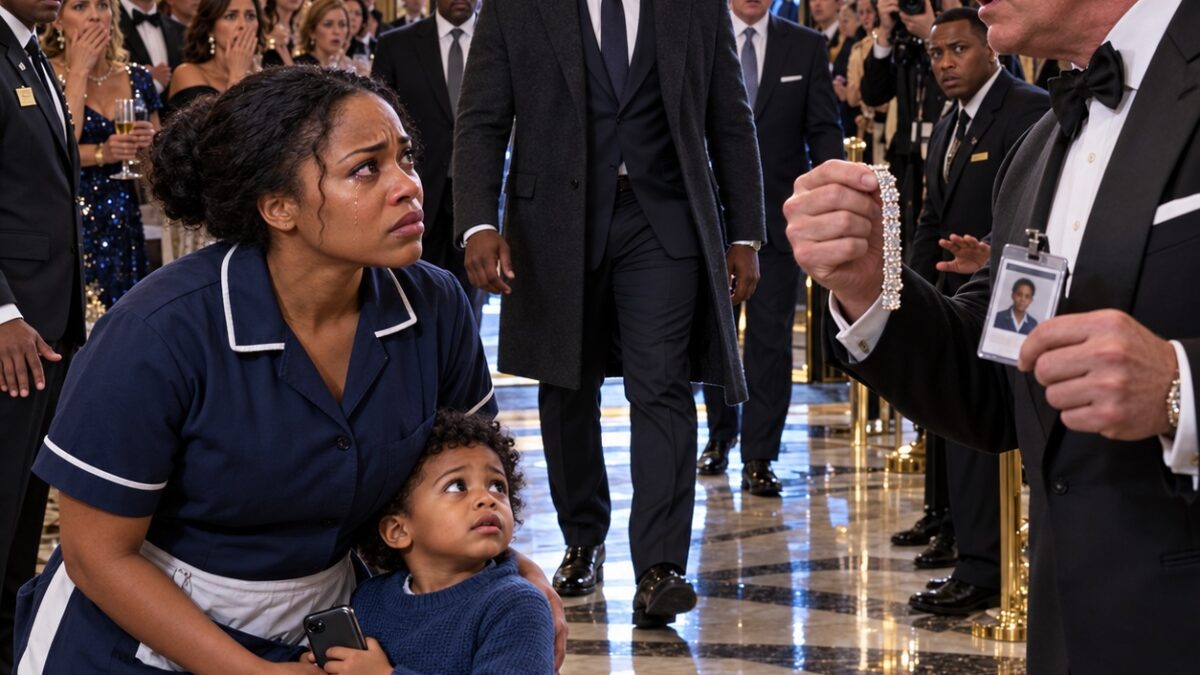
PART2
I knew Richard by reputation long before he ever knew my name.
Senior executive.
Sharp suits.
A voice trained to carry across rooms without technically becoming a shout.
He had risen quickly inside Blackwood’s newer leadership structure.
People described him as decisive.
That word can mean many things.
Sometimes it means someone who can make hard decisions.
Sometimes it means someone who enjoys making decisions before slower people have time to object.
Richard belonged to the second category more often than anyone admitted publicly.
I had seen him walk through service corridors without acknowledging staff.
Had watched housekeepers move carts against walls to give him extra space.
Once, months earlier, he stepped into an elevator with me and another employee.
He looked at my uniform.
Then at the floor indicator.
Never at my face.
That was normal enough that I forgot about it.
People who work in service learn to forget small humiliations.
Otherwise they accumulate too quickly.
That night he did not ignore me.
He performed me.
There is a difference.
He walked into the service corridor holding the bracelet between two fingers.
Diamonds caught the light.
Guests were beginning to move from cocktail hour toward dinner.
A few donors stood nearby.
Board members.
Hotel leadership.
Music from a string quartet floated from the ballroom.
Richard stopped directly in front of me.
My cart was against the wall.
Caleb sat beside it with a green crayon in his hand.
Richard raised the bracelet.
“Whose cart is this?”
I looked at it.
“Mine.”
He gave a small nod.
Like something had just been confirmed.
“Interesting.”
“What happened?”
“This was found on it.”
I frowned.
“No, it wasn’t.”
His eyebrows lifted.
That answer had not been part of the script he expected.
“Excuse me?”
“I said it wasn’t on my cart.”
He held the bracelet slightly higher.
“I just retrieved it.”
“From where?”
“Your cart.”
“I didn’t put it there.”
“Obviously.”
The word had teeth.
A couple standing near the corridor entrance turned.
One woman whispered something.
Richard noticed.
And that was when he made a choice.
He could have lowered his voice.
Could have called security quietly.
Could have asked a manager to review camera footage.
Could have treated the situation as a property issue requiring verification.
Instead, he stepped toward the ballroom.
Toward the audience.
“Who does this belong to?”
A woman in a silver gown gasped.
“My bracelet.”
She touched her bare wrist.
“Oh my God.”
Richard turned toward me.
Not toward security.
Me.
The nearest conversations thinned.
The string quartet continued for a few more seconds.
Then one violin faltered.
The musician recovered.
But attention had shifted.
The woman in silver hurried forward.
“That’s mine.”
Richard handed it to her.
“Where did you last have it?”
“I don’t know.”
She looked embarrassed.
“Maybe during cocktails.”
Richard turned back.
“Tasha.”
My stomach tightened.
I had never told him my name.
He had read the badge.
“You want to explain?”
“I already did.”
I could feel Caleb’s fingers close around the fabric of my pants.
“Mommy?”
“It’s okay.”
Richard smiled.
Not warmly.
“You people always think you can blend in.”
Everything inside me went still.
Not loud.
Still.
There are sentences that enter the body differently because you understand exactly what is hiding inside them.
You people.
Nobody asked him who he meant.
Nobody needed to.
A few faces changed.
Some uncomfortable.
Some curious.
Some pretending not to understand.
I said:
“What does that mean?”
He straightened his cuff links.
“We conduct background checks on all employees.”
His voice rose just enough.
He wanted the ballroom.
He wanted donors.
Witnesses.
A demonstration of control.
“Thorough ones.”
His eyes moved over my uniform.
Then toward Caleb.
“And yet somehow you managed to wander into a restricted area tonight.”
“I clean that corridor every Thursday.”
He smiled.
“Convenient.”
My heart had begun beating hard enough that I could feel it in my throat.
But my voice stayed steady.
“Check the cameras.”
A junior manager near the bar looked up.
For one second, our eyes met.
He knew.
He knew there were cameras covering every high-value event corridor in the hotel.
Blackwood had some of the most expensive surveillance systems in hospitality.
We had training on them.
Missing property?
Review access logs.
Preserve footage.
Document.
That was procedure.
I looked at him.
“Please.”
He dropped his eyes.
Richard said:
“We don’t need cameras.”
The crowd reacted to that.
Not loudly.
A ripple.
Because even people determined not to get involved understood how strange the sentence sounded.
I repeated:
“You should check them.”
Richard stepped closer.
“There’s nothing to check.”
“How do you know?”
His jaw tightened.
That was the wrong question.
People like Richard are often comfortable answering questions when the answer confirms their authority.
They dislike questions that ask how authority knows what it claims to know.
He said:
“Because the item was recovered from your work area.”
“That is not proof I took it.”
“Your work area.”
“I didn’t take it.”
“Stop.”
Caleb looked up.
“Mommy?”
I touched his head.
“It’s okay.”
Richard’s eyes moved to him.
Something in his expression irritated me more than the accusation.
Not compassion.
Annoyance.
My child had complicated his clean disciplinary scene.
He said:
“Children are not permitted in service areas during events.”
“My supervisor approved it.”
“That will be handled separately.”
“You can call him.”
“I don’t need to call anybody.”
Then he turned toward the nearest security officers.
“Remove her.”
I thought I had misunderstood.
“What?”
“You’re fired.”
The words traveled farther than they should have.
Maybe because the room was quiet.
Maybe because humiliation amplifies sound.
“You are terminated effective immediately.”
I stared.
“You haven’t investigated.”
“I have seen enough.”
“No.”
My voice cracked for the first time.
Not fear.
Anger.
“You saw a bracelet and decided a story.”
Richard’s face hardened.
“Security.”
Two men moved.
Slowly.
They both knew me.
One was Aaron.
He had held the freight elevator once when Caleb and I were running late.
The other was Luis.
I had brought him coffee on overnight shifts.
Neither looked at me.
That hurt.
More than Richard.
Because Richard had never pretended to know me.
Aaron had.
Luis had.
I said:
“Check the cameras.”
Not to Richard anymore.
To them.
Aaron swallowed.
Did nothing.
The crowd remained silent.
Board members.
Donors.
People who had just spent an hour applauding speeches about equity.
No one stepped forward.
Not one.
A server stood near the wall gripping a silver tray so tightly the glasses trembled.
The sound was delicate.
Tiny crystal chimes.
Fear has sounds.
That was one.
Richard nodded toward the lobby.
“Immediately.”
I looked at the woman whose bracelet he held.
She looked away.
I looked at the junior manager.
Floor.
A board member.
Champagne.
A city official.
Phone.
Everybody suddenly had something else to study.
Except my son.
Caleb looked only at me.
And that was why I walked.
Security did not touch me.
They did something worse.
They positioned themselves behind me.
A few feet back.
Close enough that everyone understood I was being escorted.
Far enough that they did not appear cruel.
There are people whose entire careers depend on knowing exactly how humiliation should be staged to remain technically professional.
I took Caleb’s hand.
His little fingers disappeared inside mine.
My cart remained in the corridor.
Coloring book open.
Green crayon on the seat.
I had no coat.
No bag.
No chance to collect anything.
We walked through the ballroom.
The same ballroom I had cleaned after parties for almost two years.
Now I saw it from the middle.
Gold leaf.
Crystal chandeliers.
White linen.
Flowers.
Tables full of people.
I heard whispers.
“That’s her?”
“Was that the employee?”
“They found it on her cart.”
“Her child is here?”
Nobody whispered:
What if she did not do it?
Maybe somebody thought it.
Thoughts are private.
Dignity is not protected by thoughts.
At one table, a man leaned closer to his wife and whispered behind his hand.
I could not hear the words.
I saw the expression.
That was enough.
Caleb walked beside me.
Short legs moving quickly to match mine.
“Mommy?”
I squeezed his hand.
“Yes?”
“Why are they looking?”
I could not answer.
Because I had spent three years protecting his world from adult ugliness.
I told him people were mostly good.
That adults fixed mistakes.
That police helped.
That teachers knew things.
That work meant doing your best.
How do you explain to a three-year-old that a room full of people has decided his mother might be a thief because one powerful man spoke first?
“You’re okay.”
That was all I had.
The lobby doors opened.
Marble.
High ceiling.
Quiet music.
Guests near reception turned as security appeared behind us.
At the front desk, the supervisor waited.
He held out his hand.
“Tasha.”
I looked at him.
“My badge?”
His eyes stayed low.
“Procedural.”
That word.
Procedure had apparently returned exactly when it was useful for removing me.
I unclipped the badge myself.
My fingers shook now.
I hated that.
The little metal pin caught in my uniform.
For one humiliating second, I could not free it.
The supervisor reached forward.
I moved back.
“I’ve got it.”
I pulled harder.
The fabric tugged.
Then released.
The badge lay in my palm.
My face.
Employee number.
Blackwood Manhattan.
Housekeeping.
I placed it on the counter.
The supervisor said:
“Your final paycheck will be pending investigation.”
I stared at him.
“Investigation?”
He froze.
“Yes.”
I almost laughed.
“Now you’re investigating?”
No answer.
Caleb tugged my sleeve.
“Mommy, are we in trouble?”
That sentence destroyed the last piece of composure I had.
Not visibly.
Not yet.
Inside.
I crouched in front of him.
Smoothed his sweater.
His eyes were wide.
Brown.
Serious.
Marcus’s eyes.
“No, baby.”
“Why did they take your tag?”
I swallowed.
“We’re going home.”
“Did you do bad?”
There it was.
Children reduce complicated systems into moral questions.
Did you do bad?
My eyes burned.
“No.”
I said it quickly.
Too quickly.
Then steadier:
“No, Caleb.”
“I didn’t do anything bad.”
He nodded.
Because at three, Mommy’s answer was still enough.
That trust almost broke me.
The revolving doors opened.
Cold Manhattan air hit my bare arms.
Traffic rushed past.
Horns.
Headlights.
People.
The city had no idea my life had just collapsed inside the building behind me.
That felt offensive.
When something terrible happens to you, part of the mind expects the world to register it.
Rain should begin.
Cars should stop.
Something.
Instead, a bus passed.
Someone laughed across the street.
A delivery cyclist cursed at a taxi.
Life kept its schedule.
I stood on the sidewalk holding my son’s hand without my coat.
Without my badge.
Without my paycheck.
Without any idea how I would explain termination for theft on my next job application.
I had rent due in nine days.
Daycare.
Groceries.
The small balance on my credit card.
And a degree that had never managed to become the stable career I had imagined.
That was when I cried.
Quietly.
One tear.
Then another.
I turned away from the hotel because I did not want anyone inside to see.
Caleb tugged my sleeve.
“Mommy.”
“I’m okay.”
“You’re crying.”
“I know.”
“Why?”
I closed my eyes.
How do you explain humiliation to a three-year-old?
“You ever get sad when somebody says something that isn’t true?”
He thought.
“When Mason said I broke the red truck.”
“Yes.”
“Like that.”
He nodded.
Then:
“But teacher knew.”
That almost made me laugh.
“Yeah.”
“She checked.”
I looked at him.
Three years old.
And he had just explained the entire failure of a major corporation.
Teacher checked.
I wiped my face.
He asked:
“Can I call Daddy?”
I hesitated.
Not because Marcus did not deserve to know.
Because I had spent years keeping a line around my work.
My dignity.
My independence.
Calling him now felt like crossing it.
Like admitting:
I cannot fix this without your name.
Then Caleb shivered.
He was holding my phone already.
I had handed it to him to keep him occupied on the ride downtown.
He looked at me.
“Please?”
This was not about my pride.
It was about his fear.
I unlocked the phone.
He found the contact.
Dad.
Pressed it.
Miles away, Marcus answered.
“Hey, champ.”
I could hear his voice through the speaker.
Warm.
Normal.
The kind of voice that makes children relax because they do not know adults are capable of having more than one world at once.
Caleb said nothing.
“Caleb?”
Small breath.
Then:
“They made Mommy cry.”
Silence.
Not the confused kind.
Marcus’s silences were deliberate.
He used them when processing.
“What happened?”
“They took her tag.”
Another pause.
“Where are you?”
Caleb looked at me.
I took the phone.
“Marcus.”
My voice sounded wrong.
Thin.
Cold.
“Tasha.”
He heard it immediately.
“What happened?”
I looked up at the Blackwood sign above the revolving doors.
“Blackwood Manhattan.”
“What?”
“The gala.”
Another silence.
Longer.
“I was working.”
“Childcare fell through.”
“I know I should’ve—”
“Stop.”
Not harsh.
Focused.
“What happened?”
“They accused me of stealing a guest’s bracelet.”
He did not respond for several seconds.
“They found it on your person?”
“No.”
“My cart, supposedly.”
“Supposedly?”
“I never saw it.”
“I told them to check cameras.”
“Who accused you?”
“Richard Collier.”
Silence again.
The city moved around us.
“Did he check surveillance?”
“No.”
“What did he do?”
“Fired me.”
I hated how the word broke.
Marcus’s voice changed.
Not louder.
Lower.
“In front of Caleb?”
“Yes.”
“Did security touch you?”
“No.”
“Did anyone threaten you?”
“No.”
“Are you outside?”
“Yes.”
“Do you have a coat?”
That question almost broke me again.
“No.”
“Tasha.”
“I’m fine.”
“No, you’re cold.”
“I said I’m fine.”
I heard him breathe.
He understood the difference between arguing with me and helping.
“Get Caleb somewhere warm.”
“I’m taking him home.”
“Do that.”
Then:
“I’m going to handle the rest.”
“No.”
The answer came automatically.
“Tasha.”
“I don’t want—”
“This is not about you using my name.”
“Yes, it is.”
“No.”
“It’s about a Blackwood executive violating procedure, potentially discriminating against an employee, humiliating that employee publicly, and firing her without investigation.”
I said nothing.
Then he added:
“And that employee happens to be the mother of my son.”
My throat tightened.
“Marcus.”
“Go home.”
“What are you going to do?”
“Ask questions.”
That was all.
No threat.
No profanity.
No dramatic promise.
Just:
Ask questions.
I should have known Richard Collier was in more danger from that sentence than if Marcus had screamed.
Marcus ended the call.
I later learned he was in his river office.
Nearly dark.
Desk lamp on.
Reports open.
He rarely answered his private line himself.
That night he had.
He closed the folder in front of him.
Set his pen down.
Pressed the intercom.
His assistant answered.
“Get me the board.”
Pause.
“Now.”
That was all.
At the exact moment, Richard Collier was walking toward the stage to make a speech about Blackwood leadership.
I did not see what happened inside the ballroom in real time.
I heard pieces later.
Then watched portions of the security record during the legal review.
Richard stepped to the microphone.
Smile restored.
Champagne lifted.
“Thank you for your continued trust in Blackwood—”
His phone vibrated.
He ignored it.
Again.
Ignored.
Third time.
Silenced.
A board member’s phone lit.
She looked at the screen.
Her face changed.
She stood so quickly her chair scraped.
Crossed toward the stage.
Whispered into Richard’s ear.
The video captured his smile disappearing.
Not completely.
First confusion.
Then irritation.
He stepped away from the microphone.
Another phone rang.
General manager.
He answered.
Listened.
Then turned toward security.
“Pull surveillance footage immediately.”
Interesting.
Ten minutes earlier:
We don’t need cameras.
Now they needed cameras urgently.
Another executive whispered:
“Marcus Hail is on the line.”
Richard stepped behind the velvet curtain.
Nobody heard Marcus.
They heard Richard.
“Yes, sir.”
Pause.
“No, sir.”
Longer pause.
“I wasn’t aware.”
That was apparently his favorite sentence for the rest of the night.
He looked toward the lobby doors where Caleb and I had disappeared.
“Of course.”
Another pause.
Then:
“Understood.”
He returned to the microphone.
Sweat along one temple.
The ballroom that had watched me leave now watched him try to stand inside his own authority.
“There has been a misunderstanding.”
That word.
Misunderstanding.
Public accusation.
Racial remark.
Immediate firing.
Security escort.
Badge removal.
Final pay threatened.
All compressed into:
Misunderstanding.
“An internal review is underway.”
Guests whispered.
No one clapped.
The violinist did not resume.
Then the head of security walked toward the stage.
Not toward the lobby.
Toward Richard.
He leaned in.
“The bracelet has been located.”
Richard stared.
“Where?”
“In another guest’s clutch.”
The woman in silver reportedly went white.
She opened her clutch.
There it was.
Somehow misplaced during cocktail hour.
Possibly picked up with another item.
No theft.
No cart.
No Tasha.
The ballroom went silent.
Not the silence that protected Richard earlier.
A different silence.
The kind that appears when everyone realizes they have witnessed something ugly and participated by standing still.
The junior manager near the bar finally spoke.
“I told you we should check the cameras.”
He had not.
Not loudly.
Maybe he had whispered something before I was escorted.
Maybe later he remembered himself as braver.
People often edit their own behavior after consequences arrive.
I do not say that cruelly.
We all want to believe we would have been better.
The cameras, unlike memory, were less generous.
I got home around nine-thirty.
Caleb fell asleep in the taxi.
I carried him upstairs.
Shoes still on.
His head against my shoulder.
At three years old, children become impossibly heavy the moment they sleep.
I put him in bed.
Removed the little shoes.
Pulled a blanket over him.
For a while, I sat beside him.
I could still hear Richard.
You people always think you can blend in.
The words had become louder in memory.
That happens with humiliation.
You leave the room.
The room follows.
I went into the bathroom.
Looked at myself.
No badge.
Just two tiny pinholes in the uniform fabric.
I touched them.
Then I took the uniform off.
Folded it.
Stopped halfway.
Why was I folding it?
Habit.
I threw it onto the floor.
Then immediately picked it up.
That was me.
Even furious, I could not leave clothes in a pile.
I laughed.
Then cried.
Hard.
Quietly at first.
Then enough that I covered my mouth because I did not want to wake Caleb.
I cried for the job.
For the accusation.
For the people who looked away.
For the junior manager staring at a floor he knew better than my face.
For Aaron and Luis walking behind me.
For my son asking whether I had done bad.
And beneath all of it, something even more painful:
I cried because part of me wondered whether Richard’s version of me would become the official one.
People say:
Truth comes out.
Not always quickly.
Sometimes an accusation reaches places the correction never does.
Employee terminated for theft.
That phrase can follow a person.
I had seen women in housekeeping lose references because managers used vague words like:
Trust issue.
Policy violation.
Security concern.
Nobody asks for the full story when there are fifty other applicants.
I had a degree.
Good evaluations.
No disciplinary record.
Still, I knew how the world could read a Black woman fired from a luxury hotel over missing jewelry.
I knew exactly how much innocence might weigh against suspicion.
My phone rang.
Marcus.
I stared.
Then answered.
“Caleb asleep?”
“Yes.”
“You okay?”
I almost said yes.
Could not.
“No.”
Silence.
“I’m sorry.”
“For what?”
“For what happened under my name.”
That sentence made me angry.
“Your name?”
“The company.”
“Oh.”
“I’m not claiming your pain.”
“Good.”
“But Blackwood did this.”
“Richard did.”
“And Blackwood let him.”
I sat on the edge of the bed.
That was true.
One man accused.
But a system escorted.
A supervisor removed my badge.
HR procedure allowed termination language to be delivered without investigation.
Board members watched.
Security followed.
Organizations love blaming individuals after scandals.
Sometimes deserved.
But Richard had not physically carried me through those doors alone.
Marcus said:
“The bracelet was found.”
I closed my eyes.
“Where?”
“Another guest’s bag.”
I breathed out.
Long.
Shaking.
“I told them.”
“I know.”
“I told them to check.”
“I know.”
“And they still—”
My voice failed.
Marcus waited.
Then:
“You were right.”
I started crying again.
Not because I needed him to tell me.
Because after hours of being treated as suspect, being believed felt like something breaking open.
“What happens now?”
I asked.
“Emergency board meeting.”
“When?”
“Before sunrise.”
“That fast?”
“Yes.”
“Richard?”
“Under review.”
I wiped my face.
“What about my job?”
“That decision will be corrected.”
I stiffened.
“What does that mean?”
“It means you were wrongfully terminated.”
“That doesn’t mean I want to go back.”
Pause.
“Okay.”
That answer mattered.
No:
Think about it.
No:
I can fix this.
Just:
Okay.
“I don’t want special treatment.”
“This isn’t special treatment.”
“It will look like it.”
“Tasha.”
“I don’t want everybody thinking I got my job back because Caleb called his father.”
Another pause.
“What do you want?”
Nobody had asked me that yet.
Not Richard.
Not security.
Not the supervisor.
Even Marcus had started with solutions.
What do you want?
“I don’t know.”
“Then don’t decide tonight.”
Good.
That became the first decent decision anybody offered me after seven-forty-three.
The emergency board meeting began before sunrise.
I did not attend.
I was asleep beside Caleb because he woke at two-thirty from a nightmare.
In the dream, someone took me away.
He would not tell me more.
He crawled against my chest.
I held him until morning.
At Blackwood headquarters, forty floors above the city, lawyers played ballroom footage.
Not edited.
Not social-media clips.
Everything.
Richard’s first approach.
The bracelet.
My request for cameras.
His refusal.
The phrase:
You people always think you can blend in.
His dismissal.
Security.
The badge.
Then additional surveillance.
The woman in silver placing her clutch near a cocktail table.
A companion lifting it later with another item.
The bracelet slipping inside.
No contact with my cart.
No contact with me.
Nothing ambiguous.
Corporate counsel reportedly read the violations into the record.
Termination without investigation.
Public accusation without verified evidence.
Failure to follow surveillance protocol.
Failure to preserve procedural neutrality.
Potential racial discrimination.
Reputational exposure.
Civil liability.
The more clinical the language became, the uglier the conduct sounded.
That is one strange power of law.
It removes the personality and exposes structure.
Marcus attended by video.
Camera off.
He asked very few questions.
He did not need to perform anger.
Evidence was already doing the work.
The vote to terminate Richard Collier was unanimous.
Effective immediately.
No grand speech.
No television cameras.
No opportunity for him to walk onto a ballroom stage and turn accountability into another performance.
By eight that morning, he was no longer employed by Blackwood Hotels.
I woke to twenty-three missed calls.
News had begun moving.
One short video from the gala had reached social media.
Not the full accusation.
Enough.
Richard holding the bracelet.
Me standing beside Caleb.
His voice.
You people…
Someone had recorded from a table.
The clip cut before I was escorted out.
Comments were already multiplying.
I shut the phone off.
I had no interest in becoming content.
At ten-thirty, someone knocked.
I looked through the peephole.
A woman in a dark coat.
Blackwood board representative.
Not HR.
Not a messenger.
She had come herself.
I opened the door.
Caleb was on the floor behind me building a tower.
“Ms. Tasha?”
“Yes.”
“My name is Elaine Porter.”
“I’m on Blackwood’s board.”
“I know who you are.”
She looked surprised.
I had cleaned enough gala programs to know most board faces.
She held an envelope.
“I came to apologize.”
I almost shut the door.
Not because I disliked her.
Because I had no energy for corporate language.
She seemed to understand.
“I’m not going to ask you to forgive anything.”
Good opening.
“May I have five minutes?”
I stepped aside.
She entered.
Caleb looked up.
“Hi.”
Elaine smiled.
“Hi.”
Then looked at me.
“I was in the ballroom.”
I knew.
“I didn’t speak.”
I said nothing.
“I should have.”
Still nothing.
She continued.
“We failed you.”
Not:
Richard failed.
We.
That made me listen.
“The board terminated Mr. Collier this morning.”
I felt almost nothing.
Maybe relief.
Mostly exhaustion.
“The surveillance footage confirms the bracelet was never on your cart.”
“I know.”
“We will state that publicly.”
“Good.”
“Your termination has been voided.”
My jaw tightened.
She noticed.
“That does not mean you are required to return.”
“Okay.”
“We are offering reinstatement with full back pay.”
“No.”
The answer surprised both of us.
Caleb stacked another block.
Elaine said:
“You do not need to decide—”
“I decided.”
I looked toward the window.
“I cannot push that cart through that ballroom again.”
My voice shook.
“Not because housekeeping is beneath me.”
“I’ve done that work honestly.”
“But I would spend every shift wondering who watched the video.”
“Who thinks I stole.”
“Who thinks I came back because Marcus made you take me.”
Elaine nodded.
No argument.
Good.
“There is also a settlement package.”
“I have counsel?”
“We recommend you retain your own attorney.”
That surprised me.
“Blackwood will pay reasonable independent review costs.”
I almost smiled.
“You’ve had an interesting morning.”
“We have.”
She placed the envelope on my table.
“Whatever you decide financially, your public record will state clearly that the accusation was false and your termination was improper.”
I looked at her.
“Will Richard’s comment be in the statement?”
She hesitated.
There.
Corporate instinct.
Limit.
Soften.
I said:
“Then you haven’t learned.”
Elaine looked at me.
I continued.
“If you call this a procedural mistake, everybody gets to pretend the racism was optional interpretation.”
Her face changed.
Not defensive.
Thoughtful.
“You’re right.”
“I don’t need the company to call him racist.”
“Fine.”
“But say the investigation identified bias concerns.”
“Say the treatment violated Blackwood’s standards.”
“Say the surveillance cleared me.”
“Do not hide me inside ‘misunderstanding.’”
She took a breath.
“I will take that back.”
I nodded.
Then Caleb’s tower collapsed.
He looked offended.
Elaine crouched automatically.
“Want help?”
He considered.
Then nodded.
A board member in a thousand-dollar coat sat on my apartment floor helping my son rebuild blocks while I stared at an envelope containing the financial consequences of the worst night of my career.
Life is strange.
The public statement came that afternoon.
My attorney reviewed it first.
Yes, I got one.
A civil-rights employment lawyer recommended by someone completely outside Blackwood.
I insisted.
She was sharp.
Calm.
Unimpressed by wealth.
Exactly what I needed.
Blackwood’s statement cleared my name entirely.
Confirmed surveillance showed the missing bracelet had never been on my cart or in my possession.
Acknowledged violations of investigative protocol.
Acknowledged serious concerns regarding bias in the treatment I received.
Confirmed Richard Collier was no longer with the company.
Then one line:
Dignity is not optional at Blackwood.
Attributed to ownership.
Marcus.
I called him.
“You wrote that?”
“Yes.”
“It sounds like a slogan.”
“I know.”
“I hate slogans.”
“So do I.”
“Then why?”
“Because it’s short enough that nobody can claim they misunderstood.”
I could not argue with that.
The company announced mandatory bias training.
Revised investigative procedures.
Documented evidence review before disciplinary action involving alleged misconduct.
Whistleblower protections allowing employees to bypass direct supervisors.
Independent escalation for security-related accusations.
Those sounded good.
Policies often do.
The question was whether anybody would use them when the room became uncomfortable again.
I told Marcus that.
He said:
“Then help us make them real.”
I laughed once.
“No.”
“Okay.”
That surprised me.
“You give up easily.”
“I’m learning not to tell you what to do.”
“Good.”
Then:
“I have another idea.”
“Marcus.”
“Not tonight.”
“Good.”
We hung up.
Richard’s dismissal moved through the hospitality industry quickly.
That was not my doing.
No secret blacklist.
No phone calls from Marcus.
Executives at that level live partly on reputation.
The video existed.
The public statement existed.
People drew conclusions.
Speaking invitations disappeared.
Consulting discussions ended.
Other companies became cautious.
Some online commenters celebrated.
Good. Ruin him.
I never joined that.
He had humiliated me.
He deserved accountability.
He did not become my hobby.
There is a difference between consequence and obsession.
My lawyer asked whether I wanted to sue individually.
I thought about it.
Money mattered.
Do not misunderstand me.
I was not too noble for compensation.
I had lost income.
Experienced public humiliation.
My child had been involved.
There were genuine damages.
Blackwood’s settlement package reflected that.
My attorney negotiated.
Hard.
I accepted what she considered appropriate.
Not because money erased the event.
Because corporations understand numbers.
If harm costs nothing, apologies become cheap.
That was one lesson I had learned from business administration even if no office had ever hired me to use the degree.
For two weeks, I stayed home.
Caleb returned to daycare.
I updated my résumé.
Stared at job listings.
Administrative assistant.
Operations coordinator.
Hotel office roles.
Nonprofit program support.
Every application box seemed to ask:
Why did you leave your previous employer?
I typed answers.
Deleted them.
How do you summarize:
Senior executive falsely accused me of stealing during a gala, fired me publicly in front of my child, and was later terminated after surveillance proved I was innocent?
Too dramatic.
Yet true.
I began to understand how people become trapped inside bad employment experiences.
Even after the institution apologizes, you carry the explanation into the next room.
One afternoon, Caleb was coloring at the kitchen table.
Different book.
Same serious face.
He asked:
“Mommy?”
“Yes?”
“Do you work at Daddy’s hotel?”
I stopped.
“Not anymore.”
“Because the mean man?”
Children simplify accurately.
“Partly.”
“Did Daddy fire him?”
I thought.
“The board did.”
“What’s board?”
“A group of people who help make big decisions.”
He nodded.
“Daddy bigger?”
“No.”
That answer felt important.
“Daddy doesn’t get to be bigger than everybody.”
Caleb looked confused.
“Daddy is tall.”
I laughed.
“Yes.”
“Daddy is tall.”
That was enough governance for preschool.
Then he asked:
“Are you gonna get a new tag?”
I looked at the two pinholes still visible in the washed uniform hanging inside my closet.
“I don’t know.”
Three weeks after the gala, Elaine called.
“Tasha.”
“Yes?”
“We created a role.”
I almost hung up.
“For me?”
“Potentially.”
“No.”
“Hear me first.”
I sighed.
“Fine.”
“Community outreach coordinator.”
“That sounds invented.”
“It is new.”
“Exactly.”
“It is part of the equity and access initiative.”
I leaned back.
“What does that mean?”
“Employee access.”
Community partnerships.
Internal reporting education.
Frontline worker support.
Outreach with local training programs.
Coordination with organizations serving families trying to move into hospitality careers.”
I was quiet.
She added:
“The role is being funded directly from reductions in executive bonus pools.”
That got my attention.
“Whose idea?”
“The board approved it.”
“Whose idea?”
Pause.
“Marcus suggested the funding source.”
Of course.
I said:
“I told him I didn’t want a pity job.”
“So did he.”
“What?”
“He told us if we built a role for appearances, you would know.”
Correct.
“Then why me?”
Elaine answered:
“Because you have a business administration degree.”
I froze.
“How do you know that?”
“Your employee file.”
“You worked nights while parenting.”
“You understand frontline operations.”
“And you told a board member to her face that our public statement was dishonest.”
I almost smiled.
“That last one impressed you?”
“Terrified me slightly.”
Good.
“But we would still interview you.”
“Against other applicants?”
“Yes.”
“Real applicants?”
“Yes.”
“If I’m not the best person, I don’t get it?”
“Yes.”
“Put that in writing.”
She laughed.
“I can.”
I agreed to interview.
Not accept.
Interview.
There was a difference.
I studied for three days.
That sounds ridiculous.
The job had been partly inspired by what happened to me.
Still, I prepared as though nobody knew my name.
I reread my old business notes.
Built a proposal.
Outlined worker-access problems I had seen at Blackwood.
Shift scheduling.
Internal mobility.
How hard it was for housekeeping staff to learn about training programs offered only through office email.
Language access.
Childcare barriers.
Fear of reporting supervisors.
The way night employees became invisible to daytime leadership.
I did not want to be the symbol of a scandal.
I wanted to know whether I could do the work.
At the interview, three people sat across from me.
Elaine.
HR executive.
External community nonprofit leader.
Good.
The nonprofit leader challenged me hardest.
“What qualifies you to design outreach beyond your own experience?”
I liked her immediately.
“Nothing by itself.”
She raised an eyebrow.
“My experience tells me where some problems are.”
“It doesn’t tell me what every worker needs.”
“So I’d start by listening.”
“How?”
“Paid focus groups.”
“Anonymous surveys.”
“Night-shift sessions.”
“Translated materials.”
“Partnerships with organizations employees already trust instead of assuming corporate HR is trusted automatically.”
She wrote something down.
“Why should Blackwood hire you instead of an experienced equity professional?”
“Maybe it shouldn’t.”
Elaine looked at me.
The nonprofit leader smiled slightly.
I continued.
“If you need someone to run enterprise-level DEI strategy, hire that person.”
“If you need someone to connect frontline workers, communities, and leadership while building a system employees might actually use, I can make a case.”
That was the first time in years my business degree felt alive.
Not framed.
Not theoretical.
Mine.
They offered me the job two days later.
I waited twenty-four hours.
Then accepted.
Not redemption.
Not rescue.
Impact.
That distinction mattered.
Three weeks after being escorted out of Blackwood Manhattan, I returned through the same revolving doors.
I wore a navy suit I bought on sale.
No housekeeping uniform.
No borrowed designer label.
Simple.
Professional.
Caleb held my hand.
I could have left him at daycare.
I brought him because I wanted his last memory of that lobby to change too.
The marble still gleamed.
Same chandeliers.
Same reception desk.
Same revolving doors that had pushed cold air into my face on the worst night of my working life.
My body remembered before my mind did.
Heart quickened.
Palm damp.
Caleb squeezed my hand.
“You okay, Mommy?”
Role reversal.
I smiled.
“Yes.”
This time I meant it more.
A concierge looked up.
Not the same supervisor.
He smiled.
“Good afternoon, Ms. Hail.”
I stopped.
Nobody at the hotel had ever called me that.
My employee record had been Tasha under my own surname, not Caleb’s.
I had not changed it.
The concierge had made an assumption because of the publicity.
I almost corrected him sharply.
Then realized he was trying to show respect and had simply chosen the wrong path.
“Tasha is fine.”
His face reddened.
“Of course.”
“Thank you.”
We kept walking.
No cameras.
No applause.
That mattered.
The board had suggested a welcome event.
I refused.
No ceremony.
No redemption photograph.
No executive hugging the falsely accused employee beneath the Blackwood logo.
I had become suspicious of rooms that loved a performance.
Upstairs, a small conference room waited.
Six people.
Not ninety.
Policy drafts.
Worker representatives.
A security supervisor.
Housekeeping manager.
HR.
Community nonprofit leader.
And two frontline employees paid for the meeting.
Good.
We sat.
We worked.
Before going upstairs, I paused near the front desk.
The exact place where my badge had been removed.
Caleb looked up.
“What?”
“Nothing.”
The memory was there.
But different.
Not gone.
I used to think healing meant something stopped hurting.
It does not always.
Sometimes it means the pain stops controlling your direction.
I could remember the metal pin catching on my uniform without feeling that I was still standing inside the moment.
I was not.
The woman who lost that badge had been frightened of what the accusation would make her.
The woman standing there three weeks later knew something else.
A lie could enter a ballroom loudly.
Truth might arrive slower.
But truth could still build.
The first policy we fought about was investigation procedure.
Blackwood’s lawyers proposed language.
Elegant.
Dense.
Full of terms like:
reasonable review where practicable.
I circled it.
“No.”
Corporate counsel sighed.
“What?”
“Where practicable.”
“That’s standard language.”
“That’s how Richard happened.”
“That is not fair.”
“It’s exactly fair.”
The room quieted.
I continued.
“If someone accuses a housekeeper of taking jewelry, and an executive says reviewing footage isn’t practicable because donors are waiting, what happens?”
Counsel leaned back.
“The policy would still require—”
“Then write require.”
We changed it.
Documented review required before termination for alleged theft unless immediate safety issues demanded temporary removal.
Removal was not guilt.
Surveillance review when available.
Independent manager signoff.
Employee opportunity to respond.
Security involvement documented.
Good.
Not dramatic.
Useful.
Then whistleblower protection.
The junior manager from the gala attended one session.
His name was Evan.
He could barely look at me.
When introductions reached him:
“Evan Marshall.”
“Assistant events manager.”
I nodded.
He looked down.
Later, during a break, he approached.
“Tasha.”
“Yes?”
“I’m sorry.”
“I know.”
“No.”
“You don’t.”
“I should’ve spoken.”
Yes.
He swallowed.
“I knew procedure required cameras.”
“Yes.”
“I almost said something.”
“Almost.”
He winced.
I had learned not to make apologies comfortable too quickly.
“I was afraid of Collier.”
“I know.”
“He had fired two managers.”
“I know.”
“I have a mortgage.”
“My wife is pregnant.”
“I know.”
“I kept thinking…”
“Maybe someone else would speak.”
He looked surprised.
“Yes.”
I said:
“Everybody was waiting for somebody else.”
His eyes filled.
“I’m sorry.”
I nodded.
“What are you going to do next time?”
He looked at me.
That question had more value than:
Do you forgive yourself?
“I’ll say something.”
“Even if you’re scared?”
“I hope.”
I shook my head.
“Not hope.”
“Plan.”
“How?”
“Know who you call.”
“Know the escalation process.”
“Know what policy protects you.”
“Practice the sentence.”
He frowned.
“What sentence?”
I looked at him.
“‘We need to check the cameras before taking action.’”
He nodded.
Simple.
That became part of our training.
Not heroic speeches.
Usable sentences.
I am not comfortable proceeding without verification.
I need this decision documented.
I want HR present.
I disagree with terminating before review.
Courage often needs vocabulary.
Fear empties the mind.
Give people words before the moment arrives.
Aaron from security came to see me too.
The man who had walked behind me.
He stood in my new office doorway.
No suit.
Security uniform.
Hands clasped.
“Can I come in?”
“Yes.”
He sat.
Did not speak for several seconds.
Then:
“I’ve replayed it.”
I knew.
“I should’ve refused.”
I leaned back.
“Would you have been fired?”
“Maybe.”
“Would Luis?”
“Maybe.”
“Then don’t pretend it was easy.”
He looked up.
“You’re defending me?”
“No.”
“I’m saying the system was designed so the easiest safe choice was following Richard’s order.”
“That’s a system problem.”
“You still had a choice.”
He nodded.
“I know.”
“Both things can be true.”
That became another principle.
We changed security protocol.
Security officers could request supervisor verification before non-emergency escort based solely on executive instruction.
Protected escalation.
Body-camera or fixed-camera documentation in sensitive disciplinary removals where legally appropriate.
No positioning employees as criminal suspects unless the facts supported it.
Language matters.
Posture matters.
An escort can become punishment before any investigation exists.
Aaron helped write the new procedure.
That was accountability I respected.
Not firing everyone who had failed.
Making them responsible for repair when possible.
The front-desk supervisor did not stay.
He resigned two months later.
I heard he felt the hotel had made him a scapegoat.
Maybe.
I did not know enough.
He had removed my badge.
He had also been following a termination instruction delivered by an executive.
Organizations love simplifying responsibility afterward.
I tried to resist that.
Richard had power.
Others had choices within narrower power.
Those differences mattered.
Not to erase responsibility.
To measure it.
The woman whose bracelet started everything wrote to me.
Handwritten card.
Beautiful stationery.
Of course.
She apologized.
Said she had been shocked and did not know what to do.
Said she never accused me personally.
That sentence irritated me.
Silence inside someone else’s accusation can still support it.
But she wrote something else:
I watched a man use my missing bracelet to humiliate you, and because I wanted the bracelet back more than I wanted to slow him down, I let him.
That was honest.
She offered to meet.
I declined.
No need.
She donated to one of the community worker funds later.
Not required.
I hope it came from reflection rather than guilt.
Either way, someone benefited.
The gala itself became infamous inside Blackwood.
Not publicly forever.
News moves.
But internally.
New executives heard:
The Manhattan incident.
I hated that phrase.
Incidents flatten people.
I asked training teams to stop using my name in mandatory modules unless I approved the context.
I did not want employees watching a reenactment of my humiliation every year.
Instead, we taught systems.
A missing item.
An accusation.
A manager under public pressure.
What is required?
Verification.
Neutrality.
Document.
Escalate.
Separate safety from guilt.
No racialized language.
No public discipline when privacy is possible.
The lesson did not need my tears to survive.
That was important to me.
Pain should not become corporate content simply because the company paid a settlement.
Marcus stayed mostly out of public view.
Industry press wanted interviews.
He declined.
A reporter called my attorney asking whether he had used ownership power to retaliate against Richard.
I laughed when she told me.
“Did he?”
“No.”
“The board voted unanimously.”
“Exactly.”
Marcus had influence.
Obviously.
But he had been careful.
He asked for records.
Requested independent review.
Did not demand a specific outcome before evidence.
That mattered.
Later I asked him why.
He said:
“Because if I fired Richard personally the moment Caleb called me, everyone could tell themselves this was about who you knew.”
I stared.
“That’s what I was afraid of.”
“I know.”
“So you understood.”
“Yes.”
“Why didn’t you say that?”
“You were cold.”
I laughed despite myself.
“I was.”
Then:
“You scared him.”
Marcus looked almost offended.
“I asked questions.”
“Exactly.”
He smiled.
Our relationship as Caleb’s parents became different after the gala.
Not romantic.
That is not where this story goes.
People like neat endings.
Powerful father.
Wronged mother.
Maybe reunion.
No.
Life is not obligated to turn scandal into romance.
Marcus and I cared about each other.
We shared a child.
We had history.
Boundaries.
Complicated respect.
The gala made one thing clearer.
I did not need to reject every form of help from him to prove I was independent.
And he did not need to solve everything for me to prove he cared.
We became better at staying in those lanes.
Caleb benefited.
That mattered more.
The first time Caleb visited my new office, he inspected everything.
Desk.
Computer.
Window.
Then:
“Where’s your cart?”
I laughed.
“No cart.”
“Do you clean?”
“Not here.”
He thought.
“Is this a better job?”
Dangerous question.
“No.”
He frowned.
“It pays more.”
“That isn’t the same thing.”
“Then what?”
I crouched.
“My old job mattered too.”
“People needed clean rooms.”
“They still do.”
“This job is different.”
He nodded solemnly.
Then asked:
“Can I draw on your paper?”
Children rescue adults from becoming too philosophical.
I made sure the outreach initiative included housekeeping training pathways.
Not everyone wanted promotion.
That distinction mattered.
Corporate programs sometimes assume dignity means moving frontline workers into office roles.
No.
A housekeeper deserves respect and fair pay if she remains a housekeeper for thirty years.
Mobility should be available.
Not required for worth.
We created optional business certificates.
Supervisor tracks.
Tuition support.
English-language programs.
Technology access for night-shift employees.
But also better recognition of senior frontline expertise.
One woman had twenty-eight years in housekeeping.
She did not want management.
She wanted predictable scheduling and her knees to hurt less.
So we worked on equipment and staffing ratios.
Dignity is practical.
Not just speeches.
Childcare became one of my priorities.
Obviously.
I had brought Caleb to a gala because one sitter had an emergency.
I was lucky my supervisor had allowed him into a service area at all.
Many employees had no flexibility.
A missed childcare day could become a missed shift.
Missed shift became attendance point.
Enough points became termination.
We created emergency backup-childcare partnerships at several properties.
Not free unlimited childcare.
Realistic support.
Management complained about cost.
I showed turnover numbers.
They stopped complaining as loudly.
Business administration degree.
Finally useful.
The executive bonus funding caused anger.
Good.
A senior vice president told me:
“Punishing current leadership for one former executive’s misconduct isn’t sustainable.”
I said:
“The fund is temporary.”
“To launch the program.”
“Then operating budgets take over.”
He relaxed slightly.
I added:
“And yes, some launch funding comes from executive bonuses.”
His face tightened again.
“Why?”
“Because accountability that costs only frontline employees nothing upstairs.”
He stared.
I smiled.
“Don’t worry.”
“It won’t last forever.”
He did not laugh.
I did.
That may have been petty.
I am human.
Richard never contacted me.
Good.
I did not want his apology.
Not because people cannot change.
Because sometimes the person you harmed does not owe you access to demonstrate that you changed.
He could become better elsewhere.
I hoped he did.
Eventually.
After consequence.
People online wanted me to hate him forever.
I could not.
Hatred requires maintenance.
I had too much work.
Too much parenting.
Too much life.
I remembered his face sometimes.
The way he held the bracelet.
The certainty.
That was enough warning.
Months after the incident, I attended a Blackwood board presentation.
First time back in a room with many of the same people from the gala.
Not all.
Enough.
Elaine sat across.
Two other board members who had been there.
One man came up before the meeting.
“Tasha.”
“Yes?”
“I never apologized.”
I knew.
“I was in the room.”
“I know.”
“I convinced myself security would sort it out.”
I waited.
“I was wrong.”
“Yes.”
He swallowed.
“Why didn’t you speak?”
He looked surprised.
Then embarrassed.
“I was afraid of escalating the scene.”
“That sounds reasonable.”
He relaxed too quickly.
I continued.
“And while you protected the room from escalation, the room escalated against me.”
His face changed.
“I see that.”
“Good.”
That was enough.
I did not need everyone to become my friend.
I needed people to understand silence has direction.
It never sits nowhere.
The next Children’s Equity Gala arrived a year later.
I considered not attending.
Then did.
Not as staff.
Not as a symbol.
I had work connected to one of the outreach partnerships.
The ballroom looked almost identical.
That surprised me.
Same chandeliers.
Same gold.
Different flowers.
Places do not transform because people learned something.
People have to carry the difference back into the same rooms.
I stood near the service corridor.
Could not help it.
A young server passed carrying champagne.
A donor stopped him.
Asked a question.
Then said:
“Thank you, Andre.”
The donor had read his name tag.
Tiny thing.
Maybe meaningless.
Maybe not.
I smiled.
Then immediately told myself not to become sentimental about basic manners.
Growth creates embarrassing optimism.
During dinner, Marcus spoke briefly.
Rare for him.
No mention of me.
Good.
He talked about childhood equity.
Then employee dignity.
One sentence:
“We cannot claim to protect children in our communities while teaching them that some adults are invisible.”
I looked toward Caleb.
He was not at the gala.
Thank God.
He was home with a sitter we trusted.
But I knew what Marcus meant.
Caleb had watched adults decide who his mother was.
Children learn hierarchy before we realize they are listening.
That thought guided much of my work afterward.
At Blackwood’s training sessions, we started asking employees:
“What did your first job teach you about power?”
Answers were revealing.
A dishwasher remembered managers eating while staff skipped breaks.
A receptionist remembered executives learning her name only after she transferred into sales.
A bellman remembered wealthy guests tipping him while speaking about him in the third person.
A manager remembered being treated badly as a server and later realizing she had begun doing the same thing to junior employees.
Power reproduces behavior when people do not examine it.
That became more useful than generic bias slides.
Real memory.
Real hierarchy.
My own memory was simple.
Badge pin catching.
Caleb:
Did you do bad?
I told that story only when necessary.
Not every room deserved it.
But when someone argued that discipline should remain fast because luxury guests expect immediate action, I used it.
“What is the cost of being wrong?”
Silence.
Then we built procedure around that question.
Guest satisfaction mattered.
Employee dignity mattered too.
Luxury service does not require instant guilt.
That became policy.
The woman in silver returned to another event.
I saw her across the room.
She saw me.
We nodded.
No conversation.
That was enough.
I noticed her thank the woman who cleared her plate.
Maybe she always had.
Maybe not.
I do not know.
We cannot claim every small kindness as evidence of our impact.
Sometimes people were decent before us too.
Humility matters when telling our own stories.
Evan, the junior manager, eventually became director of events.
Before his promotion, he came to me.
“I want you to know something.”
“What?”
“There was an incident last month.”
A celebrity guest accused a server of taking sunglasses.
My chest tightened.
“What happened?”
“We stopped service in that section.”
“Reviewed footage.”
“Found the glasses under the guest’s own chair.”
“What happened to the employee?”
“Nothing.”
“Guest apologized?”
“Eventually.”
I looked at Evan.
He smiled slightly.
“I said the sentence.”
“What sentence?”
“‘We need to check the cameras before taking action.’”
I smiled.
There.
That was change.
Not the policy document.
The moment someone used it while pressure existed.
I said:
“Good.”
He nodded.
Then:
“I was still scared.”
“Good.”
He laughed.
“That’s what you told me last time.”
“Courage without fear is usually theater.”
I had learned that somewhere.
Maybe from life.
Aaron from security trained new officers.
He added a scenario based loosely on what happened.
Not my name.
He taught them:
Your job is safety.
Not lending physical authority to an executive’s anger.
Ask whether the person presents risk.
Ask whether removal is disciplinary or safety-based.
Document.
Escalate.
Do not make posture communicate criminal guilt when guilt has not been established.
I watched once.
A trainee asked:
“What if the executive gets mad?”
Aaron said:
“Executives survive being mad.”
I laughed from the back.
He looked over.
Embarrassed.
Good answer.
My settlement allowed me to pay debt.
Build savings.
Create something for Caleb.
I did not become rich from it.
Nor did I want to.
Money from harm is strange.
Useful.
Heavy.
My attorney told me:
“You are allowed to use it without guilt.”
I believed her mostly.
I bought a better mattress.
That was the least symbolic thing possible.
Slept beautifully.
Highly recommend practical healing.
I kept the old uniform for a while.
Not intentionally.
It stayed in the closet.
One afternoon, I took it down.
The two badge holes were still there.
I ran my finger over them.
Then donated it.
Not because the uniform represented shame.
It did not.
I had done honest work in it.
I donated it because I no longer needed it.
That distinction felt important.
The badge itself?
Blackwood returned it in a box with my personal items.
I kept it.
For years.
Not displayed.
Drawer.
Eventually Caleb found it.
He was older.
“Was this the one they took?”
“Yes.”
He held it.
Looked at my old picture.
“You look tired.”
“I was.”
“Can I keep it?”
“Why?”
He shrugged.
“History.”
That word sounded like his father.
I let him.
As Caleb grew, we told him more.
Not everything at once.
At five:
Mom was accused of something she didn’t do.
At eight:
A manager treated her unfairly and lost his job after an investigation.
At twelve:
We discussed race.
Class.
Power.
Why “you people” mattered.
Why a room full of educated adults might stay silent.
He hated that people had watched.
“That’s worse than the guy.”
I shook my head.
“Different.”
“He did it.”
“They let it happen.”
“Mom.”
“Do not turn people into villains too easily.”
He rolled his eyes.
Teenagers.
I continued.
“Some were scared.”
“Some were confused.”
“Some were protecting their jobs.”
“That doesn’t make it okay.”
“No.”
“But if you want people to act better, understand what makes acting better hard.”
He hated that answer.
Good.
Easy answers make fragile adults.
At fifteen, Caleb volunteered with one of our youth employment programs.
Not because I forced him.
Marcus probably did.
Caleb denied it.
He helped teenagers with summer-job applications.
One evening he came home angry.
A student had been rejected from a retail job after a background misunderstanding.
“We need to fix this.”
I smiled.
“What?”
He recognized the expression.
“Don’t.”
“Don’t what?”
“Do the proud-mom thing.”
“I’m not.”
“You are.”
I was.
Life loops.
Marcus and I watched Caleb grow into a person who understood both his last name and its limits.
That mattered to us.
He knew doors might open because he was Marcus Hail’s son.
We taught him to notice who was still waiting outside.
Not with guilt.
With awareness.
Privilege becomes useful only when it can see beyond itself.
That lesson came partly from a bracelet that was never on my cart.
Strange.
Years after Richard, I became director of community access across several Blackwood properties.
Not overnight.
Not because of scandal.
Work.
Programs.
Results.
The title came after years.
That mattered.
When the promotion was announced, someone online commented:
Of course she got promoted. She had the owner’s kid.
I stared at it longer than I should have.
Then closed the screen.
There will always be people who reduce your labor to the most convenient explanation.
At first:
She stole.
Later:
She only succeeded because of Marcus.
Different accusation.
Same disappearance.
I could spend my life proving strangers wrong.
Or I could work.
I chose work.
Mostly.
Some nights it still hurt.
I am human.
My community college invited me to speak.
I almost refused.
Then agreed.
The room was full of students like I had been.
Working.
Parenting.
Commuting.
Degrees squeezed between survival tasks.
I told them:
“I graduated and still cleaned hotel rooms.”
A few looked discouraged.
“So?”
I continued.
“Education is not a vending machine.”
“You do not insert tuition and receive stability.”
“That is unfair sometimes.”
“It is also reality.”
“But nothing you learn disappears because the first door doesn’t open.”
“My degree sat unused for years.”
“Then when my life changed, it was still there.”
“Skills wait.”
“Keep building.”
That was the speech I wished someone had given me.
Not:
Follow your dreams.
Dreams do not pay daycare automatically.
Build.
Survive.
Learn.
Keep options.
That was more honest.
A student asked:
“Did getting falsely accused make you stronger?”
I hated the question.
Not the student.
The cultural habit.
Turning pain into mandatory growth.
“No.”
The room quieted.
“It hurt me.”
“It made me afraid.”
“It damaged my trust.”
“It made my child scared.”
“I built something afterward.”
“That doesn’t mean the harm was good.”
The student nodded slowly.
That distinction matters.
We do not need suffering to become blessings before we are allowed to survive them.
The gala was wrong.
Full stop.
The initiative afterward was good.
Both.
Another asked:
“Did you forgive Richard?”
I thought.
“I stopped needing anything from him.”
That was the truest answer.
Maybe that is forgiveness.
Maybe not.
Labels matter less than freedom.
I no longer rehearsed arguments.
No longer imagined what I would say if we met.
No longer searched his name.
He became someone from a painful chapter.
Not the author of my life.
That was enough.
I did see him once.
Years later.
Airport.
Different city.
He stood near a gate.
Older.
Gray at the temples.
No entourage.
He saw me.
I saw recognition.
He took one step toward me.
Stopped.
I could have walked over.
I did not.
Neither did he.
We nodded.
Very small.
Then boarded different flights.
Perfect.
Some stories do not require a final conversation.
Sometimes distance is closure.
Blackwood changed.
Not perfectly.
No company does.
Bias training did not cure bias.
Whistleblower policy did not make every employee brave.
Managers still made mistakes.
Workers still complained about schedules.
Executives still found ways to use unnecessary jargon.
But systems improved.
More allegations were investigated before discipline.
Frontline employees had alternative reporting channels.
Night-shift participation in training increased.
Emergency childcare partnerships expanded.
Promotion pathways became clearer.
Security procedures changed.
Were all those improvements because of me?
No.
That is another trap.
One person becomes symbol.
Thousands do the work.
Elaine.
Evan.
Aaron.
Housekeeping leaders.
Community partners.
Lawyers.
Frontline workers.
Even board members who had once looked away.
People can fail a moment and still contribute to repair.
That became one of my strongest beliefs.
The ballroom where everything happened eventually underwent renovation.
New carpet.
Different lighting.
Same chandeliers.
When I first entered after renovations, I looked for the exact place Richard had stood.
Could not identify it.
That surprised me.
Memory feels geometrically precise until the furniture moves.
I was glad.
The room did not need to preserve my humiliation.
I had preserved the lesson elsewhere.
Policies.
People.
Practice.
Enough.
The revolving doors remained.
Those I always recognized.
Even years later, cold weather sometimes brought back the sensation of standing outside without a coat.
Memory lives in temperature.
The body stores things the mind claims to have moved past.
One December evening, I exited after a late meeting.
Cold hit my arms.
For half a second, I was back there.
Caleb three years old.
“Mommy, are we in trouble?”
My breath caught.
Then the doorman said:
“Good night, Tasha.”
Present returned.
“Good night.”
Healing is strange.
Not linear.
Not dramatic.
Often one ordinary voice reminding you which year you are in.
Marcus eventually returned to more visible leadership temporarily during another corporate transition.
People asked whether I worked directly for him.
“No.”
I reported through community operations.
Good boundaries.
We disagreed sometimes.
Publicly in meetings even.
That was healthy.
Once he wanted a program launched nationally faster than I thought ready.
I said no.
He smiled.
“Still telling ownership no?”
“Especially ownership.”
He laughed.
Approved the pilot schedule.
Growth.
For both of us.
Caleb once asked Marcus:
“Did you fire the mean man because he made Mom cry?”
Marcus answered:
“No.”
“I made sure people looked at what happened.”
“Then the board fired him.”
Caleb frowned.
“Why didn’t you just fire him?”
Marcus said:
“Because power should slow down before it punishes.”
I heard that from the hallway.
Stopped.
That sentence mattered.
Richard had failed because he accelerated punishment before truth.
Marcus had learned the opposite.
Maybe all of us had.
Years later, when Caleb was old enough to understand everything, he asked the question I had always feared.
“Why were you working housekeeping if Dad owned the company?”
There it was.
Not cruel.
Curious.
I answered carefully.
“Because I wanted work that belonged to me.”
“But he could’ve given you something else.”
“Yes.”
“Why didn’t he?”
“Because I asked him not to.”
He stared.
“That makes no sense.”
“It did to me then.”
“Does it now?”
I thought.
“Partly.”
Independence is beautiful.
Pride can disguise itself as independence.
I had rejected help sometimes because I feared people would think I had not earned anything.
The gala taught me I could not control what people thought anyway.
I told Caleb:
“Accepting help does not erase your work.”
“Using a connection does not automatically make you dishonest.”
“But power should not become the only way you can move.”
He nodded.
Then:
“Complicated.”
“Yes.”
Most honest things are.
The role funded from executive bonuses became permanent through standard budgeting after three years.
I insisted.
A program cannot remain punishment forever.
If the work matters, fund it as work.
Not as an annual reminder that executives should feel guilty.
Blackwood did.
That was maturity.
Institutional change stops being symbolic when it survives the scandal.
Five years after the gala, we published an employee access report.
Voluntary transparency.
Complaint response times.
Promotion demographics.
Training completion.
Frontline participation.
Childcare usage.
Whistleblower cases.
Not perfect numbers.
Some embarrassing.
We published anyway.
Marcus wrote no slogan.
Good.
Data.
Accountability.
That made me prouder than the original apology.
Evan called me after the report.
“Remember when I stared at the floor?”
“Yes.”
“You’re never going to let me forget.”
“No.”
He laughed.
“I trained managers today.”
“On what?”
“Bystander intervention.”
I smiled.
“Good.”
He paused.
“Tasha?”
“Yes?”
“Thank you for not asking them to fire me too.”
I leaned back.
“I thought about it.”
He went quiet.
I laughed.
“Relax.”
“You’re terrible.”
“Growth.”
He deserved the joke.
Aaron eventually became regional security director.
He required every officer under him to learn one principle:
An executive request is not the same as verified fact.
That line came from him.
Not me.
Good.
Changed people create better systems than punished people disappearing sometimes.
Not always.
Some people need removal.
Richard did.
Others need correction and responsibility.
Distinguishing the two is leadership.
The woman in silver eventually joined a worker-access fundraiser.
I did not invite her.
Someone else did.
She contributed quietly.
No public apology speech.
No photograph with me.
I appreciated that.
Sometimes repair is more credible when it does not ask the injured person to witness it.
Blackwood stopped using the phrase:
family culture
in employee branding.
That was my suggestion.
Companies are not families.
Families can be complicated too.
But jobs need rules.
Contracts.
Rights.
People should not be asked to accept mistreatment because:
We’re family here.
We used:
workplace community.
Less warm.
More honest.
I liked honest.
My mother, when she heard the whole story, had one response.
She lived two states away then.
“Tasha.”
“Yes, Mama.”
“You should’ve called me.”
I laughed.
“What would you have done?”
“Got on a plane.”
“And?”
“I don’t know.”
“Something.”
That was mothers.
Marcus owned the company.
Elaine sat on the board.
I had lawyers.
My mother still believed the correct escalation was:
Call Mama.
Maybe she was right.
She also asked whether I planned to stay at Blackwood.
“I don’t know.”
Then later when I accepted the coordinator role:
“Why go back where they hurt you?”
That question was harder.
“Because the company is bigger than the room that hurt me.”
Silence.
“And because if I leave, that may still be the right choice.”
“But I want to choose it.”
“Not have Richard choose it for me.”
My mother said:
“Okay.”
Then:
“Make them pay you properly.”
Also correct.
I negotiated salary.
Hard.
No gratitude discount.
Important.
Organizations sometimes offer harmed employees meaningful-sounding roles at under-market compensation because the emotional narrative does half the recruiting.
Not me.
My lawyer reviewed.
Comparable rates.
Benefits.
Scope.
Authority.
Budget.
If you want impact, pay for skill.
Dignity includes compensation.
The first time my new paycheck hit, I stared at it.
More than housekeeping.
Less than some executives earned in a week.
Still.
I called my mother.
“They paid you?”
“Yes.”
“Good.”
No pride speech.
She expected employers to pay employees.
Healthy woman.
I eventually finished a bachelor’s degree part-time.
Not because the community college degree had failed me.
Because the new work made me curious.
Organizational leadership.
Labor systems.
Public policy.
Night classes again.
Caleb older.
Homework together.
Sometimes he finished before me.
Annoying.
At graduation, Marcus attended.
My mother attended.
Caleb wore a tie badly.
I walked across the stage.
No Blackwood logo.
No scandal.
Just my name.
That day felt like mine in a way very few public victories ever had.
I later completed additional certification in workforce development.
Again.
No viral post.
No hotel press release.
I refused.
Not everything needs branding.
Some achievements should remain personal enough to hear your own voice inside them.
People occasionally recognized me from old articles.
“That’s you, right?”
“The bracelet woman?”
I hated that phrase.
But I understood.
“Yes.”
“What was it like?”
“Bad.”
They expected more.
Sometimes I gave it.
Sometimes not.
Trauma does not become public property because it appeared online.
I learned boundaries.
One woman approached me at a conference.
Black housekeeper from another hotel chain.
She whispered:
“The same thing happened to me.”
Not diamond bracelet.
Missing cash.
No cameras checked until after suspension.
She had been cleared.
Never apologized to.
I gave her my card.
Not because I could fix her employer.
Because isolation is part of the harm.
When something unjust happens, you begin wondering whether you are overreacting.
Whether your memory is correct.
Whether you caused it.
Another person saying:
I believe you.
can restore something.
We connected her with legal resources.
That became part of the outreach network too.
The story kept expanding in ways I had never wanted but could use.
The phrase Dignity is not optional eventually appeared inside Blackwood training materials.
Not giant posters.
I forbade that.
Nothing kills meaning faster than corporate lobby art.
It lived inside policy.
That was enough.
Years later, I asked Marcus why he had attributed the line to ownership rather than himself.
He said:
“Because I wanted every executive to understand it wasn’t my personal preference.”
“It was ownership expectation.”
I nodded.
Smart.
Then:
“Still sounded like a slogan.”
He sighed.
Some arguments survive forever.
The most satisfying part of the ending was not Richard’s career damage.
Not the settlement.
Not my new role.
Not even the public statement.
It happened at another Blackwood property years later.
A guest accused a room attendant of taking a watch.
Expensive watch.
The guest was furious.
Threatened police.
Threatened lawsuits.
General manager initiated protocol.
Employee removed from guest contact temporarily but not disciplined.
Security preserved footage.
Electronic room lock reviewed.
Lost-and-found checked.
No public accusation.
No escort through lobby.
No badge removal.
Forty minutes later, the watch was found inside the guest’s suitcase lining.
Guest had placed it there himself.
The attendant returned to work.
Paid for the full interruption.
Manager apologized for the distress.
Document closed.
No viral video.
No scandal.
Nothing interesting happened.
When I read the report, I cried.
That is what success looks like sometimes.
Nothing interesting happens.
A person keeps her dignity.
The system absorbs pressure.
Verification wins before humiliation begins.
No one outside the hotel ever hears about it.
Perfect.
I called Aaron.
“Did you see the watch report?”
“Yes.”
“Good.”
“That’s it?”
“That’s it.”
Then Evan.
He had seen it too.
We did not celebrate publicly.
No:
Look what we fixed.
The worker whose watch accusation disappeared safely did not need to become evidence of Blackwood’s redemption.
She needed a normal shift.
That was all.
I thought about the ballroom again that night.
Richard:
“We don’t need cameras.”
Three words.
So much arrogance inside them.
We have already decided.
Facts will not improve the story I prefer.
That is dangerous in every institution.
Hotels.
Police departments.
Schools.
Families.
Companies.
People.
Verification is humility.
It says:
I might be wrong.
Richard could not tolerate that possibility.
The rest followed.
I became careful about certainty afterward.
When employees complained, I listened.
Did not automatically believe every allegation.
That would be the same error reversed.
Investigate.
Preserve dignity while investigating.
Truth matters.
So does process.
An accused person deserves fairness too.
That includes executives.
Yes.
Even Richard deserved a proper board review before termination.
He got one.
Faster because evidence was clear.
Still real.
That mattered to me.
Otherwise our lesson would have been:
Power punishes whichever direction it currently favors.
No.
Build something better.
Caleb grew tall.
Marcus had been right about one thing.
The child was going to be tall.
At sixteen, Caleb stood beside me in the Blackwood Manhattan lobby.
Same chandeliers.
He was helping with a youth workforce event.
He looked toward the front desk.
“Was it right there?”
I knew what he meant.
“Yes.”
He walked to the spot.
No drama.
Just curiosity.
“I remember a little.”
My chest tightened.
“What?”
“Cold.”
“The doors.”
“You crying.”
I had hoped he remembered nothing.
Children remember fragments.
He looked at me.
“Did I really call Dad?”
“Yes.”
“What did I say?”
I smiled sadly.
“‘They made Mommy cry.’”
He looked toward the revolving doors.
“Good call.”
I laughed.
Then he became serious.
“I’m sorry you had to do that.”
“What?”
“Work here like nobody knew.”
I frowned.
“Do not be sorry.”
“You were trying to build something yourself.”
“Yes.”
“Did you?”
I looked around.
At the lobby.
Employees.
Programs.
A group of teenagers upstairs waiting to hear about internships.
“Yes.”
I said it quietly.
“I think I did.”
He hugged me.
Teenagers usually do not hug mothers in hotel lobbies.
I accepted the rarity.
Then:
“You ready?”
“For what?”
“Your panel.”
He groaned.
“I hate panels.”
“Good.”
“Builds character.”
He rolled his eyes.
Family tradition.
At the youth event, Caleb spoke about opportunity.
Not as the founder’s son.
Though everyone knew.
He talked about seeing his mother work nights.
About childcare.
About how names and connections can open doors while other people stand outside.
He said:
“Privilege isn’t the same as guilt.”
“It’s information.”
“What you do with the information matters.”
I sat in the back.
Cried quietly.
Not because he was perfect.
He was sixteen.
Still left dishes in his room.
But he understood something.
The gala had not only scarred him.
We had metabolized it.
Turned memory into awareness without making him carry my anger.
That felt like a victory.
Afterward, he said:
“Mom, you cried.”
“No.”
“You did.”
“Allergies.”
“Inside?”
“Very aggressive building pollen.”
He laughed.
Eventually, I stopped keeping the original badge.
Caleb had stored it for years.
When he left for college, he brought it back.
“You keep it.”
I held it.
“Why?”
“You don’t need evidence anymore.”
That sentence stopped me.
He was right.
I had kept the badge partly as proof.
That it happened.
That I had been there.
That I had survived.
But records existed.
Policy existed.
My life existed.
I did not need plastic to verify memory.
I put it in a small box of family history.
Not thrown away.
Not shrine.
Balanced.
Blackwood Manhattan eventually celebrated its fiftieth anniversary.
I attended.
Marcus too.
The lobby displayed historical photographs.
Founder beside the first property.
Early staff.
Renovations.
Expansion.
One exhibit showed housekeeping teams across decades.
Names listed.
Names.
Not:
Staff.
Not:
Service employees.
Names.
I stood reading them.
Women.
Men.
Immigrants.
Single parents.
People who had probably cleaned rooms for guests who never saw them.
I cried then too.
I cry more than I used to.
Age.
Freedom.
Both.
Elaine stood beside me.
“You okay?”
“Yes.”
She looked at the display.
“This was your suggestion.”
“It was the archive team.”
“You pushed for staff names.”
“Yes.”
She smiled.
“Still correcting us.”
“Someone has to.”
She laughed.
Richard’s name was nowhere.
Not erased deliberately.
He had not been part of the hotel’s founding history.
That felt appropriate.
He had occupied one terrible night.
He did not deserve permanent centrality.
Neither did the scandal.
Blackwood had existed before.
Continued after.
That is healthy institutional memory.
Learn.
Do not worship the wound.
I am older now than I was that night.
Caleb is no longer three.
Marcus has more gray hair.
The city remains loud.
Hotels remain strange machines built from invisible labor and visible luxury.
Guests still lose things.
Employees still make mistakes.
Managers still get impatient.
Nothing became perfect.
But sometimes when I walk through a Blackwood lobby and see a housekeeper talking openly with a manager, or a security officer pause before acting, or a night-shift employee attending a daytime training because the company paid coverage, I think:
Good.
Not healed.
Good.
There is a difference.
People often ask what the cruelest part was.
Richard’s words?
The accusation?
Being fired?
Losing my badge?
No.
Caleb asking:
“Did you do bad?”
That was the wound.
Because adults had built a scene so convincing that my own three-year-old needed to ask whether his mother was good.
He trusted my answer.
But the question had entered.
That is what public humiliation does.
It does not stop with the target.
Children absorb.
Families absorb.
Coworkers learn.
Everyone watching receives a lesson about who can be treated how.
That was why the repair had to be larger than reinstating me.
If Blackwood simply said:
Sorry, wrong woman,
and moved on, the real message would remain.
Power can humiliate first and verify later as long as it apologizes when caught.
No.
The system had to change.
The most satisfying part is that it did.
Not perfectly.
But measurably.
The next employee accused of theft was investigated before punishment.
The next manager who objected had a protected escalation route.
The next security officer knew an executive’s anger did not equal verified risk.
The next frontline worker had more places to speak.
That is a better ending than Richard losing contracts.
His consequences were his.
The system’s responsibility was ours.
I never thanked him for forcing change.
Absolutely not.
Harm does not deserve gratitude because people build after it.
We built despite him.
That distinction matters.
One night, long after the gala, I attended a different charity dinner at Blackwood Manhattan.
Not children’s equity.
Housing access.
I stood near the ballroom doors.
A young housekeeping employee passed with a cart.
A guest stepped backward unexpectedly and bumped her.
A water glass fell.
Shattered.
The employee froze.
The guest looked at the broken glass.
For half a second, my body remembered.
Then the guest said:
“I’m so sorry.”
He bent instinctively.
The employee said:
“Please don’t touch it.”
“I’ll get housekeeping safety.”
They both laughed because she was housekeeping.
A manager came.
No accusation.
No spectacle.
Just cleanup.
Ordinary.
I watched.
And something inside me settled.
Not every room repeats its worst moment.
That is why we do the work.
After the dinner, I stepped outside.
Cold air.
Same city.
I had a coat this time.
Small detail.
I smiled.
Marcus was waiting near the curb to pick up Caleb from another event nearby.
We crossed paths.
He looked at me.
“You’re smiling.”
“Am I?”
“Yes.”
“Dangerous.”
“What happened?”
“Nothing.”
He waited.
I said:
“Nothing happened.”
Then he understood.
He smiled too.
Sometimes nothing is everything.
If I could return to that first night, I would not tell myself:
Do not cry.
I would tell myself:
Cry.
You were humiliated.
You were frightened.
Your child was frightened.
Your paycheck disappeared in one sentence.
You do not owe strength to anyone.
Strength will come later.
In calls.
Documents.
Interviews.
Policy meetings.
Salary negotiations.
Going back through the doors.
But that woman on the sidewalk?
She is allowed to hurt.
Survival culture sometimes rushes Black women toward resilience so quickly we are denied injury.
I was injured.
Emotionally.
Professionally.
Publicly.
Admitting that never made me weaker.
It made the repair honest.
I would also tell myself:
Do not let Marcus’s power become the meaning of the story.
Yes, his call mattered.
His ownership mattered.
Without that connection, perhaps accountability would have moved slower.
That should trouble people.
It troubles me.
The real goal is building systems where an employee does not need the founder’s child holding her hand to be believed.
That became my work.
If the lesson were simply:
Be careful accusing the maid because she might have a child with the owner,
we would have learned nothing.
There is no correct powerless woman to humiliate.
That is the lesson.
A housekeeper with no wealthy connection deserved the cameras checked too.
A dishwasher.
A porter.
A temporary cleaner.
Anyone.
Dignity cannot depend on secret proximity to authority.
Otherwise it is not dignity.
It is fear.
Years later, during an executive retreat, someone asked me what leadership failure looked like.
I told them:
“A room full of capable people studying the floor.”
They became quiet.
I continued.
“Richard was obvious.”
“He pointed.”
“Accused.”
“Raised his voice.”
“Fired.”
“But the room made him possible.”
“No one asks you to become a hero in every difficult moment.”
“But if your organization trains people that silence is safest, eventually the loudest person becomes policy.”
That sentence became one I actually allowed them to print.
Rare exception.
We built intervention into leadership evaluation.
Not:
Did you personally avoid misconduct?
Also:
What did you do when you saw it?
Bystanding became part of accountability.
That originated in the ballroom.
No one had stolen the bracelet.
But something had been stolen for a few minutes.
Collective courage.
We wanted it back.
The violinist who faltered that night contacted me years later.
I did not know her name until then.
Maya.
She wrote:
I stopped playing because I knew something terrible was happening, but then I started again because I thought it was not my place. I have regretted that more than you could know.
I wrote back:
Your music did not cause what happened. You do not need to carry my pain. But next time your conscience interrupts the song, listen to it.
She replied with a heart.
Sometimes the repair travels into lives you never see.
I have thought often about the phrase:
You people always think you can blend in.
What did Richard believe I was blending into?
Luxury?
Respectability?
Safety?
A room above my station?
Maybe he did not even know.
Prejudice often speaks before intelligence catches up.
That is why the words mattered in the investigation.
Not because one ugly phrase proves everything.
Because it exposed a lens.
He looked at my uniform.
My race.
My child.
And a missing diamond.
Then selected a conclusion faster than evidence could interfere.
Bias is not only hatred.
Sometimes it is speed.
Who gets suspicion quickly.
Who gets explanation slowly.
That became another training principle.
Slow down where stereotypes would otherwise accelerate you.
The woman whose bracelet was misplaced had status.
I did not.
Richard treated protecting her comfort as urgent.
Protecting my dignity as optional.
That hierarchy is familiar in service work.
The guest is always right.
No.
The guest is a person.
The worker is a person.
Sometimes the guest is wrong.
A healthy service culture must survive that sentence.
Blackwood eventually changed its training language.
No more:
Guest is always right.
Instead:
Resolve the guest’s concern without abandoning fact, safety, or employee dignity.
Longer.
Less catchy.
Better.
Caleb once saw that line in a training manual.
“Mom.”
“Yes?”
“You wrote this.”
“How do you know?”
“It sounds like you.”
“Is that good?”
“Wordy.”
Fair.
My office moved over the years.
Higher floor.
Larger team.
Window.
I fought the window at first.
Felt symbolic.
Then accepted it.
A window does not make me corrupt.
Sometimes rejection of comfort is another form of performance.
I learned to enjoy sunlight.
Good chair too.
Back pain does not care about class politics.
I kept visiting night shift.
Not surprise inspections.
Scheduled listening sessions.
Midnight pizza.
Housekeepers teased me.
“You forgot what real work feels like.”
Probably.
I pushed a cart once during a staffing emergency.
After twenty minutes:
“Knees.”
Everyone laughed.
Good.
Leadership should occasionally be reminded that policies have bodies underneath them.
One woman told me:
“We still don’t trust HR.”
“Okay.”
She expected defense.
I asked:
“Why?”
She told me.
We changed part of the reporting structure.
Not everything workers want can become policy.
But listening without punishment is foundational.
The gala had taught me what happens when people believe speaking changes nothing.
They look at the floor.
I wanted fewer floors being studied.
Marcus eventually told me he had watched the full gala video only once.
“Why once?”
“Enough.”
“What part was hardest?”
I expected:
The accusation.
Caleb.
He said:
“You asking them to check cameras.”
I looked at him.
“You were calm.”
“You were giving them the easiest possible way to stop.”
“They refused.”
He stared out the window.
“I built a company where that could happen.”
I understood his guilt.
But founders are not gods.
Companies grow beyond any one person’s control.
Still, responsibility matters.
“What did you do with that?”
I asked.
He smiled faintly.
“Asked questions.”
Of course.
The board eventually changed too.
More frontline workforce experience.
More independent oversight.
Not because diversity guarantees moral behavior.
Nothing guarantees.
But rooms make different decisions when different histories sit inside them.
Elaine championed that.
I supported.
The board that watched me leave did not remain structurally identical forever.
Good.
One of the first new directors had worked as a hotel housekeeper in college.
At her first meeting, she said:
“I know what a cart looks like when someone is trying to hide jewelry.”
Everyone laughed nervously.
She continued.
“And I know what it looks like when executives have never touched one.”
The room relaxed.
History can become wisdom without becoming shame.
I returned to the gala every few years.
Never annually.
Enough.
At one, a donor approached and said:
“You’re the woman from that incident.”
I smiled.
“I’m Tasha.”
He embarrassed himself.
“Right.”
That was my quiet rebellion.
Do not call me the incident.
Name me.
Names restore shape.
My full name eventually appeared on Blackwood’s leadership page.
That made me uncomfortable.
Then proud.
Then indifferent.
Healthy progression.
Caleb sent me a screenshot.
Caption:
BLENDED IN PRETTY WELL.
Teenagers are ruthless.
I laughed for ten minutes.
We had reached the point where the phrase could become a family joke.
That is another form of healing.
Not forgetting harm.
Taking away its monopoly on meaning.
Richard had said:
“You people always think you can blend in.”
Years later, I no longer wanted to blend.
I did not want to disappear into luxury or power.
I wanted to stand where I stood.
A Black woman.
Former housekeeper.
Community-college graduate.
Mother.
Corporate leader.
Someone falsely accused.
Someone who still believed investigations mattered even when she was angry.
Someone who knew what marble floors sounded like while walking out in humiliation.
Someone who later walked back in without needing applause.
All of it.
No blending required.
The hotel still smells different at night.
Clean linen.
Floor polish.
Coffee from overnight stations.
I sometimes visit after midnight.
The lobby quiet.
Familiar.
One night I sat in a chair near the revolving doors.
No reason.
Just sat.
A housekeeper pushed a cart through.
She nodded.
I nodded.
Neither knew the other’s entire story.
That was fine.
Respect does not require biography.
I smiled at that thought.
Maybe the simplest lesson took me the longest.
You should not need to know somebody’s secret importance.
Their powerful father.
Their degree.
Their future title.
Their viral story.
Nothing.
A person standing in front of you is enough information to begin with dignity.
Everything else is detail.
The last policy meeting I attended before moving into a broader advisory role was almost boring.
That made me happy.
We reviewed complaint data.
No major theft-investigation failures.
Security escalation times improved.
Employee trust scores higher.
Still gaps.
Night shift needed more access.
Language support inconsistent at two properties.
Work.
Never finished.
Elaine, older now, looked across the table.
“Remember your first meeting?”
“Yes.”
“You hated all of us.”
“No.”
“Most of us.”
“Fair.”
We laughed.
Then returned to data.
That was the ending institutional change deserves.
Not applause.
Maintenance.
After the meeting, I walked downstairs.
Stopped near the spot where my old badge had been removed.
A new employee was receiving hers.
Young woman.
Housekeeping uniform.
Supervisor clipped it onto her chest carefully.
“Welcome to Blackwood.”
The woman smiled.
“Thank you.”
I watched for one second.
Then kept walking.
No one knew why I paused.
Good.
The moment belonged to her.
Her badge was beginning.
Mine no longer needed to end there.
Outside, evening.
Not as cold as that first night.
Caleb—grown now—was waiting near the curb.
“Mom.”
“You’re late.”
“You sound like Grandma.”
“Good.”
He opened the passenger door for me.
I got in.
He started driving.
For a few blocks, we said nothing.
Then he asked:
“Do you ever think about the call?”
“What call?”
“When I called Dad.”
I looked at him.
“You remember?”
“Pieces.”
“I remember saying you cried.”
“I remember you asking.”
“Did I save you?”
Children grow into adults and ask dangerous questions.
“No.”
He looked disappointed.
I smiled.
“You helped.”
“Your call opened a door.”
“But the cameras saved the facts.”
“The board had to act.”
“Lawyers had to document.”
“People had to change policy.”
“And I had to decide what came next.”
He nodded.
“So I didn’t save you.”
“No.”
I touched his arm.
“But you reminded me I wasn’t alone.”
He looked ahead.
That seemed enough.
Traffic slowed near the river.
City lights reflected on glass.
Somewhere up there, Marcus had once answered a phone and heard:
They made Mommy cry.
Somewhere behind us, a ballroom had once watched me leave.
Ahead, life.
That sounds sentimental.
Maybe.
I had earned some sentiment.
If you want the simplest version of my story, it is this:
A hotel executive accused a Black housekeeper of stealing a diamond bracelet.
He refused to check security cameras.
He humiliated her publicly.
Fired her.
Had her escorted out with her three-year-old child.
The child called his father.
The father happened to be Marcus Hail, founder of the hotel empire.
The board investigated.
The bracelet was found in another guest’s clutch.
The employee was cleared.
The executive was terminated.
The employee later returned in a stronger role and helped change policy.
Satisfying.
Clean.
But real life inside those lines was messier.
It was a child asking whether his mother was bad.
A woman crying in a bathroom.
Security officers avoiding her eyes.
Board members realizing their silence had participated.
An owner confronting the fact that his company’s name had protected prestige faster than an employee.
A junior manager learning courage needs preparation.
A security officer learning authority is not evidence.
A company learning apology without structural change is public relations.
And me learning I could accept help without surrendering ownership of my life.
That is the story.
Richard’s fall was not the ending.
My return was not even the ending.
The ending came every time the system did better without anyone needing to mention me.
A watch accusation investigated quietly.
A server defended.
A manager slowing down.
A security officer asking for verification.
A housekeeper receiving a badge without fear.
That is what satisfied me.
Because revenge ends with one person hurting.
Justice should leave something safer behind.
I still have days when I remember Richard’s face.
The certainty.
His cuff links.
The way he held the bracelet as if diamonds made his assumption legal.
I remember the room.
Painted lips frozen above champagne.
The violin stopping.
The whispers.
Security behind me.
And I sometimes imagine a different version.
One person speaks.
Just one.
“Check the cameras.”
Maybe another joins.
“Yes.”
Then someone else.
“Follow procedure.”
Maybe Richard still pushes.
Maybe not.
Maybe Caleb never asks if Mommy did bad.
That is why bystander training matters to me.
You rarely know when one sentence is enough to interrupt momentum.
Silence feels neutral because it makes no sound.
But silence can still push.
That ballroom taught me.
So if you ask what I would do now if I stood in a room and watched someone being humiliated under authority, I know the sentence.
“Slow down.”
Then:
“Verify.”
Not heroic.
No speech.
Just friction.
Sometimes cruelty needs speed.
Take the speed away.
I used to think power looked like Marcus calling the board.
It did.
But there are other kinds.
The junior manager saying:
Check the cameras.
The security officer refusing to perform guilt.
The board member admitting she failed.
The worker filing a complaint.
The mother telling her child:
No, we are not in trouble.
That last one may have been the most powerful thing I did.
Because I did not know whether it was true yet.
Financially, professionally, legally, I had no idea.
But morally?
We were not in trouble.
Someone else had behaved wrongly.
I needed Caleb to know that before the world had time to confuse him.
Maybe I needed to hear myself say it too.
When I think about that sidewalk now, I do not see myself as weak.
I see a woman without a coat.
Humiliated.
Scared.
Still kneeling to straighten her son’s sweater before thinking about herself.
That woman had dignity even before the board gave it back publicly.
Institutions cannot grant dignity.
They can respect it.
Or violate it.
But it exists first.
That understanding took years.
My name is Tasha.
I once cleaned Blackwood hotel rooms at night because that work kept my son safe, fed, and housed.
I had a business degree nobody cared about yet.
A child with the founder of the company.
And enough pride that I refused to use that connection as a shortcut.
Then one night Richard Collier held up a diamond bracelet and decided I fit the story he already believed.
He called me out in front of wealthy donors.
Used words nobody in the room could honestly misunderstand.
Ignored cameras.
Ignored procedure.
Ignored me.
And the room let him.
I walked across marble with security behind me while my three-year-old held my hand.
At the desk, they removed my badge.
Outside, my son asked:
“Can I call Daddy?”
He did.
That call changed what happened next.
But it did not change what had already happened.
It did not make my humiliation acceptable.
It did not retroactively create my worth.
Marcus’s ownership did not make me innocent.
The cameras proved the facts.
The board corrected the company.
I rebuilt the rest.
That is the difference.
Richard lost his job.
The company cleared my name.
I accepted a fair settlement.
I refused to return to housekeeping because I did not want my healing measured by whether I could push the same cart through the same ballroom.
Then I returned on different terms.
Not because housekeeping was beneath me.
Because another kind of work had finally opened.
I interviewed.
Competed.
Negotiated.
Accepted.
Then spent years making sure the next person accused did not need a famous name connected to hers.
That is the ending I wanted.
Not:
The maid was secretly important.
I was important when nobody knew anything.
Not:
She got revenge because her son’s father owned the hotel.
No.
The owner’s connection exposed the failure.
The company’s responsibility was to build a system that would work the same way for the next employee with no Marcus Hail to call.
And eventually, on an ordinary day in another hotel, that happened.
A guest lost a watch.
A housekeeper was suspected.
Nobody shouted.
Nobody fired her.
Nobody marched her through a lobby.
They checked.
They found the watch.
She returned to work.
No video.
No scandal.
No headlines.
No one called me.
Nothing happened.
That was the most beautiful thing Blackwood ever gave me.
Proof that what had happened to me did not have to happen again.
Years after the gala, I stood once more beneath the same chandeliers.
Not for a speech.
Not for an apology.
Just passing through.
The room was empty.
Tables not set yet.
Staff moving quietly.
I could hear the soft wheel of a linen cart.
I stopped.
A young housekeeper pushed it past me.
She looked tired.
Probably near the end of a shift.
She gave me a polite smile.
I smiled back.
“Long night?”
She laughed.
“You have no idea.”
I almost said:
I do.
Instead:
“I hope it gets easier.”
She nodded and continued.
No recognition.
No knowledge of my title.
No awareness of the old video.
Perfect.
For those few seconds, we were simply two women in a hotel hallway.
One had once pushed a cart.
One still did.
Neither more human than the other.
That was the lesson Richard had failed to understand beneath all the crystal and gold.
A uniform can hide a degree.
A job can hide a future executive.
A tired face can hide resilience.
A quiet woman can have powerful people in her phone.
But none of those hidden facts should be necessary before dignity begins.
The woman in the uniform matters before you know her résumé.
The mother matters before you know the father of her child.
The worker matters before you know who owns the building.
I wish Richard had understood that before he raised the bracelet.
I am glad Blackwood eventually did.
And whenever I pass those revolving doors now, I still remember the cold night when Caleb looked up at me and asked if we were in trouble.
I had no badge.
No job.
No proof in my hands.
No idea what the next morning would bring.
But I knelt, looked my little boy in the eyes, and said:
“No.”
“We’re not.”
Years later, I finally understood why that answer had been true.
Because Richard could take my job in that moment.
He could take my badge.
He could take the room’s opinion of me for a few terrible hours.
But he never had the authority to take who I was.
And once the truth finally entered that ballroom, everything he had borrowed from fear—his certainty, his control, his audience—fell away.
My dignity did not return then.
It had never left.
The room simply learned, far too late, to see it.

